Feminism, Women’s Stories: The Creative Process: Empowering Stories, Inspiring Women, Gender Equality, Women's Rights & Empowerment
by Empowering Stories, Inspiring Women: Creative Process Original Series
Is this your podcast?Insights from recent episode analysis
Audience Interest
Podcast Focus
Publishing Consistency
Platform Reach
Insights are generated by CastFox AI using publicly available data, episode content, and proprietary models.
Total monthly reach
Estimated from 1 chart position in 1 market.
By chart position
- 🇳🇬NG · Self-Improvement#157500 to 3K
- Per-Episode Audience
Est. listeners per new episode within ~30 days
250 to 1.5K🎙 Weekly cadence·300 episodes·Last published 4d ago - Monthly Reach
Unique listeners across all episodes (30 days)
500 to 3K🇳🇬100% - Active Followers
Loyal subscribers who consistently listen
150 to 900
Market Insights
Platform Distribution
Reach across major podcast platforms, updated hourly
Total Followers
—
Total Plays
—
Total Reviews
—
* Data sourced directly from platform APIs and aggregated hourly across all major podcast directories.
On the show
Recent episodes
Literature, Women in Translation and the Art of Memory w/ GEORGI GOSPODINOV & ANGELA RODEL - Highlights
Aug 31, 2026
Unknown duration
Women Leading Cultural Transformation: Radical Curation and Civic Belonging at LINCOLN CENTER w/ SHANTA THAKE
Aug 19, 2026
Unknown duration
Life and Art at LINCOLN CENTER: Chief Artistic Officer SHANTA THAKE on the Power of the Arts - Highlights
Aug 10, 2026
Unknown duration
How does architecture shape the way we think, learn & remember? SALWA & SELMA MIKOU - Highlights
Jun 8, 2026
Unknown duration
Humans as Storytelling Animals: Poets, Novelists & Musicians on the Power of Writing
Jun 2, 2026
Unknown duration
Social Links & Contact
Official channels & resources
Official Website
Login
RSS Feed
Login
| Date | Episode | Description | Length | ||||||
|---|---|---|---|---|---|---|---|---|---|
| 8/31/26 | 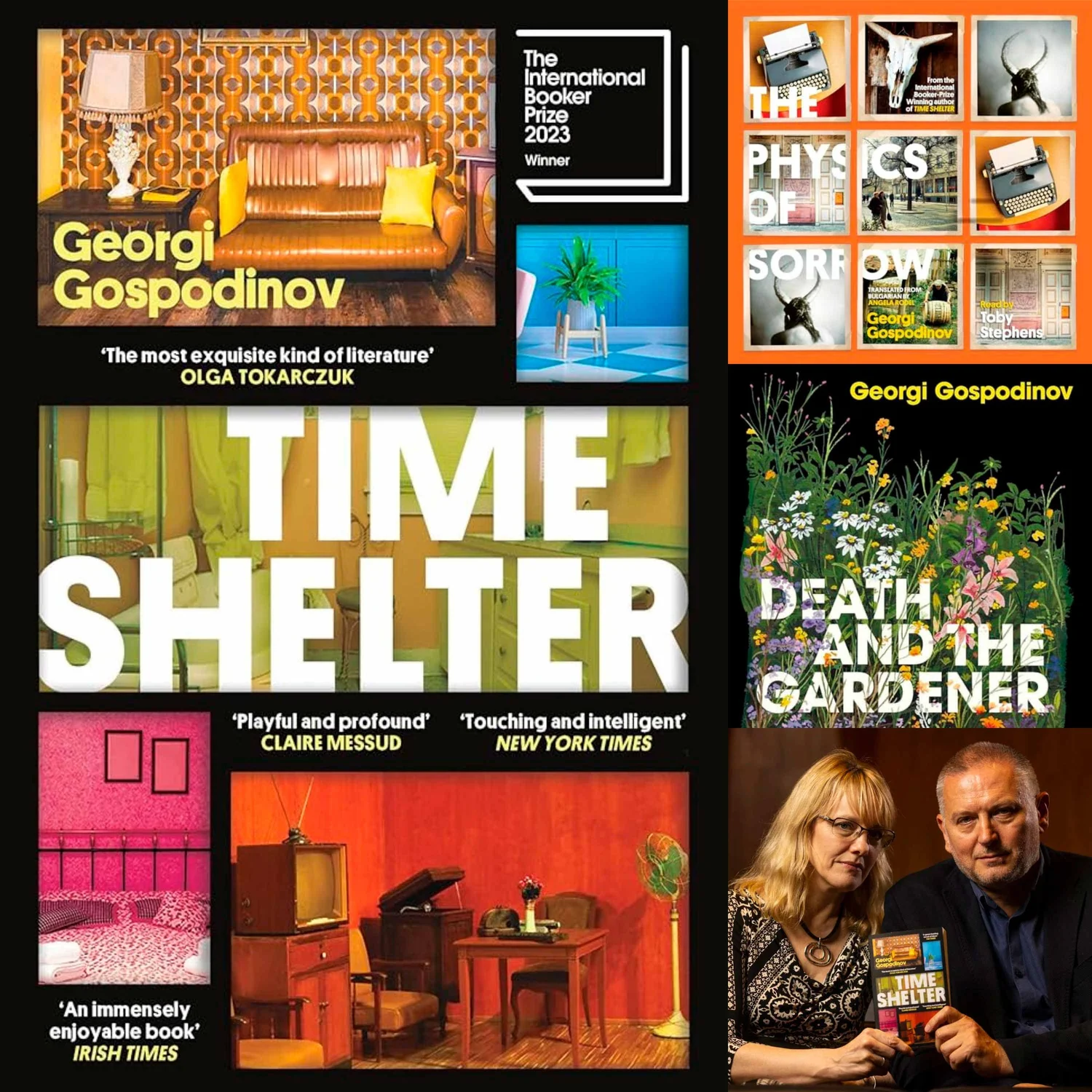 Literature, Women in Translation and the Art of Memory w/ GEORGI GOSPODINOV & ANGELA RODEL - Highlights | Today, we have a conversation about time, memory, and the bittersweet geography of human sorrow. Georgi Gospodinovis widely considered one of the most daring voices in contemporary European literature. His acclaimed novel, The Physics of Sorrow, won the prestigious Jan Michalski Prize in 2016, blending ancient myth and quantum physics to chronicle the delicate realities of post-socialist Eastern Europe. Joining him is Angela Rodel, a brilliant linguist, musician, and translator whose profound artistic empathy carries the flowing cadences of the Bulgarian language into vivid English. Together, this extraordinary creative duo made history by winning the 2023 International Booker Prizefor Time Shelter—the first book written in Bulgarian to ever receive the honor.Time Shelter is a masterfully dark, funny, and prescient novel. It begins with an enigmatic psychiatrist opening a clinic that treats Alzheimer’s patients by meticulously recreating past decades to match their internal clocks. But the experiment quickly escapes the clinic walls, triggering a pan-European crisis where entire nations hold democratic referendums to choose which era of the past they will retreat into. It is a book that holds up a mirror to our own world, exploring what happens when a civilization faces a deficit of meaning and tries to weaponize nostalgia.(0:00) The Trap of Nostalgia(1:22) The Nonlinear Approach to Storytelling(3:53) Translating the Atmosphere(4:31) The Pandemic of the Past(6:37) Death and the Gardener(9:49) The Translators Calling(11:00) Slowing Down Time(13:14) Storytelling vs Propaganda(15:54) Translating the Atmosphere(18:19) What makes a good life? What has given your life meaning?(20:56) Reflections on God and the Stories His Grandmother Told Him(23:43) The Importance of Hugging, Empathy and StorytellingEpisode Websitewww.creativeprocess.info/podInstagram:@creativeprocesspodcast | — | ||||||
| 8/19/26 | 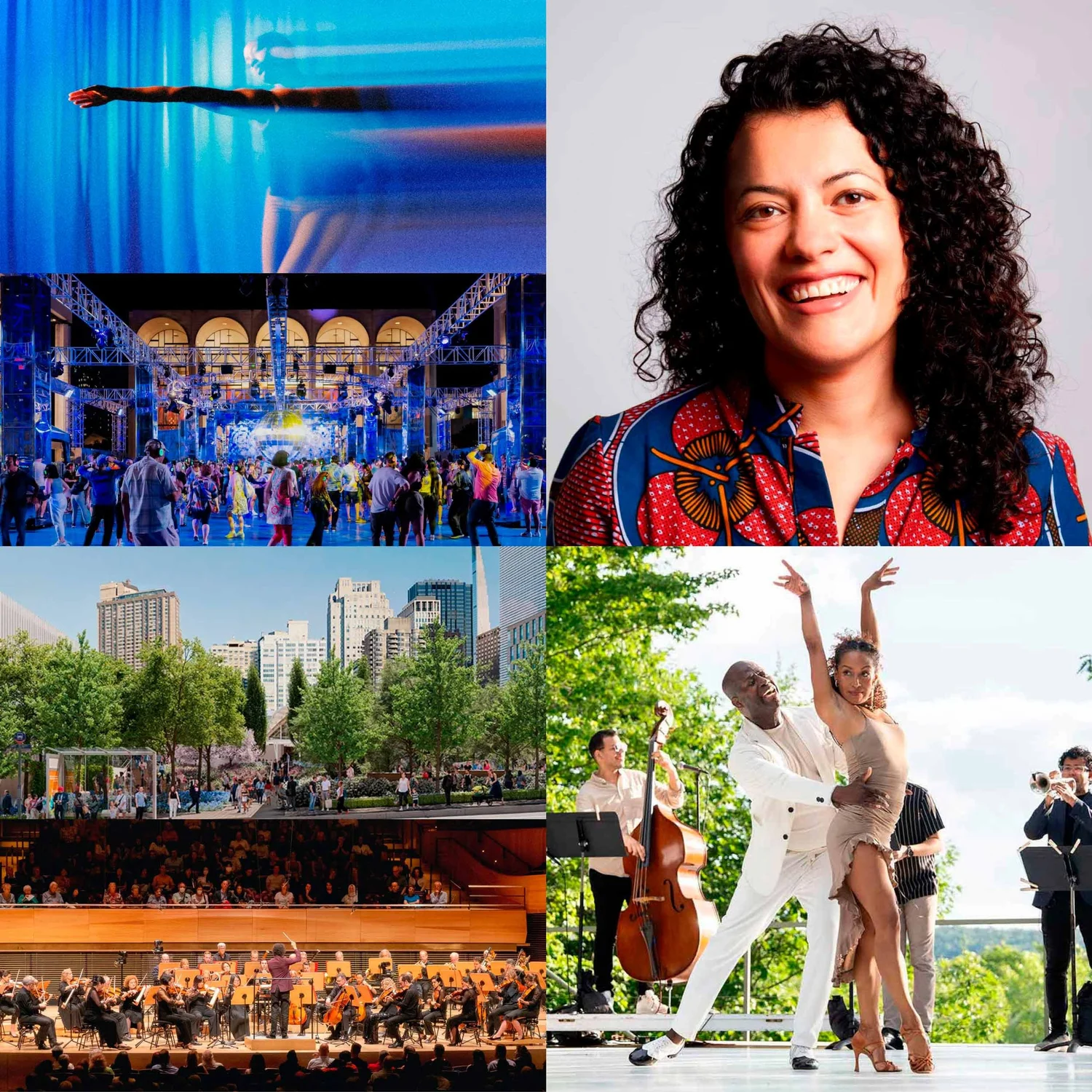 Women Leading Cultural Transformation: Radical Curation and Civic Belonging at LINCOLN CENTER w/ SHANTA THAKE | “Lincoln Center is multiple stages. I think probably over three dozen stages across 16 acres. It is a vast canvas in and of itself. And then we have this beautiful plaza that leads to this beautiful campus, and that’s the visual I think that most people have when they think of Lincoln Center is this beautiful fountain in the center and these three gorgeous buildings.It’s New York’s biggest plaza, and it feels very vibrant and beautiful. In the summer, we really take that plaza and we transform it into a dance floor. So this idea of also interrupting what people’s notion of Lincoln Center is because it’s a space that is very aspirational, which is a great thing.”Shanta Thake is the Chief Artistic Officer at Lincoln Center for the Performing Arts—the nation's largest performing arts complex. Before stepping into this role, she spent nineteen years at The Public Theater, shaping the city's cultural landscape through Joe's Pub and expansive community initiatives. Today, she is tearing down walls—both the literal barriers separating Lincoln Center from its neighbors, and the figurative ones that dictate who belongs in our cultural spaces. She views the arts not as a luxury, but as essential civic infrastructure. We are pleased to have Shanta Thake to discuss her journey, the power of radical curation, and the future of public performance.(0:00) Reimagining Lincoln Center(2:27) Art and the Human Experience(4:40) The Curiosity of Childhood(5:44) Alvin Ailey and the Pivot(8:29) The Invisible Arts(9:06) The Power of Public Theater(17:03) Curation, Programming and the Art of Listening(23:42) San Juan Hill and The Wall(31:23) Art as the Oldest Technology(35:02) globalFEST: Music and Connection(38:20) Finding Universal Belonging(41:20) The Gift of Pause(54:27) A Collective CaretakingEpisode Websitewww.creativeprocess.info/podInstagram:@creativeprocesspodcast | — | ||||||
| 8/10/26 |  Life and Art at LINCOLN CENTER: Chief Artistic Officer SHANTA THAKE on the Power of the Arts - Highlights | "I really do believe that the arts are critical to how we move forward together, and live performance in particular, I think, is a way of us practicing how to move across our ideological boundaries and find one another and imagine these new worlds together and create together."Shanta Thake is the Chief Artistic Officer at Lincoln Center for the Performing Arts—the nation's largest performing arts complex. Before stepping into this role, she spent nineteen years at The Public Theater, shaping the city's cultural landscape through Joe's Pub and expansive community initiatives. Today, she is tearing down walls—both the literal barriers separating Lincoln Center from its neighbors, and the figurative ones that dictate who belongs in our cultural spaces. She views the arts not as a luxury, but as essential civic infrastructure. We are pleased to have Shanta Thake to discuss her journey, the power of radical curation, and the future of public performance.(00:00) Reimagining Lincoln Center(03:09) A Collective Caretaking(03:47) The Technology of Human Creation(04:20) The Curiosity of Childhood(09:25) San Juan Hill and The Wall(14:20) globalFEST: Music and Connection(16:06) The Gift of Pause(17:20) A Collective CaretakingEpisode Websitewww.creativeprocess.info/podInstagram:@creativeprocesspodcast | — | ||||||
| 6/8/26 | 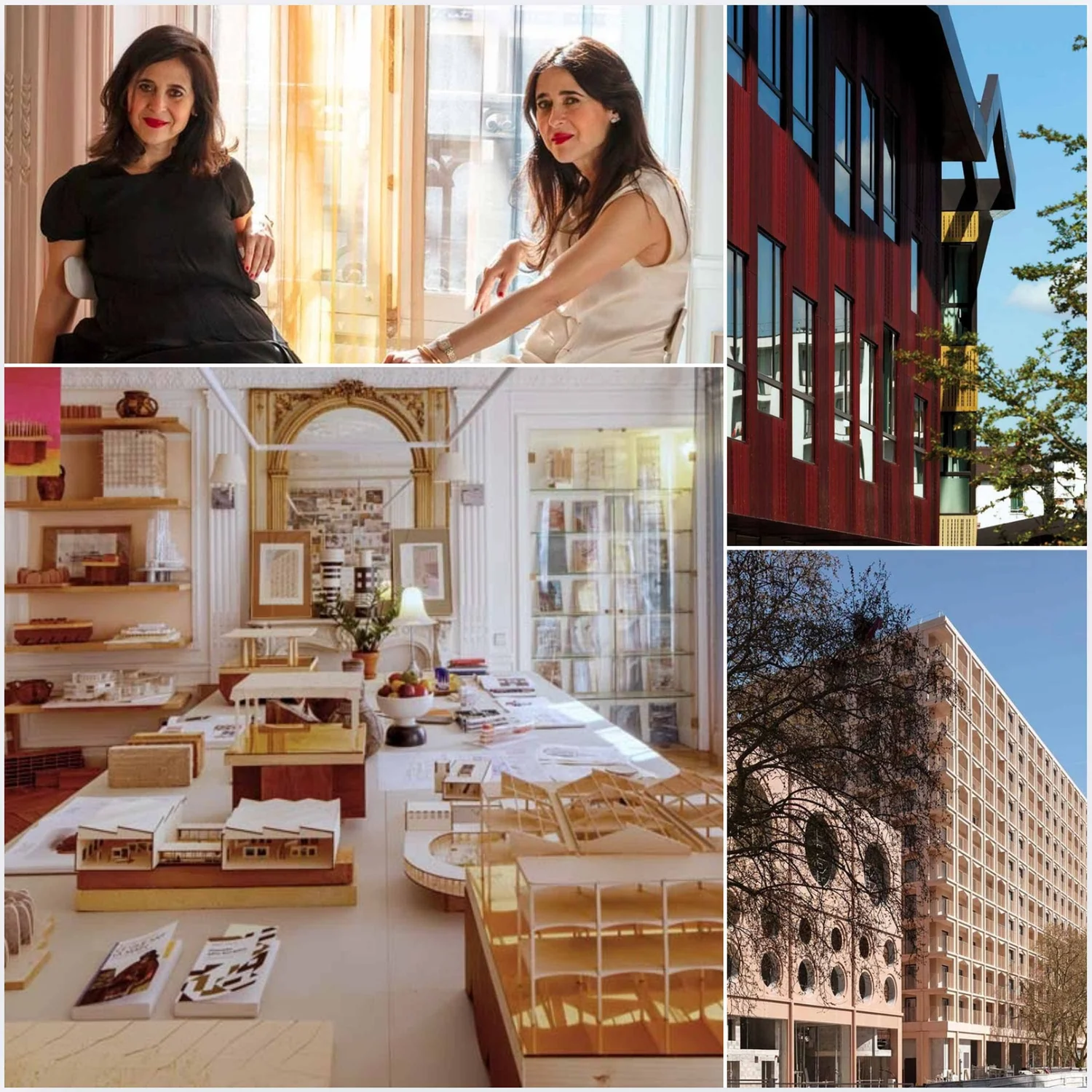 How does architecture shape the way we think, learn & remember? SALWA & SELMA MIKOU - Highlights | Salwa and Selma Mikou are the founders of Paris-based Mikou Architecture. Born in Fez, Morocco and educated in Paris, they have spent the last two decades reimagining the relationship between the built environment and the cultural landscape.After honing their craft under two of the world’s most iconic architects, Jean Nouvel and Renzo Piano, they founded their own studio. For them, architecture is a living interaction with landscape and what they call the Atlas of Resonance, interpreting the hidden layers of a territory, geology, memory, and craft. It is a philosophy that rejects the generic, seeking instead to weave together technological innovation with local materials. Whether it is a mosque in the north of England or a hybrid innovation hub in a former royal manufactory, their work asks a fundamental question: How does space shape the way we think, learn and remember? They were selected by Rem Koolhaas to represent Morocco at the Venice Biennale. Most recently, they were commissioned by Hermès to create a 17,000-square-meter facility that bridges industrial performance with poetic expression. At the heart of their practice is a belief that architecture is not just about building—it’s about shaping relationships: between people, between past and future, between technology and craft.(0:03) Architecture as a Living Transformation(1:42) The Intuitive Knowledge of Living Art(2:20) Preserving the Human Core of Expression(3:14) The Medina and the Geometry of Childhood(6:35) The Social Spaces of Rooftops(8:27) The Twin Dynamic and Confrontation with 'l'autre'(10:21) Contextual Echoes & Traces of the Site(12:12) The Temples of Water(13:15) The Mosque as Pure Spatiality(15:49) Building Culture with Yves Saint Laurent & Pierre Bergé(16:57) The Wast ed-dar (وسط الدار) and the Heart of a Building(18:31) The Smells and Sounds of Home(19:44) Balance, Nature, and SisterhoodEpisode Websitewww.creativeprocess.info/podInstagram:@creativeprocesspodcast | — | ||||||
| 6/2/26 | 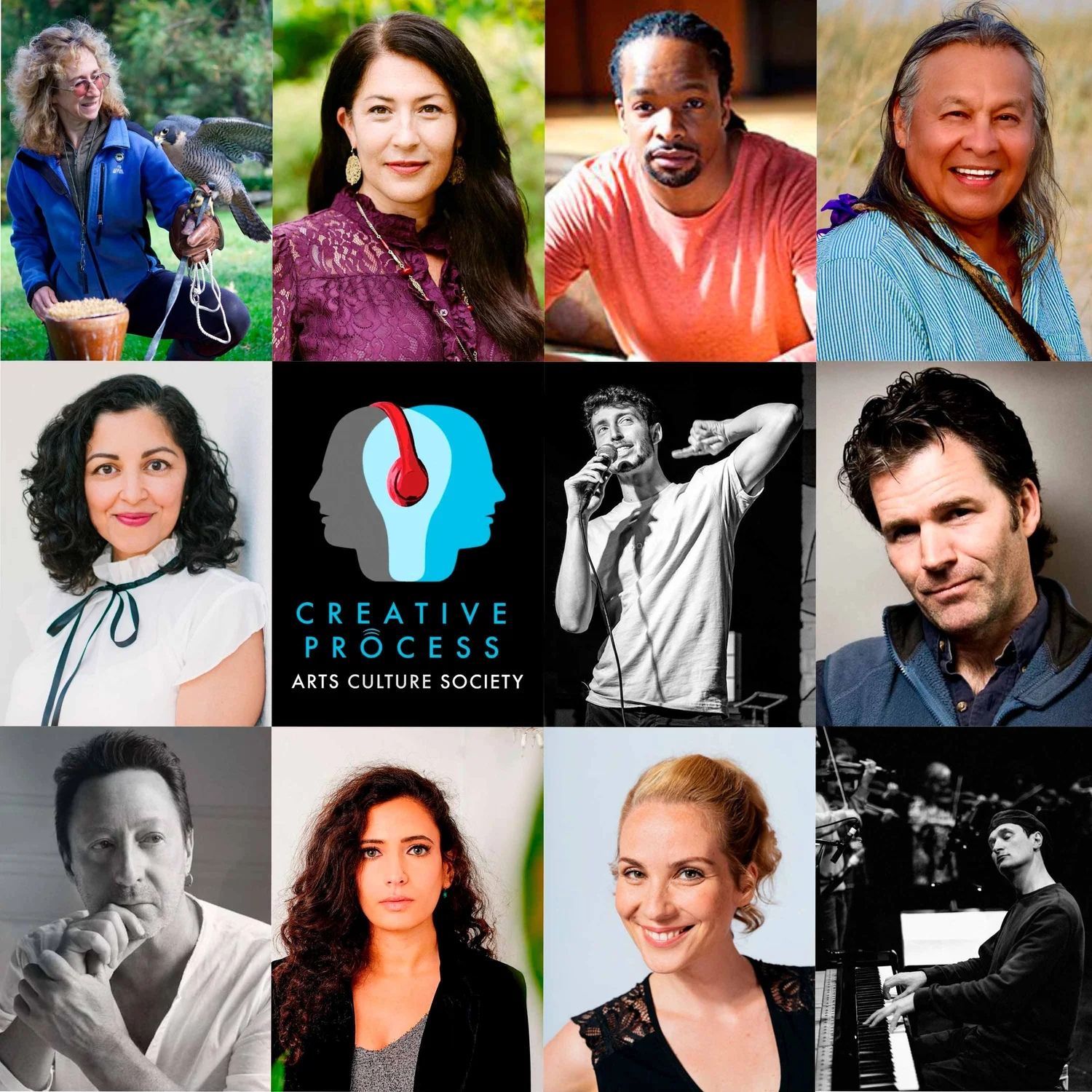 Humans as Storytelling Animals: Poets, Novelists & Musicians on the Power of Writing | Why do we write? Is it to capture a memory before it vanishes or to build a bridge between the person we are and the stories we've been told? In this episode of The Creative Process, we explore the practice of writing as an awakening and tool for discovery with a group of celebrated poets, novelists, musicians and thinkers.We hear from neuroscientist, dancer and author Julia Christensen on how literature inspires transformative aesthetic experiences. Award-winning poet and clinical psychologist Hala Alyan discusses navigating displacement through narrative, while bestselling author Andre Dubus III reflects on the honest labor of the writer and the willingness to fail.Pulitzer Prize-winning poet Jericho Brown shares how the sounds of American vernacular guide his work and Fmr. US Poet Laureate Ada Limón discusses holding hope within frightening thoughts about the future of our planet. NYT Bestseller Aimee Nezhukumatathil speaks on tenderness towards the natural world and naturalist Sy Montgomery shares how animals have been her greatest teachers.The conversation expands with poet Max Stossel on finding humanity in conflict, Tiokasin Ghosthorse on the ancient energy of the earth and Julian Lennon on art as a collective human endeavor. Finally, composer Erland Cooper takes us to the landscape of his youth, where the sound of the sea informed his creative voice. To hear more from each guest, listen to their full interviews.Episode Websitewww.creativeprocess.info/podInstagram:@creativeprocesspodcast | — | ||||||
| 5/8/26 | 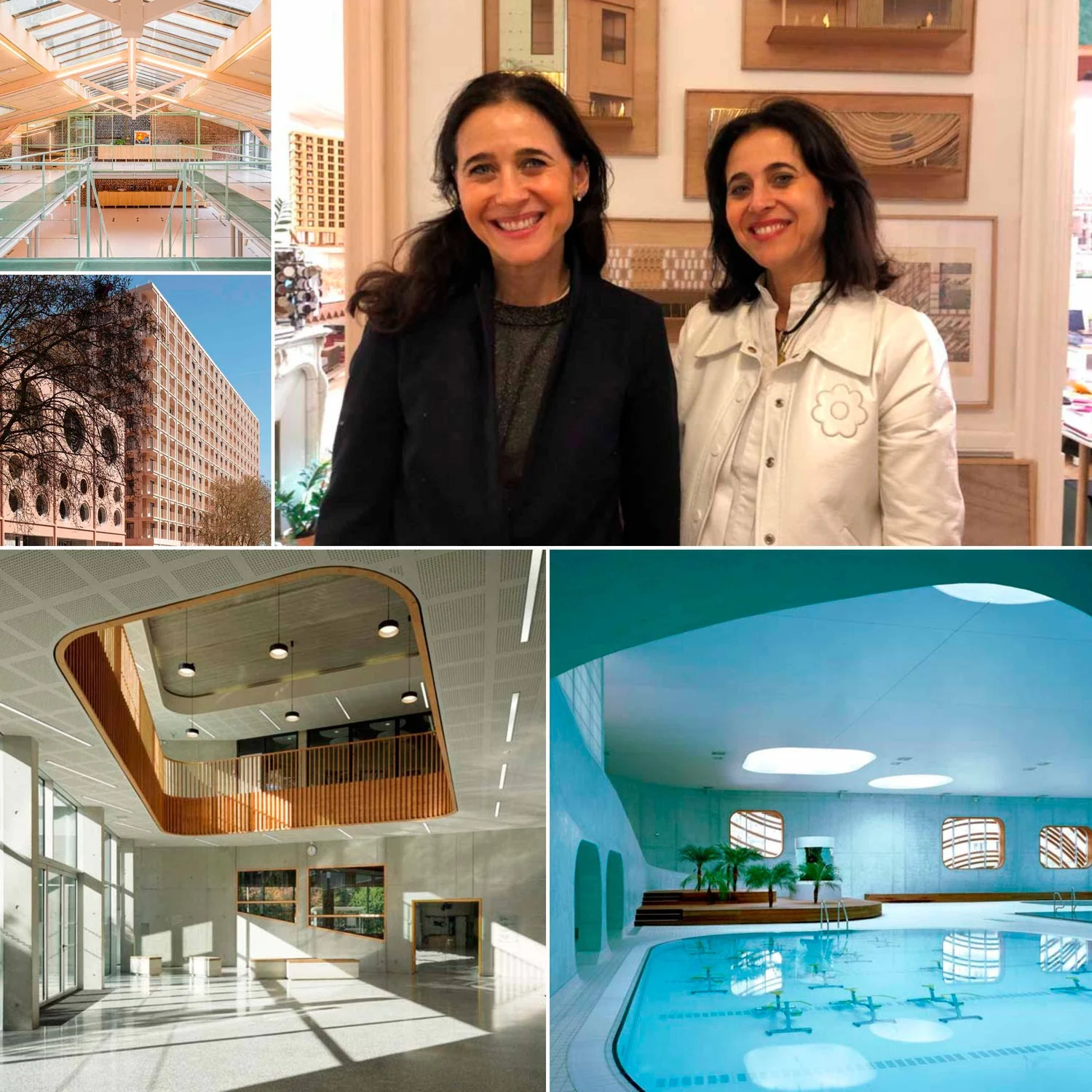 Women in Architecture: Building Bridges Between Memory, Nature & Culture w/ SALWA & SELMA MIKOU | “Architecture should bring a true sensation of wellbeing. We were really lucky to experience that as children, and now as architects, we try to bring all that we learned into our practice.”Salwa and Selma Mikou are the founders of Paris-based Mikou Architecture. Born in Fez, Morocco and educated in Paris, they have spent the last two decades reimagining the relationship between the built environment and the cultural landscape.After honing their craft under two of the world’s most iconic architects, Jean Nouvel and Renzo Piano, they founded their own studio. For them, architecture is a living interaction with landscape and what they call the Atlas of Resonance, interpreting the hidden layers of a territory, geology, memory, and craft. It is a philosophy that rejects the generic, seeking instead to weave together technological innovation with local materials. Whether it is a mosque in the north of England or a hybrid innovation hub in a former royal manufactory, their work asks a fundamental question: How does space shape the way we think, learn and remember?They were selected by Rem Koolhaas to represent Morocco at the Venice Biennale. Most recently, they were commissioned by Hermès to create a 17,000-square-meter facility that bridges industrial performance with poetic expression. At the heart of their practice is a belief that architecture is not just about building—it’s about shaping relationships: between people, between past and future, between technology and craft.(0:04) The Intuitive Knowledge of Living Art(4:24) The Medina and the Geometry of Childhood(8:18) The Social Spaces of Rooftops(13:46) The Intuitive Knowledge of Living Art(15:31) Contextual Echoes & Traces of the Site(19:18) The Twin Dynamic and Confrontation with 'l'autre'(26:42) The Temples of Water(33:24) The Mosque as Pure Spatiality(38:01) The Crisis Period and Structural Systems(48:24) Building Culture with Yves Saint Laurent & Pierre Bergé(51:38) The Wast ed-dar (وسط الدار) and the Heart of a Building(57:02) Preserving the Human Core of Expression(1:04:29) Urban Acupuncture in the Modern City(1:08:46) The Smells and Sounds of Home(1:10:02) Balance, Nature, and SisterhoodEpisode Websitewww.creativeprocess.info/podInstagram:@creativeprocesspodcast | — | ||||||
| 4/22/26 | 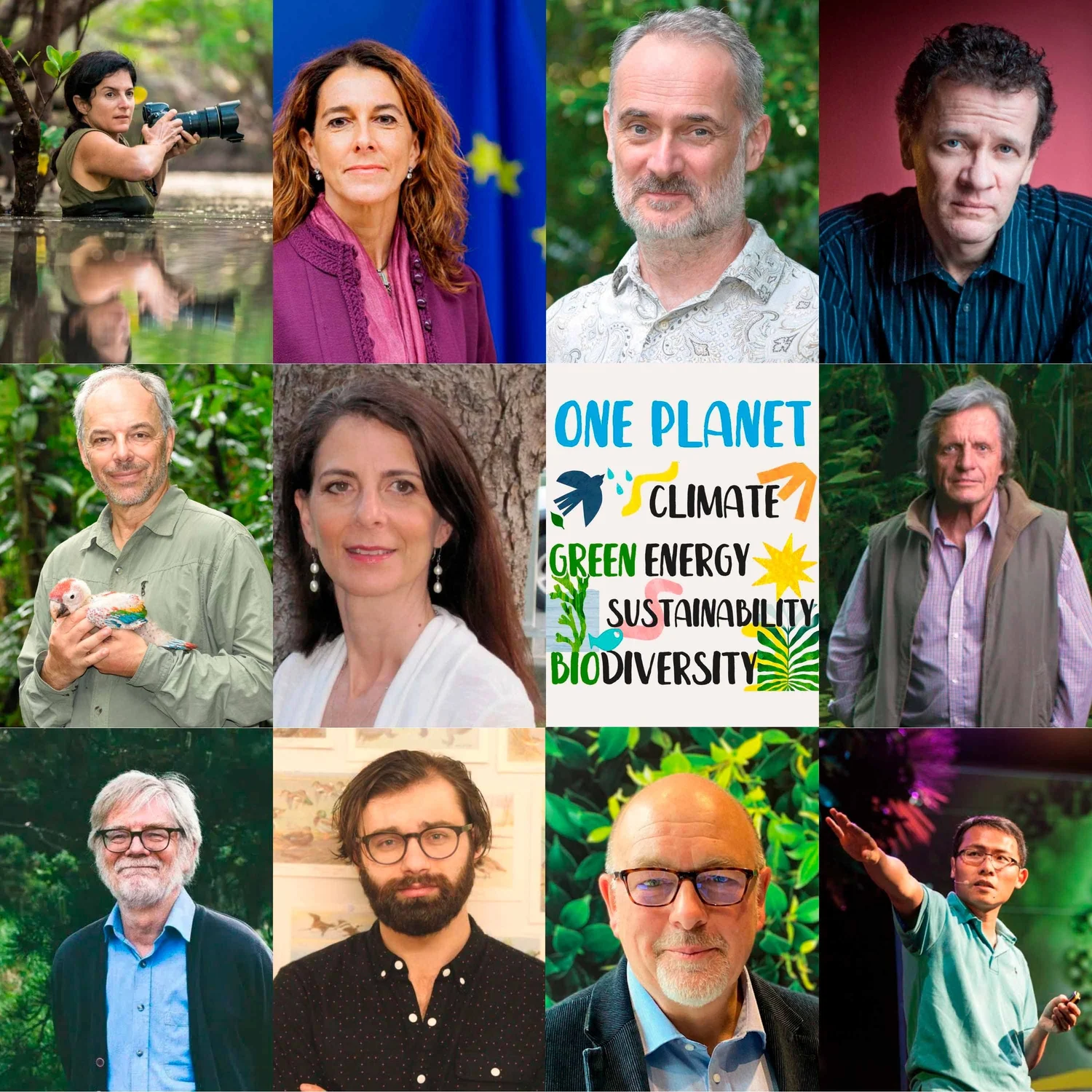 Women in Climate Leadership: Listening to the Living World & The Rights of Nature | Today, we hear from writers Yann Martel, Carl Safina and David George Haskell on the practice of listening to the living world. Tom Chi discusses the dangerous volatility of a one-degree shift. Clayton Aldern explores how climate change alters brain health and behavior, while Ami Vitale,Osprey Orielle Lake and Martín Von Hildebrand remind us of the kinship we share with nature. Fred Pearce discusses 40 years as a journalist reporting on climate from around the world, while Richard Black of the environmental think tank Ember and Paula Pinho, European Commission’s Chief Spokesperson, talk about policy, hope and the radical empathy required to protect the planet for future generations.(0:00) Clayton Page Aldern – Finding awe and beauty in the world(0:40) David George Haskell – On consequences of humans tuning out the sounds of the living world(2:11) Yann Martel – How animals ask us to step out of our humanity(3:12) Carl Safina – The interior lives of non-human animals(5:08) Ami Vitale – Environmental collapse and human conflict(6:37) Martín von Hildebrand – Indigenous views of nature(8:00) Richard Black – Transition to clean energy vs. massive fossil fuel subsidies(10:01) Tom Chi – Climate destabilization(11:07) Paula Pinho – Europe’s vision for energy independence(14:04) Osprey Orielle Lake – Māori concept of "I am the river and the river is me”(16:08) Bill Hare – On limiting global warming to 1.5 degrees(17:19) Fred Pearce – Finding hope in nature’s resilienceTo hear more from each guest, listen to their full interviews.Episode Websitewww.creativeprocess.info/pod@creativeprocesspodcast | — | ||||||
| 3/19/26 | 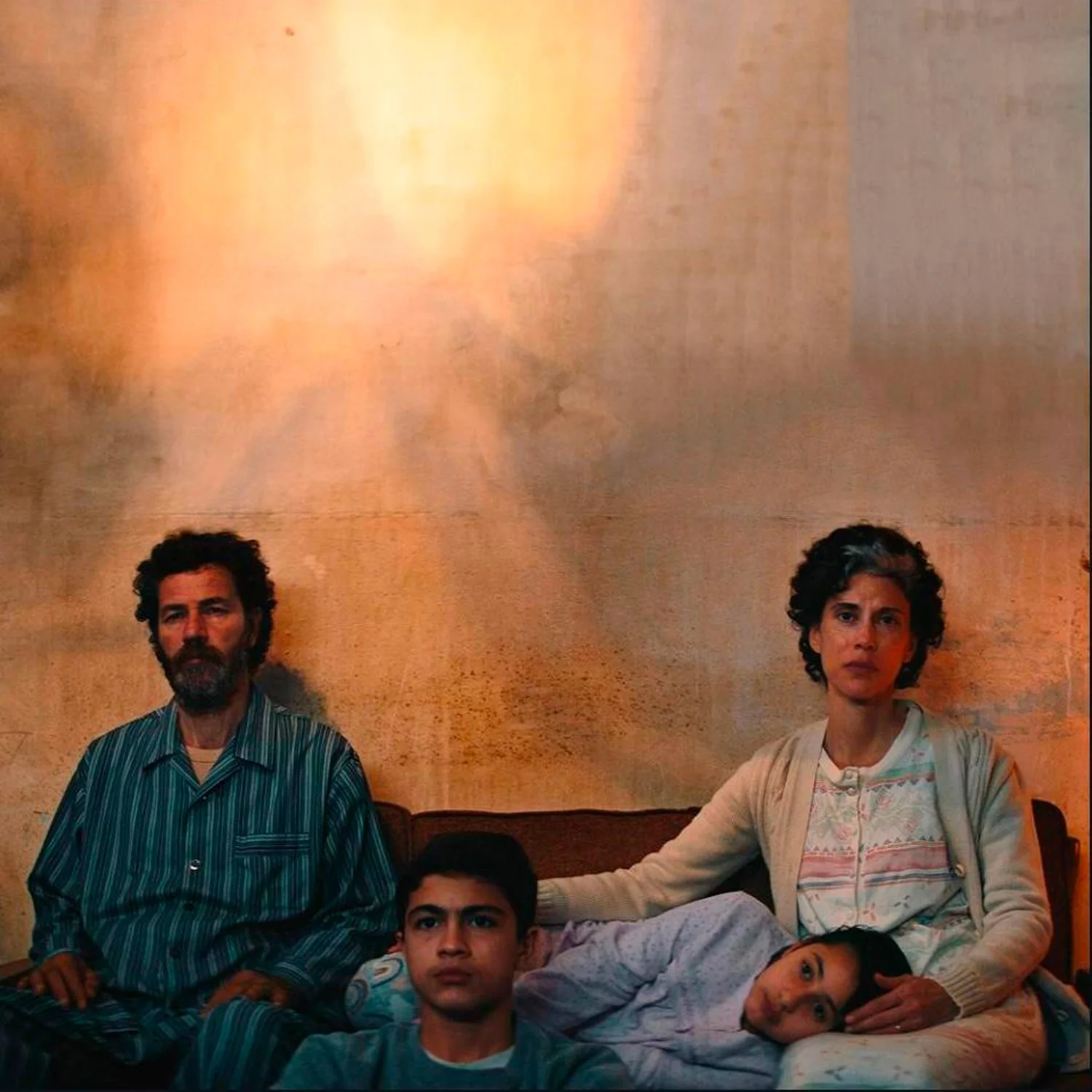 The Psychological & Emotional Impact of Occupation w/ Actress, Director CHERIEN DABIS | “These oppressive structures are built to strip us of our humanity. One of the ways they do that is by filling us with anger and hatred. If we allow ourselves to stay there, we're doing the job of the oppressor for them by slowly killing ourselves. I wanted to make a movie that would remind people that we can't allow them to win by giving up our humanity. We have to hold onto our humanity and try in these impossible circumstances.”My guest today is Cherien Dabis. She’s a filmmaker and actress who has spent much of her career trying to fill the silences in the American narrative. In 2022, she became the first Palestinian to receive an Emmy nomination. She has worked on everything from The L Word to Ozark, Only Murders in the Building to the hit Netflix series Mo, always with an eye toward breaking the one-dimensional mold that has historically defined Arab representation in the West. But her latest project is perhaps her most ambitious yet. It’s a film called All That’s Left of You. It follows one Palestinian family across three generations, beginning in 1948 and ending in 2022. It is a story of exile and memory, and it’s Jordan’s official submission for this year’s Academy Awards.(0:00) The Inheritance of TraumaCherien Dabis discusses showing the multifaceted humanity of Palestinians beyond just pain and suffering(3:41) Inherited Trauma: Identity And History The film explores how collective trauma is passed down across generations and shapes individual identities(5:52) The Bakri Dynasty: Collaborative Lineage Working with the legendary Bakri Family brought deep, authentic relational dynamics to the screen(9:25) Filming The Nakba: Art Imitating Crisis The crew faced severe challenges and had to evacuate Palestine during the October 2023 escalation(16:10) Representation Gap: Dehumanization In Media Growing up in Ohio, Cherien Dabis witnessed the dangerous misrepresentation of Arabs in Western media(21:24) The Moment Of Activation: Racism In Ohio The stark racism experienced during the first Gulf War ignited her passion to become a filmmaker(33:40) Psychological Violence: Impact Of Humiliation The film depicts how psychological harassment under occupation leaves devastating, long-term impacts on families(38:23) Broken Distribution: Industry Gatekeepers Despite international success, systemic fear and gatekeeping in the US distribution market remain significant obstacles(45:28) Previous Films, Television And Craft Directing television shows like Only Murders in the Building expanded her creative capacity and adaptability(51:45) Truth Seekers: The Next GenerationCherien Dabis shares her profound hope for young people who refuse to accept the broken systems of the pastEpisode Websitewww.creativeprocess.info/podInstagram:@creativeprocesspodcast | — | ||||||
| 3/3/26 | 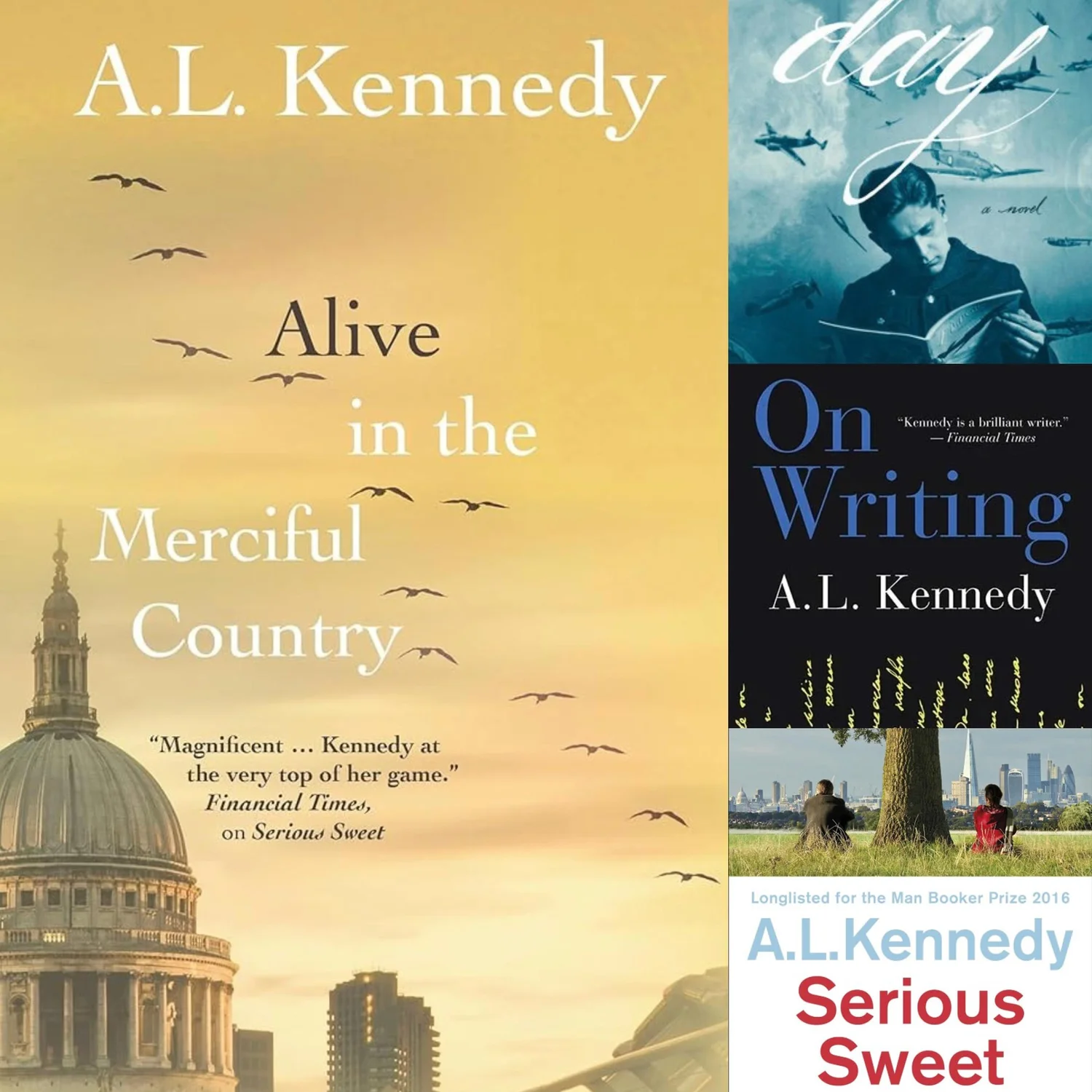 Trust, Education & Writing as Resistance w/ AL KENNEDY - Highlights | "The thing that puzzled him was why people don't agree to be fully expressed while they're alive. Why does it only happen in their last moment? Why wouldn't you live being fully expressed?"My guest today is AL Kennedy. She is one of Britain’s most acclaimed and versatile literary voices, a writer who can inhabit the internal life of a soldier in a POW camp, as she did in her Costa Book Award-winning novel Day, as easily as she can navigate the "professional lying" of a modern civil servant.Her latest novel, Alive in the Merciful Country, takes place during the 2020 lockdown. It tells the story of a primary school teacher who receives a confession from an undercover police officer who infiltrated her life decades earlier. It’s a provocative investigation into state power, the "Spy Cops" scandal and the search for mercy in an age of surveillance. It’s a book about the breakdown of trust. We talk about her life, her activism, and why she believes fiction is the only way to tell the truth when the facts are forbidden and how she balances the truth of her novels with the relief of stand-up comedy.(0:00) Finding Your VoiceOn the Alfred Wolfsohn voice method and the power of being fully expressed(2:30) Reading from Alive in the Merciful CountryKennedy shares a passage from her latest novel, exploring hope and resilience in dark times.(4:43) The Myth of Shrinking Attention SpansChallenging the narrative that modern audiences cannot focus, and the importance of engaging storytelling.(6:22) Education and the Foundation of DemocracyThe dangers of dismantling education and how critical thinking protects us from fascism.(10:26) The Spy Cop Scandal and State SurveillanceUnpacking the reality of undercover police infiltrating peaceful protests and intimate lives.(13:59) Lockdown: A Global Pause and the Inrush of EmpathyThe fleeting moment of unified humanity during the pandemic and how it was ultimately betrayed.(17:34) Writing Without Theft: The Ethics of Character CreationKennedy explains her imaginative process and why she refuses to steal details from real people's lives.(28:16) AI, Digital Slop, and the Loss of TrustReflections on artificial intelligence as an unstable plagiarism machine and its impact on truth.(30:03) Nature, Spirituality, and the Merciful CountryFinding healing in the natural world and navigating the future with love and awareness.Episode Websitewww.creativeprocess.info/podInstagram:@creativeprocesspodcast | — | ||||||
| 3/3/26 | 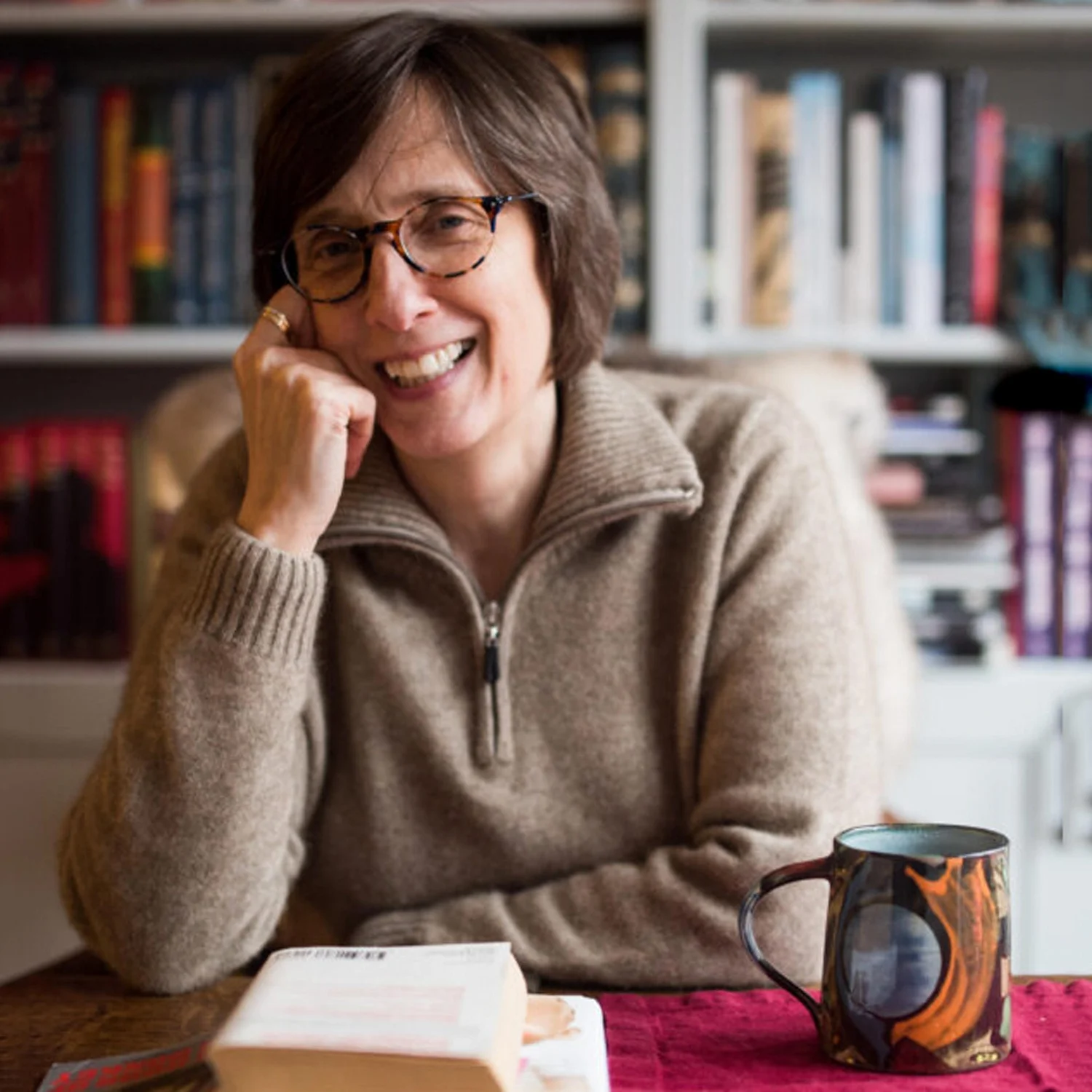 The Art of Fiction, Democracy & Truth with AL KENNEDY | What happens when the state infiltrates your most intimate relationships? How do we protect the innocence and imagination of children in an increasingly authoritarian world? “"If you have love, eventually you're going to win. It's not that people aren't going to die. It's not terrible things aren't going to happen. But if you stay with that and you stay centered in that, you'll get through and you will not have turned into a monster in order to overcome monsters.”My guest today is AL Kennedy. She is one of Britain’s most acclaimed and versatile literary voices, a writer who can inhabit the internal life of a soldier in a POW camp, as she did in her Costa Book Award-winning novel Day, as easily as she can navigate the "professional lying" of a modern civil servant.Her latest novel, Alive in the Merciful Country, takes place during the 2020 lockdown. It tells the story of a primary school teacher who receives a confession from an undercover police officer who infiltrated her life decades earlier. It’s a provocative investigation into state power, the "Spy Cops" scandal and the search for mercy in an age of surveillance. It’s a book about the breakdown of trust. We talk about her life, her activism, and why she believes fiction is the only way to tell the truth when the facts are forbidden and how she balances the truth of her novels with the relief of stand-up comedy.(0:00) Finding Your VoiceOn the Alfred Wolfsohn voice method and the power of being fully expressed(2:17) Education and the Foundation of DemocracyThe dangers of dismantling education and how critical thinking protects us from fascism.(5:14) The Myth of Shrinking Attention SpansChallenging the narrative that modern audiences cannot focus, and the importance of engaging storytelling.(8:23) Reading from Alive in the Merciful CountryKennedy shares a passage from her latest novel, exploring hope and resilience in dark times.(17:45) The Spy Cop Scandal and State SurveillanceUnpacking the reality of undercover police infiltrating peaceful protests and intimate lives.(22:07) AI, Digital Slop, and the Loss of TrustReflections on artificial intelligence as an unstable plagiarism machine and its impact on truth.(28:29) The Power of the Powerless: Radical WhimsyHow absurdity, humor, and inflatable costumes can disrupt authoritarian mindsets and potential violence.(33:13) Lockdown: A Global Pause and the Inrush of EmpathyThe fleeting moment of unified humanity during the pandemic and how it was ultimately betrayed.(42:53) Writing Without Theft: The Ethics of Character CreationKennedy explains her imaginative process and why she refuses to steal details from real people's lives.(1:29:40) Nature, Spirituality, and the Merciful CountryFinding healing in the natural world and navigating the future with love and awareness.Episode Websitewww.creativeprocess.info/podInstagram:@creativeprocesspodcast | — | ||||||
Want analysis for the episodes below?Free for Pro Submit a request, we'll have your selected episodes analyzed within an hour. Free, at no cost to you, for Pro users. | |||||||||
| 2/23/26 | 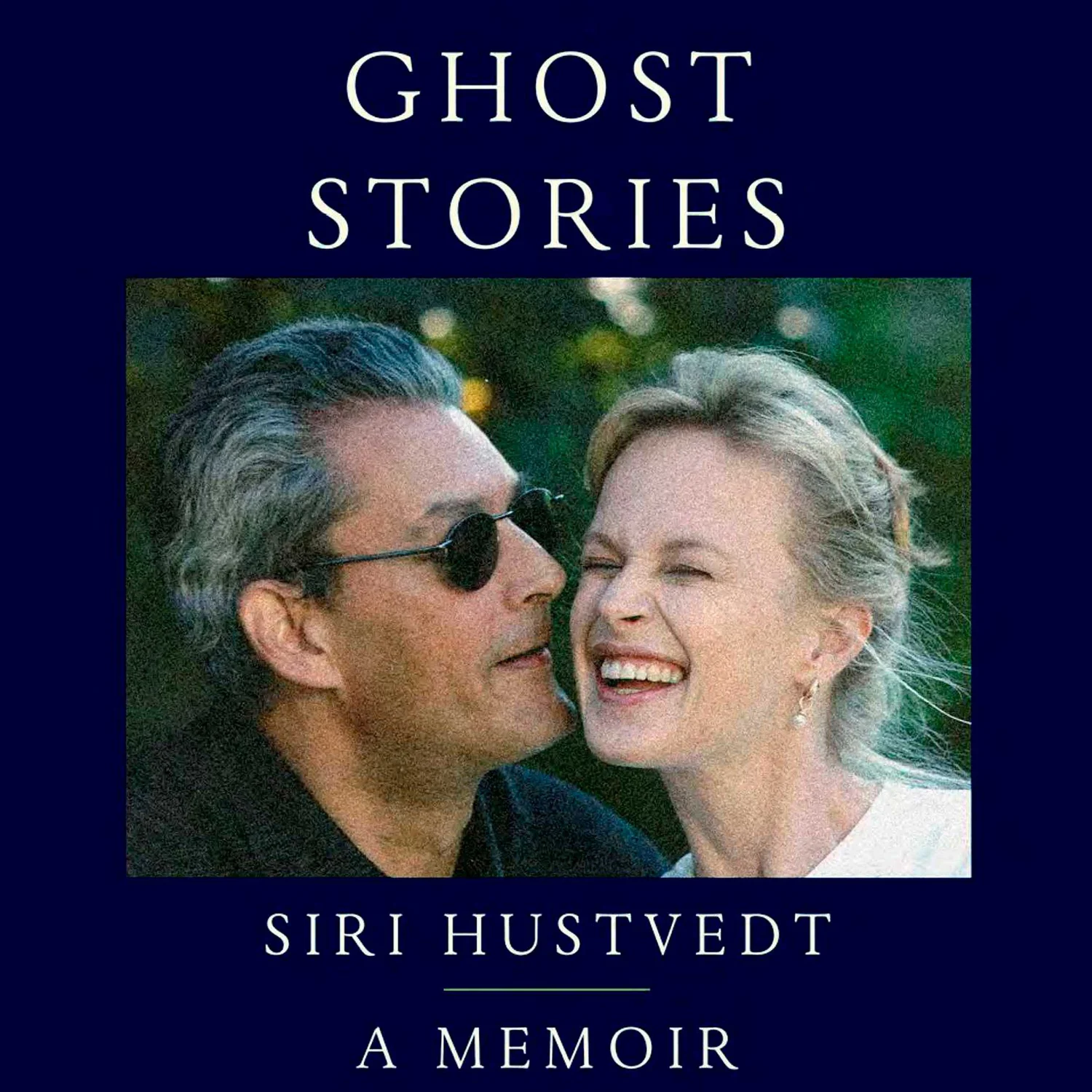 SIRI HUSTVEDT on Love, Grief & Her Late Husband PAUL AUSTER - Highlights | “Grief is a particular kind of unrequited love. It wasn't unrequited in the past. Usually, we think of unrequited love as you never got to do it, you never had it for yourself. But, in fact, there can be requited love, which is then unrequited love in the paroxysms of grief.”Today, we are honored to welcome a writer whose work has long explored the intimate landscapes of the mind, memory and the heart. Siri Hustvedt’s writing moves between the personal and the philosophical, the literary and the deeply human. Her work bridges collections of essays, non-fiction, poetry, and seven novels, including the international bestsellers What I Loved and The Summer Without Men. Recipient of the Princess of Asturias Award for Literature and the Gabarron Prize for Thought, her work has been translated into over thirty languages. Her new memoir, Ghost Stories, is a reflection on forty-three years shared with her late husband, the writer and filmmaker Paul Auster. In its pages, we encounter not only love and loss, but the quiet persistence of presence, memory, and language itself.(0:00) “We were hugely important to the drama of becoming in our own lives”(2:04) Grief as Unrequited LoveSiri explores the emotional reality of living without Paul Auster, noting that grief occurs because love does not stop when a person dies.(3:19) The Shared Space of a 43-year Marriage(4:36) Reading from Ghost StoriesSiri reads the opening passage of her memoir, detailing how the loss of her husband deranged her sense of time and bodily rhythms.(7:02) How Loss Changes Our Sense of Time(11:24) How Powerful Emotions and a Person's Life Can Play a Role in Illness(13:04) Believing in a Reality that Transcends the Individual(20:06) Physical Love in MarriageOn the importance of physical intimacy in long-term marriages, a reality often left out of grief memoirs.Episode Websitewww.creativeprocess.info/podInstagram:@creativeprocesspodcast | — | ||||||
| 2/23/26 | 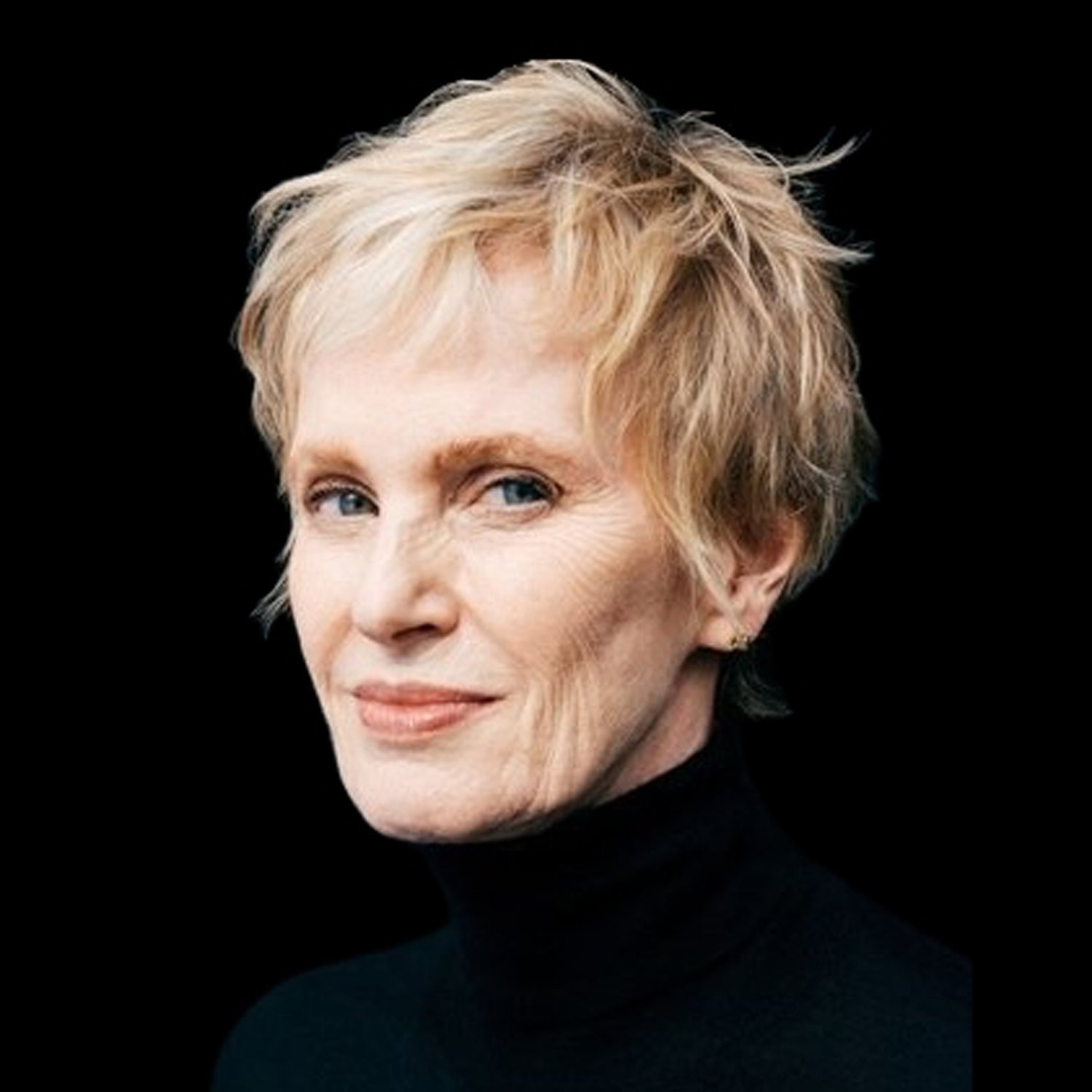 Ghost Stories · A Memoir of Love & Grief | “Grief happens because you don't stop loving the person who died. The person doesn't exist in your reality anymore. The everyday is not colored and shaped by this other human being, but you don't stop loving the person. So grief is a particular kind of unrequited love. And probably without that dynamic relationship with this person, I would be someone else. And he would've been someone else. I mean, Paul died before me. But we were, I think, hugely important to the drama of becoming in our own lives.”Today, we are honored to welcome a writer whose work has long explored the intimate landscapes of the mind, memory and the heart. Siri Hustvedt’s writing moves between the personal and the philosophical, the literary and the deeply human. Her work bridges collections of essays, non-fiction, poetry, and seven novels, including the international bestsellers What I Loved and The Summer Without Men. Recipient of the Princess of Asturias Award for Literature and the Gabarron Prize for Thought, her work has been translated into over thirty languages. Her new memoir, Ghost Stories, is a reflection on forty-three years shared with her late husband, the writer and filmmaker Paul Auster. In its pages, we encounter not only love and loss, but the quiet persistence of presence, memory, and language itself.(0:00) Grief as Unrequited LoveSiri explores the emotional reality of living without Paul Auster, noting that grief occurs because love does not stop when a person dies.(4:00) Facing Death with CourageThe importance of not hiding from mortality and how discussing end-of-life wishes offered a necessary perspective.(12:37) Reading from Ghost StoriesSiri reads the opening passage of her memoir, detailing how the loss of her husband deranged her sense of time and bodily rhythms.(18:41) The Phantom Limb: ” The beloved is taken away and it feels as if you're amputated or gutted.”(21:50) Grandfather, Father and Son: Generational Traumas Behind Paul Auster's Writing(24:11) How Powerful Emotions and a Person's Life Can Play a Role in Illness(30:09) Feeding the Earth "Paul very pointedly told me that he wanted to be buried in the Jewish mode. And the phrase he used was, “I want my body to feed the earth.”(44:23) Physical Love in MarriageOn the importance of physical intimacy in long-term marriages, a reality often left out of grief memoirs.(54:00) The Philosophy of the BetweenHow relational existence is foundational to life.(1:00:16) The Hubris of Controlling Nature(1:12:00) The Dark History of Statistics(1:32:12) The Art of Learning vs. AI and Automated Outcomes“I think we have to ask ourselves, what is education? What do we want from it? How do we want people to learn?Episode Websitewww.creativeprocess.info/podInstagram:@creativeprocesspodcast | — | ||||||
| 2/11/26 |  Who Are We? What Makes Us Care? Jim Shepard, Neil Patrick Harris, John Patrick Shanley & Artists Share Their Stories | Can curiosity and empathy be taught? How can we expand our sense of solidarity through stories? In this episode, we explore the internal dialogues of artists, actors and writers to ask what it means to step into someone else's shoes.(0:00) Novelist Jim Shepard discusses Literature as a Tool for Emotional Education and Exploring History(2:05) Tony Award-winning Actor Neil Patrick Harris on Being Moved by Theater and its Ability to Bridge Worlds(3:55) Novelist Katie Kitamura on How a Book is Made in Collaboration with the Reader(5:00) Screenwriter, Playwright Laura Eason on Inhabiting the Hearts of Characters Different from Ourselves(6:03) Academy Award-winning Director Sharmeen Obaid-Chinoy on the Art of Visual Storytelling(6:37) Cinematographer, Director Benoit Delhomme on the Freedom of Handheld Cinematography(7:19) Author Etgar Keret on Looking for Humanity through Shared Intention(8:18) Viet Thanh Nguyen – Opposing Power through Expansive Solidarity(9:27) Adam Moss – Author, Fmr. Editor New York magazine on “The Work of Art”(10:29) John Patrick Shanley – Tony & Academy Award-winning Writer, Director on Finding Value in Ordinary Experiences and the Creative Power of Daydreaming(11:56) Pulitzer Prize-winning Journalist Nicholas Kristof on Why Individual Stories are Necessary to Generate ConnectionTo hear more from each guest, listen to their full interviews.Episode Websitewww.creativeprocess.info/podInstagram:@creativeprocesspodcast | — | ||||||
| 2/11/26 |  The Healing Power of the Arts: Longevity, Immunity & Wellbeing w/ DAISY FANCOURT - Highlights | "Within society, we seem to have separated the arts out, so they're not so much a part of our daily lives. Often there's something that we feel we should do as a kind of leisure activity or hobby if we have enough time or if we have enough money to engage in them. And this is so fundamentally different to how humans engaged with the arts. When we look back thousands of years, it just was part of the everyday, and I feel like that's a major loss within contemporary societies."Daisy Fancourt is a Professor of Psychobiology & Epidemiology at UCL and the author ofArt Cure: The Science of How the Arts Transform Our Health. A pioneer in the field of psychoneuroimmunology, she directs the WHO Collaborating Center on Arts and Health, where her research influences global health policy and the integration of the arts into medical care.(0:00) The Healing Power of the Arts: Longevity, Immunity & Wellbeing(1:17) Singing to Daphne: How Daisy used singing to comfort her premature daughter in the ICU(2:47) The Story of Russell: How a stroke survivor used art classes to reclaim his life, health, and identity(5:23) A Planet of 8 Billion Artists: Tracing the evolutionary origins of creativity back 40,000 years(8:58) Psychoneuroimmunology. Defining the biological mechanisms: how art reduces inflammation and cortisol(12:42) Art & Longevity. How arts engagement can slow biological aging and alter gene expression(18:24) Safeguarding Creativity. Why we should use AI for routine tasks but protect the human joy of the creative processEpisode Websitewww.creativeprocess.info/podInstagram:@creativeprocesspodcast | — | ||||||
| 2/11/26 | 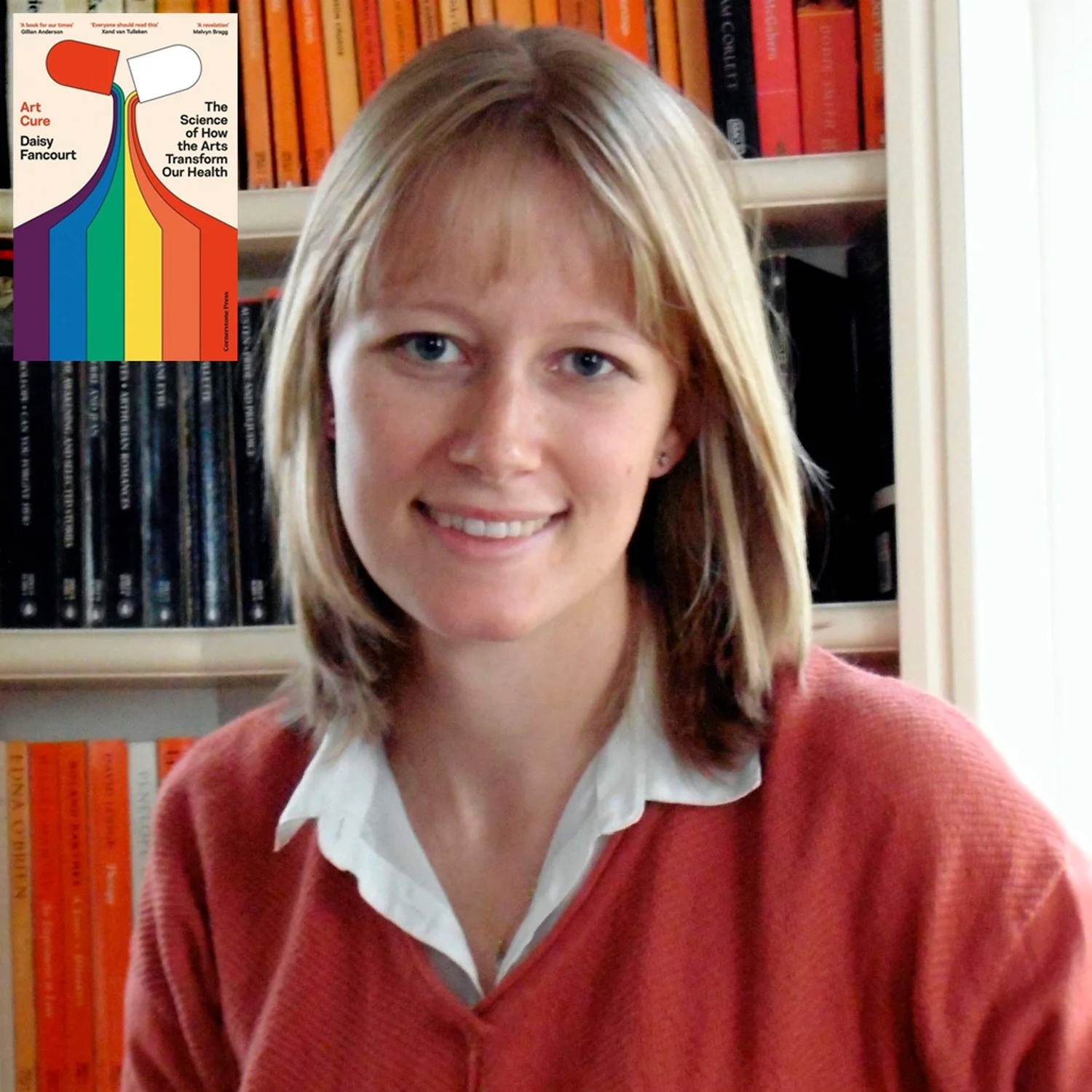 ART CURE: How the Arts Can Transform Our Health with DAISY FANCOURT | Did you know that visiting a museum can lower your cortisol levels? Or that singing can bond a group faster than almost any other activity? We tend to think of the arts as entertainment, but science tells a different story. Today, we explore why creativity is hardwired into our biology and how it can be used to treat everything from postnatal depression to stroke recovery.Daisy Fancourt is a Professor of Psychobiology & Epidemiology at UCL and the author of Art Cure: The Science of How the Arts Transform Our Health. A pioneer in the field of psychoneuroimmunology, she directs the WHO Collaborating Center on Arts and Health, where her research influences global health policy and the integration of the arts into medical care.(0:00) The Healing Power of the Arts: Longevity, Immunity & Wellbeing(4:14) The Story of Russell: How a stroke survivor used art classes to reclaim his life, health, and identity(9:01) A Planet of 8 Billion Artists: Tracing the evolutionary origins of creativity back 40,000 years(15:30) The Chemistry of Connection. Why singing evolved before language and how it accelerates group bonding(20:32) Psychoneuroimmunology. Defining the biological mechanisms: how art reduces inflammation and cortisol(25:57) The Professional Paradox: Balancing the wellbeing benefits of art with the pressures of a creative career(30:03) Predictive Coding & Play: Why the human brain needs improvisation and why we shouldn't outsource creativity to AI(33:26) Singing to Daphne: How Daisy usedsinging to comfort her premature daughter in the ICU(37:55) World Health Organization, Public Policy & Social Prescribing(46:04) Art & Longevity. How arts engagement can slow biological aging and alter gene expression(58:17) Finding Artistic Reverence in Nature Episode Websitewww.creativeprocess.info/podInstagram:@creativeprocesspodcast | — | ||||||
| 11/6/25 |  In the Presence of the DALAI LAMA - Doc. Director of WISDOM OF HAPPINESS - Highlights | “I can change my mind. I can reduce anger, hatred. Nothing to do with religion. All religions carry the message of love, loving kindness, and tolerance. With different views, there is a possibility to synthesize new ideas. If majority of the world leaders become female, world become safer. I feel that. Compassion is the key factor. Non-violence, compassion and self-confidence, these are key factors for happy individual, happy community, peaceful world. This century should be century of compassion, century of peace. No more bloodshed. We should develop a big “we,” rather than “we” or “they.” With these wings, you can fly.” -DALAI LAMAFor decades, the Dalai Lama has been a global symbol of peace, compassion, and resilience, a spiritual leader living in exile from his home in Tibet. But how do you capture the essence of his wisdom—the kind that can truly change a life—in a way that feels intimate and personal? My guest today, documentary filmmaker Barbara Miller, has managed to do just that in her new film, Wisdom of Happiness. It’s a beautiful film that feels less like a documentary and more like a private, heart-to-heart conversation, where he invites us into his thoughts and shares practical steps for finding inner peace in a chaotic world. She's dealt with anti-globalization, domestic violence, and the fight for female pleasure in her previous works. We’ll talk about how she shifted from exposing systemic pain to focusing on radical hope and her collaboration with Executive Producer Richard Gere and Manuel Bauer, the Dalai Lama’s personal photographer for the last thirty-five years, who made his cinematography debut with this film. She shares what the Dalai Lama taught her about living in harmony with our body, nature, and the world.Episode Website www.creativeprocess.info/podInstagram:@creativeprocesspodcast | — | ||||||
| 11/6/25 |  WISDOM OF HAPPINESS - Heart-to-Heart w/ DALAI LAMA - Conversation w/ Director Barbara Miller | “ Everybody wants happiness, joyfulness, peaceful world. Our 21st century will not be easy century. Fear, anger, hatred. In our mind we created distinctions. Different nationality, different color, different religion. Strong concept of “we” and “they”. Brothers and sisters of this small planet, we are same human beings. Meanwhile, global warming is a serious problem. Destruction of this planet is actually destruction of yourself. Our common responsibility should be work together, to save our world. We all have this marvelous human brain. The problem is, when negative emotions develop, our whole mind is taken over. So, we must deal with emotions.I can change my mind. I can reduce anger, hatred. Nothing to do with religion. All religions carry the message of love, loving kindness, and tolerance. With different views, there is a possibility to synthesize new ideas. If majority of the world leaders become female, world become safer. I feel that. Compassion is the key factor. Non-violence, compassion and self-confidence, these are key factors for happy individual, happy community, peaceful world. This century should be century of compassion, century of peace. No more bloodshed. We should develop a big “we,” rather than “we” or “they.” With these wings, you can fly.” -DALAI LAMAFor decades, the Dalai Lama has been a global symbol of peace, compassion, and resilience, a spiritual leader living in exile from his home in Tibet. But how do you capture the essence of his wisdom—the kind that can truly change a life—in a way that feels intimate and personal? My guest today, documentary filmmaker Barbara Miller, has managed to do just that in her new film, Wisdom of Happiness. It’s a beautiful film that feels less like a documentary and more like a private, heart-to-heart conversation, where he invites us into his thoughts and shares practical steps for finding inner peace in a chaotic world. She's dealt with anti-globalization, domestic violence, and the fight for female pleasure in her previous works. We’ll talk about how she shifted from exposing systemic pain to focusing on radical hope and her collaboration with Executive Producer Richard Gere and Manuel Bauer, the Dalai Lama’s personal photographer for the last thirty-five years, who made his cinematography debut with this film. She shares what the Dalai Lama taught her about living in harmony with our body, nature, and the world.Episode Website www.creativeprocess.info/podInstagram:@creativeprocesspodcast | — | ||||||
| 10/18/25 |  Listening to the Planet - Writers' Perspectives on Nature, Place & Interconnectedness | How do our environments shape who we are and how we care for the world and each other? There are many solutions to climate change, inequality, and poverty around the world. How can we learn from them and transform our society?Eiren Caffall (All the Water in the World) discusses the importance of embracing complexity and emotional flexibility in facing ecological grief.Irvin Weathersby Jr. (In Open Contempt) discusses the transformative power of meditation and nature, drawing inspiration from Emerson and Thoreau.Jay Parini (Biographies of Steinbeck, Frost, Faulkner…) on the significance of place in literature and life.Natasha Hakimi Zapata (Another World Is Possible) explores the generosity and hope in people’s efforts to build better societies.Audrea Lim (Free The Land) on how personal experiences with public lands influence our views on conservation.Katie Kitamura (Audition, Intimacies) reflects on the role of landscape and memory in her novels.Dr. Bayo Akomolafe (Philosopher, Founder of Emergence Network) discusses his awe for mountains, using them as a metaphor for humility and the search for meaning beyond oneself.For more from each guest, listen to their full interviews.Episode Websitewww.creativeprocess.info/podIG @creativeprocesspodcast | — | ||||||
| 10/17/25 |  The Arrogant Ape: The Myth of Human Exceptionalism & Why it Matters with CHRISTINE WEBB | “There are many ways in which I think human exceptionalism has seeped into the sciences, but one of the many ways is through the methodologies we use when we compare the intelligence of humans and other species. In particular, in my field, I’m a primatologist by training, comparing the cognitive abilities of humans with the abilities of our closest living relatives, the great apes. Many times, those studies compare the intelligence of captive chimpanzees who are living in highly restricted, manmade environments. Often, these chimpanzees have been separated from their biological mothers at birth. They're often separated from the group during testing. They're subjected to very human-centric experimental paradigms, like playing with plastic puzzle boxes or computer touchscreens, and we're measuring how they perform on these tasks.”In this episode of Speaking Out of Place podcast, Professor David Palumbo-Liu talks with primatologist Christine Webb about her new book, The Arrogant Ape: The Myth of Human Exceptionalism and Why it Matters. The title of the book itself is a concise and precise description of its two constituent halves. First, Webb tells us how science itself, from premodern times onward, has operated with an assumption it keeps reconfirming constantly--that humans are not only exceptional, but also superior to other forms of life. Webb convincingly debunks this science over and over again. And most importantly, she explains how this myth has devastating political, cultural, and environmental consequences. Combining scientific and humanistic studies, we go into some detail about what this arrogance produces, and why we desperately need a much more humble sense of ourselves.Christine Webb is an Assistant Professor in the Department of Environmental Studies at New York University, where she is part of the Animal Studies program. Her research is driven by growing awareness that the ecological crisis demands a profound shift in how we understand other animals and our place among them, leading to two intersecting lines of inquiry. First, her work seeks to elucidate the complex dynamics of animal social life and to apply this knowledge to foundational questions in animal ethics and conservation. Second, she is interested in how prevailing societal norms, values, and institutions shape contemporary scientific knowledge of other animals and the environment, with a critical emphasis on human exceptionalism. Her debut book, The Arrogant Ape: The Myth of Human Exceptionalism and Why it Matters, was recently published with Avery (Penguin Random House) and is being translated into 17 languages.www.palumbo-liu.comhttps://speakingoutofplace.comBluesky @palumboliu.bsky.socialInstagram @speaking_out_of_place | — | ||||||
| 9/25/25 |  Nordic Art & Contemporary Perspectives at the ARKEN MUSEUM OF CONTEMPORARY ART - Highlights | “This awe that I feel every time I meet an artist who has the courage to deal with what it means to be in the world as a human being and to tackle it from different ways and through different media. I always feel that through the collaborations I have with artists, I learn a little bit more about the world, myself, my feelings or emotions, and how I reflect on things. Getting another person's perspective and taking that in is extremely generous. What we can take with us from the artistic practices we encounter is significant. Again, I think one of the fundamental aspects of art is that it doesn't require agreement, consensus, or rules. It's a place where we can speculate, imagine, and, hopefully, re-courage ourselves in a way, if that's a word. I've always been motivated by working with artists; that personal meeting is always extremely fruitful.”In the ever-evolving world of contemporary art, some voices rise to shape the conversation in truly profound ways. Marie Nipper has spent her career at the nexus of institutional leadership, curatorial innovation, and artistic collaboration. As the director of the ARKEN Museum of Contemporary Art in Denmark, she is not just leading a museum; she's rethinking its very purpose—from an artistic lab to a public town square. Her journey has taken her from the hallowed halls of the TATE and ARoS to the forward-thinking spaces of Copenhagen Contemporary, all while championing the freedom of artists and the civic role of the museum.“I think that is one of the places where we are really challenged, especially when we speak to kids and young people, as they often feel they have little agency in creating a better future for themselves. So, I believe we can really give that space to our audiences by showcasing some of these groundbreaking practices that are out there right now in contemporary art.”Episode Websitewww.creativeprocess.info/podInstagram:@creativeprocesspodcast | — | ||||||
| 9/25/25 |  The Future of Museums with MARIE NIPPER, Director of ARKEN MUSEUM OF CONTEMPORARY ART | “We don't need to find an end solution, but it's a space where we can speculate, imagine, and practice our foresight. We can be part of a bigger imagination together with an institutional framework, which is really what we try to motivate as well when we communicate these exhibitions to our audience and speak with our guests about these works. We can also sense that it's really a place where a lot of people like to enter these days. When you turn on a TV, look at a newspaper, listen to your radio, or speak with your friends, it seems like the world is falling apart on so many levels. It's such a challenging time. I think we can also offer this space for reflection and hopefully provide a reflection that gives some idea or feeling of agency.For me, it's this awe that I feel every time I meet an artist who has the courage to deal with what it means to be in the world as a human being and to tackle it from different ways and through different media. I always feel that through the collaborations I have with artists, I learn a little bit more about the world.”In the ever-evolving world of contemporary art, some voices rise to shape the conversation in truly profound ways. Marie Nipper has spent her career at the nexus of institutional leadership, curatorial innovation, and artistic collaboration. As the director of the ARKEN Museum of Contemporary Art in Denmark, she is not just leading a museum; she's rethinking its very purpose—from an artistic lab to a public town square. Her journey has taken her from the hallowed halls of the TATE and ARoS to the forward-thinking spaces of Copenhagen Contemporary, all while championing the freedom of artists and the civic role of the museum.Episode Websitewww.creativeprocess.info/podInstagram:@creativeprocesspodcast | — | ||||||
| 9/21/25 |  How to Make an Algorithm in the Microwave with Poet MAYA SALAMEH | “Poetry is like one of the great loves of my life, and I think it's probably the longest relationship I'll ever have. I read a lot of poetry. I also wrote these short stories even when I was pretty young, like in second grade, and the stories kept getting shorter and shorter. My family used to go to Damascus in Syria and Lebanon every summer for three months until 2011, when the Civil War broke out in Syria. In 2015, we made our first return after that gap, and my father and I went to Lebanon for two weeks. It's the first time I felt that I belong. To the extent that was true or not, I'm obviously irrevocably American. I speak broken Arabic. I don't think I could ever live in Lebanon or Syria. But for what it was worth at 15 years old, it was a life-changing trip. I wrote my first official poem on the plane back to San Diego from that trip, and I feel that was a formative moment for me. I felt that I had a story to tell and wanted to put it to paper in the form of poetry.”In this episode of the Speaking Out of Place podcast, Professor David Palumbo-Liutalks with poet Maya Salameh about her poetry collection, How to Make an Algorithm in the Microwave, which won the prestigious Etel Adnan Poetry Prize in 2022. The judges remarked, “Maya Salameh’s poetry stood out for its inventiveness in cracking the code of life ‘between system and culture'…The turns and swerves the poems make are astonishing; the expectations they upend are remarkable… It’s a testament to the aesthetic boundaries and intellectual revolt poets of Arab heritage are pushing, breaking, and reinventing.” We talk about what led her to both technology and poetry, language and story-telling, and the challenges and joys of representing life in the diaspora. In a time of war and genocide, Salameh’s poetry shows how patterns of life and reproduction and desire persist. In her readings and discussions of three poems, we find a new lexicon and a new grammar.Maya Salameh is the author of MERMAID THEORY (Haymarket Books, 2026), HOW TO MAKE AN ALGORITHM IN THE MICROWAVE (University of Arkansas Press, 2022), winner of the Etel Adnan Poetry Prize, and the chapbook rooh (Paper Nautilus Press, 2020). She has received fellowships from the National Endowment for the Arts, Sewanee Writers’ Conference, Bread Loaf Environmental Writers’ Conference, and the President’s Committee for the Arts and Humanities, and served as a National Student Poet, America’s highest honor for youth poets. Her work has appeared in The Offing, Poetry, Gulf Coast, The Rumpus, AGNI, Mizna, and the LA Times, among others. @mayaslmhhttps://speakingoutofplace.comBluesky @palumboliu.bsky.socialInstagram @speaking_out_of_place | — | ||||||
| 9/21/25 |  Art is a Fundamental Element of Life - Gallerist HANNAH BARRY on a Life in Art | “There's something fundamental about the value of art and culture. Not just being integrated for vocational reasons, but because the experience of art and having a cultural element in one's life brings enjoyment, learning, relief, or any of the many experiences and feelings that art provides. I think this is quite fundamental as an element of life. Creativity is key in any career and also in personal life, especially in terms of problem-solving, relationships, kindness, compassion, and empathy. The arts, creativity, and the cultural world at large are not just nice to have; they are essential. Their value is fundamental, although sometimes it's extremely difficult to define. To see the arts lost from the developmental moments in one's life is tragic. Developmental moments in life come at all points in the arc of one's existence. To see that taken or diminished is unfortunate. Everyone involved in working with artists, artists themselves, or those who are creative knows this and believes in it.”Today, we have with us a figure from the heart of the London art scene, Hannah Barry. At a moment when the art world often feels centered on global mega-galleries, Hannah has cultivated something truly unique in Peckham. With her gallery and the ambitious non-profit, Bold Tendencies, she has created a vibrant platform for a new generation of artists, taking risks and championing experimentation. She has been pivotal in shaping careers and bringing ambitious projects to life. We'll talk to her about the mission behind her work, her journey as a gallerist, and her latest exhibitions, including The Garden with the photographer Harley Weir.Episode Websitewww.creativeprocess.info/podInstagram:@creativeprocesspodcast | — | ||||||
| 9/16/25 |  Empire of AI: Dreams & Nightmares in Sam Altman's Open AI with KAREN HAO | “My book is called Empire of AI because I'm trying to articulate this argument and illustrate that these companies operate exactly like empires of old. I highlight four features that essentially encapsulate the three things you read. However, I started talking about it in a different way after writing the book.The four features are: they lay claim to resources that are not their own, which is the centralization of resources; they exploit an extraordinary amount of labor, both in the development of the technology and the fact that they're producing labor-automating technologies that then suppress workers' ability to bargain for better rights; they monopolize knowledge production, which comes when they centralize talent.”In this episode of the Speaking Out of Place podcast, Professor David Palumbo-Liu talks with investigative journalist Karen Hao. She explains that OpenAI is anything but “open”—very early on, it left behind that marketing tag to become increasingly closed and elitist. Her massive study, Empire of AI: Dreams and Nightmares in Sam Altman’s OpenAI had a rather different subtitle in its UK edition: Inside the reckless race of total domination. She fleshes out the overlap between these two points of emphasis. Hao argues that in general, the AI mission “centralizes talent around a grand ambition” and “centralizes capital and other resources while eliminating roadblocks, regulation, and dissent.” All the while, “the mission remains so vague that it can be interpreted and reinterpreted to direct the centralization of talent, capital, resources, however the centralizer wants.” Karen explains that she chose the word “empire” precisely to indicate the colonial nature of AI’s domination: the tremendous damage this enterprise does to the poor, to racial and ethnic minorities, and to the Global South in general in terms of minds, bodies, the environment, natural resources, and any notion of democracy. This is a discussion everyone should be part of.Karen Hao is a bestselling author and award-winning reporter covering the impacts of artificial intelligence on society. She was the first journalist to profile OpenAI and wrote a book, Empire of AI, about the company and its global implications, which became an instant New York Times bestseller. She writes for publications including The Atlantic and leads the Pulitzer Center's AI Spotlight Series, a program that trains thousands of journalists worldwide on how to cover AI. She was formerly a reporter for the Wall Street Journal, covering American and Chinese tech companies, and a senior editor for AI at MIT Technology Review. Her work is regularly taught in universities and cited by governments. She has received numerous accolades for her coverage, including an American Humanist Media Award, an American National Magazine Award for Journalists Under 30, and the TIME100 AI. She received her Bachelor of Science in mechanical engineering from MIT.www.palumbo-liu.comhttps://speakingoutofplace.comBluesky @palumboliu.bsky.socialInstagram @speaking_out_of_place | — | ||||||
| 9/1/25 |  Arabic Literature, Palestine & The Art of Translation with HUDA FAKHREDDINE | “I'm Lebanese. I grew up in Lebanon during the Civil War, and I came to the United States as a graduate student with the intention of going back. I never wanted to stay here. I really thought that my life would happen in Beirut, in a city that I loved and hated in the healthiest of ways. My investments, both literary and intellectual, were rooted there. I came here as a graduate student and joined the PhD program, and then the events continued to unfold there, making life more and more of a risk, building a life in a place like Lebanon. The most important counterpoint in my life was meeting my partner, Ahmad Almallah, who is Palestinian. So immediately, my life became the life of a Palestinian by association.Of course, the past two years—almost two years—have been surreal. I sometimes don't believe that we're going through what we're going through because, as security concerns have become something we think about at home, when we walk from home to campus or my office, I'm constantly anxious to open my mail because often there are things that will require a lot of energy, time, emotion, and are emotionally taxing. There’s a lot of rage now in many aspects of my life, but all that aside, my personal experience—both professional and personal, and at home, familial—are not exceptional. Many other people are experiencing intimidation, silencing, and feeling cornered, censored, and oppressed just because they took a stand—a very decent, normal, basic human stand against genocide.”In this episode on Speaking Out of Place podcast Professor David Palumbo-Liu talks with Huda Fakhreddine, writer, translator, and scholar of Arabic literature. Among the many topics they touch upon are the challenges of teaching Arabic literature, especially Palestinian literature, in a time of genocide, when universities, professional organizations, and political groups militate against any honest discussion of these topics, and punish those who do. They talk about the notion of belonging and the importance of being able to choose what to belong to, and what not to. Huda speaks of the freedom found in living in Arabic, and explains what that means to her. She also reads in Arabic and English Nima Hasan’s stunning and wrenchingly beautiful poem, “Old Song.”Huda J. Fakhreddine is a writer, translator, and Associate Professor of Arabic Literature at the University of Pennsylvania. She is the author of Metapoesis in the Arabic Tradition (Brill, 2015) and The Arabic Prose Poem: Poetic Theory and Practice (Edinburgh University Press, 2021), and the co-editor of The Routledge Handbook of Arabic Poetry (Routledge, 2023). Among her translations are The Sky That Denied Me: Selections from Jawdat Fakhreddine (University of Texas Press, 2020), The Universe, All at Once: Selections from Salim Barakat (Seagull Books, 2024), and Palestinian: Four Poems by Ibrahim Nasrallah (World Poetry Books, 2024). Her creative work includes a book of creative non-fiction titled Zaman saghīr taḥt shams thāniya (A Brief Time under a Different Sun), Dar al-Nahda, Beirut, 2019 and the forthcoming Wa min thamma al-ālam (And then the World), Manshūrāt Marfa’, Beirut, 2025. Her translations of Arabic poems have appeared in Protean, Lithub, Words Without Borders, Nimrod, ArabLit Quarterly, Asymptote, and Middle Eastern Literatures, among many others. She is co-editor of Middle Eastern Literatures and section editor of the Encyclopedia of Islam.www.palumbo-liu.comhttps://speakingoutofplace.comBluesky @palumboliu.bsky.socialInstagram @speaking_out_of_place | — | ||||||
Showing 25 of 81
Pitch Fit is a Pro feature
See how bookable this show is for guests, which brands already advertise, the per-episode ad value, and the best-fit guest and sponsor profile. The numbers are blurred on the free plan.
How readily this show books outside guests like you.
How proven this show is for host-read sponsorships.
For Guests
ProFor Advertisers
ProUpgrade to Pro to unlock guest cadence, sponsor categories, fit scores, and per-episode ad value for this show.
Chart history for Feminism, Women’s Stories: The Creative Process: Empowering Stories, Inspiring Women, Gender Equality, Women's Rights & Empowerment
Peaked at #157 in NG, currently #157 in NG.
| Market | Genre | Peak | Current | Trend |
|---|---|---|---|---|
| NG | — | #157 | #157 | — |
Chart Positions
1 placement across 1 market.
Chart Positions
1 placement across 1 market.