Fintech Takes
by Alex Johnson
Is this your podcast?Insights from recent episode analysis
Audience Interest
Podcast Focus
Publishing Consistency
Platform Reach
Insights are generated by CastFox AI using publicly available data, episode content, and proprietary models.
Total monthly reach
Estimated from 2 chart positions in 2 markets.
By chart position
- 🇯🇵JP · Investing#1821K to 10K
- 🇨🇱CL · Investing#130500 to 3K
- Per-Episode Audience
Est. listeners per new episode within ~30 days
450 to 3.9K🎙 Daily cadence·215 episodes·Last published yesterday - Monthly Reach
Unique listeners across all episodes (30 days)
1.5K to 13K🇯🇵77%🇨🇱23% - Active Followers
Loyal subscribers who consistently listen
450 to 3.9K
Market Insights
Platform Distribution
Reach across major podcast platforms, updated hourly
Total Followers
—
Total Plays
—
Total Reviews
—
* Data sourced directly from platform APIs and aggregated hourly across all major podcast directories.
On the show
Recent episodes
Fintech Recap: Risk, Standards, and Double Standards
Sep 2, 2026
1h 10m 02s
Fintech Takes x Nova Credit Presents Cash Flow Conversations Ep 7: A Traveling Credit Score
Sep 1, 2026
1h 01m 17s
Premium Cards Get Weird
Aug 26, 2026
1h 01m 36s
The SMB Context Margin Paradox
Aug 19, 2026
56m 23s
Not Fintech Investment Advice: Natural, Sky Fusion, Quarters, El Dorado
Aug 12, 2026
1h 00m 29s
Social Links & Contact
Official channels & resources
Official Website
Login
RSS Feed
Login
| Date | Episode | Description | Length | ||||||
|---|---|---|---|---|---|---|---|---|---|
| 9/2/26 |  Fintech Recap: Risk, Standards, and Double Standards | Welcome back to Fintech Recap. I'm Alex Johnson, joined as always by my partner in recapping, Jason Mikula. We open with Coastal Community Bank, which swung from a $12M in profit in Q1 to a $42M loss in Q2 after recording a $68.8M credit provision on $530M of loans originated by its fintech lending partner, LendingPoint. Coastal held the loans on its own balance sheet, but relied on LendingPoint to indemnify it against losses. The credit risk didn’t disappear; it became counterparty risk. Next, we talk standards. The FDIC is reportedly working on an independent standards body (tentatively called BISDO) that would certify third parties as risk-assessed and manageable. The draft term sheet promises no regulatory safe harbor, then a few paragraphs later promises examiners would accept certification for onboarding due diligence and wouldn’t take adverse action over onboarding a certified third party. Safe harbor-ish? We have questions. Finally, charter watch. Wise was denied a national trust charter amid AML concerns. Bunq’s application was rejected after the OCC questioned its proposed CEO’s lack of U.S. banking and unsecured-credit experience (and his part-time, non U.S. based role). World Liberty Trust, the new subsidiary of World Liberty Financial – whose unusual ownership structure includes the UAE as well as President Trump and his family – was approved despite some striking parallels to Bunq. I unpack why I think the OCC applied fundamentally different logic to World Liberty than it did to Wise and Bunq. Plus, in our Can't Let It Gos: an FTC proposal on suppression of accuracy in AI systems that could treat undisclosed fair-lending adjustments as deceptive, and Transportation Secretary Sean Duffy’s family road trip, paid for by a nonprofit whose sponsors include the Electronic Payments Coalition (aka Dick Durbin’s arch nemesis). --- This episode is brought to you by Ocrolus. Better lending starts with better intelligence. A borrower's cash flow only tells half the story, so Ocrolus fills in the rest with behavior signals and industry benchmarking. Visit https://www.ocrolus.com/ for more. --- Sign up for Alex’s Fintech Takes newsletter for the latest insightful analysis on fintech trends, along with a heaping pile of pop culture references and copious footnotes. Every Monday, Wednesday, and Friday: https://workweek.com/brand/fintech-takes/ And for more exclusive insider content, don’t forget to check out my YouTube page. --- Follow Alex: YouTube: https://www.youtube.com/channel/UCJgfH47QEwbQmkQlz1V9rQA/videos LinkedIn: https://www.linkedin.com/in/alexhjohnson X: https://www.twitter.com/AlexH_Johnson --- Follow Jason: Newsletter: https://fintechbusinessweekly.substack.com/ LinkedIn: https://www.linkedin.com/in/jasonmikula/ | 1h 10m 02s | ||||||
| 9/1/26 |  Fintech Takes x Nova Credit Presents Cash Flow Conversations Ep 7: A Traveling Credit Score | Hello, and welcome back to Cash Flow Conversations, a podcast series sponsored by Nova Credit. If you've followed my work, you'll know that I'm obsessed with cash flow data because it has enormous potential to positively reshape consumer lending in the U.S. Cash Flow Conversations tracks that shift, from theory to practical use across the lending lifecycle. In Episode 7, I’m joined by Juan Hernandez, who leads underwriting and credit policy across Block and started his career as a data scientist at FICO, to explore how traditional credit scores became detached from what they were designed to measure. From there we get into the Cash App Score, the internal model Block built entirely on first-party data. Juan walks us through how Block’s Borrow model without credit report data performed just as well in statistical validation and delivered higher approvals and conversion with lower losses in an A/B test. We talk about what it means to show that score to millions of customers directly inside the app, and why Juan thinks adverse action notices are the wrong model for how lenders should talk to the people they're evaluating. Finally, we get into what it takes for a score like this to work outside of Block's own ecosystem: the partnership with Nova Credit, the question of whether Block becomes a credit reporting agency in its own right, and why Juan thinks the biggest obstacle to alternative data taking over isn't the technology at all. It's convincing the people who fund loans that a new set of numbers can be trusted the way FICO has been trusted for decades. At its heart, this episode is about turning better underwriting from an internal lender capability into something customers can see, control, and carry into the broader market. I hope you enjoy the conversation as much as I enjoyed having it! --- This episode is brought to you by Nova Credit in collaboration with Block. Nova Credit is a credit infrastructure and analytics company that enables businesses to grow responsibly by harnessing consumer credit data. Learn more at novacredit.com. --- Sign up for Alex’s Fintech Takes newsletter for the latest insightful analysis on fintech trends, along with a heaping pile of pop culture references and copious footnotes. Every Monday, Wednesday, and Friday: https://workweek.com/brand/fintech-takes/ And for more exclusive insider content, don’t forget to check out my YouTube page. --- Follow Alex: YouTube: https://www.youtube.com/channel/UCJgfH47QEwbQmkQlz1V9rQA/videos LinkedIn: https://www.linkedin.com/in/alexhjohnson Twitter: https://www.twitter.com/AlexH_Johnson Follow Juan: https://www.linkedin.com/in/juan-hernandez-025a5532/ Learn more about Nova Credit here. | 1h 01m 17s | ||||||
| 8/26/26 |  Premium Cards Get Weird | Welcome back to the Fintech Takes podcast. I’m Alex Johnson, joined again by fellow fintech creator Matthew Goldman, founder and managing member of Totavi, and author of one of my favorite newsletters on cards and payments, Cards for the Win. We cover a lot of ground, like whether fintech’s premium-card obsession is distracting from what customers need, why building a card program is getting more expensive, and what’s driving the rise of asset-backed cards. We kick things off with fintech’s obsession with premium cards, from airport lounges to why most newcomers simply can’t outmath Chase on rewards. Then we get into the economics of card programs, including why banks may want $4–5 million on the balance sheet before launch. From there, we turn to asset-backed cards (like from Aven and Yendo), where home equity, car titles, and even Bitcoin can support larger or cheaper credit lines. But are lenders really prepared to repossess homes and cars if and when borrowers hit economic stress? Highlights include: Why the premium card boom may say as much about fintech builders as their customers What asset-backed cards unlock, and why Matthew calls them innovative but far from proven through a full credit cycle Why startup Coverd suggests gambling and crypto are becoming the infrastructure primitives a new generation of builders starts with by default Tune in for a conversation on what it costs to compete on cards, and why today's niche card programs are running the same affinity playbook MBNA used decades ago (whether or not they know it!). And as referenced in the episode, check out “The Illusion of Premium Card Profitability” from Flagship Advisory Partners here: https://flagshipadvisorypartners.com/insights/the-illusion-of-premium-card-profitability/https://flagshipadvisorypartners.com/insights/the-illusion-of-premium-card-profitability/ --- This episode is brought to you by Ocrolus. Better lending starts with better intelligence. A borrower's cash flow only tells half the story, so Ocrolus fills in the rest with behavior signals and industry benchmarking. Visit https://www.ocrolus.com/ for more. --- Sign up for Alex’s Fintech Takes newsletter for the latest insightful analysis on fintech trends, along with a heaping pile of pop culture references and copious footnotes. Every Monday, Wednesday, and Friday: https://workweek.com/brand/fintech-takes/ And for more exclusive insider content, don’t forget to check out my YouTube page. --- Follow Alex: YouTube: https://www.youtube.com/channel/UCJgfH47QEwbQmkQlz1V9rQA/videos LinkedIn: https://www.linkedin.com/in/alexhjohnson X: https://www.twitter.com/AlexH_Johnson Follow Matthew: LinkedIn: https://www.linkedin.com/in/matthewgoldman/ Newsletter: https://www.cardsftw.com/ | 1h 01m 36s | ||||||
| 8/19/26 |  The SMB Context Margin Paradox | Welcome back to Fintech Takes. I'm Alex Johnson, joined by David Snitkof (GM of SMB at Ocrolus) to explore one of my all-time favorite topics in financial services: small business lending. Consumer lending is basically homogeneous. People move through predictable life stages, and underwriting comes down to assessing reliability and capacity. Small business lending is nothing like that. Understanding a business well enough to safely lend to it requires context, and context is expensive, which is exactly why small businesses have been underserved by credit for as long as I've worked in financial services (the context margin paradox, if you will). So, can AI finally resolve the tension between personalization and scale for SMBs? We dig into: Why SMBs get caught in the middle between bespoke commercial underwriting and mass-market, and how lenders have tried to cost-engineer their way out of it Why cash flow underwriting shines for SMBs Why the underwriter of the future might be silicon-based instead of carbon-based How AI agents could work both sides of the table: helping owners seek the right credit at the right time (and on the right terms), while lenders deploy agents across underwriting, fraud, servicing, and collections Tune in to explore why SMB credit has been so hard to get right, and why that might be changing. --- This episode is brought to you by Ocrolus. Better lending starts with better intelligence. A borrower's cash flow only tells half the story, so Ocrolus fills in the rest with behavior signals and industry benchmarking. Visit https://www.ocrolus.com/ for more. --- Sign up for Alex’s Fintech Takes newsletter for the latest insightful analysis on fintech trends, along with a heaping pile of pop culture references and copious footnotes. Every Monday, Wednesday, and Friday: https://workweek.com/brand/fintech-takes/ And for more exclusive insider content, don’t forget to check out my YouTube page. --- Follow Alex: YouTube: https://www.youtube.com/channel/UCJgfH47QEwbQmkQlz1V9rQA/videos LinkedIn: https://www.linkedin.com/in/alexhjohnson X: https://www.twitter.com/AlexH_Johnson Follow David: LinkedIn: https://www.linkedin.com/in/davidsnitkof/ | 56m 23s | ||||||
| 8/12/26 | 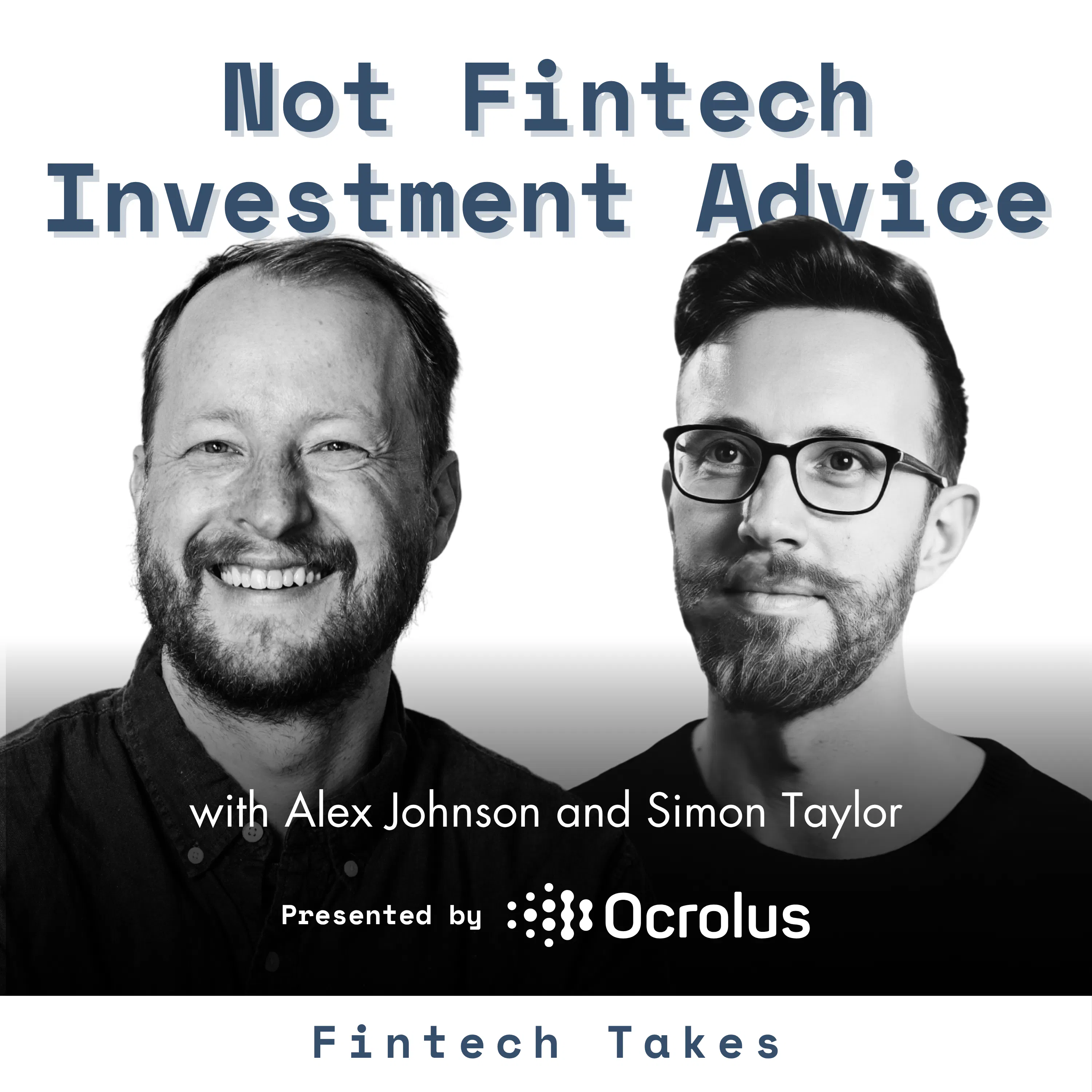 Not Fintech Investment Advice: Natural, Sky Fusion, Quarters, El Dorado | Welcome back to Not Fintech Investment Advice, where Simon Taylor and I do what we do best: talk about companies we're absolutely not giving investment advice on! First up is Natural, an AI agent orchestration layer for payments that just raised a $30M Series A. We explore its wallet architecture (which uses account structure itself as a guardrail for what agents can and can't do), and why a liability framework is still missing once payments move beyond its own network. Next is Sky Fusion, which puts small AI data centers inside people's homes, financed just like rooftop solar. We talk through the appeal of distributed compute over another giant data center nobody wants nearby, and the underwriting risk that already tripped up a wave of residential solar lenders. Then there's Quarters, a home savings rewards platform that inverts the Bilt model: instead of housing spend driving everyday purchases, everyday purchases drive housing spend, with rewards redeemable only through partners for rent, deposits, down payments, or moving costs. Finally, we close with El Dorado, a stablecoin platform with over a million consumer users across 13 countries and a fast-growing SMB base (like Bolivian import/exporters locked out of affordable dollars by the correspondent banking system). We explore stablecoins as a workaround for national monetary control, and why a physical branch is as consequential as the tech. Plus, some manifestations throughout (Simon willing Quarters toward its target renter niche, and yours truly wishing El Dorado's model into full compliance). --- This episode is brought to you by Ocrolus. Better lending starts with better intelligence. A borrower's cash flow only tells half the story, so Ocrolus fills in the rest with behavior signals and industry benchmarking. Visit https://www.ocrolus.com/ for more. --- Sign up for Alex’s Fintech Takes newsletter for the latest insightful analysis on fintech trends, along with a heaping pile of pop culture references and copious footnotes. Every Monday and Thursday: https://workweek.com/brand/fintech-takes/ And for more exclusive insider content, don’t forget to check out my YouTube page. Follow Alex: YouTube: https://www.youtube.com/channel/UCJgfH47QEwbQmkQlz1V9rQA/videos LinkedIn: https://www.linkedin.com/in/alexhjohnson Twitter: https://www.twitter.com/AlexH_Johnson Follow Simon: LinkedIn: https://www.linkedin.com/in/sytaylor/ Substack: https://sytaylor.substack.com --- Companies featured: https://www.natural.com/ https://www.skyfusion.ai/ https://myquarters.ca/ https://eldorado.io/en | 1h 00m 29s | ||||||
| 8/5/26 | 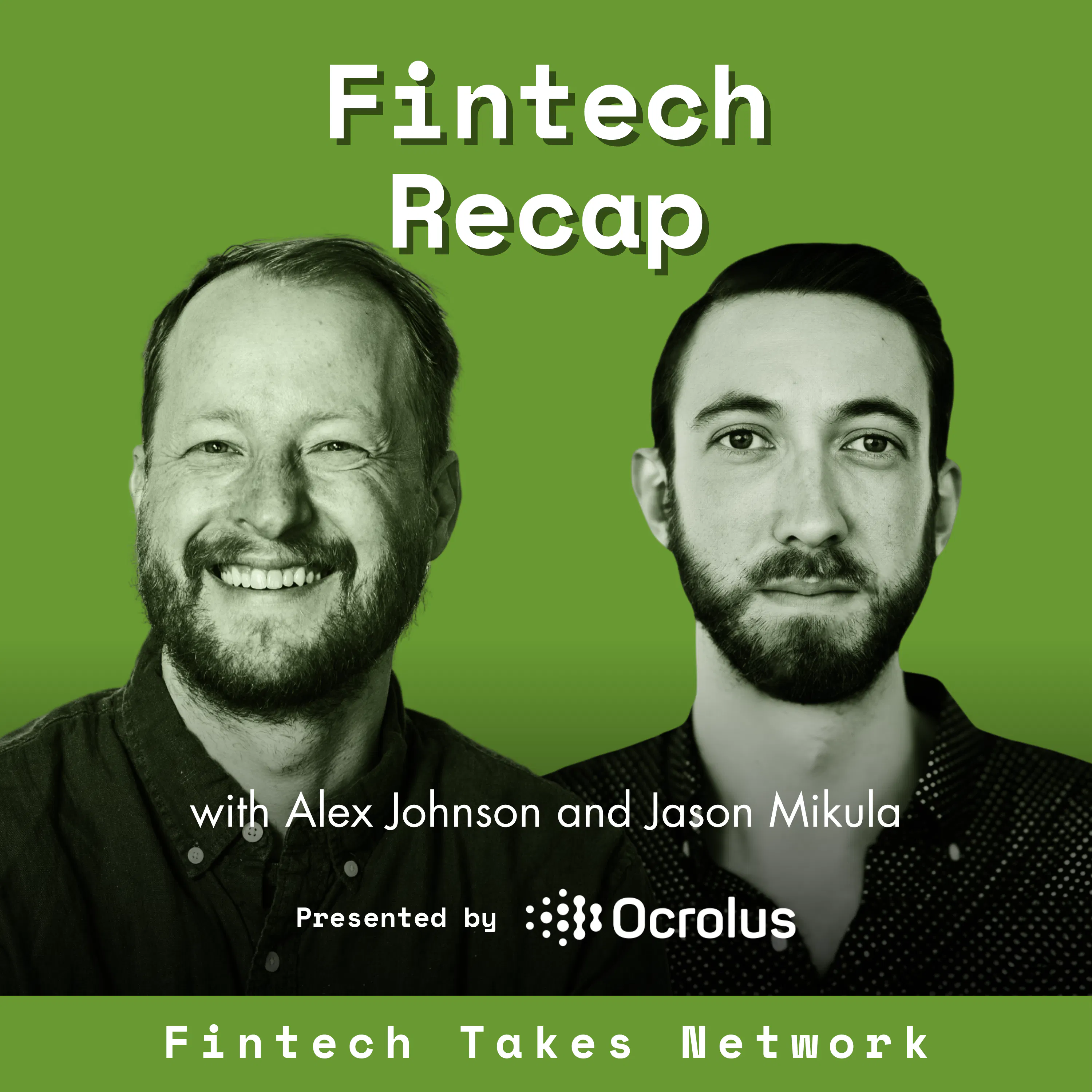 Fintech Recap: No-KYC Cards and Political Bank Charters Aplenty | Welcome back to Fintech Recap. I'm Alex Johnson, joined as always by my partner in recapping, Jason Mikula. We open with a tangled story that you should absolutely read Jason’s reporting* on. Trump-linked World Liberty Financial poured $1.5B into a crypto treasury company called Alt5 Sigma, whose token plummeted from ~20¢ to ~5¢. Buried inside that detritus, Jason uncovered a Canadian subsidiary issuing crypto-funded cards with no identity verification at all (confirmed after he posed as a prospective customer himself). From there, we widen out to a troubling trend. Charters increasingly seem to flow toward companies with the right political connections. Erebor, Augustus, and a pending application from World Liberty Financial are receiving the royal treatment. What does that mean for the OCC's long-term institutional credibility? Next, we chat about Darragh Buckley’s Increase, which built banking infrastructure for Ramp and Stripe, and just bought a tiny Washington bank to become one itself (a real-time test of whether BaaS middleware is dead). Finally, we go deep on Fed master accounts, and why Kraken's recent approval left Fed officials scrambling to explain a decision that wasn't really theirs to make (the regional Reserve Banks making these calls basically answer to no one). Plus, in our Can't Let It Gos: Erebor's reported talks to double its valuation without having proven it can run like a real bank, and Delta's new in-flight DraftKings prediction game (apparently even a flight isn't safe from the gambling-ification of everything). --- This episode is brought to you by Ocrolus. Better lending starts with better intelligence. A borrower's cash flow only tells half the story, so Ocrolus fills in the rest with behavior signals and industry benchmarking. Visit https://www.ocrolus.com/ for more. --- Sign up for Alex’s Fintech Takes newsletter for the latest insightful analysis on fintech trends, along with a heaping pile of pop culture references and copious footnotes. Every Monday, Wednesday, and Friday: https://workweek.com/brand/fintech-takes/ And for more exclusive insider content, don’t forget to check out my YouTube page. --- Follow Alex: YouTube: https://www.youtube.com/channel/UCJgfH47QEwbQmkQlz1V9rQA/videos LinkedIn: https://www.linkedin.com/in/alexhjohnson X: https://www.twitter.com/AlexH_Johnson --- Follow Jason: Newsletter: https://fintechbusinessweekly.substack.com/ LinkedIn: https://www.linkedin.com/in/jasonmikula/ *And read Jason's reporting on Alt5 Sigma and MSwipe: https://fintechbusinessweekly.substack.com/p/trump-linked-fintech-tied-to-no-kyc | 1h 21m 00s | ||||||
| 7/29/26 | 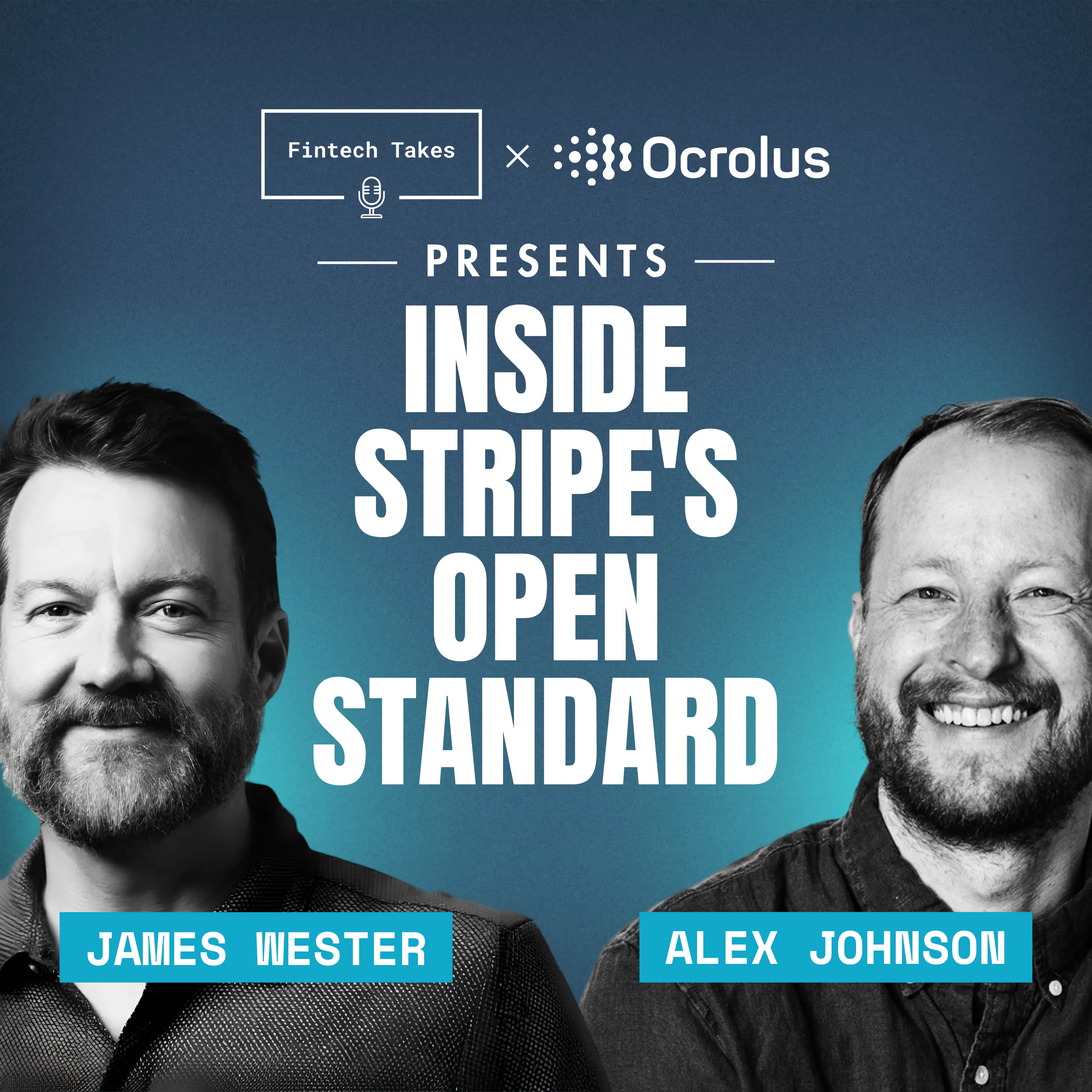 Inside Stripe's Open Standard | Welcome back to Fintech Takes. I'm Alex Johnson, joined again by James Wester (co-head of payments research at Javelin Strategy & Research), who I’ve come to think of as our resident stablecoin correspondent to make sense of the biggest stablecoin news of the summer. In July, Stripe organized a consortium called Open Standard, backed by Visa, Mastercard, American Express, and Coinbase, among others, to launch a dollar-backed stablecoin called OUSD. Within days, some of the smaller companies on that list said they hadn't agreed to what was being described. There's still no white paper, nor clarity on governance. So, what’s the Open Standard consortium building? We dig into: What's confirmed about Open Standard and OUSD, and what's still guesswork Why this fight is about platform ambition as opposed to stablecoin tech (Circle's site hails itself as "the tech stack for the agentic economy" without mentioning stablecoin; that platform ambition may be why the rest of the payments industry is organizing against it) Why payments consortiums almost always fail, and what Zelle (one of the rare successes) had that Open Standard currently doesn't Why nobody's panicking about OUSD the way central bankers panicked over Facebook's Libra in 2019, and what that reveals about stablecoin regulation Tune in for James's read on whether Open Standard becomes infrastructure or the next entry in the consortium graveyard. --- This episode is brought to you by Ocrolus. Better lending starts with better intelligence. A borrower's cash flow only tells half the story, so Ocrolus fills in the rest with behavior signals and industry benchmarking. Visit https://www.ocrolus.com/ for more. --- Sign up for Alex’s Fintech Takes newsletter for the latest insightful analysis on fintech trends, along with a heaping pile of pop culture references and copious footnotes. Every Monday, Wednesday, and Friday: https://workweek.com/brand/fintech-takes/ And for more exclusive insider content, don’t forget to check out my YouTube page. --- Follow Alex: YouTube: https://www.youtube.com/channel/UCJgfH47QEwbQmkQlz1V9rQA/videos LinkedIn: https://www.linkedin.com/in/alexhjohnson X: https://www.twitter.com/AlexH_Johnson Follow James: LinkedIn: https://www.linkedin.com/in/jameswester/ X: https://x.com/jameswester | 59m 11s | ||||||
| 7/22/26 |  The Rules for Self-Driving Money | Welcome back to Fintech Takes. I'm Alex Johnson, joined by two of my favorite repeat guests: Steve Boms (Executive Director of FDATA North America) and Dan Murphy (Founder of Sunset Park Advisors; formerly CFPB). We set aside Section 1033 for an hour to talk about agentic finance; what happens when AI agents don't just read your financial data, but act on it. First up, the question any skeptical consumer would ask: robo-advisors already exist, so what's new here? Dan's answer took the conversation back further than I expected, to a pre-fintech era of credit counselors, financial advisors, and deposit brokers who worked the phones shopping a client's savings around for a better CD rate. Then, Dan and Steve walk me through a framework from FDATA's forthcoming white paper splitting agentic finance into three layers: read, instruct, and transact. We get into what each layer actually requires on liability, consent, and fiduciary duty, and what the UK, Australia, and Brazil have already built in this space that the US hasn't. We also dig into the use cases that could change someone's day, like an "anti-inertia" tool that moves your savings the moment your bank stops paying a competitive rate. Tune in for a conversation about what it means to give an AI permission to spend your money, and why the rulebook we already have may be more ready for this than anyone expects. FDATA North America published a white paper on this exact topic, which you should read here: https://bit.ly/4wiB0a4 --- This episode is brought to you by Ocrolus. Every small business is different — but most lenders only see a snapshot. Ocrolus gives SMB lenders the cash flow analytics, borrower behavior and peer context to fund more, faster, with confidence. Visit https://www.ocrolus.com/ for more. --- Sign up for Alex’s Fintech Takes newsletter for the latest insightful analysis on fintech trends, along with a heaping pile of pop culture references and copious footnotes. Every Monday and Thursday: https://workweek.com/brand/fintech-takes/ And for more exclusive insider content, don’t forget to check out my YouTube page. --- Follow Steve: https://www.linkedin.com/in/stevenboms/ Follow Dan: https://www.linkedin.com/in/danieljmurphy01/ Follow Alex: YouTube: https://www.youtube.com/channel/UCJgfH47QEwbQmkQlz1V9rQA/videos LinkedIn: https://www.linkedin.com/in/alexhjohnson X: https://www.twitter.com/AlexH_Johnson | 1h 04m 59s | ||||||
| 7/21/26 |  Fintech Takes x TruStage presents Lending, Unbundled Ep 3: Revenue at Stake | Welcome to Lending, Unbundled, a new series from Fintech Takes, sponsored by our friends at TruStage. The series traces how consumer lending went from a single institution that handled everything to a modular value chain of specialized providers, each owning one piece of the loan, and asks what lending, unbundled, has cost the industry along the way. In Episode 3, my cohost Bjoern Nordmann (VP of New Market Development at TruStage) and I sit down with Aditya Khandekar, CRO of Corridor Platforms, to explore what happens when lending goes modular, but accountability still needs to be end-to-end (not just owned at one point in the loan lifecycle). When a borrower hits hardship, the originator, servicer, and funding source may all have different incentives. But the borrower doesn’t care who technically owns the loan; they blame the brand they can see. That’s why governance can’t sit at the end of the process, waiting to validate what already happened. Aditya’s argument is that governed decisioning can become the connective tissue: a shared evidence layer across acquisition, servicing, delinquency management, compliance, and customer management. Credit risk can move downstream. Reputation risk cannot. --- This episode is brought to you by TruStage. TruStage is a financially strong insurance and financial services provider, built on the philosophy of people helping people, meeting the needs of middle-market consumers and the businesses that serve them since day one. We believe a brighter financial future should be accessible to everyone, and our products and solutions help people confidently make financial decisions that work for them at every stage of life. Visit https://trustage.com for more information. --- Sign up for Alex’s Fintech Takes newsletter for the latest insightful analysis on fintech trends, along with a heaping pile of pop culture references and copious footnotes. Every Monday and Thursday: https://workweek.com/brand/fintech-takes/ And for more exclusive insider content, don’t forget to check out my YouTube page. Follow Alex: YouTube: https://www.youtube.com/channel/UCJgfH47QEwbQmkQlz1V9rQA/videos LinkedIn: https://www.linkedin.com/in/alexhjohnson Twitter: https://www.twitter.com/AlexH_Johnson --- Follow Bjoern: https://www.linkedin.com/in/bjoernnordmann/ Follow Aditya: https://www.linkedin.com/in/adityakhandekar/ | 51m 33s | ||||||
| 7/15/26 |  Retuning the Math of Life | Welcome back to the Fintech Takes podcast. I'm your host, Alex Johnson, and today one of our favorite guests is back: Frank Rotman, founding partner of 37Maru and co-founder and partner emeritus at QED Investors. First, we chat about what happens to an entire industry once its customers have concluded the game is rigged, which is why financial nihilism now shows up everywhere from ETFs built on sports bets to DeFi products costumed as savings accounts. Frank has a theory he calls p(win)=0; once someone concludes their probability of winning is zero, walking away from the game is rational. From there, we separate the AI use cases ready for prime time from the ones that aren’t. Back office work like AML documentation and exception processing is ripe for automation. A bank chatbot delivering flawless, compliant financial advice is a different proposition. In financial services, 98% accuracy can still equal zero. Finally, we close on student lending, an area where Frank has firsthand experience (having built a student lending company before QED), and firsthand ideas (having spent the better part of a year making the case for reform to the Department of Education and the IRS). His proposal for how the government could build a “truth file" on which degrees pay off is one of the more concrete policy ideas we discuss. Expect a wide-ranging conversation. Frank has a gift for making financial nihilism, AI, and student loan policy sound like one continuous argument, and by the end, I’m convinced that it is. --- This episode is brought to you by Ocrolus. Every small business is different — but most lenders only see a snapshot. Ocrolus gives SMB lenders the cash flow analytics, borrower behavior and peer context to fund more, faster, with confidence. Visit https://www.ocrolus.com/ for more. --- Sign up for Alex’s Fintech Takes newsletter for the latest insightful analysis on fintech trends, along with a heaping pile of pop culture references and copious footnotes. Every Monday and Thursday: https://workweek.com/brand/fintech-takes/ And for more exclusive insider content, don’t forget to check out my YouTube page. --- Follow Frank: LinkedIn: https://www.linkedin.com/in/frank-rotman/ X: https://x.com/fintechjunkie Follow Alex: YouTube: https://www.youtube.com/@FintechTakes LinkedIn: https://www.linkedin.com/in/alexhjohnson X: https://www.twitter.com/AlexH_Johnson | 1h 10m 10s | ||||||
Want analysis for the episodes below?Free for Pro Submit a request, we'll have your selected episodes analyzed within an hour. Free, at no cost to you, for Pro users. | |||||||||
| 7/14/26 |  Fintech Takes x TruStage presents Lending, Unbundled Ep 2: The Confidence Gap | Welcome to Lending, Unbundled, a new series from Fintech Takes, sponsored by our friends at TruStage. The series traces how consumer lending went from a single institution that handled everything to a modular value chain of specialized providers, each owning one piece of the loan, and asks what lending, unbundled, has cost the industry along the way. In Episode 2, my cohost Bjoern Nordmann (VP of New Market Development at TruStage) and I sit down with Taylor Nelms, VP of Research & Insights at the Financial Health Network to untangle why consumer confidence is sitting about as low as it's ever been on record, Financial health challenges show up across the income spectrum, driven by volatility on both sides of the household ledger: 7 in 10 households report a significant unexpected expense each year, and recent labor market research shows unpredictable income is now the norm for most workers (not just those with unpredictable hours). As Taylor puts it, the job of a lender isn't just extending credit. It's selling certainty against volatility. — This episode is brought to you by TruStage. TruStage is a financially strong insurance and financial services provider, built on the philosophy of people helping people, meeting the needs of middle-market consumers and the businesses that serve them since day one. We believe a brighter financial future should be accessible to everyone, and our products and solutions help people confidently make financial decisions that work for them at every stage of life. Visit https://trustage.com for more information. --- Sign up for Alex’s Fintech Takes newsletter for the latest insightful analysis on fintech trends, along with a heaping pile of pop culture references and copious footnotes. Every Monday and Thursday: https://workweek.com/brand/fintech-takes/ And for more exclusive insider content, don’t forget to check out my YouTube page. --- Follow Bjoern on LinkedIn: https://www.linkedin.com/in/bjoernnordmann/ Follow Taylor on LinkedIn: https://www.linkedin.com/in/taylor-nelms/ Follow Alex: YouTube: https://www.youtube.com/channel/UCJgfH47QEwbQmkQlz1V9rQA/videos LinkedIn: https://www.linkedin.com/in/alexhjohnson Twitter: https://www.twitter.com/AlexH_Johnson | 56m 26s | ||||||
| 7/8/26 |  Not Fintech Investment Advice: Primitive, Exponent, Prime Intellect, Coverd | Welcome back to Not Fintech Investment Advice, where Simon Taylor and I do what we do best: talk about companies we're absolutely not giving investment advice on. First up is Primitive, an agent control plane for large financial institutions trying to figure out what to do with AI agents. We get into why regulated institutions need infrastructure that sits above any one model provider, token budgets, and why AI labs deploying engineers into financial institutions should be treated less like a gift and more like a Trojan horse. Next is Exponent, a finance platform for franchisees. Franchises are one of the most reliable (and overlooked) paths to wealth building. We talk about why franchisees are hard to underwrite, how SBA lending fits in, and why a platform that helps both the borrower and lender could become the financial operating system for multi-location franchise entrepreneurs. Then there's Prime Intellect, which helps companies train, deploy, evaluate, and improve their own models. This leads us into one of our favorite nerd corridors: what happens when you train transformer models on financial events instead of language? Financial data may have its own syntax, and the models that understand it may be far more useful than the ones that chat well. We close with Covered, a gamified credit card that uses variable rewards and sweepstakes to make cash back feel like a chance to win big. Customer acquisition is brutal, top-of-wallet even harder, and in a casino economy, nudging people toward something marginally better is at least honest about the stakes. Plus, the most important question in the episode: is Anna or Elsa the real protagonist of Frozen? --- This episode is brought to you by Ocrolus. Every small business is different — but most lenders only see a snapshot. Ocrolus gives SMB lenders the cash flow analytics, borrower behavior and peer context to fund more, faster, with confidence. Visit https://www.ocrolus.com/ for more. --- Sign up for Alex’s Fintech Takes newsletter for the latest insightful analysis on fintech trends, along with a heaping pile of pop culture references and copious footnotes. Every Monday and Thursday: https://workweek.com/brand/fintech-takes/ And for more exclusive insider content, don’t forget to check out my YouTube page. Follow Alex: YouTube: https://www.youtube.com/channel/UCJgfH47QEwbQmkQlz1V9rQA/videos LinkedIn: https://www.linkedin.com/in/alexhjohnson Twitter: https://www.twitter.com/AlexH_Johnson Follow Simon: LinkedIn: https://www.linkedin.com/in/sytaylor/ Substack: https://sytaylor.substack.com --- Companies featured: https://primitive.com/ https://exponentfi.com/ https://www.primeintellect.ai/ https://www.coverd.us/ | 57m 11s | ||||||
| 7/7/26 |  Fintech Takes x TruStage presents Lending, Unbundled Ep 1: Financial Accessibility and Inclusion | Welcome to Lending, Unbundled, a new series from Fintech Takes, sponsored by our friends at TruStage. The series traces how consumer lending went from a single institution that handled everything to a modular value chain of specialized providers, each owning one piece of the loan, and asks what lending, unbundled, has cost the industry along the way. In Episode 1, I sit down with my co-host for the series, Bjoern Nordmann (VP of New Market Development at TruStage), and special guest Rodney Hood, former NCUA Chairman and Acting Comptroller of the Currency, to talk about why a regulatory framework built for vertically integrated lenders no longer matches an industry where origination, underwriting, funding, and servicing rarely sit under one roof. For most borrowers, that fragmentation shows up as a simple question: who do you call when something goes wrong? Rodney traces the shift to two forces: policy, including the compliance burden that followed Dodd-Frank, and specialization (as fintech entrants and consumer expectations for speed reshaped what lenders had to offer). Rodney also makes the case that AI can help correct for bias baked into older credit models and catch hardship before it becomes delinquency. As Rodney puts it: risk doesn't disappear because it moves, it simply changes addresses. — This episode is brought to you by TruStage. TruStage is a financially strong insurance and financial services provider, built on the philosophy of people helping people, meeting the needs of middle-market consumers and the businesses that serve them since day one. We believe a brighter financial future should be accessible to everyone, and our products and solutions help people confidently make financial decisions that work for them at every stage of life. Visit https://trustage.com for more information. --- Sign up for Alex’s Fintech Takes newsletter for the latest insightful analysis on fintech trends, along with a heaping pile of pop culture references and copious footnotes. Every Monday and Thursday: https://workweek.com/brand/fintech-takes/ And for more exclusive insider content, don’t forget to check out my YouTube page. Follow Alex: YouTube: https://www.youtube.com/channel/UCJgfH47QEwbQmkQlz1V9rQA/videos LinkedIn: https://www.linkedin.com/in/alexhjohnson Twitter: https://www.twitter.com/AlexH_Johnson --- Follow Bjoern: https://www.linkedin.com/in/bjoernnordmann/ Follow Rodney: https://www.linkedin.com/in/rodneyhood1/ | 49m 22s | ||||||
| 7/1/26 |  Fintech Recap: Failures, Prediction Markets, & Debanking | Welcome back to Fintech Recap. I'm Alex Johnson, joined as always by my partner in recapping, Jason Mikula. We start with Parker Card, an SMB charge card startup that abruptly shut down in early May. The failure itself wasn't the story. The SVB lawsuit against issuing partner Patriot Bank is, and what it reveals about $21 million in receivables that fell into contested no-man's-land when Parker's acquisition talks collapsed. If Synapse taught us anything, we apparently didn't learn it. Then prediction markets, a topic Jason forced me to cover. Fake Polymarket videos, Zuckerberg's play-money prediction app called Arena, and the CFTC’s proposed rule, which would give the industry nearly everything it wants (while drawing the line at contracts on assassination). We examine a specific loophole in that last point very carefully … From there, we get into debanking. A cluster of recent developments (from the DOJ investigating big banks and reputation risk being formally eliminated as a supervision tool to Lead Bank CEO Jackie Reses calling the whole narrative an absolute crock of shit) gave us enough to work with. Jason and I have both written extensively on this topic, and we land somewhere that might surprise some listeners. Finally, in our Can't Let It Gos: incomplete charter applications and a credit card pulled directly from my fintech nightmares. --- This episode is brought to you by Ocrolus. Every small business is different — but most lenders only see a snapshot. Ocrolus gives SMB lenders the cash flow analytics, borrower behavior and peer context to fund more, faster, with confidence. Visit https://www.ocrolus.com/ for more. Sign up for Alex’s Fintech Takes newsletter for the latest insightful analysis on fintech trends, along with a heaping pile of pop culture references and copious footnotes. Every Monday and Thursday: https://workweek.com/brand/fintech-takes/ And for more exclusive insider content, don’t forget to check out my YouTube page. Follow Jason: Newsletter: https://fintechbusinessweekly.substack.com/ LinkedIn: https://www.linkedin.com/in/jasonmikula/ Follow Alex: YouTube: https://www.youtube.com/channel/UCJgfH47QEwbQmkQlz1V9rQA/videos LinkedIn: https://www.linkedin.com/in/alexhjohnson Twitter: https://www.twitter.com/AlexH_Johnson | 1h 16m 29s | ||||||
| 6/24/26 |  The End of the Checklist Era | Welcome back to the Fintech Takes podcast. I'm Alex Johnson, joined by Andrew DiMattina, Product Architect at Persona (and expert in all things fraud and compliance, especially AML compliance), to explore the changing state of compliance in the U.S. and around the globe. The expectation going into this administration was deregulation. What banks and fintech companies have discovered over the last 18 months is that deregulation isn't less risk; it's a transfer of risk. The checklist era was expensive but legible. This era is cheaper on paper and harder in practice, especially when it comes to fraud and compliance. When rules stop telling you exactly what to do, "compliance" collapses back into its actual substance: Can you really tell who your customer is and stop the bad ones? We get into: Why most organizations are staying the course on compliance programs even as the federal floor recedes What the OCC's consent order against Community Federal Savings Bank reveals about when a fintech program grows faster than its controls Why getting a charter doesn't mean your risk profile matches your size What "know your agent" actually means when a bot might be transacting on behalf of a legitimate customer (and why it adds a new question to KYC) --- This episode is brought to you by Persona. The best fintechs expand what's possible for users. Persona does that for fraud prevention. Their recently upgraded link analysis tool surfaces connections in real time, letting you spot deepfakes, identity farms, and fraud rings during onboarding and investigations. They just published their Fraud Leader's Guide to Link Analysis, a practical look at today’s top risk signals, automating decisions, and scaling link analysis for fraud prevention. Download it now: http://withpersona.com/ftt-fraud --- Sign up for Alex’s Fintech Takes newsletter for the latest insightful analysis on fintech trends, along with a heaping pile of pop culture references and copious footnotes. Every Monday and Thursday: https://workweek.com/brand/fintech-takes/ And for more exclusive insider content, don’t forget to check out my YouTube page. Follow Alex: YouTube: https://www.youtube.com/channel/UCJgfH47QEwbQmkQlz1V9rQA/videos LinkedIn: https://www.linkedin.com/in/alexhjohnson Twitter: https://www.twitter.com/AlexH_Johnson Follow Andrew: https://www.linkedin.com/in/andrew-dimattina-4a3b0414/ | 49m 42s | ||||||
| 6/17/26 |  B2B Marketing Sucks & Can Be Better | Welcome back to Fintech Takes. I'm Alex Johnson, and today's episode is a little different. Before I wrote a newsletter for a living, I spent the beginning of my career working in B2B marketing in fintech and financial services. So this episode is built around the provocation that B2B marketing sucks, but it doesn't have to. First up, Cokie Hasiotis (Head of Vertical Marketing at Socure and author of the For the Plot newsletter) and Julie VerHage Greenberg (founder of Quinnovation and formerly a co-founder and writer of Fintech Today and reporter at Bloomberg) join me to diagnose B2B marketing's boring problem. It’s an industry where 80% of decisions are made emotionally, and yet it runs on copy that makes you feel nothing. We get into why the head of content is a job designed to fail, and why founders are so bad at telling their own stories. Then, Jessica Kendall (Head of Content and Communications at Spinwheel) joins me to talk about messaging. We also get into the two AI problems every marketing team now has to own (tune in to find out!). And last but not least, Adam Ryan (co-founder and CEO of Workweek) joins me to talk about why B2B marketers can rarely prove the value of decisions they know were right. Blame the hidden sales cycle, and the tenure problem (the average executive B2B marketer lasts 18 months, often not even a full sales cycle). We dig into: What would B2B marketing look like if it remembered that buyers are humans? Can you measure a changed mind? If AI can produce infinite “good enough” content, what's left that buyers will trust? And so much more! Tune in for a curious tour through the discipline that decides what our entire industry reads, watches, and believes. As discussed, learn more about the Workweek Partner Platform: https://advertising.workweek.com/insights/future-of-b2b-runs-on-trust/ Apply for Workweek Upfronts in Austin (August 26 & 27) here: https://workweekupfronts.com/ This episode is brought to you by Persona. The best fintechs expand what's possible for users. Persona does that for fraud prevention. Their recently upgraded link analysis tool surfaces connections in real time, letting you spot deepfakes, identity farms, and fraud rings during onboarding and investigations. They just published their Fraud Leader's Guide to Link Analysis, a practical look at today’s top risk signals, automating decisions, and scaling link analysis for fraud prevention. Download it now: http://withpersona.com/ftt-fraud Sign up for Alex’s Fintech Takes newsletter for the latest insightful analysis on fintech trends, along with a heaping pile of pop culture references and copious footnotes. Every Monday and Thursday: https://workweek.com/brand/fintech-takes/ And for more exclusive insider content, don’t forget to check out my YouTube page. Follow Cokie: LinkedIn: https://www.linkedin.com/in/cokie-hasiotis-9b666363/ Newsletter: For The Plot at https://cokiehasiotis.substack.com/ Follow Julie: LinkedIn: https://www.linkedin.com/in/julie-verhage-greenberg-1748801b/ Follow Jessica: LinkedIn: https://www.linkedin.com/in/jesslkendall/ Follow Adam: LinkedIn: https://www.linkedin.com/in/adamtryan/ Follow Alex Johnson: YouTube: https://www.youtube.com/channel/UCJgfH47QEwbQmkQlz1V9rQA/videos LinkedIn: https://www.linkedin.com/in/alexhjohnson X: https://www.twitter.com/AlexH_Johnson | 1h 51m 35s | ||||||
| 6/10/26 |  Facing Credit: Pessimism and Performance | Welcome back to the Fintech Takes podcast. I'm Alex Johnson, joined by Dave Wasik, Partner at 2nd Order Solutions, for another episode of Facing Credit, our series on everything credit and lending. Dave comes armed with 2nd Order Solutions' new credit trends report, and the headline is: things are surprisingly OK, albeit there are yellow flags. Bankruptcies are up 14% year over year. New credit card vintages from Q1 and Q2 2025 are already delinquent at higher rates than prior cohorts. The University of Michigan’s Index of Consumer Sentiment is at an all-time low in its recorded history. The squeeze is getting tighter. Dave and I dig into: Why consumer sentiment and economic performance have diverged, and what the 1970s can and can't tell us about this moment The K-shaped economy and whose vibes are actually driving consumer spending Why the models aren't broken, the borrowers are just under more strain than they've been in years What happens when you eliminate disparate impact enforcement at the federal level and hand the states a vacuum to fill We close with a format we're calling the non-AI draft. Dave and I each pick two trends in credit and lending that would be dominating every conversation if AI weren't the only thing anyone can talk about. Tune in for our picks! This episode is brought to you by Persona. The best fintechs expand what's possible for users. Persona does that for fraud prevention. Their recently upgraded link analysis tool surfaces connections in real time, letting you spot deepfakes, identity farms, and fraud rings during onboarding and investigations. They just published their Fraud Leader's Guide to Link Analysis, a practical look at today’s top risk signals, automating decisions, and scaling link analysis for fraud prevention. Download it now: http://withpersona.com/ftt-fraud Sign up for Alex’s Fintech Takes newsletter for the latest insightful analysis on fintech trends, along with a heaping pile of pop culture references and copious footnotes. Every Monday and Thursday: https://workweek.com/brand/fintech-takes/ And for more exclusive insider content, don’t forget to check out my YouTube page. Follow Dave: LinkedIn: https://www.linkedin.com/in/davewasik/ Follow Alex Johnson: YouTube: https://www.youtube.com/channel/UCJgfH47QEwbQmkQlz1V9rQA/videos LinkedIn: https://www.linkedin.com/in/alexhjohnson X: https://www.twitter.com/AlexH_Johnson | 1h 24m 41s | ||||||
| 6/3/26 |  Fintech Recap: Charters, BaaS & the Fed | Welcome back to Fintech Recap. I'm Alex Johnson, joined as always by my partner in recapping, Jason Mikula. We kick things off with the accelerating trend of fintech companies becoming banks. Chime's CEO confirmed it's a matter of when, not if — reversing their "we're a software company" stance. Mercury got conditional OCC approval for a national bank charter the same week it raised $200M at a $5.2B valuation. We explore what the fintech-to-bank stampede does to your valuation (our case studies are Chime, SoFi, and LendingClub), and why some companies chartering today might wish they hadn't. Then, BaaS Island calls us back (I'm a sucker for the sirens' song). The OCC issued a consent order against Community Federal Savings Bank, a single-branch institution in Queens that grew from $140M to $900M in assets by running fintech partner programs for Airwallex, Wise, Payoneer, among others. We discuss why the OCC acted, and why the order is unusually narrow. From there, we walk through two executive orders from the White House on fintech and bank regulation and the Federal Reserve's convoluted master account situationship. Finally, in our Can't Let It Gos: Jason can’t let go of SpaceX dumping on retail investors as exit liquidity for their VCs, and I can’t let go of PayPal's settlement with the DOJ over a fair lending investigation into a program that never made a single loan. Truly, this will haunt me forever! This episode is brought to you by Persona. The best fintechs expand what's possible for users. Persona does that for fraud prevention. Their recently upgraded link analysis tool surfaces connections in real time, letting you spot deepfakes, identity farms, and fraud rings during onboarding and investigations. They just published their Fraud Leader's Guide to Link Analysis, a practical look at today’s top risk signals, automating decisions, and scaling link analysis for fraud prevention. Download it now: http://withpersona.com/ftt-fraud Sign up for Alex’s Fintech Takes newsletter for the latest insightful analysis on fintech trends, along with a heaping pile of pop culture references and copious footnotes. Every Monday and Thursday: https://workweek.com/brand/fintech-takes/ And for more exclusive insider content, don’t forget to check out my YouTube page. Follow Jason: Newsletter: https://fintechbusinessweekly.substack.com/ LinkedIn: https://www.linkedin.com/in/jasonmikula/ Follow Alex: YouTube: https://www.youtube.com/channel/UCJgfH47QEwbQmkQlz1V9rQA/videos LinkedIn: https://www.linkedin.com/in/alexhjohnsonTwitter: https://www.twitter.com/AlexH_Johnson | 1h 13m 23s | ||||||
| 5/28/26 |  Fintech Takes x Chime presents Banking on Primacy Episode 4: The AI Episode | Welcome to Banking on Primacy, a four-part podcast miniseries from Fintech Takes, sponsored by Chime. The series orbits one question that has become the most contested in consumer finance: what does it take to earn (and hold) the most important relationship in someone's financial life? In Episode 4, I sit down with Ryan King, technical Co-Founder at Chime, to explore what AI means for the primary account relationship. Ryan has been in and around Silicon Valley as a builder through every major technology wave. He argues that AI isn't another step change; it’s a slope change. The closest historical analogy is the Industrial Revolution: factories didn't give workers better tools, they reorganized physical production. Now AI is doing the same thing to knowledge work. At Chime, that belief is already operational: 84% of code is now developed with AI. But the more interesting conversation is about consumers, not code. Most of the financial services industry is racing toward building AI that makes it easier to spend, but is that the problem everyday Americans face? When AI starts making financial decisions on behalf of consumers, whose side is it on? And how does the business model answer that question? Financial institutions have spent decades building trust with millions of account holders. How does that trust translate in a world when OpenAI and Perplexity want the same job? This episode is brought to you by Chime. For most Americans, their primary bank account is their most important financial relationship. Traditional banks held that position and took it for granted. Chime was built differently: fee-free, built to succeed when members do, and now America’s #1 banking choice with roughly 10M active members. Chime Prime takes that further: 5% cash back, savings rates up to 9x the national average, premium travel perks, no fees. See how at https://www.chimeprime.com/ Sign up for Alex’s Fintech Takes newsletter for the latest insightful analysis on fintech trends, along with a heaping pile of pop culture references and copious footnotes. Every Monday and Thursday: https://workweek.com/brand/fintech-takes/ And for more exclusive insider content, don’t forget to check out my YouTube page. Follow Alex: YouTube: https://www.youtube.com/channel/UCJgfH47QEwbQmkQlz1V9rQA/videos LinkedIn: https://www.linkedin.com/in/alexhjohnson Twitter: https://www.twitter.com/AlexH_Johnson Follow Ryan: https://www.linkedin.com/in/ryanaking/ Learn more about Chime here: https://www.chimeprime.com/ | 45m 41s | ||||||
| 5/27/26 |  Who Pays for Open Finance? | Welcome back to the Fintech Takes podcast. I'm Alex Johnson, joined by Rafe Mazer, researcher and author of the excellent report "Who Pays for What? Pricing and Monetization Options in Open Finance." This episode is a deliberate step back from the U.S. open banking soap opera I've been living inside for the past year or so. The question of who pays for open finance isn't one the U.S. gets to answer in isolation. Other markets have been wrestling with it for years, and at some point I needed someone to make me look up. That person is Rafe. Rafe works across Africa, the Middle East, Latin America, and beyond, and his new report surveys the global landscape of how open finance systems get built and funded. It’s the closest thing to a first principles analysis that exists, and you should read it (link below). We cover the four distinct cost stages of open finance (most countries only plan for one), plus the five pricing archetypes that exist globally, from Brazil's threshold pricing that was never actually collected to South Korea's voluntary, self-governing open banking exchange that works without a single regulatory mandate requiring it. The U.S., despite having one of the most competitive financial markets in the world, may be poorly positioned to get this right. We also get into reciprocity, the word that never appears in the U.S. open banking debate but probably should, and what a federal data protection law would actually change. Check out Rafe's report here: https://www.centerforfinancialinclusion.org/brief/who-pays-for-what-pricing-and-monetization-options-in-open-finance/ This episode is brought to you by Persona. The best fintechs expand what's possible for users. Persona does that for fraud prevention. Their recently upgraded link analysis tool surfaces connections in real time, letting you spot deepfakes, identity farms, and fraud rings during onboarding and investigations. They just published their Fraud Leader's Guide to Link Analysis, a practical look at today’s top risk signals, automating decisions, and scaling link analysis for fraud prevention. Download it now: http://withpersona.com/ftt-fraud Sign up for Alex’s Fintech Takes newsletter for the latest insightful analysis on fintech trends, along with a heaping pile of pop culture references and copious footnotes. Every Monday and Thursday: https://workweek.com/brand/fintech-takes/ And for more exclusive insider content, don’t forget to check out my YouTube page. Follow Rafe: LinkedIn: https://www.linkedin.com/in/rafael-rafe-mazer-13531b/ Follow Alex Johnson: YouTube: https://www.youtube.com/channel/UCJgfH47QEwbQmkQlz1V9rQA/videos LinkedIn: https://www.linkedin.com/in/alexhjohnson X: https://www.twitter.com/AlexH_Johnson | 59m 53s | ||||||
| 5/26/26 |  Fintech Takes x Nova Credit Presents Cash Flow Conversations Episode 6: Living Out on the Edge | Hello, and welcome back to Cash Flow Conversations, a podcast series sponsored by our friends at Nova Credit. We've spent a lot of time in this series focused on the mainstream adoption of cash flow data within consumer lending: where to get started, the challenges you can expect to face. Episode 6 leaves that territory behind for the open frontier, where the conversations aren't about operational realities but about what's coming next. And there’s no one better to have that conversation with than Nikki Cross, Head of Data Science Consulting at Nova Credit. We get into why the development of custom scores in cash flow lending is harder than most lenders expect on Day 1, fair lending and how to navigate compliance concerns within an entirely new universe of data, and what agentic AI means for explainable credit decisions. Cash flow data reveals far more about how consumers tend to their financial lives than bureau data ever did; which is both the opportunity and the complication. This episode is brought to you by Nova Credit. Nova Credit is a credit infrastructure and analytics company that enables businesses to grow responsibly by harnessing consumer credit data. Learn more at novacredit.com. Sign up for Alex’s Fintech Takes newsletter for the latest insightful analysis on fintech trends, along with a heaping pile of pop culture references and copious footnotes. Every Monday and Thursday: https://workweek.com/brand/fintech-takes/ And for more exclusive insider content, don’t forget to check out my YouTube page. Follow Alex: YouTube: https://www.youtube.com/channel/UCJgfH47QEwbQmkQlz1V9rQA/videos LinkedIn: https://www.linkedin.com/in/alexhjohnson Twitter: https://www.twitter.com/AlexH_Johnson Follow Nikki: https://www.linkedin.com/in/nikkicrosspatrick/ Learn more about Nova Credit here. | 59m 44s | ||||||
| 5/21/26 |  Fintech Takes x Chime presents Banking on Primacy Episode 3: Banking at Work | Welcome to Banking on Primacy, a four-part podcast miniseries from Fintech Takes, sponsored by Chime. The series orbits one question that has become the most contested in consumer finance: what does it take to earn (and hold) the most important relationship in someone's financial life? In Episode 3, I sit down with Jason Lee, Chief of Chime Enterprise. We unpack fintech as an employee benefit, which is compelling in theory but harder in practice than most founders expect. Employers don't wake up wanting fintech products. They want workers who stay. Jason founded DailyPay in his basement in 2015, built it into a multi-billion dollar company, and now looks after Chime's employer-facing business after Chime acquired his second company, Salt Labs. His read on what it actually takes to make this model work is fascinating. Why do most earned wage access products only reach 30% of a workforce and what serves the other 70%? Why does brand recognition drive employee adoption more than the product itself? Now that earned wage access is morphing into the financial health industry, where does that leave point solutions? This episode is brought to you by Chime. For most Americans, their primary bank account is their most important financial relationship. Traditional banks held that position and took it for granted. Chime was built differently: fee-free, built to succeed when members do, and now America’s #1 banking choice with roughly 10M active members. Chime Prime takes that further: 5% cash back, savings rates up to 9x the national average, premium travel perks, no fees. See how at https://www.chimeprime.com/ Sign up for Alex’s Fintech Takes newsletter for the latest insightful analysis on fintech trends, along with a heaping pile of pop culture references and copious footnotes. Every Monday and Thursday: https://workweek.com/brand/fintech-takes/ And for more exclusive insider content, don’t forget to check out my YouTube page. Follow Alex: YouTube: https://www.youtube.com/channel/UCJgfH47QEwbQmkQlz1V9rQA/videos LinkedIn: https://www.linkedin.com/in/alexhjohnson Twitter: https://www.twitter.com/AlexH_Johnson Follow Jason: https://www.linkedin.com/in/jasonleem2/ | 48m 56s | ||||||
| 5/20/26 |  Losing Big | Welcome back to the Fintech Takes podcast. I'm Alex Johnson, joined by Jonathan Cohen, Policy Lead at the American Institute for Boys and Men and author of Losing Big: America's Reckless Bet on Sports Gambling. In keeping with a theme that we've been building on around here, today's episode is about sports betting, gambling, prediction markets, and the infiltration of all of these activities into financial services apps. We cover the 2018 Supreme Court ruling that had almost nothing to do with gambling and everything to do with states' rights; the frictionless mobile nature of betting today and what that unlocked; the research on young men, loneliness, and financial nihilism that explains why this landed where it did; and the CFTC's decision to classify sports prediction market contracts as swaps, which handed the industry a green light that may not survive the next Supreme Court term. We also get into Robinhood's role as backend infrastructure for Trump accounts, and what it means that young men may soon inherit a government-seeded investment account from the same company that's pushing them toward sports betting. Check out Jonathan's book here: https://a.co/d/0bbrz0IR This episode is brought to you by Persona. The best fintechs expand what's possible for users. Persona does that for fraud prevention. Their recently upgraded link analysis tool surfaces connections in real time, letting you spot deepfakes, identity farms, and fraud rings during onboarding and investigations. They just published their Fraud Leader's Guide to Link Analysis, a practical look at today’s top risk signals, automating decisions, and scaling link analysis for fraud prevention. Download it now: http://withpersona.com/ftt-fraud Sign up for Alex’s Fintech Takes newsletter for the latest insightful analysis on fintech trends, along with a heaping pile of pop culture references and copious footnotes. Every Monday and Thursday: https://workweek.com/brand/fintech-takes/ And for more exclusive insider content, don’t forget to check out my YouTube page. Follow Jonathan: LinkedIn: https://www.linkedin.com/in/jonathan-cohen-6219b989/ Follow Alex Johnson: YouTube: https://www.youtube.com/channel/UCJgfH47QEwbQmkQlz1V9rQA/videos LinkedIn: https://www.linkedin.com/in/alexhjohnsonX: https://www.twitter.com/AlexH_Johnson | 1h 02m 24s | ||||||
| 5/14/26 |  Fintech Takes x Chime presents Banking on Primacy Ep 2: The Bifurcation of Rewards | Welcome to Banking on Primacy, a four-part podcast miniseries from Fintech Takes, sponsored by Chime. The series orbits one question that has become the most contested in consumer finance: what does it take to earn (and hold) the most important relationship in someone's financial life? In Episode 2, I sit down with Vineet Mehra, Chief Growth and Marketing Officer at Chime, to dig into the rewards economy in banking. Americans deposit ~70% of their income into checking accounts, but that account returns almost nothing. Meanwhile, the most valuable rewards in consumer finance have migrated to the credit side (and increasingly to a narrow tier of premium cardholders who can afford to play the game). Vineet walks through how Chime is trying to collapse that bifurcation with Chime Prime, and why the primary account relationship is the right place to start. Why did credit cards become a prestige product while the checking account stayed a utility? What does it mean to design rewards for usage rather than breakage, and why does a payments-driven business model make that easier to commit to? How does brand building work differently when your target isn't a premium cardholder but the 200 million Americans who feel underserved by traditional banks? This episode is brought to you by Chime. For most Americans, their primary bank account is their most important financial relationship. Traditional banks held that position and took it for granted. Chime was built differently: fee-free, built to succeed when members do, and now America’s #1 banking choice with roughly 10M active members. Chime Prime takes that further: 5% cash back, savings rates up to 9x the national average, premium travel perks, no fees. See how at https://www.chimeprime.com/ Sign up for Alex’s Fintech Takes newsletter for the latest insightful analysis on fintech trends, along with a heaping pile of pop culture references and copious footnotes. Every Monday and Thursday: https://workweek.com/brand/fintech-takes/ And for more exclusive insider content, don’t forget to check out my YouTube page. Follow Alex: YouTube: https://www.youtube.com/channel/UCJgfH47QEwbQmkQlz1V9rQA/videos LinkedIn: https://www.linkedin.com/in/alexhjohnson Twitter: https://www.twitter.com/AlexH_Johnson Follow Vineet: https://www.linkedin.com/in/vineetmehra1/ Learn more about Chime here: https://www.chimeprime.com/ | 54m 51s | ||||||
| 5/13/26 |  The Rise of Sports Gambling | Welcome back to the Fintech Takes podcast. I'm Alex Johnson, joined by Danny Funt, author of the book Everybody Loses: The Tumultuous Rise of American Sports Gambling. This episode isn’t really about sports. It’s about how sports gambling evolved in the U.S. from a patchwork of legal quirks, a highly coordinated state-by-state lobbying campaign, and a set of product dynamics that, over time, became increasingly adversarial to the customer. Danny and I walk through the key inflection points: from the 1992 PASPA (Professional and Amateur Sports Protection Act) federal ban, to the fantasy sports exemption that gave FanDuel and DraftKings their head start, to the widely misunderstood 2018 Supreme Court ruling, to the rise of VIP host programs and affiliate-driven media incentives. And finally, to prediction markets, which in Danny’s view look a lot like a compressed replay of the same playbook. For anyone in financial services watching gambling and investing collapse into each other in real time, this conversation has a lot to say about where that's heading. Check out Danny’s book here: https://a.co/d/04liSaKI This episode is brought to you by Persona. The best fintechs expand what's possible for users. Persona does that for fraud prevention. Their recently upgraded link analysis tool surfaces connections in real time, letting you spot deepfakes, identity farms, and fraud rings during onboarding and investigations. They just published their Fraud Leader's Guide to Link Analysis, a practical look at today’s top risk signals, automating decisions, and scaling link analysis for fraud prevention. Download it now: http://withpersona.com/ftt-fraud Sign up for Alex’s Fintech Takes newsletter for the latest insightful analysis on fintech trends, along with a heaping pile of pop culture references and copious footnotes. Every Monday and Thursday: https://workweek.com/brand/fintech-takes/ And for more exclusive insider content, don’t forget to check out my YouTube page. Follow Danny: LinkedIn: https://www.linkedin.com/in/danny-funt-2695b4a3/ Follow Alex Johnson: YouTube: https://www.youtube.com/channel/UCJgfH47QEwbQmkQlz1V9rQA/videos LinkedIn: https://www.linkedin.com/in/alexhjohnsonX: https://www.twitter.com/AlexH_Johnson | 1h 08m 36s | ||||||
Showing 25 of 247
Pitch Fit is a Pro feature
See how bookable this show is for guests, which brands already advertise, the per-episode ad value, and the best-fit guest and sponsor profile. The numbers are blurred on the free plan.
How readily this show books outside guests like you.
How proven this show is for host-read sponsorships.
For Guests
ProFor Advertisers
ProUpgrade to Pro to unlock guest cadence, sponsor categories, fit scores, and per-episode ad value for this show.
Chart history for Fintech Takes
Peaked at #130 in CL, currently #130 in CL.
| Market | Genre | Peak | Current | Trend |
|---|---|---|---|---|
| CL | — | #130 | #130 | — |
| Japan | — | #182 | #182 | — |
Chart Positions
2 placements across 2 markets.
Chart Positions
2 placements across 2 markets.