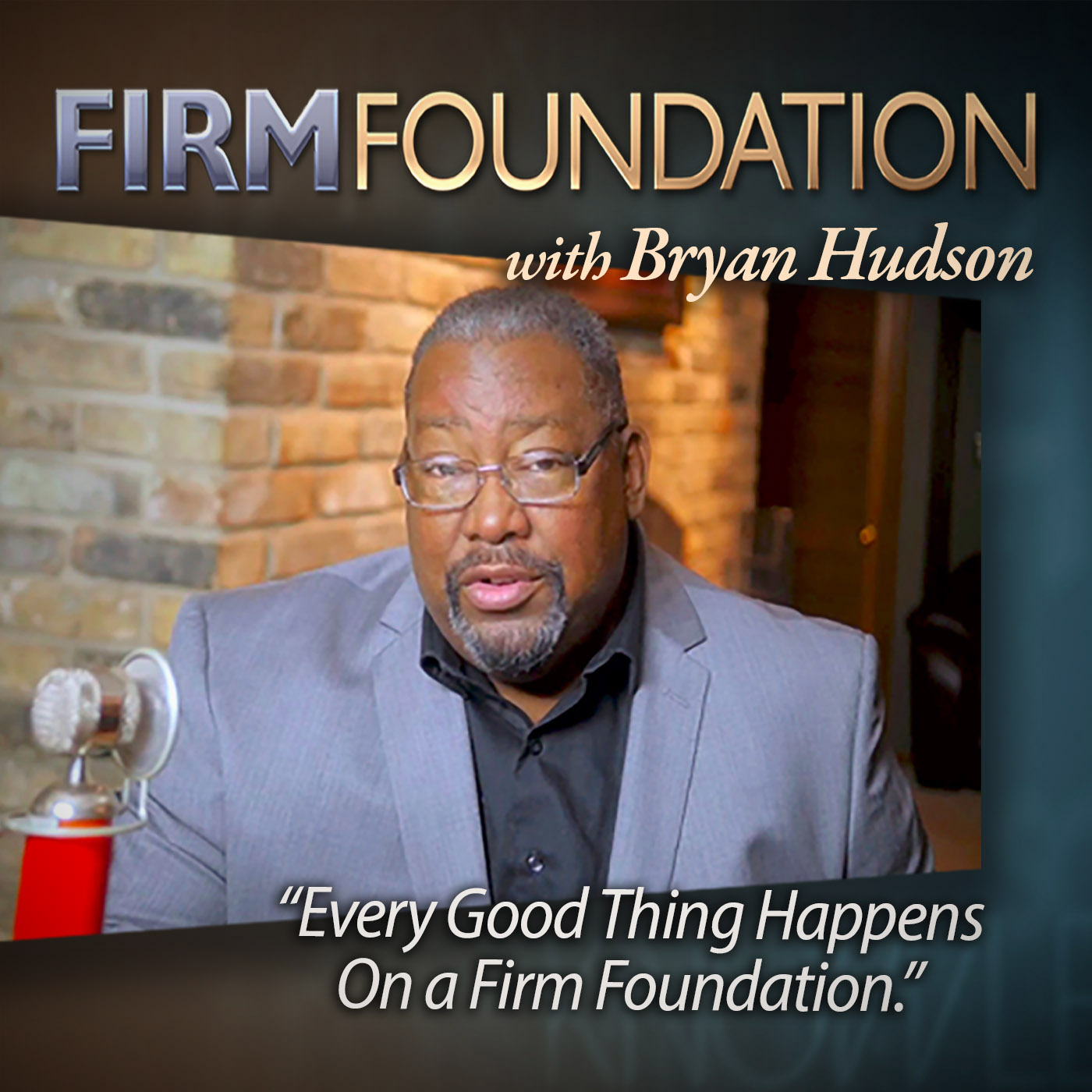
Firm Foundation with Bryan Hudson
by Bryan Hudson
Insights from recent episode analysis
Audience Interest
Podcast Focus
Publishing Consistency
Platform Reach
Insights are generated by CastFox AI using publicly available data, episode content, and proprietary models.
Most discussed topics
Brands & references
No brand mentions extracted.
Est. Listeners
Based on iTunes & Spotify (publisher stats).
- Per-Episode Audience
Est. listeners per new episode within ~30 days
1 - 1,000 - Monthly Reach
Unique listeners across all episodes (30 days)
1 - 5,000 - Active Followers
Loyal subscribers who consistently listen
1 - 500
Market Insights
Platform Distribution
Reach across major podcast platforms, updated hourly
Total Followers
—
Total Plays
—
Total Reviews
—
* Data sourced directly from platform APIs and aggregated hourly across all major podcast directories.
On the show
From 1 epsHost
Recent guests
No guests detected in recent episodes.
Recent episodes
"Rooted & Grounded" Part One, "Strengthened With Might"
May 4, 2026
33m 59s
"Rooted & Grounded" – Firm Foundation Inspiration Minute #217 for April 29, 2026
Apr 29, 2026
3m 50s
"Commit Your Way to the Lord" – Firm Foundation Inspiration Minute #216 for April 22, 2026
Apr 22, 2026
3m 42s
"Come Aside & Rest" – Firm Foundation Inspiration Minute #215 for April 15, 2026
Apr 15, 2026
3m 50s
"The Ministry of Presence" – Firm Foundation Inspiration Minute #214 for April 8, 2026
Apr 8, 2026
3m 17s
Social Links & Contact
Official channels & resources
Official Website
Login
RSS Feed
Login
Resolving iTunes ID\u2026 if this persists, the podcast may not be indexed on Apple Podcasts.
| Date | Episode | Topics | Guests | Brands | Places | Keywords | Sponsor | Length | |
|---|---|---|---|---|---|---|---|---|---|
| 5/4/26 | ![]() "Rooted & Grounded" Part One, "Strengthened With Might"✨ | spiritual growthstrength+3 | — | — | — | rootedgrounded+3 | — | 33m 59s | |
| 4/29/26 | ![]() "Rooted & Grounded" – Firm Foundation Inspiration Minute #217 for April 29, 2026 | Ephesians 3:14, For this reason I bow my knees to the Father [f]of our Lord Jesus Christ, 15 from whom the whole family in heaven and earth is named, 16 that He would grant you, according to the riches of His glory, to be strengthened with might through His Spirit in the inner man, 17 that Christ may dwell in your hearts through faith; that you, being rooted and grounded in love, 18 may be able to comprehend with all the saints what is the width and length and depth and height— 19 to know the love of Christ which passes knowledge; that you may be filled with all the fullness of God. | 3m 50s | ||||||
| 4/22/26 | ![]() "Commit Your Way to the Lord" – Firm Foundation Inspiration Minute #216 for April 22, 2026 | Psalm 37:5, Commit your way to the Lord, Trust also in Him, And He shall bring it to pass This is an excerpt from the Audible edition of new book:"Learning to Trust God More: 21-Day Devotional from Psalm 37" It is available in three editions: Print, Kindle ebook, and Audible digital voice at https://bit.ly/4tqWi46 Includes contributions from Patricia Hudson, Stacy Williams, and Pastor L. Irving Robb. In these times, we need to live on the firm foundation of loving and trusting the Lord, even while being active in serving others, and helping the vulnerable. This Psalm begins with the words, "Do not fret because of evildoers, nor be envious of the workers of iniquity." It ends with the words, "But the salvation of the righteous is from the Lord; He is their strength in the time of trouble." This 21-day devotional will educate, encourage, and inspire you to walk in faith in God and develop the courage to engage with wisdom. Here are the topics for each day: Day 1 — Do Not Fret Day 2 — The Temporary Nature of Evil Day 3 — Trust & Do Good Day 4 — Delight in the Lord Day 5 — Commit Your Way Day 6 — God Will Vindicate Day 7 — Loosen Your Grip on Anger Day 8 — Waiting with Hope & Active Faith Day 9 — The Way of Meekness Day 10 — Use the Power of Another Day 11 — God Sustains the Righteous Day 12 — Evil is Self-Destructive Day 13 — How Less Can Be More Day 14 — God Knows Your Days Day 15 — The End of the Wicked Day 16 — Generosity Reveals the Heart Day 17 — Ordered Steps, Part One Day 18 — Ordered Steps, Part Two Day 19 — A Living Testimony Day 20 — God Loves Justice Day 21 — Salvation Belongs to the Lord | 3m 42s | ||||||
| 4/15/26 | ![]() "Come Aside & Rest" – Firm Foundation Inspiration Minute #215 for April 15, 2026 | Mark 6:30-32, Then the apostles gathered to Jesus and told Him all things, both what they had done and what they had taught. 31 And He said to them, “Come aside by yourselves to a deserted place and rest a while.” For there were many coming and going, and they did not even have time to eat. 32 So they departed to a deserted place in the boat by themselves. | 3m 50s | ||||||
| 4/8/26 | ![]() "The Ministry of Presence" – Firm Foundation Inspiration Minute #214 for April 8, 2026 | Message from Sunday, April 5 Raised to Walk in the Newness of Life Romans 12:15, Rejoice with those who rejoice, and weep with those who weep. | 3m 17s | ||||||
| 4/5/26 | ![]() RISEN: Raised to Walk in Newness of Life | Pastor Bryan Hudson, D.Min. | DOWNLOAD KEYNOTE SLIDES This message centers on the resurrection of Jesus as both a past event and a present reality. It explains the phrase “Jesus is risen” as emphasizing that Christ is alive now, not merely that He rose in the past. Drawing primarily from Romans 6:4 and related passages, the sermon teaches that believers identify with Christ in His death, which brings liberation from sin, and that this liberation leads to elevation through “newness of life.” The message highlights two main principles: identification leads to liberation, and liberation leads to elevation. Through Christ’s resurrection, believers have access to resurrection power every day for healing, strength, encouragement, renewal, and victorious living. The sermon closes by urging listeners to embrace their new identity in Christ, walk in resurrection power, and live uplifted lives that also help lift others. Romans 6:1, What shall we say then? Shall we continue in sin that grace may abound? 2 Certainly not! How shall we who died to sin live any longer in it? 3 Or do you not know that as many of us as were baptized into Christ Jesus were baptized into His death? 4 Therefore we were buried with Him through baptism into death, that just as Christ was raised from the dead by the glory of the Father, even so we also should walk in newness of life. | 35m 27s | ||||||
| 4/1/26 | ![]() "A Brand New Way to Live" – Firm Foundation Inspiration Minute #213 for April 1, 2026 | Romans 6:4 Therefore we were buried with Him through baptism into death, that just as Christ was raised from the dead by the glory of the Father, even so we also should walk in newness of life. | 4m 06s | ||||||
| 3/30/26 | ![]() “Blessing in the Secret Place, Bounty in God’s Plan” by Bryan Hudson, D.Min. | “Blessing in the Secret Place, Bounty in God’s Plan” Psalm 91:1, He who dwells in the secret place of the Most High Shall abide under the shadow of the Almighty. 2 I will say of the Lord, “He is my refuge and my fortress; My God, in Him I will trust.” Leviticus 25:18, If you want to live securely in the land, follow my decrees and obey my regulations. 19 Then the land will yield large crops, and you will eat your fill and live securely in it. 20 But you might ask, ‘What will we eat during the seventh year, since we are not allowed to plant or harvest crops that year?’ 21 Be assured that I will send my blessing for you in the sixth year, so the land will produce a crop large enough for three years. 22 When you plant your fields in the eighth year, you will still be eating from the large crop of the sixth year. In fact, you will still be eating from that large crop when the new crop is harvested in the ninth year. Pastor Bryan Hudson’s, D.Min. sermon centers on the theme that living close to God and trusting His plan leads to provision, protection, and completion of what He has started. Drawing from Psalm 91:1–2 and Leviticus 25:22, he connects the church’s anniversary theme, “Faith Alive,” to the truth that faith is alive because Jesus is alive, and because God is not finished with His people yet. A major emphasis of the message is that believers must learn to walk by faith and not by sight. Dr. Hudson illustrates this with testimonies about churches paying off mortgages and leaders who acted in faith before they saw the final outcome. His point is that because Jesus finished His work, believers can trust God to help them finish theirs. What looks unfinished in the natural is already complete in God’s purpose. From Psalm 91, he identifies two mandates and two affirmations: believers are called to dwell in the secret place of God’s presence and abide under His shadow, meaning they must live near God and trust His protection. They must also confess that the Lord is their refuge and fortress and declare their trust in Him. In a shaky world, God remains the believer’s secure foundation. From Leviticus 25, Dr. Hudson explains the principle of preserved provision. God commanded Israel to let the land rest in the seventh year, but He also promised such an abundant harvest in the sixth year that it would sustain them until new crops came in. This becomes a lesson in obedience, trust, rest, and preparation: God provides in advance for seasons when visible increase is not happening. The preacher applies this practically to financial stewardship, saving, tithing, and breaking cycles of lack through obedience to God’s order. He then applies the message directly to Hope of Glory Church, saying that their eighth year is a transition year. As they approach paying off their mortgage, they are nearing a new season of freedom, provision, and possibility. Being debt free is not just about relief from bills, but about having more seed to sow and entering greater fruitfulness. He reinforces this with Amos 9:13, describing a season of such abundance that one harvest overlaps with the next. The sermon closes with three main principles: God honors His own order, God provides for obedience, and God’s provision can be stored. Dr. Hudson urges the congregation to activate faith by believing, speaking, and acting. He ends with corporate affirmations declaring that their faith is active, they will obey God without hesitation, dwell in His presence, trust His covering, sow in this season, retire the mortgage, and enter a new season of abundance. In one sentence: this sermon teaches that faithful obedience in God’s presence positions believers to receive His preserved provision, finish what He started, and step into a new season of abundance. | 34m 25s | ||||||
| 3/18/26 | ![]() "Ready & Well-Positioned" – Firm Foundation Inspiration Minute #212 for March 18, 2026 | Luke 9:1, Then He called His twelve disciples together and gave them power and authority over all demons, and to cure diseases. 2 He sent them to preach the kingdom of God and to heal the sick. 3 And He said to them, “Take nothing for the journey, neither staffs nor bag nor bread nor money; and do not have two tunics apiece. 62, But Jesus said to him, “No one, having put his hand to the plow, and looking back, is fit for the kingdom of God.” "Fit” means suitable, ready, or well-positioned for kingdom service. | 3m 43s | ||||||
| 3/16/26 | ![]() “Unstuck & Fit for God’s Kingdom” – Part Three of "FORWARD: The Only Direction God is Moving" | Pastor Hudson reviews the earlier themes of the series: the peril of the past, seen in Lot’s wife looking back; the peril of the present, seen in Israel facing the Red Sea and Pharaoh’s army; and the promise of the future, which requires faith to see beyond present obstacles. He stresses that before people can move forward outwardly, they must first move forward inwardly—in heart and mind. Using Luke 9:62, Pastor Hudson explains that Jesus’ words about putting one’s hand to the plow and not looking back speak to focus, commitment, and Kingdom readiness. To be “fit for the kingdom” means being suitable, ready, and well-positioned for God’s service. Looking back, carrying too many distractions, or losing focus makes a person ineffective in their calling. He then connects this to the story of the man at the Pool of Bethesda in John 5. The man had been disabled for 38 years and was trapped in a system of false hope, waiting for healing in the water but never experiencing change. Pastor Hudson says the man’s real problem was not just his condition, but the system he was stuck in. Bethesda represents the kinds of systems people rely on that actually keep them stuck—socially, emotionally, spiritually, financially, or relationally. A key insight of the message is this: you are not the stuck thing; the system is stuck. People are not defined by their trauma, environment, or condition. God did not create anyone to live in bondage. Pastor Hudson uses the illustration of boots stuck in mud: the person is not stuck—the boots are. The answer is to step out of them. In the same way, believers must step out of mindsets, habits, environments, and patterns that keep them bound. He emphasizes that the miracle for the man at Bethesda was not in the water, but in leaving the water when Jesus said, “Rise, take up your bed and walk.” Becoming unstuck is not always dramatic; often it happens through simple but important steps like changing your environment, setting boundaries, changing your mindset, ending destructive relationships, refusing gossip, or breaking unhealthy cycles. The message closes with the acrostic FORWARD:Faithful, Obedient, Resilient, Wise, Aligned, Redemptive, Destined.These qualities describe the kind of life that moves with God. Pastor Hudson’s final encouragement is that believers should remain focused, avoid rigged systems and false hope, and keep moving forward because forward is the only direction God is moving. | 41m 42s | ||||||
Want analysis for the episodes below?Free for Pro Submit a request, we'll have your selected episodes analyzed within an hour. Free, at no cost to you, for Pro users. | |||||||||
| 3/11/26 | ![]() "Systems That Help or Hurt" – Firm Foundation Inspiration Minute #211 for March 11, 2026 | Message from Sunday, March 8 The Promise & Peril of Systems John 5:5, Now there is in Jerusalem by the Sheep Gate a pool, which is called in Hebrew, Bethesda, having five porches. 3 In these lay a great multitude of sick people, blind, lame, paralyzed, waiting for the moving of the water. 4 For an angel went down at a certain time into the pool and stirred up the water; then whoever stepped in first, after the stirring of the water, was made well of whatever disease he had. Now a certain man was there who had an infirmity thirty-eight years.6, When Jesus saw him lying there, and knew that he already had been in that condition a long time, He said to him, “Do you want to be made well?” 7 The sick man answered Him, “Sir, I have no man to put me into the pool when the water is stirred up; but while I am coming, another steps down before me.” 8 Jesus said to him, “Rise, take up your bed and walk.” 9 And immediately the man was made well, took up his bed, and walked. A system is a structure of interacting parts that produces outcomes, good and bad.Navigating systems requires: Knowledge, patience, perseverance, willingness to adapt, and courage to challenge when necessary. In this text, we see the convergence and collision of different systems:1. The system of the man and the people at Bethesda.2. The system of false hope3. The system of how disabled people were treated4. Religious systems5. The system of Jesus & the Kingdom of God | 3m 29s | ||||||
| 3/9/26 | ![]() "The Peril & Promise of Systems" - FORWARD: The Only Direction God is Moving, Part Two | Detailed Summary: “The Peril & Promise of Systems” (Generated by OpenAI) By Bryan Hudson, D.Min. ~ New Covenant Church, March 8, 2026 Central Message:While the world is governed by many systems, believers are called to navigate and/or challenge those systems while anchoring themselves in the system of the Kingdom of God. From that foundation, we can discern the peril of destructive systems and the promise of systems aligned with God’s justice, compassion, and truth, enabling them to move forward with wisdom and purpose. 1. Living Between the Peril of the Past and the Promise of the Future The message begins by framing the spiritual posture necessary for moving forward with God. Three dangers are identified: 1. The Peril of the PastPeople become trapped by regret, memory, and nostalgia. While remembering can be healthy, living in the past prevents forward movement. 2. The Peril of the PresentCircumstances, fear, and pressure can dictate how people think and act if they allow the present moment to define their reality. 3. The Promise of the FutureBelievers are called to live in the expectation of what God is doing ahead. God’s direction is always forward, and faith requires aligning with that forward movement. The Exodus story illustrates this principle. When Israel faced the Red Sea with Pharaoh’s army approaching behind them, God told Moses to “tell the people to go forward.” Even when the path was not visible, the first step forward was a change in mindset. Forward movement begins not with physical action but with transformed thinking. 2. Three Levels of Forward Action Three scriptures illustrate how God’s purposes operate across three dimensions: Heavenly Perspective Psalm 103:19, The Lord has established His throne in heaven, and His kingdom rules over all. The Church’s Role 1 Corinthians 3:9, For we are God’s fellow workers; you are God’s field, you are God’s building. Society and Justice Jeremiah 22:3, Execute judgment and righteousness, and deliver the plundered out of the hand of the oppressor. Do no wrong and do no violence to the stranger, the fatherless, or the widow, nor shed innocent blood in this place.” Together these passages show that believers must be “heavenly minded and earthly good.” Our faith must translate into real-world service. 3. The Purpose of the Church The sermon challenges a shallow form of Christianity focused only on religious activity. The church exists not merely to “have church” but to serve people and influence society. True Christianity involves action: Not only loving in word, but loving in deed Not only praying, but acting Not only preaching, but serving Believers are meant to become living expressions of Christ—“epistles read by all people.” 4. Jesus’ Model of Compassion Matthew 25 is presented as a defining picture of what authentic Christianity looks like. Jesus identifies Himself with: the hungry, the thirsty, the stranger, the homeless, the sick the imprisoned Serving people in need is therefore equivalent to serving Christ Himself. The sermon critiques versions of Christianity that ignore or reject vulnerable people while claiming religious authority. Authentic faith must mirror the compassion of Jesus. 5. Understanding Systems The central theme of the message is the nature of systems. A system is defined as: “An organized structure of interacting parts that produces outcomes—good or bad.” Systems shape human experience in every area of life. Examples include: government systems, legal systems, healthcare systems, travel systems, cultural systems, religious systems, family systems Even God’s kingdom operates as a system—one that is perfectly just and life-giving. 6. Navigating Systems Successfully navigating systems requires several qualities: Knowledge, Patience, Perseverance, Adaptability, Courage to challenge unjust systems Every person lives within systems they did not create. These systems influence opportunities, expectations, and outcomes. Unders | 45m 34s | ||||||
| 3/4/26 | ![]() "Moving Forward" – Firm Foundation Inspiration Minute #210 for March 4, 2026 | Hebrews 12:1-2, Therefore we also, since we are surrounded by so great a cloud of witnesses, let us lay aside every weight, and the sin which so easily ensnares us, and let us run with endurance the race that is set before us, 2 looking unto Jesus, the author and finisher of our faith, who for the joy that was set before Him endured the cross, despising the shame, and has sat down at the right hand of the throne of God. The greatest challenge to moving forward is the past and the present Three perspectives: THE PERIL OF THE PASTTHE PERIL OF THE PRESENTTHE PROMISE OF THE FUTURE THE PERIL OF THE PAST Successes, failures, mistakes, and even people who keep us looking back. THE PERIL OF THE PRESENT Allowing circumstances alone to define your reality. The perils of the past and present can conspire to ruin your perception of the futureThe most significant difference between you, your lived experience, and a crisis is what you think about it. THE PROMISE OF THE FUTUREThe Promise of the future is your character in Christ and God’s promises. | 3m 39s | ||||||
| 3/2/26 | ![]() "FORWARD: The Only Direction God Is Moving" by Bryan Hudson, DMin | Summary of Message by Pastor Bryan Hudson, DMin FORWARD: The Only Direction God Is Moving (Generated by OpenAI) This message presents “Forward” as a foundational theme: God’s direction is always forward, and those who walk with Him must align themselves with that movement. The focus is on developing the right perspective, mindset, and faith to move into a new season with clarity and spiritual strength. Hebrews 12:1–2, Therefore we also, since we are surrounded by so great a cloud of witnesses, let us lay aside every weight, and the sin which so easily ensnares us, and let us run with endurance the race that is set before us, 2 looking unto Jesus, the author and finisher of our faith, who for the joy that was set before Him endured the cross, despising the shame, and has sat down at the right hand of the throne of God. Perception by Ryan Holiday: Perception is how we see and understand what occurs around us—and what we decide those events will mean. Our perceptions can be a source of strength or of great weakness. Just because other people say that something is hopeless or crazy or broken to pieces doesn’t mean it is. We decide what story to tell ourselves. Or whether we will tell one at all. Welcome to the power of perception. Forward Is a Mindset Forward is more than physical movement. It is a way of thinking and living. Without a forward mindset, life becomes confined to two realities: The past (what has already happened) The present (what is currently happening) But God is always revealing something beyond what we currently see. A forward mindset embraces growth, development, and destiny rather than remaining trapped in memory or circumstance. Perception Shapes Experience A central principle of the message is that perception influences reality. Events are real, but how we interpret them determines how they shape us. Believers must guard against allowing: Other people’s narratives Cultural narratives Emotional reactions to define their reality. This is not about positive thinking alone; it is about aligning perception with God’s Word, promises, and character. Faith itself is a God-centered perspective. What you perceive may not automatically change circumstances—but it will change you, and that transformation positions you for forward movement. Hebrews 12:1–2 — The Roadmap for Forward Movement The message uses Hebrews 12:1–2 as a spiritual roadmap for going forward: Lay aside every weight — not everything that slows you down is sinful, but unnecessary burdens must be released. Lay aside sin — entanglements that ensnare must be removed. Run with endurance — forward progress requires persistence, not speed. Run your race — avoid distraction, comparison, and outside noise. Look unto Jesus — He is both the author (starter) and finisher (developer) of faith. Forward living requires discipline and focus. Just as travel requires a map, purposeful spiritual movement requires direction and clarity. The Greatest Obstacles: The Past and the Present The message identifies two major threats to forward progress, along with a third contrasting promise: The Peril of the Past The Peril of the Present The Promise of the Future The Peril of the Past The past becomes dangerous when it pulls us backward emotionally, mentally, or spiritually. The peril of the past includes: Successes that create complacency Failures that create shame Mistakes that create regret People who try to hold us in old versions of ourselves A key distinction is made: Remembering means learning lessons. Looking back means longing to return. Looking back prevents growth because it distracts from what God is doing now. The warning of Lot’s wife illustrates that backward movement can lead to destruction. She was instructed to flee judgment, but instead turned back toward what she was leaving. The lesson: when God says move forward, hesitation and reversal are dangerous. The message also emphasizes the importance of accurate remembrance. Ign | 42m 32s | ||||||
| 2/24/26 | ![]() Day 21: "Salvation Belongs to the Lord" (Audio) | 21-Day Firm Foundation Devotional from Psalm 37 | Day 21 — Salvation Belongs to the Lord By Pastor Bryan Hudson, DMin LINK TO ALL LESSONS IN THE DEVOTIONAL Psalm 37:39–40, “But the salvation of the righteous is from the Lord; He is their strength in the time of trouble. And the Lord shall help them and deliver them; He shall deliver them from the wicked, And save them, Because they trust in Him.”Key Thought: God is always our refuge and deliverer. Prayer: I trust You, Lord.As we conclude this 21-day devotional through Psalm 37, let us remember this is a wisdom psalm, not a lament. David is not “venting” or expressing frustrations. He contrasts the temporary flourishing of the wicked with God’s plan and provision for the righteous. Verses 39–40 serve as a summary of the entire psalm.Some key themes we learned from Psalm 37: • Do not fret because of evildoers (vv. 1–2)• Trust in the Lord (v. 3)• Delight in Him (v. 4)• Commit your way to Him (v. 5)• Wait patiently with expectation (v. 7)• Meekness is not weakness (v. 11)• The wicked will perish (vv. 9–22)• God knows our days (vv. 18-19)• Generosity Reveals the Heart (vv. 21-22)• Our steps are ordered by the Lord (vv. 23–24)• The righteous are upheld (vv. 23–24)• God’s justice prevails (vv. 27-29)David closes this psalm by reminding us who is in charge, what God will change, and where we are headed. Our identity and security are rooted in Christ. “Greater is He who is in you than he who is in the world.” (1 John 4:4)“The salvation of the righteous is from the Lord”David emphasizes the true source of salvation: It is “from the Lord.” Salvation does not originate: • From personal strategy• From retaliation• From political advantage• From accumulated powerSystems, people, politicians, programs, and religions all promise some form of salvation—power to lift people to a better place in life. All of these may help in one way or another, but enduring salvation only comes from the Lord.The Hebrew word for “salvation” means deliverance, rescue, victory. God’s salvation is both temporal and eternal, with benefits now and the blessing of a new reality after this life. We are not limited to only longing for the “sweet by and by." God can grant some earthly heaven before heaven in the afterlife.Do not underestimate God’s ability to empower victorious living while we are still living among all the perils of the wicked. Consider the words of the Apostle Peter: Therefore, brethren, be even more diligent to make your call and election sure, for if you do these things you will never stumble; for so an entrance will be supplied to you abundantly into the everlasting kingdom of our Lord and Savior Jesus Christ. (2 Peter 1:10–11)The “entrance” is experiencing heaven on earth while on the way to God's heaven. Note the responsibility to “make your calling and election sure,” which simply means to lean into God and His kingdom.We read in Psalm 23:5, “You prepare a table before me in the presence of my enemies; You anoint my head with oil; My cup runs over.”New Testament Scriptures Confirm God’s Delivering Nature: Romans 8:31, “If God is for us, who can be against us?”2 Timothy 4:18, “The Lord will deliver me from every evil work…”“He is their strength in the time of trouble”The Hebrew word for “strength” מmeans fortress, stronghold, and a place of protection. We don’t only focus on what God does, but who God is. He is not merely a rescuer; He is a refuge. We don’t have a transactional relationship with God by seeking “a blessing” when we need it. We live in a covenantal relationship with God, day by day.“He shall deliver them from the wicked, And save them, Because they trust in Him.” Remember: • Salvation originates from God alone.• God Himself is the refuge of the righteous.• Trouble does not cancel covenant protection.• Deliverance is certain, though timing may vary.• Trust is the foundation of divine rescue and progress going forward.Psalm 37 ends where it started: “Trust in the Lord.”I trust that you were inspi | 6m 51s | ||||||
| 2/23/26 | ![]() "Learning to Trust God with the Desires of My Heart" by Patricia A. Hudson, M.S. | MESSAGE SUMMARY Learning to Trust God with the Desires of My Heart By Patricia Hudson, M.S. 1) Opening prayer and purpose of the message Patricia opens by thanking God for the day and asking Him to help her speak words that are “seeds”—words that will touch hearts and produce fruit in the lives of both in-person listeners and livestream viewers. Her prayer emphasizes that God’s work is corporate and individual: He is speaking to the whole church, but also to each person’s specific life, struggles, and calling. She thanks Dr. Bryan Hudson for the opportunity to minister, connecting her message to the church’s yearlong focus: “Delight in the Lord, desires of the heart fulfilled.” She references an earlier teaching (Dec. 28) titled “Joy is Delight, Bent for God,” which becomes the foundation for how she develops Psalm 37:4. 2) Starting with the Day 4 devotional: Delight means “bent” With Pastor Hudson’s permission, Patricia begins by reading the Day 4 devotional, “Delight in the Lord.” The devotional’s key idea is that: God reshapes desires before He fulfills them. “Delight” biblically means to take pleasure in, to incline toward, or to bend. What we delight in is revealed by what pulls us, shapes us, motivates us, and “bends” us—either positively or negatively. This introduces a crucial lens for the entire sermon: delight is not a feeling only—it is a direction. Delight means your inner life is being shaped, inclined, and formed. She stresses that because “to delight is to be bent,” we must pay attention to our desires and discern whether they come from God or from something else. As we delight in the Lord—His character, presence, and promises—God forms us into a “shape” that pleases Him. 3) Relational, not transactional: God gives transformed desires Patricia repeats a major refrain: life with God is relational, not transactional. In other words, Psalm 37:4 is not a “deal” where people delight so God gives a wishlist. Instead: Delighting in God reshapes the heart. What God fulfills is not merely personal ambition, but desires that have been transformed by relationship with Him. She quotes Pastor Hudson’s idea that what comes from being “bent” through relationship with God is being granted, bestowed, and entrusted with genuine heart desires. She also highlights another phrase: Jesus refines, aligns, and “calibrates” the heart, so what we increasingly desire reflects God’s will. 4) The “bend” metaphor: transformation can be uncomfortable Patricia explains why “bend” matters to her: bending changes shape, and bending is not always comfortable. Depending on age, bending can be easier or harder, but the point is spiritual: Being bent toward God may not feel easy, and the shape we start with may not be the shape we end with, because God is bending us for His purposes. This becomes a pastoral encouragement: discomfort does not mean God is absent—it can mean God is shaping you. 5) The guiding questions: where do desires come from? Patricia invites the Holy Spirit to guide listeners through several reflective questions: What (or who) is the source of my desire? Are there desires of the soul (mind, will, emotions) and desires of the flesh? (Yes—but they are different.) Is “desire” the same as “desires of the heart”? Do desires of the heart come from God? Are heart desires only meant to bless me—or also to bless others? Her direction is clear: this teaching is not merely about getting what we want, but about understanding purpose. 6) Word study: “desires of the heart” as petition flowing from delight Patricia introduces a word study to emphasize that Psalm 37:4 is specific. She explains that the Hebrew term she’s focusing on carries the sense of: a heartfelt plea, a request, a petition toward God. She says this word appears only twice in the Old Testament (Psalm 20:5 and Psalm 37:4), which for her underscores that the phrase is purposeful and weighty. Her takeaway: true desires of the heart become petitions God is wi | 43m 23s | ||||||
| 2/11/26 | ![]() "Waiting with Hope & Active Faith" – 21-Day Firm Foundation Devotional Through Psalms 37 & Inspiration Minute #207 for February 11, 2026 | Day 8 — Waiting with Hope & Active Faith Psalm 37:9 — For evildoers shall be cut off; But those who wait on the Lord, They shall inherit the earth.Key Thought: God’s purpose is our greatest assetPrayer: Teach me how to wait on what You are preparing“Evildoers shall be cut off”The Hebrew phrase “cut off” speaks of severance, removal, or loss of standing. In covenant language, “cut off” means exclusion from blessing. It does not necessarily mean death.The focus of this text the unsustainability of evil. The history of the world has seen many evil persons, governments (such as Nazi Germany), and evil deeds. Along with the blessings of God we see the perils of life and people of bad will.Biblically, “evildoers” are those who act unjustly, oppress others, prosper through wrongdoing, and benefit from manipulated systems. Evil involves willful participation in what harms others and dishonors God. Evildoers may flourish for a time, but their influence and works will not endure. This is not something we can simply pray away. It is something we work on as Christ followers, communities, and citizens. Sometimes Jesus helped people just for the sake of helping people (such as feeding and healing others). He was not always “evangelizing,” because His motive was loving and serving people.“Those who wait on the LORD”The Hebrew word “wait” means more than time passing. It carries the idea of hope, expectancy, patience, and active faith in God.We wait and expect because God’s power is greater than our power. Our faith is expressed through endurance and obedience to His instructions. Waiting on the Lord is the antidote to fretting. Instead of overreacting to evil, we remain anchored in God’s timing and character.From this place of strength, we can gain wisdom to know what to do. When you are at the airport waiting for a flight, technicians are preparing the airplane and making sure there is nothing impeding your route. When you are waiting, God is working.“They shall inherit the earth”“Inherit” is a covenant word. Biblically, inheritance is connected to continuity, belonging, and stability. Jesus said, “I have set before you an open door, and no one can shut it” (Revelation 3:8).“To inherit the earth” is more than land ownership (which comes later). It is participation in God’s ordered world, living within His purposes and enjoying what He provides. These things can happen while we are living on this earth, even among evildoers.Jesus said, “Blessed are the meek, for they shall inherit the earth” (Matthew 5:5). We do not want this earth in its present state forever. We want to make the best of the environments in which we live during our lifetimes. When it is all said and done, there will be a new heaven and a new earth in which we will live and reign with Christ. But our focus now is to serve God’s purposes in our generation. Reflection Question: In light of this Scripture and lesson, what does waiting on the Lord mean? | 4m 04s | ||||||
| 2/9/26 | ![]() The God of Your Days | Part Two of Delight | DOWNLOAD KEYNOTE SLIDES DOWNLOAD MESSAGE SUMMARY Sermon Summary: “The God of Your Days”Pastor Bryan Hudson, D.Min. Psalm 37 is a psalm of wisdom, not lament. It instructs believers how to live faithfully when injustice and wickedness appear to prosper. God’s command to “do not fret” calls for courageous engagement without anxiety, fear, or spiritual distortion. “The LORD knows the days of the upright” affirms God’s intimate involvement in every season of life—past, present, and future. God is the God of all our days, including times of joy, hardship, abundance, and loss. God’s faithfulness extends across generations. Long before we were born, God was already at work, planting seeds through the faith, obedience, and integrity of those who came before us. Our true inheritance is not merely material but includes faith, character, courage, and purpose—things that outlast wealth and recognition. Remembering and preserving inheritance is essential. Forgetting history weakens identity, while intentional storytelling strengthens future generations. Above all, God Himself is our greatest inheritance. Unlike material possessions, what God gives cannot be lost, diminished, or destroyed. Because our hope is in Him—not in systems or people—we will not be ashamed in evil times. God preserves His people through both trust and action. Faith works through obedience, wisdom, and responsibility. Even in seasons of famine—spiritual or natural—those who remain grounded in God’s Word will be satisfied. Final Affirmation:God is the God of our days.He knows the days of the upright.Our inheritance in Him is forever.We will not be ashamed in evil times.In days of famine, we will be satisfied. | 28m 50s | ||||||
| 2/4/26 | ![]() "Do Not Fret" – "Learning to Trust God More" 21-Day Firm Foundation Devotional & Inspiration Minute #207 for February 4, 2026 | Greetings! Today we begin our 21-day journey through Psalm 37! Our theme is “Learning to Love God More.” We will go verse by verse and allow the Lord to speak to our hearts and minds. In addition to myself, other contributors include Patricia Hudson, Stacy Williams, Min. Bertha Fields, and Pastor Lee Rob. I will be writing the majority of the lessons, and I deeply appreciate the contributions of these fellow servants of God. Lessons will be posted by 5:30AM each day. I encourage you to incorporate these brief lessons into your regular devotional rhythm. Would also like to invite you to join New Covenant Church for Corporate Prayer on Zoom Wednesday evening at 7:30 PM (EST). If you'd like to do your own study in the book of Psalms 37, here are some resources: Enduring Word https://enduringword.com/bible-commentary/psalm-37/ Bible Gateway; (The paid version has many more resources) https://www.biblegateway.com/resources/commentaries/ StudyLight https://www.studylight.org/commentaries/eng/dsb.html#google_vignette _________________________________________ Day 1 — Do Not Fret Scripture: Psalm 37:1,Do not fret because of evildoers, nor be envious of the workers of iniquity. Key Thought: Anxiety over evil drains the soul more than evil itself. Prayer: “Lord, quiet my spirit and anchor my trust in You.” It is no exaggeration to say that we are witnessing, in real time in our nation, workers of iniquity. This is not something new, but rarely has it been on full display at a national level among national political leaders. We are seeing despotism and dictatorial tactics in a nation where the Constitution says that “We The People” are the basis of our form of government—what Abraham Lincoln described as government “of the people, by the people, and for the people.” I share this because we have to be very mindful of not allowing ourselves to fret when we consider what is going on. Here in our state of Indiana, we are seeing situations that are harmful to people, especially the most vulnerable among us. As we are dealing with many grievous situations in our world, those of us who will not be silent must maintain balance. We must remain vigilant and active. At the same time, we must avoid strife or becoming obsessed with the deeds of evildoers. The Scripture plainly says, “do not fret.” As a matter of fact, in Psalm 37 the words “do not fret” appear three times. The third mention, in verse 8, states: “Cease from anger, and forsake wrath; do not fret—it only causes harm.” So while we who will not be silent, as many others are, must stay engaged. We also have to draw closer to God and keep our hearts clear of wrath, strife, and fretfulness. One way to do that is what we are doing right now—spending time in the Word, in prayer, and allowing the Holy Spirit to minister peace to our hearts. Jesus said in John 14:26–27, “Peace I leave with you, My peace I give to you; not as the world gives do I give to you. Let not your heart be troubled, neither let it be afraid.” Through this peace, we can steady our troubled hearts, and we will not fear the actions of ungodly people. REFLECTION QUESTION: "In what ways, specifically, do I need to stop fretting?" Key insight I gained today: Today’s action item based on insight: | 4m 20s | ||||||
| 2/2/26 | ![]() Delight: Learning To Trust God More | DOWNLOAD KEYNOTE SLIDES Sermon Summary: “Delight: Learning to Trust God More” Pastor Bryan Hudson, D.Min. www.BryanHudson.com / www.NewCovenant.org This sermon introduces the spiritual theme of delight as both the 2026 vision emphasis and the foundation for a 21-day devotional journey through Psalm 37. Pastor Hudson teaches that delighting in the Lord is not passive emotion but an intentional, practiced orientation of life that results in deeper trust in God and fulfilled desires aligned with His will. Foundational Scriptures Psalm 37:3–5, Trust in the Lord, and do good; Dwell in the land, and feed on His faithfulness. 4 Delight yourself also in the Lord, And He shall give you the desires of your heart. 5 Commit your way to the Lord, Trust also in Him, And He shall bring it to pass. Psalm 90:12 – “Teach us to number our days, that we may gain a heart of wisdom.” These texts frame the message by connecting trust, delight, wisdom, and stewardship of life. Numbering Our Days: Wisdom Through Awareness Psalm 90:12 teaches that life has limits, and those limits are a gift. Recognizing limitation brings clarity and focus, helping believers invest energy in what truly matters. Key insights: Limitation is not negative: It helps eliminate distractions and refocus purpose. Time is a stewardship: Time is non-renewable; once spent, it cannot be reclaimed. Wisdom values quality over quantity: As maturity grows, the goal shifts from “trying everything” to living intentionally. Awareness matters: Living “awake” to God’s activity helps believers avoid taking people, opportunities, or blessings for granted. What Delight Really Means Delight is a simple word with profound spiritual significance. Delight reflects three things: Desire – what you want Disposition – your attitude and emotional posture Direction – where your life is headed Biblically, delight means to bend, incline, or shape. What a person delights in is what they are ultimately bent toward. Over time, delight forms character, priorities, and spiritual posture. If someone dislikes what they see in their desires or direction, God’s grace allows for intentional change. The Power of Choice and Obedience God leads, but believers still choose. Personal power lies in decision-making aligned with God’s will. Psalm 37 outlines repeated actions: Trust (in the Lord), Do (good), Dwell (in the land), Feed (on His faithfulness), Delight (yourself in the Lord), Commit (Your way to the Lord), Trust (in Him) These are not one-time acts but repeated behaviors that train the heart. [WATCH VIDEO] Parable of Spiritual Formation: Learning Changes the Brain Using a scientific illustration of learning (neural pathways and muscle memory), Pastor Hudson explains that: Repetition creates pathways. Practice strengthens habits. What becomes “second nature” is the result of sustained discipline. Spiritually, obedience works the same way. Prayer, worship, generosity, faithfulness, and trust are learned behaviors that shape a believer’s inner life over time. Christian growth is not transactional (“pray once and move on”) but relational and transformational. Delight Can Shape Us for Good—or Harm Just as hearts can be shaped toward God, they can also be trained toward foolishness. Proverbs 1:22, “How long, you simple ones, will you love simplicity? For scorners delight in their scorning, And fools hate knowledge. Culture often reinforces habits that produce spiritual immaturity. The key question becomes: “How am I bent?” What a person practices repeatedly eventually defines their nature. Do Not Glory in Gifts—Glory in Knowing God Jeremiah 9:23–24 warns against placing confidence in wisdom, strength, or wealth. Important truths: Blessings can become burdens if they replace trust in God. Success without spiritual grounding leads to misplaced confidence. True delight is found in understanding and knowing the Lord. Trusting God more requires trusting things less. God Delights in His Peo | 34m 17s | ||||||
Showing 20 of 20
Sponsor Intelligence
Sign in to see which brands sponsor this podcast, their ad offers, and promo codes.


