Insights from recent episode analysis
Audience Interest
Podcast Focus
Publishing Consistency
Platform Reach
Insights are generated by CastFox AI using publicly available data, episode content, and proprietary models.
Most discussed topics
Brands & references
Total monthly reach
Estimated from 2 chart positions in 2 markets.
By chart position
- 🇮🇳IN · Entrepreneurship#7100K to 300K
- 🇸🇬SG · Entrepreneurship#136500 to 3K
- Per-Episode Audience
Est. listeners per new episode within ~30 days
50K to 152K🎙 ~2x weekly·60 episodes·Last published 5d ago - Monthly Reach
Unique listeners across all episodes (30 days)
101K to 303K🇮🇳99%🇸🇬1% - Active Followers
Loyal subscribers who consistently listen
40K to 121K
Market Insights
Platform Distribution
Reach across major podcast platforms, updated hourly
Total Followers
—
Total Plays
—
Total Reviews
—
* Data sourced directly from platform APIs and aggregated hourly across all major podcast directories.
On the show
From 11 epsHosts
Recent guests
Recent episodes
Part 2: Impresario's Riyaaz Amlani on digital landlords, doers & divas, and why delivery will never eat dine-in
Jun 22, 2026
1h 03m 31s
Part 1: Impresario's Riyaaz Amlani on Mocha, "Handmade," four near-deaths and 25 years of building places to be
Jun 15, 2026
1h 04m 18s
Part 2: Kuku’s Lal Chand Bisu on the Bathoth-to-Bandra arc, learning from iterations not books, and why nos beat yeses
May 4, 2026
1h 15m 26s
Part 1: Kuku's Lal Chand Bisu on killing three products, ditching the free tier and charging Bharat ₹399 a year
Apr 27, 2026
1h 03m 58s
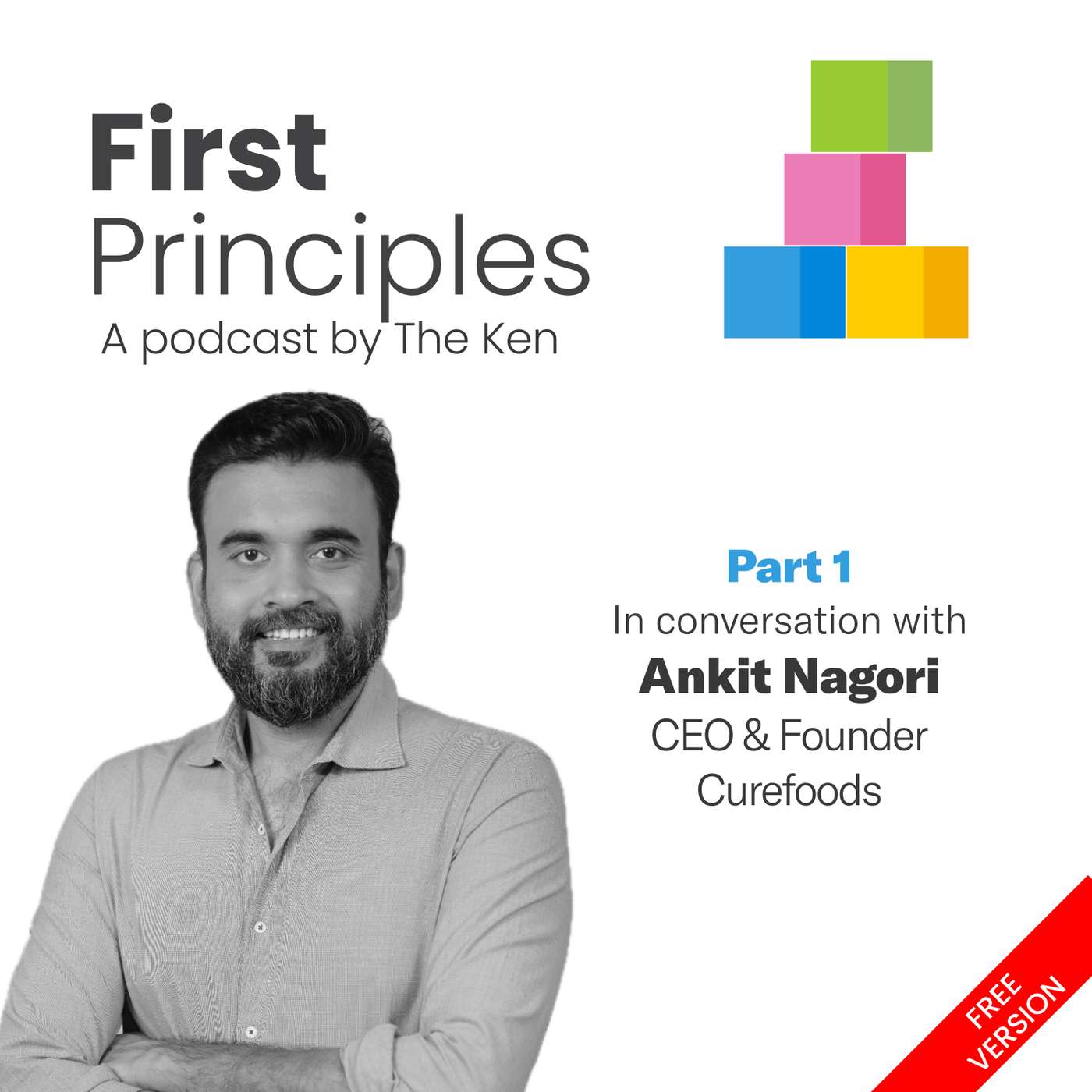
Part 2: Curefoods' Ankit Nagori on why Indians only eat healthy Monday to Thursday, focusing on brand over scale, and what drives him now
Mar 30, 2026
1h 03m 13s
Social Links & Contact
Official channels & resources
Official Website
Login
RSS Feed
Login
| Date | Episode | Topics | Guests | Brands | Places | Keywords | Sponsor | Length | |
|---|---|---|---|---|---|---|---|---|---|
| 6/22/26 | ![]() Part 2: Impresario's Riyaaz Amlani on digital landlords, doers & divas, and why delivery will never eat dine-in | Part 2 moves from the journey to the operating philosophy. Riyaaz Amlani unpacks his evolving stance on the aggregators — from resistance to "uneasy truce" — and the hard lesson that restaurateurs who send guests to Zomato and Swiggy have only themselves to blame. He argues delivery and dine-in are two different businesses, lays out his ambition to turn Impresario into a full-service-restaurant platform, and gets personal on hiring, Gen Alpha kids, weekends, and why his life scores 9.9 out of 10. CHAPTERS00:00 Recap and what's ahead: aggregators, the platform, the missing 0.101:48 "Digital landlords": Zomato & Swiggy, then and now02:47 From resistance to cohabitation; how aggregators trained demand05:24 Owning the customer; the cross-sector aggregator tension07:04 The Booking.com / Hotels.com parallel and how hotels fought back09:41 Build your own loyalty — don't blame the aggregator10:09 Delivery vs dine-in: two completely different businesses13:09 Restaurants beat the movies; lessons from raising VC/PE16:34 Growth math: IRR, 20-25% stable growth, the late-stage problem17:45 What motivates him: reading a city and its community18:56 Curiosity over the "5 people"; planning for serendipity24:29 Hiring: "doers and divas" and the largesse of hospitality30:24 Social as social infrastructure: coworking from day one34:25 First principles: people + process, soul, belongingness37:08 Harvesting feedback: NPS, ORM, AI, the guest-experience officer39:18 His kids and the Gen Alpha worldview43:39 Weekends, FIFA, meditation, and protecting solitude48:10 Comfort food and deferring to the chef50:11 The 25-year view; the 10,000 cr platform and the invisible 85%59:03 Anti-loyalty vs frequency: cafes are loyalty, restaurants are experience1:01:44 Final question: 9.9 out of 10, and the missing 0.1KEY COMPANIES & BRANDSImpresario Handmade Restaurants; Social; Zomato; Swiggy; ONDC; Booking.com; Hotels.com; Rebel Foods; Haldiram's; Rameshwaram Cafe; Starbucks; NRAI; PlayStation/FIFA/Minecraft (referenced).KEY CONCEPTSAggregators as "digital landlords"; deep discounting & perceived value; the uneasy truce; owning the customer relationship; the Booking.com hotel-inventory parallel; loyalty programs & direct outreach; delivery vs dine-in as separate businesses; patient capital, IRR & late-stage growth math; "doers and divas"; largesse of hospitality; full-service-restaurant platform; store-level vs corporate EBITDA; the invisible 85% "iceberg" of running a restaurant; anti-loyalty vs frequency; cafes (loyalty/convenience) vs restaurants (experience/variety); NPS/ORM/AI feedback; Gen Alpha. | 1h 03m 31s | ||||||
| 6/15/26 | ![]() Part 1: Impresario's Riyaaz Amlani on Mocha, "Handmade," four near-deaths and 25 years of building places to be | Part 1 of Rohin Dharmakumar's conversation with Riyaaz Amlani is the origin story: why a returning UCLA grad decided Bombay was missing "places to be," how Mocha became Social, and what it actually takes to keep a restaurant group alive for 25 years in the highest-mortality business there is. The shisha ban, the private-equity money that never arrived, COVID, the marble hustle at age six, and the real engine underneath it all: people.CHAPTERS00:00 Intro: 95% fail by year two — and the man who didn't01:46 Why Mocha in 2001: a city missing "places to be"03:23 Bombay the "coolest cousin"; South Bombay snobbery moves to Bandra05:05 The MTV / Gen X generation and a West-facing India07:47 UCLA, entertainment management, and learning to live culture11:29 What "Handmade" and "Impresario" mean14:13 The business today: 80 restaurants, 900 cr, 5,500 people15:29 Why restaurants die; learning from the community18:02 People vs processes — and why he keeps returning to people19:32 Social: the millennial third space and the shisha ban25:41 The Gen Z puzzle; Saltwater to Bandra Bourn; evolution vs revolution30:46 Real estate: location vs locality and India's "80 pockets"32:32 The metric that matters: AOV x covers x table turnaround35:33 COVID and surviving "mass-extinction events"39:17 The town hall: the team takes 40% pay to save the company40:51 What losing a restaurant feels like; the discipline to quit42:44 Mental model: 4-5 engines to ride economic cycles46:42 The marble business and hustling from age 1251:20 Bowling alleys & Phoenix Mills: people buy time together53:44 Self-rating: 7.5 as a parent, 5 as a CEO55:15 Building a restaurant vs building an organization56:15 The HR crisis: severe attrition, talent going abroad58:44 The one thing he can't delegate: layouts and property selection1:00:49 Becoming a "boardroom warrior" against his will KEY COMPANIES & BRANDSImpresario Handmade Restaurants; Mocha; Social; Saltwater Cafe/Grill; Bandra Born; Cafe Coffee Day; Phoenix Mills "Bowling Company"; Amoeba; UCLA. KEY CONCEPTSThird spaces; "handmade" at scale; West-aspirational MTV-generation culture; people vs processes; AOV x covers x table turnaround; frequency as a metric; location vs locality / "80 pockets"; evolution vs revolution; mass-extinction events & resilience; working-capital-negative business; building a restaurant vs building an organization; restaurant-industry attrition; the layouts/property selection he won't delegate. | 1h 04m 18s | ||||||
| 5/4/26 | ![]() Part 2: Kuku’s Lal Chand Bisu on the Bathoth-to-Bandra arc, learning from iterations not books, and why nos beat yeses✨ | theatrical filmstartup ecosystem+3 | Kuku Lal Chand Bisu | Indian Institute of ZombiesIIT Jodhpur | BandraShekhawati | theatrical filmstartup ecosystem+3 | — | 1h 15m 26s | |
| 4/27/26 | ![]() Part 1: Kuku's Lal Chand Bisu on killing three products, ditching the free tier and charging Bharat ₹399 a year✨ | entrepreneurshipaudio content+3 | Lal Chand Bisu | KukuKuku FM+1 | Bharat | Kuku FMLal Chand Bisu+6 | — | 1h 03m 58s | |
| 3/30/26 | ![]() Part 2: Curefoods' Ankit Nagori on why Indians only eat healthy Monday to Thursday, focusing on brand over scale, and what drives him now✨ | healthy foodbranding+3 | Ankit Nagori | CurefoodsUnilever | — | Curefoodshealthy eating+6 | — | 1h 03m 13s | |
| 3/23/26 | ![]() Part 1: Curefoods' Ankit Nagori on cold emailing his way into Flipkart, designing for talent density, and surviving a pandemic on 2 crores a month✨ | entrepreneurshipbusiness growth+4 | Ankit Nagori | CurefoodsFlipkart+1 | — | Ankit NagoriCurefoods+7 | — | 53m 34s | |
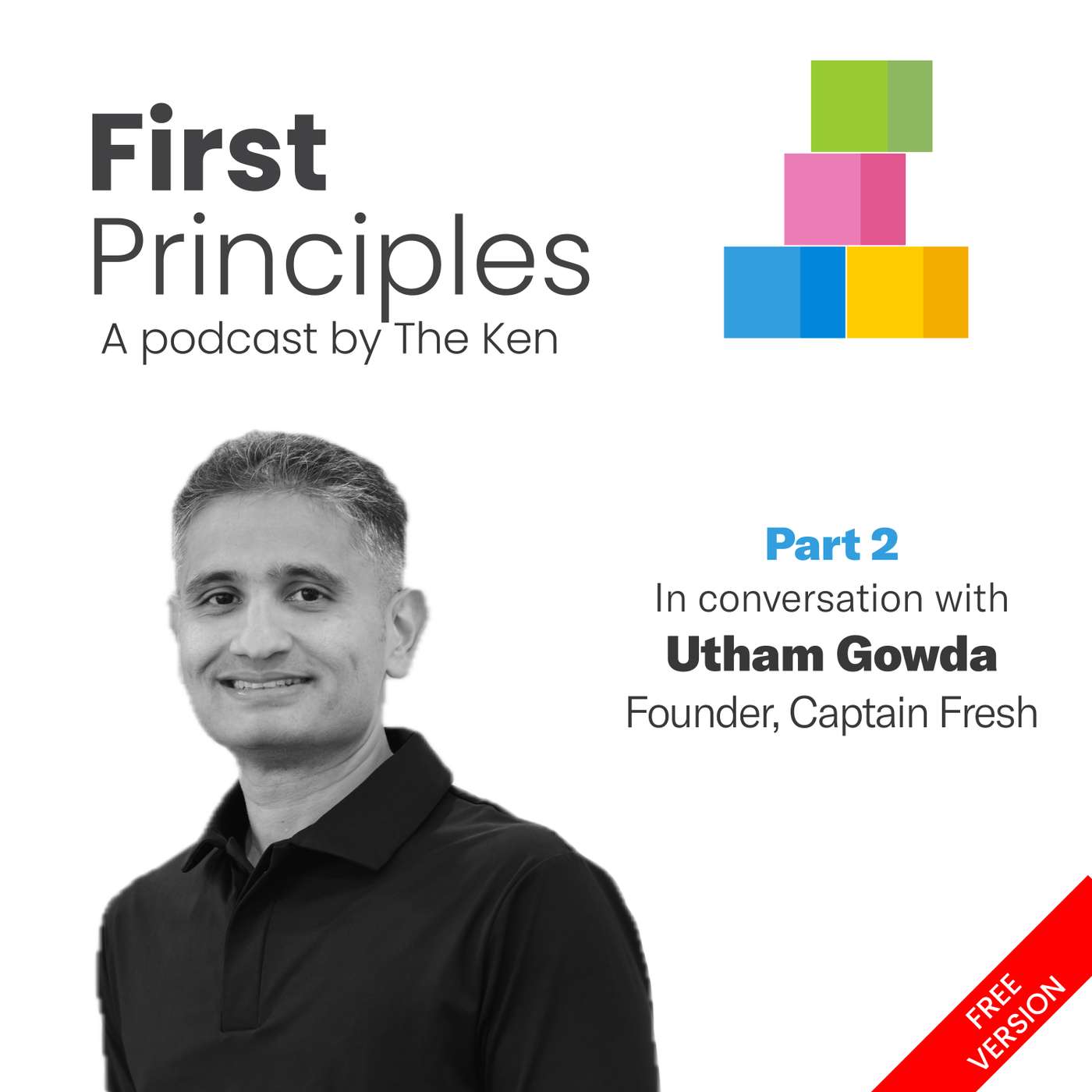
| 3/2/26 | ![]() Part 2: Captain Fresh's Utham Gowda on seafood as the world's last unorganised trillion-dollar industry, why undervaluation is a founder's superpower and his “reverse career path”✨ | seafood industryentrepreneurship+4 | Utham Gowda | Captain FreshBlackfish | MysoreIndiranagar | seafoodentrepreneur+5 | — | 58m 02s | |
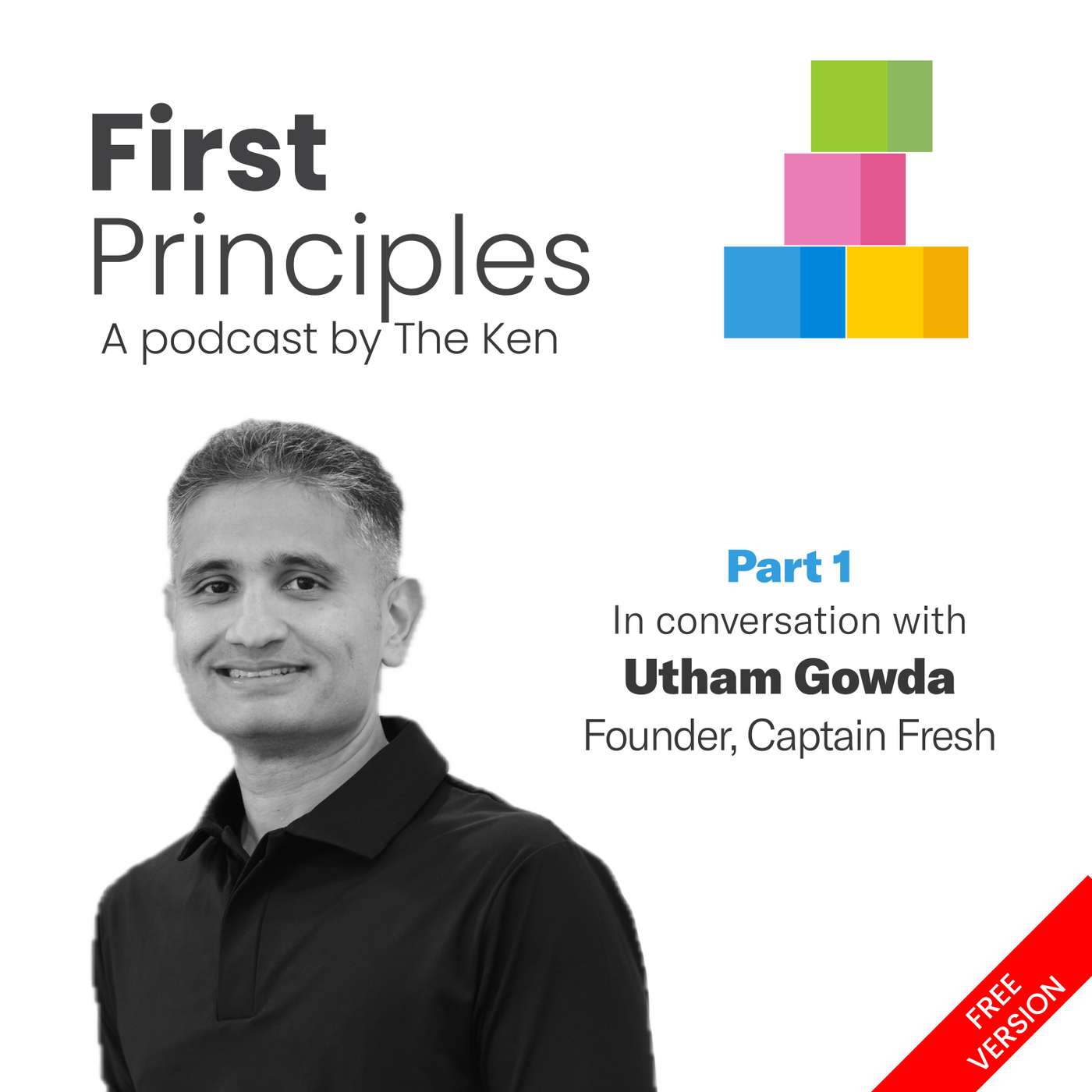
| 2/23/26 | ![]() Part 1: Captain Fresh's Utham Gowda on seafood as the world's last unorganised trillion-dollar industry, why undervaluation is a founder's superpower and his “reverse career path”✨ | seafood industryentrepreneurship+4 | Utham Gowda | Captain FreshBlackfish | MysoreIndiranagar | seafoodentrepreneur+6 | — | 1h 06m 24s | |
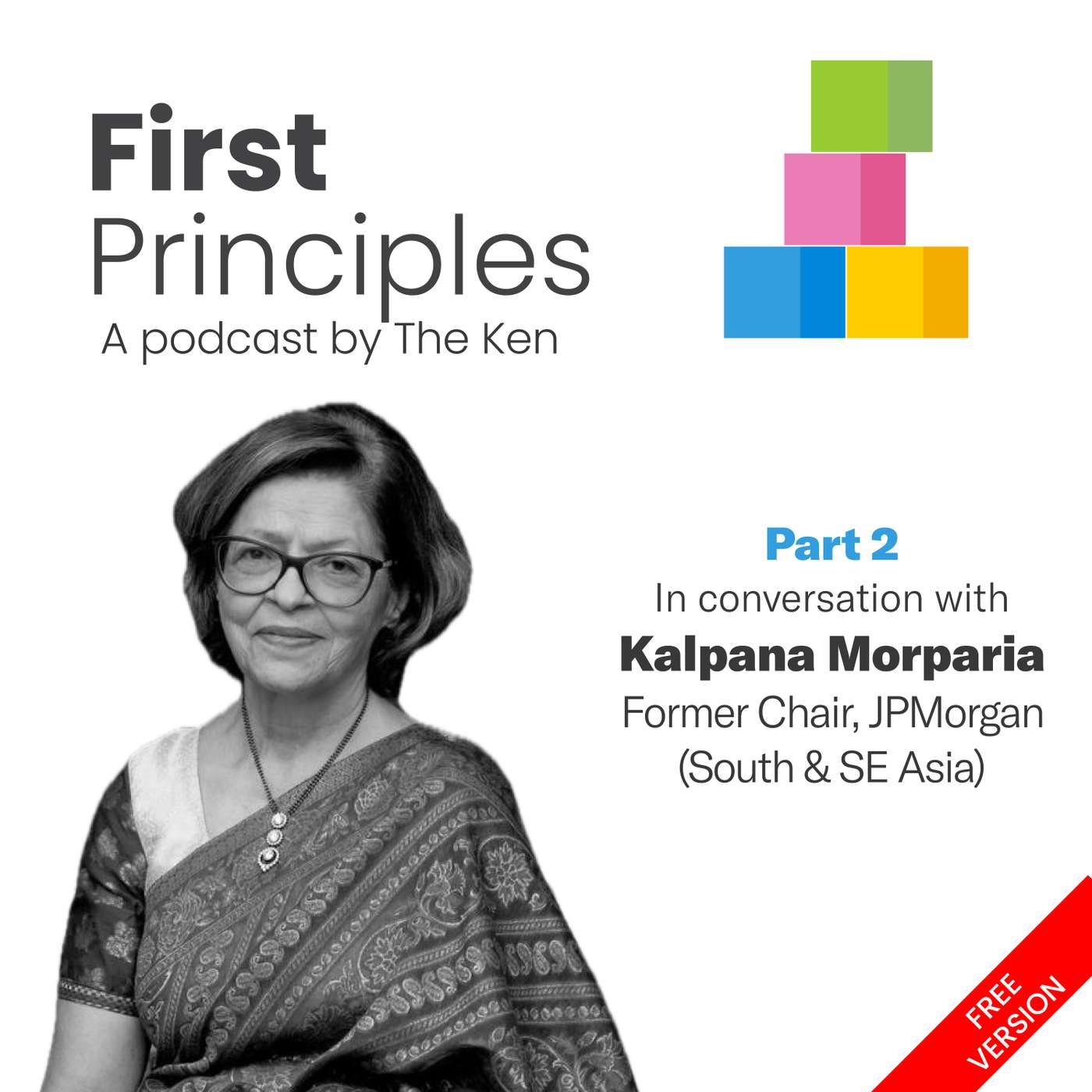
| 2/9/26 | ![]() Part 2: Kalpana Morparia on the culture of dissent, the 90-day NYSE race, and why ambition requires self-redundancy✨ | bankingleadership+3 | Kalpana Morparia | ICICIJPMorgan | Ferrari racetrack | ICICIbanking+5 | — | 57m 05s | |
| 2/2/26 | ![]() Part 1: Kalpana Morparia on the culture of dissent, the 90-day NYSE race, and why ambition requires self-redundancy✨ | bankingleadership+3 | Kalpana Morparia | ICICIJPMorgan+1 | — | ICICIKalpana Morparia+6 | — | 1h 00m 10s | |
Want analysis for the episodes below?Free for Pro Submit a request, we'll have your selected episodes analyzed within an hour. Free, at no cost to you, for Pro users. | |||||||||
| 1/19/26 | ![]() Part 2: Darwinbox’s Rohit Chennamaneni on leading without a CEO, the ‘show don’t tell’ product mindset, and why resilience beats intelligence✨ | leadershipstartup culture+4 | Rohit Chennamaneni | DarwinboxFirst Principles+1 | — | CEO-less structureHR software+3 | — | 1h 01m 40s | |
| 1/12/26 | ![]() Part 1: Darwinbox’s Rohit Chennamaneni on leading without a CEO, the ‘show don’t tell’ product mindset, and why resilience beats intelligence✨ | leadershipstartup culture+4 | Rohit Chennamaneni | DarwinboxFirst Principles+1 | — | CEOstartup+5 | — | 49m 59s | |
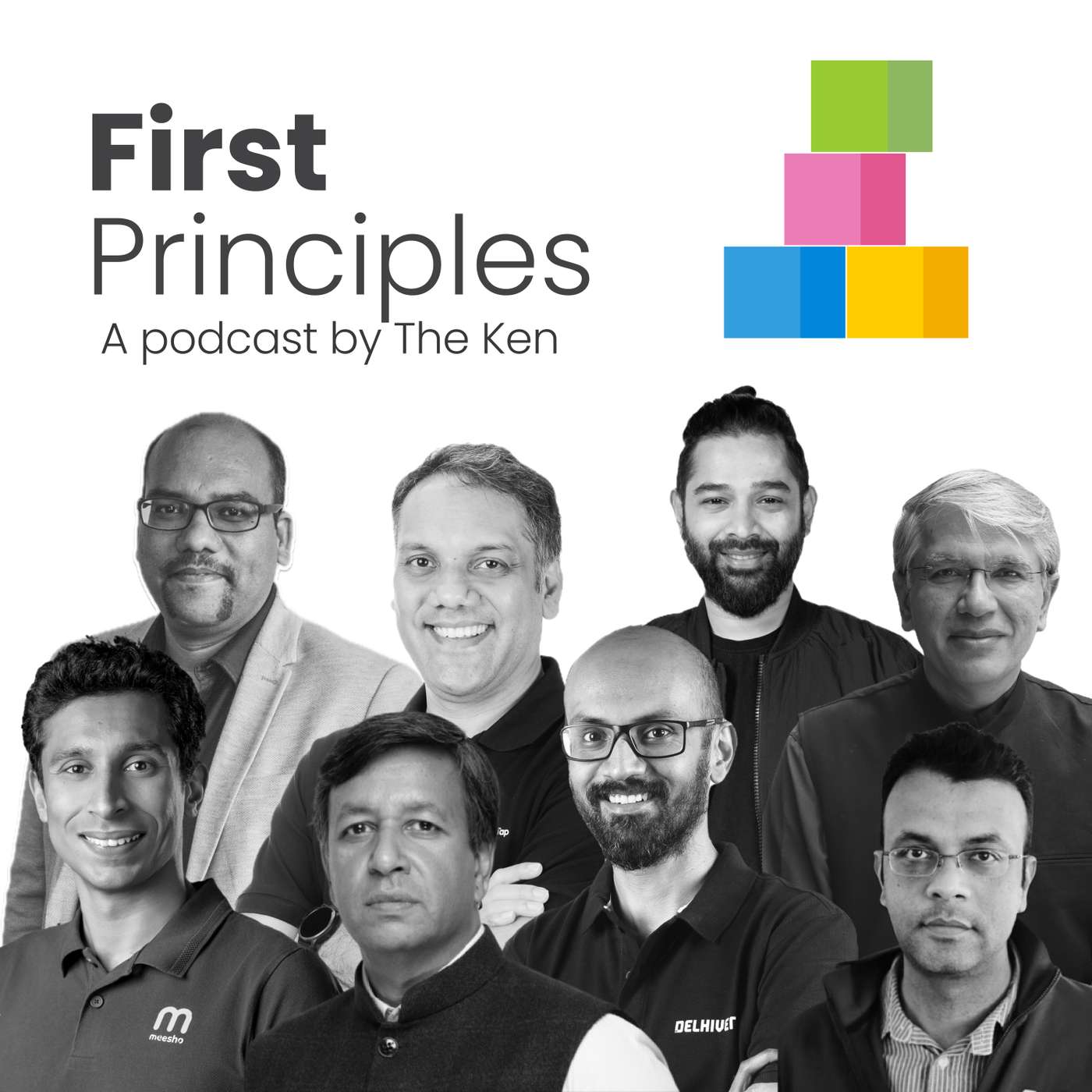
| 12/29/25 | ![]() First Principles, second look: The 2025 wrap✨ | 2025 recapCEO interviews+3 | Vidit AatreySahil Barua | MeeshoDelhivery+1 | — | First Principles2025 wrap+5 | — | 1h 38m 36s | |
| 12/22/25 | ![]() Part 2: Ixigo's Aloke Bajpai on using empathy, customer experience, and resilience to both survive and thrive | Hello and welcome back to First Principles. This is the part 2 of the 49th episode since we started, or the 8th episode of season 3.In this episode, I sit down with Aloke Bajpai, Group CEO of Ixigo, one of India's fastest-growing and most downloaded travel platforms. While most Indian OTAs followed the Western template of flights-first followed by hotels, Aloke and his co-founder Rajnish took a radically different path. The one that would take nearly 14 years before Ixigo became a full-blown OTA.Aloke takes us through Ixigo's unconventional journey, starting as a meta-search engine in 2007 that couldn't raise funding for over a year. We explore how the insight that 96% of Indians don't fly, led them to build a train-first platform, spending four years creating utility features without any monetization. He breaks down the technical innovation behind solving India-specific problems. Right from predicting waitlist confirmations using machine learning to creating a crowdsourced running status system using cell tower IDs when GPS and internet failed along railway tracks.A central theme is resilience through empathy. Aloke shares how near-death experiences during the 2008 global financial crisis and COVID-19 shaped Ixigo's culture. We discuss the founder's decision to go to zero salary, the whiteboard moment where the entire team transparently decided on salary cuts, and the contrarian choice to proactively refund customers during COVID even when the company was running out of money. Finally, Aloke argues that peace of mind, not tickets, is what travel companies should really be selling. | 1h 08m 59s | ||||||
| 12/15/25 | ![]() Part 1: Ixigo's Aloke Bajpai on using empathy, customer experience, and resilience to both survive and thrive | Hello and welcome back to First Principles. This is the part 1 of the 49th episode since we started, or the 8th episode of season 3.In this episode, I sit down with Aloke Bajpai, Group CEO of Ixigo, one of India's fastest-growing and most downloaded travel platforms. While most Indian OTAs followed the Western template of flights-first followed by hotels, Aloke and his co-founder Rajnish took a radically different path. The one that would take nearly 14 years before Ixigo became a full-blown OTA.Aloke takes us through Ixigo's unconventional journey, starting as a meta-search engine in 2007 that couldn't raise funding for over a year. We explore how the insight that 96% of Indians don't fly, led them to build a train-first platform, spending four years creating utility features without any monetization. He breaks down the technical innovation behind solving India-specific problems. Right from predicting waitlist confirmations using machine learning to creating a crowdsourced running status system using cell tower IDs when GPS and internet failed along railway tracks.A central theme is resilience through empathy. Aloke shares how near-death experiences during the 2008 global financial crisis and COVID-19 shaped Ixigo's culture. We discuss the founder's decision to go to zero salary, the whiteboard moment where the entire team transparently decided on salary cuts, and the contrarian choice to proactively refund customers during COVID even when the company was running out of money. Finally, Aloke argues that peace of mind, not tickets, is what travel companies should really be selling. | 1h 01m 34s | ||||||
| 11/17/25 | ![]() Part 2: Indiagold's Deepak Abbot on turning a nation's 'dead asset' into credit scores and working capital | Hello, listeners, and welcome back to First Principles, Episode 48, or the 7th episode of season 3. This is part 2 of the conversation.The host, Rohin Dharmakumar, first crossed paths with Deepak Abbot back in April 2015, even before The Ken had been founded. Rohin was chasing down an insightful breakdown of the tech ecosystem's huge user numbers during the Free Basics debate, and Deepak, a veteran operator and former product head at Paytm, was the go-to source for his data-filled, analytical posts.That same data-driven curiosity is what led Deepak to walk away from corporate life in 2019. He was clear: he didn't want to just manage; he had years left to actively "build products, you know, with my own hands". What he built was Indiagold, targeting the massive opportunity of gold in a market VCs often dismissed as an 'old economy product'.In this episode, Rohin sat down with Deepak Abbot, co-founder of Indiagold, to discuss how they are transforming India's massive $1.5 trillion gold reserve—an asset often locked away and doing nothing—into a productive force. Deepak calls this gold a "dead asset" and explains that Indiagold’s mission is to change the mindset around it. They are not just giving gold loans; they are monetising a secured asset for the 250 million Indians who are excluded from formal credit due to thin or non-existent credit scores. By enabling customers to safely leverage their gold reserve, the company helps jumpstart a formal credit history and provides essential working capital.Listen in as Deepak charts his operator-to-founder journey, shares how he navigated initial VC skepticism, and details the strategy behind turning a seemingly archaic commodity into a modern fintech solution for one of India’s most fundamental credit problems. Plus, a fascinating look inside a unique company culture, including why Indiagold operates without a CEO.*****This episode was mixed and mastered by Rajiv CN.Write to us at fp@the-ken.com with your feedback, suggestions, and guests you would want to see on First Principles.If you enjoyed this episode, please help us spread the word by sharing and gifting it to your friends and family.***** | 55m 55s | ||||||
| 11/10/25 | ![]() Part 1: Indiagold's Deepak Abbot on turning a nation's 'dead asset' into credit scores and working capital | Hello, listeners, and welcome back to First Principles, Episode 48, or the 7th episode of season 3. This is part 1 of the conversation.The host, Rohin Dharmakumar, first crossed paths with Deepak Abbot back in April 2015, even before The Ken had been founded. Rohin was chasing down an insightful breakdown of the tech ecosystem's huge user numbers during the Free Basics debate, and Deepak, a veteran operator and former product head at Paytm, was the go-to source for his data-filled, analytical posts.That same data-driven curiosity is what led Deepak to walk away from corporate life in 2019. He was clear: he didn't want to just manage; he had years left to actively "build products, you know, with my own hands". What he built was Indiagold, targeting the massive opportunity of gold in a market VCs often dismissed as an 'old economy product'.In this episode, Rohin sat down with Deepak Abbot, co-founder of Indiagold, to discuss how they are transforming India's massive $1.5 trillion gold reserve—an asset often locked away and doing nothing—into a productive force. Deepak calls this gold a "dead asset" and explains that Indiagold’s mission is to change the mindset around it. They are not just giving gold loans; they are monetising a secured asset for the 250 million Indians who are excluded from formal credit due to thin or non-existent credit scores. By enabling customers to safely leverage their gold reserve, the company helps jumpstart a formal credit history and provides essential working capital.Listen in as Deepak charts his operator-to-founder journey, shares how he navigated initial VC skepticism, and details the strategy behind turning a seemingly archaic commodity into a modern fintech solution for one of India’s most fundamental credit problems. Plus, a fascinating look inside a unique company culture, including why Indiagold operates without a CEO.*****This episode was mixed and mastered by Rajiv CN.Write to us at fp@the-ken.com with your feedback, suggestions, and guests you would want to see on First Principles.If you enjoyed this episode, please help us spread the word by sharing and gifting it to your friends and family.***** | 1h 06m 31s | ||||||
| 9/22/25 | ![]() Part 2: Trilegal's Rahul Matthan on the firm, the partnership, and the principles | Hello and welcome back to First Principles. This is the 47th episode since we started, or the 6th episode of season 3.In this episode, I sit down with Rahul Matthan, a co-founder of Trilegal, one of India’s largest and most successful full-service law firms. While Rahul starts by questioning if a lawyer can be an entrepreneur, the conversation unfolds into a masterclass on the patient, principled art of building a lasting institution.Rahul provides a rare, inside look into the unique challenges of building a professional services firm—a business where the people are the product. He breaks down the counterintuitive models Trilegal adopted to foster a culture of collaboration over individual stardom. We explore their radical “all-equity partnership” and the “lockstep” compensation model, designed to de-risk the firm from becoming dependent on individual “rainmakers” and to align everyone’s incentives towards collective success.A key theme is the power of compounding principles. Rahul explains how foundational decisions made 25 years ago, such as not naming the firm after its founders and instilling a “firm before self” ethos, were critical for long-term, sustainable growth. He also shares the story behind Trilegal’s exponential 3X growth during the COVID period, attributing it not just to market demand but to a crucial, planned transition from a founder-led management to a new leadership team built for scale.Finally, Rahul offers a nuanced and critical perspective on the impact of AI on the legal profession. He argues that the real disruption won’t be in replacing senior experts, but in hollowing out the training ground for junior associates, posing a fundamental challenge to the apprenticeship model that professions rely on.*****This is the 2nd part of my conversation with him.*****This episode was mixed and mastered by Rajiv CN.Write to us at fp@the-ken.com with your feedback, suggestions, and guests you would want to see on First Principles.If you enjoyed this episode, please help us spread the word by sharing and gifting it to your friends and family. | 1h 02m 38s | ||||||
| 9/15/25 | ![]() Part 1: Trilegal's Rahul Matthan on the firm, the partnership, and the principles | In this episode, Rohin Dharmakumar sits down with Rahul Matthan, a co-founder of Trilegal, one of India’s largest and most successful full-service law firms. While Rahul starts by questioning if a lawyer can be an entrepreneur, the conversation unfolds into a masterclass on the patient, principled art of building a lasting institution.Rahul provides a rare, inside look into the unique challenges of building a professional services firm—a business where the people are the product. He breaks down the counterintuitive models Trilegal adopted to foster a culture of collaboration over individual stardom. We explore their radical “all-equity partnership” and the “lockstep” compensation model, designed to de-risk the firm from becoming dependent on individual “rainmakers” and to align everyone’s incentives towards collective success.A key theme is the power of compounding principles. Rahul explains how foundational decisions made 25 years ago, such as not naming the firm after its founders and instilling a “firm before self” ethos, were critical for long-term, sustainable growth. He also shares the story behind Trilegal’s exponential 3X growth during the COVID period, attributing it not just to market demand but to a crucial, planned transition from a founder-led management to a new leadership team built for scale.Finally, Rahul offers a nuanced and critical perspective on the impact of AI on the legal profession. He argues that the real disruption won’t be in replacing senior experts, but in hollowing out the training ground for junior associates, posing a fundamental challenge to the apprenticeship model that professions rely on.This episode was mixed and mastered by Rajiv CN.Write to us at fp@the-ken.com with your feedback, suggestions, and guests you would want to see on First Principles.If you enjoyed this episode, please help us spread the word by sharing and gifting it to your friends and family. | 1h 08m 48s | ||||||
| 8/18/25 | ![]() Part 2: Anand Jain of Clevertap on starting with nothing and learning, building and leading as you go along | Hello and welcome back to First Principles. I’m thrilled to bring you episode 46, my conversation with Anand Jain, the co-founder of Mumbai-headquartered customer engagement platform CleverTap.Anand and I were once colleagues at the media conglomerate Network 18. He got out before I did.In 2013 he and two of his colleagues, Sunil Thomas and Kondamudi, left Network 18 and decided to fire up their respective laptops and code a new customer engagement platform. In just a few months, WizRocket, as it was then called, found its first – albeit non-paying customer. Then, in fairly short order, word-of-mouth driven inbound Seed and Series A investments.Over time it became Clevertap, raising over $180M in VC funding and becoming a globally used and respected product.As it turns out though, one of Clevertap’s operating philosophies is, well, First Principles. A strong reason is because Anand himself is a strong believer in it.At the age of 12 he lost his dad. Thus, at an age when kids are taught to focus only on studies, Anand started tinkering, repairing and learning computer programming to earn money to put food on the table.His first business was a scheduling system for lawyers in Ahmedabad, written in FoxPro. That was in 1994.His friends in college called him “khurpechi” in Hindi. Literally, that’s a person who uses a khurpi – a gardening tool – to turn soil over to weed crops or plants. Colloquially though, that’s a person who is curious, restless and is always meddling around with things that don’t concern them directly.Along the way, Anand co-founded Burrp, one of India’s first restaurant review portals, which got acquired by Network 18. While he was building and running Burrp, he also started manufacturing and selling pigeon spikes to shops, because he noticed there was no one doing that in India!“I shouldn’t be here,” he told me. Why, I asked. He is not very smart, he replied. He doesn’t have good educational pedigree. He did not even study computer science formally. But, he said, he is extremely hard working and believes that anything can be learnt through hard work and perseverance.You can see why First Principles is a concept that is dear to Anand.I asked him how happy he was on a scale of 10. He said 10.I asked him if he’d ever thought of retiring. He said never. Life is too short to not have fun, he said.Indeed, it is. So let’s dive into episode 46, with Anand Jain, co-founder of Clevertap.This is part 2 of my conversation with him-This episode was produced by Hari Krishna, with mixing and mastering by Rajiv CN.Write to us at fp@the-ken.com with your feedback, suggestions and guests you would want to see on First Principles.If you enjoyed this episode, please help us spread the word by sharing and gifting it to your friends and family. | 1h 11m 23s | ||||||
| 8/11/25 | ![]() Part 1: Anand Jain of Clevertap on starting with nothing and learning, building and leading as you go along | Hello and welcome back to First Principles. I’m thrilled to bring you episode 46, my conversation with Anand Jain, the co-founder of Mumbai-headquartered customer engagement platform CleverTap.Anand and I were once colleagues at the media conglomerate Network 18. He got out before I did.In 2013 he and two of his colleagues, Sunil Thomas and Kondamudi, left Network 18 and decided to fire up their respective laptops and code a new customer engagement platform. In just a few months, WizRocket, as it was then called, found its first – albeit non-paying customer. Then, in fairly short order, word-of-mouth driven inbound Seed and Series A investments.Over time it became Clevertap, raising over $180M in VC funding and becoming a globally used and respected product.As it turns out though, one of Clevertap’s operating philosophies is, well, First Principles. A strong reason is because Anand himself is a strong believer in it.At the age of 12 he lost his dad. Thus, at an age when kids are taught to focus only on studies, Anand started tinkering, repairing and learning computer programming to earn money to put food on the table.His first business was a scheduling system for lawyers in Ahmedabad, written in FoxPro. That was in 1994.His friends in college called him “khurpechi” in Hindi. Literally, that’s a person who uses a khurpi – a gardening tool – to turn soil over to weed crops or plants. Colloquially though, that’s a person who is curious, restless and is always meddling around with things that don’t concern them directly.Along the way, Anand co-founded Burrp, one of India’s first restaurant review portals, which got acquired by Network 18. While he was building and running Burrp, he also started manufacturing and selling pigeon spikes to shops, because he noticed there was no one doing that in India!“I shouldn’t be here,” he told me. Why, I asked. He is not very smart, he replied. He doesn’t have good educational pedigree. He did not even study computer science formally. But, he said, he is extremely hard working and believes that anything can be learnt through hard work and perseverance.You can see why First Principles is a concept that is dear to Anand.I asked him how happy he was on a scale of 10. He said 10.I asked him if he’d ever thought of retiring. He said never. Life is too short to not have fun, he said.Indeed, it is. So let’s dive into episode 46, with Anand Jain, co-founder of Clevertap.This is part 1 of my conversation with him-This episode was produced by Hari Krishna, with mixing and mastering by Rajiv CN.Write to us at fp@the-ken.com with your feedback, suggestions and guests you would want to see on First Principles.If you enjoyed this episode, please help us spread the word by sharing and gifting it to your friends and family. | 1h 04m 58s | ||||||
| 7/28/25 | ![]() Part 2: Ultraviolette Automotive's Narayan Subramaniam on tinkering, designing and learning by discarding | Premium subscribers of The Ken have full access to ALL our premium audio. They are available exclusively via The Ken’s subscriber apps. If you don’t have them, just download one and log in to unlock everything. Get your premium subscription using this link.Not a Premium subscriber? You can subscribe to The Ken Premium on Apple Podcasts for an easy monthly price (Rs 299 in India). The channel includes ALL our premium podcasts.-My first introduction, and indeed my ongoing and recurring one, to Ultraviolette has been personal. For years, driving by the Inner Koramangala Inner Ring Road from where I stay to Indiranagar, the Ultraviolette showroom would always catch my eye on the left. I used to constantly wonder about those really cool bikes hanging from cables in the double-ceiling office, intrigued by what kind of bikes they were.Coincidentally, Ultraviolette was founded in the same year that The Ken also started. We've both been in Bangalore, both in a similar part of town, for most of that time. And yet, this was our first time meeting in the ninth year of our respective journeys. As Narayan himself beautifully put it, when you're chasing larger goals, time truly goes by incredibly quickly. We'll delve into what that means for a founder and how they perceive the passage of time when building an organisation from the ground up, because, as Narayan notes, time is the biggest limiting factor for a startup, encompassing money and talent, as founders are always trying to "buy time".We explored Ultraviolette's foundational vision, how his engineering education laid a strong foundation, and how it fostered a passion to build things from an early age, even tinkering with electronics and DIY systems, their early funding challenges when VCs deemed their ambition "a little too risky" in the early stages, as they were trying to compete with entrenched players.Narayan is also the head of design at Ultraviolette, so naturally, the conversation went in the direction of him defining the Ultraviolette brand's core pillars as design, technology, and performance, with the promise of "bringing you the future faster than the competition".He shared Ultraviolette’s ambition to expand to Europe this year and address a significant market gap for compelling electric mid-segment motorcycles at price parity with internal combustion engines.Narayan also revealed that his colleagues often describe him and his co-founder and childhood friend, Niraj, as "paranoid," driven by a deep attention to detail. He constantly pushes his team to ask, "Have we found the optimal solution after discarding all other possibilities?"The journey of Ultraviolette is one that defies conventional wisdom.Welcome to First Principles. -This episode was produced by Hari Krishna, with mixing and mastering by Rajiv CN.Write to us at fp@the-ken.com with your feedback, suggestions and guests you would want to see on First Principles.If you enjoyed this episode, please help us spread the word by sharing and gifting it to your friends and family. | 1h 01m 44s | ||||||
| 7/21/25 | ![]() Part 1: Ultraviolette Automotive's Narayan Subramaniam on tinkering, designing and learning by discarding | Premium subscribers of The Ken have full access to ALL our premium audio. They are available exclusively via The Ken’s subscriber apps. If you don’t have them, just download one and log in to unlock everything. Get your premium subscription using this link.Not a Premium subscriber? You can subscribe to The Ken Premium on Apple Podcasts for an easy monthly price (Rs 299 in India). The channel includes ALL our premium podcasts.-My first introduction, and indeed my ongoing and recurring one, to Ultraviolette has been personal. For years, driving by the Inner Koramangala Inner Ring Road from where I stay to Indiranagar, the Ultraviolette showroom would always catch my eye on the left. I used to constantly wonder about those really cool bikes hanging from cables in the double-ceiling office, intrigued by what kind of bikes they were.Coincidentally, Ultraviolette was founded in the same year that The Ken also started. We've both been in Bangalore, both in a similar part of town, for most of that time. And yet, this was our first time meeting in the ninth year of our respective journeys. As Narayan himself beautifully put it, when you're chasing larger goals, time truly goes by incredibly quickly. We'll delve into what that means for a founder and how they perceive the passage of time when building an organisation from the ground up, because, as Narayan notes, time is the biggest limiting factor for a startup, encompassing money and talent, as founders are always trying to "buy time".We explored Ultraviolette's foundational vision, how his engineering education laid a strong foundation, and how it fostered a passion to build things from an early age, even tinkering with electronics and DIY systems, their early funding challenges when VCs deemed their ambition "a little too risky" in the early stages, as they were trying to compete with entrenched players.Narayan is also the head of design at Ultraviolette, so naturally, the conversation went in the direction of him defining the Ultraviolette brand's core pillars as design, technology, and performance, with the promise of "bringing you the future faster than the competition".He shared Ultraviolette’s ambition to expand to Europe this year and address a significant market gap for compelling electric mid-segment motorcycles at price parity with internal combustion engines.Narayan also revealed that his colleagues often describe him and his co-founder and childhood friend, Niraj, as "paranoid," driven by a deep attention to detail. He constantly pushes his team to ask, "Have we found the optimal solution after discarding all other possibilities?"The journey of Ultraviolette is one that defies conventional wisdom.Welcome to First Principles. -This episode was produced by Hari Krishna, with mixing and mastering by Rajiv CN.Write to us at fp@the-ken.com with your feedback, suggestions and guests you would want to see on First Principles.If you enjoyed this episode, please help us spread the word by sharing and gifting it to your friends and family. | 1h 15m 58s | ||||||
| 7/1/25 | ![]() Part 2: Manish Sabharwal of Teamlease on creating great ancestors, India’s development journey and ‘regulatory cholesterol’ | Premium subscribers of The Ken have full access to ALL our premium audio. They are available exclusively via The Ken’s subscriber apps. If you don’t have them, just download one and log in to unlock everything. Get your premium subscription using this link.Not a Premium subscriber? You can subscribe to The Ken Premium on Apple Podcasts for an easy monthly price (Rs 299 in India). The channel includes ALL our premium podcasts.-Manish Sabharwal isn’t an easy man to nail down. By that, I don’t just mean it was hard to nail down a time on his calendar to meet me for the podcast, which it was. Like with most founders and guests on First Principles, the gap between when I first invite them and when they finally appear is usually measured in months, sometimes years. I had first emailed Manish for First Principles in January 2023.But I’m saying Manish is hard to nail down also because he defies - resists - categorisation. Sure, he co-founded Teamlease, one of India’s largest recruitment and human resource providers. It employs over 400,000 people, is listed on the stock exchanges, and is a great barometer of broader employment trends in India. But Manish is no longer involved with the day-to-day operations of the company, while still being the largest individual shareholder.Instead, he leads a “portfolio life”, dividing his time serving on the boards of think tanks, regulatory bodies, universities, non-profits, and even private companies like Phonepe; advising companies and the government on a host of topics like labour markets, regulation, employment, education, economic policy and reforms; being a columnist; and reading books. Oh yeah, he says he’s read a book a week for the last - wait for this - 42 years!Thus, when I sat down with Manish last Thursday, I went in prepared, or as prepared as I could be, with my research and questions. But 10 minutes into the conversation, I decided to drop the conversation narrative I had in mind and instead let the conversation go where it needed to.Yes, we do cover entrepreneurship, ambition, and finding product-market fit by letting your customers guide your evolution, but we also go much further into topics that we normally don’t. For example, India’s macroeconomic and geopolitical chances, ‘regulatory cholesterol’, higher education and the jobs crisis. All peppered with pithy aphorisms, vivid analogies, and memorable quotes every few minutes, this is something I’ve remembered Manish doing since I first met him as a journalist in the early 2010s.Welcome to First Principles.-This episode was produced by Hari Krishna, and the mixing and mastering of the episode was done by Rajiv CN.Write to us at fp@the-ken.com with your feedback, suggestions and guests you would want to see on First Principles.If you liked this episode, help us spread the word by sharing and gifting this episode with your friends and family. | 45m 03s | ||||||
| 6/24/25 | ![]() Part 1: Manish Sabharwal of Teamlease on creating great ancestors, India’s development journey and ‘regulatory cholesterol’ | Premium subscribers of The Ken have full access to ALL our premium audio. They are available exclusively via The Ken’s subscriber apps. If you don’t have them, just download one and log in to unlock everything. Get your premium subscription using this link.Not a Premium subscriber? You can subscribe to The Ken Premium on Apple Podcasts for an easy monthly price (Rs 299 in India). The channel includes ALL our premium podcasts.-Manish Sabharwal isn’t an easy man to nail down. By that, I don’t just mean it was hard to nail down a time on his calendar to meet me for the podcast, which it was. Like with most founders and guests on First Principles, the gap between when I first invite them and when they finally appear is usually measured in months, sometimes years. I had first emailed Manish for First Principles in January 2023.But I’m saying Manish is hard to nail down also because he defies - resists - categorisation. Sure, he co-founded Teamlease, one of India’s largest recruitment and human resource providers. It employs over 400,000 people, is listed on the stock exchanges, and is a great barometer of broader employment trends in India. But Manish is no longer involved with the day-to-day operations of the company, while still being the largest individual shareholder.Instead, he leads a “portfolio life”, dividing his time serving on the boards of think tanks, regulatory bodies, universities, non-profits, and even private companies like Phonepe; advising companies and the government on a host of topics like labour markets, regulation, employment, education, economic policy and reforms; being a columnist; and reading books. Oh yeah, he says he’s read a book a week for the last - wait for this - 42 years!Thus, when I sat down with Manish last Thursday, I went in prepared, or as prepared as I could be, with my research and questions. But 10 minutes into the conversation, I decided to drop the conversation narrative I had in mind and instead let the conversation go where it needed to.Yes, we do cover entrepreneurship, ambition, and finding product-market fit by letting your customers guide your evolution, but we also go much further into topics that we normally don’t. For example, India’s macroeconomic and geopolitical chances, ‘regulatory cholesterol’, higher education and the jobs crisis. All peppered with pithy aphorisms, vivid analogies, and memorable quotes every few minutes, this is something I’ve remembered Manish doing since I first met him as a journalist in the early 2010s.Welcome to First Principles.-This episode was produced by Hari Krishna, and the mixing and mastering of the episode was done by Rajiv CN.Write to us at fp@the-ken.com with your feedback, suggestions and guests you would want to see on First Principles.If you liked this episode, help us spread the word by sharing and gifting this episode with your friends and family. | 1h 04m 32s | ||||||
Showing 25 of 64
Pitch Fit is a Pro feature
See how bookable this show is for guests, which brands already advertise, the per-episode ad value, and the best-fit guest and sponsor profile. The numbers are blurred on the free plan.
How readily this show books outside guests like you.
How proven this show is for host-read sponsorships.
For Guests
ProFor Advertisers
ProUpgrade to Pro to unlock guest cadence, sponsor categories, fit scores, and per-episode ad value for this show.
Chart Positions
3 placements across 2 markets.
Chart Positions
3 placements across 2 markets.