
Floppy Days Vintage Computing Podcast
by Randy Kindig
Is this your podcast?Insights from recent episode analysis
Audience Interest
Podcast Focus
Publishing Consistency
Platform Reach
Insights are generated by CastFox AI using publicly available data, episode content, and proprietary models.
Most discussed topics
Brands & references
Total monthly reach
Estimated from 2 chart positions in 2 markets.
By chart position
- 🇳🇿NZ · Technology#3310K to 30K
- 🇫🇮FI · Technology#182500 to 3K
- Per-Episode Audience
Est. listeners per new episode within ~30 days
5.3K to 17K🎙 ~2x weekly·169 episodes·Last published 5d ago - Monthly Reach
Unique listeners across all episodes (30 days)
11K to 33K🇳🇿91%🇫🇮9% - Active Followers
Loyal subscribers who consistently listen
3.1K to 9.9K
Market Insights
Platform Distribution
Reach across major podcast platforms, updated hourly
Total Followers
—
Total Plays
—
Total Reviews
—
* Data sourced directly from platform APIs and aggregated hourly across all major podcast directories.
On the show
From 12 epsHost
Recent guests
Recent episodes
Floppy Days 166 - Interview with David Pogue, Tech Journalist and Author
Aug 29, 2026
Unknown duration
Floppy Days 165 - The Sphere, Part 2, with Ben Zotto
Jul 31, 2026
Unknown duration
Floppy Days 164 - The Sphere, Part 1 with Ben Zotto
Jun 29, 2026
1h 17m 51s
Floppy Days 163 - Interview with Charles Pfister, Apple 1 Case Designer
May 26, 2026
1h 51m 01s
Floppy Days 162 - Interview with Steve Wozniak, Apple Legend
Apr 29, 2026
1h 00m 18s
Social Links & Contact
Official channels & resources
Official Website
Login
RSS Feed
Login
| Date | Episode | Topics | Guests | Brands | Places | Keywords | Sponsor | Length | |
|---|---|---|---|---|---|---|---|---|---|
| 8/29/26 |  Floppy Days 166 - Interview with David Pogue, Tech Journalist and Author | Interview with David Pogue, Tech Journalist and Author Patreon: https://www.patreon.com/FloppyDays Sponsors: 8-Bit Classics - https://www.8bitclassics.com/?ref=Floppydays Arcade Shopper - https://www.arcadeshopper.com/ FutureVision Research - https://www.fvresearch.com/ Tuc's Workbench - https://shop.tucs-workbench.com/ Hello and welcome to Floppy Days #166 for August, 2026. My name is Randy Kindig and I'm your host for this glimpse of what life was like in the 70's and 80's with home computers. This episode is an interview-only show with a guest that I'm betting most of you have heard of and have admired his contributions to mainstream technology learning. David Pogue is a seven-time Emmy-winning correspondent for CBS Sunday Morning. He's also a New York Times bestselling author; he has written or co-written more than 120 books. He's also a five-time TED speaker and host of 20 NOVA science specials on PBS. He was The New York Times weekly tech columnist. He recently released his latest book that is getting rave reviews: "Apple: The First 50 Years." I must admit some early trepidation in speaking with David for the podcast. Not because of any qualms about David himself; David is actually a terrific guy and that was obvious from his mountainous and amazing set of work. It was more of some intimidation based on his many appearances on TV and the large number of interviews HE personally has done over the years. However, as the interview progressed, David made me feel completely at ease and I'm honored to have been able to talk with him 1-on-1. I think you'll enjoy hearing about his career, his many stories, his musical parodies, and details about his latest book about the first 50 years of Apple. This interview took place June 25, 2026. Upcoming Shows ABBUC Summer Camp - August 26-30 - Winterberg-Elkeringhausen, Germany - https://abbuc.de/summercamp Vintage Computer Festival GB 2026 - September 11-13 - Aintree Racecourse, near Liverpool, United Kingdom - https://www.facebook.com/events/25457837877216829/ Vintage Computer Festival Midwest - September 12-13 - Schaumburg Convention Center in Schaumburg, IL - https://vcfmw.org/ Tandy Assembly 2026 - October 2-4, 2026 - Cincinnati, Ohio - https://www.tandyassembly.com/ Portland Retro Gaming Expo - October 9-11 - Oregon Convention Center, Portland, OR - https://retrogamingexpo.com/ Chicago TI International World Faire - October 24 - Evanston Public Library, Evanston, IL - https://www.chicagotiug.org/home VCF Montreal - November 7-8 - Champlain College Saint-Lambert, Saint-Lambert, QC - https://cvcfed.org/vcf-montreal-2-0/ Schedule Published on Floppy Days Website - https://docs.google.com/document/d/e/2PACX-1vSeLsg4hf5KZKtpxwUQgacCIsqeIdQeZniq3yE881wOCCYskpLVs5OO1PZLqRRF2t5fUUiaKByqQrgA/pub Interview Links https://en.wikipedia.org/wiki/David_Pogue https://davidpogue.com/ Apple: The First 50 Years - https://amzn.to/3QiMpHr substack blog - https://pogueman.substack.com/ "Clap Along" - Pogue's parody song for Apple's 50th - https://www.youtube.com/watch?v=YyXbvtnhOIk "I Write the Code" - https://www.youtube.com/watch?v=bWgMAMiiahY "I Got an iPhone" - https://www.youtube.com/watch?v=vniMR6Ez9cE&list=RDvniMR6Ez9cE&start_radio=1 | — | ||||||
| 7/31/26 | Floppy Days 165 - The Sphere, Part 2, with Ben Zotto | Floppy Days 165 - The Sphere Computer, Part 2 with Ben Zotto Patreon: https://www.patreon.com/FloppyDays Sponsors: 8-Bit Classics - https://www.8bitclassics.com/?ref=Floppydays Arcade Shopper - https://www.arcadeshopper.com and https://thekeep.net FutureVision Research - https://www.fvresearch.com/ Tuc's Workbench - https://shop.tucs-workbench.com Hello and welcome to episode 165 of the Floppy Days Podcast, for July, 2026. My name is Randy Kindig and I'm your host for this audio and video tribute to vintage computers and computer history. For those of you listening to these podcasts in order, this month's episode is the second part of the 2-part series on the Sphere, which was introduced in 1975; the same year as the Altair and even before the Apple 1. Once again, I want to reiterate what the Sphere was and why do we care? The Sphere was the first "personal computer," defined as such by Byte Magazine due to its consumer focus and built-in keyboard and monitor. Many computers can claim the moniker of first "personal computer", and rightly so, but this one has the endorsement of an early, well-respected, long-running computer magazine and they have good reason for feeling this way about the Sphere. Once you hear the details, you'll see just how ground-breaking this machine was at a very early period of computer history. Not only that, some of the personal stories behind the machine are simply downright fascinating. Ben Zotto is the undisputed expert on the Sphere in these times, after finding an abandoned machine sitting on the sidewalk and deciding to adopt it and learn more about it. He recently wrote a comprehensive book on the Sphere called "Go Computer Now!" that Ben and I spent a lot of time talking about in the last episode -- which again was the first episode on the Sphere. This episode series actually serves two purposes: first as an interview with Ben to learn more about him and his book, and secondly as an overview of a computer I didn't cover back when I started this podcast back in 2013 with the Altair 8800 and the Apple 1. So, as I said earlier, this will be the second part of a 2-part journey on the Sphere. Last month we talked in great detail with Ben Zotto about how he ended up going down the Sphere rabbit hole and all the great things he's done to promote an important machine that was forgotten in the annals of history. This month, Ben and I go through all the usual topics about the Sphere: history, tech specs, using the machine, current Web sites and a great deal more. I really hope you enjoy hearing more about the Sphere and all the things that Ben has done to fill in the gap in history that used to be occupied by the Sphere! Vintage Computer Shows Silly Venture SE (Summer Edition) - July 30-Aug. 2 - Gdansk, Poland - https://www.demoparty.net/silly-venture/silly-venture-2026-se Southern Fried Gaming Expo and VCF Southeast - July 31-Aug 2, 2026 - Atlanta, GA - https://gameatl.com/ VCF West - August 1-2 - Computer History Museum, Mountain View, CA - https://vcfed.org/events/vintage-computer-festival-west/ Long Island Retro Gaming Expo - August 7-9, 2026 - Cradle of Aviation, Garden City, NY - https://liretro.com/ ABBUC Summer Camp - August 26-30 - Winterberg-Elkeringhausen, Germany - https://abbuc.de/summercamp Vintage Computer Festival GB 2026 - September 11-13 - Aintree Racecourse, near Liverpool, United Kingdom - https://www.facebook.com/events/25457837877216829/ Vintage Computer Festival Midwest - September 12-13 - Schaumburg Convention Center in Schaumburg, IL - https://vcfmw.org/ Tandy Assembly 2026 - October 2-4, 2026 - Cincinnati, Ohio - https://www.tandyassembly.com/ Portland Retro Gaming Expo - October 9-11 - Oregon Convention Center, Portland, OR - https://retrogamingexpo.com/ Chicago TI International World Faire - October 24 - Evanston Public Library, Evanston, IL - https://www.chicagotiug.org/home VCF Montreal - November 7-8 - Champlain College Saint-Lambert, Saint-Lambert, QC - https://cvcfed.org/vcf-montreal-2-0/ Schedule Published on Floppy Days Website - https://docs.google.com/document/d/e/2PACX-1vSeLsg4hf5KZKtpxwUQgacCIsqeIdQeZniq3yE881wOCCYskpLVs5OO1PZLqRRF2t5fUUiaKByqQrgA/pub Tech Specs BASIC - https://sphere.computer/news/2026-03-28-the-secret-minicomputer-inside-your-sphere.html Using the Machine/Tips https://sphere.computer/articles/sphere-bringup-guide.html https://www.youtube.com/watch?v=dFOKQoWlpGk Popular Magazines/Newsletters Byte Magazine - https://archive.org/details/1982-10-byte-magazine-october-1-byte-magazine-21533/1975%2009%20BYTE%2000-01%20The%20Worlds%20-%20Byte%20Magazine_21693/ Sphere Global News newsletter; put out by Sphere Corp. - https://archive.org/details/bitsavers_spherenews_1063041 Sphere Microcomputer Users' Newsletter - August 1977 - letter from Programma - https://archive.org/details/bitsavers_spherenews7_5204616 Books Stan Veit's book - https://archive.org/details/stan-veits-history-of-the-personal-computer Stan Veit Podcast: https://www.classiccomputing.com/CCPodcasts/Stan_Veit/Stan_Veit.html https://www.youtube.com/playlist?app=desktop&list=PLUOGYbuIdClP9KoaDfHXqLvqOeaqTATQK Fire in the Valley - https://www.amazon.com/Fire-in-Valley-audiobook/dp/B071YYZJG5 Bill Gates' memoir "Source Code: My Beginnings" - https://www.amazon.com/Audible-Source-Code-My-Beginnings/dp/B0D5KHFN6C Digital Deli - https://archive.org/details/digitaldelicompr0000unse Ben's book - https://gocomputernow.com/ Software Games & Cassettes! on the 1975 Sphere computer - https://www.youtube.com/watch?v=AISsrGfb9n0 Ads "Why not go computer now?" - https://commons.wikimedia.org/wiki/File:Sphere_Personal_Computer_Ad_January_1976.jpg Modern Upgrades https://sphere.computer/shop.html Emulation https://sphere.computer/emulator/ Community Forums AtariAge - https://www.atariage.com VCFEd - https://forum.vcfed.org/index.php Current Web Sites and Videos Very old SPHERE computer doing very silly tricks, for SPHERETEMBER!!! - Ben Zotto - https://www.youtube.com/watch?v=lHALstVxdPI Sphere repository at bitsavers.org - https://bitsavers.org/pdf/sphere/ Home repository for the Sphere-1 reconstruction by Andrew Shapton - https://github.com/Sphere-Corporation https://hackaday.com/2023/03/11/a-love-letter-to-the-sphere-computer/ VCF West: Sphere 1: The First Modern Microcomputer — Ben Zotto - https://www.youtube.com/watch?v=3GilFixu4KY References Ben's site - https://sphere.computer/ Ben's book "Go Computer Now!!!" - https://shop.gocomputernow.com/products/go-computer-now Wikipedia - https://en.wikipedia.org/wiki/Sphere_1 | — | ||||||
| 6/29/26 | vintage computingpersonal computers+3 | Ben Zotto | Byte Magazine | — | Spherepersonal computer+3 | 8-Bit Classics | 1h 17m 51s | ||
| 5/26/26 | Apple 1vintage computing+3 | Charles Pfister | PowerPadGo Computer Now!!!+4 | Westin Dallas Ft. Worth AirportSteam Museum of the Great Western Railway, Swindon, UK+6 | Apple 1Charles Pfister+3 | 8-Bit Classics | 1h 51m 01s | ||
| 4/29/26 | interviewApple history+4 | Steve Wozniak | WOZPAK Special EditionFloppy Days Vintage Computing Podcast+4 | — | Steve WozniakApple+5 | 8-Bit Classics | 1h 00m 18s | ||
| 3/26/26 | vintage computinginterviews+3 | — | Floppy Days Vintage Computing PodcastIndy Vintage Computer Club+4 | — | Byte Shopvintage computing+3 | 8-Bit Classics | 1h 46m 52s | ||
| 2/25/26 | KayPro computersvintage computing+4 | Matthew Jones | KayProPatreon+1 | — | KayProvintage computers+5 | 8-Bit Classics | 1h 00m 53s | ||
| 1/22/26 | Kaypro computersvintage computing+3 | Matt Jones | KayProPatreon+2 | — | Kayprovintage computing+3 | 8-Bit Classics | 1h 09m 15s | ||
| 12/21/25 | Kaypro computersinterview+3 | David Kay | KayproFutureVision Research+1 | — | KayproDavid Kay+3 | 8-Bit Classics | 1h 02m 27s | ||
| 11/30/25 | Kaypro computersinterview+3 | David Kay | KayproFutureVision Research+1 | — | KayproDavid Kay+3 | 8-Bit Classics | 1h 01m 33s | ||
Want analysis for the episodes below?Free for Pro Submit a request, we'll have your selected episodes analyzed within an hour. Free, at no cost to you, for Pro users. | |||||||||
| 10/30/25 | vintage computingComputer Chronicles+3 | Paul Schindler | Computer ChroniclesS.M. Oliva+2 | — | vintage computersComputer Chronicles+3 | 8-Bit Classics | 1h 38m 41s | ||
| 9/24/25 | C64 developmentinterview+3 | Karl Hornell | Patreon | — | C64Karl Hornell+3 | Arcade Shopper | 1h 15m 00s | ||
| 8/28/25 | vintage computinginterview+3 | Chuck Mauro | TI-55 9-Volt Battery Mod9V Battery Clip Connectors+3 | — | vintage computingChuck Mauro+3 | 8-Bit Classics | 1h 08m 08s | ||
| 7/29/25 | vintage computinginterview+3 | Chuck Mauro | Floppy DaysChuck's book | Mountain View, CASchaumburg, IL+3 | Chuck MauroApple+3 | 8-Bit Classics | 1h 03m 13s | ||
| 6/26/25 | 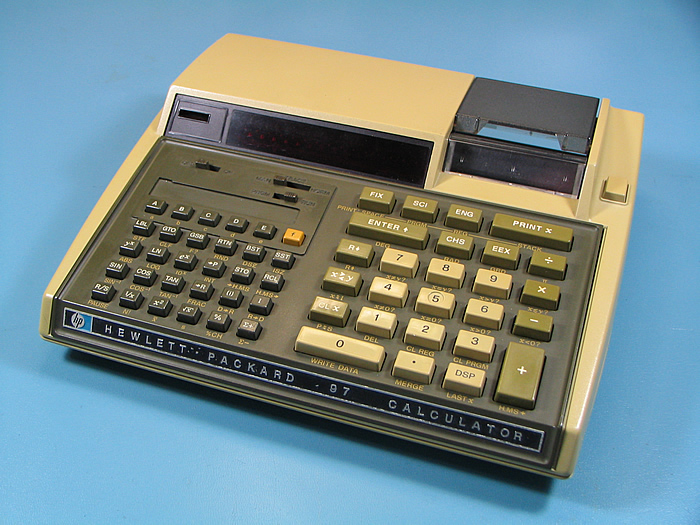 Floppy Days 152 - The HP97 Programmable Calculator - Part 3 - With Wlodek Mier-Jedrzejowicz | HP-97/67 Programmable Calculator, Part 3 With Wlodek Mier-Jedrzejowicz Patreon: https://www.patreon.com/FloppyDays Sponsors: 8-Bit Classics Arcade Shopper FutureVision Research Videos of this and other episodes at the YouTube channel: https://www.youtube.com/channel/UC6DQ3cyp8h373H0lXSJ8yqQ Hello, and welcome to episode 152 of the Floppy Days Podcast for June, 2025. My name is Randy Kindig and I'm the host for this lovefest for vintage computers and programmable calculators from the late 70's thru the 80's. If you love old computers, you've found the right place! This month, I'm completing the ongoing series of episodes about the HP 97/67 programmable calculators. This is the third and final in the series that provides us with a terrific co-host who is able to provide a lot of color about these machines: that being HP calculator historian Wlodek Mier-Jedrzejowicz ("Vwahdek Meer-Yeng SHAY of itch"). No one knows more about HP calculators than Wlodek and all of us are honored to get his insight into these HP calculator gems. New Acquisitions HP History Book by Wlodek - "A Guide to HP Handheld Calculators and Computers" - https://amzn.to/4hl1Yq1 (affiliate link) PalmPilot Personal - https://en.wikipedia.org/wiki/PalmPilot Upcoming Shows KansasFest - July 18-20 - Virtual only - https://www.kansasfest.org/ INIT HELLO Apple II Conference - July 26-27 - System Source Computer Museum in Hunt Valley, MD - https://init-hello.org/ VCF West - August 1-2 - Computer History Museum in Mountain View, CA - https://vcfed.org/2025/03/05/vcf-west-2025-save-the-date/ Fujiama - August 11-17 - Lengenfeld, Germany - http://atarixle.ddns.net/fuji/2025/ VCF Midwest - September 13-14, 2025 - Renaissance Schaumburg Convention Center in Schaumburg, IL - http://vcfmw.org/ Tandy Assembly - September 26-28 - Courtyard by Marriott Springfield - Springfield, OH - http://www.tandyassembly.com/ Portland Retro Gaming Expo - October 17-19 - Oregon Convention Center, Portland, OR - https://retrogamingexpo.com/ Chicago TI International World Faire - October 25 - Evanston Public Library, Evanston, IL - https://www.chicagotiug.org/home Schedule Published on Floppy Days Website - https://docs.google.com/document/d/e/2PACX-1vSeLsg4hf5KZKtpxwUQgacCIsqeIdQeZniq3yE881wOCCYskpLVs5OO1PZLqRRF2t5fUUiaKByqQrgA/pub Feedback (videos) "A 67 or 97 is a good deal" - https://www.youtube.com/watch?v=0z8UiZz2Bm0 "Coca cola" - https://www.youtube.com/watch?v=3FN5eCvkoPM Season's greetings - https://www.youtube.com/watch?v=libGuLCyikY Some examples of words you could show - https://www.youtube.com/watch?v=_jXGb-CR1Tg HP Poem expressing sadness the early HP's had been discontinued - https://www.youtube.com/watch?v=JMuMz623ub4 Books manuals - Can purchase document set on USB stick - https://www.hpmuseum.org/cd/cddesc.htm Better Programming on the HP-67 & 97 by Richard Nelson, Kolb, Kennedy - http://www.hp41.org/LibView.cfm?Command=Image&ItemID=94&FileID=2325 Wlodek's book - A Guide to HP Handheld Calculators and Computers - https://amzn.to/4hl1Yq1 (affiliate link) RCL40: Recollection, Reinvention and HP Calculators - RCL40: Recollection, Reinvention and HP Calculators Software Software available from collection at Museum of HP Calculators - https://www.hpmuseum.org/cd/cddesc.htm Emulators HP Calculator Simulators - https://www.cuveesoft.ch/ RPN-67/97 Pro - Apple App Store - (iOS) itms://itunes.apple.com/app/rpn-97-pro/id816249055 HP-97 Emulator by Michael O'Shea (Windows): HP-97 - https://www.limpidfox.com/hp97.htm HP-67 - https://www.limpidfox.com/hp67.htm HP-97 Emulator by Michael O'Shea (Android, iOS) - https://www.limpidfox.com Buying One Today Getting one repaired: waterhosko (Mark Hoskins) - https://www.ebay.com/sch/i.html?item=324196333178&rt=nc&_trksid=p4429486.m3561.l161211&_ssn=waterhosko Mainely Calculators (Adam Jones) - https://www.ebay.com/str/mainelycalculator?_trksid=p4429486.m145687.l149267 Modern Upgrades Replacement CPU Boards for HP-67 and HP-97 - https://www.Teenix.org Community Facebook HP Calculator Fan Club - https://www.facebook.com/groups/hpcalculatorclub Real Engineers Use HP Handheld Calculators - https://www.facebook.com/groups/hpcalc Forums The Museum of HP Calculators - https://hpmuseum.org/forum/index.php Reddit HPCalc - https://www.reddit.com/r/hpcalc/ Current Web Sites and Videos Article in Byte Magazine, Vol. 3 No. 6 - https://archive.org/details/byte-magazine-1978-06/page/n113/mode/1up Article in HP Journal on the HP-67/97 - http://hparchive.com/Journals/HPJ-1976-11.pdf HHC 2015 in Nashville, Tennessee, showing off RPN-97 Pro - https://www.cuveesoft.ch/rpn67/img/RPN-97HHC.mp4 HP - https://www.hp.com/hpinfo/abouthp/histnfacts/museum/personalsystems/0041/index.html Eric Rechlin's hpcalc.org - http://www.hpcalc.org Craig Finseth's HPDATABase - http://www.finseth.com/hpdata/ The Hewlett Packard Calculator Page by Rick Furr - http://www.vcalc.net/hp.htm The Calculators of HP poster - https://www.vcalc.net/poster.htm#hp series of articles by Wlodek Mier-Jedrzejowicz. They were published in DATAFILE - https://www.vcalc.net/hp-jhi.htm Old HP and TI Calculators by Gene Wright - http://www.rskey.org/gene/hpgene/ HP Calculator Internals - http://www.brouhaha.com/~eric/hpcalc/ HP-97 at rskey.org - https://www.rskey.org/hp97 References Wikipedia - https://en.wikipedia.org/wiki/HP-67/97#67 Museum of HP Calculators (David Hicks) - https://www.hpmuseum.org/hp6797.htm | — | ||||||
| 5/28/25 |  Floppy Days 151 - Interview with James Nagle, Reboot of Computes Gazette | Interview with James Nagle, Reboot of Compute's Gazette Magazine Patreon: https://www.patreon.com/FloppyDays Sponsors: 8-Bit Classics Arcade Shopper FutureVision Research Hello, and welcome to episode 151 of the Floppy Days Podcast for May, 2025. My name is Randy Kindig and I'm the host for this ode to computers that only survive in our memories and our collections. This month, I'm continuing to step aside from the ongoing series of episodes about the HP 97/67 programmable calculators to bring you a timely interview that basically constitutes current news. I don't often do this, but this news was so exciting to me that I wanted to bring this to all my listeners as soon as possible. The interviewee is James Nagle and the topic is the sudden and welcome news that James is planning to revive the iconic Compute! magazine under the equally-iconic name Compute's Gazette. I hope you'll stick around to hear about James' plans and are as excited as I am to find out where this goes. For upcoming shows, we do have one more episode in the series on the HP97 with HP calculator historian Wlodek Mier-Jedrzejowicz ("Vwahdek Meer-Yeng SHAY of itch"). I will air that episode very soon. New Acquisitions and What I've Been Up To C64OS - https://c64os.com/ PiStorm: https://www.hackster.io/news/hands-on-with-the-pistorm-the-ultimate-raspberry-pi-powered-accelerator-for-your-commodore-amiga-449ef0634f3e https://www.amigastore.com/pistorm-edition-amiga-p-91328.html Quick Reference Book - https://floppydaysqr.my.canva.site/ Upcoming Vintage Computer Shows Retrofest 2025 - May 31-June1 - Steam Museum of the Great Western Railway, Swindon, UK - https://retrofest.uk/ Vancouver Retro Gaming Expo - June 14 - New Westminster, BC, Canada - https://www.vancouvergamingexpo.com/index.html VCF Southwest - June 20-22, 2025 - Davidson-Gundy Alumni Center at UT Dallas - https://www.vcfsw.org/ Southern Fried Gaming Expo and VCF Southeast - June 20-22, 2025 - Atlanta, GA - https://gameatl.com/ Pacific Commodore Expo NW v4 - June 21-22 - Old Rainier Brewery Intraspace, Seattle, WA - https://www.portcommodore.com/dokuwiki/doku.php?id=pacommex:start KansasFest - July 18-20 - Virtual only - https://www.kansasfest.org/ INIT HELLO Apple II Conference - July 26-27 - System Source Computer Museum in Hunt Valley, MD - https://init-hello.org/ Silly Venture SE (Summer Edition) - July 31-Aug. 3 - Gdansk, Poland - https://www.demoparty.net/silly-venture/silly-venture-2025-se VCF West - August 1-2 - Computer History Museum in Mountain View, CA - https://vcfed.org/2025/03/05/vcf-west-2025-save-the-date/ Fujiama - August 11-17 - Lengenfeld, Germany - http://atarixle.ddns.net/fuji/2025/ VCF Midwest - September 13-14, 2025 - Renaissance Schaumburg Convention Center in Schaumburg, IL - http://vcfmw.org/ Tandy Assembly - September 26-28 - Courtyard by Marriott Springfield - Springfield, OH - http://www.tandyassembly.com/ Portland Retro Gaming Expo - October 17-19 - Oregon Convention Center, Portland, OR - https://retrogamingexpo.com/ Chicago TI International World Faire - October 25 - Evanston Public Library, Evanston, IL - https://www.chicagotiug.org/home Schedule Published on Floppy Days Website - https://docs.google.com/document/d/e/2PACX-1vSeLsg4hf5KZKtpxwUQgacCIsqeIdQeZniq3yE881wOCCYskpLVs5OO1PZLqRRF2t5fUUiaKByqQrgA/pub Feedback HP-97S: https://www.hpmuseum.org/hp97s.htm https://www.johnwolff.id.au/calculators/laboratory/laboratory.htm Interview Links New Compute's Gazette Website - https://www.computesgazette.com/ Compute's Gazette collection at archive.org - https://archive.org/details/computes.gazette | — | ||||||
| 4/28/25 | 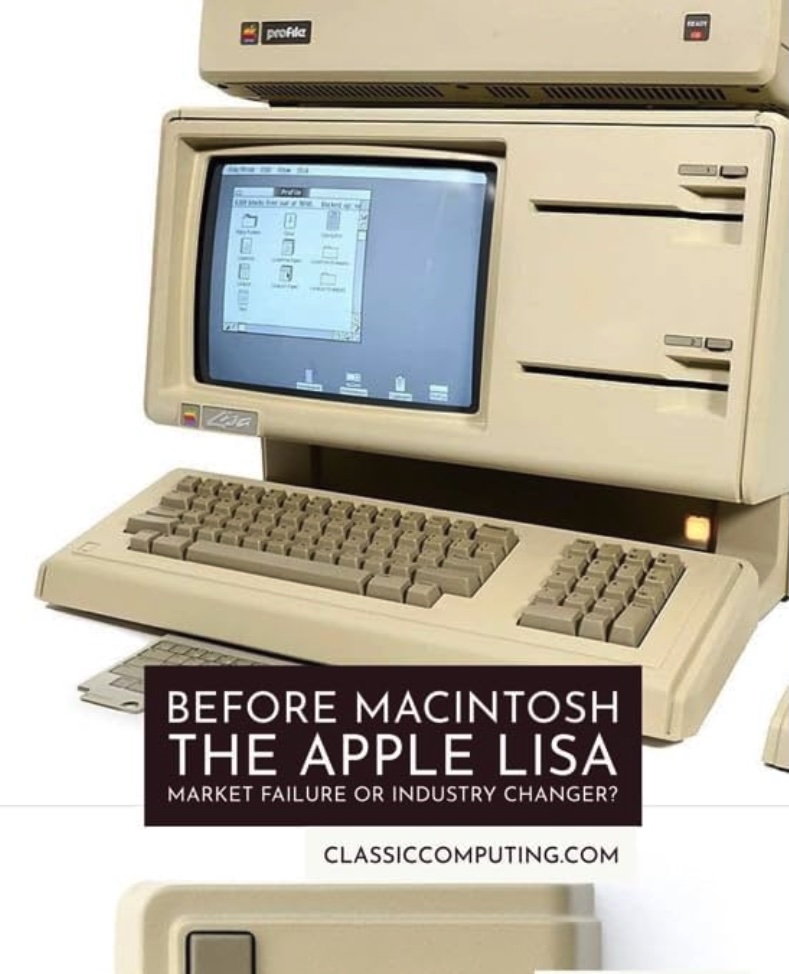 Floppy Days 150 - Interview with David Greelish, Apple Lisa Documentary | Interview with David Greelish, Apple Lisa Documentary Patreon: https://www.patreon.com/FloppyDays Sponsors: 8-Bit Classics Arcade Shopper FutureVision Research Hello, and welcome to episode 150 of the Floppy Days Podcast for April, 2025. My name is Randy Kindig and I'm the host for this journey through the annals of home computer history. This month, I'm going to step aside from the ongoing series of episodes about the HP 97/67 programmable calculators to bring you a timely interview with a good friend about an interesting topic. That friend is David Greelish, a computer historian, and the topic is his recent publication of a film documentary about the Apple Lisa, called "Before Macintosh: The Apple Lisa". David tells us all about the film, why he produced it, why the Apple Lisa was an important part of home computer history, who he interviewed for the film (he had some amazing guests) and much more. It's a great film and should interest a lot of the listeners, so please consider going out and purchasing the film in order to support David's efforts. For upcoming shows, we do have one more episode in the series on the HP97 with HP calculator historian Wlodek Mier-Jedrzejowicz. I will air that episode very soon. New Acquisitions/What I've Been Up To Indy Classic Expo - https://www.indyclassic.org Vintage Computer Center - https://www.vintagecomputercenter.com OmniView 80 card for Atari 800 - https://archive.org/details/Atari_OMNIVIEW_manual Commodore 16 - https://en.wikipedia.org/wiki/Commodore_16 6502 Plus 4 upgrade for C16 from Lotharek - (https://lotharek.pl/productdetail.php?id=257 News Reboot of Compute's Gazette Magazine - https://www.computesgazette.com/iconic-computes-gazette-magazine-returns-after-35-years-expanding-focus-to-entire-retro-computing-community/ Upcoming Shows The 32nd Annual "Last" Chicago CoCoFEST! - May 2-3, 2025 - Holiday Inn & Suites Chicago-Carol Stream (Wheaton), Carol Stream, Illinois - https://www.glensideccc.com/cocofest/ VCF Europe - May 3-4 - Munich, Germany - https://vcfe.org/E/ Retrofest 2025 - May 31-June1 - Steam Museum of the Great Western Railway, Swindon, UK - https://retrofest.uk/ Vancouver Retro Gaming Expo - June 14 - New Westminster, BC, Canada - https://www.vancouvergamingexpo.com/index.html VCF Southwest - June 20-22, 2025 - Davidson-Gundy Alumni Center at UT Dallas - https://www.vcfsw.org/ Southern Fried Gaming Expo and VCF Southeast - June 20-22, 2025 - Atlanta, GA - https://gameatl.com/ Pacific Commodore Expo NW v4 - June 21-22 - Old Rainier Brewery Intraspace, Seattle, WA - https://www.portcommodore.com/dokuwiki/doku.php?id=pacommex:start KansasFest - July 18-20 - Virtual only - https://www.kansasfest.org/ VCF West - August 1-2 - Computer History Museum in Mountain View, CA - https://vcfed.org/2025/03/05/vcf-west-2025-save-the-date/ VCF Midwest - September 13-14, 2025 - Renaissance Schaumburg Convention Center in Schaumburg, IL - http://vcfmw.org/ Tandy Assembly - September 26-28 - Courtyard by Marriott Springfield - Springfield, OH - http://www.tandyassembly.com/ Portland Retro Gaming Expo - October 17-19 - Oregon Convention Center, Portland, OR - https://retrogamingexpo.com/ Chicago TI International World Faire - October 25 - Evanston Public Library, Evanston, IL - https://www.chicagotiug.org/home Schedule Published on Floppy Days Website - https://docs.google.com/document/d/e/2PACX-1vSeLsg4hf5KZKtpxwUQgacCIsqeIdQeZniq3yE881wOCCYskpLVs5OO1PZLqRRF2t5fUUiaKByqQrgA/pub Documentary and Classic Computing Links Classic Computing Website - https://www.classiccomputing.com/Classic_Computing/Blog/Blog.html https://www.youtube.com/watch?v=psAeTDYezdo - "Before Macintosh: The Apple Lisa" Full Documentary Film Exidy Sorcerer at VCFSE 2 - https://floppydays.libsyn.com/floppy-days-episode-17-the-exidy-sorcerer-live-from-vcfse-20 Stan Veit podcast - https://www.classiccomputing.com/CCPodcasts/Stan_Veit/Stan_Veit.html Classic Computing - the book! - https://www.classiccomputing.com/Classic_Computing/My_Book.html Documentary link at IMDB - https://www.imdb.com/title/tt31122934/ | — | ||||||
| 3/29/25 | 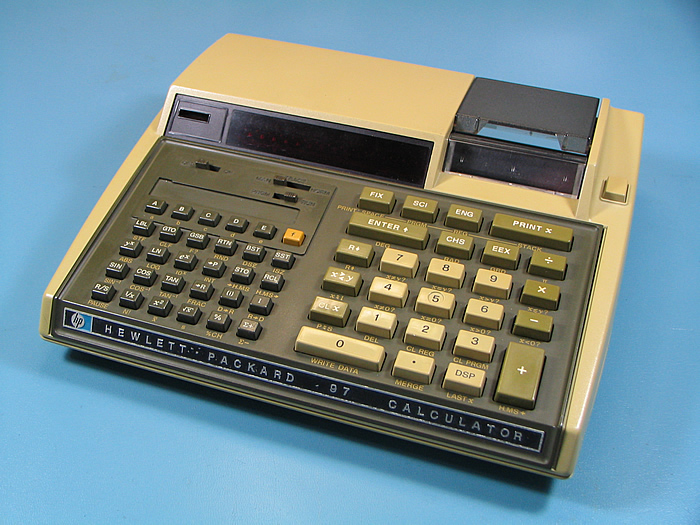 Floppy Days 149 - The HP97 Programmable Calculator - Part 2 - With Wlodek Mier-Jedrzejowicz | The HP97 Programmable Calculator - Part 2 - With Wlodek Mier-Jedrzejowicz Patreon: https://www.patreon.com/FloppyDays Video version of the episode at YouTube: https://www.youtube.com/channel/UC6DQ3cyp8h373H0lXSJ8yqQ Sponsors: 8-Bit Classics Arcade Shopper FutureVision Research New Acquisitions 1027 print heads - https://forums.atariage.com/topic/271589-revive1027-order-thread/ ABBUC (Atari Bit-Byter Users Club) - https://www.abbuc.de Best Electronics - https://www.best-electronics-ca.com/ inexpensive keyboard available on Amazon (for domes) - https://amzn.to/3FU9ASx "Atari 400/800 Student Pilot Reference Guide" by Atari - https://archive.org/details/atari_pilot-student-guide PortaCoCo - https://portacoco.com/ Tim Halloran video on making an adapter that allows you to run much of your CoCo off of battery - https://youtu.be/6UN1XvJG-bs Ian Mavric's TRS-80 store - https://www.ebay.com/str/trs80universe Upcoming Shows Midwest Gaming Classic - April 4-6 - Baird Center, Milwaukee, WI - https://www.midwestgamingclassic.com/ VCF East - April 4-6, 2025 - Wall, NJ - http://www.vcfed.org Indy Classic Computer and Video Game Expo - April 12-13 - Crowne Plaza Airport Hotel, Indianapolis, IN - https://indyclassic.org/ The Commodore Los Angeles Super Show - April 26-27 - Burbank VFW Hall, Burbank, CA - https://www.portcommodore.com/dokuwiki/doku.php?id=class:start The 32nd Annual "Last" Chicago CoCoFEST! - May 2-3, 2025 - Holiday Inn & Suites Chicago-Carol Stream (Wheaton), Carol Stream, Illinois - https://www.glensideccc.com/cocofest/ VCF Europe - May 3-4 - Munich, Germany - https://vcfe.org/E/ Retrofest 2025 - May 31-June1 - Steam Museum of the Great Western Railway, Swindon, UK - https://retrofest.uk/ Vancouver Retro Gaming Expo - June 14 - New Westminster, BC, Canada - https://www.vancouvergamingexpo.com/index.html VCF Southwest - June 20-22, 2025 - Davidson-Gundy Alumni Center at UT Dallas - https://www.vcfsw.org/ Southern Fried Gaming Expo and VCF Southeast - June 20-22, 2025 - Atlanta, GA - https://gameatl.com/ Pacific Commodore Expo NW v4 - June 21-22 - Old Rainier Brewery Intraspace, Seattle, WA - https://www.portcommodore.com/dokuwiki/doku.php?id=pacommex:start KansasFest - July 18-20 - Virtual only - https://www.kansasfest.org/ VCF Midwest - September 13-14, 2025 - Renaissance Schaumburg Convention Center in Schaumburg, IL - http://vcfmw.org/ Tandy Assembly - September 26-28 - Courtyard by Marriott Springfield - Springfield, OH - http://www.tandyassembly.com/ Portland Retro Gaming Expo - October 17-19 - Oregon Convention Center, Portland, OR - https://retrogamingexpo.com/ Chicago TI International World Faire - October 25 - Evanston Public Library, Evanston, IL - https://www.chicagotiug.org/home Schedule Published on Floppy Days Website - https://docs.google.com/document/d/e/2PACX-1vSeLsg4hf5KZKtpxwUQgacCIsqeIdQeZniq3yE881wOCCYskpLVs5OO1PZLqRRF2t5fUUiaKByqQrgA/pub User Groups HP Handheld Conference - annual conference in the US: Website - https://hhuc.us/ YouTube channel - https://www.youtube.com/@hpcalc HHC 2024 USB Drive - https://commerce.hpcalc.org/hhcusb.php Handheld and Portable Computer Club - https://www.hpcc.org/ Magazines/Newsletters HPX Exchange - http://www.hp41.org/LibView.cfm?Command=List&CategoryID=9 Hewlett Packard Journal: journals - http://www.hp41.org/LibView.cfm?Command=List&CategoryID=7 contents - https://www.vcalc.net/hp-jrnl.htm#JOURNAL Hewlett Packard Personal Calculator Digest Vol. 1, 1976 - (contents) - https://www.vcalc.net/hp-jrnl.htm#DIGEST HP KEYNOTES - https://www.vcalc.net/hp-jrnl.htm#KEY PPC Journal - produced by the PPC group: http://www.hp41.org/LibView.cfm?Command=List&CategoryID=14 available on USB drive from Jake Schwartz' PPC Archive - http://www.pahhc.org/ppccdrom.htm Datafile, the HPCC club journal: https://www.hpcc.org/datafile/index.html Back issues, excluding the current volume, are available on USB drive from Jake Schwartz - http://www.pahhc.org/ppccdrom.htm References Wikipedia - https://en.wikipedia.org/wiki/HP-67/97#67 Museum of HP Calculators (David Hicks) - https://www.hpmuseum.org/hp6797.htm | — | ||||||
| 2/27/25 | 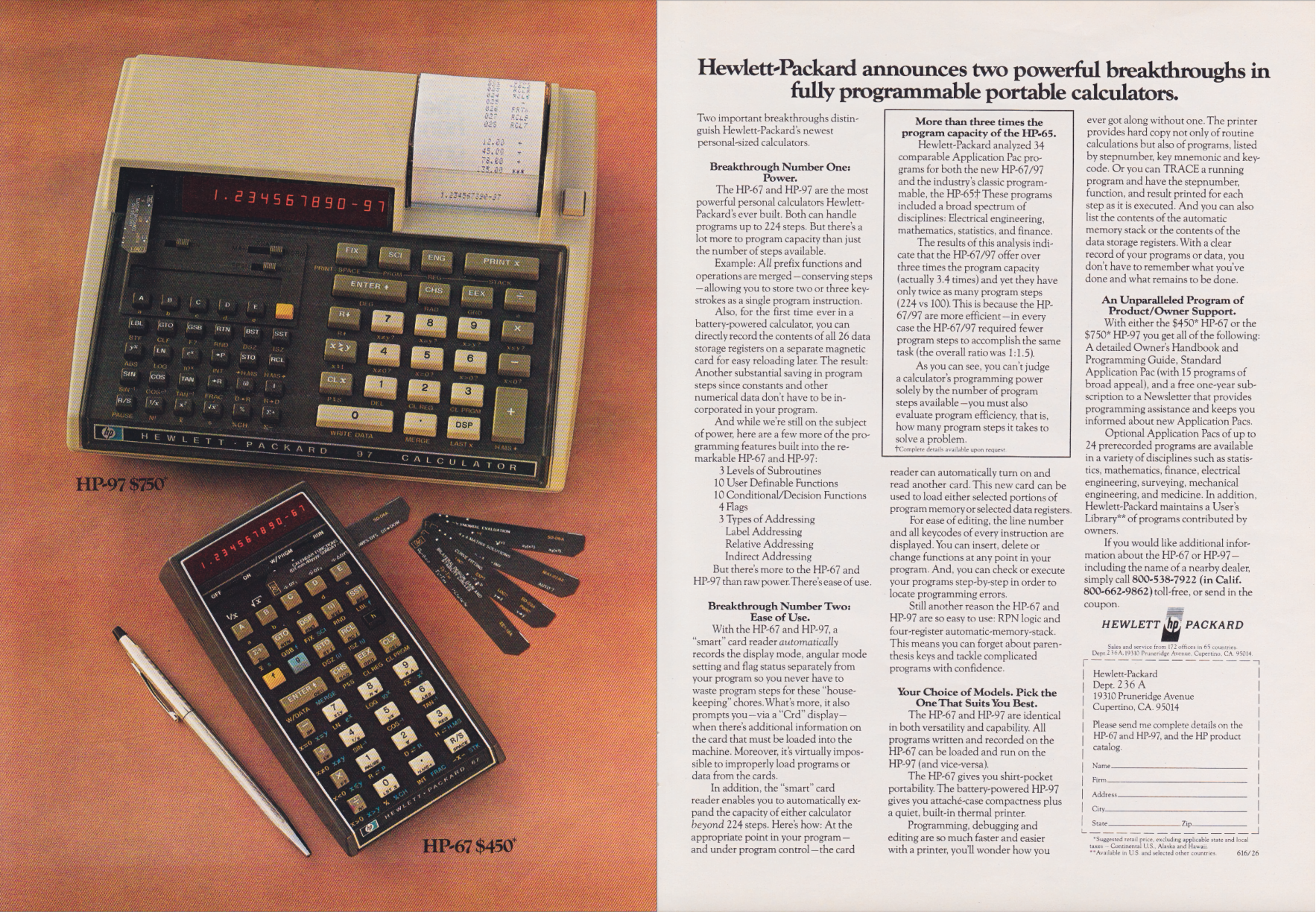 Floppy Days 148 - HP97 History and Memories with Wlodek Mier-Jedrzejowicz and Everett Kaser | HP-97 Programmable Calculator History and Memories with Wlodek Mier-Jedrzejowicz and Everett Kaser Patreon: https://www.patreon.com/FloppyDays Sponsors: 8-Bit Classics Arcade Shopper FutureVision Research Hello, and welcome to episode 148 of the Floppy Days Podcast for February, 2025, where computers of the late 70's through the 80's are the Apple of our eye! (If you got that pun, then you're in the right place 🙂) First off, I wanted to mention that this month is the 12th anniversary of the publication of the very first episode of Floppy Days way back in 2013. That's right: 12 YEARS! A very small percentage of podcasts ever reach that sort of longevity. I can only think of one other podcast that's in my sphere of listening that has been regularly produced for that long or longer (Retro MacCast). I should be so lucky to produce a podcast as long as the 18 years that James and John have done. There are several reasons I keep doing this. I love talking about old computers, I love being able to interview incredible people that were actively part of the microcomputer revolution, I love feedback from listeners, and it keeps me out of trouble now that I'm retired from the daily grind of the workforce. This podcast wouldn't still be going if you weren't listening. The listenership actually has been pretty stable for the past several years, and I'm humbled and honored that so many continue to listen and provide feedback. Thanks to you and your support, what do you say let's keep this thing going till you and I both are tired of it?! 🙂 Okay, now onto details about this particular episode. I've been very focused recently on producing interviews with some amazing guests. Frankly, this will always remain an important part of this podcast, as the individuals who were the main drivers in microcomputers will unfortunately only be around for an increasingly shorter period of time. However, the main focus is, and always will be, covering the vast array of unique machines that existed in the late 70's through the 80's. I will admit that the amount of research and work to publish the microcomputer-specific shows is a lot; considerably more than the interview episodes. However, as I said, covering vintage computers and programmable calculators is the main impetus for this podcast. It has been a full year since we covered a vintage machine, so it's time to remedy that. To that end, in this episode we will be covering a vintage machine: the HP-97 and 67 programmable calculator. I speak of them as one, because, as we will cover in great detail, they are internally the same machine, with the main difference being the built-in printer for the HP-97. I was very fortunate to get a fantastic co-host for this episode: HP calculator historian Wlodek Mier-Jedrzejowicz ("Vwahdek Meer-Yeng SHAY of itch") . Wlodek has a tremendous amount of knowledge and experience with the HP calculators and I think you'll find his stories and background extremely interesting and helpful as we go through the history of the HP-97/67. In this episode, we'll be spending a few minutes to get to know Wlodek, then together we will cover the history of the 97/67. As another bonus, I also was able to catch up with another gentleman who has a lot of history with HP: Everett Kaser. Long-time listeners will recall that Everett worked for HP for many years on several of their calculators and desktop computers and helped with co-hosting the Floppy Days series of episodes on the HP Series 80. It turns out that Everett had spent some time at HP repairing the HP97 and he shares his memories of those times. Based on the amount of material that was generated about this calculator, it looks as though we're going to have 3 episodes on the 97/67, with the first being this one on history and memories, the second covering tech specs and several other topics, and a third episode to finish off coverage. I should mention that the HP97 episodes do veer from the timeline a bit. Whereas I've been covering the machines that were introduced in 1982 (with the last being the Grundy NewBrain), the HP-97/67 were introduced in 1976. By rights, the HP97 should have been covered in a very early episode, just after the MITS Altair 8800 and in the same general time frame as the Apple I. However, I felt it was important to go back and pick up this machine, so I hope you will forgive me for departing from the timeline order for this. Intro Retro MacCast Floppy Days Episode on the HP Series 80 with Everett Kaser - https://floppydays.libsyn.com/floppy-days-62-the-hp85b-computer-with-everett-kaser-and-vassilis-prevelakis New Acquisitions ABBUC - Atari Bit Byters User Club Atari ST SidecarTridge - https://store.sidecartridge.com/products/sidecartridge-multi-device Upcoming Shows Midwest Gaming Classic - April 4-6 - Baird Center, Milwaukee, WI - https://www.midwestgamingclassic.com/ VCF East - April 4-6, 2025 - Wall, NJ - http://www.vcfed.org Indy Classic Computer and Video Game Expo - April 12-13 - Crowne Plaza Airport Hotel, Indianapolis, IN - https://indyclassic.org/ The Commodore Los Angeles Super Show - April 26-27 - Burbank VFW Hall, Burbank, CA - https://www.portcommodore.com/dokuwiki/doku.php?id=class:start The 32nd Annual "Last" Chicago CoCoFEST! - May 2-3, 2025 - Holiday Inn & Suites Chicago-Carol Stream (Wheaton), Carol Stream, Illinois - https://www.glensideccc.com/cocofest/ VCF Europe - May 3-4 - Munich, Germany - https://vcfe.org/E/ Vancouver Retro Gaming Expo - June 14 - New Westminster, BC, Canada - https://www.vancouvergamingexpo.com/index.html VCF Southwest - June 20-22, 2025 - Davidson-Gundy Alumni Center at UT Dallas - https://www.vcfsw.org/ Southern Fried Gaming Expo and VCF Southeast - June 20-22, 2025 - Atlanta, GA - https://gameatl.com/ Pacific Commodore Expo NW v4 - June 21-22 - Old Rainier Brewery Intraspace, Seattle, WA - https://www.portcommodore.com/dokuwiki/doku.php?id=pacommex:start Silly Venture SE (Summer Edition) - July 31-Aug. 3 - Gdansk, Poland - https://www.demoparty.net/silly-venture/silly-venture-2025-se Fujiama - August 11-17 - Lengenfeld, Germany - http://atarixle.ddns.net/fuji/2025/ VCF Midwest - September 13-14, 2025 - Renaissance Schaumburg Convention Center in Schaumburg, IL - http://vcfmw.org/ Tandy Assembly - September 26-28 - Courtyard by Marriott Springfield - Springfield, OH - http://www.tandyassembly.com/ Portland Retro Gaming Expo - October 17-19 - Oregon Convention Center, Portland, OR - https://retrogamingexpo.com/ Chicago TI International World Faire - October 25 - Evanston Public Library, Evanston, IL - https://www.chicagotiug.org/home Schedule Published on Floppy Days Website - https://docs.google.com/document/d/e/2PACX-1vSeLsg4hf5KZKtpxwUQgacCIsqeIdQeZniq3yE881wOCCYskpLVs5OO1PZLqRRF2t5fUUiaKByqQrgA/pub Interview with Wlodek Mier-Jedrzejowicz Wlodek's book - A Guide to HP Handheld Calculators and Computers - https://amzn.to/4hl1Yq1 (affiliate link) References Wikipedia - https://en.wikipedia.org/wiki/HP-67/97#67 Museum of HP Calculators (David Hicks) - https://www.hpmuseum.org/hp6797.htm | — | ||||||
| 1/29/25 |  Floppy Days 147 - Lorenzo Hagerty, Dynasty Computers | Interview with Lorenzo Hagerty, Dynasty Computers Patreon: https://www.patreon.com/FloppyDays Sponsors: 8-Bit Classics Arcade Shopper FutureVision Research New Acquisitions Juiced.GS - https://juiced.gs/ Call-A.P.P.L.E. - https://www.callapple.org/ TRS-80 M1 keyboard remake - http://shop.retrostack.org/ NEC PC-8201A Dial-A-ROM - https://www.soigeneris.com/dial-a-rom-for-vintage-computers TI-74/95 RAM/Flash cart - https://www.soigeneris.com/ti-74-ti-95-mem-cart TI CC-40 RAM/ROM module - https://www.soigeneris.com/ti-cc-40-ramrom-card Upcoming Shows Vintage Computer Festival SoCal - February 15-17, 2025 - Hotel Fera Events Center, Orange, CA - vcfsocal.com Midwest Gaming Classic - April 4-6 - Baird Center, Milwaukee, WI - https://www.midwestgamingclassic.com/ VCF East - April 4-6, 2025 - Wall, NJ - http://www.vcfed.org Indy Classic Computer and Video Game Expo - April 12-13 - Crowne Plaza Airport Hotel, Indianapolis, IN - https://indyclassic.org/ The Commodore Los Angeles Super Show - April 26-27 - Burbank VFW Hall, Burbank, CA - https://www.portcommodore.com/dokuwiki/doku.php?id=class:start The 32nd Annual "Last" Chicago CoCoFEST! - May 2-3, 2025 - Holiday Inn & Suites Chicago-Carol Stream (Wheaton), Carol Stream, Illinois - https://www.glensideccc.com/cocofest/ VCF Europe - May 3-4 - Munich, Germany - https://vcfe.org/E/ Vancouver Retro Gaming Expo - June 14 - New Westminster, BC, Canada - https://www.vancouvergamingexpo.com/index.html VCF Southwest - June 20-22, 2025 - Davidson-Gundy Alumni Center at UT Dallas - https://www.vcfsw.org/ Southern Fried Gaming Expo and VCF Southeast - June 20-22, 2025 - Atlanta, GA - https://gameatl.com/ Pacific Commodore Expo NW v4 - June 21-22 - Old Rainier Brewery Intraspace, Seattle, WA - https://www.portcommodore.com/dokuwiki/doku.php?id=pacommex:start Silly Venture SE (Summer Edition) - July 31-Aug. 3 - Gdansk, Poland - https://www.demoparty.net/silly-venture/silly-venture-2025-se Fujiama - August 11-17 - Lengenfeld, Germany - http://atarixle.ddns.net/fuji/2025/ VCF Midwest - September 13-14, 2025 - Renaissance Schaumburg Convention Center in Schaumburg, IL - http://vcfmw.org/ Tandy Assembly - September 26-28 - Courtyard by Marriott Springfield - Springfield, OH - http://www.tandyassembly.com/ Portland Retro Gaming Expo - October 17-19 - Oregon Convention Center, Portland, OR - https://retrogamingexpo.com/ Chicago TI International World Faire - October 25 - Evanston Public Library, Evanston, IL - https://www.chicagotiug.org/home Schedule Published on Floppy Days Website - https://docs.google.com/document/d/e/2PACX-1vSeLsg4hf5KZKtpxwUQgacCIsqeIdQeZniq3yE881wOCCYskpLVs5OO1PZLqRRF2t5fUUiaKByqQrgA/pub Meet the Listeners - Carlos Byte High No Limit Podcast - https://sunspotstories.podbean.com/ Interview Volume 1 of Lorenzo's chronicles. On page 121, it mentions Dynasty - https://ia601007.us.archive.org/12/items/chroniclesoflorenzovolume1a/ChroniclesOfLorenzoVolume1a.pdf Lorenzo's Website - https://www.lorenzohagerty.com Lorenzo's Books - https://www.amazon.com/Books-Lorenzo-Hagerty/s?rh=n%3A283155%2Cp_27%3ALorenzo+Hagerty podcast - Psychedelic Salon (https://psychedelicsalon.com/ ) | — | ||||||
| 12/24/24 | 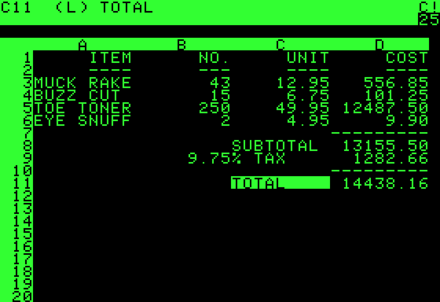 Floppy Days 146 - Interview with Dan Bricklin, VisiCalc | Interview with Dan Bricklin, VisiCalc Patreon: https://www.patreon.com/FloppyDays Sponsors: 8-Bit Classics Arcade Shopper FutureVision Research Hello, and welcome to episode 146 of the Floppy Days Podcast, for December, 2024. I am Randy Kindig, your host for this podcast. This month I'm staying with the recent interview theme, as I continue to get the opportunity for interviews with some amazing icons from the early personal computer days. This month, that person is Dan Bricklin, co-developer of the iconic VisiCalc software that helped kickstart the sales of early personal computers like the Apple II and began the important spreadsheet software category that persists until today. I published an interview with Dan's partner in VisiCalc (and in Software Arts), Bob Frankston, back in 2023, and now Dan adds to the story in his own words. Please note that I do plan to get back into producing episodes covering specific vintage computers. I've just had an amazing run of interview opportunities in recent months, which has reduced the time I had to do the research on computers for the podcast. Coming up in 2025 will be coverage of machines like the HP97, the Lobo Max-80, the Dragon, and the C64. New Acquisitions Ian Mavric's TRS-80 store on ebay - (https://www.ebay.com/str/trs80universe Lee Felsenstein's book "Me and My Big Ideas: Counterculture, Social Media, and the Future" at Amazon (sponsor link) - https://amzn.to/3Wh6o9h Lee Felsenstein (Fel-zen-stine) interview on Floppy Days - https://floppydays.libsyn.com/floppy-days-90-lee-felsenstein-interview Lee Felsenstein co-hosting episode on Osborne computer (history) on Floppy Days - https://floppydays.libsyn.com/floppy-days-91-the-osborne-1-with-lee-felsenstein Forrest Mims' book "Maverick Scientist: My Adventures as an Amateur Scientist" at Amazon (sponsor link) - https://amzn.to/3BxDuKT Forrest Mims interview on Floppy Days - https://floppydays.libsyn.com/floppy-days-130-interview-with-forrest-mims-iii News and Upcoming Computer Shows News The VintNerd (Steve Diedierch) and FutureVision Research (Brian Cox) FujiNet video - https://youtu.be/0XcsSznKbTs "Priming the Pump" book by David and Theresa Welsh - Kindle version - https://amzn.to/41Nrlw0 Upcoming Shows Virtual Tandy Retro Show (online) - January 25 - https://tandyretroshow.com Vintage Computer Festival SoCal - February 15-17, 2025 - Hotel Fera Events Center, Orange, CA - vcfsocal.com Midwest Gaming Classic - April 4-6 - Baird Center, Milwaukee, WI - https://www.midwestgamingclassic.com/ VCF East - April 4-6, 2024 - Wall, NJ - http://www.vcfed.org Indy Classic Computer and Video Game Expo - April 12-13 - Crowne Plaza Airport Hotel, Indianapolis, IN - https://indyclassic.org/ Schedule Published on Floppy Days Website - https://docs.google.com/document/d/e/2PACX-1vSeLsg4hf5KZKtpxwUQgacCIsqeIdQeZniq3yE881wOCCYskpLVs5OO1PZLqRRF2t5fUUiaKByqQrgA/pub Interview Bob Frankston interview on Floppy Days - https://floppydays.libsyn.com/floppy-days-126-bob-frankston-visicalc Dan Bricklin's Website - http://www.bricklin.com/default.htm Dan Bricklin's book "Bricklin on Technology" (sponsor link) - https://amzn.to/49X8DUP | — | ||||||
| 11/30/24 | 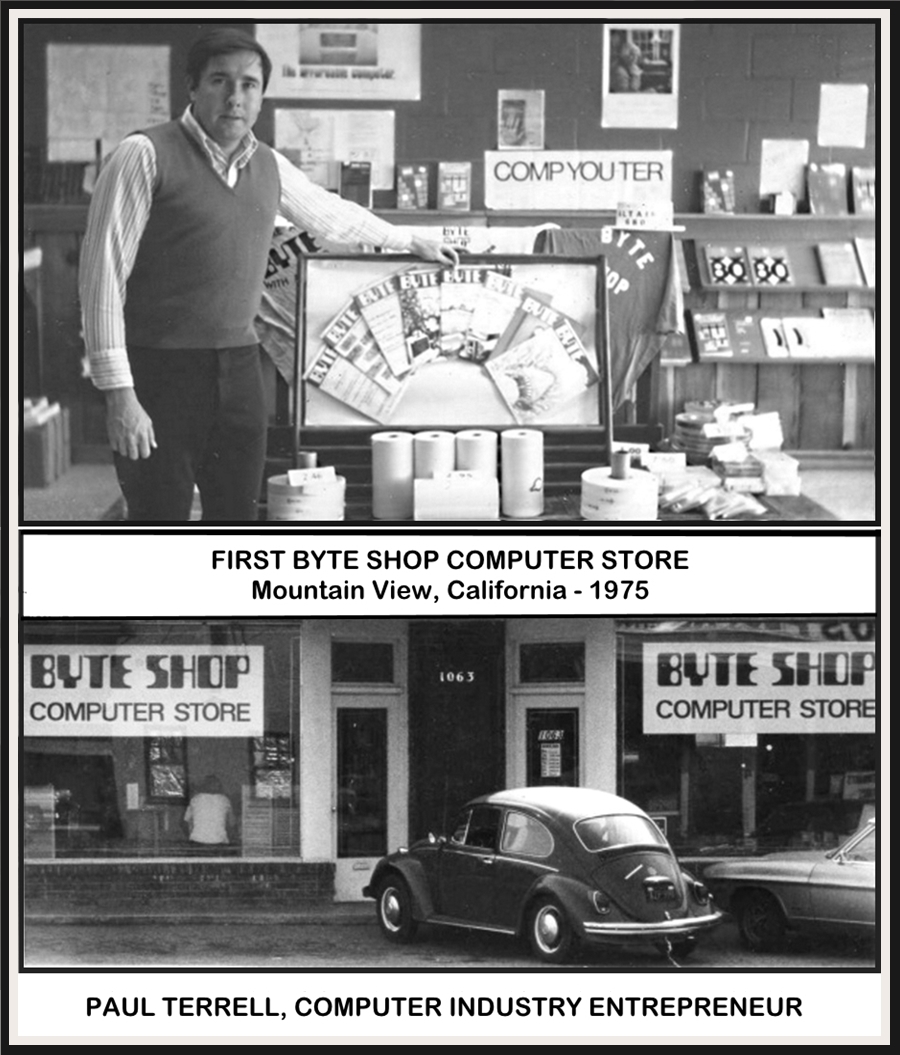 Floppy Days 145 - Paul Terrell Interview - The Byte Shop Part 4 | Episode 145 - Interview with Paul Terrell, The Byte Shop - Part 4 Patreon: https://www.patreon.com/FloppyDays Sponsors: 8-Bit Classics Arcade Shopper FutureVision Research Hello, and welcome to episode 145 of the Floppy Days Podcast, for November, 2024. I am Randy Kindig, your host for this audio tribute to the amazing variety of home computers that existed in the late 70's thru the 80's, before the influence of Big Blue changed the landscape forever. This month I'm continuing the series of interviews I've been doing recently with Paul Terrell. As we have discussed, Paul Terrell is a name well-known in the annals of computer history; probably most famously for his kickstart of Apple Computer through the purchase of one of Steve Jobs' and Steve Wozniak's first batches of Apple I computers for his Byte Shop. The Byte Shop was a very early computer store that was one of the few that existed in the world, at the time. In this interview, we continue to focus primarily on The Byte Shop, how it got started, what it was like, and much more. This is part 4 of a 4-part series on just that topic with Paul. If you want to know what it was like to run a computer store in those early days, this is the interview for you! Along the way, you'll learn even more about just what the home and hobby computer scene was like in those days. In future episodes, Paul and I will discuss other topics around his long and distinguished career, such as the aforementioned dealings with the fledgling Apple Computer, and other ventures in which Paul was involved after the Byte Shop, including a business that rented software. New Acquisitions/What I've Been Up To Episodes 8 (https://floppydays.libsyn.com/floppy-days-episode-8-the-trs-80-model-i-part-i) and 9 (https://floppydays.libsyn.com/floppy-days-episode-9-the-trs-80-model-i-part-2), containing interviews with David and Theresa Welsh, authors of the book "Priming the Pump: How TRS-80 Enthusiasts Helped Spark the PC Revolution". Lobo MAX-80 - https://en.wikipedia.org/wiki/Max-80 HP-97 Calculator and repair: https://www.hpmuseum.org/hp6797.htm https://en.wikipedia.org/wiki/HP-67/97 https://www.ebay.com/usr/waterhosko Upcoming Shows Show list I maintain for the remainder of the current year - https://floppydays.libsyn.com/current-year-vintage-computer-show-schedule) Silly Venture WE (Winter Edition) - Dec. 5-8 - Gdansk, Poland - https://www.demoparty.net/silly-venture/silly-venture-2024-we Atari Party 2024 - Dec. 7 (noon - 4p.m.) - Quakertown Train Station, Quakertown, PA - http://atariparty.org/ Vintage Computer Festival SoCal - February 15-17, 2025 - Hotel Fera Events Center, Orange, CA - vcfsocal.com Midwest Gaming Classic - April 4-6 - Baird Center, Milwaukee, WI - https://www.midwestgamingclassic.com/ VCF East - April 4-6, 2024 - Wall, NJ - http://www.vcfed.org Indy Classic Computer and Video Game Expo - April 12-13 - Crowne Plaza Airport Hotel, Indianapolis, IN - https://indyclassic.org/ Interview with Paul Terrell (3) Apple-1 Prototype Polaroid Photographs Given to Paul Terrell of the Byte Shop in 1976 - https://www.rrauction.com/auctions/lot-detail/348985606984001-steve-jobs-3-apple-1-prototype-polaroid-photographs-given-to-paul-terrell-of-the-byte-shop-in-1976/?cat=3 Ray Borrill's Data Domain blog - https://www.landsnail.com/thedatadomain/remember.htm | — | ||||||
| 10/27/24 |  Floppy Days 144 - Interview with Don French and Steve Leininger, Co-Designers of the TRS-80 Model I | Episode 144 - Interview with Don French and Steve Leininger, Co-Designers of the TRS-80 Model I Patreon: https://www.patreon.com/FloppyDays Sponsors: 8-Bit Classics Arcade Shopper FutureVision Research Hello, and welcome to episode 144 of the Floppy Days Podcast, for October, 2024. I am Randy Kindig, your host for this audio ode to the home computers of the past. This month I have a special treat for you. At the recent Tandy Assembly, which I will talk about in more detail later in the podcast, not only were there a lot of great people, exhibits, vendors, and camaraderie, but we were also blessed with having Steve Leininger as one of the guest speakers along with his partner in the development of the TRS-80 Model I, Don French! I recently had an interview with Steve Leininger (episode 142: https://floppydays.libsyn.com/floppy-days-142-interview-with-steve-leininger-designer-of-the-trs-80-model-i ), thanks to his willingness to be interviewed at the recent VCF Southeast in Atlanta. That was a milestone for my podcast, as I had always wanted to talk with Steve. I also had interviewed Don French several years ago, prior to his attending Tandy Assembly in 2017, in episode 53 (https://floppydays.libsyn.com/floppy-days-53-interview-with-don-french-co-designer-of-the-trs-80-model-i ). This time, however, I was able to get an interview with Don and Steve together in the same interview! That in itself was amazing and I think you'll really enjoy the back-and-forth between the two gentlemen who are obviously and correctly proud of the work they did to bring the TRS-80 to the world and Tandy into the computer business. Next month, I will talk about another computer rescue that came my way recently, and which is also tied into Tandy Assembly and Radio Shack computers. I'll not go into any further detail here as I don't want to spoil the story for you next month. But believe me, it will be fun both to tell and to listen to. New Acquisitions/What I've Been Up To Soldering kits from FutureVision Research The Soldering Basics Kit The BEAM Bot Soldering Kit The Demonstrator Soldering Kit Tandy Assembly 2024 - https://www.tandyassembly.com/ Drive cable for the TRS-80 Model I from Ian Mavric - https://www.ebay.com/str/trs80universe RAM card for Tandy PC2/Sharp PC1500 from Jeff Birt - https://www.soigeneris.com/sharp-pc-1500-memory-modules Upcoming Shows Retro Computer Festival 2024 - November 9-10 - Centre for Computing History, Cambridge, England - https://www.computinghistory.org.uk/det/72253/Retro-Computer-Festival-2024-Saturday-9th-November/ Silly Venture WE (Winter Edition) - Dec. 5-8 - Gdansk, Poland - https://www.demoparty.net/silly-venture/silly-venture-2024-we Show list I maintain for the remainder of the current year - https://floppydays.libsyn.com/current-year-vintage-computer-show-schedule) | — | ||||||
| 9/25/24 | 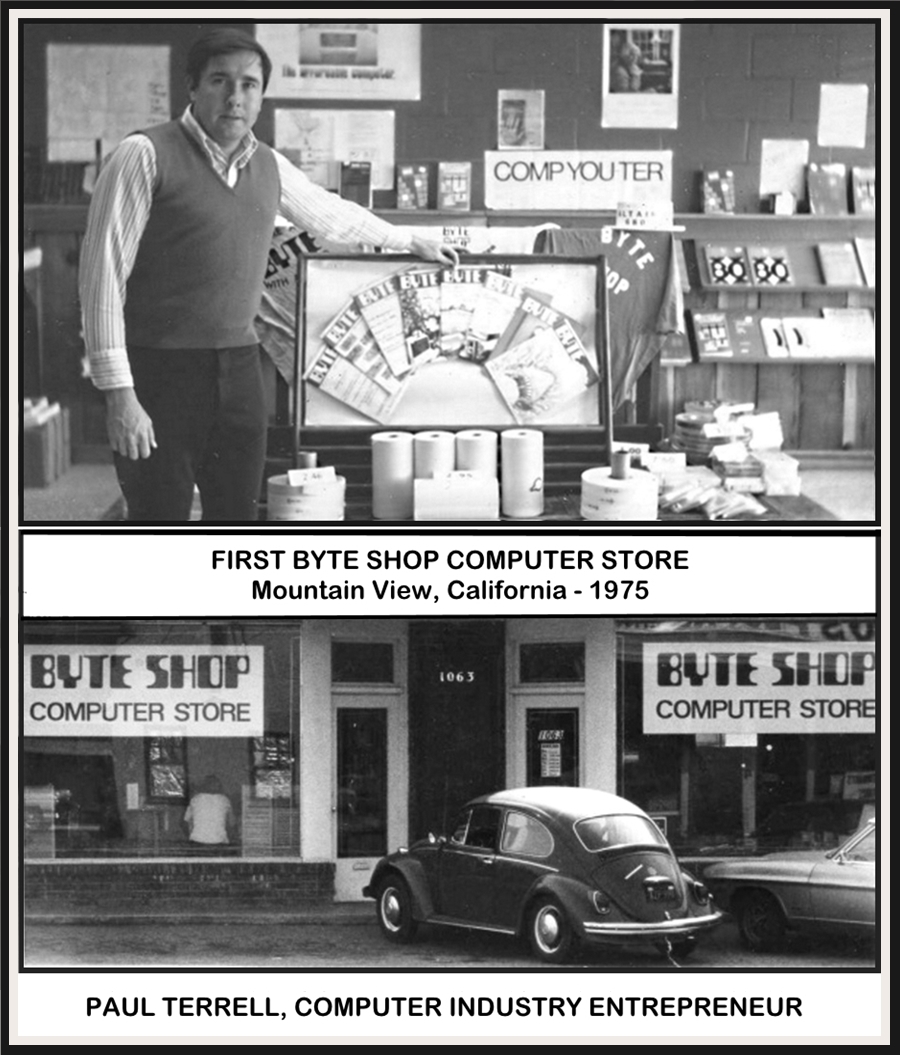 Floppy Days 143 - Paul Terrell Interview - The Byte Shop Part 3 | Episode 143 - Interview with Paul Terrell, The Byte Shop - Part 3 Patreon: https://www.patreon.com/FloppyDays Sponsors: 8-Bit Classics Arcade Shopper FutureVision Research Hello, and welcome to episode 143 of the Floppy Days Podcast, for September, 2024. I am Randy Kindig, your host for this retro ride to the past of home computing. This month I'm continuing the series of interviews I've been doing recently with Paul Terrell. As we have discussed, Paul Terrell is a name well-known in the annals of computer history; probably most famously for his kickstart of Apple Computer through the purchase of one of Steve Jobs' and Steve Wozniak's first batches of Apple I computers for his Byte Shop. The Byte Shop was a very early computer store that was one of the few that existed in the world, at the time. In this interview, we continue to focus primarily on The Byte Shop, how it got started, what it was like, and much more. This is part 3 of a 4-part series on just that topic with Paul. If you want to know what it was like to run a computer store in those early days, this is the interview for you! Along the way, you'll learn even more about just what the home and hobby computer scene was like in those days. In future episodes, Paul and I will discuss other topics around his long and distinguished career, such as the aforementioned dealings with the fledgling Apple Computer, and other ventures in which Paul was involved after the Byte Shop, including a business that rented software. New Acquisitions/What I've Been Up To VCF Midwest - https://vcfmw.org/ Indus GT disk drive - https://atariwiki.org/wiki/Wiki.jsp?page=Indus%20GT Coco FujiNet - https://fujinet.online/ 10502PC - https://lotharek.pl/productdetail.php?id=398 VTech PreComputer 2000 - https://en.wikipedia.org/wiki/VTech_PreComputer_2000 Upcoming Shows Show list I maintain for the remainder of the current year - https://floppydays.libsyn.com/current-year-vintage-computer-show-schedule) Portland Retro Gaming Expo - September 27-29 - Oregon Convention Center, Portland, OR - https://retrogamingexpo.com/ Tandy Assembly - September 27-29 - Courtyard by Marriott Springfield - Springfield, OH - http://www.tandyassembly.com/ AmiWest - October 25-27 - Sacramento, CA - https://amiwest.net/ Chicago TI International World Faire - October 26 - Evanston Public Library (Falcon Room, 303), Evanston, IL - http://chicagotiug.sdf.org/faire/ Retro Computer Festival 2024 - November 9-10 - Centre for Computing History, Cambridge, England - https://www.computinghistory.org.uk/det/72253/Retro-Computer-Festival-2024-Saturday-9th-November/ Silly Venture WE (Winter Edition) - Dec. 5-8 - Gdansk, Poland - https://www.demoparty.net/silly-venture/silly-venture-2024-we Interview with Paul Terrell (3) Apple-1 Prototype Polaroid Photographs Given to Paul Terrell of the Byte Shop in 1976 - https://www.rrauction.com/auctions/lot-detail/348985606984001-steve-jobs-3-apple-1-prototype-polaroid-photographs-given-to-paul-terrell-of-the-byte-shop-in-1976/?cat=3 Ray Borrill's Data Domain blog - https://www.landsnail.com/thedatadomain/remember.htm | — | ||||||
| 8/30/24 |  Floppy Days 142 - Interview with Steve Leininger, Designer of the TRS-80 Model I | Interview with Steve Leininger, Designer of the TRS-80- Model I Patreon: https://www.patreon.com/FloppyDays Sponsors: 8-Bit Classics Arcade Shopper 0 Floppy Days Tune 1 min 13 sec Vintage Computer Ads 1 min 42 sec Intro 9 min 03 sec bumper - Peter Bartlett 9 min 11 sec New Acquisitions 17 min 11 sec bumper - Ian Mavric 17 min 19 sec Upcoming Computer Shows 21 min 53 sec bumper - Myles Wakeham 21 min 58 sec Meet the Listeners 28 min 37 sec Interview with Steve Leininger 1 hr 20 min 29 sec Closing This particular episode has a special meaning for me, personally. You see, as I've mentioned on earlier episodes, the TRS-80 Model I from Tandy/Radio Shack was my first home computer (even though my first programmable device was a TI58C calculator). I recall the joy and wonder of playing with the machine (it wasn't called the Model I at that time; just the TRS-80; as it was the first of the line) in the local Radio Shack store in 1977 and 1978 and the incredible rush of owning one in 1979; after my wife purchased a Level I BASIC machine for me as a gift for college graduation. That machine only had 4K of RAM and 4K of ROM (Tiny BASIC), as it was the entry-level machine, but it was a thing of beauty. I felt like I could do anything with that machine, even though my justification to the wife was that we could track our checkbook and recipes on it. I think she knew better, but went along with it anyway. The computer came with everything you needed, including a tape drive and black-and-white monitor, which was good for a poor recent college graduate. I quickly, as finances allowed with my new engineering job, upgraded the computer to 16K of RAM and Level II BASIC (a powerful Microsoft 12K ROM BASIC) and enjoyed the machine immensely, even using it in my job supporting the build-out of a new nuclear power plant back in those days. I eventually sold off the Model I, in favor of a computer that had color graphics and sound (the Atari 800), but have always continued to have a huge soft spot for that first computer. When I started the Floppy Days Podcast, one of the people that has always been on my bucket list to interview has been Steve Leininger, who, along with Don French while at Radio Shack designed the TRS-80 Model I, among other things. A few years back, I had the opportunity to participate in an interview with Steve for the Trash Talk Podcast, when I was co-hosting that show, but an ill-timed trip to the hospital for my son meant that I was not able to participate. While my son's health is of paramount importance, of course, I always wanted to get another chance to talk with Steve. Not only was Steve the designer of one of my favorite home computers of all time, but he also was a fellow Purdue University Boilermaker, who graduated just a year before I started there. The thought that I could have met Steve on campus if I'd been there just a year earlier was very intriguing to me, and fueled my desire to talk with Steve even more. In the last episode (#141 with Paul Terrell) I talked about VCF Southeast in Atlanta in July of 2024. After I had made plans to attend that show, I was flabbergasted to find out that Earl Baugh, one of the show organizers, had somehow managed to contact Steve and get him to come to the show! I have to thank Earl for the work he did to make that happen. Here was my opportunity to certainly meet Steve, and perhaps even talk with him! I prepped some questions, just in case I was able to get an interview. While at the show, I met Steve and asked him if he would be willing to do a short interview for Floppy Days while at the show. Amazingly, he was very kind and agreed to do that. We found a quiet room and I was able to talk with Steve for almost an hour. This show contains that interview. Another note on this: as you'll hear in the interview, the connection to Steve is even stronger than I realized! He not only went to my alma mater, but also grew up in some of the same towns that myself and my wife did. We personally peripherally know some of his relatives. Things like this really do make you think the world is small! One other, final, note: This interview even ties into the recent and continuing interviews I've been publishing with Paul Terrell. As you'll hear in upcoming episodes with Paul, and in this interview with Steve, Steve actually worked at the Byte Shop before getting the first job with Tandy, and in fact his work at the Byte Shop directly led to him getting hired by Tandy to design the Model I. Anyway, I hope you enjoy the interview as much as I enjoyed getting it. I am overjoyed I finally got the chance to talk to one of my vintage computer heroes, Steve Leininger! New Acquisitions C64 Sketch and Design by Tony Lavioe - sponsored link https://amzn.to/4dZGtt2 Compute's Mapping the IBM PC and PC Junior by Russ Davies - sponsored link https://amzn.to/3yQmrlP The Best of SoftSide - Atari Edition - https://archive.org/details/ataribooks-best-of-softside-atari-edition ZX81+38 - https://github.com/mahjongg2/ZX81plus38 magnifying glasses - sponsored link https://amzn.to/4cBQYla Japanese power adapter - sponsored link https://amzn.to/3XjeUW5 Upcoming Shows VCF Midwest - September 7-8 - Renaissance Schaumburg Convention Center in Schaumburg, IL - http://vcfmw.org/ VCF Europe - September 7-8 - Munich, Germany - https://vcfe.org/E/ World of Retrocomputing 2024 Expo - September 14-15 - Kitchener, ON, Canada - https://www.facebook.com/events/s/world-of-retro-computing-2024-/1493036588265072/ Teletext 50 - Sep 21-22 - Centre for Computing History, Cambridge, UK - https://www.teletext50.com/ Portland Retro Gaming Expo - September 27-29 - Oregon Convention Center, Portland, OR - https://retrogamingexpo.com/ Tandy Assembly - September 27-29 - Courtyard by Marriott Springfield - Springfield, OH - http://www.tandyassembly.com/ AmiWest - October 25-27 - Sacramento, CA - https://amiwest.net/ Chicago TI International World Faire - October 26 - Evanston Public Library (Falcon Room, 303), Evanston, IL - http://chicagotiug.sdf.org/faire/ Retro Computer Festival 2024 - November 9-10 - Centre for Computing History, Cambridge, England - https://www.computinghistory.org.uk/det/72253/Retro-Computer-Festival-2024-Saturday-9th-November/ Silly Venture WE (Winter Edition) - Dec. 5-8 - Gdansk, Poland - https://www.demoparty.net/silly-venture/silly-venture-2024-we Schedule Published on Floppy Days Website - https://docs.google.com/document/d/e/2PACX-1vSeLsg4hf5KZKtpxwUQgacCIsqeIdQeZniq3yE881wOCCYskpLVs5OO1PZLqRRF2t5fUUiaKByqQrgA/pub Interview Steve's Workbench at radioshack.com (archived) - https://web.archive.org/web/19980528232503/http://www.radioshack.com/sw/swb/ Transcript of Interview-Only Randy Kindig: All right. I really appreciate your time today, Steve. Steve Leininger: Thank you for having me, Randy. Randy Kindig: So let's start out maybe just by talking about where You live today, and what you do? Steve Leininger: I live in Woodland Park, Colorado, which is 8, 500 feet, right out in front of we got Pike's Peak out our front window. Randy Kindig: Oh. Oh, that's nice. Steve Leininger: Yeah we get snow up through about June, and then it starts again about September. But it's not as much snow as you would imagine. Randy Kindig: I've got property in Montana, and I lived out there for a couple of years, Steve Leininger: so there you go. Randy Kindig: We probably got more snow up there. Steve Leininger: Hey, you asked what I did. I'm involved with Boy Scouts, a maker space with a church based ministry firewood ministry, actually. Some people call it a fire bank. So we provide firewood to people who can't afford that. Randy Kindig: Oh. Steve Leininger: So it's like a food bank, but with fire, firewood. Randy Kindig: I've never heard of that. Steve Leininger: We source the firewood. We cut it down and we split it. Lots of volunteers involved; pretty big project. Randy Kindig: Yeah. Okay, cool. I also wanted to mention, I'm a fellow Boilermaker. Steve Leininger: There you go. Randy Kindig: I know you went to Purdue, right? Steve Leininger: I did go to Purdue. Randy Kindig: Did you ever get back there? Steve Leininger: Yeah, and in fact they've got a couple learning spaces named after us. Randy Kindig: Oh, okay. Steve Leininger: We've been donating to our respective alma maters. My wife went to IU. Randy Kindig: Oh, is that right? Oh my. Steve Leininger: Yeah, oh my and me. Yeah, the fact that the family who's all IU, their family tolerated me was, quite a remarkable thing. Randy Kindig: Okay. I find it interesting because I think you graduated in 76, is that right? Steve Leininger: 74. Randy Kindig: Oh, 74. Steve Leininger: Yeah. Yeah. I was there from … Randy Kindig: Oh yeah, you actually were gone before I started. Steve Leininger: Yeah. So I was there from 70 to 73. 70 to 70 four. When I graduated in four years, I got both my bachelor's and master's degree by going through the summer. I managed to pass out of the first year classes because of some of the high school stuff yeah. Randy Kindig: Okay. I started in 75, so I guess we just missed each other. Steve Leininger: Yeah. Yeah. You're the new kids coming in. Randy Kindig: Yeah. . So I, I found that interesting and I wanted to say that. Do you keep up with their sports program or anything like that? Steve Leininger: Yeah, they play a pretty good game of basketball in fact, I ribbed my wife about it because she was from the earlier days, the Bobby Knight days at IU that were phenomenal. Randy Kindig: Yeah, exactly. For those of you listening, I'm talking with Steve Leininger, who was the primary developer, if not the developer, of the TRS 80 Model I.. Steve Leininger: I did all the hardware and software for it. I'll give Don French credit for sticking to it and getting a project started. And for refining, refining our product definition a little bit to where it was better than it would have been if I would have stopped early. Randy Kindig: Okay. And I have talked with Don before. I've interviewed him on the podcast, and I met him at Tandy Assembly. But I'm just curious, when you were hired into Tandy and you were told what you were going to do; exactly what were you told? Steve Leininger: They had a 16 bit microprocessor board that another consultant had developed. And they were trying to make a personal computer out of this. It was the Pace microprocessor, which was not a spectacular success for National, but it was one of the first 16 bit processors. But they had basically an initial prototype, might have been even the second level of the thing. No real documentation, no software, ran on three different voltages and didn't have input or output. Other than that, it was fine. I was brought in because I was one of the product one of the engineers for the development boards, the development board series for the SCAMP, the S C M P, the National Semiconductor had a very low cost microprocessor that at one point in time, I benchmarked against the 8080 with positive benchmarks and ours was faster on the benchmarks I put together, but as I was later told there's lies, damn lies, and benchmarks. But so they said take a look at using that, their low cost microprocessor that you were working with. And it really wasn't the right answer for the job. Let's see, the Altair was already out. Okay. That was the first real personal computer. The Apple, the Apple 1 was out. Okay. But it was not a consumer computer. Okay. They, it was just, it was like a cookie sheet of parts, which was very similar to what was used in the Atari games at the commercial games. Okay. pong and that kind of stuff at that time. And I had been working, after Purdue, I went to National Semiconductor. There's a long story behind all that. But in the process, some of us engineers would go up to the Homebrew Computer Club that met monthly up at the Stanford Linear Accelerator. We're talking Wilbur and Orville Wright kinds of things going on. Yeah. Everyone who was in the pioneering version of computing had at one time been to that meeting. Randy Kindig: It's very famous. Yeah. Steve Leininger: Yeah. And Steve Jobs and Steve Wozniak were basically a couple guys working out of their garage at the time. I was still working at National Semiconductor, but I also had a Moonlight job at Byte Shop number 2. The second computer store in all of California. Randy Kindig: And So you worked with Paul Terrell. Steve Leininger: I actually worked with one of, yeah, Paul, I actually worked for Paul's I don't know if it was a partner, Todd, I don't even remember the guy's name. But I just, it was. Randy Kindig: I was curious because I'm talking to Paul right now and getting interviews. Steve Leininger: Yeah. I, I'm sure we met, but it wasn't anything horribly formal. Since it was the number two shop, it still wasn't the number one shop, which Paul worked out of. And so we had an Apple 1 there. I actually got the job because I when I When I went in there, they were trying to troubleshoot something with what looked like an oscilloscope that they pulled out of a tank, and so it had, audio level kind of bandwidth, but could not do a digital circuit. And I said what you really need is a, I told him, a good tectonic scope or something like that. He said do you want a job here? I ended up moonlighting there, which was, as fortune would have it, was a good deal when the folks from Radio Shack came down to visit. Because when they came down to visit the sales guy wasn't there. We'll let the engineer talk to them, they almost never let the engineers talk to them. Randy Kindig: So you had to talk with them. Steve Leininger: Yeah. It was John Roach, Don French, and it was probably Jack Sellers, okay and Don was probably the; he was the most on top of stuff electronically because he was a hobbyist of sorts. The other two guys: Mr. Sellers ran the engineering group. John Roach was the VP of manufacturing. And they were basically on a parts visit. They do it once a year, once, twice a year. And they also did it with Motorola and a couple other places. But I told him about this microprocessor and that I was writing a tiny BASIC for it. Okay. Tiny BASIC was a interpreted basic that a guy named Li-Chen Wang actually had the first thing in Dr. Dobbs, Dr. Dobbs magazine. We're talking about, we're talking about things that you don't realize are the shoulders of giants that turned out to be the shoulders of giants. And in fact, we reached out to Mr. Wang as we were working on it. We thought we had the software already taken care of because I'm jumping ahead in the story, but we were going to have Bob Uterich, and you'd have to chase that back. We had him signed up to write a BASIC interpreter for us, but because he'd already done one for the 6800, and it was included in Interface Age magazine. on a plastic record. You remember the old plastic records you could put in a magazine? Randy Kindig: Yeah, I did see that. Steve Leininger: Yeah, so this was called a floppy ROM when they did it. Yeah. So if you had the right software and everything you could download the software off of the floppy ROM and run it on 6800. I think he used the Southwest Technical Products thing. And so we'd signed him up to do the BASIC. This was independent of the hardware design I was doing. And he went into radio silence on us; couldn't find him. And so we get to, in parallel, I was using the Li-Chen Wang plan to do at least a demo version of BASIC that would run on the original computer. And when the demo went successfully on Groundhog Day in 1977. This is the time frame we're talking about. I I started work on July 5th, the year before it. With Tandy? Yeah. Okay. We rolled into town on the 3rd, and of course they're closed for the 4th. And on the 5th I started, and there was the wandering around in the desert at the beginning of that, and Don's probably talked about how I was moved from there to their audio factory and then to the old saddle factory. Tandy used to be primarily a leather company before they bought Radio Shack in 1966 or something like that. And anyway, when the software didn't come out, I ended up writing the software, too. So I designed all the hardware and all the software. I didn't do the power supply. Chris Klein did the power supply. And, a little bit of the analog video circuitry, but it was very little part of that. Because we were just making a video signal. I did all the digital stuff on that. Yeah. Randy Kindig: So the software ended up being what was the level one ROM, right? Steve Leininger: Yeah, the level one ROM started out as the Li-Chen Wang BASIC. But he had no I. O. in his software, so I was doing the keyboard scanning. I had to do the cassette record and playback. Had to implement data read and data write Peek and poke, which is pretty simple. Put in the graphic statements. Yeah, oh, and floating point. Now, floating point, luckily, Zilog had a library for that, but I had to basically, this was before APIs were a big deal, so I basically had to use their interface, To what I had written and had to allocate storage, correct? We're talking about 4K bytes of ROM. I know, yeah. Very tiny, and to put all the I. O. in there, and to make it so that you could be updating the screen, when you're doing the cassette I put two asterisks up there and blinked the second one on and off, you remember that? Randy Kindig: Oh yeah. Steve Leininger: Sort of as a level set. Randy Kindig: Yeah. Steve Leininger: And someone said, oh, you should have patented that thing. And actually I have seven or eight patents, U. S. patents, on different parts of the computer architecture. Randy Kindig: Oh, do you? Steve Leininger: But not the blinking asterisk, which is probably a patentable feature. Randy Kindig: Yeah, I wish I'd had that on other machines, that I ended up having. So that would have been nice, yeah. I liken what you've done with what Steve Wozniak did, for the Apple II. You're somebody I've always wanted to talk to because I felt like you were one of the important pioneers in their early years. What do you have to say about that? Do you feel like what you did was ... Steve Leininger: in retrospect, yes. And I have a greater appreciation for people like the Wright Brothers. If you think about the Wright Brothers they took all their stuff from their Dayton, Ohio, bicycle shop down to Kill Devil Hills. We now know it as Kitty Hawk. But they would take the stuff down there by train, and then they would have to put it in horse driven wagons. Think about that. And people would ask them, what are you going to use the airplane for? It's what are you going to use a home computer for? Yeah, to maintain recipes and to play games. Randy Kindig: Do your checkbook. Steve Leininger: Do your check, home security. There's a whole lot of stuff that we talked about. And other giants entered the field: Multiplan, which became Lotus 1 2 3, which became Excel. Not the same company, but the idea, could you live without a spreadsheet today? Very difficult for some things, right? Randy Kindig: Yeah. Yeah, it's ubiquitous. People use it for everything. Yeah. Yeah. So you've been, I talked with David and Teresa Walsh. Or Welsh, I'm sorry, Welsh. Where they did the book Priming the Pump. Steve Leininger: That's very that's pretty close to the real thing. Randy Kindig: Is it? Okay. They named their book after what you did and said; that you primed the pump for home computers. Can you expand on that and tell us exactly what you meant by that? Steve Leininger: It again goes back to that shoulders of giants thing, and I forget who said that; it's actually a very old quote, I can see further because I'm standing on the shoulders of giants. And I think the thing that we brought to the table and Independently, Commodore and Apple did the same thing in 1977. There were three computers that came out inexpensive enough that you could use them in the home. They all came with ROM loaded BASIC. You didn't have to load anything else in. They all came with a video output. Some had displays. Some Commodore's was built in. One of ours was a Clip on and you had to go find one for the apple. For the Apple, yeah. Apple had a superior case. Apple and Radio Shack both had great keyboards. Randy Kindig: apple was expandable, with its... Steve Leininger: yeah, Apple Apple was internally expandable, yeah. And, but it cost $1,000. Without the cassette. Without the monitor. It wasn't the same type of device. Randy Kindig: I was a college student. And, I looked at all three options. It was like the TRS-80; there are Radio Shacks everywhere. You could go in and play with one; which was nice. And they were inexpensive enough that I could actually afford one. Steve Leininger: And, Radio Shack can't duck the, if you did something wrong, you had to fix it. Randy Kindig: That's right. Let's see here. So initially the idea was to have a kit computer by Tandy? Steve Leininger: Yeah. I'm not sure whose idea that was. It made some kind of sense. Because that's the way the Altair was, and Radio Shack did sell a number of kits, but in the process of still kicking that around, saying it could be a possibility. I was one of the ones that said it could be a possibility. Within the same group that I did the design work from, they also would take kits in that people had built and troubleshoot the things if they didn't work. We had a couple engineers that would see if you connected something wrong or something. If you didn't, sometimes it was a matter that the instructions weren't clear. If you tell someone to put an LED in, yeah. You specifically have to tell them which way to put it in. And \might be an opportunity to tweak your timing. Yeah. Anyway, we get this clock in, and it was a digital clock. Seven segment LEDs probably cost 50 bucks or more. Which is crazy. But It says, put all the components in the board, turn the board over, and solder everything to the board. And, pretty simple instructions. This had a sheet of solder over the entire bottom of the board. Someone figured out how to put two pounds of solder on the back of this thing. And, as we all got a great chuckle out of that, You realize, oh, you don't want to have to deal with a computer like this. You really don't. And Lou Kornfeld, who was the president at the time, didn't really want the computer. But he said, it's not going to be a kit. All right. That, that, that took care of that. great idea. Great idea. Randy Kindig: Were there any other times when you thought the computer might, or were there any times, when you thought the computer might not come to fruition? Any snags that you had that made you think that maybe this isn't going to work? Steve Leininger: Not really. I was young and pretty well undaunted. Randy Kindig: Pretty sure you could, Steve Leininger: yeah I, it wasn't any, it wasn't any different than building one at home. I'd been building kits since, night kits, heath kits, that kind of stuff, since I was a kid. And home brewed a couple things, including a hot dog cooker made from two nails and a couple wires that plugged into the wall. Don't try that at home. Randy Kindig: No kidding. Steve Leininger: But, it's funny if you If you look it up on, if you look that kind of project up on the internet, you can still find a project like that. It's like what's it called? Anvil tossing, where you put gunpowder under an anvil, shoot it up in the air. What could possibly go wrong? Don't, Randy Kindig: It's very well documented in books like Priming the Pump, Stan Veit's book, which I assume you're familiar with, and Fire in the Valley, what your involvement was with the Model 1. But there was some mention of your involvement with the Expansion Interface and other TRS 80 projects. What else did you work on while you were there? Steve Leininger: The Color Computer, the Expansion Interface. The model three to a little. Randy Kindig: Okay. Steve Leininger: Little bit. The model two was the big one. And point I just got tired of the management there. Randy Kindig: Did you? Okay. Steve Leininger: Yeah. I my mind was going faster than theirs, and they made the conscious decision to do whatever IBM has done, but do it cheaper. That, to me, that's not a. Didn't say less expensively either, so the whole thing just troubled me that, we're not going to be able to do anything new unless IBM has done it. And at about the same time the Macintosh came out and a superb piece of work. Yeah. Randy Kindig: Okay. So what education training and previous work experience did you have at the time you got hired by Tandy that made you uniquely qualified for that project that they were looking for? Steve Leininger: I'd been playing around with electronics since I was in the third grade. Actually, electricity. Randy Kindig: The third grade, wow. Steve Leininger: Yeah. My, my mom got me a kit that had light bulbs and bells and buzzers and wire from, I think it might have been the Metropolitan Museum. They had a kit. They, they've got a, they still today have an online presence. It, of course the materials have changed, but the kit had all these parts and it had no instructions. And I don't know if that was by design or it didn't have instructions, so I had to learn how to hook up wires and light bulbs and bells and switches to make it do things. And, in the process, I found out that if you put a wire right across the battery terminals, it gets hot. And, interesting stuff to know. Pretty soon, I was taking this stuff in to show and tell in the third grade. Look, and I was very early in electronics. It's electricity. Yeah. Yeah. Yeah. And then my mom would take me to the library. She was quite a voracious reader, and I'd go to the library. technical section specifically the Dewey Decimal 621, which was electronics and things like that. Randy Kindig: you still remember that. Steve Leininger: Yeah. And in the 590 series, there's some good stuff too. And I would usually take out a stack of books, even though I was a horrible reader because I'm dyslexic and ADD. So I have an attention span and reading problem. But the technical stuff I was reading about pipeline architecture processors while I was still in junior high. And not that was important to where I ended up, but it was important because I understood the words and data flow, and stuff like that. And between that and building the kits and things like that, I When we moved to Indianapolis, my dad moved jobs down to Indianapolis. Randy Kindig: Oh, you lived in Indianapolis? Steve Leininger: Yeah. So I moved from South Bend down to Indianapolis. So I probably passed your house as . Actually we came down through Kokomo, but but yeah. Randy Kindig: I actually grew up in that part of the state. Just south of South Bend. Steve Leininger: Okay. So yeah La Paz, Plymouth, Randy Kindig: yeah, Warsaw, Rochester. Steve Leininger: Yeah, I was born in Rochester. Randy Kindig: Oh, okay. So that's where I grew up in that area. Steve Leininger: Okay, there you go. My dad's from Akron. Randy Kindig: Are you serious? Steve Leininger: I am serious. Randy Kindig: Akron's where my wife grew up. And I was just 10 miles from there. Steve Leininger: The general store there, Dan Leininger and Sons, that's my great grandfather. Randy Kindig: Really? Steve Leininger: Yeah. Randy Kindig: I'll be darned. Okay. Okay. Steve Leininger: So now it all makes sense. Randy Kindig: That's amazing. Steve Leininger: Anyway, we started a garage band. This is before Apple's garage band. And I made my own amplifier. It basically had the sun sun amplifiers back end on the thing and a Fender Showman front end on it. Completely home brewed really loud amplifier. And I had a friend who had a guitar amplifier that was broken, and he had taken it down to the music store there. And after six weeks of not getting it back, they said we've had trouble with our technician and all that. I asked if I could go down and look at it, and in 15 minutes I had his amplifier fixed. And they said, do you want tom so you want a job? All right. Yeah, because I'd been doing, I'd had a paper route before and I don't think I was doing anything since we'd moved and ao I started working in a music store and they ended up with two music stores and then an organ store next door and I started repairing that kind of stuff. And this was the end of my first year in college. Went to the extension in Indianapolis. Randy Kindig: Oh, okay. And Was that I U P U I? Steve Leininger: IUPUI, yeah. Yeah. I, yeah, I U P U I. Randy Kindig: Huh. I went there as well. Steve Leininger: Yeah and learned Fortran there, got all my first year classes out, and then moved on up to the campus. And because we'd always go to the library, and because my mom would often take me to the library, the newsstand not too far from the library, and she'd get a couple magazines, but she let me get an electronic magazine. And, I didn't understand these things, pretty soon you start understanding the pic, you start understanding it. This is a resistor, I built a little shocker box based on a design in probably elementary electronics. And It's like a handheld electric fence. Randy Kindig: Oh, wow. Steve Leininger: Yeah. Think hot dog cooker. Anyway, so I learned some electronics that way. A lot of that was self taught. I learned quite a bit more by working in the music store, again, this was before I was taught any formal electronics. And actually when I moved up to campus on Purdue, I thought I was going to be a world class guitar amplifier designer. That's where I thought. And it turns out my analog gut feelings aren't, weren't as good as other people's. Paul Schreiber does a much better job with electronics, with analog electronics than I do. But digital electronics, I understood this stuff. I would hang out in the library and I'd read the trade magazines. So I was up to date on, I was way more up to date than a typical professor would be on current electronics. And in 1973, which was the end of my junior year, Electronics Magazine had an article on the Intel 8008. And I said, Oh, I understand this. See, I'd already been taking assembly language. Now they didn't teach assembly language programming in the electronics school. They had Fortran, but there was no way to get from Fortran to ..they weren't teaching programming languages. I had to go to the business school where I learned assembly language on the school's CDC 6600 mainframe. Randy Kindig: Really? Steve Leininger: Yeah. Randy Kindig: Through the business school? Steve Leininger: Yeah. And for those of you who have never tried assembly language programming, it looks like a foreign language until you just internalize it in your brain: there's ADD, A D and A D C for ADD with carry, and there's a whole bunch of different things. There's different ways to move data around, but you're only doing a few really basic things, and if you do it fast enough, it looks like it's instantaneous. That's the way even your phone works today. It's because you're doing it fast enough. It fools you. Randy Kindig: Yep. Wow. Do you ever look back at these days, at those days, with amazement? As far as how far the industry has come? Steve Leininger: Oh yeah. And, it's funny because you wouldn't, you couldn't probably, but you wouldn't start over again. I had to learn, I had to learn digital video. Actually the giant that I, whose shoulders I stood on there was the late Don Lancaster. He had a book called TV Typewriter Cookbook. And actually that came out a little bit later, but he had a TV typewriter series in Radio Electronics Magazine. And basically alphanumeric display. If you think about it, just the glass teletype, the keyboard display and a serial interface at the time that the RadioShack computer came out was selling for 999. Another 400 on top of what we were selling the whole computer for. Because we had a microprocessor in there. We didn't have a whole lot of options. We didn't have a whole lot of fluff. In fact Motorola said, send this to your schematics and your parts list and let's see if we can minimize your circuit. And after two weeks they sent it back. He said, you did a pretty good job here. . . Randy Kindig: Okay. Huh. You still stay in touch with people at Tandy? Steve Leininger: A few of them. It's actually been more lately. Because it's almost more interesting now. It's like the, I don't know whatever happened to Atwater and Kent, of the Atwater Kent radio. But, that's an old school radio that now you've got people that rebuild them and got them all polished up and all this kind of stuff. But for a while they ended up in the dump. I'm sure, there are some trash 80s that ended up in the trash. Randy Kindig: I'm sure. Steve Leininger: Yeah but I've gotten rid of lots of PCs that don't meet my needs anymore, right? Randy Kindig: Sure. Yeah, we all have, somewhere along the way. It seemed like you were really quiet there for a long time and that you were difficult to get in contact with. Steve Leininger: I wasn't really that difficult. I didn't maintain a social media presence on the thing, but things that I had my own consulting company for quite a while. I actually came back to Radio Shack two more times after I left. One was to come back as a technologist there. The politics still didn't work out well. Then I came back as a contractor to help them with some of their online things. I actually had a website called Steve's Workbench. Steve Leininger: And you can find it on the Internet Archive. The Wayback Machine. And it had some basic stamp projects. And we were going to do all sorts of other things. But I managed to upset the people at RadioShack. com. They didn't have a big sense of humor about someone being critical about the products that they'd selected. And I, I did a... I was going to start doing product reviews on the kits, how easy it was to solder, whether it was a good value for the money and all that kind of stuff. And I gave a pretty honest review on it. And Radio Shack didn't appreciate the power of an honest review. It's what makes Amazon what it is, right? You go in there and if there's something that's got just two stars on the reviews, Yeah, you really got to know what you're doing if you're going to buy the thing, right? And if you see something that's got a bunch of one star and a bunch of five star reviews Yeah, someone's probably aalting the reference at the top end. And so I mean they had such a fit that when they changed platforms For RadioShack. com, they didn't take Steve's Workbench with it And I basically lost that position. Radio Shack should own the makerspace business right now. They at one time, one time I suggested, you ought to take a look at buying Digikey or maybe Mouser. Mouser was right down the street from us. They already had their hands into Allied, but these other two were doing stuff, more consumer oriented, but they didn't. They were making, they were flush with money from selling cell phone contracts. And they thought that was the way of the future until the cell phone companies started reeling that back in. At a certain point, you don't want to be paying your 5 percent or 10 percent royalty to Radio Shack for just signing someone up. Randy Kindig: Yeah. Okay. I didn't realize you had ever gone back and worked for them again. Steve Leininger: Yeah, twice, Randy Kindig: and so I'm curious, did you meet any other famous figures in the microcomputer revolution while you were working at Tandy? Steve Leininger: At Tandy, let's see. Randy Kindig: I'm just curious. Steve Leininger: Yeah, Bill Gates, of course. I went out when we were working on level two BASIC. And Bill Gates I think was probably a hundred- thousand- aire at that time. And, working in a, thhey had a floor in a bank building in Seattle. He took me to the basement of his dad's law firm, and we had drinks there, and I went out to his house on the lake. This was not the big house. I've never been there. It was a big house on the lake, but it wasn't the one That he built later on. So I knew him early on run across Forest Mims a couple times. And of course, he's the shoulders upon which a lot of electronic talent was built and some of the stuff is lost. Jameco is actually bringing him back as a… Jameco is a kinda like a Radio Shack store online. It's yeah it is, it's not as robust as DigiKey or Bower, but they've held their roots. Someone I've not met Lady Ada from Adafruit would be fun. Randy Kindig: Yeah. Would, yeah. Steve Leininger: I, that, that's another thing that, if we had something along those lines, that would have been cool, but the buyers weren't up, up to the task and they when you don't want criticism at a certain point you've got to quit doing things if you don't want to be criticized. Randy Kindig: Sure. When you finally got the Model 1 rolled out and you saw the tremendous interest, were you surprised in the interest that it garnered? Steve Leininger: I wasn't. I wasn't. In fact, there's a quote of me. Me and John Roach had a discussion on how many of these do you think we could sell? And, this is actually quoted in his obituary on the, in the Wall Street Journal. I, Mr. Tandy said you could build 3, 500 of these because we've got 3, 500 stores and we can use them in the inventory. And to take inventory. And John Roach thought maybe we could sell, up to 5, 000 of these things in the first year. And I said, oh no, I think we could sell 50, 000. To which he said, horseshit. Just like that. And that, now I quoted that to the Wall Street Journal, and they put that in his obituary. Yeah I don't know how many times that word shows up in the Wall Street Journal, but if you search their files you'll find that it was me quoting John Roach. So … Randy Kindig: I'll have to, I'll have to look for that, yeah, that's funny. So you were not surprised by the interest, Steve Leininger: no, it, part of it was I knew the leverage of the stores I'd been working, when we introduced the thing I'd been working for the company for just over a year. Think about that. And it wasn't until just before probably, it was probably September or October when Don and I agreed on the specs. I'd keep writing it up, and he'd look at it. Don actually suggested that, demanded, he doesn't, in a, but in a good natured way, he made a good case for it, that I have, in addition to the cassette interface on there, that I have a way to read and write data. Because if you're going to do an accounting program, you got to be able to read and write data. I actually figured out a way to do that. There were a couple other things. John Roach really wanted blinking lights on the thing. And my mechanical, the mechanical designer, there said that's going to cost more money to put the LEDs in there. What are you going to do with them? And, Mr. Roach was, you know, familiar with the IBM probably the 360 by then? Anyway. The mainframes. Yeah, mainframes always had blinking lights on them. Randy Kindig: Exactly. Steve Leininger: And since it's a computer, it should have blinking lights. And Larry said, Larry the mechanical guy said what are you going to do with them? I said, I can't, I said I could put stuff up there, It's… Randy Kindig: What are they going to indicate? Steve Leininger: Yeah. And then, he said, I'll tell you what, I'm going to make the case without holes for the lights and just don't worry about it. That was the end of the discussion. Mr. Roach was probably a little disappointed, but yeah, no one else had them, Randy Kindig: it's funny to think that you'd have blinking lights on a microcomputer like that. Yeah. Yeah. Is there any aspect of the Model one development you would do differently if you were doing it today? Steve Leininger: Yeah, I would, I would've put the eighth memory chip in with the, with the video display so you get upper and lower case. Randy Kindig: Yeah, there you go. Okay. Steve Leininger: Might've put buffers to the outside world. We had the, the microprocessor was buffered, but it was, it was very short distance off the connector there. Otherwise, there's not a whole lot I would have changed. Software could have been written a little better, but when one person's writing all the software the development system that I had was a Zilog development system. And 30 character percent a second. Decorator, line printer. The fact that I got it done is actually miracle stuff. Randy Kindig: Yeah, and you got it done in a year, right? Steve Leininger: And it was all written in assembly language. Yeah. Yeah. Yeah. Got it all done in a year. Randy Kindig: That's a good year's work. Steve Leininger: It is. Randy Kindig: Building a computer from scratch, basically, and then getting it... Steve Leininger: and back then we had to program EEPROMs. We didn't have flash memory. Okay. Didn't hardly have operating systems back then. Not that I was using one. There was something in the Zilog thing, but yeah we were so far ahead of things, we were developing a product rather than a computer. And maybe that's the whole difference is that we had a product that you pull it up, plug it in, and it says these are TRS 80 and it wasn't the Model 1 until the Model 2 came out. Randy Kindig: Yeah, exactly. It was just the TRS 80. Yeah. So I have to know, do you have any of the old hardware? Steve Leininger: I've got a Model 1. I don't use it except for demonstrations now. I actually have two. I've got one that works and one that's probably got a broken keyboard connector from taking it out of the case and holding it up too many times. Randy Kindig: Were these prototypes or anything? Steve Leininger: They are non serial production units. I've got the, I've got a prototype ROM board that's got the original integer basic that I wrote. I don't have the video boards and all that kind of stuff that went with it when we did the original demonstration. Let's see we had four wire wrapped, completely wire wrapped industrial wire wrapped versions that we used for prototyping the software. One went to David Lein, who wrote the book that came with the thing, the basic book. One I had at my desk and there were two others. Yeah. And they got rid of all of those. So a cautionary tale is if you do something in the future where you've got that prototype that was put together in Tupperware containers or held together with duct tape, you need to at least take pictures of it. And you might want to keep one aside. If it turns out to be something like the Apple III, you can probably get rid of all that stuff. If it turns out to be something like the Apple II, The RadioShack computer, the Commodore PET, you really ought to, enshrine that. The original iPhone. Apple did stuff that was, what was it, can't remember what it was. They had a they had a thing not unlike the... 3Com ended up getting them. Anyway the hand of the PDAs, no one knows what a Personal Oh, digital assistant. Yeah. Yeah. We call that a, we call that a phone ... Randy Kindig: Palm Pilot. Yeah. Steve Leininger: Yeah. Palm Pilot. That's the one. Yeah. I've got a couple of those. I've got three model 100's. I've got one of the early… Randy Kindig: Did you work on the 100s? Steve Leininger: I used it, but I didn't work on it. The design. No. Okay. That was an NEC product with Radio Shack skins on it. Randy Kindig: Oh, that's right. That's right. Steve Leininger: Kay Nishi was the big mover on that. Yeah. Let's see I've got an Altair and an ASR 33 Teletype. Yeah, we're talking about maybe the computer's grandfather, right? I've had a whole bunch of other stuff. I've probably had 40 other computers that I don't have anymore. I am gravitating towards mechanical music devices, big music boxes, that kind of stuff. Randy Kindig: Oh, okay. Cool. Interesting. Steve, that's all the questions I had prepared. Steve Leininger: Okay. Randy Kindig: Is there anything I should have asked about that? Steve Leininger: Oh my, Randy Kindig: anything you'd want to say? Steve Leininger: Yeah, I, I've given talks before on how do you innovate? How do you become, this is pioneering kinds of stuff. So you really have to have that vision, man. The vision, I can't exactly say where the vision comes from, but being dyslexic for me has been a gift. Okay and this is something I tell grade school and middle school students that, some people are out there saying I, I can't do that because, it's just too much stuff or my brain is cluttered. Cluttered desk is the sign of a cluttered mind, what's an empty desk the sign of? Embrace the clutter. Learn a lot of different things. Do what you're passionate about. Be willing to. support your arguments, don't just get angry if someone doesn't think the way you do, explain why you're doing it that way. And sometimes it's a matter of they just don't like it or they don't have the vision. The ones that don't have the vision, they never, they may never have the vision. I've quit companies because of people like that. But When you've got the vision and can take it off in your direction, it could just end up as being art. And I shouldn't say just art, art can be an amazing thing. And that behind these walls here, we've got a pinball machine and gaming conference going on. And it is nutcase. But is there stuff out there you look at and say, Oh, wow. Yeah. And I do too. Keep it a while going. Randy Kindig: Very cool. All right. That's a great stopping point, I think. All right. I really appreciate it, Steve taking the time to talk with us today. Steve Leininger: Thanks, Randy. | — | ||||||


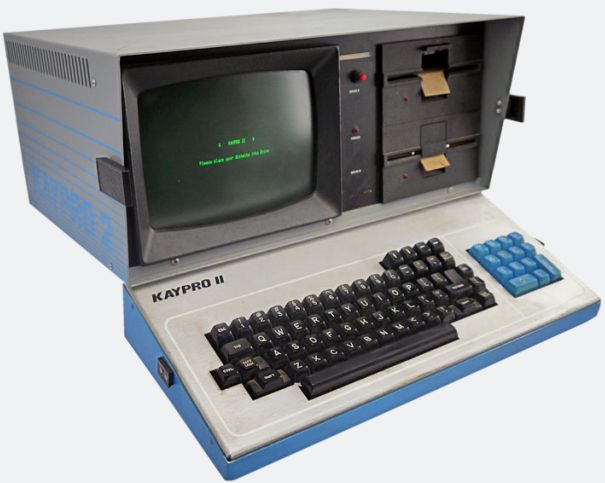

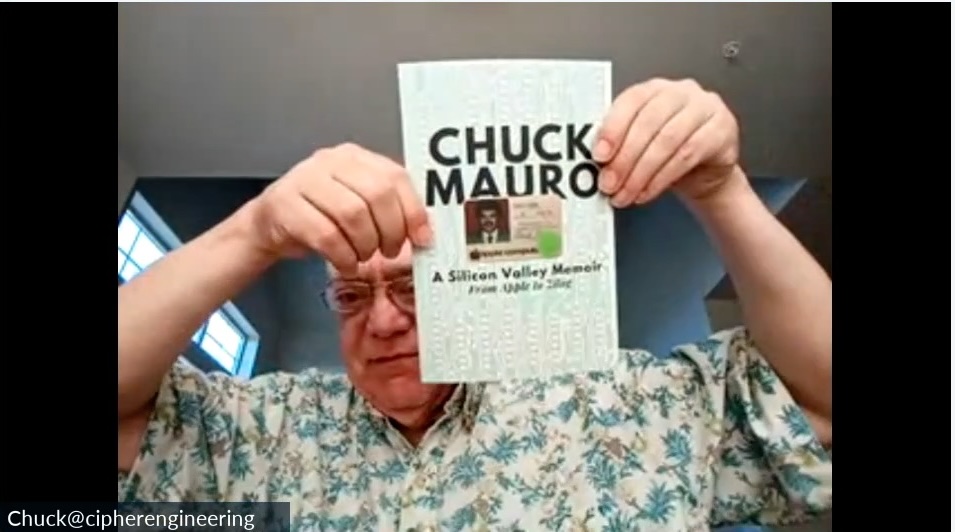
Showing 25 of 170
Pitch Fit is a Pro feature
See how bookable this show is for guests, which brands already advertise, the per-episode ad value, and the best-fit guest and sponsor profile. The numbers are blurred on the free plan.
How readily this show books outside guests like you.
How proven this show is for host-read sponsorships.
For Guests
ProFor Advertisers
ProUpgrade to Pro to unlock guest cadence, sponsor categories, fit scores, and per-episode ad value for this show.
Similar Audience Demographics
Podcasts that attract a similar listener profile
ANTIC The Atari 8-bit Podcast
Randy Kindig, Kay Savetz, Brad Arnold

Retro Computing Roundtable
Retro Computing Roundtable
The Retro Hour (Retro Gaming Podcast)
The Retro Hour (Retro Gaming Podcast)
Advent of Computing
Sean Haas
RetroMacCast
James & John

This Week in Retro
Chris from 005 AGIMA, Jason from The Retro Adventurers, Dave and Duncan Styles
Retronauts
Retronauts
Chart history for Floppy Days Vintage Computing Podcast
Peaked at #33 in New Zealand, currently #33 in New Zealand.
| Market | Genre | Peak | Current | Trend |
|---|---|---|---|---|
| New Zealand | — | #33 | #33 | — |
| Finland | — | #182 | #182 | — |
Chart Positions
2 placements across 2 markets.
Chart Positions
2 placements across 2 markets.