
For the Life of the World / Yale Center for Faith & Culture
by Matthew Croasmun, Ryan McAnnally-Linz, Drew Collins, Miroslav Volf, Evan Rosa, Macie Bridge
Is this your podcast?Insights from recent episode analysis
Audience Interest
Podcast Focus
Publishing Consistency
Platform Reach
Insights are generated by CastFox AI using publicly available data, episode content, and proprietary models.
Most discussed topics
Brands & references
Total monthly reach
Estimated from 1 chart position in 1 market.
By chart position
- 🇩🇰DK · Christianity#913K to 10K
- Per-Episode Audience
Est. listeners per new episode within ~30 days
1.5K to 5K🎙 ~2x weekly·248 episodes·Last published 1mo ago - Monthly Reach
Unique listeners across all episodes (30 days)
3K to 10K🇩🇰100% - Active Followers
Loyal subscribers who consistently listen
900 to 3K
Market Insights
Platform Distribution
Reach across major podcast platforms, updated hourly
Total Followers
—
Total Plays
—
Total Reviews
—
* Data sourced directly from platform APIs and aggregated hourly across all major podcast directories.
On the show
From 15 epsHosts
Recent guests
Recent episodes
Can Political Enemies Be Civic Friends? / Robert George (From the Archives)
Aug 5, 2026
Unknown duration
How to Die Well / Lydia Dugdale (From the Archives)
Jul 30, 2026
Unknown duration
You Must Change Your Life (From the Archive)
Jul 22, 2026
Unknown duration
I Don't Know What Faith Means Anymore: Terminal Illness, Poetic Faith, and Theological Doubt / Miroslav Volf and Christian Wiman
Jul 8, 2026
1h 04m 29s
Owning Grief Redemptively: The Wound of Loss, the Failure of Theodicy, and the Cry of Suffering Love / Nicholas Wolterstorff
Jun 24, 2026
43m 24s
Social Links & Contact
Official channels & resources
Official Website
Login
RSS Feed
Login
| Date | Episode | Topics | Guests | Brands | Places | Keywords | Sponsor | Length | |
|---|---|---|---|---|---|---|---|---|---|
| 8/5/26 |  Can Political Enemies Be Civic Friends? / Robert George (From the Archives) | Civic friendship is not a nicety. For self-governing people, it is a necessity. What happens to a democracy when citizens stop seeing each other as citizens at all? Robert P. George is Princeton’s McCormick Professor of Jurisprudence, director of the James Madison Program in American Ideals and Institutions (and known for his enduring friendship with Cornel West) argues that “the collapse of civic friendship is a catastrophic threat to public life.” In this bonus segment from his November 2020 conversation with Evan Rosa, Robert George presents the difference between civility and mere ‘politesse; the habit of wrapping our emotions so tightly around our convictions that we assume a posture of infallibility; and the intellectual humility it takes to consider that a political enemy might have something to teach us as a civic friend. They also discuss the courage required to break ranks—George recounts how he and West, from opposite political poles, each found themselves treated as heretics in 2016 for declining to back their respective party’s nominee—and why he urges his students and his own children to cultivate humility, open-mindedness, and courage, knowing exactly what it can cost to stand by a conscientious belief. Episode Highlights - ”Civic friendship is actually important for all sorts of policies, but for a self-governing people, for a democratic people, civic friendship is really critically important.” - ”But if we do, as we are prone to do, wrap our emotions too tightly around our convictions, then we become dogmatists. Then we become unwilling to consider the possibility that we might be wrong and that a critic might be right.” - ”This is hard, but it takes humility to recognize that I might be wrong, not merely about the less important superficial and more trivial things of life, but I might be wrong even about the most important things.” - ”Civic friendship, civility is not just politesse … Civility is something deeper. It is genuinely listening to the guy who disagrees with you … listening with an openness to learning, considering whether in fact he might be right.” - ”You can’t have an open mind unless you have intellectual humility.” - ”You can become a heretic very fast by breaking ranks, even on a single issue, if the issue was even moderately important.” - ”So I really encourage my young people … to try to develop the virtues of intellectual humility, open-mindedness, and courage, because sometimes courage is going to be needed.” About Robert P. George Robert P. George is the McCormick Professor of Jurisprudence at Princeton University and director of the James Madison Program in American Ideals and Institutions. A legal philosopher and public intellectual, he has chaired the U.S. Commission on International Religious Freedom and served on the President’s Council on Bioethics and the U.S. Commission on Civil Rights. His books include ”Making Men Moral,” ”In Defense of Natural Law,” and ”Seeking Truth and Speaking Truth,” and, with Cornel West, ”Truth Matters,” a dialogue on fruitful disagreement. A West Virginia native, he plays bluegrass banjo and guitar. Helpful Links and Resources - Civic Friendship, Courageous Humility, and Seeking Truth Together, Episode 38 and the full interview for this clip: https://faith.yale.edu/media/civic-friendship-courageous-humility-and-seeking-truth-together - Robert P. George’s website: https://robertpgeorge.com/ - Robert P. George on X: https://twitter.com/McCormickProf - Seeking Truth and Speaking Truth: Law and Morality in Our Cultural Moment, George’s most recent book: https://www.encounterbooks.com/books/seeking-truth-speaking-truth/ - Truth Matters: A Dialogue on Fruitful Disagreement in an Age of Division, by Robert P. George and Cornel West: https://www.simonandschuster.com/books/Truth-Matters/Robert-P-George/9798888451700 - Making Men Moral: Civil Liberties and Public Morality, George’s best-known scholarly book: https://global.oup.com/academic/product/making-men-moral-9780198260240 - Election of 1800, from the Thomas Jefferson Encyclopedia at Monticello: https://www.monticello.org/encyclopedia/election-1800 Show Notes - Civic friendship: indispensable and necessary for a self-governing people - Fellow citizens recast as enemies to be defeated and destroyed - Are elections as existential contests?—with the losing side expecting retaliation, the winning side claiming the norms - Breakdown near the founding of the Republic - The election of 1800, incumbent John Adams against Thomas Jefferson: https://www.monticello.org/encyclopedia/election-1800 - Federalists seeing Jeffersonians as carriers of the French Revolution; Jeffersonians seeing Federalists as would-be British monarchists - Antebellum America: North and South unable to imagine sharing one republic - Is our identity constructed around belief? - Emotional investment in conviction as a good thing in itself - Wrapping emotions too tightly, and the slide into dogmatism - A practical posture of infallibility - Disagreement recoded as moral defect, and friendship ruled out - Intellectual humility as the missing virtue - Being wrong about the most important things, not just the trivial ones - Civility as more than politesse - Listening with an openness to learning, not waiting for a turn to speak - Honoring the other as a rational creature with something to teach - Open-mindedness without paralysis - A conservative and a democratic socialist as frequent interlocutors: https://www.cornelwest.com/about/ - Courage as a civic virtue - Tribalism in formal institutions and informal friend circles alike - Becoming a heretic by breaking ranks on a single issue - Excommunication, suspicion, and the social cost of independent thought - Two friends at opposite poles, both out of step in 2016 - Counsel to students and to his own children: humility, open-mindedness, courage #CivicFriendship #IntellectualHumility #Civility #Polarization #RobertPGeorge #CornelWest #FaithAndCulture #ForTheLifeOfTheWorld Production Notes - This podcast featured Robert George - Hosted and Produced by Evan Rosa - Production assistance and editing by Noah Senthil - A Production of the Yale Center for Faith & Culture at Yale Divinity School https://faith.yale.edu/about - Support For the Life of the World podcast by giving to the Yale Center for Faith & Culture: https://faith.yale.edu/give | — | ||||||
| 7/30/26 |  How to Die Well / Lydia Dugdale (From the Archives) | Why don’t more doctors talk about death? Dr. Lydia Dugdale has been asking this question since she was a medical student. She is the Silberberg Professor of Medicine and directs the Center for Clinical Medical Ethics, and two books on how we die, including "The Lost Art of Dying." "Most medical professionals today are very unpracticed at talking to patients about their mortality," she says. Not only unpracticed, but even themselves afraid. In this bonus clip from Episode 232 with Macie Bridge, Dugdale traces the path from that early perplexity on the wards to the *ars moriendi*, the medieval art of dying, grounded in the idea that dying is part of living, so if you want to die well you have to live well. Lydia comments on the emergence of palliative care and the way it let physicians hand conversations about death to specialists; the doctor who inherited the priest's old place at the threshold between life and death; the death anxiety clinicians carry without examining; virtue as preparation for dying, and community as the other half of living well; the unrepresented patients of New York City who die alone; and a grumpy old man, hospitalized for 20 years, who wept when she read aloud what she had written about him. Episode Highlights - “Most medical professionals today are very unpracticed at talking to patients about their mortality.” - “we are really the intermediaries between life and death, I'm not saying we're priests, but that used to be the role of the priest. And so it is now the role of the physician. - “If you want to die well, you have to live well.” - We have to be all in or we end up like all of these patients here in New York City who have no one that I can reach out to as they're dying. - “He started weeping and he said, someone finally saw me. Someone finally saw me. I've been in this hospital for 20 years and I didn't think anyone ever saw me.” About Lydia Dugdale Lydia Dugdale is a physician and medical ethicist who has spent fifteen years asking why medicine finds death so hard to talk about. She is the Silberberg Professor of Medicine at Columbia, directs the Columbia Center for Clinical Medical Ethics, and co-directs clinical ethics at NewYork-Presbyterian Milstein Hospital, where she still sees patients. She edited "Dying in the Twenty-First Century" and wrote "The Lost Art of Dying," a modern ars moriendi. She trained at the University of Chicago and Yale-New Haven Hospital, holds a master's in ethics from Yale Divinity School, and in 2025 founded the nonprofit Heal the Nation. Helpful Links and Resources - “Dying Alone,” the full Episode 232 with Lydia Dugdale and Macie Bridge: https://faith.yale.edu/media/dying-alone - Lydia Dugdale's website: https://lydiadugdale.com/ - The Lost Art of Dying: Reviving Forgotten Wisdom, Lydia Dugdale's book: https://www.harpercollins.com/products/the-lost-art-of-dying-ls-dugdale - Dying in the Twenty-First Century, edited by Lydia Dugdale: https://mitpress.mit.edu/9780262534598/dying-in-the-twenty-first-century/ - Columbia Center for Clinical Medical Ethics, which Dugdale directs: https://www.vagelos.columbia.edu/departments-centers/columbia-center-clinical-medical-ethics - Columbia Center for Clinical Medical Ethics on X: https://x.com/columbia_ccme - Ars moriendi, the medieval art of dying, at the Morgan Library and Museum: https://www.themorgan.org/blog/new-acquisition-ars-moriendi-blockbook - Ars moriendi block book, 1475, at the Library of Congress: https://www.loc.gov/item/2021666798/ - Lydia Dugdale at the Yale Center for Faith and Culture: https://faith.yale.edu/people/lydia-dugdale-md Show Notes - Death anxiety in medicine - Why doctors avoid frank conversations about mortality - Palliative care's arrival as a discipline, and what it made possible - Real gains in symptom relief for the sick and the dying - The unintended cost: death conversations outsourced to specialists - Clinicians as intermediaries between life and death - The priest's old place at the threshold, now the physician's - Nurses at the bedside, doctors calling the shots on treatment - Existential questions physicians have never worked through - A colleague who would never tell a patient they were dying, out of her own fear of death - Digging into how other times and places handled mortality - Ars moriendi: the medieval genre on the preparation for death - Illustrated editions made for people who could not read - Fifteen years and two books spent reviving the art of dying - Living well as the precondition of dying well - Virtue as preparation: hope, patience, joy against bitterness and despair - The role of community in dying well - New York's unrepresented patients, dying alone - A reader estranged from his adult children who committed to years of repair after the book - Relationship as ongoing work: rupture, forgiveness, iron sharpening iron - A long-hospitalized patient nobody wanted assigned to their team - Modeling care for young doctors, and being verbally destroyed in front of them - Loneliness of the neighbor, the colleague, the checkout person - Practice as the only way to get better at it #ForTheLifeOfTheWorld #LydiaDugdale #TheLostArtOfDying #ArsMoriendi #MedicalEthics #DyingWell #Loneliness #EndOfLifeCare Production Notes - This podcast featured Lydia Dugdale - Edited and Produced by Evan Rosa - Hosted by Evan Rosa - Production Assistance by Noah Senthil - A Production of the Yale Center for Faith & Culture at Yale Divinity School https://faith.yale.edu/about - Support For the Life of the World podcast by giving to the Yale Center for Faith & Culture: https://faith.yale.edu/give | — | ||||||
| 7/22/26 |  You Must Change Your Life (From the Archive) | We were made by a Maker to be makers. Bruce Herman joins Evan Rosa to diagnose the quiet illness of a passive consumer culture that trains us to sit in front of screens and scroll and take, rather than make. “When we’re not making something, we’re not whole. We’re not healthy.“ His cure is stubbornly ordinary: go make a loaf of bread, grab a stick and start carving, make a good meal or a good cocktail for the person visiting you—anything is resistance to this hypnotic, passive culture. From episode 216 of the podcast, in this segment, Herman traces what it means to receive art not as a consumer but through submission—not master and slave, but subject to subject, that vulnerable openness that lets a poem or a painting change your life. He reflects on making as human wholeness, the difference between art and info-tainment, why suffering can rip us open to beauty (from Walker Percy’s writing to Christian Wiman’s poetry), Rilke’s charge that “you must change your life,“ hospitality as the ultimate act of art, and Herman’s closing counsel to make out of love, not fear. Episode Highlights - We are in relationship, and we were made by a Maker to be makers. If we let that go somehow and we become mere consumers, I think we begin to enter into some kind of illness of one sort or another. - When we’re not making something, we’re not whole. We’re not healthy. And I don’t want to make an idol out of health either, but I do think our culture is unhealthy right now. - We think of it as, we’re discerning buyers. But the fact is we’re being turned into very passive creatures. - One of the best things you can do is go make a loaf of bread. Go out and grab a stick and start carving it. Anything is resistance to this sort of hypnotic passive culture. - If you want to really receive what a poem is communicating, you have to submit to it. You have to let yourself go and enter into what might feel like a bad risk of being changed. - Not submit in a sense that I’m a master and you’re my slave. It’s more like you’re a subject and I’m a subject. Mutual submission. - We’re so guarded so much of the time that it takes something catastrophic to open us up again. - Do away with the nonsense that you’re not an artist. You can’t help it. You were made by a Maker to be a maker. End of story. - The ultimate act of art is hospitality, where you’re welcoming someone in, to make something beautiful for them. - Challenge the bad news with a recognition that daily kindnesses are being poured out everywhere, on every street. Don’t give in to fear, because it’s not a basis for anything good. About Bruce Herman Bruce Herman is a painter, writer, and educator whose work has been shown in more than 150 exhibitions across the United States and internationally, and held in collections including the Vatican Museums in Rome, the Cincinnati Museum of Fine Arts, and the Grunewald Print Collection of the Hammer Museum in Los Angeles. He taught at Gordon College for nearly four decades, where he founded the art department and held the Lothlórien Distinguished Chair in Fine Arts. His books include “Through Your Eyes“ and “Ordinary Saints,“ and he was a collaborator on the touring “QU4RTETS“ project with Makoto Fujimura, Christopher Theofanidis, and Jeremy Begbie. His most recent book, “Makers by Nature: Letters from a Master Painter on Faith, Hope, and Art,“ was published by IVP Academic in 2025. Helpful Links and Resources - Makers by Nature, Bruce Herman’s 2025 book from IVP Academic: https://www.ivpress.com/makers-by-nature - Bruce Herman’s website and painting archive: https://www.bruceherman.com - Bruce Herman, artist bio and background: https://www.bruceherman.com/about - Archaic Torso of Apollo by Rainer Maria Rilke (“You must change your life“), trans. Stephen Mitchell: https://poets.org/poem/archaic-torso-apollo - Real Presences by George Steiner, on courtesy and hospitality in art: https://press.uchicago.edu/ucp/books/book/chicago/R/bo3684420.html - Christian Wiman: https://poetryfoundation.org/poets/christian-wiman - QU4RTETS, the collaborative project on T. S. Eliot’s Four Quartets: https://www.bruceherman.com/series Show Notes - Made to make - We are in relationship; identity begins there, not in isolation - Makers by nature—letting the maker-impulse go tips us toward illness, moral, mental, and emotional - Wholeness and health—the claim that not-making leaves us unwell, without idolizing health - Consumer culture—the commercial aim to sell, and to keep us passive in front of screens - Discerning buyers, or passive creatures? The illusion of control while being trained to take - Screens and scrolling - Political theater and infotainment—very little real journalism left, mostly consumer entertainment - Neil Postman and amusing ourselves to death as the frame for the diagnosis - Making as resistance—bake bread, carve a stick, do anything against the hypnotic pull - Reception as submission—a word out of fashion, reclaimed away from enslavement - Mutual submission—the erotic analogy, and desire’s corruption in the sexual sins - To receive a poem you must risk being changed - Rilke’s Grecian torso and the charge, you must change your life - Subject to subject, not master and slave - Walker Percy’s museum story—a painting that blazed into life, then went quiet - Bringing a friend to re-enter the original encounter vicariously - The workman through the skylight—catastrophe reopens what habit had closed - Guardedness—why it can take suffering to break us open - Christian Wiman—cancer, poetry, and being ripped open toward receptivity - You might be changed, and it might not be what you wanted; the risk of real encounter - Make from love, not fear - Do away with the nonsense that you’re not an artist - Everyday making—a loaf, a meal, a good cocktail, hospitality - Hospitality as the ultimate art; George Steiner’s Real Presences and courtesia - Beauty can be complex, not merely pretty - Fear-mongers left and right—and why not to listen - Daily kindnesses—the neighbor, the shoveled driveway, the half-decent casserole - Welcome to the festival; let the festival begin #BruceHerman #MakersByNature #ForTheLifeOfTheWorld #FaithAndArt #TheologyOfMaking #ArtAndFaith #Creativity #Hospitality #MakeNotConsume #YaleFaithAndCulture | — | ||||||
| 7/8/26 | faithdoubt+5 | Christian WimanMiroslav Volf | Glimmerings: Letters on Faith between a Poet and a Theologian | — | faithdoubt+7 | — | 1h 04m 29s | ||
| 6/24/26 | grieftheodicy+5 | Nicholas Wolterstorff | Lament for a SonLiving with Grief | — | griefloss+8 | — | 43m 24s | ||
| 6/17/26 | emotional healthdigital age+4 | Justin Smith | This LifeAlcoholics Anonymous | — | emotional honestyspiritual hitchhiker+5 | — | 56m 58s | ||
| 6/12/26 | William Blakeimagination+5 | Mark Vernon | William BlakeMarriage of Heaven and Hell | — | William Blakeimagination+7 | — | 1h 07m 29s | ||
| 6/3/26 | spiritual resilienceburnout+5 | Tish Harrison Warren | New York TimesWhat Grows in Weary Lands+2 | — | spiritual aridityacedia+7 | — | 54m 46s | ||
| 4/15/26 | anxietyexistential psychology+4 | Dan KochKristen Tideman | To Be Human Is to Be Unfinished | — | anxietyexistential psychology+5 | — | 48m 05s | ||
| 4/2/26 | Good FridayGospel of John+4 | David Ford | Gospel of John | — | Good Fridaycross+5 | — | 50m 59s | ||
Want analysis for the episodes below?Free for Pro Submit a request, we'll have your selected episodes analyzed within an hour. Free, at no cost to you, for Pro users. | |||||||||
| 3/26/26 | Ecclesiastesabsurdity+4 | Jesse Peterson | Qoheleth and the Philosophy of ValueEcclesiastes | — | Ecclesiastesabsurdity+4 | — | 1h 01m 37s | ||
| 3/18/26 | Christianitydemocratic life+5 | Luke Bretherton | OxfordAugustine | — | Christianitydemocracy+5 | — | 55m 48s | ||
| 3/11/26 | trauma theologycontemplative healing+4 | Bo Karen Lee | Yale Center for Faith & Culture | — | traumahealing+5 | — | 36m 34s | ||
| 3/4/26 | Bible interpretationethics of reading+3 | David Dault | Institute of Pastoral Studies at Loyola University ChicagoThings Not Seen: Conversations About Culture and Faith | — | Bibleinterpretation+5 | — | 1h 02m 40s | ||
| 2/25/26 | Lentspiritual rebellion+4 | Esau McCaulley | Wheaton CollegeNew York Times+2 | — | Lentspirituality+5 | — | 49m 16s | ||
| 2/18/26 | religion in the workplacefaith and vocation+4 | Elaine Ecklund | Rice UniversityBoniuk Institute for the Study and Advancement of Religious Tolerance+2 | — | faith at workworkplace culture+5 | — | 50m 22s | ||
| 1/21/26 | faithpolitical polarization+5 | John Kasich | MetallicaOhio+1 | — | faithcourage+7 | — | 31m 43s | ||
| 1/14/26 | forgivenessfatherhood+4 | Stan Grant | Yale Center for Faith & CultureMurriyang: Song of Time | — | forgivenessfatherhood+5 | — | 58m 23s | ||
| 1/7/26 |  Religion and Modern Slavery: Moral Blindness, Religious Responsibility, and the Psychology of Power / Kevin Bales and Michael Rota | Slavery did not end in the nineteenth century—it persists today, hidden in global supply chains, religious justifications, and systems of power. Kevin Bales and Michael Rota join Evan Rosa to explore modern slavery through history, psychology, and theology, asking why it remains so difficult to see and confront. “It’s time some person should see these calamities to their end.” (Thomas Clarkson, 1785) “There are millions of slaves in the world today.” (Kevin Bales, 2025) In this episode, they consider how conscience, power, and religious belief can either sustain enslavement or become forces for abolition. Together they discuss the psychology of slaveholding, faith’s complicity and resistance, Quaker abolitionism, modern debt bondage, ISIS and Yazidi slavery, and what meaningful action looks like today. https://freetheslaves.net/ –––––––––––––––––– Episode Highlights “There are millions of slaves in the world today.” “Statistics isn’t gonna do it. I need to actually show people things.” “They have sexual control. They can do what they like.” “Slavery is flowing into our lives hidden in the things we buy.” “We have to widen our sphere of concern.” –––––––––––––––––– About Kevin Bales Kevin Bales is a leading scholar and activist in the global fight against modern slavery. He is Professor of Contemporary Slavery at the University of Nottingham and co-founder of Free the Slaves, an international NGO dedicated to ending slavery worldwide. Bales has spent more than three decades researching forced labor, debt bondage, and human trafficking, combining academic rigor with on-the-ground investigation. His work has shaped international policy, influenced anti-slavery legislation, and brought global attention to forms of enslavement often dismissed as historical. He is the author of several influential books, including Disposable People and Friends of God, Slaves of Men, which examines the complex relationship between religion and slavery across history and into the present. Learn more and follow at [https://www.kevinbales.org](https://www.kevinbales.org/) and [https://www.freetheslaves.net](https://www.freetheslaves.net/) About Michael Rota Michael Rota is Professor of Philosophy at the University of St. Thomas in Minnesota, where he teaches and researches in the philosophy of religion, moral psychology, and the history of slavery and religion. His work spans scholarly articles on the definition of slavery, the moral psychology underlying social change and abolition, and the relevance of theological concepts to ethical life. Rota is co-author with Kevin Bales of *Friends of God, Slaves of Men: Religion and Slavery, Past and Present*, a comprehensive interdisciplinary study of how religions have both justified and resisted systems of enslaving human beings from antiquity to the present day. He is also the author of *Taking Pascal’s Wager: Faith, Evidence, and the Abundant Life*, an extended argument for the reasonableness and desirability of Christian commitment. In addition to his academic writing, he co-leads projects in philosophy and education and is co-founder of Personify, a platform exploring AI and student learning. Learn more and follow at his faculty profile and personal website [https://mikerota.wordpress.com](https://mikerota.wordpress.com/?utm_source=chatgpt.com) and on X/Twitter @mikerota. –––––––––––––––––– Helpful Links And Resources Disposable People by Kevin Bales https://www.ucpress.edu/book/9780520281820/disposable-people Friends of God, Slaves of Men by Kevin Bales and Michael Rota https://www.ucpress.edu/book/9780520383265/friends-of-god-slaves-of-men Free the Slaves [https://www.freetheslaves.net](https://www.freetheslaves.net/) Voices for Freedom [https://voicesforfreedom.org](https://voicesforfreedom.org/) International Justice Mission [https://www.ijm.org](https://www.ijm.org/) Talitha Kum [https://www.talithakum.info](https://www.talithakum.info/) –––––––––––––––––– Show Notes – Slavery named as a contemporary moral crisis obscured by twentieth-century abolition narratives – Kevin Bales’s encounter with anti-slavery leaflet in London, mid-1990s – “There are millions of slaves in the world today … I thought, look, that can’t be true because I don’t know that. I’m a professor. I should know that.” – Stories disrupting moral distance more powerfully than statistics – “There were three little stories inside, about three different types of enslavement … it put a hook in me like a fish and pulled me.” – United Nations documentation mostly ignored despite vast evidence – Decades of investigation into contemporary slavery – Fieldwork across five regions, five forms of enslavement – Kevin Bales’s book, Disposable People as embodied witness with concrete stories – “Statistics isn’t gonna do it. I need to actually show people things. There’s gonna be something that breaks hearts the way it did me when I was in the field.” – Psychological resistance to believing slavery touches ordinary life – Anti-Slavery International as original human rights organization founded in U.K. in 1839 – Quaker and Anglican foundations of abolitionist movements – Religion as both justification for slavery and engine of resistance – Call for renewed faith-based abolition today – Slavery and religion intertwined from early human cultures – Colonial expansion intensifying moral ambiguity – Columbus, Genoa, and enslavement following failed gold extraction – Spanish royal hesitation over legitimacy of slavery – Las Casas’s moral conversion after refusal of absolution – “He eventually realized this is totally wrong. What we are doing, we are destroying these people. And this is not what God wants us to be doing.” – Sepúlveda’s Aristotelian defense of hierarchy and profit – Moral debate without effective structural enforcement – Power described as intoxicating and deforming conscience – Hereditary debt bondage in Indian villages – Caste, ethnicity, and generational domination – Sexual violence as mechanism of absolute control – “They have sexual control. They can beat up the men, rape the women, steal the children. They can do pretty much what they like.” – Three-year liberation process rooted in trust, education, and collective refusal – Former slaves returning as teachers and organizers – Liberation compared to Plato’s allegory of the cave – Post-liberation vulnerability and risk of recapture – Power inverted in Christian teaching – “The disciples are arguing about who’s the greatest, and Jesus says, the greatest among you will be the slave of all… don’t use power to help yourself. Use it to serve.” – Psychological explanations for delayed abolition – The psychological phenomenon of “motivated reasoning” that shapes moral conclusions – “The conclusions we reach aren’t just shaped by the objective evidence the world provides. They’re shaped also by the internal desires and goals and motivations people have.” – Economic self-interest and social consensus sustaining injustice – Quaker abolition through relational, conscience-driven confrontation – First major religious body to forbid slaveholding – Boycotts of slave-produced goods and naval blockade of slave trade – Modern slavery as organized criminal enterprise – ISIS enslavement of Yazidi women – Religious reasoning weaponized for genocide – “They said, for religious reasons, we just need to eradicate this entire outfit.” – Online slave auctions and cultural eradication – Internal Islamic arguments for abolition – Restricting the permissible for the common good – Informing conscience as first step toward action – Community sustaining long-term resistance – Catholic religious sisters as leading global abolitionists – Hidden slavery embedded in everyday consumer goods – “There’s so much slavery flowing into our lives which is hidden… in our homes, our watches, our computers, the minerals, all this.” – Expanding moral imagination beyond immediate needs – “Your sphere of concern has to be wider… how do I start caring about something that I don’t see?” – “It’s time some person should see these calamities to their end.” (Thomas Clarkson, 1785) –––––––––––––––––– #ModernSlavery #FaithAndJustice #HumanDignity #Abolition #FreeTheSlaves Production Notes - This podcast featured Kevin Bales and Michael Rota - Edited and Produced by Evan Rosa - Hosted by Evan Rosa - Production Assistance by Noah Senthil - A Production of the Yale Center for Faith & Culture at Yale Divinity School https://faith.yale.edu/about - Support For the Life of the World podcast by giving to the Yale Center for Faith & Culture: https://faith.yale.edu/give | — | ||||||
| 12/14/25 |  The Nail in the Tree: Sandy Hook School Shooting, Violence, Childhood, Poetry / Carol Ann Davis | Poet and essayist Carol Ann Davis (Fairfield University) joins Evan Rosa for a searching conversation on violence, childhood, and the moral discipline of attention in the aftermath of Sandy Hook. Reflecting on trauma, parenting, childhood, poetry, and faith, Davis resists tidy narratives and invites listeners to dwell with grief, healing, beauty, and pain without resolution. “I don’t believe life feels like beginnings, middles, and ends.” In this episode, Davis reflects on how lived trauma narrows attention, reshapes language, and unsettles conventional storytelling. Together they discuss poetry as dwelling rather than explanation, childhood and formation amid violence, image versus narrative, moral imagination, and the challenge of staying present to suffering. Episode Highlights “Nothing has happened at Hawley School. Please hear me. I have opened every door and seen your children.” “And that was what it is not to suffer. This is the not-suffering, happy-ending story.” “I’m always narrowing focus.” “I think stories lie to us sometimes.” “I think of the shooting as a nail driven into the tree.” “I’m capable of anything. I’m afraid I’m capable of anything.” “I tried to love and out of me came poison.” About Carol Ann Davis Carol Ann Davis is a poet, essayist, and professor of English at Fairfield University. She is the author of the poetry collections Psalm and Atlas Hour, and the essay collection The Nail in the Tree: Essays on Art, Violence, and Childhood. A former longtime editor of the literary journal Crazyhorse, she directs Fairfield University’s Low-Residency MFA and founded Poetry in Communities, an initiative bringing poetry to communities affected by violence. An NEA Fellow in Poetry, Davis’s work has appeared in The Atlantic, The American Poetry Review, Image, Agni, The Georgia Review, and elsewhere. Learn more and follow at [https://www.carolanndavis.org](https://www.carolanndavis.org) Helpful Links and Resources The Nail in the Tree: Essays on Art, Violence, and Childhood [https://www.tupelopress.org/bookstore/p/the-nail-in-the-tree-essays-on-art-violence-and-childhood](https://www.tupelopress.org/bookstore/p/the-nail-in-the-tree-essays-on-art-violence-and-childhood) Songbird [https://www.weslpress.org/9780819502223/songbird/](https://www.weslpress.org/9780819502223/songbird/) Psalm [https://www.tupelopress.org/bookstore/p/psalm](https://www.tupelopress.org/bookstore/p/psalm) Atlas Hour [https://www.amazon.com/Atlas-Hour-Carol-Ann-Davis/dp/1936797003](https://www.amazon.com/Atlas-Hour-Carol-Ann-Davis/dp/1936797003) Carol Ann Davis official website [https://www.carolanndavis.org](https://www.carolanndavis.org) Show Notes * Carol Ann Davis recounts moving to Newtown, Connecticut just months before Sandy Hook, teaching a course at Fairfield University when news of the shooting first breaks * Her young children attended a local elementary school * Confusion, delay, and the unbearable seconds of not knowing which school was attacked * A colleague’s embrace as the reality of the shooting becomes clear * Parenting under threat and the visceral fear of losing one’s children * “Nothing has happened at Hawley School. Please hear me. I have opened every door and seen your children.” (Hawley School’s Principal sends this message to parents, including Carol Ann) * Living inside the tension where nothing happened and everything changed * Writers allowing mystery, unknowing, and time to remain unresolved * Naming “directly affected families” and later “families of loss” * Ethical care for proximity without flattening grief into universality * The moral value of being useful within an affected community * Narrowing attention as survival, parenting, and poetic discipline * Choosing writing, presence, and community over national policy debates * Childhood formation under the long shadow of gun violence * “I think of the shooting as a nail driven into the tree. And I’m the tree.” (Carol Ann quotes her older son, then in 4th grade) * Growth as accommodation rather than healing or resolution * Integration without erasure as a model for living with trauma * Refusing happy-ending narratives after mass violence * “I don’t believe life feels like beginnings, middles, and ends.” * Poetry as dwelling inside experience rather than extracting meaning * Resisting stories that turn suffering into takeaways * Crucifixion imagery, nails, trees, and the violence of embodiment * “I’m capable of anything. I’m afraid I’m capable of anything.” * Violence as elemental, human, animal, and morally unsettling * Distinguishing intellectual mastery from dwelling in lived experience * A poem’s turn toward fear: loving children and fearing harm * “I tried to love and out of me came poison.” * Childhood memory, danger, sweetness, and oceanic smallness * Being comforted by smallness inside something vast and terrifying * Ending without closure, choosing remembrance over resolution #CarolAnnDavis #PoetryAndViolence #TraumaAndAttention #SandyHook #SandyHookPromise #FaithAndWriting #Poetry #ChildhoodAndMemory Production Notes * This podcast featured Carol Ann Davis * Edited and Produced by Evan Rosa * Hosted by Evan Rosa * Production Assistance by Alexa Rollow and Emily Brookfield * A Production of the Yale Center for Faith & Culture at Yale Divinity School [https://faith.yale.edu/about](https://faith.yale.edu/about) * Support For the Life of the World podcast by giving to the Yale Center for Faith & Culture: [https://faith.yale.edu/give](https://faith.yale.edu/give) | — | ||||||
| 12/3/25 | 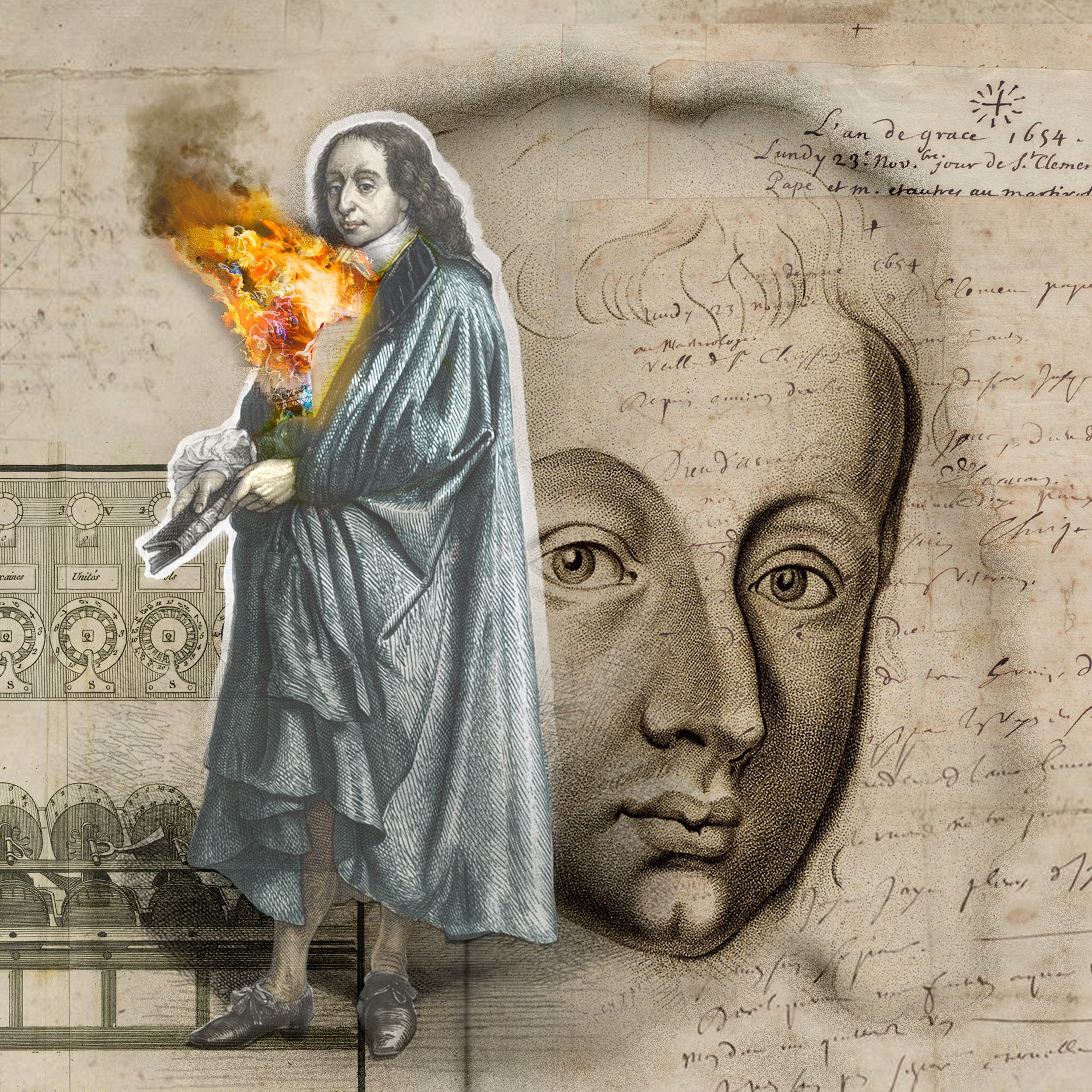 How to Read Blaise Pascal: Grace, Modern Longing, and Wagering with Fire / Graham Tomlin | “Our longings are much more powerful than our logic, and our desires are stronger than our reason.” (Graham Tomlin on the thought of Blaise Pascal) The Rt. Rev. Dr. Graham Tomlin (St. Mellitus College, the Centre for Cultural Witness) joins Evan Rosa for a sweeping exploration of Blaise Pascal—the 17th-century mathematician, scientist, philosopher, and theologian whose insights into human nature remain strikingly relevant. Tomlin traces Pascal’s life of brilliance and illness, his tension between scientific acclaim and radical devotion, and his deep engagement with Descartes, Montaigne, and Augustine. The conversation moves through Pascal’s analysis of self-deception, his critique of rationalism and skepticism, the transformative Night of Fire, his compassion for the poor, and the wager’s misunderstood meaning. Tomlin presents Pascal as a thinker who speaks directly to our distracted age, revealing a humanity marked by greatness, misery, and a desperate longing only grace can satisfy. This episode was made possible in part by the generous support of the Tyndale House Foundation. Visit tyndale.foundation to learn more. Episode Highlights * “Our longings are much more powerful than our logic, and our desires are stronger than our reason.” * “The greatness and the refuse of the universe—that’s what we are. We’re the greatest thing and also the worst thing.” * “If everybody knew what everybody else said about them, there would not be four friends left in the world.” * “Only grace can begin to turn that self-oriented nature around and implant in us a desire for God.” * “The reason you cannot believe is not because of your reason; it’s because of your passions.” Show Notes * Graham Tomlin introduces the Night of Fire and Pascal’s meditation on “the greatness of the human soul” * Evan Rosa frames Pascal as a figure of mystery, mechanics, faith, and modern technological influence. * Tomlin contrasts Pascal with Descartes and Montaigne—rationalism vs. skepticism—locating Pascal between their poles. * Pascal’s awareness of distraction, competition, and “all men naturally hate each other” surfaces early as a key anthropological insight. * Evan notes Nietzsche’s striking admiration: “his blood runs through my veins.” * Tomlin elaborates on Pascal’s lifelong tension between scientific achievement and spiritual devotion. * The story of the servant discovering the hidden Night of Fire parchment in Pascal’s coat lining is recounted. * Tomlin reads the core text: “Joy, joy, joy, tears of joy… Let me never be separated from him.” * Pascal’s distinction: “God of Abraham, God of Isaac, God of Jacob, not of the philosophers.” * Discussion of Jansenism, Augustinian anthropology, and the gravity of human fallenness. * Tomlin sets the philosophical context: Pascal as a counter to both rationalist optimism and skeptical relativism. * Pascal’s core tension—grandeur and misery—is presented as the interpretive key to human nature. * Quote emerges: “the greatness and the refuse of the universe—that’s what we are.” * Tomlin describes Pascal’s political skepticism and the idea that politics offers only “rules for a madhouse.” * Pascal’s diagnosis of self-deception: “If everybody knew what everybody else said about them, there would not be four friends left in the world.” * Evan raises questions about social hope; Tomlin answers with Pascal’s belief that only grace can break self-love. * They explore Pascal’s critique of distraction and the famous line: “the sole cause of man’s unhappiness is that he does not know how to stay quietly in his room.” * Tomlin ties this to contemporary digital distraction—“weapons of mass distraction”. * The conversation turns to the wager, reframed not as coercion but exposure: unbelief is driven by passions more than reasons. * Closing reflections highlight the apologetic project of the Pensées, Pascal’s brilliance, and his ongoing relevance. Helpful Links and References * Special thanks to the Center for Christian Witness and Seen and Unseen [https://www.seenandunseen.com/](https://www.seenandunseen.com/) * Blaise Pascal: The Man Who Made the Modern World, by Graham Tomlin [https://www.hachette.co.uk/titles/graham-tomlin/blaise-pascal/9781399807661/](https://www.hachette.co.uk/titles/graham-tomlin/blaise-pascal/9781399807661/) * Pensées, by Blaise Pascal [https://www.gutenberg.org/ebooks/18269](https://www.gutenberg.org/ebooks/18269) * Provincial Letters, by Blaise Pascal [https://www.gutenberg.org/ebooks/2407](https://www.gutenberg.org/ebooks/2407) * Why Being Yourself Is a Bad Idea, by Graham Tomlin [https://www.amazon.com/Why-Being-Yourself-Bad-Idea/dp/0281087097](https://www.amazon.com/Why-Being-Yourself-Bad-Idea/dp/0281087097) * Montaigne’s Essays [https://www.gutenberg.org/ebooks/3600](https://www.gutenberg.org/ebooks/3600) * Descartes’ Meditations on First Philosophy [https://www.gutenberg.org/ebooks/23306](https://www.gutenberg.org/ebooks/23306) * Augustine’s Confessions [https://www.gutenberg.org/ebooks/3296](https://www.gutenberg.org/ebooks/3296) About Graham Tomlin Graham Tomlin is a British theologian, writer, and church leader. He is the former Bishop of Kensington (2015-2022) in the Church of England and now serves as Director of the Centre for Cultural Witness and President of St Mellitus College in London. He is widely known for connecting theology with cultural life and public imagination. Tomlin is the author of several books, including Looking Through the Cross, The Widening Circle, and Why Being Yourself Is a Bad Idea: And Other Countercultural Notions. His latest book is an intellectual and spiritual biography, Blaise Pascal: The Man Who Made the Modern World. Production Notes * This episode was made possible in part by the generous support of the Tyndale House Foundation * This podcast featured Graham Tomlin * Production Assistance by Emily Brookfield and Alexa Rollow * Edited and Produced by Evan Rosa * Hosted by Evan Rosa * A production of the Yale Center for Faith & Culture at Yale Divinity School [https://faith.yale.edu/about](https://faith.yale.edu/about) * Support For the Life of the World by giving to the Yale Center for Faith & Culture: [https://faith.yale.edu/give](https://faith.yale.edu/give) | — | ||||||
| 11/19/25 |  Creaturely Loneliness: Desire, Grief, and the Hope of Encounter / Macie Bridge & Ryan McAnnally-Linz (SOLO Part 6) | Loneliness seems to be part of what it means to be a relational being. Does that mean loneliness can never really be “solved”? Here’s one way to think about loneliness: As a gap between relational expectation and social reality—something that signals our essentially relational, reciprocal nature as human beings. This episode is part 6 of a series, SOLO, which explores the theological, moral, and psychological dimensions of loneliness, solitude, and being alone. In this reflective conclusion to the series, Macie Bridge and Ryan McAnnally-Linz explore loneliness not as a pathology to solve but as a universal, creaturely experience that reveals our longing for relationship. Drawing on insights from conversations throughout the series, they consider how loneliness emerges in the gap between what we desire relationally and what we actually have, and why this gap might be intrinsic to being human. They discuss solitude as a vital space for discernment, self-understanding, and listening for God; how risk is inherent to relationships; why the church holds unique potential for embodied community; and how even small interactions with neighbors and strangers can meet real needs. Together they reflect on grief, social isolation, resentment, vulnerability, and the invitation to turn loneliness into attentiveness—to God, to ourselves, and to our neighbors, human and non-human alike. Episode Highlights * “Loneliness is just baked into our creaturely lives.” * “There really is no solution to loneliness—and also that’s okay.” * “We invite a certain level of risk because we invite another person closer to our own human limits.” * “There’s no blanket solution. We are all experiencing this thing, but we are all experiencing it differently.” * “I realized I could be a gift to her, and she could be a gift to me, even in that small moment.” About Macie Bridge Macie Bridge is Operations Coordinator for the Yale Center for Faith & Culture. Macie is originally from the small town of Groton, Massachusetts, where she was raised in the United Church of Christ. As an undergraduate at Trinity College in Hartford, CT, Macie studied English literature, creative writing, and religious studies. She spent a year in Chapel Hill, North Carolina with the Episcopal Service Corps after receiving her B.A. There, she served as Events & Communications Coordinator for L’Arche North Carolina—an emerging L’Arche community, and therefore an incredible “crash course” into the nonprofit world. About Ryan McAnnally-Linz Ryan McAnnally-Linz is Associate Director of the Yale Center for Faith & Culture and a theologian focusing on flourishing, meaning, and the moral life. He is co-author of Public Faith in Action and The Home of God with Miroslav Volf, and Life Worth Living: A Guide to What Matters Most with Miroslav Volf and Matt Croasmun. Show Notes Loneliness as Creaturely Condition * Loneliness as “baked into our creaturely lives,” not a sign of brokenness or failure * The “gap between what we want and what we have” in relationships * Loneliness as a universal human experience across ages and contexts Solitude and Discernment * Solitude as a place to listen more clearly to God and oneself * Time alone clarifies intuition, vocation, and identity. * Solitude shapes self-knowledge outside societal expectations. Community, Church, and Embodiment * Churches can be embodied spaces of connection yet still feel lonely. * Hospitality requires more than “hi”; it requires digging deeper into personal encounter. * Embodied church life resists technological comforts that reduce vulnerability. Grief, Risk, and Vulnerability * Distinguishing grief-loneliness from social-isolation loneliness * Relationships inherently involve risk, limits, and potential hurt. * Opening oneself to others requires relinquishing entitlement. Everyday Encounters and Ecological Attention * Small moments with neighbors (like taking a stranger’s photo) can be meaningful. * Loneliness can signal attention toward creaturely neighbors—birds, bugs, landscapes. * Turning loneliness outward can widen our capacity for care. Production Notes * This podcast featured Macie Bridge * Edited and Produced by Evan Rosa * Hosted by Evan Rosa * Production Assistance by Alexa Rollow, Emily Brookfield, and Hope Chun * A Production of the Yale Center for Faith & Culture at Yale Divinity School [https://faith.yale.edu/about](https://faith.yale.edu/about) * Support For the Life of the World podcast by giving to the Yale Center for Faith & Culture: [https://faith.yale.edu/give](https://faith.yale.edu/give) | — | ||||||
| 11/12/25 |  Dying Alone: Terminal Loneliness, Modern Medicine, and Contemplative Solitude / Lydia Dugdale (SOLO Part 5) | Living alone may be difficult, but what about dying alone? Physicians and nurses are the new priests accompanying people as they face death. But the experience of nursing homes, assisted living, and palliative wards are often some of the loneliest spaces in human culture. “He said, ‘Someone finally saw me. I’ve been in this hospital for 20 years and I didn’t think anyone ever saw me.’” This episode is part 5 of a series, SOLO, which explores the theological, moral, and psychological dimensions of loneliness, solitude, and being alone. In this episode, Columbia physician and medical ethicist Lydia Dugdale joins Macie Bridge to reflect on loneliness, solitude, and what it means to die—and live—well. Drawing from her clinical work in New York City and the years of research and experience that went into her book The Lost Art of Dying, Dugdale exposes a crisis of unrepresented patients dying alone, the loss of communal care, and medicine’s discomfort with mortality. She recalls the medieval Ars Moriendi tradition, where dying was intentionally communal, and explores how virtue and community sustain a good death. Together they discuss solitude as restorative rather than fearful, loneliness as a modern epidemic, and the sacred responsibility of seeing one another deeply. With stories from her patients and her own reflections on family, COVID isolation, and faith, Dugdale illuminates how medicine, mortality, and moral imagination converge on one truth: to die well, we must learn to live well … together. Helpful Links and Resources - The Lost Art of Dying: Reviving Forgotten Wisdom by Lydia S. Dugdale https://www.harpercollins.com/products/the-lost-art-of-dying-ls-dugdale?variant=40081791942690 - Pew Research Center Study on Loneliness (2025) https://www.pewresearch.org/2025/01/16/emotional-well-being/ - Harvard Study of Adult Development on Loneliness https://www.adultdevelopmentstudy.org/ Episode Highlights 1. “If you want to die well, you have to live well.” 2. “Community doesn’t appear out of nowhere at the bedside.” 3. “He said, ‘Someone finally saw me. I’ve been in this hospital for 20 years and I didn’t think anyone ever saw me.’” 4. “We are social creatures. Human beings are meant to be in relationship.” 5. “Solitude, just like rest or Sabbath, is something all of us need.” About Lydia Dugdale Lydia S. Dugdale, MD, MAR is a physician and medical ethicist at Columbia University, where she serves as Professor of Medicine and Director of the Center for Clinical Medical Ethics. She is the author of The Lost Art of Dying: Reviving Forgotten Wisdom and a leading voice on virtue ethics, mortality, and human flourishing in medicine. Show Notes Loneliness, Solitude, and the City - New York’s “unrepresented” patients—those who have no one to make decisions for them. - The phenomenon of people “surrounded but unseen” in urban life. - “I have a loving family … but I never see them.” Medicine and the Pandemic - Loneliness intensified during COVID-19: patients dying alone under strict hospital restrictions. - Dugdale’s reflections on balancing social responsibility with human connection. - “We are social creatures. Human beings are meant to be in relationship.” Technology, Fear, and the Online Shadow Community - Post-pandemic isolation worsened by online echo chambers. - One in five adults reports loneliness—back to pre-pandemic levels. The Lost Art of Dying - Medieval Ars Moriendi: learning to die well by living well. - Virtue and community as the foundation for a good death. - “If you don’t want to die an impatient, bitter, despairing old fool, then you need to practice hope and patience and joy.” Modern Medicine’s Fear of Death - Physicians unpracticed—and afraid—to talk about mortality. - “Doctors themselves are afraid to talk about death.” - How palliative care both helps and distances doctors from mortality. Community and Mortality - The man who reconnected with his estranged children after reading The Lost Art of Dying. - “He said, ‘I want my kids there when I die.’” - Living well so that dying isn’t lonely. Programs of Connection and the Body of Christ - Volunteer models, day programs, and mutual care as small restorations of community. - “The more we commit to others, the more others commit back to us.” Solitude and the Human Spirit - Distinguishing solitude, loneliness, and social isolation. - Solitude as restorative and necessary: “All of us need solitude. It’s a kind of rest.” - The contemplative life as vital for engagement with the world. Death, Autonomy, and Community - The limits of “my death, my choice.” - The communal role in death: “We should have folks at our deathbeds.” - Medieval parish customs of accompanying the dying. Seeing and Being Seen - A patient long thought impossible to care for says, “Someone finally saw me.” - Seeing others deeply as moral and spiritual work. - “How can we see each other and connect in a meaningful way?” Production Notes - This podcast featured Lydia Dugdale - Interview by Macie Bridge - Edited and Produced by Evan Rosa - Hosted by Evan Rosa - Production Assistance by Alexa Rollow, Emily Brookfield, and Hope Chun - A Production of the Yale Center for Faith & Culture at Yale Divinity School https://faith.yale.edu/about - Support For the Life of the World podcast by giving to the Yale Center for Faith & Culture: https://faith.yale.edu/give | — | ||||||
| 11/5/25 |  Women Alone with God: Extraordinary Lives of Medieval Women / Hetta Howes (SOLO Part 4) | What is the role of solitude in Christian history? Medievalist Hetta Howes comments on the allure of enclosure, how seeking solitude supports community, and what these ancient lives reveal about our modern search for connection. “Even those moments of solitude that she’s carving for herself are surprisingly sociable.” This episode is part 1 of a 5-part series, SOLO, which explores the theological, moral, and psychological dimensions of loneliness, solitude, and being alone. Medieval Anchoresses and Women Mystics sought a life of solitude with and for God—what about their vocation might illuminate our perspectives on loneliness, isolation, and solitude today? In this episode, Hetta Howes joins Macie Bridge to explore the extraordinary lives of medieval women mystics, including Julian of Norwich and Marjorie Kempe. Drawing from her book Poet Mystic Widow Wife: The Extraordinary Lives of Medieval Women, Howes illuminates how these women lived in literal and spiritual solitude—sometimes sealed in stone anchorages, sometimes carving sacred space in the midst of family and community. Together they consider the physical and spiritual demands of enclosure, the sociable windows of anchorages, and the simultaneous human longing for both solitude and companionship. Across the centuries, these women invite us to think anew about loneliness, vocation, and the need for community—even in devotion to God. Helpful Links and Resources * Poet Mystic Widow Wife: The Extraordinary Lives of Medieval Women – Hetta Howes: [https://www.amazon.com/Poet-Mystic-Widow-Wife-Extraordinary/dp/1529419556](https://www.amazon.com/Poet-Mystic-Widow-Wife-Extraordinary/dp/1529419556) * Julian of Norwich, Revelations of Divine Love (Penguin Classics): [https://www.penguinrandomhouse.com/books/295509/revelations-of-divine-love-by-julian-of-norwich/](https://www.penguinrandomhouse.com/books/295509/revelations-of-divine-love-by-julian-of-norwich/) * The Book of Margery Kempe (Oxford World’s Classics): [https://global.oup.com/academic/product/the-book-of-margery-kempe-9780199538362](https://global.oup.com/academic/product/the-book-of-margery-kempe-9780199538362) Episode Highlights 1. “An anchorage is a small cell, usually joined to a church… and the idea was that you would never leave that place alive again.” 2. “Sometimes you do come across these things and you’re like, oh, maybe the cultural consciousness was so different that they had a different language for loneliness.” 3. “Marjorie frames herself as a figure who is constantly looking for connection—sometimes finding it, but often being rejected in really painful ways.” 4. “Even those moments of solitude that she’s carving for herself are surprisingly sociable.” 5. “What I’ve learned from them is the importance of community—that even solitary professions absolutely rely on other people.” About Hetta Howes Hetta Howes is a Lecturer in Medieval and Early Modern Literature at City St. George’s, University of London. She specializes in the literature of the Middle Ages, with particular focus on medieval women writers, mysticism, and representations of gender and devotion. Her most recent book is Poet Mystic Widow Wife: The Extraordinary Lives of Medieval Women (2024). Show Notes Solitude and Sanctity * Howes introduces her research on medieval women mystics and writers (Julian of Norwich, Margery Kempe, Christine de Pizan, Marie de France). * Exploration of the anchoritic life—cells built into church walls where women lived sealed from the world. * The paradox of solitude: enclosure for God that still required connection for survival. The Anchorite’s World * Anchorages included small windows—to the church, the street, and for food—balancing isolation with limited engagement. * Guidebooks warned women against gossip and temptation, revealing anxiety about sociability and holiness. * “Why have a window to the world if you’re not ever going to converse with it?” Loneliness and Boredom * Loneliness rarely appears in medieval texts; boredom and idleness were greater concerns. * “Boredom comes up as a concept much more often than loneliness.” * Modern readers project our loneliness onto them; their silence might reveal difference, not absence. Julian and Marjorie * Julian’s quiet solitude contrasts with Marjorie’s noisy, emotional piety. * Marjorie Kempe’s “roarings” and unconventional piety challenged norms; she lived in the world but sought holiness. * “I wish you were enclosed in a house of stone”—a critique of her refusal to conform. Solitude and Community * Even in seclusion, anchorites served others—praying, advising, maintaining windows to the world. * Julian’s writings reveal care for all Christians; her solitude was intercessory, not selfish. * Howes connects medieval community to our modern digital and emotional isolation. Modern Reflections * Howes parallels her own experience of digital overload and motherhood with the medieval longing for quiet focus. * “As amazing as the digital can be, it’s eroding so much.” * She cautions against idolizing solitude but affirms its value for clarity and grounding. Production Notes * This podcast featured Hetta Howes * Interview by Macie Bridge * Edited and Produced by Evan Rosa * Production Assistance by Alexa Rollow, Emily Brookfield, and Hope Chun * A Production of the Yale Center for Faith & Culture at Yale Divinity School [https://faith.yale.edu/about](https://faith.yale.edu/about) * Support For the Life of the World podcast by giving to the Yale Center for Faith & Culture: [https://faith.yale.edu/give](https://faith.yale.edu/give) | — | ||||||
| 10/29/25 |  Lonely Tech: AI, Isolation, Solitude, and Grace / Felicia Wu Song (SOLO Part 3) | Is technology the source or salve of social isolation? Given the realities of increasing division, the epidemic of loneliness, and unwanted isolation today, how should we think about the theological, ethical, and spiritual dimensions of the human experience of aloneness? “AI technologies aren’t capable of creating conditions in which grace can happen—it’s endemic to personhood.” This episode is part 3 of a 5-part series, SOLO, which explores the theological, moral, and psychological dimensions of loneliness, solitude, and being alone. In this episode, sociologist Felicia Wu Song joins Macie Bridge to discuss the sociology of solitude, loneliness, and isolation, framed by today’s most pressing technological challenges. Drawing from her work on digital culture and AI, Song distinguishes between isolation, loneliness, and generative solitude—what she calls “positive aloneness.” She explores how technology both connects and disconnects us, what’s lost when care becomes automated, and why the human face-to-face encounter remains vital for grace and dignity. Together they consider the allure of AI companionship, the “better-than-nothing” argument, and the church’s local, embodied role in a digitized age. Song invites listeners to rediscover curiosity, self-reflection, and the spiritual discipline of solitude as essential practices for recovering our humanity amid the noise of the crowd. Helpful Links and Resources * Felicia Wu Song, Restless Devices: Recovering Personhood, Presence, and Place in the Digital Age — [https://www.ivpress.com/restless-devices](https://www.ivpress.com/restless-devices) * Allison Pugh, The Last Human Job: The Work of Connecting in a Disconnected World — [https://press.princeton.edu/books/hardcover/9780691240817/the-last-human-job](https://press.princeton.edu/books/hardcover/9780691240817/the-last-human-job) * David Whyte, “Solace: The Art of Asking the Beautiful Question” — [https://www.amazon.com/Solace-Art-Asking-Beautiful-Question/dp/1932887377](https://www.amazon.com/Solace-Art-Asking-Beautiful-Question/dp/1932887377) * Sherry Turkle, Alone Together: Why We Expect More from Technology and Less from Each Other — [https://www.sherryturkle.com/alone-together](https://www.sherryturkle.com/alone-together) Episode Highlights 1. “Even though I study technology, I’m really interested in what it means to be human.” 2. “What happens when we have technologies that always bring the crowd? The crowd is always with us all the time.” 3. “Loneliness is the gap between what I think I should have and what I actually have.” 4. “AI technologies aren’t capable of creating conditions in which grace can happen—it’s endemic to personhood.” 5. “We should cut ourselves a lot of slack. Feeling lonely is very human. It doesn’t mean something’s wrong with me.” About Felicia Wu Song Felicia Wu Song is a sociologist, writer, and speaker, and was Professor of Sociology at Westmont College for many years. She is author of Restless Devices: Recovering Personhood, Presence, and Place in the Digital Age. Her research examines digital technology, culture, and Christian formation, exploring how contemporary media ecosystems shape our social and spiritual lives. Learn more about her work at [https://feliciawusong.com/](https://feliciawusong.com/) Show Notes Technology, Humanity, and Solitude * Song describes her sociological work at the intersection of culture, technology, and spirituality. * She reflects on how technology reshapes our sense of identity, community, and human meaning. * “Even though I study technology, I’m really interested in what it means to be human.” * The question of loneliness emerges from the expectation of constant accessibility and permanent connection. The Crowd Is Always With Us * “What happens when we have technologies that always bring the crowd?” * Song critiques how digital connectivity erases silence and solitude, making stillness feel uncomfortable. * Explores the challenge of practicing ancient spiritual disciplines like silence in the digital age. Connection and Disconnection * Song traces the historical celebration of communication technology’s power to transcend time and space. * Notes the danger of normalizing constant connectivity: “If you can do it, you should do it.” * Examines how connection can become a cultural norm that stigmatizes solitude. Defining Loneliness, Isolation, and Solitude * “Social isolation is objective; loneliness is subjective; solitude is generative.” * Distinguishes “positive aloneness” as a space for self-conversation and divine encounter. * References David Whyte and the Desert Fathers and Mothers as guides to solitude. Youth, Boredom, and the Portal of Loneliness * Discusses the value of “episodic loneliness” as a portal to self-discovery and spiritual growth. * Connects solitude to creativity and reflection through the “boredom literature.” AI, Care, and the Better-Than-Nothing Argument * Examines the emergence of AI chatbots and companionship tools. * Engages Allison Pugh’s critique of “the better-than-nothing argument.” * “It sounds altruistic, but it actually leads to deeper and deeper inequality.” * Raises justice and resource questions around replacing human teachers and therapists with chatbots. The Limits of Machine Grace * “AI technologies aren’t capable of creating conditions in which grace can happen—it’s endemic to personhood.” * Explores embodiment, dignity, and the irreplaceable value of human presence. * Critiques the assumption that “being seen” by a machine equates to being known by a person. AI, Divinity, and Projection * Notes human tendency to attribute divine or human qualities to machines. * References Sherry Turkle’s early studies on human-computer relationships. * “We are so relational that we’ll even take a clunky computer program and give it human-like qualities.” Faith, Solitude, and Social Conditions * Song emphasizes the sociological dimension: environments shape human flourishing. * “Let’s not make it so hard for people to experience solitude.” * Advocates for embodied, place-based communities as antidotes to digital disembodiment. Loneliness, Curiosity, and Grace * Encourages gentleness toward oneself in moments of loneliness. * “Feeling lonely is very human. It doesn’t mean something’s wrong with me.” * Promotes curiosity and acceptance as pathways to spiritual and personal growth. Production Notes * This podcast featured Felicia Wu Song * Edited and Produced by Evan Rosa * Hosted by Evan Rosa * Production Assistance by Hope Chun, Alexa Rollow, and Emily Brookfield * A Production of the Yale Center for Faith & Culture at Yale Divinity School — [https://faith.yale.edu/about](https://faith.yale.edu/about) * Support For the Life of the World podcast by giving to the Yale Center for Faith & Culture — [https://faith.yale.edu/give](https://faith.yale.edu/give) | — | ||||||








![Season of Rebellion / Esau McCaulley on Lent [From the Archives] episode artwork](https://image.simplecastcdn.com/images/439f5b68-08cc-4af1-a803-93ec0aa4f838/f874f796-8726-4729-8607-d7821f74b1ad/3000x3000/2023_02_mccaulley_lent_sq3000.jpg?aid=rss_feed)



Showing 25 of 256
Pitch Fit is a Pro feature
See how bookable this show is for guests, which brands already advertise, the per-episode ad value, and the best-fit guest and sponsor profile. The numbers are blurred on the free plan.
How readily this show books outside guests like you.
How proven this show is for host-read sponsorships.
For Guests
ProFor Advertisers
ProUpgrade to Pro to unlock guest cadence, sponsor categories, fit scores, and per-episode ad value for this show.
Chart history for For the Life of the World / Yale Center for Faith & Culture
Peaked at #91 in Denmark, currently #91 in Denmark.
| Market | Genre | Peak | Current | Trend |
|---|---|---|---|---|
| Denmark | — | #91 | #91 | — |
Chart Positions
1 placement across 1 market.
Chart Positions
1 placement across 1 market.