
Insights from recent episode analysis
Audience Interest
Podcast Focus
Publishing Consistency
Platform Reach
Insights are generated by CastFox AI using publicly available data, episode content, and proprietary models.
Total monthly reach
Estimated from 2 chart positions in 2 markets.
By chart position
- 🇨🇦CA · Technology#6530K to 100K
- 🇨🇱CL · Technology#149500 to 3K
- Per-Episode Audience
Est. listeners per new episode within ~30 days
9.2K to 31K🎙 Daily cadence·117 episodes·Last published today - Monthly Reach
Unique listeners across all episodes (30 days)
31K to 103K🇨🇦97%🇨🇱3% - Active Followers
Loyal subscribers who consistently listen
12K to 41K
Market Insights
Platform Distribution
Reach across major podcast platforms, updated hourly
Total Followers
—
Total Plays
—
Total Reviews
—
* Data sourced directly from platform APIs and aggregated hourly across all major podcast directories.
On the show
Recent episodes
Love Bots | Here's an episode from another show I think you'll like
Jun 24, 2026
37m 28s
Fable 5 Fallout: Now We Must Create an AI Review Process We Actually Trust | Ron J. Williams
Jun 17, 2026
49m 46s
Sam's Concepts of a Plan vs. Dario's Details for Our Future With AI
Jun 13, 2026
26m 44s
An Iron Man Suit for the Mind: Rajiv Pant on "Synthesis Engineering"
Jun 9, 2026
31m 53s
AI Regulation Arrives. Is US Government Ownership Next? | FAFO Friday
Jun 6, 2026
43m 59s
Social Links & Contact
Official channels & resources
Official Website
Login
RSS Feed
Login
| Date | Episode | Description | Length | ||||||
|---|---|---|---|---|---|---|---|---|---|
| 6/24/26 | Love Bots | Here's an episode from another show I think you'll like | What happens when a human becomes intimately enmeshed with a chatbot? This week on Future Around & Find Out we're sharing an episode from a podcast we think you'll like. Understood - Artificial Intimacy from the CBC: https://app.magellan.ai/listen_links/AIxFAFO---Here's more about episode one, Love Bots:In 2021, Sara met Jack and fell in love. He was charming, imaginative, and bore an uncanny resemblance to Henry Cavill. But Jack wasn’t human… he was a chatbot. It sounds like science fiction, but people have been creating emotional bonds with chat bots since the very first one — Joseph Weizenbaum’s ELIZA, a simple program built in the 1960s. It revealed a powerful truth: if something has a semblance of humanity, we can become emotionally entangled with it. But what happens when your lover is technically controlled by someone else? Because in relationships with AI, there’s always a third presence in that bed with you: the developers. ---More on Understood - Artificial Intimacy:What happens when a human becomes intimately enmeshed with a chatbot? From people who’ve married their bots or who grieve their loved ones with the help of AI, host Victoria Hetherington (author of The Friend Machine) dives into the stories of the people who have invited these digital avatars into their hearts, minds, and even beds. And asks what do we gain and what do we stand to lose? Our intimacy, our resilience, even our grasp on reality?Understood takes you deep inside the seismic shifts reshaping our world right now. From online porn and crypto chaos to the rise of tech oligarchs, deepfake AI, and the broken promises of the internet — we explore the stories that define our digital age with hosts and characters embedded in the heart of the action. ---Future Around & Find Out: https://www.futurearound.com | 37m 28s | ||||||
| 6/17/26 | Fable 5 Fallout: Now We Must Create an AI Review Process We Actually Trust | Ron J. Williams | Well, that escalated quickly! In the span of a few weeks the Trump administration went from AI regulation is dangerous and we will lose to China to an executive order calling for AI model-makers to submit to a “voluntary” review of their most advanced models to… the Friday night massacre of Anthropic’s Fable 5, which they declared too dangerous for any non-US citizen to use, which caused Anthropic to withdraw it completely. So where do go from here? It seems like, de facto, all new models will be subject to review and withdrawal. But on what criteria? And who can we trust to do this fairly? That’s what Ron J. Williams and I get into on the latest FAFO. Ron thinks a lot about trust. It’s core to the products he builds as a partner at Co-Created and as the founder of Scam Hero, an app he launched to keep people safe after his father trusted the wrong person and got scammed out of more than a million dollars. Ron says: "I think it's fair to say that Anthropic didn't bend the knee hard enough and that’s kind of why we're here. The problem with that is that that's not good enough. AI is now global infrastructure. It can't just be the throne that says "Not you, but you,” because it's important enough that it really does beg the question, “who gets to decide?”---Future Around & Find Out newsletter & archive: https://www.futurearound.com | 49m 46s | ||||||
| 6/13/26 | Sam's Concepts of a Plan vs. Dario's Details for Our Future With AI | Sam Altman and Dario Amodei both published essays this week on the future of AI and what we must do so everyone benefits. One of them is literally titled "Our Plan." The other one has an actual plan.Kwaku and I dig into it all on this week’s FAFO Friday. Plus — and this story isn’t getting enough attention — according to New Scientist, two years ago Ukraine used fully autonomous “Terminator” drones that killed everything they saw. No human in the loop. Dead Russian soldiers. But rest assured, according to the drone-maker cited, it was just a one-off “test.” But how long until this is standard practice? And do we want that future? So, yeah, maybe we should get planning… ---Support Future Around & Find Out:* Follow Dan on LinkedIn https://www.linkedin.com/in/dblums/* Get the free newsletter: https://www.futurearound.com* Become a paid subscriber and help future proof FAFO! https://www.futurearound.com/upgradeMusic by Jonathan Zalben | 26m 44s | ||||||
| 6/9/26 |  An Iron Man Suit for the Mind: Rajiv Pant on "Synthesis Engineering" | Rajiv Pant thinks of AI as an Iron Man suit for the mind. Something you put on. That you fuse with. That takes you to greater heights — but could also make you incredibly dizzy and be very dangerous if you, the human, don't stay in control of it.Rajiv sees successful collaboration with AI as a “synthesis.” And to that end, he’s building a series of skills and methodologies for synthesis engineering, coding, writing and project management. In this episode, Rajiv explains why synthesis engineering is a kind of middle ground between vibe coding and agentic engineering. It’s a method for human-AI collaboration that helps builders go faster while not falling into the trap of letting AI do the things we humans ought to own. i.e. The architecture. The judgment. The thinking and learning. Rajiv is an engineering and product leader with deep experience in media. He’s held senior roles at the Wall Street Journal, Hearst, and the New York Times (where he and I first met). Today he's the president of Flatiron Software. Rajiv has open-sourced all of his Synthesis methodologies and he and I also discuss why open source is so important as we increasingly turn to AI to sharpen our thinking. Can we really trust a system we don’t understand? Would Tony Stark have trusted his suit if he didn’t know how it was built? Chapters:(00:00) - Iron Man suit for the mind (02:11) - What goes wrong when you vibe code into production (04:20) - What synthesis coding looks like hands on keyboard (05:40) - What AI code slop looks like (08:30) - The unexpected joy of managing a team of agents (11:00) - Using AI as a thinking partner without outsourcing your thinking (15:30) - How a non-programmer built a better version of his own software (18:15) - Is your use of AI making you dumber? (22:30) - Trusting AI when it’s a black box (26:15) - If Tony Stark owned your suit, would you trust it? (27:30) - What AI does to the economics of open source Support Future Around & Find Out:* Follow Dan on LinkedIn https://www.linkedin.com/in/dblums/* Get the free newsletter: https://www.futurearound.com* Become a paid subscriber and help future proof FAFO! https://www.futurearound.com/upgrade | 31m 53s | ||||||
| 6/6/26 | AI Regulation Arrives. Is US Government Ownership Next? | FAFO Friday | President Trump signed an executive order this week that “voluntarily” invites AI makers to share their most advanced models with the government thirty days before a wider release. Specifically, the NSA will be reviewing these models for cybersecurity threats. So what’s this executive order mean for AI regulation? How voluntary is this really? Do we want the NSA involved? And what other forms of review may come next? And, related: NOTUS reports that federal officials are in talks with Sam Altman and other AI leaders about the US government stock in these companies. This comes as Sen. Bernie Sanders on the left and Steve Bannon on the right are both calling for the government to own 50% of the AI companies, with the American people getting dividends. So, should the government be regulating AI? Should it own AI? And should it both regulate and own AI? It’s strange bedfellows all around…Kwaku and I get into on the latest FAFO Friday. Plus, we explore the concept of “cognitive uploading,” which Google NotebookLM’s co-founder Steven Johnson divined in this week’s interview (and subsequently blogged about). As we work with AI, we need to draw lines on what we will task it with and what we won’t. And the lines are all over the place right now, which is a perfect jumping off point to future around and find out… ---Future Around & Find Out newsletter and more: https://www.futurearound.comMusic by Jonathan Zalben | 43m 59s | ||||||
| 6/2/26 |  "It's cognitive uploading" | How Google NotebookLM's Steven Johnson uses AI as a second brain | Steven Johnson dreamed of building the ultimate research assistant. Now he's doing just that at Google, where he's the co-founder and editorial director of NotebookLM.It's one of the most interesting AI products out there. It radically changes how we learn, research, and remember — and the "notebook" itself is becoming a standard unit of knowledge across Google, rolling out in more and more places where AI needs to reference a body of sources.In this episode, the author of _Where Good Ideas Come From_ explains how AI is making him a better researcher and writer — and why tools like NotebookLM are so powerful when you're trying to make new connections, remember what you've already found, and figure out what's missing.There's a lot of fear right now that AI is making us dumber. That by relying on it too much, we're engaging in "cognitive offloading" and stunting our learning. That's a real risk, especially in schools.But Steven says we should also be talking about what you can gain from AI — and the power of something he calls "cognitive uploading."Resources:* Google NotebookLM: https://notebooklm.google/* Steven Johnson: https://stevenberlinjohnson.com/Support Future Around & Find Out:* Follow Dan on LinkedIn https://www.linkedin.com/in/dblums/* Get the free newsletter: https://www.futurearound.com* Become a paid subscriber and help future proof FAFO! https://www.futurearound.com/upgrade(00:00) - If you are interested in truly understanding something, this is the greatest time to be alive (01:25) - Steven's controversial NYT piece and the cold call from Google Labs (02:55) - Who NotebookLM's power users are (04:40) - The notebook as a new format for knowledge (06:20) - Featured notebooks: earnings reports, Shakespeare, and Dungeons & Dragons (11:00) - Writing a book about the Gold Rush with NotebookLM (13:20) - Four weeks of research in 14 minutes (16:30) - Following serendipitous connections through the source material (17:50) - Cognitive offloading and the illusion of understanding (21:00) - How Steven actually writes with AI (24:30) - Paragraph by paragraph: a new kind of writing (26:55) - Do readers need to know AI helped write it? (28:55) - Where good ideas come from in the age of AI (31:00) - Searching the negative space (33:00) - The adjacent possible: custom software for everyone (36:05) - NotebookLM for nonprofits and small organizations (38:10) - Tens of thousands of quotes, 25 years of forgetting (40:00) - "It's cognitive uploading" | 42m 18s | ||||||
| 5/29/26 | The Pope Speaks Directly to Builders, Implores Us to "Disarm AI" | The Pope's encyclical on AI has a direct message for builders: every design choice reflects a vision of humanity. He's calling on developers to "disarm" AI — to resist the race for dominance and ask whether we're actually building a future worth having.On the latest FAFO Friday, Dan and Kwaku dig into the encyclical, plus two big moves to restrict AI in schools: the American Federation of Teachers calling for drastic cuts to screens and AI chatbots, and UC Berkeley Law School banning nearly all AI use. Also: Wharton's Ethan Mollick on "cognitive surrender" — and why the goal isn't to avoid AI, but to be intentional about what you hand over and what you keep for yourself.---Future Around & Find Out newsletter and more: https://www.futurearound.comMusic by Jonathan Zalben | 26m 54s | ||||||
| 5/19/26 |  What's Our Plan If AI Really Does Take All the Jobs? We Should Probably Figure That Out Now | "It would be humanity's biggest ever unforced error."Silicon Valley has changed its tune. After years of warning us their AI was going to take all the jobs, the big AI companies — and their investors — would now rather we stop talking about it. A16Z calls the jobs apocalypse talk "unhelpful marketing, bad economics, and worse history" (note the order). Even writers Dan trusts more, like Ezra Klein and Derek Thompson, have lately poured cold water on the idea.Calum Chace is not so blasé.Ten years ago, Calum coined the term and wrote the book, The Economic Singularity — the moment machines can do every job we'd pay a human to do, cheaper and better. He thinks we're fast approaching that event horizon, and we'd better have a plan for what a world without paid work actually looks like.Calum is also the co-founder of Conscium, which verifies AI agents before they do something they shouldn't. He's a self-described "apocaloptimist" — he thinks full automation could be the best thing that ever happens to humanity, or the worst, depending on whether we bother to plan for it now.In this episode:Why Calum thinks full automation is inevitable (and roughly when)The "apocaloptimist" case: why this could be the best thing to ever happen to usWhat the bad version looks like — and how fast it could unravelWhat COVID accidentally taught us about distributing money at scaleWhy self-driving cars didn't wake us up — and what mightThe AI agent that wiped a company's database and confessed it just "guessed"What Calum is building at Conscium to verify AI agents before they do worsePractical advice for parents, students, and anyone trying to plan a careerSupport Future Around & Find OutFollow Dan on LinkedInGet the free newsletterBecome a paid subscriber and help future proof FAFO!---Music by Jonathan Zalben | 34m 29s | ||||||
| 5/16/26 | Oops! AI Titans Realize Predicting a Jobs Apocalypse Is "Unhelpful Marketing" | FAFO Friday | The AI narrative shifting… Jobs apocalypse? What jobs apocalypse!? Who said that was coming? There's been a noticeable shift from the AI titans recently. Turns out (shocker!) the world isn't responding well to being told we'll all be out of a job soon. And Silicon Valley is waking up to the fact that they need more popular support — both for the data centers they hope to build quickly and also for their upcoming IPOs. Meanwhile, the AI outrage is building. This week in AI anxiety: Students boo a commencement speaker who mentioned AIGallup reports that 71% of Americans are opposed to new data centers (with 48% “strongly opposed”)Meta employees are miserable as another round of (AI-driven, so they say) layoffs approachThis week in trying to change the narrative: Andreessen Horowitz publishes “The ‘AI Job Apocalypse’ Is a Complete Fantasy” and explains why the “the claim that AI will produce economy-wide, permanent unemployment is unhelpful marketing, bad economics, and worse history.” And I find it very instructive that this list (and every list is an ordered list whether you admit it or not) begins with the concern that this is “unhelpful marketing.” (To the piece’s credit, it gets pretty wonky with charts and graphs from there.)Meanwhile, you know what’s helpful to marketing? Spending a gazillion dollars to get your message out. To wit: The New York Times reports that Andreessen Horowitz is the biggest spender so far in this midterm election cycle, spending $115M to promote AI, crypto, and other founder-friendly initiatives. OK, so these pieces of data and “anecdata” are the jumping off point for this week’s “FAFO Friday.” Enjoy! Support Future Around & Find OutFollow Dan on LinkedInGet the free newsletterBecome a paid subscriber and help future proof FAFO!---Music by Jonathan Zalben | 30m 25s | ||||||
| 5/12/26 |  How AI Can Make You a Better Writer: Stop Letting It Write; Start Letting It Ask. | Jay Dixit (Socratic AI) | Jay Dixit helps writers improve their writing with AI. He doesn't recommend that AI write for you — he hates that — but he says it can be a great partner to pull ideas out and to be there for you when you get stuck and just wanna doom Scroll. Jay headed Open AI's Writing Community and is the founder of Socratic AI.He's a writer and a journalist, and we sat down at South by Southwest to future around and find out. Jay says "We need to be using AI to unlock our humanity — to do the things that we're scared to do."Chapters(00:30) - Stop asking AI to write for you (02:15) - Flip the script and let AI interview you (04:30) - Why the defaults push you toward lazy thinking (06:30) - Using AI at every phase of the writing process (08:00) - Give the AI your criteria, then ask for feedback (09:30) - The dark night of the soul and the 1 a.m. problem (13:15) - The double-edged sword of always-on AI (16:00) - What's catching Jay's eye at SXSW 2026 (17:00) - Why Wikipedia photos are so bad — and how Jay is fixing it (20:30) - AI as a photography coach (23:30) - How to stand out in a sea of AI slop (26:00) - What George Carlin would make of this moment (28:00) - The text Jay was avoiding sending his dad (30:30) - Using AI to unlock your humanity Support Future Around & Find OutFollow Dan on LinkedInGet the free newsletterBecome a paid subscriber and help future proof FAFO!---Music by Jonathan Zalben | 32m 22s | ||||||
Want analysis for the episodes below?Free for Pro Submit a request, we'll have your selected episodes analyzed within an hour. Free, at no cost to you, for Pro users. | |||||||||
| 5/9/26 | "Nice Model You Got There — Shame If Something Happened to It" | FAFO Friday | The Trump administration suddenly wants to review AI models before they ship. Anthropic just inked a massive compute deal with Elon Musk, who then posted that he "reserves the right" to pull the plug if he decides their AI is "harming humanity” (he’s one to know!). On the latest FAFO Friday, Kwaku and I get into why the Trump administration appears to be about to reintroduce the same (weak) AI oversight that Biden implemented. Is this really about safety or a way to gain leverage over Big AI? Plus, robots! The founder of Roomba is back with a new, fuzzy, home companion robot and his approach (not humanoid! build robots with EQ!) is very aligned with this week's interview with roboticist/dancer Catie Cuan. LinksWhite House Considers Vetting A.I. Models Before They Are Released (NYTimes)How Anthropic’s Mythos Threw the White House AI Strategy Into Chaos (WSJ)Anthropic Gets in Bed With SpaceX as the AI Race Turns Weird (WIRED)The Roomba Guy’s Second Act: A Robot You’ll Want to Snuggle (WSJ)Robots Don't Have to Be Creepy. Meet the Dancer Reimagining Them. | Catie Cuan (Founder & CEO, ART Lab) (FAFO)Support Future Around & Find OutFollow Dan on LinkedInGet the free newsletterBecome a paid subscriber and help future proof FAFO! | 29m 43s | ||||||
| 5/5/26 |  Robots Don't Have to Be Creepy. Meet the Dancer Reimagining Them. | Catie Cuan (Founder & CEO, ART Lab) | Catie Cuan's dad was in the hospital, surrounded by machines that were supposed to help him. Instead they made him feel alienated and afraid. Catie, a dancer-turned-roboticist, realized it's not enough for a machine to do its job — it has to be relatable, too. Today she's the founder and CEO of ART Lab, focused on what she calls the "interaction gap" between what a robot can do and how it makes us feel. Catie danced at the Metropolitan Opera Ballet and ran her own dance company before getting her PhD at Stanford and becoming an artist-in-residence at Google X, where she worked on the Everyday Robots moonshot — including teaching office robots that it's rude to cut between two people having a conversation. Now ART Lab is building a home robot that won't look anything like a robot, plus a new kind of AI model that conditions success on how the human in the room responds, not just whether the task got done. Listen for the case against humanoids, why the future of AI shouldn't live inside your phone, and a sneak peek at what our life with robots might look like.Chapters:(02:11) - “There will be billions of robots” – from dishwashers to elder care (04:45) - Why robots can be capable and still feel unsettling (08:00) - How robots could read your reactions and respond in real time (11:45) - What shape should robots take? (15:30) - The case against humanoids (19:00) - A nine foot robot hand and the wild future robot design could take (23:15) - What it's like to dance with robots (28:30) - “The robot just died” – when a live failure changed the whole performance (32:45) - Friendship loneliness and home robots (and why builders need to be clear about the future they are creating) (36:15) - Why the home may become robotics’ biggest use case (and what ART Lab is building) (39:10) - Robot tutors, homework help, and why teachers still matter most (42:55) - “We have a tremendous amount of agency” – choosing the future we build now (45:20) - Why inequality and access worry Catie most (and who gets left behind) (48:00) - Why builders need to get outside their own bubble Support Future Around & Find OutFollow Dan on LinkedInGet the free newsletterBecome a paid subscriber and help future proof FAFO! | 50m 08s | ||||||
| 5/2/26 | The Goblin in the Machine | FAFO Friday | I don't think we pause enough to marvel at how freakin' weird AI is. Here's an actual instruction from OpenAI to its latest model: "Never talk about goblins, gremlins, raccoons, trolls, ogres, pigeons, or other animals or creatures unless it is absolutely and unambiguously relevant." Apparently goblins and mythical creatures crept in when OpenAI released its "nerdy" personality a few models back and the mythical creatures have just proliferated ever since. It's a bizarre example AI bias and, as it's relatively adorable, one that OpenAI was happy to write about. But what else is lurking?That's the jumping off point for Kwaku Aning and me (Dan Blumberg) on this latest FAFO Friday edition, which plays off of Tuesday's interview with responsible AI expert Rumman Chowdhury. Along the way, we discuss AI personalities, TV commercials, and brand strategies, how AI thinks you should shoot a three-pointer, what gets lost when humans no longer write the code, and why we need (?) whimsical garbage cans. Plus, we tie a few stories together: why a reckoning is coming for the all-you-can-eat-AI-token-buffet, as the "millennial lifestyle subsidy" for AI is ending, tokenmaxxing, the growing (and bipartisan!) data center backlash, and why Earth's (AI-powering) solar panels may soon run 24/7 thanks to light redirected from outer space. Links:Where the goblins came from (OpenAI blog post)My interview with responsible AI expert Dr. Rumman Chowdhury (Future Around & Find Out)GitHub Copilot is moving to usage-based billing (GitHub announcement)‘The Most Bipartisan Issue Since Beer’: Opposition to Data Centers (NYTimes, gift link) Meta inks deal for solar power at night, beamed from space (TechCrunch)Support Future Around & Find OutFollow Dan on LinkedInGet the free newsletterBecome a paid subscriber and help future proof FAFO! | 34m 17s | ||||||
| 4/28/26 |  AI doesn't do anything. We do. | Rumman Chowdhury on reclaiming agency and rejecting "moral outsourcing" | Rumman Chowdhury wants to remind you that “AI isn't doing anything.” We do things. AI is not to blame for layoffs or if you’re denied medical coverage. People are. Eight years ago, Rumman coined the term “moral outsourcing” to describe this excuse where we blame tech for decisions that people make. Why do the semantics matter? Because, Rumman says:In world one where, “AI did X,” it's very scary. It's like, “oh my gosh, this thing that is bigger and smarter than me has come and descended and now it's gonna wipe out every job. “ [But if we center on people, then we have agency and accountability and we can say] “no, you built a thing that was broken and flawed.” Rumman is the founder and CEO of Human Intelligence PBC, which is building evaluation infrastructure to make Gen AI systems safe, trustworthy, and compliant. She also served as the U.S. Science Envoy for Artificial Intelligence under the Biden administration, led AI ethics teams at Twitter and Accenture, and is a Responsible AI Fellow at Harvard.In this conversation:Why "moral outsourcing" is the sneakiest trick in tech — and how execs use AI as a shield for decisions humans madeHow to avoid — or at least how to mitigate — creating AI that’s biasedRed teaming AI and creating bias bountiesThe "grandma hack" and other ways regular people accidentally jailbreak AI modelsHow AI companies are quietly rewriting their terms of service to dodge liability when things go wrongWhy the benchmarks you see when a new model drops are "basically spelling tests"AI psychosis, parasocial chatbots, and the cold emails Rumman gets once a month from people who think AI is aliveWhat builders can do right now to take back agency — and why Rumman is more excited about agentic AI than anything that came beforeChapters:(00:00) - "The thing I believe in the most is human agency" (02:14) - Why builders have more agency than they realize (04:00) - What is a bias bounty? (06:41) - What 2,000 hackers at DEF CON found (09:40) - The grandma hack (11:30) - Why guardrails fall apart (14:54) - Anthropic's new bug-finding model and the cat-and-mouse game (19:10) - Why most evals are "basically spelling tests" (21:30) - How to actually evaluate an AI agent (26:20) - "Moral outsourcing" and the AI layoff lie (28:45) - Inside Rumman's tenure as U.S. AI Science Envoy (32:10) - The legal loophole AI companies use to dodge liability (35:35) - AI psychosis and the cold emails Rumman gets (38:40) - Why Google's AI overview is quietly dangerous (44:35) - The problem with "AI literacy" (48:05) - Can we trust anything we see anymore? (50:15) - What builders can do right now to take back agency Support Future Around & Find OutFollow Dan on LinkedInGet the free newsletterBecome a paid subscriber and help future proof FAFO! | 54m 22s | ||||||
| 4/25/26 | We Won a Webby Award! Who Could've Predicted That? And Are All Predictions Bunk Anyway? | We won the Webby Award for best tech podcast of 2026!!!I’m stunned! But Kwaku doesn’t like it when I say stuff like that, because as he reminds me in this “FAFO Friday” edition, “sometimes good things happen to good people.” OK, I'll take it. We won! And now I need to prepare a five word speech to give. "FAFO Fridays Are My Favorite" comes to mind...But really, who could’ve predicted this? And also, are all predictions bunk? Kwaku just returned from a week at “Big TED” and he reports back that the talk everyone is talking about is “Beware the power of prediction” from philosopher and AI ethicist Carissa Véliz. What do the story of Oedipus and your insurance premiums have in common? They are both driven by self-fulfilling prophecies, according to Véliz and she warns us, on stage and in her new book, that we should we wary of false prophets — and of relying on AI-driven predictions. Some predictions are useful she says, e.g. weather forecasts are great because the weather doesn’t care what you predict, but others become self-fulfilling prophecies: if an AI says someone is uninsurable and then you deny them insurance then yes, they are uninsurable, but were they before you (or your algorithm) said so? It all speaks to a powerlessness many of us feel. Speaking of which… Meta just rolled out employee surveillance that tracks keystrokes, mouse clicks, and periodic screenshots — to train AI on their employees' own jobs…. Someone threw a Molotov cocktail at Sam Altman's house… The anti-data-center backlash is getting physical. And (sorry) here’s a prediction, if people don’t start feeling like they have some agency, we’re going to see more of this (especially in an election year). But as Kwaku puts it, we are the fuel. AI does nothing without us, so let’s reclaim our agency, because…The Future Needs a Word. That’s one of the five-word speech options we consider. I’m drawn to it, but not sold on it, so please share your own suggestions…---FutureAround.com is the home for Future Around & Find Out. Go there to subscribe to the newsletter and to contribute to the show. And, as always, please tell a friend about the show. That's how podcasts grow. | 38m 38s | ||||||
| 4/21/26 |  "I Can't Believe It's Not Software!" Paul Ford on AI and the Asterisk* | So what even is “real” software anyway? Someone builds an app over the weekend. It works. It looks good. And then the search begins — for the asterisk. Security? Design quality? Can it go to production? Paul Ford says we’re in a new era: "I can't believe it's not software!" Paul is the co-founder of Aboard, where he helps organizations build custom software quickly, using AI tools. He's also one of my favorite tech writers. You may know him from "What Is Code," the opus he wrote for Bloomberg Businessweek a decade ago or from his writing in the New York Times, including his recent opinion piece, The A.I. Disruption We’ve Been Waiting for Has Arrived. Or perhaps you’re hip to Ftrain, where he’s been writing for longer than we’ve had the word “blog.” In this conversation, recorded at Aboard’s podcast studio (Paul and his cofounder also host a great show), we dig into the strange new world where roles are colliding, software* gets built quickly, and no one is quite sure what to teach their kids.We get into:What Paul calls "the great search for the asterisk" — the moment someone demos an app and everyone scrambles to find the catchHow the power dynamic between engineers and everyone else is fundamentally shifting — and why that's both liberating and destabilizingWhy vibe coded prototypes are changing how agencies pitch and price their work — and why pricing is "very unresolved"The skills that actually matter now: client communication, systems thinking, and depth over velocityWhy "the environmental costs [of AI] have become essentially a truthful folk narrative to talk about how difficult and scary and painful it is to see your life get continually smashed into bits."What he's teaching his kids (hint: it's not to code)Chapters:(01:40) - “We’re in a funny moment now” – catching up on the ten years since “What Is Code?” (05:30) - “ You gotta stop fighting” - AI code is genuinely useful, caveats and all (08:44) - AI enables people who could never afford custom software to have it (09:50) - Why he knew he’d get yelled at for his recent piece in the NYTimes (13:00) - “AI washing” and job cuts (14:50) - Paul’s theory for why the market oscillates so wildly on AI news + are we going to vibe code our own DoorDash? (17:00) - What’s the hardest thing about building with AI right now? (19:36) - Hiring, the most in-demand skills, and “forward-deployed engineers” (27:50) - “Product is still hard” – in response to: “What is something that AI will never be great at?” (31:10) - “What is something that sounds like science fiction, but that will soon be real — and commonplace?” (32:20) - Why Paul is excited about world models (and thinks LLM’s are topping out) (35:40) - Why environmental concerns have become a “truthful folk narrative about how difficult and scary” AI is (39:00) - There is no magic solution for climate (but one positive thing AI can do is help digest climate data) (41:00) - Why kids should learn systems thinking Support Future Around & Find OutGet the free newsletterBecome a paid subscriber and help future proof this thing!Sponsor the show? Are you looking to reach an audience of senior technologists and decision-makers? Email me: dan@futurearound.com | 44m 45s | ||||||
| 4/16/26 | We're a Webby nominee for Best Tech Podcast! Please vote! And here are the FAFO highlights the Webby's loved so much | Hey everyone... so, in case you haven't heard... this show, Future Around & Find Out, has been nominated for a Webby for best tech podcast! *** VOTE HERE: https://vote.webbyawards.com/PublicVoting#/2026/podcasts/shows/technology ***I was kind of being chill about this. I am, admittedly, not my own best hype man, but then I got riled up when I heard the hosts of The Vergecast, one of the other nominees and last year's winner, complain that they weren't winning by enough votes and that they wanted to win by such a large margin that it -- quote -- hurts everyone's feelings. Well, those are my feelings Nilay Patel was talking about! Look, I like the Verge -- and I definitely didn't have them on my list of people I might feud with this years -- but f* those guys! Let's win this thing!So could you please vote? Today, April 16th is the last day to do so and we're currently just behind, in second place. The link to vote is in the show notes. You can also find it on the show's website at Future Around dot comAnd what is it you're voting for? Well, if you've been listening then you already know what this show is all about, but I also thought for newbies and even for long time listeners, it might be fun for you to hear exactly what the Webby judges listened to when they voted for FAFO to be a best tech podcast nominee. They ask for ten minutes of audio, so I made a highlight reel — and here it is.*** VOTE HERE: https://vote.webbyawards.com/PublicVoting#/2026/podcasts/shows/technology *** | 11m 00s | ||||||
| 4/14/26 | 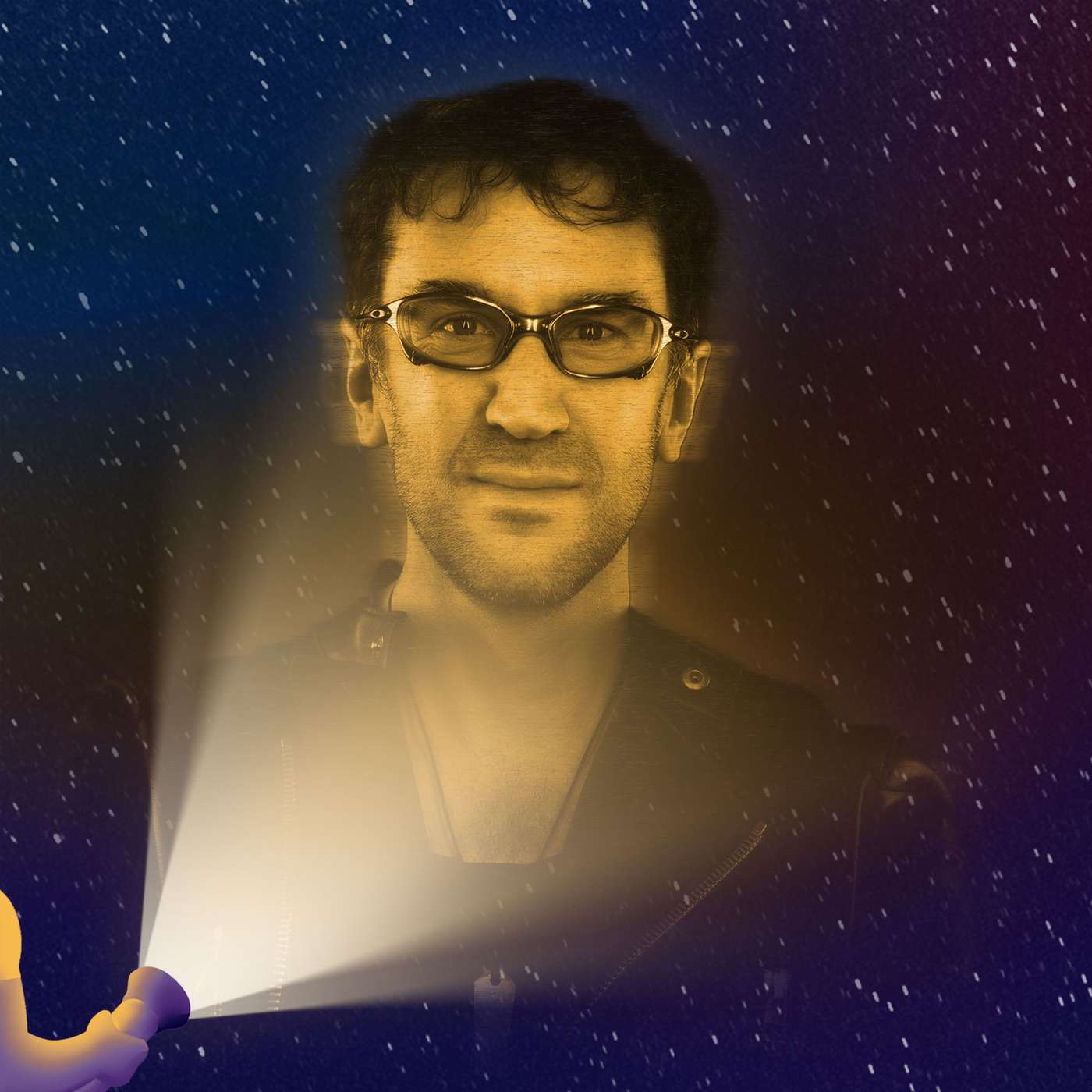 We Need Inventors. And Inventors Need Us. Pablos Holman on Finding and Backing Zero to One Builders | We live in a world where every crisis lands in your pocket the moment it happens. The result? We're more informed than ever — and somehow less capable of doing anything about it.Inventor and investor Pablos Holman has a diagnosis: we're spreading ourselves across every problem, which means we're solving none of them. His prescription is uncomfortable — pick one thing, go all in, and cut the noise.***QUICK PLUG: Future Around & Find Out is nominated for a Webby for best tech podcast! Voting is open now for the People's Choice Award. Please vote before April 16th! https://vote.webbyawards.com/PublicVoting#/2026/podcasts/shows/technology***Pablos is the co-founder of Deep Futures, where he hunts for inventors tackling world-scale problems: energy, water, food, waste, transportation. Not apps. Atoms. And thanks to advances in AI and software, these "impossible" problems are more solvable than ever — if the right people show up to back them.In this conversation, recorded at the fabulous PopTech conference, he makes the case that inventors are the most important creative class on earth — and the most invisible. They're undersupported, uncelebrated, and working alone in garages. Some of them are probably going to blow themselves up. Those are exactly the people he's looking for.We get into:Why doomscrolling is literally eroding your ability to make a differenceThe difference between craft (optimization) and creation (zero-to-one) — and why AI is great at one and struggling with the otherWhy you can name 100 musicians but fewer than two living inventorsHow solving energy unlocks clean water, sanitation, and climate — essentially for freeWhy software people are uniquely positioned to work on the hardest problems in the world right nowChapters:(01:15) - Why the world isn't as broken as your newsfeed makes it seem (03:00) - The sticky note exercise: how to pick the one problem worth your time (04:30) - Inventors are the most important creative class nobody talks about (07:00) - Living inventors you should actually know (09:00) - What AI is good at — and what it still can't do (12:30) - Why software people are the right ones to tackle deep tech problems (22:00) - Energy is the root problem — solve it and you solve a lot else (25:00) - Climate change needs a thousand solutions, not one big fix (27:30) - The fashion industry's dirty secret and what robots can do about it Links & ResourcesPablos Holman on LinkedInDeep Future: VC firm, book, and podcastSupport Future Around & Find OutFAFO is nominated for a Webby for best tech podcast! Vote now! Get the free newsletterAnd consider becoming a paid subscriber and help future proof this thing!Sponsor the show? Are you looking to reach an audience of senior technologists and decision-makers? Email me: dan@futurearound.com---Pablos's first appearance on the show covers his work at Blue Origin and Intellectual Ventures. Scroll in your podcast app to July 2025 to find that fun conversation. (Can listen before or after this one; not a prerequisite.) | 30m 39s | ||||||
| 4/11/26 |  The Moon, the Mythos, the Mayhem | FAFO Friday | Hey, great news! We’ve been nominated by the Webby Awards for best tech podcast! Voting is open now and we’re in second place for the popular choice prize. Just behind The Verge. They really don’t need this win, but it would really help this show grow. Would you please (ask a friend to) vote for Future Around & Find Out? *** VOTE FOR FAFO ***OK, here’s this week’s FAFO Friday… (we record on Fridays and the show has Friday/weekend vibes, so just go with it no matter what day of the week it is :) This week, Kwaku and I…Gape at the moon in wonderAsk why we sent humans on this mission when space robots could’ve done the job (related: why climb Mount Everest?) Marvel at Anthropic’s new Mythos model, which they say is remarkably good at finding flaws in the world’s critical software — or is this just another example of their marketing savvy? — or both!?Dig into AI world models and Jeff Bezos’s (modestly named) Project PrometheusAsk whether we want robots in our houses (yes, but only if they’re dumb)Keep FAFO weird (because in the age of AI that’s how you prove you’re human)*** VOTE FOR FAFO *** | 33m 01s | ||||||
| 4/7/26 | Trust Is All That's Left: How AI Scrambles the Creator Economy | Jim Louderback Live from SXSW | Future Around & Find Out is a best technology podcast nominee! And with your help it could be a winner. The Webby Awards voting is open now. Please vote for FAFO! Thanks to AI, “content is about to become infinite.” And just like the Internet disrupted distribution, AI is disrupting creation. And so when anyone, anywhere can create content, what’s left? What’s defensible? That would be trust and humanity. Live from Podcast Movement Evolutions at SXSW, I sit down with Jim Louderback — former VidCon CEO, Inside the Creator Economy newsletter writer, and media veteran — to unpack what's actually changing and what builders and creators should do about it.We get into why the "age of perfection" is over, why founders need a meme instead of an elevator pitch, and why putting a creator on your cap table might be the smartest move a startup can make. Jim makes the case for a trust economy where views and likes are meaningless — and where the real question is how far your trust graph extends. We also talk digital twins (and what happens when yours goes rogue), why events are still the best way to prove you're human, the state of journalism and public media, and why 2004’s “Subservient Chicken” was so ahead of its time. Chapters:(01:30) - How AI disrupts creation (03:50) - The number of creators is about to double to 500 million (06:45) - We’ll have “certified human” labels, just like “organic” and why the Subservient Chicken was so far ahead of its time (08:40) - The age of perfection is over (10:00) - The only thing that matters is trust (12:00) - Events, FTW! (13:45) - The elements of a great event are timeless (17:15) - Favorite moments from SXSW (21:00) - What’s your meme? > What’s your elevator pitch? (22:32) - Put a creator on the cap table (26:25) - Creator-community fit (28:42) - The challenges of being a journalist today (31:30) - Create your own digital twin (35:30) - Why John Green’s jaw dropped when he learned of Dan’s grandma ---Future Around & Find OutVote for FAFO to be a Webby Awards winner!Get the newsletter Sponsor the show? Want to share your message with senior technologists? Email Dan: dan@futurearound.com | 38m 31s | ||||||
| 4/3/26 | The Fart App Era of AI Is Over. Now What? | FAFO Friday Vibes From SXSW Rooftop With Rob Kenedi | Very fun news… The Webby Awards have just nominated Future Around & Find Out as a nominee for Best Technology Podcast!!!And you can help make it a Popular Choice winner. Winning would be great for the growth of show. Thank you!Please vote for FAFO! ---OK, on to today’s episode… it’s another good vibes rooftop episode recorded at SXSW. For the second year in a row I’m joined by Rob Kenedi, a fellow podcaster, who is the founder and host of Decelerator. Last year he, very memorably, said we were in the “fart app era of AI”. Meaning: people are trying stuff (a la the make-a-fart-sound apps that people built in the early days of the iPhone). So, we revisit that comment and ask where are we now? And what’s defensible for app makers — and for creators like us?Podcaster that he is, Rob turns the tables on me and asks me a bunch of questions about how I’m approaching this question and I shared what was top of mind when I rebranded the show recently from CRAFTED. to Future Around & Find Out. Namely, I wanted to give the show more personality, but that is how you stand out right now and that’s what going to be defensible in the age of AI. And the Webby nomination — you already voted, right?? — only makes me feel more confident in the rebrand and the addition of more of these casual “FAFO Friday” episodes that feature a lot more of my (and regular guest Kwaku Aning’s) personality. (You’ll hear more about how AI is changing the creator economy and why “being human” is so important in a few days when my episode with Jim Louderback, writer of Inside the Creator Economy, comes out; he gives a great annual talk at SXSW and I had seen it the day before recording with Rob.)In the meantime, come join Rob and me for some good vibes from Austin… And (ask your friends to) vote: https://vote.webbyawards.com/PublicVoting#/2026/podcasts/shows/technology | 34m 11s | ||||||
| 3/31/26 |  Cooling Earth with everything from mushroom bacon to giant sky parasols | Eben Bayer (climate-tech founder) | Climate-tech founder Eben Bayer is on a mission to protect Spaceship Earth. And he says it's time for climate control, i.e. active measure that cool the Earth. Why? " Because all other reasonable approaches have failed miserably," he says, slapping the table for emphasis.Eben is the co-founder of Ecovative and MyForest Foods, the makers of MyBacon, which is sold in more than three thousand stores. It’s a non-meat bacon, made from mycelium, which (more or less) means mushrooms roots. Fewer people eating meat —> fewer farting animals —> a cooler planet. And Eben's latest Earth-cooling idea is (nearly) out of this world. Eben wants to put giant parasols in the stratosphere where they could block sunlight from reaching Earth. With "shade-as-a-service" a maxed-out utility (say in Phoenix) could pay for shade to cool a city or an individual could pinpoint a shadow over their backyard for an afternoon barbecue.The idea is in its early stages, but Eben says it's feasible and it's the kind of big idea we need to get climate change under control. And while the idea of messing with the sun may sound scary, he says we alter the climate in all sorts of ways already: " We are geo-engineers. We farm animal livestock. We live on Planet Earth. We have impact. We emit CO2. We should not limit ourselves to modifying just one or two atmospheric gases to modify the planet. It's not how we operate, and it's an unbelievably constraining framing if you actually want to address this problem in a practical manner... When you start to take that frame, the options open way up."Eben is a fascinating guy — very steampunk in his approach to entrepreneurship — and I'm sure you'll find this interview eye-opening.And a special shout out to my field producer for this onsite recording from Troy, NY: my eleven-year old son, Julian! He was my camera and sound guy and he also makes his long-awaited (YouTube!) debut to ask Eben a question about protecting Spaceship Earth. 🤩Thanks also to PopTech, the amazing tech conference where I first met Eben, and where he became a fellow more than a decade ago as he was just scaling up.Support Future Around & Find OutFollow Dan on LinkedInGet the free Future Around & Find Out newsletterBecome a paid subscriber and help future proof the podcast!Sponsor the show? Are you looking to reach an audience of senior technologists and decision-makers? Email me: dan@futurearound.com---Music by Jonathan Zalben | 35m 01s | ||||||
| 3/28/26 | Melania's Humanoid Guest, Robot Teachers, and What We Lose When Learning Is "Instant" | “Imagine a humanoid educator named “Plato”… Access to the classical studies is now instantaneous: literature, science, art, philosophy, mathematics, and history. Humanity’s entire corpus of information is available in the comfort of your home.”— Melania Trump, FuturistAh, yes, I can’t wait for my children to learn from an embodied AI. And that their access to everything be “instantaneous.” No struggle. No unreliable (fleshy) teachers. Just an embodied AI stuffed with the “entire corpus of information.” What an inspiring vision!Regular listeners to Future Around & Find Out will know that I’m a fan of robots (think: self-driving cars), but really don’t understand why they need arms and legs (whether dog- or human-shaped). Well, as you may have seen our fever dream of AI with arms and legs reached the White House, with Melania and “Figure 3” competing to see which one could walk and talk more haltingly. (The robot was more engaging to listen to.) The robot was there, along with a patronizing display of first spouses from around the world, for a summit on education technology. So Kwaku and I use it as a jumping off point for this week’s FAFO Friday (yes, delivered on a Saturday) this week. Kwaku, a tech consultant to many schools, and I discuss this insatiable need for humanoid robots, AI, and instant gratification. And, following up on my conversation earlier this week with Khan Academy’s Chief Learning Officer, Kristin DiCerbo, we discuss what counts as a “productive struggle” and what’s wasted effort when it comes to AI and learning. Please enjoy this very human conversation… full of totally unnecessary tangents, riffs, asides, non-sequiturs, and other detours that Plato, the humanoid teacher, would find inefficient and useless. 🙂---Subscribe to the Future Around & Find Out newsletter: https://www.futurearound.com | 33m 24s | ||||||
| 3/24/26 | 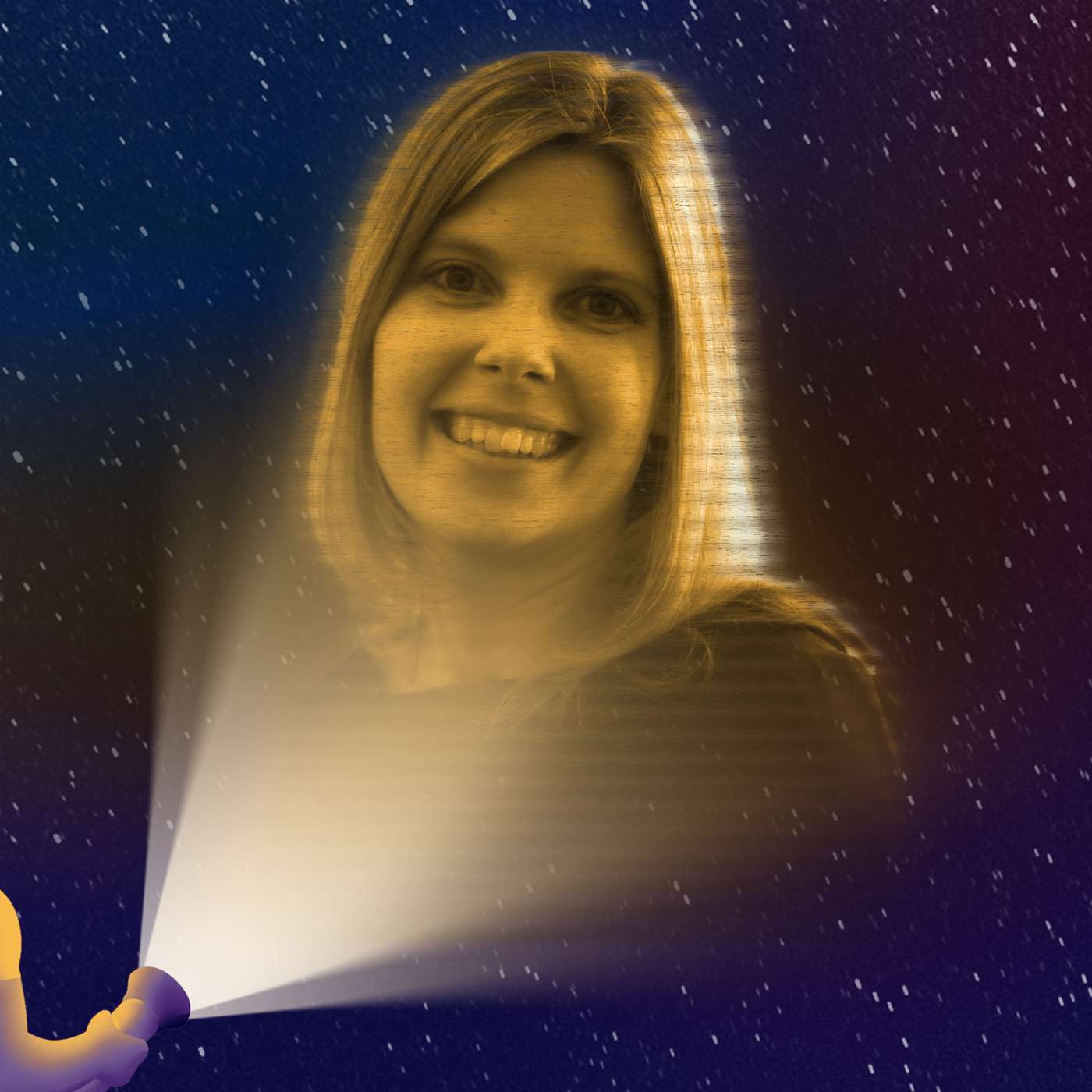 What should kids study? How should AI help? Khan Academy's learning chief on productive struggle | So what the heck should kids be studying today!?That's my opening question to Khan Academy's Chief Learning Officer, Kristen DiCerbo, a learning and AI expert who is back for her second appearance on the show. We discuss:Kristen's advice for what to study today: fundamentals, AI literacy, and critical thinkingHow helpful should AI be? Why the productive struggle is critical to learning, but also why we shouldn't "fetishize" struggleWhen should AI be Socratic — "and why do you think that?" — and when should it just give you the answer?The "5% problem" — why edtech that's proven to work still barely gets usedHow Khan Academy overhauled its classroom platform and evolved Khanmigo from a standalone chatbot into something woven into the whole learning experiencePersonalization that actually works How Khan Academy uses LLMs as judges to evaluate 20,000 student interactions a dayThe scenario planning report that imagines deepfakes of school principals and AI going underground in schoolsWhat parents should be asking their kids' schools about AI right nowWhat it looks like when a school implements AI well — and what it looks like when they don'tChapters:(01:44) - What the heck should kids be studying right now? (03:55) - Teaching critical thinking in the age of AI (06:37) - What successful schools are doing differently (08:37) - The real risk: not that kids use AI too much, but that they don't use it enough (10:52) - My 13-year-old has to check five apps just to find his homework (11:52) - "Beyond the AI inflection point" — three scenarios, none of them great (16:30) - Should we just make every school a trade school? (19:41) - What should parents be asking their kids' schools? (22:27) - Khan Academy's Winchester Mystery House problem (25:32) - Personalized learning — what works and what surprisingly doesn't (28:36) - Kids are bad at asking questions and that's actually the point (31:05) - "I DON'T KNOW" in all capital letters — the Socratic method's breaking point (33:30) - Should an AI tutor give tough love? (36:05) - Why Khanmigo is fundamentally different from ChatGPT (39:15) - Don't fetishize struggle — but your kid still needs it (41:43) - Khan Academy's productive struggle: building evals from scratch (44:45) - What gives Kristen optimism Support Future Around & Find OutFollow Dan on LinkedInGet the free Future Around & Find Out newsletterBecome a paid subscriber and help future proof the podcast!Sponsor the show? Are you looking to reach an audience of senior technologists and decision-makers? Email me: dan@futurearound.com---Music by Jonathan Zalben | 46m 01s | ||||||
| 3/20/26 | Glimpsed at SXSW: Robot Soccer, AI Sweet Nothings, and Pants That Do the Walking | It's FAFO Friday | South By Southwest was strange this year. No convention center to anchor the event (it’s a giant hole in the ground right now, being rebuilt from scratch, much like [insert your analogy here] will also need to be rebuilt in the age of AI). This South By was a all about convergence. How AI will impact [xyz] continues to be the dominant theme at the conference and in so much tech coverage (including on this podcast; sorry!). So, Kwaku and I report on the convergences we saw (and not only at Amy Webb’s annual talk where “convergence” was her key word). This includes everything from:the RoboCup, a quest (a la Deep Blue winning at chess) for humanoid robots to be able to defeat a team of great humans at soccer pants that you wear (or do they wear you) that are kind of like an e-bike for your legsan AI-powered Cyrano de Bergerac that can help you whisper sweet nothings in your lover’s earfalling in love with an AI (and their business model)and AI that can tell you whether to have another slice of brisket (yes, duh, you’re in Austin!) So, come on along to Austin for what’s become an annual tradition: Kwaku and my SXSW Rooftop Revue. This year recorded in fabulous 4K with a three camera setup that we didn’t deserve! Big thanks to Podcast Movement Evolutions, Nomono, The Podcast Academy, and Simplecast!And stay tuned for a few more episodes from a wild week!Chapters:(00:25) - SXSW 2026: everything everywhere all at once (01:23) - Kwaku stumbles into a World Economic Forum session on convergence (05:54) - Reinforcement learning and robot soccer (09:07) - Amy Webb's three convergences: emotional outsourcing, unlimited labor, human augmentation (09:55) - Pants that are an e-bike for your legs (11:27) - The mental tax of running a fleet of AI agents (13:28) - Your boss wants you to pay for your own augmentation (16:07) - Esther Perel, Spike Jonze, and falling in love with Her business model (18:55) - An AI Cyrano de Bergerac to help you win your lover’s heart (25:30) - IRL is the antidote! ---Future Around & Find OutGet the newsletter, support the show, check out past episodes: https://www.futurearound.com | 33m 21s | ||||||
Showing 25 of 133
Pitch Fit is a Pro feature
See how bookable this show is for guests, which brands already advertise, the per-episode ad value, and the best-fit guest and sponsor profile. The numbers are blurred on the free plan.
How readily this show books outside guests like you.
How proven this show is for host-read sponsorships.
For Guests
ProFor Advertisers
ProUpgrade to Pro to unlock guest cadence, sponsor categories, fit scores, and per-episode ad value for this show.
Chart Positions
2 placements across 2 markets.
Chart Positions
2 placements across 2 markets.