
Insights from recent episode analysis
Audience Interest
Podcast Focus
Publishing Consistency
Platform Reach
Insights are generated by CastFox AI using publicly available data, episode content, and proprietary models.
Total monthly reach
Estimated from 1 chart position in 1 market.
By chart position
- 🇦🇺AU · Marketing#31100K to 300K
- Per-Episode Audience
Est. listeners per new episode within ~30 days
30K to 90K🎙 Daily cadence·183 episodes·Last published 6d ago - Monthly Reach
Unique listeners across all episodes (30 days)
100K to 300K🇦🇺100% - Active Followers
Loyal subscribers who consistently listen
40K to 120K
Market Insights
Platform Distribution
Reach across major podcast platforms, updated hourly
Total Followers
—
Total Plays
—
Total Reviews
—
* Data sourced directly from platform APIs and aggregated hourly across all major podcast directories.
On the show
Recent episodes
If You Can Take a Two-Week Vacation and Not Open Your Laptop, the Company Is Working
May 20, 2026
31m 35s
You're Paying People to Buy Your Product. Here's How Rita Zahir Found Out
Apr 27, 2026
23m 50s
Less Mustache, More Grown Up: How Lyft Rebranded Without Losing Its Soul
Apr 20, 2026
26m 51s
Wait, This Is Made From Chicken Breast?
Apr 16, 2026
18m 48s
We Sell Smokeless Fire Pits. But Really We Sell Togetherness
Apr 10, 2026
24m 46s
Social Links & Contact
Official channels & resources
Official Website
Login
RSS Feed
Login
| Date | Episode | Description | Length | ||||||
|---|---|---|---|---|---|---|---|---|---|
| 5/20/26 |  If You Can Take a Two-Week Vacation and Not Open Your Laptop, the Company Is Working | Pascal Hanle, Chief Operating Officer of Pets Deli, tells one of the more unusual origin stories in German DTC: a pet food company that went bankrupt, was bought out of insolvency, and was handed to its most tenacious early employee to rebuild from scratch — beginning with Pascal literally sawing frozen meat blocks with a bow saw in the office kitchen to test new suppliers. Now in his 10th year at the company, with 135 FTEs, a warehouse that grew from 3,000 to 11,000 square meters, B2B accounts at Rewe and Edeka, and a target of €100M by 2030, Pascal shares what it actually takes to build durable unit economics, why ownership is the only metric that matters beyond revenue, and why the real sign of a healthy company is whether its CEO can spend two weeks in Egypt without opening a laptop. Topics Discussed How Pascal joined Pets Deli 1, survived the insolvency, and became the first real employee of Pets Deli 2 after an asset deal The rebuild of 2017-2018: completely changed product portfolio, took over supply chain and logistics internally The bow saw moment: sourcing new meat suppliers and sawing frozen meat blocks in the office kitchen to test quality Why the original business model (frozen pet food, outsourced supply chain) had structurally terrible unit economics The core lesson: good margins don't come from economies of scale — they come from meticulous, unglamorous supplier renegotiations The Brexit overstock mistake: overpreparing for supply disruption led to €200-300K of dry food running into best-before dates The vacation health test: two weeks in Egypt, laptop never opened — that's when you know the company is working Current company: 135 FTEs across HQ (65-70), 5 physical stores, and a 45-person warehouse in Frankenberg Warehouse expansion: 3,000 sqm → 11,000 sqm, all logistics now fully in-house B2B growth: Rewe, Edeka as major retail partners; ~1,000 Rewe POS locations; targeting 50%+ B2B revenue growth D2C vs. B2B operational challenge: D2C has predictable repeat behavior for forecasting; B2B is erratic and fast-moving Ownership philosophy: real ownership requires letting people make decisions — even the wrong ones — or ownership dies The 4:30am warehouse story: shift lead showed up independently to recount audit items; now manages half the warehouse From startup to company: the first 20 employees are gone; processes replaced personal relationships; culture requires deliberate maintenance 2030 goal: €100M revenue; expanding German footprint and potentially entering new markets | 31m 35s | ||||||
| 4/27/26 |  You're Paying People to Buy Your Product. Here's How Rita Zahir Found Out | Rita Zahir, VP of Marketing and E-Commerce at Unique Vintage, delivers a data-dense masterclass on the one metric most e-commerce brands are still getting wrong: the difference between revenue and profit. With 20 years across Shoes.com, Famous Footwear, Polaris, and now a female-owned vintage-inspired brand, Rita breaks down why "let the algorithm handle it" is the most dangerous phrase in modern performance marketing — and how a combination of custom behavioral segmentation and contribution-margin-level analytics helped her team beat Meta Advantage+ ROAS by 30% during the most volatile periods of the calendar. This is a rare, practitioner-level conversation about the infrastructure behind profitable e-commerce growth. Topics Discussed Rita's 20-year e-commerce career: Shoes.com, Famous Footwear, luxury fashion, software, Polaris (Trans American Auto Parts), early-stage startups Current role: VP of Marketing and E-Commerce at Unique Vintage (2 years), plus concurrent consulting for luxury accessory startups Marketing philosophy: structured metrics (LTV:CAC, contribution margin) as the foundation for moving fast with brand equity intact The shift from ROAS and blended MER to profit on ad spend (POAS) and contribution margin as the real performance north star The algorithm's blind spots: contribution margins, inventory turns, return rates, and products that lose money after ad costs Dynamic product ads on Meta, Google Shopping, Pinterest, and Reddit — and why surrendering your data feed to the algorithm is a profitability trap Meta's Andromeda/Advantage+: why "feed it everything and let the algorithm decide" misses your highest-LTV customer segments Partner Genius AI: behavioral modeling and customer segmentation layering third-party data for years Partner Barkai: contribution margin per view/impression — a tool that calculates actual profit generated per ad exposure and flags products where every sale loses money Custom segmentation beating Meta Advantage+ ROAS by 30% during high-volatility periods One of five companies globally selected for Meta's Voice AI Beta "Bestsellers" that are secretly unprofitable when fully loaded with ad costs, conversion rates, and return handling Team building philosophy: "coach of the A team" — hire and develop people you're actively learning from Scaled a brand from under $5M to $16M revenue in under two years Hybrid work as the preferred model; global talent outsourcing for lean e-commerce teams 2026 goal: profitable, repeatable scale — a growth engine that can be systematized and replicated | 23m 50s | ||||||
| 4/20/26 |  Less Mustache, More Grown Up: How Lyft Rebranded Without Losing Its Soul | Cass Zawadowski, Executive Creative Director at Lyft, takes us inside the most significant transformation in Lyft's 14-year history — a year-long rebrand that touched everything from color palette and logo to photography, brand strategy, and brand archetype. She walks through what it actually takes to evolve a beloved brand without losing the soul that made it iconic, how Lyft launched its first major brand campaign post-rebrand targeting young working adults in New York and San Francisco, and how an entire marketing org moved from AI skepticism to daily creative practice through a CMO-led "ground zero" approach. From the three pillars of brand longevity to the tension between cultural creativity and boardroom-measurable impact, this is a rare behind-the-scenes view of creative leadership at one of North America's most recognized consumer platforms. Topics Discussed Lyft as a global mobility platform: rideshare, Citi Bike (NYC), Divvy (Chicago), scooters, and the FreeNow acquisition expanding into Europe Cass's career arc: ad school in Toronto, agency work in Toronto, New York, Germany, and Seoul, then the move to brand-side The year-long Lyft rebrand (2024): "evolution not revolution" — new color palette, logo, photography, and brand strategy Brand purpose: "serve and connect"; value proposition: "expect more from every journey" New brand archetype and the shift from "less mustache to more grown up" Design agency partner: Koto (New York) for visual identity First post-rebrand brand campaign: Q4, young working adults (mid-20s to mid-30s), NYC and SF, "you have options — you're not on autopilot" The three pillars of brand longevity: stable purpose, flexible expression, evolving with culture Levi's as the benchmark example of brand longevity done right Hybrid work structure: Mon/Wed/Thu in office; offices in San Francisco (HQ), New York, Toronto, Montreal, Mexico City, and Europe Toronto as a fast-growing hub — new headquarters opening August 2026 Lyft Urban Solutions (LUST) team in Montreal: bikes and scooters division CMO Brian Irving's org-wide AI adoption: "ground zero, start fresh together" Driver AI tool: input available hours and earning goals → AI generates optimized daily route Creative Studio AI sprint (10-12 weeks, October): brainstorming, rapid prototyping, concept pressure-testing, A/B testing AI tool chaining workflow: Weavy → Figma → Google Docs 2026 goals: brand strength tied to business impact; scaling creative excellence across the entire marketing org | 26m 51s | ||||||
| 4/16/26 |  Wait, This Is Made From Chicken Breast? | Carmen Fadel, VP of Marketing at WILDE, takes us inside one of the most unusual products in the CPG snack aisle — a 100% all-natural chicken breast chip that is growing 50% year over year and landing on shelves at Whole Foods, Costco, Target, and beyond. She breaks down the brand's "chips and lips" obsession with driving trial, the "shock and disbelief" campaign strategy that turns first reactions into word-of-mouth, and how she used a mixed media modeling platform to turn top-of-funnel brand spend into a board-ready, data-backed argument. From a NASCAR partnership to AI-powered competitive tracking, Carmen offers a candid, practical look at what it takes to build a brand-new snack category from scratch. Topics Discussed WILDE's origin story: how founder Jason Wright created a 100% chicken breast chip with proprietary manufacturing 50% year-over-year growth and the surging consumer protein trend "Chips and lips" — the single-minded mission to drive product trial above all else "Shock and disbelief" — the campaign philosophy built around the "wait, this is made from chicken breast?" reaction Omnichannel strategy: TikTok Shop, CTV (Hulu), OOH, digital ads, and the Critical Mass approach WILDE vs. Quest and other protein chips — natural protein from chicken vs. added whey or pea protein The NASCAR partnership and what precision motorsport has in common with a chicken chip Life Time Fitness sponsorship and community-building through health and fitness events AI as a new SEO channel — why WILDE needs to show up when someone asks an AI for a high-protein snack Using Claude and AI tools for competitive tracking, ideation, and automation Mixed media modeling via Keen — connecting marketing spend to top-of-funnel sales data Carmen's non-linear career: stay-at-home mom of four, side agency, return to CPG, rise to VP of Marketing // Sponsors: Front Lines — We help B2B tech companies launch, manage, and grow podcasts that drive demand, awareness, and thought leadership. www.FrontLines.io The Global Talent Co. — We help tech startups find, vet, hire, pay, and retain amazing marketing talent that costs 50-70% less than the US & Europe. www.GlobalTalent.co // Don't Miss: New Podcast Series — How I Hire Senior GTM leaders share the tactical hiring frameworks they use to build winning revenue teams. Hosted by Andy Mowat, who scaled 4 unicorns from $10M to $100M+ ARR and launched Whispered to help executives find their next role. Subscribe here: https://open.spotify.com/show/53yCHlPfLSMFimtv0riPyM | 18m 48s | ||||||
| 4/10/26 |  We Sell Smokeless Fire Pits. But Really We Sell Togetherness | Liz Vanzura has spent her career turning around and launching iconic consumer brands — the New Beetle at Volkswagen, the civilian Hummer, Truly Spiked & Sparkling at Boston Beer, and three-plus years at Fanatics. Now she's CMO of Solo Brands, the platform behind Solo Stove, and she came in as a board member first during a company turnaround. In this episode, Liz shares the national loneliness study that became Solo Stove's core brand insight ('we sell togetherness, not fire pits'), how the Snoop Dogg campaign went viral and what it took to build something that actually sustained, and how 'Squash the Beef' at the Super Bowl Players' Tailgate introduced the new steel fire griddle to a massive audience. She also unpacks Solo Stove's AI roadmap — a media mix model, AI-personalized landing pages, and a digital AI assistant named Ember — and shares the Klarna cautionary tale about what happens when you push AI too far, too fast. Topics Discussed Liz's career arc: CMO at Volkswagen (New Beetle relaunch, 'Drivers Wanted'), Hummer (civilian launch), Cadillac, Boston Beer (Truly Spiked & Sparkling launch), and Fanatics Joining Solo Brands as board member during a turnaround — then staying on as CMO Solo Stove's pivot from 'world's #1 smokeless fire pit' to owning the entire backyard experience: griddle, pizza oven, misting cooler, and more The loneliness epidemic study that became Solo Stove's core brand insight: disconnection, parents texting kids to dinner, and the backyard as the perfect low-cost solution Three standout campaigns: Snoop Dogg 'Going Smokeless,' Grand Central Station National Family Day activation (Good Morning America), and Super Bowl 'Squash the Beef' griddle launch Sister brands in the Solo platform: ORU (inflatable kayaks), Isle (paddleboards), Chubbies (men's apparel), Cheekies (women's swimwear) AI roadmap: media mix model (MMM) with AI, personalized landing pages, and Ember — Solo Stove's AI-powered digital customer assistant The Klarna cautionary tale: what happens when a company replaces customer service with AI agents and has to rehire // Sponsors: Front Lines — We help B2B tech companies launch, manage, and grow podcasts that drive demand, awareness, and thought leadership. www.FrontLines.io The Global Talent Co. — We help tech startups find, vet, hire, pay, and retain amazing marketing talent that costs 50-70% less than the US & Europe. www.GlobalTalent.co // Don't Miss: New Podcast Series — How I Hire Senior GTM leaders share the tactical hiring frameworks they use to build winning revenue teams. Hosted by Andy Mowat, who scaled 4 unicorns from $10M to $100M+ ARR and launched Whispered to help executives find their next role. Subscribe here: https://open.spotify.com/show/53yCHlPfLSMFimtv0riPyM | 24m 46s | ||||||
| 4/1/26 |  From Farmer's Market to 16,000 Stores: Malk Organics' No-Filler Growth Story | Malk Organics started at a farmer's market 11 years ago. When Jason Bronstad joined as CEO in 2020, the brand was in 1,200 stores. Today it's in more than 16,000 — across all 50 US states, in most major chains — with 17 SKUs, a new line of coconut creamers, and shelf-stable Tetra products built entirely on three ingredients: water, organic almonds, and salt. In this episode, Jason walks through the data discipline that turns shelf space into profitability, the counterintuitive decision to cut back to three SKUs before scaling to 17, and why 'liquid to lips' is still the most powerful marketing move in CPG — and why events, not in-store demos, are where that has to happen now. He also shares how AI is being used to measure the gap between the message delivered and the message received, and why dream culture is the key to keeping a remote team of 40 aligned across 14 states. Topics Discussed Malk Organics' founding story: from farmer's market 11 years ago to 16,000+ US retail doors under Jason's leadership since 2020 The data playbook for retail success: delivering profitability for shelf space and using consumer data to drive SKU decisions The counterintuitive scale-back: cutting to 3 core SKUs on joining before expanding to 17+ items across bases, seasonal, and shelf-stable formats New coconut creamer launch: listening to consumers who want to whiten their coffee and discontinuing a brown creamer that wasn't solving that need Why Malk is staying US-focused: 16,000 of 67,000 available US doors — a massive runway before going international 'Liquid to lips wins consumers' — and how event-based sampling at Expo West and Miami Food and Wine Festival replaced declining in-store demo traffic AI for leadership communication: using transcripts to audit the gap between message delivered and message received with retail partners and internal teams Dream culture: a Slack channel called 'dreams wins' where team members celebrate personal milestones, and how it keeps a 40-person remote team connected across 14 states | 22m 12s | ||||||
| 3/23/26 | 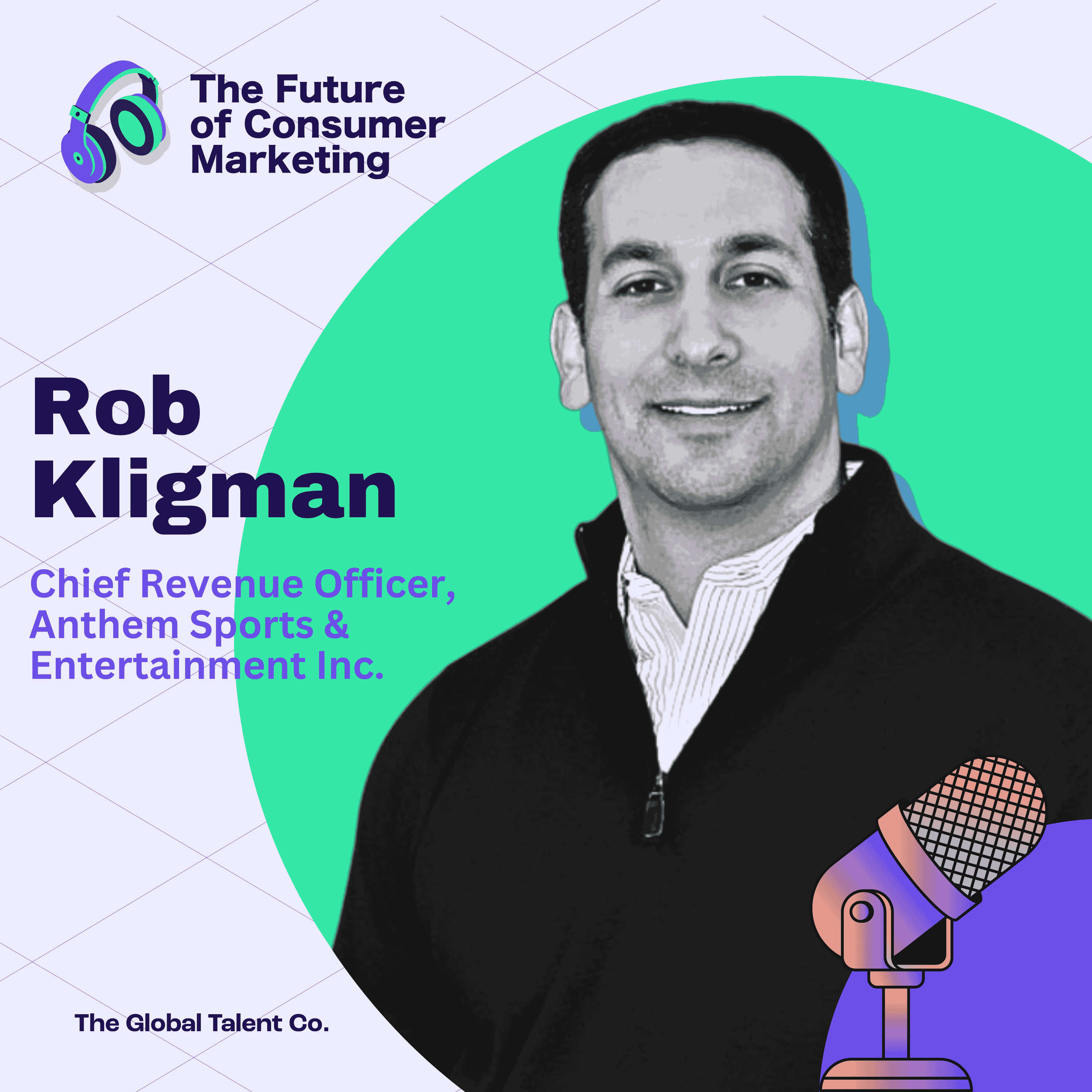 From WWE to Trading Cards: Building the Low-Fee Marketplace Collectors Deserve | Rob Kligman is the Chief Revenue Officer of Anthem Sports & Entertainment Inc. and the founder of Collectible Lane — a low-fee, AI-powered collectibles marketplace built to give collectors back control. In this episode, Rob draws on 30 years of advertising and sponsorship experience to break down how he built an authoritative brand voice before the app ever launched, why storytelling and FOMO are the only marketing engines that work in collectibles, and why his 6-to-9-month goal isn't to beat eBay — it's to earn the loyalty of 1% of the market. Topics Discussed Rob's 30-year career in advertising and sponsorship at MTV Networks, WWE, and Fortune 500 brand campaigns The founding insight behind Collectible Lane: inflated prices caused by seller fees pushing buyers to overpay Passion-point lane structure — dedicated ecosystems for trading cards, video games, comic books, and more 'Behind the Lane' branded entertainment arm: using storytelling to create FOMO around collectible items Pre-launch content strategy: 6 months of snackable 15–20 second videos on YouTube, Instagram, and Facebook AI-powered listing in under 10 seconds: how the platform pivoted to remove the biggest friction for sellers PSA and CGC grading partnerships as an anti-fraud and confidence-building mechanism for buyers Remote-first team of ~5 people across the US and India building toward a US-only Phase 1 launch | 26m 37s | ||||||
| 3/23/26 |  AppLovin, AI Bowls, and the Measurement Stack Running Ollie’s Growth | Ollie’s subscription model doesn’t just deliver fresh dog food — it runs machine learning models on photos of your dog’s teeth, tracks body condition and stool health, and feeds all of it into a wellbeing score that adjusts portions over time. Kalina Fridrich, VP of Growth and Retention at Ollie, joins The Future of Consumer Marketing to break down how a direct-to-consumer pet wellness brand is building a full-stack growth engine on top of that data. She covers the launch of “Feed the Obsession,” Ollie’s new brand campaign hitting TV for the first time; why AppLovin has emerged as a breakout performance channel for a health-app-native audience; the AI-generated dog bowl ad that went so viral on Meta they manufactured it and added it to the member experience; and the three-layer measurement stack — media mix modeling, multi-touch attribution, and direct customer surveys — that Ollie uses to make weekly channel decisions across a rapidly evolving media mix. TOPICS DISCUSSED Ollie’s product model: algorithm-powered fresh dog food subscription, personalized portions based on app health data collected from vet tech–trained machine learning models In-app AI: visual models analyze dog teeth photos; a wellbeing score aggregates body condition, stool health, and teeth data into a single interpretable metric for dog parents The “Feed the Obsession” brand campaign: new brand refresh with TV spots, merging brand awareness investment with a performance marketing engine for the first time Performance channel breakdown: Meta remains core for the primary demo (women dog owners, higher household income); AppLovin emerging as a breakout channel for app-native, health-data-engaged audiences AI in performance marketing: AI-generated heart-shaped dog bowl ad on Meta drove social engagement — Ollie then manufactured it as a real product and used it as a member gift Brand partnerships as acquisition and awareness levers: Van Leeuwen (dog ice cream in retail), Embark (dog DNA kit), Fi (dog GPS wearable) Media measurement stack: media mix modeling + multi-touch attribution + first-party customer surveys (how did you hear about us?), triangulated weekly for channel optimization 2026 goals: scaling reach and awareness, TV investment, GEO/SEO growth, pairing brand investment with a disciplined performance engine while maintaining PNL health | 25m 49s | ||||||
| 3/20/26 | 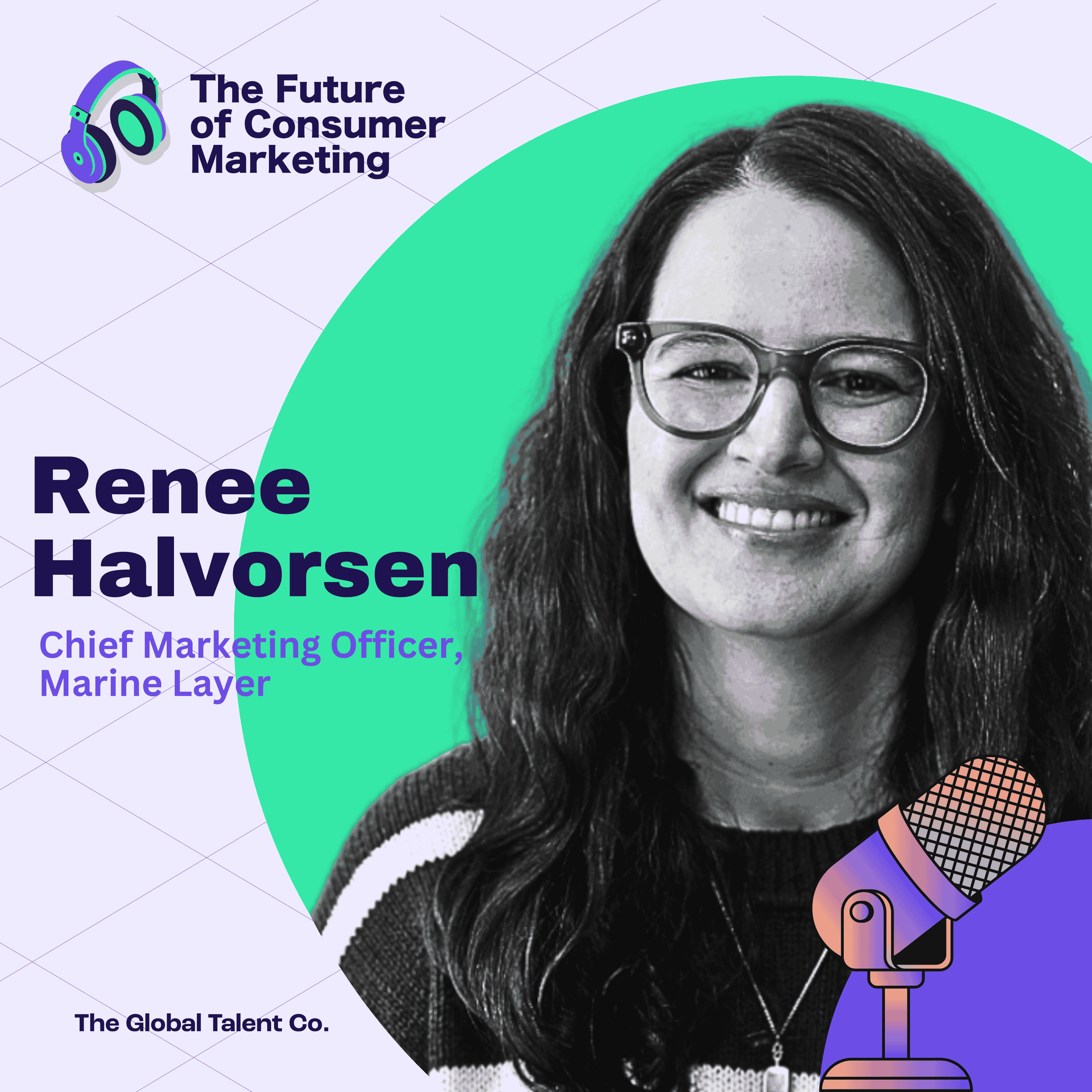 Pants Science, Physical Catalogs, and the Return of Analog Marketing | In this episode of The Future of Consumer Marketing, host Andres Figueira sits down with Renee Halvorsen, CMO of Marine Layer — the San Francisco-based casual apparel brand built on California cool, signature softness, and a marketing philosophy of radical authenticity. Renee pulls back the curtain on how a brand founded on a founder’s obsession with his favorite worn-out T-shirt has grown to 54 stores while leaning hard into analog marketing at a moment when everyone else went digital. She digs into the physical catalog as Marine Layer’s not-so-secret weapon (eight per year, mailed to homes), the anatomy of the “Pants Science” campaign that turned Flex Terry pants into a multi-channel hit, and why their Holiday 2024 personalization pop-up in San Francisco became the #1 traffic location in their entire retail fleet — complete with a line around the corner and an impromptu visit from the city’s mayor. She also outlines Marine Layer’s measured AI strategy: protect human authenticity on the front end (real models, real copy, no faking it) while embracing speed and efficiency on the back end through CRM analytics, SQL acceleration, and Vizcom for internal product visualization. And she makes the case that 2026 is a new frontier — one where in-store traffic is outpacing online, email is losing its grip, and digital saturation is breeding consumer distrust. Her prescription: rethink every channel touchpoint from scratch. Topics Discussed Physical catalog as Marine Layer’s primary growth channel — 8 per year, mailed to homes, enabling longer-form brand storytelling that digital can’t replicate Brand voice engineering: what it takes to make marketing sound like a trusted friend instead of a pitch, across catalog copy, in-store, and digital The “Pants Science” campaign: comedy creators, a branded scientist character, TV, and email used to drive sell-through on Flex Terry pants Creator partnership strategy: lifestyle alignment as the selection filter, then full editorial freedom as the execution model AI in two lanes: protecting front-end human authenticity (real models, real copy) vs. accelerating back-end CRM analytics, SQL analysis, and product visualization via Vizcom The Holiday 2024 SF personalization pop-up: patches and embroidery on Cloud Nine fleece, #1 fleet traffic, organic creator amplification without formal partnerships, unannounced visit from the San Francisco mayor 2026 channel rethink: in-store traffic growing faster than online, email engagement declining, digital saturation creating consumer distrust, and what Marine Layer is doing about it | 28m 56s | ||||||
| 3/17/26 |  Kate Gagnon: Why Organization Is an Operating System, Not an Instagram Moment | Kate Gagnon is the VP of Marketing at Neat Method, the largest home organizing brand in the United States. With 15 years of experience as a hybrid marketing leader and startup advisor, Kate leads marketing across two distinct businesses: an in-home organizing service delivered through 100+ franchise owners nationwide, and a direct-to-consumer product line launched six years ago. In this episode, Kate unpacks the brand’s core philosophy — organization as an operating system for your life, not an aesthetic endpoint — and walks through what it means to market the same brand to two fundamentally different audiences. She breaks down the “New Year, Meet Me” January campaign, Neat Method’s counterintuitive channel stack (Pinterest as a silent DTC conversion engine, email as the strongest repeater), and the AI measurement problem that’s still standing between home organizing and a fully AI-assisted customer experience. Topics Discussed Kate’s background: 15 years as a hybrid marketing leader and startup advisor; joined Neat Method just over a year ago; attracted by a company culture that was enthusiastically embracing AI from day one Neat Method at 15 years: the largest home organizing brand in the US, serving clients across the US and Canada; product line launched six years ago after organizers spent time in tens of thousands of homes and identified unmet product needs Two business lines, two very different audiences: (1) in-home organizing service via 100+ franchise owners (2–10 organizers each); (2) D2C e-commerce for DIY customers; corporate team of approximately 18 people The service experience: organizer comes in, scopes the project, delivers a proposal covering organizer time and product, then executes — highly personalized to how the client actually lives (family with kids, single professional, active athlete, etc.) Repeat and concierge model: many clients return for refreshes; Home Concierge option for weekly or monthly maintenance visits (grocery put-away, mail sort, system reset) Marketing philosophy: organization as an ongoing operating system, not a one-time Instagram moment; personalized to each client’s goals and life; framed around systems, routines, and rituals rather than aspirational aesthetics Product design principles: timeless, neutral colorways (metal, natural fibers, interesting textures); multipurpose across rooms and life stages; designed so products purchased for a pantry can migrate to a closet, office, or living room shelf without looking wrong Book launch: Neat Method published a book last year targeted at DIY customers who want to do their own organizing projects The category creation challenge: most people don’t know you can hire a home organizer — service-side marketing must simultaneously build the category and build the brand The “New Year, Meet Me” January campaign: rather than making organization the resolution itself, the 2026 iteration connected organization to other resolution goals — family dinners, morning workouts, marathon training — positioning organization as the enabling system, not the endpoint Problem-aware vs. solution-aware framing: many service prospects know their home is disorganized but don’t know a professional organizer exists; D2C prospects know they want a product but need guidance on what and how; content strategy differs accordingly Channel breakdown: Instagram (largest and most established audience; doubles as franchise recruitment channel); TikTok (fastest growing, most scaling potential); Pinterest (sneakiest best performer — organizing education content is evergreen and compounds over years); Email (strongest channel for D2C repeat purchases) Service-side acquisition is word-of-mouth first: referrals drive most inbound; social and paid support awareness for those who haven’t been referred yet AI use today: marketing research, competitive data synthesis, meeting notes and action items; exploring AI home design tools but the measurement precision required for | 31m 18s | ||||||
Want analysis for the episodes below?Free for Pro Submit a request, we'll have your selected episodes analyzed within an hour. Free, at no cost to you, for Pro users. | |||||||||
| 3/10/26 |  Stop Optimizing for CAC. Start Optimizing for LTV | Bryce Winkelman joined Typeform as CRO 14 months ago — a profitable, 150,000-customer form and survey platform with a footprint in 98% of Fortune 500 companies. Before Typeform, he was the 10th employee at Qualtrics, which he helped grow through $700M+ in revenue, an SAP acquisition, and an IPO. In this episode, Bryce unpacks how Typeform is repositioning from world-class form builder into a full flow activation platform, why they’re pivoting marketing investment from paid toward AI-visible organic, and the specific frameworks they use to test and scale new channels — including a LTV-first take on marketing efficiency that flips the conventional CAC optimization model. Topics Discussed Career arc: 10th employee at Qualtrics through $700M+ revenue, SAP acquisition, and IPO — then Quantum Metrics and SeekOut before Typeform Typeform’s two growth engines: PLG self-serve (1-50 employee organizations and solopreneurs) and sales-led enterprise (98% Fortune 500 footprint) Product repositioning: from form builder to “flow activation” — lead routing, nurturing, payment processing, and AI-moderated research via Insight Flow Marketing channel strategy: paid as the primary and most predictable engine, now shifting investment toward SEO, AIO/AEO, UGC, influencer content, and owned community Reddit and third-party communities as non-negotiable infrastructure for AI search visibility The Get Real campaign: surveying 2,000 marketers on AI usage using Typeform itself, publishing a report that generated millions of impressions while demonstrating the product’s video/audio response capabilities AI inside Typeform: Glean deployed across all systems and every employee, full AI chat experience in the product, AI-first brand messaging on the website New channel testing: Uber ads (validated), TikTok (doubling year-over-year), sports sponsorships, ABM, Typeform-hosted events Channel testing framework: define success criteria and hypothesis upfront with FP&A, ring-fence incremental budget, deploy, measure, then scale or shut down The LTV-over-CAC reframe: willing to increase CAC significantly as long as LTV is rising — optimize for revenue and ICP quality, not cost efficiency | 26m 42s | ||||||
| 3/10/26 |  The Brand That Turned Poop Jokes Into a $308M Business | Three roommates in Chicago started using baby wipes as toilet paper in 2011, decided to sell their own, and ended up building one of the fastest-growing CPG brands in America. Joey Thomas joined as VP in late 2021 when Dude Wipes revenue was sub-$60 million — by 2025 the company had hit $308 million, almost entirely bootstrapped. In this episode, Joey breaks down the specific moves behind that trajectory: why TikTok Shop is the biggest channel unlock of the last 18 months, how the stocking stuffer strategy turns November and December into the brand’s highest-volume months, the Bic razor principle behind their male-voiced but whole-household strategy, and why the brands that figure out Reddit seeding for AI-driven shopping now will own the next decade. Topics Discussed The founding story: three Chicago roommates, a bad diet, baby wipes, and the insight that launched a $300M brand How Dude Wipes grew from sub-$60M to $308M in four years, bootstrapped without VC funding Why November and December are the biggest sales months — the stocking stuffer strategy and 60%+ trial-to-repurchase rate Demographics: 60% male buyers, 40% female — and the Bic razor principle behind male-voiced marketing that reaches the whole household TikTok Shop: the mechanics of a creator army (5K+ followers, commission-based), why average TikTok user is 37, and why this is Amazon 2012 Don’t restrict creators: why big CPG’s obsession with message control is the thing holding them back AI at Dude Wipes: data analysis, DM bot outreach for creator recruitment, and Reddit seeding for AI shopping recommendations Brand personality: why being the loudest flushable wipes brand on the internet is a structural advantage that Kimberly-Clark can’t copy Upcoming: Costco rollout, bringing creative fully in-house, building a live TikTok Shop team Sports partnerships: Cleveland Browns, UEFA soccer teams — and why most teams aren’t excited about a butt wipe on their shirt | 25m 51s | ||||||
| 3/10/26 |  If the First Idea Doesn’t Offend You, Push Harder | Reese Pozgay spent 10 years at Marc Jacobs building ecommerce from zero to over $100 million and inventing campaigns that used social media as literal entry currency — before Instagram existed. After launching his own 360 marketing agency (with Google as his first client, secured before he even had an LLC) and serving as Head of Digital Transformation at Revlon where he led the first beauty TikTok campaign to hit 2 billion views, he joined Moose Knuckles Canada as VP of Brand and Creative Marketing. In this episode, Reese traces the full arc of his career through one recurring conviction: respect the platform, push the idea until it makes someone uncomfortable, and never mistake audience size for actual community. Topics Discussed Career trajectory: From answering phones at Marc Jacobs under Robert Duffy to VP of Brand and Creative Marketing at Moose Knuckles Canada The Daisy Tweet Shop: the first pop-up ever to use social media as literal entry currency, pre-Instagram, repeated across New York, London, and Asia Street Mark: guerrilla wild postings across 5 US cities that invited the public to remix and deface the brand’s own ads Why every social platform demands its own content strategy — and why the waterfall model destroys brand relevance At Revlon: building the first beauty brand TikTok campaign to hit 2 billion views in two days Building influencer from scratch at Marc Jacobs — and why micro-influencers with real engagement beat macro celebrities every time Moose Knuckles’ brand position: not Montclair, not Canada Goose — “cultural nomads” and metropolitan city explorers The internal creative standard: “If the first idea doesn’t offend me a little bit, we haven’t pushed hard enough” Why your social strategy needs to change every 6 months or you’re dead Where social media is heading next: off-feed, private networks, DMs, and Snapchat broadcast channels | 33m 27s | ||||||
| 3/10/26 |  How Bala Got Kim Kardashian Without Spending a Dollar | Max Kislevitz co-founded Bala after quitting a 12-year advertising career to travel with his then-girlfriend Natalie — and conceived the idea for redesigned wrist and ankle weights on that trip. What started as a $40,000 Kickstarter campaign shipped out of a Brooklyn apartment has grown into a 30+ product design-led fitness brand that has sold over 4 million pairs of Bala Bangles and nearly doubled revenue in 2025. Max unpacks how Bala built a brand without any meaningful paid marketing in its early years, how the Shark Tank deal with Mark Cuban and Maria Sharapova came together, and what it actually looks like to run a 10-person company doing serious volume with a lean-and-mean operating model. Topics Discussed Conceiving Bala on vacation and launching on Kickstarter with $40,000 and no money of their own The design philosophy behind Bala: bringing color and aesthetic to fitness equipment that had never received design attention Why Bala is a female-first brand and what that means for product and marketing Organic celebrity endorsements (Kim Kardashian, Adam Levine) that drove early growth without any paid spend The Shark Tank appearance in 2020 and the deal struck with Mark Cuban and Maria Sharapova The ecosystem approach to marketing — paid social, email, search, retail, and studios working in concert Brand partnerships with Ralph Lauren, Pucci, Spanx, and Dunkin Donuts and the asymmetric value exchange Offline-to-online events: how a 20-person lunch generates outsized brand reach AI at Bala: cautious exploration limited to chatbot, deliberately avoided for customer-facing content 2026 priorities: heavier products (dumbbells, weighted vest), international expansion, continued growth | 24m 34s | ||||||
| 3/5/26 |  How 127 Hotel Rooms Became a Daily Sales Channel | In this episode of The Future of Marketing, host Andres Figueira sits down with Phil Pirkovic, former Director of Brand and Partnerships at Shinola. Phil built the brand's storytelling infrastructure from scratch — shifting Shinola from a product-and-factory narrative into a full lifestyle brand rooted in emotional memory. He shares how he engineered experiential touchpoints across 21 stores, a Detroit hotel, and a small but disciplined marketing team to compete in a $6 billion watch industry without a massive budget. Topics Discussed: Why "experience by few, witnessed by many" is the north star for physical brand activation Turning a hotel into a 127-room-per-night sales and brand discovery channel Shifting Shinola's narrative from "made in America" to emotional memory and milestone moments Managing brand consistency across retail, e-commerce, a factory, and a hotel with a team of 15 The difference between marketing a utility brand (Google) vs. a premium product brand (Shinola) Why analog craft brands should be skeptical of AI adoption — and when it might eventually make sense | 25m 38s | ||||||
| 3/5/26 |  Why Outdoor Marketing's Aspirational Default Is a Trap | In this episode of The Future of Marketing, host Andres Figueira sits down with John St. Juliana, SVP of Marketing at Backcountry — the 25-year-old premium outdoor retailer that has quietly become one of the most resilient e-commerce brands in a category currently littered with Chapter 11 filings and store closures. While competitors chase aspirational "top of mountain" imagery, John is rethinking what it means for an outdoor brand to show up in everyday life — and rebuilding a loyalty program designed not by the finance team, but entirely around the customer. He also shares how a math-degree-turned-marketer thinks about AI not as a buzzword, but as a tool to simultaneously scale output and raise quality without proportionally growing headcount. Topics Discussed: Why the outdoor industry's aspirational marketing model is leaving money on the table How Backcountry is using multi-channel video to maximize a single creative investment The philosophy behind redesigning a loyalty program to lower barriers to participation — not maximize short-term yield Using AI to scale content production and eliminate low-value SaaS dependencies Organic and inorganic growth strategy in a contracting outdoor retail market Building a human-first customer service model ("Gearheads") as a brand differentiator in the AI era | 27m 05s | ||||||
| 3/5/26 |  When Brand and Performance Marketing Collide | In this episode of The Future of Marketing, host Andres Figueira sits down with Yulia Popyk, Head of Brand at Petcube — a smart pet tech company that has spent 13 years building connected devices for pet parents. What started as a single camera to monitor pets at home has grown into a full ecosystem of hardware and software: GPS trackers, smart fountains, and a new AI-powered app bringing health monitoring, vet access, and device data into one place. Yulia unpacks how Petcube markets emotionally charged technology to deeply invested consumers, where brand and performance marketing collide, and how a ceramics studio in New York became one of their most memorable product launches. Topics Discussed: Navigating the tension between brand integrity and performance marketing at scale Segmenting emotional vs. technical messaging by product type Turning a physical product launch into a community-building moment Using AI-generated imagery to replace traditional pet photo shoots Building a unified pet health ecosystem through software and AI | 28m 52s | ||||||
| 3/4/26 |  From 50 to 1,000 Clients: The Revenue Factory Model | In this episode of The Future of Marketing, host Andres Figueira sits down with Mads Wedderkopp, Chief Revenue Officer at Flowbox, a UGC platform working with over 1,000 consumer brands across fashion, cosmetics, fitness, and home goods. Mads unpacks how the smartest consumer brands are turning authentic customer content into their most durable competitive advantage — and why the brands that win in the next decade will be the ones that make community their moat, not their product. Topics Discussed: Why blended attribution beats single-touch metrics for measuring UGC impact How social search is replacing Google for Gen Z — and what that means for brand discovery The connection between strong UGC, SEO, and LLM visibility Why your product is a commodity and your community isn't How micro-influencers and friend networks are outperforming mega-creators Scaling from 50 to 1,000 clients — the operational and cultural shift | 30m 20s | ||||||
| 2/27/26 |  The Hyperlocal Content Gap Franchise Brands Ignore | In this episode of The Future of Marketing, host Andres Figueira speaks with Matthew Cancino, founder of Candid Collective, a video content agency specializing in hyperlocal content strategy for franchise brands and multi-location businesses. Over two years, Candid Collective has grown to serve 20+ monthly retainer clients by solving a distribution problem most national brands quietly struggle with: how do you make a national brand feel local at scale when your entire creative team is in one city? Topics Discussed: Why hyperlocal content strategy is the missing layer in most franchise marketing stacks Building a distributed creative network instead of a traditional agency model Rebranding from Candid Socials to Candid Collective as a talent attraction strategy Using AI for transcript-based content repurposing and data analysis in video production The tradeoffs of building a business while employed before going all-in | 22m 15s | ||||||
| 2/26/26 |  From Medtech to Public Safety: A Category Reframe That Worked | In this episode of The Future of Marketing, host Andres Figueira speaks with Katerina Miras, VP of Marketing at Avive Solutions, a public safety technology company reimagining emergency cardiac response. With survivability rates from sudden cardiac arrest unchanged for decades despite hundreds of thousands of AEDs already in the market, Avive diagnosed the real problem as connectivity - not devices. Katerina walks through how a sub-100-person team is executing a sophisticated B2G/B2B marketing playbook: building community ownership programs, deploying champion-led trust architectures, and using storytelling at scale to move institutions that historically resist change. Topics Discussed: Repositioning from medtech to public safety technology and why the category shift changed everything Building institutional trust in a market that defaults to "if it ain't broke, don't fix it" Designing community programs that become the customer's own marketing initiative Using champions and ambassadors to create FOMO-driven adoption across counties and municipalities Why storytelling is strategy - and how to operationalize it Narrowing your ICP to drive faster, deeper adoption | 41m 42s | ||||||
| 2/26/26 |  5,000 to 500K Units: Retail Demo Strategy That Scaled | In this episode of The Future of Consumer Marketing, host Andres Figueira interviews David Lee, Co-founder and CEO of Nex. Nex has built Next Playground, an active play system that's transforming how families engage with screen time by turning living rooms into interactive fitness and gaming experiences. Starting as a basketball training app called Home Court that went viral during the pandemic, the company pivoted to create a motion-tracking camera system that has now sold 350,000 units and secured placement in over 5,000 retail locations. Through strategic retail partnerships, mission-driven product development, and a subscription model that funds continuous innovation, Nex is carving out a new category between traditional gaming consoles and fitness equipment. Topics Discussed: Pivoting from a basketball training app to a family-focused hardware platform based on viral pandemic trends Scaling from 5,000 units to forecasted 500,000 units through retail partnerships Building trust for a $249 considered purchase through omnichannel marketing Implementing in-store demos as a primary conversion driver in 4,000+ retail locations Using subscription models (quarterly/annual only) to fund continuous game development and maintain customer relationships Leveraging major IP partnerships (Barbie, Kung Fu Panda, Bluey) to expand content library Operating a distributed team of 110+ people across product, hardware, and game development | 33m 25s | ||||||
| 2/25/26 |  Building Word-of-Mouth in a Category Nobody Talks About | In this episode of The Future of Marketing, host Andres interviews Jazmyn Williams, Vice President of Brand at The Honey Pot Company — the first brand to span both sides of the feminine care aisle, offering plant-derived period care and vaginal wellness products. With just a 20-person marketing team and roughly 70 employees total, Honey Pot has scaled to over 36,000 retail doors across the US while building one of the most culturally resonant brands in a category that has historically lived in the shadows. Jazmyn unpacks how a category defined by stigma, legacy purchasing habits, and low visibility requires a fundamentally different marketing playbook — and how Honey Pot is rewriting it. Topics Discussed: Marketing a product that lives "in the dark" — under bathroom counters and in purse pockets Breaking generational brand loyalty in a category dominated by habit Using experiential sampling to drive mass awareness at scale Building a digital-first brand in a brick-and-mortar dominated category Leveraging Gen Z to reverse-sell into older demographics Using AI for faster consumer insight synthesis without a large research team Crossing the feminine care aisle as a portfolio expansion strategy | 32m 19s | ||||||
| 2/25/26 |  Brand Worlds vs. Brand Logos: What Actually Drives Loyalty | In this episode of The Future of Marketing, host Andres Figueira speaks with Ben Hudson, Brand Marketing & Business Development Consultant at Hudson or Hudson, a brand marketing consultancy that has shaped some of the most culturally resonant consumer brands of the past two decades. From building live activations for Panasonic at NASCAR races to architecting Brooklyn Brewery's global expansion, Ben has developed a sharp perspective on what it actually takes to earn consumer trust in an era of AI saturation, screen fatigue, and institutional distrust. The conversation centers on why experiential marketing is becoming the most defensible channel in a brand's arsenal — and how smart brands are doubling down on human connection as their core growth strategy. Topics Discussed: Why experiential marketing is experiencing its most significant renaissance yet The AI trust crisis and its concrete impact on brand perception Building brand worlds versus building brand awareness How to add genuine value in an attention-scarce environment The analog counterculture trend and what it means for consumer behavior Using AI strategically without triggering consumer skepticism | 29m 01s | ||||||
| 2/25/26 |  Why AI Makes Your Brand Sound Like Everyone Else | In this episode of The Future of Consumer Marketing: Masterclass Edition, host Andres Figueira speaks with Todd Anthony, founder of Pinwheel Agency, a senior-only creative shop built as a deliberate counterpoint to the bloated big-agency model. After decades inside holding companies and client-side roles at Yahoo and CBS, Todd built Pinwheel around a simple but contrarian thesis: strip out the juniors, kill the bait-and-switch, and let expensive talent run fast without supervision. Eleven years in, clients like Stripe and Experian have stayed for five to ten years — and the agency is deliberately staying small to keep it that way. Topics Discussed: Why the traditional agency staffing model is broken — and how to exploit that gap Building a senior-only creative team and what that actually means operationally How to use custom brand voice GPTs across large organizations Why AI is a pattern-repeating machine, not a pattern-breaking one — and why that matters for marketing Niching down into complexity: marketing SaaS and enterprise products with compliance constraints How to scale a creative agency 20% annually without losing quality control | 23m 16s | ||||||
| 2/24/26 |  Marketing AAA Games: Why Positioning Beats Advertising | In this episode of The Future of Marketing, host Andres Figueira interviews Pierre Miazga, Studio Marketing and Communications Director at Ubisoft Bordeaux. Pierre reveals how AAA game marketing has evolved from traditional campaign-based promotion to embedded development marketing - where marketers function as "enablers" rather than sellers, working directly with creative teams from concept phase through launch. With Assassin's Creed Mirage as a case study, Pierre unpacks how Ubisoft Bordeaux navigated the challenge of marketing a legacy title to hardcore fans in a market releasing 52 games per day, while maintaining creative risk-taking and authentic player relationships. His approach demonstrates how entertainment marketing can balance player expectations with creative surprise in an increasingly fragmented and competitive landscape. Topics Discussed: Embedded marketing in game development vs. traditional go-to-market campaigns Marketing as "enabler" in creative development processes Navigating the saturated gaming market (20,000 Steam releases annually) Competing for player time, not just against other games Building games "from fans to fans" through direct player involvement Balancing player expectations with creative surprise The 3-4 year game development cycle and when marketing enters Cross-functional collaboration between marketing, creative, artistic, and technical teams Positioning vs. advertising in game development Managing tone consistency across multi-year development cycles | 33m 14s | ||||||
Showing 25 of 186
Sponsor Intelligence
Sign in to see which brands sponsor this podcast, their ad offers, and promo codes.
Chart Positions
1 placement across 1 market.
Chart Positions
1 placement across 1 market.