
Future of Foods Interviews - Alt Proteins, Cell Agriculture, an End to Factory Farming.
by Alex Crisp
Is this your podcast?Insights from recent episode analysis
Audience Interest
Podcast Focus
Publishing Consistency
Platform Reach
Insights are generated by CastFox AI using publicly available data, episode content, and proprietary models.
Most discussed topics
Brands & references
Total monthly reach
Estimated from 3 chart positions in 3 markets.
By chart position
- 🇬🇧GB · Food#1685K to 30K
- 🇫🇷FR · Food#5910K to 30K
- 🇨🇿CZ · Food#102500 to 3K
- Per-Episode Audience
Est. listeners per new episode within ~30 days
7.8K to 32K🎙 ~2x weekly·82 episodes·Last published 3w ago - Monthly Reach
Unique listeners across all episodes (30 days)
16K to 63K🇬🇧48%🇫🇷48%🇨🇿5% - Active Followers
Loyal subscribers who consistently listen
4.7K to 19K
Market Insights
Platform Distribution
Reach across major podcast platforms, updated hourly
Total Followers
—
Total Plays
—
Total Reviews
—
* Data sourced directly from platform APIs and aggregated hourly across all major podcast directories.
On the show
From 11 epsHost
Recent guests
Recent episodes
The First Ever Cultivated Meat Farm - Ira Van Eelen - Respect Farms
Jun 2, 2026
43m 06s
Why Netherlands is Becoming a Global Leader in Cellular Agriculture? - Tom Van Duijn
Apr 27, 2026
42m 30s
Keep Your Customers Close - Lessons Learned at Impossible Foods - Reed McCord
Apr 21, 2026
46m 22s
Putting Meat Alternatives on the Menu - ProVeg International - Jasmijn De Boo
Mar 23, 2026
41m 08s
The Pork Sausage of the Future - Cultivated Pork Fat from Mission Barns - Bianca le
Mar 16, 2026
29m 24s
Social Links & Contact
Official channels & resources
Official Website
Login
RSS Feed
Login
| Date | Episode | Topics | Guests | Brands | Places | Keywords | Sponsor | Length | |
|---|---|---|---|---|---|---|---|---|---|
| 6/2/26 | 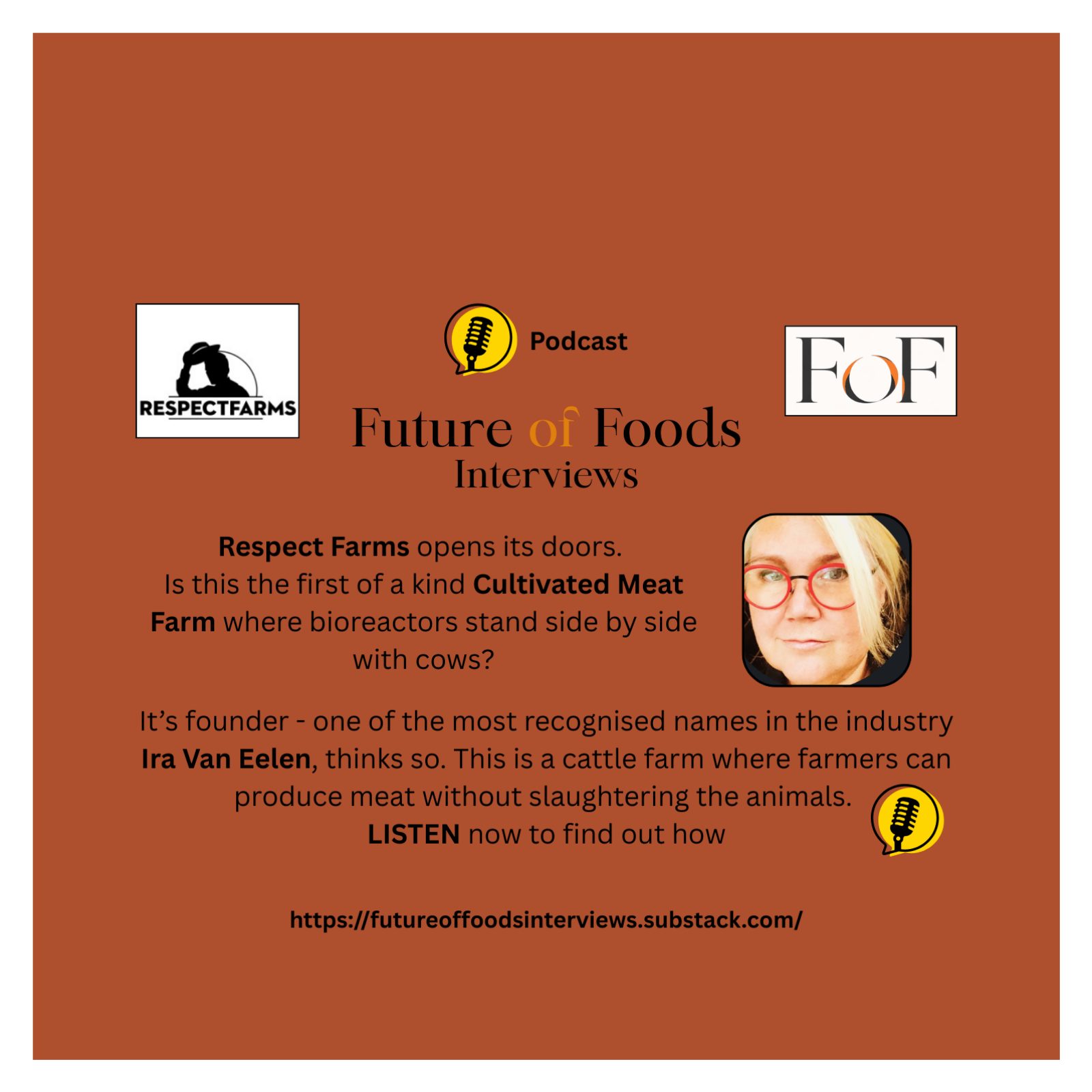 The First Ever Cultivated Meat Farm - Ira Van Eelen - Respect Farms✨ | cultivated meatfood innovation+3 | Ira van Eelen | RespectFarms | — | cultivated meatRespectFarms+5 | — | 43m 06s | |
| 4/27/26 | 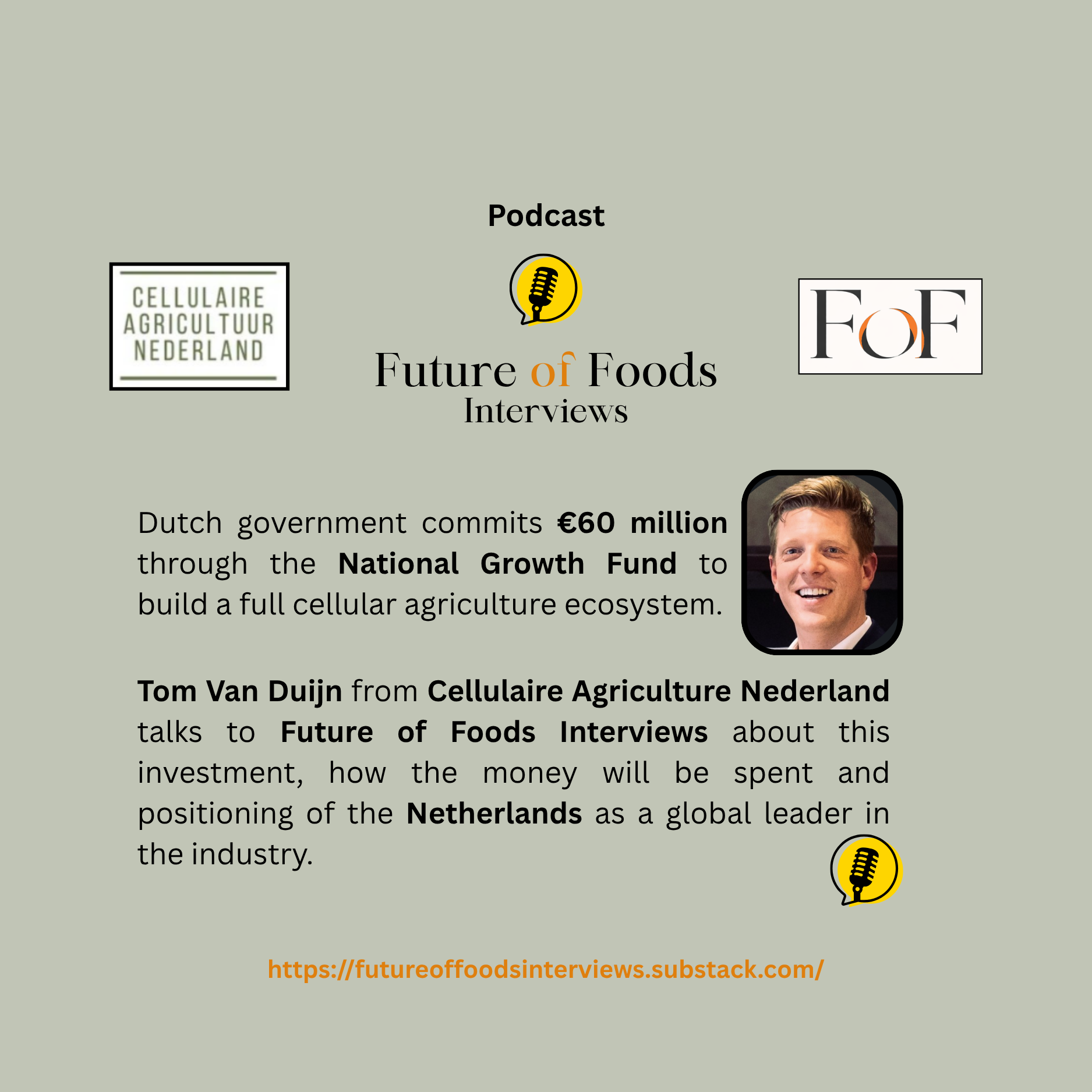 Why Netherlands is Becoming a Global Leader in Cellular Agriculture? - Tom Van Duijn✨ | cellular agriculturecultivated meat+4 | Thomas Van Duijn | Cellulaire Agricultuur NederlandDutch National Growth Fund | Netherlands | cellular agriculturecultivated meat+5 | — | 42m 30s | |
| 4/21/26 | 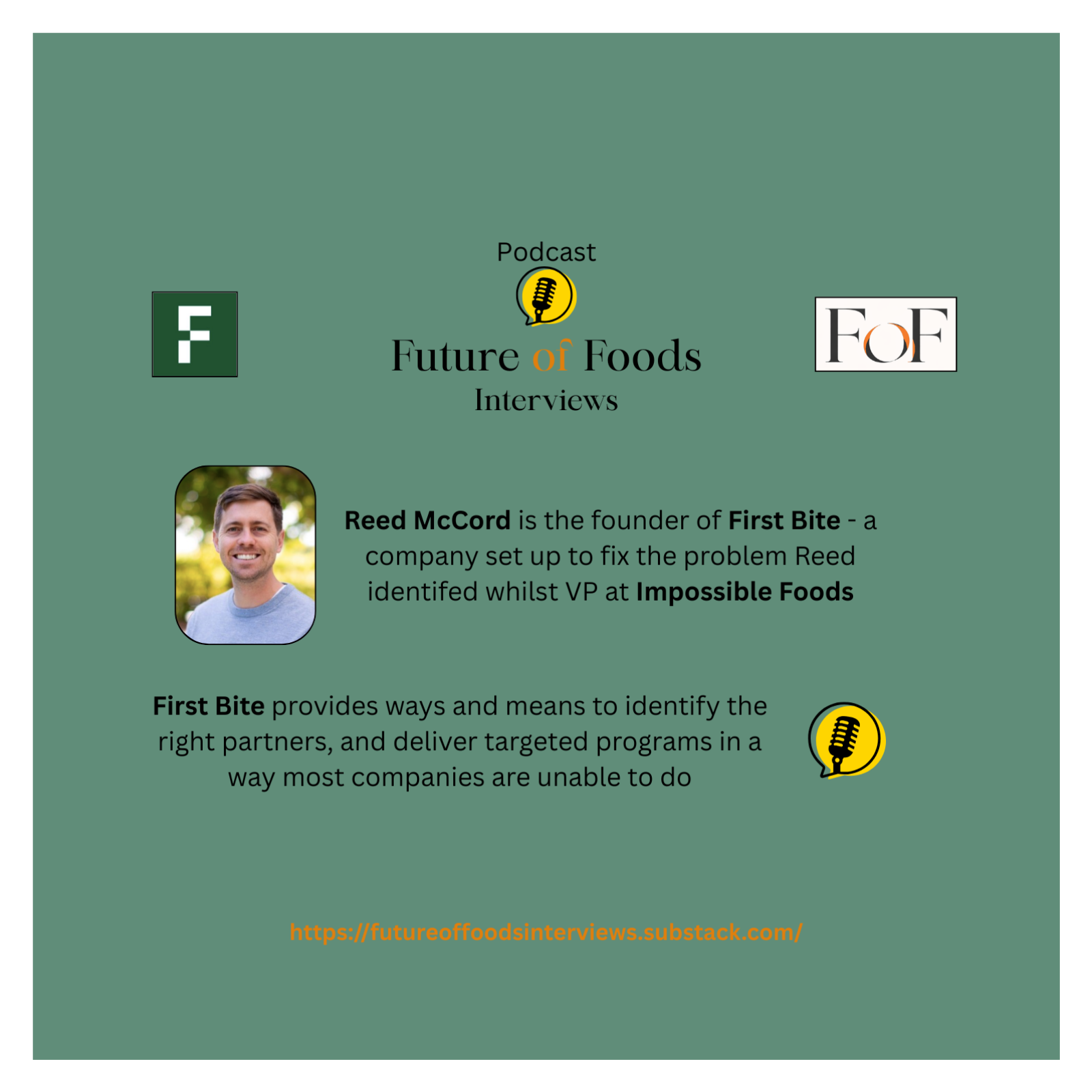 Keep Your Customers Close - Lessons Learned at Impossible Foods - Reed McCord✨ | food brandscustomer relationships+3 | Reed McCord | Impossible FoodsFirst Bite | — | foodservicecustomer feedback+3 | — | 46m 22s | |
| 3/23/26 | 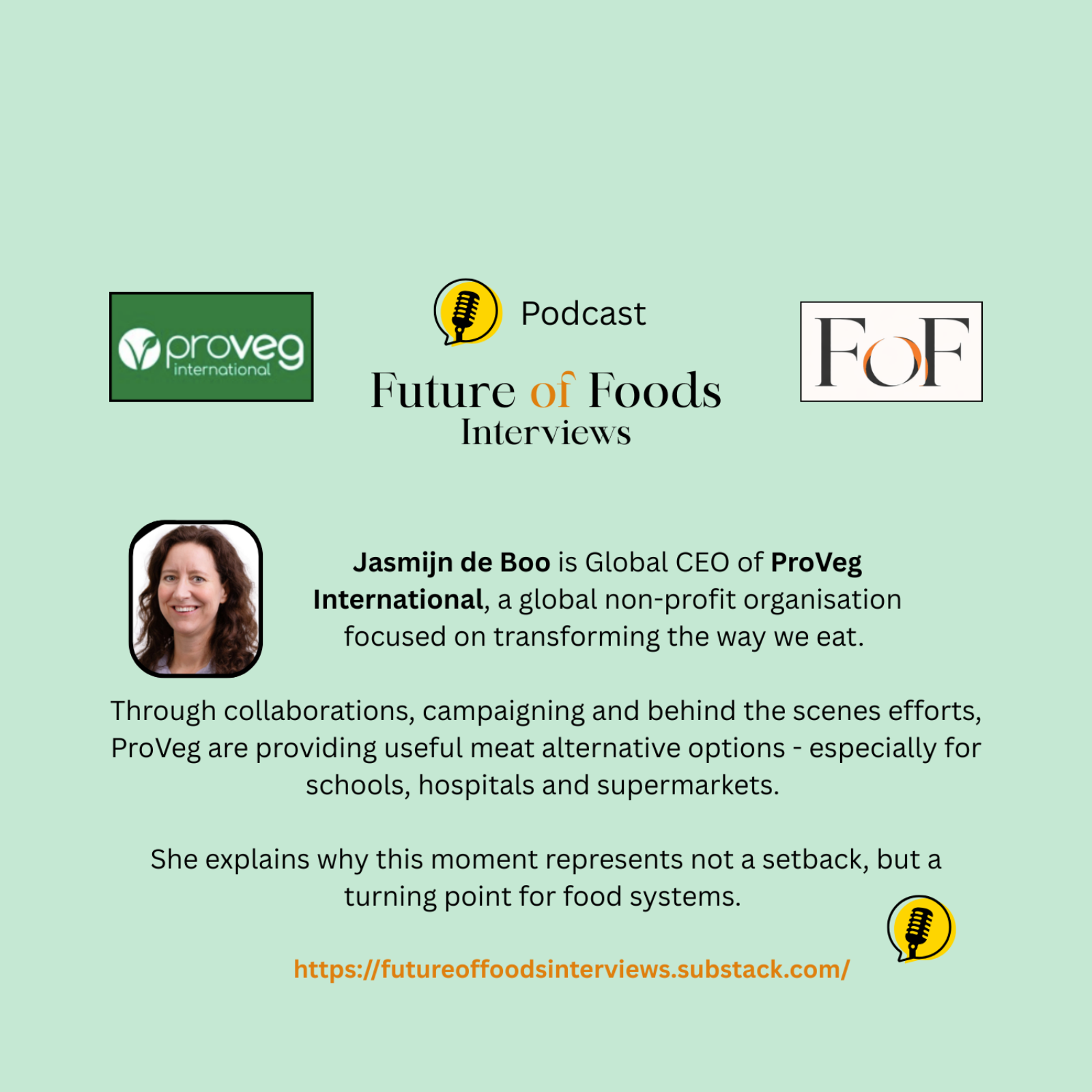 Putting Meat Alternatives on the Menu - ProVeg International - Jasmijn De Boo✨ | meat alternativesplant-based diets+4 | Jasmijn De Boo | ProVeg InternationalNHS | UKEurope+2 | alternative proteinsdiet shift+5 | — | 41m 08s | |
| 3/16/26 | 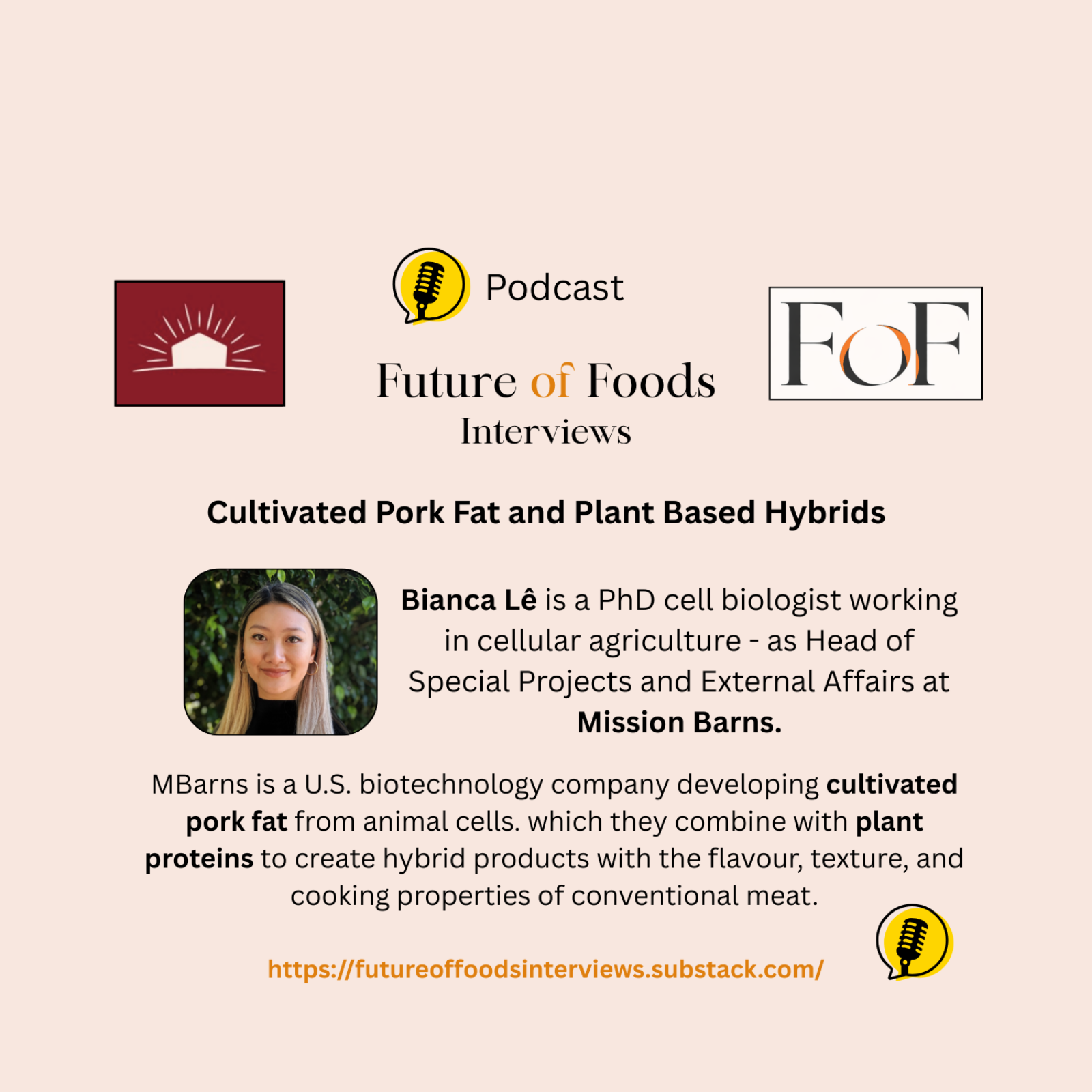 The Pork Sausage of the Future - Cultivated Pork Fat from Mission Barns - Bianca le✨ | cultivated meatcellular agriculture+3 | Bianca Lê | cultivated pork fatplant proteins+1 | — | cultivated pork fatsausage+3 | — | 29m 24s | |
| 3/10/26 | 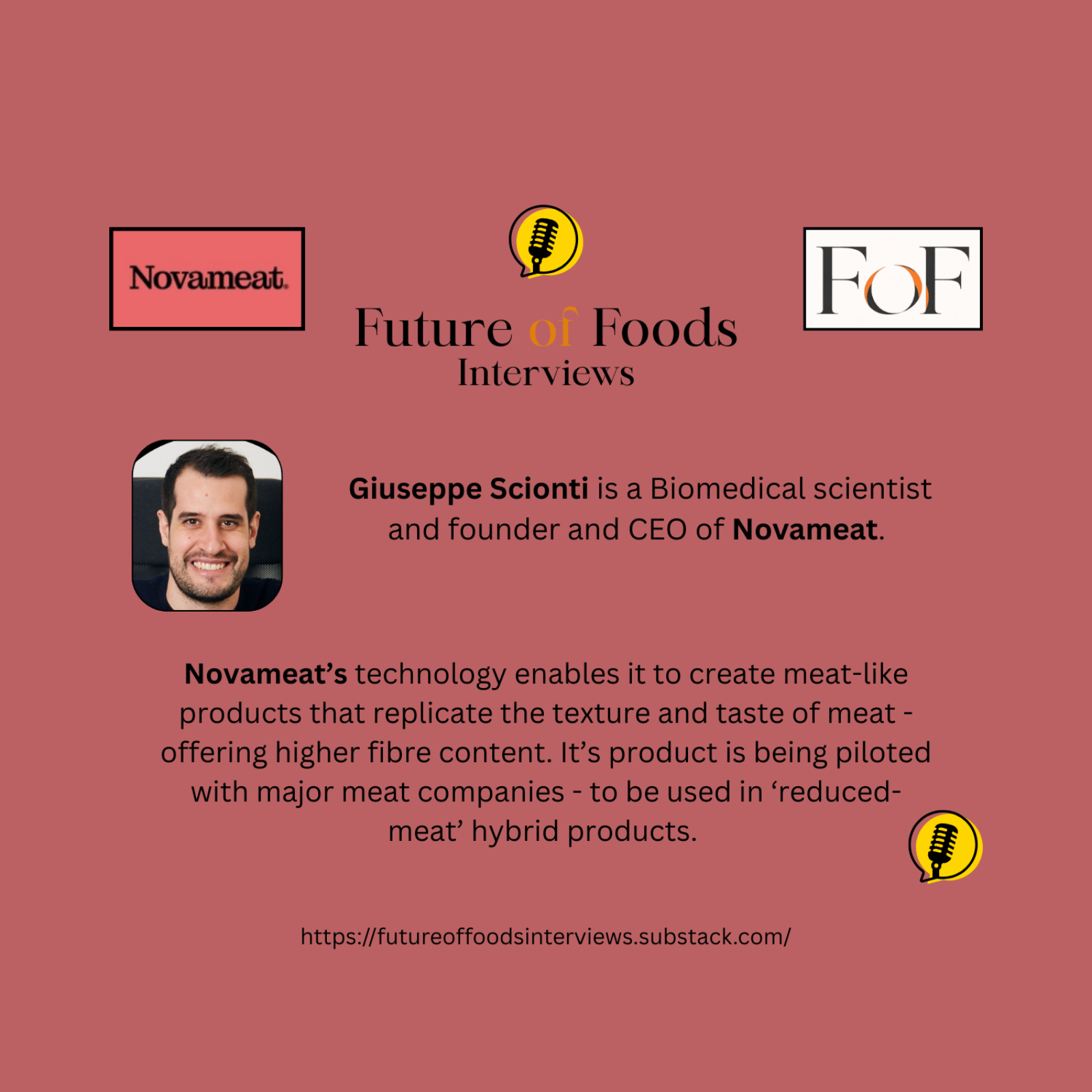 Adding a Little Extra to Traditional Meat - Giuseppe Scionti from Novameat✨ | alt proteinshybrid meat+3 | Giuseppe Scionti | whole-cut steaksshredded beef+4 | — | hybrid meatplant proteins+3 | — | 42m 12s | |
| 3/3/26 | 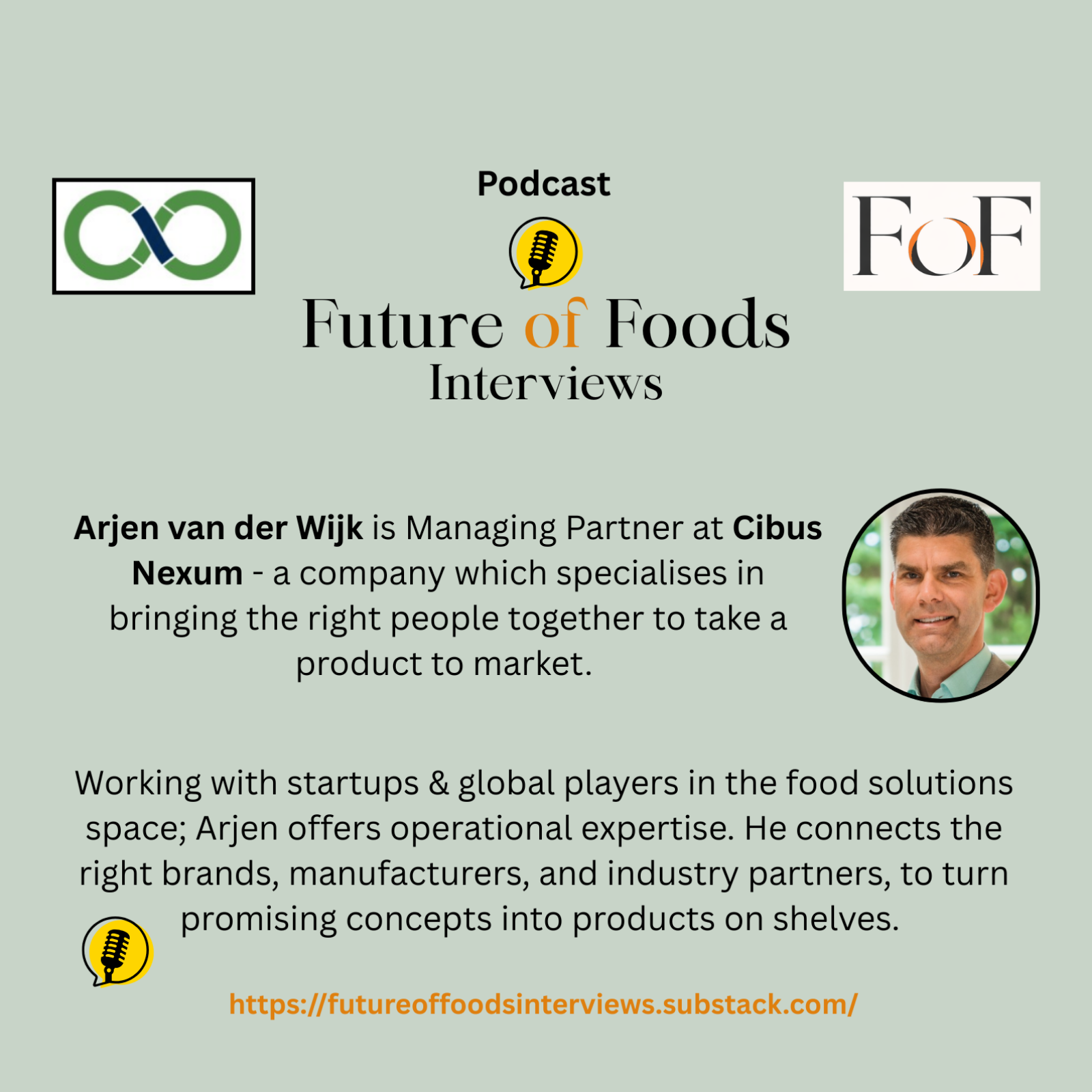 'Scaling Up' Needs The Right People - Arjen van der Wijk (Cebus Nexum)✨ | scaling food productionsupply chain management+3 | Arjen van der Wijk | Cibus Nexum | — | scalingfood industry+5 | — | 51m 16s | |
| 2/17/26 |  Holding Food Corporates to Account - Glenn Hurowitz (Mighty Earth)✨ | corporate accountabilityagriculture+3 | Glenn Hurowitz | Mighty Earth | — | deforestationsoy supply chains+3 | — | 48m 33s | |
| 2/10/26 |  How to Navigate the Novel Food, US Regulatory Maze - Gregory Jaffe✨ | U.S. regulatory systemnovel food approval+4 | Gregory Jaffe | FDAUSDA | — | novel foodregulatory maze+6 | — | 50m 38s | |
| 2/5/26 |  Cultivated Bluefin Tuna - Good for Health and the High Seas - Lou Cooperhouse (Blue Nalu)✨ | cultivated seafoodsustainable fishing+3 | Lou Cooperhouse | cultivated bluefin tunaBlueNalu | 2026 | bluefin tunacultivated seafood+5 | — | 41m 56s | |
Want analysis for the episodes below?Free for Pro Submit a request, we'll have your selected episodes analyzed within an hour. Free, at no cost to you, for Pro users. | |||||||||
| 2/3/26 | 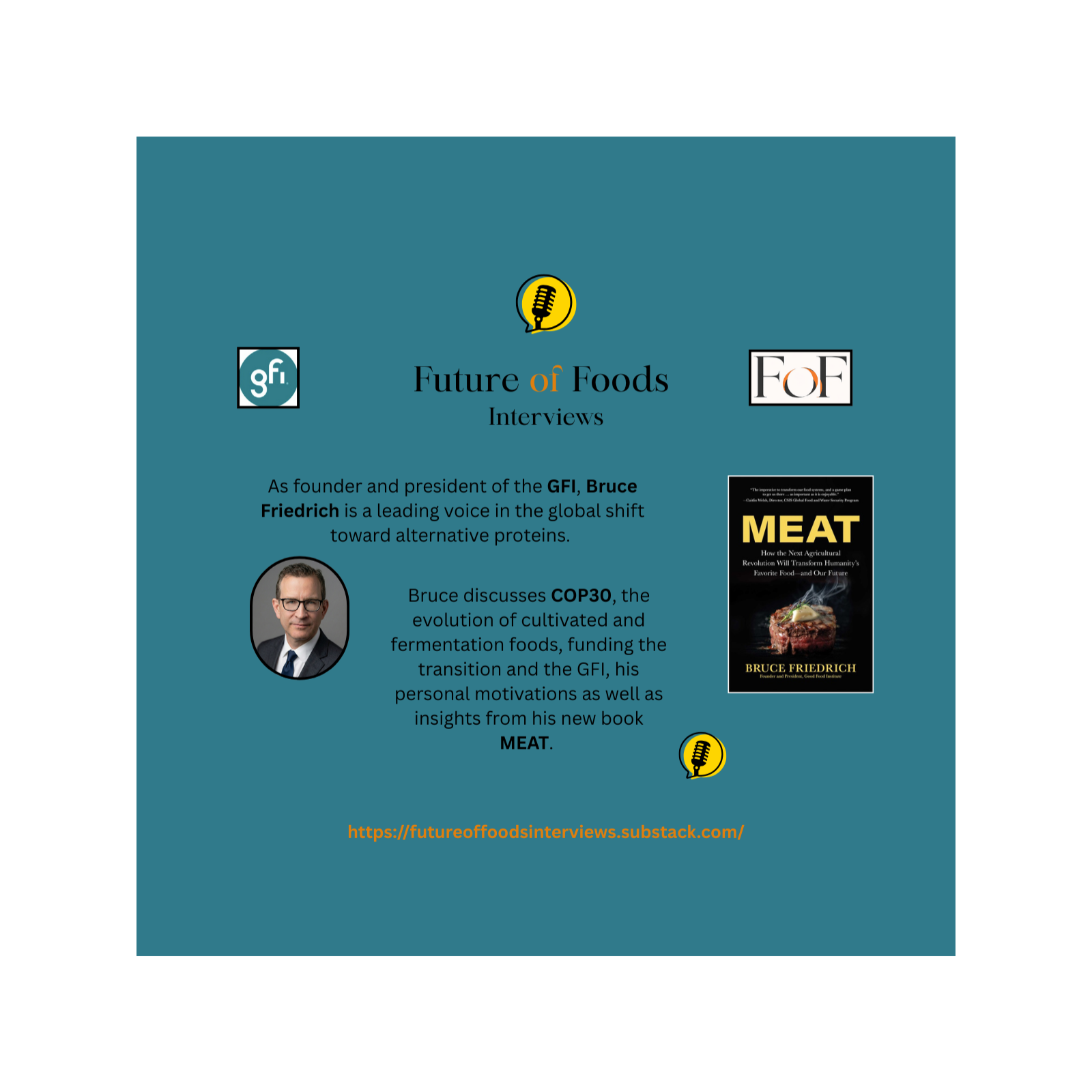 If Meat is the Problem - Is MEAT a Solution - Interview with Bruce Friedrich (GFI)✨ | alternative proteinssustainable food systems+3 | Bruce Friedrich | Good Food InstituteMEAT | global | sustainable foodalternative proteins+4 | — | 59m 44s | |
| 1/27/26 |  The Investment Case For Cultivated Proteins and Oils - Jim Mellon - Agronomics | In this wide-ranging Future of Foods interview, Jim Mellon, co-founder of Agronomics, offers a characteristically candid take on where food, capital, and climate are really headed. Mellon is bullish on precision fermentation, far less convinced by today’s plant-based category, and unapologetically ambitious about what he sees as category-defining bets. He points to Clean Food Group in Liverpool as Agronomics’ most successful investment to date, predicting fermentation-derived oils could “own the palm oil—and even olive oil—markets within a decade,” delivering deforestation-free fats with lower saturated fat and no environmental trade-off, at price parity.We discuss Liberation Labs, why the Middle East will be a major growth engine for protein, and the strategic case for licensing IP over building pilot plants. Mellon is emphatic about cultivated meat—citing BlueNalu—and the health dangers attached to conventional seafood. He also reflects frankly on portfolio wins and losses, including Meatable, investment geography, Agronomics’ share price, and why he says every pound he makes goes back into improving animal welfare.Related episodes: Meatly, Liberation Labs, FAIRR, Meatable (with Helder). | 59m 59s | ||||||
| 1/19/26 |  What Investors Need to See - Funding Novel Food Startups - Adam Bergman | In this episode of Future of Foods Interviews, Alex Crisp speaks with Adam Bergman, Managing Director at EcoTech Capital, about the realities of investing in alternative proteins and novel foods in today’s tougher market.Adam shares an investor’s perspective on where the sector stands after years of hype and correction, explaining why capital has become more selective and what that means for founders. The conversation explores why plant-based meat has struggled to reach scale, how fermentation and ingredient-led approaches may offer more practical paths forward, and what it will take for cultivated meat to regain investor confidence.Drawing on his advisory work with food, agriculture, and climate-focused companies, Adam outlines what startups consistently underestimate from manufacturing complexity and timelines to the challenge of building trust with strategic partners. He also discusses new funding models beyond traditional venture capital, the role of blended products, and why credibility and focus now matter more than ambitious storytelling. | 51m 54s | ||||||
| 1/5/26 |  How BioMass Fungi is Supplementing Meat - Paul Shapiro | In this episode of Future of Foods – Interviews, I speak with Paul Shapiro about one of the most pragmatic paths toward reducing the environmental impact of meat: biomass fungi.Rather than attempting to replace meat outright, Shapiro explains how fungal biomass, grown through fermentation, can supplement conventional meat in ways that dramatically cut cost, emissions, and resource use while preserving the sensory experience consumers expect. Drawing on his work at The Better Meat Company, he describes how mycelium, the fast-growing, protein-rich root structure of fungi, can be produced at industrial scale using existing fermentation infrastructure.A key insight from the conversation is that hybridization, not substitution, may be the fastest route to impact. By blending fungal biomass into meat products, producers can reduce reliance on animal protein without asking consumers to change behavior, taste preferences, or cooking habits. Shapiro argues that this approach avoids many of the bottlenecks facing fully plant-based or cultivated meat alternatives, particularly around cost, scale, and manufacturing complexity.The discussion also cuts through common misconceptions about fermentation-based foods. Shapiro emphasizes that biomass fungi are minimally processed, nutritionally dense, and well suited to large-scale production—making them a practical tool rather than a speculative technology. Ultimately, the episode frames biomass fungi not as a futuristic novelty, but as a quietly powerful lever for near-term change in the global food system. | 45m 07s | ||||||
| 12/16/25 |  The Evolutionary Bond - Mycelium Scaffolds with Alice Millbank. | Alex Crisp talks to Alice Millbank, to explore one of the most intriguing ideas in cultivated meat: using mycelium—the fibrous root network of fungi as a natural scaffold for growing meat.One of the biggest challenges in cultivated meat isn’t growing cells, but giving them structure. Muscle cells need something to attach to, align along, and mature on in order to become food with real texture. Alice’s research looks at how mycelium, which already forms complex, meat-like fibrous networks, could provide an edible, low-cost, and scalable solution.We talk about why mycelium and animal cells seem to bond so naturally, and whether that compatibility hints at a deep evolutionary relationship between fungi and animals. From shared biological pathways to surprisingly similar material properties.Alice shares insights from presenting her work at conferences like the International Symposium on Cultured Meat, and what it’s like to work at the cutting edge of cellular agriculture while the industry is still defining itself. We discuss sustainability, consumer acceptance, and what needs to happen for cultivated meat to move from the lab to the plate.If you’re curious about what a man-mushroom might look like or how likely "The Last of Us" scenario really is, then listen to this latest episode of Future of Foods Interviews | 46m 44s | ||||||
| 11/19/25 |  Cultivated Hamster Meat for Dogs? - Bene Meat | Roman Kriz, is CEO of Bene Meat Technologies, an ambitious and perhaps one of the most unconventional players in the cultivated-meat landscape. Bene Meat recently captured attention by using hamster-derived cell lines to produce affordable, scalable cultivated meat for pets - a strategy Roman says is rooted in scientific pragmatism, regulatory clarity, and a relentless focus on cost reduction.Roman breaks down why these specific cells are uniquely suited for industrial-scale production, how the company has navigated early EU regulatory pathways, and why Bene Meat is confident it will be selling cultivated meat in the European Union as early as next year.Bene Meat plans to conduct human tastings in 2026, (not #hamster lines) a bold move that signals confidence not only in safety and functionality, but in the sensory potential of their product.Roman offers transparent and frank look at the scientific decisions, business models, and unexpected breakthroughs that are bringing cultivated meat closer to everyday consumers.Please like and subscribe - you can support the podcast here https://www.paypal.com/donate/?hosted_button_id=ABYF9L6UY3A5Y | 47m 08s | ||||||
| 10/20/25 |  How Much is Meat and Dairy Spending on Greenwashing - Nusa Urbancic | Future of Foods Interviews speaks to Nusa Urbancic, CEO of the Changing Markets Foundation, where she leads investigations exposing how the meat and dairy industries deploy misleading science, aggressive lobbying and mass-online disinformation campaigns to delay action on climate, health and sustainable food systems. Her team’s landmark report, The New Merchants of Doubt, analysed 22 of the largest global meat and dairy companies and revealed how they invest far more in green-wash advertising than in emissions-reducing innovations. Under her direction the Foundation also commissioned Truth, Lies and Culture Wars, a social-listening study tracing nearly one million meat-industry-aligned misinformation posts over 14 months.Listen now to find out how, where, how much and who. | 50m 26s | ||||||
| 10/14/25 |  Investing Into Alt Proteins - How Cargill is Shifting the Dial for Agribusinesses. | In this episode of Future of Foods Interviews, host Alex Crisp speaks with Guilhem Jarmin, Category & Portfolio Solutions Director Meat & Dairy Alternatives at Cargill, about the company’s growing role in alternative proteins and the transformation of global food systems. Guilhem shares how one of the world’s largest agribusinesses is investing in plant-based and cultivated protein innovation, partnering with startups, and rethinking supply chains to reduce environmental impact. Together, they explore what it takes for major corporations to drive a fair and scalable food transition and why collaboration between industry, science, and policy is essential for the future of sustainable protein. | 35m 38s | ||||||
| 10/9/25 |  Making Protein from Thin Air - Sonja Billerbeck | In this episode of Future of Foods Interviews, Alex speaks to Dr. Sonja Billerbeck, synthetic biologist and researcher at Imperial College London, whose groundbreaking work is redefining how we produce food at the cellular level. Sonja’s research explores cell cultivation and gas-based precision fermentation, using hydrogen-oxidizing bacteria to convert carbon dioxide into nutritious biomass — a process that could one day decouple food production from land, water, and climate constraints.Sonja discuss how technologies could revolutionize global food systems, Bezos Earth Fund financing, and the challenges of scaling cell-based innovations, and the ethical questions that come with reprogramming biology for human use. | 44m 18s | ||||||
| 10/6/25 |  Can plant based burgers taste better than meat? - Caroline Cotto from Nectar | In this episode of Future of Foods Interviews, Alex talks to Caroline Cotto, co-founder of NECTAR, the world’s first sensory intelligence platform for alternative proteins. NECTAR is reshaping how the industry measures success — not by novelty or nutrition alone, but by what truly wins over consumers: taste.Caroline shares insights from NECTAR’s latest Taste of the Industry 2025 report, which blind-tested over 120 plant-based products with thousands of everyday eaters. The findings??? Before you launch a product make sure it tastes great. The future of food hinges on flavour.We explore how NECTAR’s data-driven approach is helping brands close that “taste gap,” what it means for scaling alternative proteins, and why the next wave of growth depends on sensory science as much as sustainability. Listen to the lastest episode - subscribe and support. | 44m 01s | ||||||
| 9/30/25 | 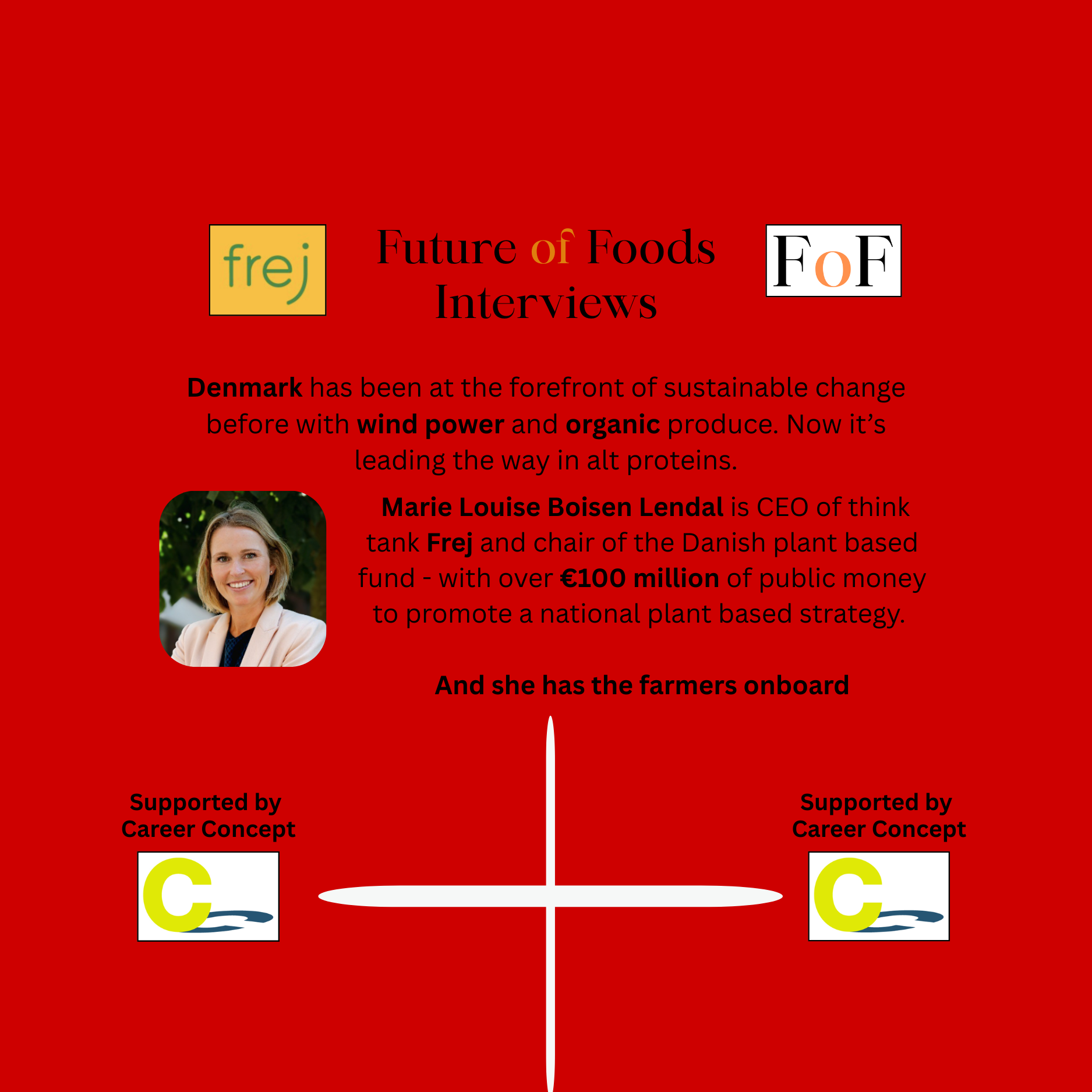 Denmark spends over €100 million on plant based transition - Marie Louise Boisen Lendal | The Danish government committed one billion kroner to support the development of plant-based foods, a landmark decision that positioned sustainability and innovation at the core of its agricultural future. While the country has long been celebrated for pioneering wind power and building one of the most advanced organic sectors in the world, the push towards plant-based agriculture signals recognition that diets, too, are central to tackling the climate crisis.Frej, a Danish think tank, has been a crucial voice in shaping the political and cultural conversation around this strategy. Marie Louise Boisen Lendal is the CEO of Frej and now Chair of the plant based strategy fund. Listen now to this episode of Future of Foods interviews to find out how she got the farmers on board with the strategy - and how the money will be spent. | 46m 15s | ||||||
| 9/16/25 | 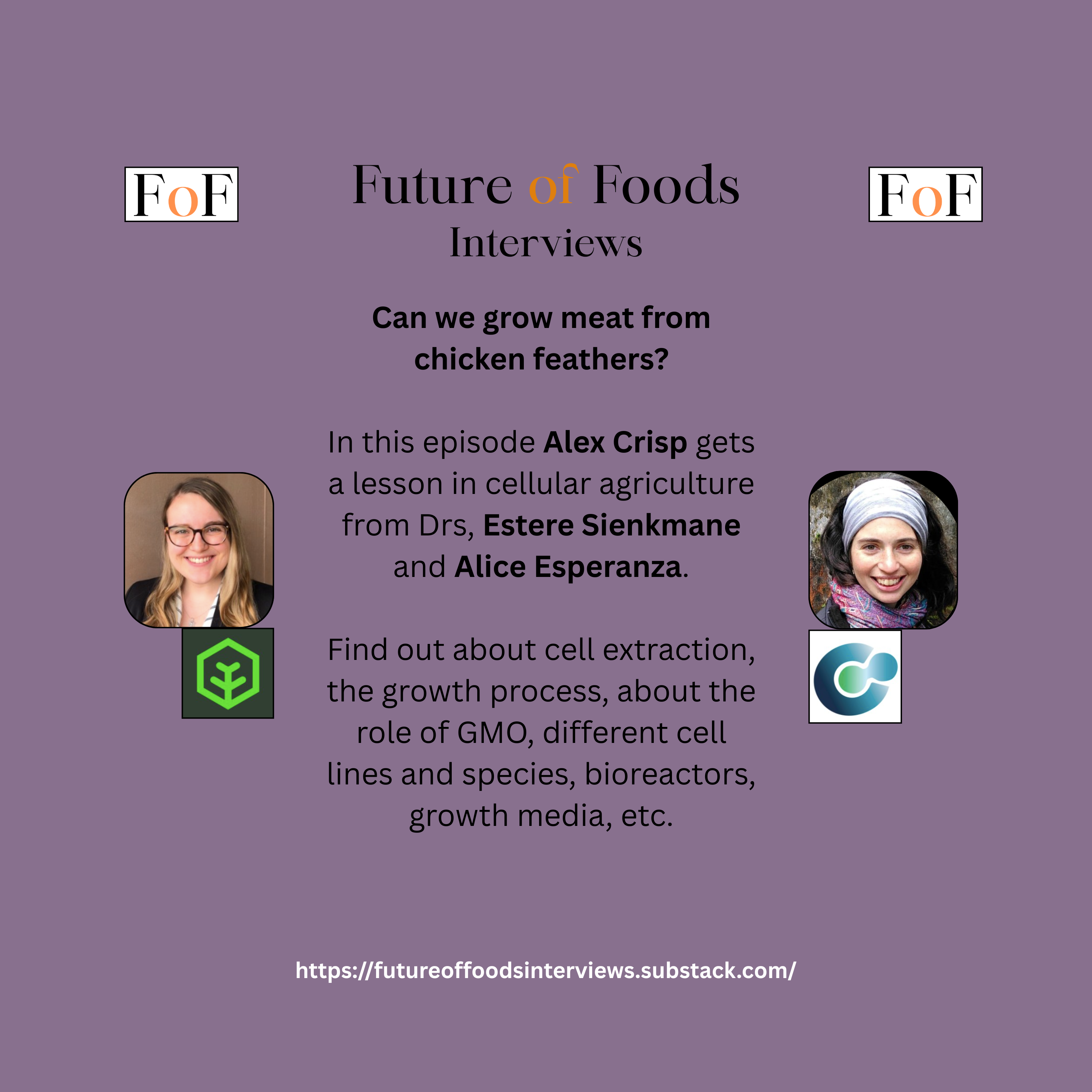 How Does Cultivated Meat Grow? - Lessons from Dr Sienkmane and Dr Esperanza | In this episode of Future of Foods Interviews, the podcast where we explore the science, policy, and people shaping the future of food, I speak to two leading voices in the field: Dr. Estere Sienkmane and Dr. Alice Esperanza. Together, they give me a crash course in the nuts and bolts of cellular agriculture - how it all works.For those new to the concept, cellular agriculture is the production of agricultural products directly from cells, whether meat, milk, or other proteins, rather than from slaughtered animals or industrial farming. It promises a way to deliver the foods we love while dramatically reducing land use, greenhouse gas emissions, and animal suffering. The science is complex but the idea is straight forward enough: how do we grow meat from animal cells - at scale, what technical hurdles remain, how much should we worry about GMO. In this conversation, Dr. Sienkmane and Dr. Esperanza share the science - the nuts and bolts of growing meat. | 57m 20s | ||||||
| 8/26/25 | 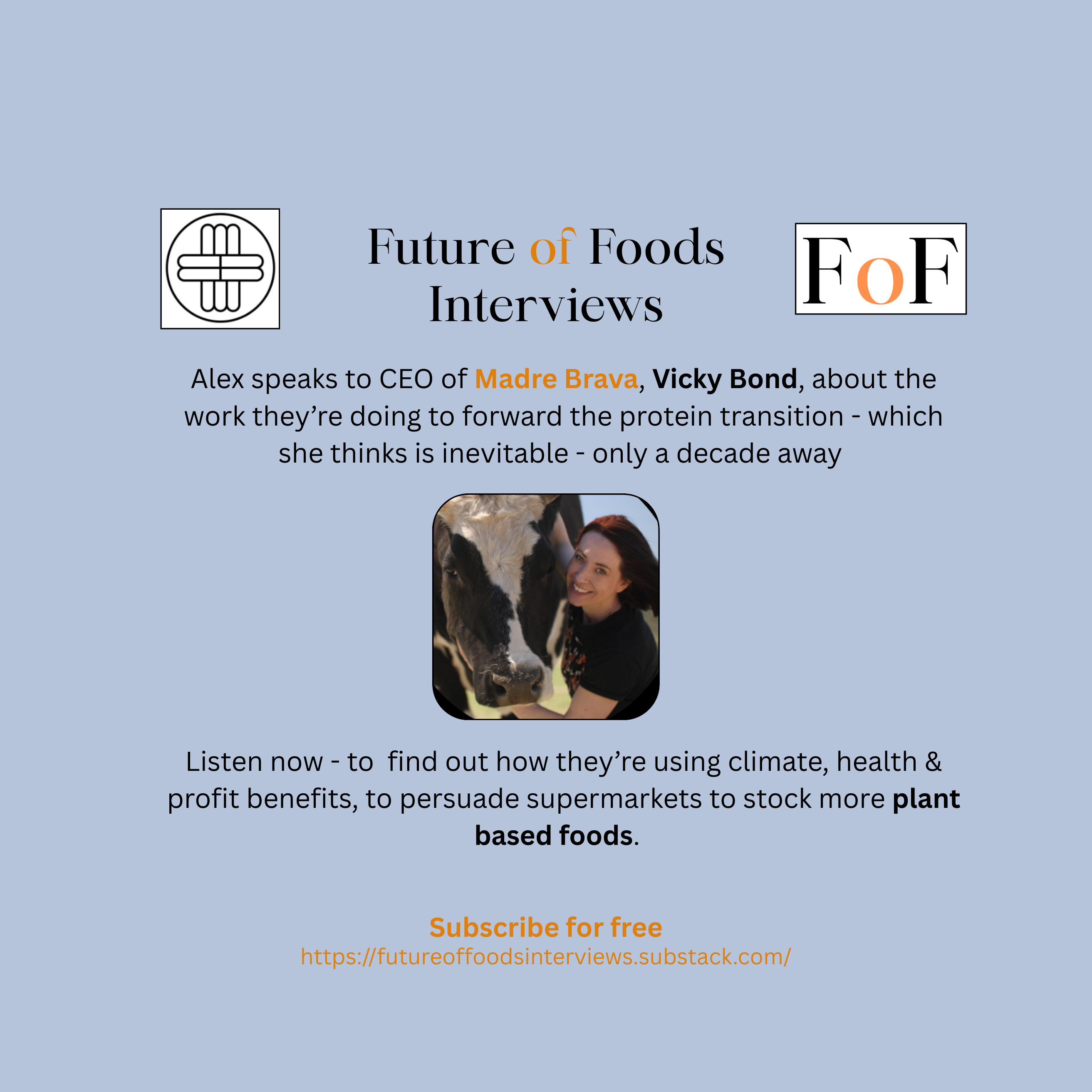 Protein Transition Via Supermarket Shelves - Madre Brava | Alex Crisp, host of Future of Foods Interviews, speaks to Madre Brava's CEO, Vicky Bond. Vicky, who is a former vet, thinks a transition to plant based proteins will happen within a decade. Madre Brava is spearheading this, by urging supermarkets and global food corporations to rebalance their offerings toward plant-based proteins.Their research shows that if six major retailers (including Tesco, Lidl, Carrefour, Ahold Delhaize, CP All, and Sodexo) achieve a 50% shift to plant-based protein by 2030, annual greenhouse-gas emissions could drop by 31.6 million tonnes, the equivalent of removing 25 million cars. Such a shift would also save enormous amounts of land and water.In the UK, organizations working on the protein transition have persuaded Lidl GB to commit to having 25% of its protein offerings plant-based by 2030 (up from 14%), while also doubling plant-based dairy and butter lines - moves that are better for health, climate, and profits. Across Europe, Ahold Delhaize has pledged protein targets across its brands, and in Germany, Madre Brava’s analysis reveals a 30% protein shift could reduce emissions while saving supermarkets €156 per tonne of CO₂ and over €2.5 billion in total.Listen to the full interview to find out how MB are going about persuading supermarkets to transition and why Vicky thinks the protein shift is inevitable. | 44m 55s | ||||||
| 7/23/25 | 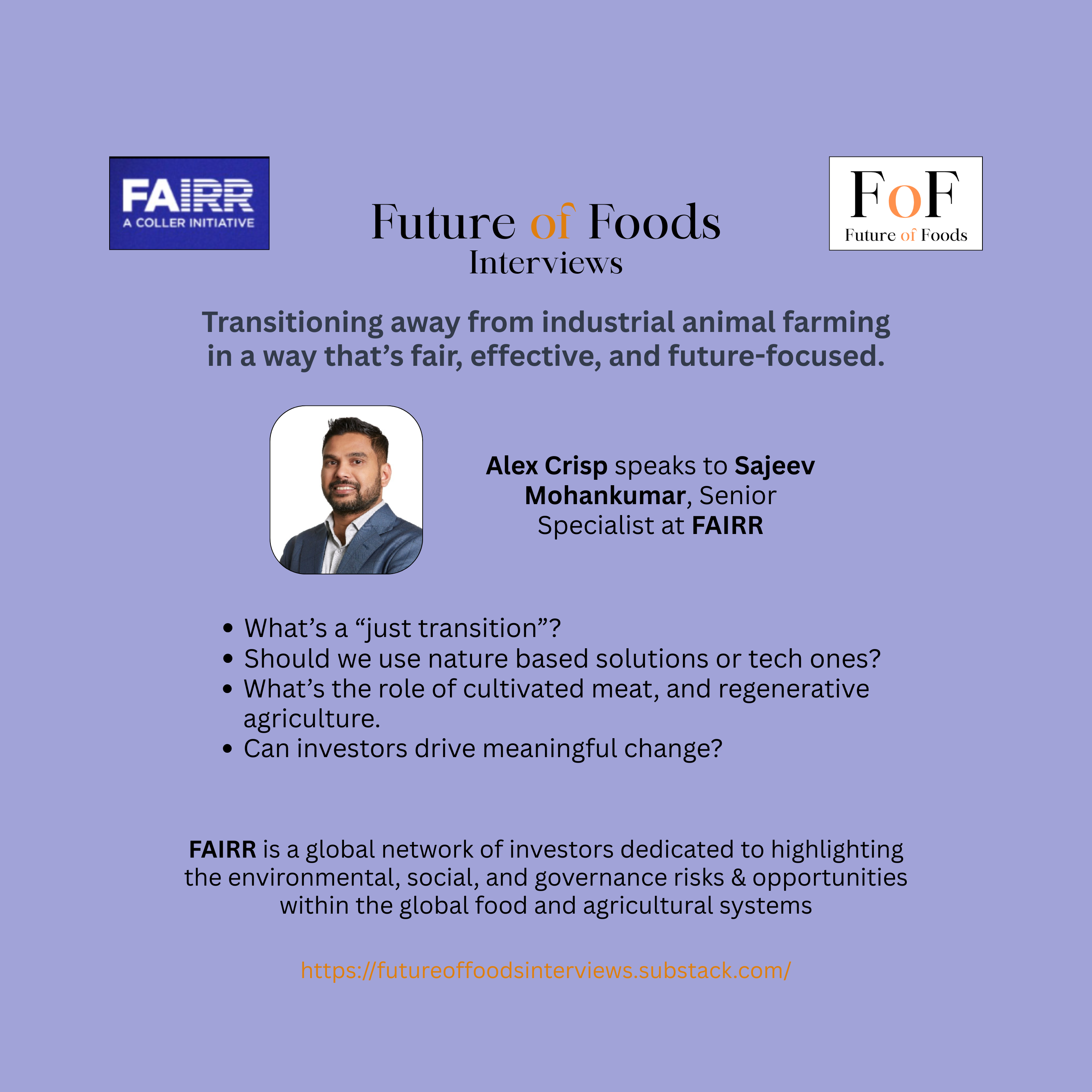 Transitioning Away from Intensive Animal Farming - FAIRR Initiative | In this episode of Future of Foods Interviews, Alex speaks to Sajeev Mohankumar from FAIRR (Farm Animal Investment Risk & Return) to explore the critical intersections of climate, finance, and the future of food. Sajeev brings deep insight into how large investors are reshaping the global food system by supporting innovations like cultivated meat, regenerative agriculture, and nature-based climate solutions. We discuss FAIRR’s latest findings on emissions from animal farming, the imbalance between tech and nature-based investment, and what a “just transition” means for farmers and food companies. This episode looks at where capital is flowing, what’s holding alternative proteins back, and how financial frameworks are shifting to better support sustainable and ethical food production.FAIRR is dedicated to highlighting the environmental, social, and governance (ESG) risks and opportunities embedded in global food and agricultural systems - it connects 400+ investors, representing over $70–80 trillion in assets under management, providing them with data and frameworks to integrate concerns into investment decisions. Buying me a coffee - donations to https://www.paypal.com/donate/?hosted_button_id=ABYF9L6UY3A5Y | 51m 00s | ||||||
| 6/30/25 | 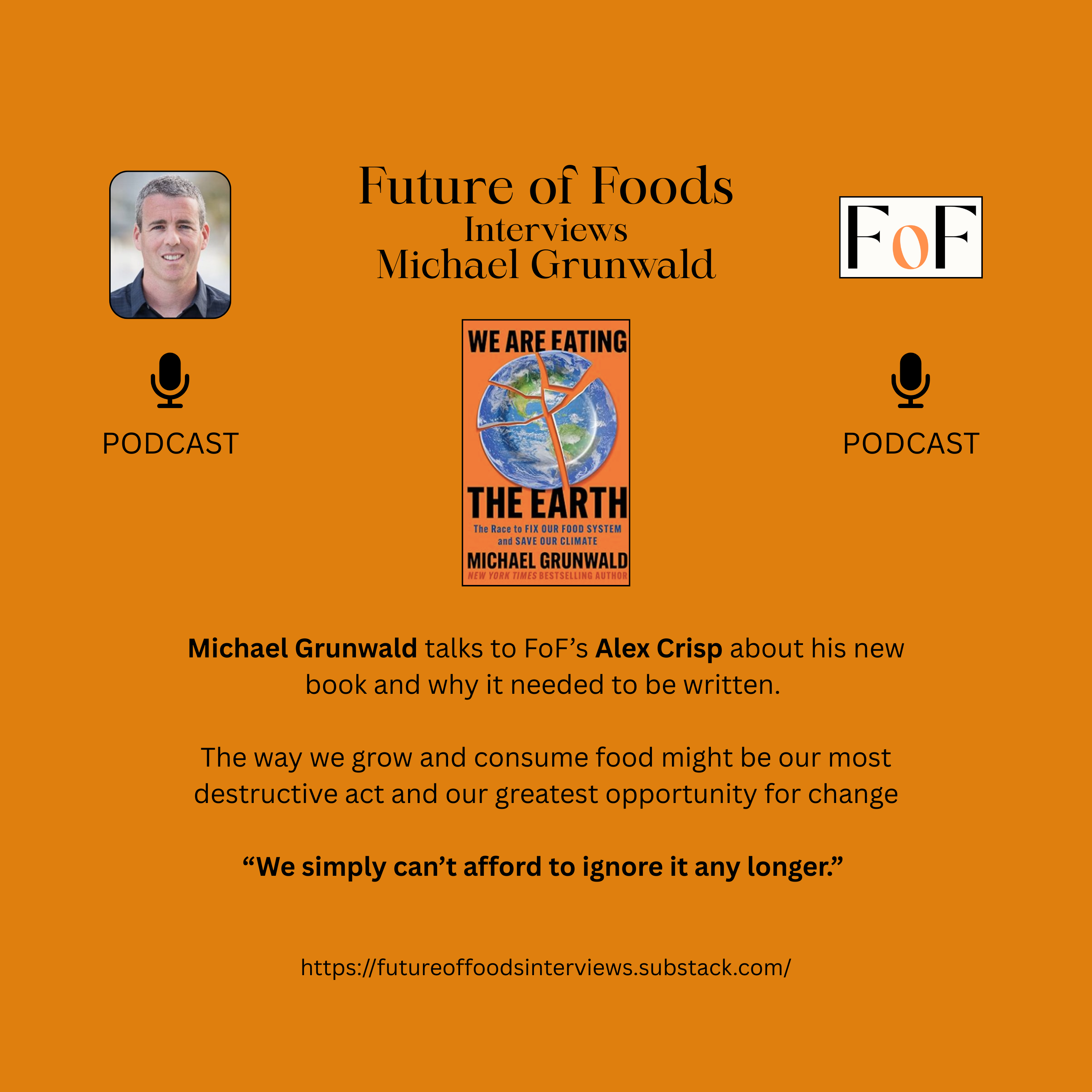 We Are Eating the Earth - A FoF Interview with Michael Grunwald | In this 60th episode of FoF Interviews, host Alex Crisp speaks with journalist and author Michael Grunwald about his devastatingly important new book, We Are Eating the Earth. Known for his deep investigative reporting and thought-provoking storytelling in works like The Swamp and The New New Deal, Grunwald now turns his attention to one of the most urgent—and often ignored—drivers of climate change: the global food system.In this conversation, Grunwald explains how what we eat and how we produce it is contributing to deforestation, biodiversity loss, water scarcity, and nearly one-third of global greenhouse gas emissions. From the hidden costs of meat production to the role of government subsidies and the future of sustainable farming, he reveals a complex, interconnected system with massive implications for the planet.But this isn’t a story of doom. Grunwald offers insight into the options and changes - political, technological, and cultural - that could help shift us toward a more sustainable and equitable way of feeding the world.If you wish to support the work of FoF Interviews you can make a donation :-) https://www.paypal.com/donate/?hosted_button_id=ABYF9L6UY3A5Y | 57m 15s | ||||||
Showing 25 of 85
Pitch Fit is a Pro feature
See how bookable this show is for guests, which brands already advertise, the per-episode ad value, and the best-fit guest and sponsor profile. The numbers are blurred on the free plan.
How readily this show books outside guests like you.
How proven this show is for host-read sponsorships.
For Guests
ProFor Advertisers
ProUpgrade to Pro to unlock guest cadence, sponsor categories, fit scores, and per-episode ad value for this show.
Chart Positions
3 placements across 3 markets.
Chart Positions
3 placements across 3 markets.