
On the show
From 28 epsHost
Recent guests
Recent episodes
What ‘Grand Theft Auto’ Tells Us About America
Oct 16, 2026
55m 15s
Is Crypto Dead? Or More Influential Than Ever?
Oct 9, 2026
51m 25s
An Argument Against AI Doom
Oct 2, 2026
59m 31s
We’re All Being Recorded. What Do We Do About It?
Sep 25, 2026
54m 50s
Lina Khan on the AI-Safety Panic
Sep 18, 2026
34m 37s
Insights from recent episode analysis
Audience Interest
Podcast Focus
Publishing Consistency
Platform Reach
Insights are generated by CastFox AI using publicly available data, episode content, and proprietary models.
Most discussed topics
Brands & references
Total monthly reach
Blended from 1 signal.
Built from
By chart position
- 🇺🇸United States · TechnologyHOME#3442K to 260K
- 🇨🇦Canada · Technology#242.7K to 17K
- 🇲🇽Mexico · Technology#202.5K to 16K
- 🇬🇧United Kingdom · Technology#681.2K to 7.8K
- 🇦🇺Australia · Technology#68621 to 3.9K
- Per-Episode Audience
Est. listeners per new episode within ~30 days
51K to 321K🎙 Daily cadence·43 episodes·Last published 3d ago - Monthly Reach
Unique listeners across all episodes (30 days)
171K to 1.1M🇺🇸81%🇨🇦5%🇲🇽5%+6 more - Active Followers
Loyal subscribers who consistently listen
69K to 428K
Market Insights
Platform Distribution
Reach across major podcast platforms, updated hourly
Total Followers
—
Total Plays
—
Total Reviews
—
* Data sourced directly from platform APIs and aggregated hourly across all major podcast directories.
Social Links & Contact
Official channels & resources
Official Website
Login
RSS Feed
Login
| Date | Episode | Topics | Guests | Brands | Places | Keywords | Sponsor | Length | |
|---|---|---|---|---|---|---|---|---|---|
| 10/16/26 |  What ‘Grand Theft Auto’ Tells Us About America | It’s not just stealing cars and running from cops anymore. In the newest “Grand Theft Auto” installment—13 years and an estimated billions of dollars in the making—people in a fictionalized version of Florida can exercise, drink smoothies, pet their dog, go to the club, and so much more. The main characters are in a relationship and players will have to tend to that too. “Galaxy Brain” host Charlie Warzel talks to the gaming journalist Chris Plante about why the details of this game matter, the controversies it may unleash, the weirdest things he’s seen happen in the game, and what “Grand Theft Auto” tells us about America in 2026. Get more from your favorite Atlantic voices when you subscribe. You’ll enjoy unlimited access to Pulitzer-winning journalism, from clear-eyed analysis and insight on breaking news to fascinating explorations of our world. Atlantic subscribers also get access to exclusive subscriber audio in Apple Podcasts. Subscribe today at TheAtlantic.com/Listener. Learn more about your ad choices. Visit podcastchoices.com/adchoices | 55m 15s | ||||||
| 10/9/26 |  Is Crypto Dead? Or More Influential Than Ever? | The hype over cryptocurrency may have faded since the fall of Sam Bankman-Fried and FTX, but beneath the surface, a lot of real money is involved, including the millions being funneled into the American political system. The actor turned documentarian Ben McKenzie joins “Galaxy Brain” host Charlie Warzel to talk about the current state of cryptocurrency, why he became interested in investigating it, and how the crypto craze influenced some people’s enthusiasm, or lack thereof, about AI. Get more from your favorite Atlantic voices when you subscribe. You’ll enjoy unlimited access to Pulitzer-winning journalism, from clear-eyed analysis and insight on breaking news to fascinating explorations of our world. Atlantic subscribers also get access to exclusive subscriber audio in Apple Podcasts. Subscribe today at TheAtlantic.com/Listener. Learn more about your ad choices. Visit podcastchoices.com/adchoices | 51m 25s | ||||||
| 10/2/26 |  An Argument Against AI Doom | The flood of reports about AI agents escaping and hacking websites can feel scary. But is this actually just a matter of needing better security to match the evolving technology? Zack Korman, the CEO of Embroidery, thinks so. He works in cybersecurity and argues that “rogue” AI agents are less frightening and complicated than they may seem. “Galaxy Brain” host Charlie Warzel talks to Korman about how companies and institutions should up their cyber defenses, why the so-called AI doomers are frustrating him. - - - Get more from your favorite Atlantic voices when you subscribe. You’ll enjoy unlimited access to Pulitzer-winning journalism, from clear-eyed analysis and insight on breaking news to fascinating explorations of our world. Atlantic subscribers also get access to exclusive subscriber audio in Apple Podcasts. Subscribe today at TheAtlantic.com/Listener. Learn more about your ad choices. Visit podcastchoices.com/adchoices | 59m 31s | ||||||
| 9/25/26 |  We’re All Being Recorded. What Do We Do About It? | Meta has been selling millions of its camera-equipped glasses, making all of us fodder for content creation—when we’re on the street, at the store, and in our workplaces. Host Charlie Warzel talks with Verge reporter Mia Sato about how regular people are being impacted as these glasses increase in use, the backlash to Flock cameras, and what happens in a world where we’re always being recorded. Get more from your favorite Atlantic voices when you subscribe. You’ll enjoy unlimited access to Pulitzer-winning journalism, from clear-eyed analysis and insight on breaking news to fascinating explorations of our world. Atlantic subscribers also get access to exclusive subscriber audio in Apple Podcasts. Subscribe today at TheAtlantic.com/Listener. Learn more about your ad choices. Visit podcastchoices.com/adchoices | 54m 50s | ||||||
| 9/18/26 |  Lina Khan on the AI-Safety Panic | As “rogue” AI agents hack systems and leaders warn of catastrophe, who should be held responsible? The former FTC Commissioner Lina Khan argues that the United States already has a lot of the regulatory tools needed. In this live episode from The Atlantic Festival, the “Galaxy Brain” host Charlie Warzel talks with Khan about why the AI-alarmism conversation feels a little off, how money affects politics and regulation, and some of the ways she would be dealing with AI if she were still the head of the FTC. - - - Get more from your favorite Atlantic voices when you subscribe. You’ll enjoy unlimited access to Pulitzer-winning journalism, from clear-eyed analysis and insight on breaking news to fascinating explorations of our world. Atlantic subscribers also get access to exclusive subscriber audio in Apple Podcasts. Subscribe today at TheAtlantic.com/Listener. Learn more about your ad choices. Visit podcastchoices.com/adchoices | 34m 37s | ||||||
| 9/11/26 | 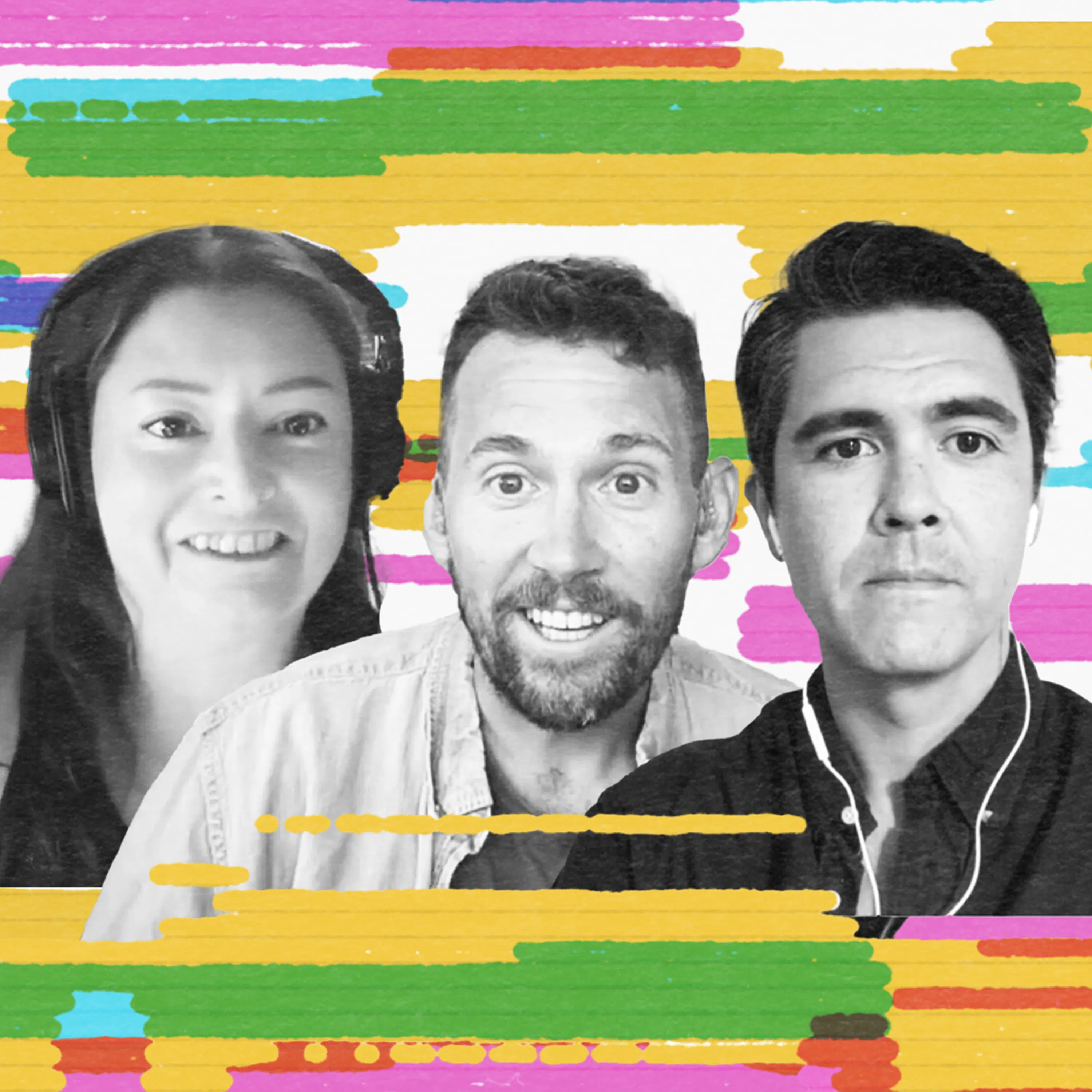 Is AI Writing Inevitable? | AI-infused writing is suddenly everywhere: not just in automated email responses or meeting summaries, but in books and even the pages of mainstream newspapers. When an editor at The Wall Street Journal recently defended an op-ed that was 100 percent written by AI, it felt like a possible turning point, at which people are no longer apologizing. So is AI-assisted writing in its post-shame era? What does that mean for the way we process, communicate, and think? Host Charlie Warzel talks to the journalists Elizabeth Spiers and Teddy Brown about being a writer when the robots are coming for you, and how technology does not have to be inevitable. Get more from your favorite Atlantic voices when you subscribe. You’ll enjoy unlimited access to Pulitzer-winning journalism, from clear-eyed analysis and insight on breaking news to fascinating explorations of our world. Atlantic subscribers also get access to exclusive subscriber audio in Apple Podcasts. Subscribe today at TheAtlantic.com/Listener. Learn more about your ad choices. Visit podcastchoices.com/adchoices | 46m 07s | ||||||
| 9/7/26 | AI futuresingularity+4 | — | The Atlantic | — | singularityAI+4 | — | 19m 07s | ||
| 9/4/26 | masculinitypurpose+3 | Jon Ronson | The Atlantic | — | masculinitymen+5 | — | 50m 27s | ||
| 8/28/26 | technologyrelationship with technology+3 | Julie Beck | The AtlanticHow to Touch Grass | — | scrolling backlashtechnology+5 | — | 1h 09m 06s | ||
| 8/7/26 | social mediaidentity+3 | Kathryn Jezer-Morton | The Atlantic | — | social mediaauthenticity+3 | — | 51m 36s | ||
Want analysis for the episodes below?Free for Pro Submit a request, we'll have your selected episodes analyzed within an hour. Free, at no cost to you, for Pro users. | |||||||||
| 7/31/26 |  The Former ‘Voice of Google’ Speaks Out | Tech companies like Google famously started with a culture and psychology centered on doing good and changing the world. But as Google expanded, it had to adapt to its growing money, power, and influence, and Claire Stapleton, who worked there during this hinge point, describes how that felt from the inside. In this episode, Stapleton talks through her perspective about what happened to the company—and how for her, the work went from being inspiring and mission-driven to what she came to feel was a “bullshit job.” Learn more about your ad choices. Visit podcastchoices.com/adchoices | 52m 51s | ||||||
| 7/24/26 | AIgenerative AI+4 | Hana KirosAlex Reisner | The Atlantic | — | AIelectronics+7 | — | 41m 49s | ||
| 7/17/26 | World Cupsoccer+4 | Roger Bennett | Men in BlazersThe Atlantic | United States | World Cupsoccer+5 | — | 33m 32s | ||
| 7/10/26 | optimizationmodern life+3 | Ian Bogost | The AtlanticThe Small Stuff | — | optimizationefficiency+3 | — | 45m 15s | ||
| 7/3/26 | Elon Muskbillionaire culture+3 | Quinn SlobodianBen Tarnoff | The AtlanticMuskism: A Guide for the Perplexed | — | Elon MuskMuskism+3 | — | 49m 58s | ||
| 6/26/26 | readingdistractions+4 | John Paul Brammer | The Atlantic | — | readingdistractions+5 | — | 46m 42s | ||
| 6/19/26 | AItechnology+3 | Cory Doctorow | The Atlantic | — | AI boomenshittification+3 | — | 48m 47s | ||
| 6/12/26 | robot umpirestechnology in baseball+4 | Jimmy O’Brien | ABS pitch-tracking systemJomboy Media+2 | — | robot umpiresbaseball+5 | — | 38m 15s | ||
| 6/5/26 | electionsattention economy+4 | Rob Flaherty | Kamala Harris’s campaignThe Atlantic+3 | — | electionsattention economy+5 | — | 43m 57s | ||
| 5/29/26 | data centersAI+3 | Jael Holzman | The Atlantic | — | data centersAI boom+4 | — | 42m 50s | ||
| 5/22/26 | streaming serviceinternet comedy+3 | Sam Reich | DropoutCollegeHumor+2 | — | DropoutSam Reich+5 | — | 42m 27s | ||
| 5/15/26 | AI anxietyemotional response+4 | Chris Hayes | The Atlantic | — | AIanxiety+4 | — | 47m 24s | ||
| 5/8/26 | smartphone backlashdumbphones+4 | Kaitlyn Tiffany | The Atlanticbig tech | — | smartphonesflip phone+5 | — | 52m 05s | ||
| 5/1/26 | AI detectioncontent authenticity+3 | Max Spero | PangramThe Atlantic | — | AI detectioncontent quality+3 | — | 51m 29s | ||
| 4/24/26 | clip economyshort-form content+3 | Ed Elson | The Atlantic | — | short video clipspodcasts+3 | — | 43m 27s | ||
| 4/17/26 | Alex JonesInfowars+3 | Josh Owens | InfowarsAtlantic+4 | — | memoirvideographer+2 | — | 58m 27s | ||
| 4/10/26 | AI influencerssocial media+2 | Tiffany Hsu | supplementsNew York Times+4 | — | synthetic avatarsemotional response+2 | — | 46m 48s | ||
| 4/3/26 | AIworkplace+3 | Melissa NightingaleJohnathan Nightingale | AI toolsGalaxy Brain+3 | — | chatbotsAI agents+2 | — | 50m 30s | ||
| 3/27/26 | Twittersocial media+4 | Jason Goldman | TwitterGalaxy Brain+4 | — | Elon MuskArab Spring+2 | — | 56m 29s | ||
| 3/20/26 | AIautonomous weapons+2 | Will Knight | Project MavenGalaxy Brain+7 | Silicon Valley | Project MavenDepartment of Defense+1 | — | 38m 04s | ||
| 3/13/26 | weather forecastingweather apps+2 | Adam Grossman | Dark SkyApple+3 | — | Dark Skymeteorological data+2 | — | 35m 50s | ||
| 3/6/26 | Netflixmovies+4 | David Sims | NetflixAtlantic+4 | Hollywood | cultural impactstreaming services+2 | — | 42m 11s | ||
| 2/27/26 | AISilicon Valley+4 | Jasmine Sun | AtlanticApple+2 | Silicon ValleySan Francisco’s+1 | AI boomSilicon Valley culture+3 | — | 36m 45s | ||
| 2/20/26 | AItechnology+3 | Anil Dash | Galaxy BrainClaude Code+4 | Silicon Valley | AI-agent coding toolsClaude Code+2 | — | 46m 47s | ||
| 2/13/26 | music industrystreaming economics+3 | Stu Mackenzie | Galaxy BrainSpotify+6 | — | playlistsrecommendation systems+2 | — | 42m 04s | ||




Showing 35 of 43
Pitch Fit is a Pro feature
See how bookable this show is for guests, which brands already advertise, the per-episode ad value, and the best-fit guest and sponsor profile. The numbers are blurred on the free plan.
How readily this show books outside guests like you.
How proven this show is for host-read sponsorships.
For Guests
ProFor Advertisers
ProUpgrade to Pro to unlock guest cadence, sponsor categories, fit scores, and per-episode ad value for this show.
Similar Audience Demographics
Podcasts that attract a similar listener profile




Chart history for Galaxy Brain
Peaked at #12 in GR, currently #12 in GR.
| Market | Genre | Peak | Current | Trend |
|---|---|---|---|---|
| GR | — | #12 | #12 | — |
| Mexico | — | #20 | #20 | — |
| South Africa | — | #20 | #20 | — |
| Canada | — | #24 | #24 | — |
| United States | — | #34 | #34 | — |
| MY | — | #49 | #49 | — |
| United Kingdom | — | #68 | #68 | — |
| Australia | — | #68 | #68 | — |
| Japan | — | #84 | #84 | — |
| TW | — | #84 | #84 | — |
| PH | — | #86 | #86 | — |
| Ireland | — | #87 | #87 | — |
| AT | — | #99 | #99 | — |
| BE | — | #104 | #104 | — |
| Germany | — | #115 | #115 | — |
| France | — | #119 | #119 | — |
| Denmark | — | #126 | #126 | — |
| IS | — | #127 | #127 | — |
| South Korea | — | #132 | #132 | — |
| AE | — | #134 | #134 | — |
Chart Positions
28 placements across 28 markets.
Chart Positions
28 placements across 28 markets.