

Insights from recent episode analysis
Audience Interest
Podcast Focus
Publishing Consistency
Platform Reach
Insights are generated by CastFox AI using publicly available data, episode content, and proprietary models.
Most discussed topics
Brands & references
Total monthly reach
Estimated from 1 chart position in 1 market.
By chart position
- 🇺🇸US · Philosophy#1875K to 30K
- Per-Episode Audience
Est. listeners per new episode within ~30 days
2.5K to 15K🎙 Weekly cadence·228 episodes·Last published 3w ago - Monthly Reach
Unique listeners across all episodes (30 days)
5K to 30K🇺🇸100% - Active Followers
Loyal subscribers who consistently listen
1.5K to 9K
Market Insights
Platform Distribution
Reach across major podcast platforms, updated hourly
Total Followers
—
Total Plays
—
Total Reviews
—
* Data sourced directly from platform APIs and aggregated hourly across all major podcast directories.
On the show
From 13 epsHost
Recent guests
Recent episodes
The State of Star Wars
Jun 9, 2026
58m 30s
Unmasking Toxic Empathy
May 16, 2026
1h 02m 47s
The Stoicism in The Screwtape Letters
May 9, 2026
10m 54s
Mind Your Own Business
Apr 28, 2026
8m 51s
All Men Have Something To Teach
Apr 19, 2026
5m 04s
Social Links & Contact
Official channels & resources
Official Website
Login
RSS Feed
Login
| Date | Episode | Topics | Guests | Brands | Places | Keywords | Sponsor | Length | |
|---|---|---|---|---|---|---|---|---|---|
| 6/9/26 |  The State of Star Wars✨ | Star Warscultural impact+3 | — | Star WarsDisney+1 | — | Star Warscultural impact+3 | — | 58m 30s | |
| 5/16/26 |  Unmasking Toxic Empathy✨ | toxic empathyempathy in society+5 | Riley | Watchtower IntelStar Wars+5 | — | toxic empathyempathy+5 | — | 1h 02m 47s | |
| 5/9/26 | 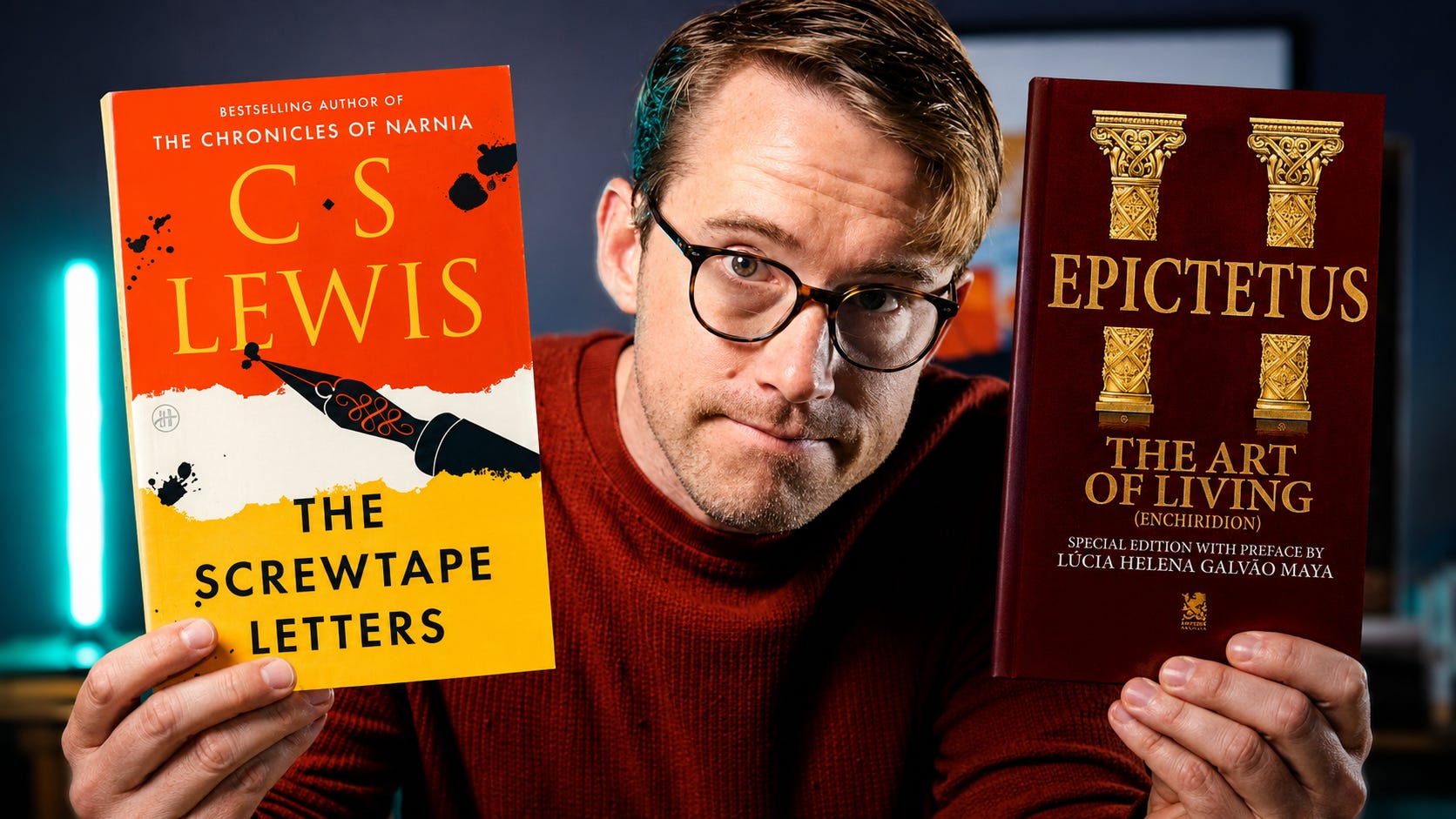 The Stoicism in The Screwtape Letters✨ | Stoicismpersonal relations+4 | — | The Screwtape LettersJesus & Stoicism | — | StoicismC.S. Lewis+5 | — | 10m 54s | |
| 4/28/26 |  Mind Your Own Business✨ | StoicismC.S. Lewis+4 | — | GREAT ESCAPE: 30 Reflections on Stoicism, Faith and the Wisdom of Great StoriesPost Hill Press+1 | — | StoicismC.S. Lewis+5 | — | 8m 51s | |
| 4/19/26 |  All Men Have Something To Teach✨ | retreatphilosophy+3 | — | Geeky Stoics | — | Geeky Stoicsretreat+3 | — | 5m 04s | |
| 12/31/25 |  Maybe Escapism is Good, Actually✨ | escapismstorytelling+4 | — | On Fairy-storiesStar Wars | — | escapismstorytelling+5 | — | 13m 30s | |
| 12/22/25 |  Luminous Beings Are We: A Christmas Message✨ | ChristmasStoicism+4 | — | Geeky Stoicswww.geekystoics.com+2 | — | Christmas messageStoics+5 | — | 9m 51s | |
| 12/9/25 |  Wisdom showdown: Uncle Ben vs Uncle Ben✨ | wisdommaxims+3 | — | Spider-Man2002 movie | — | Uncle BenSpider-Man+4 | — | 2m 50s | |
| 11/3/25 |  I finally made the video I’ve been scared to make.✨ | identityambition+4 | — | Geeky StoicsAir Force+2 | — | personal storyAir Force+5 | — | 8m 02s | |
| 11/2/25 |  What's This About A Bible Sales Surge?✨ | religionspirituality+4 | — | Barna research groupStar Wars | United StatesUK | Bible salesGeneration Z+7 | — | 4m 32s | |
Want analysis for the episodes below?Free for Pro Submit a request, we'll have your selected episodes analyzed within an hour. Free, at no cost to you, for Pro users. | |||||||||
| 9/19/25 |  Can we choose our feelings? Reflecting on Charlie Kirk, empathy and objective morality✨ | empathyobjective morality+3 | — | — | — | feelingsempathy+3 | — | 5m 00s | |
| 8/29/25 |  Tolkien, Virtue, and the Good Life✨ | Tolkienvirtue ethics+4 | Dr. Christopher Snyder | Hobbit Virtues: Rediscovering Virtue Ethics Through J.R.R. Tolkien’s The Hobbit and The Lord of the Rings | Oxford University | TolkienHobbits+5 | — | 39m 13s | |
| 8/25/25 | 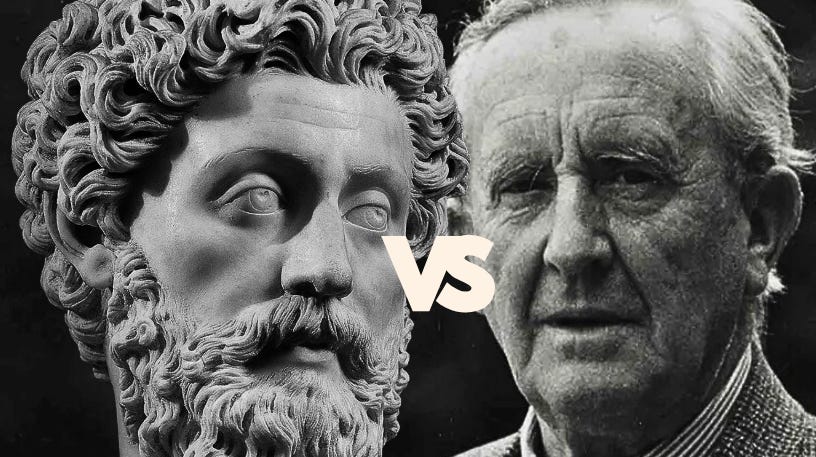 Call It What It Is✨ | perspectivefaith+3 | — | Journal of the WhillsCall It What It Is | — | perspectivefaith+5 | — | 6m 46s | |
| 8/13/25 | 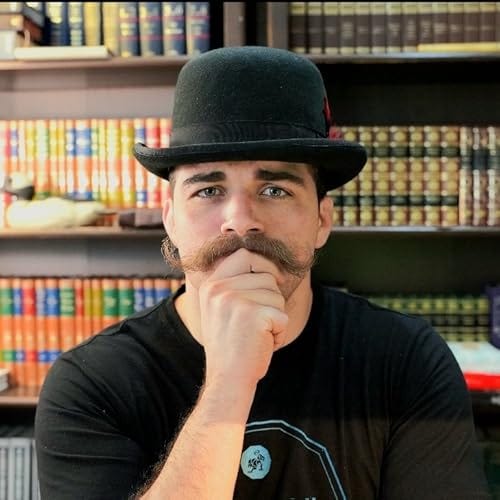 Is Stoicism Enough? | It’s time for another long-form podcast! In this episode, we welcome Parker Settecase of ParkNotes Parker's Ponderings for a deep dive into the limits of Stoicism, the role of the God/Logos in this philosophy, and how these same ideas filter through Star Wars, The Lord of the Rings, and more.TOPICS WE’LL GET INTO* The overlap between Stoicism and Christianity: How Stoic principles align and diverge from Christian theology, and the importance of the Logos as a personal being.* Wrestling, discipline, and practical philosophy: How Parker’s wrestling background shaped his appreciation for Stoic ideas about self-control and focusing on what you can control.* Pop culture and philosophy: Using characters like Gandalf, Batman, and Star Wars’ Jedi and Sith to make philosophical concepts accessible and relatable.* Lust, self-control, and pop culture analogies: How Marcus Aurelius’ writings on physical desire relate to modern struggles, and parallels with the Star Wars narrative of Anakin Skywalker and the dark side.* The Sith vs. Jedi worldview: Technology, transhumanism, and the dangers of trying to “challenge forth” and reshape nature, with references to Heidegger, Nietzsche, and Foucault.* AI, humanity, and the risks of technological mimicry: Reflections on the use of AI to recreate lost loved ones, the philosophical implications of large language models, and the importance of preserving human uniqueness.* CS Lewis and the Inklings: The relevance of “That Hideous Strength,” “Till We Have Faces,” and the distinction between “major” and “goetia” magic as analogs for Jedi and Sith philosophies. This is a public episode. If you'd like to discuss this with other subscribers or get access to bonus episodes, visit www.geekystoics.com/subscribe | 1h 06m 23s | ||||||
| 8/7/25 |  Interview: Andrew Heaton of the Political Orphanage | Andrew Heaton is a comedian, political commentator, author, and political orphan best known for his skits on ReasonTV. I’ve had the pleasure of knowing Andrew for many years and traveling in similar media circles. We both love to chat and interview people, and so when I saw he’d joined Substack, I knew we’d have to do something together. Both Heaton and I love to talk about fantasy and sci-fi, so we cover great fiction that has inspired Andrew’s worldview, and we get into the weeds of Andrew’s atheism and roots in Eastern Orthodoxy. Geeky Stoics is a reader-supported publication. To receive new posts and support my work, consider becoming a free or paid subscriber.What to expect (Pretty decent AI summary)* Good, evil, and C.S. Lewis. Kent and Heaton, with Lewis’s idea that evil is merely “a corruption of good,” and use A Clockwork Orange to probe whether pure malice can really exist.* Demonic dread in a secular mind. Despite skepticism, Kent and Heaton admit demonic possession (and even Ouija boards) still terrifies them—evidence that ancient spiritual anxieties survive modern disbelief.* Wealth and the eye of the needle. Heaton asks whether our unprecedented creature comforts, more than raw income, blunt any sense that we need transcendence, and discusses Jesus’ warning about riches.* Eco-Calvinism. Heaton argues parts of today’s environmentalism act like a new religion—humanity as fallen, Earth as sacred, redemption through self-denial—echoing Joseph Campbell’s predicted “eco-myth”.* Stories that shape a worldview. Heaton shares how Douglas Adams’ Hitchhiker’s Guide taught him the power of shifting perspective; Star Trek and Madeline Miller’s Circe reveal why being mortal trumps immortality * Love beyond belief. Leaving the church didn’t sever bonds for Andrew Heaton—his old church still checks on him and offers help, showing religion’s unmatched knack for forging lasting “kinship networks”.If you want to join up with the Political Orphanage and Andrew Heaton…. This is a public episode. If you'd like to discuss this with other subscribers or get access to bonus episodes, visit www.geekystoics.com/subscribe | 49m 10s | ||||||
| 7/28/25 |  Reviewing "Superman": Virtue or Vice? | Somehow…Monday returned. Welcome back! This morning I am headed into Washington, DC to speak to a group of young professionals about communication and breaking through both the noise and polarization. These are tough times for getting your message across. Ears are closed. Eyes are covered. Impressions are set. How do we break through? I’ll share a few brief thoughts. It’ll be brief mainly because I want you to check out the video today, my interview about the new Superman movie on Fox Radio with Ben Domenech of The Transom. Part of it can be watched here for Free Subscribers to Geeky Stoics, and if you want more, it’s posted here. I know Ben appreciates the views. To watch the whole thing here, like with other videos, you can upgrade to a Paid subscription to support the work we’re doing here. The community is growing! On YouTube, we hit 15,000 subscribers yesterday and notched our one millionth view, thanks in part to this video about Friendship vs Eros (Erotic, Romantic love). Getting Your Message AcrossSo, as I was saying….how do we break through? It’s all about moral foundations. Once you understand the moral framework your audience is operating under, you can make an effort to appeal to their code and move the needle. In his book, The Righteous Mind: Why Good People Are Divided by Politics and Religion, Jonathan Haidt breaks down the moral universes of conservatives and liberals (a simple left-to-right framing) into six pillars. * Care/harm – concern for the suffering of others* Fairness/cheating – emphasis on justice, rights, and equality* Loyalty/betrayal – allegiance to one’s group, family, or nation* Authority/subversion – respect for tradition and legitimate authority* Sanctity/degradation – valuing purity & avoiding the disgusting or profane* Liberty/oppression – a desire to resist domination and tyranny (added later in his framework)Geeky Stoics is a reader-supported publication. To receive new posts and support my work, consider becoming a free or paid subscriber.Haidt’s widely acclaimed social science research showed that liberals place an outsized value on 1 and 2, Care and Fairness. Their first principles involve displaying concern for others’ suffering and caring about matters of fairness. Of course, these streams meet on matters of social justice and civil rights. Conservatives are more balanced in how they see the world. Each pillar gets pretty equal attention, with slightly more attention paid to Loyalty and Authority. They care about Fairness and the factor of equality, but in terms of proportionality to one’s contributions. It’s funny because conservatives think about this with the collective in mind, which is a framework usually used by liberals. Some outside thoughts on these values from familiar namesC.S. Lewis on his skepticism of Equality: “Do not misunderstand me. I am not in the least belittling the value of this egalitarian fiction, which is our only defence against one another’s cruelty—the function of equality is purely protective. It is medicine, not food. By treating the human person as if they were all the same kind of thing, we avoid innumerable evils. But it is not on this that we were made to live. It is idle to say that men are of equal value. If value is taken in a worldly sense—if we mean that all men are equally useful or beautiful or good or entertaining—then it is nonsense. If it means that all are of equal value as immortal souls, then I think it conceals a dangerous error.”* In summary, Lewis believed that Equality was a social necessity, but nothing more than that. He held that hierarchies are in keeping with nature (Authority) and that people become vessels for ideas and values, and ideas and values are ranked. “Equality is medicine, not food”. It treats a kind of ailment, but it’s not our reason for being. J.R.R. Tolkien on Freedom: “-the word has been so abused by propaganda that it has ceased to have any value for reason, and become a mere emotional dose for generating heat.”* A short quote and simple. Freedom is nice, but there are higher goods than freedom, such as Sanctity. You’ll find liberals and conservatives switch places quickly on Freedom when it suits their competing moral pillars. Once you have this understanding of moral foundations, you can decide whether or not you want to attempt appealing to them for the purpose of making a connection. Last thing, and for this we’ll return to Narnia’s founder, C.S. Lewis, once more. You have to keep your heart open to the possibility that you’re only being served the worst possible impression of your opponents. We know this. TV news and social media algorithms are designed not to spread truth, but to maintain the audience. If Fox News or MSNBC starts going too easy on the other side, people change the channel. They tuned in for a worldview, so subverting that is not in the business model. Know this. You can watch and enjoy the “news” but know it’s a form of entertainment, first and foremost. Lewis wrote in Mere Christianity that with news, we become disappointed when our opponents are anything less than devils. Once we go down that road, we will start to see ourselves, the world, and God...as devils also. Turns out, believing the best in people is something that extends to how you treat yourself in the mirror. So be gracious. “Suppose one reads a story of filthy atrocities in the paper. Then suppose that something turns up suggesting that the story might not be quite true, or not quite so bad as it was made out. Is one's first feeling, 'Thank God, even they aren't quite so bad as that,' or is it a feeling of disappointment, and even a determination to cling to the first story for the sheer pleasure of thinking your enemies are as bad as possible? If it is the second, then it is, I am afraid, the first step in a process which, if followed to the end, will make us into devils. You see, one is beginning to wish that black was a little blacker. If we give that wish its head, later on we shall wish to see grey as black, and then to see white itself as black. Finally, we shall insist on seeing everything -- God and our friends and ourselves included -- as bad, and not be able to stop doing it: we shall be fixed for ever in a universe of pure hatred.”-C.S. Lewis in ‘Mere Christianity’Have a great week, everyone, and thank you for reading Geeky Stoics. This is a public episode. If you'd like to discuss this with other subscribers or get access to bonus episodes, visit www.geekystoics.com/subscribe | 15m 17s | ||||||
| 7/17/25 |  4 Seneca Lessons You Can Use Today | This is a free preview of a paid episode. To hear more, visit www.geekystoics.comOnce you go down the Stoicism rabbit hole, you can’t escape the ubiquitous appeal and words of Marcus Aurelius in Meditations. It’s everyone’s favorite, and for mostly good reason. But Seneca's Letters From A Stoic are even better. | 6m 54s | ||||||
| 7/13/25 |  Aiming At Heaven | On a flight layover in the UK, Geeky Stoics visits the home, grave and world of famed author, philosopher and academic: C.S. Lewis This is a public episode. If you'd like to discuss this with other subscribers or get access to bonus episodes, visit www.geekystoics.com/subscribe | 6m 47s | ||||||
| 7/10/25 | 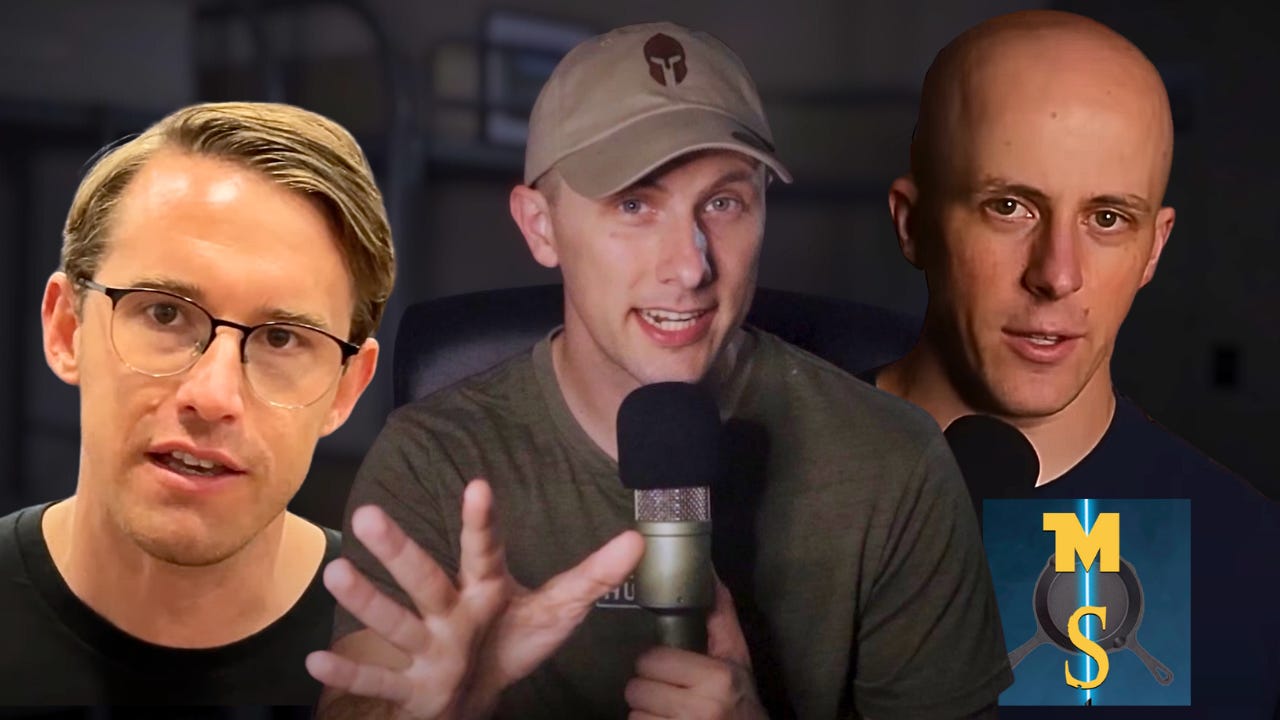 Master Samwise: Star Wars, Storytelling, and the Art of Saying 'Yes' | We’re experimenting here at Geeky Stoics. Both Stephen and I have really missed the long-form podcast and discussion format, going back to my original podcasting days at the Star Wars Report and Stephen’s at Beltway Banthas. I’m so glad we get to introduce this format here on Substack, featuring a very special guest: Master Samwise.Samwise has a YouTube channel not dissimiliar from our own, where he’s built a community of people passionate about going a layer deeper on stories like Star Wars, LOTR and even Red Dead Redemption. He takes this as seriously as we do. This episode is really about why modern storytelling needs more heart and less ulterior motives.Sam drops some truth bombs including why great stories aren't about the catharsis of the creator; they're about characters who choose service over themselves. Being a hero starts at home. Sam’s take on heroism 101* Know when to say "yes" when you want to say "no"* Virtues are universalWe also nerd out on: * Obi-Wan* Avatar: The Last Airbender* Band of Brothers* Pixar’s Turning Red* Clare: Obscure Expedition 33MTFBWY!-Riley This is a public episode. If you'd like to discuss this with other subscribers or get access to bonus episodes, visit www.geekystoics.com/subscribe | 1h 19m 10s | ||||||
| 7/4/25 |  Philosophy or Psychology? | If you want to understand the intellectual fault lines of the 20th century, you don’t need to go to a fancy college. You can just sit down with some old movies. We don’t touch on horror movies often on Geeky Stoics, in fact, this is a first. I just finished KINGDOM OF CAIN, a fascinating book about how horror and murder point toward evidence of God. It’s a fresh approach to Christian apologetics and on brand for Klavan, a prolific crime and mystery novelist. The book traces the line between real world murders that inspired art (film and stage plays) which inspire more real world violence, which inspire more art. Man destroys, man creates, round and round we go. At issue for most of the book is how the Ed Gein murders spurred on Alfred Hitchcock’s PSYCHO (1960), which later warranted a response in the form of HALLOWEEN (1978). What Klavan leaves out is a movie near and dear to me, which builds on both of these films, SCREAM (1996). A question is posed by these works of art based on real world violence: Is evil a psychiatric malfunction or a metaphysical reality? Are murderers patients, or vessels……In the video above, you’ll get some answers to that question and see how philosophy and psychology clash when it comes to the question of evil and violence. “Darwin told us where we came from. Marx told us where we’re going. Freud told us who we are.” - Andrew Klavan This is a public episode. If you'd like to discuss this with other subscribers or get access to bonus episodes, visit www.geekystoics.com/subscribe | 8m 45s | ||||||
| 6/19/25 |  The "Daily Stoic" Interview | Hopefully, you’re caught up on Geeky Stoics and enjoyed the panel conversation we hosted with Ryan Holiday of the Daily Stoic. The conversation covered Stoicism and Objectivism, two distinct philosophies with a lot in common and even more in conflict. Now you can move on to the next piece of programming we cooked up for you: a one-on-one interview with Holiday. This came together at the last minute during our trip to Palm Springs. Ryan’s team was not being very accommodating with doing interviews at this event. They vet every outlet asking for time with him. We flew out to CA without any guarantees of getting an interview. As I was on stage doing the panel conversation, my phone started buzzing on the podium. It was the conference event coordinator saying, “You’ve been approved. In fact, you’re the only person who got approved.” I had asked Ryan’s handlers for 15 minutes with him. “Can you do 60 minutes?” they asked. Oh boy…since no one else got approved, I was now being offered the entirety of his media time. And since I didn’t ever get any advance notice, I opted not to toil over preparing an interview. I had no questions prepared. Needless to say, I accepted the time and improvised. In the end, I ended up splitting my 60 minutes with another outlet in exchange for their cameraman taking some footage of our interview. That’s what you’ll see in this video above when someone enters the room with a camera right behind Ryan and myself. Hard work and mild preparation do pay off. Believe!This is a snippet of the conversation. The rest is on YouTube. This is a public episode. If you'd like to discuss this with other subscribers or get access to bonus episodes, visit www.geekystoics.com/subscribe | 7m 46s | ||||||
| 6/16/25 | 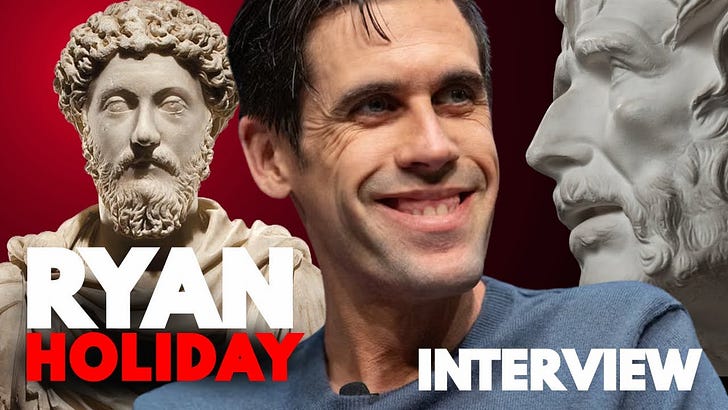 Live in Palm Springs: Ryan Holiday on Stoicism vs Objectivism | It’s a good day to be a Geeky Stoics subscriber here on Substack! You all get first access to this week’s video conversations with Ryan Holiday of the Daily Stoic. I told you about the trip to Palm Springs, and it was to moderate this panel tackling the differences and overlaps of Stoicism and Objectivism. To recap: Stoicism is ancient Greek and Roman philosophy rooted in self-mastery, emotional regulation, and letting go of things beyond your control. Objectivism took form post-World War II through the philosopher and writer Ayn Rand. It is about self-focus, individual fulfillment, and “rational egoism” or putting yourself first as a matter of rational thought.Ryan Holiday is famed for his books, "The Obstacle Is the Way," "Ego Is the Enemy," "The Daily Stoic," "Stillness Is the Key", “Courage Is Calling” and his new book “Wisdom Takes Work” comes out this fall. Millions of people receive his daily emails and podcasts, and most of what Geeky Stoics does would not exist without his work. It was cool to meet him and ask him some questions about the life well-lived. Thanks for reading Geeky Stoics! Subscribe for free to receive new posts and support my work.Some takeawaysHoliday framed freedom as the opportunity for self-discipline. Drawing on figures like Marcus Aurelius, Epictetus, and even Eisenhower, he emphasized that inner liberty (freedom from passion, chaos, and internal compulsion) is central to Stoic ethics. Stoicism holds that true freedom is achieved through mastery of the self, rather than simple absence of constraint. In Ryan’s books, he has called this “the empire between your ears”. Even a person living in chains cannot be truly forced to vacate their freedom of thought and action. For Stoics, unchecked liberty is a quick road to being enslaved by desire, and so self-restraint is not seen as a limitation but as a form of empowerment.This is an area I tend to strongly agree on. Richards, representing Ayn Rand’s Objectivism, defined freedom as freedom from coercion (force or fraud) that threatens one’s ability to think, act, and pursue personal happiness. Objectivism prioritizes the individual’s rational mind as the highest tool for flourishing, arguing that the pursuit of joy and personal achievement is the purpose of freedom. It’s not dismissive of self-discipline, and so Richards emphasized how a person can harm oneself with the pursuit of constant vice. Enjoying the panel discussion? Now check out our 1-on-1 interview with Ryan Holiday about parenting, Hamilton, and philosophyOverlap and Contrast on the panel Both philosophies value rationality, personal responsibility, and civic virtue. However, Stoicism is inward-facing, concerned with moral resilience and inner peace, while Objectivism is outward-facing, focused on creative achievement and individual flourishing.Holiday illustrated Stoic freedom with the example of Epictetus—a slave who, despite literal bondage, enjoyed greater internal freedom than Rome’s elite who had to suck up to tyrants to make a living. Richards acknowledged this but argued that Objectivism’s strength lies in its systematic approach, beginning with metaphysics and epistemology, and ending in ethics and politics centered on the primacy of the individual. It’s very anti-collectivist. That point on collectivism is important because it’s perhaps the most pointed area of disagreement. Most Stoics would say that all “goods” must be considered for the whole of a community. Objectivists, or Ayn Rand, did not believe “the public” even exists. Her philosophical focus was on living, breathing things, and she rejected the notion that the disjointed “we” was a thing worthy of acknowledgement. I am alive. The “public” is not. I have interests. The public does not. Stoics don’t buy this, especially not Ryan Holiday. Now, go enjoy the discussion and tell us what you thought in the comments below. New on YouTube from Geeky Stoics This is a public episode. If you'd like to discuss this with other subscribers or get access to bonus episodes, visit www.geekystoics.com/subscribe | 44m 46s | ||||||
| 5/20/25 |  Why So Serious? | "What need is there to weep over parts of life? The whole of it calls for tears. New ills will come, or old ones will return. Meanwhile, keep your spirit cheerful." - Epictetus, DiscoursesThe other day, my daughter was stressed about some complicated logistical stuff happening two days in the future. She was visibly distraught and trying to figure out what to be prepared for in case it all went badly. I am not great at this myself, but I reminded her that tomorrow’s troubles don’t require your negative energy today. Lighten up. Thanks for reading Geeky Stoics! Subscribe for free to receive new posts and support my work.Seneca wrote in one of his "Letters to Lucilius” that, "We are tormented by what is to come more than by what is. The future is uncertain, and we often suffer more in imagination than in reality." That is to say, we go over scenarios for how badly something could go, it causes us suffering, and then it comes, and it wasn’t really that bad. Then we laugh. What was I so worried about? There’s a balance between planning for all eventualities (being prepared) and suffering in advance of imagined problems. You’re planning a hike and need to prepare for the possibility of rain and sleet, so you pack a rain jacket and the appropriate shelter. You don’t get into a huff about weather that hasn’t come yet. That’s silly. When it’s all said and done, though, and you realize you’ve been wound tight over imagined struggles that never even came about, feel free to have a laugh about it. Don’t take yourself so seriously, or even this messy life. If you want to go a bit deeper on humor and leadership and when to laugh it off, check out this video above. It’s exclusive to newsletter subscribers before it hits YouTube later this week. Be well. This is a public episode. If you'd like to discuss this with other subscribers or get access to bonus episodes, visit www.geekystoics.com/subscribe | 7m 39s | ||||||
| 4/11/25 |  Why Star Wars Andor Is Not That Radical | This week, I put together an essay I’ve been dying to make for well over a year. This is about Star Wars: Andor and whether or not the show supports a Marxist lens on freedom in a galaxy far, far away.Star Wars fans online had a field day with the words and deeds of one character, Nemik, who not only writes a “manifesto” for the Rebellion but also wears in Ushanka-style hat. Naturally, this got the Tankies (online communists) a little excited.In this video essay, being previewed FIRST for email subscribers to Geeky Stoics, I lay out why Nemik isn’t very Marxist. I begin with an assessment of his views on Self-Reliance, then turn to Andor’s nod to Natural Rights doctrine. And I conclude with my view on why Stoicism fills in the gaps left by political ideologies that claim to free mankind.I would like your feedback in the comments section before launching this on YouTube. Any fat that could be trimmed or argument that can tightened up, I’d like to hear about it!A beautiful excerpt from Nemik’s ManifestoThere will be times when the struggle seems impossible. I know this already. Alone, unsure, dwarfed by the scale of the enemy.Remember this, Freedom is a pure idea. It occurs spontaneously and without instruction. Random acts of insurrection are occurring constantly throughout the galaxy. There are whole armies, battalions that have no idea that they’ve already enlisted in the cause.Remember that the frontier of the Rebellion is everywhere. And even the smallest act of insurrection pushes our lines forward.And remember this: the Imperial need for control is so desperate because it is so unnatural. Tyranny requires constant effort. It breaks, it leaks. Authority is brittle. Oppression is the mask of fear.Remember that. And know this, the day will come when all these skirmishes and battles, these moments of defiance will have flooded the banks of the Empires’s authority and then there will be one too many. One single thing will break the siege.Remember this: Try.Thanks for reading Geeky Stoics! Subscribe for free to receive new posts and support my work. This is a public episode. If you'd like to discuss this with other subscribers or get access to bonus episodes, visit www.geekystoics.com/subscribe | 13m 28s | ||||||
| 3/31/25 |  Every Winter Feels Like The Last | My family has taken to teasing me over my annual surprise when a shrubbery or tree on our property shows signs of life around March or April. I must admit, I do look at my plants in the winter and think to myself, “Well, that’s it. They’re dead.” And I do this every year.I kneel at the side of my bushes and snap their branches to check the inside for moist green. I stare at them for long periods of time, wondering if I need to uproot the plant and toss it out for a new one.Tonight over dinner, I noticed that our tree in the backyard was beginning to reveal fresh buds where pink flowers will soon blossom. My surprise was evident. Many of the other trees on the property had already flowered, and in the back of my mind, the only explanation for why this one hadn’t done so yet was that it had finally died.Maybe I’m a fringe lunatic, and this is just evidence that I lack a certain chill. It also might reflect my lack of faith in miracles.Spring is something of a miracle. I don’t easily take to miracles. This is a public episode. If you'd like to discuss this with other subscribers or get access to bonus episodes, visit www.geekystoics.com/subscribe | 5m 16s | ||||||
Showing 25 of 233
Pitch Fit is a Pro feature
See how bookable this show is for guests, which brands already advertise, the per-episode ad value, and the best-fit guest and sponsor profile. The numbers are blurred on the free plan.
How readily this show books outside guests like you.
How proven this show is for host-read sponsorships.
For Guests
ProFor Advertisers
ProUpgrade to Pro to unlock guest cadence, sponsor categories, fit scores, and per-episode ad value for this show.
Chart Positions
1 placement across 1 market.
Chart Positions
1 placement across 1 market.