Giving With Impact
by DAFgiving360
Is this your podcast?Insights from recent episode analysis
Audience Interest
Podcast Focus
Publishing Consistency
Platform Reach
Insights are generated by CastFox AI using publicly available data, episode content, and proprietary models.
Total monthly reach
Estimated from 8 chart positions in 8 markets.
By chart position
- 🇦🇺AU · Non-Profit#38100K to 300K
- 🇮🇳IN · Non-Profit#1281K to 10K
- 🇮🇸IS · Non-Profit#930K to 100K
- 🇭🇰HK · Non-Profit#1630K to 100K
- 🇳🇿NZ · Non-Profit#2110K to 30K
- Per-Episode Audience
Est. listeners per new episode within ~30 days
127K to 403K🎙 Weekly cadence·30 episodes·Long inactive - Monthly Reach
Unique listeners across all episodes (30 days)
182K to 576K🇦🇺52%🇮🇸17%🇭🇰17%+5 more - Active Followers
Loyal subscribers who consistently listen
55K to 173K
Market Insights
Platform Distribution
Reach across major podcast platforms, updated hourly
Total Followers
—
Total Plays
—
Total Reviews
—
* Data sourced directly from platform APIs and aggregated hourly across all major podcast directories.
On the show
Recent episodes
Shared Purpose: Managing Conflict in Giving Across Generations
Aug 26, 2025
Unknown duration
Giving That Supports Communities in a Warming World
Aug 1, 2025
Unknown duration
Addressing Hunger in America: ‘There’s very little resiliency left in the system.’
May 20, 2025
Unknown duration
Childhood Cancer: Treating Children Around the Globe
Apr 14, 2025
Unknown duration
Charitable Giving, Advocacy, and Public Policy
Apr 1, 2025
Unknown duration
Social Links & Contact
Official channels & resources
Official Website
Login
RSS Feed
Login
| Date | Episode | Description | Length | ||||||
|---|---|---|---|---|---|---|---|---|---|
| 8/26/25 |  Shared Purpose: Managing Conflict in Giving Across Generations | Today we're going to talk about family philanthropy, how families can manage conflict when it arises, and strategies for preparing a new generation of philanthropists to take the lead at family funds. We have three guests who have a vast amount of experience with family philanthropy across generations. | — | ||||||
| 8/1/25 |  Giving That Supports Communities in a Warming World | More and more people are displaced by droughts, storms, and floods that are exacerbated by a warming planet. And everyone from farmers to workers to the elderly are at greater risk when temperatures soar. In this episode, we’ll talk to two nonprofits on the front lines of mitigating the effects of climate change, and address more broadly an idea in climate philanthropy that supporting local leadership and local wisdom is the most just and most effective way to save and heal the planet. | — | ||||||
| 5/20/25 |  Addressing Hunger in America: ‘There’s very little resiliency left in the system.’ | Participants:Host: Barbara Wheeler-Bride, Editor, Stanford Social Innovation ReviewKyle Endres, Executive Director of We Don’t Waste, a food recovery organization working with communities across the Denver Metro region Vince Hall, Chief Government Relations Officer at Feeding AmericaAlisia Robin, Senior Manager of Strategic Partnerships and Non-profit Outreach at DAFGiving360 | — | ||||||
| 4/14/25 |  Childhood Cancer: Treating Children Around the Globe | In today’s episode, we’ll discuss St. Jude Global, an innovative endeavor at St. Jude Children’s Research Hospital to take lifesaving cancer treatments to children around the world. With the launch of St. Jude Global, the research hospital has set an ambitious goal to cure at least 60% of children with the most common cancers worldwide by 2030. By sharing research and knowledge globally, St. Jude and its network of researchers and institutions seek to amplify their nonprofit social impact on a global scale. Their global approach is focused on capacity building and partnership, two ideas that have increasingly been part of conversations about effective philanthropy. | — | ||||||
| 4/1/25 |  Charitable Giving, Advocacy, and Public Policy | In this episode, we’re going to share a conversation about the impact of elections on charitable giving, and how non-profits can engage in advocacy for policies that are crucial to the communities they serve. | — | ||||||
| 3/11/25 |  The Challenges Facing Humanitarian Aid Groups Right Now | Today, we’re going to talk about the impact of recent cuts to foreign aid, and how donors can step in to fill the funding gap. Humanitarian aid plays a critical role in saving lives and alleviating suffering around the world. What do these cuts mean to the people in communities facing ongoing crises, such as war and climate disaster? How do non-profits and NGOs pick up the pieces and continue to provide things, like lifesaving medical treatments, preventative measures to protect against disease outbreaks or programs for things like education, maternal and child health, and nutrition? | — | ||||||
| 2/24/25 |  The Power of Arts Education to Build Community | In today’s episode, we’re going to talk about funding and supporting the arts, and art education. In recent years, many school districts across the United States have made the difficult decision to cut arts programs, including drama, music, and visual arts. Today, we’ll talk about the value of funding arts education in our public schools, as well as in communities outside the formal education system where the value of experiences with art are helping develop life skills, social and emotional skills, civic engagement, and more. | — | ||||||
| 2/12/25 |  The Complexity of Charitable Impact | Today, we are discussing social impact, from defining what impact means to the how and why behind it. Our guests will share how they think about impact in the work that they do, and the processes they use to measure impact and how those approaches have changed over time. | — | ||||||
| 7/20/22 |  Investing with Impact: Doing Well by Doing Good | In its broadest sense, the field of impact investing can be defined as an investment strategy that seeks to generate financial returns while also creating a positive social or environmental impact. Impact investing is attracting growing numbers of organizations and increasing amounts of money. By some estimates there are nearly 200 registered impact investment funds, and many foundations, networks, and mainstream financial institutions are active in the field. Impact investing contains a range of expectations about appropriate financial and social returns. Some investors are drawn by the hope of earning substantial financial returns by investing in businesses that have a social mission, while others are drawn by the desire to achieve more sustainable impact than they could achieve through philanthropy alone. Although the growing interest in impact investing represents an opportunity for the social good sector and an important source of growth capital for social ventures, the excitement that surrounds the field is a growing source of concern. Exaggerated claims raise expectations about the ability of impact investing to provide both outsized financial and social returns, something that is not always possible. So, what should investors be considering when looking to have a positive impact in the world through their investments? | — | ||||||
| 6/13/22 |  Participatory Grantmaking: A Shared Approach to Effective Change | If you’re a frequent listener of this podcast, or have attended any of our SSIR conferences, you probably know that one of the maxims about social innovation that I believe strongly is the one that states “the most effected are the most effective” – that those who are closest to the problems are often the ones with the greatest insights into what needs to occur to address them. In many ways, this is the ethos behind the idea of “participatory grantmaking.” Participatory grantmaking encompasses a range of models and methods. At its core, this approach to funding cedes decision-making power about grants to the very communities impacted by funding decisions. As with so many other sectors, the philanthropic sector has seen a heightened demand for greater accountability and transparency, with people wanting greater voice in the decisions affecting their communities. But as with any other approach, what does this strategy look like in action? And what can we learn about our individual approach as donors from organizations that have adopted a participatory approach? | — | ||||||
Want analysis for the episodes below?Free for Pro Submit a request, we'll have your selected episodes analyzed within an hour. Free, at no cost to you, for Pro users. | |||||||||
| 5/3/22 |  Empowering Community: A Closer Look at Place-Based Giving | Traditional approaches to solving various social and environmental problems taken by government, philanthropy, and nonprofits have tended to focus on specific areas like housing, education, or health. But experience has shown us that these problems don’t exist in a vacuum. A recent article published in SSIR talks about the importance of placed-based strategies for addressing challenges faced by communities and outlines several new approaches being pursued to uplift these communities. Some organizations are achieving remarkable change by focusing on transforming place first and foremost, rather than focusing on specific problems or goals in a siloed manner. They pursue holistic place-based systems change. But what does this place-based approach look like in practice? And how can we help leverage resources and relationships to empower community and achieve lasting and transformative change? | — | ||||||
| 3/16/22 |  Sometimes Cash Isn’t King: Contributing Non-Cash Assets | When thinking about making a donation to support a charity we believe in, most of us immediately think about writing a check or typing in a credit card number. Even when we proactively think about using other assets that we may hold as a way to fund our charitable giving, our instinct is to liquidate that item and donate the proceeds. But that may not be the most effective or efficient way to donate. Sometimes, cash isn’t king. And with the growing popularity of cryptocurrency, these days, “cash” may not even be cash | — | ||||||
| 12/27/21 |  Better Together: Collective Giving and ‘People-Centered’ Philanthropy | Modern philanthropy provides us with a wealth of opportunities and approaches to help create the change that we want to see in the world. One such approach that continues to grow in popularity is the idea of collective giving, which often translates to giving circles. It’s estimated that there are currently over 2000 giving circles in the U.S., with over 150,000 people involved in these circles, helping to donate nearly $1.3 billion. Giving circles can provide donors with a way to increase both their knowledge and understanding of issues and solutions, and their impact on those issues, while helping them to connect with other like-minded donors in their community. | — | ||||||
| 11/9/21 |  One Size Doesn’t Fit All: Determining Which Charitable Vehicle is Right for You | The vast majority of Americans tend to handle their charitable contributions using fairly straightforward means – opening their wallet or personal checkbook. But for many people, there may be advantages to the use of what are broadly referred to as ‘planned giving vehicles.’ Benefits for doing so can include favorable tax treatment of assets in the vehicle, or the ability to take a tax deduction in the current year for gifts that are made in the future, among others. So, what are these various types of giving vehicles, and how can you determine which one might be best aligned with your charitable goals and objectives? Are they mutually exclusive, or can they be combined across a broader philanthropic strategy? And once you’ve decided which to pursue, how do you get started? | — | ||||||
| 9/13/21 |  Exploring Philanthropic Approaches: Trust-based and Strategic Giving | Since the late 1990’s, the philanthropic sector has been focused on data- and results-driven approaches, often referred to under the umbrella of “strategic philanthropy.” It can be argued that this thinking has strengthened the field of philanthropy in many ways, helping to bring greater rigor and focus to the hundreds of billions of dollars in annual charitable giving. At the same time, some have argued that an unexpected outcome of these practices is a distancing between donors and those grantees who are doing the work of effectively addressing issue areas, lessening their voice, and reinforcing systemic inequities. These critiques have led to the emergence of the movement known as trust-based philanthropy. At its core, trust-based philanthropy is about redistributing power—systemically, organizationally, and interpersonally—in service of a healthier and more equitable nonprofit sector. So, as a donor, how do you reconcile these two approaches? What does each mean for giving strategies? And are they really as disparate as some would believe? | — | ||||||
| 8/23/21 |  Taxes and giving: The current and potential impact of US tax policy for donors and nonprofits | The vast majority of US donors don’t give to charities simply to get a tax benefit; they give because they genuinely care about the work of the organizations that they support, and want to see those organizations succeed and make a difference in the world. But it’s also true that tax law in the United States can have an impact on the volume and type of gifts that donors may choose to make. And while there may be truth to the old adage about “death and taxes,” as far as we know, only one of those two is immutable. So how does current US tax law effect charitable giving, and how might those laws change over the next several years? Are there ways that donors should be approaching their giving strategies to maximize the amount of money getting into charitable organizations? And what do these policies and strategies mean for the nonprofits who depend upon this support? | — | ||||||
| 7/5/21 |  Giving Effectively: Incorporating Charitable Planning into Your Financial Strategy | Research tells us that there are certain resources most donors consult when starting to assemble a strategy for their philanthropy. These include peers, family, and well known, publicly-available sources of information on nonprofits like Guidestar or Candid. But among those top sources are also their existing financial advisors – people they already trust and are comfortable talking with about their finances. While many advisors may initially engage in financially-focused charitable conversations such as how much to give and the tax implications of various types of gifts, these discussions often become much deeper. They can include donors’ motivations and goals for giving, or the best ways to identify a cause or organization, and even how to involve their family in their charitable plan. So, how do you start these deeper conversations, whether you’re a donor or an advisor? And what does this sort of strategy entail? And – perhaps most importantly – how does all this planning help the organizations and causes that donors are looking to support? | — | ||||||
| 6/15/21 |  The change you want to see in the world: International philanthropy and effective cross-border giving | If there is one thing that the events of the past year have helped to remind us of, it’s the simple fact of how interconnected our world truly is. Issues like public health or the environment are global in nature, and new solutions to global challenges are being innovated all around the world. But when you’re a donor here in the United States who may be looking to support causes or organizations in other countries, how do you get started? And how do you make sure that you’re maximizing the impact and effectiveness of the support that you’re providing? Many of us may sincerely want to “be the change we wish to see in the world,” as Mahatma Gandhi famously said; but how do we do that? | — | ||||||
| 10/20/20 |  Giving with Purpose: Determining the Right Gift for Both Donor and Nonprofit | So, you’re a thoughtful, impact-focused donor, and you’ve done your homework and identified some nonprofits that you’d like to support. But deciding what type of gift to make can sometimes be as challenging as knowing what cause to fund in the first place. Restricted gifts, unrestricted gifts, endowments – what are the differences, and what are the benefits of each type of gift? How can you ensure that your giving is helping to accomplish your overall philanthropic goals – your purpose for philanthropy, as it were. | — | ||||||
| 9/8/20 | 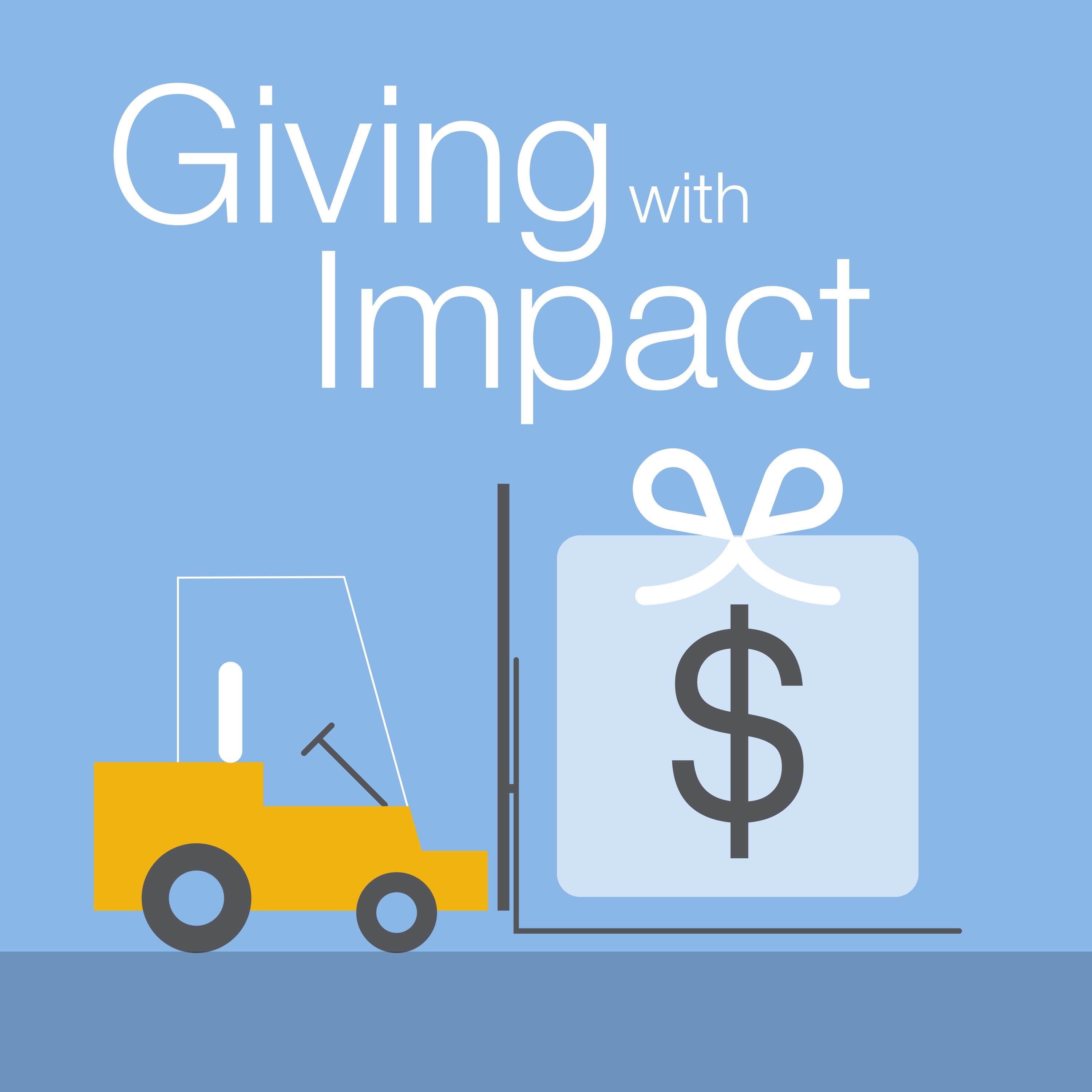 Increasing efficiency and effectiveness: How nonprofits are leveraging donor-advised funds | Over the past decade, the popularity and use of donor-advised funds, or DAFs as they are commonly known, have grown dramatically. According to the National Philanthropic Trust’s 2019 Annual Donor Advised Fund Report, “grantmaking from donor-advised funds to qualified charities has nearly doubled in the past five years,” with philanthropists recommending over $23 billion in grants to charities from their DAFs in 2018. How can nonprofits leverage donor-advised funds to support their operation and maximize their fund-raising results? | — | ||||||
| 9/2/20 |  Giving across generations: maximizing impact through family philanthropy | A 2014 report by the Center on Wealth and Philanthropy at Boston College estimated that $59 trillion will be transferred to the next generation from 2007 to 2061, the largest wealth transfer in US history. Lifetime giving to charity in that same period is estimated to be $20.6 trillion. At the same time, there is an increasing desire among families to work together to use their resources to solve social challenges, with longer life spans and greater understanding of the benefits of multigenerational philanthropy having encouraged more multigenerational collaboration. And while a variety of challenges can compromise the work, successful intergenerational giving strategies can foster an ongoing tradition of giving, make an impact on issues the family cares about, and deepen family relationships. What contributes to these successful strategies? | — | ||||||
| 8/11/20 |  African American Philanthropy: A Culture of Generosity | African Americans have participated in charitable giving in this country for hundreds of years, and over the past decade, African American families have—more than any other racial group—contributed the largest proportion of their wealth to charity. If nonprofits are serious about cultivating diverse communities, they must commit across their organizations to diversity and inclusion as well as dedicate time, resources, and attention to identify, solicit, and steward Black donors on their own terms. | — | ||||||
| 7/29/20 |  C-19: What's Next - The Lifecycle of a Pandemic | Not only will C-19 continue to roil our lives and our society, but we also have to think realistically, and accept the likelihood that other disasters may arise while we still attempt to deal with the one at hand. What can the philanthropic sector’s response to past disasters teach us about our current crisis, and what can we do to prepare for the inevitable fact of other crises that may emerge? | — | ||||||
| 7/15/20 |  C-19: What Nonprofits are Facing Now and How Donors Can Help | During this period of extreme financial pressures brought about as a result of the COVID-19 pandemic, many organizations in the nonprofit sector are feeling particularly squeezed, as they work to continue to provide support and services to what is already an expanding client population. At the same time revenues from services have dried up and donations from their traditional fundraising activities have declined. In this environment, what can individual donors do to maximize their philanthropic impact to help both nonprofits on the front lines of the battle against C-19 and those tangentially affected? | — | ||||||
| 7/3/20 |  C-19: Giving Effectively and Efficiently to Address the Most Pressing Needs | The philanthropic sector has weathered many challenges; but nothing matches the scope and speed of the impact of the COVID-19 pandemic. What are the areas of most pressing need? How can we think about selecting the most effective nonprofits to address those needs? How can individual donors respond to multiple needs arising from a global pandemic? | — | ||||||
Showing 25 of 30
Pitch Fit is a Pro feature
See how bookable this show is for guests, which brands already advertise, the per-episode ad value, and the best-fit guest and sponsor profile. The numbers are blurred on the free plan.
How readily this show books outside guests like you.
How proven this show is for host-read sponsorships.
For Guests
ProFor Advertisers
ProUpgrade to Pro to unlock guest cadence, sponsor categories, fit scores, and per-episode ad value for this show.
Similar Audience Demographics
Podcasts that attract a similar listener profile

Chart history for Giving With Impact
Peaked at #9 in IS, top 10 in 1 of 8 tracked markets, currently #9 in IS.
| Market | Genre | Peak | Current | Trend |
|---|---|---|---|---|
| IS | — | #9 | #9 | — |
| HK | — | #16 | #16 | — |
| New Zealand | — | #21 | #21 | — |
| Australia | — | #38 | #38 | — |
| SA | — | #42 | #42 | — |
| TW | — | #107 | #107 | — |
| India | — | #128 | #128 | — |
| CH | — | #178 | #178 | — |
Chart Positions
8 placements across 8 markets.
Chart Positions
8 placements across 8 markets.