Insights from recent episode analysis
Audience Interest
Podcast Focus
Publishing Consistency
Platform Reach
Insights are generated by CastFox AI using publicly available data, episode content, and proprietary models.
Most discussed topics
Brands & references
Est. Listeners
Insufficient chart data. Estimates will improve as the show charts.
- Per-Episode Audience
Est. listeners per new episode within ~30 days
N/A🎙 ~2x weekly·122 episodes·Last published today - Monthly Reach
Unique listeners across all episodes (30 days)
N/A - Active Followers
Loyal subscribers who consistently listen
N/A
Market Insights
Platform Distribution
Reach across major podcast platforms, updated hourly
Total Followers
—
Total Plays
—
Total Reviews
—
* Data sourced directly from platform APIs and aggregated hourly across all major podcast directories.
On the show
From 13 epsHosts
Recent guests
Recent episodes
Why Our Best Defense Is a Bold, Joyful Positive Humanism
Jun 25, 2026
Unknown duration
We Were There When the Shots Rang Out: More Guns, Same Excuses
Jun 12, 2026
40m 59s
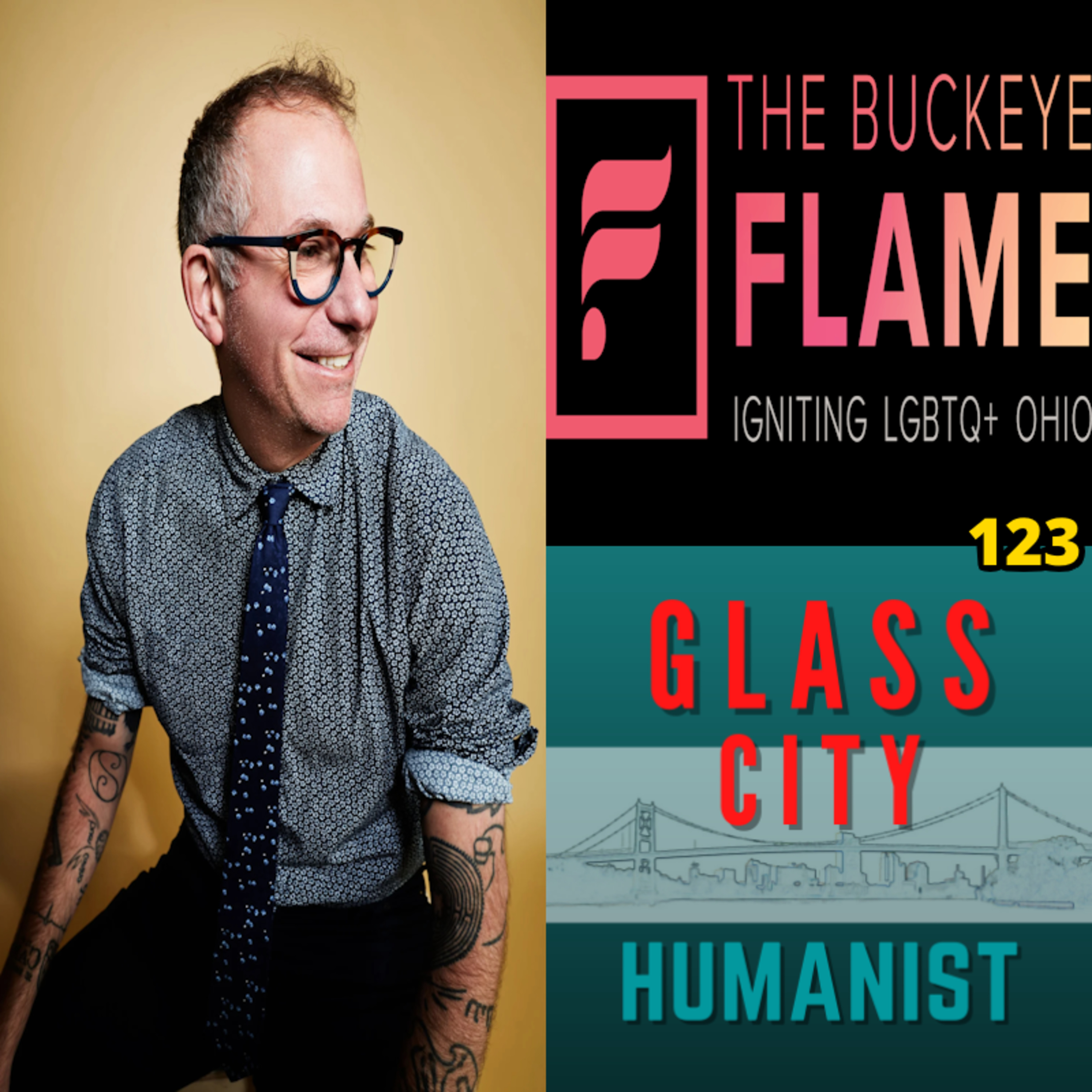
Testify: When Queer Ohioans Confronted the Man Trying to Erase Them with Ken Schneck
May 20, 2026
52m 31s
The Slow Death of the Voting Rights Act Is Complete
May 9, 2026
43m 20s
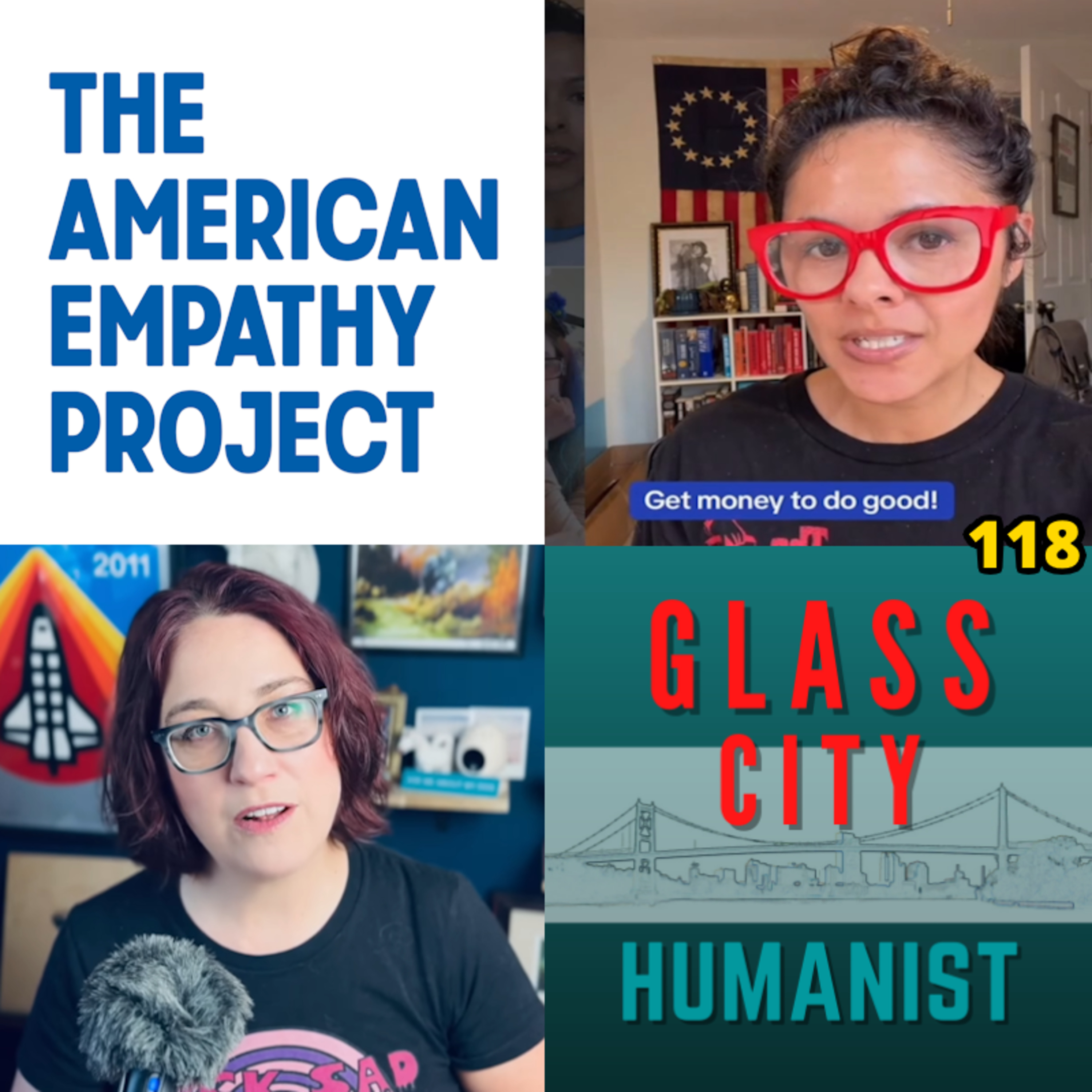
America's Empathy Deficit and Trump vs. The Pope
Apr 17, 2026
36m 00s
Social Links & Contact
Official channels & resources
Official Website
Login
RSS Feed
Login
| Date | Episode | Topics | Guests | Brands | Places | Keywords | Sponsor | Length | |
|---|---|---|---|---|---|---|---|---|---|
| 6/25/26 | ![]() Why Our Best Defense Is a Bold, Joyful Positive Humanism | Even with all the struggles in protecting our religious liberty, we need to remind ourselves how progressive and positive Humanism is. We do have to focus on negative aspects of the world in order to highlight how Humanism is a better, bold, and joyful way.We highlight a book by Roy Speckhardt and and essay by Fred Edwards to define humanism as a philosophy grounded in reason, science, empathy, compassion, fairness, civil liberties, and human rights. We also note that humanism is open-ended, forward-looking, and focused on life in the present rather than supernatural authority.We then look at three current religious liberty issues. One is the end of the biased Trump Religious Liberty Commission and a lawsuit filed by progressive groups. We talk about Pete Hegseth removing many religions off the official Department of Defense list and Douglas points out how an agency of the Federal government shouldn't be passing judgement on what is and what isn't an approved religion.Finally, we mention a Supreme Court decision the pushed aside a lawsuit involving a Rastafarian prisoner and the violation of his religious liberty. Religious liberty seems to only apply to Christian NationalistsFull Show Notes & Links UsedSubscribe to our free newsletterCheck out our merch | — | ||||||
| 6/12/26 | ![]() We Were There When the Shots Rang Out: More Guns, Same Excuses✨ | gun violencecultural norms+4 | — | Old West End FestivalAirport 75+4 | — | gun violencecultural norms+6 | — | 40m 59s | |
| 5/20/26 | ![]() Testify: When Queer Ohioans Confronted the Man Trying to Erase Them with Ken Schneck✨ | LGBTQ+ issuesOhio legislation+3 | Ken Schneck | Buckeye Flame | Ohio | LGBTQ+Ohio+5 | — | 52m 31s | |
| 5/9/26 | ![]() The Slow Death of the Voting Rights Act Is Complete✨ | voting rightssystemic racism+4 | — | — | — | Voting Rights ActLouisiana v. Calais+5 | — | 43m 20s | |
| 4/17/26 | ![]() America's Empathy Deficit and Trump vs. The Pope✨ | humanismempathy+3 | — | the American Empathy Projectthe American Humanist Association | AmericaVirginia+2 | American Empathy Projectcommunity service projects+4 | — | 36m 00s | |
| 3/30/26 | ![]() How the SAVE Act and Drag Bans Are Connected✨ | SAVE Actvoter registration+2 | — | CongressYesterqueers | Ohio | democracyphoto ID+2 | — | 50m 52s | |
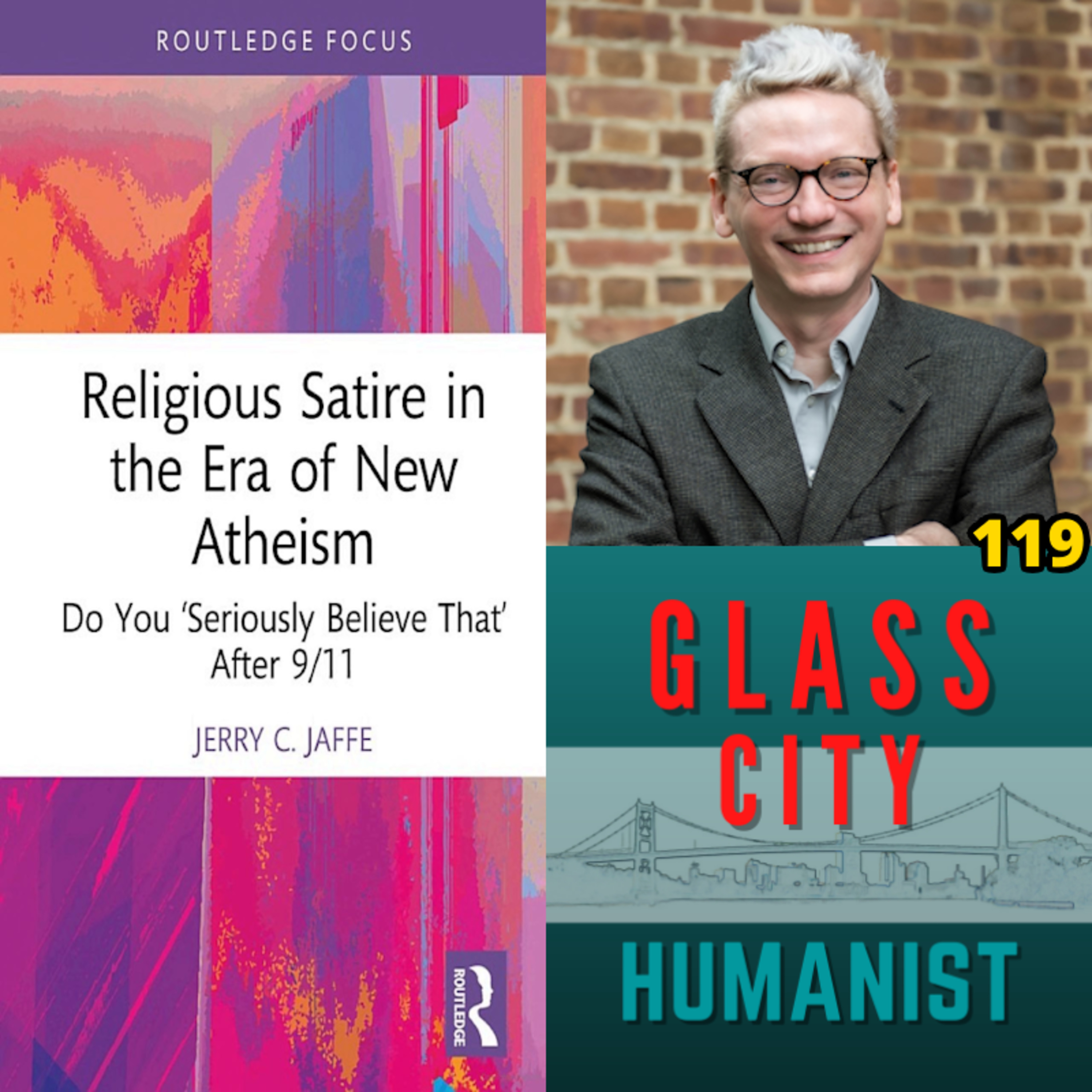
| 3/11/26 | ![]() God, Laughs, and Hypocrites: How Stand-Up Comedy Became America's New Pulpit with Dr. Jerry Jaffe✨ | stand-up comedyNew Atheism+3 | Dr Jerry Jaffe | Religious Satire in the Era of New AtheismIslam | ToledoUS | comedic satireevangelical beliefs+3 | — | 47m 43s | |
| 2/22/26 | ![]() Does Humanism Have A Jeffery Epstein Problem?✨ | empathysocio-political landscape+3 | — | American Empathy ProjectThe American Humanist Association+3 | — | Christian nationalistspolitical gain+3 | — | 34m 32s | |
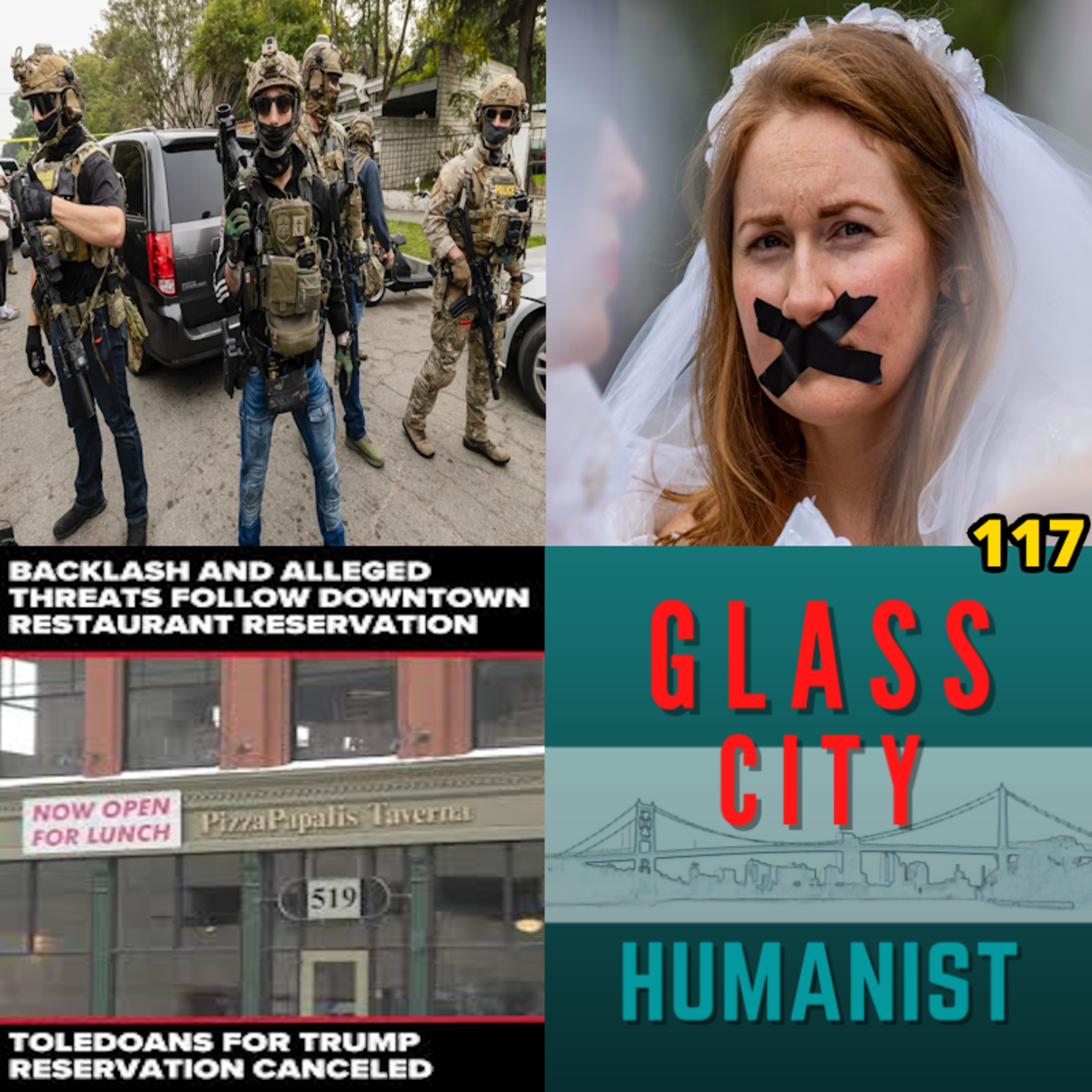
| 2/1/26 | ![]() The Streets Of Minneapolis Are Knocking On Our Door✨ | narrativespolitics+5 | — | Toledoans for TrumpImmigration and Customs Enforcement+1 | OhioMinneapolis | Toledoans for TrumpSenate Bill 341+2 | — | 32m 29s | |
| 1/18/26 | ![]() How Irrational Bans and Education Policy Are Weaponizing Systemic Injustice Against Marginalized Communities✨ | Trans rightsSystemic injustice+3 | — | US Supreme Court | Ohio | Supreme Courtdiscrimination+3 | — | 47m 48s | |
Want analysis for the episodes below?Free for Pro Submit a request, we'll have your selected episodes analyzed within an hour. Free, at no cost to you, for Pro users. | |||||||||
| 12/29/25 | ![]() Refuting Dennis Prager's Consequences of Secularism Video✨ | secularismdiversity+4 | — | Consequences of SecularismThe Consequences of Secularism | — | Dennis Pragerconservative commentary+1 | — | 42m 38s | |
| 12/3/25 | ![]() What Humanism Means Today✨ | HumanismScouting America+3 | Bob Barnes | DefenseScouting America+5 | USAmerica | Boy Scoutsmilitary support+2 | — | 44m 07s | |
| 11/22/25 | ![]() The Exception of Me, Free Speech, and LifeWise's Antisemitism✨ | free speechantisemitism+2 | — | the Toledo Fire Departmentthe LifeWise Academy's | — | Toledo Fire DepartmentCharlie Kirk+2 | — | 36m 43s | |
| 11/5/25 | ![]() Lifewise Film Taints The Public Schools With False Propaganda✨ | documentaryChristian nationalism+3 | — | LifewiseLifewise Academy+5 | America | Lifewise AcademyReleased Time Religious Instruction+3 | — | 31m 15s | |
| 10/23/25 | ![]() The New Inquisition? Ohio's Church-State Bills & Trump's Memo | We analyze the current legislative landscape in Ohio with a focus on bills that intersect with church and state issues. We start with House Bill 485, the Baby Olivia Act, which aims to mandate the annual showing of a misleading anti-abortion fetal development video in public schools. We also look at House Bill 486, the Charlie Kirk Heritage Act, its problematic nature, which promotes a narrow view of Christianity's influence on culture and history. We segue into the controversial School Chaplain Act, House Bill 531, which proposes introducing volunteer chaplains into public schools, a move that sparks concerns regarding the adequacy of mental health support currently provided in schools. I outline the differences between this legislation and similar efforts in other states and offer my critical perspective on the necessity of employing chaplains versus qualified mental health professionals.Later, Federal issues also take center stage as we look at National Security Presidential Memorandum 7 signed by President Trump in September that authorizes federal law enforcement to go after people and groups they consider anti-Christian.This episode was produced from a Zoom meeting hosted by the Secular Humanists of Western Lake ErieFull Show Notes & Links UsedSubscribe to Free NewsletterCheck out our Merch | — | ||||||
| 10/10/25 | ![]() The Trump Memo: A Threat to Reason and Compassion | We look at the intriguing and often heated situation surrounding St. Anthony's Catholic Church. Once a church built for Polish immigrants, this historic building has been at the center of debate since it closed in 2005. SHoWLE didn't support the forced sale to the county. Now, with the Lucas County Land Bank planning to turn the 131-year-old building into a community center, there is a question whether preserving history meets the real needs of the Junction community.Next, we have Ohio's statehouse returning to work, where House Bill 57, meant to help schools provide overdose reversal drugs, has been changed by controversial amendments promoting released time religious education. The original bipartisan bill was hijacked by Christian Nationalists continuing their campaign to infect public schools. We expand our focus to a national issue: a recent national security executive order from President Trump targeting organizations considered "disruptive," including those labeled "anti-Christian." We discuss the significant effects of this memorandum on secular and humanist groups, linking it to historical abuses of power and questioning the legality and ethics of such monitoring.Full Show Notes & Links UsedSubscribe to our free newsletterCheck out our merch | — | ||||||
| 9/26/25 | ![]() Reaching Consensus Can Break Some Eggs | Our host, Douglas, is a seasoned leader in the humanist movement, starting his third decade of experience navigating internal debates, schisms, and the challenges of maintaining unity.Discover the intentional strategies used to foster constructive discussions, drawing parallels with the unified messaging of the right-wing and Christian nationalists. Learn about the diverse makeup of humanist groups, including the inclusion of Unitarians, Buddhists, pagans, and liberal Christians, and the personal journey of a militant atheist who has learned to respect different beliefs.We highlight the importance of treating everyone with dignity, focusing on ideas rather than personal attacks, and the crucial humanist principle of acknowledging that one could be wrong, especially in today's polarized climate. Tune in to hear about a recent meeting that tested these principles, focusing on divestments, boycotts, and living humanist values without hypocrisy.Full show notes & links usedSubscribe to our free newsletterCheck out our merch | — | ||||||
| 9/10/25 | ![]() Revitalizing Humanism: A New Era of Community Empowerment with Jake Via | We're joined by Jake Via, the new Organizing Director for the American Humanist Association. Our conversation explores Jake's journey from his conservative Christian upbringing to his eventual embrace of humanism. We look at how his early experiences shaped his values and laid the foundation for his current work, highlighting themes of community engagement and ethical living.Jake shares his thoughts on the role of an organizer at the AHA, explaining how grassroots mobilization and collaborative training efforts play a crucial part in advancing humanist values across the country. He points out the need for diverse programming that connects with a broader audience, recognizing that not everyone is drawn to traditional group formats. Jake expresses excitement for the initiatives he’s leading, including the recently launched Humanist Creator Fund aimed at sponsoring secular content creators. The project shows a smart way to expand humanism's reach and appeal, especially among younger generations who may not identify with traditional labels or organizations.Jake shares ideas about various outreach strategies, including programs for LGBTQ young humanists and the need for flexibility in how people can participate. He stresses that creating a welcoming environment is key for newcomers who might otherwise feel disconnected from formal humanist movements. Jake’s insights provide a clear path for building collaborative, supportive spaces that connect with individuals from many different backgrounds and experiences.Full show notes & links usedSubscribe to our free newsletterCheck out our merch | — | ||||||
| 8/21/25 | ![]() How Will You Be Remembered? | Recognizing the finite nature of human existence, humanists are inspired to maximize their time and consider the lasting legacies they will leave behind. This reflection was particularly meaningful due to the recent passing of our friend, Ford B Cauffiel Sr., an accomplished entrepreneur and community leader. Ford profoundly impacted those around him through his diverse contributions, including a notable classic car collection and philanthropic efforts supporting various charities and environmental causes.The discussion also touches upon the societal tendency to honor historical figures who may have had problematic aspects. The removal of the Christopher Columbus statue in Columbus, Ohio, was presented as a contemporary example of a cultural reevaluation where confronting uncomfortable historical truths is necessary. We advocated for a more thoughtful approach to commemoration, emphasizing the celebration of individuals who have genuinely worked towards the betterment of humanity, moving beyond glorified historical interpretations to embrace those whose actions align with humanistic values. The launch of the Secular Vote Project was also discussed, an initiative designed to empower the growing demographic of secular individuals in America. Led by figures such as Sarah Levin and Dr. Juhem Navarro-Rivera, this project aims to provide a focused voice for the often-overlooked non-religious population in political discourse, fostering a deeper understanding of secularism through research and discourse led by those who embody this identity.Full show notes and links usedSubscribe to our free newsletterCheck out our merch | — | ||||||
| 8/5/25 | ![]() The Epstein Files & Religious Hypocrisy: Putting Politics Over People | We have a critical examination of the hypocrisy within the Christian nationalist movement, particularly concerning the lack of response to revelations from the Epstein files. We highlight the dissonance between the public pronouncements of moral leadership and arguing that partisan interests often supersede ethical accountability. Specific examples of political figures leveraging family values rhetoric while ignoring or downplaying serious moral crises are analyzed, exposing the devastating consequences of such double standards.We then explore the complex web of connections between Jeffrey Epstein and politically influential figures, particularly within the Republican Party. The episode analyzes the implications of past associations and the ongoing debate surrounding the release of Epstein's investigative files, underscoring the need for accountability and transparency. The discussion acknowledges the moral complexities inherent in this situation, advocating for a reckoning that prioritizes the rights and well-being of victims over the protection of powerful individuals. The narrative highlights the power dynamics that shield perpetrators and the urgent need to challenge these systems.If you wear your religion on your sleeve then We demand moral integrity from political leaders, particularly those who claim to champion family values and child protection.We also promote a Toledo screening of "The Last Class," a documentary featuring Robert Reich, focusing on education and economic justice. Proceeds from ticket sales will benefit our local humanist community.Full show notes & links usedSubscribe to our free newsletterCheck out our merch | — | ||||||
| 7/20/25 | ![]() The Johnson Amendment Is Officially Dead — And Churches Are Becoming Political Machines | We address a recent editorial from the Toledo Blade that mischaracterizes the failed merger between Kroger and Albertsons. Contrary to the editorial’s claims, it was not the Federal Trade Commission (FTC) but a federal judge who blocked the merger due to concerns about market competition. We discuss the broader implications of allowing massive grocery chains to consolidate, particularly the potential harms to consumer choice, pricing, and local economies.Then we look at a developing legal case involving LifeWise Academy, a religious group seeking to conduct Christian education for public school kids during the school day. Their lawsuit against the Ohio Civil Rights Commission centers on the ministerial exemption, a legal doctrine that exempts religious institutions from certain employment laws. We explore how this exemption, while designed to protect religious freedom, it should only apply to groups that actually preach a religion or are incorporated as religious. Lifewise is not that at all.Our main topic concerns the Johnson Amendment, a pivotal law that prevents tax-exempt organizations—including churches—from engaging in political endorsements. A recent court filing proves what church and state advocates have been saying for decades about the non-enforcement of the Johnson Amendment. We discuss the history and intent of the Johnson Amendment, its role in preserving the neutrality of religious institutions in politics, and the risks of increased religious influence on electoral processes if this safeguard is finally officially thrown away.Rounding out the episode, we invite listeners to reflect on broader humanist themes through the lens of two influential thinkers. We discuss Robert Reich’s advocacy for economic justice, framed by his new documentary The Last Class, which will be screening soon in Toledo. His insights on inequality and education resonate with humanist values of fairness and dignity. We also share actor and Humanist Stephen Fry’s contemplations on mortality and the search for meaning—an uplifting reminder of the importance of living authentically and compassionately, even in uncertain times.01:00 The Last Class Toledo Showing invite and promo07:54 Update on Lifewise lawsuit11:13 Correcting Toledo Blade Editorial about failed merger19:36 A Bit of Stephen Fry25:17 The Johnson Amendment Is Officially DeadFull show notes & Links usedSubscribe to our free newsletterCheck out our Merch | — | ||||||
| 7/6/25 | ![]() Systemic Poverty Needs Systemic Solutions: A Response to Religious Conservatives | A recent ruling from Franklin County has called into question the constitutionality of the Ohio EdChoice voucher program, which has long been a point of debate for its impact on public school funding. The detailed 47-page decision found that the program violates the Ohio Constitution by diverting public funds away from public schools and into private institutions, effectively creating a dual education system. This thoughtful ruling not only invites a renewed conversation about the state’s funding priorities but also sets the stage for a meaningful legal review, as proponents of the voucher system prepare to appeal. It's a critical opportunity to reflect on how we invest in education and ensure equitable access for all students.We turn our attention to a story involving LifeWise Academy, an organization promoting Bible-based educational programs in the middle of the public school day. Recently, LifeWise faced allegations of labor law violations and responded by attempting to invoke a ministerial exemption—a legal concept usually reserved for recognized religious institutions. This case raises important questions about the balance between religious freedom and employee rights, and the responsibilities organizations must uphold when operating in public education spaces. By examining these legal nuances, we can better understand the boundaries of religious exemptions and how they intersect with employment protections. It’s a chance to think critically about maintaining fairness and accountability in all institutions, regardless of their religious affiliation.Finally, we look at the broader discussions about the role of government in supporting those in need, particularly in light of views expressed by Pastor Ralph Drollinger, who leads Bible studies for members of Congress. Drollinger advocates a model where aid to the poor is first the responsibility of individuals and families, rather than the state. While this perspective emphasizes personal and community involvement, it raises important concerns about whether such a framework is sufficient to address systemic poverty. We explore the history and importance of public social safety nets and argue for their continued necessity alongside private and charitable efforts. By drawing on historical and ethical perspectives, we make the case for policies that reflect compassion, equity, and collective responsibility—ensuring that no one is left behind.01:00 News Update11:07 Update of the News Update17:21 Systemic Poverty Needs Systemic Solutions: A Response to Religious ConservativesFull Show Notes & Links UsedSubscribe to our free newsletterCheck out our merchSupport the show | — | ||||||
| 6/20/25 | ![]() Trump's Religious Liberty Commission is SHAMTASTIC! | We look into the implications of the inaugural meeting of President Trump's Religious Liberty Commission. The makeup of this commission suggests that true religious liberty may not be its primary focus, but rather an agenda of promoting Christian nationalism. The commission is chaired by Texas Lieutenant Governor Dan Patrick, with key figures such as Dr. Ben Carson and Paula White lending their voices to a narrative that prioritizes the rights and beliefs of Christians while sidelining the concerns of non-Christian and non-religious individuals.The commission features predominantly Christian members, alongside just one rabbi, with no representatives from other faiths or from the growing population of secular Americans. Then there is the absurdity of including controversial figures like television personality Dr. Phil, while critically assessing the narratives promoted by other commission members. Their rhetoric suggests a belief that religious ideologies must permeate all aspects of public life, framing the absence of Christianity in education as a significant societal threat. This perspective raises alarm bells about the direction in which they seek to steer the American landscape.Then we discuss the proposed Ohio state budget that has been hailed by a Christian nationalist group as pro-life and pro-family, despite its evident cuts to vital community services, including education and social support programs. Drawing on an insightful piece from columnist Marilou Johanek, we unpack how this budget undermines the very families it claims to protect, while simultaneously prioritizing religious agendas over critical humanitarian needs. This connects these issues to broader national narratives, such as the recent Supreme Court ruling on Tennessee's gender-affirming care ban, highlighting the discriminatory nature of these laws and the religious motivations behind them.Full show notes and links usedSubscribe to our free newsletterCheck out our merch | — | ||||||
| 6/8/25 | ![]() The Empathy Deficit: Why Religious Conservative Lawmakers Are Failing Their Constituents | We look into the pressing issues of compassion and empathy in political discourse, particularly among conservative politicians, and the importance of humanism in addressing these challenges. We discuss the alarming trend of lawmakers advocating for cuts to essential social safety nets, such as Medicare and Medicaid, which provide critical support to those struggling to meet basic living standards. We lay bare the injustices inherent in proposals that prioritize tax cuts for the wealthy over the welfare of those in need.Our exploration of a particular incident with US Senator Joni Ernst showcases the stark contrast between privilege and empathy, underscoring the disconnect many politicians have with the realities of their constituents' struggles.We comment on the recent attempts to erase LGBTQ+ history and contributions from public life, notably the controversial decision to remove Milk's name from a Navy ship. We stress the importance of recognizing and honoring figures like Milk, who has become emblematic of the fight for civil rights, while also reflecting on the persistence of anti-LGBTQ+ sentiments in political circles. Harvey Milk will be known in history far longer than the current Secretary of Defense and President Trump.Finally we look at recent study commissioned by the state of Utah regarding gender-affirming care for transgender youth, which illuminates the significant psychological benefits that such treatments can provide. Despite overwhelming evidence supporting the efficacy and safety of gender-affirming care, we lament the ongoing legislative efforts to restrict access to these vital services, showcasing how ignorance and prejudice often overshadow scientific inquiry. Drawing parallels to Douglas' family story, we highlight the hypocrisy in how society treats different marginalized groups, particularly in terms of medical autonomy.Full Show Notes & Links UsedSubscribe to our free newsletterCheck out our merch | — | ||||||
| 5/21/25 | ![]() Who’s Killing Ohio’s Public Education? Follow the Vouchers | We look at the current legislative climate in Ohio, with a focus on the extreme measures being proposed and enacted. The Ohio State legislature this session is exhibiting a troubling trend towards more radical policies, including the controversial SB1, dubbed the Higher Education Destruction Act. This bill threatens to undermine academic freedom and censor educational content while limiting the rights of faculty to advocate for their rights through strikes. In response to these alarming developments, initiatives are underway to put a repeal of SB1 on the ballot, encouraging the public to participate actively in this critical issue.We also look at the bill that would ban ranked choice voting, which would prevent municipalities from adopting this more equitable electoral system while penalizing them financially for doing so. Opponents' claims regarding ranked choice voting are scrutinized, revealing misinformation by supporters of the ban. We argue that equitable representation is paramount, especially when the current two-party system often stifles genuine competition and fails to reflect the will of the electorate.Then we take a deep dive into Ohio's school voucher system, masked under the guise of educational choice but functioning essentially as a financial scheme that shifts public funding to private enterprises. The data underscores that the vast majority of voucher funds benefit families already able to choose private education, leaving many rural communities without access to private schooling options. This Ponzi scheme on public education reveals a deliberate agenda to diminish public schooling and redistribute more resources away from already underfunded districts.By articulating the devastating consequences of these legislative developments, we advocate for a thoughtful examination of the policies being proposed and the necessity for collective action among those who value public education and equitable governance.00:50 Ohio Legislative Update19:30 School Voucher Ponzi SchemeFull Show Notes and Links UsedSubscribe to our free newsletterCheck out the show merch | — | ||||||
Showing 25 of 125
Pitch Fit is a Pro feature
See how bookable this show is for guests, which brands already advertise, the per-episode ad value, and the best-fit guest and sponsor profile. The numbers are blurred on the free plan.
How readily this show books outside guests like you.
How proven this show is for host-read sponsorships.
For Guests
ProFor Advertisers
ProUpgrade to Pro to unlock guest cadence, sponsor categories, fit scores, and per-episode ad value for this show.