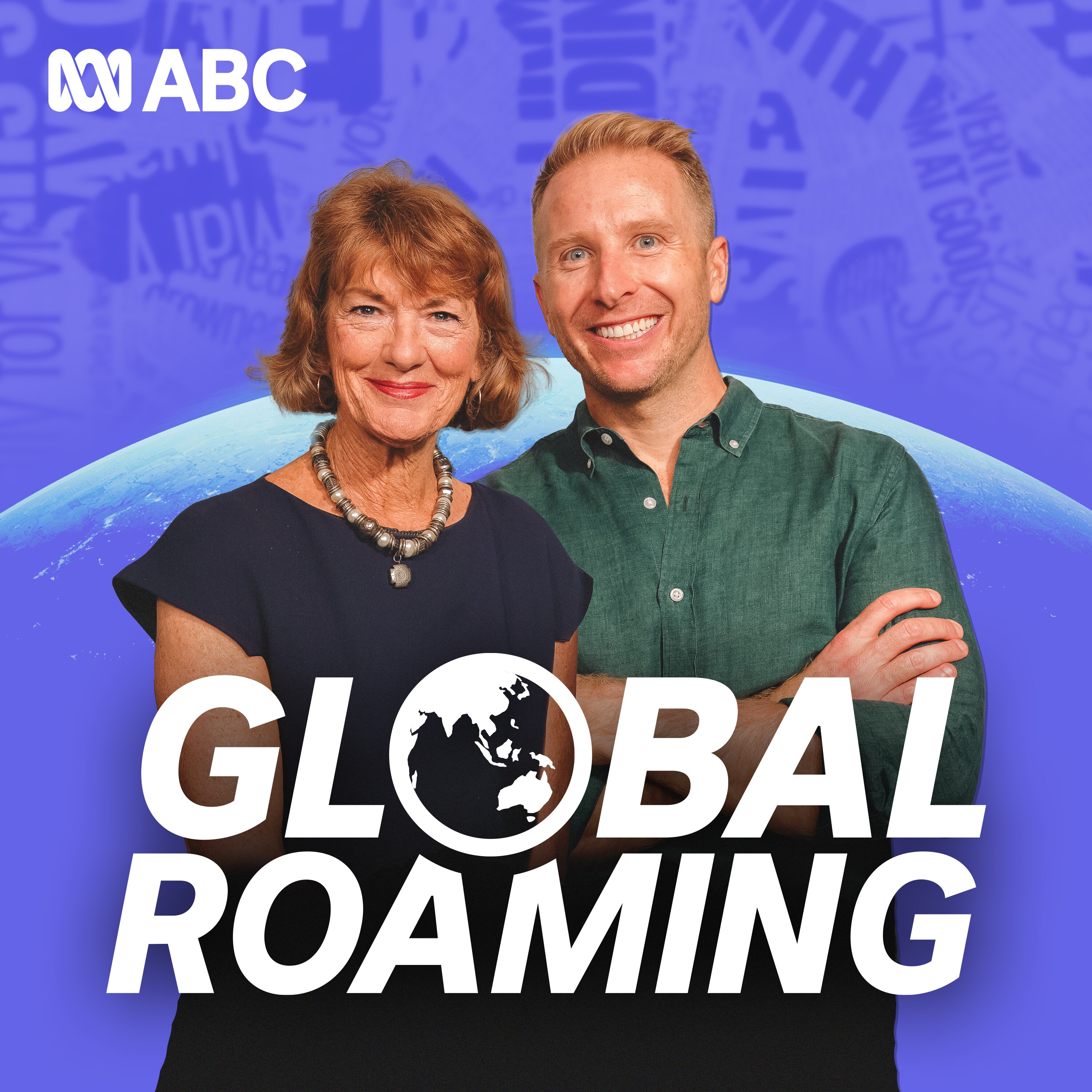
Global Roaming with Geraldine Doogue and Hamish Macdonald
by ABC Australia
Is this your podcast?On the show
From 48 epsHosts
Recent guests
Recent episodes
Is Narendra Modi trying to rig India’s elections?
Oct 19, 2026
29m 06s
Patrick Radden Keefe on the Russian money that remade London
Oct 16, 2026
28m 58s
What the gold market tells us about Trump, Russia, and China
Oct 15, 2026
28m 58s
Jordan fears Israel more than Iran. Is the Middle East's buffer state about to crack?
Oct 14, 2026
28m 58s
Brazil’s Bolsonaro surge: Are Trump’s friends taking over Latin America?
Oct 13, 2026
28m 57s
Insights from recent episode analysis
Audience Interest
Podcast Focus
Publishing Consistency
Platform Reach
Insights are generated by CastFox AI using publicly available data, episode content, and proprietary models.
Most discussed topics
Brands & references
Total monthly reach
Based on 1 signal.
Built from
By chart position
- 🇦🇺Australia · NewsHOME#2015K to 80K
- 🇻🇳VN · News#17129 to 152
- Per-Episode Audience
Est. listeners per new episode within ~30 days
15K to 81K🎙 Daily cadence·250 episodes·Last published today - Monthly Reach
Unique listeners across all episodes (30 days)
51K to 269K🇦🇺100% - Active Followers
Loyal subscribers who consistently listen
28K to 148K
Market Insights
Platform Distribution
Reach across major podcast platforms, updated hourly
Total Followers
—
Total Plays
—
Total Reviews
—
* Data sourced directly from platform APIs and aggregated hourly across all major podcast directories.
Social Links & Contact
Official channels & resources
Official Website
Login
RSS Feed
Login
| Date | Episode | Topics | Guests | Brands | Places | Keywords | Sponsor | Length | |
|---|---|---|---|---|---|---|---|---|---|
| 10/19/26 | Is Narendra Modi trying to rig India’s elections? | ABC Asia editor Karishma Vyas joins Geraldine Doogue and Hamish Macdonald to unpack a week of fast-moving stories across Asia. In India, a youth protest movement – born after the the chief justice of India offhandedly called unemployed graduates “cockroaches and parasites” – has taken to the streets of New Delhi following the government's decision to strike 130 million names from the electoral roll, triggering a police crackdown, mass arrests and detention of the movement's leaders. Meanwhile, in Laos, China has opened its first foreign air base, a former Vietnam War-era facility now repurposed with Beijing’s backing. Vietnam is watching the development closely given its own territorial disputes with China.Plus: the trial date is set for Simon Carman, the Australian man accused of murdering 17-year-old Tunchanok Donhomla in Pattaya, and what the case reveals about Pattaya’s sex tourism economy.Guest: Karishma Vyas, the ABC's Asia editorRecommendations:Karishma – NAZA documentary by Yuval Abraham and Rachel SzorHamish – 2026 ABC Boyer Lecture SeriesGeraldine – David Brooks, authorGet in touch:We'd love to hear from you! Email us at [email protected] all the episodes of Global Roaming now via the ABC Listen App or wherever you get your podcasts. | 29m 06s | ||||||
| 10/16/26 |  Patrick Radden Keefe on the Russian money that remade London | In 2019, 19-year-old Zac Brettler fell from a riverside apartment balcony into the Thames. His death would reveal a massive dirty-money empire.Brettler's parents went looking for answers and learned their son had been living a lie, posing as the son of a Russian oligarch.Patrick Radden Keefe, Author of blockbuster books London Falling and Say Nothing, traces how one boy’s death opens onto a far bigger story: how London remade itself as a safe harbour for Russian and Gulf money.Keefe calls himself the skunk at the garden party, the outsider who names what locals keep hidden in plain sightHamish Macdonald sits down with Keefe for a long, warm talk about money, grief, Instagram and why the truest stories hide where everyone can see them. Waleed Aly sets it up.Guest: Patrick Radden Keefe, Investigative journalist and author of London Falling & Say NothingGet in touch:We'd love to hear from you! Email us at [email protected] all the episodes of Global Roaming now via the ABC Listen App or wherever you get your podcasts. | 28m 58s | ||||||
| 10/15/26 |  What the gold market tells us about Trump, Russia, and China | Gold is the ultimate rainy-day investment. So why are countries around the world shoring up their stockpiles?And what does it mean when the price of gold drops after reaching record highs?Geraldine Doogue and Latika Bourke are joined by Adrian Ash, the director of research at leading gold market BullionVault, to explain how China and Russia use gold to avoid sanctions, build wealth, and collect cultural capital.Plus, why are countries like France and the Netherlands moving their gold out of U.S. vaults back to their territory? And how did the world change when we moved away from the gold standard?Guest: Adrian Ash, director of research at BullionVaultGet in touch:We'd love to hear from you! Email us at [email protected] all the episodes of Global Roaming now via the ABC Listen App or wherever you get your podcasts. | 28m 58s | ||||||
| 10/14/26 |  Jordan fears Israel more than Iran. Is the Middle East's buffer state about to crack? | Wedged between Israel, Syria, Iraq and Saudi Arabia, Jordan has spent decades surviving crises that would have broken many states.It hosts millions of refugees, depends heavily on US support and now sits at the centre of the widening confrontation involving Iran, Israel and Washington. This year alone, Jordan is due to receive almost US$2 billion in American aid while also finding itself increasingly exposed to regional conflict.But according to political scientist Sean Yom, Jordan's greatest fear isn't Iran. It's the possibility that Israel moves to annex the West Bank, triggering a new wave of Palestinian displacement across the Jordan River. For a country where an estimated 50 to 65 per cent of citizens are of Palestinian origin, the consequences could be profound.Could the kingdom absorb another refugee influx? What happens if Donald Trump backs away from opposition to annexation? And why does King Abdullah believe Jordan's crisis could become the Middle East's crisis?Laura Tingle and Latika Bourke speak with Jordan specialist Sean Yom, Author of Jordan: Politics in an Accidental Crucible about the strategic pressure bearing down on one of Washington's most important Arab allies, and why Australia's visitors from Amman may have more urgent messages than ever before.Guest: Sean Yom, Author of Jordan: Politics in an Accidental Crucible and Professor of Political Science at Temple UniversityGet in touch:We'd love to hear from you! Email us at [email protected] all the episodes of Global Roaming now via the ABC Listen App or wherever you get your podcasts. | 28m 58s | ||||||
| 10/13/26 | Brazil’s Bolsonaro surge: Are Trump’s friends taking over Latin America? | His father’s in jail for attempting a coup, but Flavio Bolsonaro currently stands as the likeliest candidate for president of Brazil after the first round of voting.But as Brazil’s continues to rely heavily on Chinese trade, could the Trump-aligned leader find himself caught between his ideological goals and Brazil’s economic needs?This week, Laura Tingle and Latika Bourke speak with Brazilian political analyst Thiago de Aragão about the shock result in Brazil’s first-round election, the deep polarisation of Brazil’s electorate, and why president Lula’s pitch did not resonate with voters as much as he had hoped.Plus, as the EU-Mercosur trade agreement builds steam, could Brazil’s future lie with Europe?Guest: Thiago de Aragão, Brazilian political analyst, director of Arko Advice consultancyGet in touch:If you'd like to attend the 2026 ABC Boyer Lectures in Sydney on October 14th, please email us at [email protected] Please note tickets are limited. | 28m 57s | ||||||
| 10/12/26 | Do Trump’s allies now own everything you watch? | Paramount’s takeover of Warner Bros is done, handing David Ellison, son of Oracle billionaire Larry Ellison, control of CBS, CNN, HBO Max, Paramount Plus and more.Geraldine Doogue and Hamish Macdonald are joined by international correspondent Anna Fifield to unpack what it means that CBS is now run by Bari Weiss, a former New York Times writer with no television experience, and why insiders are already asking whether the network’s rightward tilt is coming for CNN next.Plus: New Zealand’s election campaign heads into its final weeks with both major parties polling at historic lows, and Anthony Albanese’s awkward moment at the Pacific pre-COP meeting in Tuvalu.Guest: Anna Fifield, Independent journalist and foreign affairs commentator. Author of the Between Giants Substack.Get in touch:If you'd like to attend the 2026 ABC Boyer Lectures in Sydney on October 14th, please email us at [email protected] Please note tickets are limited.Find all the episodes of Global Roaming now via the ABC Listen App or wherever you get your podcasts. | 28m 35s | ||||||
| 10/9/26 |  Does Australia overrely on the US? Two experts debate ANZUS and AUKUS | As long-held relationships between the US and traditional allies like Canada and the UK unravel, does Australia need to start eyeing the emergency exit? Does Australia need a plan B? That was the topic at a major United States Studies Centre debate in Sydney held earlier this month between former department of Foreign Affairs secretary Peter Varghese and former Home Affairs secretary Mike Pezullo, hosted by Global Roaming's Geraldine Doogue.On today's episode of Global Roaming, Geraldine Doogue and Nick Bryant discuss the major arguments of the debate, the assumptions and myths underpinning the relationship between Australia and the US, and whether Australia might be more independent in its foreign policy than some detractors might have thought.Plus, what countries are the best candidates for Australia to forge closer relationships with? And how has the Australian-US relationship changed from Menzies and JFK to Trump and Albanese?Guests: Peter Varghese, former Secretary of the department of Foreign Affairs and Trade & Mike Pezullo, former secretary of the Department of Home Affairs.Get in touch:If you'd like to attend the 2026 ABC Boyer Lectures in Sydney on October 14th, please email us at [email protected] note tickets are limited.Find all the episodes of Global Roaming now via the ABC Listen App or wherever you get your podcasts. | 29m 08s | ||||||
| 10/8/26 | Russia is stealing and indoctrinating Ukraine's children | It's been called the largest mass abduction of children since World War II. Tens of thousands of Ukrainian children have been taken by Russia since the full-scale invasion began, and many have never returned.ABC Europe correspondent Kathryn Diss joins Geraldine Doogue and Latika Bourke to explain what investigators, lawyers and Ukrainian officials say is a systematic effort to separate children from their families, erase their Ukrainian identity and absorb them into Russia.Kathryn describes the underground network trying to bring children home, the obstacles facing rescue missions, and the obfuscation strategy employed by the Russian government.Guest: Kathryn Diss, ABC's Europe CorrespondentGet in touch:If you'd like to attend the 2026 ABC Boyer Lectures in Sydney on October 14th, please email us at [email protected] | 28m 36s | ||||||
| 10/7/26 | 'Frozen on October 7': Why Israel hasn't moved on | Three years after October 7, the Middle East that emerged from the attacks looks very different from the one that existed before them.In this special Global Roaming roundtable, Geraldine Doogue, Laura Tingle, Latika Bourke and Hamish Macdonald examine how the Hamas attacks of October 7, 2023, and the war that followed have reshaped Israel, Palestine and the wider region.They discuss the trauma that still defines Israeli society, the unresolved questions around security failures on the day, and why many Israelis remain focused on accountability for what happened.The conversation also explores Gaza's future, the decline of Hamas's leadership, and whether new governance plans backed by regional and international actors could eventually create a path forward.Plus, the role of Iran, Saudi Arabia, Qatar, the United Arab Emirates and Turkey in a region whose balance of power is still shifting.Get in touch:We'd love to hear from you! Email us at [email protected] all the episodes of Global Roaming now via the ABC Listen App or wherever you get your podcasts. | 29m 06s | ||||||
| 10/6/26 | A new world order is forming in the Middle East. Who will come out on top? | Eight months into the war between Iran, Israel and the US, the Middle East's old order is being redrawn, while opportunities and pitfalls abound. Geraldine Doogue and Nick Bryant ask Middle East scholar James Dorsey how Gulf states like Saudi Arabia and the UAE are navigating a world where the US is no longer a guaranteed protector, why the Houthis remain a potent force in Yemen, and why Dorsey believes a two-state solution for Israelis and Palestinians may now be genuinely unworkable. Plus: new sectarian unrest in Bahrain, the shrinking autonomy of Kurdish forces in Syria and Iraq, and what the UK's decision to send air refuelling support to Saudi Arabia signals about where the region is headed next.Guest: James Dorsey, scholar and author of the newsletter The Turbulent WorldGet in touch:We'd love to hear from you! Email us at [email protected] all the episodes of Global Roaming now via the ABC Listen App or wherever you get your podcasts. | 29m 06s | ||||||
Want analysis for the episodes below?Free for Pro Submit a request, we'll have your selected episodes analyzed within an hour. Free, at no cost to you, for Pro users. | |||||||||
| 10/5/26 | Xi Jinping is going after China's tycoons to save the economy | China's ultra-rich have started quietly selling down stakes in their own companies ahead of a looming October 22 deadline that will close a decades-old tax loophole on offshore family trusts. Geraldine Doogue and Nick Bryant ask International Intrigue's Jeremy Dicker what's driving Xi Jinping's push to tax China's wealthy under the banner of "common prosperity," and what a historic property crash and hundreds of billions in capital flight reveal about the health of the world's second-largest economy. Plus: what this year's aviation awards reveal about the soft-power battle being waged in business class, and a cold war turns up the heat in South Korea after a landmine blast on the DMZ. Is North Korea to blame?Guest: Jeremy Dicker, managing editor, International IntrigueGet in touch:We'd love to hear from you! Email us at [email protected] | 28m 36s | ||||||
| 10/2/26 | Policy of rupture: How the AfD became Germany's most disruptive force | German Chancellor Friedrich Merz looks weaker than ever, and the nation's far-right AfD is stronger than ever. Europe's most important country looks to be heading into a period of deep political instability. The AfD has just won two state elections in eastern Germany, while the hard-left Die Linke has taken Berlin. That leaves coalition talks in turmoil and raises fresh questions about whether Germany's long-standing political "firewall" against the far right can hold. At the same time, Berlin is trying to lead Europe's rearmament, support Ukraine against Russia, and fill the gap left by a more reluctant United States.Tom Nuttall, The Economist's chief Germany correspondent and head of its Berlin bureau, joins Laura Tingle and Latika Bourke to explain how Germany reached this point. We unpack the AfD's rise, its links to Russia, why Friedrich Merz has become so unpopular, and why growing numbers of voters are backing what Nuttall calls a "policy of rupture".Guest: Tom Nuttall, Chief Germany correspondent & head of the Berlin bureau - The Economist.Get in touch:We'd love to hear from you! Email us at [email protected] all the episodes of Global Roaming now via the ABC Listen App or wherever you get your podcasts. | 28m 57s | ||||||
| 10/1/26 |  Is Australia the world's last great book-loving nation? | Richard Walsh has spent decades publishing books. He thinks the physical book is surviving for a reason.As Radio National prepares to reveal Australia's Top 100 Books, Walsh joins Geraldine Doogue and Waleed Aly to explain why print continues to endure, even as reading habits decline and digital platforms dominate almost every other form of media. He argues that books offer a deeper reading experience than screens, helping readers remember, reason and engage with ideas in ways technology struggles to match.The conversation ranges from the changing economics of publishing to the rise of Amazon, book influencers, writers' festivals and book clubs. Walsh explains why individual book sales have fallen, why launching new authors has become harder, and why Australia remains one of the strongest book-reading nations in the world. Along the way, he reflects on some of the most influential books and authors he has worked with across a long career in Australian publishing.It's also a conversation about what books represent in a digital age. Are readers looking for authenticity? Why do physical books continue to matter? And what do we lose if reading moves entirely onto screens?Geraldine Doogue and Waleed Aly speak with veteran publisher Richard Walsh about the future of reading, publishing and the strange resilience of books.Guest: Richard Walsh, Australian publisherMentioned: Radio National's Top 100 Australian booksGet in touch:We'd love to hear from you! Email us at [email protected] all the episodes of Global Roaming now via the ABC Listen App or wherever you get your podcasts. | 28m 58s | ||||||
| 9/30/26 | 'To the Victor Belong the Spoils': Trump's UN speech and the weakest world order in generations | The world's leaders are heading home from UN General Assembly week, and Donald Trump gave them plenty to talk about: a threat to annihilate Iran, and a line about "the spoils" of victory that Foreign Policy editor-in-chief Ravi Agrawal says shocked him more.Agrawal argues Trump's coercive power may have peaked, with US munitions depleted by the Iran war, an unpopular presidency and midterms looming.So who fills the gap? He tells Geraldine Doogue and Latika Bourke he sees no clear successor, but he does see countries de-risking from Washington through new defence pacts and trade deals.He also warns that Ukraine faces a brutal winter as Russia scales up jet-powered drones.Plus: Israel's isolation ahead of its October election, and a surprising reason for hope.Guest: Ravi Agrawal, editor in chief of Foreign PolicyGet in touch:We'd love to hear from you! Email us at [email protected] all the episodes of Global Roaming now via the ABC Listen App or wherever you get your podcasts. | 28m 56s | ||||||
| 9/29/26 | They risked their lives for Australia. We left them behind in Afghanistan | Four years after Kabul fell, hundreds of Afghans who worked for the Australian Defence Force, diplomats and NGOs are still waiting on promised visas, while facing lethal risk. Waleed Aly and Hamish Macdonald speak to security consultant Dr Tony Murney and Azadi-e Zan's Susan Hutchinson, both of whom have spent years trying to get Australia's locally engaged employees to safety, about the human cost of a promise made by several successive governments and, they argue, broken by all of them.Plus, how Canada is leading the world in sponsoring refugees, and how Australia's current political climate is making it harder than ever to bring Australian allies homeGUEST: Dr Tony Murney, security consultant & Susan Hutchinson, executive director of women's rights organisation Azadi-e ZanGet in touch:We'd love to hear from you! Email us at [email protected] | 28m 58s | ||||||
| 9/28/26 | Has the flood changed Nepal forever? Amanda Hodge shares her ground view | A month after catastrophic floods and glacial collapse swept through Nepal, thousands are still missing and entire mountain communities have been wiped off the map.The Australian's Asia Pacific correspondent Amanda Hodge, just back from the disaster zone, tells Geraldine Doogue and Hamish Macdonald what she saw on the ground — including a shelter where 70 children have lost every member of their family — and unpacks the stark contrast between Nepal's response and Beijing's heavily censored silence.Plus: a story that's had almost no coverage in Australia — how Sri Lanka's High Court has just convicted 14 men over the 2019 Easter Sunday bombings, and why a former president now faces imminent arrest over explosive allegations regarding the attack. Guest: Amanda Hodge, Asia Pacific correspondent, The AustralianGet in touch:We'd love to hear from you! Email us at [email protected] | 29m 05s | ||||||
| 9/25/26 | Why Richard Flanagan says Elon Musk's X is the new Spanish inquisition | Australian author Richard Flanagan joins Global Roaming to talk about his new essay collection Heresies. He tells Hamish Macdonald and Waleed Aly why he thinks Elon Musk's takeover of Twitter echoes the public punishment of heretics in the Spanish Inquisition, why he believes Australia is a uniquely conformist nation unable to reckon with its colonial history, and the extraordinary story of a plan to build a Jewish homeland in the wilderness of southwest Tasmania.Plus: why Flanagan says hope, not despair, is the truly heretical position in 2026.Guest: Richard Flanagan, author of HeresiesVote in Radio National's Top 100 Australian books hereGet in touch:We'd love to hear from you! Email us at [email protected] all the episodes of Global Roaming now via the ABC Listen App or wherever you get your podcasts. | 29m 08s | ||||||
| 9/24/26 | Is China's rare earth monopoly already unbreakable? | China controls as much as 95–99% of the world's heavy rare earth processing.Your phone, your car, the wind turbines on the horizon, the F-35 fighter jet; all of them run on permanent magnets made from a handful of obscure elements, and nearly every gram of it passes through Chinese hands before it reaches the rest of the world. Beijing didn't seize this position overnight. It's the result of three decades of Western capital and regulation walking away from an industry China chose to dominate. Now, with export freezes already hitting Japan and rattling European car makers, analyst and author Tomasz Nadrowski explains how deep the West's dependency really runs and whether Australia's own rare earth deposits can help close the gap before it's too late.Guest: Tomasz Nadrowski, author of Mineral War: China's Quest for Weapons of Mineral Destruction. Get in touch:We'd love to hear from you! Email us at [email protected] all the episodes of Global Roaming now via the ABC Listen App or wherever you get your podcasts. | 29m 05s | ||||||
| 9/23/26 | Will Argentina go to war with the UK over the Falklands? | Argentina's President Javier Milei is suffering in the polls. The Falkland Islands may help with that.Javier Milei's radical style of leadership has earned him more than just the nickname 'El Loco', it's engendered a serious turnaround in Argentina's economy, slashing inflation down from triple digits. However, with his approval rating dropping and an election approaching, Milei has returned to a long-standing issue to drum up some support - Argentina's claim to the Falkland Islands.Hamish Macdonald and Waleed Aly are joined by Constanza Sanhueza, a senior lecturer in comparative politics at ANU, on why exactly the issue of the Falklands (or Malvinas) resonates so strongly with the Argentinian people, and whether there's any bite behind the president's bark.Plus, will Trump back Argentina's claim in order to punish the UK over the Iran conflict? and why is Argentina struggling with such a persistent poverty rate despite their economic turnaround?Guest: Constanza Sanhueza, senior lecturer in comparative politics, ANUGet in touch:We'd love to hear from you! Email us at [email protected] | 28m 56s | ||||||
| 9/22/26 | Can the centre hold? Lord Andrew Roberts on extremism and antisemitism | Historian Lord Andrew Roberts, biographer of Churchill and Napoleon, sits down with Geraldine Doogue fresh from visiting the site of the Bondi Beach massacre, a visit he links directly to his work chairing the 7 October Parliamentary Commission Report, produced by the UK-Israel All-Party Parliamentary Group. He argues antisemitism's fastest growth is coming from elite universities, traces a "bridgehead" from fringe to mainstream politics in the UK and Europe, and gives his read on Trump's Iran gamble, Taiwan, and whether the postwar order can hold. Guest: Lord Andrew RobertsGet in touch:We'd love to hear from you! Email us at [email protected] all the episodes of Global Roaming now via the ABC Listen App or wherever you get your podcasts.Editor's note: In this episode Lord Andrew Roberts incorrectly refers to the Rape of Nanjing taking place in 1934 and 1935. The correct dates are 1937 and 1938. | 28m 56s | ||||||
| 9/21/26 | AI tech bros are warning AI will destroy us. Are they right? | Tech giants from OpenAI, Anthropic, and X have all warned in the same week that AI could threaten humanity itself, as former employees go public with their concerns.Geraldine Doogue and Hamish Macdonald ask foreign correspondent Anna Fifield if calls for regulation are credible, and if Donald Trump is even listening.Plus, how does China feel about AI? Models like DeepSeek have grabbed media attention, but internal voices have been raising concerns that widespread AI use could undermine the party line.Meanwhile, China and the U.S. vie for allies in the Pacific islands. Can America be taken seriously as a diplomatic force when they haven't had a resident ambassador in a Pacific island nation for over a decade?And Russians have gone to the polls for the first parliamentary elections since the beginning of the Ukraine invasion. It doesn't take a fortune teller to predict that Putin's Russia United party would be successful, but is his political grip beginning to slip?Guest: Anna Fifield, Independent journalist and foreign affairs commentator. Author of the Between Giants Substack.Get in touch:We'd love to hear from you! Email us at [email protected] all the episodes of Global Roaming now via the ABC Listen App or wherever you get your podcasts. | 29m 05s | ||||||
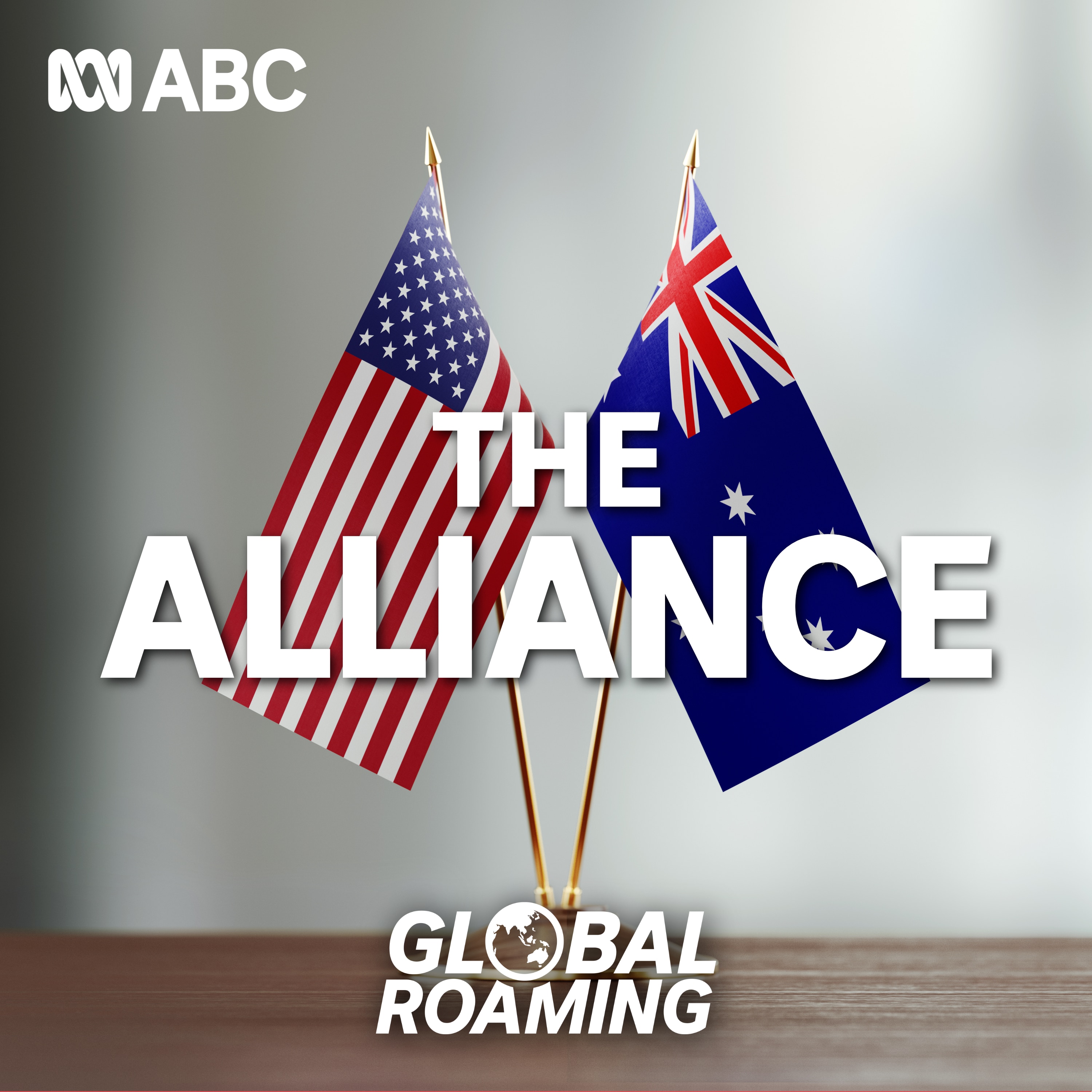
| 9/18/26 | The Alliance | Your questions answered | After The Alliance mini-series drew a flood of listener mail, Hamish McDonald and Geraldine Doogue open the mailbag and bring in Guardian Australia's Ben Doherty to answer the hardest question listeners asked: how much control does Australia actually have over the US military presence on its own soil?Doherty's investigation found the US has access to roughly 110 of Australia's 150 defence installations, including Pine Gap, permanently commanded by a US soldier, and bases used by nuclear-capable bombers. From 2032, we could also see nuclear-armed submarines through HMAS Stirling in Perth.Doherty reveals that, under the US policy of "strategic ambiguity," Washington won't say whether nuclear weapons are on board, and Canberra wont ask.Plus, what are the "shared values" our alliance is based upon and what are the alternatives?Guest: Ben Doherty, senior reporter with Guardian Australia.You can read Ben's full investigation here.Get in touch:We'd love to hear from you! Email us at [email protected] all the episodes of Global Roaming now via the ABC Listen App or wherever you get your podcasts. | 29m 06s | ||||||
| 9/17/26 | The assassination of a Maltese journalist and the verdict that shocked Europe | Nine years after Maltese journalist Daphne Caruana Galizia was killed by a car bomb, the businessman accused of arranging her assassination has walked free. A jury acquitted Yorgen Fenech of complicity and criminal association by an 8–1 vote, despite his own admission that he paid €50,000 to the middleman who recruited her killers and passed him confidential police information. Geraldine Doogue and Latika Bourke speak to Daphne's sister, Corinne Vella, about the verdict she calls "shocking," the political web the case exposed, reaching Malta's former prime ministerial chief of staff and energy minister, and why she believes prosecutors' promised appeal is the family's last real shot at justice.Guest: Corinne Vella, sister of Daphne Caruana GaliziaGet in touch:We'd love to hear from you! Email us at [email protected] all the episodes of Global Roaming now via the ABC Listen App or wherever you get your podcasts. | 28m 57s | ||||||
| 9/16/26 | Trump, the Kushners and the rise of the US oligarchy | Much has been made of Trump dispatching his son-in-law, Jared Kushner, for high-stakes diplomatic missions to solve conflicts across the world, but what do we know of the rest of the Kushner family? Jared's father, Charles Kushner, is now ambassador to France, pardoned by Trump after a criminal conviction that included tax violations and witness tampering. And his younger brother, Josh Kushner, quietly bought an NBA team after a bruising, aborted deal to sell off pieces of the World Cup earlier this year.Geraldine Doogue and Latika Bourke go roaming through the Kushner story with investigative journalist and author Andrea Bernstein.She traces it from the family's escape from the Nazis in Poland, through Charles Kushner's spectacular fall, to Jared's current role as a "special government employee" operating with none of the disclosure obligations that usually apply in Washington.Bernstein's verdict: the US isn't drifting toward oligarchy anymore. It already is one. Guest: Andrew Bernstein, investigative journalist and author of American Oligarchs: The Kushners, the Trumps, and the Marriage of Money and Power.Get in touch:We'd love to hear from you! Email us at [email protected] all the episodes of Global Roaming now via the ABC Listen App or wherever you get your podcasts. | 28m 56s | ||||||
| 9/15/26 | Will Japan's weak yen trigger a global debt crisis? | Global debt has passed 300 per cent of world GDP, bond yields are climbing across the world, and the U.S. war with Iran is putting pressure on households.Could we be facing the beginning of another global financial crisis?Geraldine Doogue and Latika Bourke sit down with the Financial Times Asia and Australia editor Robin Harding to explain how the bond market works, why it has such an impact on the economy, and why U.S. interventions have been lambasted by high-profile economists.Plus - how Australia passing one trillion dollars in debt might actually put us in a pretty safe spot, and how AI companies creating their own funding system could blow up in their faces.Guest: Robin Harding, Asia editor at the Financial Times Get in touch:We'd love to hear from you! Email us at [email protected] | 28m 56s | ||||||
| 9/9/26 | Italian politicsGiorgia Meloni+3 | Dr Marina Cino Pagliarello | London School of EconomicsEuropean University Institute+1 | ItalyBrussels | Giorgia MeloniItaly+5 | — | 29m 06s | ||
| 9/8/26 | far-right politicsGerman elections+4 | Waleed Aly | Alternative für DeutschlandWhat Future for Liberalism? | GermanySaxony-Anhalt+2 | AfDGermany+6 | — | 29m 06s | ||
| 9/7/26 | China's impact on Germanycar industry+4 | Jeremy Shapiro | European Council on Foreign RelationsNATO+1 | GermanyUS+1 | China shockGermany car industry+7 | — | 29m 05s | ||
| 9/4/26 | ANZUS allianceUS-Australia relations+4 | Anthony Scaramucci | Trump White HouseANZUS | AustraliaUS+2 | ANZUSAustralia+6 | — | 29m 06s | ||
| 9/3/26 | Australia-US relationssovereignty+5 | Andrew Hastie | Liberal MP for CanningANZUS+2 | — | Australiasovereignty+6 | — | 29m 04s | ||
| 9/2/26 | Australia foreign policyUS-China relations+4 | Kevin Rudd | AustraliaUnited States+3 | Northern TerritoryWestern Australia | AustraliaKevin Rudd+7 | — | 40m 05s | ||
| 9/1/26 | ANZUS treatyAustralia-US relations+4 | Michael WesleyTimothy J. Lynch | University of MelbourneANZUS | AustraliaUnited States | ANZUSAustralia+7 | — | 29m 03s | ||
| 8/31/26 | Australia-US relationsANZUS treaty+5 | John Howard | ANZUSAUKUS | — | AustraliaAmerica+8 | — | 29m 02s | ||
| 8/28/26 | migrationmilitary service+4 | Kbora Ali | Australian ArmyAir Force+1 | AfghanistanPakistan+2 | Afghan refugeeAustralian Army+6 | — | 29m 07s | ||
| 8/27/26 | big techauthoritarianism+4 | Maria Ressa | RapplerABC+1 | AustraliaSydney | Nobel Peace laureateauthoritarian rule+6 | — | 29m 04s | ||
| 7/21/26 | Australia-Indonesia relationslanguage education+5 | Laura TingleTim Watts | House of Representatives | AustraliaIndonesia+3 | Indonesian languageAustralia+5 | — | 29m 04s | ||
| 7/20/26 | US politicsDemocratic Party+5 | Jeremy Shapiro | European Council on Foreign RelationsNATO | AmericaIsrael+2 | DemocratsRepublicans+7 | — | 29m 04s | ||
| 7/17/26 | French politicsfar-right+4 | Victor Mallet | National RallyFinancial Times | FranceParis+1 | Marine Le PenNational Rally+5 | — | 29m 06s | ||
| 7/16/26 | IranTrump+4 | Robert Pape | Chicago University | IranUnited States | IranTrump+7 | — | 29m 04s | ||
| 7/15/26 | rugby leagueChina influence+4 | Sam WykesOliver Nobetau | NRLLowy Institute+1 | AustraliaChina+1 | rugby leagueChina+8 | — | 29m 05s | ||
| 7/14/26 | press freedomjudicial independence+4 | Anat Saragusti | Channel 13Union of Journalists in Israel+1 | IsraelGaza | Israelpress freedom+6 | — | 29m 05s | ||
| 7/13/26 | Indonesiacapital city+4 | Amanda Hodge | PakistanIran+1 | BorneoJakarta+1 | IndonesiaNusantara+7 | — | 29m 05s | ||
| 7/10/26 | net zeroclean energy+4 | Alan Finkel | ABC AustraliaThe Prince and the Pauper+2 | — | net zeroclean energy+5 | — | 29m 08s | ||
| 7/9/26 | economicsAustralia+4 | Michael Stutchbury | Australian Financial ReviewCentre for Independent Studies | Australia | economic luckhigh spending+3 | — | 29m 07s | ||
| 7/8/26 | security threatsAustralia+3 | Lydia Khalil | Lowy InstituteThe Man in the High Castle+1 | — | securityAustralia+4 | — | 29m 07s | ||
| 6/12/26 | Aung San Suu KyiMyanmar+4 | Kim Aris | ABC Australia | Myanmar | Aung San Suu KyiKim Aris+5 | — | 29m 07s | ||
| 6/11/26 | arms exportshuman rights+4 | Ahmed Abofoul | Al-Haq | AustraliaGaza+2 | Australiaarms exports+5 | — | 29m 05s | ||
| 6/10/26 | Israeli electionsNetanyahu+3 | Nadav Eyal | Columbia UniversityABC Australia | IsraelIran+1 | NetanyahuIsraeli election+5 | — | 29m 05s | ||
| 6/9/26 | AUKUSAustralia+4 | Sam RoggeveenMalcolm Turnbull+1 | Lowy InstituteABC Australia | — | AUKUSAustralia+5 | — | 29m 06s | ||
| 6/8/26 | middle powersAmerican hegemony+4 | Michael Ignatieff | Liberal Party of Canada | CanadaAustralia+2 | Canadamiddle powers+5 | — | 29m 06s | ||
| 6/5/26 | AUKUS submarine dealdefense+3 | Retired Rear Admiral Peter Briggs AOJennifer Parker | Virginia class submarinesBarrier Strategic Advisory+1 | Australia | AUKUSsubmarine deal+3 | — | 29m 05s | ||
| 6/3/26 | AUKUS dealsubmarines+3 | Scott Morrison | AUKUSGlobal Roaming+1 | — | AUKUSsubmarines+5 | — | 29m 04s | ||
| 6/3/26 | politicsauthoritarianism+4 | — | — | Türkiye | ErdoganTürkiye+4 | — | 29m 03s | ||
| 6/2/26 | politicscelebrity+3 | — | UFC | — | Donald TrumpDana White+5 | — | 29m 05s | ||
| 6/1/26 | Indonesiaeconomic opportunity+3 | — | — | Indonesia | Indonesiaeconomic opportunity+3 | — | 29m 04s | ||
| 5/8/26 | drone warfaremilitary technology+5 | Terry Van Haren | DroneShieldGlobal Roaming with Peter Pomerantsev | AustraliaSydney | dronesmilitary+6 | — | 29m 06s | ||
| 5/7/26 | energy transitionIran war+4 | Dani Alexander | University of New South Wales Energy Institute | IranStrait of Hormuz | Iran warenergy transition+5 | — | 29m 04s | ||
| 5/5/26 | Russiawar+4 | Peter Pomerantsev | SNF Agora InstituteThe Reckoning Project+5 | UkraineRussia | RussiaUkraine+6 | — | 29m 04s | ||
| 5/4/26 | Indonesian independencehistorical revolution+4 | David Van Reybrouck | ABC AustraliaRevolusi | IndonesiaAustralia | Indonesiaindependence+8 | — | 29m 06s | ||
| 5/1/26 | Australia-Japan relationsinternational diplomacy+3 | Sanae TakaichiShiro Armstrong | Australia-Japan Research CentreEast Asian Bureau of Economic Research+3 | — | AustraliaJapan+7 | — | 29m 07s | ||
| 4/30/26 | Iran conflictMiddle East relations+4 | Esfandyar Batmanghelidj | Bourse & Bazaar FoundationOrganisation of the Petroleum Exporting Countries | United Arab EmiratesStrait of Hormuz | IranMiddle East+7 | — | 29m 05s | ||
| 4/29/26 | political violencegun reform+4 | David Smith | The Guardian | United StatesWashington DC+1 | political violencegun reform+5 | — | 29m 05s | ||
| 4/28/26 | artificial intelligencegeopolitics+3 | Rohit Krishnan | Anthropic | USChina+1 | AI arms racegeopolitics+3 | — | 29m 07s | ||
| 4/27/26 | social media banyouth policy+4 | Meutya Hafid | Indonesia's Minister of Communications and Digital Affairs | IndonesiaAustralia+1 | Indonesiasocial media+4 | — | 29m 10s | ||
| 4/24/26 | Anzac Daywar+4 | — | Why Great Powers Sleepwalk to War — A Masterclass with Hugh White | — | Anzac Daywar+5 | — | 29m 07s | ||
| 4/23/26 | international lawhuman rights+3 | Kenneth Roth | International Criminal CourtHuman Rights Watch+1 | — | ICCBenjamin Netanyahu+3 | — | 29m 05s | ||
| 4/22/26 | global recessioneconomy+4 | Justin Wolfers | Gerald R. Ford School of Public Policy | United StatesIran+2 | global recessioneconomy+4 | — | 29m 00s | ||
| 4/21/26 | TrumpPope+4 | Waleed AlyElizabeth Bruenig | The Atlantic | — | TrumpPope+5 | — | 29m 06s | ||
| 4/20/26 | Indonesia economyAustralia-Indonesia relations+3 | Dr Mari Pangestu | World Bank | IndonesiaAustralia | Indonesiaeconomy+5 | — | 29m 04s | ||
| 4/17/26 | UK politicsBrexit+4 | Latika BourkeJames Crabtree | ABC Australia | UK | Keir StarmerUK politics+6 | — | 29m 05s | ||
| 4/16/26 | Hungarypolitics+4 | Gergő Papp | ABC AustraliaThe Fall of Orbán: How a Political Outsider Toppled Europe’s Trump | HungaryBudapest | HungaryPéter Magyar+5 | — | 29m 08s | ||
| 4/15/26 | China's role in global politicsMiddle East conflict+4 | Rana Mitter | Harvard Kennedy SchoolForeign Affairs+1 | ChinaMiddle East+1 | ChinaMiddle East+5 | — | 29m 06s | ||



Showing 72 of 250
Pitch Fit is a Pro feature
See how bookable this show is for guests, which brands already advertise, the per-episode ad value, and the best-fit guest and sponsor profile. The numbers are blurred on the free plan.
How readily this show books outside guests like you.
How proven this show is for host-read sponsorships.
For Guests
ProFor Advertisers
ProUpgrade to Pro to unlock guest cadence, sponsor categories, fit scores, and per-episode ad value for this show.
Similar Audience Demographics
Podcasts that attract a similar listener profile


Chart history for Global Roaming with Geraldine Doogue and Hamish Macdonald
Peaked at #20 in Australia, currently #20 in Australia.
| Market | Genre | Peak | Current | Trend |
|---|---|---|---|---|
| Australia | — | #20 | #20 | — |
| VN | — | #171 | #171 | — |
Chart Positions
2 placements across 2 markets.
Chart Positions
2 placements across 2 markets.