

Insights from recent episode analysis
Audience Interest
Podcast Focus
Publishing Consistency
Platform Reach
Insights are generated by CastFox AI using publicly available data, episode content, and proprietary models.
Total monthly reach
Estimated from 6 chart positions in 6 markets.
By chart position
- 🇺🇸US · Nature#1175K to 30K
- 🇳🇱NL · Nature#1771K to 10K
- 🇸🇪SE · Nature#1771K to 10K
- 🇩🇰DK · Nature#104500 to 3K
- 🇨🇭CH · Nature#129500 to 3K
- Per-Episode Audience
Est. listeners per new episode within ~30 days
6.0K to 41K🎙 Weekly cadence·43 episodes·Long inactive - Monthly Reach
Unique listeners across all episodes (30 days)
8.5K to 59K🇺🇸51%🇳🇱17%🇸🇪17%+3 more - Active Followers
Loyal subscribers who consistently listen
2.5K to 18K
Market Insights
Platform Distribution
Reach across major podcast platforms, updated hourly
Total Followers
—
Total Plays
—
Total Reviews
—
* Data sourced directly from platform APIs and aggregated hourly across all major podcast directories.
On the show
Recent episodes
Slave Trade Shipwrecks + Saving Sharks: Meet Alannah Vellacott
May 27, 2025
40m 06s
A Metamorphosis Behind Bars
May 20, 2025
36m 20s
Nature: The Cure for Ed Yong's Burnout?
May 13, 2025
43m 22s
Fossil Hunting in Conflict Zones
May 6, 2025
39m 17s
Fighting Violence Against the Lubicon Cree Land with Melina Laboucan-Massimo
Apr 29, 2025
43m 59s
Social Links & Contact
Official channels & resources
Official Website
Login
RSS Feed
Login
| Date | Episode | Description | Length | ||||||
|---|---|---|---|---|---|---|---|---|---|
| 5/27/25 |  Slave Trade Shipwrecks + Saving Sharks: Meet Alannah Vellacott | Sign up for Nature's newsletter: https://www.pbs.org/wnet/nature/newsletter/ Marine ecologist Alannah Vellacott grew up in a Bahamian subsistence fishing community, where wrestling sharks before sunrise was part of daily life. Now she's dedicated to conserving these majestic creatures and uncovering artifacts from slave-trade shipwrecks. In this episode, Alannah shares her journey to becoming a conservationist, highlighting the intersections of ecology, ancestry, and climate justice. Alannah's website: https://www.alannahvellacott.com/ Thanks for listening to Going Wild. You can learn more about season four HERE and catch up on seasons one through three HERE. If you want to support us, you can follow Going Wild on your favorite podcast-listening app. And while you're there, please leave us a review. It really helps. Follow PBS Nature and Dr. Rae Wynn-Grant on Instagram, TikTok, X, and Facebook. You can find more information on all of our guests this season in each episode's show notes. And you can catch new episodes of Nature, Wednesdays at 8/7 Central on PBS, pbs.org/nature, and the PBS app. Going Wild is a podcast by PBS Nature. NATURE is an award-winning series created by The WNET Group and made possible by all of you. Views and opinions expressed during the podcast are those of the individuals expressing them and do not necessarily reflect those of THIRTEEN Productions LLC/The WNET Group. | 40m 06s | ||||||
| 5/20/25 |  A Metamorphosis Behind Bars | Sign up for Nature's newsletter: https://www.pbs.org/wnet/nature/newsletter/ Carolina Landa's story begins in the orchards of Quincy, Washington and takes a transformative turn within the walls of an Oregon prison. Raised in a Mexican-American immigrant family, Carolina's curiosity and passion for science led her to champion sustainability initiatives behind bars. In this episode, she discusses how incarceration became a catalyst for her environmental awakening and advocacy for green rehabilitation programs. Thanks for listening to Going Wild. You can learn more about season four HERE and catch up on seasons one through three HERE. If you want to support us, you can follow Going Wild on your favorite podcast-listening app. And while you're there, please leave us a review. It really helps. Follow PBS Nature and Dr. Rae Wynn-Grant on Instagram, TikTok, X, and Facebook. You can find more information on all of our guests this season in each episode's show notes. And you can catch new episodes of Nature, Wednesdays at 8/7 Central on PBS, pbs.org/nature, and the PBS app. Going Wild is a podcast by PBS Nature. NATURE is an award-winning series created by The WNET Group and made possible by all of you. Views and opinions expressed during the podcast are those of the individuals expressing them and do not necessarily reflect those of THIRTEEN Productions LLC/The WNET Group. | 36m 20s | ||||||
| 5/13/25 |  Nature: The Cure for Ed Yong's Burnout? | Sign up for Nature's newsletter: https://www.pbs.org/wnet/nature/newsletter/ As a science journalist, Ed Yong spends a lot of time writing about nature without actually being immersed in it. After three years of covering the COVID pandemic, Ed found himself anxious, depressed, and in need of a change - despite winning the Pulitzer Prize. He took a step back from pandemic reporting to write a book about nature. During this time, Ed also discovered something that prompted him to fall in love with nature in a way he never had before. Birding brought him renewed joy and helped him realize that curiosity, empathy, and a “childlike” fascination with nature might be precisely what we need to reconnect with and save the world around us, as well as to foster community in times of need. Thanks for listening to Going Wild. You can learn more about season four HERE and catch up on seasons one through three HERE. If you want to support us, you can follow Going Wild on your favorite podcast-listening app. And while you're there, please leave us a review. It really helps. Follow PBS Nature and Dr. Rae Wynn-Grant on Instagram, TikTok, X, and Facebook. You can find more information on all of our guests this season in each episode's show notes. And you can catch new episodes of Nature, Wednesdays at 8/7 Central on PBS, pbs.org/nature, and the PBS app. Going Wild is a podcast by PBS Nature. NATURE is an award-winning series created by The WNET Group and made possible by all of you. Views and opinions expressed during the podcast are those of the individuals expressing them and do not necessarily reflect those of THIRTEEN Productions LLC/The WNET Group. | 43m 22s | ||||||
| 5/6/25 |  Fossil Hunting in Conflict Zones | Sign up for Nature's newsletter: https://www.pbs.org/wnet/nature/newsletter/ Ella Al-Shamahi grew up a creationist, but her perspective shifted when she studied evolution at university. Today, she’s a paleoanthropologist who hunts fossils in unstable territories to uncover the overlooked stories of human evolution. Ella is a fierce advocate for conducting research in places where people don’t usually do science, and she believes these under-researched places are the frontier of scientific discovery. Through her archeological pursuits, Ella is not only working to eliminate the blind spot of Western science, but she’s also shedding light on the least understood people and places on Earth. She envisions a world where “conflict zones” aren’t just seen as war-torn landscapes, but as places where life continues and discoveries are possible. Thanks for listening to Going Wild. You can learn more about season four HERE and catch up on seasons one through three HERE. If you want to support us, you can follow Going Wild on your favorite podcast-listening app. And while you're there, please leave us a review. It really helps. Follow PBS Nature and Dr. Rae Wynn-Grant on Instagram, TikTok, X, and Facebook. You can find more information on all of our guests this season in each episode's show notes. And you can catch new episodes of Nature, Wednesdays at 8/7 Central on PBS, pbs.org/nature, and the PBS app. Going Wild is a podcast by PBS Nature. NATURE is an award-winning series created by The WNET Group and made possible by all of you. Views and opinions expressed during the podcast are those of the individuals expressing them and do not necessarily reflect those of THIRTEEN Productions LLC/The WNET Group. | 39m 17s | ||||||
| 4/29/25 |  Fighting Violence Against the Lubicon Cree Land with Melina Laboucan-Massimo | Sign up for NATURE's Newsletter here: https://www.pbs.org/wnet/nature/newsletter/ Growing up in her Lubicon Cree community in northern Alberta, Melina Laboucan-Massimo witnessed the destruction of her once-pristine boreal forests for oil. A massive oil spill in Melina’s community became the catalyst to launch an initiative that would bring not only clean energy jobs to her community, but a vision for a just and equitable transition to renewable energy. But after decades of putting her body on the line to fight for the land and her people, Melina hit a breaking point. Learn how she redefined what it means to care for the collective while also taking care of herself. Thanks for listening to Going Wild. You can learn more about season four HERE and catch up on seasons one through three HERE. If you want to support us, you can follow Going Wild on your favorite podcast-listening app. And while you're there, please leave us a review. It really helps. Follow PBS Nature and Dr. Rae Wynn-Grant on Instagram, TikTok, X, and Facebook. You can find more information on all of our guests this season in each episode's show notes. And you can catch new episodes of Nature, Wednesdays at 8/7 Central on PBS, pbs.org/nature, and the PBS app. Going Wild is a podcast by PBS Nature. NATURE is an award-winning series created by The WNET Group and made possible by all of you. Views and opinions expressed during the podcast are those of the individuals expressing them and do not necessarily reflect those of THIRTEEN Productions LLC/The WNET Group. | 43m 59s | ||||||
| 4/22/25 |  From Foraging to Fame: How Alexis Nikole Nelson Became @blackforager | For more NATURE, sign up for our newsletter: https://www.pbs.org/wnet/nature/newsletter/ Alexis Nikole Nelson, better known to her millions of fans as @blackforager, was raised by a mother who is an avid gardener and a father who loves to cook. Foraging allowed Alexis to fuse her love for wild plants and food from a very young age. But before Alexis became the @blackforager we all know today, there was a period in her life where Alexis lost that love and connection to foraging, and where food became very much the enemy. By rediscovering her childhood love of foraging and falling back in love with food and plants, Alexis has inspired millions of her fans to discover the abundance growing freely around them and rethink their own relationship to food. Thanks for listening to Going Wild. We're really excited to share the rest of this season with you! You can learn more about season four HERE and catch up on seasons one through three HERE. If you want to support us, you can follow Going Wild on your favorite podcast-listening app. And while you're there, please leave us a review. It really helps. Follow PBS Nature and Dr. Rae Wynn-Grant on Instagram, TikTok, X, and Facebook. You can find more information on all of our guests this season in each episode's show notes. And you can catch new episodes of Nature, Wednesdays at 8/7 Central on PBS, pbs.org/nature, and the PBS app. Going Wild is a podcast by PBS Nature. NATURE is an award-winning series created by The WNET Group and made possible by all of you. Views and opinions expressed during the podcast are those of the individuals expressing them and do not necessarily reflect those of THIRTEEN Productions LLC/The WNET Group. | 43m 44s | ||||||
| 4/15/25 |  Season Four is Here! | Welcome back to Going Wild with Dr. Rae Wynn Grant, a different kind of nature show about the human drama of saving animals. This season, we're talking to all sorts of nature advocates. From a paleoanthropologist who hunts fossils in conflict zones to someone who helped save an endangered species while in prison. We will hear from real-life heroes with widely different expertise and life experiences that led them to be champions for the natural world. What transformation did they undergo to create change within themselves, their community and the world? Together, we'll discover how these ordinary people fell in love with nature and became their most extraordinary selves. This is Going Wild. | 1m 59s | ||||||
| 4/3/25 |  Outside/In: Where The Wild Things Grow | Sign up for Nature's newsletter: https://www.pbs.org/wnet/nature/newsletter/ Growing up, Kiese Laymon thought of himself as a city kid. But he spent his childhood with a foot in two worlds: his mom’s house in the capital city of Jackson, Mississippi and his grandma’s house in a rural country town. It wasn’t until Kiese left Mississippi that he came to understand that this question of city vs. country meant a lot more. It carries a lot of baggage: the tensions between north and south, tectonic historical forces, and the contradictions of life in Mississippi. In this episode from Outside/In, a podcast where curiosity and the natural world collide, producer Justine Paradis sits down with author Kiese Laymon, for a conversation on this question of country versus city, what that has to do with the history of Black life in this country, and the story of Kiese’s first children’s picture book, his latest in a lifelong exploration of a complicated love of Mississippi. To hear more episodes from Outside/In, follow them on Apple Podcasts, Spotify or wherever you get your podcasts. | 29m 16s | ||||||
| 4/2/25 |  Introducing: Sea Change | Sign up for Nature's Newsletter: https://www.pbs.org/wnet/nature/newsletter/ This is a special episode from Sea Change, the nature podcast from WWNO and WRKF. Sea Change brings you stories that illuminate, inspire – and sometimes enrage – as they dive deep into the environmental issues facing coastal communities on the Gulf Coast and beyond. In this specific episode, they take you on a journey to the remote Chandeleur islands to try to find the most endangered sea turtle on the planet, Kemp’s Ridley. After 75 years, these mysterious turtles have been discovered on the shores of Louisiana. It’s a story of loss and restoration – of hope and heartbreak. To listen to more important stories like this one, follow Sea Change on Apple Podcasts, Spotify or wherever you get podcasts. | 31m 53s | ||||||
| 4/1/25 |  Armchair Explorer: Rewilding Chile with ground-breaking conservationist Kris Tompkins | Sign up for Nature's Newsletter: https://www.pbs.org/wnet/nature/newsletter/ Kris Tompkins has spent a lifetime fighting tooth and nail to protect wild lands. In 1993, she stepped down as CEO of outdoor apparel brand Patagonia, and moved to the edge of a windswept road-less fjord in the northern end of Patagonian Chile with her late husband Doug Tompkins (the founder of North Face). There, they began to dream up one of the most audacious conservation visions ever conceived. It would culminate, more than 25 years later, in the largest private land donation in history, the creation of one of the most spectacular national parks in the world and the launch of the wildest road trip on the planet: the Route of Parks. This story is about the realization of that vision. | 31m 39s | ||||||
Want analysis for the episodes below?Free for Pro Submit a request, we'll have your selected episodes analyzed within an hour. Free, at no cost to you, for Pro users. | |||||||||
| 3/31/25 |  Women Who Travel: Tracee Ellis Ross Loves Seeing the World Solo | Sign up for Nature's Newsletter: https://www.pbs.org/wnet/nature/newsletter/ This week, we're featuring an episode of Women Who Travel with Tracee Ellis Ross: Tracee Ellis Ross’ earliest memories involved traveling the world with her mother, Diana Ross, but it was at the age of 22 that she discovered what solo travel could give her. This episode, Lale sits down with Tracee to discuss how solo travel can be an act of radical self-care, her upcoming Roku show, Solo Traveling With Tracee Ellis Ross, and her flamboyant and joy-filled packing lists. Listen to more Women Who Travel here: swap.fm/l/cnt-wwt-YUyg6t | 27m 59s | ||||||
| 10/10/23 | 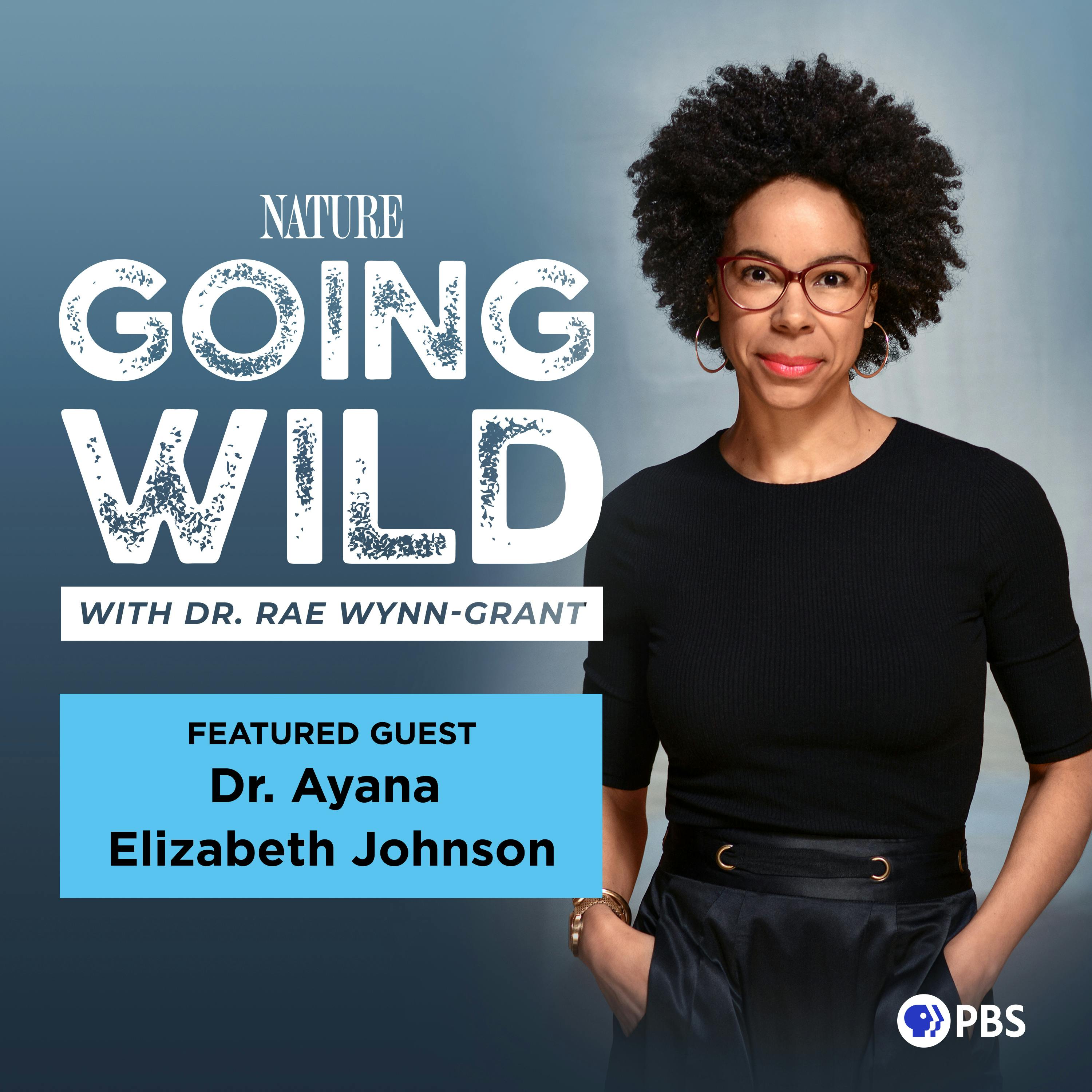 Is Water Alive? | As a climate solutions advocate, Dr. Ayana Elizabeth Johnson is often asked “What are some small things people can do to reduce climate change that don’t require sacrifices?” But the truth is electric cars and solar panels won’t be enough. Climate success will require us to change our relationship with the natural world. We must not view nature as resources to manage, but as kin. In this final episode of the season, we’ll explore solutions to our climate emergency via a conversation with close friends Dr. Rae Wynn-Grant and Dr. Johnson. They dive deep into how we can actually protect our bodies of water. Follow Dr. Ayana Elizabeth Johnson, Marine biologist, policy expert, writer, and author of What If We Get It Right? on her Website and on Instagram. Credit for the photo used in this podcast art: Marcus Branch. Thanks for listening to Going Wild. You can learn more about season three HERE and catch up on seasons one and two HERE. If you want to support us, you can follow Going Wild on your favorite podcast-listening app. And while you're there, please leave us a review. It really helps. You can also get updates and bonus content by following me, Dr. Rae Wynn-Grant, and PBS Nature on Instagram, TikTok, Twitter, and Facebook. You can find more information on all of our guests this season in each episode's show notes. And you can catch new episodes of Nature, Wednesdays at 8/7 Central on PBS, pbs.org/nature, and the PBS app. Going Wild is a podcast by PBS Nature. NATURE is an award-winning series created by The WNET Group and made possible by all of you. Views and opinions expressed during the podcast are those of the individuals expressing them and do not necessarily reflect those of THIRTEEN Productions LLC/The WNET Group. | 41m 22s | ||||||
| 10/3/23 | 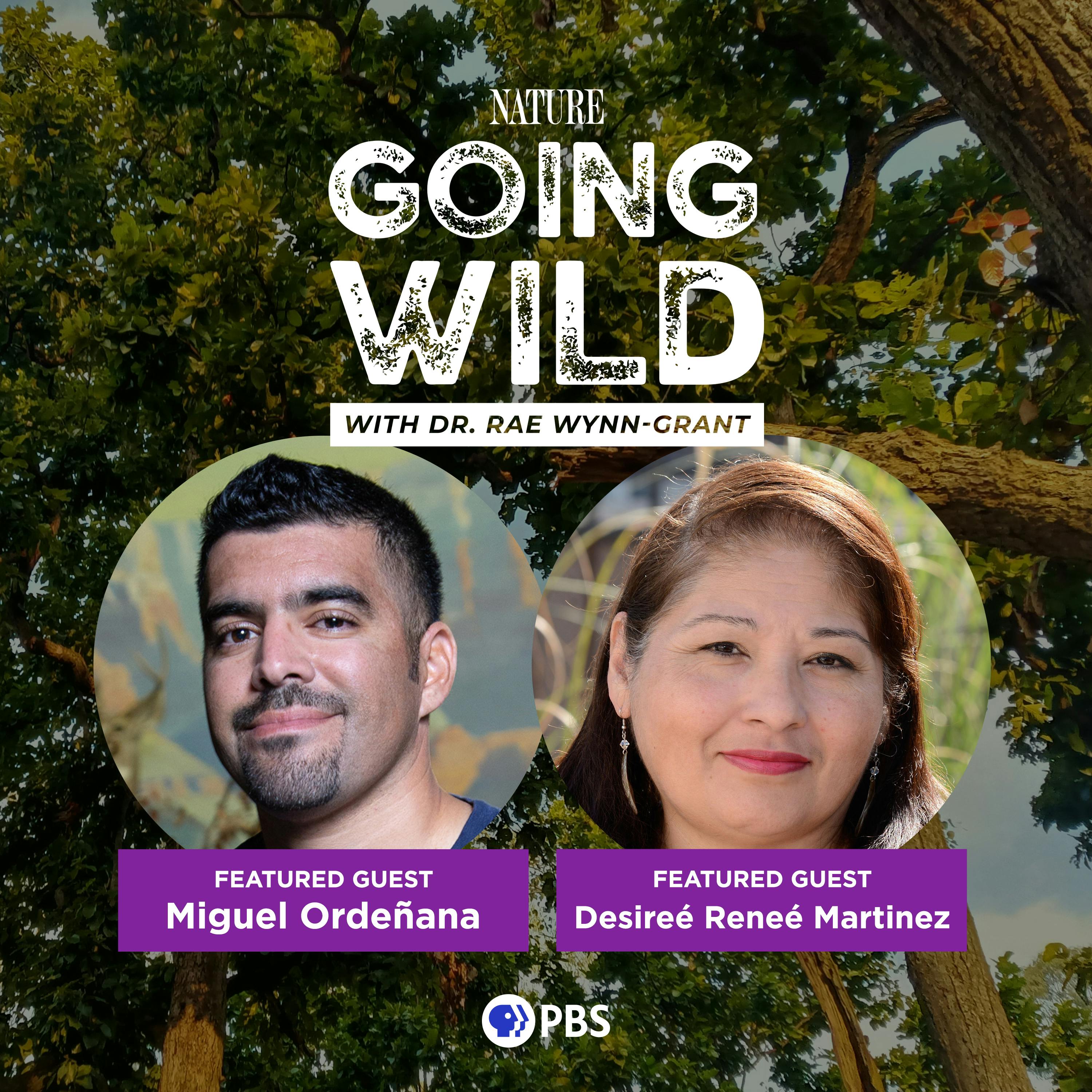 The Untold Story of California's Mighty Predator | In a city that loves celebrities, one mountain lion became the mascot for conservation efforts that eventually led to the creation of California’s first wildlife corridor. But one wildlife corridor, even if it’s the largest in the world, isn’t enough. Some populations of mountain lions in Southern California are struggling to survive — threatened by habitat loss caused by urban developments, lack of genetic diversity, and vehicle collisions. As wildlife conservationists are working to save these endangered mountain lion populations, another debate is ensuing over how to include indigenous perspectives in the conservation efforts. Because mountain lions aren’t the only native beings struggling to survive in a world with an unchecked appetite for sprawl and urbanization. Follow Desireé Reneé Martinez, Tongva Tribal Archaeologist and the President of Cogstone Resource Management on Facebook and LinkedIn and follow Miguel Ordeñana, Natural History Museum wildlife biologist, and environmental educator on Instagram. Photo credit for Miguel's episode art: Noé Montes / High Country News. Thanks for listening to Going Wild. We're really excited to share the rest of this season with you! You can learn more about season three HERE and catch up on seasons one and two HERE. If you want to support us, you can follow Going Wild on your favorite podcast-listening app. And while you're there, please leave us a review. It really helps. You can also get updates and bonus content by following me, Dr. Rae Wynn-Grant, and PBS Nature on Instagram, TikTok, Twitter, and Facebook. You can find more information on all of our guests this season in each episode's show notes. And you can catch new episodes of Nature, Wednesdays at 8/7 Central on PBS, pbs.org/nature, and the PBS app. Going Wild is a podcast by PBS Nature. NATURE is an award-winning series created by The WNET Group and made possible by all of you. Views and opinions expressed during the podcast are those of the individuals expressing them and do not necessarily reflect those of THIRTEEN Productions LLC/The WNET Group. | 47m 00s | ||||||
| 9/26/23 |  Meet "The Manatee Man" | In 2016, Hurricane Earl devastated Belize, causing over $100 million worth of damage and displacing thousands of Belizeans across the country. But humans were not the only victims of the storm. Deep in the mangroves, an infant manatee was separated from her mother and washed onto the mainland. She was so tiny when Jamal Galves found her, with her umbilical cord still attached. He named her Hope. After 7 years in rehabilitation, Hope the Manatee is soon to be released back into the wild. But as development and climate change continue to affect the waterways she calls home, what will her future hold? Hope's savior, Jamal Galves, also known as The Manatee Man, was just 11 years old when he began his journey in manatee conservation, volunteering with a crew of scientists in the small Belizean fishing village where he grew up. At one time, manatees were such a common sight in the area that the village of Gales Point Manatee itself was named after them. But today there are less than 1,000 Antillean Manatees left in this part of the world. In the 25 years since his first volunteer expedition, Galves has worked with hundreds of these animals, but Hope holds a special place in his (and the nation's) heart. Follow Jamal on Instagram. Photo credit for this episode art: Clearwater Marine Aquarium Research Institute. Thanks for listening to Going Wild. We're really excited to share the rest of this season with you! You can learn more about season three HERE and catch up on seasons one and two HERE. If you want to support us, you can follow Going Wild on your favorite podcast-listening app. And while you're there, please leave us a review. It really helps. You can also get updates and bonus content by following me, Dr. Rae Wynn-Grant, and PBS Nature on Instagram, TikTok, Twitter, and Facebook. You can find more information on all of our guests this season in each episode's show notes. And you can catch new episodes of Nature, Wednesdays at 8/7 Central on PBS, pbs.org/nature, and the PBS app. Going Wild is a podcast by PBS Nature. NATURE is an award-winning series created by The WNET Group and made possible by all of you. Views and opinions expressed during the podcast are those of the individuals expressing them and do not necessarily reflect those of THIRTEEN Productions LLC/The WNET Group. | 44m 19s | ||||||
| 9/19/23 |  Fight And Flight: Christian Cooper's Story | Long before the infamous Central Park incident went viral (where a white woman called the cops on him during a birdwatching outing), Christian Cooper had been obsessed with birds. It was a love nurtured through his involvement in The Audubon Society, an environmental organization dedicated to bird conservation. But recently, Christian’s dedication to and love for this organization has been put to the test. We’ll hear how growing up as a closeted queer person in the 80s, a career contributing to Marvel comics, and a life spent paying attention to birds has prepared Christian to navigate controversies and side with what is right. Follow Christian Cooper on Instagram. Thanks for listening to Going Wild. We're really excited to share the rest of this season with you! You can learn more about season three HERE and catch up on seasons one and two HERE. If you want to support us, you can follow Going Wild on your favorite podcast-listening app. And while you're there, please leave us a review. It really helps. You can also get updates and bonus content by following me, Dr. Rae Wynn-Grant, and PBS Nature on Instagram, TikTok, Twitter, and Facebook. You can find more information on all of our guests this season in each episode's show notes. And you can catch new episodes of Nature, Wednesdays at 8/7 Central on PBS, pbs.org/nature, and the PBS app. Going Wild is a podcast by PBS Nature. NATURE is an award-winning series created by The WNET Group and made possible by all of you. Views and opinions expressed during the podcast are those of the individuals expressing them and do not necessarily reflect those of THIRTEEN Productions LLC/The WNET Group. | 40m 09s | ||||||
| 9/12/23 |  Is This the Bug to End All Bees? | When Samuel Ramsey was a child, he was afraid of bugs. But a trip to the library with his mother changed everything and led him to become a bee entomologist. He grew up gay in a non-affirming religious community, he was the only Black entomologist in his Doctoral program, and today he’s both a Christian AND a scientist in a world that often asks him to choose between his faith and his practice. But Dr. Buggs (his media nickname) recently made a breakthrough discovery in the fight against one of the biggest global pandemics in history: the Varroa Destructor; a mite that is threatening bee colonies all over the world. And with them, our very future on the planet. Follow Dr. Samuel Ramsey aka Dr. Sammy Buggs on his website, Instagram, or YouTube. Thanks for listening to Going Wild. We're really excited to share the rest of this season with you! You can learn more about season three HERE and catch up on seasons one and two HERE. If you want to support us, you can follow Going Wild on your favorite podcast-listening app. And while you're there, please leave us a review. It really helps. You can also get updates and bonus content by following me, Dr. Rae Wynn-Grant, and PBS Nature on Instagram, TikTok, Twitter, and Facebook. You can find more information on all of our guests this season in each episode's show notes. And you can catch new episodes of Nature, Wednesdays at 8/7 Central on PBS, pbs.org/nature, and the PBS app. Going Wild is a podcast by PBS Nature. NATURE is an award-winning series created by The WNET Group and made possible by all of you. Views and opinions expressed during the podcast are those of the individuals expressing them and do not necessarily reflect those of THIRTEEN Productions LLC/The WNET Group. | 52m 02s | ||||||
| 9/5/23 | 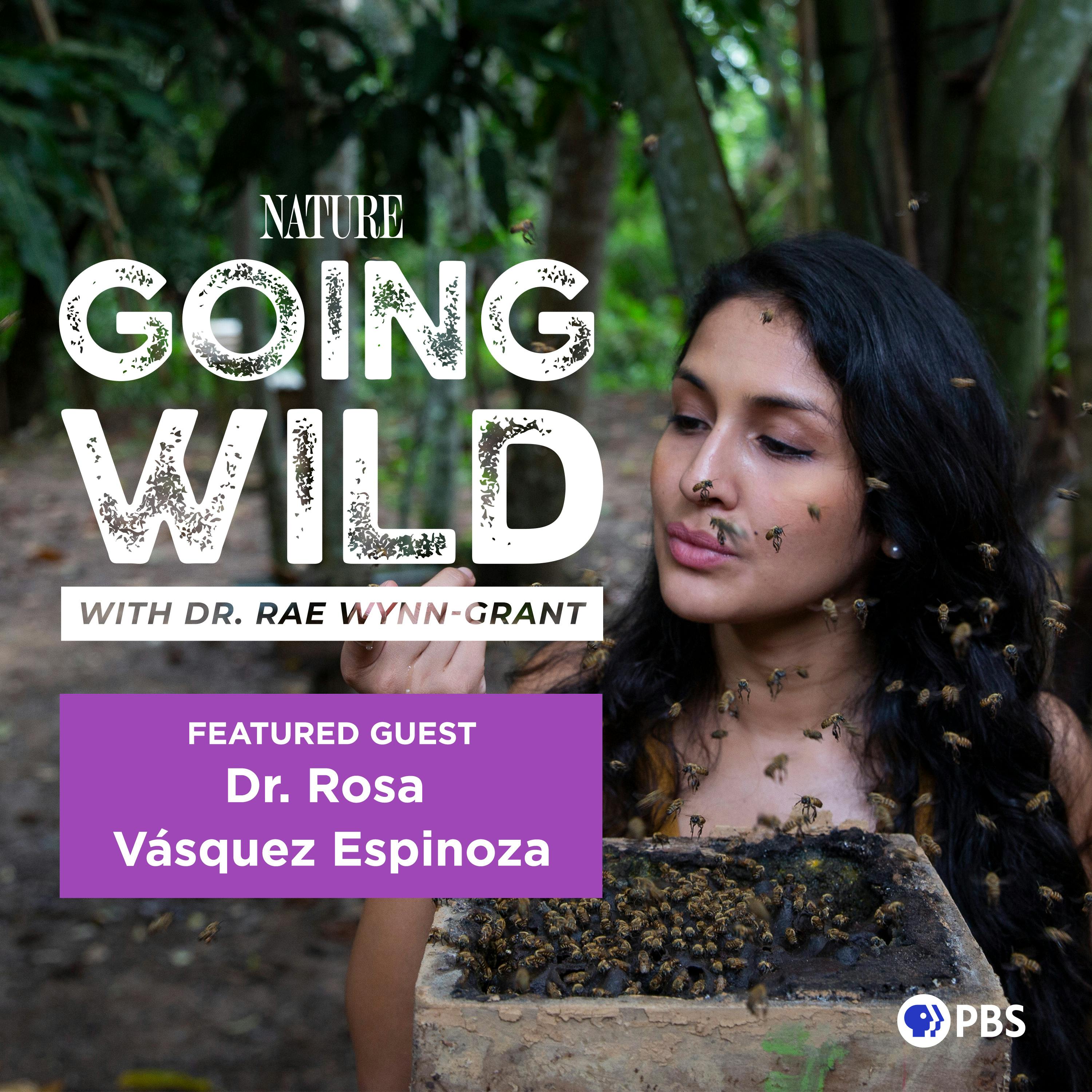 The Invisible Organism That’s Saving the Planet | In a remote part of the Amazon rainforest in Peru, there’s a river with water so hot, it actually boils. In fact, it's so extreme and so remote that for a long time people thought the river was a myth. Dr. Rosa Vásquez Espinoza risked life and limb journeying to this boiling river, called Shanay-Timpishka or La Bomba, to explore some of the smallest microorganisms on Earth. Why?? Because the untapped microbes that live in that extreme environment could save our planet! There are more microbes on Earth than stars in the galaxy, and yet only 1% of Earth’s microbe species have been thoroughly studied. Considering that several antibiotics, cancer treatments, and other medicines come from that tiny percentage, Dr. Espinoza is on a mission to unlock the potential of the remaining 99%. Microbes are a universe of microorganisms hiding in plain sight, proving that even the tiniest living things can have a huge impact. In fact, as the first microorganisms released oxygen, microbes literally made our existence on the planet possible. So what else can they do? Thanks for listening to the first episode of season three of Going Wild. We're really excited to share the rest of this season with you! You can learn more about season three HERE and catch up on seasons one and two HERE. Follow Dr. Rosa Vásquez Espinoza on Instagram or on her website. Photo credit for this episode's art is by Ana Sotelo. If you want to support us, you can follow Going Wild on your favorite podcast-listening app. And while you're there, please leave us a review. It really helps. You can also get updates and bonus content by following me, Dr. Rae Wynn-Grant, and PBS Nature on Instagram, TikTok, Twitter, and Facebook. You can find more information on all of our guests this season in each episode's show notes. And you can catch new episodes of Nature, Wednesdays at 8/7 Central on PBS, pbs.org/nature, and the PBS app. Going Wild is a new podcast by PBS Nature. NATURE is an award-winning series created by The WNET Group and made possible by all of you. Views and opinions expressed during the podcast are those of the individuals expressing them and do not necessarily reflect those of THIRTEEN Productions LLC/The WNET Group. | 37m 12s | ||||||
| 8/22/23 |  Season 3 is Here! | Welcome back to Going Wild, a podcast about the human drama behind saving animals. This season, on top of stories about animals, we’re going to take a journey through the entire ecological web — from the tiniest of life forms to apex predators. We’ll be guided by one central question: How can we, humans, look at our relationship to nature differently? Rae will speak to scientists, activists, and adventurers as they find all the different ways the natural world is interconnected. Explore the hidden world of extreme microbes thriving in the Boiling River in Peru. Listen to the man behind the infamous Central Park “Black birder” incident on how growing up gay in the 80’s has led to his lifelong love of birds and nature. Hear about how California's mighty predator, the mountain lions, aren't the only native inhabitants of Los Angeles who are struggling to survive. Each episode will invite us to reconsider our long-held views of: What is conservation? What is nature and what’s our relationship to it? And how can we ensure the survival of all beings on our planet? Let’s explore our place in the wild with Season 3 of “Going Wild with Dr. Rae Wynn-Grant.” For more, follow us at www.pbs.org/nature | 1m 40s | ||||||
| 4/18/23 |  Black Women in Cinema: From "The Class of 1989" | Hi everyone! We’re still a little ways away from the next season of Going Wild, but today we're sharing an episode of a great new podcast called The Class of 1989. In this episode, Len and Vincent talk about the representation of Black women in the films of 1989 — and how Black women directors would help transform the film world throughout the 1990s and into the present. | 30m 16s | ||||||
| 1/10/23 |  Women Who Travel Podcast: Hiking Patagonia, Life in ‘Cold Hawaii,’ and More | It's been a challenging couple of years during the pandemic but we are starting to travel again. Host Lale Arikoglu determines that she needs to challenge herself and goes hiking in Chilean Patagonia in a misty, rainy, and isolated landscape. Closer to home she’s trying to stay upright on a surfboard at New York’s Rockaway beach even though she’s skittish in waves and talks to author Dorthe Nors about moving from Copenhagen to live along the wild North Sea coast of Denmark, a place known as ‘Cold Hawaii’ and home to a longstanding community of international surfers. Plus, we hear from listeners who hike pilgrimage trails in the depths of winter and scale the Alps in the 95-degree summer heat. For more from Condé Nast Traveler's Women Who Travel, visit our website or subscribe to our email newsletter. For a transcript of this episode, please follow this link. | 29m 39s | ||||||
| 12/20/22 |  What Is the Most Successful Species on Earth? From NHPR: Outside/In | This week we're sharing a riveting episode from NHPR's show, Outside/In. Take a listen and let us know what you think! A debate about evolutionary “success.” Who should wear the crown of GSOAT (greatest species of all time), and are humans even in the running? Humans have had an impressive run thus far; we’ve explored most of the planet (the parts that aren’t underwater anyway), landed on the moon, created art and music, and made some pretty entertaining Tik-Toks. But we’ve survived on the planet for just a fraction of the time horseshoe crabs and alligators have. And we’re vastly outnumbered by many species of bacteria and insects. So who is the most successful species on Earth? And how do you measure that, anyway? From longevity to happiness, to sheer numbers, we put a handful of different organisms under the microscope in hopes of better understanding what exactly it means to succeed at life on a collective and individual scale. Featuring: Stephen Giovannoni, Rashidah Farid, and Steward Pickett | 31m 28s | ||||||
| 12/6/22 |  Together For Conservation: WCS Wild Audio Season 2 Premiere | This week, we're sharing an episode from our friends at the Wildlife Conservation Society. Take a listen and let us know what you think! Their second season launches in conversation with Mariana Varese, the Peru-based director of WCS’s Amazon Landscapes Program. Mariana describes a new initiative, “Together for Conservation,” that seeks to conserve biodiversity while preventing environmental crime in the Amazon. The project brings Indigenous Peoples and local communities together with journalists, private companies, and civil society groups to develop conservation solutions that can be expanded or replicated across the Amazon. | 9m 09s | ||||||
| 11/15/22 |  Highs, Lows and Lowland Gorillas | *Content warning: this episode briefly mentions the topic of suicide.* From the kitchen floor to the remote jungles of the Congo, Rae grapples with divorce and single-motherhood on an international trip to study lowland gorillas. For the last episode of season 2, Dr. Rae Wynn-Grant talks about a career-changing opportunity to track down one of the most elusive creatures in Central Africa — lowland gorillas. But when things don’t go as planned, Rae ends up uncovering something else that changes the trajectory of her life. Since this is the last episode for this season, we want to thank all of our guests for sharing their amazing wild stories. And you, our dedicated listeners, for coming back for season 2. We’re so glad to have you on this journey with us! What would you like to see in the third season? Let us know at naturepod@wnet.org. Thanks for listening! If you want to support us, you can follow “Going Wild” on your favorite podcast-listening app. While you’re there, please leave us a review - it really helps. You can also get updates and bonus content by following me, Dr. Rae Wynn-Grant, and PBS Nature on Instagram, TikTok, Twitter, and Facebook. And you can catch new episodes of Nature Wednesdays at 8/7c on PBS, pbs.org/nature and the PBS Video app. This episode of “Going Wild” was hosted by me, Dr. Rae Wynn-Grant. Production by Caroline Hadilaksono, Danielle Broza, Nathan Tobey, and Great Feeling Studios. Editing by Rachel Aronoff and Jakob Lewis. Sound design by Cariad Harmon. Danielle Broza is the Digital Lead and Fred Kaufman is the Executive Producer for Nature. Art for this podcast was created by Arianna Bollers and Karen Brazell. Special thanks to Amanda Schmidt, Blanche Robertson, Jayne Lisi, Chelsey Saatkamp, and Karen Ho. NATURE is an award-winning series created by The WNET Group and made possible by all of you. Funding for this podcast was provided by grants from the Anderson Family Fund, the Corporation for Public Broadcasting, and PBS. Views and opinions expressed during the podcast are those of the individuals expressing them and do not necessarily reflect those of THIRTEEN Productions LLC/The WNET Group. | 36m 38s | ||||||
| 11/8/22 |  A Chicken Saved My Life | Ornithologist (bird scientist), poet, and author Drew Lanham was recently awarded the Macarthur Genius Grant—$800,000 with no strings attached. But despite his deep love for birds he almost never studied the creatures at all. As a young man, he won a full-ride scholarship to any school he wanted, only this award did have strings attached. Drew would have to give up his dreams of ecology and instead be an engineer. Hear how Drew was saved first from a career he loathed by the lilting song of a prairie warbler and then how a chicken saved Drew from going into the military to be a pilot. Instead, it set him on the true path of his heart, to study the magical flying creatures we call birds. Thanks for listening! If you want to support us, you can follow “Going Wild” on your favorite podcast listening app. While you’re there, please leave us a review - it really helps. You can also get updates and bonus content by following me, Dr. Rae Wynn-Grant, and PBS Nature on Instagram, TikTok, Twitter, and Facebook. And you can catch new episodes of Nature Wednesdays at 8/7c on PBS, pbs.org/nature and the PBS Video app. Follow J. Drew Lanham on Twitter and Instagram and listen to more "Going Wild" HERE. This episode of “Going Wild” was hosted by me, Dr. Rae Wynn-Grant. Production by Caroline Hadilaksono, Danielle Broza, Nathan Tobey, and Great Feeling Studios. Editing by Rachel Aronoff and Jakob Lewis. Sound design by Cariad Harmon. Danielle Broza is the Digital Lead and Fred Kaufman is the Executive Producer for Nature. Art for this podcast was created by Arianna Bollers and Karen Brazell. Special thanks to Amanda Schmidt, Blanche Robertson, Jayne Lisi, Chelsey Saatkamp, and Karen Ho. NATURE is an award-winning series created by The WNET Group and made possible by all of you. Funding for this podcast was provided by grants from the Anderson Family Fund, the Corporation for Public Broadcasting, and PBS. Views and opinions expressed during the podcast are those of the individuals expressing them and do not necessarily reflect those of THIRTEEN Productions LLC/The WNET Group. | 25m 10s | ||||||
| 11/1/22 |  The Lizard Lassoer | *Content warning: this episode contains descriptions of violence that might be disturbing to some listeners.* Herpetologists do a lot of unique things while studying lizards—cut their toes, pump their stomachs, and capture them by lassoing their necks. That one small word, “lasso,'' wasn't always the word used in the discipline. Herpetologist Earyn McGee, one of the few Black, female scientists in the field, proposed researchers stop using the word “noose” to describe capturing lizards, and start using a more accurate, less oppressive word, like “lasso.” Thanks for listening! If you want to support us, you can follow “Going Wild” on your favorite podcast listening app. While you’re there, please leave us a review - it really helps. You can also get updates and bonus content by following me, Dr. Rae Wynn-Grant, and PBS Nature on Instagram, TikTok, Twitter, and Facebook. And you can catch new episodes of Nature Wednesdays at 8/7c on PBS, pbs.org/nature and the PBS Video app. Follow Earyn McGee on Twitter and Instagram and listen to more "Going Wild" HERE. This episode of “Going Wild” was hosted by me, Dr. Rae Wynn-Grant. Production by Caroline Hadilaksono, Danielle Broza, Nathan Tobey, and Great Feeling Studios. Editing by Rachel Aronoff and Jakob Lewis. Sound design by Cariad Harmon. Danielle Broza is the Digital Lead and Fred Kaufman is the Executive Producer for Nature. Art for this podcast was created by Arianna Bollers and Karen Brazell. Special thanks to Amanda Schmidt, Blanche Robertson, Jayne Lisi, Chelsey Saatkamp, and Karen Ho. NATURE is an award-winning series created by The WNET Group and made possible by all of you. Funding for this podcast was provided by grants from the Anderson Family Fund, the Corporation for Public Broadcasting, and PBS. Views and opinions expressed during the podcast are those of the individuals expressing them and do not necessarily reflect those of THIRTEEN Productions LLC/The WNET Group. | 34m 03s | ||||||
Showing 25 of 43
Sponsor Intelligence
Sign in to see which brands sponsor this podcast, their ad offers, and promo codes.
Chart Positions
6 placements across 6 markets.
Chart Positions
6 placements across 6 markets.