Insights from recent episode analysis
Audience Interest
Podcast Focus
Publishing Consistency
Platform Reach
Insights are generated by CastFox AI using publicly available data, episode content, and proprietary models.
Most discussed topics
Brands & references
Total monthly reach
Estimated from 1 chart position in 1 market.
By chart position
- 🇩🇰DK · Entrepreneurship#993K to 10K
- Per-Episode Audience
Est. listeners per new episode within ~30 days
1.5K to 5K🎙 Weekly cadence·282 episodes·Last published today - Monthly Reach
Unique listeners across all episodes (30 days)
3K to 10K🇩🇰100% - Active Followers
Loyal subscribers who consistently listen
900 to 3K
Market Insights
Platform Distribution
Reach across major podcast platforms, updated hourly
Total Followers
—
Total Plays
—
Total Reviews
—
* Data sourced directly from platform APIs and aggregated hourly across all major podcast directories.
On the show
From 12 epsHost
Recent guests
Recent episodes
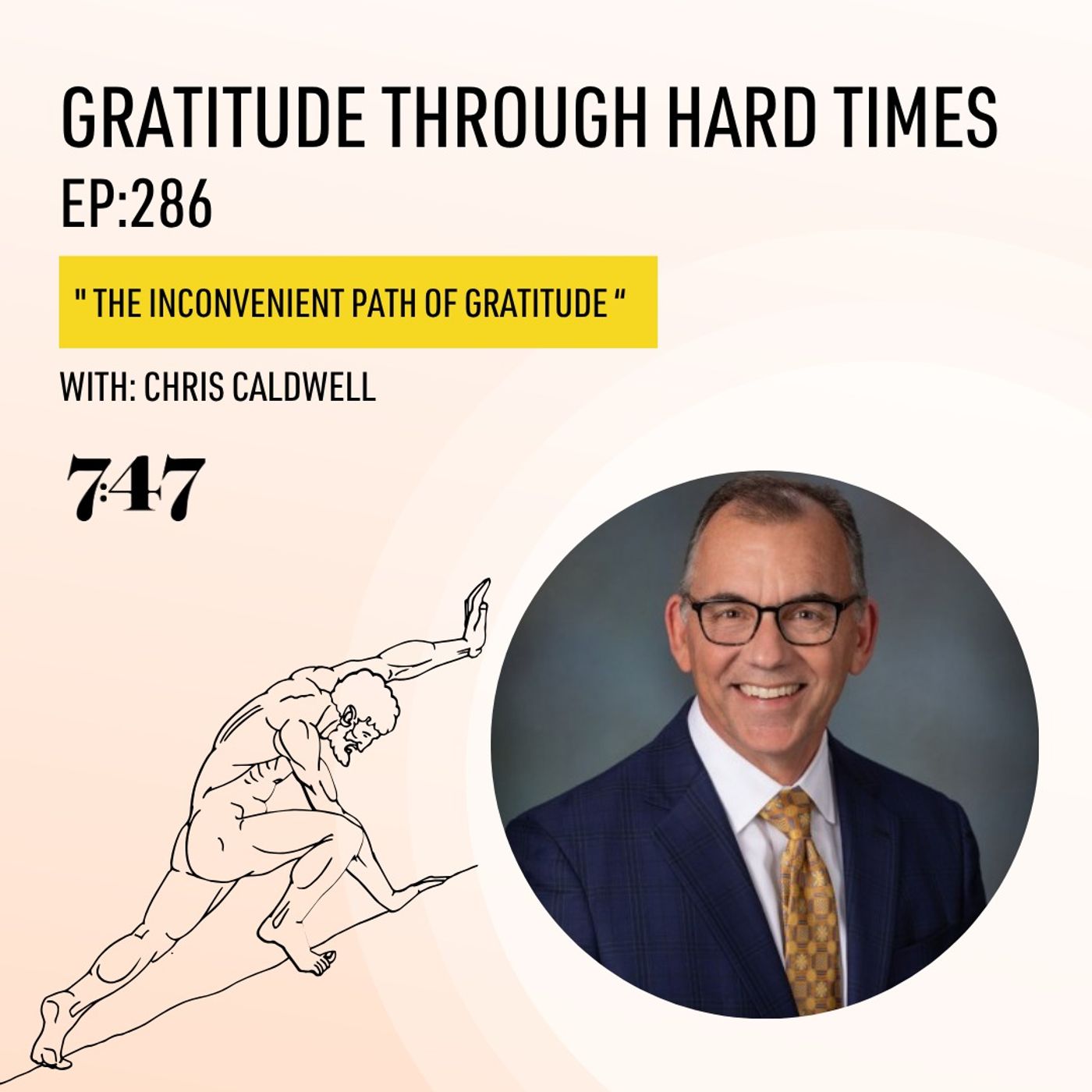
Chris Caldwell: The Inconvenient Path of Gratitude
Jun 25, 2026
Unknown duration
Sandra Lopez: Delulu Soul Searching
Jun 25, 2026
Unknown duration
Abigail Beach: Angel Numbers
May 28, 2026
42m 33s
Ashleigh Spiliopoulou: Deliberate Inconvenience
May 26, 2026
45m 23s
Adam Famularo: The Power of the Hydra
Apr 23, 2026
59m 56s
Social Links & Contact
Official channels & resources
Official Website
Login
RSS Feed
Login
| Date | Episode | Topics | Guests | Brands | Places | Keywords | Sponsor | Length | |
|---|---|---|---|---|---|---|---|---|---|
| 6/25/26 | ![]() Chris Caldwell: The Inconvenient Path of Gratitude | "At the end of the day, that's what we do. I mean, that's our job... we're professional helpers." This simple principle serves as the heartbeat for a life dedicated to authentic human depth. In a world optimized for digital efficiency and "frictionless" convenience, the true currency of a meaningful life remains the unscalable power of independent thought, presence, and intentional effort. In this episode of Gratitude Through Hard Times, Chris Caldwell explores the growing cultural movement of human connection, healing, and the unexpected ways community anchors our lives. Chris shares insights from his personal journey, including navigating his rise from a part-time teller to the CEO of a historic community bank, the critical behind-the-scenes support of his wife Bettie, and his deep-seated commitment to paying forward success through active volunteerism. Together, the conversation dives into how we show up for others during challenging times, the power of people who challenge us, and how a chance commitment to local service can bring an entire community to life. 10 Memorable Quotes: "If there’s an opportunity to be part of a conversation about gratitude... sign me up. I’m all for it." "When you understand that your job is to do more than just take a deposit to make a loan—it is to be an integral part of our community—that’s when we excel our best." "At the end of the day, that’s what we do. I mean, that’s our job... we’re professional helpers." "I can’t force others, I can’t change others, but I can have the courage to change how I show up, and the wisdom to know the difference." "If you don't take care of your customers, someone else will." "There are people out there that are willing to give up their time, the most expensive thing we have, and volunteer." "She is my biggest cheerleader. I wouldn't be where I am today without her support." "We want to make sure that we're there for them through the good times and the bad times." "Community is in our name, so we better do it right." "Go thank someone in your life, but do it the inconvenient way. Sit down and write a letter rather than just clicking a button to sending a gift card." 10 Key Takeaways: The Character Test of Leadership: Why surrounding yourself with people who challenge you and say the hard things is infinitely better than building an inner circle of enablers. The Evolution of a Community Banker: Understanding the stark reality of early career growth, where starting as a part-time teller teaches you the foundational value of frontline human interactions. The Power of Behind-the-Scenes Support: Recognizing the profound impact of spouses and loved ones whose quiet, proactive baseline contributions keep leaders grounded and supported. Active Volunteerism vs. Writing a Check: Dealing with the heart-centered shift from merely donating money to physically getting out into the field, proving that true community connection requires active presence. The Value of Leading by Example: Processing the realization that you cannot force a charitable mindset onto others; instead, you must consistently model the behavior to inspire your team. Balancing the Old and the New: Reclaiming the narrative around technological advancement by ensuring digital innovation (like AI) never replaces the human desire to "see and be seen" by someone you trust. Sympathy vs. Presence: Learning that showing up for a community in crisis requires skipping transactional interactions and simply sitting with people to understand their immediate needs. Bypassing the Corporate Script: A look at how unexpected, vulnerable bonds form when leaders choose to skip fiscal policy talk and instead lean directly into conversations about human gratitude. The Inconvenient Path of Gratitude: How breaking past personal convenience to write a handwritten letter rather than sending a digital gift card can fundamentally alter the energy of a relationship. The Micro-Intervention of Trust: How breaking past systemic corporate barriers to prioritize local relationships allows a business to become a true sanctuary for the people it serves. About our Guest: Growing up with a deep appreciation for local connection shaped the foundation of Chris Caldwell's work ethic and sense of purpose. As a dedicated leader in the banking industry with over 30 years of experience, he learned early the value of hard work, resilience, and the tradition of contributing to what you build together. Those early experiences—alongside holding advanced degrees in history from Manchester and Ohio Universities and an MBA from Anderson University—instilled in him a deep appreciation for perseverance, lifelong learning, and creating a meaningful life rooted in community. After entering the financial workforce, Chris discovered a lasting passion for connecting with people within the community banking space across Indiana and Vermont. What began as an early career in commercial banking and business consulting evolved into a fulfilling leadership path, culminating in his role as President and CEO of Community Bancorp and Community National Bank. Dedicated to being both a steward and advocate for the regions he serves, Chris actively believes relationships are at the heart of meaningful work. Outside of his career, he stays involved in his community by serving on the boards of the Green Mountain United Way and Manchester University, championing a culture of gratitude as a core leadership practice, and enjoying life in Newport, Vermont, with his wife Bettie. | — | ||||||
| 6/25/26 | ![]() Sandra Lopez: Delulu Soul Searching | "You are always a student, never a master." This simple principle serves as the heartbeat for a life dedicated to authentic human depth. In a world optimized for digital efficiency and "frictionless" convenience, the true currency of a meaningful life remains the unscalable power of independent thought, presence, and intentional effort. In this episode of Gratitude Through Hard Times, Sandra Lopez explores the growing cultural movement of human connection, healing, and the unexpected ways we tune back into our personal truths. Sandra shares insights from her personal journey, including navigating a high-stakes executive career at tech giants like Intel, Adobe, and Microsoft, confronting a pivotal 360-feedback review that labeled her a "robot," and utilizing the forced pause of the COVID-19 pandemic to embark on a radical road of self-discovery through Kabbalah. Together, the conversation dives into how we show up for our teams with deep empathy, the power of using technology as a contrarian force, and how choosing a messy, non-traditional path allows leaders to trade superficial ego validation for lasting, soul-led growth. 10 Memorable Quotes: "Business is business, and you keep your personal life separate." "Until, you know, maybe two years into, uh, my management, I got my 360 feedback, and, feedback is a gift." "One of my team members said, 'I don't know Sandra. She seems to be like a robot.'" "A good leader delivers results, but how do you become a great leader? And the great leader is the understanding that we are all humans." "The greatest gift that I get isn't my bonus. It's the little emails that I get..." "I'm 53 and I would say most of my lifespan, was probably giving gratitude very superficially." "Am I doing this for my ego or am I doing this for my soul? And that's a very hard transition actually." "The soul responds to the soul. So when, if you're starting your own business and you really focus on what's the soul of the company... Humans are gonna respond to that." "The moments, the hardest moments of my life was when I saw exponential growth." "Be delusionally... Be delusional about finding your soul. How's that? DeLulo" 10 Key Takeaways: The Character Test of Feedback: Why embracing uncomfortable 360-degree reviews and extracting truth from critical peer assessments is infinitely better than building an inner circle of enablers. Good vs. Great Leadership: Understanding the stark reality of corporate metrics, where delivering OKRs only makes you a good leader, while a great leader prioritizes the unscalable human-to-human capacity. The Hidden Debt of the Ego: Recognizing the profound impact of modern business systems and digital platforms like LinkedIn, which function as machines engineered to feed external images rather than internal truths. The Evolving Rules of Tech: Dealing with the modern reality of AI engagement, choosing to use technology strictly as a contrarian tool to challenge strategic blind spots rather than a superficial echo chamber to validate existing bias. The Value of Trailing Humans: Processing the bittersweet realization that while tools can assist operations, chatbots lack a conscience, meaning true personal breakthroughs require stepping away from screens to converse with a real human being. Remembering COVID's Gift: Reclaiming the narrative around global and personal hardships by extending genuine gratitude to a crisis that forced a necessary internal pause and deep ancestral self-discovery. Systemic vs. Soul Presence: Learning that showing up authentically requires skipping rigid, traditional expectations of how leaders "should" live or format their personal partnerships and spaces. Sitting in the SAVERS Routine: A look at how intentional daily habits form resilience, utilizing quiet mornings dedicated to silence, gratitude, visualization, exercise, contrarian reading, and scribing. Certainty and Intuition: How dialing into your core intuition prompts people to pause, providing an unshakeable confidence that overrides logical fears when making massive career pivots. The Micro-Intervention of the Zag: How breaking past a commoditized, fast-paced, and highly automated corporate landscape to bring the purposeful messiness of the soul back into business is the ultimate competitive advantage. About our Guest: Growing up with a relentless work ethic shaped the foundation of Sandra Lopez's purpose-driven approach to leadership. Guided by the personal philosophy that "you are always a student, never a master," she learned early that true wisdom requires a lifelong commitment to unlearning, learning, and continuously putting one foot in front of the other, no matter how grueling the path becomes. Raised to appreciate the delicate balance between high-stakes profit metrics and a deep responsibility to give back, those early values instilled in her a lasting dedication to community advocacy, representation, and leading with radical transparency. After entering the technology workforce, Sandra discovered a deep passion for driving corporate transformation at an elite level, spending over twenty years holding executive and leadership roles at iconic global brands including Intel, Adobe, and serving as the former CMO of Microsoft Advertising. What began as a traditional path focused on hard business outcomes evolved into a fulfilling calling as the CEO of Ambi Ventures, where she partners with ambitious businesses to provide elite fractional CMO services, advisory expertise, and investments. Dedicated to being an active advocate for Latina executives across America and serving as a co-chair for the World Economic Forum's AR/VR Model Commission, Sandra believes that integrating empathy and humanity into corporate spaces is at the heart of meaningful growth. Outside of her advisory career, she stays actively involved in exploring diverse spiritual and mindfulness practices like Kabbalah, prioritizing intentional morning routines, and inspiring the next generation of leaders to look past the ego to connect deeply with their soul's true purpose. | — | ||||||
| 5/28/26 | ![]() Abigail Beach: Angel Numbers✨ | human connectiongrief+4 | Abigail Beach | — | — | angel numbersgrief+4 | — | 42m 33s | |
| 5/26/26 | ![]() Ashleigh Spiliopoulou: Deliberate Inconvenience✨ | deliberate inconvenienceFriction Maxing+3 | Ashleigh Spiliopoulou | AI | — | Friction Maxingdeliberate inconvenience+5 | — | 45m 23s | |
| 4/23/26 | ![]() Adam Famularo: The Power of the Hydra✨ | human connectionglobal acquisitions+4 | Adam Famularo | WorkFusionUiPath | The StandManhattan | human connectionglobal acquisitions+5 | — | 59m 56s | |
| 3/12/26 | ![]() Sophia Mullins: Taking the Bet on Yourself✨ | entrepreneurshipwell-being+4 | Sophia Mullins | Wall Street WellnessUBS | Wall Street | entrepreneurshipwellness+5 | — | 18m 00s | |
| 3/4/26 | ![]() Christine Angles: Business by Party✨ | business philosophycommunity building+3 | Christine Angles | Allstate | Gainesville, Virginia | business by partycommunity+3 | — | 37m 29s | |
| 2/25/26 | ![]() Aaron Hurst: Engineering Humanity✨ | human connectionsocial impact+4 | Aaron Hurst | US Chamber of ConnectionTaproot Foundation | — | humanityconnection+5 | — | 53m 53s | |
| 2/18/26 | ![]() Nick Schlekeway: Convenience vs. Connection✨ | leadershipreal estate+3 | Nick Schlekeway | Amherst Madison | — | connectionculture+3 | — | 57m 33s | |
| 2/15/26 | ![]() Jay Kiew: Stories That Stir Souls✨ | change fluencytransformation+4 | Jay Kiew | DeloitteTELUS | — | change fluencytransformation+5 | — | 52m 27s | |
Want analysis for the episodes below?Free for Pro Submit a request, we'll have your selected episodes analyzed within an hour. Free, at no cost to you, for Pro users. | |||||||||
| 2/3/26 | ![]() Sandy Hogan: Graceful Disruption✨ | leadershipresilience+4 | Sandy Hogan | CiscoRackspace+2 | Yugoslavia | leadership philosophyresilience+4 | — | 54m 51s | |
| 2/2/26 | ![]() Chris Schembra: The Wisdom Era✨ | Wisdom Erahuman connection+3 | Allison Hare | Culture Changers | — | Wisdom Erahuman connection+3 | — | 1h 20m 04s | |
| 1/21/26 | ![]() Adam Famularo: Leading With Heart✨ | leadershipgratitude+5 | Adam Famularo | WorkFusion | New York City | leadershipgratitude+8 | — | 1h 10m 33s | |
| 1/20/26 | ![]() Jessica Weiss: Happiness Works✨ | happiness at workresilience+3 | Jessica Weiss | Happiness Works | — | happinessworkplace+5 | — | 37m 48s | |
| 1/12/26 | ![]() Brent Kenneway: Meaningful Work | Episode OverviewIn this episode of Gratitude Through Hard Times, Chris Schembra sits down with Brent Kenneway, National Group VP of Sales at UKG, for a conversation about the kind of relationships that aren’t transactional, the kind that actually nourish the soul. Brent opens with the gratitude question and doesn’t hesitate: he gives credit to his wife, Jenny, the person he says made his life and career possible by “holding down the fort” while he built his leadership path. From there, the conversation expands into parenting, identity, and leadership, especially Brent’s lived experience of managing “multiple personalities” at home with four kids and at work with diverse teams. The thread that ties it together is intentionality: Brent wants to be more present when he comes home, more human at work, and more consistent about building culture one interaction at a time.Chris and Brent then go deep on a core leadership shift: moving from blame to radical accountability, and from problem-obsession to solution-finding. They talk about debriefing as a life skill (“What went well? What could have gone better? What will we do differently next time?”), and they challenge the cultural reflex to fix what’s wrong without first helping what’s already right go more right. Brent adds a key leadership balance: culture without systems breaks, and systems without culture underperform, you need both.Finally, they tackle the future: AI, change, and uncertainty. Brent argues for People-First AI—AI as augmentation, not replacement, using the story of the handheld calculator as a reminder that tools can free humans to do more meaningful work. The takeaway is clear: the companies (and families) that win won’t be the ones that move fastest alone; they’ll be the ones who pair speed with depth—building trust, presence, and gratitude at scale.10 key takeawaysGratitude isn’t a “soft” thing—it’s a performance tool for leadership, retention, and resilience in hard moments. Give credit to the people behind your success—Brent names Jenny as the foundation of his career and family stability. Parenting and leadership are the same craft: multiple personalities, different motivations, one mission—learn what makes each person tick. Presence is a transition skill: coming home from “business mode” requires intentional switching into family mode. Radical accountability beats blame: the real shift isn’t “what did I do wrong?” but “how can I be better next time?” Debriefs create growth without shame: “What went well / better / differently” builds learning loops that scale. Culture + systems = results: positivity without structure fails; structure without humanity underperforms. Leaders don’t hand answers—they develop thinkers: Brent mentors by asking, “What do you think we should do?” Standardize first, operationalize second: clarity reduces confusion; consistent process multiplies performance. People-First AI is the way forward: AI should remove the mundane and return time to relationships, creativity, and real human connection.10 Quotes“We’re here to talk about relationships and gratitude—but not the transactional type. The soul needs nourished.” “I’m not at the position I am in my life without [Jenny’s] backing, her support, her guidance.” “All four kids—completely different personalities. That’s the joy of parenting… and leadership.” “If you’re present and recognizing the situation, it’s a lot easier to have that inward focus.” “People are distracted… and that makes it harder to stay solution-oriented.” “Culture without systems breaks—and systems without culture underperform.” “I never give the answers. I ask: ‘What do you think you should do?’” “We’re spending more time at work than we are with our families—so you might as well make it fun and human.” “People-first AI… it’s augmentation. It speeds up the mundane so you can spend more time with people.” “You can never connect the dots forward—only backwards.” | — | ||||||
| 1/7/26 | ![]() Julie Peck: Reclaim Your Humanity | Podcast Show OverviewIn this episode of Gratitude Through Hard Times, Chris Schembra welcomes back Julie Peck—a seasoned tech and growth executive and current CEO of Talent Neuron, a global leader in workforce intelligence. Returning after a powerful first conversation (“The Gift of the Curvy Path”), Julie brings both lived experience and a front-row seat to how AI is reshaping work, leadership, and the talent market.The conversation opens with the show’s signature gratitude thread: Julie re-centers her enduring gratitude for her mother—an “anchor” figure defined by generosity, steadiness, and wisdom. From there, the episode expands into a bigger thesis: we’re moving from a knowledge economy (being paid to “know”) to a wisdom economy (being valued for discernment, context, ethics, and humanity), right as AI accelerates technical capability faster than society’s ability to govern it wisely.Julie explains what she’s seeing in real time—from the lightning-fast evolution of “prompt engineering” (job → skill → everywhere) to the rise of AI agents, “managers of agents,” and even early signals around digital twins / digital clones. The discussion is both exciting and sobering: the future isn’t just humans using tools—it’s organizations learning to coordinate human employees + virtual workers while wrestling with ownership, ethics, and identity.They land the plane with an antidote: in a world speeding up, the advantage is learning to reclaim your humanity—through presence, boundaries, real conversation, and the ancient technology of the dinner table. Chris frames it as “slow food and fast cars” (Emilia-Romagna) and the “AND, not OR” mindset: use AI to amplify impact and protect what makes life meaningful. Key TakeawaysWe’re shifting from “knowing” to “discerning.” AI can produce answers; humans are needed for wisdom, ethics, and context. The pace is the story. Roles like “prompt engineer” moved from nonexistent → hot → embedded in everything in about a year. Soft skills are becoming the real differentiator. Adaptability, learning agility, collaboration, and communication are what survive a fluid world. Digital cloning raises ownership questions. If your work footprint trains a “you,” who owns it—you or your employer/platform? Reclaim humanity through designed friction. Put the phone down, limit your digital exhaust, and build anchor points (like dinners) where real presence returns. Memorable QuotesJulie Peck: “I call that reclaiming your humanity.” Chris Schembra: “The dinner table is truly the last thing that AI can get to.” Julie Peck: “The technical capabilities of AI are evolving far faster than the world’s ability to be wise about how we build it and interact with it.” Julie Peck: “Put the phone down and talk to each other and actually look each other in the eyes.” Julie Peck: “If you’re standing at Lake Geneva and you’re looking at the Alps, don’t try and take a picture of it. Just look at it.” Chris Schembra: “We’re living through the collapse of the knowledge economy… What if we’ve been playing the wrong game all along?” Julie Peck: “We don’t understand the rules of the game… and we’re unprepared for it.” | — | ||||||
| 12/18/25 | ![]() Eric Stine: The Power of Saying Yes | In a world obsessed with speed, optimization, certainty, and AI-driven answers, this episode of Gratitude Through Hard Times offers a necessary pause. Chris Schembra sits down with Eric Stine, CEO of Sitecore, for a deeply human conversation about leadership, belonging, gratitude, and the courage to say yes before you feel ready. This is not a tactical episode about growth metrics or technology stacks—it’s an exploration of what it means to lead, live, and connect in a time when instinct is being outsourced and humanity is at risk of being optimized away.Eric reflects on a 25-year career across some of the world’s most influential enterprise technology companies, but reframes success through a different lens. Rather than crediting restraint or perfection, he points to saying yes as the defining strategy of his life, yes to unfamiliar roles, yes to reinvention, yes to creativity, fatherhood, philanthropy, and Broadway. Along the way, he opens up about imposter syndrome, those quiet moments of doubt that surface even at the highest levels of leadership, and why authenticity—not certainty—is what ultimately creates trust and psychological safety for teams.The conversation reaches back to Eric’s eighth-grade years, when he felt like an outsider searching for his people. Theater became the place where he learned that difference wasn’t something to hide, but something to bring forward, a lesson that continues to shape how he builds culture today. That theme of belonging becomes especially resonant in today’s age of fragmentation and loneliness, where many people feel disconnected not because they lack opportunity, but because they lack spaces where they can show up fully as themselves.Midway through the episode, Eric answers the signature gratitude question, offering heartfelt thanks to his father, Mark, whose belief in living authentically influenced everything from Eric’s leadership philosophy to a Tony Award win on Father’s Day. The moment grounds the conversation in gratitude, not as sentiment, but as a force that shapes identity, values, and legacy across generations.This episode is especially important now because it confronts a growing cultural tension: while AI can deliver answers at unprecedented speed, it cannot deliver wisdom, belonging, or meaning. Eric draws a clear distinction between systems of record and systems of engagement, arguing that the future belongs to leaders and organizations that pair data with instinct, scale with empathy, and efficiency with humanity. In an era where people are burning out not just from work, but from hiding who they are, this conversation offers a different model, one rooted in community, peer-driven recognition, and shared accountability rather than control.Ultimately, The Power of Saying Yes is a reminder that culture cannot be engineered from the top down and growth cannot be achieved through optimization alone. Culture comes from community. Belonging comes from permission. And the most meaningful paths in life are rarely the safest ones. This episode invites listeners to slow down, embrace impermanence, and choose the more interesting path, not because it’s easy, but because it’s human.10 Key TakeawaysSaying yes creates momentum.Progress, growth, and meaning often come from leaning in before you feel ready—not from waiting for certainty. Authenticity is a leadership advantage, not a liability.When leaders model vulnerability, they unlock psychological safety and better performance across teams. Imposter syndrome doesn’t disappear—it becomes a compass.Doubt is often a signal that you’re stretching into something meaningful. Finding “your people” changes everything.Belonging fuels confidence, creativity, and resilience—whether in theater, business, or family. Gratitude is a strategic tool, not a soft one.Recognizing people for their impact on others builds trust, loyalty, and culture at scale. Culture cannot be built top-down.Leaders can only create the conditions; community does the building. AI needs humans in the loop.Data delivers insight, but instinct and empathy deliver relevance. Impermanence creates meaning.Moments matter more when we know they won’t last—whether on stage, at work, or around the dinner table. Accountability is empowering when framed as ownership.We don’t work in isolation—we work in ecosystems where shared responsibility drives excellence. The best life is an AND life, not an OR life.Passion and profit. Speed and care. Technology and humanity. Both can be true.Eric Stine BioEric Stine is the Chief Executive Officer of Sitecore, driving the company's vision and strategy to unlock business value for clients by empowering them to create compelling digital experiences. Eric was previously Chief Operating Officer, where he led all customer-facing functions.Before Sitecore, Eric was Chief Executive Officer of Elemica. Previously, he was Chief Commercial Officer of Skillsoft and Chief Revenue Officer of Qualtrics. Eric has also held executive roles at companies such as SAP, Ciber, and Blackboard.Eric earned a law degree at Boston University School of Law and a Bachelor of Arts at Northwestern University, where he and his husband are the founders of the Eric and Neil Stine-Markman Scholarships. They are the first permanent endowments at either institution directing funds toward LGBTQ+ students.He is based near New York City. | — | ||||||
| 11/11/25 | ![]() Katie Parla: Rome Wasn't Built in a Day | Episode OverviewIn this rich, sensory journey through the Eternal City, I sit down with food historian, author, and Rome expert Katie Parla, a woman whose love affair with Rome began at sixteen thanks to her mother’s quiet act of generosity. What started as a high school Latin club trip became a lifelong devotion to understanding the flavors, history, and soul of a city that was never meant to exist. Rome began as a malarial, snake-infested swamp, yet somehow became the beating heart of Western civilization.Katie has written, edited, or contributed to more than twenty books and countless articles in publications like The New York Times, Vogue, and The Guardian. Her newest work, Rome: A Culinary History Cookbook and Field Guide to the Flavors That Built a City, is not just another recipe collection. It’s a layered love letter, part history book, part field guide, and part emotional map to the spirit of a city that has endured famine, fire, empire, and rebirth. Together, we explore what Rome can teach us about leadership, gratitude, and the art of being human in an age of acceleration.We begin where all gratitude stories begin, at the table. Katie gives thanks to her mother, “Jojo,” who worked multiple jobs to make that first trip to Rome possible. Through her mother’s sacrifice, Katie learned the essence of perseverance, the same relentless spirit that built the city she now calls home. From there, we wander through the neighborhoods of Rome, from the ancient core to the medieval center, and finally to Testaccio, her favorite district, where modern graffiti meets ancient terracotta ruins. It’s there that Katie goes to meditate on impermanence and the balance between chaos and beauty.As our conversation unfolds, history becomes a mirror for modern leadership. We talk about Rome’s “bread and circuses,” how the government once used food and entertainment to keep citizens loyal, and we draw parallels to today’s corporate perks and engagement programs. We explore the emperors of old and the executives of now, and what it means to “be a Caesar, not an Augustus,” a leader who serves with benevolence and dignity rather than domination and fear. We even touch on the city’s engineering genius, from the 2,700 nasoni fountains that keep Romans hydrated to the grain ships that once fed an empire. Every system, every aqueduct, every loaf of bread carried a lesson about sustaining people, not just power.But Rome’s real brilliance lies in its contradictions, what I call the “and” mindset. It’s a city of war and peace, tragedy and triumph, speed and stillness. It forces us to hold two opposing truths at once: to hate what was violent and love what was beautiful, to accept the brokenness and still celebrate the feast. In our current age of AI and instant answers, Rome reminds us of the value of friction, imperfection, and effort.We wander next into the Roman Forum, where citizens once gathered to argue, trade, eat, and bear witness. It was the original “third place” between home and work, the birthplace of civic belonging, a space for conversation and connection. Katie draws a line from the Forum to today’s trattorias and pizza-by-the-slice counters, where people stand shoulder to shoulder, talking to strangers, sipping espresso, or sharing a quick lunch of supplì or cacio e pepe. These are the modern temples of togetherness.Then comes the food. Not just the postcard dishes of carbonara and amatriciana, but the soulful, often forgotten recipes of Rome’s working class: chicken gizzards with fettuccine, veal intestines simmered in tomato sauce, and involtini, rolled beef stuffed with prosciutto, carrots, and celery, cooked slowly until tender. Katie calls it “one pot, two dishes,” a metaphor for efficiency and abundance at once. Her approach to cooking, and to life, can be summed up in three simple words: just enough.By the end of our conversation, one theme rises above all others: dignity. From her mother’s resilience to the humble Roman bakers who built an empire on grain, from the laborers who carved aqueducts to the chefs who open their kitchens to curious foreigners, Katie’s gratitude is for everyone who never gave up. “Leave so much time in Rome unplanned,” she says, “and dare to have an adventure.” It’s not just travel advice, it’s a philosophy for life. Reflections and TakeawaysRome, like gratitude, is a practice. It reminds us to slow down, to see the sacred in the mundane, and to find beauty in imperfection. Leadership, whether in the Senate or the boardroom, is about giving people both challenge and dignity. Progress and empathy are not opposites, they are partners.Katie’s story reminds us that effort is its own art form. Whether you’re simmering a pot of cacciatore or steering a company through uncertainty, the recipe is the same: patience, precision, and a dash of love. The lesson of Rome is the lesson of humanity, that endurance, generosity, and curiosity will always outlast convenience. Explore FurtherKatie’s independently published masterpiece Rome: A Culinary History Cookbook and Field Guide to the Flavors That Built a City is available at shop.katieparla.com. You can find her Rome travel guides, restaurant recommendations, and food tours at katieparla.com, and follow her everyday adventures on Instagram at @katieparla.To explore more stories of gratitude, connection, and leadership, visit 747club.org and join our growing community. | — | ||||||
| 10/27/25 | ![]() Sandra Campos: Experience Builds Wisdom | Episode OverviewIn this deeply personal episode of Gratitude Through Hard Times, host Chris Schembra sits down in person with Sandra Campos, a trailblazing CEO, board advisor, and serial entrepreneur whose story spans global fashion houses, digital transformation, and compassionate leadership.From humble beginnings in her parents’ tortilla factory to leading billion-dollar brands like Diane von Furstenberg and PetMeds, Sandra’s journey is one of grit, grace, and reinvention. Sheopens up about her mother’s influence as an immigrant and lifelong learner, how that shaped her own discipline and drive, and why gratitude remains the throughline of every chapter in her life.Together, Chris and Sandra unpack the difference between knowledge and wisdom, exploring how true leadership comes not from perfection but from experience, the kind earned through risk-taking, failure, and self-belief. Sandra shares how she’s learning to slow down, to truly listen to the sounds around her, from the birds on her rescue horse farm to the people who cross her path, and why presence might be the most powerful skill in business today.They talk about the courage to show up before you’re ready, the importance of respect in partnerships, and how every ending can be the start of a new beginning if you meet it with optimism and curiosity. Sandra’s reflections on authenticity, self-authorship, and purpose offer timeless lessons for anyone navigating change or chasing meaning in modern leadership.This episode is a reminder that you can’t teach wisdom — you live it. It’s a celebration of resilience, risk, and gratitude, and an invitation to believe that, no matter your age or stage, you’re always just beginning.Themes & Highlights● How Sandra’s immigrant mother instilled grit, gratitude, and lifelong learning ● From “knowledge builds confidence” to “experience builds wisdom”● Taking uncalculated risks — and learning to thrive through failure ● The emotional intelligence behind leading through change ● Presence as the ultimate leadership skill● Why reinvention is not a restart, but a continuation of purposeWhy ListenAt a time when leadership often feels defined by speed and perfection, Sandra reminds us that true wisdom comes from slowing down, showing up, and learning through experience. Her journey from small-town Texas to the global stage is proof that success built on gratitude, curiosity, and courage doesn’t just change careers...it transforms lives.“Experience Builds Wisdom” is more than a conversation, it’s an invitation to see every risk, every chapter, and every quiet moment as a teacher. | — | ||||||
| 10/21/25 | ![]() Kirti Naik: Redefine Reputation | Episode SummaryIn this deeply human and heartfelt conversation, Chris Schembra sits down with his longtime friend Kirti Naik, a powerhouse brand leader turned soulful storyteller, for an episode that moves beyond titles and accolades into the raw, unfiltered truth of a life well-lived. On this crisp New York City fall day, amid Yom Kippur reflections and the festive spirit of Diwali, Chris and Kirti explore the intertwined forces of fate, love, resilience, and identity.Kirti opens up about her unexpected journey into motherhood and how her daughter, Kiran, became her North Star, pushing her to finish business school while pregnant, guiding her to build a better life, and teaching her lessons in forgiveness and courage. Together, Chris and Kirti unpack the subtle art of pausing in a world obsessed with speed: pausing before responding to an email, pausing to think, pausing to realign with who we are and who we want to become.They delve into the heavy weight and quiet liberation of reputation, how cultural expectations and personal setbacks (like divorce) shape us, and how we can reclaim our own narrative even after painful turning points. Kirti shares how love and partnership with Greg have reshaped her family and her understanding of commitment — beyond paperwork and traditions — into something deeply chosen and resilient.The conversation moves fluidly from practical life strategies (like managing anxiety, editing before you send, embracing imperfection) to profound reflections on destiny (or “amor fati”), legacy, and the humility that comes with decades of personal and professional growth. We hear about parenting in New York City, the courage to let go of perfectionism, and how success is measured not just by business milestones but by the depth of relationships we nurture along the way.This is not a business episode, it’s a blueprint for living with greater presence, courage, and gratitude. Whether you’re navigating big career decisions, untangling old expectations, or learning to pause before reacting, Kirti’s story is an invitation to slow down, reflect, and embrace the beautiful messiness of life.10 Great Quotes“Kids, don’t worry about people knowing you. Make yourself worth knowing.” — Chris (quoting Fiorello LaGuardia) “She was my North Star — the reason I wanted to be a better person, to work harder, and to finish what I started.” — Kirti “Progress comes from movement, not perfection.” — Chris “I’ve shifted from people pleasing to teaching and communicating what I authentically think.” — Kirti “Precision requires pause. Sometimes waiting 15 minutes changes everything.” — Chris “Reputation is hard to rewrite — but it’s not impossible when you lead with honesty and vulnerability.” — Kirti “Material things don’t really matter. We don’t actually need anything but each other and some Netflix.” — Kirti “We have to rise above business success and find success in our personal lives — the world needs that.” — Chris “Love doesn’t have to be defined by societal milestones. Commitment can be something deeply chosen.” — Kirti “It’s humbling to realize we’re still learning — not about tools or tactics, but about ourselves.” — Kirti 10 Key TakeawaysPause Before You React — Writing a draft and waiting before sending helps you edit, clarify, and prevent future missteps. Redefine Reputation — Your past doesn’t have to define you; vulnerability and new actions can reshape how others see you. Parenthood as Catalyst — Unexpected life events, like surprise motherhood, can bring purpose and resilience you didn’t know you had. Move from People Pleasing to Authenticity — Stop avoiding conflict; respectfully communicate your needs and boundaries. Love Beyond Paperwork — Lasting commitment isn’t about traditional milestones but about shared choice and partnership. Cultural Expectations Can Be Rewritten — Even deeply ingrained norms can shift when you choose your own happiness and truth. Imperfection Is Human — Let go of needing to be flawless; aim for 80–90% and move forward. True Success Is Relational — The depth of mentorship, family bonds, and love defines life more than job titles. Anxiety Can Be Managed with Pause — Small intentional habits — like stepping back before acting — can reduce fear and increase control. Fate vs. Coincidence — Sometimes the unexpected (from your child’s name to life detours) is guiding you toward who you’re meant to become. | — | ||||||
| 10/14/25 | ![]() Drew Sullivan: From What to Why | Episode SummaryIn this special episode of Gratitude Through Hard Times, host Chris Schembra welcomes Drew Sullivan, a purpose-driven dealmaker, speaker advocate, and Senior Vice President at APB Speakers, for a raw and hope-filled conversation about the courage it takes to stop hiding and start living authentically.Drew’s story is both ordinary and extraordinary. Growing up as a middle child with ADHD in a sports-obsessed town, he was labeled as “wrong” more often than he was encouraged to be curious. Teachers told him to be quiet, behavioral charts measured his worth, and well-intentioned parents and doctors tried their best but often focused on what he did rather than why he felt what he felt. Those early messages led to decades of self-doubt, addiction, and feeling “othered.”But Drew’s life didn’t end there. Sobriety became his turning point, not just quitting substances but rebuilding identity from the inside out. He realized the same curiosity and big-heartedness he was punished for as a child had become his superpowers as an adult: the ability to connect deeply, ask better questions, and champion others’ voices.Chris and Drew unpack big ideas that apply to everyone, whether you’re a parent trying to raise emotionally healthy kids, a leader navigating change with your team, or someone working on your own healing. Together, they talk about how to move beyond trauma without ignoring it, how to strengthen relationships through curiosity and vulnerability, and how connection isn’t just nice to have, it’s essential for growth.They dive into practical tools and powerful frameworks:The Military-Style Debrief — After any event or risk, ask three questions: What went well? What could have gone better? What will we do differently next time? From What to Why — Lasting growth comes not from obsessing over what happened but from exploring why it happened and using that insight to break harmful cycles. Ubuntu Philosophy — “I am because we are.” Success is never a solo act. Long-term fulfillment comes from shared humanity and supporting each other’s growth. Inside-Out Living — Stop chasing outside validation (titles, applause, perfection) and build a life anchored in authenticity and personal truth.This episode also wrestles with one of today’s cultural tensions: the “cult of trauma.” We live in a time where looking backward has become a primary mode of healing, therapy, revisiting wounds, and retelling past pain. That work is necessary but incomplete. Chris and Drew challenge listeners to balance reflection with forward momentum, to ask not just what went wrong, but how do we build what’s next?Their conversation is deeply practical yet profoundly human. Drew shares intimate stories — from being excluded at eighth-grade basketball tryouts to the loneliness of early sobriety — and turns them into wisdom for anyone trying to live and lead differently. Chris opens up about his own childhood with ADHD and how empathy and gratitude saved his life and career. Together, they model what it looks like to have brave, healing, and hope-filled dialogue.At its heart, this episode is a call to action: to show up for yourself and others with dignity, curiosity, and presence; to give gratitude in a way that lands; to stop letting shame and isolation write your story; and to embrace connection as the bridge between pain and growth.Whether you’re a parent, an educator, a leader building culture, or someone just trying to live a more wholehearted life, you’ll leave with practical tools and renewed belief that storms don’t last forever, and that you’re not alone in the work of becoming.10 Great Quotes“Not all gratitude given is gratitude received. We have to give in the language others like to receive.” — Drew Sullivan “Solutions are not found in the what; they’re found in the why.” — Drew Sullivan “Every storm has to end at some point — the clouds have to clear.” — Drew Sullivan “Don’t play hide and seek with yourself. Stop letting your thoughts hide.” — Drew Sullivan “If you want to go fast, go alone. If you want to go far, go together.” — Chris Schembra quoting Ubuntu “Without connection, there is no growth. It’s the water and fertilizer for real progress.” — Drew Sullivan “We spend so much emotional energy reliving what went wrong that we forget to dream about what can go right.” — Chris Schembra “Vulnerability 101: be honest about the truth of your life, not just where you are now but where you came from.” — Drew Sullivan “The greatest present you can give is your presence.” — Chris Schembra “When you know better, you do better — but only if you act on what you’ve learned.” — Drew Sullivan 10 Key TakeawaysEmpathy must lead to action — Listening and understanding are powerful, but transformation only happens when you do something with what you’ve learned. Reframe challenges into opportunities — Shift from “what went wrong” to “what can we do differently next time.” Ask “why,” not just “what” — Understanding the why behind behaviors, decisions, and pain creates the foundation for healing and growth. Connection is non-negotiable — Personal and professional growth withers without deep human relationships. Redefine vulnerability — Sharing your real story — even messy parts — builds trust and invites connection. Inside-out living beats outside-in validation — Chase alignment with values and purpose, not just achievements or appearances. Parents and leaders shape futures — Taking one extra step to understand and affirm can change someone’s entire trajectory. Reinvention is always possible — Like the Real Housewives metaphor, we all deserve new eras and second chances. Don’t let your past pilot your future — Carry your “stone,” but build the strength to make it a co-pilot, not the driver. Gratitude is a bridge — When expressed thoughtfully in someone’s love language, it deepens relationships and accelerates healing. | — | ||||||
| 10/7/25 | ![]() Mark Rix: Shared Language Matters | Episode SummaryThis episode of Gratitude Through Hard Times is about one of the most important and misunderstood challenges in business today, how to build workplaces where people truly thrive.Host Chris Schembra welcomes Mark Rix, Group Managing Director of Wellbeing at Work, for an unfiltered conversation on belonging, resilience, and the human side of leadership. What makes this episode powerful isn’t just the frameworks and research Mark shares; it’s the raw, unexpected personal story that shaped his entire mission.At 18 years old, Mark found himself alone in South Africa’s gold mines, working one and a half kilometers underground among hundreds of men who didn’t speak his language. In an early and unforgettable moment, he was literally punched in the face for unknowingly saying something offensive in Afrikaans, a humiliating and dangerous misunderstanding that forced him to confront the difference between “blending in” and truly belonging. It also sparked a lifelong obsession with empathy, psychological safety, and how humans treat one another at work.Fast forward to today, and Mark leads a global movement to help organizations move wellbeing from a “nice-to-have” perk to a board-level strategy that drives engagement, innovation, and bottom-line results. His organization hosts summits on six continents, gathering thousands of leaders to explore the future of mental, social, and emotional wellbeing at work.Throughout the conversation, Chris and Mark explore:Why the next era of corporate wellbeing will be about social health — helping employees feel seen, safe, and connected. How to equip managers (most of whom were promoted without training) to coach with empathy and curiosity instead of simply direct or command. The role of shared language in creating psychological safety, and why your team’s inside jokes, acronyms, and short codes matter more than you think. Why leaders don’t have to rewrite every policy or undo every mandate; often, culture change begins by simply changing how you show up in the next conversation. How investing in employee wellbeing isn’t just ethical but deeply strategic, the highest-performing companies in the world are proving that people-first drives profit. This episode is as practical as it is inspiring. It reminds leaders that while technology and AI will keep reshaping the future of work, human connection remains our greatest competitive advantage.If you’ve been struggling with disengagement, low morale, or the exhaustion of leading through uncertainty, this conversation will give you both a fresh perspective and simple actions to start right away, like carving out time to talk, listen, and ask better questions.Above all, it’s a reminder that resilience and thriving cultures start with a choice: to lead with empathy and authenticity, one conversation at a time. 10 Memorable Quotes“You can blend but not belong. To bond, you have to give something of yourself.” — Mark Rix “Trust is built before it’s tested. If your people don’t feel safe, they won’t speak up when it matters.” — Chris Schembra “I realized after being punched that day — this is not how work should be. No one should feel unsafe simply trying to belong.” — Mark Rix “A shared language can literally save lives underground. In business, it can save culture.” — Chris Schembra “Most managers are promoted without the skills — or the mindset — to coach. And it’s costing engagement.” — Mark Rix “Empathy is listening to understand, then using that data to act differently tomorrow.” — Chris Schembra “Wellbeing isn’t fluffy. Companies investing in their people outperform the market.” — Mark Rix “You don’t have to change the policy to change the culture. Start by changing you.” — Chris Schembra “Connection is still our greatest competitive advantage — AI can enhance it but never replace it.” — Mark Rix “It doesn’t matter how hard you get punched; it’s about how well you get back up and keep leading with heart.” — Chris Schembra 10 Key TakeawaysBonding > Blending — True belonging comes when people feel safe to bring their full selves, not just adapt to fit in. Shared Language Matters — Developing clear, common language within teams builds trust and prevents miscommunication in high-stakes environments. Empathy Is Action-Oriented — It’s not enough to “feel for” others; leaders must use what they learn to lead differently. Managers Need Coaching Skills — Over half of managers aren’t prepared to lead; training them as coaches is one of the fastest ways to improve culture and engagement. Human Connection Fuels ROI — The best-performing companies on the stock market are investing heavily in employee wellbeing. Don’t Wait for Policy — Leaders can start culture change simply by slowing down, listening, and showing genuine interest. Social Wellbeing Is the New Frontier — Loneliness is an epidemic; companies must look beyond physical and mental health to build deep social connection. Technology Is a Tool, Not a Replacement — AI and data can measure and enhance wellbeing strategies but will never replace face-to-face connection. Your Personal Story Shapes Leadership — Early, even painful experiences can become catalysts for empathy-driven leadership. Resilience Is Built, Not Bought — Being “punched” — literally or figuratively — can teach leaders how to bounce back and guide others through adversity. | — | ||||||
| 10/7/25 | ![]() Julie Peck: The Gift of a Curvy Path | Episode OverviewSometimes the most remarkable leaders don’t arrive at the top by climbing a neatly planned ladder, they stumble, pivot, and rebuild along winding roads. In this deeply personal and unexpectedly funny episode of Gratitude Through Hard Times, host Chris Schembra welcomes Julie Peck, a transformative CEO whose story proves that a “curvy path” is not a flaw, it’s a strength.Julie’s life didn’t begin with obvious momentum. She grew up in a household that didn’t talk about feelings, in the shadow of a brilliant but stoic father and amid early self-doubt that left her with little sense of self-worth. By her twenties, she found herself adrift, unhappy, financially unstable, stuck in unfulfilling relationships, and ultimately failing out of college. She ended up living in a crumbling apartment above a record store, sleeping on a mattress she salvaged from a frat house dumpster. From the outside, it looked like failure; from the inside, it felt like rock bottom.But Julie didn’t stay there. In this conversation, she shares the turning points that changed her trajectory: discovering the courage to face old wounds through therapy and 12-step recovery, deciding to rebuild her education while working full-time, and learning to measure her worth by more than just professional success. Along the way, she tapped into something profound, the ability to take one small action forward even when the long-term plan is unclear.That perseverance reshaped her career. Julie went from customer service to HR innovator to creative director, learning to package her “pile of skills and behaviors” into new opportunities. She took smart risks, like organizing a union drive not to win but to force leadership to listen — and watched those risks lead to promotions and purpose. Ultimately, she rose into C-suite leadership and CEO roles, scaling tech companies, driving triple-digit growth, and building cultures where people thrive. But she never forgot the messy middle or the tools that helped her climb out.Together, Chris and Julie go far beyond résumés and revenue. They unpack what resilience really looks like: the gritty inner work of building self-worth when no one hands it to you, the power of visualizing a future even if you don’t know how to get there, and the discipline of balancing the things you must do, should do, and want to do. They talk about how gratitude rewires imposter syndrome, how thanking those who invest in you is a way of saying, “I believe your belief in me.” They explore why everyone — even highly accomplished leaders — is “winging it” every day, and why that’s not weakness but reality.For anyone navigating uncertainty, Julie’s journey is a masterclass in turning pain into purpose and mistakes into momentum. It’s a reminder that your story doesn’t have to be perfect to be powerful, in fact, the curve is where character is forged.This episode is a warm invitation to pause, reflect, and reconnect with what matters: your own worth, the people who’ve lifted you along the way, and the belief that no setback is final. Whether you’re rebuilding after a career stumble, leading through change, or simply searching for hope in a hard season, Julie’s voice will feel like a steady hand on your shoulder.Stay tuned for part two, where Chris and Julie will dive deeper into leadership in the age of AI, the behaviors that outlast fast-changing technical skills, and how curiosity and gratitude shape the future of work.10 Standout Quotes“I had to organically discover my own self-worth. That’s been a 35-year journey, and I’m not done.” — Julie Peck “Everybody is unqualified for whatever is going to come on this day because they’ve never had this day before. We’re all winging it.” — Julie Peck “Don’t throw the baby out with the bathwater, even in the hardest seasons, you’re good at something. Start there.” — Julie Peck “Imposter syndrome is basically telling the people who invested in you: ‘I don’t trust your judgment.’ Gratitude flips that script.” — Chris Schembra “The impediment to action advances action; what stands in the way becomes the way.” — Marcus Aurelius (quoted by Chris) “Progress comes from movement, not perfection. Just take one small step forward.” — Chris Schembra “The curvy path is a gift, because every detour teaches you something you’ll need later.” — Julie Peck “Skills expire faster than ever; behaviors like curiosity, resilience, and asking better questions endure.” — Chris Schembra “Boundaries are self-worth in action. Saying no is a complete sentence.” — Julie Peck “Connection is the opposite of feeling alone in the world, and it’s built one honest conversation at a time.” — Julie Peck 10 Key TakeawaysThe “Curvy Path” Is Normal: Career and life rarely follow a straight line; detours and setbacks are often where resilience is forged. Self-Worth Can Be Built: Therapy, reflection, and courageous action help rewire old narratives of “not enough.” Everyone Feels Like an Imposter: High achievers quietly doubt themselves — knowing this is freeing and normalizing. Gratitude Combats Self-Doubt: Thanking those who invest in you reframes fear and reinforces your value. Skills Fade — Behaviors Last: Curiosity, learning agility, and empathy outlast technical know-how in an AI-driven workplace. Visualize the Long Game: Thinking 15–20 years ahead helps shape better short-term decisions and career pivots. Boundaries Are Essential: Healthy limits protect time, energy, and self-worth, enabling sustainable success. Use Work as a Launchpad, Not an Escape: Achievements can build confidence but shouldn’t mask personal growth gaps. Take Brave Micro-Steps: Big change starts with one small action; movement matters more than perfection. Connection Breaks Isolation: Vulnerable storytelling, mentorship, and shared humanity turn loneliness into belonging. | — | ||||||
| 10/2/25 | ![]() Mattan Griffel: Optimism Is a Discipline | In a time when the headlines are bleak and social feeds are filled with outrage, what does it mean to be deliberately optimistic? In this episode of Gratitude Through Hard Times, host Chris Schembra sits down with returning guest Mattan Griffel, two-time Y Combinator–backed founder, award-winning Columbia Business School professor, and longtime startup coach, to rethink optimism from the inside out.This isn’t a conversation about pretending everything is fine. It’s a practical, science-backed exploration of how to keep moving forward when the world tries to convince you to freeze. Chris and Mattan unpack the psychology of negativity, including the brain’s nine-to-one negative memory bias, nostalgia’s hidden trap, and how media algorithms profit from fear, and then turn to the tools that can rewire us toward progress and resilience.Along the way, they revisit some of Mattan’s most powerful ideas: the courage of “naive optimism” that makes founders start companies against impossible odds; serendipity bombs, small outward actions that quietly build networks and opportunity; and the truth that being wrong most of the time is the price of doing something original.The conversation is both personal and practical. Chris shares stories of producing a two-man play in Beverly Hills under the threat of a record-breaking El Niño storm, and how standing in the room with committed collaborators fueled hope despite fear. Mattan reflects on early YouTube criticism that almost derailed him, and how understanding our negativity bias changed his response to rejection and failure.Listeners will also hear how positive emotions aren’t just nice-to-have; they’re powerful mental technology. Chris cites Barbara Fredrickson’s “broaden-and-build” research, showing how gratitude, curiosity, and empathy expand our thought–action repertoire, unlock creativity, and make new solutions visible. Together they argue that optimism isn’t fluffy, it’s a survival skill in an age of AI disruption, social media outrage cycles, and cultural pessimism.By the end of the episode, you’ll have practical habits to invite luck and possibility into your own life: connect generously, say yes early and often, ship ideas at 90% instead of chasing perfection, and create rooms where pessimism can’t dominate. Most importantly, you’ll be reminded that hope is not passive, it’s built one intentional step at a time.10 Quotes“Optimism isn’t blind faith that everything will be fine, it’s the conviction that progress is buildable.” — Mattan“Our brains take in nine bits of negative information for every one bit of positive. That’s biology, not failure.” — Chris“Nostalgia can be beautiful, but it’s often denial, an inability to process the present.” — Chris“Systems are self-healing if we let them. The line of human progress trends up and to the right, even if it wobbles.” — Mattan“Negativity sells. Each negative word in a headline can boost clicks by 2.3%, but positive words get ignored.” — Chris“You have to be wrong most of the time to create something new. Error tolerance is optimism in action.” — Mattan“The stupid way to be selfish is to seek happiness for yourself alone; the intelligent way is to work for the welfare of others.” — Dalai Lama (quoted by Chris)“Say yes early and often because most conversations won’t go anywhere, but the one that does can change your life.” — Mattan“Progress comes from movement, not perfection. Press go at 90%.” — Chris“Positive emotions broaden your thought–action repertoire, gratitude and curiosity literally rewire your brain for resilience.” — Chris (referencing Barbara Fredrickson)10 Big TakeawaysOptimism is a discipline, not a mood. It’s about choosing to believe in forward momentum despite uncertainty.Understand your brain’s negativity bias. We’re wired to remember threats — knowing this can help us reframe and resist doomscrolling.Question nostalgia. Looking back with rose-colored glasses can fuel pessimism about the present.Negativity is profitable — be aware of media incentives. Don’t let clickbait headlines distort your worldview.Design serendipity. Small, outward-focused actions (helping others, showing up, connecting dots) compound over time.Practice error tolerance. Innovation and growth require being wrong most of the time; progress lives in mistakes.Generosity drives returns. Investing in other people — time, knowledge, introductions — creates long-term opportunity and resilience.Say yes more (strategically). Especially early in your journey, embrace exploration; one connection can transform everything.Start before you’re ready. Perfectionism delays progress; ship at 90% and learn in motion.Positive emotions fuel creativity. Simple acts of gratitude, kindness, and curiosity expand your capacity to see solutions and possibilities.On Negativity Bias & Media OutrageAdam Mastroianni & Daniel Gilbert’s Nature paper — The illusion of moral declineSteven Pinker’s The Better Angels of Our Nature (book summary)Tobias Rose-Stockwell — The Outrage MachineUpworthy headline negativity study (Columbia Journalism Review)On Positive Emotion & OptimismBarbara Fredrickson’s “Broaden-and-Build Theory” explainerDalai Lama quote on “intelligent selfishness”Adam Grant’s Give and TakeOn Startup Mindset & SerendipityMattan Griffel’s Medium essay: “You Have to Be Wrong”Mattan Griffel on Designing Serendipity (Forbes)How to Build Serendipity in Your Career (Harvard Business Review)On Connection & GenerosityChris Schembra’s Rolling Stone column archiveIkigai framework explainerPwC research on ROI of well-being programs | — | ||||||
| 9/19/25 | ![]() Swapnil Shinde: Strength Training for the Heart | Episode SummaryIn this special episode of Gratitude Through Hard Times, host Chris Schembra sits down with Swapnil Shinde, a three-time entrepreneur and the co-founder and CEO of Zeni, the AI-powered finance platform transforming how startups manage their financial operations.Swapnil’s journey is a story of resilience, risk-taking, and relentless alignment with purpose. He shares how his very first startup—an early Bollywood music streaming service—nearly broke him as he faced late-night calls from music label executives, endless licensing negotiations, and the weight of operating in an industry he barely understood. Instead of giving up, those painful years became his greatest teacher, showing him how to manage stress, build courage, and navigate uncertainty. That experience laid the foundation for his second company, Mezi, an AI travel assistant acquired by American Express, and now his third, Zeni, which is reshaping the future of startup finance.But what makes Swapnil stand out is not just his entrepreneurial track record. It’s his deep conviction that true success begins on the inside. He describes gratitude as “strength training for your heart” and insists that life must feel good internally before it can ever look good externally. Meditation, mindfulness, and intentional daily rituals are cornerstones of his leadership. He blocks time every morning to ground himself—through Ayurvedic practices, breathwork, and meditation—before leading his team and scaling a company in hypergrowth.Throughout the conversation, Chris and Swapnil explore how slowing down can actually accelerate growth, why trusting your team and delegating is essential for visionary leadership, and how to separate vanity metrics from what really matters in building sustainable businesses. They also reflect on the dangers of “I’ll be happy when…” thinking, and the freedom that comes when you align with your life’s mission in the present moment.In a deeply moving section of the episode, Swapnil pays tribute to his late mother, Chaya, an artist who taught him and his twin brother to paint from the age of three. Those lessons in creativity and imagination, he says, were really lessons in how to dream and how to create—skills that became the backbone of his entrepreneurial journey. Speaking in front of one of her paintings during the interview, Swapnil shares how her influence continues to shape his life and leadership.This episode is a powerful reminder that behind every startup success story is a human being navigating hard times, rewiring through gratitude, and finding strength in stillness. Whether you’re a founder, leader, or simply someone searching for deeper alignment in your own life, Swapnil’s insights will inspire you to pause, reflect, and take bold steps toward building not just a business, but a meaningful legacy.10 Key Quotes“Gratitude is like strength training for your heart.” – Swapnil Shinde“Slowing down is the best way to run fast.” – Swapnil Shinde“The absence of knowledge teaches you to take risks you’d never take if you knew the pitfalls.” – Swapnil Shinde“If you don’t follow your gut, you will always feel incomplete.” – Swapnil Shinde“Life needs to look good from the inside before it can look good from the outside.” – Swapnil Shinde“The fewer things you have to do, the more time you have to think. The more you think, the more strategic you become.” – Swapnil Shinde“Are you aligned with your life’s mission? If you are, work feels like a hobby.” – Swapnil Shinde“Building sustainable long-term businesses is more important than growth at all costs.” – Swapnil Shinde“My mother taught me to paint at age three—and unknowingly, she taught me how to dream and create.” – Swapnil Shinde“Gratitude journaling and affirmations are a game changer. They rewire your brain toward health and optimism.” – Swapnil Shinde10 Key TakeawaysHard times can be teachers – painful entrepreneurial experiences build resilience and stress tolerance.Ignorance can be an advantage – not knowing all the risks can free you to take bold leaps.Gut as compass – true alignment comes from following intuition supported by meditation and reflection.Slowing down accelerates progress – stillness, meditation, and focus create clarity and expand time.Morning rituals matter – Swapnil’s daily turmeric-honey-lemon drink, breathwork, and meditation ground his leadership.Delegate and trust your team – great CEOs keep their to-do lists short by empowering 10x leaders.Measure what matters, not vanity metrics – focus on revenue, margins, and automation rates, not money raised or employee count.Sustainable businesses > growth at all costs – the startup landscape has shifted away from reckless scaling.Gratitude is proactive power – journaling and expressing thanks outwardly rewires perspective and culture.Legacy of love – Swapnil’s late mother, Chaya, instilled creativity and resilience that continues to guide his entrepreneurial mission.Guest BioSwapnil Shinde is the co-founder and CEO of Zeni, an AI-powered finance platform that automates bookkeeping, bill pay, reimbursements, and CFO-level insights in real time. A three-time entrepreneur, Swapnil co-founded Mezi, an AI-driven travel assistant acquired by American Express, and Dhingana, a Bollywood music streaming service acquired by Rdio. Alongside his identical twin brother Snehal, he has built a reputation as a visionary founder, angel investor, and advisor to AI startups.When he’s not scaling companies, Swapnil is passionate about Bollywood music, painting, meditation, and empowering entrepreneurs to align their work with their life’s mission.Learn more about Swapnil and Zeni:Zeni Official Website Swapnil Shinde on LinkedIn Follow Zeni on LinkedIn | — | ||||||
Showing 25 of 287
Pitch Fit is a Pro feature
See how bookable this show is for guests, which brands already advertise, the per-episode ad value, and the best-fit guest and sponsor profile. The numbers are blurred on the free plan.
How readily this show books outside guests like you.
How proven this show is for host-read sponsorships.
For Guests
ProFor Advertisers
ProUpgrade to Pro to unlock guest cadence, sponsor categories, fit scores, and per-episode ad value for this show.
Chart Positions
1 placement across 1 market.
Chart Positions
1 placement across 1 market.