
Insights from recent episode analysis
Audience Interest
Podcast Focus
Publishing Consistency
Platform Reach
Insights are generated by CastFox AI using publicly available data, episode content, and proprietary models.
Total monthly reach
Estimated from 1 chart position in 1 market.
By chart position
- 🇨🇦CA · Spirituality#1015K to 30K
- Per-Episode Audience
Est. listeners per new episode within ~30 days
1.5K to 9K🎙 Daily cadence·8 episodes·Last published yesterday - Monthly Reach
Unique listeners across all episodes (30 days)
5K to 30K🇨🇦100% - Active Followers
Loyal subscribers who consistently listen
2K to 12K
Market Insights
Platform Distribution
Reach across major podcast platforms, updated hourly
Total Followers
—
Total Plays
—
Total Reviews
—
* Data sourced directly from platform APIs and aggregated hourly across all major podcast directories.
On the show
Recent episodes
Ep.18: Why Changing Your Mind Is Your Inheritance?
Jun 29, 2026
Unknown duration
Ep. 17: How to Time Travel (AKA Develop a Relationship with the Past)
Jun 22, 2026
Unknown duration
Ep. 16: Listener Question: What Makes Something Islamic?
Jun 15, 2026
Unknown duration
Ep. 15: Channeling: What Wants To Be Known Through You?
Jun 8, 2026
Unknown duration
Ep.14: What is Self-Determination? Moving According to a Black Sense of Things
Jun 1, 2026
Unknown duration
Social Links & Contact
Official channels & resources
Official Website
Login
RSS Feed
Login
| Date | Episode | Description | Length | ||||||
|---|---|---|---|---|---|---|---|---|---|
| 6/29/26 | Ep.18: Why Changing Your Mind Is Your Inheritance? | Episode brought to you by me hating on haters of my fav podcast and a 100-year-old Black nationalist newspaper. This week, we’re thinking about what it means to change your mind. And why doing so in public is one of the most important Black intellectual traditions we have IMO. I start by reflecting on my own relationship to honesty, embodied knowledge, and what I've been learning through living with a changing body with insulin-resistant PMOS. From there, I ask a bigger question: Why are people suspicious of folks changing their minds? Drawing on haters in the comments of one of my fav pods (Pour Minds), the history of The Crusader newspaper, Malcolm X, and Audre Lorde, I show how changing your mind isn't intellectual inconsistency, it's intellectual honesty and a part of the U.S. Black intellectual tradition. Chapters 00:00 — Teaser: Why Changing Your Mind Is Your Intellectual Inheritance 00:22 — Grounding in PMOS 05:01 — Why Changing Your Mind Is Your Intellectual Inheritance 15:33 — Malcolm X: An Example of Changing in Public References: Alston, Ashanti. “Be Careful of Your Man-Tones! Gender Politics in Revolutionary Struggle.” Interview by Hilary Darcy. Interface: A Journal for and About Social Movements 2, no. 1 (May 2010): 22–35. Lorde, Audre. “Learning from the 60s.” In Sister Outsider: Essays and Speeches. Freedom, CA: Crossing Press, 1984.The Crusader. 1918–1922Pour Minds (hosts Lex P and Drea Nicole) | — | ||||||
| 6/22/26 | Ep. 17: How to Time Travel (AKA Develop a Relationship with the Past) | This week has me pondering time travel. Not the sci-fi kind. But the kind that happens when one develops intellectual relationships with people and ideas from the past. I explore what it means to not just think *about* the past, but with it. Drawing from my own work as an intellectual historian, I share how developing a relationship with a single question can become a time traveling machine (of sorts). My questions (or Roman Empire as they say interwebs) are around Black women's spiritual and intellectual lives and the role of embodied knowledge in religious meaning-making. I think you should have your own too! And once you do, I discuss what I think really gets one jetting across space-time (intellectually, that is).Chapters0:00 Teaser0:22 Grounding in Being Alone3:36 Grounding Question: How to Time Travel8:20 What I Think Is the Best Way15:04 Desecularizing Time18:09 So You've Got Your Question, Found Some Answers, Now What?References Ahmad Greene-Hayes, Underworld Work: Black Atlantic Religion-Making in Jim Crow New York. Chicago: University of Chicago Press, 2025.Asad, Talal. Formations of the Secular: Christianity, Islam, Modernity. Stanford, CA: Stanford University Press, 2003. | — | ||||||
| 6/15/26 | Ep. 16: Listener Question: What Makes Something Islamic? | This week, we have a listener question! A lovely listener from Canada asked: What are your thoughts on Black Muslims making Islamic decisions?To answer, I take a step back and ask a different question: What makes a decision Islamic in the first place?I talk about what scholars call a "lived religion" approach to Islam and turn to Shahab Ahmed's What Is Islam? to think through how Muslims make meaning in conversation with revelation, tradition, and their lived realities. From this perspective, what makes something Islamic is not necessarily the outcome of a decision, but the meaning-making process itself. Why? Because the Islamic tradition has always contained contradictions, competing interpretations, and multiple ways of understanding what it means to live as a Muslim.Of course, we also turn to Dr. Kayla Renée Wheeler's concept of "hegemonic Islam" to think about how race and gender shape who and what gets recognized as authentically Islamic, and why Black Muslim practices are often measured against anti-Black and gendered assumptions about the tradition.Then, I spend time thinking with the one and only Dr. amina wadud as an example of Black Muslim decision making. Through her Tawhidic paradigm and her willingness to "just say no" to certain verses, dominant interpretations, and norms, wadud offers a powerful egalitarian framework for making meaning within the tradition and imagining more just Muslim futures. Chapters00:00 Teaser: What Makes Something Islamic? 00:27 Grounded in Knowing My Why So I Don't Feel Cringe 09:16 Listener Question: What Are Your Thoughts on Black Muslims Making Islamic Decisions? 10:11 What Makes Something Islamic? 19:23 Hegemonic Islam 24:55 amina wadud & Tawhidic Paradigm 32:35 — Muslima Theology: What Happens When You Disagree with the Norm? 38:24 — Why Crave Simplicity When There is the Capacity for Complexity?Ahmed, Shahab. What Is Islam? The Importance of Being Islamic. Princeton, NJ: Princeton University Press, 2015.wadud, amina. Qur'an and Woman: Rereading the Sacred Text from a Woman's Perspective. New York: Oxford University Press, 1999.wadud, amina. Inside the Gender Jihad: Women's Reform in Islam. Oxford: Oneworld Publications, 2006.Hidayatullah, Aysha A. Feminist Edges of the Qur'an. New York: Oxford University Press, 2006.Wheeler, Kayla Renée. “All Americanists Are Christian, All Muslims Are Brown, but Some of Us Are Brave: Conclusion.” American Religion 2, no. 1 (2020). | — | ||||||
| 6/8/26 | Ep. 15: Channeling: What Wants To Be Known Through You? | I’m talking the talk and walking the walk this week by channeling an episode on channeling. I explore two questions that have become central to how I think about channeling, knowledge, and purpose: What do I desire to know more about? And what desires to be known through me?Along the way, I discuss my experience as an academic advisor and helping students identify their intellectual passions, intuition as method, and moments when research reaches back.CHAPTERS00:00 Teaser: Wanna Channel?00:32 Finding Grounding in the Flow02:28 What Is Channeling? 2 Questions11:37 What Is Your Medium15:49 Intuition as Method19:46 How to Vonnect with MeREFERENCEKatherine McKittrick, Dear Science and Other Stories, Duke University Press, 2021.Kathleen Stewart, Ordinary Affects, Duke University Press, 2007.Episode 1: Where Do You Know From?Episode 4: Listener Question: How to Make a Writing Practice (or Any Practice) Spiritual | — | ||||||
| 6/1/26 | Ep.14: What is Self-Determination? Moving According to a Black Sense of Things | This week, I’m thinking about self-determination: one of the most important concepts in Black political, intellectual, and spiritual life!Starting from a moment of personal reflection on feeling caught in an ebb rather than a flow, I explore what it means to determine the potentiality of your own being according to your own sense of things. Moving between Black intellectual history and my own life, I trace how self-determination has taken different forms across Black thought, from struggles for community control over schools to Black nationalist visions of independent nations. Thinking with the histories of Ocean Hill-Brownsville, the Republic of New Afrika, and Black Power era organizing, I reflect on why self-determination has never meant just one thing and why every attempt to live a self-determined life is necessarily messy, unfinished, and full of trial and error.CHAPTERS00:00 Teaser00:27 Grounding in the Ebb and Flow of Life 04:07 - What is Self-Determination?07:01 - Two Different Takes on Self-Determination in 1968: The Republic of New Afrika and Ocean Hill-Brownsville19:01 - Self-Determination as a Lived Practice 30:05 - Self-Determination as Trial and ErrorReferences: Getachew, Adom. Worldmaking after Empire: The Rise and Fall of Self-Determination. Princeton, NJ: Princeton University Press, 2019.Wynter, Sylvia. “Unsettling the Coloniality of Being/Power/Truth/Freedom: Towards the Human, After Man, Its Overrepresentation—An Argument.” CR: The New Centennial Review 3, no. 3 (2003): 257–337.For a good read on the religion of Black Power, I would recommend: Corbman, Marjorie. Divine Rage: The Religious and Political Dimensions of Black Power. New York: NYU Press, 2025.For more on Ocean Hill-Brownsville, I recommend listening to School Colors, a podcast about race, education, and the struggle for community control in Brooklyn during the Ocean Hill-Brownsville crisis: https://www.schoolcolorspodcast.com/brooklyn | — | ||||||
| 5/25/26 | Ep. 13: How to Cope When Your Ancestors Disappoint You? | This week, I’m reflecting on graduation, wanting to be a good ancestor, and a question that has been sitting heavily with me lately: How do you cope when ancestors disappoint us?Starting from my own experience walking across the graduation stage and thinking about the intellectual ancestors who made my work possible, I move into a conversation about what happens when the people who shaped us also disappoint us. What do we do when an ancestor says something isolating, harmful, or contradictory to the liberatory futures we hoped to find when we went looking for and thinking with them? How do we sit with disappointment without reducing entire movements to individual lifetimes or demanding ideological perfection from people who were also trying to survive?Chapters:00:00 Teaser: Ancestral Disappointment00:15 Grounding in Graduation & Feeling Different05:39 How to Not Be Pissed Off at Your Ancestors15:04: Coping with Ancestral Disappointment: Two FrameworksReferences Mentioned:Cooper, Anna Julia. A Voice from the South. New York: Oxford University Press, 1988.Onaci, Edward. Free the Land: The Republic of New Afrika and the Pursuit of a Black Nation-State. Chapel Hill: University of North Carolina Press, 2020.Sorett, Josef. Spirit in the Dark: A Religious History of Racial Aesthetics. New York: Oxford University Press, 2016.For my note on the myth of charismatic leaders making and breaking religious movements, see: Richardson, James T. 2021. “The Myth of the Omnipotent Leader: The Social Construction of a Misleading Account of Leadership in New Religious Movements.” Nova Religio 24 (4), 11–25. | — | ||||||
| 5/18/26 | Ep. 12: Who Gets to Decide What Counts as Knowledge? | This week on Grounded with Dr. Iman, I’m thinking about writer’s block, perfectionism, AI, and one of the questions that most transformed my intellectual and spiritual life: What counts as knowledge?Starting from my experience revising my first accepted journal article, I reflect on why mistakes in other people’s work have unexpectedly become grounding for me in a moment obsessed with perfection and polished performance. From there, I move into Black feminist epistemologies and alternative modes of knowing, thinking with Patricia Hill Collins, Sylvia Wynter, Zakiyyah Iman Jackson, Kara Keeling, Safiya Bukhari, and Alexis Pauline Gumbs.Together, we think about intuition, dreams, lived experience, gut feelings, whisper networks, and “what your mama said” as forms of knowledge that challenge dominant ideas about expertise, legitimacy, and truth.Chapters 00:00 Grounding in Other People’s Mistakes & Processing Feedback06:14 What Counts as Knowledge?09:55 Who’s Knowledgeable?19:50 Alternative Modes of Knowing to Rely On29:18 Closing: I’m GraduatingReferences Mentioned:Bukhari, Safiya. The War Before: The True Life Story of Becoming a Black Panther, Keeping the Faith in Prison, and Fighting for Those Left Behind. New York: Feminist Press, 2010.Collins, Patricia Hill. Black Feminist Thought: Knowledge, Consciousness, and the Politics of Empowerment. 2nd ed. New York: Routledge, 2000.Gumbs, Alexis Pauline. "Prophecy in the Present Tense: Harriet Tubman, the Combahee Pilgrimage, and Dreams Coming True." Meridians 12, no. 2 (2014): 142-152.Jackson, Zakiyyah Iman. Becoming Human: Matter and Meaning in an Antiblack World. New York: New York University Press, 2020.Keeling, Kara. The Witch’s Flight: The Cinematic, the Black Femme, and the Image of Common Sense. Durham, NC: Duke University Press, 2007.Wynter, Sylvia. “Unsettling the Coloniality of Being/Power/Truth/Freedom: Towards the Human, After Man, Its Overrepresentation—An Argument.” CR: The New Centennial Review 3, no. 3 (2003): 257–337. | — | ||||||
| 5/11/26 | Ep. 11: Why Black Women Are Suns: Burnout, Power, and Spiritual Knowledge with Tahirah | This week, I’m joined by cultural critic, researcher, and creator Tahirah (@sincerelytahiry) for a conversation on what counts as knowledge, burnout, and why Black women are often expected to be everything for everyone.We talk about Tahirah’s own spiritual and intellectual journey into this work. The conversation is grounded in her recently published, gorgeously written, and deeply vulnerable piece, “A Dying Star,” and explores what using the sun as a metaphor for Black women’s lived experiences reveals about care, labor, and exhaustion.Our convo moves between questions at the heart of religious studies, Black feminist thought, and Islamic intellectual traditions: Are feelings a form of knowledge? What does it mean to trust your intuition? And who gets to decide what is considered “real” knowledge?Follow the brilliant Tahirah on YouTube, Instagram, TikTok, and Substack @sincerelytahirah and read "A Dying Star" here!Chapters 00:00 Opening & Introducing Tahirah00:28 Where Are You Finding Grounding Right Now?07:07 From Pre-Law to Purpose (Where it Started)16:00 Trusting Your Intuition and Inner Voice?26:30 “Identity Politics” or Real Knowledge? Who Gets Dismissed39:10 The Inspiration Behind “A Dying Star”42:54 Why Are Black Women Expected to Be the Sun for Everyone Else? | — | ||||||
| 5/4/26 | 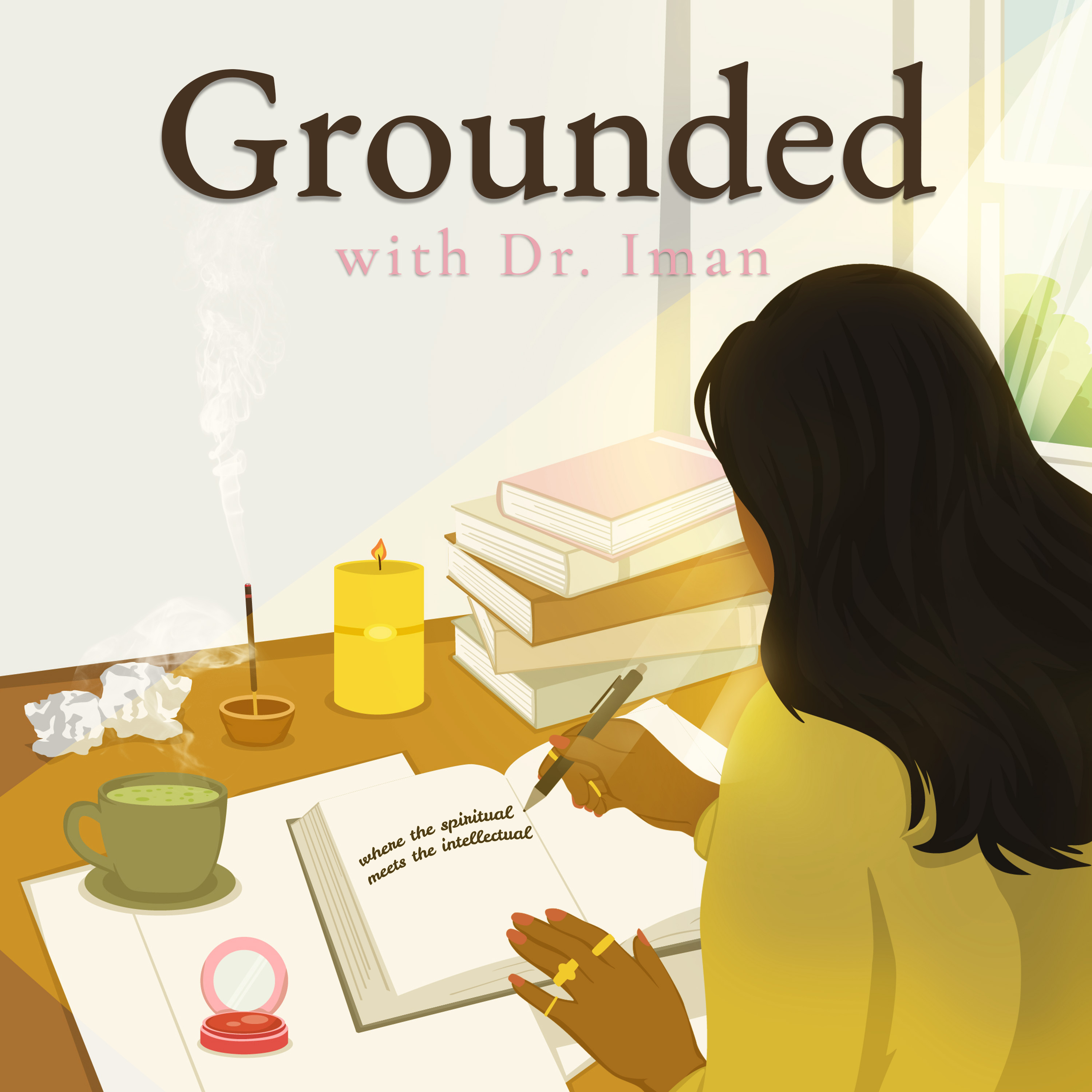 Ep.10: Why Do We Think Spiritual Growth Has to Be Stressful? | Why do we feel spiritually stuck… even when life is going well?In this episode, I open up about something I didn’t expect to be encountering post-PhD: feeling spiritually understimulated.No books or reading, just a check-in on what happens when stillness can lead to feeling disconnected, unfocused, and even bored sometimes.Things I am thinking about…Why do we associate spiritual growth with struggle and suffering?How can routines be a means of reconnecting? Why boredom and stillness might actually be necessary for growth?Chapters00:00 Grounding Question: Why Do We Think Spiritual Growth Has to Be Stressful?00:30 Opening01:11 Feeling Spiritually Understimulated | — | ||||||
| 4/27/26 | 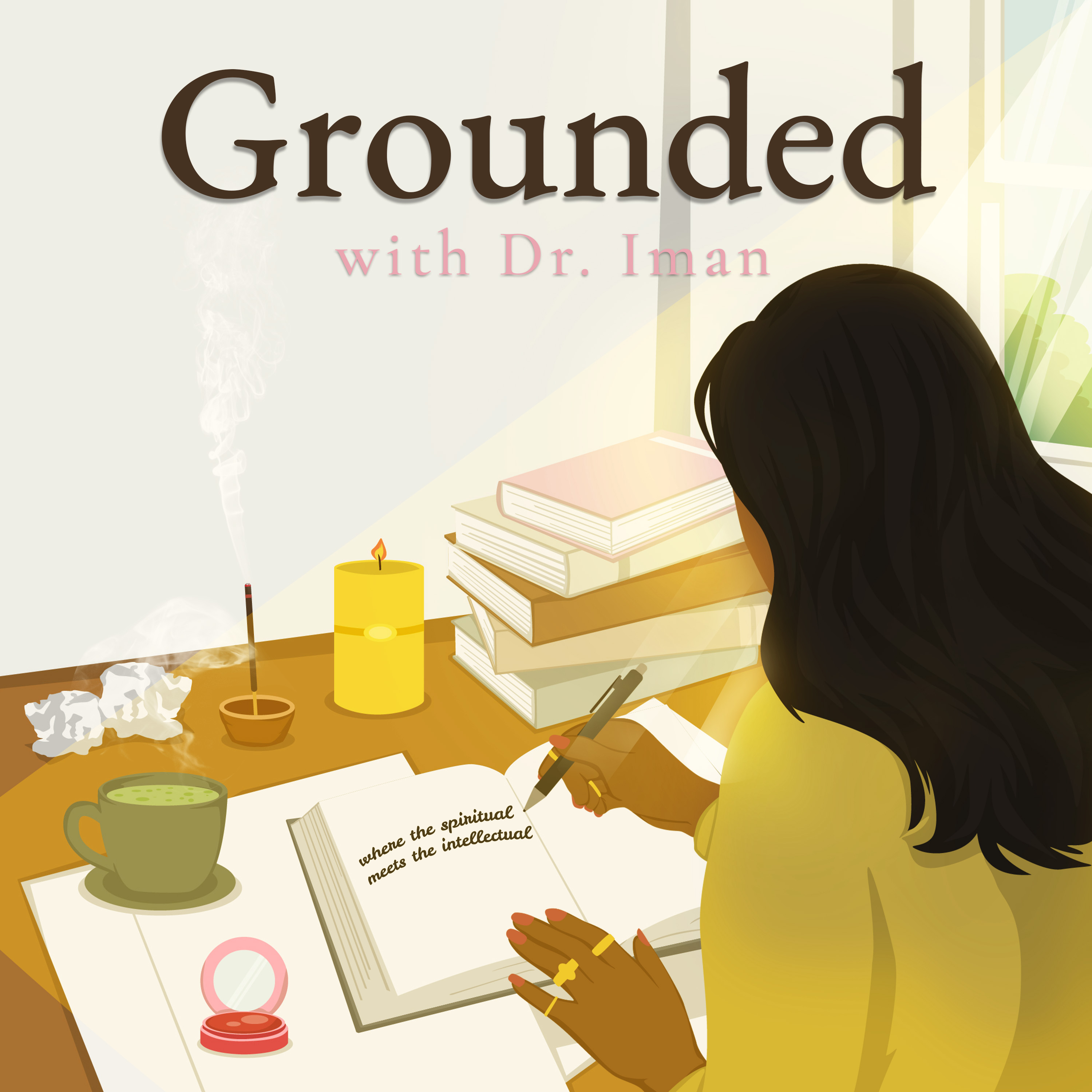 Ep. 9: Why ‘Start With Yourself’ Is a Myth | “Why ‘Start With Yourself’ Is a Myth”What if the idea that success and wealth “start with yourself” is actually a myth?This week, I'm bringing a religious studies lens to the self-help industry and break down the buzz and backlash around Emma Grede’s Start With Yourself. I use it as a case study to think about how myths work and how the American Dream continues to sell individual success as the solution to structural problems.I argue that Grede’s message reflects a gendered and racialized version of success often marketed to Black women and women of color, what I think of as the millennial-coded myth of the pick-me.From there, I turn to Black thought and the Black Nationalist Movement, specifically the Republic of New Afrika, to explore alternative visions of success beyond capitalism and self-making. I close by thinking at the intersections of the spiritual and the intellectual as I try to define what success looks like in this new career chapter I am presently in.Chapters00:00 Opening00:40 Grounding in My Own Version of Success02:30 How Myth Functions06:28 Emma Grede & the Myth of the Pick Me15:06 A Vision of Success Beyond CapitalismReferencesKees W. Bolle, “Myth: An Overview,” Encyclopedia of Religion (2005)Imari Obadele, Foundations of the Black Nation (1975) | — | ||||||
Want analysis for the episodes below?Free for Pro Submit a request, we'll have your selected episodes analyzed within an hour. Free, at no cost to you, for Pro users. | |||||||||
| 4/20/26 | 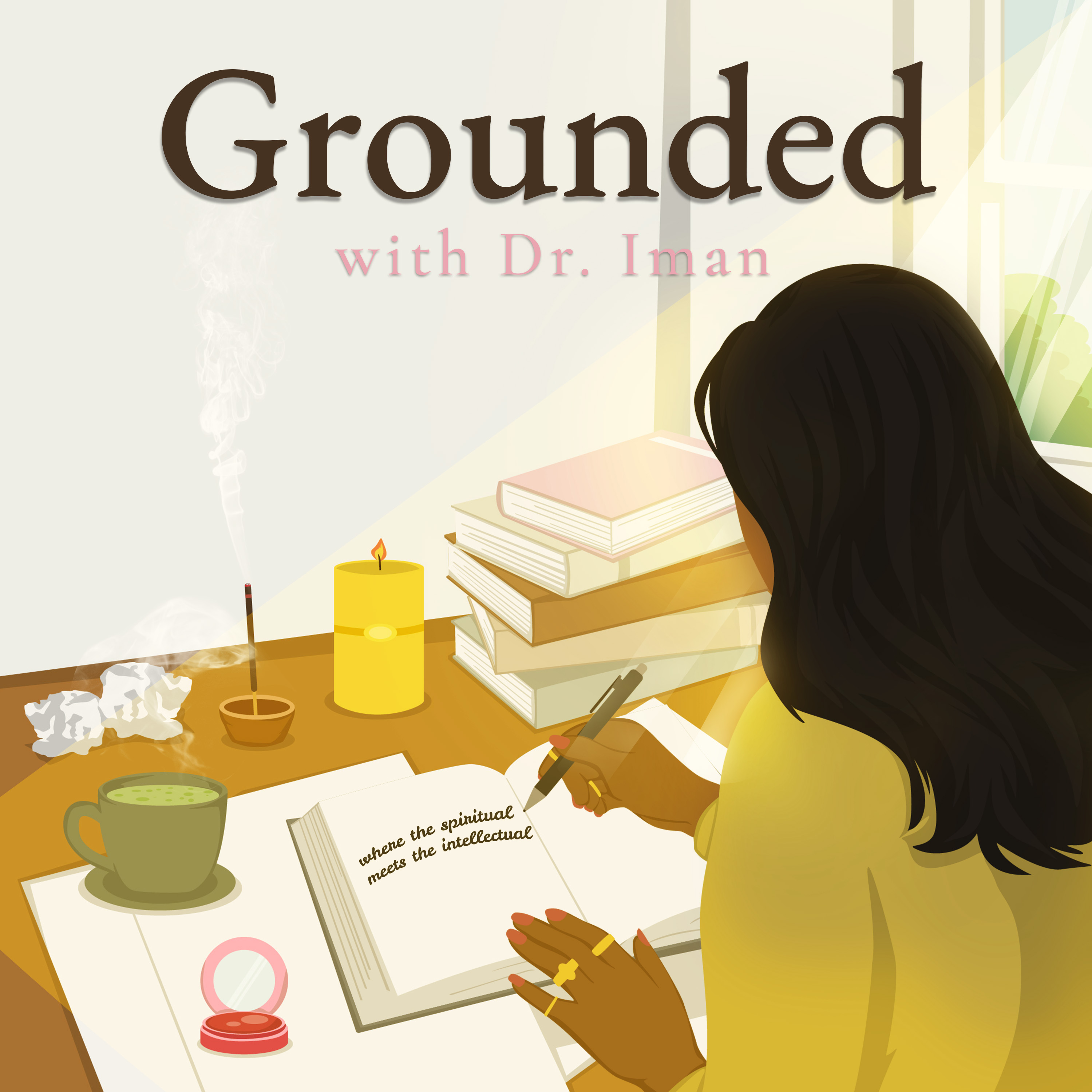 Ep. 8: What’s Divine About the Black Femme? | There’s so much talk about the divine feminine out there. So what’s divine about being femme?✨This week, we turn to Audre Lorde and Ashley Coleman Taylor to get a sense of what is divine about the Black femme through a Black queer and religious studies lens.We talk about A LOT.What’s the difference between popular culture takes and social media discourse on the divine feminine and Lorde and Coleman’s theorizing about the Black femme as divine? A lot. Most of the time, the girls are not talking about the same thing. And we get into how a lot of talk about the divine feminine defines itself over and against the Black femme embodiment like that of the rap girls (Sexyy Red, Cardi B, Megan Thee Stallion, etc.).I explore how Lorde and Coleman Taylor’s work offer a beautiful and capacious understanding of the divine femme! You’ll have to listen for that! And how this definition also opens up a third option for how people answer questions about being Muslim and queerness.Chapters00:00 Opening00:40 Grounded in the Baddie Routine03:34 Grounding Question: What Is Divine About the Black Femme05:51 Who Is the Black Femme14:02 Divine: A relentless commitment to becoming on your own termsReferencesColeman Taylor, Ashley. "Religio-erotic Experience and Transoceanic Becoming at the Shoreline in Audre Lorde’s Zami." Journal of the American Academy of Religion 91, no. 3 (2023): 680–697. | — | ||||||
| 4/13/26 |  Ep. 7: Listener Question: What Do Muslims Mean When They Say, “I Fear No One but Allah?” | We’ve got another listener question! 💌 This week’s: What do Muslims mean when they say, “I fear no one but Allah?” Drawing on my research on Black Muslima thought and history, I turn to two thinkers who have given the saying meaning within the context of U.S. anti-Blackness, imperialism, and gender violence: Safiya Bukhari and Amina Wadud.I discuss how the phrase has been a rallying call to struggle against tyranny and oppression, an action-oriented understanding of what it means to be Muslim and embody Islamic monotheism.Chapters00:00 Opening00:40 Grounded in the Fact That It Is That Deep04:59 Listener Question: What Do Muslims Mean When They Say, “I Fear No One but Allah?”07:53 Safiyah Bukhari’s Escape from Prison15:43 Fearing No One, Not Even Snakes20:46 Amina Wadud and the Tawhidic Paradigm26:40 ClosingReferences:Bukhari, Safiya. The War Before: The True Life Story of Becoming a Black Panther, Keeping the Faith in Prison & Fighting for Those Left Behind. The Feminist Press at CUNY, 2010.Churchill, Ward. Cointelpro Papers: Documents from the FBI's Secret Wars Against Dissent in the United States. South End, 2002.Husain, Atiya. No God but Man: On Race, Knowledge, and Terrorism. Duke University Press, 2024.Wadud, Amina. Qur'an and Woman: Rereading the Sacred Text from a Woman's Perspective. OUP US, 1999.Wadud, Amina. “Inside the Gender Jihad: Women’s Reform in Islam.” Praktyka Teoretyczna 08 (2013): 249–262. | — | ||||||
| 4/6/26 |  Ep. 6: Why Is It Important to Study Religion and Spirituality? | Why I think studying religion is a social good…Bet you thought I was gonna say something like “it helps you understand the diversity of the world.” WRONG. If you’ve been here for a while, you know DEI speak ain’t got a place here.Now that I’ve got your attention.The study of religion…Is the study of what people do and the meaning they give to those actions. And once you know that, then you begin to see how power and authority are cultivated, maintained, and resisted in this world.You understand how myths work, you begin to see how systems hold power over you by selling you fiction they market as truth.You understand how rituals work, you begin to see that the most impactful social movements and thinkers have all ritualized resistance in some way.You understand how authority works, you start moving in a way that aligns with what you think should have authority over your life, not what you’re told should have.You understand how knowledge is produced, you start producing your own and finding meaning + purpose in knowledge they’ve told you has none.The study of religion is a social good because it helps one see the world as it is and turns your attention to all the possibilities of what it could be.It’s the study of critique not rooted in despair or ambivalence. It’s the study of how the spiritual AND the material are one and the same. It’s the study of how the status quo is maintained and resisted.Chapters00:00 Welcome00:40 Grounding in my own answers01:59 Why is it important to study religion + spirituality?05:15 Myth of the Millennial Pick Me12:04 Rituals that give the everyday meaning15:10 Authority to move how YOU wanna move21:25 Knowledge also comes from withinReferencesAli, Tazeen M. The Women’s Mosque of America: Authority and Community in US Islam. NYU Press, 2022.Lorde, Audre. “Uses of the Erotic: The Erotic as Power (1978).” Sister Outsider: Essays and Speeches (2020): 53–59.Pérez, Elizabeth. “Religion in the Kitchen: Cooking, Talking, and the Making of Black Atlantic Traditions.” In Religion in the Kitchen. New York University Press, 2016.Episode 3: What’s the Difference Between Religion and SpiritualityEpisode 4: Listener Question: How to Make a Writing Practice (or Any Practice) Spiritual | — | ||||||
| 3/30/26 |  Ep. 5: How to See the Unseen? | How can you see the unseen? And does it matter if you don’t “believe” in it, as a scholar of religion?This week, I’m thinking through how we, as scholars of religion (yes, that includes you if you’re listening), come to see and engage the unseen, regardless of whether we “believe” in it or can perceive it through our physical senses.I also share how I encounter and draw on the unseen in my own intellectual work and practices, and what this has taught me about a much broader, more embodied understanding of the unseen. One that goes beyond flickering lights, things flying across rooms, or haunting silhouettes.Follow me on socials @imanabdk for more of my thinking on the unseen.Chapters00:00 Introduction00:40 The unseen tested me02:26 What is the unseen?03:28 Does it matter if I believe in the unseen?05:58 Stop trying to arbitrate the real12:21 Beyond ghosts14:00 My encounters with the unseen18:50 Broadening what we consider the unseenWorks referenced:Ahmad Greene-Hayes, “Hair, Roots, and Crystal Balls: Archival Viscerality, Black Conjuring Traditions, and the Study of American Religions,” Journal of the American Academy of Religion 91, no. 4 (2023): 798–819.Amira Mittermaier, Dreams That Matter: Egyptian Landscapes of the Imagination (University of California Press, 2010).Safiya Bukhari, The War Before: The True Life Story of Becoming a Black Panther, Keeping the Faith in Prison & Fighting for Those Left Behind (The Feminist Press at CUNY, 2010). | — | ||||||
| 3/23/26 |  Ep. 4: Listener Question: How to Make a Writing Practice (or Really Any Practice) Spiritual? | We've got our first listener question!How did you make your writing practice feel like a spiritual practice?I break down three ways I made the dissertation writing practice feel like a spiritual practice: thinking about writing as channeling, ritualizing the whole thing, and working in some collective accountability.I've NEVER been motivated by the kind of disposition that says "get up and grind," "show you're the smartest," "dominate the field you are in," or "be the best." It works for some people, just not me. But what has always helped me tap into the kind of discipline I needed in this moment was seeing the task before me as a challenge for obtaining spiritual depth. You mean I’ll get to know myself better through this practice? Develop a deeper connection to my ancestors? Think about my work as part of a larger tradition? Now that I will get up and do every day.Works referenced:For my reference to "archival ancestors," see Ahmad Greene-Hayes Underworld Work: Black Atlantic Religion Making in Jim Crow New Orleans (University of Chicago Press, 2025).For my reference to "ancestrally responsible work," check out the amazing public, artistic, and scholarly work of Alexis Pauline Gumbs, including Survival is a Promise: The Eternal Life of Audre Lorde (Penguin, 2024).For my note on getting started with ancestor veneration, I learned so much from Ehime Ora's Spiritu Come From Water: An Introduction to Ancestral Veneration and Reclaiming African Spiritual Practices (Hay House, 2025) and JuJu Bae's The Book of Juju: Africana Spirituality for Healing, Liberation, and Self-Discovery (Sterling Ethos, 2024). | — | ||||||
| 3/16/26 | 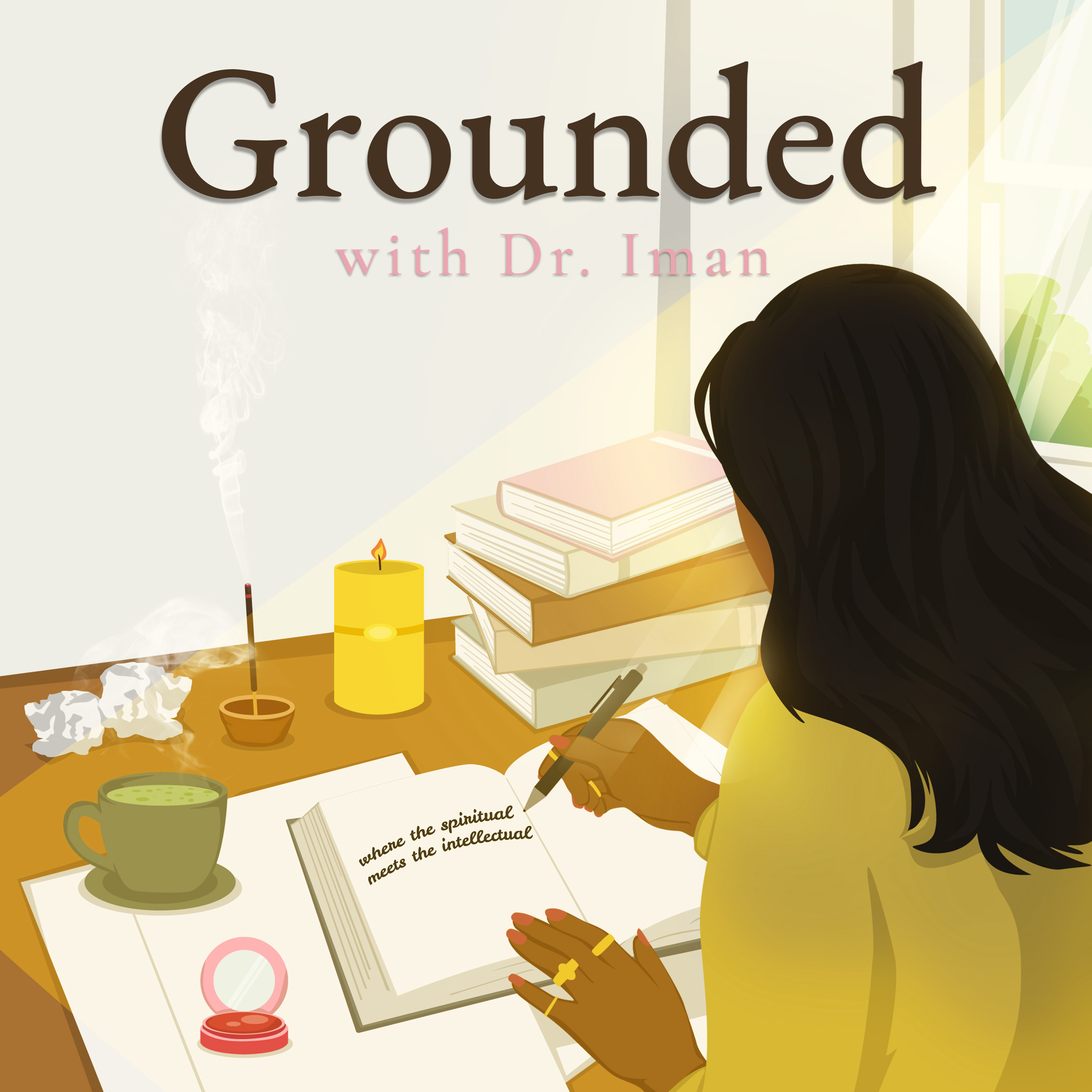 Ep. 3: What's the Difference Between Religion and Spirituality? | What's the difference between religion and spirituality? This is the second most frequently asked question I get as a scholar of religion, next to “Oh, so you're a minister.” And to be honest, folks tend to be disappointed by my answer to both.When it comes to the religion versus spirituality question, that is often because my answer focuses less on defining the terms and more on the question itself. I am fascinated by what is really going on in people’s thought worlds when they want me to distinguish between religion and spirituality in the first place.This week, I'm thinking through my own experiences alongside Robert A. Orsi’s Between Heaven and Earth: The Religious Worlds People Make and the Scholars Who Study Them (Princeton University Press, 2005).If you like the episode, don’t forget to share it with a friend and follow me @imanabdk on socials. | — | ||||||
| 3/9/26 | Ep. 2: Are We Our Ancestors’ Wildest Dreams? | I have a very complex, sometimes maybe a little too intense, relationship I have had with time. One that left me extremely skeptical of the saying "we're our ancestors' wildest dreams" when I first heard it. I’m coming to this reflection during the cross-over episode that is Ramadan intersecting with Black History Month, which has got me thinking its time to heal my own relationship to time.This week, I'm finding grounding in a beautiful concept written about by Alexis Pauline Gumbs: dream time. This idea really changed how I think about my responsibility to, as they say, use my time wisely.Follow me @imanabdk on socials for more at the intersections of the spiritual and the intellectual!--I did the reading so you don't have to, but as always, I'd love to hear what you think about it too! Send me a DM or comment on the show directly on Spotify.Alexis Pauline Gumbs, “Prophecy in the Present Tense: Harriet Tubman, the Combahee Pilgrimage, and Dreams Coming True,” Meridians 12, no. 2 (2014): 142–152. | — | ||||||
| 3/2/26 | Ep. 1: Where the Spiritual Meets the Intellectual | Welcome to the Grounded podcast with your host, Dr. Iman. This is a space where the intellectual meets the spiritual. I'm a professor, scholar of religion, and someone trying to find her footing. I will introduce you to the people, discussions, and schools of thought that have changed how I see the world. Together we'll seek clarity, not in passivity or bypassing, but in intuition, critique, and imagination. Some episodes are just me reflecting on where I'm finding my footing. Others draw more closely from my own research on religion and spirituality, tracing where I've seen others find theirs. And sometimes we're joined by experts, friends, and even you, the listeners, learning with each other and seeking rootedness together.In this episode, you can hear me talking about the very new season of life that I am in and how I'm finding grounding in abeautoful question asked by Katherine McKittrick and Eugenia Zuroski, where do you know from?---ReferencesI did the reading so you don't have to, but of course I want you to too ;)Zuroski, Eugenia. "Where Do You Know From?: An Exercise in Placing Ourselves Together in the Classroom." MAI: Feminism (2020). | — | ||||||
| 2/11/26 | You're in the right place. | If you’re anything like me, you want your big-idea, smart podcasts to have some soul and life to them. But when you go looking for that in the more “woo-woo” corners, it can feel like everyone is promising to change your life or sell you something. And it doesn’t always feel grounded in the kind of research and intellectual work that makes spirituality feel real.So I’ve got something for you.Welcome to the Grounded Podcast with your host, Dr. Iman. This is a space where the intellectual meets the spiritual. I’m a professor, a scholar of religion, and someone learning how to find her footing in real time.I’ll introduce you to the people, conversations, and schools of thought that have changed how I see the world. Together, we’ll seek clarity not through passivity or bypassing, but through intuition, critique, and imagination.Some episodes are just me reflecting on where I’m finding my footing. Others draw from my research on religion and spirituality, tracing where I’ve seen others find theirs. And sometimes we’re joined by experts, friends, and even you, the listeners, learning with each other and seeking rootedness together.So wherever this takes us, I’m really glad you’re here.Let’s get grounded. | — | ||||||
Showing 19 of 19
Pitch Fit is a Pro feature
See how bookable this show is for guests, which brands already advertise, the per-episode ad value, and the best-fit guest and sponsor profile. The numbers are blurred on the free plan.
How readily this show books outside guests like you.
How proven this show is for host-read sponsorships.
For Guests
ProFor Advertisers
ProUpgrade to Pro to unlock guest cadence, sponsor categories, fit scores, and per-episode ad value for this show.
Chart Positions
1 placement across 1 market.
Chart Positions
1 placement across 1 market.