

Insights from recent episode analysis
Audience Interest
Podcast Focus
Publishing Consistency
Platform Reach
Insights are generated by CastFox AI using publicly available data, episode content, and proprietary models.
Most discussed topics
Brands & references
Est. Listeners
Insufficient chart data. Estimates will improve as the show charts.
- Per-Episode Audience
Est. listeners per new episode within ~30 days
N/A🎙 Weekly cadence·181 episodes·Last published 3w ago - Monthly Reach
Unique listeners across all episodes (30 days)
N/A - Active Followers
Loyal subscribers who consistently listen
N/A
Market Insights
Platform Distribution
Reach across major podcast platforms, updated hourly
Total Followers
—
Total Plays
—
Total Reviews
—
* Data sourced directly from platform APIs and aggregated hourly across all major podcast directories.
On the show
From 10 epsHosts
Recent guests
Recent episodes
Episode 182 – A Chat With Russell Aaron
Jun 5, 2026
1h 10m 36s
Episode 181 – A Chat With Rob Ruiz
Jan 5, 2026
53m 36s
Episode 180 – A Chat With June Liu
Oct 22, 2025
34m 17s
Episode 179 – A Chat With Amber Hinds
Oct 14, 2025
58m 11s
Episode 178 – A Chat With Joni Halabi
Oct 8, 2025
27m 14s
Social Links & Contact
Official channels & resources
Official Website
Login
RSS Feed
Login
| Date | Episode | Topics | Guests | Brands | Places | Keywords | Sponsor | Length | |
|---|---|---|---|---|---|---|---|---|---|
| 6/5/26 | Episode 182 – A Chat With Russell Aaron✨ | WordPresspodcasting+3 | Russell Aaron | University of YouTubeLas Vegas WordPress Meetup+6 | — | WordPresspodcast+5 | — | 1h 10m 36s | |
| 1/5/26 |  Episode 181 – A Chat With Rob Ruiz✨ | WordPressopen-source+3 | Rob Ruiz | WP RigLinkedIn+1 | Orlando, FloridaOmaha, Nebraska | Rob RuizWP Rig+5 | — | 53m 36s | |
| 10/22/25 |  Episode 180 – A Chat With June Liu✨ | creative strategynetworking+3 | June Liu | backpocket ACEWP Wonder Women+1 | Washington D.C.Vienna, Virginia | June Liucreative strategist+3 | — | 34m 17s | |
| 10/14/25 |  Episode 179 – A Chat With Amber Hinds✨ | accessibilityWordPress+3 | Amber Hinds | Equalize Digital, Inc.WordPress Accessibility Meetup+2 | — | accessibilityWordPress+6 | — | 58m 11s | |
| 10/8/25 |  Episode 178 – A Chat With Joni Halabi✨ | web developmentcontent management+3 | Joni Halabi | Georgetown UniversityWordPress Accessibility Day | — | Joni HalabiGeorgetown University+3 | — | 27m 14s | |
| 8/9/25 |  Episode 177 – A Chat With Toby Cryns✨ | WordPressSEO+3 | Toby Cryns | The Mighty Mo!WPTavern.com | Minneapolis, MNTwin Cities | Toby CrynsThe Mighty Mo!+4 | — | — | |
| 11/16/23 | 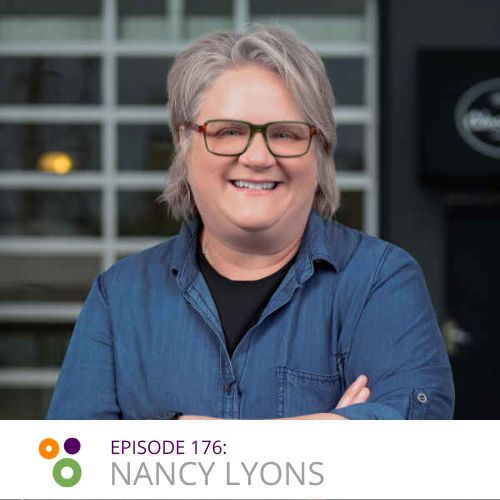 Episode 176 – A Chat With Nancy Lyons✨ | web developmententrepreneurship+3 | Nancy Lyons | Clockwork | Minneapolis MN | Nancy LyonsClockwork+5 | Nexcess | 41m 19s | |
| 8/24/23 | 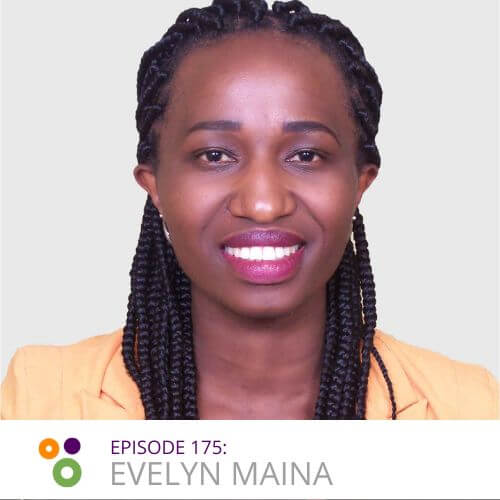 Episode 175 – A Chat With Evelyn Maina✨ | WordPress communitytranscription+3 | Evelyn Maina | Liquid WebHeroPress | Kenya | Evelyn Mainatranscription+3 | Nexcess | 24m 06s | |
| 8/10/23 |  Episode 174 – WordCamp Birmingham Hallway Chats✨ | WordCampinterviews+3 | Aisha AdamsMarcus Burnette | — | Birmingham | WordCampBirmingham+4 | Nexcess | 17m 35s | |
| 7/25/23 | 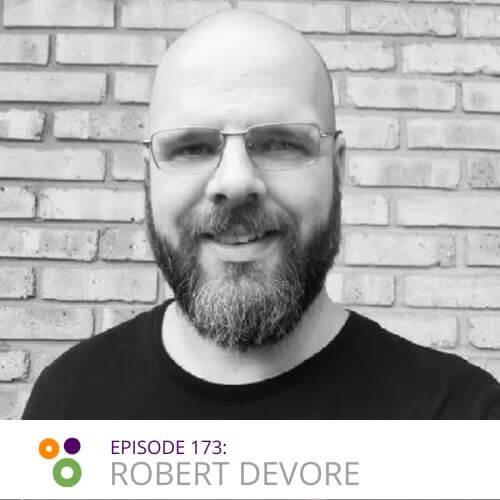 Episode 173 – A Chat With Robert Devore✨ | podcastinterview+3 | Robert Devore | — | — | Hallway ChatsRobert Devore+3 | — | 29m 46s | |
Want analysis for the episodes below?Free for Pro Submit a request, we'll have your selected episodes analyzed within an hour. Free, at no cost to you, for Pro users. | |||||||||
| 7/6/23 |  Episode 172 – The Hallway Chats Of WordCamp Italy | In November 2022 Topher went to WordCamp Italy in Milan. While there he had several conversations with attendees and sponsors. Episode Transcript Topher: Hey folks, welcome to Hallway Chats. I’m your host Topher. This week is going to be a little bit different from usual. This last November, I had the opportunity to go to WordCamp Italy in Milan, or WordCamp Italia in Milano, depending on how your mama says it. While I was there, I got to have some actual in-person hallway chats with a number of people. And this week is going to be an aggregation of five of them. So you’re going to get to meet five really cool people that I have the opportunity to interview, and I hope you find them just as great as I did. [00:00:40] Hey, everybody, this is Topher. I’m at WordCamp Italia in Milano, and I’m here with- James: James Baldacchino. Topher: James, why are you here? James: That’s good question. I’m here because I met two of the organizers in WordCamp US who told me it was coming up, and I said, why not? They also asked me whether I’ve been interested in applying to for a talk. My first reaction was, would I do? So I applied, they liked it, and here I am. Topher: That’s great. So you were at WordCamp US in San Diego? James: Yeah. That was fun. Topher: Did we meet and I forgot? James: Yes. Topher: I’m sorry. James: You met a lot of people. Topher: I did. All right. Cool. So how did you get into WordPress? James: I joined Ellipsis 18 months ago. As simple as that. I’ve been using WordPress personally, of course, like most other people for a long, long time but I never realized there was such a huge community and such huge industry behind it. I have found WordPress incredibly useful. For example, when I was in a marketing job, which had zero budget, and I pulled together a lot of great websites for very low price. I loved it. But I never knew it was a beautiful shock to find out- Topher: That’s a great word—beautiful shock. James: Yeah. Topher: When did you first realize the community was like that? Was it at WordCamp Us or did you find the community online? James: To be honest, the first year of working with WordPress, there was no WordCamp because it was all online because of the pandemic. WordCamps just cemented. But before, what made me realize what a tight-knit community this is was the fact that such a lot of information is shared so freely. Topher: Ah, yes. James: And there’s a lot of it as well. I’m coming from industries where if you have information, you don’t publish it, because you don’t want your competitors to know. Topher: Right. Right. Proprietary. James: So it was shocking and it was wonderful. I said, okay, then there must be more to this than what I realize. Topher: And then you went to WordCamp? James: And then I went to WordCamp Europe, which was massive. Topher: Oh, Porto? James: Yes. Topher: Did we meet there and I forgot? James: No. Topher: Okay. James: It was huge. Topher: I was there. James: That was really good as well. That was my first one. Topher: Okay. James: It was lovely. Topher: Wow. So this is your third then? James: My third then. Yeah, from zero to hero. But nothing compared to heros. Topher: You know, it’s funny people who work for SiteGround go to a lot of WordCamps. But because of the pandemic, there was this big gap. And I would talk to people from agencies and hosting companies and say, “Oh, yes, I’ve been in WordPress for two years now.” Oh, what WordCamps have you been to? None. James: Of course. Topher: You know, Oh, no. That’s so sad. James: No, I think it makes a massive difference. Topher: It does. A friend of mine has a WordCamp talk called “And Then I Went to WordCamp”. James: It makes sense. Topher: It does. It makes perfect sense. James: I can completely relate to that as well. Topher: So what do you do at Ellipsis? James: I’m the head of strategy. So my job is helping clients with marketing strategy. That means clients who work with WordPress, that means either agencies or hosts or people who sell the plugins or themes. The core of my role is helping them figure out what marketing strategy they should deploy, what makes sense for them in order to deliver growth and the right type of growth, not growth for growth. Topher: Right. Yes. James: It’s a wonderful role, which I’m really enjoying. Honestly, I’ve been working in marketing 14 years and the learning curve within WordPress has mean like no other. Topher: Meaning good or bad? James: Good. Topher: Very good. James: Extremely good. Topher: Good. James: Every single day I learned something new and I love it. Topher: Good. James: I love being told new things and finding out new things and helping clients test new theories and find new ways of delivering growth. And yes, fantastic. I love it. Topher: That’s great. I’m happy to hear it. Where are you from? James: I’m from Malta, which is pretty close. It’s made it even easier to come. Topher: Born and raised? James: Yeah, born and raised. Topher: That’s cool. All right. I’ve been in Milan now for three days and I have not yet met anyone from here. James: Me too actually. Maybe the hotel check-in guy. Maybe. Topher: Maybe. I don’t know. All right. Well, thank you very much for talking with me. James: Thank you for your time. Thanks for the invitation. Topher: All right. [00:05:53] Hey, folks, this is Topher. I’m here at WordCamp Italia in Milano, and I’m here with— Luisa: Luisa. Topher: Luisa. And what do you do with WordPress? Luisa: Ooh, with WordPress I work of course, and I work with a community also. The thing that I do most is translations. I am into the Polyglots team. I am one of the… I think we are seven GTs for Italian and we are always translating something and we are hoping to do good and useful job. Topher: For your work, are you a developer, a designer, communicator? Luisa: Ah, something in the middle of all those things. Topher: That makes sense. That is not uncommon. Lots of people do that. Luisa: And also I am a teacher. Topher: Also a teacher? Luisa: Yeah. But not only web-related things. I teach kids all the things with robotics and coding sometimes. Topher: That is very cool. That is very cool. Luisa: I like it. Topher: Where are you from? Luisa: Brescia, which is a little city near here, about an hour from Milan. Topher: Okay. So have you been staying here in a hotel or do you just drive back and forth? Luisa: No, no, I have a home, thanks to my friend that lent me this house. Topher: Nice. Is this your first WordCamp? Luisa: No, no, no, no. I have been to several WordCamps in the last five years, I think. Six maybe. Topher: Which ones? Luisa: All the ones in Italy: Milan, Turin, Verona, Rome, and also WordCamp Europe in Berlin. Topher: I was there. Luisa: Ooh. Topher: Yeah. Luisa: We didn’t met. Topher: You didn’t see me? Luisa: I did not know about you at that time. Topher: I have met many people that were also there and I did not see them. Luisa: We were many. I remember the main room with the conversation with Marta and we were three thousand and a half or something. Very, very big. I’ve never been in something so big. Topher: It was very impressive. And the dance. The after dance. Luisa: It was an amazing event. Topher: Yeah, it really was. I had another question and I need to remember it. I don’t remember it. What are you doing here? Are you the organizer, a volunteer or…? Luisa: I’m an organizer and I was in charge of the contributor day. Topher: Ah. Okay. That’s why I saw you so much. Luisa: That’s why I called you at first. Topher: So how did you feel contributor day went? Were you happy with it? Luisa: Oh, we’ve been so happy. Topher: Good. Luisa: So many people and a real good job for all the teams. Topher: I was very impressed. I’ve been doing a lot of WordCamps and contributor days and I’ve noticed that about 10% of WordCamp shows up to contributor day. And I feel like that fits for this one. We have 500 or 600 attendees here? Luisa: Yesterday we- Topher: Not yesterday. Today. Luisa: Today, three hundred and a half. Topher: Oh, three and a half. Okay. Luisa: I don’t know if they all show. Topher: How many did we have yesterday for contributor day? Luisa: A hundred. Topher: Okay, so that’s better than average. That’s a third. That’s really good. So well done. Luisa: Thank you. The place was big and so we could do this. It’s difficult this time to have space to let all the people work safely and in a good way. Topher: All right. Well, thank you very much for talking with me today. Luisa: Thank you, Topher, for coming here. Topher: Oh, you’re very welcome. It was my pleasure. Luisa: Thank you again. [00:10:19] Topher: Hey everybody, this is Topher. I am at WordCamp Italia in Milano, and I am here with- Caroline: Caroline Crossland. I am head of inbound marketing at Atarim. Topher: All right, cool. What brings you to WordCamp? Caroline: I joined Atarim only three weeks ago. So this is all very new to me. I’m new to the industry. So technology is one of my passions, but this is my first time working within the industry, within the WordPress community. So I am here to learn as much as I can and soak up information from guys like yourself- Topher: Ah, thank you. Caroline: …who know everything in this community. And it has been a very welcoming community- Topher: Good. I was gonna ask what you think. Caroline: …and one that’s really helpful. It’s been notably a diverse group of people. It’s a very inclusive atmosphere. I have been welcomed with open arms and made lots of interesting new contacts. And yeah, it’s been really good because I’ve had a lot of questions. I’ve probably been quite annoying. Topher: Well, not to me. I don’t speak for the rest of the team. Cool. So how did you get connected with Atarim? Were you WordPress before or just random job? Caroline: Just a random job or many random jobs. No, I was marketing director at a business until just over a year ago. And due to COVID, I was made redundant and I actually decided to take a year off to spend with my little boys, which was absolutely lovely. And when it came time to look for another job, I decided that I really wanted to work in an industry connected to one of my passions, and my passions are technology and travel. I began the job hunt and actually Atarim was the first job that I saw that was interesting and I applied. I had two fantastically entertaining interviews, where we… the second one was with one of the co-founders of the business. We had a really interesting conversation. We got on really well. I was really excited by what Atarim… who they are, what the product does, and where they want to take the product. So yeah, that’s how it all came about. I have no experience working in the technology industry but I do freelance build the occasional website for family, friends, friends of friends, and so on. And WordPress is my tool of choice. Topher: Excellent. Caroline: So I know the product to a certain extent, but I haven’t been part of the community until now. Topher: All right. Where are you from? Caroline: I am from Sheffield in England. Topher: And here you are in Italy. So you’re getting your travel wish? Caroline: Absolutely, definitely. All my previous roles have involved a lot of travel mostly to the US. So I’m known for talking about traveling from the UK to the US. I help people with that online. This is actually my first time in Europe since COVID. Topher: Wow. I don’t know if you’re aware, but there are a lot of WordCamps. Caroline: I am becoming aware, yes. Topher: And they are all over the place. And you’re going to have to travel to all of them. Caroline: I am indeed. We are sponsoring WordCamp Asia in Bangkok in February. Topher: Oh, nice. Caroline: So all being well I should be there. So this is kind of my learning WordCamp. This is the WordCamp where I’m asking all the questions and trying to meet all the people, which will hopefully put me in good stead for the next one. Topher: Yep. All right. Wow, thank you very much for talking with me. Caroline: No problem. Thank you very much. Topher: I will see you later. Caroline: Goodbye. [00:14:22] Topher: Hi everybody. This is Topher. I am at WordCamp Italia in Milano, and I’m here with… What is your name? Paolo: My name is Paolo Scala. Topher: Paolo Scala. Paolo: Yeah. Topher: And why are you here? Paolo: I am here because I work for Yoast, and we have a booth here at WordCamp Italia. Topher: Excellent. Where do you live? Paolo: I live actually 30 minutes from here. I came by car. Topher: You said 30 meters? Paolo: No, 30 minutes. Topher: Minutes. Oh, okay. Paolo: Thirty minutes by car. It’s something like 15, 16 kilometers. Topher: Okay. My hotel is literally 200 meters from here. Paolo: Wow. Topher: So I thought, well, maybe. Paolo: No, no, no, this is a very, very central area of Milan. So you have to be very, very rich to live here. Topher: So you work for Yoast, so you’re in WordPress. How long have you been doing WordPress things? Paolo: Not that much at all because I started this year. I used the WordPress a couple of years ago but just to configure a site, a website. I didn’t develop anything at all for WordPress. So I just started about this year. Topher: What made you join Yoast, if you weren’t a WordPressor before? Paolo: I was actually considering a career change, because I come from the public research field. And my partner too. And so we were scouting some websites. She’s a linguist and she looked… I don’t know why but she saw this Yoast job offer and she said to me, “Ah, look, there is this company which is hiring developers.” Because I am a developer. Topher: Ah, okay. Paolo: Yeah. So I didn’t know Yoast at all. I looked at their website, and I was very impressed by all the positive vibes that all these videos gave to me. So I thought, Why not try? So I sent the CV, I interviewed, and here I am. Topher: That’s great. Is this your first WordCamp? Paolo: Yes. Topher: What do you think? Paolo: It’s very nice. One thing that really struck me is the people are very, very nice. It’s very good atmosphere. Very nice vibes. I really like it. Topher: WordCamps have a reputation for being very pleasant places to be with very nice people. That’s why I go. Paolo: Yes, yes, I can reassure that it’s exactly like this. Topher: That’s cool. So you’re a developer but you’re standing at a booth at a WordCamp. Do you also do marketing things? Like why are you here? Paolo: I’m here because today I’m a speaker. Topher: Oh, excellent. What are you speaking on? Paolo: I’m speaking about schema.org. Topher: Oh, I saw that one. That’s dear to my heart. I love that company. Will you also give it in English? Paolo: Oh, yeah. I mean, it’s a very interesting topic. So I hope to- Topher: I can read it online. All right. Well, that’s very cool. Thank you for talking with me today. Paolo: No problem. Thanks to you. [00:17:59] Topher: Hi everybody, this is Topher. I’m at WordCamp Italia in Milano, and I’m here today with- Samah: Samah Nasr. Topher: All right. And you’re with Yoast? Samah: Definitely. I’m with Yoast since almost more than four years. Topher: That’s a long time. Samah: And it’s passed so quickly. I feel like two weeks ago I joined them. Topher: Excellent. Where do you live? Samah: I live in the Netherlands in a lovely city called Arnhem. So I love the city and it’s petite city, but I’m there since almost five years. Topher: Is that where Yoast is based? Samah: No, Yoast is based in the city called Wijchen. It’s like 30 minutes with a train from my city. Topher: Okay. So you can go to the office if you need to? Samah: Yeah, definitely. But everyone love working from home. Topher: Yeah. Yeah. So what do you do there? Samah: I work at community team. We’re mainly working with sponsoring events, especially WordCamps meetups, and also I’m working with Yoast Care Fund and Yoast Diversity Fund. Topher: Okay. Very cool. My wife, Cate, won the Yoast Care Fund around six months ago, a year ago. Something like that. So is your time with Yoast the whole of your time with WordPress, or did you do WordPress before? Samah: Honestly, I studied IT when I was young, but I’m coming from Middle East and it was very difficult for a woman to work in IT. I studied the C++, PHP, and those ones but I never really worked in WordPress or even think about it. When I joined Yoast, I started falling in love with WordPress and this awesome community. Then it’s grown more and more. And then I started working with WordPress after joining Yoast. Topher: Sure. So you’re in community with Yoast. Did you do community things before? Samah: Never at all. I used to work with the Red Cross. I shifted my career completely- Topher: A different community. Samah: A different community. I changed my career because I want to move to the Netherlands, have a little bit calmer life, and more… just to start a family. Topher: Okay. This is your first WordCamp? Samah: Definitely not. But this is my first WordCamp in Italy and I’m really happy to meet all of the Italian community. I know them in Slack or a lot of online events. Topher: Sure. Samah: But it was nice to see they have legs, they’re not only faces. Topher: What other camps have you been to? Samah: I’ve been to WordCamp Berlin. Sorry, WordCamp Europe in Berlin. I went to WordCamp Netherlands. I went to… Yeah, I think that’s it. And WordCamp Nijmegen a couple of times. Topher: Where is that? Samah: It was 2019 before COVID time. Topher: Where is that? Samah: In Netherlands. Topher: Oh, okay. My Dutch doesn’t help me understand that word. Samah: You should see me the first time trying to pronounce. I called it Nai-me-gen. Topher: Oh, yes. So what do you like about WordCamps? Samah: I love that all the people come together in their own free time to build or to communicate about open source. And just the atmosphere, the love between them, the way they contribute, you feel welcome. It doesn’t matter who you are, where are you from, what languages you speak. You feel welcome. Like I’m here, I don’t speak Italian and it was- Topher: Me neither. Samah: And people are so friendly. Even the one who doesn’t speak English, they are trying. They’re waving or they give you the sign. But that’s really amazing. You feel welcome. You feel like home in different place. Topher: Yes. Yes. I have often thought that WordCamps feels like home. No matter which one it is- Samah: Yeah, definitely. Topher: …they all do. All right. Well, thank you very much for talking with me today. Samah: Thank you. It was lovely talking to you, too. Topher: All right. Well, there you have it, folks, five conversations from WordCamp Italy. I had a wonderful time and the people were invariably nice, kind, thoughtful. It was a great trip. So let’s wind this up. This has been an episode of Hallway Chats, a part of the HeroPress network. I was your host Topher DeRosia. I’d like to thank Sophia DeRosia for the music and Nexcess for hosting our network. If you liked the episode, please subscribe and mention us on social media. | — | ||||||
| 6/22/23 | 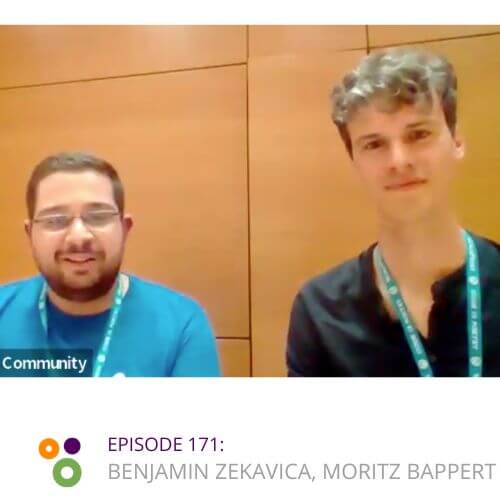 Episode 171 – A Chat With Benjamin Zekavica and Moritz Bappert | Topher and Sophia met with Benjamin Zekavica and Moritz Bappert, both WordCamp Europe 2023 volunteers. Show Notes Episode Transcript Topher: Hey everyone! Welcome to Hallway Chats. I’m Topher and my co-host is Sofia. Sophia: Hello. Moritz: Hi. Nice to meet you. Benjamin: Nice to meet you two. Topher: It’s great having you here. Once again, our guests are from WordCamp Europe. Please tell us your names and what your role is for WordCamp. Benjamin: I’m Benjamin. I’m 24 years old, and I’m a volunteer here at the WordCamp. I am the photographer and photographer organizer to take the picture from the SD card to the computer and to give it to the social media team. And I’m really happy to be here today. Topher: Great. Moritz: So my name is [Moritz? 00:05:05] and I’m here for the second time on WordCamp Europe, first time as a volunteer. So I’m excited about that. I was on the sponsors team today, helping the sponsors with everything they needed. And one more shift that I have is as a speakers assistant, so calming down the speakers before their speech, and then guiding them to the stage, and helping with anything else. Topher: Cool. Did you say this is your second WordCamp? Europe? Moritz: Yes. I’ve been at one in Berlin in 2019. Topher: I was there. And Benjamin, it’s just your first WordCamp Europe? Benjamin: No, it’s my second. I was also in Berlin. Topher: I was there too. Benjamin: My volunteer is now first time and I’m really happy to be here. Because after COVID it’s now a freedom to have again here with much people to communicate and so on. I’m really happy to have our life back. Topher: Yeah, yeah. So where are you each from? Where do you live? Moritz: I’m from the Black Forest area in Germany at the very southwest, bordering France and Switzerland. Topher: All right. Benjamin: I live in Aachen. It’s near Cologne. It’s wonderful, small city. Topher: Very nice. It’s morning for us. I don’t want to say early morning anymore because I don’t want to seem like I don’t get up early. But it’s midafternoon of day two for you. How’s it been? Are things going well? Is it smooth? Having fun? Benjamin: I think we are a little bit tired. Now it’s okay. I think it’s completely good for us to work, I think, four hours, if not more, and it’s really good for us. It’s not the full day. And you can choose your shifts. It, for me personally, was relaxed and good. I was really happy because to see the attendees. I was really happy with the speakers that was known for more different things and learned other new technical things. I am really proud about that. Topher: That’s cool. Moritz: For me, it’s really exciting in that way. Of course, it’s also exhausting because I’m talking to so many inspiring people and I’m like all over the place. I’m having lots of fun. The party yesterday night was nice. There’s gonna be a party too this night and tomorrow night. So it’s a lot. You need to see how you’re managing everything. But yeah, I’m just here for meeting so many interesting people. And I’m having a great time. It’s amazing. Topher: Great. Sophia: Nice. Topher: You’re on, Sophia. Sophia: What? Topher: You’re on. Sophia: What made you both seek a role in the WordCamp organizing team? Moritz: For me, I was really interested to get involved more, to talk to more interesting people, to just put myself out there. For example, as a speakers assistant, I have the great opportunity to directly get in touch with some of them. We also get invited to the social last night to the party with all the sponsors and speakers, organizers, and so forth, which was really nice, and many interesting people around. So I think it’s a great opportunity. On the one hand, giving back and investing our own work and effort into a great event. And on the other hand, you also get recognition for it. And it’s lots of fun, you get to know other volunteers. Sophia: Yeah, for sure. Moritz: So great experience. Definitely gonna do that again. Benjamin: Repeat it again. I want to add it’s really nice experience because some people, some volunteers, it’s so much problems and I could help them and they could help me. In general, we say you give it and you get it back. It’s a really nice thing what you can expect to be a volunteer. My first time and I was a little bit here, I say, Okay I don’t know if I want to apply for volunteer role because people say it’s so difficult because the English is maybe not so well. But I think here all people want only one thing—to learn and to grow our community. And that makes me so happy. Sophia: Yeah, absolutely. How has the reality of how WordCamp Europe is now…? Like after the organizing, how has that compared to… Gosh, let me rephrase that. So after having organized WordCamp Europe, and this is now day two, how is it going? Like how does it compare to how you hoped it would be? Benjamin: I can say I work here as a contributor for WordPress Core and community team and it’s more online basis. But I think here and volunteer, it’s also nice to meet the people directly here and to help to make the WordCamp better. And if we have more volunteers, then it’s easier for all organizers to organize all good things to make the WordCamp better. And it is important because without volunteers it’s impossible to make the event. Moritz: I mean, I guess what you were asking is also, like, is this event in any sense different from how events work during COVID? I don’t feel that way. For me, it really feels like any event before. It’s been like lots of people. We have great parties. So there’s not any restrictions on that. And I don’t see that people are hesitant in meeting so many people. So it’s really feeling like getting back to normal somehow and feeling great. I think COVID didn’t really impact this in any negative way. And probably we even learned some things from that and we’re able to improve stuff. So I’m really happy to have in-person events again. And it’s so valuable to really meet people in person and talk to them directly. For me, even as I’m doing much of the stuff online and working remotely, quite often it’s a different feeling. You get different depths really of interactions with all the people. Topher: So volunteering and organizing is a lot of work. It is different from just being an attendee. You’re not free to just wander around and shake all the hands and eat all the snacks. Would you do it again? Is volunteering better than just being an attendee? Or would you value not having responsibility? Benjamin: I will say yes because I want to come again here and to the next WordCamp because all people wanted to be involved and to help the community to grow up. I think the part is volunteering you have much more exercises to do and you have to help other people. It’s sort of a bit different because you are completely a visitor. But you can also join the community and so on. But like the volunteer, you have more permissions, you can ask directly people to make maybe the next WordCamp better maybe and say directly your opinion to make the next events… The problems was not again to do that. That is a good thing because as well as volunteer you have more to speak out directly to the organizer. Moritz: That’s the point that I see as well, just like being closer at the center of really what goes on behind the event and inside organizing everything. For me, it’s really interesting to see that and to get more involved and to talk to the people behind the scenes, like, either the organizers themselves or speakers, for example. As a normal attendee, I feel more isolated, of course, I can go and talk to lots of people. But as a volunteer, I really feel more as part of the whole. It lets me connect easily with many people, people approached me seeing me in my volunteer t-shirt. Somehow, you’re also one face of the whole event, so to say, and it feels good. I really enjoy doing my little part to help make a successful event, and this way also getting in touch with much more people. Of course, you have to do your small tasks, it takes some time. You don’t go to so many sessions, but I really value talking to people and doing all the related tasks. So I don’t regret missing any of the sessions also. Benjamin: To add one more thing, I think the good thing as a volunteer, you have a team of mature people. And so it’s funny because all people work together. And we are a team. And that makes me so happy because we have direct communication and work together and that makes your experience much higher. And it’s one thing why I really love to be a volunteer today in this event here. Topher: Imagine for a moment you’re talking to someone who has been to four or five local WordCamps, small in their city or maybe another city, but just small camps. What’s different about WordCamp in Europe? Benjamin: I think we have same opinion of that I think it’s the huge people here, so many people here. It’s a bit difficult because they have more to organize. It’s a bit smaller group. And it’s a bit easier maybe for the organizer, for the volunteers to coordinate, to see how it works. But here is a little bit bigger, much more attendance was here. It’s a little bit stressful. A little bit. Moritz: I agree. It can be overwhelming, I think. But still there’s so much opportunity because all the people from every place in the world that engage in WordPress topics somehow are here. And you can talk to anyone we have, with any WordPress company you could imagine. It’s so nice. Like I’m working as an agency with two co-founders and we’re in that since seven years, so we’ve seen lots of plugins and stuff and some blogs of developers or other things that we find useful. This is the place where you can really meet all of those people in person. This is something that is really satisfying for me to talk to them in person, get to know them. Topher: Personally I really value that myself—getting to know people on a personal level is… It’s not just WordPress, I’ve experienced it in the whole open source community. I’m a Linux guy, I’m a Mozilla guy, you know, the PHP team, they’re all very open like this. And to be able to just walk up and shake the hand of someone who built something that you use every day it’s amazing. It’s impressive. It’s really cool. Moritz: Yeah, I agree. Topher: All right, I want to open it up to you two. I don’t have all the questions and all the answers. I’m not there. Is there anything you’d like to say about your experience, about WordCamp, something you wish I’d asked you? No, is an acceptable answer. Moritz: Let me think. I think most of the points I already covered. I mean, it’s really impressive to meet so many cool people, having really great time. Topher: Let me ask this then. I’ve had some a number of conversations with people in the last couple of weeks about the multilingual aspect of a thing like WordCamp Europe and particularly how mentally taxing it can be to try to communicate across not just one language but 10 or 20, or 30, you know, and all the variety of accents, some are thicker, some are not. How’s it been for you? Yes, I’m assuming that English is pretty common language on the floor at WordCamp. You both speak wonderful English. But how are you doing with people who don’t speak wonderful English or German or anything, you know? What’s it been like for you? Moritz: Well, to be honest, all the people I met up to now were able to communicate well in English with me. So that wasn’t really a problem. I mean, for me myself, it’s exhausting. And I’m much more tired in the end of the day as I would be compared to talking the whole day in German, which is already tiring. But doing it in English is even more… But it works. And everybody is making a good effort to be open and communicate, which is mostly English. And, of course, we’re also meeting people from Germany you’re talking to. But yeah, 90% of my conversations have been in English today. Topher: All right. Benjamin: English is the language here. I’m born in Germany, and my parents are from Serbia. And the funny thing is there are more Serbians here. And for me, it’s really nice to talk with them in Serbian language, because it’s so nice to see the other people talking other languages. And yes, we can speak all languages as that possible directly. But with English we also were happy because my English is not so well but I try to learn it more better. I only can say it’s important that we have what was happy and understand a little bit. But I say sometimes you don’t need something to say. If one smile, it’s enough. Topher: Yes, yes. Something that the WordPress community has taught me, has given me is an appreciation for everybody in the world who has learned English so that I don’t have to learn their language. People all the time say to me, “I’m sorry for my English.” And I say, “Boy, I’m sorry, for my version of your language because you don’t want to hear it.” I appreciate. You do not want to hear my German. So I appreciate greatly anyone who takes the time to learn a language that I speak—the only language I speak. So I express that to you now. Thank you. Thank you for taking that time to learn English and be able to be here with us today. Benjamin: Yeah, nice. Topher: I don’t have any more questions. Sophia, do have anything? Sophia: I do not. Topher: All right. Then I just have a little thing to read here and then we can wrap up. This has been an episode of Hallway Chats, a part of the HeroPress Network. Your hosts were Sophia DeRosia and Topher DeRosia. We’d like to thank Sophia for the music and Nexcess for hosting our network. If you liked the episode please subscribe and mention us on social media! | — | ||||||
| 6/15/23 | 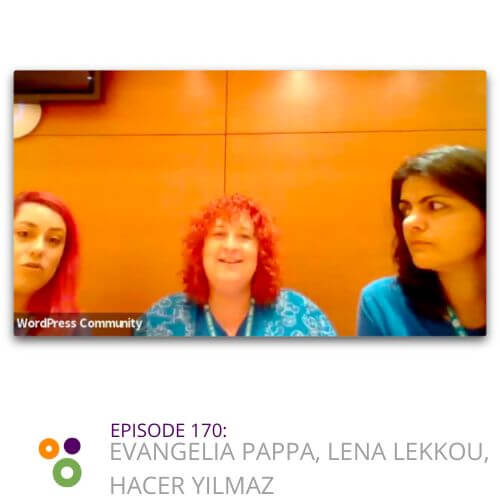 Episode 170 – A Chat With Evangelia Pappa, Lena Lekkou, Hacer Yilmaz | Show Notes Episode Transcript Topher: Hey everyone. Welcome to Hallway Chats. I’m Topher and my co-host is Sofia. Say hello, Sophia. Sophia: Sorry. Hello. I was trying to look at the show. Topher: Okay. Our guests today come from WordCamp Europe. Please tell us your names and what your role is for WordCamp. Evangelia: Hi, my name is Evangelia Pappa. And for WordCamp Europe 2023, I am one of the global leads this year. So I’m responsible for the teams of budgets, sponsors, and the community team. Topher: Okay. Lena: Hi, I’m Lena Lekkou. I’m responsible for the design. I was the design lead team. What you see and what is printed, what is on the website and what is on the social media is from my team. You can blame us or not. Topher: Oh, I can’t hear you anymore. Oh, there we go. Hacer: So my name is- Topher: Now it’s not coming through very well. I don’t know. Maybe it’s the angle. Hacer: Maybe. Topher: That’s much better. Yeah. Hacer: My name is Hacer Yilmaz. I’m a member of the communications and PR team, and sites, I’ve been involved with adding all of the content to the website and also organizing our relationships with media partners. Topher: Oh, you know what? I’m gonna stop us right now. I’m gonna hit record and start over. Sophia: It is recording. Topher: It is? Sophia: Yeah. Topher: No, it’s not. Oh, you are recording? Wonderful. Yeah. All right, then never mind. Okay, great. That’s awesome. I’m glad to have you here. Where are each of you from? Evangelia: We are at the moment at Athens Concert Hall. This is the venue of WordCamp Europe 2023 otherwise called Megaron. Topher: Yes. But where do you live? Evangelia: I live in Larissa. It is a city in central Greece. So it is four hours from Athens. Topher: And Lena, where do you live? Lena: I live here in Athens in Greece. Topher: Oh, wow. That’s cool. Hacer: I live in Portugal. Topher: Okay. I guess I don’t know why I expected more people from outside Greece. But maybe that’s just a false expectation on my part. Evangelia: Oh, we do have a lot of people from outside Greece. You just hit the jackpot today with me and Lena, two out of three. Topher: It is a jackpot. Lena: I must say that as a Greek community, we are very involved with WordCamps and with the community as it is. So this is why you might see a lot of Greeks. Topher: Okay. In general, Greeks are really involved and love organizing events because we have two local WordCamps that we are also planning, a third one in a different city, maybe after WordCamp Europe. However, it’s also a little bit difficult to find people who are able to commit their time and invest being an organizer. You will see this year’s organizing team did have a lot of breaks, in several teams, not only the local team. However, we do have people from all around Europe and also some people from other continents. Topher: That’s cool. It is early morning for us, not too early, but it’s the beginning of our day and it is mid-afternoon of day two for you. How’s it been so far? Is it going smoothly? Are you having a good time? Evangelia: Yes, it’s the first day of the main event because yesterday we had the contributor day. So basically, the event started yesterday. Today we had talks in three tracks and also two workshops. And at the same time, we had panels, panel discussions that was something really interesting, except for the talks and workshops. And enlightening because we had also panel discussions regarding diversity, getting involved with the community, women and non-binary people positions in let’s say [inaudible 00:04:57] also, like the amazing team that we have, This is like an example on how we should be handling diversity. It was so far a very nice day. Topher: How’s the weather been? Is it nice? Evangelia: Finally it is summer. Because the last week in Greece, it was almost winter. It wasn’t normal for us. Usually in May and early June, it is considered to be summer, but at the moment, we have around 30 degrees Celsius. Last week we had around 15 or 12. It was raining. Topher: That’s cool. Sophia: So this is a question for all three of you. What made you seek a role in the WordCamp organizing team? Hacer: So I was also an organizer last year at WordCamp Europe. But before that, I had just been working with WordPress for around three or four years. I was kind of as a freelancer, I am kind of missing in our colleague environment, and the whole social part, let’s say. I know that WordPress has a big community. So I thought maybe that’s something also for me, you know, nice community to be a part of. So that’s why I applied to be an organizer last year. That was also the same reason for this year is because last year I found out it’s a great community. So I just wanted to keep being part of that. Sophia: Nice. Lena: If you start with this, you cannot stop, I think. Sophia: Oh, yeah. You can never leave. They never let you go. Evangelia: To be honest, many of us every year say, you know, This is my last WordCamp. And it never is. Because you might feel very tired during or a few days after the event considering it has been a very intense period before and also during the whole conference. But then you realize, “Oh, my God, all those smiley faces. How can I live without this tension every day of my life? Spending every day working for WordCamp as an organizer?” And seeing things happening- Topher: So what you’re saying is that WordCamps are children. Evangelia: I don’t know. Maybe like that. But you cannot leave that. You cannot. I said to myself I would stop or you know, take some time off to get some rest. I needed vacation really badly sometimes. And then I realized, “Oh, my God, they will start organizing without me. I will have no idea what is going on.” How can I live with that? It’s really strange. Lena: So I agree with both their opinions about this. But something that I have as a reason for working in all these communities is that when I started to work in this industry, it was very hard to make connections and feel welcoming and start not being so introverted. So that’s what helped me overcome this situation and start having connections and working at this industry. So because I feel that at the start it was very welcoming for me, I feel some way that I can do the same for people that are in this position right now. So I feel that I can help people that are now at the start of this journey. And I feel the need to give something back to something like this. Sophia: Yeah, for sure. Topher: Think back, if you will, to the first time you volunteered. What did you expect? How does the reality compare to what you thought being an organizer would be like? Evangelia: For WordCamp Europe or in general volunteering as an organizer for WordCamps Lena: I have the same question, if it’s only for WordCamp or volunteering in general. Topher: Well, now I want to know how they’re different. So both. Evangelia: I can explain why they’re different. Because my first experience with the WordPress community was back in 2015. So I had nothing to do with WordPress back then. I will be honest with you. I met the community, I saw how it felt like a safe space, a supportive space, a space where people were pushing me to grow. And I found it really important because I felt I belong here. I feel this is my space, my people. So I think I chose to be here. I chose the community, not the tool from the beginning. So when we started organizing the first WordCamp in Athens, it was a fest for the whole great community, it was very few people coming from all around the country, not only from the local meetup. And it was really impressive to see the event happening from the backstage, because we had never done that before, we had no idea what we were doing. So we were also very thankful that we had mentors helping us out. The WordCamp handbook also organizes so you know, what you shouldn’t be doing, which is sometimes more important than what you should be doing. It gave me a skill set I never had. Because working as an organizer gives you also knowledge, skill set that you can use also in your daily life, in your work, or anyplace you can imagine. And it also gave me a family. So I selected to stay with this family like forever. Topher: That’s really good. I like that. Evangelia: But the difference with WordCamp Europe is that we started as a community volunteering to WordCamp Europe in 2018 in Belgrade. And we said, other countries are hosting WordCamp Europe, we would like to do that in our country, too. So let’s go and see how it is, but not go as attendees. We want to see backstage what’s happening. And if you like it and we believe that we can make it, then we will apply. So our first experience was that. We traveled all together from Greece. We stayed for a week in Belgrade. We volunteered. We all volunteer to the events. We saw what was happening, we liked it. It was a different taste on the lips because it’s different cultures, different people, different languages. When you are in your country, you can communicate perfectly fine, because it’s your language, everybody will understand exactly what you’re telling them. But when you are in another country, and you have people from all around Europe, there is always a language barrier. And the way that we try to avoid misunderstandings, I think it makes the community better because it helps people with being more understanding and caring about other people’s feelings. For example, if I joke with you about something, maybe this is a joke for me because I come from this place and it’s funny for us, it’s hilarious, but maybe for you this is insulting. So that’s a very big difference in WordCamp Europe from a local WordCamp because you have to pay attention. Topher: Right. That’s very, very insightful. What about the others? How has it been for you? Oh, you have to lean into the microphone. Hacer: My first experience volunteering was actually already as an organizer last year for WordCamp Europe. I didn’t volunteer before for any local WordCamps. Also because I’m living in Portugal and I live very remote. So the near most WordCamps that are near to me is Lisbon. But that is a two-hour drive from where I live. So I don’t go there very often. I only go to the WordCamp Portugal as the national one. I attend that one. But I cannot really compare it because WordCamp Europe is the only one where I have been volunteering and being an organizer. But I mean, I liked it so much last year that I did it again this year. Topher: That’s really fascinating given that there are far more small WordCamps than there are the big ones. Hacer: Yes, definitely. And Portugal – Topher: Yeah, go ahead. Hacer: I just want to say like in Portugal, it’s not a very big country, so the community is big, but they’re mostly centered in the big city. So it’s like in Lisbon and Porto. So if you live nearby, yeah. If I were living in Lisbon, I would go all the time to meetups for sure. If you’re remote, it’s a bit more of a problem. Topher: Sure. I went to Portugal last year for WordCamp Europe. It was fantastic. I even stayed an extra week for my birthday. It was fun. Evangelia: There are people who stayed like forever because they moved there. Topher: Yes. Lena: We still have some people… Topher: Lena, how about you? How do you feel the comparison to what you imagined it would be? Lena: I have a very big history with volunteering. I was volunteering in some art exhibitions. In the past, I was volunteering at the theater. I have seen backstage how with theater is working. But the things that Evangelia told about how you’re feeling that you’re welcome and you are a family with all these people, it’s very different from everything else. Fun story from my first ever volunteering. It was in the exhibition. I was 18 years old, I was just come here in Athens for my first year. And they put me in a building alone just to watch the paintings. The area wasn’t very safe, and had people coming from outside asking for a cigarette or something. And I wasn’t really safe. I was alone in the huge building. But I was very happy that I was volunteering and making something. But in addition to this, this is very welcoming and I’m feeling very safe. And like I think part of my family. So it’s very nice. Topher: That’s really cool, and makes me happy to hear that. Excuse me, my voice has been weird today. As a host, I come up with questions. But I always wonder if there are wonderful things that I don’t even know to ask about. Tell me something about WordCamp or yourself or something that… I’m in Michigan in the U.S.. I’m not there. I don’t know. I can’t see it. So tell me something cool about WordCamp that’s happening or you’ve seen or done. Evangelia: Well, I think that we have been organizing in WordCamp Europe, at least I can speak for myself, in around four or five years now. And it was a really amazing experience because it taught me a lot of things. A good thing is that everybody is supportive because we have different teams that handle different aspects of the event. So we have, for example, design team for the branding and designs and printing and all these things. We have a different team that has to do with technical staff like the IT team for systems access, for the tools that we’re using. We have the sponsors team that is handling the sponsors. Usually in smaller WordCamp like the local ones, we do not have teams because it’s almost everyone doing everything. And it’s in a smaller scale. Local WordCamp have around 15 organizers, depending on the size, but WordCamp Europe has around 100 people and also 150 volunteers this year. We would have more people attending as volunteers to assist us. But we had some issues with Visa applications for specific countries Topher: Oh, right. Evangelia: So unfortunately that reduced the number of the volunteers from 200 to 150. In general, WordCamp Europe gives you the opportunity to meet with people through Zoom meetings every week with your team and also we have big town halls during organizing where we can meet the whole organizing team. This is a struggle to make it happen because it is like 100 people in different time zones. you might never be able to find one date and time that accommodates everyone but we try to do that. So you can get to see each other, not in person but at least in the video call before you actually come in the venue. Because organizing WordCamp Europe means I am in Greece, Hacer is in Portugal and we never met each other. Topher: Right. Evangelia: Especially. Topher: And now you’re best friends. Evangelia: Yeah. Especially if both of us are first-time organizers. Because we have a lot of first-time organizers. And that was an amazing thing to see the past two years. We had people that organized for the first time, not only WordCamp Europe, but in general at WordCamp, they were leading a team for the first time and they did amazingly well. Lena: When I see people that I haven’t seen before, you have legs, I didn’t know you have legs. I only see from this side. You’re a person, a whole person. Topher: That’s really funny. Hacer: Something I want to add is like last year when I was first-time organizer, as Evangelia said, you know, you don’t see each other and then you see each other for the first time at the event. But it was like as if I already knew everyone from my team as, you know, we were already, I don’t know, we saw each other 10 times or 12 times before. And we were like, you know, like hugging and like, “Oh, yes. Hi. Hi, how are you?” Well, I never saw those people in my life for real, only on the screen. So that was I think also really nice being an organizer for WordCamp because it’s just like as if you know everyone already through the screen. Topher: Right. Lena: I was saying yesterday at the party we have that I had a lot of time to receive so many real hugs. We are seeing everyone and we are hugging. It was so nice. Topher: Yes. Evangelia: Last year, we wanted to find other people- Lena: But we couldn’t. Evangelia: We were trying to be a little bit cautious for COVID. Now don’t really have that fear. So it’s adding all over ?? Megaron. Lena: Let’s see how it goes. I’m not sure yet. We will see. Topher: What is some advice you would give somebody who’s never been to WordCamp Europe before? Evangelia: Joining with the people. It might be scary to seeing someone say, Hi, my name is Evangelia, for example, I’m a developer, I’m a designer or I’m blogger, if you are not also very social person. However, we’re trying to accommodate a rule that I recently found out how is it is called. And I don’t recall the name at the moment. I think it was The Pac-Man Rule. When people are in a circle and they’re talking, you leave a space like so they can feel invited to join the conversation. Sophia: Nice. Evangelia: That was a really nice thing that I read and would love to share with people. Lena: I didn’t know that. Evangelia: I think it was [inaudible 00:23:16] that explained that to me a few days ago. And I was like, “Really insightful. Thank you for sharing this will me. I will be sharing this with everyone I know.” Also for the people that have been attending a lot of WordCamps or they are organizers, volunteers, speakers, they have any other role, if you see someone, just grab them from the hand and say, “Hi, I want to introduce you my friends. Who are you? What are you doing with your life? How come you’re here?” So just give people the space to open up. Sophia: For sure. Lena: So if you’re feeling like you also don’t know how you can start the conversation, be a volunteer, and you will meet a whole bunch of people and you can start conversation with them. So that’s my advice. Go and be volunteer for something. Topher: That’s great. That’s great. All right. We are at about 20 minutes. So this is about the right time to end. I really appreciate you being here, getting up at this early hour of 4 p.m. Evangelia: Thank you very much for hosting us, giving us the opportunity to express ourselves. Topher: I look forward to talking with you again. I don’t think I’ve met any of you before. Evangelia: I think we met last year in Porto. Topher: Oh, did we? Evangelia: Yeah. Topher: I met a lot of people in Porto. Evangelia: I completely understand that. I was leading the peer team so we definitely accommodated some of your interviews. Because you’re partnering and also sharing the equipment I think with Nathan… Bob. Bob Down. Sophia: Oh, yeah. Topher: All right. I have a little bit here to read, and then we can go. Evangelia: Sure. Topher: This has been an episode of Hallway Chats, a part of the HeroPress Network. Your hosts were Sophia DeRosia and Topher DeRosia. We’d like to thank Sophia for the music and Nexcess for hosting our network. If you liked the episode please subscribe and mention us on social media! | — | ||||||
| 6/8/23 | 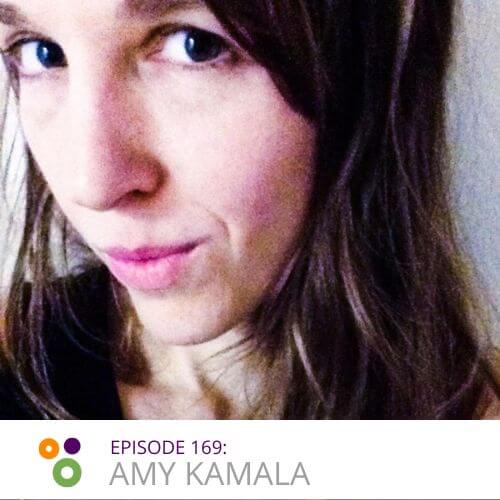 Episode 169 – A Chat With Amy Kamala | Show Notes Contact Info: Website WordPress Twitter Episode Transcript Topher: Hey everyone, welcome to Hallway Chats. I’m Topher and my co-host today is Sophia. Sophia: Hello. Topher: She waved. Before we get started, I want to say thanks to our sponsor Nexcess. They’ve been good to us for a couple of years now. And I’ve been really, really happy with their hosting. Their servers are really fast. They give me all the special tools that I really like in a host, and they have some really great specialized things for WooCommerce like automated testing, which is pretty unique. I’m not sure of any place else that does that. And they have a Sales Performance Monitor and a Plugin Performance Monitor. So if any of that sounds good to you, check them out, Nexcess, and tell them we sent you. All right, our guest today is Amy Kamala. Welcome. Amy: Thank you. And thank you so much for having me. Topher: You’re welcome. I did say that right, right? Because you told me just a minute ago. Amy: Yes, you did. Topher: Okay, good. Amy: You said it right. Topher: Good. Where are you from? Amy: I’m from Los Angeles, California, United States. Topher: Excellent. Born and raised? Amy: Born and raised. I’m from Venice Beach, specifically. Topher: Oh, okay. Amy: It’s a big place. Topher: I’ve never been there. Been to a lot of California but never to LA. What do you do with WordPress? Amy: I’ve been working professionally with WordPress since 2015. I’m a full stack developer and I have a master’s degree in Fine Arts. So I work with both development and design and the back end system, Linux and pipelines, development pipelines. Topher: Wow, that’s super-duper cool. You are way more advanced than me. Amy: Well, I don’t want to give that impression because I don’t know everything by any means. Every senior developer and pretty much every senior in pretty much any industry that I’ve spoken to acknowledges that there’s always more to learn and research is really important. Topher: Oh, yes. I have a soft spot in my heart for Linux. What do you do there? Amy: Well, I also have a soft spot in my heart for Linux. So I’ve worked for three different web hosts, and two of them are very infrastructure based. The third one is more cloud-based, a little bit less infrastructure. But I’ve spent quite a bit of time working my way around LAMP and LEMP systems, Linux, Apache, or NGINX, MySQL, and PHP, working command line. I would say that Linux command line is probably if we can call it a language, it’s my favorite to work with. Talking to a server or computer is so much fun. Topher: Do you run Linux on your desktop at all? Amy: One of them, yes, I do. Topher: What distro? Amy: Red Hat. Topher: Okay. I ran Red Hat for a little while until about Red Hat 6, I think. Amy: Really? Topher: That gives you an idea a long time ago- Amy: What are you running now? Topher: I don’t really run it on my desktop anymore. My oldest stuff that I used to use, it’s not my Plex server and I run Arch on it. Amy: Oh nice. Topher: I’ve been running Arch for about 15 years. Amy: I won’t make any jokes about people that say, “I run Arch.” Topher: That’s all right. I’m used to it. Amy: Ubuntu would be my second choice. If I were going to switch from Red Hat, I would certainly go with Ubuntu. And I would recommend that for most people. Topher: Yeah. My big deal is rolling release. I don’t think I could ever live without a rolling release again. Amy: Fair enough. Topher: That’s just a beautiful, beautiful thing. All right, we’re not talking about WordPress at all. We should get back to that. Amy: Okay. So I became involved in the WordPress community in I think around 2018. I was working for a web host. I started in technical support, actually in social support, which for most people, I think, it’s infinitely easy if you’re personable. If you’re an extrovert like myself, it’s fairly easy to interact with customers and to be kind and helpful. From social support, I started picking up tech support tickets and asking people questions. I picked a lot of people’s brains. I want to thank everybody whose brands I’ve picked because it’s really helped me a lot in my career and in life. But yeah, I have picked a lot of brains. And I would advise anybody to ask questions, ask stupid questions, ask the same questions, just ask questions, because that’s one of the best ways that you can learn. So anyway, I started in tech support, social support, then tech support. By 2018, I had contributed to the formation of a dedicated WordPress support team at that web host. So it’s a team of 14 WordPress-specialized agents, myself being one of them. And through that, I was spending all my time at that point working with WordPress. My love of command line kind of translated over to WordPress command line. And that really enabled me to maneuver my way around WordPress a lot, especially in the tech support arena, where you have to be really fast, you have to get answers quickly, you have to fix things quickly. WordPress command line was absolutely a key for me in becoming a little bit more advanced and capable. So in about 2018, I was on a dedicated WordPress support team. The hosts that I was working for helped form the make.wordpress.org hosting team, was one of the main contributors at the time to the formation of that particular team. And they were really proud of it, rightfully so. They were sharing their accomplishments in all hands, meeting staff meetings. And so I became aware that this existed through that. Mike Schroeder was one of the people at the time. He was one of the OG, one of the original WordPress hosting team reps. And that team can be attributed to his hard work. A large percentage of it can be. So because of that, I found out that the WordPress community exists, that it’s possible to be involved in the WordPress open-source project, and I hopped on Slack and joined a wordpress.org hosting meeting. My first meeting was actually a Slack meeting. It was really welcoming. Everybody was really welcoming because of the hosts that I worked for was involved in the formation of the team, I already knew everybody in the room, almost everybody in the room. One of them I knew his wife, but not him. So it was really comfortable for me to just kind of jump right in. And I became involved in the hosting team and I’m still involved in the hosting team. This is my fifth year, I think as a make.wordpress.org hosting team rep. I’ve had my hands in other parts of WordPress as well. I’ve helped out with Core a little bit. I’ve helped out with some WordCamps. I’ve spoken at some WordCamps. I’ve helped out with some meetups, especially in the LA area and spoken at some meetups, and been involved with the LA WordPress meetups team. So yeah, it’s been just kind of a… I started out taking notes for the hosting team. I was really proud the first time my notes were posted on make.wordress.org. It was a huge accomplishment. Topher: Yeah, it’s a big deal. Amy: I felt really special. And I just, you know, kept going and kept going. And here I am. I’m still one of the team reps involved. It’s been a great experience in terms of my career. Topher: Oh, that’s cool. Amy: At certain points, I’ve been worried about being pigeonholed as a WordPress person in the tech industry. Because there’s so much other technology that one could get involved with. But quite frankly, that’s a really beautiful pigeonhole to be in. Topher: It is so big. So much. Amy: It’s a big pigeonhole. That’s right. Right. I think there’s like 800 million WordPress installs on the internet right now WordPress websites, approximately, which is insane. There’s just so many websites that the WordPress application is supporting. You know, eventually I got really familiar with the WordPress foundation values and I feel very aligned with them. Ideas like democratize publishing give everybody a voice. I don’t see how anybody could not be on board with that. But I grew up in Venice Beach, which is probably one of the most liberal parts of the planet. So it’s easy for me to, you know, kind of align myself with those type of ideas. Topher: Sure. Amy: So, I have definitely- Topher: We’re all a bunch of hippies anyway. Amy: That’s true. The idea of open source, in general, it’s kind of a hippie concept. Topher: Yeah, it really is. Sophia: So for somebody who’s very unfamiliar with the concept, tell me the difference between social support and tech support. Amy: I would be happy to. So social support is… it’s still technical support but it’s a little bit more on the social end and less on the technical end, where you’re kind of the frontline, the first line of action on the internet for an organization to communicate with its customers. So you’ll be interacting with customers via Twitter, via forums, via Facebook, via Instagram, social media, essentially. And it’s really important for marketing. A social support rep could make or break the PR of a company for potentially- Sophia: For sure. Amy: So it’s really important to be, you know, personable, to be mature, to be reasonable and level-headed. Topher: And you’re able to talk to angry, angry people. Amy: Yeah, angry people. It’s very true. That kind of gave me a system for dealing with people. I have two daughters. At the time, my daughters were babies and toddlers. So there’s a system for hand- Sophia: Oh. Say that again. Amy: There’s a system for hand- Topher: Every time you say “hand,” it breaks. Sophia: That literally just happened to me honestly Amy: Really? Sophia: Yeah. Amy: I’m gonna put it on “Do Not Disturb” which I apologize, I should have done that before. Topher: It’s okay. Sophia: That’s all right. Amy: So when a toddler is throwing a tantrum, there is kind of a system that you can use to help tame the tantrum. And the first thing is to acknowledge that they’re upset and validate their feelings. And with a customer, when a customer’s throwing a tantrum, the first thing you want to do is validate their feelings. It’s totally understandable that you feel this way. And often repeat the feelings back to them. “It’s understandable that you feel so angry, I would be frustrated too.” And then the next line of action would be to reassure them, I’m going to support you and do everything I can to get this resolved. With a toddler, it’s kind of the same. I understand that you feel that way, it’s totally understandable you feel that way, let’s figure out a way to get this fixed for you so you can feel better. You know, the language is a little bit different but nonetheless- Topher: Let’s talk about the naptime. It does work for customers too. Sophia: It really does. Amy: It does. And you know, just that validation, just the acknowledgment that… and this is a concept that therapists across the board would also… That validating the feelings of somebody is the first line of action to resolving a problem. So in customer service, that’s the first line of action to resolving a problem. So at social support, you do get a lot of angry customers and I happen to be very nice person. And I kind of took my experience as a mother and applied it to social support and technical support. So to answer your question, the difference is technical support is really more technical-based. You’re working a lot with the actual websites, or the actual tech stack, actual application, on the back end on servers, kind of more internally on the internal infrastructure, internally with other agents and technicians. And social support, there’s a little bit less of that, in my experience, at least. There’s a little bit less of that and a lot more customer-facing, a lot more soothing the customer, a lot more, making sure they’re heard, making sure that there’s a plan of action to get their needs met and their issues resolved. So it’s a little bit more on the marketing and a little bit less on the technical end. Topher: All right. I’m gonna pivot here a little bit. You’re gonna speak at WordCamp Europe next week. Amy: I am. I’m very excited and very nervous. Topher: What is your topic? Amy: I am talking about how to support women in tech. Sophia: Yay. Topher: All right. Have you ever seen Jeeves and Wooster? Amy: I have not but it sounds familiar. Topher: It’s a wonderful British TV show. It was a book. Jeeves is a socialite in England in the early 20s. And someone says to him, “How would you support a wife?” He thinks for a minute and he says, “Probably a firm grasp of the left elbow as we cross the street.” So how would you support women in tech? Amy: Well, I’ve got a whole list of ways that women in tech could be supported. Topher: Don’t give a whole talk. Amy: It is, yeah, 30-minute talk. It starts with hiring. In the technical industry, women applicants are, statistically speaking, less common. There are way fewer women applicants, especially for technical roles. Just across the board, fewer applicants that are female, and or identify as female, either one. So my first suggestion to companies is to… If you have a female applicant or women applicant, pull them out of the pile and interview them. A lot of the time, recruiters will use an algorithm and they’re probably hopefully not really looking at gender. But in this case, I’m recommending that as a diversity practice that recruiters do take a look at gender. And if they see a women applicant to pull them out of the pile. Because if you don’t hire women into the tech industry, then they’re not going to be very many women to support. Topher: That’s very, very true. Amy: Worldwide- Topher: Yeah, go ahead. Amy: Worldwide, the tech industry is comprised of about 20% female, and the rest is male-dominated, and white, male-dominated. There are way fewer minorities in most industries, and also in the tech industry, including women and racial minorities as well. So the first line of action to changing that statistic.. so even though women were the first programmers on the planet, now as it stands, it is very white male dominated as an industry. So recruiters and organization leaders can change that by pulling women out of the pile, and interviewing them, and hiring them. And that’s just the first line of action. Topher: I’m going to tip my hand a little bit and admit that I’ve seen your slides. And you have a lot of numbers. And I don’t remember…. I think I asked. I don’t remember the answer. Do your slides reflect mostly US or is it global? Amy: It’s both. So there are some statistics in my talk that do focus on the US. For example, the portion about family leave is mostly focused on the US. And the reason for that is because no offense to my country, but we are horrible about family leave. It’s not even legally required. What’s legally required is 12 weeks unpaid leave. And the reality is that 12 weeks unpaid leave can make a family destitute financially. Topher: Oh, yeah. Amy: So this is not a realistic solution for families. And it puts particularly women as, statistically speaking, the primary caretakers of their families in a position of having no other option but to choose between being a mother and their career. Another way that companies can support women and families and the continuation of the human species is definitely leave, paid family leave, not just maternity leave, but paternity leave as well, because children need their fathers and partners need each other. It’s really important. So offering paid leave for all genders and all different identifications is extremely important because that enables families to survive while they’re going through major life change bringing new humans into the world. And I think we all can agree that the continuation of the human species is a little bit important. Sophia: Yeah, we appreciate that. Topher: I have two questions here next for you. You’re my second WordCamp Europe speaker that I’ve spoken to this week. But I want to ask the same questions just to see how the answers compare. How many WordCamps have you spoken up before? And have any of them ever been one of the flagship? Amy: I’m a bit of a noob at speaking at WordCamps. I’ve only spoken at two before this. WordCamp Vegas and WordCamp Santa Clarita. Pretty local to me. And the organizers are amazing. I absolutely adore them. They were fantastic experiences. Really valuable. And I would do it again, even though public speaking is not my forte. I get horrible stage fright. The first 10 minutes of those two talks were a little bit difficult. I’ve also spoken at some meetups. I’ve helped organize meetups. So that gave me a little bit more experience and a little bit more confidence in public speaking. So I’m pretty much a noob. Kind of jumping from being really, really like keeping to myself for the past couple of years to being on stage in front of I don’t know how many people. Topher: You have more experience than the other person that I interviewed? Amy: Really? Topher: Yes. Europe will be his second talk ever. Amy: Oh, wow. Well, I appreciate that the organizers are not excluding people that don’t have as much experience. Topher: Soph, you had a question. Go for it. Sophia: So you’ve spoken at two separate WordCamps. Both you weren’t super comfortable with, you know, just public speaking and starting in a brand new space. What are some tips or suggestions you would have for somebody else who’s looking to speak at a WordCamp? Amy: To get in the door, or once you’re in the door to be on stage. Sophia: That usually helps. Topher: What are you asking about? What kind of [inaudible 00:21:40] are you asking for? Sophia: Like something that you figured out through the process that made it easier for you to be able to speak or that was very encouraging for you. Amy: Well, despite my massive stage fright, I actually have a decent amount of performance training. In my past, I’ve been in a couple of theater groups, a couple of plays, I was in choir when I was younger, multiple different choirs for years, like six years, I was second chair violin for a couple years. So I performed in that regard. Although I don’t play violin anymore. And also I took ballet for some years. So I did ballet recitals. And so you know, the stage fright never really went away. The tips that I have are actually quite personal to me, but also tips from my theatre teachers. I would say the biggest one is to remember that the audience is on your side, the audience is rooting for you, the audience wants to see you shine, wants to see you succeed, wants to hear what you have to say. And that’s why they’re there. So that can be a really soothing idea when you go up on stage, to look out at the crowd and think these people are on my side, these people are my advocates, these people are my friends, and you know, we’re in this together. They want to see me be confident. They want to see me give information and shine and be comfortable up here on stage. And then another line of thinking that comes directly from theater teachers is and from my education in film, as well. So when there’s an audience looking at a movie or stage, they’re projecting themselves into the character, into the person on stage, and so when you falter, they feel uncomfortable. Because they feel like it’s them faltering on some subconscious level. And when you’re confident and comfortable, they feel confident and comfortable because they’re projecting themselves into you on some unconscious level. So it’s kind of like an act of nurturing to be comfortable, confident on stage. And then another one, a third one, also directly from theater teacher is if you mess up, just keep going. Don’t go, “Oops, oh my gosh, Oh, no, oh my gosh, I just mess up,” because everybody’s gonna like… the whole momentum is thrown out of whack and everybody will start to feel awkward. So you just breeze right over it. You stumble, you just get up and keep going. Sophia: Right. Topher: And until you tell them, they don’t know you stumbled. Amy: That’s true. That’s very true. Topher: All right, I have another question for you. So you have two camps behind you. What has it been like working with a very international organizing team? You’ve interacted with a number of people from a variety of cultures and countries and languages. Amy: Right. In the WordPress space? Topher: Yeah. Has it been fine for WordCamp Europe? Any struggles. Amy: Oh, you know what? So the time difference I would say is the… Working with WordPress open source project, which is a sync across the globe, a synchronous across the globe and with organizers on the other side, across the pond on the other side of the planet from where I am, the time difference is really the major challenge. There’s a lot of other… I don’t speak fluently. I speak like tiny bits amount of Hebrew and Japanese, but just tiny, like, maybe the level of a two-year-old. Like I can’t even really have a real conversation other than “Hello” “how are you?” “I love you”. And like counting, you know, that type of thing. But other countries speak English for the most part and teach English in their schools. So that’s very helpful to have English as a primary language that opens the bridge for communication. And it’s kind of sad that in the United States, English is kind of the only language that people want and need. And it’s a lot less common for folks to be bilingual, trilingual, or anything more than that. It’s not even really encouraged that much in our education system to learn other languages. I know that a lot of people take Spanish class or French class but there isn’t necessarily… Topher: It’s not the same. Amy: Right. It’s not immersion. So speaking other languages isn’t for the United States… For folks raised in the United States, it’s kind of not that much of a thing. It’s like a novelty to speak another language. So we’re very blessed that in other countries they don’t see it the same way and English is taught in schools, and it’s very common. So while there are some language barriers, that’s definitely not the biggest hurdle by any means. And there are some cultural differences. But I haven’t found those to be barriers in any way, shape, or form. I find them to be really fascinating, really beautiful, really interesting. And WordPress, as a whole, as an organization, the WordPress Foundation, and the WordPress open source project, diversity is one of the main values. And that means that a lot of people from a lot of different places with a lot of different opinions and a lot of different attitudes, a lot of different languages, a lot of different experiences are at the table. And it’s really interesting, really eye-opening, really fascinating. You could learn a lot, you can grow a lot, and I find it incredibly valuable. So time zone difference is seriously the only real hurdle that I’ve experienced. Topher: All right, that’s cool. Both my wife and I had the experience of realizing that everybody else we talked to around the world that speaks English as a second or third or fourth language put in all that time and energy to be able to talk to us, and we put none to talk to them. And for us, it has led to certain amount of compassion for… Like people apologize all the time. “Oh, I’m so sorry for my English.” Like, no. Amy: “Your English is amazing. Are you kidding me?” Topher: “Don’t be sorry for spending 10 years learning my language.” Amy: Right. Topher: You know? Amy: That’s true. Topher: So, you know, I try to be really supportive of anybody who’s learned another language, because I haven’t. And I try to be- Amy: That’s very hard to. It’s hard to learn, especially as an adult. Topher: Oh, yeah. I try to be really sensitive to my inability to pick out words in an accent, a heavy accent. I love accents. They’re amazing. They’re like the spice of language. But there are people who understand that language technically very well and can write it wonderfully. But maybe they don’t practice speaking and all that much, and they have a thick accent, and I can’t understand it. And I feel terrible, you know, they’re working so hard, they’re doing a great job, and I’m letting them down by not understanding. So, you know, I have auditory processing issues already. So if I’m in a loud place talking to somebody with an accent, it’s kind of a mess anyway. Amy: But you know, I sometimes have trouble understanding native English speakers in a loud space where there’s a lot going on. And sensory disorders are probably a little bit more common in the tech industry than in other industries. I don’t have any stats on that, but in my experience, and from what I understand, it’s a little bit more common. I don’t think that anybody would fault you for that at all. And it’s important for us to remember too to speak slowly, to speak clearly, and to use correct grammar. As a team rep, we’re trained in those ideas of use correct grammar. Don’t use slang, or to use as little slang as possible because the slang tends to be really confusing for non-native speakers. Topher: Something I sort of knew about but I had to learn myself by going to another country is the mental strain that it takes to listen to another language all day. People told me, you know, I’m exhausted at the end of the day listening to all your English speakers- Amy: Oh, wow, that makes sense. Topher: I didn’t really understand until I went to India. And all day long, I was sorting out accents and trying to understand. And I was exhausted at the end of the day—my brain was just tired. Amy: Absolutely. It’s so funny that you say that because I have a thing, like just for myself in my life that if I’m having trouble sleeping, I will find a tutorial, a technical tutorial given by an Indian person or a person of a thick accent and watch it. And every single time without fail, I end up falling asleep. Sophia: That’s so funny Topher: That is funny. Amy: And learning some things as well. But it does take so much focus to dissect a thicker accent. And there’s no doubt that accents from the United States… I tried to refrain from calling people from the United States Americans because I think it’s really narcissistic of us to refer to ourselves that way. Because Canada is part of America, South America is part of America. We’re not the only Americans. Topher: Right. Amy: So that’s why I’m saying people from the United States instead of saying Americans. But I imagine that it goes both ways where we have different accents as well. We have a New York accent, we have, you know, Minnesota, we have the South, and we have California, and I think probably west coast accent is maybe the most commonly found. And for me, of course, being from here, it’s easier to understand. But all those different dialects and different ways of speaking from different parts of such a massive, gigantic country, I can imagine it being pretty hard to decipher. Sophia: Oh, yeah. Topher: Yeah. All right, we are at just about the end of our time. Is there anything that you would like to ask or say? Amy: I wouldn’t mind hearing about some of the two of your experiences in the WordPress community, because I’ve been kicking around for some years now. And I just love meeting other people and hearing about them and their experiences, their WordPress story, how they became involved, why you’re still involved also I would be something I’d be interested in hearing if you’d like to share. Topher: Sure. Soph, you want to go first? Sophia: Sure. I’m here because of him. I grew up in the WordPress space and met people first and got to know people, and they became friends and family friends. It kind of just fit at the time. I’m about 21 so I’m the very early stage of adulthood, and I needed to be making money and didn’t want to work in retail or food service anymore. Amy: That’s fair. Sophia: So I was like, Well, what else can I do? So I quit my job and started reaching out trying to find something that I could do and turn into a career. I’m not a scholarly person for all that I am very intelligent, and I do much better putting in the work, getting my hands dirty and filling it out as I go, or maybe finding a mentor or something like that. So I decided to reach out to some random people, anybody that I knew to see if they could help me find something. And I found at least two people that gave me a chance. And the first one didn’t work out. The second one I’m still at. I’ve been at for maybe six months now. And I’m like slogging through content marketing and just kind of absorbing and learning everything that I can to see if it’s a career, I’d want to continue. Amy: That’s incredible. Sophia: It’s been really fun. And it’s been a very healthy start for somebody my age. It’s giving me a chance to build up savings. I am finally able to like get my health under control and just build a very solid foundation for being an adult. So it’s something that I really appreciate. Amy: I think it’s really amazing and beautiful that you grew up in the WordPress space. That is so special. So WordPress is 20 years old now, you could have literally, and am gathering that you did literally grow up in the WordPress space. And that I can’t imagine how much that has influenced you in a positive way. Especially with… I very much agree With WordPress values. And to grow up with that, and in that environment is so special. Topher: It was interesting for me and my wife’s experience in the WordPress space to have our kids grew up there because they had friends, their own friends in other countries that they met at WordCamp and online and things like that. And people that we ended up getting to know and trust. And it’s interesting to know that if something happened to us, there was a global community of people who would look out for our kids. Amy: That is also really beautiful and amazing. And that diversity and exposure to all those different cultures and communities, I can imagine how enriching that would be for children and young adults, people growing up in that space, that the perspective that you have on the world would be so vastly different and educated compared to somebody who maybe grew up in a small town and, you know, 500 people their whole life or whatever, although there’s value in that, too. But that is really beautiful. The WordPress community is extremely caring, special, supportive, kind, and a great environment for children. You know, my children haven’t really been involved that much. I haven’t brought them with me to camps or meetups. But now that you’re saying that, I feel like I definitely should. Sophia: You know, it gave us- Amy: Oh, go ahead. Topher: How old were you when we went to Chicago? Sophia: About 12, I think. 12 or 13. Topher: Yeah. And when we told the girls they needed to have their own blogs, and they made their own schedules at WordCamp and went to their own talks and made your own friends and all that. So that was a good time and a good way to start. Sophia: It gave us a lot of opportunities to put things into practice. So it helps us learn how to confidently… Not even helped us learn, but helped us develop the skill for confidently communicating and confidently communicating with adults. It broke down that barrier of Mr. or Mrs. and this person knows more than you. It helped us develop just treating people with respect and being a good human, which helped a lot in regards to like having managers at work or talking to a boss or having job interviews. Amy: And feeling confident, I imagine. Sophia: And feeling confident, for sure. And it gave us those opportunities for experiencing culture and how to communicate with people. When we were talking about like, languages in various cultures, like I grew up learning two different languages kind of by choice. It was part of the world that I was living in at the time. It was interesting, and it helped me be able to do things better. It gave us a reason to be doing things as opposed to just taking a Spanish class because you have to. Amy: Absolutely. And it’s so interesting that you say that because the WordPress community and the open source project is very much democratized. It’s not an authoritarian environment in any way, shape, or form. And I could imagine how that would affect children. Because typically in a classroom, you have the authority of the grownups, the authority of the parents, the authority of the teacher. And that puts children at a disadvantage in a way because they’re not empowered being the not… not being the authority in a situation, you know, gives you less power and takes away your power. So a democratized environment, like WordPress, I could see that very much empowering… It empowers adults, but quite frankly, it’s very empowering for adults and for children growing up in that space. I could see that being extremely empowering and giving folks a really well-rounded perspective on the idea of hierarchy as a fallacy, as a falsification, as a way to empower and disempower people. Topher: All right, my turn. Sophia: Oh, yeah. Topher: I have been a web developer since 1995 or 1994, almost 30 years now. It’s funny to think the internet’s that old now. But I didn’t really get into WordPress until 2010 Custom Post Types came out. And I realized I would never have to build an administration area again. Glorious. Amy: That is glorious. Topher: And I just fell in love with it. I didn’t do anything else after that. My first WordCamp was here in our own city, WordCamp Grand Rapids. And I think it was a two of those before we, as a family, went out. No, no, my first one ever was WordCamp Austin. I went for work and then everything changed. It was glorious and magnificent. I have a friend who doesn’t WordCamp Talk titled “And then I went to WordCamp”. And anybody who’s ever been knows exactly what that talk is about. Amy: Right. Your life kind of changes. Topher: It really does. I fell deeply in love with them. I think I’ve been to more than 90 WordCamps now. I’ve spoken to probably 30 or 40. Amy: That’s amazing. Topher: It’s just fantastic. And you asked why I stayed. It’s 100% because of the people. I dabbled with leaving development for a while. For a couple of years, I wasn’t a developer. I focused on the people. And I just love talking to people, helping people, making relationships, that kind of thing. Amy: Well, that is very fulfilling. Topher: Yeah. That’s why I stayed. Amy: Have you found that your own confidence level, feeling comfortable in your own skin, feeling secure in the world, feeling safe with other people, feeling safe on stage, that type of thing? Have you found that through being involved with WordPress that those healthy feelings have grown and increased because of the community and your involvement with the community and also practice speaking in front of people? Topher: Yeah. I can’t imagine that that hasn’t happened. But I came into WordPress a pretty confident public speaker and already really enjoying it. I spoke at things before WordPress. Amy: Really? Topher: But that said, I mean, I’ve been practicing now for all these years. Surely I must be better at it. I hope. Amy: What are your tips for public speaking? Topher: Oh, boy, you know, I did a whole talk about this last year. Tips for public speaking. Ironically, the hardest part I had with my talk on public speaking was how to deal with jitters because I don’t deal with them myself. Sophia: Yeah, the [trump?] has no anxious bone in his body. Amy: Wow. Topher: So I crowdsourced that. And sadly, I can’t remember off the top of my head. I’ll see if I can find the link to that talk and put it in the show notes for this. But some of the tips, like you and I have been talking about slides recently. One tip is to have a little gadget to advance your slides back and forth so you’re not tied to your laptop. Another potential thing is to bring your own wireless microphone and have it synced to your laptop so that you have your own recording. Amy: Oh, wow. Topher: If the one from the venue, I don’t know, doesn’t work for some reason—it happens a lot— Amy: It does happen. Yeah. Topher: …then you have your own copy. Amy: That’s a good idea. Topher: And wireless mic from Amazon is 35 bucks and it’s in your pocket and it’s not a big deal. Amy: It’s so interesting that you say about having the pointer and your own control. We did talk about that the other day. I appreciate that tip. A lot of childhood education therapists and psychologists would say that holding on to something, putting your hands on the podium, holding something in your hand does help. Even if you’re not clicking, it does help to reduce jitters because it gives you like a solid unwavering… And even for folks who are having an anxiety attack, like actively in an anxiety attack, leaning against a wall, sitting on the floor, touching something that’s solid that isn’t moving, that isn’t changing can kind of regulate your nervous system a little bit. Topher: That’s very interesting. Sophia: And it would provide a separate sensory experience for your brain to be focusing on. Topher: Yeah. Amy: That’s true. That’s very true. Topher: That’s an interesting point because I’ve often associated anxiety attacks with vertigo. Your brain is being lied to about something. Amy: Right. Usually your own thoughts otherwise. Topher: And if you can find it was regular vertigo, you grab the counter, and you don’t fall down. Amy: Right. Topher: If you can figure out whatever, whatever works for you anxiety, then you can do the same thing. And I think it’s interesting that you say that maybe just grabbing the counter is exactly the same thing. Amy: Absolutely. I’ve heard some tips about public speaking from, you know, random folks over the years. Putting your hands on the podium is one of the way, the suggestions that I’ve seen over and over and over again, if you’re at a podium. And you can see it, like, when the President of the United States gives a talk, their hands are on the podium. And they have trained gestures, like these are all coordinated. It’s not necessarily improvised or subconscious. But a lot of that is putting your hands on the podium, it kind of like grounds you and gives you something solid to align yourself with. So holding a clicker could potentially do something very similar. We have this thing in your hand that’s solid that you can hold on to. And then it also, instead of like fidgeting with your hands, you’re holding on to something. Topher: Right. Amy: And for kids with autism and other disorders, fidgets have come onto the market to help… to help everybody, not just them. That’s a similar concept. Although it’s something that you play with, so it is fidgety, hence the name, it still gives like a way to kind of channel your energy and focus so that the other things that are spinning around you like vertigo, like you said, kind of fall off a little bit. Topher: All right, we should wrap this up. Can you tell me where we can find you on the internet? Amy: I have a website, a blog, although I haven’t posted in a little while. It’s kittenkamala.com. Kitten, like a baby cat. kittenkamala.com. That’s my website. You can email me through there. You could also find me on profiles.wordpress.org/amykamala, spelled the same. Topher: All right. Send me those links in Slack and I’ll make sure they get in the show notes. Amy: Awesome. I will. Thank you. Topher: Thank you. Amy: It’s been my pleasure. It’s been absolutely lovely speaking with both of you, and thank you for having me. Topher: Oh, you’re welcome. It’s been really fun. I enjoyed it. Sophia: Absolutely. Topher: I have a little bit to read here, and then we can go. This has been an episode of Hallway Chats, a part of the HeroPress Network. Your hosts were Sophia DeRosia and Topher DeRosia. We’d like to thank Sophia for the music and Nexcess for hosting our network. If you liked the episode, please subscribe and mention us on social media. | — | ||||||
| 6/5/23 |  Episode 168 – A Chat With Maestro Stevens | Show Notes Contact Info: Website LinkedIn Twitter Episode Transcript Topher: Hey everyone, welcome to Hallway Chats. I’m Topher, your host today. My regular co-host Nyasha is sick today, so it’s just gonna be me and our guest. Before we get started, I want to say thanks to our sponsor Nexcess. We’ve been hosted with Nexcess for a couple of years now and it’s been extremely good. To put it bluntly, their servers are fast, uptime is great, good communication when there needs to be downtime. A couple of times over the couple of years we’ve had midnight outages for 20 minutes while they redo something. But that’s great. I’m happy with their communication. As a nerd, they give me what I want. I like SSH, I like database access, I like to get under the hood, and it’s all there. They also offer some stuff I don’t use but it looks really sharp. They have WooCommerce automated testing, which is great if you’re running Woo. They have a Sales Performance Monitor and a plug in performance monitor. So if those things sound like something you can use, I recommend giving it a shot. You have to forgive me, I have a slight cold but we’ll press through. Our guest today is Maestro Stevens. Welcome, sir. Maestro: Thank you for having me, Topher. Great to be here. Topher: Welcome. I’ve been looking forward to this. Maestro: Absolutely. Topher: We met quite recently at Buffalo WordCamp for the first time. And then very soon after we got connected because of WordCamp Europe, and now we’re doing this. It feels like within the span of a month we’ve become best buddies. Maestro: Yes, yes. It’s been a short journey but it feels like it’s been forever. Topher: Yeah. You know, I’m impressed that we haven’t run into each other sooner because I mean, we live within 300 or 400 miles of each other. It seems like we would be going to the same kind of WordCamps or meetups in the same communities, you know? Maestro: Yeah, I definitely can see that happening a lot more now that we have linked up at the WordCamp Buffalo- Topher: Oh, yeah. Maestro: That’s where we met in person, got acquainted. Topher: So tell me a little about yourself. Where do you live and what do you do? Maestro: Speaking of where I live, like you said, I’m pretty close to you. I’m in Cleveland, Ohio, currently is where I reside and I am a Brand Webmaster, also coined myself as the Fresh Prince of WordPress, just mainly because I’m striving to bring a fresh perspective to the WordPress community. I started my journey in WordPress back in 2018. But I started my company, which is a creative agency, helping people build websites and brands back in 2015. Topher: Awesome. I’m going to tip my hand a little bit and tell the crowd that this is our second time through this podcast because somebody didn’t press the “record” button. So a couple of my questions I kind of know the answer to but I want to hear them again anyway. You own your business. Are you a solo? You said you had a team. Are they W2 or contractors? Where are you in that growth process? Maestro: Good question. Within the growth process, I started my hiring process about two years ago. Started off with part-timers and contractors. I did the whole, you know, Upwork and Fiverr thing, then I ended up just deciding to outsource overseas permanently, I would say, and just hire and work with people part-time. And then recently this year, I brought on two of my staff members that I’ve been working with for the past two years. They’re the ones who’ve made it through the trials and tribulations. I brought them on full-time, and I pretty much call them my employees or training wheels, if you will. Topher: What was it that gave you the confidence to commit to paying people that much? Like they’re dependent on you now. Was it you just had enough work consistently and said, “Hey, let’s go for it”? Maestro: I would say what gave me the confidence was me, and I don’t know exactly what sources that I use. I was doing a lot of research at that time, whether it was Google or YouTube. But I was just getting a lot of great feedback… not feedback, but great ideas from other people who are looking to take themselves to the next level out of entrepreneurship or solopreneurship and become a real business owner. And they said, you know, you’re going to run into a wall at some point in time between working with people who are coming in and out of your business, or even part-time versus people who are working with you consistently more so full-time because they’re less distracted with other projects. Topher: Oh, yeah. Maestro: You know, and I really thought about that and it really resonated with me because that was one of the big keys of building culture, you know, having the attention. Topher: Yeah, I never thought of that. That’s a really good point. I guess it’s why a lot of companies don’t allow side work—they want your focus. Well, that’s really good stuff. So you’re going to be speaking in two weeks at WordCamp Europe? How long? Maestro: A weeks? Topher: Oh, eight weeks? Maestro: I mean, no. Like a week? It’s less than two weeks. So a week and a couple days. Topher: Oh, a week. Maestro: Yeah. Yeah, yeah. Topher: Wow. It is looming? Maestro: Yeah. Topher: What’s your topic? Maestro: My topic is based on templates and templates within the Gutenberg editor. The title is called Fresh Off The Block: Transform WordPress With Templates. Topher: Nice. That’s cool. I get to peek at your slides. And one of the things that I was very happy about is that it’s not just Gutenberg templates, it’s a universal templates in all the WordPress, which is cool because it used to be… that was really only the one that was the PHP theme template. Occasionally we plug in templates, but even though those are theme templates. And now we have so many different things. What are all the different types of templates you’re gonna talk about? Maestro: I don’t want to give away too much of the juice. You know, people are going to be able to watch the replay at wordpress.tv. Topher: That’s right. Maestro: But you know, to your point, some examples are things like PHP templates, other plugin templates, their form templates that you can be using in WordPress. They don’t have to be Gutenberg templates. Topher: oh, yeah, Maestro: Template whether or not you’re using some type of… I know people think of the theme. So there’s templates in Gutenberg itself. But there’s also theme-based templates, which are a different thing than the block-based templates. And even templates outside of WordPress, for example, like design-based templates, whether you use Figma or Canva, before you even get into the WordPress ecosystem and start designing, you know, are you helping yourself create a way of giving yourself a head start? That’s pretty much what they are, are head starters. Topher: All right, folks, if you want to hear the rest, go get yourself a ticket to Athens. Maestro: Yeah. It’ll be amazing. Topher: Is this your first time speaking at one of the flagship of WordCamps? Maestro: I would say yes, it is my first time at one of the flagships. So WordCamp Buffalo was my first time live. So that was a great, I would say, kind of pre-game warmup for something like this. Topher: That’s quite a jump to your second camp being one of the flagships. Maestro: Yes, I will definitely say I’m honored. I’m grateful. I believe I earned this opportunity. You know, it wasn’t just given to me just for the kicks. But at the same time, I know that there are a lot of other great people who applied and they could have done just as a great job as I believe I’m going to do. So I’m just grateful that I was chosen. But I will say that that last WordCamp Buffalo just gave me a lot more confidence that feel like I can’t do this. It’s just be myself. Topher: That’s great. I know a number of people that have just generally increased their public speaking skills, in general, through WordPress, either just talking to meetups or going to WordCamps and speaking or whatever. You know, their first one they’re terrified and by the 10th one they’re doing a whole lot better. Maestro: I can agree with you on that. Topher: So how are you feeling about it? I mean, it’s a big stage. Are you nervous? Maestro: Well, I guess before I answer that, I mean, were you nervous your first big one? Topher: No. No. In general, I don’t really get nervous speaking in front of people, but my first big one was U.S., and that was probably my 20th time speaking at a WordCamp. So it wasn’t that different. But you know, different things make people nervous. Some people are worried about their knowledge of their topic, and other people have that cold and they’re worried actually about all those eyeballs looking at them, you know? Maestro: Yeah, yeah. That’s a good point. I would definitely say based on that, I’m not too worried about the eyeballs. I’m not too worried about my slides or anything like that. I mean, I feel like based on me having prior speaking engagements and opportunities, it’s helped. On top of the fact that, you know, the last one I did was WordCamp Buffalo, it’s all helped compile me to feel pretty confident. But I would definitely say my own doubts will come internally for me. Like, you know, am I going to be good enough? Or will I be too funny or too boring, too this? You know, just those little small things. Topher: Oh, yeah. Maestro: Am I gonna be too serious? Topher: Yeah. I have every confidence you’re gonna do fine. I mean, you’re doing fine here in a podcast in front of the entire internet. Maestro: Thanks so much. Topher: I was gonna ask you… So you spoke at Buffalo and now you have worked with the Europe team? What’s it like working with a very international team with all those different cultures and communication skills and processes? Maestro: Good question. I would definitely say it’s an interesting experience, something that I’m embracing a lot more now that it’s happening in real-time versus me thinking about, you know, when it’s going to happen back when I first got accepted, and just knowing that I wouldn’t be talking with people with more diverse or different backgrounds, from the even a language standpoint, you know, versus working with U.S. people. So, I would say, from a text communication and just from kind of emailing and things like that standpoint, it’s been pretty smooth. And I believe that the real test is going to come, you know, when I’m there physically. And now I’m actually having to verbally communicate or physically demonstrate the adequacies and things like that, or even understandings of somebody else’s background and culture and just try not to get offended or try not to offend somebody. I’ll try to still be myself. So it’s interesting to say the least. Topher: Have you run into anything other than just minor misunderstandings? Like any cultural faux pas, or somebody says something and you’re like, “Oh, sir, we don’t say that here.” Maestro: No, I don’t think I have yet actually. I can essentially see it happening in its own way, you know, form and shape. It’s different for everybody, just like the whole confidence thing. But in this situation, I can see, you know, mainly because of the fact that I am… Like you mentioned before, we did talk prior, but you used the word “army brat” before. I didn’t use it, you used it. I am an army brat. I had to admit that that was me. So me being an army brat because my mother was in the military, and that’s why I’m originally from San Antonio, Texas and I ended up moving to Cleveland. But that helped me see the world in a different perspective. So I’m kind of, I don’t know, pre-gamed for this type of situation as well, too, just because I’ve seen so many different cultural backgrounds with my mother being in military. Topher: That is a huge help. I know, a lot of people who are not Americans say things like, “I don’t know how you get along with just one culture around you.” you know, because America is so monoculture. It’s not monoculture. But it’s all American culture. Unless you live near a border, you probably don’t hear too many other languages or, you know, in a super large city like New York or something. Maestro: That’s true. Topher: Have you ever been to Toronto? Maestro: I’m looking forward to the day. It’s coming soon. Topher: I recommend it. I’ve been told—and I’ve been there and I believe it—it’s the most diverse city in the world. Maestro: I’ll give you a technicality part. I will be at Toronto because that’s one of my layovers before I get to… Topher: Nice. It’s one of the most diverse cities. I think it’s the most diverse city in the world. You can meet somebody from anywhere. And all the food is there, all the languages are there, all the dresses… not dresses, Outfits, dress styles types are there. Maestro: Fashion stuff. Topher: It’s amazing. You should hang out there sometime. Maestro: You know what else they got there, I heard? They got all the coders. All the coders. Topher: Yes. Maestro: How do you like that? Topher: I had a co-worker one time. He and his wife they are both Europeans, not from the same country, but they lived nomadically. They were six months visa kind of people. Most countries will give you a six-month visa just for whatever. So they traveled around the world and moved every six months and neither one had ever seen the snow. And they said, “We should try that. Let’s try staying in Toronto for a year.” Oh, you picked it. The problem is they picked an apartment on like the 30th floor of this building. I’m like, “Oh, you’re never gonna shovel. There’s probably a restaurant in the ground floor. You don’t have to go outside. You don’t have to drive in it. That’s not really in the snow. Maestro: No, that’s not really a snow. That’s something that Santa Claus would do when he retires trying to get away from the snow. Topher: That’s right. All right. It’s 20 minutes. That’s about the usual time for Hallway Chats. Anything you want to talk about? Anything you want to ask me? Maestro: I will definitely say that I appreciate, you know, everything you’ve done, and what you do for the community. And just to reiterate, since, you know, technically for our listeners, this is the first time they’re hearing this. But just going back to the notion that you’ve definitely created a model for people who are looking to enter into a tech community like WordPress, as well as pass on a lot of that knowledge and information and, you know, inspiration to their kids or to a nephew or to the youth. And that’s something that you do within your family and I believe that you do it with other people as well, too. So I just want to thank you for that, for your contribution to that. Topher: I appreciate that. That’s really kind of you to say. Maestro: Right on. Topher: All right. I’m gonna read the outro here. Maestro: Cool. Topher: This has been an episode of Hallway Chats, a part of the HeroPress Network. My name is Topher, I was your host. And we’d like to thank Sophia DeRosia for the music and Nexcess for hosting our network. If you liked the episode, please subscribe and mention us on social media. | — | ||||||
| 4/27/23 |  Episode 167 – A Chat With Iolanda Sequino | Show Notes Contact Info: Yoast Profile Episode Transcript Topher: Hey folks, welcome to Hallway Chats. My name is Topher. This week we have another hallway chat that was actually recorded on-site at a WordCamp. This one was recorded at WordCamp Italia in Milan and we were outside in a beautiful courtyard at an ancient university. My guest is Iolanda Sequino. She works for Yoast and was there at WordCamp working the booth and we got into a great conversation and I said, “Hey, we should record this.” So here we are, and you get to listen in. Hey everybody, this is Topher, I’m at WordCamp Italia in Milano. Today I’m here with- Iolanda: Iolanda. Topher: Iolanda. Tell me why you’re here. Iolanda: To have fun! No, I’m kidding. I mean, we have lots of fun in WordCamps- Topher: Oh, yeah. Iolanda: …so it’s not entirely false. I’m here to be part of the Yoast booth. So we talk to people, we answer the questions, we collect questions actually also. It’s also a valuable feedback moment. We also collect the compliments. Topher: Oh, yes, yes. Iolanda: And we play games and give prizes. Topher: Oh, nice. How long have you been in WordPress? Iolanda: I would say five years. Topher: Nice. Iolanda: A couple of years as a content writer, and then now with Yoast as a developer of the plugin. Topher: Oh, okay. How long have you been with Yoast? Iolanda: A little over three years now. Topher: Okay, quite a while. Iolanda: Yeah. Yeah. Topher: Developer the whole time? Iolanda: I started as a researcher because I’m a linguist originally. And then, since we, I mean, we need the language, linguistic proficiency to be able to develop the assessments, then we basically grew. My team and I, we grew into this developer role. We’re all linguists actually. Topher: That’s really cool. Iolanda: Thank you. Topher: So you’re here at a booth, are you also in marketing at all or do you…? Iolanda: No. Topher: No. You got picked? Iolanda: Yeah. Topher: Did you ask to come or did they tell you to come? Iolanda: I was asked to come. Topher: Okay. This is your first WordCamp? Iolanda: No. Topher: Oh, good. Iolanda: No. Topher: So you know what you’re coming to? Iolanda: No, I was eager to come. Topher: What were your past WordCamps? Iolanda: Netherlands. Actually Italy already, but then we were in the online ones. Topher: All right, yes. Iolanda: And already there you got this feeling of how energizing it is to interact with the people. I think it’s the best thing about meeting in person. When you work with technology, I mean, you don’t have that many contacts with people all around the world. And then finally, you get this chance to see, to talk, which is invaluable. Topher: How far did you have to travel to come here? Where are you from? Iolanda: So I’m from Italy, originally but I live in the Netherlands. Topher: Quite a ways. Iolanda: I mean, it was a short flight. Doable. Topher: I forget how small Europe is Iolanda: Actually, the size of China. We looked it up this week. Topher: Oh, that’s cool. Iolanda: Yeah. It was also in fact checking what the size of Europe like. And it’s like China. Topher: All right. All right. Well, thank you very much for chatting with me today. Iolanda: Thank you for having me. Topher: Yes, I will see you. This has been an episode of Hallway Chats, a part of the HeroPress Network. This episode was recorded in person at WordCamp Italia in Milan, Italy. Your host was Topher DeRosia. We’d like to thank Sophia DeRosia for the music and Nexcess for hosting our network. If you liked the episode, please subscribe and mention us on social media. | — | ||||||
| 4/13/23 |  Episode 166 – A Chat With Maja Benke | Show Notes Contact Info: https://www.wp1x1.de/ @MajaBenke Episode Transcript Topher: Hey everyone! I’m Topher. Welcome to Hallway Chats. This episode is a little bit different. It’s another one that was recorded in person, so it’s just me and the guest. Last summer, I visited Barcelona and I spent about a week wandering the city and seeing the sights with Maja Benke, who was from Germany. We basically just moved from cafe to cafe throughout the week trying food and beverages and just talking about everything. So this is a recording of one of those conversations. Before we get started, though, I want to thank our sponsor Nexcess. Nexcess has been really great for HeroPress. Their speed is fantastic. I love their admin panel, it works great. And they have some stuff I don’t use, but I admire tremendously. They have WooCommerce automated testing, which is kind of a big deal. Not every place has that. In fact, I don’t know of another place that does have that. They have a great sales performance monitor, so it can help you with business decisions. And then of a plugin performance monitor, which is actually really hard to do. I know a bunch of plugins that claim to do it well, but they don’t really. The one from Nexcess does a really great job. So if you’re looking for a good host, especially with WooCommerce, checkout Nexcess, they’re great. Alright, so let’s get on with our conversation with Maja. The scene is we were sitting in a cafe, an outdoor cafe. Every cafe in Barcelona at that time of the year had tables and chairs outside. I don’t think we sat inside any of them. So you could just walk down the street and just stop and sit and someone would come and offer you coffee. It was pretty great. So let’s dive right in. Topher: What I really like about that story is that it didn’t work for you, and so you were able to do something else, you know? Maja: Yeah. I don’t know if I would have looked at it this way. I mean, it’s true. Like what I’m really glad about it’s actually… So maybe where it started was like… So I started in landscape architecture, which I really loved and really enjoyed because I really like to design. I also like, especially in terms of user experience, not just in terms of art and do pretty things, but in terms of doing design which means stuff that works for people and they’re enjoying it even in a way that maybe they not even notice that it’s actually really good design because it’s so like normal feeling in a good way. Topher: Intuitive. Maja: Yeah, intuitive. It’s not even look like a good design. So I really like those. And also like plants and being creative, but in an engineer way, you know, not in a blank canvas and you just put color in and you have all the freedom because it’s for me too much freedom. I like to have limits of rules. Especially in architecture, you have a lot of rules that people don’t hurt themselves using those things. So I love this a lot. But I had a lot of problems not being able to travel around. Topher: So that’s what led you to leave that career and pick something else? Maja: Yes. So this was the main reason. It was actually the main reason why I wanted to change the profession I had. Also, I figured out that the greatest part in being a landscape architect is not the biggest part. It’s actually the smallest part and really small, because the rest is like a lot of paperwork, a lot of like helping building the table matrix, checking that the stuff got billed in a correct way, and also changing the plans all the time. Because there was a lot of other parties involved that you’re related to so you had to like change your plans all the time, your ideas, and… I don’t know, it was not that fun and creative as I thought. Topher: sure. Maja: It was too much limitation. But especially not being able to travel as much as I wanted to. Like, for one time I was working in an auto store and we had a lot of clients coming in looking for equipment for the next travel. So keep asking, “Are you travelling?” And also we were asking, “What were you going to do? What’s the weather temperature, stuff like this.” They were a lot of cool stuff. So I had a little list putting all the cool ideas on I wanted to do and my colleagues were like, “You will never have enough vacation and holiday that you’re able to do that.” And they were like early 20. I was like, “This is too sad. I don’t want to live just to work. I want to work and then I’m able to live and do stuff.” And if even in my early 20s people already told me, “You will not…” I mean if you’re like, I don’t know, 70, and people will tell you, “Oh, you don’t have the time to do all these things,” I think it’s still critical to say that. But maybe it would be a bit more makes sense. But early 20s is like not the time to tell someone they’ll not be able to do all the stuff because they don’t have time because you will have to work so much all the time. You don’t have enough holidays. And I found it super depressing. And I was like, “Nah, I don’t want to live like this. I really wanted to be independent just working and still work something that I’m really passionate about it because… And then not really know what it is. So after my university time, I did an internship and then I found out that I’m not really made for the office and doing this work. Even the university were really cool and creative. So, yeah, I did Camino de Santiago in Spain, so pilgrim way, and found a lot of people who had some unusual work lives. So they were not working the classical job sometimes. I mean, a lot of them did obviously but also there were some who were just, “Yeah, I work sometimes here, sometimes there, and I live there and there.” I mean, usually it was like being a waiter or doing the kind of any job. And thought for myself, “That would be fine. I don’t have to work at something, I don’t know, where you earn a lot of money or something if you’re not able to… Like, I don’t need to work in something where I need to do a lot of money if I’m not able to have the lifestyle I want, which was traveling and being free. I mean, many people, I think, think money gives you the freedom, which is partly true, obviously. But it’s not freedom if you have to work so much that you can’t really use the money in the way you want. So, I get the input so I was less scared of having not a career or something. I was like, “No, for me it’s more important to be free and live on places I wanted to.” So then I moved to Barcelona being a waitress. It was a cool way to be in Barcelona but still, it was not local independency. So I still had my shift. So when I wanted to go home for like celebration, any birthday or something- Topher: Right, you couldn’t go. Maja: I couldn’t go because I had shifts. So it was still not ideal, but it was good starting point. And then I was thinking, “Okay, so I like to travel, the work that it’s local independency is probably online and digital. What should it be? Traveling and digital? I don’t know, maybe a travel work.” So it was a time where I think in the English community or English-speaking community travel blogs were already pretty common. In a German community, I would say it started already. I mean, there were a few travel blogs, they were also quite big, but they were not that super many. So it was kind of still time to get in and possibly also be able probably to do a big and have a living from it. So I was looking for a platform to do a travel blog. So I was researching how to make a travel blog, or how to make a blog. Like I had no idea from online. Really no clue. And then I heard this WordPress thing. I was like, “Okay.” So I checked some and saw a lot of websites were using WordPress. I was like, “Okay, I mean, if you can build like this, probably I can do it as well. But we’ll see. I will try to learn how to do… I will try to manage, not even to learn, just to manage to get a blog online.” I think I needed a week to install WordPress on a server because it didn’t know how that works with domain and server, database. Never heard about that either. No clue. And really I needed a week. It’s so funny. Looking back, it’s just so funny. I mean, now I need like, I don’t know, five minutes or maybe even more. Like half an hour probably to set everything. But I was so lost. I needed a week. Now I don’t know if I get to… I don’t know. So yeah, somehow I got the travel blog started. I think even there was one of the starter themes. I think it was 2011 or 2012 theme. I think it was the one with the pictures that were like full… I think full width? Topher: Yeah. Maja: And on every page it changed, they had a different picture. But I think it was randomly or something. At least I couldn’t figure out, for a while, how to select the specific picture I want on a specific page. But I was really lost. I had to look up a lot. I don’t know. I was a bit frustrated because I couldn’t really find any German resources for really low beginners. I mean there were explanations, but they assumed you know what FTP is and stuff like this, and I didn’t know that. So I was a little bit lost sometimes. So I did a travel blog for like two, three years, tried to make a living from it. I was always working as a waiter besides that. During that time I also lived in England for a while. So I also was a waitress there. And I failed badly because I was really bad in social media, really bad in writing, really bad in doing the- Topher: Travel blogging? Maja: Yeah. I mean, travel blogging it was not that bad a thing, but it was like to get money from it, you need partnerships, for example. And I am just too shy… Or not too shy but… I don’t know. I think it’s really weird to write like a hustle, for example, and say, “Hey, I’m a travel blogger. Can I get free stuff?” I never did that. I was always kind of incognito. So I just went there as a normal person and was writing about and recommending stuff that I thought it’s cool. Because I always thought when I’m like telling them I would write about it they would treat me differently as well. I don’t know. Also, I felt really uncomfortable doing that. So yeah, I was obviously not successful. Because if you don’t ask for trades, obviously you don’t get any trades. So yeah, it was… Topher: What was the thing that made you say, “This isn’t working? I need to do something else?” Maja: Well, the main thing I would say because I didn’t get any money. It was kind of a hint to me that this is not working at all. I mean, at the beginning, I thought, surely you need a while to start. Like, I don’t know, if I give you three months and thing, then you will have a lot of money, obviously, this is not working. But if it doesn’t work out after three years and also you don’t feel comfortable with the things you should do to earn money, it’s kind of also a hint that this is working out. Topher: That’s key. Maja: Yeah. So I was on some meetups or conferences in terms of vloggers or traveling or stuff like this and I saw how the other bloggers were doing that. They always had a camera on everything. They were always filming everything. They’re always like try to, you know, have partnerships. What’s the name for that, like partnership? Topher: Sponsorship. Maja: Sponsorships, things like this. And I never did that. I always felt really uncomfortable. I hated to be filmed or make pictures, put them online. I don’t know. I’m not this online person all the time. I felt weird about that. So it was kind of yeah, that’s not really my comfortable level, comfort zone. But because I know them, the most of them, I think all of them use WordPress, and I’ve always had troubles in a technical way or design perspective for something… I mean, after I would say a year, we say in German the coin dropped—it means I felt really comfortable with WordPress and had really feeling I started to understanding it. I mean, obviously, I didn’t know everything but if I didn’t know I could Google it, I could understand the answers like this was the crucial point at the beginning. So that understanding the answers for your question you had because they were too technical and too complicated. So after a year or maybe one and a half years, I felt really, really comfortable with WordPress. I actually preferred working on the side instead of writing stuff and publishing stuff on social media. So I started to help my friends with their WordPress sites to fix problems, to add functionalities, to change CSS. One day I was at meetup in Berlin for The 4-Hour Workweek. It’s a book from Timothy Ferriss that a lot of people in the digital nomad community are big fan off. And this is how many people started. And I was there. And we had a guy in front making a talk about like he’s having… It was not so much about local independency, but about how to make business with less effort. And he said he has a WordPress agency, but he didn’t know anything about it or doesn’t know anything about WordPress. This was actually his opening line. And I’m sitting there and I’m like, “What? What a scam!” He was super self-confident. He said, “I always use the same template and just change a little bit of colors, put the pictures, different tags and then there’s a website.” Obviously, he did a bit more. I mean, yeah. I saw the website, they were not too bad. They were not like the best I’ve ever seen. But they were not that bad. But I think in technical terms they could have probably better websites than those. And I thought, “Okay, I probably know more about WordPress than this guy and he has an agency and make a living from WordPress, and I’m not.” And it was like, “Fuck that, maybe you should…” You have cut out the fuck that. Topher: Do you know the movie with Gru? Maja: No. Topher: It’s the bad guy who adopts the three little girls as cartoon? Maja: No. Topher: There’s a one point where somebody is getting something right and he goes, “Light bulb.” Maja: Oh, okay. It was a moment like this, but it’s just more… I mean, also in terms of our idea that actually even if you haven’t learned proper IT stuff, you could do maybe websites. But also in terms of what if the man just making even a talk about it that he actually doesn’t know what he’s doing but he makes money from it. You know, having like the balls. I don’t know how you would say it in a nice way in English. Topher: Confidence. Maja: Yeah, having the confidence to just do that instead of that you actually kind of know this stuff, but you still think you’re not good enough. I was like, “You know, maybe I should just have the confidence to start.” So I had an idea maybe I do that but first like getting a bit better. So I gave myself a couple more months and made really a lot of research like how… like in all the ways. I mean, I already know a lot of stuff because I secured my own website, for example. But I was like, “I want to be on a better level if I do this for other people.” So I learned a lot of about security, usability, design trends, CSS, HTML, what kind of templates are good or not. Obviously, at the beginning, I didn’t have really the best clue. Topher: The what? Maja: The best knowledge. Topher: Oh, yeah, yeah. Maja: I mean, obviously, I grew during the last few years. So for the first two clients’ website, I was looking online someone who does like an NGO or volunteering thing needs a website, and I would do it for free to learn also the workflow with the client and to see if that actually works out. And in terms of it doesn’t, you know, you could say, “Okay, I’m sorry, I can’t.” But it actually worked out pretty well. The clients were super happy. I learned also a lot about how to interact with clients, how to do project management. I mean, everything’s still beginning level. But, you know, I started slowly. At the beginning, I was more like fixing problems with WordPress. It was not comfortable. I mean, the first two projects were actually complete websites but then also were sometimes smaller stuff. I think it was like 2013, 2014, something like this. In 2015, was my first WordCamp. It was quite of a happy accident how I went there. Topher: Which one was it? Maja: Cologne 2015. Topher: Okay. Maja: Really good WordCamp. Really liked it. I went there with a lot of confidence and thought, “I know a lot about WordPress,” and then I really… You say “I came to the ground”? Is that a good sentence? Topher: Came to the ground. Maja: That is a German sentence expression. So I thought I know a lot about it. Obviously, I was not an expert or something. But I thought I know my stuff. And then I went there and have the title of the talks I couldn’t even… Just from the headline, I couldn’t understand what it’s about because it was so specific and I didn’t have any idea. It was like, “Oh, wow, yeah, no, no, I’m not there yet.” Topher: What was the main language of the WordCamp? Maja: German. Topher: German. Maja: I don’t know if we even had English talks, actually. I don’t know if we had any English talks. But I went to the community. Also, I got talked in to go to the contributor day, where I choose the wrong team immediately because I choose themes, which was a cool theme. I thought it’s about design but it was actually about coding and I’m not a developer. So a completely wrong team for me. But they were also super nice and not judgmental or something that I choose the wrong team. So they encouraged me to go to polyglot, so I hopped there. And it was kind of the starting point to going on a higher levels of knowledge in terms of WordPress. Like I started contributing slowly. I mean, I needed a couple WordCamps, couple of contributor days that I founded the teams I really wanted to participate in and learn. Like couple months later I were in Utrecht in Netherlands in 2015 also on WordCamp. And during the Contributor Day, Rian Rietveld made a workshop about accessibility problems in WordPress, and I were really impressed. I heard about accessibility because of landscape architecture and also, when I was younger, I was really interested in are people with disability is solving the challenges. So it was always, for me, an interesting topic. Like I learned braille when I was 14, for example, use it as a secret written language with my friends. And also this is a really interesting field. I was really passionate about it because it would help a lot of people to use the web. I mean, at this time, I already knew that WordPress. I think it was like 27% of the web, or something, or 30%. I mean it’s getting higher every year but it was already… I mean, it was a lot of websites. And there were some core problems like, Wow, like this is actually affecting so many websites in the world in core? We should change that. So this was, I don’t know, just thinking about I could solve something, even if it’s a tiny thing but for so many websites made me really excited. And I thought it’s really important, so I was really passionate about that. So I became part of the accessibility team. At the beginning, obviously, I just had to learn a lot of stuff. This is nothing you can learn overnight or something. The most of the team were developers they were discussing a lot of technical problems. And I thought, “Wow, this is mind blowing. This is so complicated and you have to know so much.” But I was really comfortable with design because I had a design education, also UX thinking. I learned that. And for me, accessibility is like a wider range of UX. So I opened a lot of tickets in terms of accessibility problems in design, like color contrast, for example, or information like color only for Core, but also a lot for meta, like for the websites the WordPress community presented. So this was how I started contributing with accessibility. And contributing to the WordPress community gives you a big push in knowledge in WordPress. And I always had the needs to get better because I never wanted to be a kind of a scam or something. I really wanted to provide the best service I can and I’m able to and if I don’t, you know… And I think the most important lesson in WordCamps I had directly on my first WordCamp, to know what you don’t know. Because if you have never looked into other fields, you don’t know your limits, you don’t know where your knowledge limit ends or what some stuff is really important and you should consider. For example, I don’t to any online shops. Not because I could not do that, but I know there’s a lot of things you really should know in terms of usability, web flow, for paying, for example, also. The law is really, especially in Germany, quite strict on stuff like this. And also the technical… sometimes it’s not that easy to set up. So I think it’s good if people are specialized in this. And to say, “Okay, just don’t do that because I’m not specialized in it. So the outcome would be maybe okay, but not really good.” Topher: Right. Maja: And I think this was a really important lesson in the WordCamp community to have a look in other fields, have maybe basic overview. Topher: It’s okay. Maja: So this was a really important lesson to know what you don’t know and to know people who does know that and then maybe ask them for help and collaboration. If you have a project that you need that or just give it to them. And also the other way around. I mean, now I do accessibility since 2015. Couple years… like continuous learning? Topher: Continue learning. Maja: Continue learning in the field. So now I’m really passionate about it. And actually at the beginning when I was working the Camino de Santiago, I never never thought I will ending up be a digital accessibility consultant and having the life I wanted to have at this point. It was actually really nice as, you know, the whole like travel blogs thing and wanted to work remotely and being able to travel started in Barcelona. In 2022, I moved back to Barcelona for a couple months to having this lifestyle and it was for me really special feeling being back here and living it and also doing something that I really enjoy. For me, it’s really nice because first it’s also challenging. So it’s not boring. It’s not something, Okay, you know that and now you do for the rest of your life every day the same. Topher: Right. Maja: I think it would be too boring for me. So it’s still always a challenge and you still really have to learn all the time new stuff. It’s a complicated field sometimes. But also I think it’s really important what I do. So even if it’s really hard times, especially accessibility is not always easy to do or to test or to work on, but I know that… For me, it’s really important. So that’s why I’m not really getting tired of it. And I think I will never do. I never thought I would find something where I thought I could do this for the rest of my life. And also like creating websites and designing them and then sometimes testing websites is a good mix of being creative but also doing things that’s really fun. I mean, also having nice website is really important. But that they’re also accessible, I don’t know, I think it’s also really, really important because over 20%, 25% of the world population needs accessible web. And it’s a lot of people actually. Topher: It is a lot of people. So to be clear, you found your career as an accessibility person because you joined the accessibility team, as opposed to the other way around? Were you already interested in accessibility and then found the team? Maja: Well, I was not specifically looking for that. I was always interested in accessibility, I think, because I don’t know… I don’t really know. I was like, why I was so interested in that? Topher: But you weren’t making a living at it yet when you found the team, right? Maja: No. No, not at all. I thought I would never be that good that I could do that actually. I was more like at this time, she did a talk at the workshop at 2015 in Utrecht. There were a problem with the loop on the [ACF?] side so the “read more” links were not accessible. Like for screen readers they were not accessible. And I thought, “Okay, so the loop is the main function of WordPress. This is how it started and this is still the main thing, and this is not accessible? What the fuck?” Yeah, I wanted to solve that? I mean, now it’s solved because of some really smart people found a solution. I think I opened a ticket for that and other people solved it. I mean, Rian kind of pointed out, but I think there were no ticket. But I don’t really… I mean, maybe it was Rian. I have to look this up actually who opened the ticket. I don’t know if I did it or somewhere else. But I thought, “This is not good that this is not accessible and also why it is not accessible.” I mean, that’s for me the saddest thing that accessibility is something an afterthought or not even a thought at all. And to fix something it’s way harder than have it at from the beginning. Yeah, no, I was more passionate about to make it usable for other people who couldn’t use it instead of having like… I never thought making a living out of it. I was more I’m doing web design or doing UX. And thinking about doing a living or working with accessibility just maybe last three years, because, you know, I’d say it’s a complicated field. I think it’s important that you really understand the user groups and have really a deep understanding and knowledge and keep learning. Like not to think, “Oh, now I’m accessibility consultant and I’m CPACC certificated person, so now I know everything.” This is completely wrong, especially… Like also by people with one disability are super different. So you have to keep listening and learning. I don’t know, I now learned really for pretty long time I didn’t thought making a living from it just like contributing to WordPress to make WordPress more accessible because this was my area where I could change something. I’m not in politics, for example, so I can’t change their stuff. But I can change things that’s in my range of things. And accessibility in WordPress is something I could improve by contributing. So I thought more like this. I mean, then after a while, I get better in it. Also, they’re not that many accessibility consultants or specialists. I mean, there are way more developers or SEO persons than accessibility people. And I think it’s too bad because we need them. Also, we need to educate developers and designers and content creators, and project managers. So it can’t just be up to the accessibility consultant. So this is maybe why I’m doing this because there’s a need. And for me, it’s important to change it. Not that much because it’s such a great work to do, actually. Like to design websites is more fun than testing website for accessibility, but it’s important. Topher: So one of the questions that I always use as a foundation when people say, “What are your essays about?” I say, essays are about how WordPress enabled you to live the life you want. And what I’m hearing is the life you wanted was to be able to move freely around the world. And the career you’ve chosen as an accessibility consultant lets you do that. Maja: Yeah. And I do something I’m passionate about and I think it’s important. And I think this is really, like for me, but I think also for a lot of other people- Topher: It’s true. Maja: ….this is really important that if you go to work every day, and maybe even on time, so it’s not a good time maybe or where it’s like, I don’t know, especially as a freelancer, sometimes you have like rough time, but to know why you do that, like to know your why it’s so important. Topher: That’s so good. So know your why. Maja: And for me, it’s a really strong why. Like first time in contributing in WordPress, you don’t get money. I don’t get money for that. Maybe some people get to sponsor, but I don’t. And still I was for sometimes investing a lot of hours in contributing because for me it was important. And even now I’m really, really sad that not everything in WordPress is accessible. Even we have a team for so long and… I mean, obviously it’s not that easy, but still it could be better. And that is a bit frustrating as well. But still, you know, we keep fighting. So yeah. Topher: That’s really cool. Maja: Actually, my dream is to make the WordPress world more accessible. Like I don’t have the impact on other communities because I’m not there but my dream would be to find a way that all the plugins, all the themes, or at least the things in the directory are accessible and especially the Core. I mean, the Core back end and also front end has to be accessible in my opinion because there are rules over the world where for example, NGOs or public sites are only allowed to use accessible software. Also for other stuff, not only the front end. So I think it’s important that WordPress is accessible in every term. Topher: That’s really cool. Thank you for what you do. Maja: Thank you. Topher: This has been an episode of Hallway Chats, a part of the HeroPress Network. This episode was recorded in person in Barcelona, Spain. Your host was Topher DeRosia. We’d like to thank Sophia DeRosia for the music, and Nexcess for hosting our network. If you liked this episode, please subscribe and mention us on social media. | — | ||||||
| 3/23/23 |  Episode 165 – A Chat With Lesley Sim | Show Notes HeroPress Essay: The good and the bad of open source WordPress Contact Info: http://lesley.pizza @lesley_pizza Newsletter Glue Episode Transcript Topher: Hi everyone! My name is Topher. Nyasha: And my name is Nyasha. Topher: And this is Hallway Chats. Before we get started, I want to draw your attention to Nexcess. They are our sponsor and we greatly appreciate it. I am a user of their services. The HeroPress site is around their servers. And it’s fantastic. I really like it. They’re super fast. They have all the cool tools that I really like as a nerdy web developer. They have some cool stuff I haven’t got to use yet but I’m excited about. They do a lot of cool stuff with WooCommerce. They have automated testing, they have a sales performance monitor, there’s a plug-in performance monitor, and I’m looking forward to checking that out. And you should too. Now we’re gonna get on with our podcast. And our guest today is Lesley Sim. Welcome. Lesley: Hello. Topher: I have a question about your name. Is the S hard or soft? Is it Les-ley or Lez-ley? Lesley: Oh, I prefer Less-ley. So soft. Topher: Okay. All right, cool. We’re talking about famous people named Leslie or Lesley before you came on. Lesley: How do you pronounce a famous people’s Ss? Topher: The one I know most famous is Leslie Nielsen. I mean, it sounds like there’s Z in it. But I’ve known some others. Nyasha: I alternate. Leslie and Lesley. Lesley: Cool. Topher: So tell us about yourself. Where do you live? Lesley: I live in Singapore. It’s almost exactly on the equator. Topher: Oh, wow. Lesley: So it’s hot and rainy all the time. Topher: All the time. And your days are the same length year-round? Lesley: Yep, that’s right. Topher: But it’s near the ocean. How’s the temperature like? Is it miserable hot all the time or is it you get a breeze from the ocean? Lesley: It’s getting there with climate change. It’s getting like really hot, like searing hot. I think most of the time it’s somewhere between 26 and 30 degrees Celsius. Nyasha: Oh, wow. Lesley: I’m not sure what that is in Fahrenheit. Topher: It’s hot. Nyasha: Hot, yeah. I was gonna say that’s hot. Topher: I think 30 is just over 100 Fahrenheit. Lesley: Yeah. So 78 to 212 Fahrenheit. Topher: Not 212. Lesley: No, wait, wait. I put in 100. Topher: 86. That’s not bad at all. Nyasha: That’s perfect, yeah. Where I grew up, that’s what the temperature was. I have always wanted to visit Singapore, by the way. That’s definitely on my list of visits. So I’ll call you when I go. Lesley: Yes. I’ll bring you around and show you all the restaurants and great tourist sites. Nyasha: Awesome. Topher: I know all about Singapore because we play Mario Kart and there’s a track there. Nyasha: Pretty nice. Lesley: You feel like you’ve been here already. Topher: That’s right. We fly up on top of the buildings and race through swimming pools. It’s great. So tell us what you do in WordPress in your own words. I know but I want to hear from you. Lesley: I work on a newsletter plugin called Newsletter Glue. It connects ESPs. So like MailChimp, Active Campaign, Campaign Monitor, MailerLite, all those to WordPress, and lets you use WordPress to manage, publish, send your newsletters. So you don’t have to be, you know, going into MailChimp and fiddling with the email builder all the time. Instead, you can use WordPress, which you know, people listening to this podcast are already more familiar with, they’re in it all the time. So it makes sending newsletters feel like you’re just writing a blog post, which is really nice. And then you get all the good benefits of having your newsletter archive on your site. So, you know, that means you benefit from SEO. If you have a membership site, you can restrict the newsletter content, and so on and so forth. So basically all the publishing strategies that you’re using for your articles you can now apply to your newsletter. Topher: Excellent. I do use it and I like it very, very much. Lesley: Yay! Topher: There’s actually one support. Lesley: Personalized. Topher: Yes. The inside joke is that I sent her a lot of DMs. Lesley: One thing that I should mention is that we’re now focused on medium to large publishers, newsrooms, and media companies. So we’ve been having a lot of fun kind of also doing more personalized onboarding customizations, and working more closely with them. Topher: Okay. So last time your team was just you and a developer. Do you have more people now? Lesley: We have a support person as well as content marketing person. And we’re kind of onboarding writers right now as well. Topher: All right. That’s cool. So you’re growing. Lesley: Yeah. Topher: You are currently an entrepreneur. Have you ever worked for someone besides yourself? You ever had a real job? Lesley: Yes, unfortunately. My first job was in Changi Airport, and that was really cool because like, it’s, to me, the best… I wouldn’t even say, one of the best. I would just go ahead and say the best effort in the world. And so kind of, you know, getting the insight to seeing what that operates like and the levels that they operate at was really cool. But then it also turned out that government-type work is not for me. So I moved into ad agencies and I really enjoyed that. It was a lot more fun and flexible. And then I kind of did a hard left, and went and became a freediving instructor for a while. Topher: Oh, wow. Nyasha: Oh, cool. Lesley: Yeah. That was really, really fun. One of my favorite things about that was actually the teaching and less of the actual freediving. It was really cool because you do these short three or five-day courses with students, and you’re like blowing their mind every time. And so yeah, like just getting to be a part of changing someone’s life, even for a short time, was really rewarding. Topher: That is pretty great. Lesley: And then I started working for myself after that because you know, once you’ve gone and done that, it’s hard to get a regular job. Nyasha: I bet. Topher: Yeah. Nyasha: You have a really cool background. I’m like, Wow, that’s so cool. Lesley: Thank you. Topher: Where did the idea for Newsletter Glue come from? Lesley: My co-founder and I met on the Indie Hackers job forum. He was looking for a co-founder. At the time, he had built a membership plugin because his background was in membership plugins. He was the lead developer on Ultimate Member. And having gone through all of that, he was like, Okay, I’m gonna come out by myself and try to build a membership plugin that was better than what was out there. And then he quickly ran into other typical developer, founder problems, which is, you know, Oh crap, development is only half the work. There’s all this marketing you have to do. You know, I didn’t do any of the customer research at the start, I didn’t build up any excitement around the launch, all that kind of stuff. So that’s where I came about. I tried to do that and we both quickly realized that there’s a lot more to membership plugins than we expected. So the membership plugin, I guess, like competition or area is already really saturated, there are lots of good plugins out there, and trying to convince somebody to move from a plugin that’s already good and very heavily featured to a new plugin that not as stable and fewer features was really difficult. Even if we tell them that like, it’s a lot newer, has more modern features, it’s still kind of not enough of a push to get them to even try it out. So it really stuck. We were planning on closing the plugin down but during the process of kind of building it out and marketing it we built a MailChimp add-on that sent that post as newsletters. And I wasn’t set about closing the membership plugin down because it never kind of got traction, but I said about the add-on because I was using the add-on for my own Newsletter. I realized I was sad about it because there wasn’t an obvious substitute that I could use. In contrast, there’s so many of these substitutes for membership plugins. And that realization, you know, I thought like, Okay, if I was set to lose the plug-in or that add-on, you know, there’s probably lots of other people who are looking for something exactly like that. So we pivoted, and we kind of made that add-on into a full-blown plugin. And we learned from our mistakes and we did everything different from day one. So I built in public, you know, spent a lot of time on Twitter and Slack channels getting to know people, building a community, all that kind of stuff, and doing lots more customer research and interviews at the beginning to really get to know customers and what they wanted. So there was so much more traction from day one and it was much more fun. It wasn’t a struggle trying to even get people to try the plugin. Topher: That’s beautiful. And how long has it been? Lesley: We started in 2020. Topher: Wow. All right. Nyasha: Nice. Topher: Quite new. Nyasha: In the middle of the pandemic. That’s awesome. That’s awesome to hear a success story that came out of the pandemic like that. That is incredibly cool. Topher: You know, I mean, it must have been right about then that I became aware of you in the community. I started seeing you on Twitter and things like that. Is that when you started getting on Twitter? Why did I start seeing you everywhere? Was that deliberate on your part? Nyasha: Good marketing. Topher: Yeah, it was. That was exactly what I’m talking about. So we did the memberships again 2019 and, you know, I didn’t get on Twitter, I didn’t do any of that stuff. And then, you know, learned from our mistakes. And starting 2020 I… So what I did basically was just put in WordPress into the search, and then just follow everybody. Literally, like hundreds of people and start I interacting with them. Topher: Yes, I’ve done that. Lesley: I feel like for anyone starting with, you know, 50 or less followers on Twitter, that’s kind of the best way to get started. Because you want to fill your Twitter feed with WordPress people, and then you just start replying to them and making friends. Topher: That’s wisdom right there. All right. I have some personal questions. Are you native Singaporean? Lesley: I am. Topher: Born there? Lesley: Born and raised. I went to university in Australia, in Sydney. Topher: Cool. Nyasha: Cool. Lesley: That’s about it. Topher: Does Singapore have its own language? Lesley: It does not. The language that we learn in school is English. So we’re all kind of educated in English. Our official language is Malay, which is just kind of like a path-dependent historical artifact because we are neighbors and used to be a part of Malaysia. We all also have to learn our mother tongue. So in my case, my mother tongue is Chinese, Mandarin- Topher: Have to? So who says you have to? Schooling? Lesley: The government. We learn a second language in school and then Chinese. But lots of people. So in Singapore, it’s kind of like Canada or Switzerland, where you know, you’ve got people who prefer speaking English but then you’ve also got people who prefer to be Chinese or Malay or Tamil depending on how they grew up. Nyasha: Cool. Topher: I was thinking today about Luxembourg, which is another city state, and they do have their own language. Lesley: Oh, cool. Topher: They speak Luxembourgish. Nyasha: But they spoke French. Look at that. I’m getting really good geography lesson tonight. That’s awesome. I’m trying to learn Mandarin right now and also Korean, and improve my Spanish. So my goal was to learn five languages in the next four years. So I am going to try to come to you when I come to Singapore so I can, please, practice my Mandarin as well because it’s not that great. Topher: That’s really ambitious. Nyasha: Oh, yeah. Lesley: Why not? Why not one language at a time? Nyasha: Oh, yeah. So I’m improving my Spanish. I can speak Spanish and I’m learning Korean. And then after that, I’m going into Mandarin because I heard Korean is good for knowing Mandarin and Japanese. So I was like, let’s try that. And then I can hop in to Japanese and Mandarin, and then I’ll know everything and I can take over the world. That’s my point. Topher: You know the story of how the Korean alphabet was made? Lesley: No. Nyasha: I feel like I do. Topher: Absolutely fascinating. They didn’t have a written language crazy late. Like into the 1800s, they didn’t have it written. And the king when they said, “Hey, everybody else has one. Let’s have one too.” And they just made one. And they chose to make it… Oh, what do you call it? What kind of written language is Chinese and Japanese? It’s ideographic. So they chose to make Korean, not ideographic but they’re like letters. Each one has a pronunciation. And it was really interesting to see a modern group of people deliberately and scientifically make a new written language. Lesley: That’s so cool. I’m gonna read about that. Topher: It’s a great story. You should read it. But we digress. Lesley: I am perfectly happy to make this podcast about the Korean language and its roots. Nyasha: Also we could talk about KDrama snakes. Topher: Yes! Do you have family around? Siblings? Lesley: Yeah. I have older and younger sister. Nyasha: Oh, nice. Topher: Is your whole family living in Singapore still? Lesley: All except for my younger sister. So she lives in Australia now. Topher: Oh, yeah. Nyasha: Where does she live? Lesley: She went to study in Australia. So she’s in Melbourne now. Nyasha: Oh, cool. Lesley: All three of us went to study in Australia. Topher: Is that a common place for Singaporeans to go, Australia? Lesley: Yeah, yeah, I would say so. For studies, holidays, retirement. It’s kind of like nearby with better weather, more things to do, a bit bigger. Nyasha: That’s why I want to come to Singapore. I just keep seeing about the shopping and the fashion and I’m like, I gotta get a piece of that. Lesley: I think our fashion is quite simple. Topher: What’s that? Lesley: I think our fashion is quite simple actually just because it’s really hot. So I just am in a shirt and shorts all the time. I am not the fashionable person that you’re coming to Singapore to see. Nyasha: No, you are. You are. Topher: Have you ever seen Anthony Bourdain’s TV show called The Layover, I think it is? Nyasha: I found No Reservations, but I don’t think I saw The Layover. Topher: The Layover, he very deliberately goes on a long flight and puts a 24 hour layover in the middle and then goes into town and eats everything he can find. Nyasha: Oh, that’s a dream. Topher: It’s a setup there. He’s got friends in town and they’re like, You need to go to this restaurant, this restaurant or whatever. But we saw the episode where he went to Singapore and it was really cool. Because he likes to try a variety of things. So he went to a super fancy place on the top of a tower. And it was crazy expensive. But then he went to like nine different street food places. And it was a good, quick snapshot of the city. He showed the geography of the cities. It’s like okay, we’re here now. We’re going to drive down here to this restaurant and then we’re gonna drive over here to this restaurant. So you get an idea of like how long it takes to move across the city and things like that. It was pretty great show. Nyasha: So Lesley, if I come to Singapore, what dish do I have to eat? That reminded me of food and made me hungry. Lesley: There are a bunch. So Robby from Beaver Builder was just in Singapore. I dragged him out to Nasi Padang. That’s kind of a Malay ethnicity… It’s not really a dish, it’s a bunch of dishes. So it’s like rice, and then you choose from a whole bunch of dishes like curries and stews, a bunch of fried stuff. So that was really, really good. I think that’s the place that I would bring you this because it’s really fun to choose stuff, and so you get to try a bunch of things. But it’s also not the typical… like if you researched food to try and Singapore that is unlikely to come up but it’s really good. So it’s kind of like the local thing. I’d be able to bring you but it’d be unlikely that you find that for yourself. So I think that’s the place that I would bring you. Nyasha: I love it. Awesome. Lesley: And also I think the thing that would come up if you kind of tried to do food research is chili crab. And I think that’s something that you should definitely try just because it’s… Nyasha: That’s sounds good. Lesley: Yeah, it’s really good. Nyasha: Is it spicy? Lesley: Yes. Yes. A little bit sweet as well. And depending on which place you go, it will be like more spicy, less sweet, more sweet, less spicy and that kind of thing. I think those are the main two. And then you’ve got lots of noodles as well. We’ve got our fair share of really fancy, you know, Anthony Bourdain, Michelin-starred restaurants. If you went to those, I’ll like kind of point you in that direction and then ask you how it was. Nyasha: Got you. Topher: So I am crazy allergic to shellfish. How much trouble am I going to be in if I come visit? Lesley: I think you’d be okay. It’d be similar to Bangkok, which we were all at. Topher: I did all right in Bangkok. But somebody concertedly told me that they actually put shrimp paste in nearly everything. It’s a flavoring. And I didn’t know that. It didn’t bother me. So I’ve never had shrimp paste. I’m guessing it’s more just actual shrimp that’s gonna get me. But it’s those hidden things that now I’m starting to think about more. I used to think, well, I just don’t eat shrimp but I’m fine. Now it’s a secret that’s sneaked in on me. Nyasha: Well, now we need to go. We’ll get you a Benadryl. Lesley: Nyasha were you in WordCamp Asia? Nyasha: I was. And I missed you there and I was so sad. I saw you tweet and I was like, “She was there?” I was so sad. But yes, I was there and it was fantastic. Lesley: I wish we got to catch up. Nyasha: Yes, we do. We do. Actually, that is one of our questions. What did you think of the first WordCamp Asia? Did you have like some top moments? Just your thoughts in general. Lesley: I had so much fun. Topher: You were an organizer, right? Lesley: No, I wasn’t. Topher: Oh, okay. Lesley: I was an MC. So they gave me a staff badge and I was really worried people would ask me about, you know, where things were. I was like, “Don’t ask me anything.” I had such a good time. One of the highlights for me was meeting people in person that I had only ever talked with online. And, yeah, just like any out and… For example, I got to meet James. I’m not sure how to pronounce his last name. And we got to talk about KDrama a whole bunch. Nyasha: Giroux. James? Lesley: Yes. Nyasha: I love him. Topher: I wish that you were in that conversation too, Nyasha. Three of us would have been able to geek out on that. So just stuff like that was really, really fun. And the location was great. Like, [inaudible 00:23:28] was so nice and so big. Anytime you wanted a break from the conference itself, it was just walk around the mall, and you can distract yourself with 100 different things which is really fun. That food thing in the basement was awesome. Nyasha: Oh, so good. Lesley: Yeah, that was so cool. Topher: I didn’t get to eat there. I wanted to so much. Nyasha: I ate enough for both of us. It was really good. We got to eat there most of the time. Lesley: Yeah, that was so cool. I think those were the highlights for me. And just the level of organization… I’m going to be super biased and say that I feel like Asian do hosting really well. I definitely felt like, you know, there was people and volunteers for every single touch point that you could possibly imagine. So even as an MC I wasn’t that involved. But I had so many people coming up to me at different points and being like, “Okay, is this the thing that you do now?” And then like, Okay, we’re gonna guide you into the room at this time and then at this point, this is the thing that you do. There was just so much help at each step. I was really thankful for that because I don’t know which room I was supposed to be in or what time, all of that kind of stuff. There was help in-person and then also help in the Slack channel. I thought that that was great. Nyasha: It was the most well-organized event I’ve ever been to just in general, tech conference, conference, wedding. It was just so organized. Topher: Yeah, I was gonna say it might be the best organized WordCamp I’ve been to. And I’ve been to almost 100. Nyasha: Whoa. Lesley: Wow. Topher: Yeah. Lesley: That’s really cool. Nyasha: What’s next for WordCamps for both of you, for Lesley and Topher? What WordCamps are you guys thinking about going to next? Topher: You go first. Lesley: For me, probably just the next WordCamp Asia. The European and US ones a little bit too far. I’d like to make it out there one day. Maybe next year or the year after that. But not this year. Nyasha: I understand. Topher: Have you ever been to the US? Lesley: I have. Topher: Oh, nice. Lesley: My big freediving detour was preceded by three months in the US. Nyasha: Nice. Lesley: I spent that visiting friends. Topher: What part of the US? Lesley: I went to a whole bunch of places. So LA, San Francisco, Seattle, Colorado, New York, Boston, Philadelphia. Nyasha: Oh, nice. Lesley: I think those ones. Topher: Moving around. Nyasha: Yeah. That’s pretty cool. Topher: I might go to WordCamp Montclair, which is in New Jersey. Nyasha: Okay. I’ll be there. I’m going too. Topher: Nice. WordCamp Buffalo was canceled last year, and I had already been accepted to speak. And today I got an email that said, “Hey, we’re going to split it back up this year. You get first dibs because you’d already been selected to speak so.” We’ll have to see. It’s in May, I think. And then I’m still dreaming of going to WordCamp Europe. We’ll have to see. Nyasha: Nice. I won’t go there but I’ll definitely be at the next WordCamp Asia, so we’re definitely gonna get, Lesley. I don’t care where. I just want to be there. I’ve always wanted to go to Taiwan too. So I’m in there. Lesley: Nice. There’s so many markets. So 100% dragging you along with me. Nyasha: I am okay with it. Lesley: Market food, excursions. Nyasha: Let’s do it. I’m putting it in my calendar now. So if they pops up on your email, you’re like, “When did we do this?” Oh, about a year. Lesley: I am not angry about that. Topher: All right, we should wrap this up. We need to end our day and you need to start yours. So I’m gonna read the outro here. This has been an episode of Hallway Chats, a part of the HeroPress Network. Your hosts were Nyasha Green and Topher DeRosia. We’d like to thank Sophia DeRosia for the music and Nexcess for hosting our network. If you liked the episode, please subscribe and mention us on social media. Lesley: Yay. Nyasha: Nice. Topher: Thank you so much for doing this. Nyasha: Thank you. Topher: I’ve been looking forward to this since last fall. Like we started talking about it last fall. Nyasha: I’ve been looking forward to it ever since I missed you at WordCamp. I was like, Oh my god, I really wanted to meet… I really wanted to meet you. I was so sad. I was like- Lesley: I did such a bad job of trying to make sure that I met every single person that I wanted to meet. Nyasha: Me too. Topher: There were people that showed up that I did not know were going to be there. I even had a friend I didn’t know he was coming until two days before the event. Nyasha: Wow. Topher: And his boss said, “You need to go. Take this ticket, go now.” And he showed up. I met him in India in 2015. I never expected to see him again. I don’t get over to India that often. And he just walked up to me and I was like, ahh. Nyasha: That is awesome. Lesley: So cool. Nyasha: One of my friends actually is an English teacher in Singapore and I hadn’t seen her since high school. So about, oh my God, that’s like 10 years ago now. And she actually flew over and met us in Bangkok. We went to Chinatown one night. Topher: Wow. Nyasha: We were laughing about it. Because we come from a small rural town in southern United States and we’re like, “Look at us, we’re in Asia.” That was fun. That was a really great experience. Lesley: That’s so cool. | — | ||||||
| 3/11/23 |  Episode 164 – A Chat With Alice Orrù | Show Notes HeroPress Essay: How I tried, applied, got involved. Realizing one of my childhood dreams. Contact Info: @Alice_Ridice WordPress.tv Episode Transcript Topher: Hey folks, this is Topher. This week’s episode of Hallway Chats is a little different. This is a live recording from working in Italy last November. Nyasha wasn’t there with me so it’s just me and my guest, Alice. And I hope you enjoy this one because it was really fun to make. We were outside in an atrium sort of place. It was pretty cool. Before we get started, I want to remind you that our host is Nexcess, and they’re super cool. I’ve been really happy with them. Their sites are really fast, even in the back end without cache, and their panel is packed with power tools that a nerd like me really loves. So give them a shot if you are looking for a good host. And now on we go with Alice. Hey everybody, this is Topher. I’m here at WordCamp Italia in Milano, and I’m here with- Alice: Alice Orrù. Topher: What brings you here? Why are you here at WordCamp? Alice: Well, I’m here because I’m part of the Italian community even if I’ve been living in Spain for 10 years now. But I’m still Italian and I love joining the Italia community where I entered into 2015, 2016. And since then, I’ve joined the Polyglots team and I’ve been working with them to make WordPress accessible in Italian. I mean I love the Italian community so every time I can, I just join them at WordCamps or other occasions. Topher: What do you do with WordPress? Alice: I’m a technical translator. I localize plugins and things from English to Italian. But I also work in UX writing. So sometimes I have clients asking me to write the content of their websites or localize it. But generally speaking, I work on the back end of WordPress in the content side of WordPress. Topher: Are you a freelancer? Alice: Yes, I work as a freelancer. Yeah. Topher: How long have you been doing that? Alice: 2015. I opened my freelance position in Spain and I joined the WordPress community at the same time. Topher: Oh, that’s great. Alice: Yeah. Topher: I’ve heard that most small businesses fail after three years. So once you pass that you’re doing well. Alice: I mean, the WordPress community has been very important for me in this sense because I first joined WP Rocket. I’ve been working with them in- Topher: Yes, I met them. Alice: When you were interviewing me for the first time a few years ago, I was working with them. So that job has been very important to me to meet the international community as well- Topher: Ah, good. Alice: …starting to speak at WordCamp Europe. That was amazing because some of my co-workers were already- Topher: Experienced? Alice: …experienced WordPressors and WordCampers. So I received training from them: so how to speak at a WordCamp, how to present your first pitch to a WordCamp. So I really have to say thank you to all the people that I met at the beginning of my journey with WordPress because now I’m the one training people to translate WordPress or to join WordCamps and doing advocacy about it. So it’s very nice. I mean, it’s been a nice journey. Topher: What other camps have you been to? Alice: WordCamp Europe a few times, WordCamp Milan, WordCamp Torino. The first time I spoke was at WordCamp Barcelona in 2016. Topher: I remember that camp happening, and I wished I could go. Alice: Okay, you were not there. Topher: I was not there, no. Alice: Okay. Okay. Yeah, that was my first one. Topher: That’s great. Alice: So yeah, usually around Europe, I [inaudible 00:04:16]. Topher: What do you love about WordCamp? Alice: I love meeting my friends. I mean, it’s awesome opportunity to network on a professional side, but I really enjoy the friendship that I’ve created here in the community. And I value them a lot because it’s not easy, I mean, to explain people what’s your job and explain, Wow, working WordPress. Here, everybody knows that and you meet people with your same values and sometimes you have similar journeys. It’s a very nice way to create friendships and establish relationships also in a professional level. Topher: What would you say to someone who’s never been to a WordCamp and is maybe nervous about going unsure if they’ll fit in or whatever? Alice: As an attendee? Topher: Yes. Alice: I think the good thing about the WordPress community is the effort to be an inclusive place and accessible place. Actually, I work a lot with inclusiveness and accessibility. And that’s also thank you to the documentation at the WordCamps and all the things that I saw happening in the WordPress community. So if somebody is thinking about joining, I always say that there’s really a place for everyone here. And it’s a very friendship environment where everybody can fit in actually, even if you have technical experience, if you don’t. There’s really space for everyone. I mean, if you look at the schedule for WordPress, you will see how many topics we are covering one day: content, development, a lot of things. So that’s really a place where you can learn to be better at your job, but also make new friends. Topher: All right. Well, thank you very much for talking with me today. Alice: Thank you. Thank you, Topher. Topher: This has been an episode of Hallway Chats, a part of the HeroPress Network. This episode was recorded in person at WordCamp Italia in Milan, Italy. Your host was Topher DeRosia. We’d like to thank Sofia DeRosia for the music and Nexcess for hosting our network. If you liked the episode, please subscribe and mention us on social media. | — | ||||||
| 3/9/23 | Episode 163 – A Chat With Tom Finley | Show Notes Silence Commentary, from Cassandra Decker Tom’s Socials:https://twitter.com/tomfinleyhttps://wptoots.social/@tomfinley Websites / Projects:https://prufcreative.comhttps://tomfinley.cohttps://dcbeer.com Episode Transcript Topher: Hey, everyone. My name is Topher. Nyasha: And my name is Nyasha. Topher: And this is Hallway Chats. Before we get going, we want to thank our sponsors at Nexcess, a Liquid Web brand. They have some new tools for ECommerce that really make them stand out from other options. WooCommerce automated testing, sales performance monitor, and plug-in performance monitor give you the data you need to stay powerful and profitable. And they’re free with every Nexcess plan. Okay, our guest today is Tom Finley. Welcome. Tom: Thanks for having me. Topher: Thanks for being here. This is the first one of these that I’ve done that I did not know the guest. Ny was the one who brought you here. So I know basically nothing about you except you have a longboard hanging on your wall. Tom: Yeah. Which I don’t ride anymore. Out of frame, I’ve got a couple guitars that I don’t play anymore. Why not mount them on the wall like trophies, right? Topher: Right. Tom: Where do I start? Topher: Where do you live? What do you do? Tom: I live in Washington, DC. Well, in the general area. I should be careful about how I say that because DC natives get really offended when you say you live in DC and you don’t. But I live over the river in Virginia. I’ve been here since about 2017. Early on in the pandemic, prior to the pandemic, in fact, I worked as a marketer in in-house marketing team for telecom. I did WordPress work there but it was pretty far afield of the path that I had been pursuing prior to that, and I had just sort of hit my limit in terms of corporate culture and a lot of the stuff you tend to encounter. So my plan was after my wedding in February of 2020, and my anniversary is tomorrow, my wonderful wife- Topher: Oh, man! What a way to kick off the pandemic! Nyasha: Ooh. congratulations. Tom: Yeah. So we threw the biggest party right before the pandemic. My 40th birthday was also right before the pandemic started. The idea was that I would hit the ground running as soon as my birthday was over, starting my new agency. My niche is breweries and restaurants. So I chose sort of the exact vertical market to try to get my arms around. But, you know, so far things have been going really well. In the past year, I definitely have deepened my relationship with, I guess, what you consider the DC beer and hospitality scene. I’m really focused on sort of two communities: this local beer community and WordPress. Within WordPress, I mean, you know, I have some limited interaction with you and Ny at MasterWP. I’m really interested in, so this makes some people bristle, but the modern WordPress trajectory, which is full site, right? Topher: Yeah. Tom: I guess you can consider being sort of an evangelist for a couple of things but full site is one of those. Topher: Once Ny mentioned you, I started seeing you on Twitter all the time. And we talked about the psychological thing that makes you see things once you’ve heard about them. So you’ve been around all this time, and I just never noticed it? Tom: I guess it depends on the season. There have been times where, you know, and I’m talking timescale of over a decade, I have definitely been more visible and active. And that tends to correspond with the job that I have. So being self-directed and really having to have a lot of skin in the WordPress game in my own agency and stake out the positioning of literally everything, I have definitely been more visible. Prior to full site, I was far more active in the Genesis corner of the WordPress community. Topher: That would explain it. I have not been- Tom: In fact, there was a time, I think, between 2013 and 2018, 2019, I didn’t do anything that wasn’t a Genesis site. Topher: Gotcha. Fair enough. It worked very well for its time. Tom: It did. It did. I have a lot of, I guess, interaction with Brian Gardner who’s now the developer advocate for WP Engine. I hope that doesn’t interfere with your sponsorships. Topher: No, not all. Tom: Every Friday we meet with a group. It’s an open group as long as you sign up. We have kind of, I guess, it’s an extended hallway chat for about an hour. And it’s called Build Mode. Build Mode Live to be specific. So that’s been really great to get exposure to a lot of faces and names that maybe I knew of, didn’t know really super well, getting really good insights, not only into coding and design-related challenges and developments. But also we talk about the business end of things. It’s a great little microcosm of the WordPress community. And I would invite anyone and everyone who is interested in to come check it out. If you think you don’t belong, you do belong. Doesn’t matter what level of expertise you have. Topher: Cool. Nyasha: Awesome. I think that’s really cool. We’ve talked before, Tom, about the work you do with the breweries in WordPress. And when you were talking it just made me think about, me and you hosting a podcast and we call it like Brews and Blocks of WordPress. I think that’s a great name. Tom: Let’s do it. Seriously I’m ready to do it. The only barrier is time. We gotta get somebody to work on the post-production end of things because it can’t be me. Nyasha: Got you. I have a question for you. Again, I picked your brain about it. But I know that you’re a person who is really passionate about design and user experience. What’s some advice or guidance that you would have for someone wanting to get into more UI UX, specifically in WordPress as well? Tom: That’s an interesting question. I’ll preface it with sort of a mini-story, which is a tendency I have. Years ago, I was a teacher, I went to an AIGA Educators event. And there was a designer there by the name of Steve Heller and he gave designers like me a name. I don’t think it was very charitable or kind. But I’m a fellow designer. And it’s something that I’m okay with. I went to school for 3D animation and computer modeling. I needed more immediate gratification than waiting at that point for, you know, Dell Pentium 700mhz processors to render out, you know, over an entire night only to find it had crashed midway. So I went to web design because I had some sort of foundation. That’s what got me into the computer animation and modeling. I was one of the only people in that cohort who also took Web classes. I mean, there were like three other folks that I graduated with that were actually interested in web. The best advice that I can give anybody is, practice, show up, talk to people, listen to people. There are so many great free resources that are out there now that weren’t out there in like the late 90s and early 2000s. I mean, it can be daunting without a structure. But find some of the thought leaders, if you will, in the space and try to get an idea for how they would lay things out. And Jared Spool is one of them. There’s a guy that I only know his Twitter handle, MDS, I believe, who’s got a UI sort of certificate-style class. I mean, just avail yourself of those resources. Ask people for help. That’s probably the I think the biggest thing just in general that we don’t do well as a culture is asked for help. Just ask somebody who knows, like, “Where do I go? What do I do?” Look for the helpers. Topher: That’s good. Tom: And if you can’t find helpers in your industry, become one. There’s no better way to learn than by trying to figure out how to teach others. My first job out of school was actually being an instructor, which was just so ridiculous when I think back on it. But I learned a lot about software and I learned a lot about technique having to explain it to other people. That’s a really good way too. One of the participants in Build Mode Live, in fact, is very new to WordPress. I don’t want to name names or put anybody on the spot. But you know, she’s gone over the course of like a year from really not knowing block WordPress, at least, to… I mean, now she’s doing courses and working with, I believe it’s the WordPress instruction. Nyasha: Nice. Tom: And like got into that by being a moderator. So there are all sorts of on-ramps. I would just say, you know, figure out how to quell your limiting beliefs. I’m one of those people. Like I try to gas folks up. You are enough. We are all eternal learners. So just internalize that mindset and you’re good. That’s probably like a lot less technical and explanation. I think that learning to enjoy learning was probably one of the most fundamental aspects of getting good at anything, right? Topher: Yeah. That’s really good stuff. Nyasha: Yeah, it’s awesome. I’m ready to go design now even though I can’t color in the lines quite yet. I’m like, you know, kindergarten level. But that’s okay. Tom: Let’s do it. I mean, there are some interesting, I guess, sort of scenarios that I would love to explore. Like collaborative Figma design. I’ve heard some stories of people who really enjoyed it. In fact, one comment I saw, I believe it was on Twitter, or it might have been Mastodon, where the person who had just done this for the first time, this designer worked with a few other designers simultaneously. And they said that they had kind of like quickly become convinced that that’s how designers should be done. This like collaborative, fluid process. And I would really be open to that. And I’d really be open to sort of like a session where we talk about Figma design, and then relate that to, “Okay, I need to go over to WordPress, and figure out how to implement this.” And there are a lot of folks right now, myself included, who have just, I don’t want to say given up, but we just moved beyond having to design everything statically. The possibilities of being able to design in browser are better than they ever had been. I think that’s the other thing is don’t get locked into one mode. Experiment. Nyasha: Nice. Topher: That’s good stuff. Nyasha: I want to throw a wild card question at you. You speaking made me think about it. So I’ve been writing a lot about the AI art that’s been popping up. How do you feel about the art that’s been popping up? I know it’s been spin a lot of controversy, but I wanted to pick your brain about it. Tom: I have thoughts. Surprisingly, anybody who does actually know me, I have a lot of thoughts on that. I mean, it’s pretty nuanced. I want to preface this by sort of like laying out my personal philosophy, which is, I genuinely want life to be good for as many people as possible. And that might be a pipe dream, but that’s usually the place that I like to show up. The AI which isn’t… you know, it’s not artificial intelligence. It’s not. We call it that as a shorthand. But it’s all algorithms. And they are inherently flawed because they were created by inherently flawed people—humans. I really like to look at the reason behind their being. And I don’t know these companies, I don’t know these people, these developers who started these companies but intent is everything. And if your intent is experimentation or further in the human race, then there’s a big question mark for me, because a lot of people’s written work, artwork was taken without their consent and used to teach these machines how to recognize certain patterns and produce certain answers. That’s another sort of dimension that you have to look at the or lens you have to look at this through, which is none of what the ChatGPT base stuff they’re doing it’s truth. It’s not. None of his truthful. It’s a very similar tune, which means it’s giving the appearance of truth, but it’s not true. So I’m looking at this really murky intent and this sort of murky, maybe not intent, deceive. But people are deceived, right? They’re thinking that these things are personal search engines, that they’re actually really viable, creative tools, when in reality what you’ve done is you’ve taken the mathematical mean of our entire creative culture and what was available to the people instructing machines, you smashed it into like a tube of toothpaste and you’re squeezing out mediocrity that sometimes comes with some other artists watermark. Like quite literally it’ll spit out a bastardized version of somebody’s watermark. None of that really sits well with me. I’m sure as you can tell with the direction of this conversation. Does that mean that I think that people who are reliant on it are bad? No. Is it all inherently bad? No. But I approach it with a lot of caution and skepticism because what it really stands to do is… I don’t think it’s going to take me out as a web designer. I don’t think it’s going to hurt anybody on this call and I don’t think that’s going to hurt anybody listening really if they are dedicated to their craft. What I think it will do is distract and mislead people. And it also does sort of have this knock-on effect of devaluing what we do and making it more difficult to explain to people that it can’t be done in a pinch. I’ll go back to one of my own personal tropes, which is, what we do in web design development, for a lot of people is like tantamount to magic, right? Topher: Yeah. Tom: Tell somebody about what goes into building a website and they’re like, “Man, I can’t get my head around that. That sounds so complicated. Dude, you’re super smart.” And then that same person can turn around and quite often, in my experience, has turned around and said in a breath, like, “Hey, can you do all this? Blah, blah, blah, blah, blah. It’s totally too complicated for me. And I need you to do it for free.” We live in this time of magical thinking where something can be so obscenely complex that it’s beyond somebody’s grasp, and yet it holds no value. And I think that there’s something about ChatGPT that plucks that string for me. Which is to say that, you know, it’s doing this magical thing, people don’t really understand it, and yet it becomes more worthless. I think it’s dangerous for us as a culture. Because what we don’t need is more disposable, mediocre culture. We need people to really be generating their own thoughts and feelings, even if they are not good. This is a time when we’re experiencing a lot of polarization, etc. But people are telling us how to think and feel. And art is an escape from that. Art is a way of communicating. Art is a way of experiencing and sharing joy and sadness. And if you’re squeezing that out of a robotic toothpaste tube, I challenge you, how are you experiencing that? Nyasha: Wow, that was great answer, by the way. Yes. Thank you. Topher: It was great answer. I have a nerdy question. Tom: Yeah. Topher: As a 3D person, did you ever use Virtual Reality Markup Language? Tom: I don’t think it existed back in school. And I’m really dating myself. I graduated in 2002. So it probably would have been in its infancy but it certainly wasn’t on my radar at that point. Topher: Okay. I built one thing with it and realized it was never gonna go anywhere. Tom: I haven’t touched 3D. I took or at least I tried to take Devon Ko’s 3D For Designers course a few years ago. I think she’d gone through some health challenges and was able to keep her learning course going and then recently shuttered it within the past year because I guess Cinema 4D kept making a lot of changes. A lot of people don’t know this, but there’s a lite version that’s bundled with Adobe After Effects. So if you have a Creative Cloud account, you technically have world-class 3D modeling software at your fingertips through After Effects. But they’re constantly changing the interface. It’s really hard for me with 3D. It’s like a completely different world. There’s a plugin for WordPress that has 3D and I find that very intriguing. Topher: Oh, yeah. Tom: Have you guys seen that? Topher: I think so. Nyasha: I have not. Topher: But again, I didn’t pay much attention. Nyasha: I think WPwatercooler had someone on, the creator of the plugin. But that’s an area I’d like to see more of. I definitely think, I mean, my head and heart tells me that AR is really where we’re gonna live. I see massive beneficial implications for both websites and humanity if AR can be reasonably tastefully managed. You don’t want it to be like Minority Report where you have all of these ads sort of jumping out at you every three feet and screaming your name. But I feel like finding your way around the physical world with some pretty well-thought-out AR would be a pretty incredible experience. Topher: Cool. Ny, I think you had one more. Nyasha: Yeah. Tom, this is my favorite question of the day. We, me and you usually, talk a lot about social justice, like in WordPress take, life in general. What is one or a couple of more of the more pressing issues right now that you think of when it comes to the work Press community? Or in other terms, what are some things you think we can do to make the space more equitable? Tom: That’s actually a really good question. I am trying to pull up somebody’s name on Twitter because they had a great blog post the other day that I didn’t save or retweet. So I’m really gonna probably butcher this. I wish I could give better credit to the person who spoke these words or wrote these words. But really what it comes down to is, in WordPress, in our culture in general, we have this tendency toward what I call performative objectivity. I think it goes back to Dr. King’s words, “Neutrality is the language of the oppressor.” Was that right? Topher: Mm. Nyasha: Mm-hmm. Tom: And silence is not serving us anywhere. I have certainly staked part of, I guess, if you want to call it my personal brand. It’s me. But how I present myself is certainly that I’m not one to sit on the fence and idly watch. I would like to see more people step up. And I get that it’s uncomfortable to take a stand, take a position, be visible. It’s not for everybody. But right now people who regard themselves as allies, people who regard themselves as believers in a sense of justice or morality can’t really afford to be silent because there is a lot of oppression happening, there’s a lot of obfuscation of the truth happening at all levels. I still see it happen within our own community, you know, just in a general lack of accountability. You can say something inflammatory, delete it, tell people that’s not what you meant, and then reemerge days, weeks, months later as if it never happened. That’s not accountability. That is not doing the work. That is not what I would consider healthy growth. And I’m not saying that people should be canceled. In fact, I don’t believe in canceled cultures. It doesn’t exist. It doesn’t happen. People do terrible things and come back from it, especially when they look like me and Topher. We white men get free passes like nobody’s business, right? It’s knowing that. It’s internalizing it and speaking out on it. It’s uncomfortable but it… Like being a good web designer, like focusing on UI UX, it’s about practice, it’s about talking to people, it’s about making yourself vulnerable, and it’s about speaking up and saying, “I don’t know. Can you tell me more about this? Where am I right? Where am I wrong? How do I need to show up differently?” I just see that as a really foundational thing. We as men and as white men really, really need to do some, I guess, sort of self-appraisal, and make sure that we are showing up for more marginalized voices. Topher: Yeah, I agree. Nyasha: Awesome. Awesome. Thank you, Tom. I just want to say you’re also one of the coolest people in WordPress. I appreciate you coming here today. Tom: I appreciate that. Nyasha: When you said yes, I was like, “Yes.” Tom: I don’t deserve that but yeah, I appreciate that. Nyasha: It’s okay. Tom: I really think a lot of both of you and appreciate you having me on. I hope we get the hang out at WordCamp US 2023. It’ll be at National Harbor, Maryland. Topher: Yeah, just near your house. Tom: Yeah, it’s literally across the river from my house. So Korean barbecue, beer and whiskey, and WordPress. That’s my agenda. Nyasha: I will fly there this weekend. Tom: Come on. National airport is right by my house. Let’s go. Topher: Ny and I are both gonna be in Bangkok in a couple of weeks. You could join us. Tom: That is wow. That is so far. Topher: It is. Tom: That is so far. I would be in trouble for dropping everything and going. Topher: It’s 24 hours of travel. Tom: Wow. Do y’all have a plan for that? Nyasha: I’m going to sleep. Topher: Sort of. Yeah, a lot of movies. Nyasha: Oh, yeah, that too. Topher: A lot of sleep. Tom: A lot of stretching. Stretch. I visited my cousin in Korea some years ago, actually, I’ve done it twice and it was 18-hour flight. But stretching. Stretch, stretch, stretch. Topher: Oh, yeah. Our longest flight is 14 hours from Detroit to Seoul. That’s a long time. Nyasha: I have only done an eight-hour New York City to LA flight. And that was what? Five years ago. So I am terrified. But I’m excited because I definitely want to go to Thailand. So I’m excited. Terrified for my long limbs but excited. Tom: I can’t wait to see the pictures. Topher: International flights have unlimited free alcohol. So you can sleep hard. Tom: You have to make sure you stay hydrated because planes dehydrate you twice as much, and you won’t get good sleep. Nyasha: And I log into the company social media by accident. Tom: Correct. That is very important. Nyasha: I run social media. Tom: Can you disconnect it for the duration of the flight? Nyasha: Yeah. I’m probably gonna delete the app. Topher: All right, we’re gonna wrap this up. I’m gonna read the outro here. This has been an episode of Hallway Chats, a part of the HeroPress Network. Your hosts were Nyasha Green and Topher DeRosia. We’d like to thank Sofia DeRosia for the music and Nexcess for hosting our network. If you liked the episode, please subscribe and mention us on social media. And thanks Tom for being here. Tom: Thank you, Topher. Nyasha: Thank you, Tom. Tom: Thank you, Ny. Nyasha: You’re the best. Tom: You too. | — | ||||||
| 1/20/23 | Episode 162 – A Chat With Vassy Valchanova | Show Notes This was a live, in-person Hallway Chat between Topher and Vassy at WordCamp Europe 2022 in Porto, Portugal. Vassy’s Site: https://valchanova.me/ LinkedIn: https://www.linkedin.com/in/vasvalch/ Twitter | @vasvalch Episode Transcript Topher: All right, what is your name? Vassilena: It’s Vassilena, but I use the short version Vassy. Topher: Oh, right. Vassilena: First off, it’s easier for internationals to pronounce, and also because when someone uses my full name in our language it’s almost as if they’re mad with you. Topher: Oh, yes. Vassilena: So like I always get the flashback of my mother saying, like, I never fix the bed or something. Topher: Yes, I understand. Where are you from? Vassilena: From Bulgaria. I’m originally from Sofia, I lived there most of my life with a couple of skips here and there throughout Europe. Topher: All right, cool. Well, where else? Where have you lived? Vassilena: I lived in Leeds for half a year and I also lived in a small town called Leeuwarden in the Netherlands. It’s right north near Groningen. Topher: Just for fun or school or something? Vassilena: School. Both were related to university studies and so on. But it was nice to see something different. Topher: Oh, yeah. And what do you do with WordPress? Vassilena: I’m a digital marketer, and a lot of the work that I do is to help companies, either ones who are just starting out or companies that have been around for some time but they’ve mostly acquired new customers through word of mouth to make their marketing better, to have a structured plan or how to do marketing. A big percentage of that is related to content marketing. So any form of creating the blog posts or webinars or whatever form makes sense for their audience. And WordPress being in score also a content platform that’s usually where our routes connect. I also have some clients who wanted to move to a different platform and I personally suggested using WordPress, because I know my way around it. So it will even be easier for me to help them out down the line. Topher: Sure. Vassilena: But also because it’s very usable. So it’s user-friendly, people can quickly get into it. Topher: You’re speaking, right, this weekend? Vassilena: Yeah. Topher: What’s your topic? Vassilena: I just spoke this morning actually about building content marketing personas. So this is sort of similar to like most people have heard about buyer personas or user personas. And when I shoot that to, say, content marketing persona, that means any type of audience that consumes your content. So this can be new people who just hear about you through your content and they might be interested in your services, or it might be existing users who get educational content from you to get better at using your product or service, or it might even be like thought leaders who are not your core target market but will learn about you and hopefully recommend you to others. Topher: Okay. Which came first? Digital marketing or WordPress? Vassilena: They were pretty much tied for the first part because I actually… the way I got into WordPress was through blogging. So back in my first year of university, and this is gonna, you know, diverge sort of my age, but that’s fine completely by me. Back in first year in university, we have a class on digital media and journalism. I studied in journalism school. So back in first year they told us about this newfangled thing called a blog. This was very interesting to me. So I just decided to create a blog and to see what all the fuss is about, with no plan or agenda. I’ve been blogging for 15 or 16 years now. Topher: Wow. Vassilena: First two were on BlogSpot but then I quickly switched over because, I mean, WordPress is better. Topher: Do you still have those blogs? Like do you have a 15-year-old blog? Vassilena: The original version was in Bulgarian, and still the archive of that still exists locally. Then in 2016, I switched to a new domain and a version in English. So now that’s the only place where I create content. Topher: Gotcha. Cool. Do you use WordPress outside of work? Like do you have a personal blog or kept pictures and whatnot? Vassilena: I think the most interesting personal use that I get was when I was… Let me see. It must have been when I was in the UK. Yeah, exactly when I lived for half a year in the UK, I created a blog for a stuffed elephant that I had with me there to share with… It was a gift from my close friends at my going away party at home. So I put it in my luggage and I started blogging from the perspective of the elephant, obviously, to just keep them up to date with what’s happening with me- Topher: That’s really fun. Vassilena: …outside of Facebook or whatever. Topher: That’s really fun. WordPress is very different now than it was five years ago. Have you liked the changes? Do you like Gutenberg? Vassilena: I do. I find it much easier for me because I’m obviously a marketer, not a developer. So I need something that’s easy to create and easy to, you know, move stuff around, like the homepage or something like that. And I found a few really nice themes, even the one that I use for my personal website. It’s been super helpful to have like readymade blocks that you can move around, that you can repurpose on different pages, and so on. So I’m pretty happy with that. Topher: Cool. How much practical webpage building do you do? Like do you tell your customers, “You should do this,” and they go do it? Or do they pay you to build out a website or make a webinar or something? Vassilena: I’m not a developer as I already said. But still, I would often find some of the stuff easier to do online or with their marketing team rather than outsource to developers. So what we usually have is if it’s a new website, let’s say, there will be a developer partner who’s going to create everything, build the structure, you know, create a theme from scratch or repurpose one depending on the project. And then when we go to actually creating different landing pages and so on, this would mostly be done either by me or I’ll be helping the marketing team, the in-house marketing team for the partner gets their hang of WordPress and continue to do that on their own. Topher: All right. Do you have employees? Do you work alone? Vassilena: I’m a one woman show. Topher: And do you like that? Vassilena: Yeah, I do. That’s actually one of the reasons why I went to freelancing already three years back. I was part of a company back then. And I’ve been an in-house marketer for close to 10, 12 years, something like that, by that point. And at one point I just felt that I want to take a break from managing teams because I was often liking the senior role there. So I wanted to take a step back and continue to focus on actually doing the work rather than managing people. One of the previous bosses that I work with, he had the saying that a skillful surgeon would not always be a great hospital director. I’m more comfortable currently in the skilled surgeon section. Topher: Are most of your clients local to you? Or do you work nationally or internationally? Vassilena: Most of the clients are in, well, of course, a variety of regions, but mostly Northern America and Western Europe. I have very few clients that I still work with from Bulgaria. I mean, it’s also a question of, you know, the more experienced you get, the higher the rates are going to be and the more challenging the projects you want to do. In Bulgaria, the market is much less mature than I would like it to be to pause a challenge. So this is why I would most often work with international clients. Topher: All right. Have you ever thought about living somewhere else? You can live anywhere. Vassilena: Yeah, that’s true. Up until a few years ago, that wasn’t really an option because my husband he’s the marketing director of a big local eCommerce store. But I think that with COVID, one of the cool things is that their team also learned to work remotely and they’re getting quite good at that. So now that’s becoming more of a thing to think about. I wouldn’t necessarily like, you know, at this point at least, consider living full-time somewhere else, but you know, spending a month in Lisbon or Porto by the way that will be great. We have this habit of going around and looking at real estate agency listings in the towns we visit. Here it’s been very interesting to see. Topher: Recently my kids have grown up enough that we left them. They kept our house, we moved out. My wife and I both work remotely and we’re like, “We could go anywhere.” So thank you very much for your time. It was very interesting. Vassilena: That’s good to hear. Topher: I picked mostly random four people that I didn’t know, only one was a developer. Everybody else does something else, which makes me happy because there’s a stereotype that you have to be a developer or designer to do WordPress. Vassilena: Oh, yeah, yeah. Yeah, that’s true. Topher: I like showing that there’s a lot more to it. Vassilena: Cool. Awesome. Topher: This has been an episode of Hallway Chats, a part of the HeroPress Network. This episode was recorded in person at WordCamp Europe in Porto, Portugal. Your host was Topher DeRosia. We’d like to thank Sofia DeRosia for the music, and Nexcess for hosting our network. If you liked the episode, please subscribe and mention us on social media. | — | ||||||
| 1/6/23 |  Episode 161 – A Chat With Matt Mullenweg | Show Notes This episode of Hallway Chats kicks off a new era with a new co-host Nyasha Green! And this week we talk with Matt Mullenweg. Matt Mullenweg is co-founder of the open-source publishing platform WordPress, which now powers over 40% of all sites on the web. He is the founder and CEO of Automattic, the company behind WordPress.com, WooCommerce, Tumblr, WPVIP, Day One, and Pocket Casts. Additionally, Matt runs Audrey Capital, an investment and research company. He has been recognized for his leadership by Forbes, Bloomberg Businessweek, Inc. Magazine, TechCrunch, Fortune, Fast Company, Wired, University Philosophical Society, and Vanity Fair. Matt is originally from Houston, Texas, where he attended the High School for the Performing and Visual Arts and studied jazz saxophone. In his spare time, Matt is an avid photographer. He currently splits his time between Houston and San Francisco. Matt’s Site: https://ma.tt Tumblr: https://www.tumblr.com/photomatt Twitter | @photomatt Mike Flanagan’s post about No Sleep. Episode Transcript Topher: Hey, everyone. My name is Topher. Nyasha: Hey, my name is Nyasha. Topher: And this is Hallway Chats. For those of you paying attention, you’ll notice that my co-host is not Cate this week. Cate is stepping aside as co-host, and Ny will be joining me as our regular co-host in the future. Ny is the Editorial Director of MasterWP, and a WordPress developer. Before we get started, I want to say something about our sponsor Nexcess. They have a ton of cool features that I really appreciate. And they’re all over the marketing material. But there are some things they do especially well that I want to call out. Things like really good caching, a super great admin panel that lets me do things myself without needing to wait for support, and being able to SSH between staging servers. It’s those finely polished edges that I love so much. And right now, they’ll buy out your contract with another host, up to $200. So if you’re looking for a great host, check them out. Our guest this week is Matt Mullenweg. Welcome, sir. Matt: Good to see y’all. Topher: Good to see you too. When I set this up, I got the time zone wrong because I didn’t realize you’d be on the West Coast. Are you just hanging out or you got a place over there now? Matt: I’m actually right now in the mountains. I’m in Montana. Topher: Oh, that’s awesome. Matt: Yeah. I really love mountains. Because there’s something about the idea of something being so rock solid, building, foundations, the air, you know. I really like mountains. Topher: Something you really can’t affect yourself very much. It’s just there. All right. So on the off chance that no one knows who you are, who are you? Matt: My name is Matt Mullenweg. I was born and raised in Houston, Texas, and co-founder of WordPress with a guy named Mike Little. And later I started a company called Automattic, which has now grown to be, gosh, I think about 2,000 people that are around. Topher: That is amazing to me. Nyasha: It’s awesome. Matt: And we make wordpress.com, Jetpack, Tumblr, WooCommerce, Pocket Cast for people looking into podcasts. We’re trying to make basically great open web stuff, stuff so good that you choose it because you like it, but then when you choose it, you make the web more free and open. Topher: Yeah, that’s cool. Nyasha: That is awesome. Can I also say I am a big fan of Tumblr, by the way. I’ve been trying to get everyone to go back to Tumblr. I love Tumblr. Matt: I’m looking at it at the moment right now. Nyasha: I love what you people have done. Matt: So I wear different hats in different years. You know, my role changes a lot. Like when Gutenberg started I was really deep into that. But right now one of the things I’m doing is I’m directly running Tumblr as a CEO. And that’s been really exciting to see this beautiful community and so much creativity thrive. It’s been fun to sort of like, as Twitter has its turbulence, to see just droves of users, hundreds of thousands per day come over to Tumblr. Topher: Wow. Matt: And what we’re doing is trying to create a place for them where they can share and find stuff that enriches their life. Topher: Do you have issues of scaling? Like, did you suddenly, “Oh, look, we have an extra half million users today. Let’s fire up another server.” Matt: We definitely have had some of those. But fortunately, Automattic has been doing a lot of infrastructure for a long time. So we are, I would say, a deep technology infrastructure company. So we’re able to absorb quite a bit of additional… you know, because we host everything from like small blogs, all the way up to like whitehouse.gov hands-on- Topher: Right. Matt: …so we can handle the very small to the very large. And that sort of security mindedness, network infrastructure, data center, points of presence, everything is definitely coming into play right now when we have this huge surge of interest. Topher: One of the questions I have here for you is, what does your day to day work look like? What does the CEO of something like Tumblr do? Do you get up in the morning, you sit down at your desk and you code Tumblr? Matt: Well, so right now I’m running… This changes. So right now I am running wordpress.com and Tumblr directly. In the future, I’ll hand those off to other leaders. Right now I’m kind of hands-on with them. So that means I’m looking at products. We collaborate a lot through P2S, much like make. WordPress, where we, you know, write and read as a primary form of communication. And I gotta tell you my favorite thing I do, I’ve done a couple of these already today, is customer calls or talking to people. Topher: Oh, nice. Nyasha: Awesome. Matt: There’s nothing better… I would say this for anyone listening. Like if your business is stalled, whatever, just, you know, spend some time with your customer to know them and see them in their space. Someone was screen-sharing with me today like how they manage… They were managing like 1,600 sites and they were showing me how they manage all that and use like Jetpack and other things to it. And that was really cool. And it gave me a ton of ideas for how we can make that easier and better. Auto updates and staged updates and backups and security and brute force protection and logins. There’s so many things we can do to make that easier. But there’s nothing like really going deep into the weeds with a customer. Topher: You said call. Does Tumblr do phone support or you- Matt: No. We do do… So I hack I have now that Automattic is now over 2,000 people is with all the leads of the business units to join like one customer call pretty periodically. So like Maiorana who’s the CEO of WooCommerce and myself will get together with a customer of WooCommerce and you know, those screenshare show us the admin, show us their orders, talk about what is working well, talk about what isn’t working well. You kind of have to go high and low. You have to move between like that really, really big picture because you have to sort of zoom out and make sure you’re heading in the right direction, that we’re making the internet more free and open place that we’re like meeting user’s needs that were aligning with our organization. But you gotta get down to details too. And the details being like, “Wow, that button doesn’t make any sense,” or “I was so stuck there.” Or you know, the wording of things really, really matters. And so it’s a fun dichotomy. But I really enjoy it that sort of pendulum swing between the very, very small details and the really, really wide philosophical aperture. Topher: Cool. Nyasha: Nice. So Matt, say I get back into Tumblr 2012 when I was on Tumblr, and I’m writing fanfiction, again, Game of Thrones, Doctor Who fanfiction, you’re telling me like one day I can potentially like hop on the phone with you and talk to you about that? Matt: You might. Actually, something we do at Automattic is that every person who starts Automattic does two weeks of customer support, then every team rotates to do one week per year of customer support. Again, that’s a different version of the same idea which is, like, if something’s not working, again, go back to the people- Nyasha: That’s awesome. Matt: …and try to understand their struggles and their stories. There’s nothing more rewarding, especially as a builder, someone who codes or designs or writes things, to see how someone interacts with your work and then iterate based on that. It’s really satisfying. Nyasha: I love it. Topher: Ny, you had a question about AI art. Just throw that out there. Nyasha: I did. I did. I really wanted to get your opinion on this, Matt. So AI art is popping up everywhere. I think the latest viral craze is Lensa pitchers. How do you feel about the AI art hype that’s going on right now? Matt: I think it’s pretty incredible. We’re almost living in like a sci-fi novel right now. Like we’re seeing the early versions of super intelligence is booting up, and we’re able to chat with them, with like ChatGPT or play with them with the Dall-E or MidJourney. So think of this as like interacting with the new life form. Nyasha: Oh, wow. Matt: It’ll send you stuff back, you can interact, you can play, they’re learning. I think it’s really beautiful because we’re able to, you know… I’m just really excited for what it enables people to do. Because what I think of AI art is that it’s not the end state but it’s a great starter, right? So often you need that kindling, that thing to start the fire, if you’re a writer, or musician or something like that. And that generative process of brainstorming and coming up with ideas or trying different things, how cool is that a computer can try 30 things all at once and show them all to you? And then you can kind of browse through and be like, “Oh, that…” They could say that hits different. And you can then iterate based on that. What’s beautiful about this is that, I mean, basically, the entire history of humanity is us using tools to augment our natural abilities. Whether that’s like… Topher you’re glasses right now, right? That’s a tool that was created to augment our vision. There’s so much we’ve done over time. And I think of these tools as things that will augment our creativity, our ability and our production. Topher: That’s cool. Nyasha: I like the vision. Topher: Every time I get to talk to you, one of the last things I want to talk about is technology because that’s kind of our world. I see what you write, what you say on Twitter, and anywhere, in the news, whatever. But what I see about your travels is one picture every few months on “not on WordPress”. And I’m like, “What? Is he there right now? Is this an old picture? So I have tons of questions about travel and pictures and stuff. Matt: Sure. Topher: Just the other day you posted one from Iceland. Were you there then or was that an old picture? Matt: Yeah. I post a lot more to my Tumblr. I try to put some of the best stuff on the matt.blog. I’ve been posting a lot more to my Tumblr, just also to try out things. I was in Iceland recently and saw the Northern Lights. I don’t usually post exactly when I’m there. Like I’ll kind of time shifts a little bit. Topher: Oh, sure. Nyasha: But generally I really enjoy. The Northern Lights for me was a bucket list item. Like literally- Topher: Aren’t they amazing? Nyasha: All my life I’ve been wanting to have a great experience. And just last week I really, really lucked out. I planned this trip to Iceland and the lights were out in full force. Topher: That’s awesome. Matt: People from Iceland were like, “This is the strongest we’ve seen in six or seven years.” Topher: Oh, wow. Nyasha: Wow. Matt: Like the moment we arrived, they were really out there. So the Northern Lights is basically the solar winds interacting with electromagnetic fields with Earth’s. It’s hard to describe. The pictures don’t look real. They look like Photoshop or CGI or something. But once you see it in person, you’re like, “Wow, it really much like a solar eclipse.” Like solar eclipses, Northern Lights, the Southern Lights as well in the southern hemisphere, and things like that, gosh. Whenever I find that I’m like getting a little burnt out or toasty or anything like that, it’s usually because I haven’t been in nature. And my mom always reminds me of this. She tells me three things. Like, “Are you hydrating, are you sleeping, and are you getting out in nature?” That’s her three-list thing whenever she sees me being a little off-kilter. And I like it because it’s just three things. And usually, if I go down that list, I can find one that I’m not doing if I’m feeling off. And nature’s one of these magical things. Like WordPress, we say it’s both free and priceless at the same time. And there’s beauty at every scale. So it’s fractal. Like there’s incredible beauty in like a grain of sand or an acorn, if you like really studied and look at it. Sunsets, clouds, all of these things we take for granted actually have incredible amounts of beauty because they’re sort of made by natural systems, right? So like evolution create things that are naturally pleasing to our eye. And they’re very accessible. Like obviously there’s people listening to this all over the world, and like I traveled to Iceland to see the Northern Lights. Whatever it is for you, figure out what is your thing to reconnect you to nature. Look at it right now, touch grass. It’s kind of cold outside where I am now so I won’t touch grass. But something like that is a really good reset to your system. And I find, especially if I’m like responding to people or feel like I’m kind of shocked or something. Topher: I’m gonna time shift a sneak peek. Tomorrow’s HeroPress Essay, which people hearing this now, that will be a couple of weeks ago is by Anders Norén. And when he was burning out, he started hiking. So this next summer, he’s going to hike the entire length of the Swedish mountain range in nine weeks. Matt: Wow. Topher: And he just can’t get enough. Nyasha: That’s incredible. Topher: So you travel a lot. Do you travel mostly because work demands it or because you can and your work allows it? Are you traveling for fun? Like, why are you in Montana? Just because it’s pretty? If I may pry? Matt: I find my environment affects me quite a bit. I’m very sensitive to what’s around me. And so I travel to put myself in different modes to gravely charge myself in different ways. It’s like the energy I get from being in New York City, for example, with the art, jazz, the culture, is like, now, can I handle that every day? I don’t know. I mean, a lot of people do. But as a traveler, you remain the same. But as the background changes, you kind of see yourself in different lights and interact with different cultures, learn different things, hear different languages, try different food. All of this is, I think, enriching your knowledge, helping you understand that just incredible diversity of experiences around the world, giving you appreciation. And then you can start to synthesize which means like take the best parts of other things and combine them. And I find that innovation always happens at the intersection of disparate things. So when you’re able to take… If you think about it, actually all the way back to WordPress, WordPress was a blogging system. And I was going to start a different software, I was going to call it Content Press or something, to manage pages. So they’d be like the blogs and then they’d be like the page software. And for a variety of reasons, myself and a lot of the developers were like, “Let’s just put this all in one thing.” Which hadn’t happened as much before. Like we’ll type out some pages. But like WordPress is really leaned into, like, let’s have the chronological stuff and the kind of permanent stuff all in one system. And what will that look like? And that worked out really well. It’s like peanut, butter and chocolate. Whoever thought to put that together the first time, that was a good idea. Sometimes it doesn’t work. I tried to do like avocado, peanut, butter or something, there’s something… And failure is definitely part of the creative process. That’s also why like, you know, I’m not big on like pylons. Like guess what? Automattic is gonna launch things that totally flop. I’m gonna say things that are totally dumb. We’re gonna make huge mistakes. But that’s part of the creative process is that you have to put things out there, try and you can iterate. But if you’re not failing, you definitely aren’t trying enough. Topher: Right. Nyasha: Good advice. Topher: I know you have a reputation as a photographer. You are a photomatt, but I have only ever known you as a software person, company owner, or something like that. How much of your life is photography these days? Like are you the guy who always has one on your hip whenever you go to any country so you can snap anything that pops up or do you like go on specific trips just to photograph or do you just not do it much anymore? Nyasha: I used to carry a digital SLR camera with me everywhere. It was essentially on my hands. I think there’s over 30,000 photos in my ma.tt media library. [inaudible 00:20:16] and post some things. That was really fun. And that whole process of capturing… By the way, there’s a lot of early WordCamps and WordPress. I was just doing… I just shoot wherever I was. And I like that because it helped me appreciate scenes, like look at things differently. And it also help me remember because my memory is not very good. Like I forget things very easily. So a photo, of course, can immediately evoke like an emotion or like the people that were there or something like that. Now, in the past 10 years, though, everything’s changed. Like my workflow changed. I started to be like less autobiographical, like sharing things in real time as I was doing them. Phones have gotten so good, like the iPhone. Topher: Oh, yeah. Nyasha: I’ve taken photos on there. Actually, the Northern Lights photo I posted on matt.blog, that’s an iPhone photo. Nyasha: Oh, nice. Matt: I was not even like an SLR or anything. And that trip to Iceland was interesting because I brought the camera and the drone and all the stuff. I do enjoy playing with that. And there’s like a gadget part of me that just loves the tech side, too. But while I was there, I ended up not pulling it out. So the photo I posted was an iPhone photo. I think there were two things. I had some friends that are really great photographers who were there. So I felt like a little bit of the role of photographer was held by someone else. So I was able to release that. But also I just kind of wanted to experience it. Because I think for a long time, you know, a photomatt, part of what I use the camera for was like I was like a security blanket because I love people intensely, like it’s my favorite thing, and I’m also like car-shy and awkward, uncomfortable with groups and things. And so the camera was like kind of a thing that would allow me to be part of a group, but also like have a little bit of distance. I have friends who do this with dogs. Like I have a friend that carries a tiny dog everywhere. The dog is like, you know, draw some of the attention, is like something that helps them connect with others. With the cameras, that too. And then I would send the pictures afterwards. Like there’s a whole kind of playing around with it. So I’m also just trying out to be more present. So that’s maybe not being behind the lens or in front of the lens as much, but really just appreciating the phenomenal moments as they pass. Nyasha: Awesome. Topher: I’ve never had a serious camera. So I’ve come to love camera phones. And I feel like they let you have a bit of a middle ground between being in the moment and not. Because I can pull my phone out and snap a picture and put it back in my pocket in four seconds and kind of still be there, you know? Matt: It’s Apple’s greatest gift to humanity, the camera on these devices. And at the same time, some of the stuff too. But like Apple, they really push it. It’s so incredible. Stuff that I used to have to spend thousands of dollars or like have a tripod or process things for long amounts of times, they just now do. Like when you snap a photo, it’s actually taken multiple photos and bracketed them. Topher: Right. Matt: So Automattic writes about computational photography. This is really, really, really, really powerful. And I think that it’s getting better and better. I love that as well. Because then you can just kind of, like you said, snap up moment and not be taken away from it. Because a lot of, you know, streaming… think of like a professional photographer of like a studio and lights and everything. Like how much chasing that great from the moment and the photo. But you’ll be able to… I think we’re already there and it’s gonna get better. You can get that quality of photos from your iPhone now. Like a portrait mode, studio lights, you know, they can take out the background. You could do such incredible stuff. And then we can just enjoy life more. And we have this like infinite cloud storage and sharing. It’s pretty great. Nyasha: Awesome. Matt, I have a question for you. Again, like a brain picker. So I am from a very small town in South Carolina. And while I’m not there, I’m still close. I am trying to bring WordPress to South Carolina to make it… Well, it’s there, of course, it’s everywhere. But I want to make it bigger. Our capital is not the biggest tech-friendly place. But just listening to what you said, I really relate to you saying like you’re always trying, so am I. I love your ambition and I am not afraid to fail. My first steps are, you know, we’re going to have a Columbia, South Carolina WordPress meetup group. Matt: Oooh! Nyasha: Yeah, I’m very excited. But outside of that, what advice would you give to me, someone who’s trying to just take a bigger thing in a smaller place? Matt: Is that I like leading by example. I still do this to this day, you know. Like I come across a small business or something and their website is a little janky, I’ll reach out to them and be like, “Hey, here’s my email. Let me help you fix this. Let me connect you with someone who could fix this.” Just that leading by example, that little spark, it works. And really, it’s the whole history of WordPress. Our competitors, like Wix and Squarespace, have spent billions of dollars telling people about themselves. WordPress is really all… I mean, it’s not marketing, but it’s really like all word of mouth. Like, even you saying, like, “Hey, you want to do this thing, I got this tool, and here’s how you can use it and here’s how it can make you awesome. And the more you learn it, the more superpowers you have.” That’s kind of the magic of education and learning and something like WordPress, which is free and open, and accessible. Literally, you can download the code, you can run it anywhere, you can run it on any host, you can run it yourself, you can run it in a web browser now. I’m going to talk about that. Like, there’s so much you could do that puts a lot of power in your hands. And I love that. Nyasha: Great. Well, I will be that spark there. I hope we do great things. Matt: When you do it, also tell that person, “Hey, help someone else.” It makes it viral. Nyasha: Oh, yeah. Matt: So that’s like the GPL. The GPL is called a viral license. The beauty of it is that when you teach them how to do it, also say like, “Hey, if you enjoyed this, if you see someone else that needs some help, don’t think that… wherever you are, you can always help someone else.” That’s how we got started with open-source contributions. The predecessor to WordPress was called v2 open-source software. And I just went to the forums to ask for help because I couldn’t figure something out. And someone answered my question. And I went back and you knows… just kind of go back and say, I went back to ask for help but I saw someone else had asked a question that I already knew the answer to. And again, I’m like a neophyte. I’m like brand new. And so then I just answered their question, not because I was an expert, but because someone answered my question like three weeks before. And so I was able to help. And that was really like the first step on the path that is now WordPress, was that someone that helped me and passed it along. And then that gets you more and more involved in contributing and being involved in helping out. Nyasha: Awesome. Awesome. Thank you. Topher: We’re getting near the end of our time, but I have one more question. Do you have a few minutes? Matt: Yeah. Topher: All right. So I put this question in as a potential for State of the Word, but it might not get picked, and I don’t want to lose the opportunity to ask it. So a strong mantra of WordPress and its general community is “own your content”. I’m curious where Tumblr fits in that philosophy because it appears to be a hosted solution. You can’t download a Tumblr client like you can download WordPress and set it up yourself. I know it’s important to you, to Automattic and so I can’t imagine you haven’t thought about it. So I’m curious to know where you’re going with it. How does Tumblr fit in and own your content world. Matt: It’s a good example of like ideals of pragmatism. Switch Tumblr to be WordPress powered. So every Tumblr is a WordPress. Tumblr is so darn big. That is most high year engineering project. You know, Rome wasn’t built in a day. So that transition is gonna take probably a few more years even from today. We’ve been working on for a few years already. Topher: But that is a plan to make it so you could have a Tumblr on your own server? Matt: I mean, one thing you can do is look at the… I always say vote with your wallet, you know? What are your principles? Whatever kind of world you want to see out there, support the commercial enterprises that share the same values. That’s the best thing to do. In the capitalist society, if there’s, you know, two different web hosts and one of them contributes a lot back to WordPress and one doesn’t, spend your dollars on one that contributes. Topher: Yeah, exactly. Matt: That will then go back into the system, and that that’ll be the world you want to live in. So one thing we’ve tried to do with Automattic is have now 17-year history of like open web ideals and everything like that. Tumblr is a SaaS service right now. It’s not open source yet. But we’ve said it’s going to be and we’ve tried to make the data super open. So the API’s, you can put your Tumblr into WordPress very easily, you can export all your Tumblr content. So we’ve got some pretty good solutions for problematic and practical data portability that it belongs to. I think you need to think about like the values of… Because we all work with some host or we all work with some organization. So like, do they share your content moderation values? Again, at Automattic and at Tumblr, we try to foster healthy communities, have freedom of speech. So we host a lot of stuff we don’t agree with but we also try to be mindful of fostering healthy dialogue, not hateful speech or harmful things. So that’s all fine balance, right? Topher: Yeah. Matt: That it’s way more complicated than it seems at first because there’s a lot of pieces. I make sure I demonstrate that. And then longer term, we want to support these new protocols like activity pub on top of… We’re gonna support RSS so things are easy to get in and out. We’re gonna try and unify the API’s. Because when you look at like the APIs for Tumblr, the APIs for wordpress.com, which is basically the same thing as WordPress API, they’re doing the same stuff but they’re just slightly different XML-RPC calls and things like that. So we’re going to merge those and just make it so… My hope is that basically Tumblr and wordpress.com, which are the two things I’m running right now, they’ll be essentially like two different restaurants that share the same kitchen. You have different vibe, different dishes, different experience, different kind of front end experience, but on the back end, you know, same great ingredients, same attention to detail, same infrastructure, same sort of stuff on the back end that makes you to be excellent. Food is actually a good analogy. Topher: Yeah, it is. Matt: What’s better? Italian food or Japanese food? You can’t answer that, right? They’re different. You sometimes want one, you sometimes want the other. And there are some fundamentals that are same between both. Like you want the food to be clean and healthy and raise well, all that sort of stuff. But the actual preparation, that spices and the presentation, everything, all that’d be different. So think of like WordPress and Tumblr are different front ends, the same core, good thing on the back end. Nyasha: Gotcha. Topher: Well, I’m glad. That’s exactly what I was hoping to hear. I understand it’s a ton of work. You inherited a beast. Nyasha: Oh, yeah. Topher: So you can’t just… Well, you can’t treat it like Twitter. All right. We are- Matt: I don’t sort of speak about this on tough times but gosh, we need it. I want Twitter to exist, I love Twitter. Topher: I know. I love it too. Nyasha: I love it too. Matt: But in the meantime, maybe let’s have some fun on Tumblr. Get some more WordPress stuff going on there. I’ve been sharing some WordPress GBG stuff, which has been kind of fun. It’s fun to have just a slightly different space because software has affordances and encourages certain things more than others. Tumblr is pretty fun. So I guess since this is a WordPress-heavy audience, I’d encourage you, sign up at on Tumblr. Think of this space you could be more creative and free without barely the constraints of having to think of your theme or your content, or you know, code, plugins, whatever. Just post. It doesn’t have to be a big post. You could just like reblog something or like share something or remix or add account. Topher: I don’t think I’ve seen any repost on… What was that? Nyasha: Reblog my fanfiction. Topher: That’s right. I don’t think I’ve seen any blog posts on Tumblr ever. It always seems to be a- Matt: Topher, I’ll sent you a post. There was this movie director that wrote this amazing, amazing story about a movie he shot, like a famous movie, which is also part of his journey to becoming sober. Topher: Wow. Nice. Nyasha: Oh, wow. Nyasha: I was like, “Wow, this is such an incredible…” I mean, he’s a movie director so he like… Maybe we can put in the show notes. Topher: Oh, yeah, absolutely. Nyasha: That’d be great. Matt: A good example of like a super long Tumblr. And also, if you haven’t heard of it, check out… Another example of what’s fun on Tumblr is like… Have you heard of Goncharov? Topher: No. Matt: The Martin Scorsese film? Topher: Oh, yes, I have. Nyasha: Oh, yeah. Topher: My daughters are all over it. Matt: Here is… Actually, I got it out. Here’s the link to that great post by Mike Flanagan. Topher: All right. Let me get that out of chat before I lose it. Matt: Doctor Sleep. I guess it was like Stanley Kubrick had worked on, he was refilming or something. Topher: Yeah. Excellent. Nyasha: This is awesome. Matt: Topher, it was great talking to you. Thank you so much. Topher: Yeah, we’ve come to the end. I want to respect your time. I could talk to you forever. I have a good time every time we talk. Nyasha: Same thing. You’re helping my creative process. I appreciate that. Seriously we do. Matt: Talk to you later. Topher: Yeah. Well, bye. Matt: Bye. Take care. | — | ||||||
| 7/5/22 |  Episode 160 – A Chat With Grzegorz Ziółkowski | Show Notes This episode of Hallway Chats is a little different from previous episodes. Recently Cate and Topher had the opportunity to go to WordCamp Europe in Porto, Portugal, where we had some literal hallway chats. This 4one is with Grzegorz Ziółkowski. Piccia’s Site: https://gziolo.pl/ Twitter | @gziolo Episode Transcript Topher: All right. So tell me your name. Greg: My name is Greg Ziolkowski. But I go by Greg because it’s just easier for everyone. Topher: Yes. Yeah. All right. And now what do you do? Greg: So I work at Automattic and I also do work full time on WordPress Core, and in particular Gutenberg Project. And it’s been five years since I started contributing to Gutenberg. Topher: Oh, very beginning. Greg: I mean, not start. Like a few months after that. Exactly, you know, five years ago at WordCamp Europe was that first probably demonstration of that. So like three months after that I joined the team. I was working internally at Automattic with the whole community on- Topher: So were hired to work on Gutenberg or you moved to Gutenberg? Greg: No. I asked to be moved to Gutenberg. Topher: Oh, you moved. You asked. Greg: Yeah. I mean, I just like, asked, “How can I be part of the project?” Topher: That’s one of the things I’ve always liked about Automattic. Greg: I also did some contribution to other products. And it worked, and here I am. Topher: Great. And you’re still happy with it? Greg: Yes, I am. It took a lot of time to realize the vision. We are slowly getting to the point where it’s something that was like planned. It’s so great to see all the talks showing, all the power of the paradigm of logs, how it works, you know, seeing the excitement about new development over block patterns, block themes. Topher: That’s really cool. Is there a particular part that you worked on? Greg: Oh, so you know, it’s been five years, so it’s been different things that are- Topher: What are you working on now? Greg: Right now, also the last two months I spent as a co-lead for editor test for WordPress 6.0 release. It’s always like more about making sure that everything gets properly moved from the Gutenberg plugin to WordPress Core. But, you know, it changes. I work a lot with the ways how people can build blocks. And that applies to API’s that are exposed to both the core but also to all extenders they’re plugging out, you know, team out also. And also have to develop tools that make it easier. You know, like the transition from PHP to Java it’s quite a journey. Topher: It is. Greg: So we are trying to make it more straightforward so that people can- Greg: That’s great. Topher: …start, like plays that and end slowly, learn how to tackle double. Any sort of like what you had in the past with PHP, like when people started, they didn’t know PHP. Topher: Right. Greg: But also you could play, tweak things in PHP back then. I’m also PHP developer. My first job was in PHP. So I know the experience. It was so easy to work with PHP. Topher: I’m a PHP developer and I’m not a JavaScript developer, so I haven’t made that journey yet. Greg: I mean, JavaScript, if you use Node.js these days, it’s like PHP as well, like on the server. But as soon as you go to the browser and all the interactivity, it’s hard even for me to catch up with everything, with CSS and getting so advanced and JavaScript trying to take parts of CSS, like animations, and even combine them together to make some nice user experiences that try to replicate what you can do on mobile phones, which drive all that, right? Topher: Right. Yeah. Greg: So I know. Even for me to catch up is a- Topher: Once upon a time, CSS was my favorite thing. But then I looked away for six months, and when I came back, it was Sass and SCSS and Grunt and Gulp, and other PHP. Greg: And all the things to make sure that it looks the same in all browsers, you know, like this prefix is for Firefox, for Chrome and so on. It’s getting even more advanced these days with new specs and new features and… yeah. Topher: It’s hard. So where do you live? Greg: I live in Poland. I work from there remotely, so it’s pretty convenient. Topher: The thing I know most about Poland is the salt mines with the carvings. Greg: Oh, yeah. Wieliczka? Topher: Yeah. Do you live near there? Greg: Oh, it’s like three hours away driving distance. I’ve never been there. But it’s very popular. Like most of the family members know the place. It’s just I didn’t have a chance yet. Topher: I used to live near a great lake in Michigan. I live in Michigan. I used to live near the beach and I never went. It was crowded with the tourists. So we talked about where you live and what you do. How long did you travel to get here? Greg: Oh, that’s, you know- Topher: Did you fly or train? Greg: I fly. Topher: Okay. Greg: That’s a story because we went to the Baltic Sea on vacation with my family. So it wasn’t like the regular/usual route to the place. So I had to go to the smaller airport. So I had to connect two flights. So it took like eight hours maybe- Topher: Oh, wow. Greg: …to do the connections. But usually, when I fly from home, it is like five hours tops with one connection. I always connect in Germany because from Germany you have many connections to all the cities in Europe. Topher: I’ve been through Frankfurt. Greg: Yeah, the same. Topher: I assume this is not your first WordCamp Europe. Greg: No. Topher: No. How many have you been to? Greg: So I was to WordCamp Vienna. Topher: Awesome. Greg: Then WordCamp Belgrade in Serbia and Borkum, Berlin. Topher: I was there. Greg: And then we head to- Topher: And now we’re here. Greg: …to WordCamp part of… the European part of the remote. And here we are finally. Topher: Do you go to small local ones? Greg: So I was twice to WordCamp Poland. I spoke once and once as an attendee. I mean, there’s one next week, but I’m inclined by doing vacation thing, so I will miss that one, unfortunately. Topher: Cool. Are you gonna be able to come to WordCamp US? Greg: I think I will skip this year. Although it’s a smaller one than usual. Topher: It is much smaller. Greg: What’s the reason for that? Topher: Venue. Greg: Venues, okay. Topher: Venues are hard to find right now that things are coming back and everything’s booked. Greg: Everyone wants to book. I’m not surprised to hear. Here it was so nice to see all the familiar faces. Topher: Yeah. But it’s on the beach. Greg: I know. Also flying from Europe to California is a super long flight. Topher: Super long. I did East Coast to Sydney one time. That is super long flight. Greg: Super long. Topher: All right. I appreciate your time. It’s nice getting to know you. Greg: Happy to chat. | — | ||||||
| 6/20/22 |  Episode 159 – A Chat With Piccia Neri | Show Notes This episode of Hallway Chats is a little different from previous episodes. Recently Cate and Topher had the opportunity to go to WordCamp Europe in Porto, Portugal, where we had some literal hallway chats. This one is with Piccia Neri. Piccia’s Site: https://designforconversions.com/ Twitter | @Piccia Episode Transcript Topher: So I have heard your name pronounced seven different ways today. So first order of business, state your name. Piccia: Pea-cha. Topher: Pea-cha. Piccia: Like peach with an A at the end. And it’s quite interesting. Like for you and me, English Italian, is quite innocuous but you know… I was printing out again the pass today because I couldn’t print it yesterday for some reason, and there was one of the guys behind the desk that was just really, really chuckling. And I was like, “You’re from Slovakia?” He’s like, “Yeah.” And then in Spain, it means the opposite of what it does in Slovakia. And now I now live in Spain. But the way you pronounce this, the way it’s spelled because I’m Italian, it’s not a name in Italy either. I mean, you know, we could go on. But in Spain, they read it Pik-cia. So I tell them Picsy and then… yeah. Anyway, so Pi-cha. Like peach with an A at the end. Topher: Piccia. Piccia: Yeah. Topher: Cool. I like it. What does it mean? Piccia: It doesn’t really mean anything. But if it does mean anything, it’s small, tiny. Topher: Make sense. Cool. So I was asked to pick some people to interview, and I deliberately picked people I did not know except for you because I only know you a little bit. And I found that interesting. And I would like to know more about you. So what do you do with WordPress? Piccia: I am a designer. I don’t actually build that many sites anymore, but my mission is to get everyone in WordPress to be design-led and an accessible design-led as well. Topher: Sure. Piccia: That’s become my mission. Because what I find very interesting is that, what do we do with WordPress? We build products, we build experiences, we build websites. There’s very little talk about design and there’s very few designers even in a WordPress environment, if you think about it. So it should be entirely design-led but isn’t it. And that’s really interesting to me. I think that’s a limitation, I think it should definitely be a design-led because I think ever since I started doing this or I started… because I started using WordPress in… I think my first blog was 2009. It was called One Sketch a Day. I would post a drawing a day. Topher: I remember those. Piccia: Because it was pre-Instagram. And then when Instagram happened I just didn’t do it. I don’t know why, but anyway… So that’s when I first started playing with it but I wasn’t very involved in community. And then when I really saw the gap, I was like, “No one’s talking about design, this needs to be done.” Because sometimes you would see talks about CSS, and it’s like, Yeah, but that’s not a design, that’s a tool. It doesn’t matter. I mean, something completely different when I talk about design. It’s a mindset. It’s a work process. It’s many things but it’s hardly ever talk about styling. And that’s what people think when they think about design during the speaking. So I saw this real gap. I saw this hole in the community. I mean, there’s a few people… Tammy Lester talks about design, but just very few other people. So I started with that. And then it’s now sort of slowly, not so slowly anymore, moving into accessibility. Because there’s very little of that as well. Topher: Accessibility is design in itself. Piccia: Yes, exactly. And everybody should start from that. But again, it goes back to my concept of design as, first of all, structure. And then when you think about accessibility, you start from structure. It’s a mindset. And to me design is a mindset. So it just works really well with my whole philosophy. It was a big digression from your original question. which was what do you do with WordPress? Topher: No, I don’t think it was a digression at all. I think that’s perfect. Are you in freelance? Do you work for a company? Piccia: I am currently freelance. I am looking for collaborations, in fact. Part-time collaborations are perfect for me. I was with Cloudways for a while, for two and a half years, something like that, maybe three, which was great because we did a lot of content creation that meant interviewing people that had something to say that I thought mattered. And my point always was to promote good design—design that is inclusive. I mean design and marketing as well because they work together. So good user experience, good marketing, good ethics. And actually, yeah, I think ethics is a big issue as well and getting to marketing, and so on. So yes, so I am- Topher: Freelance but looking. Piccia: But, yeah, looking. Very, very, very curious to see what happens next. Topher: I have been a developer for a long time, five years ago, our process was to have a designer create design and hand that to a front end developer who turned it into HTML and CSS. And then that would go to me as a back end developer and I would turn it into WordPress. And it was very flexible. The designer was free to do anything, and we would just turn it into web. Now with Gutenberg, I’m finding that most themes and block groups and all that have their own opinions about design. And as long as you stay within those opinions, they’re easy to use. You drag and you have a fade and you slide in you have a curve, and you drag and drop widgets. But if you try to go outside of that, if a designer says, “Well, I don’t want this, my block doesn’t do it,” I don’t know how to do it anymore. Are you finding any issues now with really custom design in Gutenberg? Or is it not being a problem for you? Piccia: I’m not. And I tell you why. Because my way of conceiving a project is completely different from what you described to me. That would never happen. Because to me, I mean, I’m not saying that everybody should be in the room, that the clients that should necessarily be in the room. But the designer and the developer plan together, they’re in the same room. So that will not happen. Like, for instance, right now I’m leading… we’re nearing the end of the rebuild of the websites for an Italian museum, which they are very, very proud of that digital content because they digitalized all their catalog. So they’re not doing printed catalogs anymore. They’re like, “That’s the catalog.” And it’s incredible the wealth of material that they have. But you can imagine how organizing all that content, how hard. And also they’re a very interactive museum in terms of what they do, their events, their initiatives, and so on. So there was a lot going on. But the developer, who they said it’s an agency that love Gutenberg. So the team was me doing the UX, lots of art historians, curators doing the content, a UX writer, and a design team, a design agency who don’t really know the web. I mean, they do design for the web, but I’ve noticed that they’re creative more than. And we were in the same room for a long time, I mean, virtual room. So that never happened. Because first of all, the new UX writer structured the content excessively. So we have all the headings and everything styled the way… not styled but you know, structured the way it should be. Anything that needs to be styled rather than, you know, is given the appropriate tag. Why? Because I had a discussion with a developer and I told the designers, “you have to consider all of this when you design the pages.” The developer is doing everything by block so that the museum team is going to be trained so this staff can create their own content within limits because we don’t want for that mess to happen. So that’s exactly what I mean. What you just described, I’m sure that it worked fine for you but that’s not been designed-led. Being design-led is… because done like that designers should not be left on their own either. Because these, you know, I had to stop these people. There were things that the designers would do that showed me, proved to me that the interaction design is not their first thing. So I’d have to steer them in the right direction and did the developer. So I would always ask the developer, “Can we do this? What do you think?” For instance, that we wanted to do accordions? And I said, “I know that there’s a way to make accordions accessible, but otherwise, screen readers have a hard time with accordions. And the developer said, “Yes, don’t worry, I can do that.” But there was always this conversation going on. And we worked at the sitemap together, because the sitemap also has accessibility consequences, and so on. So it was never going to happen that the designer would say, “I don’t know how that block works.” But it’s interesting that you bring that up, though, because I think that Gutenberg, in certain ways, has made WordPress less easy. It’s loved by developers but not by that many other people. Topher: As a developer, I’m not in love with Gutenberg at all because I do feel limited. I don’t know JavaScript. So I don’t know how to make my own blocks, and at the mercy of whatever my theme comes with, or whatever block pattern I borrowed or bought, or whatever, I have, in a number of occasions, used Gutenberg to get close and then open my CSS editor and beat it to death. Piccia: Yeah, exactly. And that’s not what it’s… that’s not- Topher: It’s not the way it’s supposed to work. Piccia: No, it’s not tidy. Topher: So I have found that to be difficult. Piccia: Correct me if I’m wrong, my feeling is that Gutenberg has… because with all the page builders, I think we got to a stage where I mean developers were right. I mean, a lot of sites built with page builders are a mess. You know, mostly they are. And I think that we all know it. And we’re like, “Yeah, sorry, I’m in a hurry, I need to do this. I don’t have the budget. I don’t have the knowledge, so I’ll just do it this way. My client doesn’t have the budget, I do it in Beaver Builder.” At least Beaver Builder is one of the sort of the better ones. And now we’ve gone back the other way again, and now we really depend on developers. I think that in a way, that’s good but not everybody has the budget. But we still have the Page Builders anyway. So it was still fine. But I have to say that, because with this project, I had the luxury of having an incredibly good developer on the team who also knows about design and who is super knowledgeable about accessibility, who completely understood what I wanted. I could see why Gutenberg is so good. And I didn’t go into the project thinking I wanted to use Gutenberg. It wasn’t even a discussion. He told me how he would use it, and I was like, “That’s it.” But then now we’re going back to developers having more power, maybe so we should be. But just as long as we can work together… And I actually think that developers should learn about the UX process and understand it a bit better because it’s a mindset in my view. Topher: We need more WordCamp training. Piccia: Yeah. I mean, totally. I’ve got courses, I’ve got… In fact, one of the things that I do and that I love doing and that works super well is coaching for agencies. Because the reality of many… I mean, maybe not the VIP agencies, the big the bigger ones, but I would say the majority of WordPress agencies maybe have designers, but they work in the way they were described or they are completely the last wheel, you know, the cork. And therefore they get handed a brief and they go, “But I can do this. This is not right. This is not going to work. This is not good UX, and whatever.” And they get really frustrated. So what I do is… You know, maybe there’s a design team, but it’s a small team made of very young designers who don’t know how to make their voices heard. So what I do is I give coaching. The coaching package that I have is six seats on my course. I have a big UX course that includes UI as well and coaching. So I’ll meet with the agency team and we either talk about topics or they can tell me that, for instance, they more and more to say, “Can we have a session about accessibility?” And it’s incredible how little… how we go over their site and I go, “Aaah.” I mean, I am getting I guess better and better on accessibility. I’m actually launching an accessible typography course that starts from structuring content, which I think is essential part of the Gutenberg. Topher: That’s cool. That’s really cool. Piccia: Another digression, but they’re- Topher: They’re not digressions. This is exactly what I wanted. Piccia: Good. | — | ||||||
| 6/14/22 |  Episode 158 – A Chat With Sofie Couwenbergh | Show Notes This episode of Hallway Chats is a little different from previous episodes. Recently Cate and Topher had the opportunity to go to WordCamp Europe in Porto, Portugal, where we had some literal hallway chats. This one is with Sofie Couwenbergh. Sofie’s Site: https://letmewritethatdownforyou.com/ Twitter | @SCouwenbergh Episode Transcript Topher: So what is your name? Sofie: I’m Sofie Couwenbergh. Topher: Where do you live? Sofie: I live in Lisbon. I’m from Belgium originally, but I moved to Lisbon two years ago. Topher: So you didn’t have to come very far? Sofie: I did not have to come very far. I had to take a three-hour train ride. Topher: Okay, I was gonna ask you about the train. Topher: Are the trains nice? Sofie: There’s different kinds that you can take. One from Lisbon to Porto. You can take one of like the first ones, and that’s quite comfortable. Topher: Nice. Sofie: Although it advertises Wi-Fi, but it doesn’t really work. So it’s always a little bit when you think there’s gonna be Wi-Fi and it’s there for two minutes, and then it falls out. That’s worse than when there isn’t anyway, right? Topher: Yes. Sofie: You just keep trying. Topher: You keep trying. That’s terrible. So I have a few questions. What do you do? But also what brings you here? Sofie: So I do two things. I mainly at the moment do content strategy and writing for businesses in digital marketing. So I work with companies such as Meet Edgar, which is a social media scheduling tool, Paperbell, who has accounting software for coaches, but also with agencies like email marketing agencies, SEO agencies. So for them, I do blog strategy and the actual writing as well as optimization. Topher: You do this freelance? Sofie: I do this freelance, yeah. I have my own company and I have a few freelance assistants working for me. Topher: Oh, nice. Sofie: So self-employed I would say. That’s my main gig. But I also run a travel authority site on WordPress. I’ve been doing that for 10 years. Topher: What is travel authority? Sofie: Well, like a big travel blog, let’s say. Not just an affiliate site, but a proper travel blog. So I used to do a lot of marketing campaigns for tourism boards, for travel brands, etc. And I guess that’s where my journey with WordPress started. Because the first version way back in 2012, I had to figure everything out myself, and I did like to design myself the most basic coding, you know, like changing the color of boxes and things. But now I have a developer who helps with those kinds of things, and I have a custom site. Topher: Excellent. Do you still travel a lot for that? Sofie: Well, the pandemic kind of put a stop to that. So the story is that I kind of… “grew sick” is a bit big word, but grew out of travel blogging, I’d say, or I wanted to do something different or mid-2019. But it was also the most successful time for the travel blog, I would say. So it just seemed crazy for me to drop that or to start something else while it was doing so well. And then COVID came. And whilst it was horrible in so many ways, for me, it was a great opportunity to go and do something else because travel just crashed. I lost 90% of my income with that business. So I very quickly decided, “Okay, this is my opportunity to launch something new,” which I’ve been doing since. And the travel blog is now… Like I use it for passive income. So now it just runs on affiliate marketing advertising. Topher: Sure. Sofie: And I have some people help me keep it up to date. Topher: You are not the first person I met that started with a travel blog and doesn’t really do that anymore. Sofie: Well, yeah. I still do it. I mean, I’m trying- Topher: Another friend doesn’t do it at all. Sofie: I briefly contemplated selling it, so I kept it up to date. And then I thought when travel picks up again, then I might sell it because it was taking up so much brain space. Topher: Sure. Sofie: But it is starting to take off again. And I’m like, “actually, this is a good asset to hold on to. Let me see how I can keep it going.” Topher: And if you start going to WordCamps again. Sofie: Could be interesting. So to come back to your question if I still travel a lot, at the moment, I’m mostly enjoying exploring Portugal. Because I moved here two years ago, but because of the pandemic, even travel within Portugal was a bit harder. So I’m really enjoying exploring different regions here. And I think travel will start picking up again now. This was nice to be able to do my first in-person conference again within Portugal. And what brings me here is that… Well, actually, I’ve known about WordCamp for several years already because I’m a WordPress user. But I always thought like, “I’m not techie enough to go speak there. I don’t know… You know, like that’s not my scene.” But then one of my clients actually kind of motivated me and pushed me and was like, “You know, just apply for a workshop and see what happens.” And I got in. And then the fact that it was in Porto was an additional benefit because I kind of want to expand my network. I’m used to going to digital marketing conferences, SEO conferences, not as much these types of conferences. And it’s so nice to meet people who do things that I don’t know anything about. But perhaps in the future, we could work together on something. Topher: Absolutely. So this is your first one? Sofie: It’s my very first one. Topher: They’re all like this. Sofie: That’s good. That’s good. Then I’ll be back. Topher: They’re all not like this. The small ones are also very much fun, but obviously not the grand scale. Sofie: Yeah, yeah, yeah. Topher: But I’m really glad you’re here. There’s a stereotype that WordPress is all developers and designers. And one thing I’m happy about this interview is that it’s representation. I’m gonna put out a website that here’s a person who’s not a developer or designer still making a great career with WordPress. Sofie: And I’m thinking now that all of my clients use WordPress. So even when I’m doing client work, I’m working kind of with WordPress every day. Topher: Sure. Sofie: And I see the different types of plugins that they’re using, what their setup is like, if they have a custom design, or if they use something like Elementor. So that’s interesting. Topher: That is cool. My wife has spoken at WordCamp and her topic was how to be in WordPress and not be a developer or a designer? Sofie: That’s funny. Topher: Because she is neither, and they appreciates. Sofie: I was surprised yesterday as well. At the start of my workshop, I asked how many people were actually in content. Because I was a bit worried beforehand I had no idea who would be in the audience. Topher: Sure. Sofie: And more than 50% of the people in the audience were in content in some kind of way. So I was like, “Okay, that’s interesting.” I had not expected that. Topher: It’s a very easy way for people who aren’t developers or designers to make a career with WordPress. I mean, if you’re a writer, there you are. You are in. Sofie: True. True. I think there’s so many people who just use it, right? And “just” it’s not the right word. But like you don’t have to actually be creating it to work with WordPress every day. As a user, it’s such an important tool in your kit to have. Topher: I’m a developer and I often lose track of the fact that the purpose of WordPress is not development. That’s all I use it for is to build things. And it’s fun. My wife had the same attitude for a long time, because that’s all I did with it. She’s a writer. And she was like, “Well, I wish I could read stuff on the internet.” And I’m like, “I have a tool. Maybe you could do it.” It could change your whole mindset to think that, oh, WordPress is a writing tool. It’s not a toy that developers build on for fun. So we as developers we often have to stop and remember we’re building a tool for content creators. Sofie: For end users. Topher: For end users, yeah. That’s important. So how much do you actually use it every day? Like how much part of your life is it? Sofie: Good question. I work on my own website even if it’s just like maybe one or two hours a week. So that’s on WordPress. And then for clients, I would say it depends. Most of the writing I do just happens in Google Docs or tools like Ahrefs for SEO research. But when I do an audit, when I start working with clients and checking their setup and checking, especially their blog setup is always part of the process. So it’s really hard to say like, oh, every week, I spent so many hours within WordPress because it’s different from week to week. Topher: Is there a particular part of WordPress that makes it better than other tools? Or is it just as a whole this is the best? Like, is there one thing you need get in there like, “Oh, I get to use this thing today?” Sofie: To be honest, because it was when I started blogging, again, 10 years ago, but this was the standard, I think I briefly looked at… I don’t know if it was Wix at some point, but there was kind of like no question about what to use. And within those 10 years, I’ve never felt like I needed something else. So I’ve never used anything else aside from WordPress because I don’t feel the need and maybe that’s a good answer to your question that whatever I need is there. And if it’s not there, and you know, there’s someone who’s gonna create something that I can add on and it’ll be fine. Topher: WordPress is very different now than it was in 2012. It’s with Gutenberg, yes. Sofie: Which I do not like. Topher: You do not like. I was gonna ask you if it’s made it better or worse. Sofie: I am a very strong fan of the classic editor in blogging. So this is maybe going to sound weird but I write my articles in HTML. Very limited. But I will not write a title and then select h2 heading. I will write the h2 tag and write the title and close the h2 tag. So for me, it was super easy to just write my article in a Google doc, do copy-paste in text editor and I was done, my article was done. And now I have to click on all of these blogs, and I need to add all of these things, and I need to check that it’s… And I open the code and there’s just so much extra that I don’t need there to be. And I’m sure if I work with it, I’ll get used to it, because I’m actually using it now for the blog that I’ve launched for my business or my content business. I’m using it because my developer was like, “You know, at some point you will need to switch. You will need to switch.” But I can really see the benefit of it for a lot of people. For me, it’s just… I don’t know, it adds a bit more clutter, I think, to my process. So that’s why I’ve held off the boat. But I realized I will have to switch at some point. Topher: I felt very much like you for a very long time and kind of still do. But I’ve been forcing myself to use it because at some point I’m going to have to switch. And I’m more comfortable with it now than I used to be. And it is getting better as time goes on. It’s better now than it was a year ago. Sofie: Yeah. I just wish we had a choice. Topher: Yeah. You can install the classic editor plugin. Sofie: Sorry. Topher: You can install the Classic Editor plugin. Sofie: I have it. Yeah, mostly. Yeah. I have over 600 blog posts in two languages on my travel site. So I’m not very keen on switching those over. Topher: What do you use for multilingual? Sofie: WPML. Topher: Okay. Are you happy with it? Sofie: Yeah. In general, I’m happy with it. Topher: How does translation happen? Sofie: I do my own translation. Topher: You do your own? Sofie: Yeah. So the travel side is in English and Dutch. I’m native Dutch-speaking, so I do both. Topher: Okay. Sofie: For like content strategy, I work solely in English. But being a travel blogger who was based in Belgium previously, it just made sense that on that language, it really broadened my market, and it also made it much easier for me to get client work. And during the pandemic, for example, because my English audience is mainly American, the audience kind of fell away because they were not traveling to Europe anymore. But I still got to maintain that Dutch and Belgian audience. Topher: Did you see the WPML folk who are upstairs? Sofie: I did not. Topher: They have a booth. Sofie: No way! Topher: Yeah. Sofie: I walked the expo area yesterday so I must have missed them. Topher: They are right next to Polyglots, which is another plugin. Sofie: Oh, I did see Polyglots. I must have missed that WPML. I was quite busy. Okay, I’m going to go there. I’ve been using them since, I want to say, 2013, 2014. Topher: Oh, wow. Sofie: Yeah, a long time. And I know that they have a lot of options for working with translators. What I really like is that they now implemented the option to work with DeepL. I don’t know if you know DeepL. Topher: Mm-hmm. Sofie: So I much prefer DeepL over Google Translate. Topher: Oh, yeah. Sofie: And that is something that I have considered maybe doing in the future, translating everything also into French or into German just to widen the audience without recreating content. Topher: That’s really great. I think we’re gonna wrap it up so that the next group can come in. Sofie: Okay, cool. Topher: Thank you very much for your time. Sofie: Thank you for the questions. I enjoyed it. Topher: Very nice getting to know you. Sofie: Awesome, thank you. | — | ||||||
Showing 25 of 182
Pitch Fit is a Pro feature
See how bookable this show is for guests, which brands already advertise, the per-episode ad value, and the best-fit guest and sponsor profile. The numbers are blurred on the free plan.
How readily this show books outside guests like you.
How proven this show is for host-read sponsorships.
For Guests
ProFor Advertisers
ProUpgrade to Pro to unlock guest cadence, sponsor categories, fit scores, and per-episode ad value for this show.