
Insights from recent episode analysis
Audience Interest
Podcast Focus
Publishing Consistency
Platform Reach
Insights are generated by CastFox AI using publicly available data, episode content, and proprietary models.
Est. Listeners
Based on iTunes & Spotify (publisher stats).
- Per-Episode Audience
Est. listeners per new episode within ~30 days
1 - 1,000 - Monthly Reach
Unique listeners across all episodes (30 days)
1 - 5,000 - Active Followers
Loyal subscribers who consistently listen
1 - 500
Market Insights
Platform Distribution
Reach across major podcast platforms, updated hourly
Total Followers
—
Total Plays
—
Total Reviews
—
* Data sourced directly from platform APIs and aggregated hourly across all major podcast directories.
On the show
Recent episodes
Finding more meaningful value in Retrofit and Repurpose
Oct 31, 2023
42m 12s
Bringing all the pieces together in Melbourne’s innovation precinct
Sep 5, 2023
1h 18m 42s
Great Adaptations: 2023 Workplace Futures Survey with Ingrid Bakker and Daniel Davis
Aug 13, 2023
13m 37s
Lessons for Brisbane from the London Olympics. With Caroline Stalker, Andrew Comer and Ashley Munday
Jul 25, 2023
33m 41s
Campus chemistry and transformational learning - With Julian Gitsham and Professors Tim O’Brien and Teresa Anderson (Encore Episode)
Jul 16, 2023
24m 11s
Social Links & Contact
Official channels & resources
Official Website
Login
RSS Feed
Login
| Date | Episode | Description | Length | ||||||
|---|---|---|---|---|---|---|---|---|---|
| 10/31/23 |  Finding more meaningful value in Retrofit and Repurpose Finding more meaningful value in Retrofit and Repurpose | Retrofitting and repurposing existing structures can achieve decarbonisation goals, enhance occupancy, attract investment, and rejuvenate cities – all while reducing environmental impact. No wonder our industry can't stop talking about it. It no longer makes sense to demolish unoccupied buildings, as it's neither cost-effective nor aligned with our circular economy aspirations. In September 2023, Hassell sponsored the inaugural Retrofit & Repurpose Summit on Gadigal Country, Sydney, bringing together sustainability leaders, asset owners, investors, and sustainable building specialists come together to explore the opportunities and positive impacts of retrofit and repurpose strategies. A recorded panel discussion 'Change Levers: Finding New Value in Net Zero Retrofit and Reuse Market', allows us to bring some of the summit's insights to the Hassell Talks audience. Featuring Principal Jeff Morgan; Green Building Council of Australia's Elham Monavari, Solar Victoria's Paul Corkill; Built's Jono Cottee, and hosted by Alison Scotland, Executive Director Australian Sustainable Built Environment Council. We're pleased to be able to bring you this recording, and these insights. Our thanks to the Retrofit Summit for generously capturing and sharing this audio. For more great insights from the summit, check out https://retrofitsummit.com.au/post-event-session-recordings/ | 42m 12s | ||||||
| 9/5/23 |  Bringing all the pieces together in Melbourne’s innovation precinct Bringing all the pieces together in Melbourne’s innovation precinct | Parkville, Melbourne — home to one of the world’s leading biomedical innovation communities. Arden — the next stage of the expanding Parkville innovation ecosystem. These precincts serve as catalysts where ideas, industries, and investors converge — shaping the places that unite us. In this episode we explore the threads that hold these precincts together in the context of future developments of major institutions spanning health, education, transport and research. Melbourne's Lord Mayor Sally Capp was joined by Hassell Principal Alix Smith, Associate Adam Gardner as well as Helen Day, Principal Adviser, Strategic Masterplans Unit, Health Infrastructure Branch in the Department of Health in Victoria; Dr. Amy Hahs, Senior Lecturer in Urban Horticulture, University of Melbourne; Professor Dan Hill, Director, Melbourne School of Design and Mena Kubba, Director, Kubba. | 1h 18m 42s | ||||||
| 8/13/23 |  Great Adaptations: 2023 Workplace Futures Survey with Ingrid Bakker and Daniel Davis Great Adaptations: 2023 Workplace Futures Survey with Ingrid Bakker and Daniel Davis | Companies that have changed their offices and ways of working since the pandemic have a 17% higher satisfaction score among employees than those that haven’t. That's a big number - just one of many fascinating data points out of our 2023 Workplace Futures Survey. We're calling this one Great Adaptations. Our annual survey casts a light on the link between office transformation and employee satisfaction - and we're sharing some of the big take-outs with you on Hassell Talks. Join the report's author, Senior Researcher Dr Daniel Davis together with Principal Ingrid Bakker, as they reveal valuable insights into the current state of the workplace and what it takes to create the ideal hybrid office. | 13m 37s | ||||||
| 7/25/23 |  Lessons for Brisbane from the London Olympics. With Caroline Stalker, Andrew Comer and Ashley Munday Lessons for Brisbane from the London Olympics. With Caroline Stalker, Andrew Comer and Ashley Munday | On this episode of Hassell Talks, architect and urbanist Caroline Stalker joined retired Partner of Buro Happald Andrew Comer and architect, urbanist and Head of Design Ashley Munday to explore the potential mechanisms for creating a successful Olympic and Paralympic Games legacy for Brisbane and SEQ. London's approach was to look beyond 2012 - to 2057, with the hard decisions made at the very beginning resulting in transcendent change across the city. Is Brisbane brave enough to do the same? Recorded on Jagerra and Turbal Country, Meanjin, Brisbane. | 33m 41s | ||||||
| 7/16/23 |  Campus chemistry and transformational learning - With Julian Gitsham and Professors Tim O’Brien and Teresa Anderson (Encore Episode) Campus chemistry and transformational learning - With Julian Gitsham and Professors Tim O’Brien and Teresa Anderson (Encore Episode) | Architect Julian Gitsham sat down with Professors Tim O'Brien and Teresa Anderson to record this conversation about designing the best campus environments for transformational learning. And who better to quiz than the minds behind the bluedot festival? Located at the UNESCO listed Jodrell Bank Observatory in Cheshire, home to the Lovell Telescope, and the award-winning Hassell designed First Light Pavilion Visitors Centre, bluedot is a festival that defies categorisation, and if you're heading along in 2023, make sure you check out Hassell's Xavier de Kestelier's talk on interplanetary habitats and 3D printing in space. This episode sees was originally recorded in 2022. | 24m 11s | ||||||
| 5/31/23 |  Country’s voice is loud and clear. Are designers listening? Part 2. With Kat Rodwell and Hannah Galloway Country’s voice is loud and clear. Are designers listening? Part 2. With Kat Rodwell and Hannah Galloway | You asked, Kat answered! Get ready for our 'Epic Yarn' - Part 2. Part 1 saw Landscape Architect Hannah Galloway explore the topic of ‘Listening’ with First Nations Consultant, Cultural Advisor and Storyteller Kat Rodwell. For the second half of this Epic Yarn, we asked listeners to send in questions to ask Kat - and boy, did you deliver. No question was off-limits, and the prompt of 'get comfortable with being uncomfortable' saw questions about the dangers of 'fetishisation', about agriculture and contemporising culture, and the danger of Traditional Owners (TO’s) and First Nations consultant groups becoming overwhelmed and burnt-out. You also asked questions about the design industry, on reconciling project timelines, and the ways we can regenerate Country. Part 1 explored the ‘eggshells’ of engagement — the role of understanding that each project, situation and engagement is a unique opportunity to understand the land from the beginning. Exploring the nuances of cultural protocol and etiquette, Kat and Hannah also talked about the systems of Country that still speak loudly — even in crowded city centres — if we stop to listen. These two episodes serve as a reminder and resource for designers, organisations, and individuals that we can listen and learn much – from Country – and each other. Recorded on Lands of the Noongar Whadjuk people and the Wadawurrung people. Produced on the lands of the Wurundjeri people. We pay our respects to the original custodians of the lands where we practice, and acknowledge their unique ability to care for country and their deep spiritual connection to it. | 48m 37s | ||||||
| 5/25/23 |  Country’s voice is loud and clear: are designers listening? Part 1. With Kat Rodwell and Hannah Galloway Country’s voice is loud and clear: are designers listening? Part 1. With Kat Rodwell and Hannah Galloway | Are you ready for an 'Epic Yarn'? Listening lies at the heart of so much of what designers do, but listening to what Country and Culture is telling us means connecting deeply and meaningfully with the land and its people. How well are designers — and organisations, individuals and communities — listening to these voices? Together with Landscape Architect Hannah Galloway, we wanted to explore the topic of ‘Listening’ with First Nations Consultant, Cultural Advisor and Storyteller Kat Rodwell. In Part 1 of this 'Epic Yarn', Kat and Hannah discuss the‘eggshells’ of engagement — the role of understanding that each project, situation and engagement is a unique opportunity to understand the land from the beginning. They explore the nuances of cultural protocol and etiquette, and the systems of Country that still speak loudly — even in crowded city centres — if we stop to listen. This episode is a must-listen for anyone wanting to deepen their understanding and to recalibrate how they listen to the voices of Country and Culture. In it, you'll hear the practical ways that individuals and organisations can better connect, support, and learn. Recorded on Lands of the Noongar Whadjuk people and the Wadawurrung people. Produced on the lands of the Wurundjeri people. We pay our respects to the original custodians of the lands where we practice, and acknowledge their unique ability to care for country and their deep spiritual connection to it. | 47m 07s | ||||||
| 5/5/23 |  Inside the push for net zero Perth. With Karla Fox-Reynolds, Dr. Brad Pettitt MLC and Professor Josh Byrne Inside the push for net zero Perth. With Karla Fox-Reynolds, Dr. Brad Pettitt MLC and Professor Josh Byrne | Perth in Western Australia has joined thousands of other cities around the world aiming for Net Zero carbon emissions by 2050. How will this unique city, facing unique climate challenges, meet the target? And how will designers help the city go beyond the standards to beat the clock and make a thriving, regenerative hub? Hassell’s Sustainable Design Leader Karla Fox-Reynolds joined self-confessed 'sustainability nerd' the Hon. Dr. Brad Pettitt MLC and environmental scientist Prof. Josh Byrne for a conversation in our Perth studio on Whadjuk Country alongside peers from the design industry, and private and public organisations. The conversation spanned commercial and residential, urban and public spaces and the potential for adaptive reuse in the transition to net zero. | 38m 56s | ||||||
| 4/11/23 |  Housing Futures — Designing heart and soul into affordable alternatives with Fiona Dunster and Jeremy Schluter Housing Futures — Designing heart and soul into affordable alternatives with Fiona Dunster and Jeremy Schluter | With a housing crisis affecting cities and people, we're taking a look at the close ties between design and innovation in the residential sector. How are emerging housing models responding to community needs? What role is design playing in ensuring projects can still succeed despite cost, supply and climate challenges? And what makes larger scale residential alternatives appealing to investors seeking a long-term revenue line? In this episode you'll hear from one such investor in residential innovation. With projects in the UK, the US - and Australia - AustralianSuper is also an enthusiastic partner of pioneering build-to-rent-to-own housing developer, Assemble Communities, and quarter owner of the Assemble Futures. Fiona Dunster, Senior Investment Director within the property team at AustralianSuper joined Residential sector co-lead Jeremy Schluter to explore why investing in quality, sustainable housing for people just makes good financial sense, and why elements like tool libraries, communal laundries, kitchen facilities, spaces for yoga, dog walking and book clubs are designed in from the start, to bring people together and encourage connection. | 27m 46s | ||||||
| 3/29/23 |  The ordinary, everyday buildings that could save our cities, with Razvan Ghilic-Micu The ordinary, everyday buildings that could save our cities, with Razvan Ghilic-Micu | It is time to move on from the pursuit of iconic architecture. The issues keeping our clients and collaborators up at night are the same things pushing our cities closer to the cusp of wholesale change. Things like the competition around attracting and keeping great tenants, providing magnetic experiences and destination workplaces in uncertain times, dealing with 'great bones' in a building and delivering sustainable spaces are all complex, and often perplexing, challenges. Challenging the building industry to create the momentum our cities will need for people and nature to thrive together, Senior Associate Razvan I. Ghilic-Micu spoke to a cross-industry audience of property owners, managers, developers and creators at TRANSFORM, the Green Building Council of Australia's event for sustainable built environments. With insights from 'From Ordinary to Extraordinary: A New Iconicity', Razvan was joined by Samantha Peart to talk about the key ingredients needed for this evolution to take place. | 29m 18s | ||||||
Want analysis for the episodes below?Free for Pro Submit a request, we'll have your selected episodes analyzed within an hour. Free, at no cost to you, for Pro users. | |||||||||
| 3/10/23 |  The 15 Minute City - what’s not to like about convenience, equity and sustainability? With Camilla Siggaard Andersen (Encore Episode) The 15 Minute City - what’s not to like about convenience, equity and sustainability? With Camilla Siggaard Andersen (Encore Episode) | The 15 Minute City has become a hot topic - gaining traction in corners of the internet not typically involved in the dialogue around city planning and urban living. With forward-thinking conversations threatened to be overtaken by conspiracy theories, we wanted to share an episode we recorded with London-based research lead Camilla Siggaard Andersen in 2022 on the topic of 15 Minute Cities. Specifically looking at the research she conducted, and the challenges she discovered are facing cities in Ireland and elsewhere as they grapple with climate change, urban sprawl and wellbeing. In this episode you'll hear from: Pat Farrell, CEO, Irish Institutional PropertyBrian Moran, Senior Managing Director, HinesNiamh Moore Cherry, Associate Professor, School of Geography, University College Dublin; andAli Grehan, former City of Dublin Architect As Hassell’s “Close to Home” report shows, 15-minute cities provide opportunities for more convenient living, more equitable communities and more sustainable development. What's not to like? | 32m 27s | ||||||
| 2/23/23 |  Housing futures with Jeremy Schluter and Michael McCormack: Is the crisis leading to new design solutions for our cities? Housing futures with Jeremy Schluter and Michael McCormack: Is the crisis leading to new design solutions for our cities? | They say there's no place like home. In Europe, Australia, the US and Asia - there's not enough quality housing stock to go around, and limited affordable choice in the types of homes available. The current generation of renters and buyers are connected, design-savvy and socially aware. They are driving the demand for homes that challenge traditional models of living. They’ve also lived through the pandemic, so they need to be able to work comfortably from home with a supportive community around them. They desire access to green space, and amenities and convenience. They want quality homes suited to a changing climate. The market's crying out for change. They also say that necessity is the mother of invention. So – could we be on the cusp of a whole new range of housing alternatives? It's looking like we could be. There are quality alternatives and ideas that turn traditional ideas of housing on its head and the industry and market are mature enough to support those trying to make a difference. To explore this we invited Michael McCormack co-founder behind small but mighty development firm Milieu to join co-lead of the residential sector, Jeremy Schluter. Michael is a passionate advocate for improved urban design and is also Deputy Chair and a member of the Board at the Centre for Contemporary Photography. Milieu are a certified B Corp™, a global community of for-profit leaders who pledge to use business as a force for good. Milieu’s reputation for crafting beautifully conceived apartments driven by progressive urban design and exemplary architecture, such as Otter Place has resulted in a following in Melbourne and Sydney, with Milieu’s buildings gaining fans, awards and accolades. Just don't call them a 'luxury developer'! The episode was recorded on the lands of the Wurundjeri Woi-Wurrung people. We pay our respects to Elders past and present, acknowledge the custodianship of its people and the privilege and responsibility to Connect with Country. | 25m 20s | ||||||
| 2/9/23 |  A big, shared idea for Brisbane beyond 2032 — with Ken Maher AO, Caroline Stalker and Prof. Helen Lochhead. A big, shared idea for Brisbane beyond 2032 — with Ken Maher AO, Caroline Stalker and Prof. Helen Lochhead. | How did Sydney, London, and Barcelona pull off Olympic-sized events that delivered enduring, generational change? In 2032, southeast Queensland - a region with the city of Brisbane at its heart - will host the summer Olympics and Paralympics. The Games create extraordinary opportunities for communities, economies, and cultures to design legacies for future generations. The most important discussions in the city and the region around design are only just beginning - and this episode is one of them. Urbanist, city-shaper, and Hassell Principal Caroline Stalker explores the opportunities for Brisbane and Southeast Queensland - beyond 2032 - with Hassell Fellow Ken Maher AO and Emeritus Professor of Architecture and Urbanism, Helen Lochhead in this first episode in the fifth season of Hassell Talks. | 20m 32s | ||||||
| 11/24/22 |  Equity, Sustainability and Regeneration in the Built Environment Equity, Sustainability and Regeneration in the Built Environment | Feeling overwhelmed in the face of climate and sustainability challenges? Have we got the episode for you. With the built environment contributing to around 40% of global emissions, our industry has a critical – and pivotal - role to play to limit the projected impacts of climate change to 1.5°C above pre-industrial levels by the end of the century. So we held an event to hear from the people making the changes in our industry that we all want to see more of, in the world. The event, in November 2022, was run by a passionate group of female designers, championing equity and change in our industry. They invited leaders in sustainability, waste, Passivhaus and community to come together in a Yarning circle, where designers and guests were able hear the motivations, failures, successes, and ideas for inspiring everyday action in environmental and social sustainability. Great ideas deserve to be shared, and we recorded the event so you, too, can feel the optimism and motivation to keep going on a path toward Regeneration. Hosted by Senior Architect Mia Willemsen, in this episode you'll hear from: Kat Rodwell, Aboriginal Engagement Consultant, Balert Mura ConsultingMaree Marshall, Director, Waste Management & Circular Economy, WSP; Clare Parry, Sustainability Manager, Development Victoria; Sam Peart, Head of Sustainability, Hassell Daniel Tatton, Senior Project Officer, Creative Victoria Thanks to our WomenIN event organisers Sarah Mair, Maddie Gundry, Hannah Green, Chloe Gleeson, Mia Willemsen, Megan Boyle, Emily Shaw, Lauren Geschke, Ingrid Bakker, and Sam Peart. This episode was recorded on Wurundjeri Woi-Wurrung Country in Naarm (Melbourne). | 52m 47s | ||||||
| 10/27/22 |  Return to the garden: the unexpected emotional value of nature in cities. With Professor Nigel Dunnett, Michael McCoy and Jon Hazelwood Return to the garden: the unexpected emotional value of nature in cities. With Professor Nigel Dunnett, Michael McCoy and Jon Hazelwood | *ENCORE EPISODE* Nature in our cities. If you're paying attention you'll notice the effect it's having on you. The slowed heart rate, a stolen moment to notice flickering leaves, buzzing insects, birds landing. Those designed-for, natural moments in our cities aren't in stasis - they're constantly changing and also spontaneous, influencing how we move through our cities, how we use them - and how they give back to us. In this season of Hassell Talks we've heard how spontaneous experiences are often behind the connections that bring people together; how designing in response to the perceptions of safety in rail precincts can help to encourage greater use by women, girls and the gender diverse; what workplaces need to do to become more 'magnetic'; and how listening, reflecting and learning from First Nations partners creates more inclusive experiences and connections. In this encore episode we revisit one of our most loved conversations from earlier in our catalogue, exploring a topic that's just as relevant as ever: the significance of our emotional connections to nature in cities - and the power it has to bring people together. Episode host, the Landscape designer, writer and gardener Jon Hazelwood is joined by writer, garden designer and TV presenter Michael McCoy as well as Professor Nigel Dunnett, responsible for some of the UK’s most spectacular planted environments like the Barbican, Buckingham Palace’s Diamond Garden and the planting designs for the London Olympic park (with his colleague James Hitchmough). We know you'll enjoy hearing how the creation of magical experiences in our cities has the power to profoundly move, connect and bring people together. Parts of this episode were recorded on the lands of the Gadigal people, and produced on Wurundjeri Woi-Wurrung land, in Naarm. | 26m 26s | ||||||
| 10/11/22 |  Lessons from Country: creating better outcomes together with First Nations people Lessons from Country: creating better outcomes together with First Nations people | "What you create as an organisation has to be something that pushes the boundaries everywhere," said Co-Director of Danjoo Koorliny, Carol Innes AM to a gathering of designers, government representatives clients and First Nations collaborators. This gathering, as part of Hassell's Reconciliation Action Plan (RAP) journey aimed to listen and learn from First Nations partners better ways to engage on projects. The resulting conversation was rich, provocative and full of lessons, and in this episode of Hassell Talks we are sharing an edited recording of that conversation, because the insights shared by Dr Richard Walley OAM, Karen Jacobs and Carol Innes AM, will resonate beyond our practice. This episode was recorded on Whadjuk Country with additional production on Wurundjeri Woi-Wurrung land. Recording by Periscope Pictures. | 17m 11s | ||||||
| 9/29/22 |  The 2022 Workplace Futures Survey. With Daniel Davis and Domino Risch The 2022 Workplace Futures Survey. With Daniel Davis and Domino Risch | When it comes to how workers feel about their workplace, it's hard to mount an argument against three years' worth of data and insights into possibly the most disruptive period for workers in memory. Senior Researcher Daniel Davis has been studying the effects and challenges facing workplaces in our Annual Workplace Futures Survey since 2020, and this year the survey grew to include 2,500 office workers across Australia, China, Singapore, the United States and the United Kingdom. And while foot traffic is returning to central business districts on the weekends — weekday activity remains far below pre-pandemic levels. People are returning to the city but not to work. So how do we attract people back to the workplace and — after over two years of remote and hybrid working — is there reason enough for them to even be there? In this episode of Hassell Talks, join Daniel and Principal Domino Risch as they share some behind the scenes insights and explore the top three takeouts from our latest annual workplace survey. To find out more, and download your own copy of the report, visit The Magnetic Workplace: 2022 Workplace Futures Survey | 29m 11s | ||||||
| 9/14/22 |  How to design for safety and inclusion in a fast changing city. Alix Smith, Chris Lamborn and Associate Professor Nicole Kalms How to design for safety and inclusion in a fast changing city. Alix Smith, Chris Lamborn and Associate Professor Nicole Kalms | Rail precincts don't always feel like the safest places to be for women, girls and the gender diverse, particularly after dark. Alert and constantly on guard, it's a relentless navigation of sightlines, lighting, exposure, surveillance and positioning for safety. As designers, we believe we can do more than simply meet the governing standards and technical requirements demanded of rail stations - we can change the way people feel while using them, creating a more equitable and prosperous society. Hassell partnered with the team at Monash University's XYX Lab to gather data and a better understanding of the design elements that shape women's perceptions of safety. What we discovered was that through materiality, better lighting design, wayfinding, sightlines and even access to toilets - we can make a big difference into how safe many parts of our population feel. To explore the findings and see how Hassell is embedding them into our design process on our projects, we brought Principles Alix Smith and Chris Lamborn together with Associate Professor Nicole Kalms for an episode of Hassell Talks. This episode was recorded in Naarm, on the lands of the Wurundjeri Woi-Wurrung people of the Kulin nation. We pay our respects to Elders past and present, and acknowledge Aboriginal and Torres Straight Islander people as the First Australians and Traditional Custodians of the land we live and work on. This episode was produced by Prue Vincent, Julia Mahony and Annie Scapetis. | 13m 27s | ||||||
| 8/23/22 |  Designing for spontaneity and delight in our cities. With Jon Hazelwood, Su Lim, Chong Wang, Hannah Fox. Designing for spontaneity and delight in our cities. With Jon Hazelwood, Su Lim, Chong Wang, Hannah Fox. | Welcome back to Season 4 of Hassell Talks! This season we're taking a look at Designing for a New State of Togetherness. We believe good things - great things - can happen when people come together through seemingly spontaneous experiences. The emotional response we get when we’re surprised or delighted is hugely powerful. It can help us feel more connected to others, and our cities. It can inspire and move us toward great change - and great change is something our cities, communities and planet urgently needs. But how do we design for spontaneity? Is this not inherently contradictory? We asked Principal and previous Hassell Talks host Jon Hazelwood to return to the microphone for a conversation with FreeState’s Su Lim around the role of spontaneity in our cities and how we can curate spaces for the unplanned. Su and Jon discuss how to design for experiences that we don’t always know we need but that can connect and reconnect us in novel and essential ways that will create memories and reset cities. We discuss the role of landscape and nature in creating surprise and delight in cities and, with Hassell Principal Chong Wang, explore how one of the world’s great cities, Shanghai, has woven spontaneity into its DNA. We also hear from Hannah Fox, the creator of Melbourne’s renowned Rising Festival, about how spontaneous interactions feed creativity. References: Journalist, author, theorist, and activist Jane JacobsPsychologist James Gibson Parts of this episode were recorded on the lands of the Wurundjeri Woi-Wurrung people of the Kulin nation. We pay our respects to elders past and present. We acknowledge Aboriginal and Torres Strait Islander peoples as the First Australians and Traditional Custodians of the land where we live, work, and learn. | 24m 03s | ||||||
| 6/15/22 | 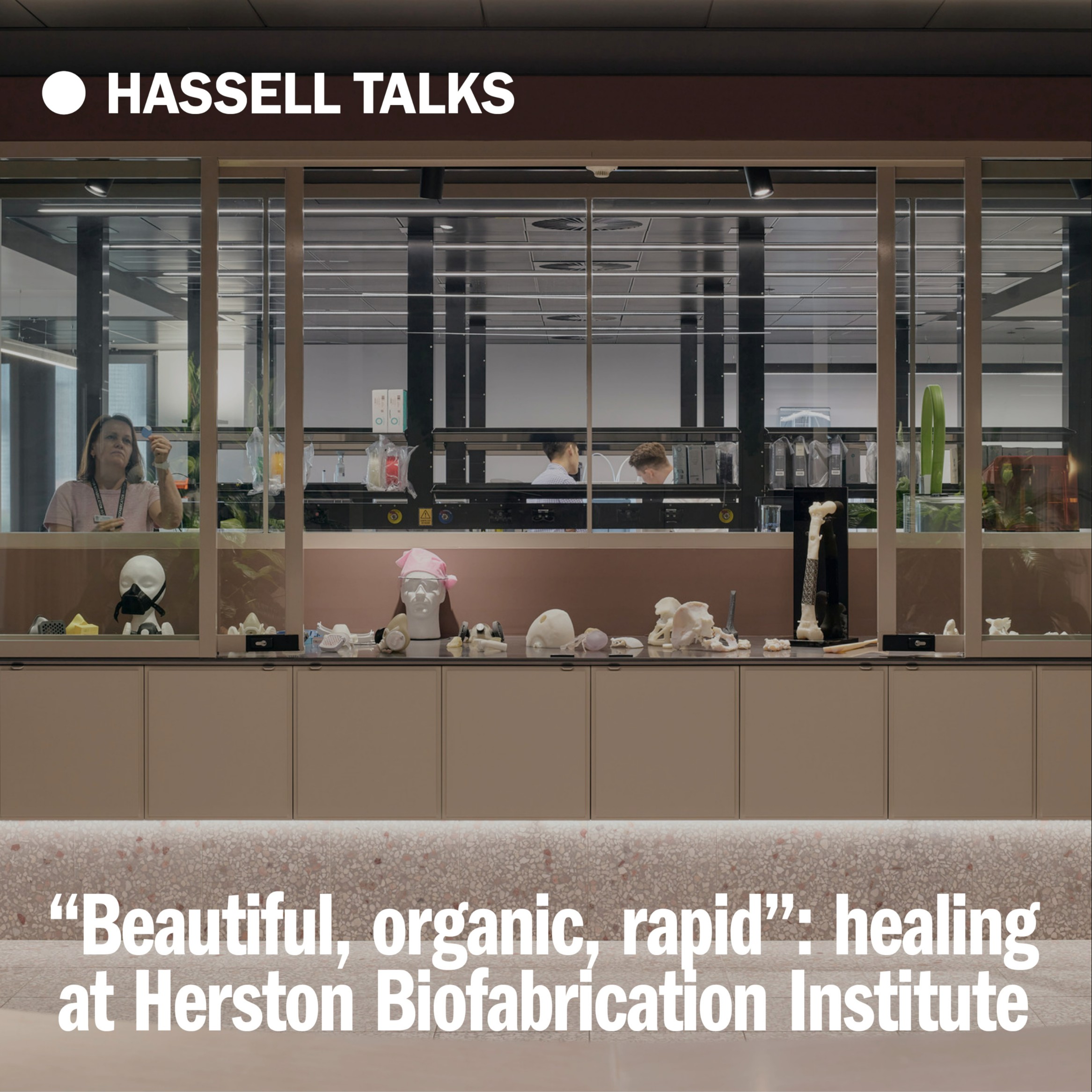 Stories of rapid innovation, healing and design from Herston Biofabrication Institute. With Mathilde Desselle and Carolyn Solley Stories of rapid innovation, healing and design from Herston Biofabrication Institute. With Mathilde Desselle and Carolyn Solley | While technology rapidly advances — people, by contrast, remain constant. Creatures of habit, we need others to survive. We are the sum of our skin, our organs and body parts. Our minds distinguish us, and our intelligence is key to survival but it's our ability to work together that tells the true story of our potential. The team behind the Herston Biofabrication Institute in Brisbane, Australia knew this, and deliberately removed the physical and mental limits in their way. Given the right space, resources and design they've seen a patient able to talk for the first time in 30 years; a specialist design-print-test-iterate a medical solution in days rather than months — and problems solved “beautifully [and] organically” in minutes. In this episode of Hassell Talks, Mathilde Desselle General Manager of the Herston Biofabrication Institute, tells Carolyn Solley of how the transparency and malleability of the building’s interior design has smoothed interactions and increased healing and recovery enabling both patients and the Institute’s multi-disciplinary workforce to thrive. Hassell acknowledges the Jagera and Turrbal people as the original custodians, designers, and placemakers of the land we recorded this episode on. We pay our respect to the traditional owners, their elders and knowledge holders past, present, and emerging. Their knowledge has and will ensure the continuation of cultures and traditional practises. This episode was produced by Prue Vincent and Michelle Bailey | 24m 40s | ||||||
| 4/26/22 |  Campus design should be ’a strange beast’ of art, science and design. with Professors Teresa Anderson and Tim O’Brien, and Julian Gitsham Campus design should be ’a strange beast’ of art, science and design. with Professors Teresa Anderson and Tim O’Brien, and Julian Gitsham | What does bouncing Kraftwerk’s music off the surface of the moon have to do with the future of the university campus? Universities are paying close attention to the way interstellar music-science-arts-technology-culture experience makers bluedotfestival engage audiences in cross-disciplinary learning. But how far do they need to go on campus? Turns out - they need to create a 'wow' factor deeply rooted in curiosity and learning. Who better to debate the future of the university campus than Hassell's co-lead of Education and Science, Julian Gitsham, together with the creators of bluedot, Professor Teresa Anderson and Professor Tim O’Brien of the University of Manchester's Jodrell Bank. In this episode we hear how to look at the benefits of designing environments around problem solving – rather than disciplines – and how good design can create and facilitate inclusive, innovative, and problem solving campuses. LinksCultural chemistry on campus web pagebluedot festivalFirst Light PavilionJodrell Bank Observatory | 27m 56s | ||||||
| 3/16/22 |  SPECIAL EPISODE. MTalks presents: Illumination - data, knowledge and design SPECIAL EPISODE. MTalks presents: Illumination - data, knowledge and design | To celebrate the start of Melbourne Design Week, we’re excited to share a podcast from Australia’s leading architecture commission MPavilion. The MPavilion MTalks series brings some of Melbourne’s brightest and most creative minds together on the lands of the Eastern Kulin Nation, to debate, share ideas and be inspired. The episode you're about to hear was part of an 'Illuminating' event exploring the role of data, knowledge and design in amplifying access to the ideas moving around the city. Hear from the event creators, architects, artists, lighting and interaction designers exploring the role of design in illuminating and engaging people in public institutions. With thanks to MPavilion for sharing this episode with us, as well as Bonnie Shaw at Place Intelligence for leading the event. Thanks also to FreeState's Su Lim, Hannah Fox at Rising, Tim Hunt at Arup, and Finding Infinity's, Ross Harding for taking part - and Steve Coster for hosting. | 49m 05s | ||||||
| 2/27/22 | 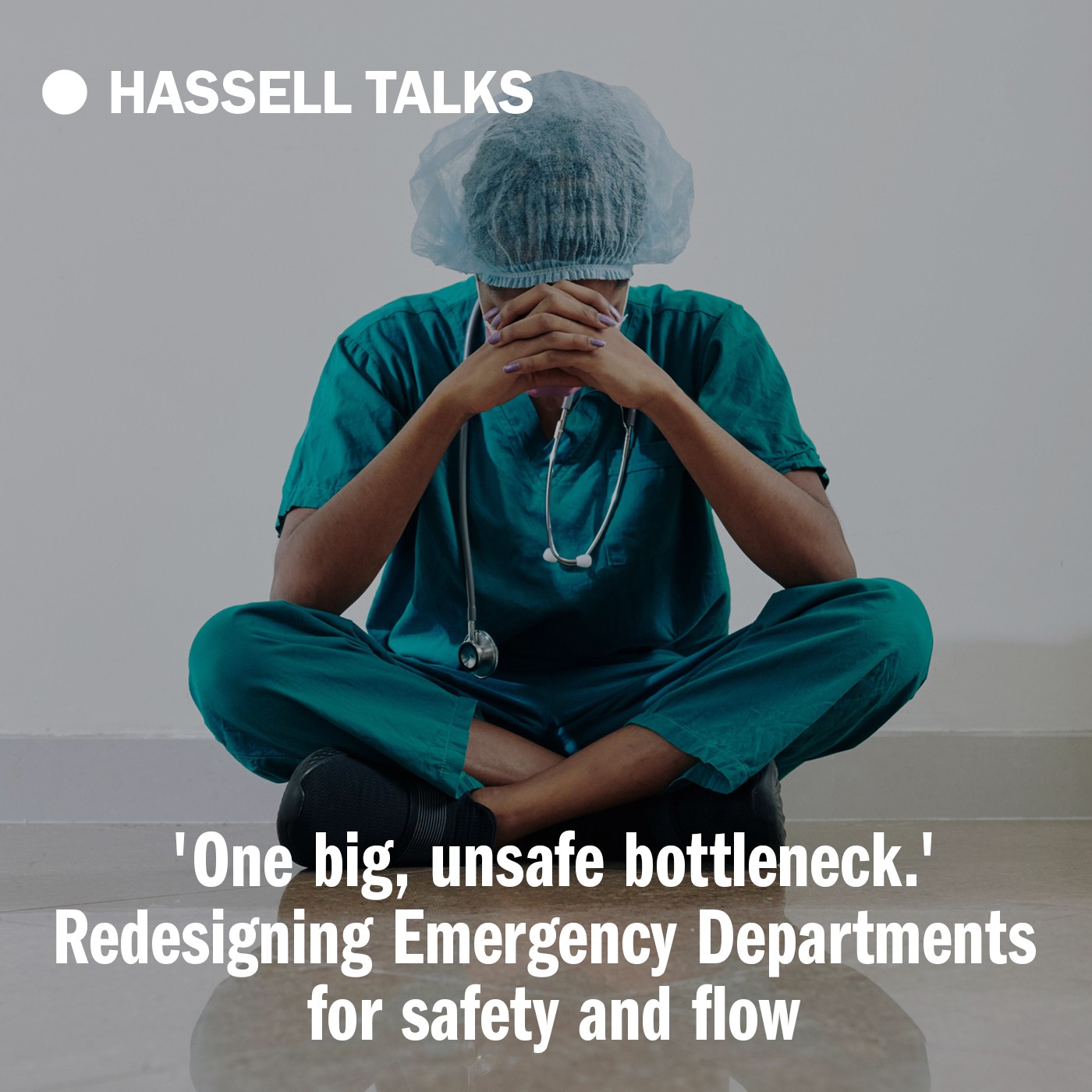 One big, unsafe bottleneck: Redesigning Emergency Departments for safety and flow One big, unsafe bottleneck: Redesigning Emergency Departments for safety and flow | Even before Covid-19, many working in the health system would claim that Emergency Departments weren’t in the best of health. The narrative in the media, and from clinicians themselves, paints a picture of overcrowded spaces, overwhelmed and unsafe for patients and staff, bottlenecked and stretched beyond capacity yet growing bigger – and bigger - but not necessarily smarter. Creating healthcare systems that meet the very best expectations and conditions for staff and patients should be a focus for communities and operators, and this involves examining the models of health, safety, privacy, the popularity of telehealth and the role of emerging technologies. As part of a WomenIn_ panel event hosted by our Melbourne studio, we invited Mya Cubitt, Emergency Physician at the Royal Melbourne Hospital, Stefano Scalzo, from the Victorian Health Building Authority, as well as Health, Infrastructure and Planning Consultant Brian Stevenson, to join Hassell's Health sector leader Leanne Guy and Managing Director Steve Coster to discuss the ever changing needs of Emergency Departments. This episode was produced by Prue Vincent and Annie Scapetis. | 25m 35s | ||||||
| 2/10/22 | 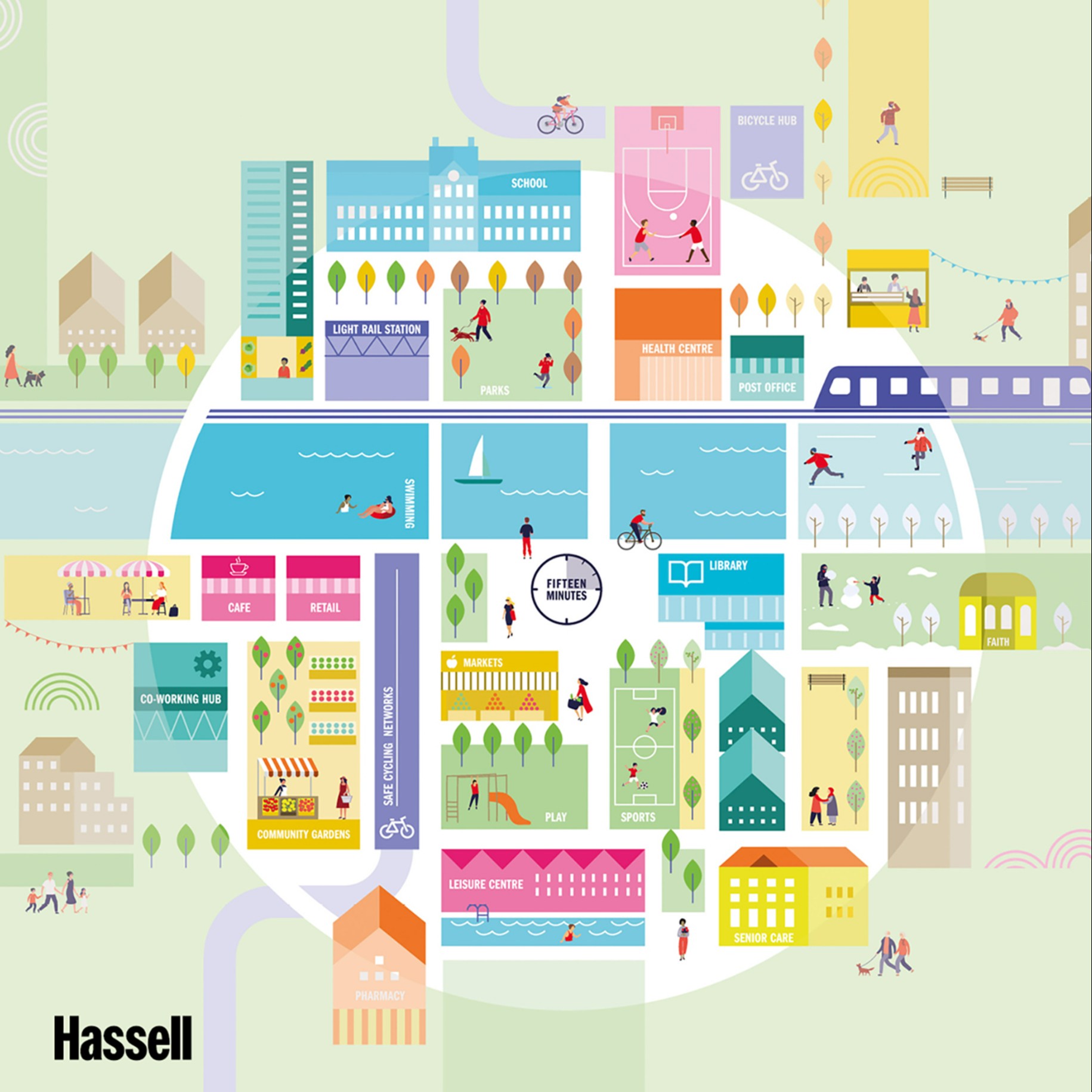 Closer, together: can Ireland warm to an urban future? With Camilla Siggaard Andersen, Brian Moran, Ali Grehan, Pat Farrell and Niamh Moore Cherry Closer, together: can Ireland warm to an urban future? With Camilla Siggaard Andersen, Brian Moran, Ali Grehan, Pat Farrell and Niamh Moore Cherry | Cities around the world are committing themselves to creating compact, amenity-rich neighbourhoods as they tackle the challenges of climate change, urban sprawl and wellbeing. Ireland’s cities, with their history, natural amenities and passionate residents seem more ready-made than most to embrace an agenda of compact growth. But despite national planning frameworks in place, local governments, private developers and stakeholders are encountering ongoing challenges of their own in bringing “15-minute cities” to fruition. “If we’re going to get people to accept the idea that it’s good to live in a smaller home in the city centre, we have to make sure that the experience outside the front door of their smaller home is really wonderful,” explains City of Dublin Architect, Ali Grehan. In this episode of Hassell Talks, Senior Researcher Camilla Siggaard Andersen speaks to the people behind the push for compact, urban growth in Ireland: the property developers, city architects, academics and researchers, who want to move beyond a common assumption that compact growth can only come from sacrifice. As Hassell’s “Close to Home” report shows, 15-minute cities provide opportunities for more convenient living, more equitable communities and more sustainable development, saving resources and reducing emissions because of higher density. Could this be a new era of urbanism, for Ireland? Our thanks to Brian Moran, Ali Grehan, Pat Farrell and Niamh Moore Cherry for sharing their insights with us. This episode was produced by Camilla Siggaard Andersen and Prue Vincent with support from One Fine Play. | 32m 29s | ||||||
| 9/9/21 |  Burnt Out? Mental health in design Burnt Out? Mental health in design | Mental health is making headlines - including in the architecture and design industry as the cumulative effects of living and working through a second year of the global Covid-19 pandemic start to become known. So how can organisations, the industry, and individuals, take advantage of this moment to establish change and in doing so, protect the longevity and diversity of the design industry into the future?In this special episode of Hassell Talks to recognise RUOK Day and World Mental Health Day we invited Parlour co-founder, Researcher and Professor of Architecture at Monash University Naomi Stead to share some of the early observations coming out of a survey of 2300 industry professionals into wellbeing in architecture. Joining Naomi is landscape architect, Place Intelligence co-founder and Human Potential Coach Bonnie Shaw, who explains how her own extreme experience with stress and pursuit of mental wellbeing marries data, endocrinology, neuroscience and behavioural psychology to support change, and community resilience.Together with Managing Director Steve Coster they explore opportunities to promote an open help-seeking culture, foster wellbeing and create real, positive change around mental health for the benefit of individuals, organisations, clients – and ultimately the communities and end users of design. "Designers are motivated by a desire to make the world a better place, and so they keep designing until they get to the best possible outcome beyond the point where they're really pushing their own personal well-being." - Naomi Stead "When you're working in really big, challenging adaptive problems, it puts so much pressure on people. And being able to do that work in a context where it's okay to talk about how you might be struggling or when you might be having problems, I think, is the only way we get through it." - Bonnie Shaw Hassell is a proud partner of mental health advocacy organisation, PukaUp. Find out more about the work PukaUp is doing to eliminate suicide. References and further resources The British Architects Mental Wellbeing Forum ToolkitThe Australian Architects Mental Wellbeing Forum ToolkitLiterature review on Architects and Mental Health commissioned by the NSWARBMonash University's Wellbeing in Architecture surveyBonnie Shaw: 'Making good decisions' - Dumbo FeatherFounder of Stress Theory, Hans Selye | 34m 16s | ||||||
Showing 25 of 44
Sponsor Intelligence
Sign in to see which brands sponsor this podcast, their ad offers, and promo codes.
Chart Positions
2 placements across 2 markets.
Chart Positions
2 placements across 2 markets.