
Insights from recent episode analysis
Audience Interest
Podcast Focus
Publishing Consistency
Platform Reach
Insights are generated by CastFox AI using publicly available data, episode content, and proprietary models.
Total monthly reach
Estimated from 1 chart position in 1 market.
By chart position
- 🇺🇸US · Management#26100K to 300K
- Per-Episode Audience
Est. listeners per new episode within ~30 days
30K to 90K🎙 Daily cadence·20 episodes·Last published 5d ago - Monthly Reach
Unique listeners across all episodes (30 days)
100K to 300K🇺🇸100% - Active Followers
Loyal subscribers who consistently listen
40K to 120K
Market Insights
Platform Distribution
Reach across major podcast platforms, updated hourly
Total Followers
—
Total Plays
—
Total Reviews
—
* Data sourced directly from platform APIs and aggregated hourly across all major podcast directories.
On the show
Recent episodes
The School Always Knows
Jun 19, 2026
Unknown duration
Behaviour and Attendance Follow Adult Behaviour
Jun 12, 2026
Unknown duration
Work-Life Balance Is Lying to Headteachers
Jun 5, 2026
Unknown duration
Ross McGill on Teacher Workload, Leadership & What Schools Still Get Wrong
May 29, 2026
Unknown duration
Rowena Hicks: Why School Staff Burn Out
May 22, 2026
Unknown duration
Social Links & Contact
Official channels & resources
Official Website
Login
RSS Feed
Login
| Date | Episode | Description | Length | ||||||
|---|---|---|---|---|---|---|---|---|---|
| 6/19/26 |  The School Always Knows | Before attendance drops, before behaviour shifts, before staff morale declines, the school already knows.I am currently offering a funded £1,000 Senior Attendance & Leadership Review for headteachers navigating attendance pressure.It begins with a short strategic assessment.If eligible, this leads to a full review process including:• On-site school visit• Detailed, school-specific report• Follow-up strategy session• Practical leadership toolsApply now – https://atrejwhi.formester.com/f/hwL9GCyin/In this episode of Headship After Hours, we explore one of the most overlooked aspects of school leadership: emotional climate.Schools are highly sensitive environments. Students, staff and families respond not only to systems and policies, but to leadership presence, consistency and emotional regulation.This episode explores why leadership is not just strategic — it is atmospheric.We discuss:• How schools absorb leadership emotionally• Why culture changes before leaders notice• The role of trust, consistency and psychological safety• Why behaviour and attendance often reflect emotional climate• How leaders unintentionally transmit pressureSustainable school improvement is not just about systems.It is about creating a culture where trust, stability and emotional consistency can thrive. Timestamps00:00 – Before the School Tells You, It Knows02:43 – Schools Are Emotionally Sensitive Systems03:20 – Leadership Presence vs Leadership Strategy03:57 – The Signals Leaders Transmit04:42 – How Culture Changes Quietly04:58 – Why Trust Starts to Erode05:15 – Emotional Problems vs Operational Problems05:33 – Systems Are Interpreted Through Culture05:57 – Children Experience Systems Through Relationships06:17 – Students Detect Inconsistency Fast06:55 – Leadership Is Atmospheric07:14 – What Pressure Does to Leaders07:32 – When the Weather Changes in a School07:48 – Why Psychological Safety Matters08:28 – Leadership Is More Than Formal Moments08:48 – The Power of Micro Interactions09:25 – Schools Stabilise Through Predictable Leadership09:44 – The School Always Knows10:20 – What Emotional Climate Are You Creating? | — | ||||||
| 6/12/26 |  Behaviour and Attendance Follow Adult Behaviour | Behaviour and attendance are not separate problems. They are reflections of adult practice.I am currently offering a funded £1,000 Senior Attendance & Leadership Review for headteachers navigating attendance pressure.It begins with a short strategic assessment.If eligible, this leads to a full review process including:• On-site school visit• Detailed, school-specific report• Follow-up strategy session• Practical leadership toolsApply now – https://atrejwhi.formester.com/f/hwL9GCyin/In this episode of Headship After Hours, we explore why behaviour and attendance improvement starts with consistency, relationships and leadership.Across UK schools, leaders face increasing pressure to improve behaviour and attendance. While systems, policies and processes matter, sustainable improvement happens when adult responses become calm, consistent and predictable.This episode explores three key shifts:• Consistency is the foundation• Knowing the child changes the response• Relational practice at scaleWe discuss the influence of relational practice, the importance of strong pastoral systems, SEND leadership, multi-agency collaboration and why students respond to environments that feel safe, fair and predictable.Sustainable improvement is not built through stronger sanctions alone.It is built through consistent adult behaviour and strong relationships. Timestamps00:00 – Behaviour and Attendance Start With Adults02:17 – Why Behaviour and Attendance Remain Challenging02:54 – Systems vs Student Experience03:14 – What Relational Practice Really Means03:53 – Consistency Is the Foundation04:29 – Why Behaviour Systems Often Fail04:46 – Stability Creates Improvement05:02 – Data Describes Patterns, Not Causes05:18 – Knowing the Child Changes Everything05:38 – The Role of SEND and Pastoral Leadership05:55 – Why Multi-Agency Working Matters06:13 – Relational Practice at Scale06:58 – Why Students Attend Schools Where They Feel Safe07:13 – The Problem With Quick Fixes07:33 – Three Questions Every Leader Should Ask07:52 – Behaviour and Attendance Are Reflections08:10 – Leadership Shapes Adult Practice | — | ||||||
| 6/5/26 |  Work-Life Balance Is Lying to Headteachers | Work-life balance sounds good in theory. But for most headteachers, it doesn't feel real.I am currently offering a funded £1,000 Senior Attendance & Leadership Review for headteachers navigating attendance pressure.It begins with a short strategic assessment.If eligible, this leads to a full review process including:• On-site school visit• Detailed, school-specific report• Follow-up strategy session• Practical leadership toolsApply now – https://atrejwhi.formester.com/f/hwL9GCyin/In this episode of Headship After Hours, we explore one of the biggest myths in school leadership: the idea that headship can be neatly balanced.Leadership at this level follows you home. Difficult decisions, safeguarding concerns, staffing challenges and accountability pressures rarely stop when the school day ends.This episode explores why sustainable headship is a better goal than work-life balance and the three shifts that help leaders remain effective over the long term:• Integration over separation• Protecting energy, not just time• Defining an identity beyond the roleWe discuss leadership sustainability, wellbeing, burnout prevention and why the strongest leaders are not always available — they are consistently effective.Sustainable leadership is not about perfect balance.It is about remaining effective without losing yourself. Timestamps00:00 – Why Work-Life Balance Feels Impossible02:21 – The Reality of Headship Beyond the School Day03:23 – Why Traditional Boundaries Often Fail03:43 – Stop Chasing Balance04:02 – Shift #1: Focus on Sustainability04:17 – Integration Over Separation04:58 – Shift #2: Protect Your Energy05:36 – Shift #3: Define Life Beyond the Role06:12 – Why Leaders Feel Guilty About Switching Off06:29 – Guilt Is Not a Leadership Strategy06:50 – Effectiveness vs Availability07:06 – Recognising Burnout Before It Arrives07:29 – Three Questions Every Headteacher Should Ask07:52 – Sustainable Leadership Matters More Than Balance | — | ||||||
| 5/29/26 |  Ross McGill on Teacher Workload, Leadership & What Schools Still Get Wrong | In this episode of Headship After Hours, Paul speaks with Ross McGill — teacher, former deputy headteacher, founder of Teacher Toolkit and one of the most influential voices in education.I am currently offering a funded £1,000 Senior Attendance & Leadership Review for headteachers navigating attendance pressure.It begins with a short strategic assessment.If eligible, this leads to a full review process including:• On-site school visit• Detailed, school-specific report• Follow-up strategy session• Practical leadership toolsApply now – https://atrejwhi.formester.com/f/hwL9GCyin/Together, they explore:• teacher workload and why schools still struggle to reduce it• leadership, relationships and school culture• feedback, marking and professional trust• AI in education and the future of schools• SEND pressures, wellbeing and teacher retentionRoss reflects on his journey through leadership, social media, CPD and educational research — and why relationships remain at the centre of effective school leadership.This is a thoughtful and practical conversation for headteachers, senior leaders and educators navigating the realities of modern education.🎧 Subscribe for more conversations on school leadership, culture and sustainable headship.Timestamps00:00 – Leadership, Relationships & School Culture01:05 – Ross McGill’s Journey Into Teaching02:24 – Teacher Toolkit & Early Education Influencing05:22 – Why SLT Chat Went Viral06:13 – Why Ross McGill Connected With Teachers08:55 – The Biggest Lesson in Education10:26 – Difficult Conversations in Leadership11:17 – Learning From Leadership Mistakes14:02 – Teacher Workload & The Five Minute Lesson Plan15:57 – Why Teacher Workload Is Still Rising16:55 – Marking Policies That Damage Teachers17:43 – What Makes Feedback Actually Work19:14 – Metacognition & Learning How to Learn21:46 – Ross McGill’s Proudest Work23:54 – MRI Research, Learning & Cognition25:58 – AI, Literacy & The Future of Schools28:04 – SEND Crisis & School Pressure29:52 – Leadership Advice for Headteachers | — | ||||||
| 5/22/26 |  Rowena Hicks: Why School Staff Burn Out | In this episode of Headship After Hours, Paul speaks with Rowena Hicks about burnout, workload, staff wellbeing and what it really means for educators to feel seen, heard and valued.I am currently offering a funded £1,000 Senior Attendance & Leadership Review for headteachers navigating attendance pressure.It begins with a short strategic assessment.If eligible, this leads to a full review process including:• On-site school visit• Detailed, school-specific report• Follow-up strategy session• Practical leadership toolsApply now – https://atrejwhi.formester.com/f/hwL9GCyin/Rowena reflects on more than 30 years in education, from teaching in challenging contexts to becoming a SENCO, deputy head, coach and wellbeing advocate. She shares openly about her own experience of burnout and why school leaders must pay attention not only to workload, but to identity, validation and emotional sustainability.This conversation explores how leaders can reduce unnecessary workload, listen properly to staff, take meaningful action, and build cultures where people notice what is going well — not only what is going wrong.For headteachers and school leaders, this episode asks a powerful question:Has your role become your identity?00:00 – Why Staff Need to Feel Seen and Heard02:06 – Introducing Rowena Hicks02:47 – Rowena’s Journey in Education03:24 – Burnout as a Deputy Head05:18 – Supporting Vulnerable Children and Trauma06:24 – Adults as the Regulating Force in Schools38:31 – Has Headship Become Your Identity?39:08 – Finding Value Beyond the Role40:03 – How to Connect with Rowena Hicks | — | ||||||
| 5/16/26 |  Attendance Doesn’t Improve Through Systems Alone | Attendance doesn’t improve because of a new policy — it improves when the experience of school changes.I am currently offering a funded £1,000 Senior Attendance & Leadership Review for headteachers navigating attendance pressure.It begins with a short strategic assessment.If eligible, this leads to a full review process including:• On-site school visit• Detailed, school-specific report• Follow-up strategy session• Practical leadership toolsApply now – https://atrejwhi.formester.com/f/hwL9GCyin/In this episode of Headship After Hours, we go deeper into what actually shifts attendance in real schools with complex communities.Across UK schools, leaders are under increasing pressure to improve attendance through systems, tracking and intervention. But sustainable attendance improvement rarely comes through systems alone.This episode explores three key shifts that improve attendance over time:• Relationally visible leadership• Consistent and respectful attendance conversations• Intentional belonging and school cultureWe discuss why students respond to experience more than policy, how consistency creates emotional safety, and why belonging is one of the strongest attendance strategies schools often overlook.Sustainable attendance is not built through pressure alone.It is built through trust, culture and connection.Timestamps00:00 – Attendance Follows School Experience00:36 – The 3 Questions Leaders Should Ask02:36 – Why Attendance Strategies Often Fail02:54 – What Actually Shifts Attendance03:14 – Relationally Visible Leadership03:45 – Why Leadership Presence Matters04:01 – Relationships Change Attendance04:17 – Consistency Replaces Variation04:33 – Why Consistency Creates Safety04:49 – Belonging Improves Attendance05:21 – Trauma-Informed Thinking in Schools05:40 – Small Shifts That Change Culture05:58 – Attendance Lives Inside Leadership Practice06:16 – Attendance Is a Leadership Issue06:33 – Culture vs Compliance in Attendance06:51 – 3 Reflective Questions for Leaders07:25 – What Sustainable Attendance Schools Do Differently | — | ||||||
| 5/9/26 |  Attendance Is a Connection Problem, Not a Compliance Problem | Attendance is not just about showing up — it’s about wanting to show up.I am currently offering a funded £1,000 Senior Attendance & Leadership Review for headteachers navigating attendance pressure.It begins with a short strategic assessment.If eligible, this leads to a full review process including:• On-site school visit• Detailed, school-specific report• Follow-up strategy session• Practical leadership toolsApply now – https://atrejwhi.formester.com/f/hwL9GCyin/In this episode of Headship After Hours, we explore why many school attendance strategies fail to create lasting change, despite increased tracking, monitoring and intervention systems.Across UK schools, attendance pressure is rising. But in many cases, attendance is being treated primarily as a compliance issue when, for many students, it is actually a connection issue.This episode explores the difference between enforcement and belonging, why culture shapes attendance more than systems alone, and how relational practice, visible leadership and consistency influence student engagement.We discuss trauma-informed thinking, emotional safety, student experience and why attendance improves when students feel connected to school.Sustainable attendance improvement is not built through pressure alone.It is built through culture, trust and belonging. | — | ||||||
| 5/1/26 | 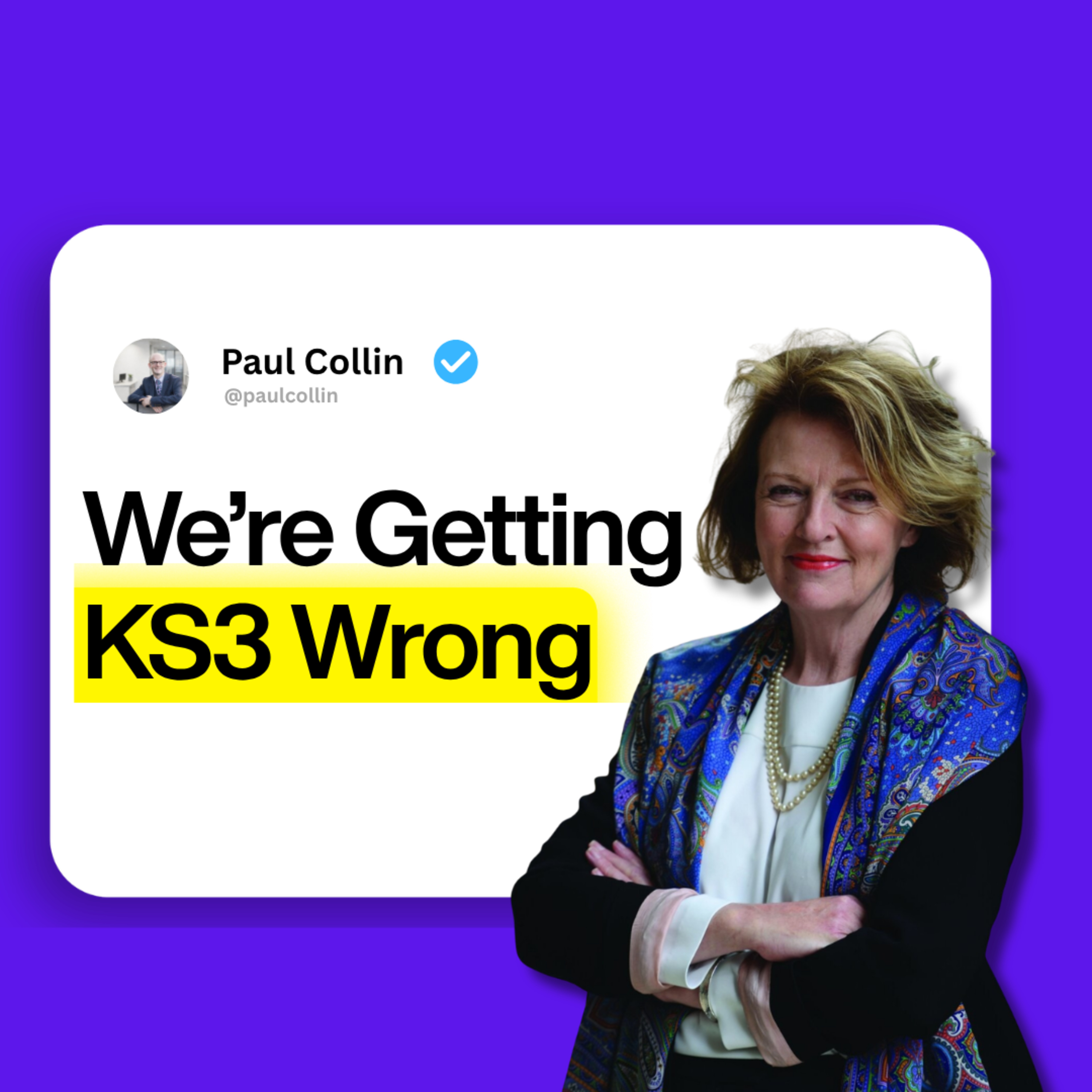 Mary Myatt: What Schools Still Get Wrong with KS3 Transition. | In this exclusive episode of Headship After Hours, I’m joined by Mary Myatt — one of the most influential voices in curriculum, leadership and school improvement.I am currently offering a funded £1,000 Senior Attendance & Leadership Review for headteachers navigating attendance pressure.It begins with a short strategic assessment.If eligible, this leads to a full review process including:• On-site school visit• Detailed, school-specific report• Follow-up strategy session• Practical leadership toolsApply now – https://atrejwhi.formester.com/f/hwL9GCyin/We explore why Key Stage 3 has been described as “the wasted years”, how curriculum coherence breaks down between primary and secondary, and what schools can do to build more ambitious, meaningful learning experiences.Mary shares insights on high challenge, low threat, simplifying classroom practice, and why education does not need more complexity — it needs clarity.We also discuss leadership, professional culture, and how schools can focus on what truly adds value to learning.This is a practical and thought-provoking conversation for school leaders, teachers and anyone interested in curriculum design.🎧 Subscribe for more conversations on headship, leadership and school improvement.Timestamps00:00 – Introduction to Mary Myatt01:15 – Mary’s Journey into Education03:40 – Why Curriculum Became Her Focus06:38 – The Problem with Key Stage 307:18 – From “Wasted Years” to “Ambitious Years”10:00 – Primary to Secondary Transition Gaps12:17 – Why Schools Repeat Learning15:21 – The Reading Research Changing Classrooms20:20 – High Challenge, Low Threat Explained25:00 – What Makes a High-Quality Curriculum30:46 – Building Culture in Classrooms34:11 – What Leaders Should Prioritise36:55 – What Schools Should Stop Doing37:55 – Mary’s Final Leadership Advice | — | ||||||
| 4/24/26 |  Control vs Authority: The Leadership Shift That Changes Everything | Control solves the moment — authority sustains the culture.I am currently offering a funded £1,000 Senior Attendance & Leadership Review for headteachers navigating attendance pressure.It begins with a short strategic assessment.If eligible, this leads to a full review process including:• On-site school visit• Detailed, school-specific report• Follow-up strategy session• Practical leadership toolsApply now – https://atrejwhi.formester.com/f/hwL9GCyin/In this episode of Headship After Hours, we explore one of the most important distinctions in school leadership: the difference between control and authority.While control can create immediate compliance, it relies on presence and short-term intervention. Authority, however, is built through consistency, clarity and follow-through — and it shapes behaviour over time.This episode breaks down three critical leadership distinctions:– Control vs authority in shaping behaviour– Presence vs independence in leadership– Compliance vs commitment in school cultureWe explore why over-reliance on control creates fragile systems, how authority builds sustainable culture, and why consistent leadership matters more than reactive intervention.Sustainable headship is not about controlling every moment.It is about building authority that works even when you are not there.Timestamps00:00 – Control vs Authority in Leadership02:45 – Why Control Feels Powerful03:17 – The Limits of Reactive Leadership03:54 – How Authority Is Built Over Time04:38 – Why Control Creates Dependency04:57 – Building Authority Through Consistency05:32 – How Students Read Leadership Signals06:08 – Control vs Authority in Staff Culture06:27 – Distinction #1: Immediate vs Sustained06:42 – Distinction #2: Presence vs Independence07:00 – Distinction #3: Compliance vs Commitment07:18 – When Control Is Still Necessary07:40 – Why Authority Creates Stability08:03 – Questions for Reflective Leadership | — | ||||||
| 4/17/26 |  When Staff Confidence Drops, Everything Gets Harder | You can feel it before anyone says it — staff confidence has shifted.I am currently offering a funded £1,000 Senior Attendance & Leadership Review for headteachers navigating attendance pressure.It begins with a short strategic assessment.If eligible, this leads to a full review process including:• On-site school visit• Detailed, school-specific report• Follow-up strategy session• Practical leadership toolsApply now – https://atrejwhi.formester.com/f/hwL9GCyin/In this episode of Headship After Hours, we explore one of the most underestimated indicators in school leadership: staff confidence.When confidence drops, expectations soften, consistency drifts and culture begins to loosen. And importantly, this rarely happens suddenly — it erodes gradually through uncertainty, pressure and accumulated challenges.This episode explores three critical leadership moves to rebuild confidence: re-establishing clarity, increasing visible support, and naming the moment honestly.We discuss why pressure does not restore confidence, how leadership tone shapes belief across staff, and why confidence is rebuilt through certainty, not complexity.Sustainable headship is not about pushing harder.It is about leading with clarity, presence and steady support.Confidence doesn’t grow through pressure — it grows through clarity and support.TIMESTAMPS00:00 – Headship Is an Energy Problem02:32 – Why Time Isn’t the Real Constraint03:15 – The Emotional Load of Leadership04:07 – Why Efficiency Doesn’t Create Energy04:43 – Energy Drain #1: Decision Overload05:18 – Energy Drain #2: Emotional Containment05:59 – Why Leadership Without Reflection Becomes Isolation06:17 – Energy Drain #3: Reactive Leadership06:37 – Designing Your Week for Energy06:54 – Energy Is a Leadership Signal07:28 – Where Should Your Energy Be Invested?08:12 – Three Questions for Sustainable Leadership08:28 – Managing Energy With Intention#Headship#SchoolLeadership#Leadership | — | ||||||
Want analysis for the episodes below?Free for Pro Submit a request, we'll have your selected episodes analyzed within an hour. Free, at no cost to you, for Pro users. | |||||||||
| 4/10/26 |  Headship Is Not a Time Problem — It’s an Energy Problem | Headship is not a time problem — it is an energy problem.I am currently offering a funded £1,000 Senior Attendance & Leadership Review for headteachers navigating attendance pressure.It begins with a short strategic assessment.If eligible, this leads to a full review process including:• On-site school visit• Detailed, school-specific report• Follow-up strategy session• Practical leadership toolsApply now – https://atrejwhi.formester.com/f/hwL9GCyin/In this episode of Headship After Hours, we explore why many school leaders feel constantly overwhelmed, despite trying to manage their time more efficiently.Leadership is not just about tasks — it is about emotional presence. Every conversation, decision and challenge draws from the same resource: energy.This episode explores the energy economy of headship and the three biggest drains on leadership capacity: unstructured decision-making, emotional containment and reactive leadership.We discuss how leaders can protect, invest and restore their energy, why efficiency does not create sustainability, and how leadership energy becomes a signal that shapes culture across staff and students.Sustainable headship is not about doing more.It is about managing your energy with intention.Timestamps00:00 – Headship Is an Energy Problem02:32 – Why Time Isn’t the Real Constraint03:15 – The Emotional Load of Leadership04:07 – Why Efficiency Doesn’t Create Energy04:43 – Energy Drain #1: Decision Overload05:18 – Energy Drain #2: Emotional Containment05:59 – Why Leadership Without Reflection Becomes Isolation06:17 – Energy Drain #3: Reactive Leadership06:37 – Designing Your Week for Energy06:54 – Energy Is a Leadership Signal07:28 – Where Should Your Energy Be Invested?08:12 – Three Questions for Sustainable Leadership08:28 – Managing Energy With Intention | — | ||||||
| 4/4/26 |  The School Didn’t Change First — I Did | The school didn’t change first — the leader did.I am currently offering a funded £1,000 Senior Attendance & Leadership Review for headteachers in complex school contexts.It begins with a short assessment and, if eligible, leads to a structured strategic review including an on-site visit, executive reporting, and a clear 90-day plan.Apply now – https://atrejwhi.formester.com/f/hwL9GCyin/In this episode of Headship After Hours, we explore how leadership posture shapes school culture, especially in challenging environments where progress feels fragile.When behaviour rises, attendance plateaus and staff morale dips, leaders often respond with urgency, pressure and increased control. But reactive leadership can unintentionally destabilise culture.This episode explores three key leadership shifts: visibility, clarity and consistency. Not as strategies, but as signals that shape trust, stability and momentum.We discuss why calm authority is more powerful than constant intervention, how simplifying priorities reduces noise, and why consistency builds confidence across staff and students.Sustainable headship is not about doing more — it is about showing up differently.Culture stabilises when leaders are stable.Timestamps00:00 – The School Didn’t Change First02:41 – Reactive Leadership vs Resetting Posture03:23 – How Leadership Tone Shapes Culture03:44 – Shift #1: Visibility Builds Confidence04:22 – Why Presence Stabilises Schools04:40 – Shift #2: Clarity Over Complexity05:24 – Shift #3: Consistency Builds Trust05:42 – How Stability Restores Momentum06:01 – Leadership Is Not Constant Intervention06:38 – Letting Go of Control in Headship07:17 – Slow Down, Simplify, Steady07:36 – Calm Authority in Challenging Schools | — | ||||||
| 3/26/26 |  When Everything Feels Like It’s Slipping in Headship | There are moments in headship when everything feels like it is slipping — behaviour, attendance, staff morale and momentum.I am currently offering a funded £700 Senior Attendance & Leadership Review for headteachers carrying attendance pressure.It begins with a short assessment and leads to a private strategy session.Apply now - https://atrejwhi.formester.com/f/hwL9GCyin/ In this episode of Headship After Hours, we explore what leadership looks like when progress feels fragile and doubt begins to surface.In complex schools, improvement is rarely linear. When pressure rises, leaders often feel the need to tighten control, react faster and push harder. But pressure without calm destabilises culture.This episode explores why composure matters more than control, how leadership tone shapes emotional climate, and why stability compounds when leaders remain steady.Through a real leadership moment, we discuss visibility, clarity, staff morale and how small shifts in leadership posture can restore momentum.Sustainable headship is not about eliminating pressure — it is about how you respond when everything feels uncertain.Leadership requires composure, not control. Timestamps 00:00 – When Headship Feels Like It’s Slipping02:40 – Leading in Complex School Environments03:49 – Leadership Doubt Under Pressure04:28 – The Internal Narrative of Headship05:07 – Pressure Without Calm Destabilises Culture05:25 – Increasing Visibility Without Control05:40 – Simplifying Leadership Messaging05:56 – Protecting Staff Morale Publicly06:12 – Why Stability Compounds06:31 – Turnaround Requires Steadiness06:51 – Composure vs Control in Leadership07:13 – Reacting to Noise vs Reinforcing Clarity07:34 – How Leadership Posture Changes Culture | — | ||||||
| 3/20/26 |  Schools Are Not CAMHS | Schools are not CAMHS — and expecting them to operate like clinical services is exhausting staff and diluting the core purpose of education.I am currently offering a funded £700 Senior Attendance & Leadership Review for headteachers carrying attendance pressure.It begins with a short assessment and leads to a private strategy session.Apply now - https://atrejwhi.formester.com/f/hwL9GCyin/ In this episode of Headship After Hours, we explore the growing pressure on schools to absorb responsibilities they were never designed to hold, especially around student mental health and specialist intervention.We discuss the difference between support and replacement, why compassion without boundaries leads to institutional exhaustion, and how school leaders can protect staff capacity while still serving students with care and clarity.This episode explores three truths school leaders must hold together: schools play a crucial role in mental health support, schools cannot replace specialist services, and leadership requires clear boundaries.Sustainable headship means leading with compassion, but also with alignment, referral clarity and realistic system awareness.00:00 – Schools Are Not CAMHS03:13 – The Mental Health Pressure Schools Now Carry03:45 – Why Schools Cannot Replace Specialist Services04:21 – When Families Expect Schools to Fix Everything04:57 – Compassion Without Boundaries Leads to Exhaustion05:31 – Three Truths School Leaders Must Hold06:06 – When Staff Become Emotionally Overextended06:23 – Defining the Role of School Leadership06:41 – Support, Adaptation and Clear Boundaries07:03 – Why Boundaries Create Stability07:47 – Responsibility vs Control in Headship08:08 – Protecting Staff Capacity Strategically08:47 – Schools Build Belonging, Not Clinical Services09:06 – Belonging as Prevention in Schools | — | ||||||
| 3/13/26 |  Why Attendance Problems Are Actually Culture Problems | Attendance is not just a system issue — it is a leadership identity issue.In this episode of Headship After Hours, we explore why attendance challenges in schools are often rooted not only in policy or systems but in leadership culture and belonging.I am currently offering a funded £700 Senior Attendance & Leadership Review for headteachers carrying attendance pressure.It begins with a short assessment and leads to a private strategy session.Apply now - https://atrejwhi.formester.com/f/hwL9GCyin/ Attendance is frequently framed through data, thresholds and escalation processes. Yet students and families respond less to spreadsheets and more to meaning, relationships and trust.When attendance conversations feel punitive, attendance becomes a battle. When attendance conversations feel relational, attendance becomes shared responsibility.In this episode we explore three leadership shifts that strengthen attendance culture: reframing the narrative from enforcement to presence, making belonging visible across the school community, and aligning leadership signals so that tone, relationships and expectations reinforce one another.Attendance improves when culture improves — and culture begins with leadership.00:00 – Attendance Is a Leadership Identity Issue03:09 – Attendance, Belonging and School Culture03:40 – When Parents Perceive Attendance as Punitive04:03 – Attendance Is About Trust and Relationships04:41 – Culture Strengthens Attendance05:18 – Why Leadership Tone Matters05:37 – Shift #1: Reframe the Attendance Narrative05:59 – Shift #2: Make Belonging Visible06:15 – Shift #3: Align Leadership Signals06:48 – Attendance Is Strengthened in Relationships07:25 – The Story Schools Tell About Attendance08:07 – Attendance Reflects Culture and Trust | — | ||||||
| 3/7/26 |  High Performers in Headship: The Isolation Nobody Talks About | High-performing leaders often feel the most isolated — not because they lack people, but because everyone assumes they are fine.In this episode of Headship After Hours, we explore the hidden paradox of leadership strength: the stronger and more composed a headteacher appears, the fewer spaces they are offered to process what leadership actually costs.From staffing restructures and difficult decisions to the emotional discipline required to regulate a school community, leaders often carry internal processing that remains invisible.We discuss the difference between coping and processing, the risks of emotional compression, and why high-performing leaders must intentionally design support around themselves.Sustainable headship is not about carrying everything silently.It is about combining strength with reflection.I am currently offering a funded £700 Senior Attendance & Leadership Review for headteachers carrying attendance pressure.It begins with a short assessment and leads to a private strategy session.Apply now - https://atrejwhi.formester.com/f/hwL9GCyin/ 00:00 – Why High Performers Often Feel Isolated03:21 – Visible Leadership vs Invisible Processing04:21 – The Leadership Paradox of Strength04:58 – When Role Hierarchy Reduces Safe Equals06:01 – Coping vs Processing in Leadership06:36 – Why Isolation Quietly Increases07:04 – Risk #1: Emotional Compression07:23 – Risk #2: Over-Identification with Strength07:44 – Designing Reflective Support Networks08:01 – Naming Leadership Weight08:37 – Resilience Includes Release09:10 – The Question Every Leader Should Ask | — | ||||||
| 3/6/26 |  Leadership Quietly Reduces Your Safe Circle | Headship carries a burden that is rarely spoken about — the weight of what cannot be shared.In this episode of Headship After Hours, we explore the confidential burden of school leadership and why headship can quietly narrow a leader’s circle of safe equals.From safeguarding conversations and sensitive restructuring discussions to parental escalations and legal constraints, headteachers often carry information that cannot be passed on.Over time, this emotional compartmentalisation creates an internal weight that many leaders process alone.In this episode we discuss three practical protections: building a deliberate peer network, separating confidentiality from isolation, and creating structured decompression after high-emotion leadership moments.Headship may be solitary at times — but it should never become isolating.I am currently offering a funded £700 Senior Attendance & Leadership Review for headteachers carrying attendance pressure.It begins with a short assessment and leads to a private strategy session.Apply now - https://atrejwhi.formester.com/f/hwL9GCyin/ 00:00 – Leadership Reduces Your Safe Equals01:30 – The Confidential Burden of Headship03:15 – Carrying Conversations You Cannot Share04:07 – Emotional Compartmentalisation in Leadership04:57 – Why Headship Narrows Your Circle05:35 – Protection #1: Build a Deliberate Peer Network06:10 – Protection #2: Separate Confidentiality from Isolation06:29 – Protection #3: Structured Emotional Decompression06:44 – Why Leaders Should Design Support Around Themselves07:24 – Processing Protects Perspective07:45 – Removing Unnecessary Isolation in Headship | — | ||||||
| 2/27/26 |  The Biggest Threat to Headship Isn’t Pressure | The biggest threat to headship isn’t pressure — it’s disconnection.I am currently offering a funded £700 Senior Attendance & Leadership Review for headteachers carrying attendance pressure.It begins with a short assessment and leads to a private strategy session.Apply now - https://atrejwhi.formester.com/f/hwL9GCyin/ In this episode of Headship After Hours, we explore leadership drift — the subtle moment when purpose fades, confidence wavers, and headship becomes mechanical rather than meaningful.Many UK headteachers prepare for pressure: inspection pressure, budget pressure, attendance pressure, parental escalation. But few talk about the slow drift that happens when identity diffuses and leadership becomes performance rather than alignment.We discuss core values, leadership identity, alignment, purpose, and how sustainable headship requires periodic realignment.If you are leading a UK school and feel competent but disconnected, this episode will help you pause, realign and reconnect to why you chose this vocation in the first place.Leadership is not just a role you carry. It is a vocation you inhabit.00:00 – The Biggest Threat to Headship01:31 – Pressure vs Disconnection in Leadership02:05 – When Leadership Becomes Mechanical03:18 – The Slow Drift of Purpose03:57 – Why High-Functioning Leaders Are at Risk04:53 – Identity Diffusion in Headship05:10 – Returning to Core Values05:27 – Three Questions to Realign Leadership06:26 – Purpose vs Performance in Schools07:03 – Stop Performing, Start Inhabiting Leadership07:37 – Why Alignment Restores Confidence | — | ||||||
| 2/26/26 |  Stop Measuring Yourself by Exhaustion | If your workload in headship feels unsustainable, it does not automatically mean you are failing. It may mean the structure is.I am currently offering a funded £700 Senior Attendance & Leadership Review for headteachers carrying attendance pressure.It begins with a short assessment and leads to a private strategy session.Apply now - https://atrejwhi.formester.com/f/hwL9GCyin/ In this episode of Headship After Hours, we explore why headteachers often internalise pressure that is actually systemic.From safeguarding and parental escalation to budget reviews and attendance panels, school leadership can create constant cognitive switching and emotional strain.We discuss three practical shifts:– Stop measuring yourself by output volume– Redesign the week, not just the list– Remove yourself from the middle of everythingSustainable headship requires structural design, not personal endurance.If you are leading a UK school and feeling stretched beyond capacity, this episode will help you separate what is structural from what is self-imposed.Leadership is demanding. It should not require self-erasure.TIMESTAMPS00:00 – Stop Measuring Yourself by Output Volume01:29 – When Workload Feels Unsustainable in Headship03:19 – Structural Strain vs Personal Failure03:58 – Where Does Your Time Create Leverage?04:19 – Redesigning the Week, Not Just the List05:10 – Removing Yourself as the Bottleneck05:49 – Cognitive Switching and Leadership Burnout06:22 – What Is Structural vs Self-Imposed?07:17 – Design the Role, Don’t Endure It | — | ||||||
| 2/19/26 |  Imposter Syndrome in Headship: Stop Performing Leadership | Imposter syndrome in headship often comes from trying to perform leadership rather than inhabit it.In this episode of Headship After Hours, we explore why confidence in school leadership wavers — and why trying to be everything to everybody fragments authority.Sustainable headship is not about copying another leadership style or meeting every expectation. It’s about alignment.We discuss authenticity in leadership, values clarity, confidence under pressure, and why you don’t need to satisfy everyone to lead well.If you are a UK headteacher navigating doubt, pressure, and conflicting expectations, this episode will help you return to clarity and identity.Leadership is not a costume. It’s alignment.I am currently offering a funded £700 Senior Attendance & Leadership Review for headteachers carrying attendance pressure.It begins with a short assessment and leads to a private strategy session.Apply now - https://atrejwhi.formester.com/f/hwL9GCyin | — | ||||||
| 2/18/26 |  The 5 Signals That Are Shaping Your School Culture | School culture is shaped less by policies and more by leadership signals.In this episode of Headship After Hours, we explore the five signals every headteacher sends daily — often unintentionally — and how those signals shape school culture in UK schools.From modelling urgency and responding to mistakes, to what you tolerate, regulate and prioritise, small leadership behaviours compound over time.Sustainable headship is not just about strategy. It’s about awareness.If you are leading a UK school and want to build a stronger, calmer, more deliberate culture, this episode will help you examine the signals you are sending every day.What you amplify becomes culture.I am currently offering a funded £700 Senior Attendance & Leadership Review for headteachers carrying attendance pressure.It begins with a short assessment and leads to a private strategy session.Apply now - https://atrejwhi.formester.com/f/hwL9GCyin00:00 – How Leaders Signal Urgency in Headship02:02 – Why Small Signals Shape School Culture03:23 – Modelling Pace and Leadership Tone04:15 – Signal #1: What Gets Your Attention04:48 – Signal #2: How You Respond to Mistakes05:04 – Signal #3: What You Tolerate in Schools05:42 – Signal #4: Energy Regulation in Leadership06:01 – Signal #5: Accessibility and Visibility06:46 – What Story Does Your Leadership Tell?07:27 – How to Shift One Signal This Week08:03 – Why Leadership Influence Is Constant | — | ||||||
| 2/18/26 |  Pressure Is Inevitable. Panic Is Leadership. | Pressure is part of headship — panic is not.In this episode of Headship After Hours, we explore the difference between pressure and panic in school leadership and why calm authority is one of the most powerful tools a headteacher can develop.Sustainable headship does not remove inspection pressure, attendance demands or safeguarding complexity. Instead, it regulates response. Calm leaders absorb pressure without spreading it.We discuss presence, emotional regulation, leadership tone, and how your internal state shapes school culture.If you are leading a UK school and feeling the weight of system pressure, this episode will help you strengthen your presence without escalating panic.Strong leadership is not loud. It is steady.I am currently offering a funded £700 Senior Attendance & Leadership Review for headteachers carrying attendance pressure.It begins with a short assessment and leads to a private strategy session.Apply now - https://atrejwhi.formester.com/f/hwL9GCyin00:00 – The Difference Between Pressure and Panic01:47 – Why Pressure Is Structural in Headship02:25 – How Leadership Presence Shapes School Atmosphere02:45 – What Calm Authority Really Means03:23 – Why Calm Leadership Is a Practice, Not Personality03:59 – How Teams Mirror a Leader’s Tone04:15 – Boundaries and Regulated Leadership04:50 – Calm Authority vs Soft Leadership05:25 – The 10-Second Reset Practice05:45 – Why Predictability Builds Trust in Schools06:01 – Small Practices to Build Calm Authority06:34 – Presence Expands Leadership Strength | — | ||||||
| 2/17/26 |  Compliance Is Not Commitment in Headship | Headship becomes fragile when everything depends on you.In this episode of Headship After Hours, we explore why compliance in senior leadership teams is not the same as commitment — and how sustainable headship depends on building strength, ownership and psychological safety at the top.Many UK headteachers unintentionally build fragile systems by becoming the centre of every decision. But strong senior leadership teams distribute accountability, challenge respectfully and build real capacity.We discuss hiring for strength over loyalty, making ownership visible, and creating psychological safety in school leadership.Sustainable headship is not about being indispensable. It’s about building a system that works without you.If you’re leading a UK school and feeling the weight of carrying everything, this episode is for you.I am currently offering a funded £700 Senior Attendance & Leadership Review for headteachers carrying attendance pressure.It begins with a short assessment and leads to a private strategy session.Apply now - https://atrejwhi.formester.com/f/hwL9GCyin00:00 – Why Compliance Isn’t Commitment in Headship01:43 – The Fragility of Carrying Leadership Alone02:28 – Why Strong Senior Teams Change Everything03:04 – Stop Hiring for Loyalty in School Leadership03:38 – Building Strength Through Difference04:00 – Making Ownership Visible in Headship04:52 – Psychological Safety in Senior Leadership Teams05:28 – Why Respectful Challenge Strengthens Authority06:06 – Pressure vs Development in Middle Leadership06:26 – You Are Multiplied, Not Replaced06:59 – Questions Every Headteacher Should Ask07:16 – Sustainable Headship and Team Capacity | — | ||||||
| 2/17/26 |  What You Recognise Becomes Your School Culture | School culture isn’t built through policies — it’s built through recognition.In this episode of Headship After Hours, we explore how headship shapes school culture through what leaders choose to notice, reinforce and amplify.Recognition in schools is not about awards assemblies or surface praise. It is about attention. What you recognise, you reinforce. What you reinforce, you multiply.From attendance improvement and behaviour change to staff morale and retention, sustainable headship depends on deliberate, consistent recognition.If you are leading a UK school and want to strengthen culture without launching another initiative, this episode is for you.Leadership is always signalling something. The question is — what are you signalling?I am currently offering a funded £700 Senior Attendance & Leadership Review for headteachers carrying attendance pressure.It begins with a short assessment and leads to a private strategy session.Apply now - https://atrejwhi.formester.com/f/hwL9GCyin00:00 – How Headship Signals School Culture01:31 – What Culture Really Is in Schools02:05 – Why Recognition Shapes School Culture02:36 – Noticing What’s Working in Challenging Schools03:26 – The Culture Impact of Negative Attention03:45 – How Deliberate Recognition Builds Confidence04:18 – Recognising Effort vs Outcomes in Schools04:53 – How Recognition Improves Attendance & Behaviour05:25 – The Discipline of Specific Leadership Praise05:40 – Why Recognition Is Strategic, Not Soft06:04 – Where to Start as a Headteacher06:21 – Sustainable Culture Through Repeated Signals | — | ||||||
| 2/13/26 |  Exhausted Leaders Create Exhausted Schools | Headship sets the emotional climate of a school.In this episode of Headship After Hours, we explore how school culture reflects the internal state of its leader. If a headteacher is frantic, defensive or exhausted, the building feels it. If leadership is steady, clear and consistent, the school follows.Through a practical story of sustainable headship, we discuss how to stop being the hero, increase clarity in leadership communication, reduce decision fatigue, and protect energy in UK schools.Strong headship is not loud. It is consistently steady.If you are navigating school leadership in the UK and want to build a calmer, more sustainable culture, this conversation is for you.timestamps00:00 – Headship and the Emotional Climate of a School00:57 – A Story About School Culture Change02:22 – Leadership and Imposter Syndrome in Headship03:05 – Stop Being the Hero in Headship03:58 – Creating Clarity in School Leadership04:37 – Reducing Decision Fatigue in Headship05:11 – How Steady Leadership Changes School Culture05:50 – Atmosphere Is a Leadership Decision06:28 – Strong Headship Is Steady, Not Loud06:45 – Practical Steps for Sustainable Headship07:21 – How Headteachers Shape School Cultureseo - headship UK, school culture leadership, headteacher leadership UK, sustainable headship, emotional climate school, UK headteacher wellbeing, school leadership UK, decision fatigue leadership, leadership clarity schools, building school culture, headteacher burnout UK, steady leadership, sustainable school leadership, leading a UK school, MAT leadership UK | — | ||||||
Showing 25 of 29
Sponsor Intelligence
Sign in to see which brands sponsor this podcast, their ad offers, and promo codes.
Chart Positions
1 placement across 1 market.
Chart Positions
1 placement across 1 market.