Insights from recent episode analysis
Audience Interest
Podcast Focus
Publishing Consistency
Platform Reach
Insights are generated by CastFox AI using publicly available data, episode content, and proprietary models.
Most discussed topics
Brands & references
Est. Listeners
Based on iTunes & Spotify (publisher stats).
- Per-Episode Audience
Est. listeners per new episode within ~30 days
1,001 - 10,000 - Monthly Reach
Unique listeners across all episodes (30 days)
5,001 - 25,000 - Active Followers
Loyal subscribers who consistently listen
501 - 5,000
Market Insights
Platform Distribution
Reach across major podcast platforms, updated hourly
Total Followers
—
Total Plays
—
Total Reviews
—
* Data sourced directly from platform APIs and aggregated hourly across all major podcast directories.
On the show
From 1 epsHost
Recent guests
Recent episodes
The Field That Studies Groupthink Is Captured by It | Ep 45
Apr 21, 2026
45m 29s
Universities Have a Trust Problem. This President Is Trying to Fix It | Ep 44
Mar 31, 2026
Unknown duration
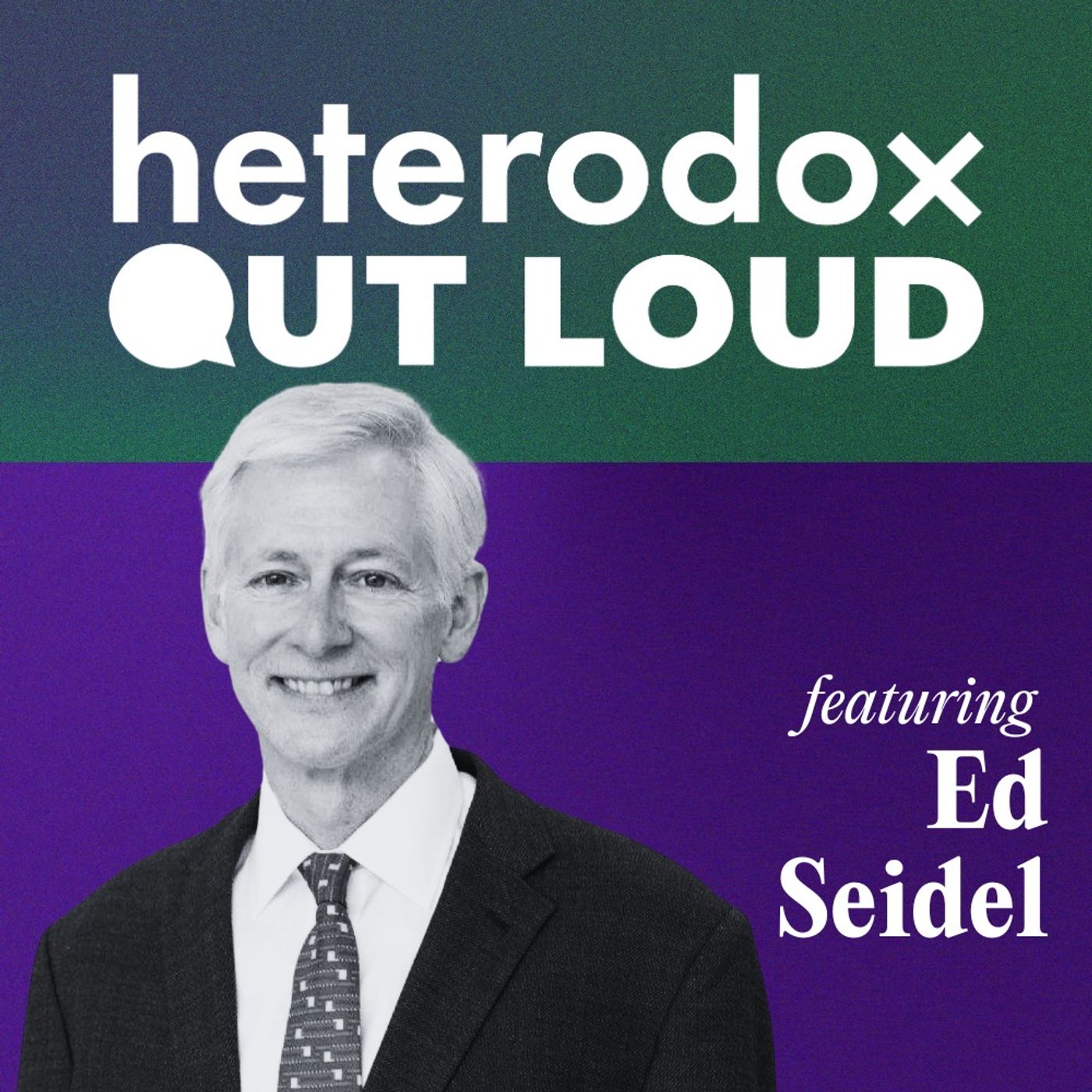
Can a Public University Stay Politically Neutral? with Ed Seidel | Ep 43
Feb 24, 2026
Unknown duration
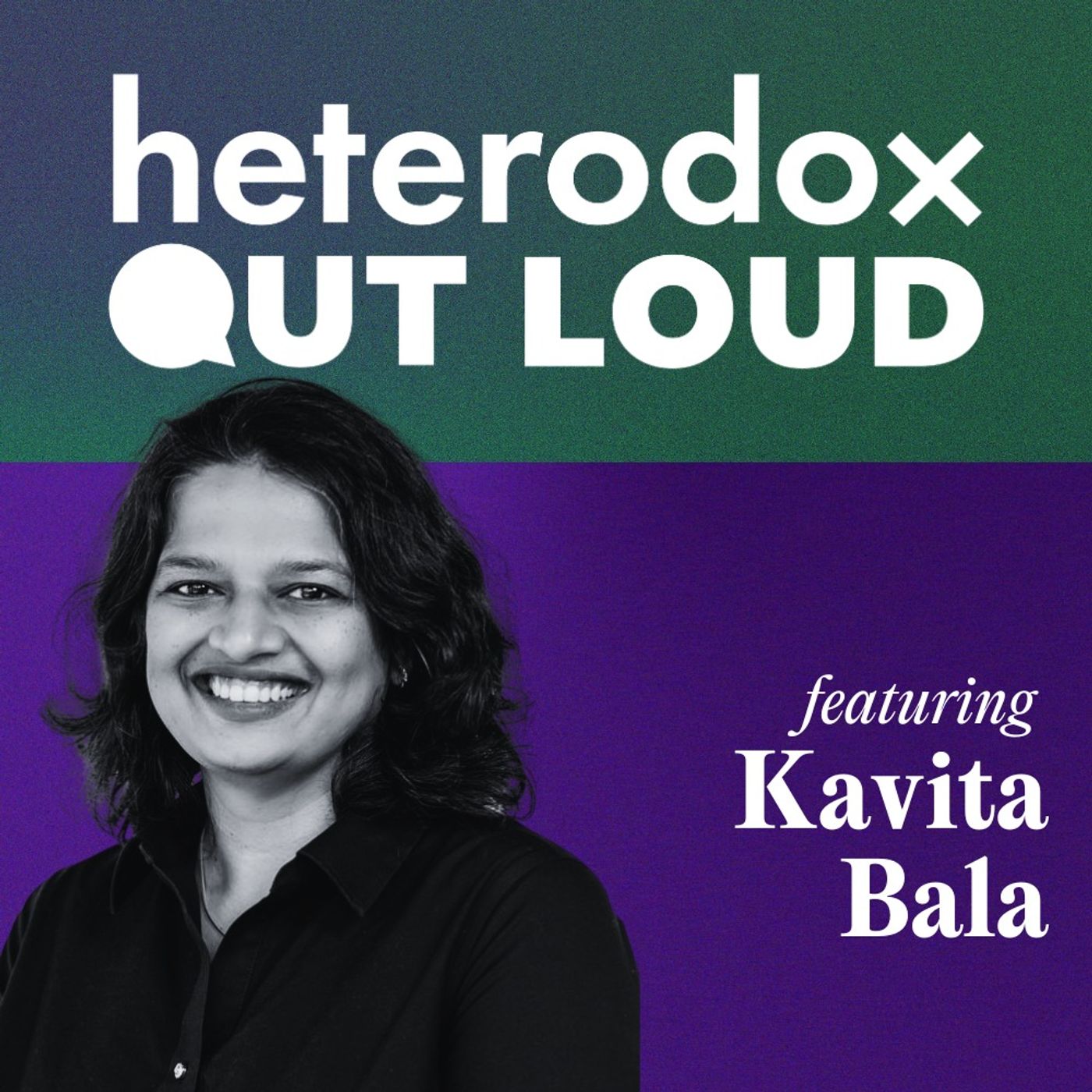
The University in the Age of AI: Rebuilding Trust, Truth, and Teaching with Kavita Bala | Ep 42
Jan 27, 2026
Unknown duration
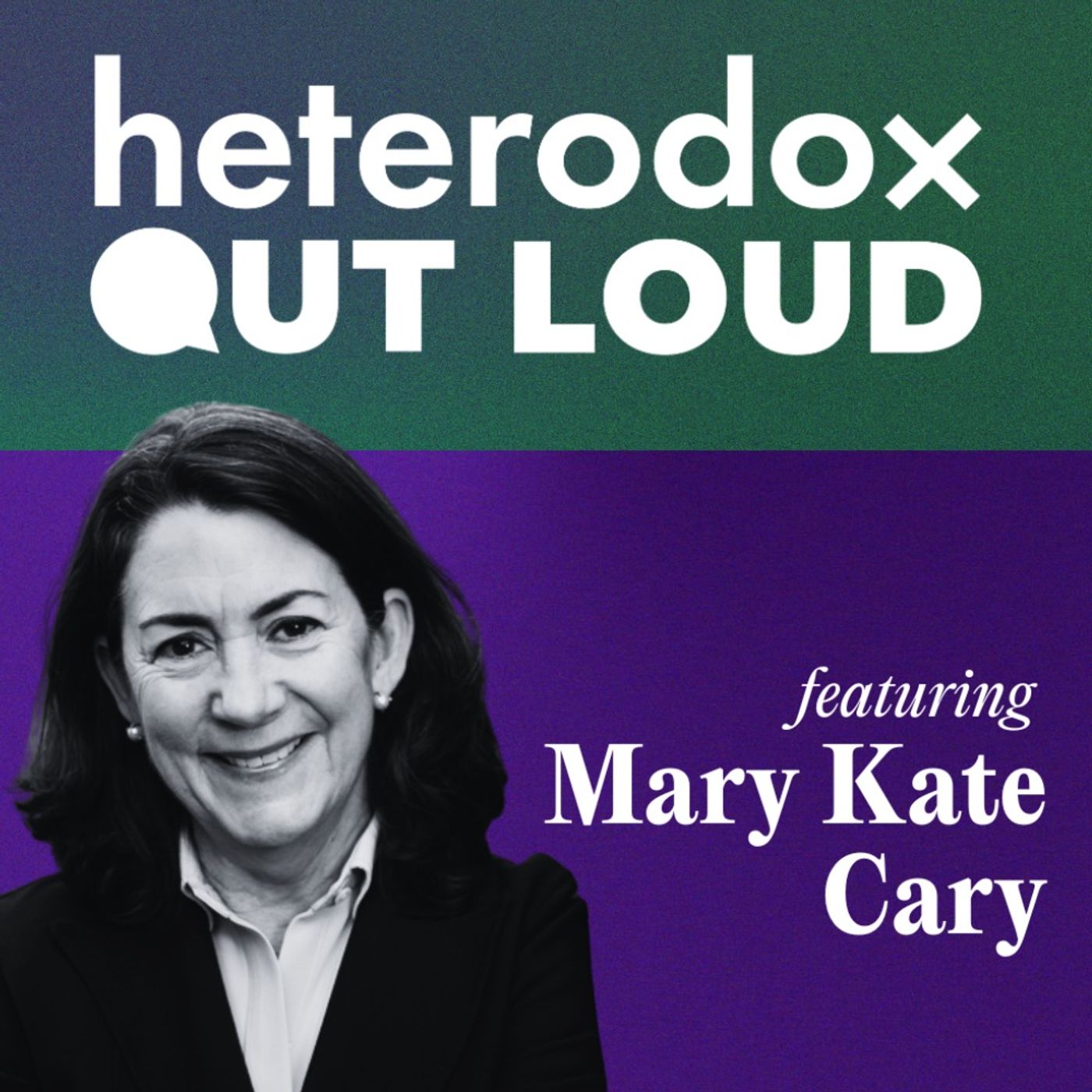
Can Universities Change Without Government Intervention? With Mary Kate Cary | Ep 41
Dec 16, 2025
Unknown duration
Social Links & Contact
Official channels & resources
Official Website
Login
RSS Feed
Login
| Date | Episode | Topics | Guests | Brands | Places | Keywords | Sponsor | Length | |
|---|---|---|---|---|---|---|---|---|---|
| 4/21/26 | ![]() The Field That Studies Groupthink Is Captured by It | Ep 45✨ | groupthinkintellectual diversity+5 | Smriti Mehta | UC BerkeleyHeterodox Academy | — | groupthinkintellectual homogeneity+6 | — | 45m 29s | |
| 3/31/26 | ![]() Universities Have a Trust Problem. This President Is Trying to Fix It | Ep 44 | Is higher education losing public trust, and what can universities do about it? Today on Heterodox Out Loud, Sian Beilock, President of Dartmouth College, joins John Tomasi to confront one of the most urgent challenges facing universities today: a growing crisis of confidence among the American public. Drawing on her background in cognitive science and leadership under pressure, Beilock explains why trust is declining and what universities must do to restore it. From free expression policies and institutional neutrality to student culture and viewpoint diversity, this conversation explores how universities can return to their core mission: truth-seeking and education. Offering a unique, insider's view, the discussion explores how a university president manages the conflicting pressures of a polarized age. It delves into real-world scenarios, including campus protests, speech disruptions, faculty relationships, and external pressure from the government. In This Episode: 💥 Why 7 in 10 Americans distrust higher education 💥 The role of affordability, ROI, and ideological concerns 💥 How Dartmouth is implementing institutional restraint 💥 Where free speech ends and disruption begins 💥 Why students are hungry for real dialogue, not echo chambers 💥 What “viewpoint diversity” actually means in practice 💥 How universities can reform without political capture Whether you’re a student, faculty member, policymaker, or simply interested in the future of higher education, this episode offers a clear-eyed and principled roadmap forward. New Yorker Article About Sian Beilock: Sian Leah Beilock is the 19th president of Dartmouth College, an Ivy League institution and one of the nation’s leading research universities. She is the first woman elected president of Dartmouth by the Board of Trustees and began her tenure on June 12, 2023. A distinguished cognitive scientist, Beilock is one of the world’s foremost experts on performance under pressure, a member of the American Academy of Arts & Sciences and the National Academy of Medicine, and the recipient of the 2017 Troland Award from the National Academy of Sciences. She has authored over 120 peer-reviewed papers and two books: Choke and How the Body Knows Its Mind. Before Dartmouth, she served as president of Barnard College at Columbia University and as executive vice provost at the University of Chicago. Follow Heterodox Academy on:Twitter: https://bit.ly/3Fax5DyFacebook: https://bit.ly/3PMYxfwLinkedIn: https://bit.ly/48IYeuJInstagram: https://bit.ly/46HKfUgSubstack: https://bit.ly/48IhjNF 🔗 Find out more about Heterodox Academy at: https://linktr.ee/heterodoxoutloud | — | ||||||
| 2/24/26 | ![]() Can a Public University Stay Politically Neutral? with Ed Seidel | Ep 43 | At a moment when public trust in higher education is faltering and “diversity” has become a politically charged word, University of Wyoming President Ed Seidel argues that universities must return to first principles: truth-seeking, intellectual humility, and viewpoint diversity. Today on Heterodox Out Loud, host John Tomasi speaks with Ed Seidel about how a public land-grant university can defend free speech, uphold institutional neutrality, and navigate state pressure around DEI, without abandoning its core academic mission. | — | ||||||
| 1/27/26 | ![]() The University in the Age of AI: Rebuilding Trust, Truth, and Teaching with Kavita Bala | Ep 42 | At a moment when higher education faces accelerating technological disruption and intensifying public scrutiny, Cornell Provost Kavita Bala argues that universities must do two things at once: defend their truth-seeking mission with renewed clarity, and reimagine how they teach, research, and engage society in an era shaped by AI, polarization, and declining trust. | — | ||||||
| 12/16/25 | ![]() Can Universities Change Without Government Intervention? With Mary Kate Cary | Ep 41 | How can universities rekindle public trust and foster genuine viewpoint diversity, without relying on government mandates? Today’s guest is Mary Kate Cary, adjunct professor at the University of Virginia (UVA), seasoned presidential speechwriter, and co-chair of Heterodox Academy’s campus community at UVA. John Tomasi and Mary Kate examine the urgent need to move beyond top-down reforms and build cultures of open inquiry from the ground up.Drawing on recent Gallup polling that shows public confidence in higher education has plummeted from 60% to 32%, Mary Kate argues for bottom-up solutions rooted in the distinctive ethos and history of each campus. She shares examples of innovative, student-facing programming at UVA, such as “Think Again,” “Free Speech Fridays,” and “Disagree with the Professor,” that encourage intellectual humility, critical thinking, and constructive disagreement.The conversation provides actionable insights for faculty, administrators, and students committed to strengthening open inquiry and viewpoint diversity, highlighting the role of both faculty leadership and supportive administration in achieving durable change. In This Episode:💥 Public trust and viewpoint diversity in higher education💥 Adapting free speech principles to unique campus histories💥 Bottom-up versus top-down academic reforms💥 Student engagement initiatives: “Think Again” and “Free Speech Fridays”💥 Co-teaching across political divides at UVA💥 Institutional neutrality and its impact on campus culture💥 Partnerships with BridgeUSA, Braver Angels, and Disagree Better About Mary Kate:Mary Kate Cary is Deputy Chief of Staff for Communications and Strategic Initiatives in the Office of the Interim President at the University of Virginia and a long-time advocate for open inquiry, free speech, and viewpoint diversity on campus. She previously served as an adjunct professor in UVA’s Politics Department, where she taught courses on political speechwriting, the greatest speeches in American history, and co-taught a bipartisan election class. Cary is the founding director of Think Again at UVA, a student-facing initiative promoting free speech, critical thinking, and respectful debate, and she co-chairs the Heterodox Academy Campus Community at UVA, one of the largest chapters of the organization. Before her work in higher education, Cary was a White House speechwriter for President George H.W. Bush and has worked as a political commentator, professional speaker, and writer. She was a recipient of the 2024 Heterodox Academy Open Inquiry Leadership Award for her efforts in advancing open inquiry and constructive disagreement on campus.Follow Mary Kate on X: https://x.com/mkcary Follow Heterodox Academy on:Twitter: https://bit.ly/3Fax5DyFacebook: https://bit.ly/3PMYxfwLinkedIn: https://bit.ly/48IYeuJInstagram: https://bit.ly/46HKfUgSubstack: https://bit.ly/48IhjNF 🔗 Find out more about Heterodox Academy at: https://linktr.ee/heterodoxoutloud | — | ||||||
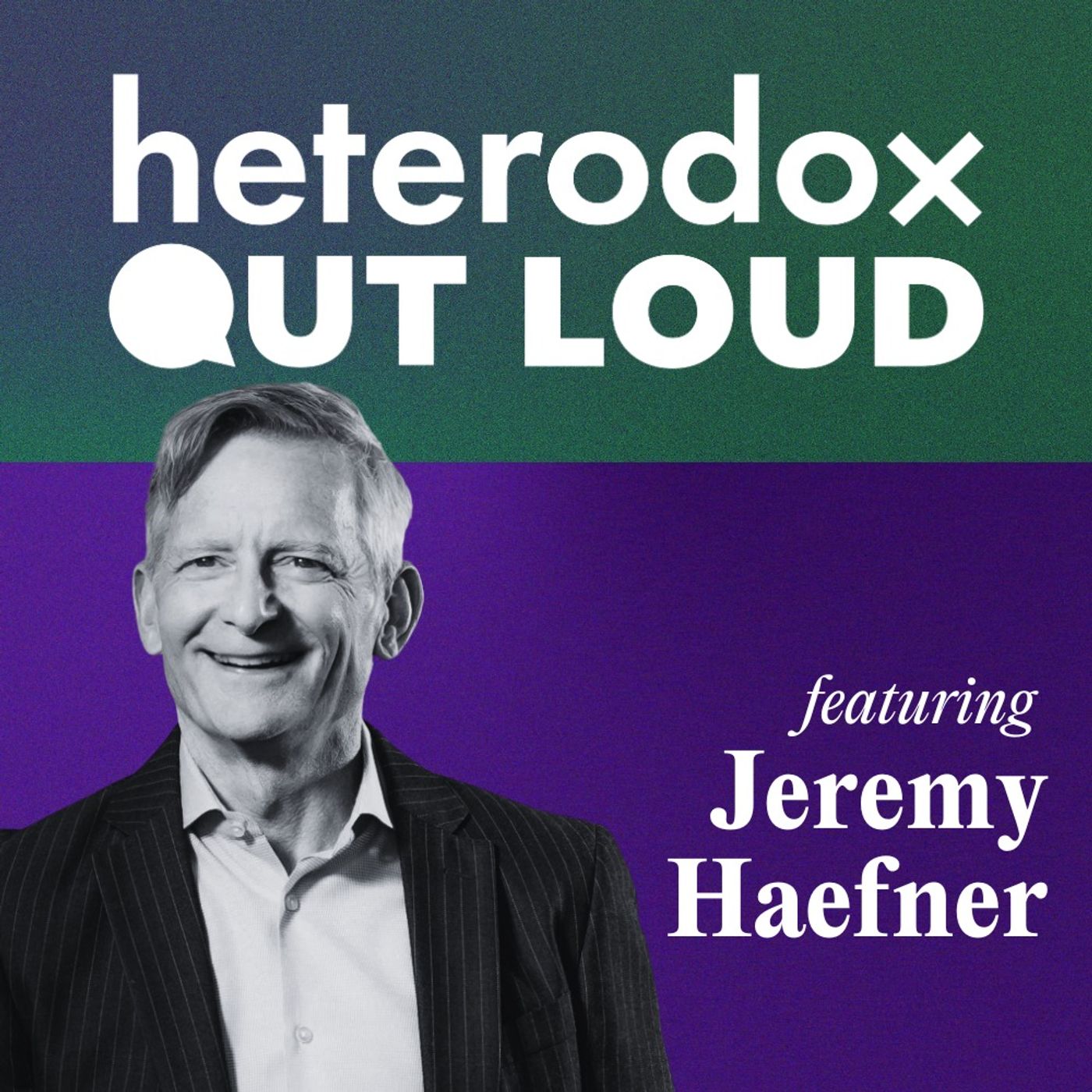
| 11/18/25 | ![]() Embracing Disagreement and Diversity at the University of Denver with Jeremy Haefner | Ep 40 | What does it take to build a university where open inquiry is not just protected, but actively practiced? In this wide-ranging episode, University of Denver Chancellor Jeremy Haefner offers a rare, candid look at the challenges and opportunities of transforming campus culture in a polarized era. From institutional neutrality to civil discourse, from pluralism to DEI reform, Haefner shares how the University of Denver is attempting to lead higher education into its next chapter. Today, John Tomasi, President of Heterodox Academy, speaks with Haefner about DU’s ambitious initiatives aimed at strengthening the university’s core commitments to open inquiry, viewpoint diversity, and constructive disagreement. Haefner discusses the Denver Dialogues, a flagship program that brings scholars with divergent perspectives into sustained engagement with students; Debate Across the Curriculum, a faculty-led innovation that measurably shifts students’ readiness to engage across differences; and Spark Day, DU’s annual celebration of free expression and civil discourse. The conversation also probes deeply into Haefner’s decision to adopt a policy of institutional neutrality, the university’s response to the Trump Administration’s directives on DEI, and the complexities of balancing inclusion with the truth-seeking mission of the academy. Tune in to explore how universities can renew their mission, and why pluralism matters now more than ever. In This Episode:💥 Building a culture of open inquiry across an entire university.💥 The Denver Dialogues and pluralism-driven campus programming.💥 Evidence-based impacts of Debate Across the Curriculum.💥 Institutional neutrality and the Calvin Report tradition.💥 DEI reform and the challenge of aligning inclusion with open inquiry.💥 The launch of the National Academy for Free Expression and Pluralism. About Jeremy:Jeremy Haefner is the 19th Chancellor of the University of Denver, appointed to the role in 2019 after serving as the university’s provost and executive vice chancellor. He holds a PhD in mathematics from the University of Wisconsin–Madison, and began his academic career as a professor before moving into administrative leadership.Prior to joining DU, he served as provost and senior vice president for academic affairs at the Rochester Institute of Technology, and spent two decades at the University of Colorado–Colorado Springs in a variety of academic and administrative roles. His leadership work has included areas such as faculty development, research support, international education, and interdisciplinary program design.At the University of Denver, Haefner has overseen strategic efforts focused on academic transformation, civic engagement, student belonging, and the development of a comprehensive undergraduate experience. His tenure has included the launch of initiatives aimed at strengthening open inquiry and free expression on campus, alongside adjustments to institutional policy in response to changes in the legal and political landscape surrounding higher education.Follow Jeremy on X: https://x.com/DU_chancellor Follow Heterodox Academy on:Twitter: https://bit.ly/3Fax5DyFacebook: https://bit.ly/3PMYxfwLinkedIn: https://bit.ly/48IYeuJInstagram: https://bit.ly/46HKfUgSubstack: https://bit.ly/48IhjNF 🔗 Find out more about Heterodox Academy at: https://linktr.ee/heterodoxoutloud | — | ||||||
| 10/7/25 | ![]() Rebuilding Trust in Higher Ed with Chancellor Andrew Martin | Ep 39 | Can colleges be engines of rigorous civil debate, or are self-censorship and fear stifling the next generation of thinkers? Today, we welcome Chancellor Andrew Martin of Washington University in St. Louis, a leading scholar and administrator recognized for reshaping institutional culture at the highest levels of academia. Chancellor Martin discusses his strategic initiatives to foster a climate of rigorous, principled debate and constructive disagreement at WashU, ranging from the creation of the "Dialogue Across Difference" program to groundbreaking admissions policies that increase socioeconomic and ideological diversity. He unpacks the recently released Vanderbilt–WashU Statement of Principles, a collaborative effort with Vanderbilt University, aimed at recommitting academic institutions to the foundational pillars of excellence, academic freedom, and free expression. Explore how WashU’s Order of Liberty and cluster faculty hiring initiatives promote diverse perspectives, incorporating both liberal and civic virtue frameworks. Understand how institutional neutrality, along with dialogue and engagement, fosters a dynamic academic community. In This Episode:💥 The Vanderbilt–WashU Statement of Principles and institutional neutrality.💥 WashU’s Dialogue Across Difference program.💥 Admissions reforms and Pell Grant expansion for socioeconomic diversity.💥 The Order of Liberty Project and faculty hiring for ideological diversity.💥 Challenges and responsibilities of academic freedom and self-censorship. About Andrew:Andrew D. Martin is the 15th chancellor of Washington University in St. Louis, inaugurated on October 3, 2019. He previously served as dean of the College of Literature, Science, and the Arts at the University of Michigan from 2014 to 2018 and is a political scientist known for the Martin-Quinn scores used to study U.S. Supreme Court ideology. At WashU, he launched access initiatives, including the WashU Pledge and Gateway to Success, and moved the university to a no-loan undergraduate aid policy. In fall 2024, he co-signed a Statement of Principles with Vanderbilt Chancellor Daniel Diermeier, adopted by both universities’ boards, affirming free expression, academic freedom, and institutional neutrality. In September 2025, he launched the Ordered Liberty Project to advance academic freedom, viewpoint diversity, and civic education.Follow Andrew on X: https://x.com/washuchancellor Follow Heterodox Academy on:Twitter: https://bit.ly/3Fax5DyFacebook: https://bit.ly/3PMYxfwLinkedIn: https://bit.ly/48IYeuJInstagram: https://bit.ly/46HKfUgSubstack: https://bit.ly/48IhjNF 🔗 Find out more about Heterodox Academy at: https://linktr.ee/heterodoxoutloud | — | ||||||
| 6/17/25 | ![]() Faith, Fear, and the Future of Democracy with Jonathan Rauch | Ep 38 | Why does a self-described “gay, atheistic Jewish guy” argue that America needs more Christianity right now? In this thought-provoking episode, Jonathan Rauch, author, Brookings Institution senior fellow, and newly appointed board member of Heterodox Academy, joins host John Tomasi for an insightful discussion recorded in Washington, D.C. Jonathan reflects on his new book, Cross Purposes, a contrarian apology for the Christian values that once helped sustain both American self-government and its universities. Drawing from personal narratives, constitutional history, and contemporary social fractures, Rauch argues that the decline of robust, virtue-based Christianity and the politicization of faith have contributed to polarization, anxiety, and a crisis of institutional trust. Jonathan and John discuss Tocqueville’s analysis of individualism, the “God-shaped hole” now filled by less constructive substitutes, and what both faith and scholarship can contribute to a pluralistic republic. Join us for the conversation and explore practical and philosophical pathways to revive the transformative power of both religious and academic institutions. In This Episode:💥 Three core Christian virtues as a civic foundation💥 The perils of “thin,” “sharp,” and “thick” Christianity💥 Tocqueville, individualism, and the promise of civil society💥 The hollowing of purpose and scholarly virtue in higher education💥 Faith, viewpoint diversity, and restoring vibrant campus culture💥 Challenges and opportunities for self-reform in academia Read Jonathan’s latest book, Cross Purposes: https://a.co/d/dRaWsfLCheck out more about the Brookings Institution: https://www.brookings.edu/ About Jonathan:Jonathan Rauch is a senior fellow at the Brookings Institution and a contributing writer for The Atlantic, renowned for his incisive commentary on public policy, culture, and governance. He has authored several influential books, including The Constitution of Knowledge: A Defense of Truth (2021), which delves into the challenges of disinformation and the importance of truth in democratic societies. His latest book, Cross Purposes: Christianity's Broken Bargain with Democracy (2025), examines the evolving relationship between American Christianity and liberal democracy, arguing that the decline of religious institutions has significant implications for democratic health. Rauch's extensive body of work reflects his commitment to exploring complex societal issues, making him a prominent voice in contemporary discussions on democracy, religion, and public discourse. In January 2025, Rauch was appointed to the Board of Directors of Heterodox Academy (HxA), Follow Jonathan on X: https://x.com/jon_rauch============================ Follow Heterodox Academy on:Twitter: https://bit.ly/3Fax5DyFacebook: https://bit.ly/3PMYxfwLinkedIn: https://bit.ly/48IYeuJInstagram: https://bit.ly/46HKfUgSubstack: https://bit.ly/48IhjNF 🔗 Find out more about Heterodox Academy at: https://linktr.ee/heterodoxoutloud | — | ||||||
| 6/3/25 | ![]() How Can We Fix Our Universities Without Burning Them Down? With Michael Roth | Ep 37 | Trust in universities has cratered, ideological divisions are deepening, and the future of higher education is hotly contested. How do we repair our academic institutions without tearing them down entirely? Today on Heterodox Out Loud, host John Tomasi welcomes Michael Roth, President of Wesleyan University, historian, and esteemed thought leader on liberal education, for a frank and probing dialogue. Drawing on recent Gallup polling data, Michael and John examine the collapse of public trust in higher education, particularly among conservatives, and the orchestrated efforts across the spectrum to delegitimize academic institutions. Michael discusses the double bind facing universities: the hard-won gains in gender, racial, and religious inclusion overlaying a stark decline in viewpoint and ideological diversity among faculty and students. The discussion traverses the enduring tensions between diversity, equity, and inclusion (DEI) initiatives and the imperative of open inquiry. Roth critiques both anti-elitist grievance-mongering and the insularity of academic circles, arguing for an educational environment that prizes rigorous debate, intellectual pluralism, and genuine mutual respect. Together, Tomasi and Roth confront thorny questions: How do universities maintain their relevance in a polarized society? Is the narrowing of acceptable discourse stifling academic innovation? And what role should university leaders play amid mounting political interventions and societal pressures? In This Episode:💥 Declining trust in higher education due to perceptions of elitism and delegitimation💥 Grievance politics influencing perspectives from both the left and right💥 Reduced viewpoint and ideological diversity among faculty members💥 Overreaching DEI initiatives leading to unintended consequences💥 Structural barriers hindering ideological pluralism in hiring and admissions practices💥 University leadership's role in managing political pressure and rebuilding trust through debate About Michael:Michael S. Roth, a historian, curator, and advocate for liberal education, has served as the 16th president of Wesleyan University since July 1, 2007. An alumnus of Wesleyan (Class of 1978), graduating summa cum laude and Phi Beta Kappa, before earning a Ph.D. in history from Princeton University in 1984.Before returning to Wesleyan, Roth held several prominent academic positions, including president of the California College of the Arts, associate director of the Getty Research Institute, and founding director of the Scripps College Humanities Institute. His scholarly work focuses on how individuals and societies interpret the past, and he has authored numerous books, such as Beyond the University: Why Liberal Education Matters and Safe Enough Spaces: A Pragmatist’s Approach to Inclusion, Free Speech, and Political Correctness on College Campuses.A vocal proponent of academic freedom, Roth has been recognized for his defense of higher education institutions against political pressures. In 2025, he received the PEN/Benenson Courage Award for his commitment to upholding the independence of colleges and universities. Follow Michael on X: https://x.com/mroth78 Follow Heterodox Academy on:Twitter: https://bit.ly/3Fax5DyFacebook: https://bit.ly/3PMYxfwLinkedIn: https://bit.ly/48IYeuJInstagram: https://bit.ly/46HKfUgSubstack: https://bit.ly/48IhjNF 🔗 Find out more about Heterodox Academy at: https://linktr.ee/heterodoxoutloud | — | ||||||
| 5/20/25 | ![]() Can This AI Tool Save Campus Dialogue? With Simon Cullen | Ep 36 | Can artificial intelligence transform how we navigate the most challenging dialogues on campus? Join us for a thought-provoking episode featuring philosopher and educator Simon Cullen, as he unveils his pioneering work at the intersection of education, technology, and constructive disagreement.In conversation with John Tomasi, Simon explores how open inquiry is both advanced and imperiled by disagreement, and describes his academic journey from Australia to Princeton and Carnegie Mellon. Central to the discussion is ‘Sway’ an AI-powered platform developed by Simon and his team to foster rigorous, evidence-based dialogue among students on controversial topics. Sway intelligently pairs students with opposing views and acts as a “guide on the side,” scaffolding reasoning, encouraging intellectual humility, and ensuring that exchanges remain constructive and charitable. Simon shares the empirical findings from thousands of Sway-mediated dialogues, where measurable increases in students’ openness, comfort, and analytical reasoning have been observed—even on divisive subjects like gender, immigration, and the Israel-Palestine conflict. In This Episode:💥 The pedagogical importance of constructive disagreement and argument visualization💥 The design and implementation of Sway: an AI tool for dialogue across differences💥 Empirical research on autonomy, self-censorship, and openness to opposing viewpoints💥 Strategies for motivating student engagement in difficult conversations💥 Scalable, evidence-based methods for promoting viewpoint diversity in higher education Want to experience Sway for yourself? You can instantly start a conversation—no account, no signup, no hassle. Just generate a link, share it with a friend (or a friendly opponent), and jump straight into a thoughtful dialogue.Read more about research findings and reportsExplore Simon’s Argument Mapping Tool: Mindmup.com About Simon:Simon Cullen is a faculty member, Dean's Innovation Scholar, and Artificial Intelligence and Education Fellow at Carnegie Mellon University. He developed the award-winning "Dangerous Ideas in Science and Society" course and serves as founding co-chair of CMU's Heterodox Community. Simon's innovative research combines philosophy, cognitive science, and educational technology to improve reasoning and communication across moral and political divides. He is the co-developer of "Sway,” a chat platform that uses AI to facilitate constructive dialogue between students with differing viewpoints. His research has been published in Science Advances, Nature Science of Learning, Cognition, and the Review of Philosophy and Psychology. He holds a Ph.D. from Princeton University and specializes in the psychology and pedagogy of reasoning, and evidence-based approaches to promoting open inquiry in higher education. Next year, Simon will be a Faculty Research Fellow at the Segal Center for Academic Pluralism in New York City.Learn more about Simon Follow Heterodox Academy on:Twitter: https://bit.ly/3Fax5DyFacebook: https://bit.ly/3PMYxfwLinkedIn: https://bit.ly/48IYeuJInstagram: https://bit.ly/46HKfUgSubstack: https://bit.ly/48IhjNF 🔗 Find out more about Heterodox Academy at: https://linktr.ee/heterodoxoutloud | — | ||||||
Want analysis for the episodes below?Free for Pro Submit a request, we'll have your selected episodes analyzed within an hour. Free, at no cost to you, for Pro users. | |||||||||
| 5/6/25 | ![]() Is Sociology Broken? Jukka Savolainen on Ideology and Reform | Ep 35 | How can sociology reclaim its commitment to rigorous inquiry and viewpoint diversity? Today, John Tomasi sits with Jukka Savolainen, Ph.D., Sociology professor at Wayne State University in Detroit, Michigan, and the moderator of the Heterodox Academy’s Sociology community. They discuss the discipline's current challenges, including ideological bias and lack of viewpoint diversity, and explore potential paths toward reform. Jukka shares his journey into sociology and his decision to leave Finland to pursue a PhD in the United States due to concerns about postmodernist influences in Finnish sociology. He addresses the core aims of sociology, its present state of fragmentation, and the impact of ideological bias on research and discourse. Jukka highlights the importance of empirical evidence and viewpoint diversity while pointing out taboos and restrictions on certain topics within the field.The conversation also examines the role of external interventions, using the example of the Danish government's restructuring of the sociology department at Copenhagen University in the 1980s, and the more recent actions by the state of Florida. In This Episode:💥 The ideological capture of sociology and its impact on research💥 The lack of viewpoint diversity in the field💥 The importance of empirical evidence and rigorous methodology💥 Efforts to reform sociology from within💥 The role of external intervention in addressing systemic problems💥 The case of Mark Regnerus's controversial study on same-sex parenting About Jukka:Jukka Savolainen is a professor of sociology and criminology at Wayne State University in Detroit, Michigan, holding a dual appointment in the departments of Sociology and Criminology & Criminal Justice. He earned his Ph.D. in sociology from the State University of New York at Albany and an M.Soc.Sci. from the University of Helsinki. His research focuses on criminology, demography, cross-national comparisons, and the sociology of violence. Savolainen has been a vocal critic of ideological conformity in academia, particularly within the field of sociology, and is an active member of Heterodox Academy, where he serves as a moderator of its sociology community. He has also contributed essays to outlets like Quillette and the National Association of Scholars, challenging prevailing narratives on race, policing, and academic freedom. Previously, Savolainen served as Director of the National Archive of Criminal Justice Data at the University of Michigan's Institute for Social Research. Follow Jukka on X: https://x.com/jukkasavo Follow Heterodox Academy on:Twitter: https://bit.ly/3Fax5DyFacebook: https://bit.ly/3PMYxfwLinkedIn: https://bit.ly/48IYeuJInstagram: https://bit.ly/46HKfUgSubstack: https://bit.ly/48IhjNF 🔗 Find out more about Heterodox Academy at: https://linktr.ee/heterodoxoutloud | — | ||||||
| 4/22/25 | ![]() How Universities Lost the Public—and How to Win Them Back with Jenna & Ben Storey | Ep 34 | How did America’s universities lose the trust of the public, and what will it take to restore faith in higher education? In this episode, we are joined by Benjamin and Jenna Storey, renowned scholars, co-authors, and directors at the American Enterprise Institute’s Program on the Future of the American University. Together with host John Tomasi, they undertake a searching examination of the forces eroding confidence in universities and offer a roadmap for rebuilding their legitimacy and civic purpose.The conversation draws on the Storeys’ personal journeys through academia, they explore how universities have shifted away from their civic mission, the implications of declining viewpoint diversity, and the urgent need to re-envision liberal education in a polarized era. Their discussion critically engages with recent initiatives, including the founding of university-level Schools of Civic Thought, and emphasizes both the perils and promise of institutional reform amidst increasing political and public scrutiny.Read the report: “Civic: A Proposal for University Level Civic Education” (AEI, December 2023) In This Episode:💥 The crisis of public trust and universities’ civic responsibilities💥 The decline of viewpoint and ideological diversity in academia💥 Innovative models for enhancing open inquiry and faculty diversity💥 The case for new academic structures—Schools of Civic Thought💥 Navigating political pressures and governmental reform efforts💥 The enduring value of liberal education and practical wisdom About Benjamin & Jenna:Benjamin Storey, Ph.D, is a senior fellow in Social, Cultural, and Constitutional Studies at the American Enterprise Institute (AEI). He is concurrently a research fellow at the Civitas Institute at the University of Texas at Austin. At AEI, he focuses on the culture of higher education, the nature of liberal and civic education, and efforts to enhance viewpoint diversity on college and university campuses. He co-organizes AEI’s conference series on the Future of the American University and its workshop on the Conservative Intellectual Tradition for University Faculty.Jenna Silber Storey, Ph.D, is a senior fellow in the Social, Cultural, and Constitutional Studies department at the American Enterprise Institute (AEI), where she concentrates on political philosophy, civil society, classical schools, and higher education. She is also the co-organizer of a conference series on the future of the American university. Dr. Storey is concurrently a research fellow at the Civitas Institute at the University of Texas at Austin, and a Tocqueville scholar at Furman University, where she was previously research professor, assistant professor in politics and international affairs, and the executive director of the Tocqueville Program.Dr. Storey is the coauthor, with her husband, Benjamin Storey, of Why We Are Restless: On the Modern Quest for Contentment (Princeton University Press, 2021). Together, the Storeys are working on a book titled The Art of Choosing: How Liberal Education Should Prepare You for Life. Follow Heterodox Academy on:Twitter: https://bit.ly/3Fax5DyFacebook: https://bit.ly/3PMYxfwLinkedIn: https://bit.ly/48IYeuJInstagram: https://bit.ly/46HKfUgSubstack: https://bit.ly/48IhjNF 🔗 Find out more about Heterodox Academy at: https://linktr.ee/heterodoxoutloud | — | ||||||
| 4/8/25 | ![]() Trump vs. Academia: Inside the Battle Over Campus Speech with Joe Cohn | Ep 33 | Where should the line be drawn between the government's role in stopping discrimination and a university's right to run itself? Today on Heterodox Out Loud, John Tomasi sits down with Joe Cohn, Policy Director at Heterodox Academy, to discuss the complexities of federal intervention in higher education.Cohn, a First Amendment expert, delves into the implications of recent federal actions, including those by the Trump administration, to combat anti-Semitism and enforce Title VI of the Civil Rights Act. They explore the tension between academic freedom and the necessity of preventing discrimination, examining specific cases of funding pauses and immigration enforcement actions. Cohn argues for procedural rigor in federal oversight to protect both institutional autonomy and individual rights, advocating for persuasion over censorship in addressing bigotry. In This Episode:💥 Trump’s policies on DEI and gender ideology 💥 How Title VI enforcement impacts university funding 💥 Free speech vs. discrimination on campus 💥 Immigration enforcement and academic freedom 💥 Importance of constructive disagreement and viewpoint diversity About Joe:Joe Cohn is the inaugural Director of Policy at Heterodox Academy, where he leads efforts to advance open inquiry, viewpoint diversity, and constructive disagreement through institutional and legislative reforms in higher education. An attorney specializing in civil liberties, Joe holds a JD and a Master’s in Government Administration from the University of Pennsylvania. He has served as a staff attorney for the U.S. Court of Appeals for the Third Circuit, the AIDS Law Project of Pennsylvania, and as interim legal director for ACLU affiliates in Nevada and Utah. He also taught trial advocacy as an adjunct professor at Penn Law. Before joining HxA, Joe spent 12 years as Legislative and Policy Director at the Foundation for Individual Rights (FIRE), where he led a team focused on free speech and civil liberties in higher education, regularly engaging lawmakers and testifying nationwide. Follow Joe on X:https://x.com/JoeCohnHxA Follow Heterodox Academy on:Twitter: https://bit.ly/3Fax5DyFacebook: https://bit.ly/3PMYxfwLinkedIn: https://bit.ly/48IYeuJInstagram: https://bit.ly/46HKfUgSubstack: https://bit.ly/48IhjNF 🔗 Find out more about Heterodox Academy at: https://linktr.ee/heterodoxoutloud | — | ||||||
| 3/18/25 | ![]() Confronting Anti-Semitism in Higher Education with Cary Nelson | Ep 32 | What does it mean for a university to become a battleground against deep-seated prejudices and historical tensions? In today’s episode, we dive into these challenging questions with our distinguished guest, Cary Nelson, a celebrated scholar and ardent advocate for academic freedom.Nelson shares his insights on the intersection of anti-Zionism and anti-Semitism in academia, a topic explored in his new book, "Mindless: What Happened to Universities?" The conversation examines how the lines between critique of Israel and hostility towards Jewish students blur, becoming toxic and divisive forces across campuses, from historical shifts that turned post-1948 anti-Zionism into a rejection of Israel's existence to the phenomenon of hatred and the campus protests that undermine foundational academic values. Nelson calls for reclaiming the core purpose of academia as a community of imperfect learners where dialogue and understanding prevail. In This Episode:Historical context of anti-Zionism and its transformation into anti-SemitismThe unique pressures faced by Jewish students on campusesThe role of social media in spreading campus protestsDistinctions between psychological and intellectual safety in AcademiaThe undermining of the university's role as a space for diverse perspectives About Cary:Cary Nelson is Jubilee Professor of Liberal Arts & Sciences Emeritus at the University of Illinois at Urbana-Champaign and an affiliated faculty member at the University of Haifa. He holds an honorary doctorate from Ben Gurion University of the Negev. Over his distinguished career, Nelson has authored or edited 36 books and published over 400 essays, focusing on modern poetry, critical theory, the politics of higher education, and issues related to antisemitism and the Israeli-Palestinian conflict. From 2006 to 2012, he served as president of the American Association of University Professors (AAUP), advocating for academic freedom and shared governance. Nelson’s latest work, “Mindless: What Happened to Universities?”, published on March 6, 2025, examines how universities have deviated from their commitment to shared intellectual principles, leading to environments where extremism and intolerance can flourish. Follow Heterodox Academy on:Twitter: https://bit.ly/3Fax5DyFacebook: https://bit.ly/3PMYxfwLinkedIn: https://bit.ly/48IYeuJInstagram: https://bit.ly/46HKfUgSubstack: https://bit.ly/48IhjNF 🔗 Find out more about Heterodox Academy at: https://linktr.ee/heterodoxoutloud | — | ||||||
| 3/4/25 | ![]() How Trump’s Policy Shift is Reshaping Scientific Research with Ivan Oransky | Ep 31 | How is Trump's executive order redefining the language permissible in scientific research, and what does it mean for academic freedom? Today, we examine the complexities surrounding scientific research under shifting political landscapes with Ivan Oransky, a seasoned medical journalist and co-founder of Retraction Watch. Oransky discusses the implications of President Trump's executive orders and how it has sent ripples throughout the scientific community, causing researchers to reconsider their work amidst existential uncertainties. Oransky explores the nuanced relationship between government funding and scientific inquiry. This episode unpacks the historical precedents of government involvement in research, tracing back to the 1940s, and examines the mounting challenges faced by scientists under the recent policy changes. Oransky provides a critical analysis of how such directives potentially stifle open inquiry and drive talented researchers away, ultimately impacting the future landscape of scientific discovery. In This Episode:Implications of Trump's executive orders on scientific researchHistorical context of government funding in scientific researchThe impact of political climates on scientific inquiry and transparencyChallenges of anticipatory obedience within research communitiesIvan Oransky's insights on sustaining open and rigorous scientific dialogue About Ivan:Ivan Oransky, MD, is the co-founder of Retraction Watch, the Editor in Chief of The Transmitter, and a Distinguished Journalist in Residence at New York University’s Carter Journalism Institute, where he teaches medical journalism. He has held leadership positions at Medscape, MedPage Today, Reuters Health, Scientific American, and The Scientist. A former president of the Association of Health Care Journalists from 2017 to 2021, Oransky earned his bachelor’s degree from Harvard and an MD from NYU School of Medicine. His contributions to biomedical communication have earned him accolades, including the John P. McGovern Award and commendation from the John Maddox Prize judges for his work at Retraction Watch. Read HXA's newsletter Free the Inquiry: https://heterodoxacademy.substack.com/Follow Ivan on X: https://x.com/ivanoransky Follow Heterodox Academy on:Twitter: https://bit.ly/3Fax5DyFacebook: https://bit.ly/3PMYxfwLinkedIn: https://bit.ly/48IYeuJInstagram: https://bit.ly/46HKfUgSubstack: https://bit.ly/48IhjNF 🔗 Find out more about Heterodox Academy at: https://linktr.ee/heterodoxoutloud | — | ||||||
| 2/18/25 | ![]() Navigating Polarization in Mental Health Care with Andrew Hartz | Ep 30 | What happens when mental health care becomes intertwined with prevailing political ideologies and biases? Today on Heterodox Out Loud, we’re joined by Andrew Hartz, president and founder of the Open Therapy Institute and a long-term member of Heterodox Academy. Andrew joins John Tomasi to explore the increasing prevalence of sociopolitical bias within the realm of mental health therapy. Andrew shares his motivations for founding the Open Therapy Institute, highlighting the concerning shifts in therapy practices caused by activist-oriented approaches and sociopolitical biases. He discusses the need for a more balanced, patient-centered therapeutic approach that respects diverse perspectives without conflating therapy with broader ideological battles. Andrew sheds light on the startling trend of therapists dismissing patients due to their political views and the broader issue of bias pervading mental health training and practice. In This Episode:The rise of sociopolitical bias in mental health therapyThe four levels of bias impacting therapistsThe incompatibility of patient-centered therapy with politically driven judgmentThe influence of activist-oriented norms in therapeutic contextsThe role and objectives of the Open Therapy InstituteViewpoint diversity and the challenges faced by conservative therapists For more insights and updates from the Open Therapy Institute, visit their website: https://www.opentherapyinstitute.org/ About Andrew:Andrew Hartz, Ph.D, is a practicing clinical psychologist. He was formerly a professor in the clinical psychology doctoral program at Long Island University, where he also completed his Ph.D. He completed his clinical internship at Columbia University Medical Center, and he also completed training at Mount Sinai Hospital and the William Alanson White Institute. For several years, he’s written about political issues and mental health for outlets such as the Wall Street Journal, City Journal, Discourse, the Federalist, Real Clear Education, Heterodox Academy, and the New York Post. Follow Andrew on X: https://x.com/Hartz_PhD Follow Heterodox Academy on:Twitter: https://bit.ly/3Fax5DyFacebook: https://bit.ly/3PMYxfwLinkedIn: https://bit.ly/48IYeuJInstagram: https://bit.ly/46HKfUgSubstack: https://bit.ly/48IhjNF 🔗 Find out more about Heterodox Academy at: https://linktr.ee/heterodoxoutloud | — | ||||||
| 2/4/25 | ![]() The Power of Radical Curiosity: Can Conversation Reduce Hate with Shira Hoffer | Ep 29 | Can meaningful conversations bridge the divide in a polarized world? In today's episode, we explore the transformative power of radical curiosity with Shira Hoffer, a senior at Harvard University and founder of the Institute for Multipartisan Education. Join host John Tomasi, as they delve into the potential of dialogue in reducing societal hate and fostering understanding. | — | ||||||
| 1/21/25 | ![]() How Critical Legal Studies Transformed Law Schools with Rebecca Roiphe | Ep 28 | What happens when the principles of law clash with evolving ideologies in academia? Join us today as we delve into the transformative journey of legal education with Rebecca Roiphe, a lawyer, visiting fellow at the Siegel Center for Academic Pluralism, and author of the upcoming book, "The Devil's Advocate: How Law Schools Abandoned the Law." | — | ||||||
| 1/7/25 | ![]() The Battle for Impartial Science with Anna Krylov | Ep 27 | Can the ideological emphasis on Diversity, Equity, and Inclusion (DEI) slow down the progress of science? Our guest today is Anna Krylov, professor of chemistry at the University of Southern California and an advocate for maintaining meritocracy in scientific funding and evaluation. She joins John Tomasi to discuss critical tensions in today's scientific landscape. | — | ||||||
| 12/10/24 | ![]() Heterodoxy in High Schools: Lessons from Deerfield Academy with John Austin | Ep 26 | How do schools navigate the complexities of inclusion, polarization, and freedom of expression while fostering a vibrant learning environment? Today, John Austin, Head of School at Deerfield Academy, joins Heterodox Out Loud to explore these questions and share insights from the groundbreaking report, Thriving in a World of Pluralistic Contention: A Framework for Schools. | — | ||||||
| 11/26/24 | ![]() The Golden Era of Jewish-Muslim Dialogue: What Can We Learn Today? with Elisha Russ-Fishbane | Ep 25 | How did a classicist's journey through Greco-Roman literature and Arabic studies shape his unique approach to academia? Today's episode features Elisha Russ-Fishbane, associate professor at NYU and research director at the Center for the Study of Antisemitism. | — | ||||||
| 11/12/24 | ![]() From Wokeness to Pluralism: A New Vision for Universities with Eboo Patel | Ep 24 | What new vision can pluralism bring to today’s universities? Today, founder of Interfaith America Eboo Patel, joins John to discuss how pluralism can be a guiding principle in transforming higher education away from rigid ideological confines towards a more inclusive and dynamic intellectual space. | — | ||||||
| 10/22/24 | ![]() The Classroom Legislative Battle with Keith Whittington | Ep 23 | How does political intervention shape the landscape of higher education? Today, our guest is Keith Whittington, Ph.D, David Boies Professor of Law at Yale Law School and director of the Center for Academic Freedom. In this episode, host John Tomasi and Keith Whittington discuss the increasingly contentious legislative interventions in higher education, beginning with Florida's "Stop Woke Act." | — | ||||||
| 10/8/24 | ![]() We Have Never Been Woke with Musa al-Gharbi | Ep 22 | What happens when the guardians of cultural narratives and societal norms become inseparable from the very hierarchies they critique? Today, we explore the concept of "symbolic capitalists" with Musa al-Gharbi, author of We Have Never Been Woke: The Cultural Contradictions of a New Elite and assistant professor at the School of Communication and Journalism at Stony Brook University. | — | ||||||
| 9/19/24 | Against Free Speech with Anthony Leaker | Ep 21 | Is the principle of free speech being weaponized to legitimize harmful ideologies like racism, sexism, and transphobia? What happens when the sanctity of free speech collides with the complexities of societal power dynamics? In today's episode, we navigate this intricate terrain with Anthony Leaker, a senior lecturer in culture and critical theory at the University of Brighton, and the author of "Against Free Speech." | — | ||||||
Showing 25 of 91
Sponsor Intelligence
Sign in to see which brands sponsor this podcast, their ad offers, and promo codes.
Chart Positions
4 placements across 4 markets.
Chart Positions
4 placements across 4 markets.