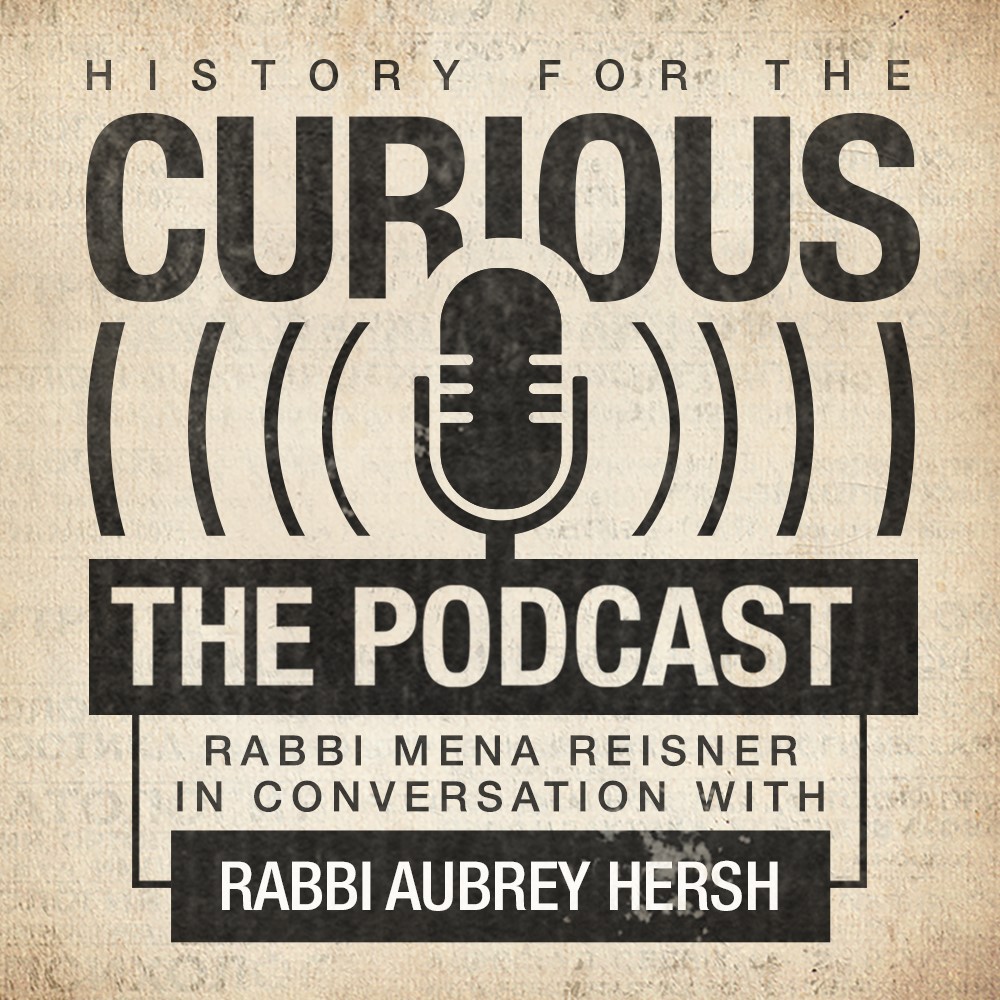
History for the Curious - The Jewish History Podcast
by JLE
Is this your podcast?On the show
From 10 epsHost
Recent guests
Recent episodes
#201: The Jews of Ancient Rome (100BCE - 550CE)
Oct 14, 2026
57m 38s
#200: Doña Gracia Nasi (1510-1569) – Visionary, Banker & Saviour
Sep 29, 2026
58m 39s
#199: Rav Yosef Karo II - The Maggid: A Voice From Heaven
Sep 15, 2026
48m 52s
#198: Rabbi Yosef Karo I: The Story behind the Shulchan Aruch
Sep 2, 2026
1h 01m 16s
#197: Tisha B'av: Two Harrowing Letters - Two Powerful Testimonies
Jul 21, 2026
54m 16s
Insights from recent episode analysis
Audience Interest
Podcast Focus
Publishing Consistency
Platform Reach
Insights are generated by CastFox AI using publicly available data, episode content, and proprietary models.
Most discussed topics
Brands & references
Total monthly reach
Blended from 1 signal.
Built from
By chart position
- 🇺🇸United States · JudaismHOME#1784K to 526K
- 🇬🇧United Kingdom · Judaism#230K to 190K
- 🇧🇷Brazil · Judaism#612K to 78K
- 🇨🇦Canada · Judaism#115.8K to 36K
- 🇮🇳India · Judaism#252.9K to 18K
- Per-Episode Audience
Est. listeners per new episode within ~30 days
151K to 946K🎙 Weekly cadence·201 episodes·Last published 4d ago - Monthly Reach
Unique listeners across all episodes (30 days)
303K to 1.9M🇺🇸56%🇬🇧20%🇧🇷8%+8 more - Active Followers
Loyal subscribers who consistently listen
121K to 757K
Market Insights
Platform Distribution
Reach across major podcast platforms, updated hourly
Total Followers
—
Total Plays
—
Total Reviews
—
* Data sourced directly from platform APIs and aggregated hourly across all major podcast directories.
Social Links & Contact
Official channels & resources
Official Website
Login
RSS Feed
Login
| Date | Episode | Topics | Guests | Brands | Places | Keywords | Sponsor | Length | |
|---|---|---|---|---|---|---|---|---|---|
| 10/14/26 | #201: The Jews of Ancient Rome (100BCE - 550CE) | Who were the Jews of Rome and how does Judaism view the Roman Empire? We explore the history from their arrival in Rome in the second century BCE as merchants, diplomats and enslaved captives to the growth of eleven communities, and examine the balance between Roman tolerance and restriction: permitted to worship but subject to expulsions Unknown and unusual is how many non-Jews were attracted to Judaism and became “G-d Fearers”. Tragically when the empire turned to Christianity in the fourth-century, Jewish legal rights were abruptly removed and attempts at conversion began. Against this background, the podcast considers Rome’s own political collapse in the fifth century, which reduced a city of hundreds of thousands to a pale shadow. And we end with Bodo, the ninth-century church deacon who converted from Christianity to Judaism. Illustrating that change remained possible, even after conversion to Judaism had become politically and socially outlawed. Timestamps: 00:00 – Introduction: Rome and Jewish history 03:25 – Rome and Jerusalem: Two eternal cities 09:00 – The origins and rise of the Roman Empire 14:00 – The first Jewish communities in Rome 16:20 – Julius Caesar and Roman expansion 18:10 – Jewish slaves, merchants, and growing communities 20:10 – Roman emperors and Jewish religious freedom 25:40 – Conversion to Judaism in ancient Rome 31:10 – Destruction of the Second Temple and its aftermath 35:10 – Roman persecution and rabbinic delegations 41:40 – Jewish citizenship and integration into Roman society 44:25 – Constantine and the rise of Christian Rome 46:55 – Anti-Jewish legislation and religious restrictions 50:20 – The collapse of Rome and its Jewish heritage 52:40 – A Christian cleric converts to Judaism 54:50 – Ostia and its ancient Jewish synagogue | 57m 38s | ||||||
| 9/29/26 | #200: Doña Gracia Nasi (1510-1569) – Visionary, Banker & Saviour | Forced to lead a dangerous double life as a covert Jew in Christian Europe, she inherited a vast fortune worth $1 billion and used her financial clout and shipping lines to organize a massive underground rescue network that smuggled thousands of fleeing Crypto-Jews across the continent. Her visionary leadership secured the Sultan’s help to rebuild the ancient city of Tiberias, and allowed Torah to flourish in Constantinople & Salonika. Although her final days remain shrouded in mystery. This extraordinary, high-stakes life of the "Crowned Lady", who risked everything to defend her people, leaves behind a legacy of ingenuity, bravery, and devotion. To join our WhatsApp group, click on the link below: https://chat.whatsapp.com/FEgoaCOQoyU2VX49SwA8Aw For further details of out 2027 Trips visit: www.historyforthecurious.com Timestamp: 00:43 — Introduction and the podcast’s 200th episode 02:47 — Who was Dona Gracia? 04:33 — Early life, marriage, and the Mendes financial empire 12:40 — Widowed at 26 and facing the Inquisition 15:11 — Escape to Antwerp and the secret refugee network 23:07 — Taking control of the family fortune and planning another escape 36:52 — Venice, family conflict, arrest, and release 41:22 — Ferrara, Constantinople, and Jewish communal leadership 46:07 — The Ancona affair, rabbinic influence, and Jewish advocacy 50:00 — Rebuilding Tiberias, Dona Gracia’s mysterious death, and her legacy | 58m 39s | ||||||
| 9/15/26 | #199: Rav Yosef Karo II - The Maggid: A Voice From Heaven | Over a period of 30 years, Rav Yosef Karo wrote of his encounters with a divine messenger, an angel which identified itself as the living essence of the Mishna. The most public manifestation took place on an extraordinary night of Shavuos in Salonika in 1533. 19th-century critics dismissed the mystical journal as a complete fabrication, but ground-breaking research and archaeological evidence have vindicated its authenticity. The personal side of his halachic decision making is clearly evident throughout his numerous responsa, whereas the Printing Press allowed his Shulchan Aruch to become available across the Jewish world, despite various omissions - when publishers cut introductions to save space ! Timestamps: 00:00 – Printing omissions and errors in early Jewish texts00:32 – Introduction to History for the Curious01:12 – Episode dedication and sponsorship01:40 – Return from Radin and introduction to Part 202:33 – Pronouncing Rabbi Yosef Karo’s name and the episode’s main topics03:07 – The Maggid Mesharim: Rabbi Yosef Karo’s private spiritual diary03:37 – What is a Maggid?05:23 – How Rabbi Yosef Karo’s Mishnah study led to revelation06:10 – The Maggid’s guidance on Torah study and daily life08:02 – Other rabbis associated with Maggidim and heavenly revelations08:32 – The contents of the Maggid Mesharim09:25 – Using the Maggid’s teachings in public sermons10:24 – Practical halachic rulings attributed to the Maggid14:09 – Why Rabbi Yosef Karo recorded the Maggid’s words14:35 – The famous Shavuot-night revelation in Salonica16:24 – How the group recognized the Maggid’s voice16:51 – Can heavenly revelation influence halachic decisions?18:46 – The Maggid’s authority outside practical halacha19:30 – Chronological problems created by early editors21:00 – Claims that the Maggid Mesharim was a forgery24:37 – Manuscript evidence supporting the work’s authenticity26:07 – Why Rabbi Yosef Karo did not cite the Maggid in his main legal works26:30 – Joy, fear and fasting on Rosh Hashanah29:30 – The three major authorities behind the Shulchan Aruch31:09 – Resolving contradictions between the Beit Yosef and Shulchan Aruch32:11 – The first printing of the Shulchan Aruch33:39 – Missing introductions and mistakes made by printers34:22 – Early editions and the monthly Shulchan Aruch study cycle36:40 – The Rema’s additions to the Shulchan Aruch38:15 – Rabbi Yosef Karo’s responsum concerning decorative images40:30 – A disputed religious image on a gold object41:32 – Rabbi Yosef Karo’s strict response and textual reasoning43:15 – Eyewitness descriptions of Rabbi Yosef Karo and his yeshiva44:20 – A modern controversy about truth, plagiarism and academia46:48 – Aseret Yemei Teshuvah: confronting truth and reality48:28 – Closing thanks, listener feedback and the next episode | 48m 52s | ||||||
| 9/2/26 | Rabbi Yosef KaroShulchan Aruch+5 | — | Shulchan AruchBeis Yosef+1 | LisbonCairo+3 | Rabbi Yosef KaroShulchan Aruch+8 | — | 1h 01m 16s | ||
| 7/21/26 | Holocaust testimoniesJewish history+3 | Mrs Zahava UngarMr Yisrael Diamond | — | — | Tisha B'avHolocaust+5 | — | 54m 16s | ||
| 7/12/26 | HolocaustJewish history+4 | — | AuschwitzArrow Cross | HungarySwitzerland+2 | George Mandel-MantelloHolocaust+6 | — | 1h 01m 36s | ||
| 6/28/26 | HolocaustAmerican media+4 | — | American newspapersNYT | — | HolocaustAmerican media+5 | — | 58m 09s | ||
| 6/12/26 | Jewish doctorscompassion in medicine+3 | Dr Yossi AdlerRabbi Dr Akiva Tatz | — | — | Jewish doctorscompassion+7 | — | 1h 21m 41s | ||
| 5/28/26 | Jewish medicine19th century+4 | — | Pasteur Institute | IndiaLiverpool | Jewish medicineMordecai Wolff Haffkine+6 | — | 58m 37s | ||
| 5/13/26 | Reform movementOrthodoxy+5 | — | Reform movementOrthodoxy+2 | — | Reform vs OrthodoxyJewish history+6 | — | 59m 59s | ||
Want analysis for the episodes below?Free for Pro Submit a request, we'll have your selected episodes analyzed within an hour. Free, at no cost to you, for Pro users. | |||||||||
| 4/28/26 | Moses MendelssohnReform Judaism+5 | — | — | — | Moses MendelssohnReform movement+5 | — | 49m 32s | ||
| 4/21/26 | Jewish historypersonal stories+3 | — | — | — | Fernande HershJewish history+3 | — | 20m 35s | ||
| 4/16/26 | Jewish mourning practicesRabbi Aubrey Hersh+3 | — | — | Eagle Lodge, Golders Green Road | Rabbi Aubrey Hershshiva+3 | — | 0m 47s | ||
| 3/26/26 | #190: Bread of Defiance: Matzah and Pesach in the Soviet Union | For Soviet Jews, matzah represented a longing for freedom – one we take for granted. This episode tells the hidden story of those heroes who risked everything to keep Pesach alive behind the Iron Curtain, and of the global networks that brought matzah into the USSR by every means, under the watchful eyes of the NKVD. Jewish life in the USSR was strongly policed. Starting with Stalin in 1925, Judaism was actively hunted down. But every spring, Jews in Moscow, St Petersburg and Odessa as well as in far‑flung provincial cities risked surveillance, arrest, and labour camps to fulfill this mitzva on Seder night. Clandestine matzah bakeries sprung up, with children posted as lookouts. In 1929 the 6th Lubavitcher Rebbe succeeded in bringing 10,000s of matzos into Russia. In later years, there would be the suitcases stuffed with contraband food moving through international airports, carried by tourists, businessmen, and non-Jewish acquaintances, given to them by people in the free world who never stopped caring for their fellow Jews. This is the story of how a fragile food became a symbol of spiritual defiance, and how a festival of freedom was observed under totalitarian rule. _____________________________________________________ "Undaunted" by Rabbi Eliezrie is available on Amazon for purchase | 1h 09m 07s | ||||||
| 3/19/26 | #189: Chida: 40 Years of Danger, Journeys & Discovery | Rabbi Chaim Yosef David Azulai traversed Europe, the Middle East, and North Africa on behalf of his brethren in Eretz Yisrael. His missions raised vital funds, to keep the Jews from being driven out of town, whilst facing bandits, maritime disasters, and oppressive authorities along the way. With the aid of his diary, this episode gives a vivid first-hand account of his challenges, deprivation, triumphs and breadth of travel. Beyond his journeys, the Chida's genius is seen through his prolific writings. Author of 100 different sefarim on Halacha, Tanach, Kabbala & Talmud, they continue to guide Judaism today. Shem HaGedolim, remains a monumental encyclopedia of rabbinic authors and works, which reflect his incredible memory and knowledge. Birkei Yosef and Yosef Ometz are cornerstones of psak, written as he travelled thousands of miles over many decades. But the final act was written in 1960. Timestamps: - 0:00 — Intro mention of Shem ha‑Gdolim editions - 0:21 — Podcast intro by Mena Reisner - 1:00 — Hosts reconnect; travel note and dedication - 2:32 — Episode topic: life & travels of Rabbi Chaim Yosef David Azulai (the Chida) - 3:01 — Family origins; great‑grandfather and signature story - 4:13 — Birth in Jerusalem, early life, prodigy and writings - 7:53 — Teachers, Kabbalistic training, reason for emissary mission - 10:26 — Language issues, letters of recommendation, mixed receptions in Europe - 15:04 — Collection logistics, contacts with non‑Jewish authorities, successes - 18:46 — Travel hazards and accidents; manuscript research in libraries - 22:32 — England/France encounters and sightseeing - 26:29 — Return to Eretz Yisrael (1758), political troubles, five‑year stay in Egypt - 31:05 — Tunis episode, personal losses, diary entries - 35:49 — Second mission, Livorno quarantine, composing Shem ha‑Gdolim - 39:05 — Scope of travels, settlement in Livorno, later life and death (1806) - 42:23 — Burial details, estate instructions, study practices, halachic/Kabbalistic approach - 48:55 — Stories/legends (attempts to hasten redemption, miracles) - 55:07 — Reburial efforts to Jerusalem; episode closing and contact info | 56m 27s | ||||||
| 3/4/26 | #188: Journey through Music's Mysticism, Sound & History - featuring Alex Clare | What makes music such a powerful medium? How was music used to attain prophecy? Has AI destroyed pure music? Did Beethoven use our Kol Nidrei? How do you create a 'hit' song? How influenced is our music by non-Jewish musical patterns and culture? Is music art, emotion or transcendant? And how did Italian Jews start a music revolution 500 years ago? Timestamps: 0:00:46 — Podcast intro 0:01:22 — Topic setup: music in Torah and Levites. 0:02:58 — Music’s role in prophecy, Kabbalah, Vilna Gaon. 0:05:00 — Historical examples of music’s influence/appropriation. 0:10:00 — Music’s emotional power, simcha, halachic issues. 0:15:44 — Western (Renaissance/Baroque) and medieval Jewish music. 0:19:07 — 16th–17thC Italian controversy over Hebrew polyphony. 0:24:00 — Choirs, organs, cross-cultural musical borrowing. 0:30:00 — 19thC Jerusalem ban on wedding instruments (reasons). 0:35:19 — Interview with Alex Clare begins. 0:36:41 — Alex on nature of music, AI, sincerity. 1:00:00 — Music, memory, spirituality, and timelessness. 1:15:00 — Jewish vs. secular music, cultural influences. 1:25:00 — Alex on his music, kids’ songs, audience. 1:35:19 — Closing and contact info. | 1h 07m 01s | ||||||
| 2/23/26 | #187: Wine in the Modern Era: feat. Nathan Herzog (President of Kedem Wines) & Rabbi Akiva Padwa (International Kashrus expert) | In the 19th century, the Herzog family supplied wine to the Emperor, while the 20th ushered in the era and risks of Prohibition in America and the profound transformation of the humble grape juice. Contemporary technology has enabled the wine industry to flourish, yet the intricate halachos makes kosher wine production, a uniquely complex product Meanwhile in the mid-1500s, Moravia was fertile ground for both the Maharal's views and the Rama's rulings of yayin stam, which resonate to this day. Timestamps: 00:00 — Opening anecdote 00:00:36 — Intro & episode overview 00:01:12 — Listener feedback (medieval England) 00:02:02 — History: Bohemia & Moravia (1500s) 00:04:54 — Maharal: philosophy of wine 00:08:43 — Nicholsburg controversy (1600s) 00:15:00 — Prohibition & bootlegging (Bronfmans) 00:16:25 — Sacramental wine loophole & abuses 00:25:00 — 1926 regulations & grape juice debate 00:29:30 — Interview: Nathan (Yogi) Herzog 00:35:00 — Herzog: kosher production practices 00:40:00 — Kedem grape juice & market evolution 00:50:00 — Harvest logistics & mashgichim 00:51:54 — Production issues & quality control 00:52:02 — Interview: Rabbi Padva (kashrus expert) 00:53:15 — Halacha: non-Jew involvement, mevushal, transport 01:04:24 — Practical challenges (pumping/maceration) 01:06:06 — Closing & sign-off | 1h 07m 05s | ||||||
| 2/15/26 | #186: Wine - Romans to the Rishonim in History & Halacha | Tracing the journey of Wine, from Roman times and the laws of Yayin Nesech, to Lead Poisoning, wine dilution and Rashi's momentous ruling. Spanning medieval France, Italy's Rishonim, Provencal responsa and Egyptian challenges, the podcast reveals the halachic debate in times of evolving technology, commerce and travel. As well as instructions for a Seder night without wine. Timestamps: - 00:00:33 — Podcast intro - 00:01:09 — Sponsor dedication (Five Towns Central) and contact info. - 00:01:50 — Series announcement: new multi-part “wine” series; guests planned for week two. - 00:03:34 — Origins: Georgia and ancient Egyptian wine (Tutankhamun jars). - 00:05:33 — Phoenicians, Greeks, Romans: amphorae, dilution, and wine practices. - 00:08:44 — Roman recipes/additives, Posca/Eora, and medicinal uses; Gemara liability notes. - 00:16:00 — Lead/metal use in wine, health risks, and later glass bottles enabling long aging. - 00:17:30 — Halachic introduction: yayin nesech and stam yeinam explained. - 00:20:00 — Ashkenaz/France: cash shortages, wine-as-debt, Rashi’s leniencies and barrel-sealing debate. - 00:30:00 — Provence/Languedoc: stringencies, piquet (second-press), and transport sealing practices. - 00:32:47 — England: wine shortages and instructions for Kiddush/Seder without wine. - 00:36:04 — Muslim/Ottoman lands: limited production, taxes/bans, and examples of covert trade. - 00:42:09 — Italy: Teshuvot hesitancy, later Padua rulings, and varied local customs. - 00:46:32 — Closing: recap of wine’s household role, upcoming guests (Nathan “Yochi” Herzog + halachic expert), and call for listener questions. | 47m 37s | ||||||
| 2/3/26 | #185: Spanish Inquisition - 350 Years of Jewish Defiance | The Church was determined to wipe out any vestige of Judaism from Spain, any custom, any law, any practice, and thousands of Jews would pay the price. Spain was not just one country, however; it spread to the Americas and the Indies, and the stories of individual heroism, ingenuity, and courage are breathtaking. Timestamps: 0:00:01 Crypto-Judaism vs. Crusades — constant oversight in Spain 0:00:27 Podcast intro 0:01:16 Series context — part 3 importance 0:02:58 Post-1492 groups — emigrants, later emigrants, those who stayed 0:03:36 Sephardic diaspora — destinations & trades (Ottoman lands, North Africa, textiles, medicine) 0:04:41 Jewish diplomacy under Ottomans — translators/negotiators, ties to Spain 0:07:14 Crypto-Judaism basics — loss of rabbis, books, reliance on oral tradition & Old Testament 0:09:42 Decline of living memory — mid-1500s generational loss 0:11:40 Core beliefs retained — monotheism, Moses, Torah; examples from Inquisition confessions 0:14:02 Observance statistics from trials — fasting, kashrut, Shabbat, Yom Kippur prevalence 0:15:59 Passing faith to next generation — secrecy, double lives, limited transmission 0:17:32 Inquisition edicts as inadvertent guides to practice 0:19:26 End-of-life rituals — refusal of crucifix, tahara, burial customs 0:23:41 Shabbat practices — hidden candles, inward sweeping, blessings 0:26:31 Church attendance — outward conformity, internal belief strategies 0:27:25 New World/Inquisition — arrival in Americas; Inquisition established in Mexico, Peru, Brazil 0:31:00 Dutch Brazil exception — temporary open practice under Dutch rule, later expulsion 1654 0:32:40 Louis de Carvajal & notable trials — arrests, preserved writings used as evidence 0:36:22 Secret communication/code — phrases, walks, covert declarations of faith 0:39:04 Dangers of disclosure — denunciations even by family; psychological terror of arrest 0:42:40 Arrest/interrogation process — isolation, written records, potential torture 0:45:00 Auto-da-fé description — public spectacle, sanbenito, punishments, executions 0:50:47 Survival customs preserved in remote towns (e.g., burial, food practices) 0:51:07 Reasons many stayed — travel restrictions, family/assets, hope things improve 0:55:46 Reintegration abroad — relearning Judaism, halachic complications (bris, remarriage) 0:59:12 Broader Jewish response — limited help; notable rescuers and martyrs 1:02:19 Scale of persecution — arrests (100k–150k), deaths (~4–10k estimated) 1:05:34 Long-term effects — endogamy, oral legacy, Kabbalah/messianic currents 1:06:46 Closing & next steps — possible future series; contact/website/tours info Action items (end): confirm availability for next series; monitor listener feedback; update website/tours. | 1h 07m 19s | ||||||
| 1/27/26 | #184: Spanish Jewry II - 1460 - 1492: The Walls Close In | Post-1391 there was a period of uncertainty but many Conversos still found it possible to maintain a level of observance - sometimes even openly. It appeared that a Modus Vivendi could be achieved. But in 1477 the Church persuaded Ferdinand & Isabella to institute the Inquisition; aimed not at Jews but at the 'heretical' New Christians. The 1480s became a decade of hiding, yet scholarship was increased and Spain became a centre of Jewish printing until the axe fell for the remaining Jews in 1492, and 4 months of despair turned into a mass exodus. Their decision to abandon everything and leave for the unknown - at great cost - was the largest display of faith in the past 1,000 years of Jewish history. Timestamps: - [0:00] Topic setup: Spain Part 2 — continuation on conversos/Jewish life pre- and post-1480. - [0:44] Intro & announcements: new website historyforthecurious.com and listener emails (Menorah/Vatican). - [6:07] Recap: 1391 massacres and Tortosa debates intensified pressure on Jews/conversos. - [12:15] Inquisition origins (1480): state-backed institution, torture, informers, auto-da-fé spectacles. - [20:07] Converso impact: shift from preserving family cohesion to living secret “cover stories.” - [24:28] La Guardia case (1491): blood libel, forced confessions, executions used to build case for expulsion. - [30:57] 1492: Fall of Granada and the Alhambra Decree — four months to leave, severe loss of property. - [52:18] Exodus hardships: banditry, ship abuses, disease, starvation; some returned/converted. - [56:07] Demographics: estimated ~150,000 left; major resettlement in Ottoman lands and North Africa. - [40:21 / 45:53] Culture & print: strong late-medieval Spanish rabbinic scholarship and early Hebrew printing; many books later burned but printing continued in exile. - [1:00:17] Legacy: Sephardic communities revitalized elsewhere; theme — persecution paired with spiritual resilience. | 1h 02m 47s | ||||||
| 1/14/26 | #183: Spanish Jewry 1348-1460: Into the Abyss | The date of the Expulsion in 1492 is infamous. Less known or understood is the historical context that led there. How did a 1,000-year-old community lose its status and power? The answer lies in the ferocious and sudden impact of 1391. With 100,000 conversions to Christianity, Jewish kehillos were left reeling and families were torn apart. Rebuilding became virtually impossible, and a new way of life was created for the Jews in Spain. Jews were still part of society, but rising Church pressure forced many into hiding. And the urgent question arose of how to deal with conversos amid instability, the Tortosa disputation and hostility from ‘Old Christians’. But the writing was still not on the wall. Timestamps: - 0:00 — Converts’ next-generation issue introduced - 0:42 — Podcast intro and host - 1:24 — Email about Radzivin/Vatican anecdote - 2:24 — Recap: Jewish history in Spain; Golden Age → decline - 4:20 — 14th-century status: wealth, roles, rising anti-Jewish politics - 7:17 — Civil war in Castile; Henry II’s measures; Ferran Martínez’s preaching - 12:45 — Martinez’s actions, weak government, lead-up to 1391 - 16:20 — June 1391 pogroms begin (Seville) - 19:33 — Scale of conversions; conversos’ motives and consequences - 23:00 — Rav Crescas’s account and leadership role - 27:32 — Rebuilding efforts and royal interactions - 32:21 — Conversos’ social ascent; community tensions - 37:22 — Tortosa disputation lead-up; Vincent Ferrer’s influence - 43:07 — Tortosa debate outcomes and further conversions - 50:10 — Fragile recovery; papal/royal reversals - 57:32 — 1449 Toledo unrest; purity-of-blood measures begin - 1:02:16 — Long-term social exclusion of conversos; legacy and summary | 1h 03m 19s | ||||||
| 12/30/25 | #182: 10th Teves: Our History - The Message - Our Future | We know from both Jewish and secular sources, that 2,500 years ago the Babylonians led by Nevuchadnezar, besieged Jerusalem on this day. Two years later the Temple was destroyed. But what events led to this moment? And why was the path of the prophet Yirmiyahu's life so dangerous? As importantly how do we, in our days, feel a connection to the message and the narrative? 10th Teves is also designated as a day of mourning, for all those who do not know the date or the fate of their family's passing during the Holocaust, and this episode will feature the unusual story of a young child in the partisans. Timestamps0:00:00 Opening and podcast intro; dedication to Nehemiah and host’s father 0:01:06 Overview of episode topics, Hanukkah feedback, and menorah discussion 0:03:18 Context of Asara B’Tevet, Holocaust link, and anecdote about Kaddish in old-age home 0:04:20–0:10:04 Historical exposition: Jeremiah’s prophecies, political pressures, scroll burned, imprisonments 0:10:04–0:19:37 Continued account: attempted murder, rescues, false prophets (Hananiah, Uriah) and descent to siege 0:19:37–0:21:25 Summary of decline leading to exile and significance of the 10th of Tevet fast 0:21:25–0:28:46 Modern parallels: genteel/diplomatic antisemitism, political short-termism, and examples 0:28:46–0:34:31 Reflection on providence, Hashem’s hand, emunah vs. bitachon, and cultivating trust 0:34:31–0:40:15 Practical guidance: quiet contemplation, Hanukkah lessons, and spiritual responses 0:40:15–0:46:37 Holocaust case study begins: Matei Jakel’s early life, attack, deportation, and escape from train 0:46:37–0:52:16 Partisan life, postwar displacement, meeting youth emissaries, aliyah to Israel, rebuilding life 0:52:16 Closing reflections, key takeaways on resilience and faith, listener email ([email protected]) and two-week break | 53m 25s | ||||||
| 12/21/25 | #181: The Menorah - History's Greatest Jewish Mystery | The Menorah was the most adopted symbol in the Jewish world. But where is the original? We know of a Menorah in Rome in 70CE. The Talmud tells us it was examined. But what follows is centuries of silence What does History tell us? What do eyewitnesses report? What has the Church said? And what role does the 2nd Temple Menorah have, in the redemption of the Jewish People? This episode is the outcome of the most up-to-date research and analysis and includes a recently recorded conversation with a Rabbi who entered the Vatican cellars 55 years ago accompanied by Pope John Paul II. Timestamps: - 0:00 — Opening: - 0:38 — Podcast intro (host & Rabbi Hersh). - 1:14 — Memorial/announcements. - 2:17 — Episode topic introduced: “Where is the menorah?” - 4:00 — Menorah as Jewish symbol; historical significance. - 8:00 — Arch of Titus / Josephus / early Roman display. - 10:00 — Fire in 191 CE and disappearance possibilities. - 15:00 — Jews in ancient Rome / social context. - 20:00 — Constantine/Byzantine period and relocation theories (312 CE). - 25:00 — Christian adoption/use of menorah imagery. - 30:00 — Vatican holdings, openness, and inventories. - 34:30 — Eyewitness claims overview; Rabbi Stencil letter exchange. - 40:00 — Oscar Goldman 1962 account (electrician shown items). - 41:30 — 1970s rabbi’s underground Vatican visit description. - 52:40 — Testimony analysis: credibility issues and scholarly skepticism. - 1:03:47 — Theological point: first‑ vs. second‑Temple vessels and redemption. - 1:10:00 — Halachic notes on making/holding menorah replicas; closing. | 1h 14m 22s | ||||||
| 12/11/25 | #180: Chanukah - Celebrating the War We Didn't Win? | Chanukah is central to our Jewish Calendar and way of life, but there are many unanswered questions: Why celebrate defeat? What was the real role of Kohanim during the Second Temple? Why was this Yomtov chosen to reflect the ultimate ideal ? Tracing the story from Alexander the Great and Shimon HaTzaddik through the corruption of the Second Temple and the rise of Hellenism, the podcast redefines the central idea of Chanukah - the only festival established by the Sages post-prophecy Connecting the ancient clash of civilizations to the battles which echo down through Russia, America and Eretz Yisrael; It defines Who is a Jew. Timestamps [0:00:00] Introduction to Greek Exile and Historical Context [0:01:07] Podcast Dedication and Welcome [0:02:05] Setting Up the Hanukkah Discussion [0:04:13] Questioning the Purpose of Hanukkah Celebration [0:14:44] Historical Prequel: Alexander the Great and Shimon HaTzadik [0:22:49] Corruption of the Priesthood [0:26:38] Empire Dynamics After Alexander [0:31:05] Jewish Attraction to Greek Culture [0:40:41] The Spiritual Victory of Hanukkah [0:49:26] Comparing Purim and Hanukkah [0:50:44] Conclusion and Podcast Wrap-up | 51m 01s | ||||||
| 12/4/25 | #179: The Most Unbelievable Story in Modern History | Yitzchak Trebitsch was an active participant - under various names - in some of the twentieth century’s most important events: mass immigration, WWI wartime espionage, radical right-wing Germany, Chinese civil war and the Japanese invasion during WWII. But in the end he was a nobody. His death was attributed variously to Nazi poison, Allied vengeance, Buddhist enemies, or enraged Jews. His story is stranger than fiction, but there are important lessons we can take from it. Timestamps [0:03:07] Origins: Hungarian Jewish Childhood [0:04:40] Early Crimes: Theft and Deception [0:07:54] Religious Transformations: Conversions and Missionaries [0:11:00] Political Ambitions: Brief Parliamentary Career [0:18:23] Wartime Intrigue: Espionage and Escapes [0:28:00] Political Extremism: Far-Right Conspiracies [0:35:00] Global Wanderings: International Adventures [0:41:30] Spiritual Journey: Becoming a Buddhist Monk [0:45:00] World War Machinations: Nazi and Japanese Connections [0:48:44] Final Act: Decline in Shanghai | 1h 03m 12s | ||||||
Showing 25 of 201
Pitch Fit is a Pro feature
See how bookable this show is for guests, which brands already advertise, the per-episode ad value, and the best-fit guest and sponsor profile. The numbers are blurred on the free plan.
How readily this show books outside guests like you.
How proven this show is for host-read sponsorships.
For Guests
ProFor Advertisers
ProUpgrade to Pro to unlock guest cadence, sponsor categories, fit scores, and per-episode ad value for this show.
Similar Audience Demographics
Podcasts that attract a similar listener profile

Inspiration for the Nation with Yaakov Langer
Living Lchaim

Meaningful People
Meaningful Minute
The Q & A with Rabbi Breitowitz Podcast
Rabbi Dr Yitzchak Breitowitz

Kosher Money
Living Lchaim

All Classes
Rabbi YY Jacobson
From the Inside Out: With Rivkah Krinsky and Eda Schottenstein
Rivkah and Eda

Jewish History Nerds
Unpacked
Chart history for History for the Curious - The Jewish History Podcast
Peaked at #2 in United Kingdom, top 10 in 6 of 29 tracked markets, currently #2 in United Kingdom.
| Market | Genre | Peak | Current | Trend |
|---|---|---|---|---|
| United Kingdom | — | #2 | #2 | — |
| TH | — | #2 | #2 | — |
| PT | — | #3 | #3 | — |
| South Africa | — | #4 | #4 | — |
| Brazil | — | #6 | #6 | — |
| AT | — | #10 | #10 | — |
| Canada | — | #11 | #11 | — |
| Denmark | — | #12 | #12 | — |
| HU | — | #12 | #12 | — |
| Ireland | — | #16 | #16 | — |
| United States | — | #17 | #17 | — |
| Australia | — | #23 | #23 | — |
| New Zealand | — | #23 | #23 | — |
| BE | — | #23 | #23 | — |
| Norway | — | #25 | #25 | — |
| India | — | #25 | #25 | — |
| Netherlands | — | #35 | #35 | — |
| Sweden | — | #35 | #35 | — |
| CH | — | #41 | #41 | — |
| Mexico | — | #52 | #52 | — |
Chart Positions
29 placements across 26 markets.
Chart Positions
29 placements across 26 markets.