

Insights from recent episode analysis
Audience Interest
Podcast Focus
Publishing Consistency
Platform Reach
Insights are generated by CastFox AI using publicly available data, episode content, and proprietary models.
Most discussed topics
Brands & references
Est. Listeners
Insufficient chart data. Estimates will improve as the show charts.
- Per-Episode Audience
Est. listeners per new episode within ~30 days
N/A🎙 Weekly cadence·42 episodes·Last published 5mo ago - Monthly Reach
Unique listeners across all episodes (30 days)
N/A - Active Followers
Loyal subscribers who consistently listen
N/A
Market Insights
Platform Distribution
Reach across major podcast platforms, updated hourly
Total Followers
—
Total Plays
—
Total Reviews
—
* Data sourced directly from platform APIs and aggregated hourly across all major podcast directories.
On the show
From 10 epsHost
Recent guests
Recent episodes
A Note from Bari on Honestly
Jan 22, 2026
4m 44s
CBS News Presents: A Town Hall with Erika Kirk
Dec 14, 2025
5m 22s
Should We Legalize Assisted Suicide?
Dec 9, 2025
2m 43s
Would America Be Safer Without the Second Amendment?
Nov 24, 2025
5m 33s
Kids Don’t Need Phones with Jonathan Haidt
Nov 18, 2025
4m 49s
Social Links & Contact
Official channels & resources
Official Website
Login
RSS Feed
Login
Resolving iTunes ID\u2026 if this persists, the podcast may not be indexed on Apple Podcasts.
| Date | Episode | Topics | Guests | Brands | Places | Keywords | Sponsor | Length | |
|---|---|---|---|---|---|---|---|---|---|
| 1/22/26 |  A Note from Bari on Honestly✨ | podcast updatepause+1 | — | HonestlyThe FP | — | HonestlyBari Weiss+4 | — | 4m 44s | |
| 12/14/25 |  CBS News Presents: A Town Hall with Erika Kirk✨ | political violenceforgiveness+5 | Erika Kirk | CBS NewsThe Free Press+1 | — | town hallpolitical violence+5 | — | 5m 22s | |
| 12/9/25 |  Should We Legalize Assisted Suicide?✨ | assisted suicidemedical ethics+4 | Rafaela SiewertDavid Hoffman | New YorkGovernor Kathy Hochul+4 | — | assisted suicideMAID+5 | — | 2m 43s | |
| 11/24/25 |  Would America Be Safer Without the Second Amendment?✨ | gun ownershipSecond Amendment+3 | Alan DershowitzDana Loesch | National Rifle AssociationBill of Rights+1 | ChicagoStudebaker Theater | Second Amendmentgun ownership+6 | — | 5m 33s | |
| 11/18/25 | 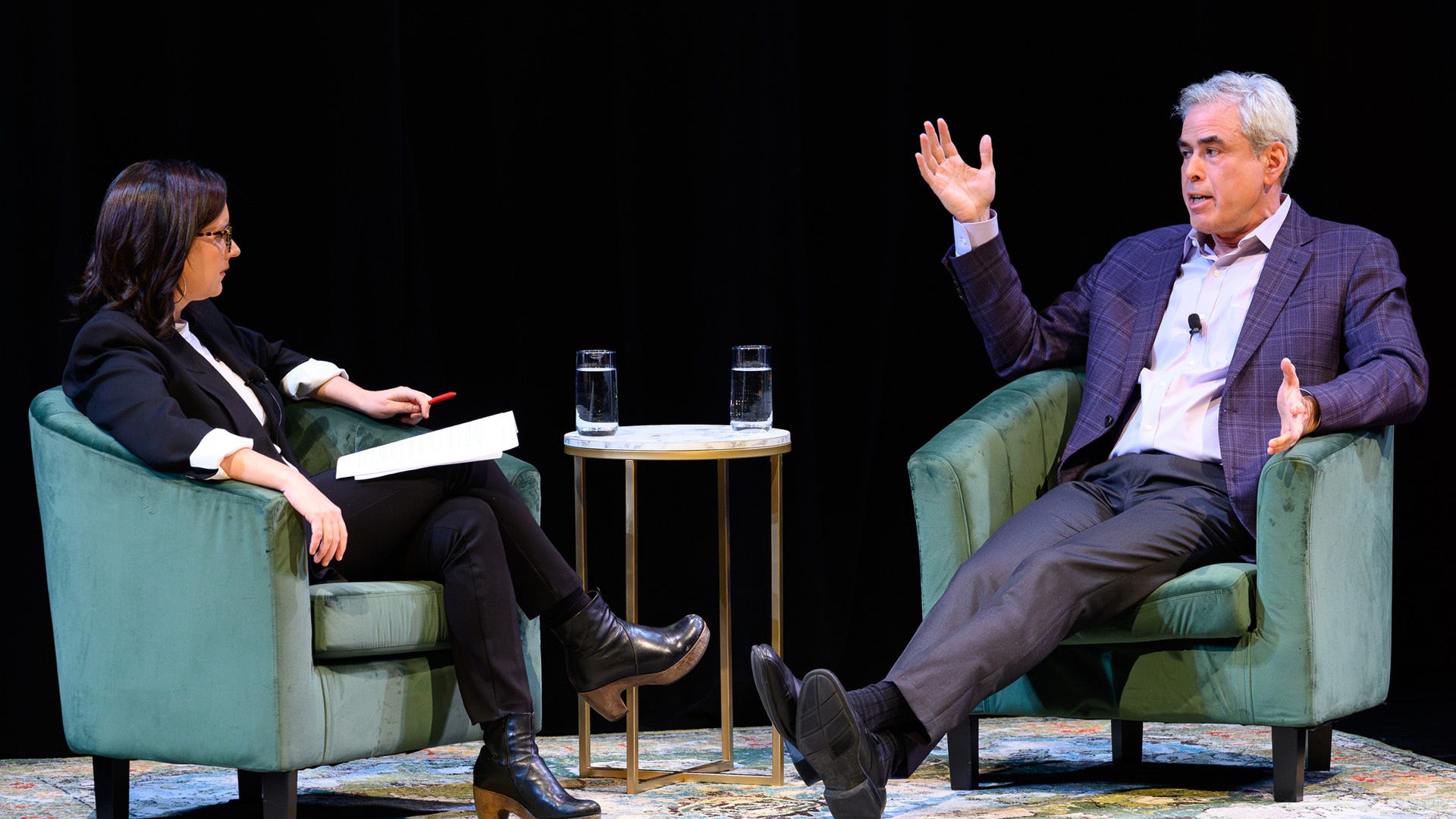 Kids Don’t Need Phones with Jonathan Haidt✨ | smartphonessocial media+3 | Jonathan Haidt | The FPThe Anxious Generation+2 | New York City | smartphonesyouth+5 | — | 4m 49s | |
| 11/11/25 | 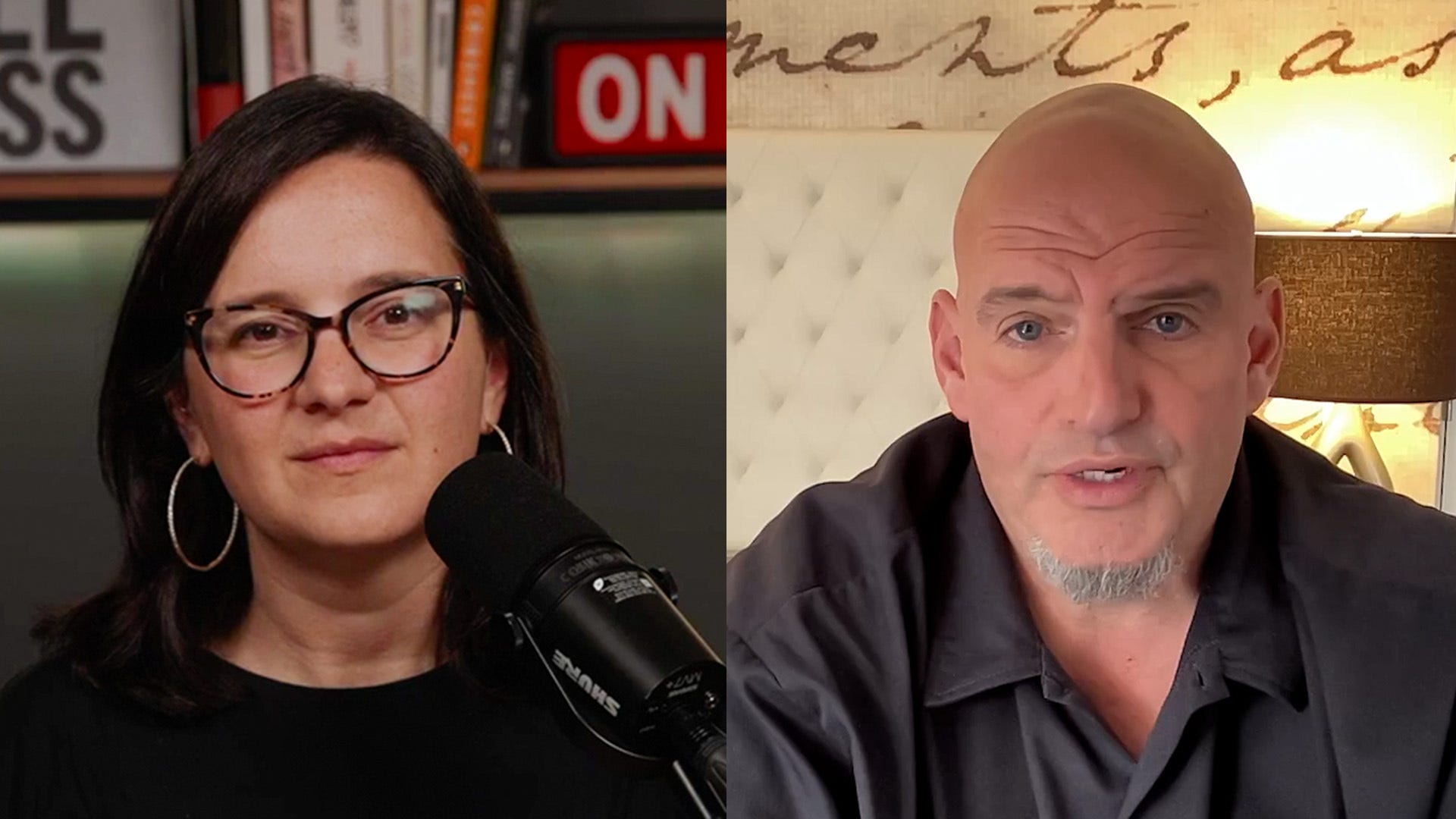 Democratic Dissident John Fetterman✨ | Democratic Partysocialism+3 | John Fetterman | Democratic Party | Americarichest city | Democratic PartyZohran Mamdani+3 | — | 4m 14s | |
| 11/4/25 |  How We Lost Ourselves to Technology—and How We Can Come Back✨ | technologyanxiety+3 | Paul Kingsnorth | Against the Machine | — | technologyanxiety+3 | — | 1m 05s | |
| 10/21/25 | 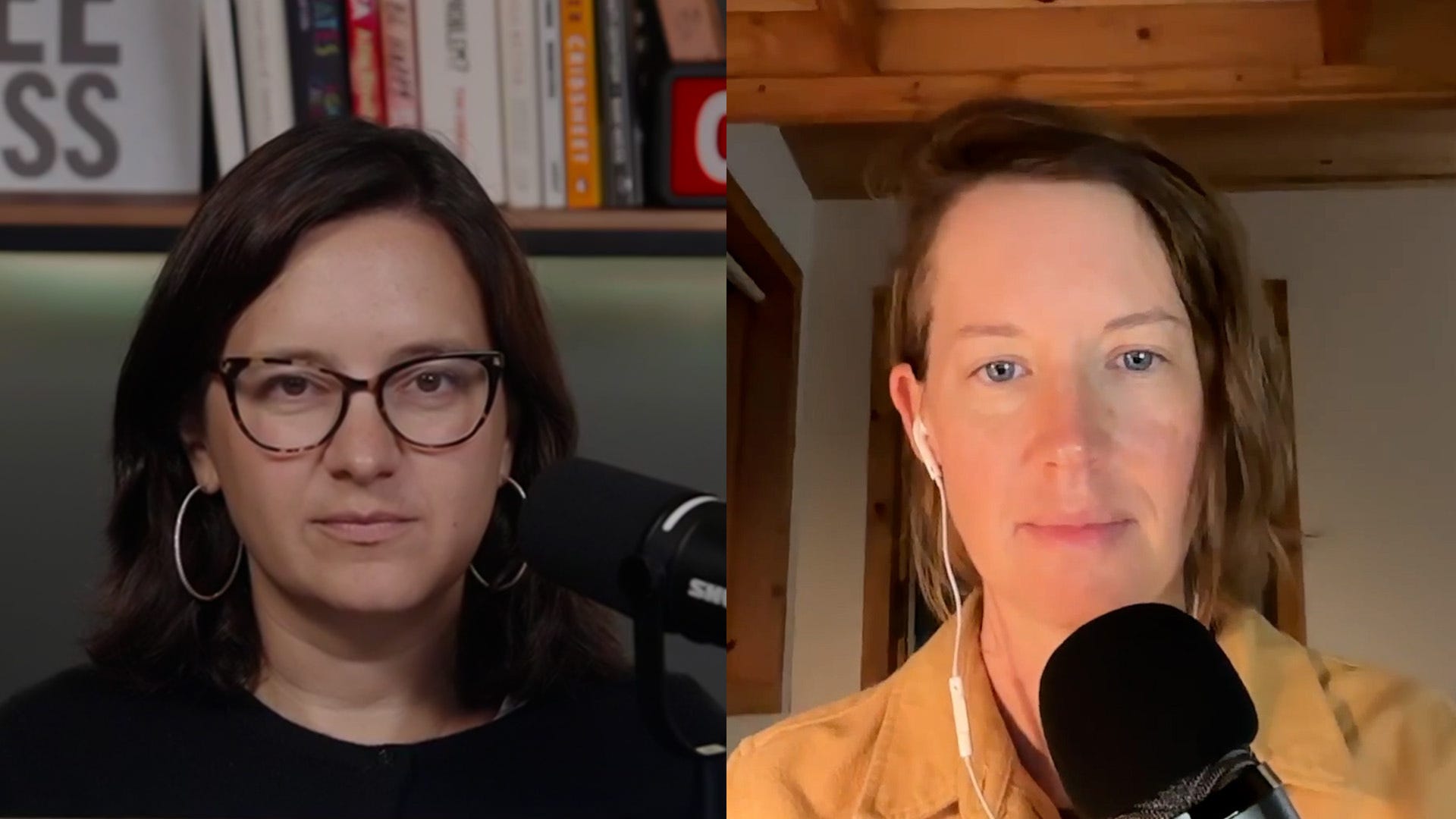 How Katie Herzog Drank Her Way to Sobriety✨ | alcohol addictionsobriety+4 | Katie Herzog | naltrexoneAlcoholics Anonymous | U.S. | alcoholismsobriety+5 | — | 3m 55s | |
| 9/30/25 |  How One Man Overcame His Autism✨ | autismtelevision reporting+3 | Leland Vittert | Fox News | EgyptLibya+2 | autismLeland Vittert+3 | — | 3m 06s | |
| 9/23/25 | 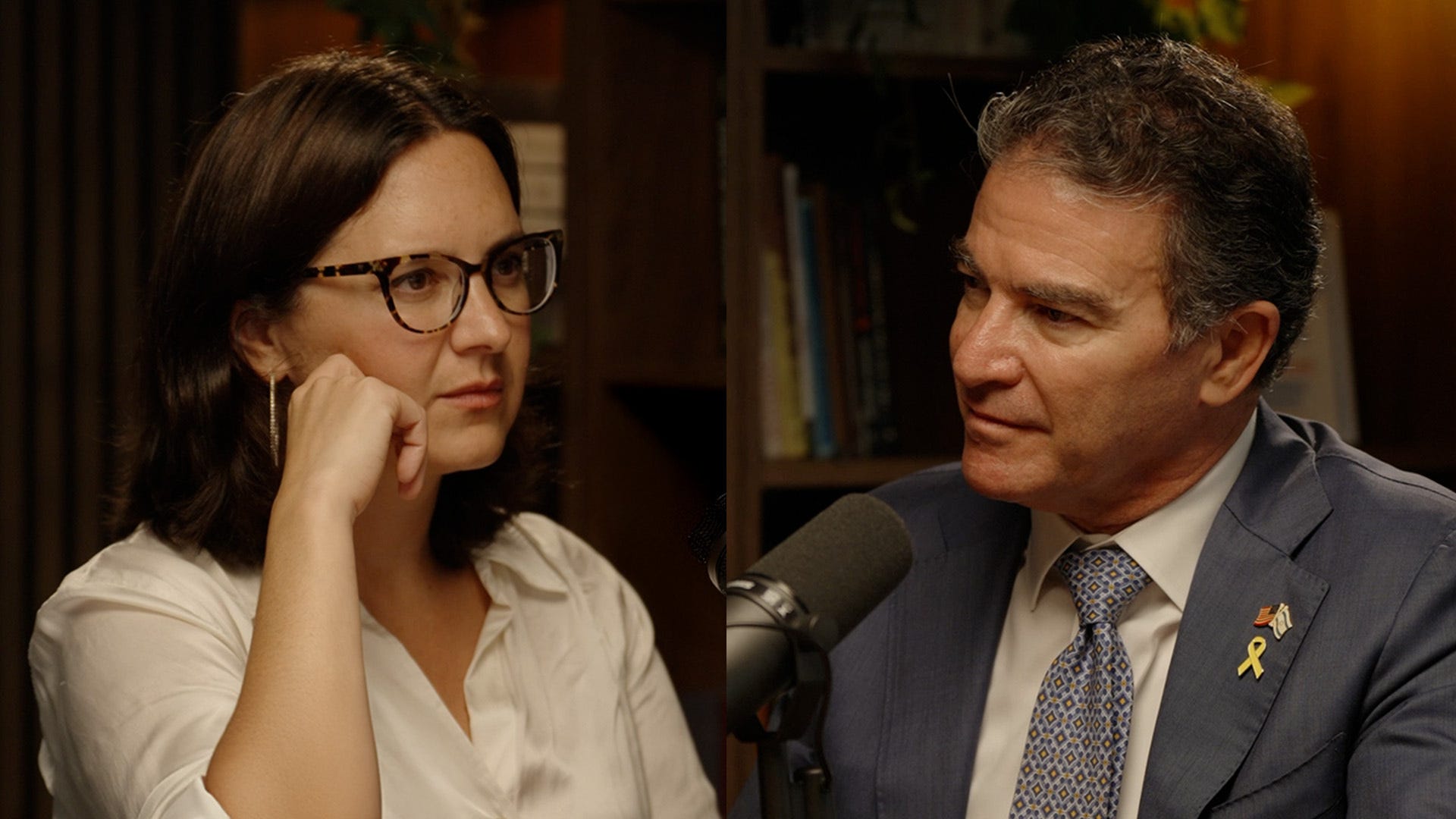 Inside the Mossad✨ | spiesespionage+3 | — | MossadHomeland+3 | — | Mossadspies+5 | — | 3m 51s | |
Want analysis for the episodes below?Free for Pro Submit a request, we'll have your selected episodes analyzed within an hour. Free, at no cost to you, for Pro users. | |||||||||
| 9/17/25 |  Woody Allen on Life and Death | This is a free preview of a paid episode. To hear more, visit www.thefp.comYou know the name Woody Allen. Everyone does. He’s made some of the most acclaimed films ever made: Annie Hall, Hannah and Her Sisters, Crimes and Misdemeanors—the list goes on and on and on. He’s made an astonishing 50 movies.You see his influence everywhere, from sitcoms to stand-up to just about every rom-com made since Annie Hall premiered in 1977. And in the process, he turned himself into America’s most unlikely leading man: short, thinning hair, bespectacled, and exceptionally neurotic.Now, at age 89, Allen is out with his first novel, What’s With Baum? Its protagonist is an anxious, smart Jewish writer with a messy personal life who gets himself in a great deal of trouble. Yes, it’s like a Woody Allen movie in book form. It’s also funny and delightful, and touches on a major theme of our age: the idea that an accusation, once made, is as good as a conviction.Allen knows something about that. In 1992, his longtime romantic partner Mia Farrow discovered that Allen had begun a relationship with her adopted daughter, Soon-Yi Previn. Allen was in his 50s at the time, Previn was just 21. All hell broke loose, with Farrow accusing Allen of grooming and preying on her daughter.The scandal became fodder for tabloids and late-night talk shows but soon took a much darker turn, with Farrow accusing Allen of molesting their 7-year-old daughter Dylan in August 1992. The charges were never proven in court—indeed they were twice dismissed—but the court of public opinion was another matter.Today on Honestly, we get into everything about Allen—from the accusations to his subsequent cancellation in the MeToo era to his childhood in Brooklyn and his climb from Flatbush to the commanding heights of American comedy, film, and culture. We delve into how he’s changed and the many ways in which he hasn’t. We talk about his marriage to Previn, which is still going strong after 28 years. He shares his thoughts on President Donald Trump, NYC mayoral candidate Zohran Mamdani, The New York Times, and American politics more broadly. We’ll hear what he thinks about life, death, and aging as he approaches 90, and much, much more.Click below to listen to our conversation, or scroll down for our favorite moments. | 4m 32s | ||||||
| 9/2/25 |  Conversations with Coleman: Three Hostages Families Disagree on How to Get Their Loved Ones Home | Everyone wants the war in Gaza to end. The reason the war is not over is because about 50 people are still being held hostage by Hamas.Twenty of them are alive, but on the brink of death. About 30 of them have already been killed, and their bodies remain in Hamas captivity.There are differing opinions on the best way to bring them home: continue the ground war in Gaza, or take the partial deal put forward by Qatar and Egypt—which includes a 60-day ceasefire and the release of 10 living hostages and 18 bodies in exchange for hundreds of security prisoners.This war is one where everyone has an opinion. But in my view, no opinion matters more than those of the families whose loved ones, including their children, are living in Hamas terror tunnels. These families are in a collective debate about the best way to bring their loved ones home.So I want to play a really special episode from Conversations with Coleman that illuminates these differences, and showcases arguably the largest debate in Israeli society today.Coleman Hughes sat down with three hostage families: Tzvika Mor, the father of Eitan Mor, a 23-year-old security guard at the Nova Music Festival taken by Hamas; Talik Gvili, the mother of Ran Gvili, who on October 7 leaped into action and fought Hamas terrorists in Kibbutz Alumim; and Dalia Cusnir, the sister-in-law of brothers Iair and Eitan Horn. Iair Horn was released, and Eitan Horn remains in Hamas custody.Today, their families tell their stories and explain what they think is the best way to bring their family members home. This is a public episode. If you'd like to discuss this with other subscribers or get access to bonus episodes, visit www.thefp.com/subscribe | 1h 05m 47s | ||||||
| 8/12/25 |  Why Amanda Knox Forgave the Man Who Sent Her to Prison | This is a free preview of a paid episode. To hear more, visit www.thefp.comOn November 1, 2007, a man named Rudy Guede broke into a random home in Perugia, Italy, then raped and killed Meredith Kercher—a 21-year-old exchange student from the University of Leeds.You might not even remember the names Rudy Guede and Meredith Kercher. But one name you will remember is Meredith’s roommate, Amanda Knox, a 20-year-old exchange studen… | 5m 04s | ||||||
| 8/5/25 |  Why Unions Went for Trump | This is a free preview of a paid episode. To hear more, visit www.thefp.comThe question of who represents the working class is probably the hottest debate in American politics. Is it Republicans? Democrats? Or socialists like Zohran Mamdani?Pundits can debate that question all they want, but the undeniable test is: Who do the unions believe stands for working people?For a century, unions were undeniably Democratic. And in 2021… | 4m 05s | ||||||
| 7/29/25 |  Jeffrey Epstein and Conspiracy America | This is a free preview of a paid episode. To hear more, visit www.thefp.comHere’s one fun question to ask at a dinner party: What is your favorite conspiracy theory?There’s the idea that the CIA killed John F. Kennedy. The moon landing was fake, and 9/11 was an inside job. Covid was designed by the Gates Foundation to control the world—and the Covid vaccine had a microchip. There’s the deep state. Chemtrails. QAnon. The Illuminati. Reptilian overlords. Pizzagate—which says that high-ranking Democrats were running a child sex-trafficking ring out of a D.C. pizzeria.That one, Pizzagate, is rivaled only by the idea that there is a group of Satan-worshipping globalists and Hollywood celebrities who traffic children in order to harvest adrenochrome, a chemical which, in this scenario, is extracted from their blood. Why? It’s obvious: They inject it in order to stay young.It’s easy to joke about these theories. It’s much harder to reckon with the fact that many Americans believe them sincerely—and their justification is grounded in the fact that some conspiracy theories turn out not to be theories, but fact.The government was poisoning alcohol during Prohibition. The FBI was illegally spying on civil-rights activists like MLK. The U.S. government did let some few hundred black men with syphilis go untreated to study the effects. And Covid likely came from a lab in Wuhan, China.The question is how to tolerate and even encourage healthy speculation and investigation? How do we allow for skepticism of received wisdom, which may actually be wrong, without it leading to reptilian Jewish overlords?In the past few weeks, the speculation surrounding Jeffrey Epstein’s life and death is a perfect example of this conundrum. It’s a story filled with smoke and unanswered questions: How did Epstein get so rich in the first place? Was his wealth connected to his crimes? Was he acting alone? Was there a client list—and if so, who was on it? Why did he get such a sweetheart deal? And on and on.And then things get more far-fetched: Was Epstein’s suicide faked? Who could have killed him? Was he connected to foreign intelligence? And my favorite: Was he running a Jewish cabal?To help us understand why conspiracy theories are so compelling—and how we might better engage with those who believe them—is Ross Douthat.Ross Douthat is an opinion columnist at The New York Times and host of the Interesting Times podcast. He has been covering conspiratorial thinking—how to understand it, and what to do about it—for years.In 2020, he wrote: “It’s a mistake to believe most conspiracy theories, but it’s also a mistake to assume that they bear no relation to reality. Some are just insane emanations or deliberate misinformation. But others exaggerate and misread important trends rather than denying them, or offer implausible explanations for mysteries that nonetheless linger unexplained.” Which I thought perfectly encapsulated the conundrum of handling conspiracy theories today.So today on Honestly, I ask Ross: What is the state of conspiracy theories in America? How do we dispel conspiracy theories that are clearly false—without relying on establishment sources the public no longer trusts? And what are the consequences when these theories go unchecked?Click below to listen to our conversation, or scroll down for an edited transcript. | 5m 29s | ||||||
| 7/23/25 |  Could Rahm Emanuel Be Our Next President? | This is a free preview of a paid episode. To hear more, visit www.thefp.comRahm Emanuel is giving every indication that he’s running for president in 2028—including by coming on Honestly yesterday.Emanuel, now 65 years old, has spent decades making a name for himself as one of the Democratic Party’s fiercest and most effective partisans—a true knife fighter, and you’ll see that spiciness in this interview.But can the dealmaker, the guy so adept at pulling the levers of power behind the scenes, really become the front man? And as the party continues to pull leftward, is there really room for an old-school moderate liberal like Rahm to be the standard-bearer? And lastly, but perhaps most importantly, does he have the bedside manner to be president? Or will people love his blunt nature and find it refreshing?He certainly has a résumé to run on. While still in his early 30s, he became a key adviser to Bill Clinton’s 1992 campaign, and before he was 40, his career was already the stuff of legend, thanks to stunts like sending a dead fish to a Democratic pollster who had upset him. And after Clinton won the White House in 1992, when staffers met around a picnic table to celebrate their accomplishments, Rahm instead picked up a knife and began listing Democrats he felt were insufficiently supportive of the campaign. “Dead man!” he yelled after each name, jabbing the knife into the table.His nickname—“Rahm-bo,” after Sylvester Stallone’s fearsome commando—became so pervasive that even his mom started calling him that. Meanwhile, in Hollywood, Rahm became the inspiration for Josh Lyman, a leading character on The West Wing.He spent five years as a top White House aide following Clinton’s victory. Rahm then returned to his native Illinois and was elected to Congress in 2002. In 2006, he was the mastermind of the Democratic Party’s wildly successful effort to retake the House of Representatives, making Nancy Pelosi speaker. In 2008, Barack Obama made Rahm his first White House chief of staff. He guided the new president through his tumultuous first two years in office, a period when Obama signed Dodd-Frank, a massive stimulus package, and the Affordable Care Act, into law.Then, in 2011, Rahm was elected to the first of his two terms as Chicago’s mayor. And when Joe Biden won the White House, he made Rahm his ambassador to Japan, giving the maybe–presidential contender direct foreign policy experience in what some would argue is America’s most important ally.Now the question is whether a man who ran Chicago and served every living Democratic president is too conservative for Democrats.Today on Honestly, I ask Rahm how moderates on the left and the right can get elected. I ask him about free trade, China, Israel, Iran, Trump, Biden, Obama, Zohran Mamdani, and the American dream—and what his party needs to do to win back Congress in the midterms next year, and the White House in 2028. And more deeply, if the Democrats can ever win a national election again after losing the trust of the American people.It’s a fascinating conversation with one of the most unique, knowledgeable, and—dare I say—zesty figures in politics today.Click below to listen to our conversation, or scroll down for an edited transcript. | 4m 05s | ||||||
| 7/22/25 |  Giga-Yachts, Flo Rida, and Bunkers. . . What Could Go Wrong? | This is a free preview of a paid episode. To hear more, visit www.thefp.comDepending on who you ask, some would call the ultrarich “shameless”; others might say “aspirational.” Here’s what I mean: Mukesh Ambani, the Indian centibillionaire, has a room of snow in the Indian tropics—to say nothing of his skyscraper home, 168-car garage, and 600-person-staff. And celebrations for his kids’ weddings featured Rihanna and Beyoncé.This is nothing new. Aristotle Onassis had whales’ teeth carved into pornographic scenes from The Odyssey, and stools upholstered in whale foreskins which he kept aboard his yacht—because where else would you keep that?And one hedge fund billionaire—whose name you won’t even know—bought a 14-foot shark preserved in formaldehyde. Why? Why not?These opulent displays of wealth just scratch the surface. There are blood boys, Basquiats, and bunkers, many of them in New Zealand for the end of the world.From the Kochs to the Kardashians—most of us cannot look away. But one question remains: Do Americans loathe or love the ultrarich?That’s one of the questions raised by Evan Osnos’s new book, The Haves and Have-Yachts.Evan is a staff writer at The New Yorker and an author—several times over. In his newest book, he investigates how this class of people—the “Have-Yachts”—got their money, how they spend it, and how they fight to keep it. It all paints a fascinating picture not just about America and capitalism, but about human nature and the status games we play.The book feels eerily relevant in this moment of social and political breakdown, fueled—perhaps above all—by rage at the economic picture and economic inequality. As Zohran Mamdani—the self-proclaimed socialist and likely future mayor of New York City—says, “Billionaires should not exist.” And anti-elite sentiment grows on the right, too—through voices like Tucker Carlson and Marjorie Taylor Greene.Today on Honestly, I ask Evan Osnos what this level of income inequality means for America, if a revolt or a revolution is in our future, and how AI is going to supercharge an already precarious status quo.Click below to listen to our conversation, or scroll down for an edited transcript. | 3m 41s | ||||||
| 7/15/25 |  Why Young People Are Voting to Burn It All Down | This is a free preview of a paid episode. To hear more, visit www.thefp.comJust two weeks ago, New Yorkers voted en masse for a self-proclaimed socialist—someone who once called for “seizing the means of production.”This is, of course, Zohran Mamdani, who dominated in the Democratic primary for New York City mayor with a definitive victory over Andrew Cuomo.He has called for rent freezes, free buses, and even government-run grocery stores.He won 56 percent of the vote in a campaign fueled by young, highly educated, wealthy people—many of whom believe in reviving socialism here in America, in 2025.According to a Cato Institute poll from May: 62 percent of Americans aged 18 to 29 say they hold a “favorable view” of socialism. And 34 percent have a positive view of communism.Polls by Emerson and Marist from May and June had shown Mamdani leading with voters under 45 by as much as a 2:1 ratio against the former governor.This phenomenon has left many people wondering: Why are so many young people embracing a failed economic system? Is it their university education? Is it the influence of social media? Is it just “cool”? Is it a desperate call for anything to fix wealth inequality? Or is it something else?Here to help us understand are Tyler Cowen and Kyla Scanlon.Tyler Cowen is an economist and Free Press columnist who just wrote an important essay for us called “Why Won’t Socialism Die?”Kyla Scanlon is a writer, economic commentator, and educator—and, importantly for this conversation, a member of Gen Z. She is 28, and her new book is In This Economy? How Money & Markets Really Work.This conversation was originally a Free Press livestream—and you’ll hear throughout this conversation that I take lots of questions from people who joined us live. Click below to listen to our conversation, or scroll down for an edited transcript. | 2m 47s | ||||||
| 7/8/25 |  Is Anyone a Genius? | This is a free preview of a paid episode. To hear more, visit www.thefp.comLove him or hate him, many consider Elon Musk to be a modern-day genius. He co-founded PayPal, which transformed how people purchase things. He became the CEO of Tesla, which revolutionized electric vehicles—and made it cool to drive them. He founded SpaceX, accomplishing what only superpower nation-states have previously. And he is working to make our species interplanetary—maybe in a few years, we’ll be doing this podcast on Mars.To many, these acts make Elon Musk a genius, perhaps the most important genius in history.But it’s worth asking: What exactly makes him a genius? Is it a particular set of qualities, or is Elon Musk just particularly adept at playing the role of genius? Or at least what we’ve come to expect of geniuses? Is his offensive behavior excused by his genius, or the result of it? And why do human beings value genius, even to the point of deifying it?All of these questions are raised in Helen Lewis’s new book, The Genius Myth. And not just with regard to Musk, but to so many of the figures our culture venerates as geniuses: Leonardo da Vinci, Galileo, William Shakespeare, Isaac Newton, Pablo Picasso, Albert Einstein, and Steve Jobs. Lewis asks: Were these people actually geniuses? Or was their genius based on a myth? And more importantly, how does our perception of “genius” confuse and distort our understanding of success—and how we value, or don’t value, other human beings?Today on Honestly, Bari asks Helen Lewis if some people belong to a special and superior class, what it means to be a genius, and if she believes in geniuses at all.Click below to listen to our conversation, or scroll down for an edited transcript. | 3m 22s | ||||||
| 7/2/25 | 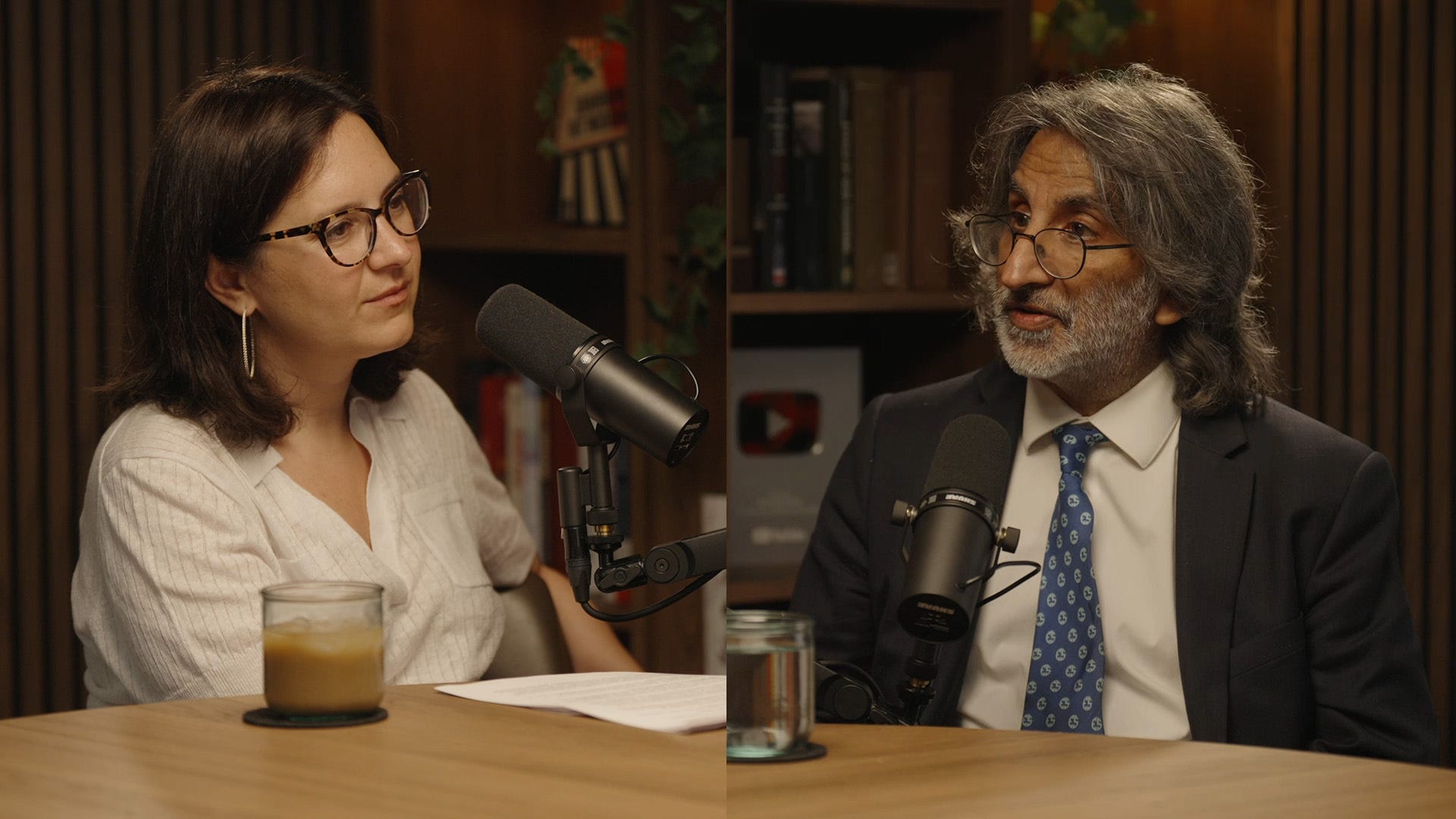 The Words That Made America | This is a free preview of a paid episode. To hear more, visit www.thefp.comAmerica is turning 250. And we’re throwing a yearlong celebration of the greatest country on Earth. The greatest? Yes. The greatest.We realize that’s not a popular thing to say these days. Americans have a way of taking this country for granted: A Gallup poll released earlier this week shows that American pride has reached a new low. And the world at large, which is wealthier and freer than it has ever been in history thanks to American power and largesse, often resents us. We get it. As journalists, we spend most of our time finding problems and exposing them. It’s what the job calls for.But if you focus only on the negatives, you get a distorted view of reality. As America hits this milestone birthday, it’s worth it to take a moment to step back and look closely at where we actually are—and the reality of life in America today compared to other times and places. That reality is pretty spectacular.Could Thomas Jefferson and the men gathered in Philadelphia who wrote down the words that made our world—“We hold these truths to be self-evident, that all men are created equal, that they are endowed by their Creator with certain unalienable Rights, that among these are Life, Liberty and the pursuit of Happiness”—ever have imagined what their Declaration of Independence would bring?The Constitution. The end of slavery. The defeat of Hitler. Astonishing wealth and medical breakthroughs. Silicon Valley. The most powerful military in the world. The moon landing. Hollywood. The Hoover Dam. The Statue of Liberty (a gift from France). Actual liberation (a thing we gave France). Humphrey Bogart and Tom Hanks. Josephine Baker and Beyoncé. Hot dogs. Corn dogs. American Chinese food. American Italian food. The Roosevelts and the Kennedys. The Barrymores and the Fondas. Winston Churchill (his mom was from Brooklyn). The Marshall Plan and Thurgood Marshall. Star Wars. Missile-defense shields. Baseball. Football. The military-industrial complex. Freedom of religion. UFO cults. Television. The internet. The Pill. The Pope. The automobile, the airplane, and AI. Jazz and the blues. The polio vaccine and GLP-1s, the UFC and Dolly Parton.The list goes on because it’s really, truly endless. Ours is a country where you can hear 800 languages spoken in Queens, drive two hours, and end up among the Amish in Pennsylvania. We are 330 million people, from California to New York Island, gathered together as one.Each of those 330 million will tell you that ours is not a perfect country. But we suspect most of them would agree that their lives would not be possible without it. So for the next 12 months, we’re going to toast to our freedoms on the page, on this podcast and in real life. And we’re doing it the Free Press way: by delving into all of it—the bad and the good and the great, the strange and the wonderful and the wild.And today—on America’s 249th birthday—we’re kicking off this yearlong event with none other than Akhil Reed Amar. Akhil has a unique understanding of this country—and our Constitution. Akhil is a Democrat who testified on behalf of Brett Kavanaugh, is a member of the Federalist Society, he’s pro-choice but also anti-Roe—and these seeming contradictions make him perfectly suited to answer questions about the political and legal polarization we find ourselves in today.Akhil is a constitutional law professor at Yale and the author of the brilliant book The Words That Made Us: America’s Constitutional Conversation, 1760–1840. He also hosts the podcast Amarica’s Constitution, and you might recognize his name from his work in The Atlantic. I ask him about the unique history that created our founding document, the state of the country, our political polarization, the American legal system, and what this country means to him.Click below to listen to our conversation, or scroll down for an edited transcript.On Thomas Jefferson’s glaring contradiction:Bari Weiss: When we think about that core line—We hold these truths to be self-evident, that all men are created equal, that they are endowed by their creator with certain unalienable rights—it makes me cry to even say, it’s so beautiful. And yet it was written by a man who owned hundreds of slaves—I think 600 over the course of his life.How did they, in that moment, write those lines and then go back to a house full of slaves? How did they understand the contradiction? | 6m 04s | ||||||
| 6/10/25 |  Mike Huckabee on Gaza, Iran, and MAGA’s Foreign Policy War | This is a free preview of a paid episode. To hear more, visit www.thefp.comThere are people who have résumés we might call “diverse” or “wide-ranging.” And then there are people like Mike Huckabee, who, at age 69, has seemingly crammed several lifetimes’ worth of careers into one.He was a televangelist. He was governor of Arkansas for over a decade. He ran for president and won the Iowa caucuses. He hosted his own show on Fox News for seven years. He’s written books on everything from Christmas to weight loss.And now he’s America’s ambassador to Israel. And he’s filling that post at a moment when the longtime status quo in the region is being completely upended. Israel is inching closer to eradicating Hamas in Gaza—but the day-after plan is unclear. Iran is feared to be on the cusp of developing nuclear weapons, and Trump and Steve Witkoff are working hard on a renewed Iran nuclear deal.Arab countries like Saudi Arabia, and even Syria, could normalize relations with Israel. But Islamist terror groups are trying to derail any attempts at lasting peace. And American adversaries like China and Russia are trying to take advantage of any instability in the region. Suffice it to say, it’s a time of great uncertainty.Meanwhile, Huckabee is, in some way, redefining what it means to be Israel’s ambassador. He’s been outspoken in criticizing inaccurate press accounts about the conflict, and he’s been ardent in his support of the Jewish state. And while most ambassadors exist behind the scenes, Mike Huckabee has been in front of the cameras, making the case for Israel and its war with Hamas directly to Americans. It could even be argued that he’s making a better case for Israel than the Israeli government itself.So today on Honestly, Ambassador Huckabee and I discuss all of that and more—the rise of antisemitism in the U.S. and the West more broadly, the future of America’s involvement in the Middle East, and the fight between doves and hawks in Trump’s 2.0 presidency.One final note: This interview ended abruptly. The ambassador took a call from Israel, and at 10 p.m., the rocket sirens blared and he had 90 seconds to get to the shelter. It’s something normalized in Israeli life. Talk to any parents, and they’ll talk about having to wake up their kids several times a week because of these sirens. But it also serves as a constant reminder of the persistent threat that Israel faces, and not just from Hamas.The conversation is thought-provoking and timely, and I think you’ll really enjoy it.Click below to listen to our conversation, or scroll down for an edited transcript. | 4m 12s | ||||||
| 5/27/25 |  How to Examine Your Marriage and Your Life | This is a free preview of a paid episode. To hear more, visit www.thefp.comA lot of people fall in love outside of their marriages. Some have affairs. Some leave their wives or husbands. But not a lot of people are Agnes Callard.Agnes did something really unique. She fell in love while she was (seemingly happily) married with two children. She told her husband. They got divorced—sharing a single lawyer—and it took under three weeks to split.And then? Then they all moved in together. To repeat, Agnes lives with her husband, her ex-husband, and their combined three kids. And by the way, they’re all philosophy professors at The University of Chicago.The cherry on top is that she talks about all of it. A lot. And with radical openness and honesty—including in an unforgettable profile of her in The New Yorker titled “Agnes Callard’s Marriage of the Minds.”Perhaps you hear all of that and think: This woman is a nut. Or at the very least a little zany.I beg to differ. There’s something about Agnes. Whether it’s a result of her worldview, her predisposition, or her vocation as a philosopher, that gives her a tremendous ability to float above any situation—including the most intimate and personal—and philosophize it.When Agnes writes and speaks openly about the experience of falling in love while married, and about how it unmoored her understanding of relationships and expectations, she helps the rest of us make sense of the most universal topics and experiences. It is an unusual gift.These experiences and her reflections on them all became fodder for her upcoming book, Open Socrates: The Case for a Philosophical Life, where she says we are not asking ourselves important questions—about how we should live and how we might change.Today on Honestly, I ask Agnes: how and why she turned her life upside down for love, how she knew it was love, how she examines her own marriage, how we can all live like her hero Socrates, and how an examined life can benefit us all.Click below to listen to our conversation, or scroll down for an edited transcript.The meaning of love:Bari Weiss: What is love? | 3m 11s | ||||||
| 5/20/25 | 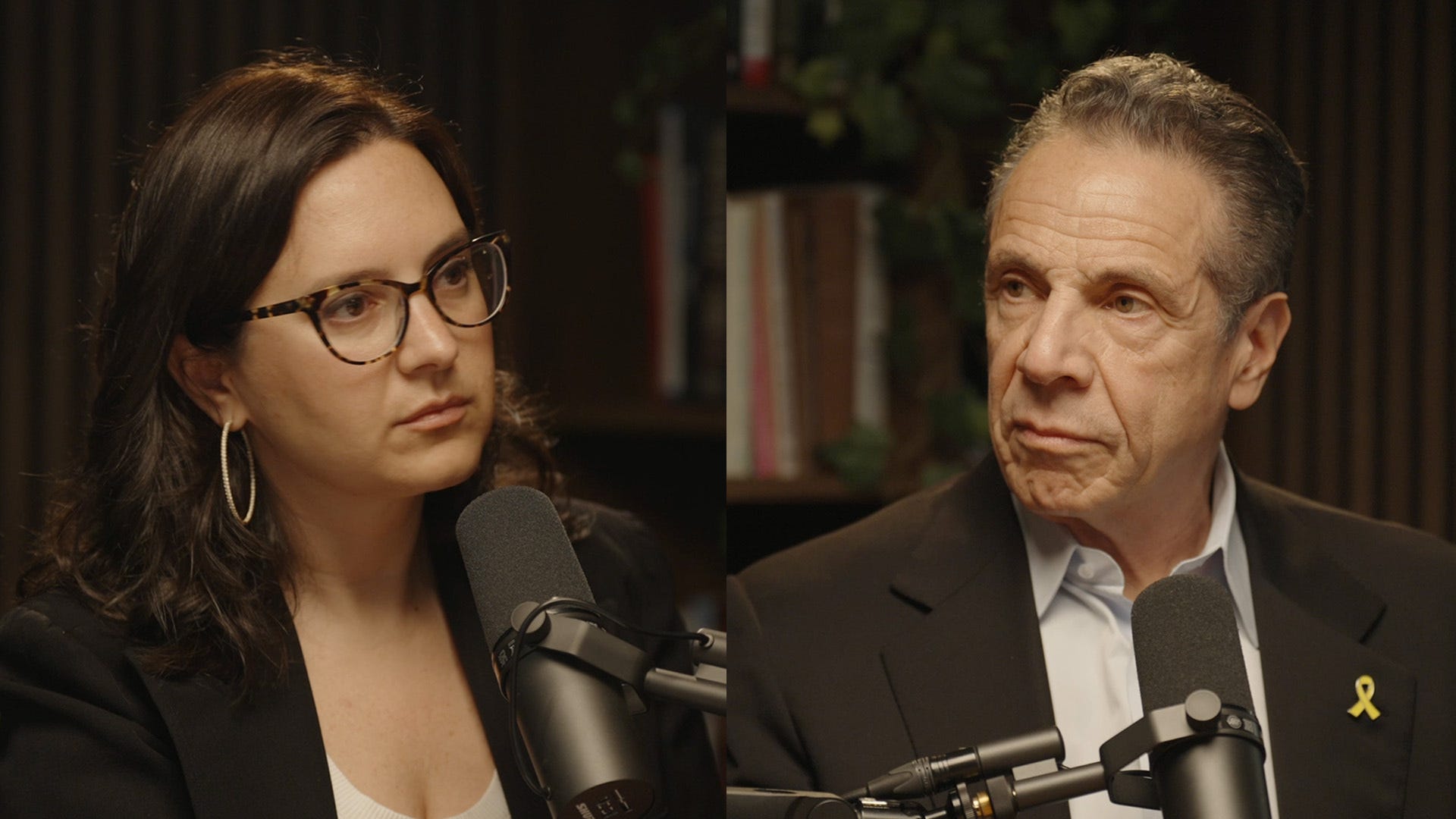 Andrew Cuomo on His Past and New York’s Future | This is a free preview of a paid episode. To hear more, visit www.thefp.comWhen you think about great political comebacks, maybe you think of Donald Trump, or Richard Nixon, or “comeback kid” Bill Clinton.You might soon add Andrew Cuomo to that list. In 2020, Cuomo was at the top of the world. He had been governor of New York for a decade. He had an illustrious career in New York politics—which is sort of the Cuomo family business. He learned how the state worked from his father, three-term Democratic governor Mario Cuomo.When Covid hit, Cuomo’s star just kept rising. Millions of Americans—even outside of New York—tuned into his Covid briefings and his CNN segments with his brother, Chris Cuomo, then of CNN.He was “America’s governor.” On the cover of Rolling Stone. Women and men were even self-identifying as “Cuomosexual.”Then it all came crashing down. With two scandals—one personal and one political.As Covid was peaking in New York City, Andrew Cuomo was hit with a wave of allegations. In the end, state Attorney General Letitia James brought forward a report that alleged Cuomo sexually harassed 11 women. (Cuomo denies wrongdoing.)The other scandal, as many will recall, had to do with Covid. Specifically, Cuomo’s administration was accused of mishandling the readmission of elders who’d had Covid into nursing homes—and many alleged that he misrepresented the nursing home death count. (The governor also disputes that, as you’ll hear today.)On August 10, 2021, Cuomo announced his resignation. His political career appeared to be over.For a time he totally disappeared from public life. He went from having a huge audience—59 million viewers in total—tuning into his Covid briefings… to zero.Today, in May 2025, the picture is dramatically different.Andrew Cuomo is now the front-runner to be the next mayor of New York City. Among Democrats—the party that tore him down—he has a commanding lead, polling at around 37 percent ahead of next month’s primary. His closest competitor, 33-year-old socialist state Assemblyman Zohran Mamdani, is hovering around 18 percent, according to a Marist poll from just last week.So: What is it about Andrew Cuomo? Will New York choose him again? And if so: Why?What does that say about the state of the city and our political choices? And why does he want the job of mayor at all?Today on Honestly, I ask former governor Andrew Cuomo about all of it: Covid and the harassment allegations; public safety and affordability; school choice; Eric Adams’s tenure; Donald Trump; illegal immigrants in New York City; Zohran Mamdani; the state of the Democratic Party; and getting New York City back on track.Click below to listen to our conversation, or scroll down for an edited transcript.On why he’s running for mayor:Bari Weiss: Why should New Yorkers vote for you? And more importantly, why should they even come out to vote?Andrew Cuomo: One of the reasons we’re in the situation we're in is because people didn’t come out and vote. Come out and vote, otherwise the far-left activists win the day.The city is in real trouble. We cannot take another four years like the past four years. That cannot happen. We’re losing too many New Yorkers. The city is deteriorating too quickly. I’m a lifelong New Yorker and I love New York. And I am sure if you’re a New Yorker you love New York. So come out to save the city. | 3m 43s | ||||||
| 5/13/25 |  How China Captured Apple | This is a free preview of a paid episode. To hear more, visit www.thefp.comThe majority of people listening to this episode are hearing it on an iPhone. As most of us can attest, the iPhone is so central to our lives that if we lose it, we feel totally unmoored from our ability to function in the world.It’s hard to explain how ubiquitous the iPhone is—and how much of a behemoth Apple is. Apple sells over 60 million iPhones in the U.S. a year, and one plant can make as many as 500,000 iPhones per day. And in 2024, the company brought in a total revenue of $391 billion.The rise of Apple and the iPhone did not happen by accident. The fact that we all walk around with the most sophisticated technology in our pockets—at a cost of about a thousand dollars each—is the result of two forces: Tim Cook, the CEO of Apple, and China, our largest geostrategic and economic rival.Few people are more prepared to discuss the symbiotic relationship between Apple and Communist China than Patrick McGee, a longtime business journalist who has covered Apple for the Financial Times. McGee is the author of Apple in China: The Capture of the World’s Greatest Company.And Patrick makes the case that Apple became the world’s most valuable company by wedding itself—and its future—to an authoritarian state. As the president and others talk about decoupling from the country, Apple’s exposure in China isn’t just a liability for the company—it’s a liability to our national security, our own workforce, and our future.Today on Honestly, Bari asks Patrick how China came to dominate Apple’s manufacturing supply chain; how its totalitarian system and labor practices lured Apple to it; and how Apple’s decades-long transfer of knowledge and capital into China has made it nearly impossible to leave. Also, why the conventional wisdom—which is that Apple would not exist but for China—actually works the other way around. As Patrick argues, China would not be China without Apple.Click below to listen to our conversation, or scroll down for an edited transcript. | 2m 56s | ||||||
| 5/6/25 |  Dana Perino on Trump’s White House, Fox News, and. . . Love | This is a free preview of a paid episode. To hear more, visit www.thefp.comSometimes we have a guest who needs no introduction. You know Dana Perino. She took on the job of White House press secretary when President George W. Bush was at his most unpopular—back in 2007 and 2008, as the Iraq War dragged on. She did not receive a warm welcome from those covering the White House—outlets like The New Republic called her clueless, … | 2m 52s | ||||||
Showing 25 of 42
Pitch Fit is a Pro feature
See how bookable this show is for guests, which brands already advertise, the per-episode ad value, and the best-fit guest and sponsor profile. The numbers are blurred on the free plan.
How readily this show books outside guests like you.
How proven this show is for host-read sponsorships.
For Guests
ProFor Advertisers
ProUpgrade to Pro to unlock guest cadence, sponsor categories, fit scores, and per-episode ad value for this show.