

Insights from recent episode analysis
Audience Interest
Podcast Focus
Publishing Consistency
Platform Reach
Insights are generated by CastFox AI using publicly available data, episode content, and proprietary models.
Total monthly reach
Estimated from 3 chart positions in 3 markets.
By chart position
- 🇫🇷FR · Nature#9310K to 30K
- 🇳🇿NZ · Nature#533K to 10K
- 🇳🇴NO · Nature#883K to 10K
- Per-Episode Audience
Est. listeners per new episode within ~30 days
11K to 35K🎙 Biweekly cadence·42 episodes·Long inactive - Monthly Reach
Unique listeners across all episodes (30 days)
16K to 50K🇫🇷60%🇳🇿20%🇳🇴20% - Active Followers
Loyal subscribers who consistently listen
4.8K to 15K
Market Insights
Platform Distribution
Reach across major podcast platforms, updated hourly
Total Followers
—
Total Plays
—
Total Reviews
—
* Data sourced directly from platform APIs and aggregated hourly across all major podcast directories.
On the show
Recent episodes
Horticulturati: The Phosphorus Paradox (Part 1)
May 7, 2023
Unknown duration
Horticulturati: The Multilayered Magic of Sheet Mulch
Mar 25, 2023
Unknown duration
Horticulturati: Fruit Tree Care with Susan Poizner
Mar 14, 2023
Unknown duration
Horticulturati: The Art of Graphics with Lisa Nunamaker and Amy Fedele
Dec 23, 2022
Unknown duration
Horticulturati: Thorny Common Names
Nov 3, 2022
Unknown duration
Social Links & Contact
Official channels & resources
Official Website
Login
RSS Feed
Login
| Date | Episode | Description | Length | ||||||
|---|---|---|---|---|---|---|---|---|---|
| 5/7/23 | Horticulturati: The Phosphorus Paradox (Part 1) | On this episode, we're tackling Phosphorus – an element, crucial to life on earth, which exists in both abundance and scarcity. We cover how humans got hooked on P fertilizers, the political and environmental impacts of mining and pollution, and what might be done about it. Mentioned in this episode: City of Austin Algae Mitigation;Toledo Junction Coalition Interview; Points North Podcast; US EPA explanation of phosphorus processing waste product storage; Florida Public Radio story about Florida mine disasters; Atlas Obscura podcast: "The Belt and Berm" Part 1 and Part 2; Atlas Obscura text: Moroccan Western Sahara Wall; Soil is Sexy Support us by subscribing to our Patreon! Email info@horticulturati.com | — | ||||||
| 3/25/23 | Horticulturati: The Multilayered Magic of Sheet Mulch | On this episode, we're gettin' down and dirty with sheet mulch. Sheet mulching is a no-till, no-dig gardening practice of removing unwanted vegetation and building fertile soil by layering organic matter and letting it compost in place. While the layers suppress weeds by blocking sunlight, subterranean soil biology goes to work to break down the layers into new soil. The beauty of this simple practice is that you can do it at any time of year with materials you have on hand (like cardboard, shredded paper, and leaves) or can source for free from local sources (arborist wood chips, coffee grounds, and spent mushroom substrate). We discuss the reasons for sheet mulching, when and how to do it, and what to use. Then we dive into the corrugated controversy around cardboard and ponder the role of science in gardening. Mentioned in this episode: "Pocket Prairies with John Hart Asher" (Horticulturati podcast episode, 2022); JHA pocket prairies ep of Horticulturati; Gaia's Garden: A Guide to Home-Scale Permaculture by Toby Hemenway (2001); "Fungal Vision with Daniel Reyes" (Hothouse podcast episode, 2018); Mycelium Running by Paul Stamets (2005); Teaming with Microbes: The Organic Gardener's Guide to the Soil Food Web by Jeff Lowenfels and Wayne Lewis (2006); "Mulches: The Good, The Bad, and the Really, Really Ugly" by Dr. Linda Chalker Scott (presentation to the Clackamas County Master Gardeners, 2019); "The Cardboard Controversy" by Chalker-Scott (Garden Professors blog, 2015); "Permaculture - More Concerns" by Chalker-Scott (Garden Professors blog, 2010). Join The Horticulturati on Patreon for bonus episodes! Email us info@horticulturati.com | — | ||||||
| 3/14/23 | Horticulturati: Fruit Tree Care with Susan Poizner | "Fruit trees need hands-on care." That's the motto of our guest, Susan Poizner of OrchardPeople.com. Susan is an urban orchardist, teacher, journalist, and filmmaker. She is the author of Growing Urban Orchards (2014), cofounder of the Ben Nobelman Park Community Orchard in Toronto and the host of the Urban Forestry Radio podcast. She also teaches fruit tree classes on her website. Colleen was eager to interview Susan after taking her online courses. Susan gives us the basics on why fruit trees need human intervention to thrive; we also discuss urban orchards, heirloom species, food forests, and Susan's transition from journalism to horticulture. Then Colleen and Leah discuss the impact of Austin's recent ice storm on fruit trees. Mentioned in this episode: North American Scion Exchange (Facebook group). Join THE HORTICULTURATI PATREON for early access to episodes and bonus content! Email us at info@horticulturati.com or call the Horticulturati Hotline at 347-WAP-HORT. | — | ||||||
| 12/23/22 | Horticulturati: The Art of Graphics with Lisa Nunamaker and Amy Fedele | In this roundtable, we talk about drafting and drawing with Lisa Nunamaker, of Paper Garden Workshop, and Amy Fedele, of Pretty Purple Door, two fabulous garden educators who offer online courses in landscape graphics. Leah took courses from both instructors this year -- Lisa's Garden Graphics Toolkit and Amy's Great at Procreate. We discuss why the fundamentals of hand-drafting remain so valuable to the design process; the role of digital design programs like AutoCAD; and how tablet apps provide a new, hybrid avenue of digital hand-drafting. Then we turn to to the subject of emotional baggage: Why is drawing so scary for so many adults? How can we gain confidence as creatives and develop our own unique visual style? Mentioned in this episode: the tablet apps (Procreate, Adobe Fresco, Morpholio Trace, Concepts); The Creative Habit by Twila Tharp (2006). The Horticulturati is brought to you by Leah Churner and Colleen Dieter. Join our Patreon for early access to shows and bonus episodes! | — | ||||||
| 11/3/22 | Horticulturati: Thorny Common Names | A rose by any other name would smell as sweet, but some of the common names we use for plants downright stink! In this episode, we're diving into problematic colloquial names. Some common names are geographically misleading ("Jerusalem artichoke"); others are xenophobic, racist, or antisemitic ("wandering Jew"); while still others are an unfortunate combination of both ("Turk's cap"). While it's probably too much to expect everyone to start using Latin names for plants, we can adapt new common names that are more culturally sensitive and accurate. Like the plants themselves, common names are organic, living things that need to evolve over time. First up, some armadillo drama and an update on Colleen's super-low-maintenance front yard renovation inspired by the writing of Roy Diblik (here's our original episode about that.) Mentioned: Great at Procreate, an online digital drawing course from instructor Amy Fedele; "Problematic Common Names" (House Plant Hobbyist, 2021); How Plants Get Their Names by L.H. Bailey (Macmillian, 1933); Native Flora of Texas by the Texas Highway Department (undated, ca. 1960); The Better Common Names Project of the Entomological Society of America; and Potentially Problematic Common Names, a study by the American Public Gardens Association (2021). Like the show? Please support us on Patreon! Email info@horticulturati.com | — | ||||||
| 10/24/22 | Seed Swap! | Attention plant lovers! Central Texas Seed Savers is hosting a Seed Swap at the Austin Central Library (710 W. Cesar Chavez St) on Saturday, October 29 from 11-1pm. This event is free and open to the public. Bring seeds to share! Or just come get some seeds! For more info, visit https://www.centexseedsavers.org and https://library.austintexas.libguides.com/seedsandsustainability | — | ||||||
| 9/3/22 | Horticulturati: Humble History of the Flowerpot | In this episode, Colleen unearths as much as she can about the largely unwritten history of plant pots. When did humans start growing plants in containers? How did innovations in materials and technology lead to the domestication of plants, plant collecting, and the growth of the nursery industry? Why are plant pots so overlooked as a facet of industrial design? (We can rattle off several iconic chair designs, but flowerpots? Not so much.) Why don't the standardized names of nursery pot sizes correspond to their actual volume in the US? We have more questions than answers, folks. First up, Leah is practicing her drawings. And we need an alternative name for the tricky season that comes between summer and fall in Texas. Join our Patreon for bonus episodes and more! Email us at info@horticulturati.com or call the Horticulturati Hotline to leave a voicemail at 347-WAP-Hort. Mentioned in this episode: Rain lilies (Cooperia drummondii); Paper Garden Workshop; "Elevation to Plan" technique; Plan to Elevation (Leah's sketch); The Artist's Way (1992) by Julia Cameron; Drawing on the Right Side of the Brain (1979) by Betty Edwards; Willy Guhl designs on Artnet; a bio of Guhl; history of flowerpots from the Salem Maritime National Historic Site; "Plastic Pots and the Nursery Industry: Production, Use, Disposal, and Environmental Impacts" (2020) by the APLD; Eric Soderholtz. | — | ||||||
| 8/5/22 | Horticulturati: The Full Monty Don | We're back with a salute to Monty Don, beloved British gardening expert, author, and fashion icon, whose infectious passion for plants is boosting our spirits through this bummer summer. Though little known in the US, jaunty Monty is a big celebrity across the pond, as the host of the BBC's Gardener's World, Big Dreams, Small Spaces, and Around The World in 80 Gardens. With his soothing temperament and sharp insights, he's a bit like a cross between Anthony Bourdain and Mr Rogers. We discuss differing approaches to horticulture and land stewardship in the US and the UK and how Big Dreams, Small Spaces has informed our thinking about the role of the landscape designer as consultant. Then we follow Monty's 80 Gardens journey to Mexico City to visit perhaps the oldest perennial flowering gardens in the world: the floating chinampas of Xochimilco. (Where to watch these shows in the US? Gardener's World and Big Dreams are currently available on Amazon Prime. The full 80 Gardens series is on Youtube.) Mentioned in this episode: Around The World in 80 Gardens (book) by Monty Don. The Horticulturati is cohosted by Leah Churner and Colleen Dieter. Want more? Please join our Patreon to hear our bonus podcast, "In the Weeds," and early access to episodes! | — | ||||||
| 6/12/22 | Horticulturati: Conservation Design | On this episode, we dive into ecologist Douglas Tallamy's books Nature's Best Hope (2019) and The Living Landscape (2014, with Rick Darke). Tallamy's work takes native plant gardening and wildlife gardening to another level by focusing not just on species diversity, but on diversity of species interaction to promote ecological conservation. According to Tallamy, "native" plants are those which have "evolved in a given place over a period of time sufficient to develop complex and essential relationships with a diversity of animals." Native plants, then, are organisms that have interacted with insects, birds, and mammals for thousands, if not millions, of years. We discuss Tallamy's perspective and the how we might tackle the challenge of implementing a conservation design -- and convincing homeowners to think of themselves as land stewards. Up first: It's hot here in Austin, so we are talking about what early triple-digit temps mean for gardeners. Leah is looking for her niche, taking inspiration from specialist insects. Support us by joining our Patreon! $5 a month gets you early access to episodes, bonus content, and our deep gratitude. Mentioned in this episode: National Wildlife Federation's Native Plant Finder web tool; The Know Maintenance Perennial Garden (2014) by Roy Diblik; Planting in a Post-Wild World (2015) by Claudia West and Thomas Rainer. Also - after recording, we found this article from the NWF about yucca moths. (Their caterpillars eat the yucca seeds and flowers, not the leaves! Then the moths pollinate the yuccas in return!) | — | ||||||
| 5/14/22 | Horticulturati: Pocket Prairies with John Hart Asher | We sat down at the picnic table with John Hart Asher, host of Central Texas Gardener and Cofounder/Senior Environmental Designer at Blackland Collaborative to talk about pocket prairies. What's a pocket prairie? It's a very small prairie. What's a prairie? It's a community of native grasses and forbs wildflowers that have evolved along with microbes, plants, and animals over millennia. This "disturbance-driven ecology" historically relied on periodic fire and low-frequency, high-intensity grazing to function. John Hart sees the "millions-year-old technology" of the American prairie as a replicable system that we can borrow in our own yards to sequester carbon, manage stormwater runoff, and support the essential interconnections between life forms that make up the food-soil web. As Douglas Tallamy writes in his book Nature's Best Hope, "If each American landowner made it a goal to convert half of his or her lawn to native plant communities...[we] could collectively restore some semblance of ecosystem function to more than twenty million acres of what is now ecological wasteland." We discuss the role of wildfires and buffalo grazing in Texas before European settlement, the Lady Bird Johnson Wildflower Center's research on prescribed burning, and how to prepare, install, and maintain a pocket prairie. John Hart insists that we must rethink our approach to landscape design, gardening, land ownership, and even our concept of "nature" if we are to sustain life on earth. He describes prairie restoration as "a trajectory, not an intervention" -- a process, rather than a product -- which can help us reconnect with the web of life, reduce climate anxiety, and make our homes more beautiful to boot. Mentioned in this episode: Nature's Best Hope: A New Approach to Conservation that Starts in Your Yard by Douglas Tallamy; the USDA Web Soil Survey; Black Owl Biochar; KR Bluestem. Please join our Patreon for bonus episodes, early access, and more! | — | ||||||
Want analysis for the episodes below?Free for Pro Submit a request, we'll have your selected episodes analyzed within an hour. Free, at no cost to you, for Pro users. | |||||||||
| 1/7/22 |  Horticulturati: Designing for Maintenance & "The Soul of a Farmer" | Happy New Year! We're back from vacation with a discussion of a book that is very much in the Horticulturati wheelhouse, The Know Maintenance Perennial Garden. Author Roy Diblik, a Wisconsin-based designer and plantsman, argues that anyone can build a "design-magazine-worthy garden at home" by thoughtfully combining perennials to form functional plant communities that need little more than an annual mow – almost no irrigation, mulch, or hand-pruning required. This low-maintenance method could be a revelation for residential and commercial landscapes alike, but can it work in Texas, with our balmy winters and scorching summers? Is there a way to implement the mowing-for-maintenance concept using electric, rather than gas, machines? Colleen is inspired to experiment as she redesigns her front yard. Next, we review a documentary short, The Soul of a Farmer, by filmmaker Roger Sherman. Chef-turned-grower Patty Gentry of Early Girl Farm rents three acres in Long Island from Isabella Rosselini (!!!), who calls Patty "the Picasso of Vegetables." Sidestepping many of the tropes of farm-to-table docs (Gentry admits she'd probably be living out of her truck if it weren't for her spouse's financial support) this film paints an honest portrait of the struggles and small victories of one artisanal vegetable grower as she transitions from wholesale growing for restaurants to a Community Supported Agriculture (CSA) model. Food porn ahead! If you're SERIOUS about gardening, join our Patreon at $5/month and get bonus "in the weeds" content from this episode, video classes, and early access to the show! In this edition of the bonus, Colleen shares her plant list for the front yard, and the mulch conundrum continues. We're talkin' hydrophobic crustiness, the virtues of leaf mold versus pine straw, and so much more! Email info@horticulturati.com or leave us a message on the Horticulturati Hotline at 347-WAP-HORT. Photo credit Patrice Casanova/First Run Features | — | ||||||
| 11/30/21 |  Horticulturati: Growing a Vision with Barton Springs Nursery | If you have a passion for plants, you probably love plant shopping. Our local garden centers are more than just a place to source nursery stock; they're a designer's trove of botanical information and inspiration. After untold hours spent perusing the grounds of Barton Springs Nursery, we finally sat down for a chat with two of the new owners, designer Amy Hovis and horticulturist Willy Glenn. Founded in 1986 by Bernardine and Conrad Bering, Barton Springs Nursery is an Austin institution. Into a drab '80s landscape of photinias, nandinas, and boxwoods, the Berings introduced wild plants from seed and cuttings -- salvias, mallows, bunchgrasses, and palms -- and helped to pioneer the city's vibrant gardening scene with an emphasis on sustainability, native plants, and local expertise. After 35 years, the Berings retired in January 2021 and sold the store to Hovis, the owner of Eden Garden Design; Glenn, the former manager of the nursery; and Greg Thomas. Since then, they've added an event space, revamped the grounds, and adopted two new mascots: a kitten named Fern, and a tortoise named Fig. Hovis and Glenn say their goal is to make the "new" BSN the best nursery in Texas (at the very least). We talked about new propagation experiments coming down the pike, the catastrophic winter storm in February, and how the pandemic has ushered in an unexpected gardening renaissance. Please join our Patreon for early access to episodes and bonus content - including several classes on landscape design! Email us at info@horticulturati.com or dial the Horticulturati Hotline at 347-WAP-HORT. Mentioned in this episode: Know Maintenance by Roy Diblik (2014); Leersia oryzoides; Melica mutica | — | ||||||
| 10/29/21 | Horticulturati: Garden Design Part II | A year ago, we recorded a long and rambly episode on garden design. Now we're making it an October tradition! Revisiting the subject, we realize our approaches to design have changed, but we're still hell-bent on questioning basic tenets. How important is color? Are foundation shrubs necessary? Should we flip the script on "seasonal interest?" Does "timesharing with plants" really work? Join us at the picnic table as we parse out some jargon (form, texture, verticality), swap tips, and get hangry for cookies. Mentioned in this episode: Five Seasons: The Gardens of Piet Oudolf (2017) and Planting in a Post-Wild World by Thomas Rainer and Claudia West (2015). | — | ||||||
| 10/4/21 |  Horticulturati: Dividing & Multiplying Plants | When you have too many plants, it's time to make more! That's gardener logic for you. Fall is a great time to divide perennials and save seeds - but how? We dig into these methods of backyard propagation and again give you permission to be ruthless and/or lazy in the garden. Go ham on that root ball! Let the veggies bolt! Plants can handle it. Up first: Leah has a design question and Colleen scours the streaming platforms for Monty Don. Please join the Horticulturati on Patreon! Mentioned in this episode: Monty Don; "How to Divide 45 Favorite Perennials" and "Three Simple Ways to Divide Plants" from Garden Gate Magazine; The Complete Guide to Saving Seeds by Robert Gough and Cheryl Moore-Gough. www.horticulturati.com | — | ||||||
| 9/2/21 |  Horticulturati: Cleveland and the Cuyahoga River Fires | Fresh off a hometown visit to Cleveland, Colleen brings us the story of the Cuyahoga: a river once so polluted with industrial sludge, it burned. At least thirteen times. While the largest and most damaging conflagration occurred in 1952, it was the 1969 river fire that made national headlines, thanks to Mayor Carl Stokes. As one of the first Black mayors of a major American city, the charismatic and media-savvy Stokes connected the dots between economic inequality and environmental degradation, and advocated on the national stage for legislation that would clean up the "urban environment," starting with the Cuyahoga and Lake Erie. Today, the pristine Cuyahoga is a symbol of pride for Clevelanders, yet this civic success story belies the reality of ongoing inequality there. Colleen shares her personal history of growing up in "a city with no superlatives," her own chance connection to Stokes, and how she's begun parsing the difference between "environmentalism" and "environmental justice." Also, Leah shares an update on the so-called Mystery Seeds from China. Visit our website for more info. Support The Horticulturati on Patreon for bonus content and early access to episodes. Mentioned in this episode: "The Truth Behind the Amazon Mystery Seeds" by Chris Heath (The Atlantic, 7/15/21); Burning River Pale Ale; The Good Time III boat; The Mayor and The People: Carl B Stokes (album by Oliver Nelson); "Carl B. Stokes and the 1969 River Fire" (National Parks Service); "The Cities: The Price of Optimism" (Time, 8/1/69), "The Myth of the Cuyahoga River Fire" (Distillations Podcast, Science History Institute); "Bringing Back Trees to 'Forest City's Redlined Areas to Help Residents and the Climate" (NPR, 6/23/21). | — | ||||||
| 8/17/21 | Horticulturati: A Gardener's Guide to Honeybees (Part 2) | At long last, here's the second installment of our bee-stravaganza! Leah interviews beekeeper Tara Chapman, owner of Two Hives Honey, about the intricate connection between bees, plants, and weather. Then, your hosts discuss how to be a good steward to honeybees--and native bees and other pollinators as well. Even if you're not a beekeeper, there are many things you can do (or not do) to be a friend to the bees! Mentioned in this episode: Instagram's @mr.mrs.beeRescue and @theinnocentgardener (beekeeper Sam Dula); Honey and Venom by NYC beekeeper Andrew Coté. | — | ||||||
| 7/19/21 | Horticulturati: Gardener's Guide to Honeybees (Part I of II) | Enter the hive with us for another classic critter topic: BEES! We recorded so much on bees that we have to split this bee-nanza into a two-parter! In part one, Leah suits up for a tour at Two Hives Honey in Manor, Texas, and investigates honeybee ecology. In part two, we'll focus on how, as a gardener, you can support our honey-making friends (along with native bees and other pollinators). What are honeybees? Why do they live in boxes? And how did Apis mellifera, just one of tens of thousands of bee species in the world, become so ubiquitous in our gardens? We'll answer these questions and more with the help of professional beekeeper Samantha Dula. Mentioned in this episode: The Beekeeper's Bible by Richard A. Jones and Sharon Sweeney-Lynch; and Bee City (1951), a short film about honeybees narrated by sportswriter and amateur naturalist John Kieran. | — | ||||||
| 6/3/21 | Beyond Permaculture with Cassiopeia Farm | Welcome to Hothouse Season 2! If you follow any flower farmers on Instagram, the romance may be all too tempting: picture yourself quitting the city, fixing up an old farmhouse, and spending your days harvesting flowers and arranging bouquets on a ten-acre homestead. Now imagine doing that in a fire-prone, flood-prone, deer-pressured, rapidly developing portion of Austin without access to well water or an agricultural property tax exemption. Sam Eberhardt and Dan Poole are farming on the razor's edge, doing everything the hard way, and still somehow managing to make the dream look absolutely fabulous. In this episode, we take a walk behind the scenes of Cassiopeia, a flower farm and orchard dedicated to ethical land stewardship, wildlife conservation, and "beyond organic" principles. Sam and Dan discuss the structural obstacles faced by small farms, their commitment to regenerative agriculture, and their "shotgun approach" to rolling with the punches of climate change. Check out Cassiopeia Farm's farm-to-table CSA, the Best Buds Club, find their flowers at Austin Flower Company, Salt and Time, and Confituras, and follow them on Instagram. This interview was recorded in February 2019. Drop me a line! Music by Moonsicles. | — | ||||||
| 4/23/21 |  The Horticulturati: Owl Hours | Springtime is owl time. Owlets be hatching. Fledglings be fledging. Owl cams be streaming. Enter, with us, the kingdom of the night, as we celebrate these mysterious and beautiful birds. Drop us a line at www.horticulturati.com or call the Hotline at 347-WAP-HORT. Please join our Patreon! Mentioned: Merlin and Minerva's website, Instagram, and live Twitch stream; Austin Birds on Facebook; "Why is the owl considered a wise bird in the West and a symbol of foolishness in India?" (Times of India, Oct 3, 2004); "All About Owls" online presentation from the Austin Nature and Science Center by Mary Beck (Nov 14, 2020 -- ALSO please excuse us for calling it the Austin Science and Nature Center, that was incorrect); Athena the Great Horned Owl at the Lady Bird Johnson Wildflower Center; Owl Shack screech owl boxes. | — | ||||||
| 3/2/21 |  Horticulturati: Thawing Out | On this Horticulturati, we return from hiatus with tales of the Snowpocalypse -- or Snowmageddon, Snowvid, whatever you want to call it -- to document the record-breaking winter weather that broke Texas' electric grid and ushered in a scary new climate reality for the plants and people of the Lone Star State. Your hosts discuss personal trauma, a jumble of conflicting post-freeze plant advice, and a bunch of anecdotes about what worked and what didn't in preparing our gardens and ourselves for an unprecedented 144 consecutive hours of below-freezing temps in Austin. Visit us at horticulturati.com Subscribe to our PATREON! Mentioned in this episode: Aggie Horticulture Facebook page videos; City Council Member Greg Casar; Resolution Gardens | — | ||||||
| 11/29/20 |  The Horticulturati: Five Seasons Total Landscaping | Autumn has come to Texas at long last! To celebrate, we watched the documentary Five Seasons: The Gardens of Piet Oudolf (2017) by Thomas Piper, and we're now officially card-carrying Piet stans sporting Dutch accents, asymmetrical haircuts, and scythes. We discuss Oudolf's "mathematics" of design, seasonal ambience, and the art of garden editing. How might we translate Oudolf's temperate palate to the not-so-temperate climate of central Texas? Drop us a line at horticulturati.com or a leave a voicemail at 347-WAP-HORT. Here's where you can rent the movie: https://shop.fiveseasonsmovie.com/product/single-viewer/ Mentioned in this episode: Oudolf designs at Hummelo; Hauser & Wirth; the Lurie Garden; the High Line; Planting Design: Gardens in Time and Space by Piet Oudolf and Noel Kingsbury; Medicinal Plants of Texas by Nicole Telkes; and Coopers BBQ in Llano. | — | ||||||
| 10/7/20 |  Horticulturati: Garden Design | On this mega-episode of the Horticulturati, we're tackling garden design--our approaches, our anxieties, and our gripes about "expert" sources of mystifying advice and misleading photography. Garden design books are rife with the jargon of art theory. How well does this translate to the living medium of plants in the landscape? Google Image Search puts pictures of every plant imaginable at our fingertips, which is great...but also not so great. Hashing it out at length, we agree on some basic aesthetic tenets, then throw the rest out the window. Maybe it all comes down to climate, maintenance, and solving problems with plants. First up, Leah describes a real-life botanical nightmare that sends her down memory lane. Last, Colleen shares a listener letter from a Buckeye gardening in the southwest. Leave a voice message on the new Horticulturati Hotline! The number is 347-WAP-HORT. Or drop us a line on our website. Mentioned in this episode: The Mysteries of Harris Burdick by Chris Van Allsburg, here's the illustration Leah's referring to, and her 1991 home video of her interview with Chris Van Allsburg; Landscapes in Landscapes by Piet Oudolf; Gardens of Japan by Tetsuro Yoshida, and his excellent illustration of balanced grouping of stones; Rainwater Harvesting for Drylands and Beyond Volume 2 by Brad Lancaster; Texas Wildscapes by Kelly Conrad Bender. | — | ||||||
| 8/23/20 | 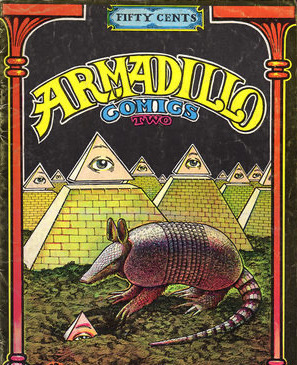 The Horticulturati: Armadillos! | Turtle rabbit. Shell possum. Roadkill. Whatever you call it, the nine-banded armadillo is a mysterious, ancient, and unfairly maligned mammal. Find out everything you ever wanted to know (and more) about this Texas icon. Leah traces the armadillo's bizarre migratory history, its role in medical research, and its rise as a symbol of the Austin music scene. We'll bust some armadillo myths, meet some famous champions (including naturalist Roy Bedichek and artist Jim Franklin) and discuss the intractable problem of armadillos in the garden. So, spark up a spliff and fill your pantyhose with worms! The next time one wreaks havoc on your flowerbeds, you may just have a little more appreciation for this humble critter. Songs: "Dead Armadillo Song" by the Lost Gonzo Band; "Spanish Moss" by Doug Kershaw; "Armadillo Stomp" by Commander Cody & the Lost Planet Airmen; "You Look Like the Devil" by Willie Nelson; "London Homesick Blues" by Gary P Nunn; "Beautiful Texas Sunshine" by Doug Sahm. Here's a Spotify playlist. Mentioned in this episode: Pink Fairy Armadillo; Adventures With a Texas Naturalist by Roy Bedicheck; The Amazing Armadillo by Larry L. Smith and Robin W. Doughty; The Armadillo World Headquarters: A Memoir by Eddie Wilson Jessie Sublett ; The Improbable Rise of Redneck Rock, by Jan Reid; "The Rise and Fall of the Armadillo World Headquarters" doc; "Poster Art of the Armadillo World Headquarters" doc ; A Poem is a Naked Person, a film by Les Blank; Franklin's story about "You Look Like the Devil" told on Pick Up The Tempo podcast; "Armadillo Man," (The New Yorker, 1971). Managing Armadillo Damage (Texas A&M Agrilife Extension). | — | ||||||
| 6/26/20 | The Horticulturati: Crap(e) Myrtles & Cushaw Squash | Hothouse is returning from hiatus! From here on out this podcast feed will be all Hothouse, so if you want to keep hearing The Horticulturati, please subscribe to that feed HERE (for Apple Podcasts) or HERE (for Spotify). Crape myrtles are blooming all over the place and Leah is DISGUSTED. What's triggering this Lagerstroemiaphobia? Perhaps it's not about the crape myrtles at all, but rather the lingering demons of her past in exurban hell. Next, Colleen reports on a storied gourd that vine borers can't touch: the cushaw squash. Domesticated some time around the dawn of agriculture, the obscure cushaw took on special significance to African American foodways as a "slave food" staple. We discuss plants and memory, the merits of "folklore," and the importance of heirloom seeds as "living archives" of cultural information. Happy belated Juneteenth! See photos of Colleen's cushaw plant and drop us a line at www.horticulturati.com. Mentioned in this episode: The Botany Coloring Book; The Crape Myrtle Trails of McKinney; Neil Sperry on topping crape myrtles; Nandina 'nana"; the "Pool Party Incident" of 2015; Homestead Heart (YouTube); "The Seeds of Survival" (NYT); Kathe Hambrick-Jackson, The River Road African American Museum (Louisiana); Michael W. Twitty, The Cooking Gene by Michael W. Twitty; Farming While Black, by Leah Penniman. | — | ||||||
| 5/17/20 | 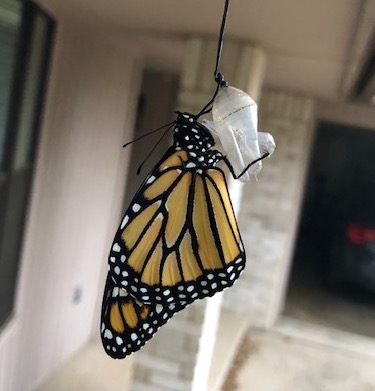 Horticulturati: Metamorphosis & Victory Gardens | On this Horticulturati, we bring you stories of adaptation and change. Leah has been studying up on butterfly holometabolism -- that is, complete metamorphosis -- with assistance from her niece, nephew, and Vladimir Nabokov. Colleen describes the history of Victory Gardens, from World War I to the present day, and outlines three ways to start a "pandemic garden" of your own. But first: we revisit the sleeper masterpiece that is the Secret Life of Plants doc (1979), which is only available in bootleg on YouTube. Watch it here. Mentioned in this episode: A color guide to familiar Butterflies Caterpillars and Chrysalides by Josef Moucha; Butterfly Gardening for the South by Geyata Ajilvsgi; Gayata on Central Texas Gardener; photo of a giant swallowtail chrysalis and a monarch chrysalis; Nabokov's 1948 "Butterflies" essay from the New Yorker; Sebastian's rescued chrysalis and newly emerged monarch; National Audubon Society Field Guide to Butterflies of North America; A Brief History of Gardening by Neil Fairbairn; Nature's Garden for Victory and Peace by George Washington Carver; Victory Garden (undated propaganda film); "How to Plant a Victory Garden" (NYT Sunday Style); this article about panic gardening; this article about scallions; and Central Texas Seed Savers. Many thanks to our young lepidopterists in the field, Sebastian and Margot. Get in touch with us on our website. | — | ||||||
Showing 25 of 41
Sponsor Intelligence
Sign in to see which brands sponsor this podcast, their ad offers, and promo codes.
Chart Positions
3 placements across 3 markets.
Chart Positions
3 placements across 3 markets.