How God Works: The Science Behind Spirituality
by PRX
Is this your podcast?On the show
From 10 epsHosts
Recent guests
Recent episodes
One Nation... Under God?
Oct 4, 2026
51m 57s
Rethinking Purpose
Sep 20, 2026
41m 42s
Season 11 Trailer
Sep 13, 2026
3m 18s
HGW Presents: Oh God Now What
Aug 23, 2026
45m 18s
Bonus Episode: God, Code, and Consciousness (Aspen Ideas)
Aug 2, 2026
45m 35s
Insights from recent episode analysis
Audience Interest
Podcast Focus
Publishing Consistency
Platform Reach
Insights are generated by CastFox AI using publicly available data, episode content, and proprietary models.
Most discussed topics
Brands & references
Total monthly reach
Estimated from 19 chart positions in 19 markets.
By chart position
- 🇦🇺AU · Philosophy#5130K to 100K
- 🇺🇸US · Philosophy#6730K to 100K
- 🇬🇧GB · Philosophy#1045K to 30K
- 🇲🇽MX · Philosophy#8110K to 30K
- 🇳🇱NL · Philosophy#1601K to 10K
- Per-Episode Audience
Est. listeners per new episode within ~30 days
62K to 214K🎙 ~2x weekly·117 episodes·Last published 1w ago - Monthly Reach
Unique listeners across all episodes (30 days)
124K to 428K🇦🇺23%🇺🇸23%🇬🇧7%+16 more - Active Followers
Loyal subscribers who consistently listen
50K to 171K
Market Insights
Platform Distribution
Reach across major podcast platforms, updated hourly
Total Followers
—
Total Plays
—
Total Reviews
—
* Data sourced directly from platform APIs and aggregated hourly across all major podcast directories.
Social Links & Contact
Official channels & resources
Official Website
Login
RSS Feed
Login
| Date | Episode | Topics | Guests | Brands | Places | Keywords | Sponsor | Length | |
|---|---|---|---|---|---|---|---|---|---|
| 10/4/26 |  One Nation... Under God? | The United States is a country founded on the separation of church and state. But what did the founders really mean by that? Should religion be banished from public life and policy debates? Or could it serve a purpose in the pursuit of happiness and freedom for all? On this episode, recorded during the Aspen Ideas Festival, we'll explore what the US founding fathers really thought about the different roles religion could play in society, how that view has changed through history, and what it means for the upcoming US elections. David French is an American political commentator and current opinion columnist for The New York Times. He is a senior fellow of the Trinity Forum, a former senior editor for The Dispatch, and former staff writer for National Review.Jeffrey Rosen is CEO Emeritus of the National Constitution Center, a professor of law at the George Washington University Law School, and a contributing editor for The Atlantic. | 51m 57s | ||||||
| 9/20/26 |  Rethinking Purpose | These days, it seems like advice for how to “find your purpose” is everywhere. But what if purpose isn’t some hidden answer waiting to be found? And what if anxiously searching for our one true calling actually makes it harder to live with purpose?On this episode, we explore some other approaches to the problem. Clinical psychologist Ross White tells us about how psychological flexibility can help us form purpose over time, and stay connected to it, even as our lives change. And we talk to philosopher Edward Slingerland about what early Chinese thinkers like Confucius and Zhuangzi would have made of our modern obsession with inventing a meaningful path from scratch. Ross White is an Honorary Professor of Clinical Psychology at Queen’s University, Belfast and the Founding Director of Strive2Thrive. He is the author of the book The Tree That Bends: How a flexible mind can help you thrive, as well as the article “Your purpose isn’t something you find, it’s something you form.”Edward Slingerland is a Professor of Philosophy at the University of British Columbia and a Visiting Professor in the Department of Religion at Dartmouth. He is the author of many books, including Trying Not to Try and the forthcoming title, Learning to See: Literature, Moral Perception and Early Confucian Virtue Ethics. Find out more about his work on his website. | 41m 42s | ||||||
| 9/13/26 |  Season 11 Trailer | Join us for Season 11 of How God Works, starting next week! | 3m 18s | ||||||
| 8/23/26 | votingmorals+4 | Curtis ChangJill Jacobs | Good FaithT’ruah | — | votingmorals+5 | — | 45m 18s | ||
| 8/2/26 | AI and spiritualitymoral guidance+4 | Paul BloomElizabeth Oldfield+1 | University of TorontoYale University+6 | — | AIspirituality+7 | — | 45m 35s | ||
| 7/12/26 | aliensspirituality+4 | Diana Walsh PasulkaSusannah Crockford | PRXMiss Information+3 | — | aliensspirituality+5 | — | 34m 48s | ||
| 6/21/26 | divinationhistory+4 | Michelle PfefferMelissa Lavin | University of OxfordSUNY Oneonta+2 | — | divinationtarot+6 | — | 44m 31s | ||
| 6/7/26 | humorJudaism+3 | Robby Hoffman | Pew Research CenterHBO+5 | — | Jewish humorRobby Hoffman+3 | — | 37m 06s | ||
| 5/24/26 | behavioral geneticssin+4 | Kathryn Paige Harden | University of Texas at AustinOriginal Sin: On the Genetics of Vice, the Problem of Blame, and the Future of Forgiveness+5 | — | sinbehavioral genetics+5 | — | 1h 02m 59s | ||
| 5/10/26 | artificial intelligencereligion+4 | Sigal SamuelPaul Bloom | VoxUniversity of Toronto | — | AIspirituality+5 | — | 58m 20s | ||
Want analysis for the episodes below?Free for Pro Submit a request, we'll have your selected episodes analyzed within an hour. Free, at no cost to you, for Pro users. | |||||||||
| 4/26/26 | faithdoubt+4 | Rabbi Angela Buchdahl | Central SynagogueHeart of a Stranger: An Unlikely Rabbi's Story of Faith, Identity, and Belonging | — | faithdoubt+5 | — | 45m 05s | ||
| 4/12/26 | doubtspirituality+4 | Christian WimanJulie Exline | Yale UniversityUniversity of Virginia School of Medicine+2 | — | doubtspirituality+5 | — | 38m 58s | ||
| 3/29/26 | women's rightsreligion+4 | Dania SulemanDr. Dianne Stewart | Emory UniversityA Different Cloth: Reimagining Faith and Feminism+2 | — | women's rightsreligion+6 | — | 42m 59s | ||
| 3/15/26 | 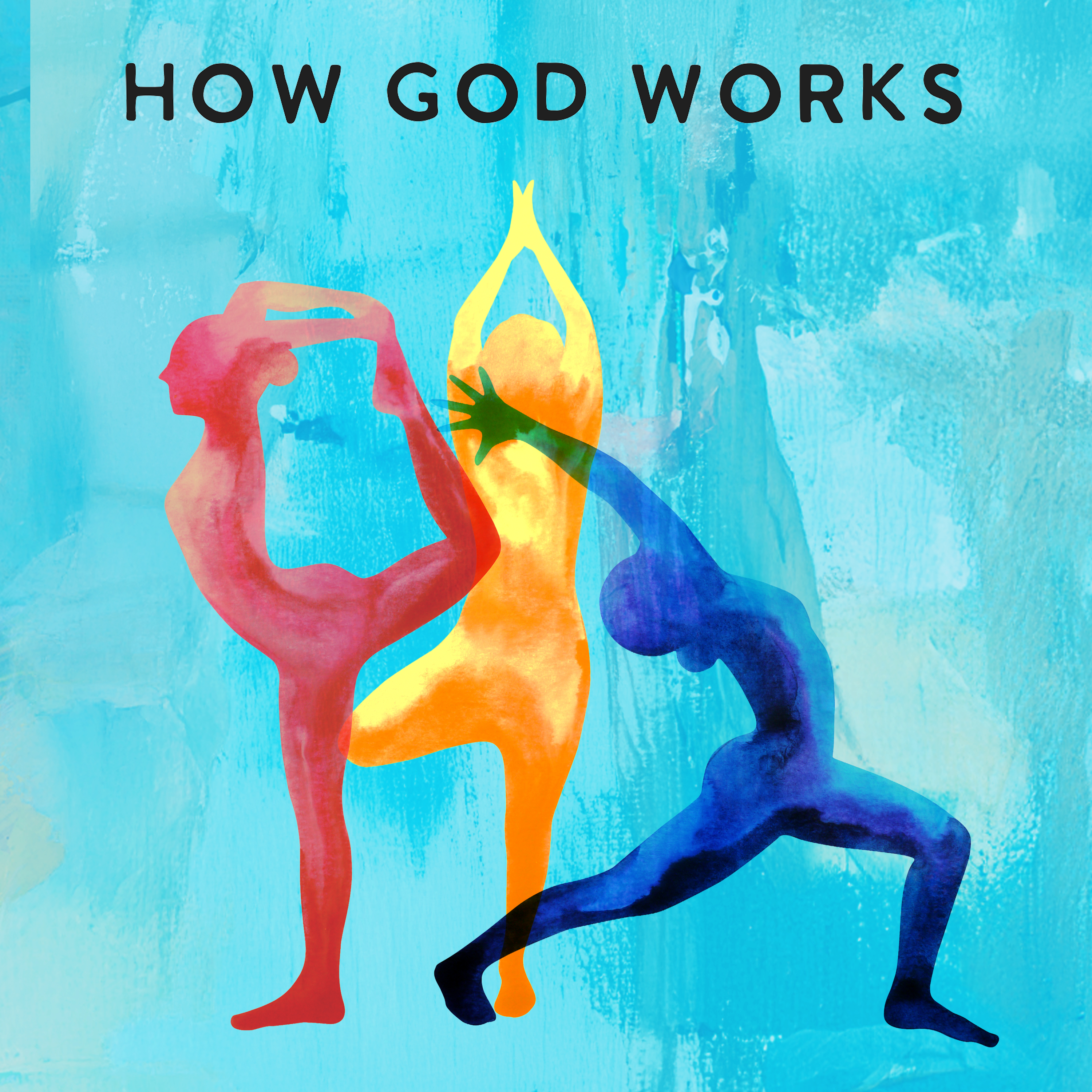 DIY Spirituality? | About 70% of all Americans consider themselves spiritual in some way, whether it be a belief in the soul, spirits or just the idea that something's going on beyond the natural world and what science can prove. But that doesn't mean they're ordering off the menu of organized religion. In this episode, we’ll talk to religion professor Liz Bucar, about this “spiritual salad bar” approach: where people pick and choose ingredients from various religions. What’s lost if we take these traditions out of their intended context? And could it even be causing harm? We’ll explore this through the lens of yoga - practiced by one in every six Americans alive today.Practicing yoga regularly does have proven health benefits, but it’s rooted in a much deeper spiritual and religious tradition that many people aren’t even aware of. With Liz, we’ll explore how restoring some religion to secular or new age spiritual practices can make them more ethical, meaningful and effective.Liz Bucar is a professor of religion at Northeastern University. She is the author of four books and her writing, teaching, and public lectures cover a wide range of topics but generally focus on how a deeper understanding of religious difference can change our sense of what is right and good. She is the author of the forthcoming book Beyond Wellness, which you can pre-order here. Learn more about her work on her website. | 31m 20s | ||||||
| 3/8/26 | Season 10 Trailer | Join us for Season 10 of How God Works, starting next week! | 2m 14s | ||||||
| 2/22/26 | Uniter or Divider? Explore Religion in Modern America. A How God Works Live Event (From the Archive) | We’ll be back on March 15 with an all-new season of How God Works! In the meantime, we’re excited to share one of our favorite episodes — our very first live event.If you ask people what they think about religion, you often get one of two answers: Religion is the source of war, violence, abuse, and hypocrisy OR a route to love, kindness, tolerance, and mercy.Put another way, it’s either what divides us or it’s the thing that can actually bring us together. In a country deeply divided over social, political, and moral issues that seems to be moving further apart by the day, the answer’s not likely to be a simple one. How God Works held its first live event in December to explore just that. Why does something that has the potential to connect us so deeply also have the ability to divide us so profoundly? And, regardless of what we believe, is there something we can learn from what religion gets right to find a way to come together?In a wide-ranging and often moving discussion, Dave spoke to a panel of leading spiritual thinkers and social scientists who have experienced both sides of the issue, including Central Synagogue Rabbi Angela Buchdahl, award-winning author and Christian Historian Diana Butler Bass, The University of North Carolina’s Deepest Beliefs Lab director Kurt Gray, and The Aspen Institute’s Religion and Society Program’s executive director Simran Jeet Singh. | 1h 22m 26s | ||||||
| 2/8/26 | The Spiritual (and Political) Crisis in the US (From the Archive) | A brand-new season of How God Works returns March 15! In the meantime, we’re revisiting a powerful episode from our archive that feels particularly relevant today. Anger, loneliness, and despair are hitting record levels in the US. Our social and political fabrics are fraying. Is the turn away from religion in the US part of the problem? And if so, might a spiritual renaissance (even among the secular left) help us find new ways to flourish? Join Dave as he talks with podcast host Krista Tippett and US Senator Chris Murphy about the role spirituality (or the lack thereof) plays in our individual and societal wellbeing.Krista Tippett is the host of the acclaimed podcast and radio show On Being. Learn more about the On Being Project’s work in the world here, and be sure to check out their YouTube channel for a rich selection of inspiring and informative videos.Chris Murphy is a U.S. Senator representing the State of Connecticut. Learn more about his work on his website, and read his column on the need for a spiritual revival among the political left here. | 36m 52s | ||||||
| 1/25/26 |  Mattering | Feeling that our life is meaningful - that we add value to the world and are valued by the people around us, isn’t just a good feeling, it's a fundamentally necessary one. In fact, the need to matter is a universal human motive, second only to the needs of food and shelter. On this episode we'll talk to author Jennifer Wallace about her new book on the topic of mattering, why we’re in a “mattering deficit,” the worrying impact this is having on our physical and emotional health, and what we can do to change that. And Duke researcher Patty Van Cappellen will share studies showing how spirituality and religious community can instill a deep sense of meaning in life that contributes to true human flourishing. Jennifer Wallace is an award-winning journalist and the author of Mattering. You can find more about her work on her website.Patty Van Cappellen, Ph.D., is an associate research professor at the Social Science Research Institute and the Department for Psychology and Neuroscience at Duke University. | 34m 58s | ||||||
| 1/11/26 | Rethinking Sin (From the Archive) | For many people, the word “sin” is associated with harsh judgment and shame. Or, it’s used to talk about guilty pleasures like consuming decadent desserts... But is this concept as harmful or outdated as it seems?Join Dave as he talks with Elizabeth Oldfield about Christianity’s Seven Deadly Sins, and how reconceptualizing them for modern life can offer a science-backed user’s manual of sorts to find joy and connection in this world, whatever your beliefs. Elizabeth Oldfield is host of The Sacred podcast and author of the book Fully Alive: Tending to the Soul in Turbulent Times. She also writes the Substack newsletter Fully Alive and works as a coach, consultant and facilitator. Find out more about her work on her website. | 38m 27s | ||||||
| 12/28/25 |  The End of the World As We Know It | These days, it feels like the end of the world is always just around the corner. From RaptureTok to climate doom and geopolitical upheaval, someone always seems to be predicting an impending apocalypse. But how does believing in The End affect how we are in the world? And is there a healthier way to navigate living in uncertain times?On this episode, we’ll talk to writer Dina Nayeri about growing up in a community that saw the apocalypse as right around the corner, and what she now sees as the dangers of that worldview. We’ll also talk to historian Kim Haines-Eitzen about how the apocalypse was originally understood in ancient texts, and what’s been lost in modern interpretations.Dina Nayeri is the author of the essay “Yearning for the end of the world,” as well as several other novels, plays, short stories, essays, and memoirs, including her most recent book, Who Gets Believed: When the Truth Isn’t Enough. Learn more about her on her website.Dr. Kim Haines-Eitzen is a Professor of Ancient Mediterranean Religions at Cornell University, and a Fellow at the National Humanities Center, where she is working on a forthcoming book project about the apocalypse. Learn more about her other research on her website. | 39m 52s | ||||||
| 12/14/25 | 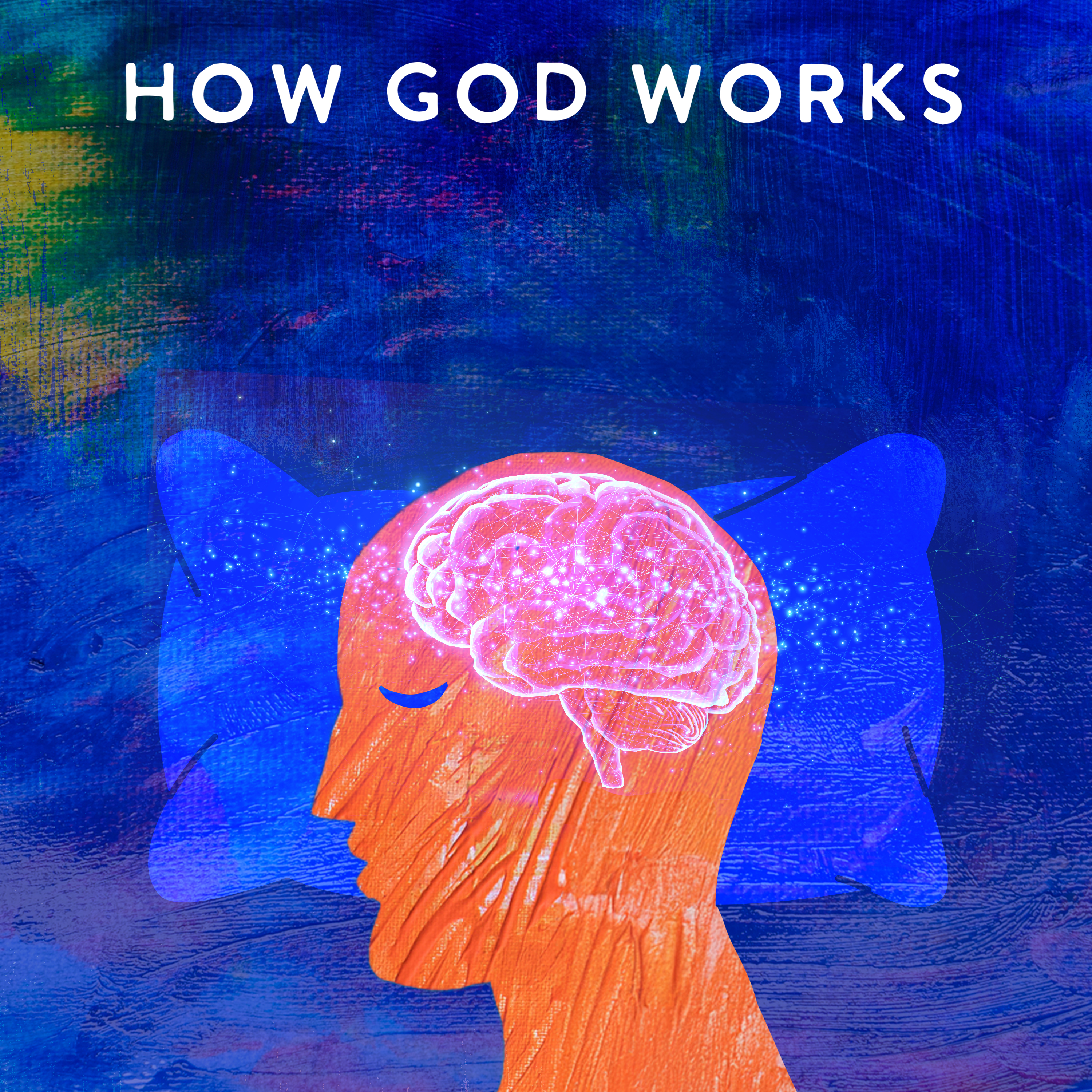 Dream Yoga | We spend about a third of our lives sleeping and yet the question of why we sleep and dream has remained a mystery for much of human existence. But recently scientists have developed the tools to begin to reveal some astonishing insights into lucid dreaming and its uses. In this episode, we'll talk to neuroscientist Ken Paller about the science of Lucid dreaming. Whether it's something any of us can learn to do and what benefits it might offer. And while the science of lucid dreaming and its possible uses is still in its infancy, Tibetan Buddhists found ways to master it centuries ago using a practice they call Dream Yoga. We'll talk with Geshe Thabkhe, a Tibetan Buddhist monk, about how members of his tradition have long been using this technique to enhance their spiritual lives, and how he and other monks are now working with Western scientists like Ken Paller and neuroscientist Robin Nusslock to research this special type of dream state and whether people in the outside world can influence or even communicate with them while they're dreaming. Robin Nusslock, PhD is a neuroscientist and Associate Professor of Psychology at Northwestern University. Ken Paller is Professor of Psychology and Director of the Cognitive Neuroscience program at Northwestern University. You can find out more about his work on his website. | 39m 11s | ||||||
| 11/30/25 |  Shamanism | When life feels uncertain, who do you turn to? Across cultures and throughout history, many of us have looked to people who seemed to have a special set of abilities and knowledge… shamans.On this episode, we’ll talk to anthropologist Manvir Singh about what shamanism actually is, how it works, and why its appeal is both timeless and universal. From a remote island in Indonesia to American Pentecostal churches, we’ll explore how shamans harness ritual, empathy, and performance to help people find meaning and relief in times of need.Manvir Singh directs the Integrative Anthropology Lab at the University of California, Davis. He is the author of Shamanism: The Timeless Religion, and a contributing writer for The New Yorker. Find out more about his work on his website. | 40m 59s | ||||||
| 11/16/25 |  Give Us This Day Our Daily Kale | For most of human history, religion guided people’s choices about health and food. Then with the rise of modern nutritional science in the 19th century, people began to favor scientific advice over religious ideas about how to eat. But lately, a new generation of Christian diet influencers are putting the God back in nutritional guidance, sometimes at the expense of science altogether. And this messaging might not be creating healthier or holier people. We'll talk to New York Times writer Jessica Grose and historian Catherine Newell about the long, complex history of food, faith, and morality. And we’ll ask - can we reconnect faith and health in America in positive ways that are informed by tradition and history, but also true to science?Jessica Grose has written books on motherhood, marriage and countless articles. More information about her work can be found on her website jessicagrose.com.Catherine Newell is a professor and the Associate Dean for Pre-Health Professions at the University of Miami. She is the author of the books entitled Food Faiths: Diet, Religion, and the Science of Spiritual Eating & Destined for the Stars: Faith, the Future, and America’s Final Frontier. | 34m 02s | ||||||
| 11/2/25 |  Becoming Wise | We often think of wisdom as something that comes with age, or as a gift reserved for a chosen few. But what if wisdom is more like a muscle… one that becomes stronger with practice?On this episode, we’re exploring the true meaning of wisdom. We’ll talk to psychologist Igor Grossmann and Jesuit priest Barton Geger about how science and spirituality have come to many of the same conclusions about what wisdom looks like in practice and what we can all do to train our hearts and minds to see more clearly and make choices that align with our values.Professor Igor Grossmann directs the Wisdom and Culture Lab at the University of Waterloo. Learn more about his work at his website. Father Barton Geger is an Associate Professor of the Practice at Boston College’s School of Theology and Ministry. Learn more about his work here and here. | 38m 42s | ||||||
| 10/19/25 |  Seeking the Spiritual Life | If you want to grow spiritually, should you go to a monastery and withdraw from the world, or look for greater meaning, connection, and purpose in the loud messiness of life? In other words, do you heal the world by working in it or praying for it? Philosophers and spiritual thinkers have debated it for centuries, but perhaps finding the right balance is the answer. On this episode of How God Works, we’ll talk with journalist Sigal Samuel, about the centuries old debate over the spiritual life and how best to pursue it - through contemplation or activity. We’ll also talk with Father Greg Boyle, a Jesuit priest and founder of the world's largest gang intervention, rehabilitation and prison reentry programs about how he finds a balance between an inner- and outer-focused life. Sigal Samuel is a Senior Reporter at Vox and Co-Host of Vox’s Future Perfect podcast, she also writes the advice column Your Mileage May Vary, which offers a framework for thinking through your ethical dilemmas and philosophical questions. Feel free to send Sigal your questions! And to learn more about her other work, check out her website.Father Greg Boyle is a Jesuit priest and the founder of Homeboy Industries. Learn about their work here. | 27m 45s | ||||||


Showing 25 of 117
Pitch Fit is a Pro feature
See how bookable this show is for guests, which brands already advertise, the per-episode ad value, and the best-fit guest and sponsor profile. The numbers are blurred on the free plan.
How readily this show books outside guests like you.
How proven this show is for host-read sponsorships.
For Guests
ProFor Advertisers
ProUpgrade to Pro to unlock guest cadence, sponsor categories, fit scores, and per-episode ad value for this show.
Chart history for How God Works: The Science Behind Spirituality
Peaked at #23 in PT, currently #23 in PT.
| Market | Genre | Peak | Current | Trend |
|---|---|---|---|---|
| PT | — | #23 | #23 | — |
| PE | — | #27 | #27 | — |
| IL | — | #33 | #33 | — |
| Australia | — | #51 | #51 | — |
| New Zealand | — | #62 | #62 | — |
| United States | — | #67 | #67 | — |
| RO | — | #69 | #69 | — |
| Mexico | — | #81 | #81 | — |
| BE | — | #92 | #92 | — |
| IS | — | #97 | #97 | — |
| CZ | — | #100 | #100 | — |
| United Kingdom | — | #104 | #104 | — |
| Norway | — | #105 | #105 | — |
| CO | — | #112 | #112 | — |
| CH | — | #127 | #127 | — |
| Ireland | — | #136 | #136 | — |
| Netherlands | — | #160 | #160 | — |
| TH | — | #191 | #191 | — |
| VN | — | #193 | #193 | — |
Chart Positions
19 placements across 19 markets.
Chart Positions
19 placements across 19 markets.