
Insights from recent episode analysis
Audience Interest
Podcast Focus
Publishing Consistency
Platform Reach
Insights are generated by CastFox AI using publicly available data, episode content, and proprietary models.
Most discussed topics
Brands & references
Est. Listeners
Insufficient chart data. Estimates will improve as the show charts.
- Per-Episode Audience
Est. listeners per new episode within ~30 days
N/A🎙 Daily cadence·388 episodes·Last published 1mo ago - Monthly Reach
Unique listeners across all episodes (30 days)
N/A - Active Followers
Loyal subscribers who consistently listen
N/A
Market Insights
Platform Distribution
Reach across major podcast platforms, updated hourly
Total Followers
—
Total Plays
—
Total Reviews
—
* Data sourced directly from platform APIs and aggregated hourly across all major podcast directories.
On the show
From 11 epsHosts
Recent guests
Recent episodes
How Nat Berman Scaled for 20 Years With One Simple Rule
May 19, 2026
24m 56s
How Stacy Eleczko Helps Service Businesses Clarify Their Message (and Scale Faster)
May 8, 2026
30m 10s
How Tiyon Simpson Helps Entrepreneurs Find the How After the Why
May 1, 2026
26m 33s
How John Roman Used Content + Community to Lower CAC
Apr 17, 2026
23m 42s
How Lauren Apple Helps Parents Scale Without Burning Out
Apr 14, 2026
27m 46s
Social Links & Contact
Official channels & resources
Official Website
Login
RSS Feed
Login
| Date | Episode | Topics | Guests | Brands | Places | Keywords | Sponsor | Length | |
|---|---|---|---|---|---|---|---|---|---|
| 5/19/26 | 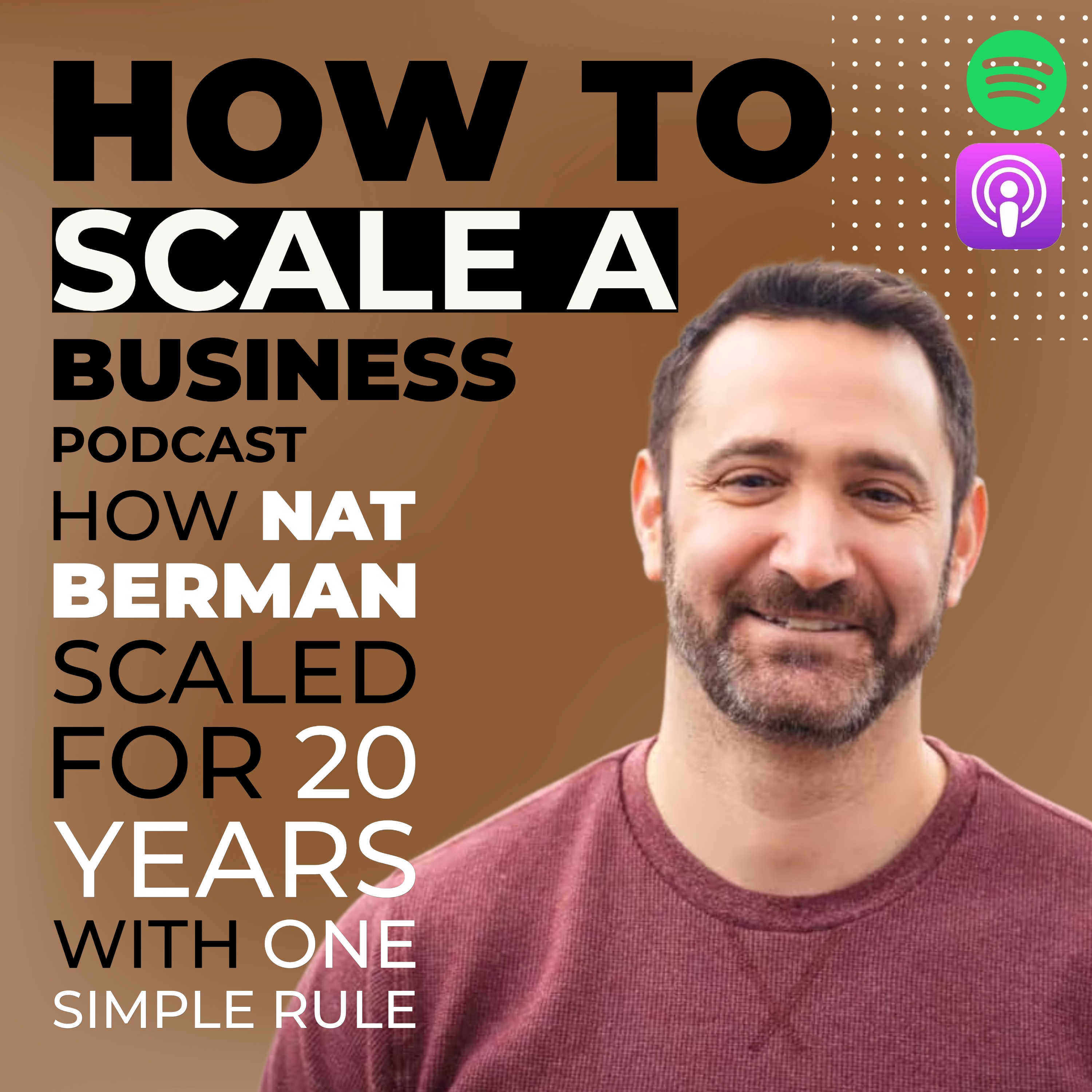 How Nat Berman Scaled for 20 Years With One Simple Rule✨ | business scalingentrepreneurship+4 | Nat Berman | Be Better MovementYahoo! GeoCities+2 | — | scalingbusiness+5 | — | 24m 56s | |
| 5/8/26 | 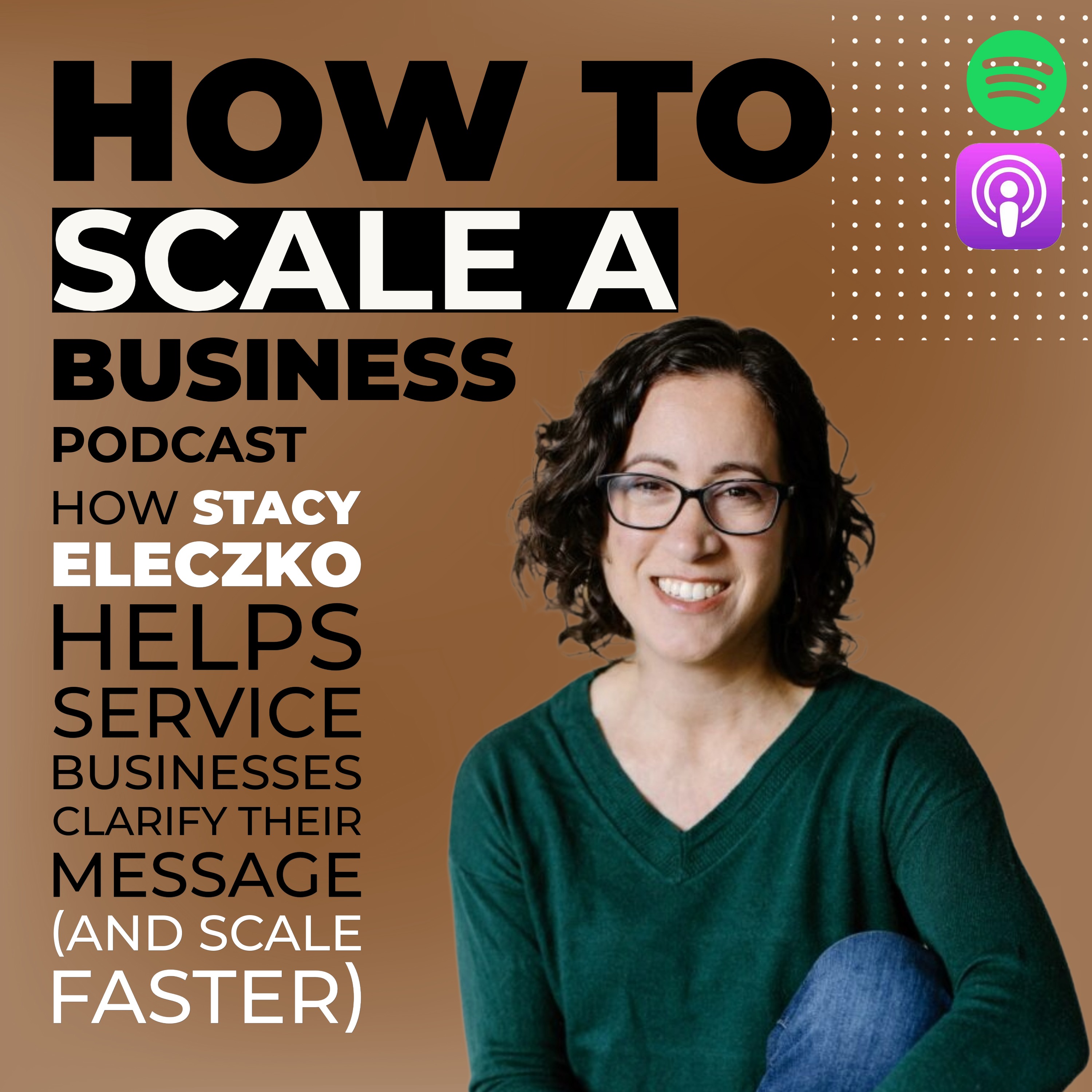 How Stacy Eleczko Helps Service Businesses Clarify Their Message (and Scale Faster)✨ | messagingservice businesses+3 | Stacy Eleczko | Amplafy Media | — | messaging strategyservice-based businesses+3 | — | 30m 10s | |
| 5/1/26 | 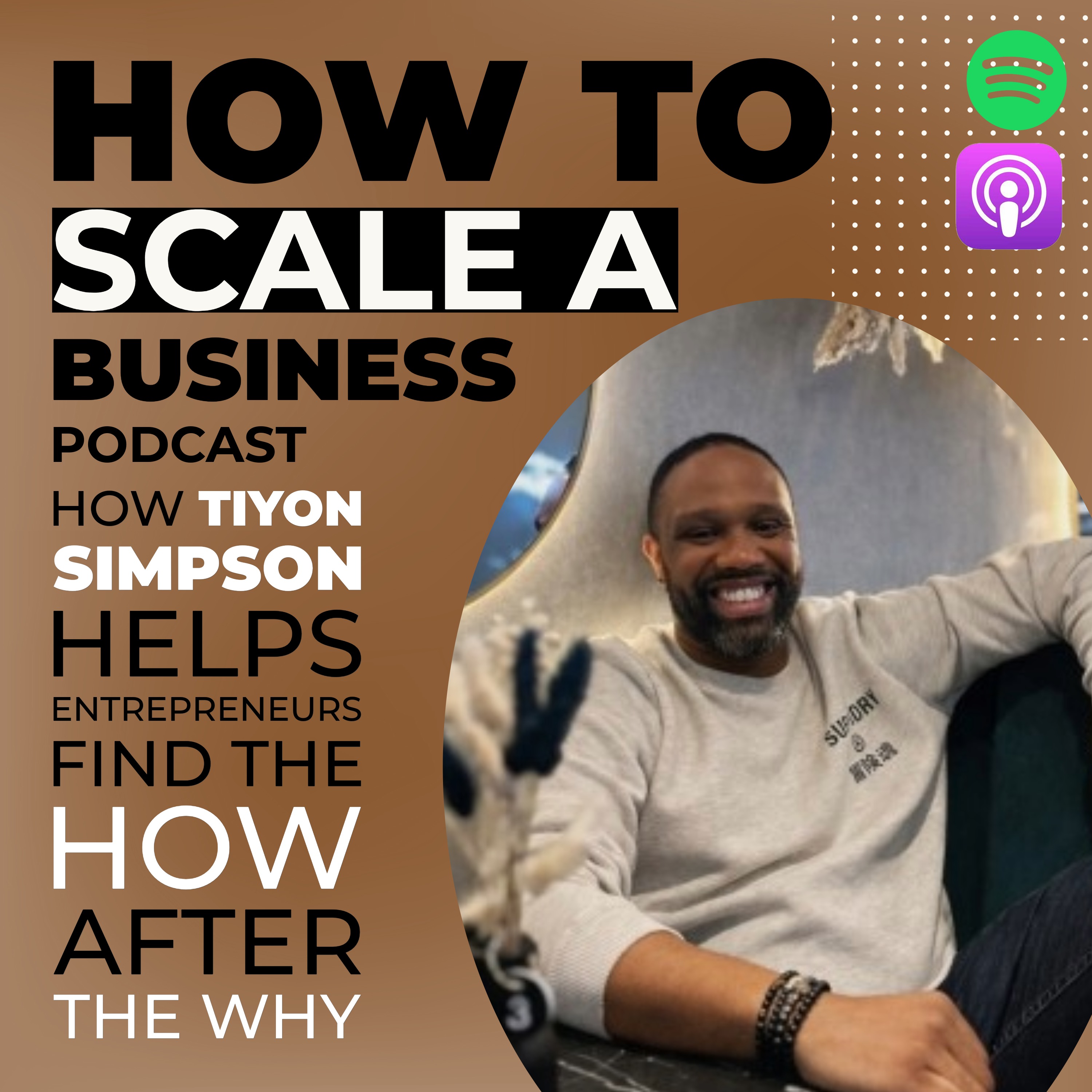 How Tiyon Simpson Helps Entrepreneurs Find the How After the Why✨ | personal brandingAI in business+3 | Tiyon Simpson | Amplafy Media | — | personal brandingAI+3 | — | 26m 33s | |
| 4/17/26 | 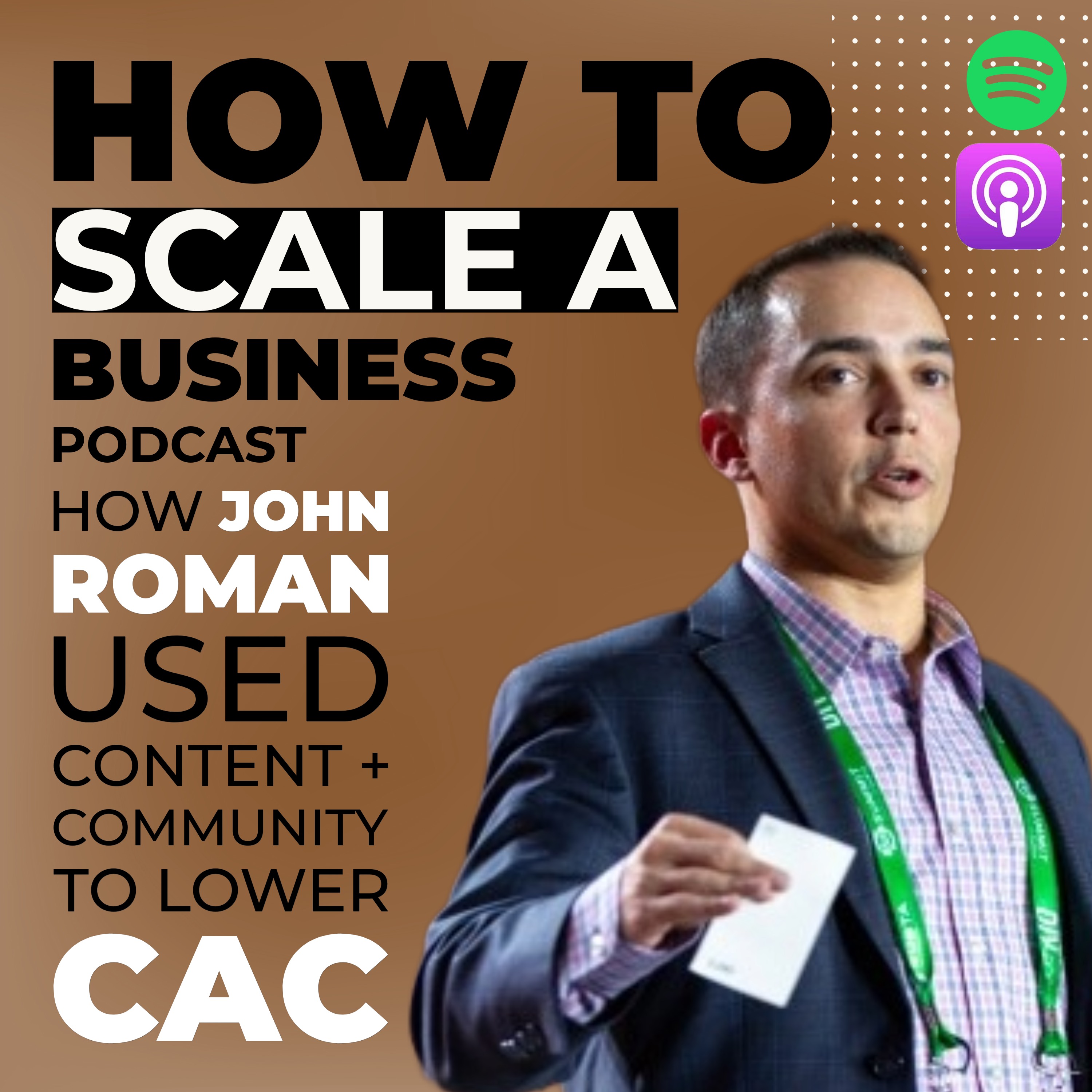 How John Roman Used Content + Community to Lower CAC✨ | customer acquisitionsubscription model+4 | John Roman | BattleBoxNetflix+3 | — | customer acquisition costBattleBox+5 | — | 23m 42s | |
| 4/14/26 | 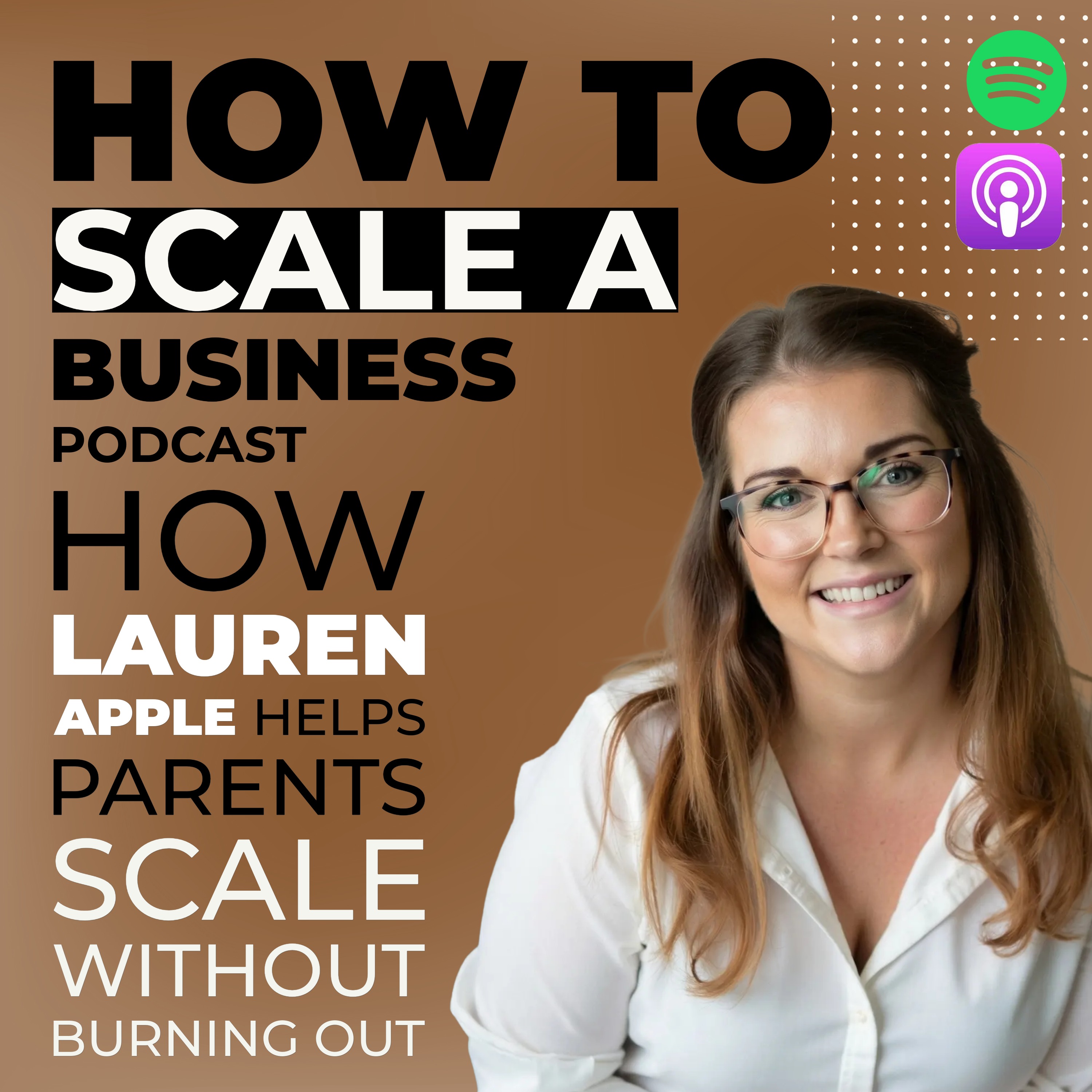 How Lauren Apple Helps Parents Scale Without Burning Out✨ | scaling a businessparenting+3 | Lauren Apple | — | — | success trapcookie-cutter advice+5 | — | 27m 46s | |
| 4/3/26 | 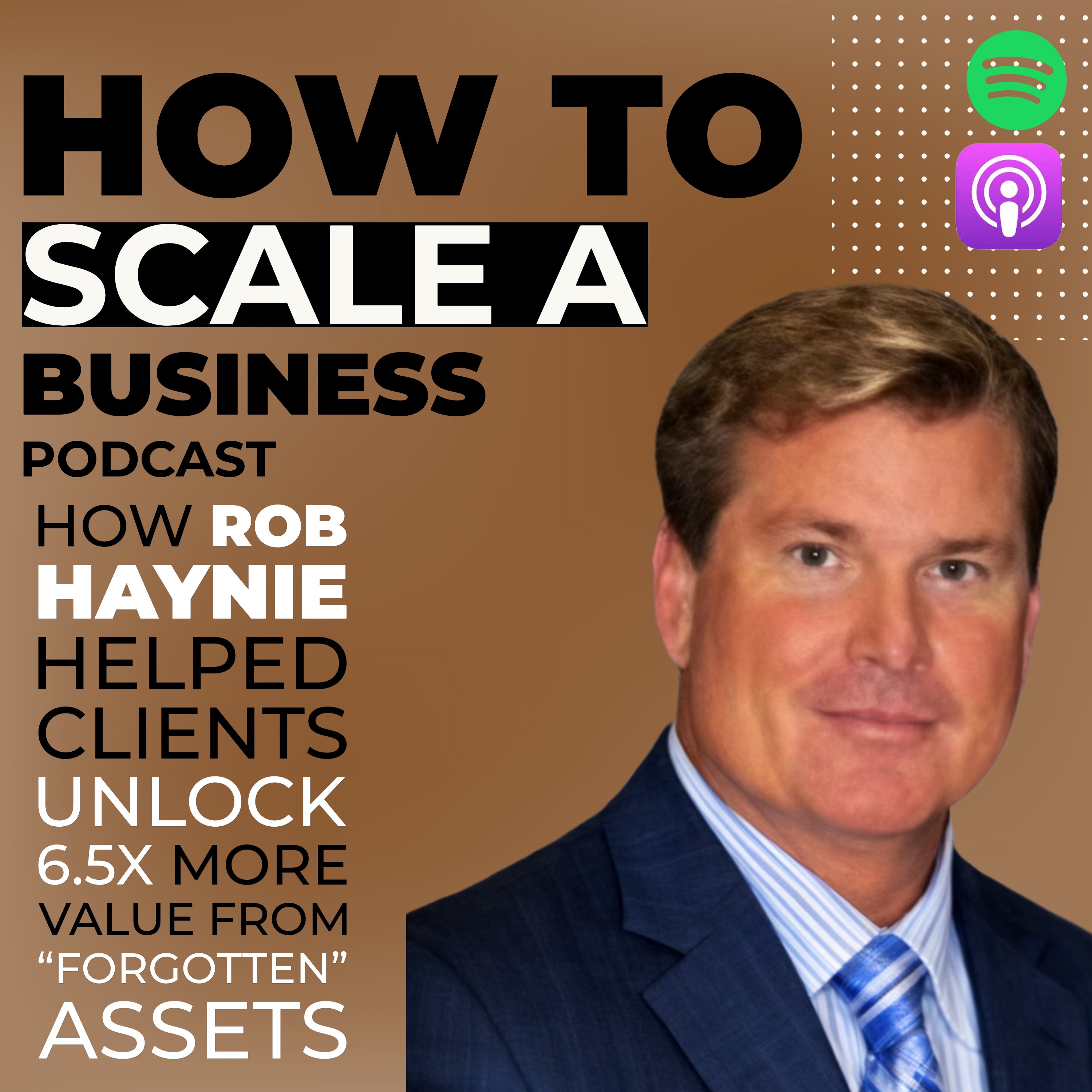 How Rob Haynie Helped Clients Unlock 6.5x More Value From “Forgotten” Assets✨ | life insurancebusiness growth+3 | Rob Haynie | Amplafy Medialife settlements | — | life settlementsbusiness growth+5 | — | 26m 27s | |
| 3/27/26 | 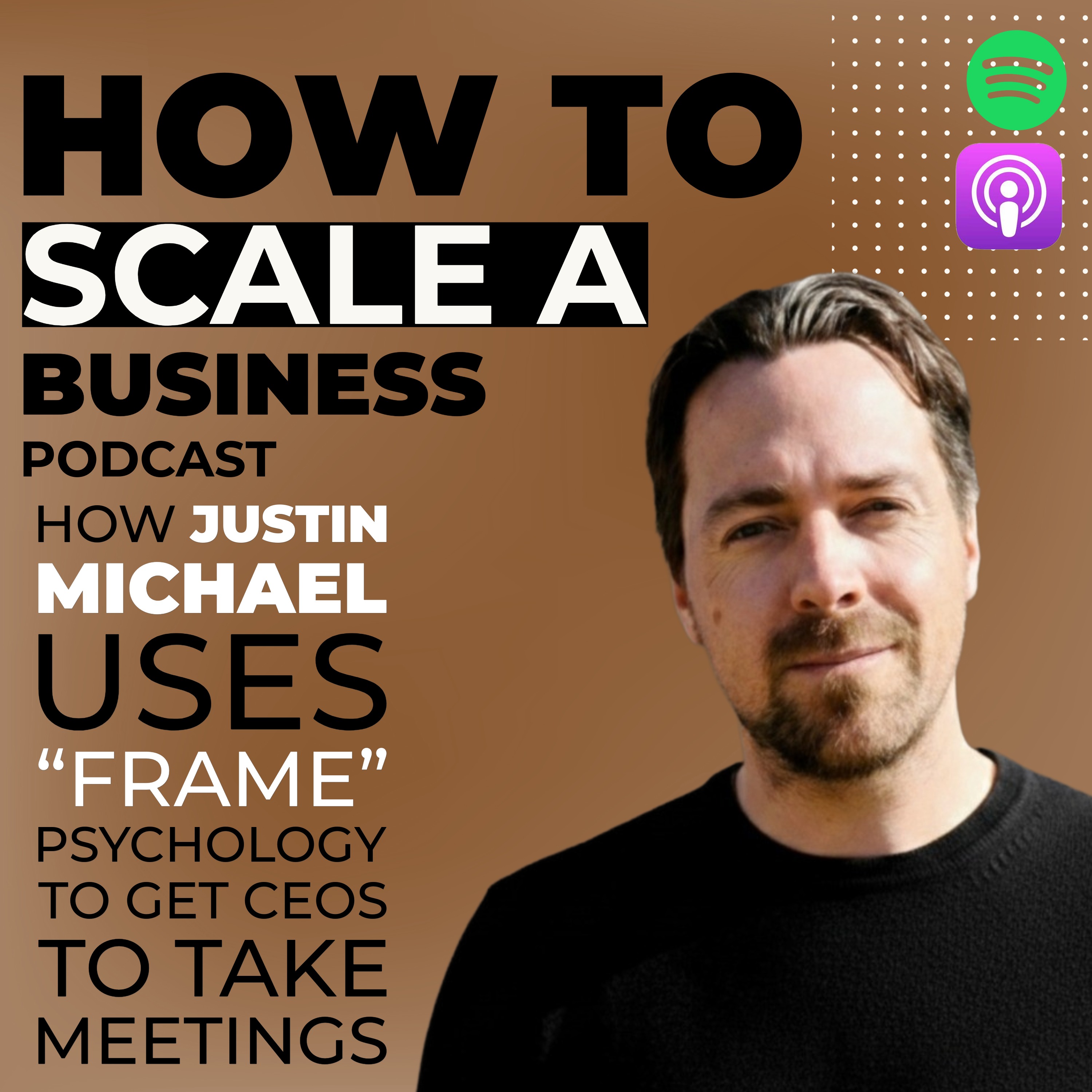 How Justin Michael Uses “Frame” Psychology to Get CEOs to Take Meetings✨ | frame psychologyself-perception+4 | Justin Michael | Amplafy Media | — | frame psychologyself-perception+5 | — | 24m 05s | |
| 3/20/26 | 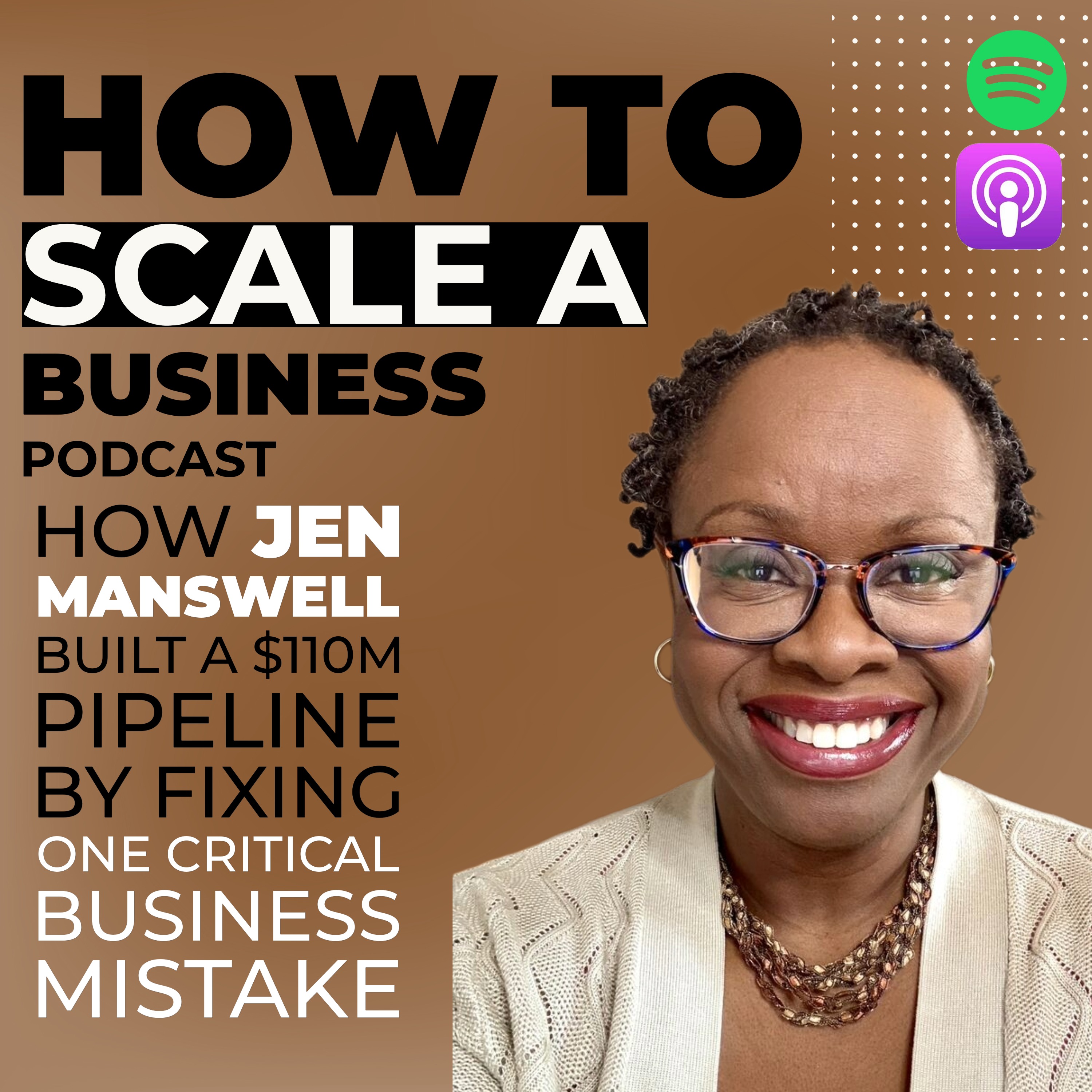 How Jen Manswell Built a $110M Pipeline by Fixing One Critical Business Mistake✨ | revenue architecturemarketing strategy+3 | Jen Manswell | Amplafy Media | — | revenue leaksmarketing as cost center+3 | — | 16m 56s | |
| 2/24/26 | 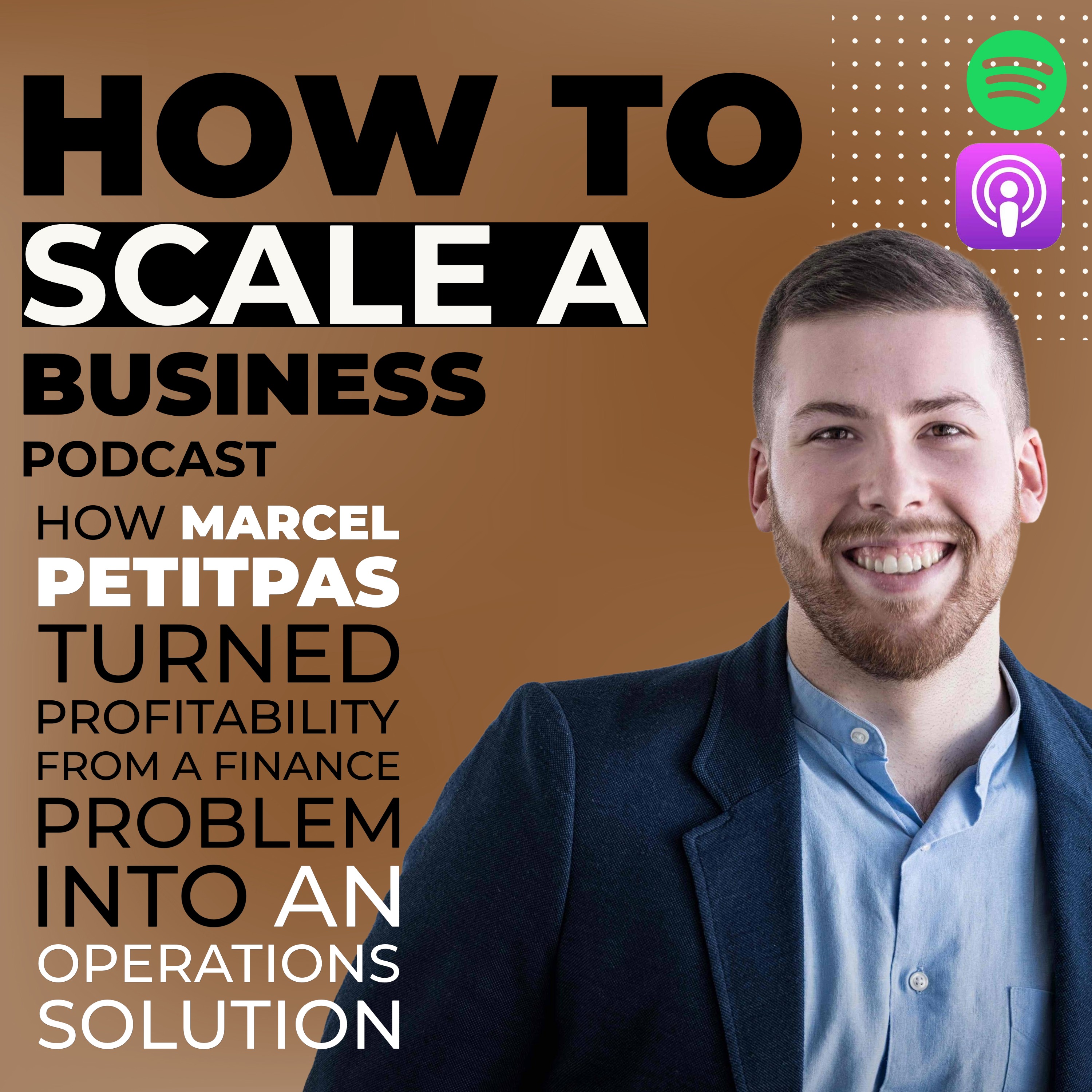 How Marcel Petitpas Turned Profitability from a Finance Problem into an Operations Solution✨ | profitabilityoperations+4 | Marcel Petitpas | ParakeetoAmplafy Media | — | profitabilityoperations+5 | — | 24m 46s | |
| 2/6/26 | 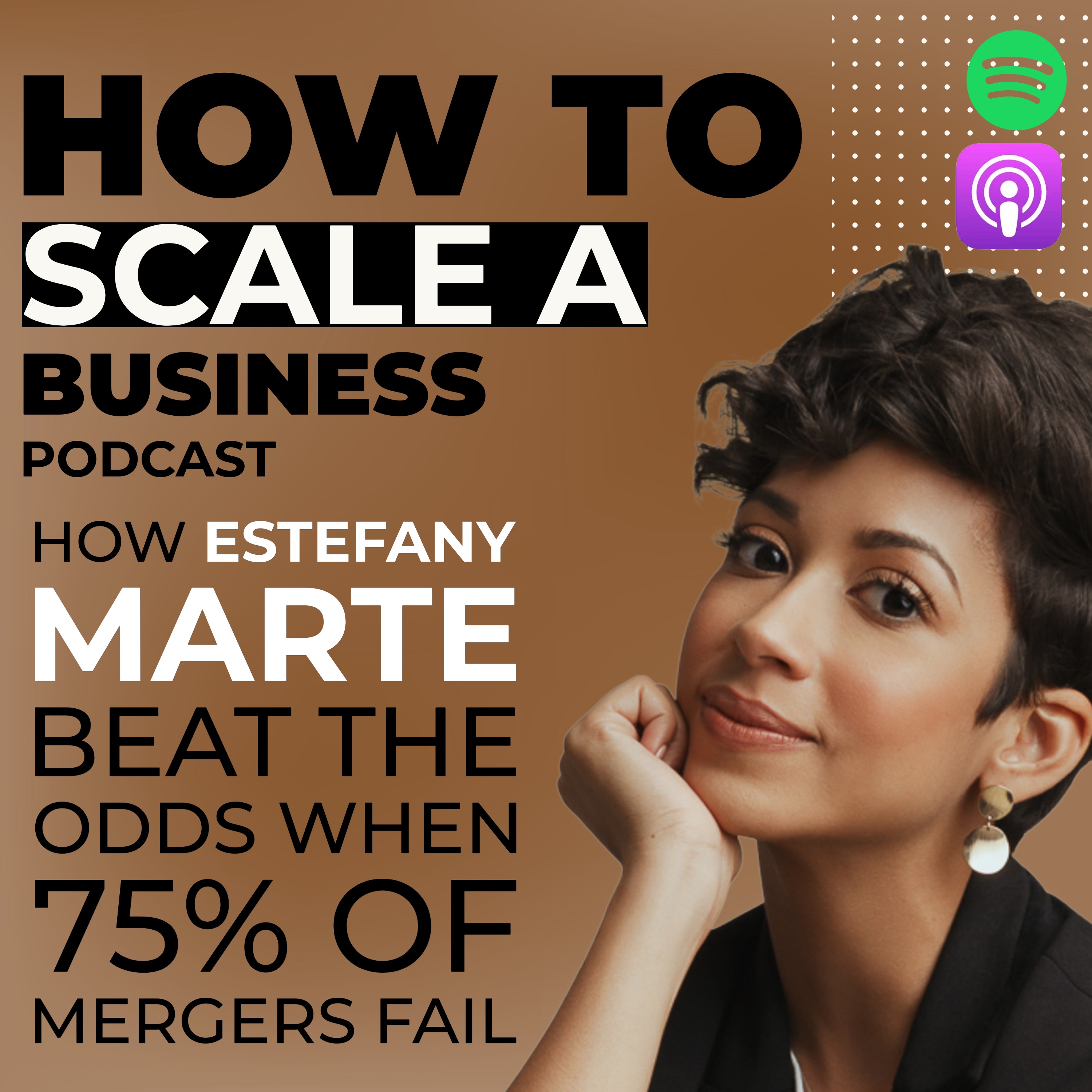 How Estefany Marte Beat the Odds When 75% of Mergers Fail✨ | leadership transitionsmergers+3 | Estefany Marte | — | — | mergersleadership+5 | — | 27m 38s | |
Want analysis for the episodes below?Free for Pro Submit a request, we'll have your selected episodes analyzed within an hour. Free, at no cost to you, for Pro users. | |||||||||
| 1/30/26 | 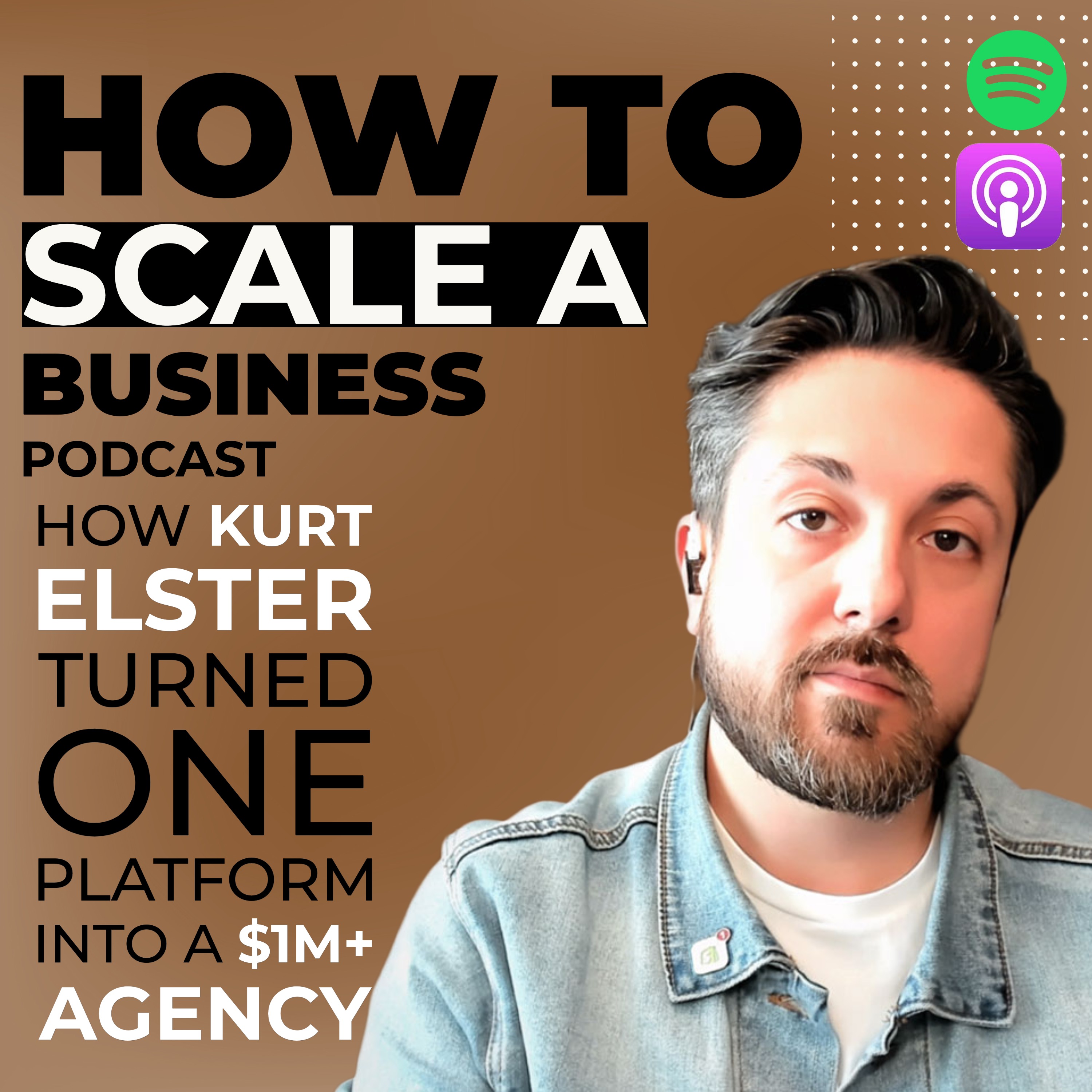 How Kurt Elster Built a Shopify Empire and Turned One Platform into a $1M+ Agency✨ | e-commerceagency building+4 | Kurt Elster | Shopify | — | Shopifye-commerce agency+5 | — | 24m 01s | |
| 1/23/26 | 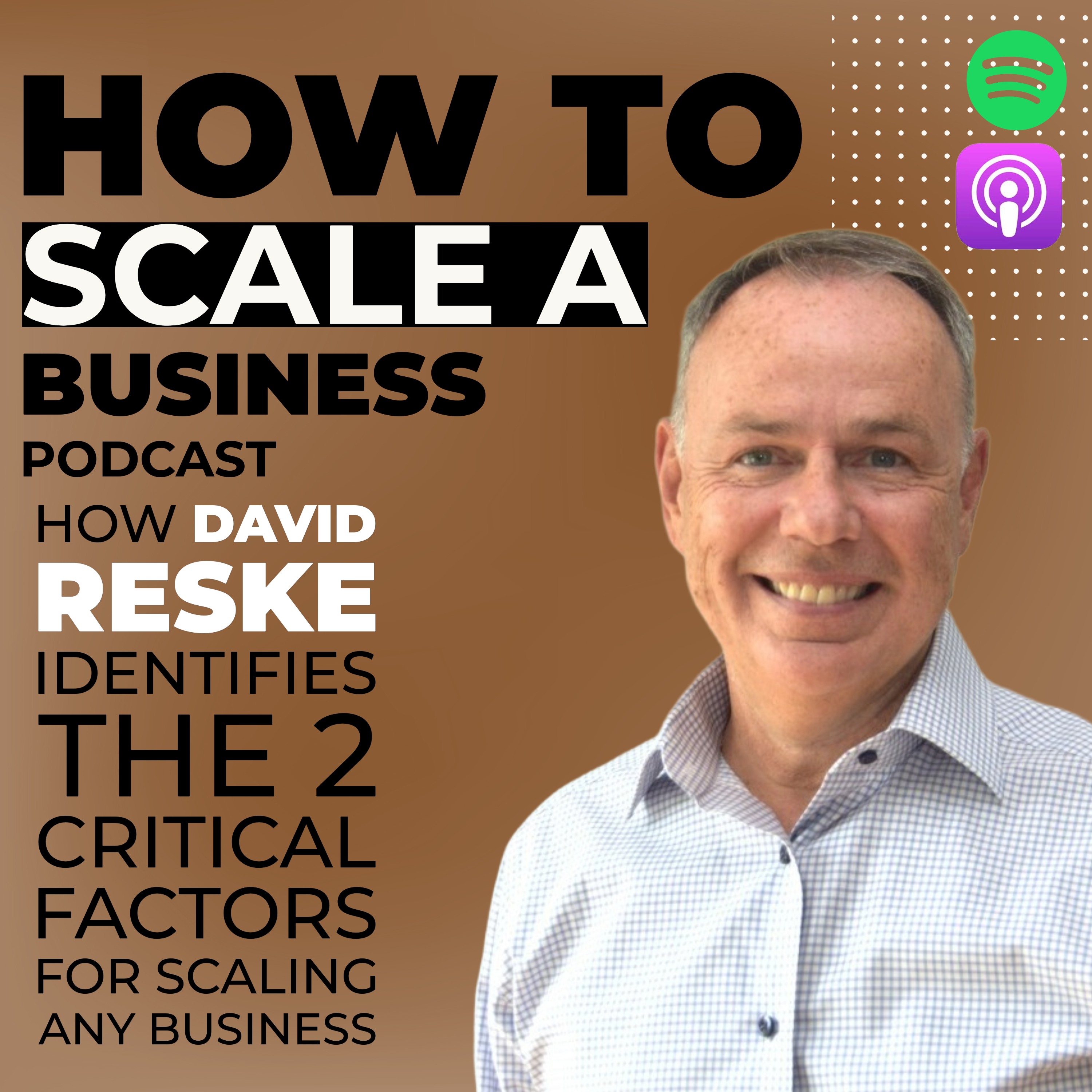 How David Reske Identifies the 2 Critical Factors for Scaling Any Business | Hector Santhe Esteban sits down with David Reske, CEO and founder of NowSpeed and author of "100X Entrepreneur," to explore the evolution of digital marketing and the cutting-edge strategies businesses need to scale in 2026. With 30 years in the industry—from building websites with Notepad in the 90s to pioneering Generative Engine Optimization (GEO) today—David shares invaluable insights on how marketing fundamentals remain unchanged while tactics evolve rapidly. He explains why AI search is replacing traditional SEO, how businesses can train Large Language Models (LLMs) to become their best sales representatives, and why most companies are missing massive opportunities by not optimizing for platforms like ChatGPT, which has 800 million monthly users. David breaks down the core principles of scaling a business, emphasizing the critical importance of product-market fit and efficient go-to-market strategies. He also reveals common misconceptions business owners have about digital marketing, the risks of not adapting to AI-powered search, and why companies have only months—not years—to get their GEO strategy in place. Whether you're a business owner looking to scale efficiently or a marketer trying to stay ahead of the curve, this episode delivers actionable frameworks and strategic insights you can implement immediately.Chapters:(00:00:00) - How a 30-Year Marketing Veteran Spotted the AI Revolution Before Everyone Else(00:01:00) - David's Journey: From the 90s Internet to Modern Digital Marketing(00:03:00) - What Hasn't Changed in Marketing After 30 Years(00:05:00) - Diagnosing Before Prescribing: The Strategic Approach to Marketing Audits(00:08:00) - Common Misconceptions Business Owners Have About Digital Marketing(00:11:00) - The Rising Knowledge Level of CMOs and CEOs in Digital Marketing(00:13:00) - How AI is Transforming Marketing Workflows and Efficiency(00:18:00) - Introduction to Generative Engine Optimization (GEO)(00:21:00) - The Sales Rep Analogy: Training AI to Represent Your Business(00:23:00) - GEO vs SEO: Questions Over Keywords(00:25:00) - Creating Content That Actually Answers Customer Questions(00:27:00) - The Timeline for Adapting to AI Search (Spoiler: You Have Months, Not Years)(00:29:00) - Where to Learn More About GEO and Connect with David(00:30:00) - The Secret to Scaling: Product-Market Fit and Efficient Go-to-Market StrategyLinks And Resources:WebsiteDavid Reske on LinkedInAmplafy MediaHector Santiesteban on LinkedInHector Santiesteban on TwitterThanks so much for joining us this week. Want to subscribe to How to Scale a Business? Have some feedback you’d like to share? Connect with us on iTunes and leave us a review! | — | ||||||
| 1/16/26 | 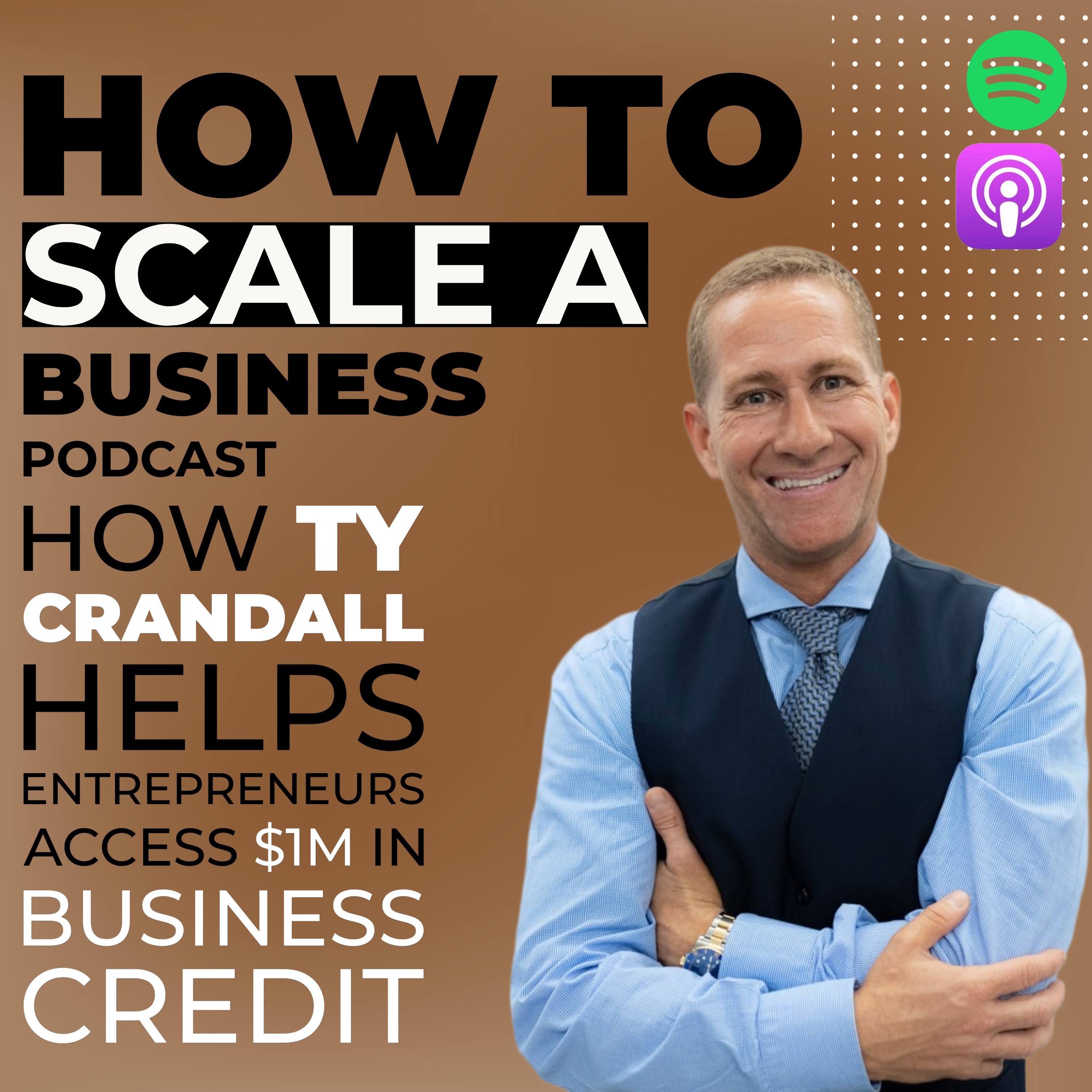 How Ty Crandall Helps Entrepreneurs Access $1M in Business Credit | Hector sits down with Ty Crandall, founder of Credit Suite, to demystify business funding and credit. Ty shares his journey from building a 7-figure mortgage company to losing everything in the 2008 crisis, and how that experience led him to become an expert in business credit and alternative financing. He reveals why 60% of loan applications get denied before lenders even look at credit scores or revenue, and breaks down the exact steps any entrepreneur can take to build business credit without personal guarantees or credit checks. Ty explains how companies like Walmart and Apple strategically use other people's money (OPM) to scale, and how small business owners can apply the same principles. From starter vendors to fuel cards to universal credit cards, Ty outlines the complete roadmap to securing up to $1 million in business credit within a year. He also introduces Credit Suite's AI-powered Fund Smart tool that matches businesses with the right lenders based on their unique strengths. Whether you're a startup with no revenue or an established business looking to scale without risking personal assets, this episode provides the funding blueprint you need to remove capital barriers and grow your business.Chapters:(00:00:00) - Why Most Entrepreneurs Fail to Scale (And How to Fix It)(00:01:00) - Ty's Journey: From Seven Figures to Foreclosure(00:03:00) - The Biggest Misconception About Getting Business Funding(00:06:00) - How Big Companies Like Walmart and Apple Use Debt to Scale(00:09:00) - The #1 Reason 60% of Loan Applications Get Denied(00:13:00) - The Overwhelming World of Alternative Lending(00:15:00) - Success Story: From Homeless to 50-Truck Operation(00:18:00) - The Business Credit Blueprint: Step-by-Step Process(00:23:00) - AI-Powered Funding Matching and Fund Smart Tool(00:26:00) - The Secret to Scaling: Resilience Above AllLinks And Resources:WebsiteTy Crandall on LinkedInAmplafy MediaHector Santiesteban on LinkedInHector Santiesteban on TwitterThanks so much for joining us this week. Want to subscribe to How to Scale a Business? Have some feedback you’d like to share? Connect with us on iTunes and leave us a review! | — | ||||||
| 1/9/26 | 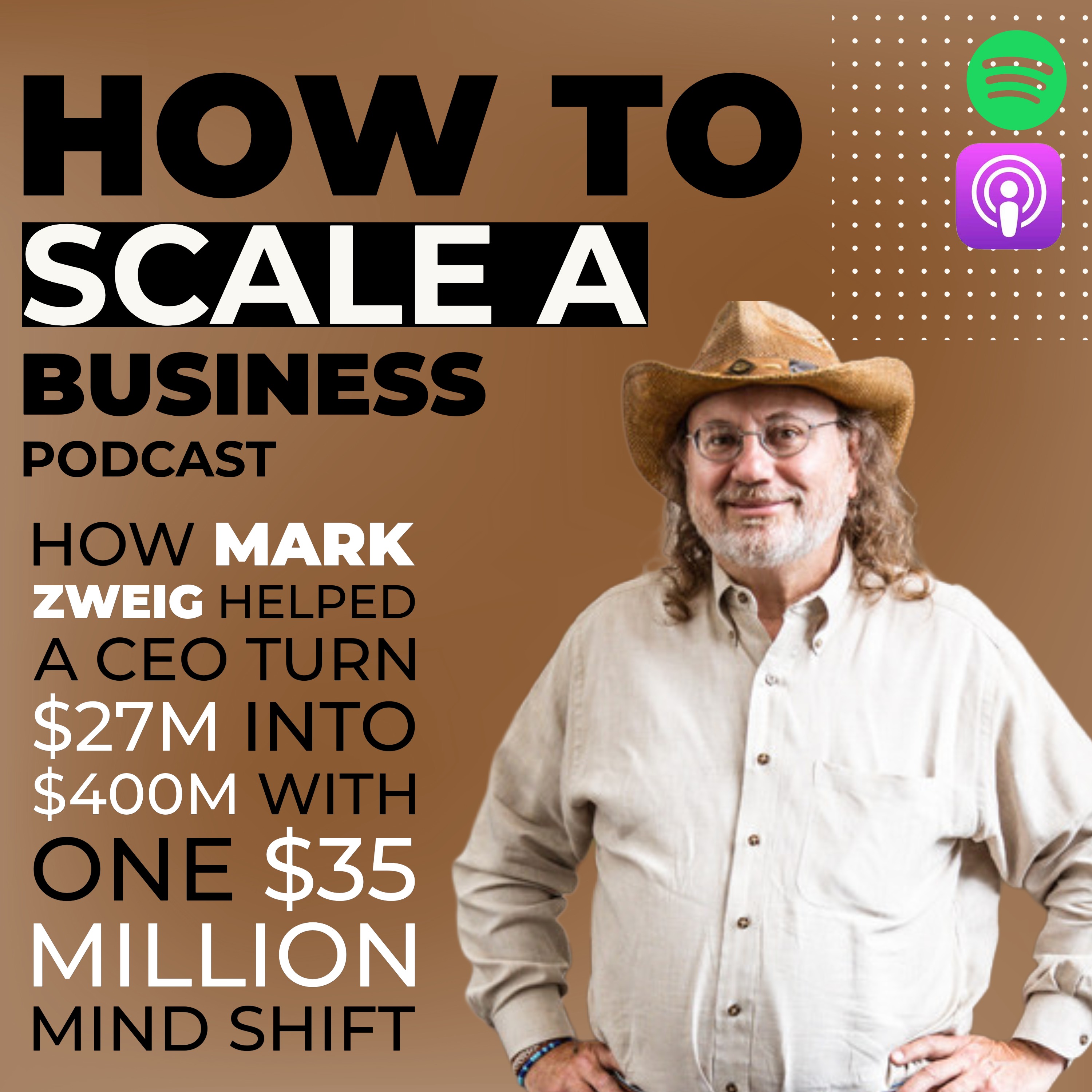 How Mark Zweig Helped a CEO Turn $27M Into $400M With One $35 Million Mind Shift | Mark Zweigher has spent 45 years in management consulting, built multiple Inc. 5000 companies, and analyzed over a thousand small businesses through his work as an entrepreneur, board member, and professor at the Walton College of Business. In this episode, Mark reveals the brutal truth about why most small businesses fail to scale—from the "word of mouth marketing" trap to family business dysfunction to the fundamental misunderstanding of what creates business value. He shares the exact $35 million mindset shift that transformed one client from a $27 million stagnant company to a $400 million enterprise, explains why buying existing businesses beats startups, and breaks down the management audit process he uses to diagnose business problems. Mark also discusses navigating current challenges like tariffs in his motorcycle manufacturing business, the critical importance of speed and 24/7 availability in modern business, and why marketing—not operations, not finance, not strategy—is the true secret to scaling. If you're tired of incremental growth and ready to build a business that's actually valuable on exit, this episode is packed with actionable insights from someone who's seen what works and what doesn't across decades and hundreds of companies.Chapters:(00:00:00) - Introduction and Mark's Background in Entrepreneurship(00:03:00) - Early Business Ventures: Bikes, Motorcycles, and Management Consulting(00:06:00) - Common Small Business Mistakes: Family Dysfunction, Poor Marketing, and Lack of Growth Commitment(00:09:00) - The $35 Million Mindset Shift: Growth Rate vs. Efficiency(00:12:00) - The Management Audit: Diagnostic Process for Business Improvement(00:17:00) - Timely Adjustments: AI, Keywords, and Being Discoverable(00:18:00) - Tariffs and Supply Chain Challenges in Motorcycle Manufacturing(00:20:00) - The Baby Boomer Exit Opportunity: Buying vs. Starting Businesses(00:23:00) - Speed and 24/7 Availability: The New Business Reality(00:26:00) - The Secret to Scaling: Marketing and Team BuildingLinks And Resources:WebsiteMark Zweig on LinkedInAmplafy MediaHector Santiesteban on LinkedInHector Santiesteban on TwitterThanks so much for joining us this week. Want to subscribe to How to Scale a Business? Have some feedback you’d like to share? Connect with us on iTunes and leave us a review! | — | ||||||
| 1/2/26 | 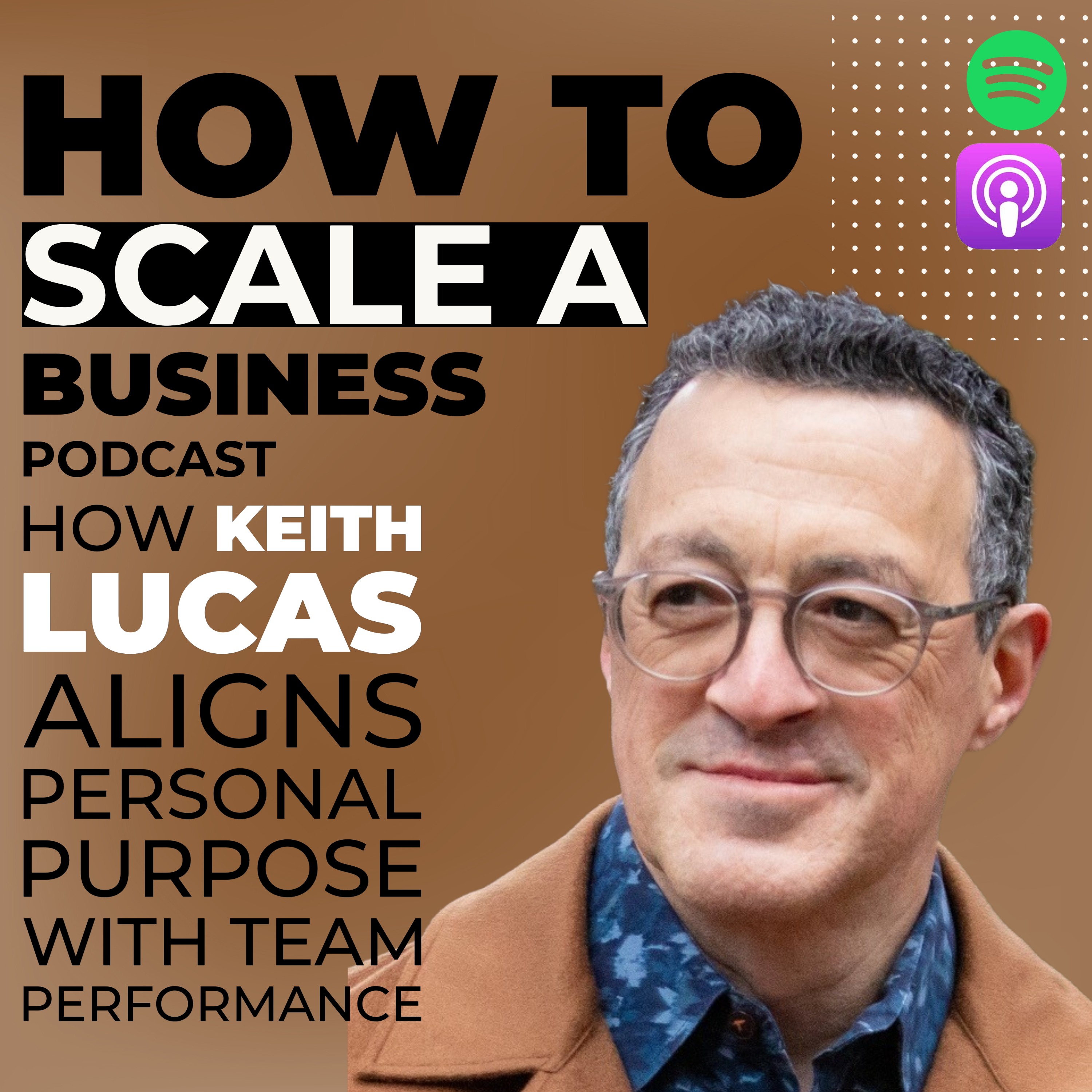 How Keith Lucas Aligns Personal Purpose with Team Performance | Hector Santisteban sits down with Keith Lucas, former Chief Product Officer and CTO at Roblox and author of "Impact," to explore the essential balance between high performance and creativity in scaling startups. Keith shares his journey from aerospace engineer to Silicon Valley leader, revealing how aligned autonomy and mission athletes create teams that innovate consistently. He discusses the transformative power of gratitude in leadership, the importance of aligning personal purpose with organizational goals, and practical strategies for accelerating time to market. Keith also tackles common startup mistakes like getting trapped in busy work instead of focusing on what truly matters, and explains how AI coding frameworks are revolutionizing product development speed. Throughout the conversation, he emphasizes that scaling isn't just about growth—it's about building a foundation of culture through clear values and hiring the right people who amplify your team's capabilities.Chapters:(00:00:00) - Keith's journey from aerospace engineer to Roblox CPO and startup advisor(00:02:34) - Why gratitude drives real business performance and team optimism(00:04:45) - Aligning personal purpose with organizational goals for breakthrough results(00:07:48) - From intense taskmaster to inspiring leader: Keith's transformation story(00:10:43) - Bridging high performance and creativity: the startup leader's challenge(00:13:12) - Three critical questions every scaling team must answer clearly(00:16:23) - Common startup mistakes: accelerating time to market and avoiding busy work(00:18:16) - The foundation of culture: vision, mission, and values that determine who stays(00:20:47) - How AI coding frameworks let small teams build 10x faster(00:23:15) - The secret to scaling: hiring mission athletes and defining behaviors that winLinks And Resources:WebsiteKeith Lucas on LinkedInAmplafy MediaHector Santiesteban on LinkedInHector Santiesteban on TwitterThanks so much for joining us this week. Want to subscribe to How to Scale a Business? Have some feedback you’d like to share? Connect with us on iTunes and leave us a review! | — | ||||||
| 12/26/25 | 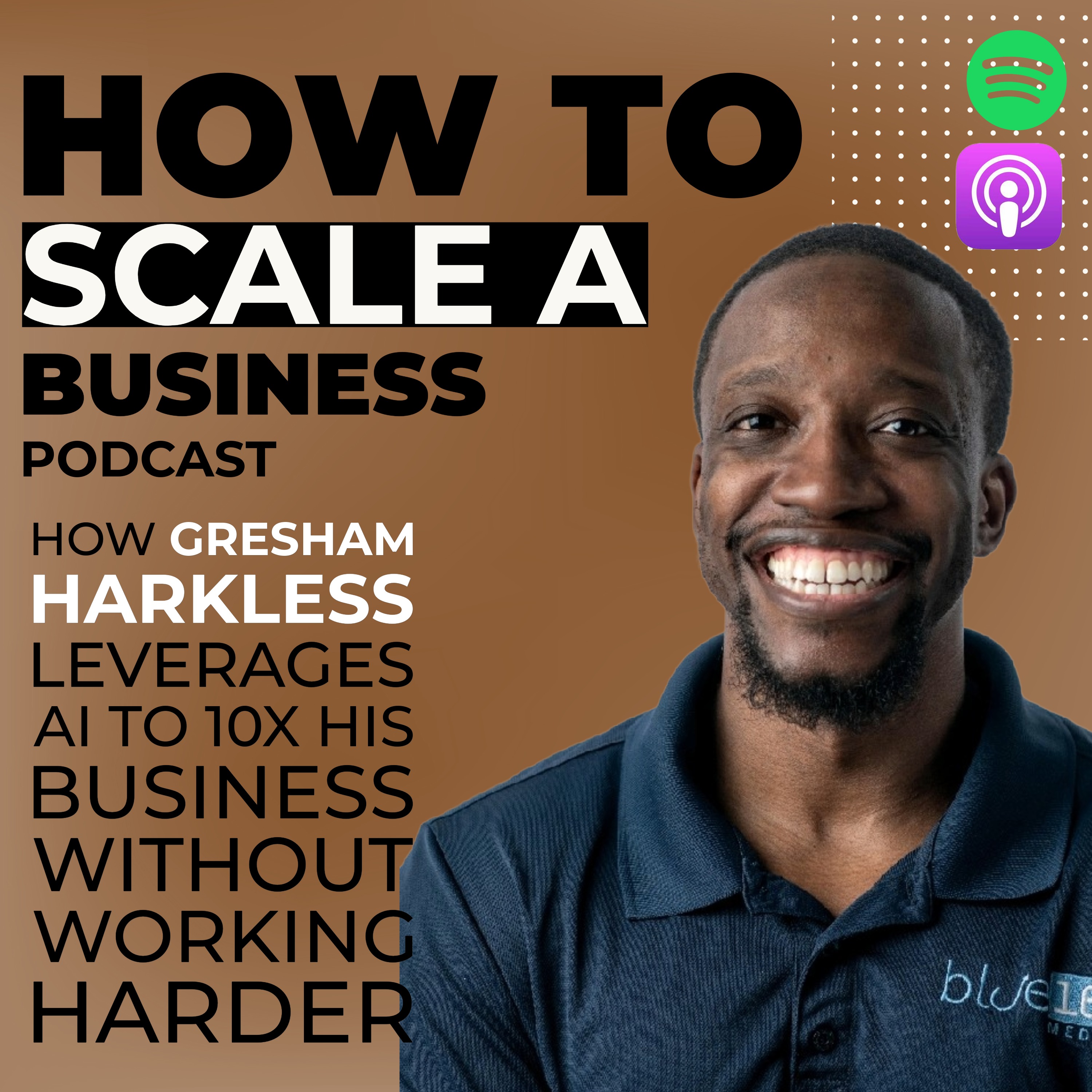 How Gresham Harkless Leverages AI to 10X His Business Without Working Harder | Hector sits down with Gresham Harkless, founder of Blue 16 Media and a serial entrepreneur who discovered his calling at just 10 years old when he started a family newspaper. Gresham shares his journey from selling potato chips on the playground to building a digital marketing business, launching a franchise brokerage, and hosting multiple podcasts for entrepreneurs. He reveals why every business owner should think of themselves as a media company and how content creation is the common thread connecting all his ventures. The conversation dives deep into the evolving landscape of marketing, exploring how AI tools are removing barriers and enabling entrepreneurs to scale without working harder. Gresham discusses his framework for thinking differently about growth using concepts from "10X Is Easier Than 2X" and challenges conventional definitions of scaling by emphasizing time as the most valuable resource. He shares practical examples of how AI has transformed his business operations, from replacing $2,000/month contractor services with $20/month ChatGPT subscriptions to creating websites over a weekend that would have taken months. Throughout the discussion, Gresham emphasizes the importance of authenticity, storytelling, and the human element in business, arguing that technology should amplify rather than replace human connection. He encourages business owners to look back at their childhood passions to discover their true calling and to consistently share their stories across multiple platforms to build trust and reach their audience in today's noisy digital landscape.Chapters(00:00:00) - Everyone is a Media Company Now(00:01:00) - From Potato Chips to Building a Media Empire(00:03:00) - The Common Thread: Content as Your Superpower(00:05:00) - Why Storytelling Still Matters in Business(00:08:00) - Marketing Principles Stay the Same, Tools Change(00:10:00) - The Human Element: What Technology Can't Replace(00:13:00) - Why You Need to Say It 100 Times Before They Hear It(00:16:00) - AI and New Tech: Removing the Ceiling on What's Possible(00:19:00) - From $2,000/Month to $20/Month: Real AI Transformation(00:22:00) - Scaling Isn't Just About Revenue—It's About Time(00:25:00) - 10X Is Easier Than 2X: Thinking Differently About Growth(00:29:00) - The Secret to Scaling: Define What It Means to YouLinks And Resources:WebsiteGresham Harkless on LinkedInAmplafy MediaHector Santiesteban on LinkedInHector Santiesteban on TwitterThanks so much for joining us this week. Want to subscribe to How to Scale a Business? Have some feedback you’d like to share? Connect with us on iTunes and leave us a review! | — | ||||||
| 12/19/25 | 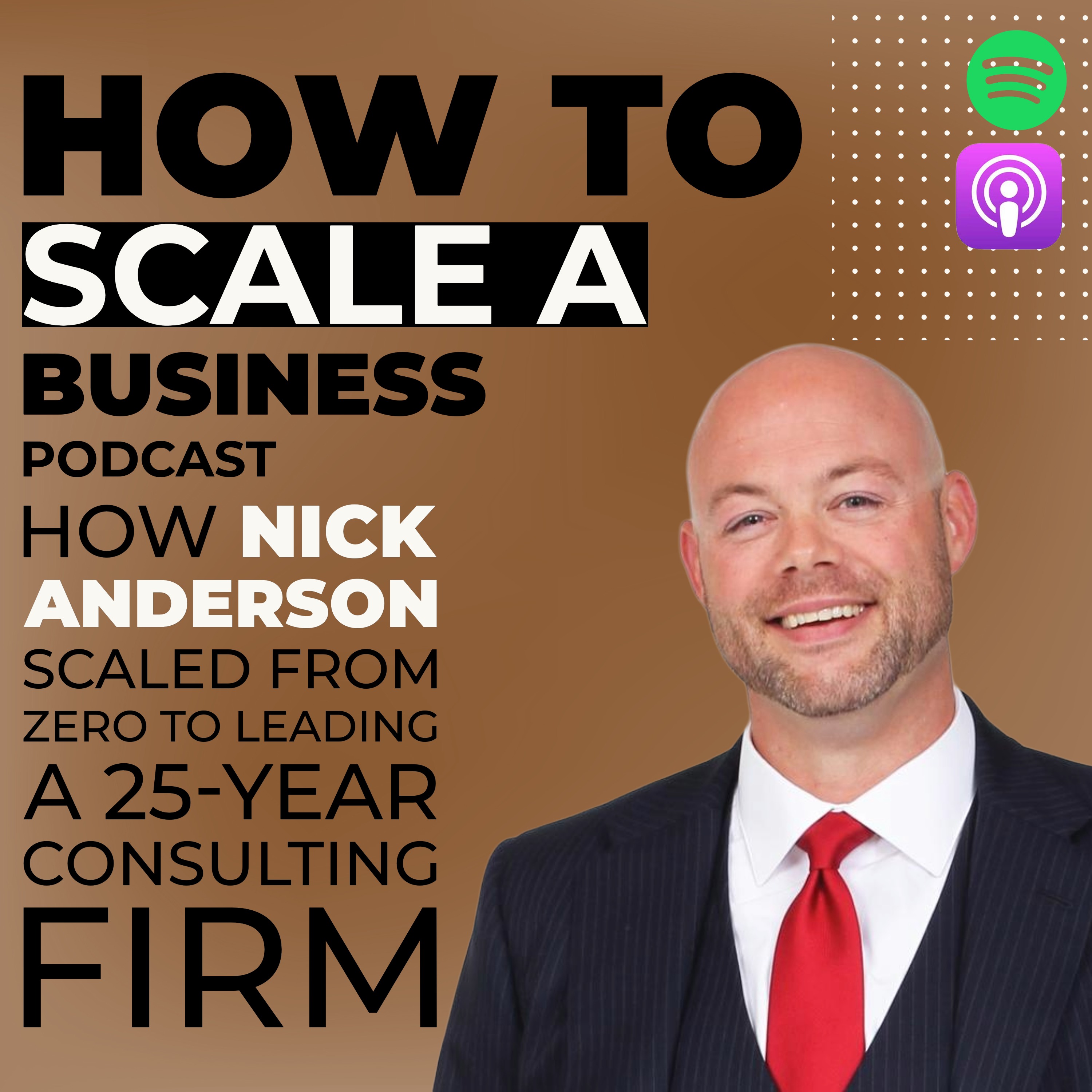 How Nick Anderson Scaled From Zero to Leading a 25-Year Consulting Firm | In this episode, Nick Anderson shares his unconventional journey from high school dropout to banking executive to CEO of One Accord, a management consulting firm that's been helping businesses navigate transition and growth for 25 years. Nick reveals the #1 constraint killing most businesses—owner dependence—and explains how he's solving it in his own company using fractional executives. He breaks down the real order of operations for scaling: revenue first, then operations, then marketing. Nick candidly discusses the challenges of growing a business, from the loneliness of entrepreneurship to the fear of spending on marketing that might not work. He shares wisdom on why most aspiring entrepreneurs fail (no plan, wrong people, or lack of disciplined execution) and emphasizes that business is fundamentally about earning strangers' money by delivering value that exceeds what they pay. Whether you're a solopreneur trying to build a team or a growing company stuck at a revenue ceiling, Nick's practical insights on building systems, hiring fractionally, and focusing relentlessly on revenue will help you break through to the next level.Chapters:(00:00:00) - Welcome and Introduction to Nick Anderson(00:01:15) - From High School Dropout to 25 Years in Banking(00:03:15) - What One Accord Does: Leading Organizations Through Transition and Growth(00:05:45) - The Biggest Mistake Business Owners Make: Owner Dependence(00:08:30) - How Nick is Solving Key Person Risk with Fractional Executives(00:10:15) - The Scary Reality of Spending on Marketing That Doesn't Work(00:12:45) - The Order of Operations for Scaling: Revenue First, Always(00:16:30) - Why Most Businesses Don't Have a Revenue-First Mindset(00:19:15) - Business is About Earning Strangers' Money(00:22:30) - Where Aspiring Entrepreneurs Fail: No Plan, Wrong People, Lack of ExecutionLinks And Resources:WebsiteNick Anderson on LinkedInAmplafy MediaHector Santiesteban on LinkedInHector Santiesteban on TwitterThanks so much for joining us this week. Want to subscribe to How to Scale a Business? Have some feedback you’d like to share? Connect with us on iTunes and leave us a review! | — | ||||||
| 12/12/25 | 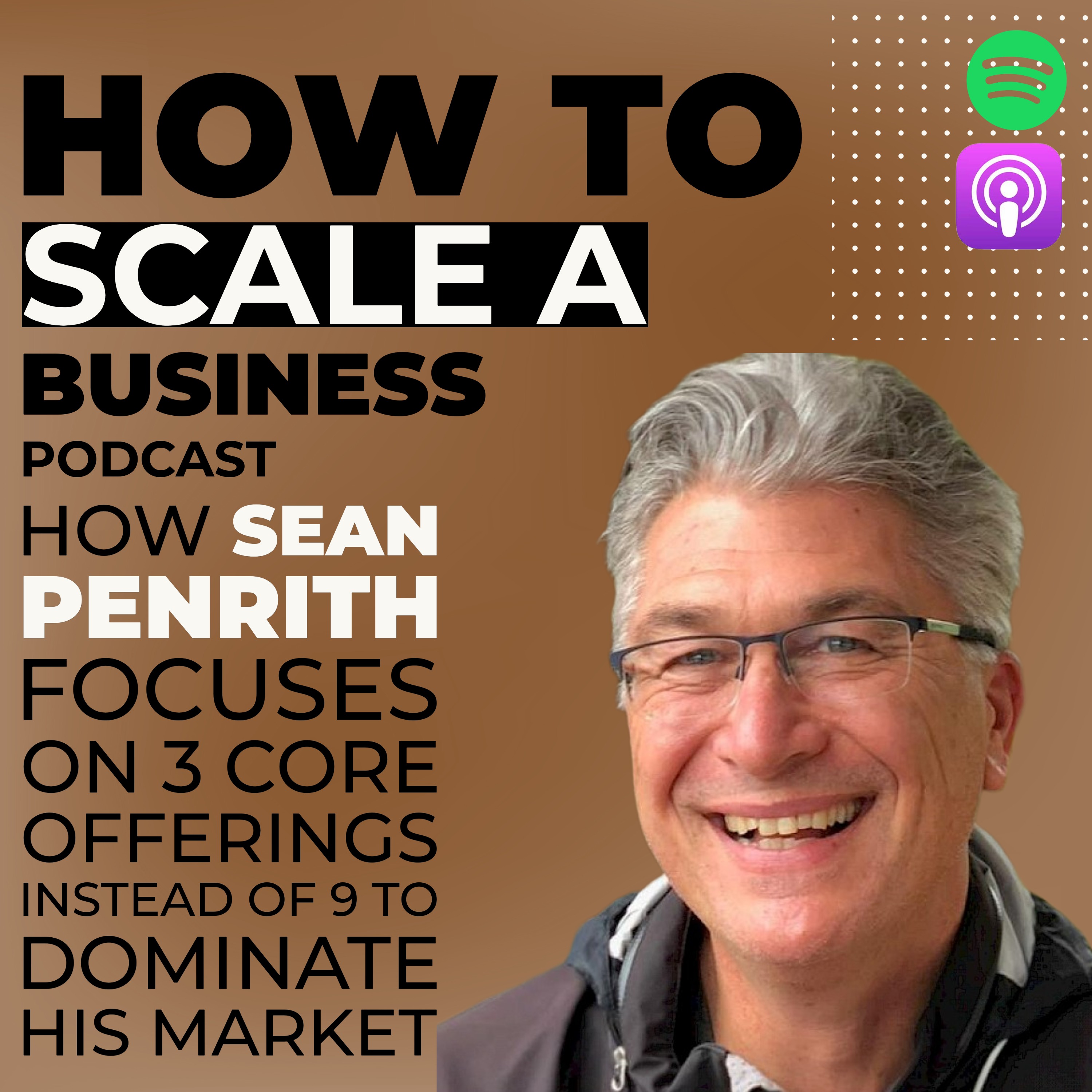 How Sean Penrith Focuses on 3 Core Offerings Instead of 9 to Dominate His Market | Sean Penrith, CEO of Gordian Knot Strategies, shares his journey from running a lucrative but unfulfilling business in South America to becoming a leader in climate finance. After sailing across the Atlantic and around Cape Horn, Sean returned home to pursue his MBA and started a glass recycling business that set him on a path toward purposeful work. Through founding nine different businesses, including a functional beverage company and a climate finance consultancy, Sean developed a powerful seven-element framework for predicting business success. This framework, born from research funded by the Walton Family Foundation, has proven remarkably accurate at identifying which projects and businesses will succeed or fail—regardless of industry or geography. Sean reveals why 70% of passionate entrepreneurs fail to identify willing and able payers for their solutions, how he maintains an 80% repeat client rate through trust in an AI-saturated world, and why he believes mindset and transforming limiting beliefs is the true secret to scaling a business. He also shares how he ran his businesses for three years from a sailboat during COVID and the counterintuitive career advice he gives his children about designing work around lifestyle rather than the other way around.Chapters:(00:00:00) - Sean explains the seven-element framework for predicting business success(00:01:31) - From South America hustler to purpose-driven entrepreneur(00:03:36) - How Sean started nine businesses by solving problems he actually had(00:06:00) - The research project that cracked the code on why startups fail(00:09:00) - Why 70% of entrepreneurs can't identify willing and able payers(00:14:00) - How AI is changing client relationships and the importance of trust(00:19:00) - Navigating polarized climate politics across different markets(00:21:00) - Why Sean reduced from nine service offerings to three core ones(00:22:00) - Career advice: Design your lifestyle first, then find work to support it(00:24:15) - The secret to scaling: Mindset over grindingLinks And Resources:WebsiteSean Penrith on LinkedInAmplafy MediaHector Santiesteban on LinkedInHector Santiesteban on TwitterThanks so much for joining us this week. Want to subscribe to How to Scale a Business? Have some feedback you’d like to share? Connect with us on iTunes and leave us a review! | — | ||||||
| 11/25/25 | 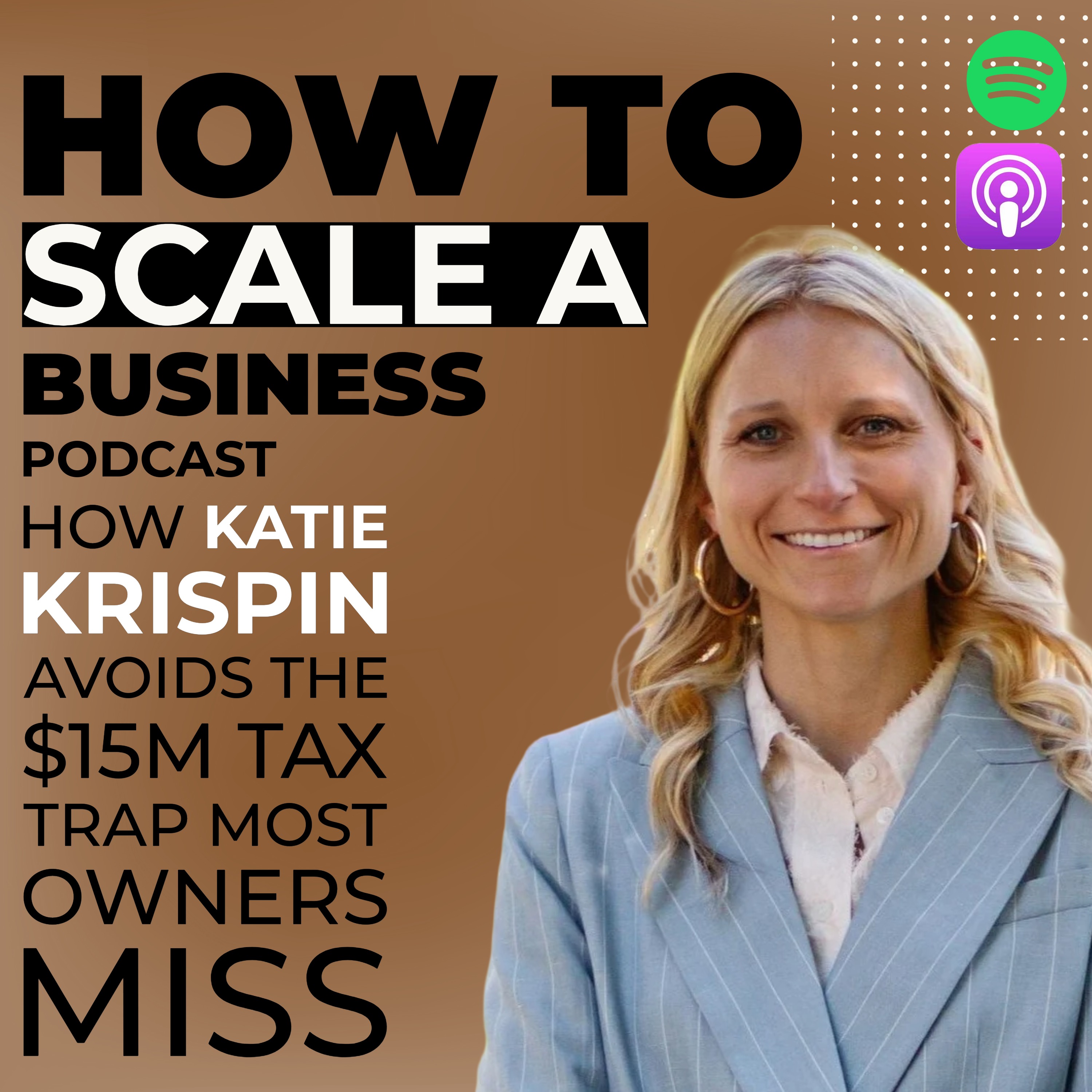 How Katie Krispin Avoids the $15M Tax Trap Most Owners Miss | Katie Krispin, founder of Katie Krispin Law, reveals why estate planning isn't just for the wealthy or elderly—it's a critical business protection strategy that most entrepreneurs ignore until it's too late. Through real-world stories, including three young children who lost their mother without a plan, Katie explains how proper estate planning protects your business during incapacity (which affects 67% of people before death), avoids probate court delays of 12-18 months, and can save millions in taxes. She breaks down the difference between trusts and wills, debunks common misconceptions, and explains the four core documents every business owner needs: financial power of attorney, healthcare power of attorney, last will and testament, and revocable living trust. Katie emphasizes that estate planning is an ongoing process that should grow with your business, not a one-time event you handle at the end of life. She shares how recent tax law changes affect the $15M federal estate tax exemption and why starting the conversation now—even in 90-day sprints—can protect both your business and the people you love.Chapters:(00:00:00) - Introduction and overview of estate planning for business owners(00:02:15) - Why business owners struggle with long-term planning and the 90-day sprint mindset(00:04:45) - Estate planning as an ongoing process, not a one-time event(00:07:20) - The Sam Walton story: How early estate planning saved billions in taxes(00:09:10) - The tragic story of three young kids who lost their mom without an estate plan(00:12:30) - Common misconceptions: Trust vs Will explained(00:15:45) - Recent tax law changes and the $15M federal estate tax exemption(00:18:20) - The four core documents every business owner needs(00:21:40) - Incapacity planning: 67% of people become incapacitated before death(00:24:15) - How to get started: Education and taking actionLinks And Resources:WebsiteKatie Krispin on LinkedInAmplafy MediaHector Santiesteban on LinkedInHector Santiesteban on TwitterThanks so much for joining us this week. Want to subscribe to How to Scale a Business? Have some feedback you’d like to share? Connect with us on iTunes and leave us a review! | — | ||||||
| 11/20/25 | 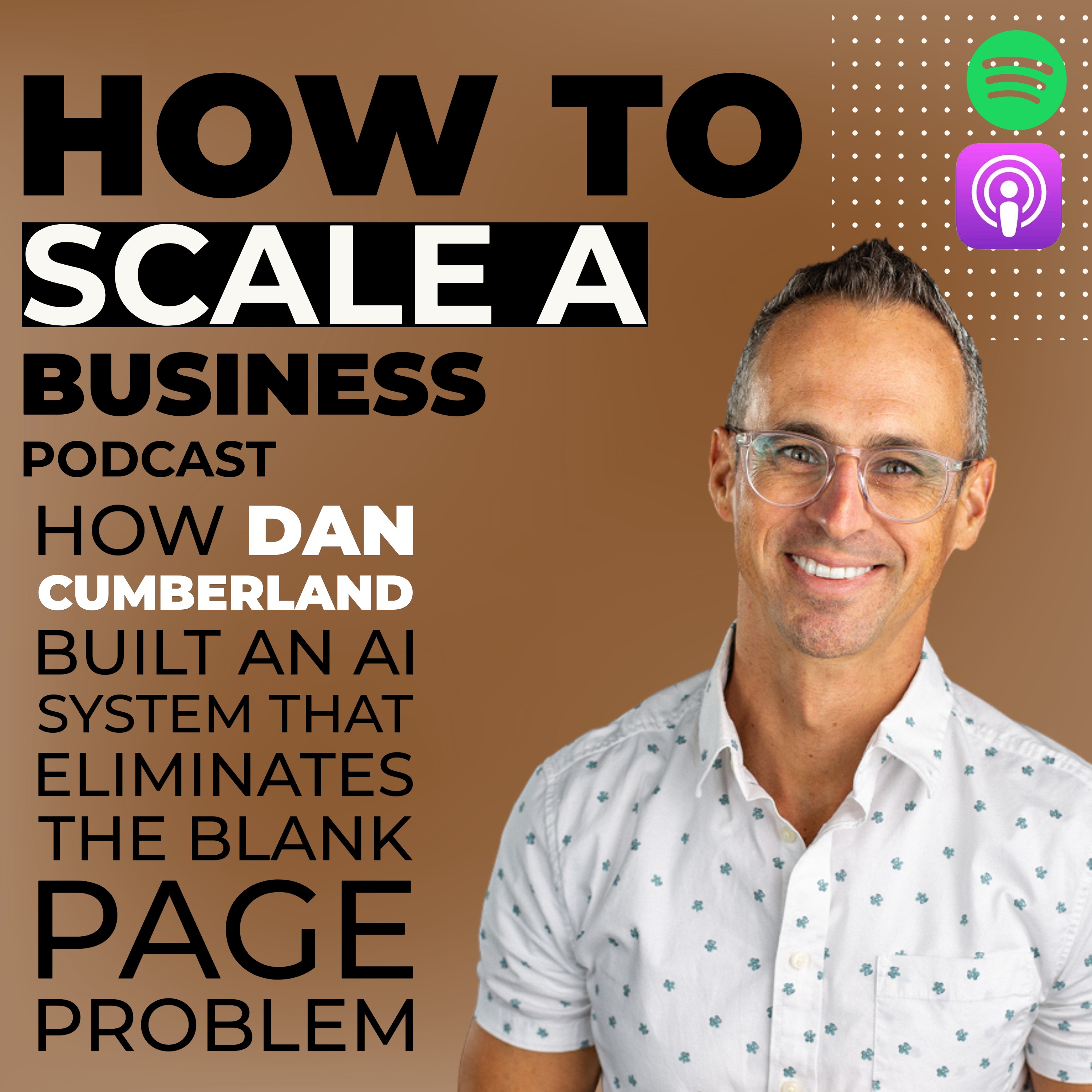 How Dan Cumberland Built an AI System That Eliminates the Blank Page Problem | Hector sits down with AI strategist Dan Cumberland to explore how businesses can effectively leverage AI beyond the hype. Dan introduces his POWER Framework for giving AI the context it needs—Person (persona), Others (audience), Work (output format), Expression (style), and References (examples)—and explains why most people get generic outputs. He shares real client success stories, including a consultant who reduced a 2-week hospital assessment report to just a couple of afternoons, and his own automated system for filtering hundreds of daily media opportunities down to 3-4 relevant ones. Dan addresses AI pitfalls like the "gaslighting" effect and emphasizes that domain expertise combined with good AI workflows creates an unstoppable combination, with key takeaways including brand voice training, specific workflows for repeated tasks, and understanding that AI excels at narrow, specific tasks rather than broad searches.Chapters:00:00:00 - Meet Dan Cumberland: From Fractional CMO to AI Implementation Expert00:01:00 - The Turning Point: Why Dan Pivoted His Entire Business Model to AI Strategy00:03:00 - Breaking Down the Black Box: How AI Tools Actually Think and Process Information00:04:00 - The POWER Framework Revealed: Your Blueprint for Getting Quality AI Outputs Every Time00:10:00 - Agentic Workflows Explained: How to Make AI Agents Work for Your Business (Not Against It)00:15:00 - The AI Gaslighting Problem: When Your AI Assistant Confidently Gives You Wrong Answers00:18:00 - Search vs AI: Why You're Using the Wrong Tool for the Job (And How to Fix It)00:20:00 - Real-World Marketing Wins: How Business Owners Are Using AI to Create Content That Converts00:23:00 - The 2-Week to 2-Afternoon Transformation: Advanced Workflows That Scale Your Client Deliverables00:26:00 - The Unfair Advantage: Why Domain Expertise + AI Workflows = Unstoppable Business GrowthLinks And Resources:Dan Cumberland's WebsiteAI Training GuideDan Cumberland on LinkedInAmplafy MediaHector Santiesteban on LinkedInHector Santiesteban on TwitterThanks so much for joining us this week. Want to subscribe to How to Scale a Business? Have some feedback you’d like to share? Connect with us on iTunes and leave us a review! | — | ||||||
| 11/18/25 | 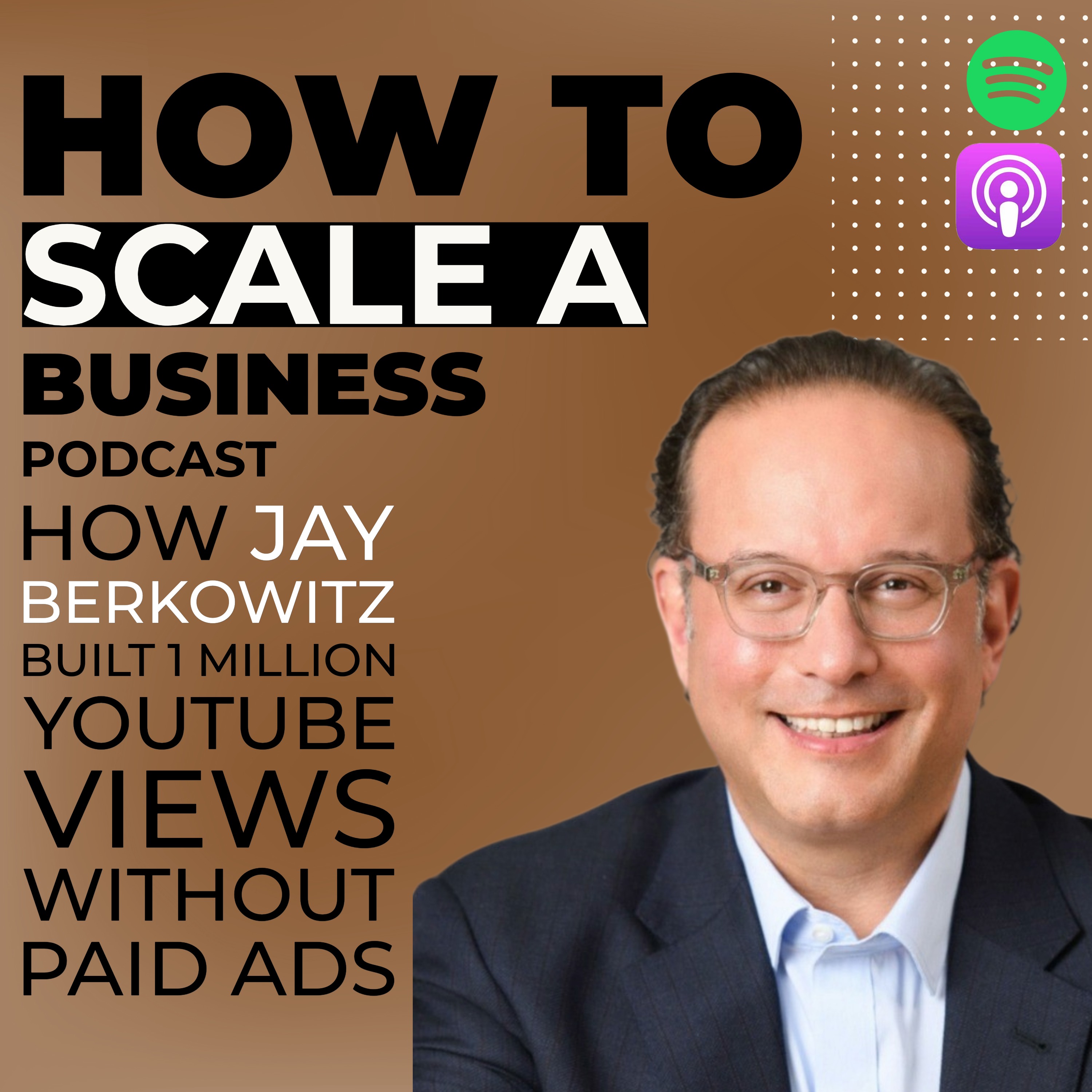 How Jay Berkowitz Built 1 Million YouTube Views Without Paid Ads | In this episode, Hector sits down with Jay Berkowitz, founder of the Ten Golden Rules and a digital marketing pioneer who's been in the internet space since before most people knew what Google was. Jay shares his journey from managing a $40 million ad budget at McDonald's to running a $60 million online diet company in the early 2000s, giving him unprecedented insights into internet marketing before it became mainstream. He reveals his Ten Golden Rules framework that's helped countless businesses scale, including why "there are no rules" is actually the first rule, how subscription models still dominate despite predictions of their death, and why the four P's of marketing remain fundamental even in the AI age. Jay breaks down the massive opportunity in YouTube (the second biggest website with 42 million daily views), explains why answering questions is the new SEO strategy for AI search optimization, and shares proprietary conversion technologies his agency has developed. He also discusses the importance of creating a unique value proposition, why you need to catch trends within the first six months before competitors pile in, and his personal "rule of three" for evaluating new marketing opportunities. Whether you're a service provider, attorney, or scaling any business, Jay's data-driven approach and real-world experience provide actionable strategies you can implement immediately.Chapters:(00:00:00) - From McDonald's $40M Budget to Internet Marketing Pioneer(00:03:42) - The First Golden Rule: There Are No Rules (Let Data Drive Decisions)(00:07:15) - Why Subscription Models and Email Lists Still Dominate in 2025(00:10:28) - How 1 Million YouTube Views Built Jay's Agency (Without Paid Ads)(00:13:51) - The Four P's of Marketing That Never Go Out of Style(00:17:36) - Answer Engine Optimization: The New SEO for AI Search(00:20:14) - Google's Secret Algorithm for Local Service Ads Revealed(00:23:47) - The Rule of Three: How to Catch Trends Before Competitors Pile In(00:26:29) - Run Your Business Like a Business: Systems, SOPs, and the E-MythLinks And Resources:Ten Golden RulesTen Golden Rules YouTube ChannelJay Berkowitz on LinkedInAmplafy MediaHector Santiesteban on LinkedInHector Santiesteban on TwitterThanks so much for joining us this week. Want to subscribe to How to Scale a Business? Have some feedback you’d like to share? Connect with us on iTunes and leave us a review! | — | ||||||
| 11/10/25 | 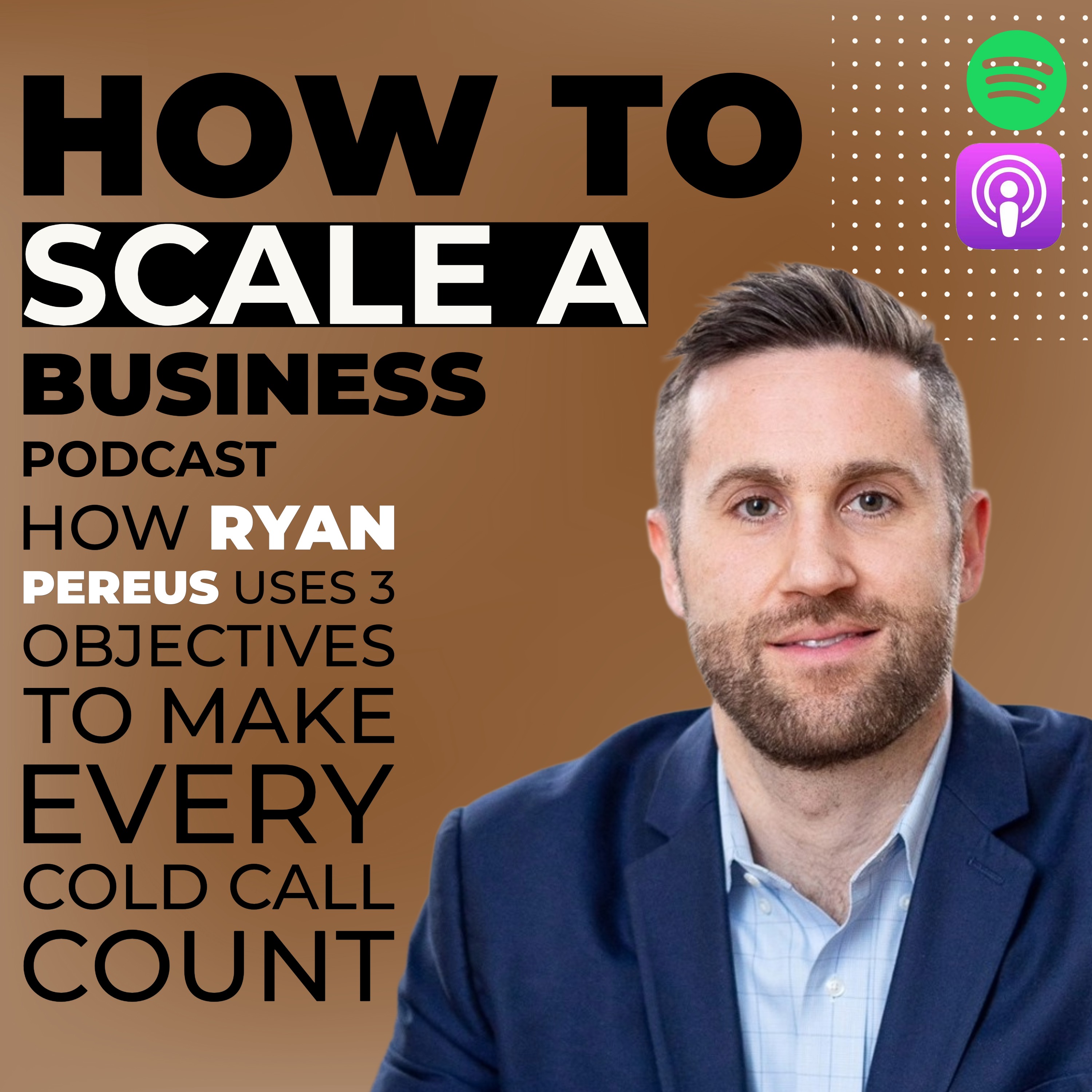 How Ryan Pereus Uses 3 Objectives to Make Every Cold Call Count | Hector sits down with Ryan Pereus, the Cold Call CEO, to explore how cold calling has evolved in 2025 and why it's still one of the most effective channels for B2B growth when done right. Ryan shares his journey from offering cold call scripts on Fiverr to building a premium outsourced SDR agency that's tested messaging across 100+ industries. He breaks down the Product Relevance Pyramid, revealing why some businesses struggle with cold calling not because of the channel itself, but because their offer is commoditized or poorly positioned. Ryan introduces the Four Elements of Cold Call Success—product relevance, target market accuracy, messaging strength, and SDR fit—and explains how each variable impacts campaign performance. He also dives into the three main objectives of every cold call: sparking genuine interest, selling the next step, and diffusing the salesperson stigma. Throughout the conversation, Ryan tackles common misconceptions about cold calling, discusses the impact of AI and iOS updates on outbound sales, and shares why quality appointments that actually show up matter more than vanity metrics. Whether you're scaling an in-house SDR team or considering outsourced cold calling, this episode is packed with tactical insights on messaging, positioning, and building trust from zero to one.Chapters:(00:00:00) - Why cold calling isn't dead—and how to make it work in 2025(00:01:42) - From Fiverr side hustle to building a cold calling empire(00:04:28) - The biggest mistakes killing your cold calling results (and how to fix them)(00:06:45) - The Product Relevance Pyramid: Why your offer matters more than your script(00:09:18) - What actually works in cold calling today (iOS updates, AI, and all)(00:13:42) - The 4 elements that determine cold call success—and which one you're missing(00:17:23) - The 3 objectives every cold call must hit to book quality appointments(00:20:15) - Can AI replace cold callers? Ryan's take on the future of outbound(00:23:47) - How to work with Ryan and access his cold calling frameworks(00:25:41) - The one secret that separates businesses that scale from those that stallLinks And Resources:WebsiteThe H2H MethodAmplafy MediaHector Santiesteban on LinkedInHector Santiesteban on TwitterThanks so much for joining us this week. Want to subscribe to How to Scale a Business? Have some feedback you’d like to share? Connect with us on iTunes and leave us a review! | — | ||||||
| 10/31/25 | 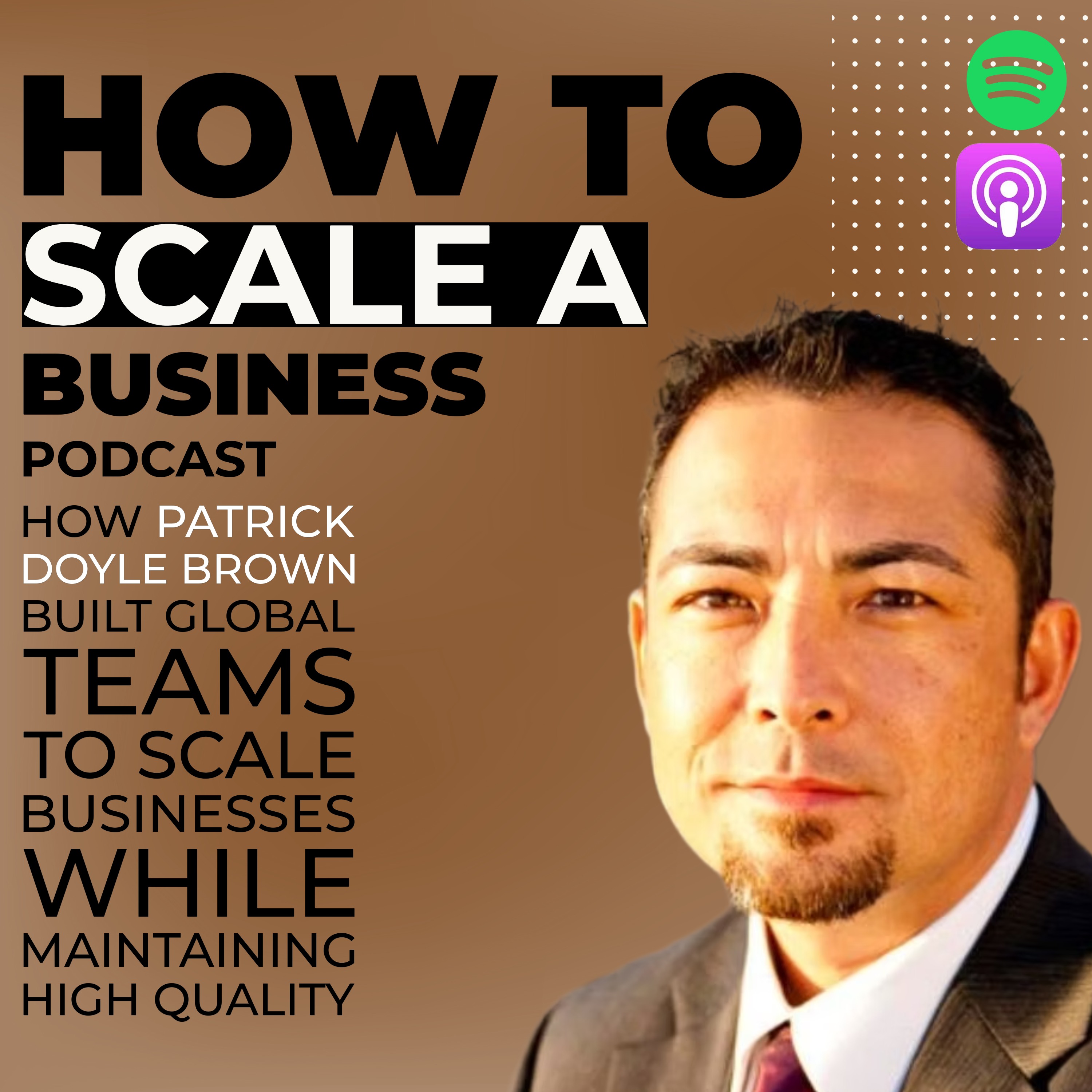 How Patrick Doyle Brown Built Global Teams to Scale Businesses While Maintaining High Quality | Founders don’t scale by working harder; they scale by capturing the “essence” of the work locally, then documenting, delegating, and automating the repeatable parts with the right global talent. In this conversation, systems architect Patrick Doyle Brown explains how retention outperforms simple labor arbitrage, why automations need human oversight, how to map a customer journey before you spend on acquisition, and practical first wins like offloading social monitoring, inbox triage, and competitor price tracking into an AI-assisted loop. We cover region-by-strength role matching, the “first 100” rule for founders, and the mindset that keeps growth durable: don’t overspend, avoid shiny objects, always be selling.Chapters:(00:00:00) - Cold open and setup: why founders hit scaling bottlenecks(00:02:12) - Local first, then global: capturing the “essence” before you scale(00:06:45) - Retention over raw savings: compounding human capital(00:10:02) - Region strengths: sales, dev, ops, and hospitality by market(00:14:18) - Where to start: social management and inbox triage wins(00:18:40) - Market intel loop: competitor pricing + simple AI dashboards(00:22:55) - Automate vs. delegate: “trust, verify” and QA in the loop(00:27:31) - Customer journey map before ad spend(00:32:10) - Founder “first 100” rule and SOP handoff(00:36:48) - The scaling mindset: stay in lane, avoid shiny objects, always sellLinks And Resources:Patrick Brown on LinkedInWebsiteAmplafy MediaHector Santiesteban on LinkedInHector Santiesteban on TwitterThanks so much for joining us this week. Want to subscribe to How to Scale a Business? Have some feedback you’d like to share? Connect with us on iTunes and leave us a review! | — | ||||||
| 10/22/25 | 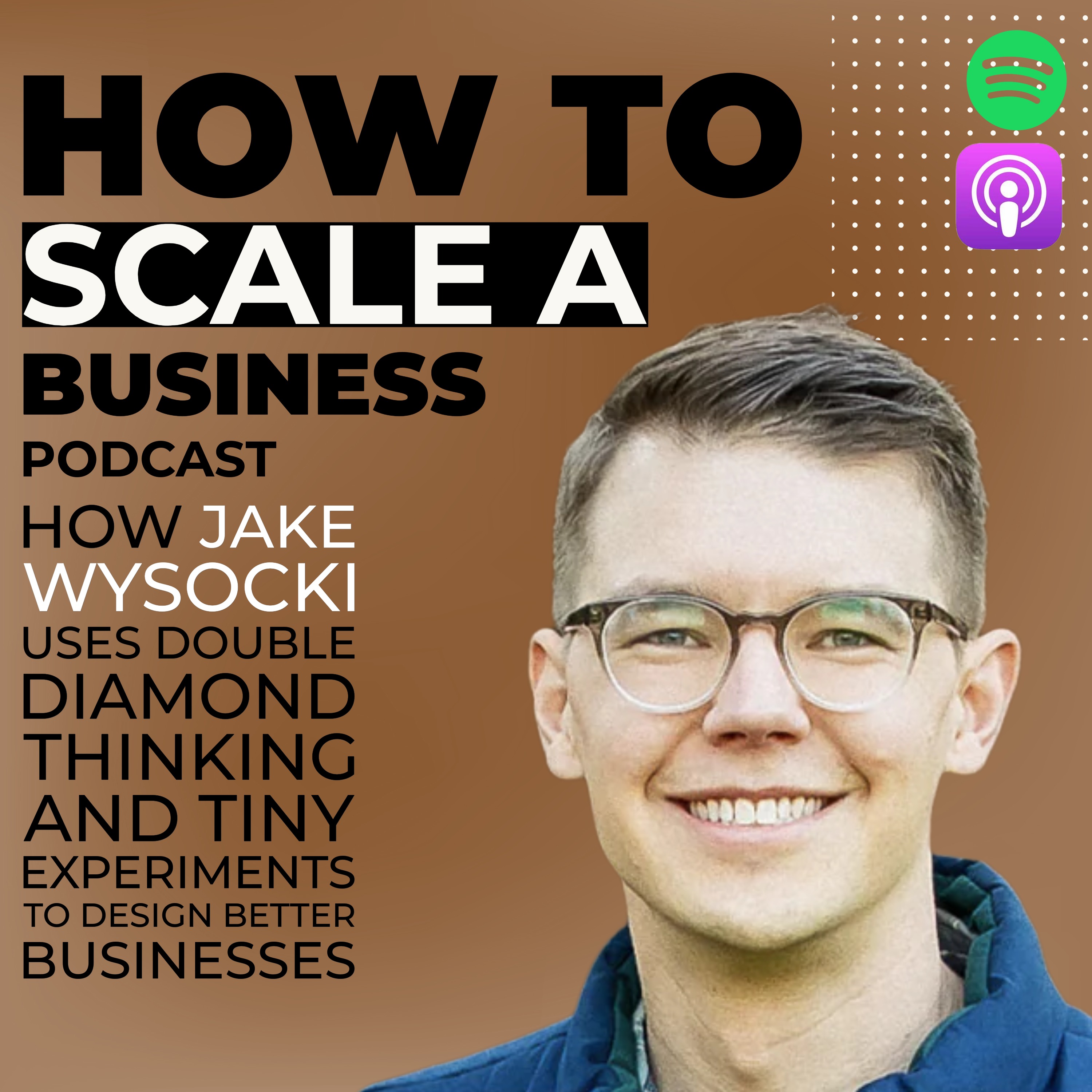 How Jake Wysocki Stops Leaders from Jumping to Solutions (And Losing Momentum) | Jake Wysocki, founder of Intention Craft, shares how design thinking, structured exercises, and tiny experiments help leaders scale by solving the right problems in the right order. We explore the Double Diamond framework, human‑centered research, constraints that spark creativity, and how to use AI to think better rather than outsource judgment. We close with Jake’s surprising “secret” to scaling: make it fun and make it human.- 00:00:00 – Intro: Jake's path to entrepreneurship- 00:03:55 – Talk to customers: research beats assumptions- 00:07:00 – Apply frameworks to every problem-solving stage- 00:07:58 – Double Diamond: problems first, solutions second- 00:09:44 – Find the problem that unlocks progress- 00:15:33 – Learn fast through tiny experiments- 00:17:30 – Sprint to create urgency and momentum- 00:18:44 – MVP mindset: scope down to learn- 00:22:24 – AI enhances human connection, not replacement- 00:32:14 – Scaling secret: make it fun, humanLinks And Resources:Jake’s crash course: https://course.intentioncraft.comAmplafy MediaHector Santiesteban on LinkedInHector Santiesteban on TwitterThanks so much for joining us this week. Want to subscribe to How to Scale a Business? Have some feedback you’d like to share? Connect with us on iTunes and leave us a review! | — | ||||||
| 9/16/25 | 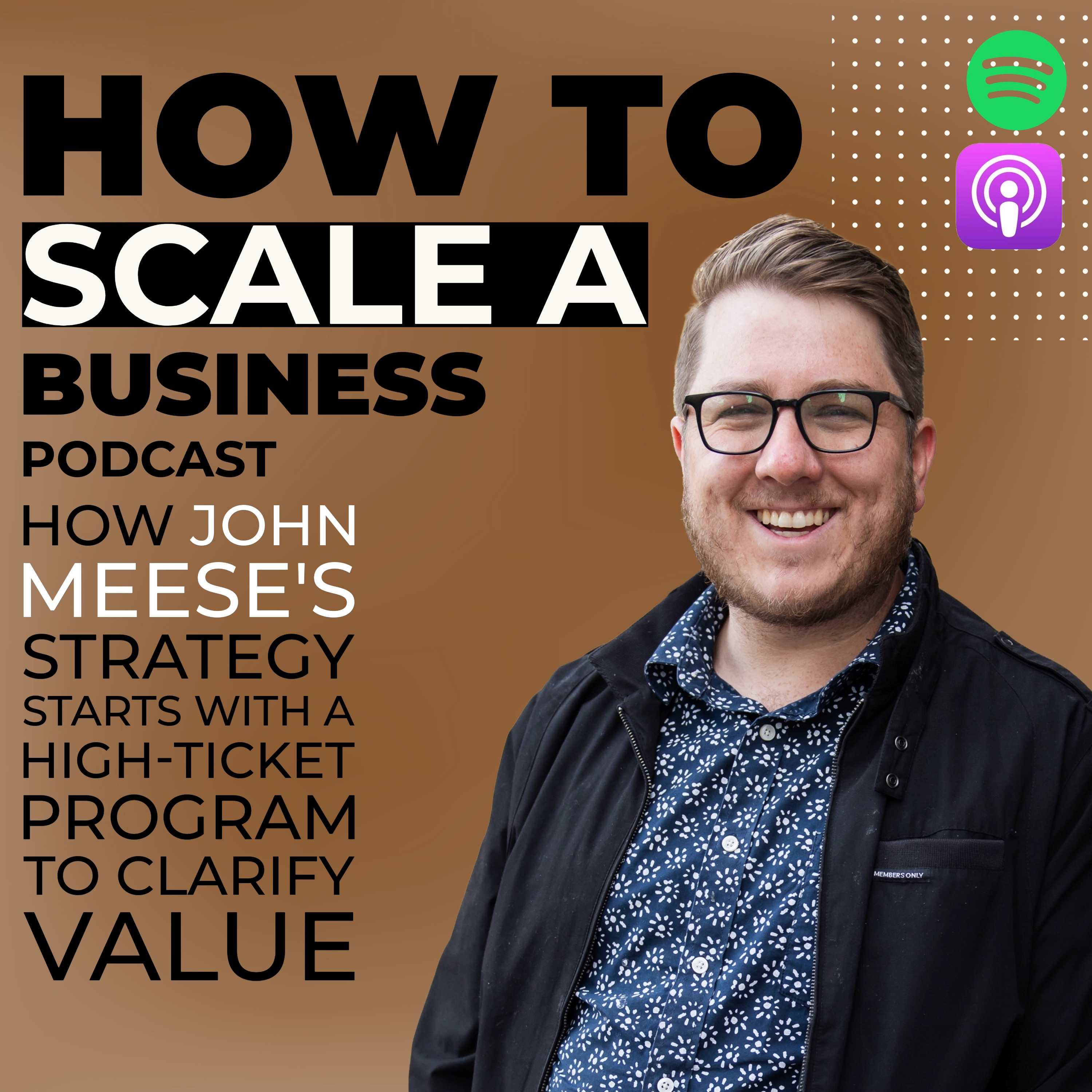 How John Meese's Strategy Starts with a High-Ticket Program to Clarify Value | In this episode, host Hector Santiesteban sits down with bestselling author and founder of Sell Your Smarts, John Meese, to unpack the proven blueprint for scaling a wisdom-based business. John reveals why most entrepreneurs fall into the trap of “death by a thousand eBooks,” how to turn decades of experience into a profitable sold-out group coaching program, and why the real opportunity lies in shifting from information to insight in today’s digital age. Whether you’re a coach, consultant, or business owner ready to monetize your expertise, John’s insights will help you avoid burnout, build a resilient business model, and unlock scalable income without sacrificing your Saturdays.Chapters:00:00:00 – Welcome to How to Scale a Business Podcast00:01:06 – Mission is to steward wisdom by multiplying knowledge and experience.00:02:26 – Shift from blogging to group coaching.00:03:21 – Video game story shows frustration with starting over.00:05:05 – Wisdom only matters when solving real problems.00:05:41 – Wisdom is book smarts plus street smarts.00:08:49 – “Death by a thousand eBooks” causes burnout.00:10:28 – Start with high-ticket group coaching.00:12:00 – Group coaching added $100K in six months.00:13:30 – Model works across diverse niches.00:16:16 – Success comes from flagship, gateway, and subscriptions.00:19:42 – The age of information is over.00:22:45 – The age of insight has begun.00:23:46 – Free copy of Serve to Sell available.00:24:52 – Scaling requires empathy to stay connected to customers.Links And Resources:Sell Your Smart WebsiteServe to Sell by JohnAmplafy MediaHector Santiesteban on LinkedInHector Santiesteban on TwitterThanks so much for joining us this week. Want to subscribe to How to Scale a Business? Have some feedback you’d like to share? Connect with us on iTunes and leave us a review! | — | ||||||
Showing 25 of 391
Pitch Fit is a Pro feature
See how bookable this show is for guests, which brands already advertise, the per-episode ad value, and the best-fit guest and sponsor profile. The numbers are blurred on the free plan.
How readily this show books outside guests like you.
How proven this show is for host-read sponsorships.
For Guests
ProFor Advertisers
ProUpgrade to Pro to unlock guest cadence, sponsor categories, fit scores, and per-episode ad value for this show.