Insights from recent episode analysis
Audience Interest
Podcast Focus
Publishing Consistency
Platform Reach
Insights are generated by CastFox AI using publicly available data, episode content, and proprietary models.
Most discussed topics
Brands & references
Total monthly reach
Estimated from 6 chart positions in 6 markets.
By chart position
- 🇺🇸US · Marketing#1695K to 30K
- 🇳🇿NZ · Marketing#3100K to 300K
- 🇨🇴CO · Marketing#1530K to 100K
- 🇫🇮FI · Marketing#813K to 10K
- 🇵🇹PT · Marketing#132500 to 3K
- Per-Episode Audience
Est. listeners per new episode within ~30 days
42K to 134K🎙 Daily cadence·216 episodes·Last published yesterday - Monthly Reach
Unique listeners across all episodes (30 days)
139K to 446K🇳🇿67%🇨🇴22%🇺🇸7%+3 more - Active Followers
Loyal subscribers who consistently listen
56K to 178K
Market Insights
Platform Distribution
Reach across major podcast platforms, updated hourly
Total Followers
—
Total Plays
—
Total Reviews
—
* Data sourced directly from platform APIs and aggregated hourly across all major podcast directories.
On the show
From 10 epsHost
Recent guests
Recent episodes
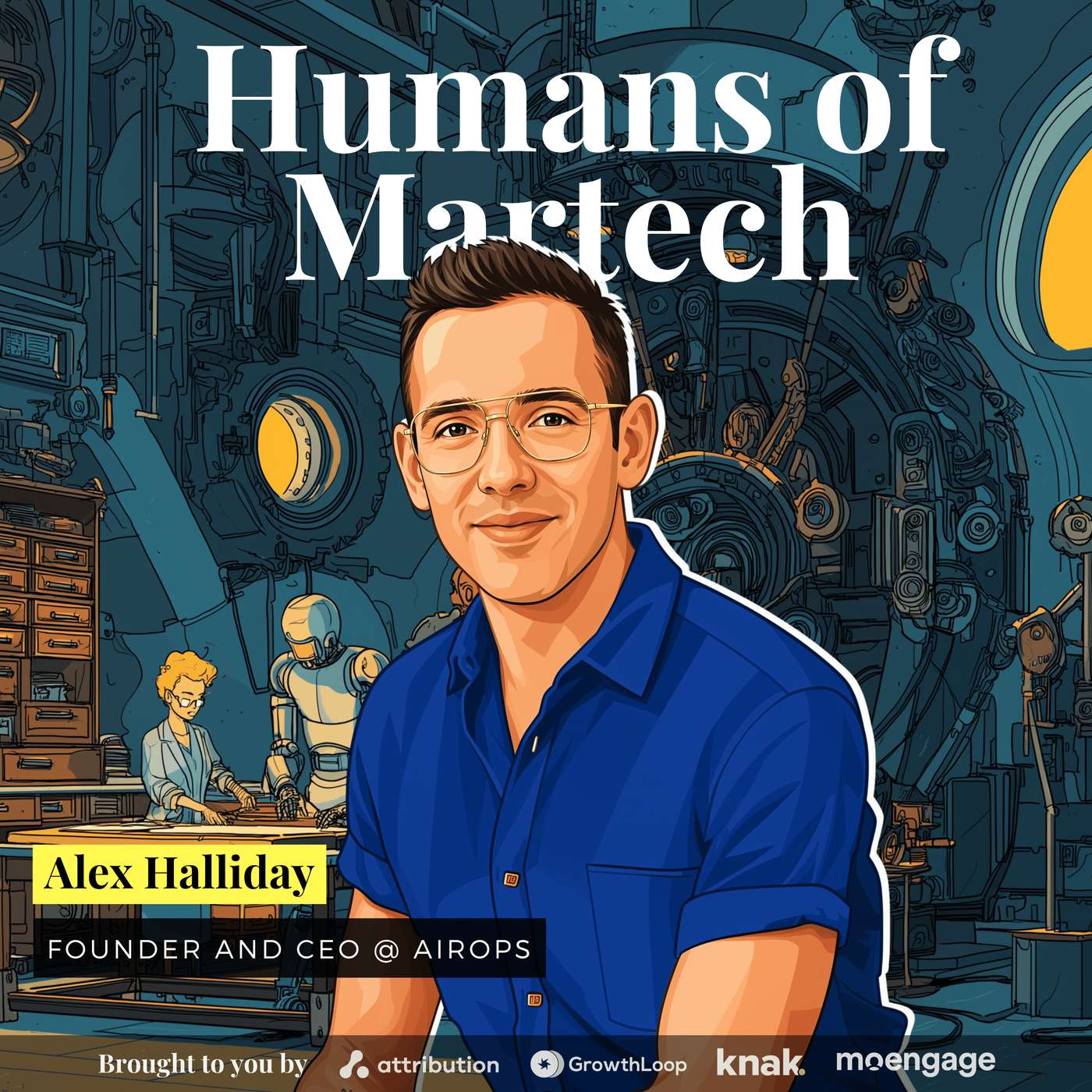
220: Alex Halliday: How to build content engineering systems that get cited and scale without slop
May 19, 2026
1h 06m 06s
219: Elizabeth Dobbs: Inside Databricks' stack with 3 AI agents, 1 lakehouse, and 6 years of data work
May 12, 2026
56m 56s
218: Tata Maytesyan: Build a marketing career that survives AI as a deep generalist
May 5, 2026
56m 07s
217: How to interview a company before you take the job (The Martech job hunt survival guide, part 3)
Apr 28, 2026
54m 23s
216: How to stand out as a candidate with AI prep, portfolios and tools (The Martech job hunt survival guide, part 2)
Apr 21, 2026
1h 01m 25s
Social Links & Contact
Official channels & resources
Official Website
Login
RSS Feed
Login
| Date | Episode | Topics | Guests | Brands | Places | Keywords | Sponsor | Length | |
|---|---|---|---|---|---|---|---|---|---|
| 5/19/26 | ![]() 220: Alex Halliday: How to build content engineering systems that get cited and scale without slop | What's up everyone, today we have the pleasure of sitting down with Alex Halliday, Founder and CEO at AirOps.(00:00) - Intro (01:19) - In This Episode (01:54) - Sponsor: Attribution App (02:57) - Sponsor: GrowthLoop (04:19) - How AirOps Pivoted to AI Content Engineering (08:23) - The Real Definition of Content Engineering and Why It's Not About Publishing More (13:14) - What a Content Engineer Does That a Senior Content Marketer Does Not (27:31) - What It Actually Takes to Get AI Content Past a Human Editor (30:52) - Sponsor: Knak (32:00) - Sponsor: MoEngage (43:21) - Why Review Becomes the Bottleneck After You Automate Content Production (47:13) - Why Enterprise CMS Integration Is Harder Than the Content Quality Problem (51:07) - Why the Agent Runtime Is the Next Competitive Battleground for Content Teams (55:02) - What the Case Against Content Engineering Gets Wrong About the Role (58:08) - What a Content Engineering Team Looks Like in 3 Years (01:03:45) - How Alex Decides What Deserves His Energy Summary: Alex built AirOps to help teams access company data, then a conversation with Sam Altman and a cramped middle seat on a flight to Atlanta changed everything. In this episode, he breaks down what content engineering actually means — not just generating more AI content, but building the systems infrastructure to maintain quality, freshness, and brand accuracy across everything a company has ever put online. He makes the counterintuitive case that great content engineering puts more humans into the content process, and explains why 98% of AirOps's pilots convert to annual customers while most AI content pilots fail. If you think AI content is just a faster way to publish more, this episode will change how you think about it.About Alex HallidayAlex Halliday is the Founder and CEO of AirOps, where he leads the development of AI content engineering systems that help brands build visibility in AI search. Before founding AirOps in 2022, he served as Head of Product at MasterClass, where he was the company's first product hire and helped scale revenue 10x. As a Venture Partner at SparkLabs Global Accelerator, Alex has made early investments in OpenAI, Anthropic, Groq, and Discord.How AirOps Pivoted to AI Content EngineeringIn early 2022, the LLM moment hadn't happened yet. Not publicly. GPT-3 existed but was barely on anyone's radar in marketing. Most "AI for marketing" conversations were still about sentiment analysis tools and basic chatbots. The prevailing assumption was that software had rules, rules had limits, and those limits were the floor you designed around.Alex Halliday had an unusual vantage point. As a venture partner at SparkLabs Global Accelerator with early investments in OpenAI and Anthropic, he was closer to what was actually happening than almost anyone in his world. He still wasn't ready for what came next.It started with a conversation. He was in San Francisco with Sam Altman, something he made a habit of — whenever they crossed paths, Alex asked the same question: what's sparking your imagination these days? On this particular occasion, Altman's answer was different. The AI stuff was getting really good, he said. When Alex pushed for specifics, Altman told him they were getting close to AI that could read all your emails and tell you what to do for the week. It sounded completely insane.Alex filed it away. Then, a few weeks later, he was on a flight to Atlanta, sandwiched in the middle seat between 2 large men with nowhere to go and nothing else to do. He finally opened an OpenAI account and started building.That experience in a cramped middle seat sent AirOps in a new direction. The company had been founded to help non-technical employees access company data — a broad, useful product with no obvious north star. Knowing the paradigm was shifting and knowing what your company should actually do about it are different problems. Alex had to translate that conviction into a focus, which meant making a hard call. When a space is growing as fast as LLM applications were in 2022 and 2023, trying to be everything to everyone is a trap.The answer came from the data, not from a whiteboard. When the team looked at their heat map of usage, 1 cluster burned hotter than anything else: technical CMOs, leaders of 50 to 100 person marketing orgs, working nights and weekends inside AirOps building ambitious content systems. High-taste users with strong opinions and no patience for tools that couldn't meet their standard. The market was doing what markets do when they find something they want — it was insisting.By mid-2023, AirOps had committed fully. The customer was the high-taste marketing professional who wanted to build content systems at scale, not just generate more content. Every decision since has been built around that person. The most important pivots rarely happen in planning sessions. They happen when you actually use the thing, look at the data honestly, and trust what the market is telling you over the story you had planned to tell.Key takeaway: Look at your usage data and find the cluster of users who are working hardest and complaining most specifically — they are telling you who your product is actually for. Make time to try the tools reshaping your industry with your own hands. Alex's pivot started in a cramped middle seat he couldn't escape. Any open hour will do.The Real Definition of Content Engineering and Why It's Not About Publishing MoreMarketing teams have been chasing the wrong metric since LLMs went mainstream. The race defaulted to volume: how many posts, how fast, how much can you automate. That framing made sense in an era where more content meant more crawlable pages, more keywords, more surface area for Google to index. The era has changed.AI agents now sit between buyers and brands. When someone asks ChatGPT or Perplexity a question about your product category, an agent synthesizes content from across the web — your owned pages, third-party publications, Reddit threads, review platforms — and returns a single answer. That agent is not counting pages. It's evaluating quality, depth, freshness, and what Alex describes as information gain: the degree to which any given piece of content adds something new to what the model already knows.That's a meaningfully different standard. A 2022 blog post with outdated product language, stale statistics, and broken links doesn't rank lower in AI search — it's absent from it entirely. Webflow, 1 of AirOps's customers, saw what investing in content refresh workflows does to those outcomes: 42% more traffic and AI-attributed conversions performing 6x better than standard organic. That's a maintenance story, not a content production story.There's also a conflation doing a lot of damage in this conversation. Content written with AI assistance gets lumped together with content generated by AI with no original grounding or context. The studies that say "AI content performs poorly" tend to define AI content as the second category, and the conflation goes unexamined in most LinkedIn commentary. The distinction matters enormously. Content that draws on real interviews, proprietary data, internal expertise, and company-specific context performs differently from content that's a model recombining what already exists on the internet.The brands performing well in AI search right now are treating their content library as a living system with real quality standards — a garden that requires ongoing maintenance rather than a publishing archive. They're building workflows to keep content fresh, surface internal knowledge that's been sitting in Google Drive unused, and maintain what... | 1h 06m 06s | ||||||
| 5/12/26 | ![]() 219: Elizabeth Dobbs: Inside Databricks' stack with 3 AI agents, 1 lakehouse, and 6 years of data work | What's up everyone, today we have the pleasure of sitting down with Elizabeth Dobbs, AVP of Marketing Technology, Data and Growth at Databricks.(00:00) - Intro (01:18) - In This Episode (01:47) - Sponsor: Knak (02:55) - Sponsor: MoEngage (04:16) - Why Velocity Beats Permanence in Marketing Data Architecture (12:00) - Why Databricks Embedded Data Engineers Inside Marketing (15:02) - Inside Databricks' 3 Marketing Ops Agents (18:56) - How Databricks Built an AI Analyst That Marketing Teams Actually Trust (26:13) - How Agent Tagatha Cut Months of Manual Content Tagging to Hours (30:07) - Sponsor: AttributionApp (31:09) - Sponsor: GrowthLoop (34:48) - How Agent Atlas Replaced the Rules-Based Segmentation Wheel (39:28) - Why Marketers Don't Care Whether You Call It an Agent (43:32) - How to Get Data Warehouse Access When Your Team Doesn't Own It (48:36) - What Databricks Is Actually Testing for in Marketing Hires Now (54:04) - What Gives Liz Energy Outside the Office Summary: Elizabeth Dobbs spent 6 years at Databricks doing something most marketing leaders only talk about: building the data infrastructure before deploying the AI on top of it. She's shipped 3 production agents (Marge, Tagatha, and Atlas) and she'll tell you exactly what broke first and why the team kept going anyway. You'll hear how a marketing lakehouse becomes the foundation that makes every agent actually work, why the agent label debate is a distraction, and what Liz is genuinely testing for in marketing interviews now that AI-polished resumes all look the same in Greenhouse. If your AI ambitions are running ahead of your data foundation, this episode is going to reorder your roadmap.About Elizabeth DobbsElizabeth Dobbs is the AVP of Marketing Technology, Data and Growth at Databricks, where she leads the team responsible for the company's full marketing stack, including data engineers and data scientists embedded directly in marketing. Promoted to AVP in February 2025 after more than 5 years building Databricks' marketing data infrastructure from scratch, she architected the company's marketing lakehouse and deployed 3 production AI agents serving the entire marketing org. Before Databricks, she spent nearly 7 years at Khoros in a series of marketing operations and demand generation leadership roles, including Chief of Staff to the CMO.Why Velocity Beats Permanence in Marketing Data ArchitectureIf you work at a company called Databricks, you assume the marketing data is fine. The word "data" is literally in the name. When Elizabeth Dobbs was interviewing 6 years ago and someone in sales ops told her straight up that the data was a complete mess, she thought they were being politely humble. She took the job. She found out they meant it.What she encountered fit the startup playbook exactly. Agencies hired for agency's sake because headcount was thin. Systems that barely talked to each other. Stacks of what she calls "human middleware," people spending their days manually bridging gaps the infrastructure couldn't close. Databricks was probably no worse than any other high-growth startup at that scale. But fixing it meant accepting something most marketing teams resist: building for permanence is a waste of energy.When Liz and her team sat down to fix things, they made a call that runs against how most marketing orgs are wired. They stopped trying to build the perfect foundation. At 1,000 people, you might get away with it. At 10,000, perfection is a distraction. By the time you finish, the company has changed shape again. So they optimized for velocity. Centralized data imperfectly. Built shared definitions that not everyone followed consistently. Accepted the bubblegum-and-duct-tape reality. And they stayed intentional about exactly 1 thing: knowing which decisions you cannot walk back.The one-way door framework is how they sorted the rest. Some decisions hurt to make but compound over time. A marketing lakehouse, all first-party data in 1 governed and catalogued place, is the example she keeps returning to. There is no SaaS tool you would buy, no agent you would deploy, that wouldn't benefit from having that foundation underneath it. That makes it a no-regret decision even when it's brutal to build. The other category, the rip-and-replace bets, is where you move fast and hedge. Agents might automate an entire workflow in 18 months. They might not be ready. You place smaller bets there and iterate. What you don't do is apply the same level of commitment to decisions that actually shouldn't last.6 years later, the core of Databricks' marketing stack looks a lot like it did when Liz started. LeanData. Familiar prospecting tools. The same basic webinar infrastructure. The vendors who survived are the ones who grew alongside the team, who stayed flexible as Databricks scaled well past what their standard playbook assumed. In a market that treats every tool as disposable, the ones that last are the ones that earned it. The companies that build durable AI systems in marketing will be the ones who made the unsexy architectural call first and let everything else follow from it.Key takeaway: Before committing to any AI agent or new platform, split your roadmap into 2 categories: one-way doors and reversible bets. A centralized, governed marketing data layer goes in the one-way door category. Pour resources into it without condition and treat every setback as a speed bump. For everything else, including which agents you deploy and which tools you layer on top, move fast, hedge small, and iterate. Run that filter on your next planning cycle and you'll stop debating tools and start building the foundation that makes all of them actually work.Why Databricks Embedded Data Engineers Inside MarketingMarketing ops leaders who don't have embedded data engineers spend a lot of time explaining to others why they can't move faster. Liz's team has data engineers and data scientists who report into marketing, not into a central IT org. Most people assume she fought for it. The actual story is less dramatic and more instructive.It came from 2 leaders giving the team room before they could prove the full return. Her CMO Rick and CCIO Mike Hamilton were direct about it: we have our own fires, you know enough to be dangerous, you know where the lines are. File Jira tickets if you need something outside your lane, but otherwise go run. That kind of organizational trust is rare. What made it stick was showing the velocity difference on something concrete. Bring in 1 or 2 data engineers with actual marketing domain experience, and the speed gap becomes obvious. Marketing data has its own rules. MDF means different things to different teams. ROAS has regional variations. Pipeline attribution is a political minefield. Someone who has lived in that domain moves 10 times faster than someone learning it in place.That observation turns out to apply directly to the agents Liz's team built later. You spend months onboarding a new hire with marketing domain context. That person leaves before the investment fully pays off and you start over. Agents don't do that. You train them, you give them the context, they hold it. What Databricks figured out with internal resourcing, they've since encoded into how they think about deploying AI. The parallel is direct and Liz draws it explicitly: the reason domain knowledge matters for people is the same reason it matters when you're configuring an agent.The team that resulted from this structure is part of why Marge, Tagatha, and Atlas were even possible. You can't build a marketing lakehouse without engineers who understand what the data is supposed to represent. You can't deploy an agent ... | 56m 56s | ||||||
| 5/5/26 | ![]() 218: Tata Maytesyan: Build a marketing career that survives AI as a deep generalist✨ | AI in marketingdeep generalists+3 | Tata Maytesyan | Grow Glo | — | AI automationmarketing careers+3 | GrowthLoop | 56m 07s | |
| 4/28/26 | ![]() 217: How to interview a company before you take the job (The Martech job hunt survival guide, part 3)✨ | job interviewmarketing operations+4 | Darrell | — | — | interview questionsjob offer+5 | MoEngage | 54m 23s | |
| 4/21/26 | ![]() 216: How to stand out as a candidate with AI prep, portfolios and tools (The Martech job hunt survival guide, part 2)✨ | job searchAI tools+4 | Darrell | — | — | job huntAI experience+4 | Mammoth Growth | 1h 01m 25s | |
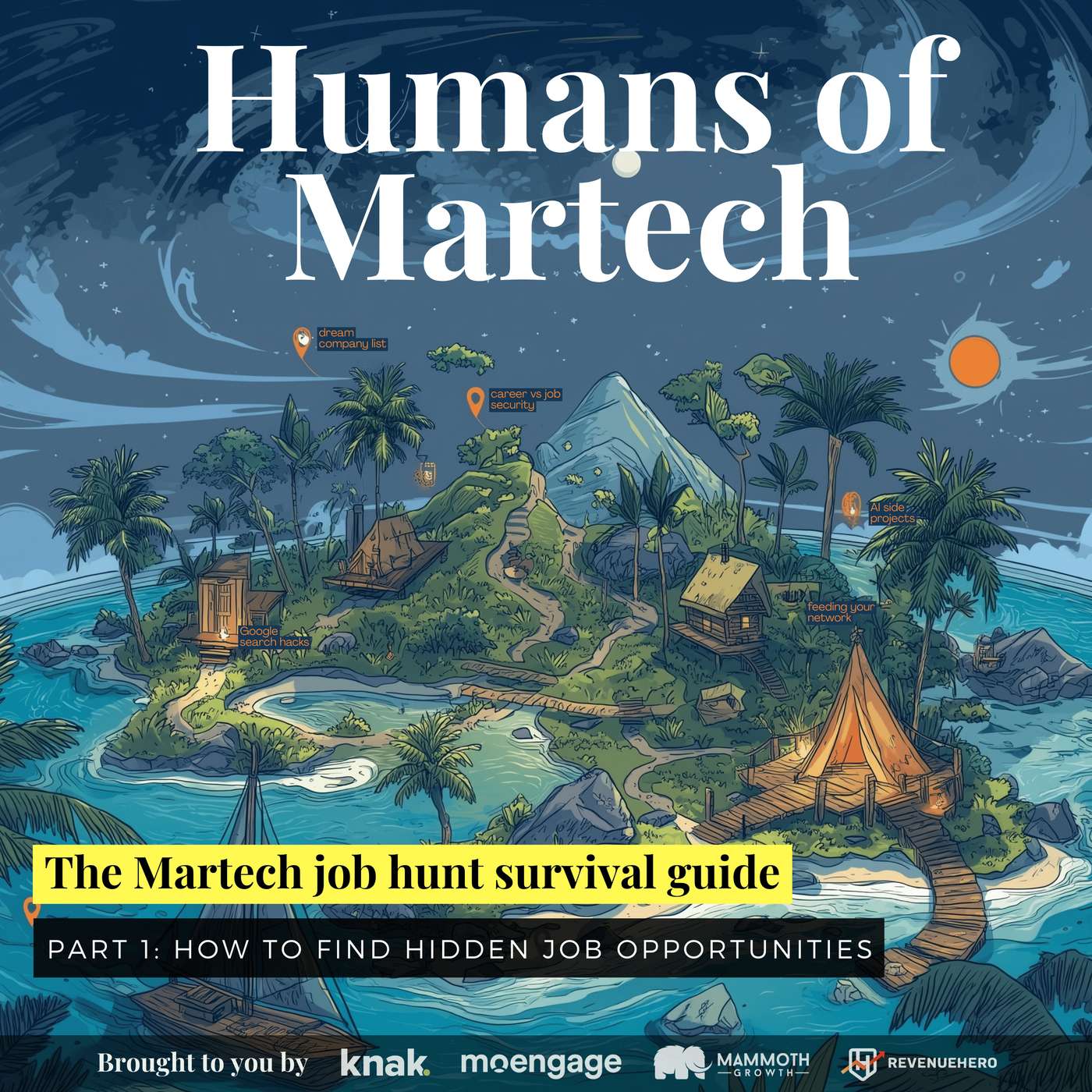
| 4/14/26 | ![]() 215: How to find hidden job opportunities (The Martech job hunt survival guide, part 1)✨ | job searchcareer development+4 | — | AshbyVC+1 | — | job opportunitiesnetworking+6 | Knak | 57m 46s | |
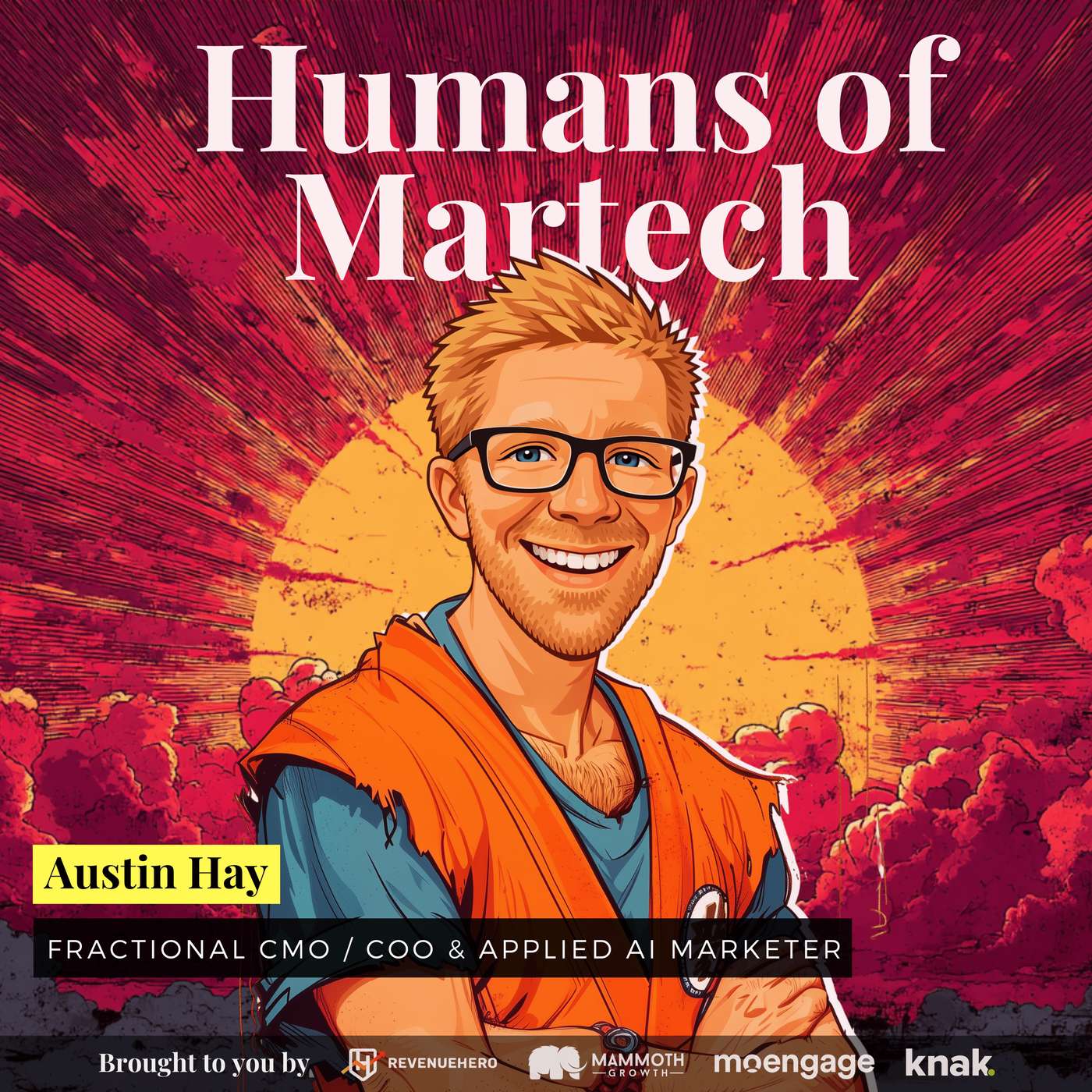
| 4/7/26 | ![]() 214: Austin Hay: Claude Code is creating a new class of elite marketers and the mental models that make it click✨ | AI in marketingClaude Code+4 | Austin Hay | BranchmParticle+2 | — | Claude CodeAI workflows+5 | RevenueHero | 1h 02m 30s | |
| 3/31/26 | ![]() 213: John Whalen: The next marketing advantage is pre-testing ideas on synthetic users✨ | synthetic userscognitive science+4 | Dr. John Whalen | Brilliant Experience | — | synthetic userscognitive science+5 | — | 1h 08m 24s | |
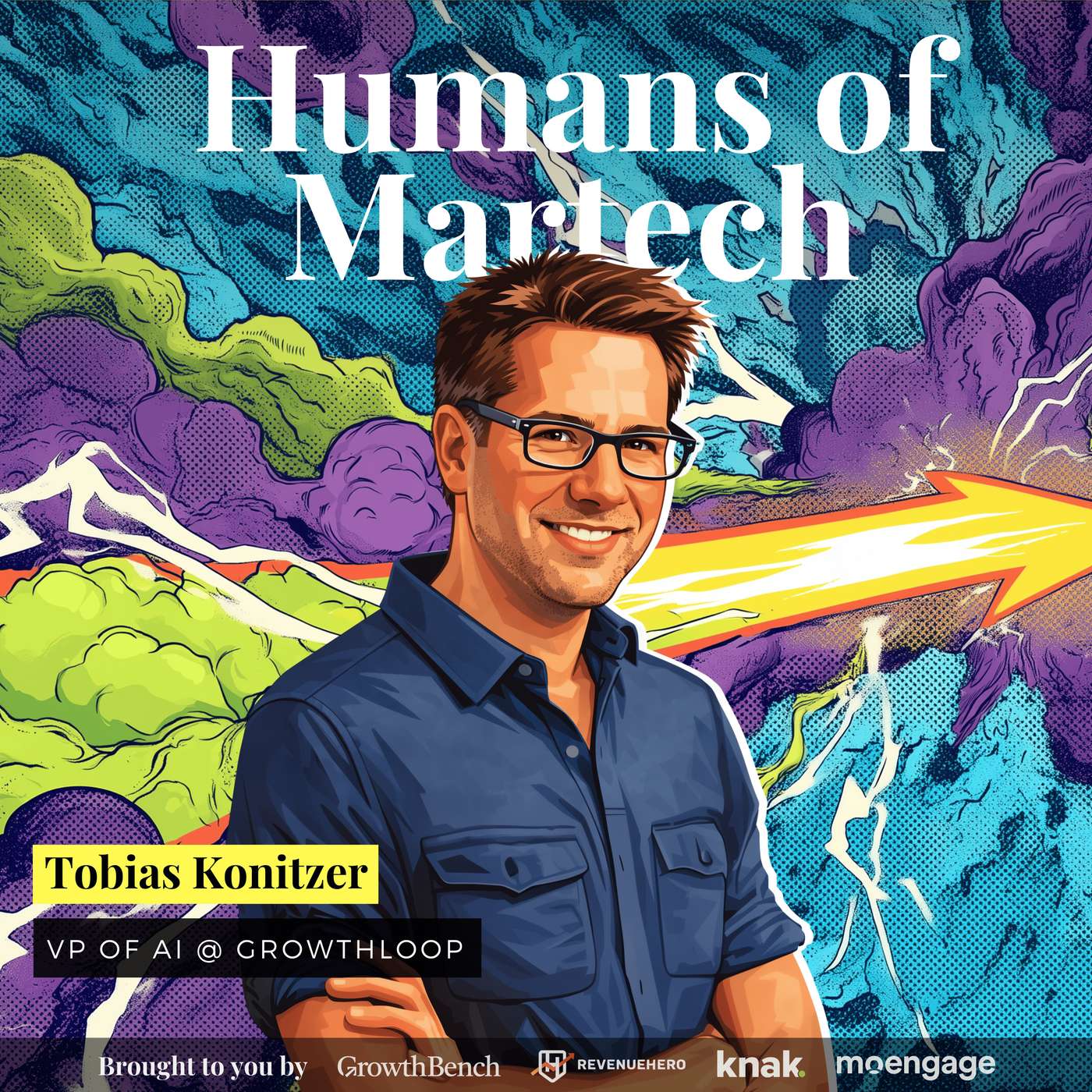
| 3/24/26 | ![]() 212: Tobias Konitzer: The Causal AI revolution and the boomerang effect in marketing decision science✨ | Causal AIMarketing Decision Science+5 | Tobias Konitzer | GrowthLoop | — | Causal InferenceMarketing+5 | — | 1h 04m 32s | |
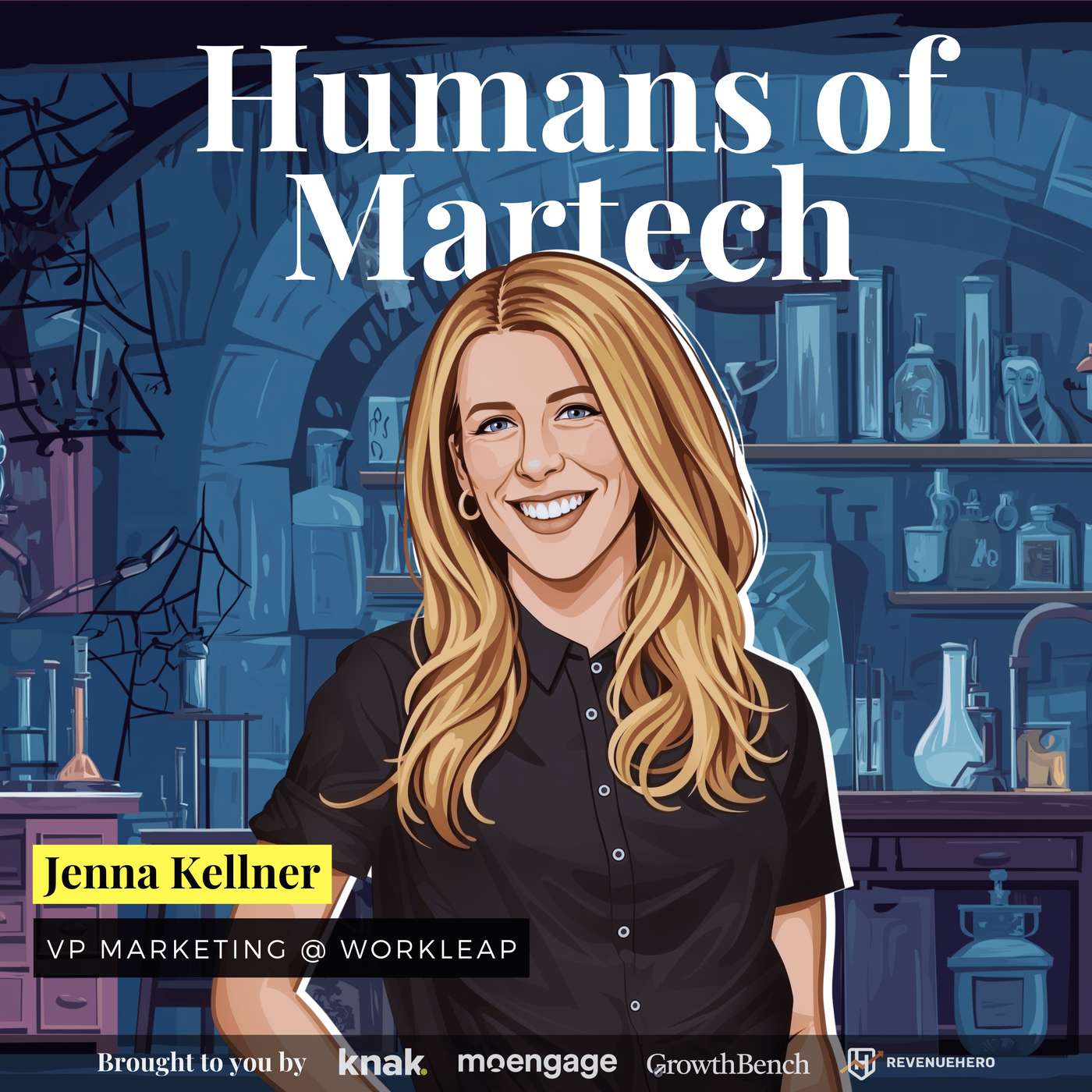
| 3/17/26 | ![]() 211: Jenna Kellner: Overcoming frankenstacks and AI uncertainty with first principles and business judgement✨ | marketing technologytech debt+4 | Jenna Kellner | Workleap | — | marketing tech debtAI uncertainty+5 | — | 1h 02m 05s | |
Want analysis for the episodes below?Free for Pro Submit a request, we'll have your selected episodes analyzed within an hour. Free, at no cost to you, for Pro users. | |||||||||
| 3/10/26 | ![]() 210: Ronald Gaines: 6 Things the next generation of marketing ops leaders must learn✨ | marketing operationsleadership+4 | Ronald Gaines | Sunbelt Rentals, Inc. | — | marketing opsleadership skills+3 | — | 58m 52s | |
| 3/3/26 | ![]() 209: Maria Solodilova: Why Adtech is really a marketplace with its own economics✨ | AdtechMarketplace Economics+4 | Maria Solodilova | Yango Ads | — | AdtechMarketplace+4 | — | 53m 33s | |
| 2/24/26 | ![]() 208: Anthony Rotio: Exploring causal context graphs and machine customers, starting in retail media networks | What’s up folks, today we have the pleasure of sitting down with Anthony Rotio, Chief Data Strategy Officer at GrowthLoop.(00:00) - Intro (01:10) - In this episode (04:05) - Journeying From Robotics to Modern Marketing Systems (11:05) - Most Marketing Systems Don’t Learn Because They Lack Feedback Loops (16:10) - The Martech Engineering Talent Gap (19:51) - AI Will Amplify Whoever Has the Cleanest Causal Feedback Loop (29:17) - Agent Context Graphs for Drift Detection in Marketing Systems (31:51) - Humans Will Set Hypotheses, AI Will Accelerates Iteration (35:50) - The Evolution of Retail Media Networks (45:07) - How Commerce Networks Redefine Targeting With Governed Data (48:26) - How Agent to Agent Commerce Operates Inside Marketing Funnels (53:04) - Google Universal Commerce Protocol Explained (54:43) - Personal Happiness System (56:30) - Favorite Books Summary: Anthony traces a path from robotics and computer science to his current role where he approaches marketing as an engineering system. He explains how execution-first marketing stacks weaken feedback loops and fragment data, which slows learning and iteration. He introduces the agent context graph as a causality model that lets AI simulate and predict customer behavior with greater confidence. The conversation also covers retail media networks, first-party data monetization through governed access, and a shift toward zero-to-zero marketing driven by agent-to-agent transactions. He closes by stressing that strong data foundations determine who can compete as marketing becomes more automated and agent-driven.About AnthonyAnthony Rotio is the Chief Data Strategy Officer at GrowthLoop, where he leads partnerships and builds generative AI product features for marketers, including multi-agent systems, AI-driven audience building, and benchmarking and evaluation work. He previously served as GrowthLoop’s Chief Customer Officer, where he built and led teams across data engineering, data science, and solutions architecture while supporting product development and strategic sales efforts.Before GrowthLoop, Anthony spent nearly six years at AB InBev, where he led a $100M owned retail business unit with full P&L responsibility and drove major growth through operational and digital transformation work. He also led U.S. marketing for Budweiser, Bud Light, Michelob Ultra, Stella Artois, and other brands across music, food, and related consumer programs. He earned a B.A. in computer science from Harvard, played linebacker on the Harvard football team, founded the consumer product Pizza Shelf, and holds a Google Professional Cloud Architect certification.Journeying From Robotics to Modern Marketing SystemsAnthony’s career started far away from marketing. He trained as a computer scientist and spent his early years working with robotics and reinforcement learning. His first exposure to a learning agent left a lasting impression because the system behaved less like traditional software and more like something adaptive. That experience shaped how he would later think about work, systems, and feedback. He learned early that progress comes from loops that learn, not static instructions.That mindset followed him into an unexpected chapter at AB InBev. Anthony entered a world defined by scale, brands, and operational complexity. He treated his technical background like a carpenter treats tools, useful only when applied to real problems. Running marketing across major beer brands taught him how value is created inside large organizations. It also exposed a recurring issue. Marketing teams had ambition and data, but execution moved slowly because ideas had to travel through layers of translation before anything reached customers.That friction became impossible to ignore. Audience definitions moved through tickets. Campaigns waited on queries. Data teams became bottlenecks through no fault of their own. Anthony felt the pull back toward technology, where systems could shorten the distance between intent and action. That pull led him to GrowthLoop, where he joined early and worked directly with customers. The appeal was immediate. The product connected straight to cloud data and removed several layers of mediation that marketing teams had accepted as normal.As language models improved, Anthony recognized a familiar pattern. Audience building behaved like a translation problem. Marketers described people and intent in natural language, while systems demanded structured logic. Early experiments showed that natural language models could close that gap. Anthony framed the idea clearly.“Audience building is a translation problem. You start with a business idea and you end with a query on top of data.”Momentum followed quickly. Customers like Indeed and Google responded because speed changed behavior. Teams experimented more often and refined audiences based on results instead of assumptions. Conversations with Sam Altman and collaboration with OpenAI reinforced that this capability belonged in the core workflow. Standing on stage at Google Cloud Next marked a clear moment of validation.That arc reshaped Anthony’s role into Chief Data Strategy Officer. His work now focuses on building systems that learn over time. Faster audience creation leads to shorter feedback loops. Shorter loops improve decision quality. Better decisions compound. The throughline from robotics to marketing holds steady. Systems improve when learning sits at the center of execution.Key takeaway: Career leverage often comes from carrying one mental model across multiple domains. Anthony applied learning systems thinking from computer science to enterprise marketing, then rebuilt the tooling to match that mindset. You can do the same by identifying where translation slows your work, then designing interfaces that move intent directly into action. When feedback loops tighten, progress accelerates naturally.Most Marketing Systems Don’t Learn Because They Lack Feedback LoopsMarketing organizations generate enormous amounts of activity, but learning often lags behind execution. Campaigns launch on schedule, dashboards fill with numbers, and post-campaign reviews happen right on time. The pattern repeats month after month with small adjustments and familiar explanations. Over time, teams become highly efficient at producing output while remaining surprisingly weak at retaining knowledge. The system rewards motion, visibility, and short-term lifts, which slowly conditions teams to forget what they learned last quarter.Anthony connects this behavior to structural pressure inside large organizations. Quarterly reporting cycles dominate priorities, and executive tenures continue to compress. Leaders feel urgency to show impact quickly and publicly. Compounding growth requires early patience and repeated reinforcement, which rarely aligns with board expectations or career incentives. Short time horizons shape long-term behavior, even when everyone agrees that learning should stack over time.“When you think about compound interest in finance, the early part looks almost linear. People want big bumps now, even if those bumps never build momentum.”Technology choices deepen the problem. Many companies invested heavily in customer data and built impressive data clouds that capture transactions, events, and engagement in detail. Activation remains slow because teams still rely on handoffs between marketing and data groups. A familiar sequence plays out:A marketer defines a campaign and requests an audience.A ticket moves to a data team for interpretation and SQL.The audience returns weeks later.The marketer realizes the audience lacks scale for ne... | 58m 53s | ||||||
| 2/17/26 | ![]() 207: Building a career that doesn't hollow you out (50 Operators share the systems that keep them happy, part 3) | "Hey – So what do you do?” Why is it that we always default to work when we get this question. its like many of us have let our jobs become the center of how we see ourselves. This slowly happens to many of us, as work occupies more mental and emotional space.I asked 50 people in martech and operations how they stay happy under sustained pressure. This 3 part series – titled “50 Operators share the systems that keep them happy” explores each of these layers through the lived experience of operators who feel the same pressure you probably feel right now.Today we close out the series with part 3: meaning. We’ll hear from 19 people and we’ll cover:(00:00) - Teaser (01:08) - Intro / In This Episode (04:27) - Rich Waldron: Auditing Whether Work Is Actually Moving (06:49) - Samia Syed: Tracking Personal Growth (08:33) - Jonathan Kazarian: Tracking Growth Across Life Health and Work (10:11) - Kim Hacker: Choosing Roles With Daily Visible Impact (12:21) - Mac Reddin: Checking Work Against 3 Personal Conditions (14:11) - Chris Golec: Choosing Early Stage Building Work (15:19) - Hope Barrett: Feeding curiosity across multiple domains (17:45) - Simon Lejeune: Treating work like a game (19:52) - Ana Mourão: A mental buffer between noticing and doing (21:46) - Tiankai Feng: Anticipation planning (25:30) - István Mészáros: Choosing Who You Are When Work Ends (29:52) - Danielle Balestra: Feeding Interests Unrelated to Work (31:42) - Jeff Lee: Continuing to Build Personal Projects After the Workday Ends (33:23) - John Saunders: Keeping a builder practice outside of work (34:41) - Ashley Faus: Group Creative Rituals Outside of work (37:40) - Anna Aubucho: Maintaining a second self through solo creative practice (39:56) - Ruari Baker: Preserving Identity Through Regular Travel (42:15) - Guta Tolmasquim: Building a personal product roadmap (45:37) - Pam Boiros: Feeding identities that have nothing to do with work (47:52) - Outro All that and a bunch more stuff after a quick word from 2 of our awesome partners.A lot of the operators I chatted with don’t talk about happiness like it suddenly arrives. They describe it as something you feel when things actually start to move. Our first guest gets there right away by tying happiness directly to progress, the kind that tells you you’re not stuck.Rich Waldron: Auditing Whether Work Is Actually MovingFirst up is Rich Waldron, Co-founder and CEO at Tray.ai. He’s also a dad, and a mediocre golfer.Progress sits at the center of Rich’s definition of career happiness. He treats it as a felt sense rather than a dashboard metric. When work advances in a direction that makes sense to him, his energy steadies. When that movement slows or stalls, frustration surfaces quickly and spreads into everything else. That feeling becomes a cue to examine direction rather than effort.“Happiness is mostly driven by progress.”That framing resonates because it names something many operators struggle to articulate. Long hours can feel sustainable when the work moves forward. Light workloads can feel draining when days repeat without traction. Progress gives work narrative weight. It answers a quiet internal question about whether today connects to something that matters tomorrow.Rich also points to patterns that erode meaning over time.Roles with little challenge dull attention, even when the pay is generous.Constant activity without visible change breeds irritation that lingers after work ends.Both conditions interrupt momentum. The mind keeps searching for movement that never arrives. Rest stops working because unresolved motion occupies every quiet moment.Progress also shapes identity beyond work. When things move in the right direction, attention releases its grip on unfinished problems. Rich links that release to showing up better at home. He describes being more present as a parent because mental energy is no longer trapped in work that feels stuck. Forward motion restores proportion. Work keeps its place as one part of a full life rather than the dominant one.Balance emerges as a byproduct of this orientation. You choose problems that move. You notice when progress fades. You adjust before frustration hardens into burnout. That rhythm preserves meaning over long career arcs and keeps work aligned with the person you want to remain.Key takeaway: Track progress as a signal of meaning. When your work moves in a direction you respect, it stays contained, your identity stays intact, and the rest of your life receives the attention it deserves.Samia Syed: Tracking Personal GrowthThat’s Samia Syed, Director of Growth Marketing at Dropbox. She’s also a mother, outdoor fanatic, and an avid hiker.Progress became the scorecard Samia relies on to keep her career from consuming her sense of self. Early professional years trained her to chase perfection, because perfection looked measurable, respectable, and safe. That mindset quietly tightened the frame around what counted as a good day. Effort increased, expectations rose with it, and satisfaction stayed elusive because the standard never settled.Progress creates a different rhythm. It shows up in motion you can recognize without squinting. Samia pays attention to signals that accumulate instead of reset:Teams moving forward together rather than cycling through urgency.People developing judgment and confidence over time.Personal growth that feels lived-in rather than optimized.A child learning, changing, and surprising you in ways no metric could predict.That framing matters because it ties work back to a broader life rather than isolating it. Progress carries meaning when it connects professional effort to personal identity. Samia talks about watching her daughter grow with the same care she gives to her team’s evolution. Growth becomes something you witness and participate in, rather than something you chase or defend. That mindset keeps work from becoming the only place where worth gets measured.“Anchoring on perfection as your metric for happiness sets you up for unhappiness. Progress is where I find it now.”Many careers quietly reward polish over development and composure over learning. Progress resists that pressure by valuing direction and continuity. It leaves room for ambition while protecting a sense of self that exists beyond job titles. You still push forward, but you also recognize that your life holds meaning across roles, seasons, and relationships that no performance system can fully capture.Key takeaway: Track progress instead of perfection. Pay attention to growth across work and life, because meaning comes from seeing yourself develop over time, not from chasing a standard that keeps moving.Jonathan Kazarian: Tracking Growth Across Life Health and WorkThat’s Jonathan Kazarian, Founder & CEO of Accelevents. He’s also father and a frequent sailor.Jonathan keeps work from consuming his identity by actively measuring progress in more than one place at the same time. He pays attention to movement in business, health, and personal life, and he revisits those signals regularly. That habit creates distance between who he is and what he works on. Work becomes one lane of progress instead of the entire road.Growth carries real weight in his thinking because it shows up as momentum you can feel. He talks about forward movement as something tangible, the sense that effort today pushes life somewhere better tomorrow. Setbacks still happen, but they do not erase t... | 50m 28s | ||||||
| 2/10/26 | ![]() 206: The people who keep you standing (50 Operators share the systems that keep them happy, part 2) | Pressure at work rarely stays contained within the job. It spills into family life, friendships, and daily relationships. I asked 50 operators how they stay happy while managing responsibility at work and at home. This 3 part series – titled “50 Operators share the systems that keep them happy” explores each of these layers through the lived experience of operators who feel the same pressure you probably feel right now. Today we continue with part 2: connection, the relationships that recharge you and keep you standing when the work would otherwise knock you sideways.We’ll hear from 17 people and we’ll cover:(00:00) - Teaser (02:00) - In This Episode (04:30) - Eric Holland: Limiting Slack and Prioritizing Family Time (05:33) - Meg Gowell: Shared Family Routines (08:31) - David Joosten: Filtering Reactive Work So Time Stays With Family (10:30) - Aboli Gangreddiwar: Designing Work to Enable Family Travel (12:01) - Kevin White: Separating Career Drive From Family Identity (13:42) - Joshua Kanter: Daily Family Rituals (18:07) - Gab Bujold: Daily Check-Ins With a Trusted Work Partner (22:30) - Anna Leary: Treating Workload Stress as a Shared Problem (24:31) - Angela Rueda: Shared Problem Solving Conversations (26:50) - Blair Bendel: Using In Person Conversations to Stay Grounded (29:28) - Matthew Castino: Work Satisfaction Correlates Strongly With Team Relationships (33:17) - Aditi Uppal: Connection as a Feedback Loop (35:48) - Alison Albeck Lindland: One Social System Across Work and Life (37:34) - Rajeev Nair: Human Bonds Absorb Pressure Before Burnout (40:12) - Chris O’Neil: Filtering Work Through People and Problems That Matter (42:24) - Rebecca Corliss: Creativity as a Shared Emotional Outlet (44:24) - Moni Oloyede: Teaching as a Living Relationship (45:50) - Outro Connection starts with who you protect time for. Our first guest begins there, shaping his work around people who refill him and drawing hard lines around anything that steals those moments away.Eric Holland: Limiting Slack and Prioritizing Family TimeFirst up is Eric Holland, a fractional PMM based in Pennsylvania, and the co-host of the We’re not Marketers Podcast. He’s also a dad and runs a retail apparel startup. Eric shapes his happiness around people before tasks. He pares his work down to projects shared with colleagues he enjoys being around, and that choice changes the texture of his days. Conversations feel easier. Meetings end with momentum instead of fatigue. You can hear a quiet confidence in how he describes work that feels relational rather than transactional.Family anchors that perspective in a very physical way. Nearly every weekend, from late November through Christmas, belongs to his ten-month-old son. These are not abstract intentions. They are mornings that smell like coffee and pine needles, afternoons on cold sidewalks, and evenings defined by routine rather than inboxes. Time with his son creates emotional weight that carries into the workweek and keeps priorities visible when deadlines start to blur.Eric also draws a firm boundary around digital proximity. Slack does not live on his phone, and that decision protects the moments where connection needs full attention. The habit most people recognize, checking messages during dinner or while holding a child, never has a chance to form. Presence becomes simpler when tools stay in their place.The system he describes comes together through a few concrete moves that many people quietly avoid:He limits work to collaborators who feel generous with energy.He reserves weekends for repeated family rituals that mark time.He removes communication tools from personal spaces where they dilute focus.Eric captures the point with a line that carries practical weight.“Delete Slack off your phone.”That sentence signals care for the relationships that actually hold you upright. Attention stays where your body is, and connection grows from that consistency.Key takeaway: Strong connections protect long-term happiness at work. Choose collaborators who give energy, protect repeated time with family and friends, and keep work tools out of moments that deserve your full presence.Meg Gowell: Shared Family RoutinesNext up is Meg Gowell, Head of Marketing at Elly and former Director of Growth Marketing at Typeform and Appcues. She’s also a mom of 3.Remote work compresses everything into the same physical space. Meetings happen steps away from the kitchen. Notifications follow you into the evening. Meg treats that compression as something that requires active design. She and her husband both work remotely, so separation never happens by accident. It happens because they decide when work stops and family time starts, and they repeat that decision every day.That discipline shows up in how she leads at Typeform. An international team creates constant overlap and constant absence at the same time. Someone is always offline. Someone is always mid-day. Ideas surface at inconvenient hours. Meg sends messages when they are top of mind, and she pairs them with clear expectations about response time. People answer when they are working. Evenings stay intact. That clarity removes the quiet pressure that turns collaboration tools into stress machines.Connection at home runs on small rituals that happen often. Family dinner stays protected. Phones stay off the table. Conversation has shape, which keeps it from drifting back to work. One simple routine anchors the evening.Each person shares a positive moment from their day.Each person shares a hard moment.Everyone gets space to talk without interruption.“We have a game we play called Popsicle and Poopsicle where each person says a positive thing from their day and a negative thing from their day.”The table sounds different when everyone is present. You hear voices instead of keyboards. You notice moods. Kids learn that their experiences matter. Adults slow their breathing without realizing it. Work fades because attention has somewhere better to land.These habits teach through repetition. Kids learn priorities by watching how time is protected. Teams learn boundaries by watching how leaders behave. Meg models presence through behavior rather than explanation. She sits down. She listens. She disconnects. Those signals travel further than any policy ever could.Career decisions follow the same logic. Meg focused on the life she wanted to live and then shaped work around it. Dinner with her kids mattered. Time away mattered. Flexibility mattered. That perspective runs against an industry that rewards visibility and constant availability. Many people chase recognition and wonder why their days feel thin. Meg invested in connection and built everything else around it.Key takeaway: Connection grows when time is defended on purpose. Protect shared moments, set expectations clearly, and let daily behavior show people where your attention truly belongs.David Joosten: Filtering Reactive Work So Time Stays With FamilyNext up is David Joosten, Co-Founder and President at GrowthLoop and the co-author of ‘First-Party Data Activation’. He’s also a dad of 3.Connection shows up here through restraint. David talks about time as something that gets crowded fast, especially once you step into leadership roles where every problem arrives wearing the same urgent expression. Days fill with requests, escalations, and thoughtful edge cases that sound responsible in isolation. Taken together, they quietly displace the people ... | 47m 33s | ||||||
| 2/3/26 | ![]() 205: The daily infrastructure behind sustainable careers (50 Operators share the systems that keep them happy, part 1) | Careers place a ton of demand on energy and attention way before results start to stabilize. Many operators discover that health and routine determine how long they can operate at a high level.I spoke with 50 people working in martech and operations about how they stay happy under pressure. This 3 part series – titled “50 Operators share the systems that keep them happy” explores each of these layers through the lived experience of operators who feel the same pressure you probably feel right now.Today we start with part 1: stability through routines, boundaries, and systems that protect the body and mind. We’ll hear from 15 people:(00:00) - Teaser (01:05) - Intro (01:30) - In This Episode (04:09) - Austin Hay: Building Non Negotiables (08:06) - Sundar Swaminathan: Systems That Prevent Stress (12:33) - Elena Hassan: Normalizing Stress (14:32) - Sandy Mangat: Managing Energy (16:31) - Constantine Yurevich: Designing Work That Matches Personal Energy (19:05) - Keith Jones: Intentional Work Rhythms (23:58) - Olga Andrienko: Daily Health Routines (26:06) - Sarah Krasnik Bedell: Outdoor Routines (27:21) - Zach Roberts: Physical Reset Rituals Outside Work (28:57) - Jane Menyo: Recovery Cycles (31:56) - Angela Vega: Chosen Challenges and Recovery Cycles (36:09) - Megan Kwon: Presence Built Into the Day (37:50) - Nadia Davis: Calendar Discipline (39:36) - Henk-jan ter Brugge: Planning the Week as a Constraint System (43:15) - Ankur Kothari: Personal Metrics (44:07) - Outro Austin Hay: Building Non NegotiablesOur first guest is Austin Hay, he’s a co-founder, a teacher, a martech advisor, but he’s also a husband, a dog dad, a student, water skiing fanatic, avid runner, a certified financial planner, and a bunch more stuff... Daily infrastructure shows up through repetition, discipline, and choices that protect energy before anything else competes for it. Austin grounds happiness in curiosity, but that curiosity only thrives when supported by sleep, movement, and time that belongs to no employer. Learning stays fun because it is not treated as another performance metric. It remains part of who he is rather than something squeezed into the margins of an already crowded day.Mental and physical health shape his schedule in visible ways. Austin treats them as operating requirements rather than aspirations. His days include a short list of behaviors that carry disproportionate impact:Regular sleep with a consistent bedtime.Exercise that creates physical fatigue and mental quiet.Relationships that exist entirely outside work.Hobbies and games that feel restorative rather than productive.These habits rarely earn praise, which explains why they erode first under pressure. In his twenties, Austin chased work, clients, and money with intensity. He told himself the rest would come later. That promise held eventually, but the gap years carried a cost. He remembers moments of looking in the mirror and feeling uneasy about the life he was assembling, despite checking every external box.Trade-offs now anchor his thinking. Austin frames decisions as equations involving time, energy, and outcomes. Goals demand inputs, and inputs consume limited resources. Avoiding that math leads to exhaustion and resentment. Facing it creates clarity. Many people resist this step because it forces hard choices into daylight. The industry rewards the appearance of doing everything, even when the math never works.“I view a lot of decisions and outcomes in life as trade-offs. At the end of the day, that’s what most things boil down to.”Sleep makes the equation tangible. Austin aims for bed around 9 or 9:30 each night because his mornings require focus, training, and sustained energy. He needs seven and a half hours of sleep to function well. That requirement dictates the rest of the day. Social plans adjust. Work compresses. Goals remain achievable because the system supports them.He defines what he wants to pursue.He calculates the energy required.He locks in non negotiables that keep the math honest.That structure removes constant negotiation with himself. The system holds even when motivation dips or distractions multiply.Key takeaway: Daily infrastructure depends on non negotiables that protect sleep, health, and energy. Clear priorities, visible trade-offs, and repeatable routines create careers that stay durable under pressure.Sundar Swaminathan: Systems That Prevent StressNext up is Sundar Swaminathan, Former Head of Marketing Science at Uber, Author & Host of the experiMENTAL Newsletter & Podcast. He’s also a husband, a father and a well traveled home chef, amateur chess master.Stress prevention sits at the center of Sundar’s daily system for staying happy and effective at work. A concentrated period of personal loss collapsed any illusion that stress deserved patience or tolerance. Three deaths in three weeks compressed time, sharpened perspective, and forced a reassessment of what stress actually costs. Stress drains energy first, then attention, then presence. A career cannot outrun that erosion for long.Control defines the structure of his days. Sundar organizes work and life decisions around what he can actively influence and treats everything else with intentional distance. That discipline reduces noise and preserves energy. The system stays practical because complexity invites self-deception.Work within control receives effort, follow-through, and care.Work outside control receives acknowledgment and release.Outcomes matter, but the quality of effort matters more.Emotional reactions get examined instead of amplified.That repetition builds resilience as a habit rather than a personality trait. Over time, the body learns that urgency does not improve outcomes, while steadiness often does.Long-term thinking provides ballast when short-term chaos shows up. Sundar frames happiness the way experienced investors frame capital. Daily decisions compound quietly. Some weeks produce visible setbacks. The trend still moves when investments stay consistent. He invests daily in relationships, energy, and directionally sound choices. Moving his family to Amsterdam followed that logic. The decision carried friction and uncertainty, yet it expanded daily happiness in ways that cautious planning rarely delivers.“If you keep investing in yourself and the relationships that matter every day, the long-term trend moves up.”Priorities reinforce the system. Sundar grew up with career dominance baked into identity. Family now anchors that identity with clarity. That hierarchy shapes calendars, boundaries, and energy allocation. Work performance benefits from this structure because focus sharpens when limits exist. Activities that drain energy lose priority quickly. Unhappiness spreads fast and contaminates every adjacent part of life.Environment completes the infrastructure. Daily systems matter as much as mindset. Living in a place where flexibility exists without negotiation removes friction before it forms. Parenting logistics do not create anxiety. Time away from work does not require justification. Many expat families notice similar relief because daily life carries less ambient pressure. When systems support people, stress loses room to grow.Key takeaway: Sustainable careers rely on daily infrastructure that prevents stress before it accumulates. Clear control boundaries, long-term thinking, and supportive environments create stability that protects energy and compounds over time.Elena Hassan: Normalizing Str... | 47m 06s | ||||||
| 1/27/26 | ![]() 204: Phyllis Fang: Trust infrastructure and freakish curiosity as career growth levers | What’s up everyone, today we have the pleasure of sitting down with Phyllis Fang, Head of Marketing at Transcend.(00:00) - Intro (01:23) - In This Episode (04:13) - Uber Safety Marketing Shaped A Trust First Marketing Playbook (10:12) - How Permissioned Data Systems Power Personalization at Scale (15:22) - How Consent Infrastructure Improves Personalization Performance (19:20) - How to Audit Consent and Compliance in Marketing Data (23:24) - What Consent Management Does Across AI Data Lifecycles (28:29) - How to Build a Marketing Trust Stack (30:49) - Consent Management as a Revenue Lever (35:10) - Designing Marketing Teams for Freakish Curiosity (41:19) - Skills That Define Great Marketing Operations (45:33) - Why System Level Marketing Experience Builds Career Leverage (50:13) - System for Happiness Summary: Phyllis learned how fragile marketing becomes when systems move faster than trust while working between lifecycle execution and product marketing at Uber. Safety work around emergencies, verification, and COVID forced messages to withstand scrutiny from riders, drivers, regulators, and the public. That experience shapes how she approaches consent and personalization today. Permission signals decide what data moves and how confidently teams can act. When those signals stay connected, work holds. When they drift, confidence erodes across systems, teams, and careers.About PhyllisPhyllis Fang leads marketing at Transcend, where enterprise growth depends on clear choices about data, consent, and accountability. Her work shapes how privacy becomes part of how companies operate, communicate, and earn confidence at scale.Earlier in her career, she spent several years at Uber, working on global product marketing for safety during periods of intense public scrutiny. She helped bring new safety features to market at moments when user behavior, policy decisions, and brand credibility were tightly linked. The work required precision, restraint, and an understanding of how people respond when stakes feel personal.Across roles in e-commerce, lifecycle marketing, and platform strategy, a pattern holds. Fang gravitates toward systems that must work under pressure and messages that must hold up in practice. Her career reflects a belief that marketing earns its place when it reduces uncertainty and helps people move forward with confidence.Uber Safety Marketing Shaped A Trust First Marketing PlaybookTrust-focused marketing depends on people who can move between systems work and narrative work without losing credibility in either space. Phyllis built that fluency by operating inside lifecycle programs while also leading product marketing initiatives at Uber. One side of that work lived in tools, triggers, and delivery logic. The other side lived in rooms where progress depended on persuasion, alignment, and patience. That dual exposure trained her to see how fragile big ideas become when they cannot survive real execution.Lifecycle and marketing operations reward control and repeatability. Product marketing inside a global organization rewards influence and restraint. Phyllis describes moments where moving a single initiative forward required negotiation across regions, channels, and internal politics. Every message faced review from people who owned distribution and reputation in their markets. Messaging tightened quickly because weak logic did not survive long. Campaigns became sharper because every assumption had to hold up under pressure.“We were all in the same company, but I still had to convince people to resource things differently or prioritize a message.”Safety marketing pushed that pressure even further. The work focused on features designed for rare, high-stakes moments, including emergency assistance and large-scale verification during COVID. Measurement shifted away from habitual usage and toward confidence and credibility. The audience expanded well beyond active users. Phyllis had to speak clearly to riders, drivers, regulators, and the general public at the same time. Each group carried different fears, incentives, and consequences. Messaging succeeded only when it respected those differences without creating confusion.That mindset carries directly into her work at Transcend. Privacy and consent buyers often sit in legal or compliance roles where personal and professional risk overlap. These buyers read closely and remember details. Phyllis explains that proof needs to operate on two levels at once. It must withstand careful review, and it must connect to human motivation. Career safety, internal credibility, and long-term reputation shape decisions more than feature depth ever will.“You have to understand the human behind the role, because their motivation usually has very little to do with your product.”Many martech teams still lean on urgency and fear to move deals forward. That habit collapses quickly in trust-driven categories. Buyers trained to manage risk respond to clarity, evidence, and empathy. Marketing teams that understand systems and human cost create messages people can defend internally, even when scrutiny rises.Key takeaway: Trust product marketing works best when teams pair operational rigor with persuasive clarity. Build messages that survive legal review, internal debate, and public scrutiny, then ground those messages in the real career risks your buyer carries. When proof holds at the detail level and the story respects human motivation, credibility compounds instead of eroding under pressure.How Permissioned Data Systems Power PersonalizationPermissioned data systems sit quietly underneath every durable personalization program. Phyllis describes them as the machinery that keeps experiences coherent when traffic spikes, regulations tighten, and teams ship faster than documentation can keep up. When privacy and data infrastructure receive the same attention as creative and lifecycle planning, personalization gains endurance. It stops wobbling every time a new channel, region, or regulation enters the picture.When asked about what a system of permission actually contains, Phyllis anchors the idea in everyday user choice. Preferences, opt-ins, unsubscribes, and topic interests form the marketing layer most teams recognize. Consent records, deletion rights, and data sharing controls form the privacy layer that usually lives elsewhere. Together, these signals decide what data you collect, where it flows, how long it lives, and which systems get to act on it. That layer governs every downstream decision you make about segmentation, targeting, and automation.“We are talking about a layer of user controls that determine what personal data a company collects, how it is collected, how it is stored, how long it is stored, and what gets shared across systems.”Phyllis points out that teams often rush toward tooling before understanding their own surface area. She pushes marketers to start with an audit that feels closer to whiteboarding than compliance. That work cuts across marketing, product, privacy, and partnerships, and it usually exposes uncomfortable overlaps and blind spots. Most organizations already run this exercise for campaigns and funnels, and they rarely include consent in the room. When permission signals stay disconnected from journey design, personalization feels impressive in demos and brittle in production.Operationalizing consent requires discipline across systems. Preference signals need to flow cleanly into the CDP, CRM, messaging platforms, and analytics tools. That way campaigns, audiences, and triggers operate on live, permissioned data ins... | 54m 22s | ||||||
| 1/20/26 | ![]() 203: Jordan Resnick: How to distinguish fake traffic from real machine customers | What’s up everyone, today we have the pleasure of sitting down with Jordan Resnick, Senior Director, Marketing Operations at CHEQ.(00:00) - Intro (01:10) - In This Episode (03:47) - Demystifying Go-to-Market Security (06:14) - The Fake Traffic Surge (08:14) - How the Dead Internet Theory Connects to Bot Traffic Growth (12:31) - How to Detect Bot Traffic Through Behavioral Patterns (16:13) - How Go To Market Teams Reduce Fake Traffic And Lead Pollution (30:03) - Preventing Fake Leads From Reaching Sales (34:17) - How to Calculate Revenue Impact of Fake Traffic (38:09) - How to Report Marketing Performance When Bot Traffic Skews Metrics (43:58) - Trust Erosion From Fake Traffic (49:49) - How Marketing Ops Should Adapt Systems for Machine Customers (53:59) - Funnel Audits With Security Teams to Reduce Bot Traffic (57:47) - Detachment as a Career Survival Skill Summary: Distinguishing fake traffic from real machine customers starts where metrics break down. Jordan shows how AI-driven bots now scroll, click, submit forms, and pass validation while quietly filling dashboards with activity that never turns into revenue. The tell is behavioral texture. Sessions move too fast. Paths skip learning. Engagement appears without intent. Real machine customers behave with rhythm and purpose, returning, evaluating, integrating. Teams that recognize the difference lock down the conversion point, block synthetic demand before it reaches core systems, keep sales calendars clean, and only report once traffic has earned trust.About JordanJordan Resnick is Senior Director of Marketing Operations at CHEQ, where he leads the systems, data, and workflows that support go-to-market security across a global customer base. His work sits at the intersection of marketing operations, revenue operations, attribution, automation, and analytics, with a clear focus on building infrastructure that holds up under scale and scrutiny.Before CHEQ, Jordan led marketing operations at Atlassian, where he supported complex GTM motions across multiple business units and global markets. Earlier roles at Perkuto and MERGE combined hands-on execution with customer-facing leadership, integration design, and process ownership. His career also includes more than a decade as an independent operator, delivering marketing operations, automation, content, and technical solutions across a wide range of organizations. Jordan brings a deeply practical, execution-driven perspective shaped by years of building, fixing, and maintaining real systems in production environments.Demystifying Go-to-Market SecurityGo-to-market security shows up when growth metrics look strong and revenue outcomes feel weak. Marketing operations teams live in that gap every day. Jordan describes GTM security as a business-facing discipline that protects the integrity of acquisition, funnel data, and downstream decisions that depend on clean signals. The work sits inside marketing operations because that is where traffic quality, lead flow, and revenue attribution converge.When asked about how GTM security differs from traditional fraud prevention, Jordan frames the difference through decision-making pressure. Security teams historically focus on defending infrastructure and minimizing exposure. Marketing ops teams focus on maintaining momentum while spending real budget. GTM security evaluates risk in context, with an eye toward revenue impact, forecasting accuracy, and operational trust across teams that rely on shared data.Jordan grounds the concept in specific failure points that operators recognize immediately. GTM security examines where bad inputs quietly enter systems and multiply.Paid traffic that inflates sessions without creating buyers.Analytics skewed by automated interactions that look legitimate.Form submissions that pass validation and still never convert.Sales pipelines filled with activity that drains time and morale.Each issue compounds because systems assume the data is real. Teams keep optimizing against numbers that feel precise and still point in the wrong direction.“You are putting money into driving people to your website, and the first question should be how many of those people are real and able to buy.”Invalid traffic behaves like a contaminant. It flows from acquisition into attribution models, forecasting tools, CRMs, and revenue dashboards. Marketing celebrates growth, sales chases shadows, and finance questions confidence in the entire funnel. The problem rarely announces itself as a security incident. It surfaces as confusion, missed targets, and internal friction.GTM security matters because it gives marketing ops teams a framework to protect the inputs that shape every downstream decision. The work runs alongside traditional security while staying anchored in go-to-market outcomes. That way you can spend with confidence, trust your reporting, and hand sales teams signals grounded in real buying behavior.Key takeaway: Treat go-to-market security as part of your core marketing operations workflow. Validate traffic quality, filter lead integrity, and block funnel contamination before data enters analytics and sales systems. That way you can protect budget efficiency, restore confidence in reporting, and align growth decisions with real customer behavior.The Fake Traffic SurgeAI-powered automation now sits at the center of the fake traffic surge, and the data from CHEQ makes that pattern hard to dismiss. The jump from 11.3 percent to 17.9 percent happened because automation became accessible to almost anyone with intent. Writing scripts once required time, skill, and trial and error. AI removes that friction and replaces it with speed and scale, which changes who can participate and how quickly abuse spreads.Jordan ties that accessibility directly to incentives that marketing teams quietly tolerate. Fraud still generates money. Inflated traffic still props up dashboards. Higher visit counts still circulate in board decks without hard questions attached. AI accelerates activity that already existed and widens the group capable of producing it. That combination turns fake traffic into background noise instead of a visible threat, especially when volume metrics continue to earn praise.“You don’t need to be a hardcore coder to write a script anymore. You can get AI to do it for you.”Automation also introduces a layer of ambiguity that most teams are not prepared to handle. Bots now perform legitimate tasks that look suspicious inside analytics tools. Some scan pricing pages. Some analyze product specs. Some gather research for downstream purchasing decisions. Jordan points out that people already configure agents to place orders, and that behavior blends seamlessly into traffic logs. Marketing systems treat those visits the same way they treat fraud, which creates confusion across attribution and forecasting.That confusion pushes teams toward blunt fixes that create new problems. Blanket blocking removes useful signals. Loose filtering leaves waste untouched. Jordan frames the real work as classification rather than suppression. Teams now need to separate intent categories instead of chasing a single definition of fake traffic. That work forces uncomfortable conversations about which metrics deserve trust and which exist only because nobody benefits from challenging them.Fake traffic keeps growing because systems reward volume and rarely penalize distortion. AI makes production easier, incentives keep demand high, and measurement practices lag behind reality. Marketing ops teams that continue to treat traffic as a vanity me... | 1h 02m 20s | ||||||
| 1/13/26 | ![]() 202: Aleyda Solís: AI search crawlability and why your site’s technical foundations decide your visibility | What’s up everyone, today we have the honor of sitting down with Aleyda Solís, SEO and AI search consultant. (00:00) - Intro (01:17) - In This Episode (04:55) - Crawlability Requirements for AI Search Engines (12:21) - LLMs As A New Search Channel In A Multi Platform Discovery System (18:42) - AI Search Visibility Analysis for SEO Teams (29:17) - Creating Brand Led Informational Content for AI Search (35:51) - Choosing SEO Topics That Drive Brand-Aligned Demand (45:50) - How Topic Level Analysis Shapes AI Search Strategy (50:01) - LLM Search Console Reporting Expectations (52:09) - Why LLM Search Rewards Brands With Real Community Signals (55:12) - Prioritizing Work That Matches Personal Purpose Summary: AI search is rewriting how people find information, and Aleyda explains the shift with clear, practical detail. She has seen AI crawlers blocked without anyone noticing, JavaScript hiding full sections of sites, and brands interpreting results that were never based on complete data. She shows how users now move freely between Google, TikTok, Instagram, and LLMs, which pushes teams to treat discovery as a multi-platform system. She encourages you to verify your AI visibility, publish content rooted in real customer language, and use topic clusters to anchor strategy when prompts scatter. Her closing point is simple. Community chatter now shapes authority, and AI models pay close attention to it.About AleydaAleyda Solís is an international SEO and AI search optimization consultant, speaker, and author who leads Orainti, the boutique consultancy known for solving complex, multi-market SEO challenges. She’s worked with brands across ecommerce, SaaS, and global marketplaces, helping teams rebuild search foundations and scale sustainable organic growth.She also runs three of the industry’s most trusted newsletters; SEOFOMO, MarketingFOMO, and AI Marketers, where she filters the noise into the updates that genuinely matter. Her free roadmaps, LearningSEO.io and LearningAIsearch.com, give marketers a clear, reliable path to building real skills in both SEO and AI search.Crawlability Requirements for AI Search EnginesCrawlability shapes everything that follows in AI search. Aleyda talks about it with the tone of someone who has seen far too many sites fail the basics. AI crawlers behave differently from traditional search engines, and they hit roadblocks that most teams never think about. Hosting rules, CDN settings, and robots files often permit Googlebot but quietly block newer user agents. You can hear the frustration in her voice when she describes audit after audit where AI crawlers never reach critical sections of a site."You need to allow AI crawlers to access your content. The rules you set might need to be different depending on your context."AI crawlers also refuse to process JavaScript. They ingest raw markup and move on. Sites that lean heavily on client-side rendering lose entire menus, product details, pricing tables, and conversion paths. Aleyda describes this as a structural issue that forces marketers to confront their technical debt. Many teams have spent years building front-ends with layers of JavaScript because Google eventually figured out how to handle it. AI crawlers skip that entire pipeline. Simpler pages load faster, reveal hierarchy immediately, and give AI models a complete picture without extra processing.Search behavior adds new pressure. Aleyda points to OpenAI’s published research showing a rise in task-oriented queries. Users ask models to complete goals directly and skip the page-by-page exploration we grew up optimizing for. You need clarity about which tasks intersect with your offerings. You need to build content that satisfies those tasks without guessing blindly. Aleyda urges teams to validate this with real user understanding because generic keyword tools cannot describe these new behaviors accurately.Authority signals shift too. Mentions across credible communities carry weight inside AI summaries. Aleyda explains it as a natural extension of digital PR. Forums, newsletters, podcasts, social communities, and industry roundups form a reputation map that AI crawlers use as context. Backlinks still matter, but mentions create presence in a wider set of conversations. Strong SEO programs already invest in this work, but many teams still chase link volume while ignoring the broader network of references that shape brand perception.Measurement evolves alongside all of this. Aleyda encourages operators to treat AI search as both a performance channel and a visibility channel. You track presence inside responses. You track sentiment and frequency. You monitor competitors that appear beside you or ahead of you. You map how often your brand appears in summaries that influence purchase decisions. Rankings and click curves do not capture the full picture. A broader measurement model captures what these new systems actually distribute.Key takeaway: Build crawlability for AI search with intention. Confirm that AI crawlers can access your content, and remove JavaScript barriers that hide essential information. Map the task-driven behaviors that align with your products so you invest in content that meets real user goals. Strengthen your reputation footprint by earning mentions in communities that influence AI summaries. Expand your measurement model so you can track visibility, sentiment, and placement inside AI-generated results. That way you can compete in a search environment shaped by new rules and new signals.LLMs As A New Search Channel In A Multi Platform Discovery SystemSEO keeps getting declared dead every time Google ships a new interface, yet actual search behavior keeps spreading across more surfaces. Aleyda reacted to the “LLMs as a new channel” framing with immediate agreement because she sees teams wrestling with a bigger shift. They still treat Google as the only gatekeeper, even though users now ask questions, compare products, and verify credibility across several platforms at once. LLMs, TikTok, Instagram, and traditional search engines all function as parallel discovery layers, and the companies that hesitate to accept this trend end up confused about where SEO fits.Aleyda pointed to the industry’s long dependence on Google and described how that dependence shaped expectations. Many teams built an entire worldview around a single SERP format, a single set of ranking factors, and a single customer entry point. Interface changes feel existential because the discipline was defined too narrowly for too long. She sees this tension inside consulting projects when stakeholders ask whether SEO is dying instead of asking where their audience now searches for answers.Retail clients provided her clearest examples. They already treat TikTok and Instagram as core search environments. They ask for guidance on how to structure content so it gets discovered through platform specific signals. They ask for clarity on how product intent gets inferred through tags, comments, watch time, and creator interactions. Their questions treat search as a distributed system, and their behavior hints at what the wider market will adopt. Aleyda considers this a preview, because younger customers rarely begin their journey inside a traditional search engine.Her story from a conference in China made the point even sharper. She explained how Baidu no longer carries the gravitational pull many Western marketers assume. People gather information through Red Note, Douyin, and several specialized platforms, and they assemble answers through a blend of formats. That experience changed Aleyda’s expectations for Western markets. She believes... | 59m 36s | ||||||
| 1/6/26 | ![]() 201: Scott Brinker: If he reset his career today, where would he focus? | What’s up everyone, today we have the honor of sitting down with the legendary Scott Brinker, a rare repeat guest, the Martech Landscape creator, the Author of Hacking Marketing, The Godfather of Martech himself.(00:00) - Intro (01:12) - In This Episode (05:09) - Scott Brinker’s Guidance For Marketers Rethinking Their Career Path (11:27) - If You Started Over in Martech, What Would You Learn First (16:47) - People Side (21:13) - Life Long Learning (26:20) - Habits to Stay Ahead (32:14) - Why Deep Specialization Protects Marketers From AI Confusion (37:27) - Why Technical Skills Decide the Future of Your Marketing Career (41:00) - Why Change Leadership Matters More Than Technical AI Skills (47:11) - How MCP Gives Marketers a Path Out of Integration Hell (52:49) - Why Heterogeneous Stacks are the Default for Modern Marketing Teams (54:51) - How To Build A Martech Messaging BS Detector (59:37) - Why Your Energy Grows Faster When You Invest in Other People Summary: Scott Brinker shares exactly where he would focus if he reset his career today, and his answer cuts through the noise. He’d build one deep specialty to judge AI’s confident mistakes, grow cross-functional range to bridge marketing and engineering, and lean into technical skills like SQL and APIs to turn ideas into working systems. He’d treat curiosity as a steady rhythm instead of a rigid routine, learn how influence actually moves inside companies, and guide teams through change with simple, human clarity. His take on composability, MCP, and vendor noise rounds out a clear roadmap for any marketer trying to stay sharp in a chaotic industry.About ScottScott has spent his career merging the world of marketing and technology and somehow making it look effortless. He co-founded ion interactive back when “interactive content” felt like a daring experiment, then opened the Chief Marketing Technologist blog in 2008 to spark a conversation the industry didn’t know it needed. He sketched the very first Martech Landscape when the ecosystem fit on a single page with about 150 vendors, and later brought the MarTech conference to life in 2014, where he still shapes the program. Most recently, he guided HubSpot’s platform ecosystem, helping the company stay connected to a martech universe that’s grown to more than 15,000 tools. Today, Scott continues to helm chiefmartec.com, the well the entire industry keeps returning to for clarity, curiosity, and direction.Scott Brinker’s Guidance For Marketers Rethinking Their Career PathMid career marketers keep asking themselves whether they should stick with the field or throw everything out and start fresh. Scott relates to that feeling, and he talks about it with a kind of grounded humor. He describes his own wandering thoughts about running a vineyard, feeling the soil under his shoes and imagining the quiet. Then he remembers the old saying about wineries, which is that the only guaranteed outcome is a smaller bank account. His story captures the emotional drift that comes with burnout. People are not always craving a new field. They are often craving a new relationship with their work.Scott moves quickly to the part that matters. He directs his attention to AI because it is reshaping the field faster than many teams can absorb. He explains that someone could spend every hour of the week experimenting and still only catch a fraction of what is happening. He sees that chaos as a signal. Overload creates opportunity, and the people who step toward it gain an advantage. He urges mid career operators to lean into the friction and build new muscle. He even calls out how many people will resist change and cling to familiar workflows. He views that resistance as a gift for the ones willing to explore.“People who lean into the change really have the opportunity to differentiate themselves and discover things.”Scott brings back a story from a napkin sketch. He drew two curves, one for the explosive pace of technological advancement and one for the slower rhythm of organizational change. The curves explain the tension everyone feels. Teams operate on slower timelines. Tools operate on faster ones. The gap between those curves is wide, and professionals who learn to navigate that space turn themselves into catalysts inside their companies. He sees mid career marketers as prime candidates for this role because they have enough lived experience to understand where teams stall and enough hunger to explore new territory.Scott encourages people to channel their curiosity into specific work. He suggests treating AI exploration like a practice and not like a trend. A steady rhythm of experiments helps someone grow their internal influence. Better experiments produce useful artifacts. These artifacts often become internal proof points that accelerate change. He believes the next wave of opportunity belongs to people who document what they try, translate what they learn, and help their companies adapt at a pace that competitors cannot easily match.Scott’s message carries emotional weight. He does not downplay the exhaustion in the field, but he reinforces that reinvention often happens inside the work, not outside of it. People who move toward new capabilities build careers that feel less fragile and more future proof.Key takeaway: Mid career marketers build real leverage by running small AI experiments inside their current roles, documenting the results, and using those learnings to influence how their companies adapt. Start with narrow tests that affect your daily work, share clear outcomes with your team, and repeat the cycle. That way you can build rare credibility and position yourself as the person who accelerates organizational change.If You Started Over in Martech, What Would You Learn FirstCross functional fluency shapes careers in a way that shiny frameworks never will, and Scott calls this out with blunt honesty. He shares how his early career lived in two worlds, writing brittle code on one side and trying to understand marketers on the other. He laughs about being a “very mediocre software engineer” who built things that probably should not have survived contact with production. That imperfect background still gave him an edge, because technical fluency mixed with genuine curiosity about marketing created a role no one else was filling. He could explain system behavior in a language marketers understood, and he could explain marketer behavior in a language engineers tolerated. That unusual pairing delivered force inside teams that usually worked in isolation.Scott makes the case that readers can build similar momentum by leaning into roles where disciplines collide. He argues that the most useful skills often come from pairing two domains and learning how they influence each other. He highlights combinations like:Marketing and IT for people who enjoy systems.Marketing and finance for people drawn to modeling and forecasting.Marketing and sales for people who want to connect customer signals with revenue conversations.He believes these intersections are crowded with opportunity because organizations rarely invest enough in communication across teams. You can create real leverage when you speak multiple operational languages with confidence.“The ability to serve as a bridge of cross pollinating between multiple disciplines has a lot of opportunity.”Scott also shares the part he would invest in first if he were twenty two again. He spent years focusing almost entirely on what systems could do. He cared deeply about architecture diagrams and technical possibility, and he assumed people would adopt anything that worked. He later realized that adoption follows trust,... | 1h 04m 07s | ||||||
| 12/16/25 | ![]() 200: Matthew Castino: How Canva measures marketing | What’s up everyone, today we have the pleasure of sitting down with Matthew Castino, Marketing Measurement Science Lead @ Canva.(00:00) - Intro (01:10) - In This Episode (03:50) - Canva’s Prioritization System for Marketing Experiments (11:26) - What Happened When Canva Turned Off Branded Search (18:48) - Structuring Global Measurement Teams for Local Decision Making (24:32) - How Canva Integrates Marketing Measurement Into Company Forecasting (31:58) - Using MMM Scenario Tools To Align Finance And Marketing (37:05) - Why Multi Touch Attribution Still Matters at Canva (42:42) - How Canva Builds Feedback Loops Between MMM and Experiments (46:44) - Canva’s AI Workflow Automation for Geo Experiments (51:31) - Why Strong Coworker Relationships Improve Career Satisfaction Summary: Canva operates at a scale where every marketing decision carries huge weight, and Matt leads the measurement function that keeps those decisions grounded in science. He leans on experiments to challenge assumptions that models inflate. As the company grew, he reshaped measurement so centralized models stayed steady while embedded data scientists guided decisions locally, and he built one forecasting engine that finance and marketing can trust together. He keeps multi touch attribution in play because user behavior exposes patterns MMM misses, and he treats disagreements between methods as signals worth examining. AI removes the bottlenecks around geo tests, data questions, and creative tagging, giving his team space to focus on evidence instead of logistics. About MatthewMatthew Castino blends psychology, statistics, and marketing intuition in a way that feels almost unfair. With a PhD in Psychology and a career spent building measurement systems that actually work, he’s now the Marketing Measurement Science Lead at Canva, where he turns sprawling datasets and ambitious growth questions into evidence that teams can trust.His path winds through academia, health research, and the high-tempo world of sports trading. At UNSW, Matt taught psychology and statistics while contributing to research at CHETRE. At Tabcorp, he moved through roles in customer profiling, risk systems, and US/domestic sports trading; spaces where every model, every assumption, and every decision meets real consequences fast. Those years sharpened his sense for what signal looks like in a messy environment.Matt lives in Australia and remains endlessly curious about how people think, how markets behave, and why measurement keeps getting harder, and more fun.Canva’s Prioritization System for Marketing ExperimentsCanva’s marketing experiments run in conditions that rarely resemble the clean, product controlled environment that most tech companies love to romanticize. Matthew works in markets filled with messy signals, country level quirks, channel specific behaviors, and creative that behaves differently depending on the audience. Canva built a world class experimentation platform for product, but none of that machinery helps when teams need to run geo tests or channel experiments across markets that function on completely different rhythms. Marketing had to build its own tooling, and Matthew treats that reality with a mix of respect and practicality.His team relies on a prioritization system grounded in two concrete variables.SpendUncertaintyLarge budgets demand measurement rigor because wasted dollars compound across millions of impressions. Matthew cares about placing the most reliable experiments behind the markets and channels with the biggest financial commitments. He pairs that with a very sober evaluation of uncertainty. His team pulls signals from MMM models, platform lift tests, creative engagement, and confidence intervals. They pay special attention to MMM intervals that expand beyond comfortable ranges, especially when historical spend has not varied enough for the model to learn. He reads weak creative engagement as a warning sign because poor engagement usually drags efficiency down even before the attribution questions show up.“We try to figure out where the most money is spent in the most uncertain way.”The next challenge sits in the structure of the team. Matthew ran experimentation globally from a centralized group for years, and that model made sense when the company footprint was narrower. Canva now operates in regions where creative norms differ sharply, and local teams want more authority to respond to market dynamics in real time. Matthew sees that centralization slows everything once the company reaches global scale. He pushes for embedded data scientists who sit inside each region, work directly with marketers, and build market specific experimentation roadmaps that reflect local context. That way experimentation becomes a partner to strategy instead of a bottleneck.Matthew avoids building a tower of approvals because heavy process often suffocates marketing momentum. He prefers a model where teams follow shared principles, run experiments responsibly, and adjust budgets quickly. He wants measurement to operate in the background while marketers focus on creative and channel strategies with confidence that the numbers can keep up with the pace of execution.Key takeaway: Run experiments where they matter most by combining the biggest budgets with the widest uncertainty. Use triangulated signals like MMM bounds, lift tests, and creative engagement to identify channels that deserve deeper testing. Give regional teams embedded data scientists so they can respond to real conditions without waiting for central approval queues. Build light guardrails, not heavy process, so experimentation strengthens day to day marketing decisions with speed and confidence.What Happened When Canva Turned Off Branded SearchGeographic holdout tests gave Matt a practical way to challenge long-standing spend patterns at Canva without turning measurement into a philosophical debate. He described how many new team members arrived from environments shaped by attribution dashboards, and he needed something concrete that demonstrated why experiments belong in the measurement toolkit. Experiments produced clearer decisions because they created evidence that anyone could understand, which helped the organization expand its comfort with more advanced measurement methods.The turning point started with a direct question from Canva’s CEO. She wanted to understand why the company kept investing heavily in bidding on the keyword “Canva,” even though the brand was already dominant in organic search. The company had global awareness, strong default rankings, and a product that people searched for by name. Attribution platforms treated branded search as a powerhouse channel because those clicks converted at extremely high rates. Matt knew attribution would reinforce the spend by design, so he recommended a controlled experiment that tested actual incrementality."We just turned it off or down in a couple of regions and watched what happened."The team created several regional holdouts across the United States. They reduced bids in those regions, monitored downstream behavior, and let natural demand play out. The performance barely moved. Growth held steady and revenue held steady. The spend did not create additional value at the level the dashboards suggested. High intent users continued converting, which showed how easily attribution can exaggerate impact when a channel serves people who already made their decision.The outcome saved Canva millions of dollars, and the savings were immediately reallocated to areas with better leverage. The win carried emotional weight inside the company because it replaced speculati... | 55m 37s | ||||||
| 12/9/25 | ![]() 199: Anna Aubuchon: Moving BI workloads into LLMs and using AI to build what you used to buy | What’s up everyone, today we have the pleasure of sitting down with Anna Aubuchon, VP of Operations at Civic Technologies.(00:00) - Intro (01:15) - In This Episode (04:15) - How AI Flipped the Build Versus Buy Decision (07:13) - Redrawing What “Complex” Means (12:20) - Why In House AI Provides Better Economics And Control (15:33) - How to Treat AI as an Insourcing Engine (21:02) - Moving BI Workloads Out of Dashboards and Into LLMs (31:37) - Guardrails That Keep AI Querying Accurate (38:18) - Using Role Based AI Guardrails Across MCP Servers (44:43) - Ops People are Creators of Systems Rather Than Maintainers of Them (48:12) - Why Natural Language AI Lowers the Barrier for First-Time Builders (52:31) - Technical Literacy Requirements for Next Generation Operators (56:46) - Why Creative Practice Strengthens Operational Leadership Summary: AI has reshaped how operators work, and Anna lays out that shift with the clarity of someone who has rebuilt real systems under pressure. She breaks down how old build versus buy habits hold teams back, how yearly AI contracts quietly drain momentum, and how modern integrations let operators assemble powerful workflows without engineering bottlenecks. She contrasts scattered one-off AI tools with the speed that comes from shared patterns that spread across teams. Her biggest story lands hard. Civic replaced slow dashboards and long queues with orchestration that pulls every system into one conversational layer, letting people get answers in minutes instead of mornings. That speed created nerves around sensitive identity data, but tight guardrails kept the team safe without slowing anything down. Anna ends by pushing operators to think like system designers, not tool babysitters, and to build with the same clarity her daughter uses when she describes exactly what she wants and watches the system take shape.About AnnaAnna Aubuchon is an operations executive with 15+ years building and scaling teams across fintech, blockchain, and AI. As VP of Operations at Civic Technologies, she oversees support, sales, business operations, product operations, and analytics, anchoring the company’s growth and performance systems.She has led blockchain operations since 2014 and built cross-functional programs that moved companies from early-stage complexity into stable, scalable execution. Her earlier roles at Gyft and Thomson Reuters focused on commercial operations, enterprise migrations, and global team leadership, supporting revenue retention and major process modernization efforts.How AI Flipped the Build Versus Buy DecisionAI tooling has shifted so quickly that many teams are still making decisions with a playbook written for a different era. Anna explains that the build versus buy framework people lean on carries assumptions that no longer match the tool landscape. She sees operators buying AI products out of habit, even when internal builds have become faster, cheaper, and easier to maintain. She connects that hesitation to outdated mental models rather than actual technical blockers.AI platforms keep rolling out features that shrink the amount of engineering needed to assemble sophisticated workflows. Anna names the layers that changed this dynamic. System integrations through MCP act as glue for data movement. Tools like n8n and Lindy give ops teams workflow automation without needing to file tickets. Then ChatGPT Agents and Cloud Skills launched with prebuilt capabilities that behave like Lego pieces for internal systems. Direct LLM access removed the fear around infrastructure that used to intimidate nontechnical teams. She describes the overall effect as a compression of technical overhead that once justified buying expensive tools.She uses Civic’s analytics stack to illustrate how she thinks about the decision. Analytics drives the company’s ability to answer questions quickly, and modern integrations kept the build path light. Her team built the system because it reinforced a core competency. She compares that with an AI support bot that would need to handle very different audiences with changing expectations across multiple channels. She describes that work as high domain complexity that demands constant tuning, and the build cost would outweigh the value. Her team bought that piece. She grounds everything in two filters that guide her decisions: core competency and domain complexity.Anna also calls out a cultural pattern that slows AI adoption. Teams buy AI tools individually and create isolated pockets of automation. She wants teams to treat AI workflows as shared assets. She sees momentum building when one group experiments with a workflow and others borrow, extend, or remix it. She believes this turns AI adoption into a group habit rather than scattered personal experiments. She highlights the value of shared patterns because they create a repeatable way for teams to test ideas without rebuilding from scratch.She closes by urging operators to update their decision cycle. Tooling is evolving at a pace that makes six month old assumptions feel stale. She wants teams to revisit build versus buy questions frequently and to treat modern tools as a prompt to redraw boundaries rather than defend old ones. She frames it as an ongoing practice rather than a one time decision.Key takeaway: Reassess your build versus buy decisions every quarter by measuring two factors. First, identify whether the workflow strengthens a core competency that deserves internal ownership. Second, gauge the domain complexity and decide whether the function needs constant tuning or specialized expertise. Use modern integration layers, workflow builders, and direct LLM access to assemble internal systems quickly. Build the pieces that reinforce your strengths, buy the pieces that demand specialized depth, and share internal workflows so other teams can expand your progress.Why In House AI Provides Better Economics And ControlAI tooling has grown into a marketplace crowded with vendors who promise intelligence, automation, and instant transformation. Anna watches teams fall into these patterns with surprising ease. Many of the tools on the market run the same public models under new branding, yet buyers often assume they are purchasing deeply specialized systems trained on inaccessible data. She laughs about driving down the 101 and seeing AI billboards every few minutes, each one selling a glossy shortcut to operational excellence. The overcrowding makes teams feel like they should buy something simply because everyone else is buying something, and that instinct shifts AI procurement from a strategic decision into a reflex."A one year agreement might as well be a decade in AI right now."Anna has seen how annual vendor contracts slow companies down. The moment a team commits to a year long agreement, the urgency to evaluate alternatives vanishes. They adopt a “set it and forget it” mindset because the tool is already purchased, the budget is already allocated, and the contract already sits in legal. AI development moves fast. Contract cycles do not. That mismatch creates friction that becomes expensive, especially when new models launch every few weeks and outperform the ones you purchased only months earlier. Teams do not always notice the cost of stagnation because it creeps in quietly.Anna lays out a practical build versus buy framework. Teams should inspect whether the capability touches their core competency, their customer experience, or their strategic distinctiveness. If it does, then in house AI provides more long term value. It lets the company shape the model around real customer patterns. It keeps experimentation in motion instead... | 59m 41s | ||||||
| 12/2/25 | ![]() 198: Pam Boiros: 10 Ways to support women and build more inclusive AI | What’s up everyone, today we have the pleasure of sitting down with Pam Boiros, Fractional CMO and Marketing advisor, and Co-Founder Women Applying AI.(00:00) - Intro (01:13) - In This Episode (03:49) - How To Audit Data Fingerprints For AI Bias In Marketing (07:39) - Why Emotional Intelligence Improves AI Prompting Quality (10:14) - Why So Many Women Hesitate (15:40) - Why Collaborative AI Practice Builds Confidence In Marketing Ops Teams (18:31) - How to Go From AI Curious to AI Confident (24:32) - Joining The 'Women Applying AI' Community (27:18) - Other Ways to Support Women in AI (28:06) - Role Models and Visibility (32:55) - Leadership’s Role in Inclusion (35:57) - Mentorship for the AI Era (38:15) - Why Story Driven Communities Strengthen AI Adoption for Women (42:17) - AI’s Role in Women’s Worklife Harmony (45:22) - Why Personal History Strengthens Creative Leadership Summary: Pam delivers a clear, grounded look at how women learn and lead with AI, moving from biased datasets to late-night practice sessions inside Women Applying AI. She brings sharp examples from real teams, highlights the quiet builders shaping change, and roots her perspective in the resilience she learned from the women in her own family. If you want a straightforward view of what practical, human-centered AI adoption actually looks like, this episode is worth your time.About PamPam Boiros is a consultant who helps marketing teams find direction and build plans that feel doable. She leads Marketing AI Jump Start and works as a fractional CMO for clients like Reclaim Health, giving teams practical ways to bring AI into their day-to-day work. She’s also a founding member of Women Applying AI, a new community that launched in Sep 2025 that creates a supportive space for women to learn AI together and grow their confidence in the field.Earlier in her career, Pam spent 12 years at a fast-growing startup that Skillsoft later acquired, then stepped into senior marketing and product leadership there for another three and a half years. That blend of startup pace and enterprise structure shapes how she guides her clients today.How To Audit Data Fingerprints For AI Bias In MarketingAI bias spreads quietly in marketing systems, and Pam treats it as a pattern problem rather than a mistake problem. She explains that models repeat whatever they have inherited from the data, and that repetition creates signals that look normal on the surface. Many teams read those signals as truth because the outputs feel familiar. Pam has watched marketing groups make confident decisions on top of datasets they never examined, and she believes this is how invisible bias gains momentum long before anyone sees the consequences.Pam describes every dataset as carrying a fingerprint. She studies that fingerprint by zooming into the structure, the gaps, and the repetition. She looks for missing groups, inflated representation, and subtle distortions baked into the source. She builds this into her workflow because she has seen how quickly a model amplifies the same dominant voices that shaped the data. She brings up real scenarios from her own career where women were labeled as edge cases in models even though they represented half the customer base. These patterns shape everything from product recommendations to retention scores, and she believes many teams never notice because the numbers look clean and objective."Every dataset has a fingerprint. You cannot see it at first glance, but it becomes obvious once you look for who is overrepresented, who is underrepresented, or who is misrepresented."Pam organizes her process into three cycles that marketers can use immediately.The habit works because it forces scrutiny at every stage, not just at kickoff.Before building, trace the data source, the people represented, and the people missing.While building, stress test the system across groups that usually sit at the margins.After launch, monitor outputs with the same rhythm you use for performance analysis.She treats these cycles as an operational discipline. She compares the scale of bias to a compounding effect, since one flawed assumption can multiply into hundreds of outputs within hours. She has seen pressure to ship faster push teams into trusting defaults, which creates the illusion of objectivity even when the system leans heavily toward one group’s behavior. She wants marketers to recognize that AI audits function like quality control, and she encourages them to build review rituals that continue as the model learns. She believes this daily maintenance protects teams from subtle drift where the model gradually leans toward the patterns it already prefers.Pam views long term monitoring as the part that matters most. She knows how fast AI systems evolve once real customers interact with them. Bias shifts as new data enters the mix. Entire segments disappear because the model interprets their silence as disengagement. Other segments dominate because they participate more often, which reinforces the skew. Pam advocates for ongoing alerts, periodic evaluations, and cross-functional reviews that bring different perspectives into the monitoring loop. She believes that consistent visibility keeps the model grounded in the full customer base.Key takeaway: You can reduce AI bias by treating audits as part of your standard workflow. Trace the origin of every dataset so you understand who shapes the patterns. Stress test during development so you catch distortions early. Monitor outcomes after launch so you can identify drift before it influences targeting, scoring, and personalization. This rhythm gives you a reliable way to detect biased fingerprints, keep systems accountable, and protect real customers from skewed automation.Why Emotional Intelligence Improves AI Prompting QualityEmotional intelligence shapes how people brief AI, and Pam focuses on the practical details behind that pattern. She sees prompting as a form of direction setting, similar to guiding a creative partner who follows every instruction literally. Women often add richer context because they instinctively think through tone, audience, and subtle cues before giving direction. That depth produces output that carries more human texture and brand alignment, and it reduces the amount of rewriting teams usually do when prompts feel thin.Pam also talks about synthetic empathy and how easily teams misread it. AI can generate warm language, but users often sense a hollow quality once they reread the output. She has seen teams trust the first fluent result because it looks polished on the surface. People with stronger emotional intelligence detect when the writing lacks genuine feeling or when it leans on clichés instead of real understanding. Pam notices this most in content meant for sensitive moments, such as apology emails or customer care messages, where the emotional miss becomes obvious."Prompting is basically briefing the AI, and women are natural context givers. We think about tone and audience and nuance, and that is what makes AI output more human and more aligned with the brand."Pam brings even sharper clarity when she moves into analytics. She observes that many marketers chase the top performer without questioning who drove the behavior. She describes moments where curiosity leads someone to discover that a small, highly engaged audience segment pulled the numbers upward. She sees women interrogating patterns by asking:Who showed upWhy they behaved the way they didWhat made the pattern appear more universal than it isThose questions shift analytics from scoreboar... | 49m 01s | ||||||
| 11/25/25 | ![]() 197: Anna Leary: The Art of saying no and other mental health strategies in marketing ops | What’s up everyone, today we have the pleasure of sitting down with Anna Leary, Director of Marketing Operations at Alma.(00:00) - Intro (01:15) - In This Episode (04:38) - How to Prevent Burnout (05:46) - What Companies Can Do Better (07:50) - Agility of Planning (08:53) - Why Saying No Strengthens Marketing Operations (13:48) - How to Decide When to Push Back (18:03) - Hill To Die On (20:03) - How to Handle Constant Pushback (29:55) - Wishlist (37:06) - How to Use Asynchronous Communication to Reduce Stress (44:24) - How To Evaluate Martech Tools Based On Real Business Impact (48:45) - Why Marketing Ops Needs Visible Work Systems (51:24) - Health Awareness (52:56) - How to Recognize and Prevent Burnout in Marketing Operations Summary: Anna built systems to keep marketing running smoothly, but the real lesson came when those same systems failed to protect her. In this episode, she shares how saying no became her survival skill, why visibility is the antidote to burnout, and how calm structure (not constant hustle) keeps teams sharp and human. It’s a story about boundaries, balance, and learning to lead without losing yourself.About AlmaAnna Leary is the Director of Marketing Operations at Alma, where she builds scalable systems that help marketing teams work smarter. With a focus on lead flow, data architecture, and enablement, she’s known for creating centers of excellence that turn fragmented operations into cohesive, measurable programs. As a Marketo Certified Solutions Architect and Marketo Measure (Bizible) specialist, Anna brings a rare balance of technical depth and strategic clarity to every initiative she leads.Before joining Alma, Anna spent more than a decade shaping marketing operations strategies for brands like Uber, Teamwork, Sauce Labs, and Bitly. Whether optimizing attribution models or training teams to adopt new workflows, Anna’s work always centers on efficiency, empowerment, and driving impact across the full marketing ecosystem.Burnout and BalanceMarketing ops work demands constant precision. Teams juggle system integrations, data cleanups, and new tech rollouts, often all before lunch. The job requires mental endurance and a tolerance for chaos. Anna understands this well. “Everyone’s trying to be the person who knows the newest tech,” she said. “It’s hard to keep up, and that adds to the mental load.” The competition to stay relevant has turned into a quiet stress test that too many operators fail without noticing.The strange part is that ops teams often create systems designed to protect their organizations but rarely use those same systems to protect themselves. Anna explained how Service Level Agreements (SLAs) can lose their meaning when teams treat them as flexible. Urgent requests push through, exceptions pile up, and structure dissolves. Each “quick favor” chips away at the purpose of having defined processes. She put it plainly:“If we’re making an exception for everything, then we’re not respecting the process.”When teams stop respecting their own boundaries, burnout follows quickly. SLAs exist to create stability, and stability is what keeps people sane. Following process is not bureaucracy; it is protection. It gives operators time to think clearly, plan ahead, and make fewer reactive decisions. That way you can build predictability into your week instead of letting other people’s emergencies define it.Anna also shared how her team reworked its entire planning system to reduce stress. “We used to do quarterly capacity planning,” she said, “but half the projects fell apart by week four.” She scrapped the process and replaced it with smaller, rolling cycles that fit the unpredictable nature of marketing requests. For someone who identifies as Type A, letting go of that much structure felt risky, but the tradeoff was worth it. Her team now works with more energy, less anxiety, and a better sense of control.“Giving up some of that control is actually good in the end because it’s less stressful.”Her story shows how burnout prevention depends on structure that adapts. Ops professionals do their best work when their systems reflect real life, not an idealized version of it. Boundaries, planning, and discipline should support humans, not box them in.Key takeaway: Protect your team’s mental health by enforcing the systems you build. Treat SLAs as promises, not preferences. Review your planning cycles regularly and adjust them to match the actual pace of work. Stability in ops comes from building rules that people respect and structures that evolve as the business changes.The Power of NoSaying no is one of the hardest and most necessary skills in marketing operations. Every week brings a new request, a “quick fix,” or a last-minute idea that someone swears will only take five minutes. Anna treats these moments as boundary checks. They test whether her team can protect their focus without losing trust or influence across the company.“Boundaries in your personal life mirror boundaries in your professional life. You can’t sustain either without learning to say no.”Anna connects this discipline to mental health. After years of therapy, she learned that setting boundaries preserves energy and prevents resentment from creeping into work. In marketing ops, that means understanding when to say no and why. A no can be temporary, like “no for now,” or conditional, like “come back once X, Y, and Z are ready.” That clarity gives teams space to plan properly instead of reacting in chaos.Too many ops teams still act like order-takers. They manage tickets, fix errors, and scramble to meet every demand, even when requests come without context. Anna believes teams must reposition themselves as strategic partners. That means asking sharper questions such as, “How does this connect to our business goals?” or “Which KPI does this move?” Every yes should come with evidence, not obligation. When ops speaks in the language of impact, their boundaries start to hold.To back that up, Anna recommends showing the work already in motion. Pull up your team’s Notion or Asana board, point to the commitments everyone approved, and remind stakeholders that priorities are already locked for this sprint. That way you can shift the conversation from emotion to logic. Plans exist for a reason. If the company wants to keep changing direction, it must accept the cost of constant interruption.Anna’s approach creates psychological safety for her team. She recently told a contractor to stop overthinking a request that was technically impossible. Her words were simple: “It’s okay to tell them we can’t do this.” Those six words carried permission to rest, to stop chasing unrealistic expectations, and to respect the limits of their tools and time. Teams that learn this kind of confidence avoid burnout and deliver better results with less noise.Key takeaway: Boundaries are an operational discipline, not an act of defiance. Use clear priorities, visible sprint boards, and company KPIs as your guardrails. Frame every no around impact and alignment. That way you can protect focus, maintain trust with stakeholders, and keep your team mentally healthy while still driving the business forward.Hiring Experts Only to Tell Them What to DoEvery marketing ops professional eventually faces a request that makes their skin crawl. For Anna, it was the “no-reply” email debate. A stakeholder wanted to send a campaign from a no-reply address in Marketo. She had explained countless times why that idea goes against every principle of customer experience. It blocks responses, damages trust, and kills engagemen... | 56m 18s | ||||||
| 11/18/25 | ![]() 196: Blair Bendel: The World of casino marketing and the tech that brings it to life | What’s up everyone today we have the pleasure of chatting with Blair Bendel, Senior Vice President of Marketing at Foxwoods Resort Casino.(00:00) - Intro (00:49) - In This Episode (03:39) - Evolution of Casino Martech (06:11) - Customer Loyalty & Personalization (09:36) - Using the Right Marketing Channel for the Right Goal in Hospitality (12:38) - Foxwood’s Martech and Customer Data Migration to MoEngage (15:05) - Picking MoEngage (20:07) - Why Change Tools?? (22:46) - Implementing a New Platform (24:58) - Building Structure for 24/7/365 Casino Marketing (31:20) - Key Things to Track (33:15) - Fail Fast, Learn Faster (37:25) - Balancing Big Data with Privacy (40:23) - Why AI Will Not Fix Casino Marketing Overnight (43:23) - Exploring AI (46:59) - Human Experience Drives Long-Term Casino Revenue (49:05) - Human Side (52:12) - Why Face-to-Face Conversations Strengthen Marketing Teams Summary: The casino floor never sleeps. Lights hum, cards shuffle, and people come not just to gamble but to feel alive. While other industries went digital overnight, casinos stayed grounded in human moments, and Blair’s mission has been to connect those experiences through smarter tech. At Foxwoods, he replaced a maze of disconnected martech with a single platform, giving his team one clear view of every guest. Push messages became quick nudges, emails carried depth, and silence built trust. In a business that runs 24/7/365, his team moves fast, learns constantly, and protects what matters most: guest privacy. About BlairBlair Bendel has spent nearly two decades shaping brands that make casinos feel alive. As SVP of Marketing at Foxwoods Resort Casino, one of the world’s largest gaming and entertainment destinations, he leads strategy across brand, digital, loyalty, and guest experience for a property owned by the Mashantucket Pequot Tribal Nation.Before Foxwoods, Blair drove marketing for Boyd Gaming and Pinnacle Entertainment, guiding multi-property teams through high-stakes launches and rebrands. Known for blending data and instinct, he’s built campaigns that turn foot traffic into fandom and moments into measurable growth.The Evolution of Casino MartechCasinos thrive on the energy of real people in real spaces. Blair has spent his career in that environment, where the hum of slot machines and the rhythm of foot traffic define success. He points out that while other industries rushed to digitize, gaming and hospitality focused on the on-property experience that drives most of their revenue. Technology in this world serves the guest standing in front of you, not a distant audience online.“There’s a lot of innovation, but it’s all centered around that customer and that on-property experience,” Blair said.Walk across a modern casino floor and you see how far that innovation has gone. Slot machines now reach twelve feet high, lit by curved screens that feel more like immersive art installations than games. Even bingo, once a paper-and-pen ritual, lives on tablets. These changes reflect more than aesthetic upgrades. They mark the blending of digital personalization with in-person entertainment. Each new machine and experience collects data, interprets patterns, and helps casinos understand what keeps players coming back.Blair sees the next phase of progress in the pairing of martech systems and artificial intelligence. Casinos have long collected data on player habits, but much of it stayed locked in isolated databases. AI now connects those dots, linking preferences, visit frequency, and loyalty activity into one living profile. That way you can predict what a guest wants before they ask for it. Personalized dining offers, targeted game promotions, or well-timed follow-up messages all become part of a continuous loop that strengthens engagement.Still, Blair focuses on the human side of this transformation. “People assume tech makes everything easier, and it doesn’t,” he said. Each new platform requires training, integration, and trust. Martech without people who know how to use it becomes clutter. Blair spends much of his time ensuring his team understands the technology deeply enough to keep the guest experience effortless. The strategy depends on teams who can think like data analysts and act like hosts.Key takeaway: Martech and AI can elevate on-property hospitality when used to deepen human connection instead of replacing it. Integrate systems that unify guest data, but prioritize training and comfort among your team. When your people trust the tools and your guests feel known, technology quietly fades into the background while loyalty takes center stage.Customer Loyalty and Personalization in Casino MarketingCasino marketing has operated on autopilot for too long. Guests still get dropped into massive segmentation buckets, treated as if their weekend habits, entertainment tastes, and spending patterns are interchangeable. Blair describes it bluntly: “We still send show offers to guests who’ve never been to a concert in their life.” That single sentence captures the outdated logic behind much of hospitality marketing. The data is there, but the systems fail to translate it into actual relevance.Blair’s vision for Foxwoods looks very different. He wants every guest communication to reflect an individual’s real-world behavior across the property. The system should recognize the guest who booked a John Legend concert last year, scheduled a spa visit before dinner at the steakhouse, and played slots into the night. That pattern should generate communications that align with their habits instead of contradicting them. The goal is not another loyalty campaign; it is a personalized experience that extends far beyond the walls of the casino.“Pre-booking, post-booking, everything in between should feel connected and meaningful,” Blair says. “It should never just be noise.”The complexity behind that ambition is immense. Each behavioral variable—favorite artist, time of year, dining preference, game type—multiplies the possible outcomes. A small addition in logic can create thousands of potential message combinations. Casinos also face stricter rules on data sensitivity than most industries, so scaling personalization demands precision. The technical lift is enormous, but the payoff is real: when every offer feels relevant, engagement increases without resorting to gimmicks or discounts.The most important shift is cultural, not technological. Marketing teams need to stop thinking of messages as promotions and start thinking of them as part of the guest experience. When personalization is treated as hospitality, not marketing automation, it starts to feel natural. That mindset transforms every text, push notification, and offer into something that extends the stay rather than interrupts it.Key takeaway: One-to-one personalization in casino marketing depends on operational discipline, unified data, and a mindset shift. Start by mapping how guests actually experience your property, then use that data to inform relevant communication across every channel. That way you can replace noise with value, and marketing becomes an extension of the hospitality experience itself.Using the Right Marketing Channel for the Right Goal in HospitalityCoordinating multiple marketing systems inside a casino is like running a live concert with half the band still tuning. Each channel (email, mobile, social, in-property signage) operates on a separate timeline, using different data and often speaking a different language. Blair knows this chaos well. His goal is to make those systems play in harmony, producing a s... | 55m 09s | ||||||
Showing 25 of 221
Sponsor Intelligence
Sign in to see which brands sponsor this podcast, their ad offers, and promo codes.
Chart Positions
8 placements across 6 markets.
Chart Positions
8 placements across 6 markets.