Insights from recent episode analysis
Audience Interest
Podcast Focus
Publishing Consistency
Platform Reach
Insights are generated by CastFox AI using publicly available data, episode content, and proprietary models.
Most discussed topics
Brands & references
Est. Listeners
Insufficient chart data. Estimates will improve as the show charts.
- Per-Episode Audience
Est. listeners per new episode within ~30 days
N/A🎙 Daily cadence·347 episodes·Last published 3d ago - Monthly Reach
Unique listeners across all episodes (30 days)
N/A - Active Followers
Loyal subscribers who consistently listen
N/A
Market Insights
Platform Distribution
Reach across major podcast platforms, updated hourly
Total Followers
—
Total Plays
—
Total Reviews
—
* Data sourced directly from platform APIs and aggregated hourly across all major podcast directories.
On the show
From 25 epsHosts
Recent guests
Recent episodes
Tax Rises Built a Black Market. Britain Is Next. | IEA Interview
Jun 22, 2026
29m 54s
How Did Elon Musk Become The World's First Trillionaire? | IEA Podcast
Jun 19, 2026
41m 57s
The Truth About Britain's Nanny State Policies | IEA Briefing
Jun 18, 2026
29m 28s
Was Thatcher the Only Time Britain Loved Capitalism? | IEA Interview
Jun 17, 2026
45m 23s
Is Degrowth Just Authoritarianism With Better Branding? | IEA Podcast
Jun 12, 2026
41m 50s
Social Links & Contact
Official channels & resources
Official Website
Login
RSS Feed
Login
| Date | Episode | Topics | Guests | Brands | Places | Keywords | Sponsor | Length | |
|---|---|---|---|---|---|---|---|---|---|
| 6/22/26 | ![]() Tax Rises Built a Black Market. Britain Is Next. | IEA Interview | In this Institute of Economic Affairs podcast, IEA Head of Lifestyle Economics Dr Christopher Snowdon speaks with Rohan Pike, a former Australian Federal Police officer and ex-Australian Border Force official who spent his final years in public service working on illicit tobacco. The conversation looks at the Laffer Curve as a real world example, using Australia’s tobacco duty, where revenue has fallen from $16 billion to $4 billion even as tax rates climbed. They discuss how taxation pushed past the point where higher rates raise less money, and what that means for smokers, the public purse and crime.Pike sets out how the illicit market has grown to around 80% of all tobacco sold in Australia, with the illicit vape market above 95%. He explains how tax of roughly $1.53 per cigarette, about £17 a packet before sales tax, opened a gap that organised crime moved to fill, with black market packets selling for a fraction of the legal price. The discussion covers the violence that has followed, including murders and hundreds of fire bombings, the rise of a multi-billion dollar criminal syndicate, and why enforcement at the border can only ever stop a small share of what comes through.The second half turns to Britain. Snowdon and Pike argue that the UK is only a few years behind Australia, pointing to high tobacco duty, the tax escalator, the planned vape tax and official figures that they say understate the size of the illicit trade. Pike argues that the answer is not tougher enforcement alone but lower excise, consistent enforcement and an honest approach to harm reduction, contrasting Australia’s stance on vaping with the position taken in the UK and New Zealand. He closes with a warning for the Treasury and for ministers that the same path leads to the same result.The Institute of Economic Affairs is a registered educational charity. It does not endorse or give support for any political party in the UK or elsewhere. Our mission is to improve understanding of the fundamental institutions of a free society by analysing and expounding the role of markets in solving economic and social problems.The views represented here are those of the speakers alone, not those of the Institute, its Managing Trustees, Academic Advisory Council members or senior staff. This is a public episode. If you'd like to discuss this with other subscribers or get access to bonus episodes, visit insider.iea.org.uk/subscribe | 29m 54s | ||||||
| 6/19/26 | ![]() How Did Elon Musk Become The World's First Trillionaire? | IEA Podcast | In this Institute of Economic Affairs podcast, IEA Director of Communications Callum Price is joined by Editorial Director Dr Kristian Niemietz and Senior Economist Dr Valentin Boboc. They discuss the Government’s proposed ban on social media for under-16s, the news that Elon Musk has become the world’s first trillionaire, and economist Thomas Piketty’s latest proposals for degrowth and a global cap on wealth.On the social media ban, the panel weighs up whether the policy can actually be enforced, pointing to Australia’s experience and the ease with which children use VPNs to get around age checks. They consider the case for and against leaving the decision to parents, the coordination problem this creates for families, and the oddity of a digital curfew for 17 year olds at the same time as the Government wants 16 year olds to be able to vote. They also place the policy in a wider pattern of governments reaching for bans that poll well but prove difficult in practice, drawing on Christopher Snowdon’s new book on evidence-based policy.The conversation then turns to Elon Musk and what his trillion-dollar fortune says about how markets reward people, covering consumer surplus, company valuations, and why the size of a fortune does not track hours worked. Finally, the panel examines Thomas Piketty’s call for a per capita GDP cap of around €60,000, a forced shift from material to immaterial sectors, and the global institutions he proposes to run it. They question how such a system could be enforced, what it would mean for ordinary living standards, and the use of taxpayer funding for degrowth research.The Institute of Economic Affairs is a registered educational charity. It does not endorse or give support for any political party in the UK or elsewhere. Our mission is to improve understanding of the fundamental institutions of a free society by analysing and expounding the role of markets in solving economic and social problems.The views represented here are those of the speakers alone, not those of the Institute, its Managing Trustees, Academic Advisory Council members or senior staff. This is a public episode. If you'd like to discuss this with other subscribers or get access to bonus episodes, visit insider.iea.org.uk/subscribe | 41m 57s | ||||||
| 6/18/26 | ![]() The Truth About Britain's Nanny State Policies | IEA Briefing | In this Institute of Economic Affairs briefing, IEA Director of Communications Callum Price speaks with Dr Christopher Snowdon, the IEA’s Head of Lifestyle Economics, about his new book Inside the Sausage Factory: The Illusion of Evidence-Based Policy Making. The conversation looks at four public health measures from the 2010s, plain packaging for tobacco, minimum pricing for alcohol, the sugary drinks tax and the crackdown on fixed-odds betting terminals, and asks whether the evidence used to justify them actually held up.Snowdon explains that each policy tended to rest on a similar package of evidence: modelling showing how the measure would work in theory, an example from another country that had tried something similar, and an expert review that gave it a stamp of approval. He argues that much of this evidence was weak or asked the wrong question. Plain packs were obviously less attractive, but that did not mean people would give up smoking. Modelling predicted large falls in alcohol deaths and in obesity that never materialised once minimum pricing and the sugar tax came in. In his view the evidence was rarely what decided the outcome.The second half turns to what really drove these policies through. Snowdon makes the case that pressure, not evidence, was the deciding factor, with professional and often state-funded campaign groups generating media coverage while almost nobody organised against the measures. He draws on public choice theory to explain why millions of affected consumers stayed silent, why politicians took the path of least resistance, and why ministers from George Osborne to Rishi Sunak reached for these policies to build a legacy or shift the headlines. He closes on the recent move by the Government to restrict social media for under-sixteens, argues that opinion polls are a poor basis for lawmaking, and suggests defunding state-backed pressure groups as a place to start.The Institute of Economic Affairs is a registered educational charity. It does not endorse or give support for any political party in the UK or elsewhere. Our mission is to improve understanding of the fundamental institutions of a free society by analysing and expounding the role of markets in solving economic and social problems.The views represented here are those of the speakers alone, not those of the Institute, its Managing Trustees, Academic Advisory Council members or senior staff. This is a public episode. If you'd like to discuss this with other subscribers or get access to bonus episodes, visit insider.iea.org.uk/subscribe | 29m 28s | ||||||
| 6/17/26 | ![]() Was Thatcher the Only Time Britain Loved Capitalism? | IEA Interview | In this Institute of Economic Affairs interview, IEA Managing Editor Daniel Freeman speaks with Martin Vander Weyer, business editor of The Spectator, author and former investment banker, about his chapter “Why We Lost Faith in Capitalism” from the new IEA book On Morality, Human Behaviour and Economics, available now in bookshops and on Amazon. The conversation traces British attitudes to business and trade from the Industrial Revolution to the present day.They discuss why the British establishment looked down on trade for so long while outsiders such as Quaker families and immigrant banking dynasties built much of the country’s industry, why Britain never produced the public business heroes that America did, and how the Thatcher years briefly made enterprise admired before the mood turned again. Vander Weyer argues that financial capitalism has repeatedly damaged its own reputation, through executive pay rows, the mis-selling of personal pensions, the dot-com bubble and the 2008 crisis and bailouts. The discussion also covers the shortage of growth capital for British firms, the difference between what banks and investors should fund, private equity and venture capital, the effect of AI on jobs and careers, and why he sees entrepreneurship as the route out.The Institute of Economic Affairs is a registered educational charity. It does not endorse or give support for any political party in the UK or elsewhere. Our mission is to improve understanding of the fundamental institutions of a free society by analysing and expounding the role of markets in solving economic and social problems. The views represented here are those of the speakers alone, not those of the Institute, its Managing Trustees, Academic Advisory Council members or senior staff. This is a public episode. If you'd like to discuss this with other subscribers or get access to bonus episodes, visit insider.iea.org.uk/subscribe | 45m 23s | ||||||
| 6/12/26 | ![]() Is Degrowth Just Authoritarianism With Better Branding? | IEA Podcast✨ | degrowtheconomic policy+4 | Lord HannanKristian Niemietz | Institute of Economic AffairsFDR+4 | — | degrowtheconomic stories+5 | — | 41m 50s | |
| 6/9/26 | ![]() Is the UK Overtaxed, Over-borrowed, and Running Out of Road? | IEA Interview✨ | taxationpublic finance+4 | Max Marlow | Institute of Economic AffairsAdam Smith Institute | UKSingapore+2 | Tax Freedom DayUK tax system+6 | — | 19m 53s | |
| 6/5/26 | ![]() Have Wealth Taxes Ever Actually Worked? | IEA Podcast✨ | wealth taxeseconomic forecasting+3 | Lord HannanKristian Niemietz | Institute of Economic AffairsOBR+1 | — | wealth taxesNational Insurance+3 | — | 53m 17s | |
| 6/4/26 | ![]() Did Capitalism Actually Help the Poor? | IEA Event✨ | economic growthliving standards+4 | Dr Stephen Davies | Institute of Economic Affairs | BritainChina+1 | capitalismpoverty+5 | — | 1h 24m 39s | |
| 5/29/26 | ![]() Growth, Inequality and Overtime: What Does Britain Actually Want? | IEA Podcast✨ | policy analysisyouth employment+3 | Daniel FreemanDr Valentin Boboc | Institute of Economic AffairsReform | — | NEETsminimum wage+5 | — | 47m 30s | |
| 5/28/26 | ![]() Why Is Britain's Electricity the Most Expensive in the Developed World? | Free the Power✨ | electricity costsenergy policy+5 | David Turver | Institute of Economic AffairsNational Energy System Operator+5 | — | electricity pricesClean Power 2030+5 | — | 33m 23s | |
Want analysis for the episodes below?Free for Pro Submit a request, we'll have your selected episodes analyzed within an hour. Free, at no cost to you, for Pro users. | |||||||||
| 5/26/26 | ![]() Predicting the Unpredictable✨ | political forecastinglocal elections+3 | Dr George Maher | Institute of Economic AffairsInstitute and Faculty of Actuaries+2 | — | local electionsactuarial methods+7 | — | 26m 42s | |
| 5/22/26 | ![]() Is London Finished? | IEA Podcast✨ | British economyLondon's growth+4 | Lord FrostDaniel Freeman | Financial TimesGovernment | LondonSwitzerland+1 | Londoneconomic debate+5 | — | 45m 04s | |
| 5/20/26 | ![]() What is Opportunity Cost? Episode 5 | Economics 101✨ | opportunity costeconomics+3 | — | Institute of Economic AffairsOscar Wilde | — | opportunity costscarcity+3 | — | 8m 18s | |
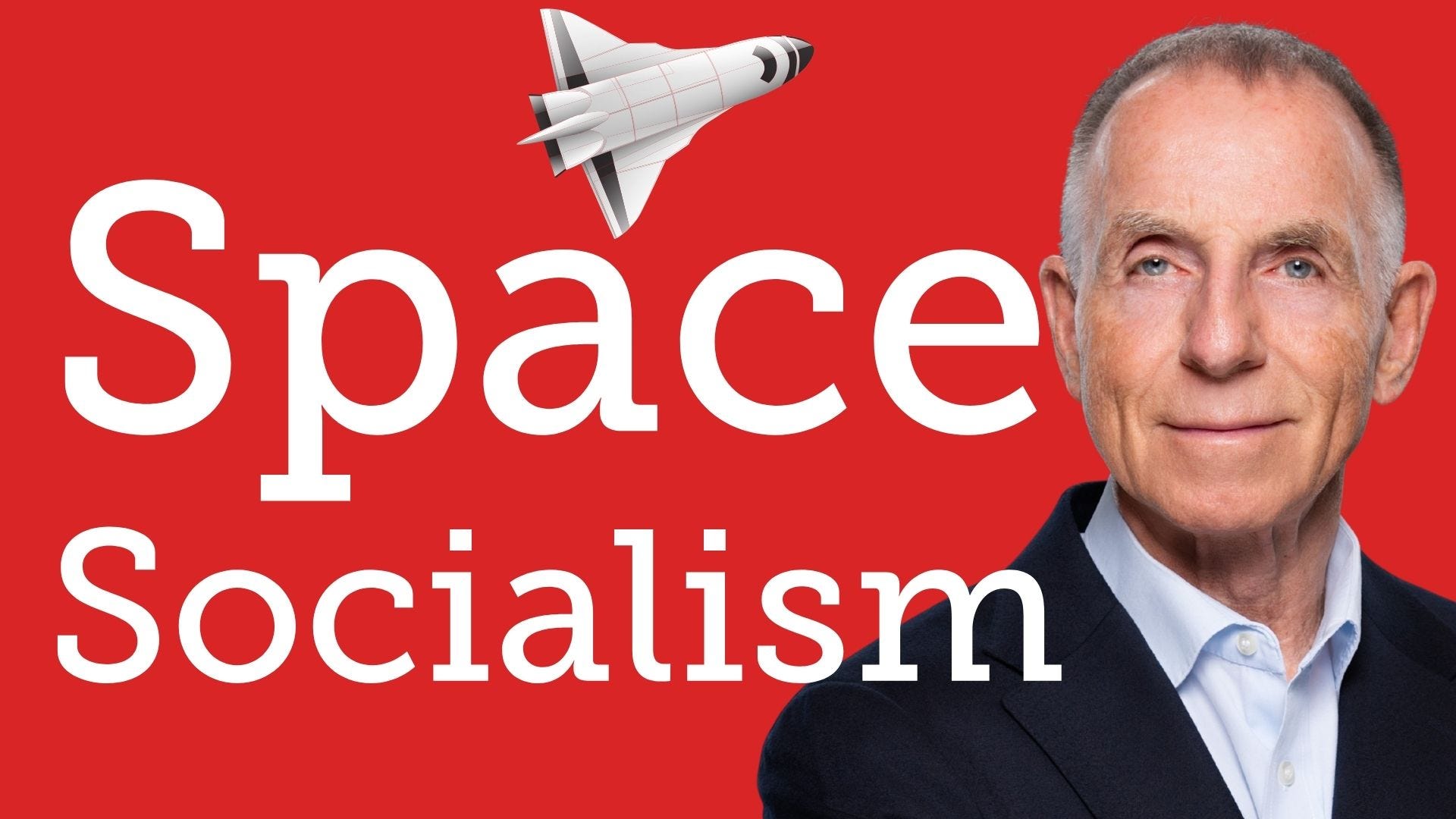
| 5/19/26 | ![]() Did Free Enterprise Save the Space Age | IEA Interviews✨ | private space industrygovernment vs private enterprise+5 | Dr. Rainer Zitelmann | Institute of Economic AffairsNASA+1 | — | space industryfree enterprise+5 | — | 51m 38s | |
| 5/15/26 | ![]() Is Political Chaos Actually Killing the UK Economy? | IEA Podcast | In this Institute of Economic Affairs podcast, host Callum Price is joined by Editorial Director Kristian Niemietz and Senior Economist Dr Valentin Boboc. The episode examines the political turmoil in Westminster, the Government’s King’s Speech, and what both mean for the UK economy. The discussion centres on the bond market, fiscal credibility, and why political chaos matters far more when public debt is already stretched.Dr Boboc and Kristian Niemietz dig into the UK’s deteriorating fiscal position, with around 8% of all public spending now going on debt interest alone. They assess why bond markets are nervous about whoever ends up leading the Government, arguing that the real problem is not the chaos itself but the absence of any credible plan on spending, growth, or taxation. The King’s Speech is assessed in detail, including the Government’s “Regulating for Growth” bill, the nationalisation of British Steel, and what Kristian describes as Chris Snowdon’s “capitalist command economy” thesis: a state that does not want to own industry directly but increasingly dictates what private companies produce and how.The conversation closes with a look at a Labour backbench growth paper that Kristian describes as the closest thing to a centre-left supply-side agenda he has read in the British context. He and Dr Boboc explore why rationing key inputs like land, energy and childcare drives up costs and then triggers expensive spending programmes to compensate, and what genuine fiscal consolidation through growth might actually look like.The Institute of Economic Affairs is a registered educational charity. It does not endorse or give support for any political party in the UK or elsewhere. Our mission is to improve understanding of the fundamental institutions of a free society by analysing and expounding the role of markets in solving economic and social problems.The views represented here are those of the speakers alone, not those of the Institute, its Managing Trustees, Academic Advisory Council members or senior staff. This is a public episode. If you'd like to discuss this with other subscribers or get access to bonus episodes, visit insider.iea.org.uk/subscribe | 44m 13s | ||||||
| 5/13/26 | ![]() Is Britain a Capitalist Command Economy? | IEA Briefing | In this Institute of Economic Affairs briefing, Dr Kristian Niemietz is joined by IEA Head of Lifestyle Economics Dr Christopher Snowdon to examine a question with no easy answer: what kind of economy does Britain actually have? Neither neoliberal nor socialist, Chris makes the case that the UK has drifted into what he calls a “capitalist command economy” — one where industries remain largely in private hands but are increasingly directed, targeted, and fined by the state.Chris and Kristian work through the evidence: boiler companies fined for not selling enough heat pumps, car manufacturers penalised for selling too many petrol vehicles, supermarkets being required to track and reduce the calories their customers buy, Gatwick Airport granted a new runway only on condition it controls how its passengers travel. They trace the roots of this model through price controls, rent regulation, minimum wage creep, and the Government’s habit of outsourcing its policy goals to business while escaping the blame when things go wrong.The conversation closes with the question of whether this model is stable. Drawing on Mises’s concept of interventionism as an inherently unstable system, Kristian asks whether the capitalist command economy simply creates the conditions for a more conventional socialist government — or something else entirely. Chris argues the real problem is that Britain lacks even a word for what it has become, and that naming it is the first step to challenging it.The Institute of Economic Affairs is a registered educational charity. It does not endorse or give support for any political party in the UK or elsewhere. Our mission is to improve understanding of the fundamental institutions of a free society by analysing and expounding the role of markets in solving economic and social problems.The views represented here are those of the speakers alone, not those of the Institute, its Managing Trustees, Academic Advisory Council members or senior staff. This is a public episode. If you'd like to discuss this with other subscribers or get access to bonus episodes, visit insider.iea.org.uk/subscribe | 27m 35s | ||||||
| 5/8/26 | ![]() Does Britain Actually Have a Housing Shortage? | IEA Podcast✨ | housing shortageeconomic questions+4 | Kristian NiemietzDr Valentin Boboc | Institute of Economic AffairsDaily Telegraph | — | housing shortagerental market+5 | — | 49m 19s | |
| 5/6/26 | ![]() 200 Episodes: Your Questions Answered | IEA Podcast Q&A✨ | public spendingausterity+5 | Lord FrostKristian Niemietz | Institute of Economic Affairs | — | economic policymarket incentives+4 | — | 56m 39s | |
| 5/1/26 | ![]() Wealth Taxes Won't Fix Broken Britain✨ | wealth taxesBank of England+5 | Lord FrostDr Kristian Niemietz | Bank of EnglandIEA+1 | — | wealth taxesinflation+8 | — | 41m 11s | |
| 5/1/26 | ![]() The Wealth Tax Delusion: The Policy That Promises Everything and Delivers Nothing | IEA Interview✨ | wealth taxeconomic policy+4 | Kristian NiemietzArun Advani | Institute of Economic AffairsCentre for Analysis of Taxation+1 | — | wealth taxeconomic policy+5 | — | 49m 24s | |
| 4/30/26 | ![]() Why Don't Governments Just Print More Money? | MMT Myth | IEA Interview✨ | Modern Monetary Theoryeconomics+3 | Emmanuel Marjorie | Institute of Economic AffairsModern Monetary Theory+1 | — | MMTmoney printing+3 | — | 31m 56s | |
| 4/27/26 | ![]() COVID Was the Biggest Event Since WW2 — And We've Learned Nothing | IEA Podcast✨ | COVID-19World Health Organisation+4 | Roger Bate | World Health OrganisationInternational Centre for Law and Economics+4 | — | COVID-19WHO+5 | — | 29m 53s | |
| 4/24/26 | ![]() Why Are Young People Giving Up on Work? | IEA Podcast✨ | UK unemploymentartificial intelligence+5 | Daniel FreemanAndy Mayer | Institute of Economic AffairsUnite Union+4 | — | unemploymenteconomic inactivity+7 | — | 43m 21s | |
| 4/23/26 | ![]() Has The Left Already Won Britain?✨ | Millennial Liberalismfree markets+5 | Dr Kristian Niemietz | IEA Insider SubstackInstitute of Economic Affairs+2 | — | political viewsyoung Britons+7 | — | 20m 20s | |
| 4/17/26 | ![]() Britain Is Poorer Than Every US State | IEA Podcast✨ | economic growthpublic opinion+5 | Lord FrostKristian Niemietz | Institute of Economic AffairsNew Statesman+2 | United KingdomFrance+3 | BritainUS States+8 | — | 48m 33s | |
Showing 25 of 371
Pitch Fit is a Pro feature
See how bookable this show is for guests, which brands already advertise, the per-episode ad value, and the best-fit guest and sponsor profile. The numbers are blurred on the free plan.
How readily this show books outside guests like you.
How proven this show is for host-read sponsorships.
For Guests
ProFor Advertisers
ProUpgrade to Pro to unlock guest cadence, sponsor categories, fit scores, and per-episode ad value for this show.