Insights from recent episode analysis
Audience Interest
Podcast Focus
Publishing Consistency
Platform Reach
Insights are generated by CastFox AI using publicly available data, episode content, and proprietary models.
Most discussed topics
Brands & references
Total monthly reach
Estimated from 1 chart position in 1 market.
By chart position
- 🇧🇷BR · Society & Culture#1471K to 10K
- Per-Episode Audience
Est. listeners per new episode within ~30 days
500 to 5K🎙 ~2x weekly·88 episodes·Last published 5d ago - Monthly Reach
Unique listeners across all episodes (30 days)
1K to 10K🇧🇷100% - Active Followers
Loyal subscribers who consistently listen
400 to 4K
Market Insights
Platform Distribution
Reach across major podcast platforms, updated hourly
Total Followers
—
Total Plays
—
Total Reviews
—
* Data sourced directly from platform APIs and aggregated hourly across all major podcast directories.
On the show
From 11 epsHosts
Recent guests
Recent episodes
If We Can Walk Together
Jun 21, 2026
28m 43s
A Body of Water
Jun 14, 2026
28m 38s
The House in the Hole
Jun 7, 2026
28m 27s
Voices from the Beach
May 31, 2026
28m 49s
My Sister’s Daughter
May 24, 2026
28m 49s
Social Links & Contact
Official channels & resources
Official Website
Login
RSS Feed
Login
| Date | Episode | Topics | Guests | Brands | Places | Keywords | Sponsor | Length | |
|---|---|---|---|---|---|---|---|---|---|
| 6/21/26 | ![]() If We Can Walk Together | What does it take to choose peace when you have every reason not to?Aziz Abu Sarah is a Palestinian who grew up under Israeli occupation in East Jerusalem. He was first shot at when he was seven years old, and in 1991, when he was ten, his older brother Tayseer died after being arrested and beaten while in Israeli military custody.Maoz Inon is an Israeli who grew up in a community just 200 metres from the Gaza border. On 7 October 2023, his parents and many of his childhood friends died in the Hamas attacks.Everything about their histories suggests Aziz and Maoz could never become friends. Yet, despite experiencing profound personal loss on opposite sides of one of the world’s most enduring conflicts, they have turned away from hatred and towards each other in a shared mission of peacemaking. A single text message to a stranger in a moment of empathy, sparked a friendship that would overcome seemingly insurmountable differences.If We Can Walk Together follows their remarkable stories, from pivotal childhood experiences to moments of political awakening, and their shared decision to rise above fear and revenge. Moving, inspiring and radically hopeful, their story offers a rare perspective on a conflict often portrayed as intractable. In bearing witness to what human connection can overcome, it invites us to imagine a future shaped not by division, but by our capacity to walk together.This programme is part of BBC Radio 4's Common Ground season, examining the challenges of social cohesion and how to address them.Producer: Guy Natanel Executive Producers: Shannon Delwiche and Chris Jones Composer: Pat Moran Sound Mixer: John Scott Sound Engineer: Rob Fanner A Sound and Bones production for BBC Radio 4 | 28m 43s | ||||||
| 6/14/26 | ![]() A Body of Water | Water has always been a threshold - a space between worlds where transformation unfolds. But what if the lakes, rivers, and seas we surrender ourselves to are not merely passive bodies, but keepers of our grief, our burdens, and our memory?Feature maker Hana Walker-Brown explores what pulls so many of us to the water at moments of rupture or change. Tracing the unseen currents that bind us to each other and to the natural world, Hana considers water not simply as an element, but as the ultimate solvent; a place where we go to dissolve, to surrender to the wild drift of it all, to allow ourselves to be held without condition.Part personal meditation, part collective reflection, A Body Of Water blends intimate testimony, poetic narration and cinematic sound design that echoes the rhythm of the ocean. With contributions from world champion freediver Helena Bourdillon, author and psychologist Dr Sharon Blackie, author and boat builder Wyl Menmuir and author Robert MacFarlane. Special thanks to Abigail Gonda, Bean Downes, Joey Hulin, Christophe Donot and Will Salt. This piece was developed during an artist residency at Hektor in Lanzarote. Presented, produced and sound designed by Hana Walker-Brown Mixed by Peregrine Andrews The executive producer is Peggy SuttonA Reduced Listening Production for BBC Radio 4 | 28m 38s | ||||||
| 6/7/26 | ![]() The House in the Hole✨ | violent crimepublic perception+4 | — | BBC Radio 4 | Consett | Albert DrydenConsett+5 | — | 28m 27s | |
| 5/31/26 | ![]() Voices from the Beach✨ | poetrybeach culture+4 | Saili Katebe | BBC Radio 4 | ZambiaUK+6 | beachpoet+6 | — | 28m 49s | |
| 5/24/26 | ![]() My Sister’s Daughter✨ | kinship carefamily dynamics+3 | Jo | BBC Radio 4Naked+1 | — | kinship carefamily+4 | — | 28m 49s | |
| 5/17/26 | ![]() Tarot and the Art of Creativity✨ | tarotcreativity+3 | Ben OkriJessica Knappett+3 | BBC Radio 4 | — | tarot cardscreativity+3 | — | 28m 44s | |
| 5/3/26 | ![]() Strong Women✨ | strong womenathletics+3 | Lucy UnderdownRebecca Roberts+1 | BBC Radio 4 | — | strongwomenathletes+3 | — | 28m 53s | |
| 4/26/26 | ![]() Me, Myself and the MRI✨ | MRIscanxiety+4 | — | MRIBBC Radio 4+3 | — | MRIscanxiety+5 | — | 28m 38s | |
| 4/19/26 | ![]() Andy Mycock: Named, Unashamed✨ | identitypersonal journey+3 | — | BBC Radio 4Reform Radio | — | surnamepolitical scientist+5 | — | 29m 05s | |
| 4/12/26 | ![]() Journey through a cow✨ | agriculturephilosophy+3 | Samar Nasrullah KhanPeter Dixon+2 | BBC Radio 4 | — | cowcheesemaking+3 | — | 28m 49s | |
Want analysis for the episodes below?Free for Pro Submit a request, we'll have your selected episodes analyzed within an hour. Free, at no cost to you, for Pro users. | |||||||||
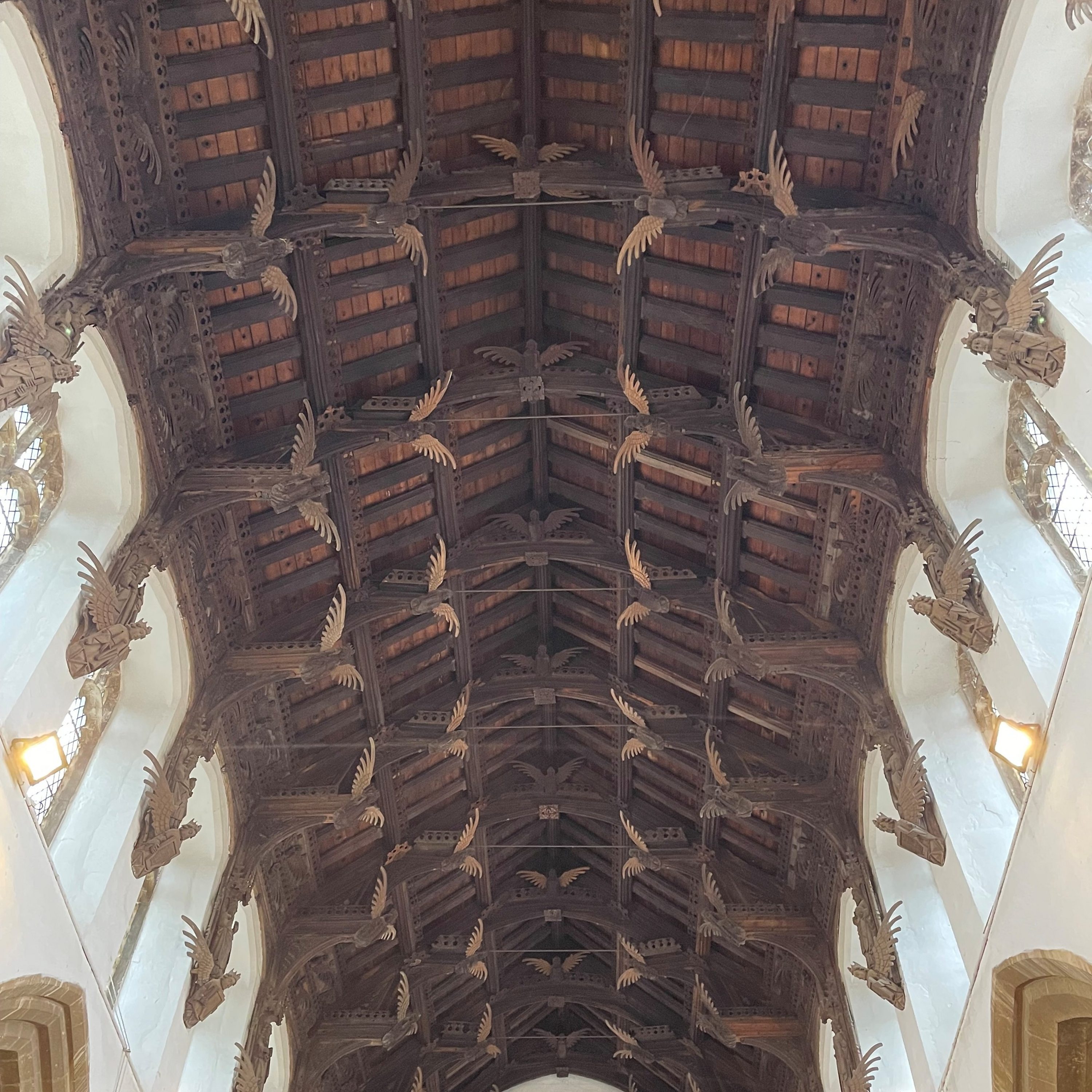
| 3/27/26 | ![]() Harrier Angels✨ | angelsharriers+4 | Robert MacfarlaneRuth Clay+2 | The Grammar of Angels | St Wendreda's churchMarch, Cambridgeshire+2 | angelsharriers+5 | — | 28m 33s | |
| 3/22/26 | ![]() Outpatient✨ | healthcreativity+4 | Harriet Madeley | BBC Radio 4Outpatient | — | Primary Sclerosing Cholangitisdiagnosis+4 | — | 28m 40s | |
| 3/15/26 | ![]() Swimming with Jimmy✨ | swimmingpersonal growth+5 | — | Cardiff International PoolBBC Radio 4 | — | swimmingadult learners+5 | — | 28m 43s | |
| 3/8/26 | ![]() The Alpenpost: A Girl's Guide to Fighting Hitler and Stalin | Historian Maurice Casey reveals the story of an anti-Nazi resistance network and the family at its heart, told through a newspaper crafted by two young girls. In the dusty corners of a Galician villa on Spain’s northern coast, Casey uncovered a forgotten archive of revolution, resistance and love. Among the documents was something extraordinary. The Alpenpost - a newspaper lovingly hand-crafted by Elisa and Alida Leonhard, two girls raised on Europe’s 1930s refugee routes. Created every fortnight from late 1935 until 1940, The Alpenpost charted the activities of the two Leonhard girls and their mother Emmy, a veteran of the repressed world of Weimar German communism. With a mixture of cartoons, light stories and precocious political analyses, the girls charted their unusual upbringing as the children of an anti-fascist father and an exiled revolutionary mother.Each issue was posted to the girls’ ‘papa’ Edo Fimmen, separated from his family, constantly travelling to maintain a network of activists and informants. Fimmen led the powerful International Transport-Workers’ Federation in continual resistance to fascism. Reading The Alpenpost, Edo could chart his daughters’ flight through 1930s Europe. Both a love letter to a father seperated from his family by dangerous work and a remarkable document of a childhood lived in flight from totalitarianism.This is a tale of survival against the odds - not only the survival of a family that lived under grave political threats, but an archive that survived a journey across countries and generations.Contributions from Pedro Ewald, Dieter Nelles, Rene Dumont, Bob Reinalda Voices of The Alpenpost: Hannah Nehb, Juno Nehb, Neva Nehb with Arjan SchipperProducer: Mark Burman A Storyscape production for BBC Radio 4 | 31m 53s | ||||||
| 3/1/26 | ![]() Cannon Fodder | Alan Hall and his siblings have a shared story from their childhoods - their mum, Jackie, describes walking through a Liverpool park with her mum, their grandma, Hettie. It must be the 1940s. Hettie is a single mum. She'd fallen pregnant, according to family mythology, while working as a domestic servant in Scotland. Jackie has had spells in foster care. "Don't stare," Hettie says. "Those men over there, they're your uncles." Years later, after Jackie's death, Alan finds an envelope labelled, 'Mum's Pics'. Inside, there are photographs of two men in military uniforms, one with 'Fred' written on the back, the other, of a soldier in a kilt, 'Brother Bill'. These are Hettie's brothers - or rather, two of them. She was the youngest of nine and the only daughter. Of the other boys, Jackie had told her children, three had been killed in the Great War. A third photograph, of the Foster family gravestone, provides their names - Harry, Sidney and Thomas, "their duty nobly done".Cannon Fodder traces memory, myth and meaning within one family touched by the catastrophe of World War One. With contributions from historian Jeremy Banning, Lynelle Howson of the Commonwealth War Graves Commission, retired Salvation Army officers Lt-Cols. David and Doriel Phillips, Ruth Anders of St Anne's Church, Aigburth in Liverpool and Hettie's grandchildren - Cathy, Laureen, Alan and Robin.With music by Robin's daughter, Leila Hall (voice), and Alan Hall (cornet). Produced by Alan Hall A Falling Tree production for BBC Radio 4 | 29m 08s | ||||||
| 2/22/26 | ![]() The Extractor | Hilik Magnus is Israel’s foremost search and rescue specialist. He has performed missions, public and private, for over 30 years across six continents. He has worked under the radar during disasters such as 2004’s tsunami and 2008’s Mumbai attacks. He has worked with everyone, from grieving families to cartels and the Taliban, all for the simple purpose of returning people to where they belong. Now, he opens up about this secretive world, and talks frankly about his origins and values.The start, in the 1990s, was simple. His operating base was an abandoned train carriage in the southern desert of Israel with three telephones and a dial-up connection. Hilik did not know what awaited him. All he knew was that he felt a ‘shlichut’ – ‘higher purpose’ in Hebrew – to help save lives, to return the unburied to their grieving families. Yet the business grew and now employs 80 people in a hi-tech hub in Tel Aviv. There is GPS, GSM, fibre-optic, and over 2,500 calls for help every year. In the midst of this change, Hilik is finding it hard to connect the now and then. For him, the purity of the work was in shepherding lost souls, alive or dead, to their rightful place. Strange, mystical encounters at 6,000m above sea-level, exposing national corruption in Bolivia - not board meetings and touchscreens. He hates the city and all it implies. Yet the world moves on, and the work means everything to him. When he lets himself stop, his 76 years catch up with him, leading to days laid up in bed. Producer: Jeremy Neumark Jones Assistant Producer, Additional Research: Robert Neumark Jones Original Music by Theo Whitworth Executive Producer: David Prest A Whistledown production for BBC Radio 4 | 29m 06s | ||||||
| 2/15/26 | ![]() A Lemur’s Song | The Indri lemur, also known as the singing lemur, can be found only in Madagascar’s rainforests. Famous for their eerie, melodic calls, they are one of the few primates that sing and, as it turns out, they have a surprising relationship to rhythm - one that’s very similar to our own. After hearing news of these unlikely rhythmic capabilities, Georgie Styles ventures into one of the most biodiverse yet threatened ecosystems on Earth to capture the haunting songs of this critically endangered species, as they echo through the treetops. But as she goes deeper into this tale of survival and song, she discovers a hidden female history. So what can the Indri lemur tell us about the origins of music?Providing us with the first-ever evidence of complex vocal abilities that exceed those of any other mammal, besides humans, the Indri reveals clues to our own evolutionary journey and offers us a rarely told perspective.With contributions from primatologist and conservationist, Dr Sylviane Volampeno, primatologist Dr Chiara De Gregorio, researcher Irene Marchesi and a team of Madagascan research guides, A Lemur’s Song connects nature’s melodies to the evolution of music. Through the captivating sounds of Madagascar’s rainforests, the Indris songs and the creative responses of an original score by music artist and saxophonist Laura Misch, Georgie reflects on what sounds can tell us about our world and what we are at risk of losing.A 2 Degrees West production for BBC Radio 4 | 28m 01s | ||||||
| 2/8/26 | ![]() Functioning | If you ask many women in recovery from alcoholism what the term ‘functioning alcoholic’ means to them, they will laugh. In truth, a large percentage of women who end up in treatment had been, to the outside world, ‘functioning’. Holding down jobs, raising children, paying their rent or mortgage. However, internally, ‘functioning’ is about the last word they would use to describe their mental and emotional landscape as alcohol increasingly tightened its grip on their lives.Here, two women share in raw and brutally honest detail their descent into alcohol dependency, which took place incrementally, behind closed doors, and, for the most part, under the radar as they continued to appear to live regular, ‘functional’ lives.Functioning offers a rare insight into the experience of leading a completely dual existence - the secrecy, the agility and the alchemy required in maintaining a ‘functioning’ exterior, while your interior is coming apart; and a lesson in how much can go undetected when you are not what the world assumes of an alcoholic.Sound design by Action Pyramid Produced by Jodie Taylor A Falling Tree production for BBC Radio 4 | 28m 57s | ||||||
| 2/1/26 | ![]() Bolton: The Happiest Town on Earth? | In the 1930s a group of researchers descended on the northern mill town of Bolton to observe the natives. They christened their chosen case-study 'Worktown'. It was a ground breaking study of working class culture - and one thing they wanted to know was what makes people happy.The people of Bolton were asked a simple questions "What is happiness to you and yours?" The letters written in response reveal a snapshot of the innermost thoughts and feelings of ordinary people, living ordinary lives almost a century ago. Katharine Longworth returns to Bolton to discover whether this town still holds the secret to happiness. Exploring the town centre, markets, pasty shops and pubs; she asks the same question, bringing the original letters to life as modern day Boltonians reflect on the insights of their predecessors. We knock on the doors of those who live in the same spot as the original correspondents, linking them to the past through the words of the letters, and hearing their own reflections on happiness. Have things changed? Is it more difficult to be happier today? And is Bolton the happiest town on earth?Original letter written by: J.E. Nelson G. Taylor J. Warburton Joseph Roberts A. Thornley F. Fielding L. Bollington E. HorrocksProducer: Katharine Longworth Sound Design: Michael Smith Actors: Paul Brennan, Jasmine Hyde and Mike RogersWith thanks to Professor Jerome Carson and Dr Sandie McHugh at The University of Greater Manchester. | 29m 12s | ||||||
| 1/18/26 | ![]() The Metaphor Consultant | Time is a journey - the future ahead of us, the past behind. Our burdens are a weight that we carry, our problems are a puzzle that we solve.Metaphor is at the heart of how we understand our existence. In a period of huge change and global uncertainty, are we outgrowing the metaphors we have lived by?The poet Jack Underwood is offering his services as a metaphor consultant, for a very reasonable fee.Featuring conversations with poet and psychoanalyst Nuar Alsadir; Dr Stephen Flusberg, the Director of the Framing, Reasoning And Metaphor (FRAME) Lab at Vassar College; computer scientist Melanie Mitchell; the philosopher Dr Julia Ng; and the linguist and author of Metaphors We Live By, George Lakoff.Location recording by Mitra Kaboli, Kristina Loring, Gustavo Martinez and Donelle WedderburnProduced by Eleanor McDowall A Falling Tree production for BBC Radio 4 | 28m 55s | ||||||
| 1/11/26 | ![]() Into the Owambe | For decades, Nigerian hall parties have been the hub for communities in the UK, it was the place where they could bring a little bit of home and be transported through music, food and fashion. Full of extravagance, warmth and culture, the word Owambe, both noun and adjective, directly translates to ‘everything is there’. Now, first generation British Nigerians continue this tradition, their way. Presenter Bisi Akins takes us on a journey through an Owambe, exploring what that “everything” really means. We dive into the key elements of a successful Nigerian hall party, immersed in the sounds, smells, music, and traditions that bring an Owambe to life. We’ll hear from those who lived it, loved it, and how the next generation are keeping the tradition alive. Bring your big beats, bold outfits, and dancing shoes – Into the Owambe for BBC Radio 4. A Hill 5.14 production for BBC Radio 4 | 29m 06s | ||||||
| 12/28/25 | ![]() Bass Notes | Bass guitarist and record producer Jah Wobble has had a lifetime’s immersion at the low end of the musical spectrum. Over four decades, his hypnotic bass riffs have powered music from punk to reggae, fusion to world music.He relates his first experiences as a teenager attending blues dances where Jamaican sound systems played cuts of reggae dub where the bass felt like a force like gravity, and seeing Bob Marley and the Wailers where he was captivated by the playing of bassist Aston ‘Family Man’ Barrett, and on to his own involvement with Public Image Limited, where he brought a dub sensibility into their post-punk music. He discusses his long years as a solo artist, and collaborations with musical legends from Can’s Holger Czukay to Sinead O’Connor, and Primal Scream to Pharoah Sanders. During these years, Jah Wobble has also been interested in the Science of Bass. So, he meets up with Dr Duncan Edwards of Salford University, to ask him about the special, physical properties of Bass Notes. How do they reach our brains and, once there, what psychological, emotional effects can they have on us? To understand this, he submits to an experiment where his head is wired up, and the Wobble brain waves measured. After years lost in drink and drugs Jah Wobble turned to Buddhism and became fascinated by alternative explanations of his bass playing that this could give him. He interviews eminent teacher of Tibetan Buddhism, Lama Jampa Thaye, to find further enlightenment. And in a south London Prayer room, he listens to the extraordinary low-pitched chanting of exiled Tibetan monks, where one mantra has the awesome power of a bass note.Presenter: Jah Wobble Producer: Alastair Laurence Sound Design: Jake Wittlin A Whistledown production for BBC Radio 4 | 28m 52s | ||||||
| 12/21/25 | ![]() A Very British Christmas | What does Christmas Day mean to you? This raw, kaleidoscopic audio portrait, made up entirely from voice notes recordings, tracks the emotional contours of the day as it unfolds. Through midnight churchgoing and moments of quiet reflection to frenetic gift-giving, culinary chaos and karaoke, the programme evokes and questions our own multifarious experiences of what Christmas Day ‘means’. Variously boozy, silly, sad, excited, warm, lonely, deeply spiritual and endearingly humanistic – the contributions chart a cross section of modern Britain, encompassing heartfelt-stories, accidental field recordings, impromptu songs and audio diary entries. With special thanks to all those who recorded their Christmas Day for us in 2024. Original music and sound design by James Bonney. Producer: James Bonney Mix: Mike Woolley Executive Producer: Olivia Humphreys An Overcoat Media production for BBC Radio 4 | 29m 01s | ||||||
| 12/14/25 | ![]() CS Lewis, the Evacuee and the Wardrobe | In 1939, Emma Freud's mother Jill was evacuated from London to the suburbs of Oxford. After staying with Lewis Carroll's friends the Butler sisters for a few years, she arrived at her next designated accommodation clutching a small suitcase and a copy of her favourite book, The Screwtape Letters by CS Lewis. It was just a few weeks later, after she spotted several copies of that book on a shelf, that she realised she was actually living with CS Lewis himself.In this telling of Jill's fascinating story, Emma hears all about her mother's love for CS Lewis, known to her as Jack. How she cared for him, how he paid for her to go to drama school and how a big, old, wooden wardrobe became part of her story...Illustrated with readings from The Lion, the Witch and the Wardrobe, Emma captures these precious memories as she sits down with her mum to hear her magical story.Readings of The Lion, the Witch and the Wardrobe by Olivia Williams. Other readings by Richard Gibson.Presenter: Emma Freud Producer: Elizabeth FosterThe Lion, the Witch and the Wardrobe by CS Lewis © copyright 1950 CS Lewis Pte Ltd.Lady Jill Freud, April 1927-November 2025. | 29m 18s | ||||||
| 11/23/25 | ![]() Hearing Aids | Like so many people at a similar time of life, the poet Paul Farley is facing up to the fact that he might need hearing aids. His wife has been asking him to turn down the volume on the telly for years, and has given up shouting downstairs for him because he never hears. Out in cafes and pubs, Paul can no longer really follow what people are saying to him, and so he often turns down invitations knowing he can’t turn up the volume. Even worse, for Paul at least, is the fact he can no longer hear the high frequencies of his beloved birdsong. Now, though, all that could change as he heads for a test at his local opticians to get his own NHS hearing aids fitted. He also speaks with Gabrielle Saunders, Professor of Audiology at the University of Manchester, about the past and future of hearing aids, and also the truth about the supposed connection between dementia and hearing loss. Paul also visits the near total silence of Salford University’s anechoic chamber so that he can hear himself think properly - and looks forward to a time when he might once again be able to listen to the birds.Presented by Paul Farley Produced by Geoff Bird Executive Producers: Eloise Whitmore and Jo MeekA Naked production for BBC Radio 4 | 28m 56s | ||||||
Showing 25 of 97
Pitch Fit is a Pro feature
See how bookable this show is for guests, which brands already advertise, the per-episode ad value, and the best-fit guest and sponsor profile. The numbers are blurred on the free plan.
How readily this show books outside guests like you.
How proven this show is for host-read sponsorships.
For Guests
ProFor Advertisers
ProUpgrade to Pro to unlock guest cadence, sponsor categories, fit scores, and per-episode ad value for this show.
Chart Positions
1 placement across 1 market.
Chart Positions
1 placement across 1 market.