
Improving Education Today: The Deep Dive
by Project ACHIEVE Educational Solutions
Is this your podcast?Insights from recent episode analysis
Audience Interest
Podcast Focus
Publishing Consistency
Platform Reach
Insights are generated by CastFox AI using publicly available data, episode content, and proprietary models.
Most discussed topics
Brands & references
Est. Listeners
Insufficient chart data. Estimates will improve as the show charts.
- Per-Episode Audience
Est. listeners per new episode within ~30 days
N/A🎙 Weekly cadence·60 episodes·Last published 7mo ago - Monthly Reach
Unique listeners across all episodes (30 days)
N/A - Active Followers
Loyal subscribers who consistently listen
N/A
Market Insights
Platform Distribution
Reach across major podcast platforms, updated hourly
Total Followers
—
Total Plays
—
Total Reviews
—
* Data sourced directly from platform APIs and aggregated hourly across all major podcast directories.
On the show
From 10 epsHosts
Recent guests
No guests detected in recent episodes.
Recent episodes
Keeping Teams Positive, Perceptive, and Productive: Five Leadership Practices That Build Sustainable, High-Performing Educational Teams (Season 3, Episode 22)
Nov 23, 2025
15m 54s
The Denial of Dreams: Disproportionate School Discipline and Racial Bias are Destroying Black Students' Futures (Season 3, Episode 21)
Nov 17, 2025
12m 47s
Reflecting on the Mirror of Autism: Living in a World that Doesn't Always Makes Sense (Volume 3, Episode 20)
Nov 5, 2025
18m 42s
Students Need "Learner's Permits" for Social Media Access: Decreasing Mental Health, Bullying, and School Shooting Risks (Season 3, Episode 19)
Oct 11, 2025
18m 32s
Chronic Absenteeism and the “Five Why’s”: Stop Chasing Symptoms and Start Tackling Solutions (Season 3, Episode 18)
Sep 21, 2025
17m 57s
Social Links & Contact
Official channels & resources
Official Website
Login
RSS Feed
Login
| Date | Episode | Topics | Guests | Brands | Places | Keywords | Sponsor | Length | |
|---|---|---|---|---|---|---|---|---|---|
| 11/23/25 |  Keeping Teams Positive, Perceptive, and Productive: Five Leadership Practices That Build Sustainable, High-Performing Educational Teams (Season 3, Episode 22)✨ | educational leadershipteam productivity+3 | — | NASA | — | educational teamsleadership practices+3 | — | 15m 54s | |
| 11/17/25 |  The Denial of Dreams: Disproportionate School Discipline and Racial Bias are Destroying Black Students' Futures (Season 3, Episode 21)✨ | school disciplineracial bias+4 | — | Project ACHIEVE Educational Solutions | — | disproportionate disciplineracial discrimination+4 | — | 12m 47s | |
| 11/5/25 |  Reflecting on the Mirror of Autism: Living in a World that Doesn't Always Makes Sense (Volume 3, Episode 20)✨ | autismeducation+4 | — | — | — | autismeducators+5 | — | 18m 42s | |
| 10/11/25 |  Students Need "Learner's Permits" for Social Media Access: Decreasing Mental Health, Bullying, and School Shooting Risks (Season 3, Episode 19)✨ | mental healthsocial media+4 | — | Project ACHIEVE Educational Solutions | America | mental health crisissocial media+6 | — | 18m 32s | |
| 9/21/25 |  Chronic Absenteeism and the “Five Why’s”: Stop Chasing Symptoms and Start Tackling Solutions (Season 3, Episode 18)✨ | chronic absenteeismroot causes+4 | — | Project ACHIEVE Educational Solutions | — | chronic absenteeismeducation+5 | — | 17m 57s | |
| 9/6/25 |  Student Mental Health, the Dangers of AI, and the Need for Human Connection✨ | student mental healthAI dangers+4 | — | Project ACHIEVE Educational Solutions | — | mental healthstudents+5 | — | 21m 47s | |
| 8/23/25 |  Beyond Overwhelmed: How AI Can Empower Administratively-Taxed School Leaders (Season 3, Episode 16)✨ | Artificial IntelligenceSchool Leadership+5 | — | Project ACHIEVE Educational Solutions | — | AIschool leaders+6 | — | 20m 16s | |
| 8/9/25 |  Improving School Climate and Student Engagement: The Final Piece of (and Assembling) the School Success Puzzle (Season 3, Episode 15)✨ | school climatestudent engagement+3 | — | Project ACHIEVE Educational Solutions | — | school climatestudent engagement+3 | — | 20m 01s | |
| 7/26/25 |  Cultivating School Cohesion and Staff Efficacy- The 7 C's of Success (Season 3, Episode 14)✨ | staff cohesioncollaboration+4 | — | Project ACHIEVE Educational Solutions | — | staff cohesioncollaboration+5 | — | 20m 05s | |
| 7/12/25 |  The Characteristics of an Effective Multi-Tiered System of Supports (MTSS): What You Need to Assess to Ensure Your Fall Success (Season 3, Episode 13)✨ | Multi-Tiered System of SupportsEducational Leadership+3 | — | Project ACHIEVE Educational Solutions | — | MTSSeducational assessment+3 | — | 19m 39s | |
Want analysis for the episodes below?Free for Pro Submit a request, we'll have your selected episodes analyzed within an hour. Free, at no cost to you, for Pro users. | |||||||||
| 6/28/25 |  School Discipline, Classroom Management, and Student Self-Management: The Summer Preparations Needed for Excellence This Fall (Season 3, Episode 12) | Your Podcast Hosts Angela and Davey discuss Dr. Howie Knoff's most recent Blog from Project ACHIEVE Educational Solutions. The Blog discusses the ongoing issues with student behavior and classroom management in schools since the pandemic, highlighting a significant increase in discipline referrals. The Blog emphasizes that student behavior is not improving, citing an Education Week survey where 72% of educators reported increased misbehavior. Angela and Davey discuss how Knoff asserts that blaming external factors or implementing "quick fixes" like SEL and PBIS are ineffective, and he—instead—outlines five essential, interdependent, evidence-based, and field-proven components that focus on Positive School Climate, Explicit Prosocial Behavioral Expectations, Student Motivation and Accountability, Consistency and Fidelity, and Addressing Special Situations through Multi-Tiered Supports. Davey and Angela describe the critical contents in each of these components, noting that Knoff has provided detailed questions for school leaders—in each component—to assess their school or district’s current status, so that resulting Action Plans can make changes for the upcoming academic year. Angela and Davey then summarize Knoff’s research-based suggestions on the characteristics of effective grade or instructional teams, individual teachers, and related services professionals, and what they do to make the five school discipline, classroom management, and student self-management components above work. The Podcast concludes with a "Call to Action," asserting that the summer months offer a "unique and invaluable opportunity" for "reflective analysis, strategic planning, and skill development." The ultimate choice outlined for educational leaders is "between preparation versus procrastination, between systematic improvement versus wishful thinking, between investing in summer planning versus accepting the status quo."[CLICK HERE to Set Up a Meeting with Howie] [CLICK HERE to read this Blog on the Project ACHIEVE Webpage] | 28m 25s | ||||||
| 6/8/25 | 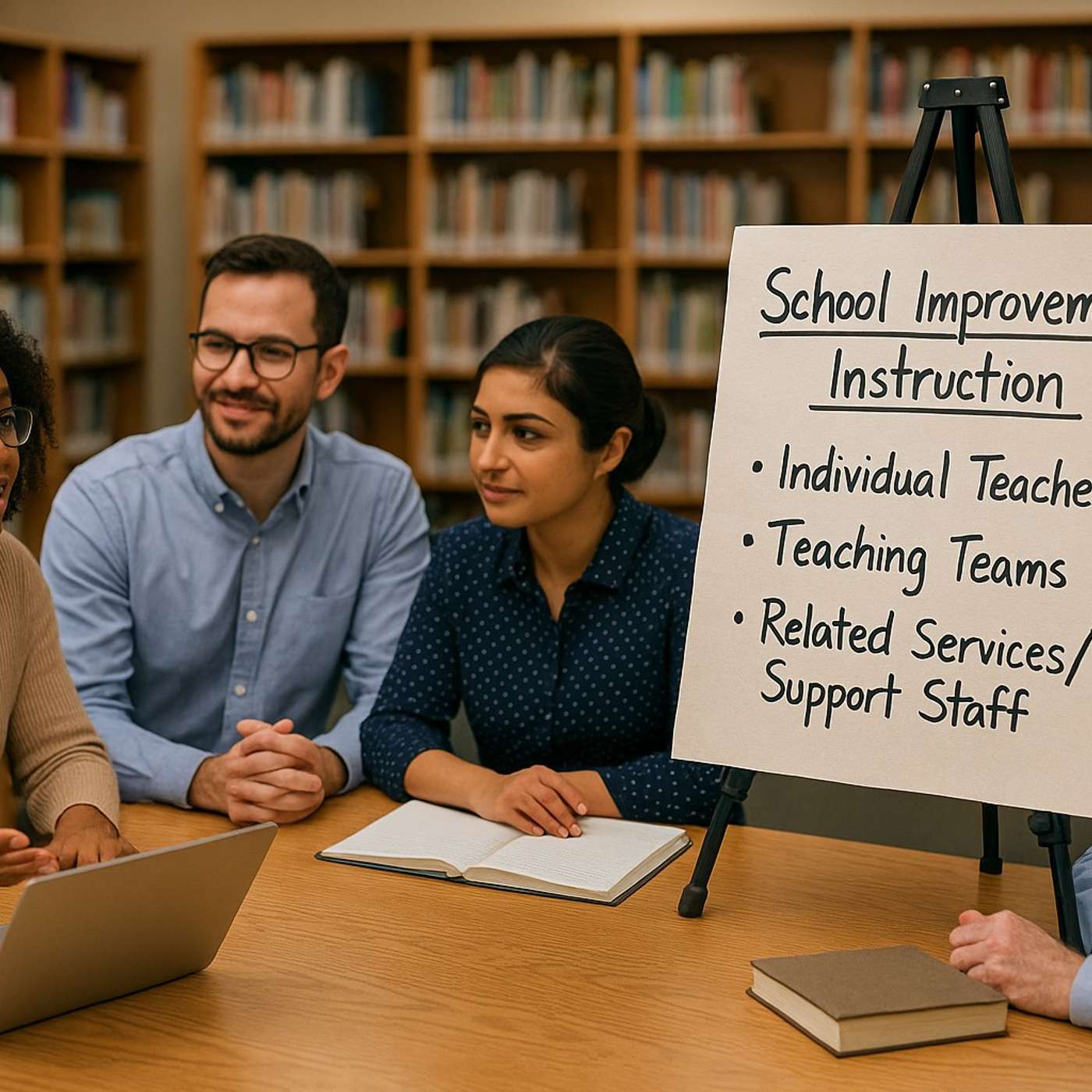 Preparing Classroom Instruction This Summer for Enhanced Success this Fall (Volume 3, Episode 11) | Podcast Hosts Angela and Davey discuss Dr. Howie Knoff's most recent Blog from Project ACHIEVE Educational Solutions. The Blog and Podcast focus on the importance of strategic summer planning to drive school improvement during the coming new school year. They begin by contrasting two low-performing middle schools in the same school district that approached their time during the summer in significantly different ways. One middle school’s Leadership Team used the summer time to conduct in-depth analyses of their classroom instruction, teaching team effectiveness, and related services staff support. They developed action plans by the end of June, and began implementing these plans in July and August—before the new school year began. The other middle school decided that staff needed “a break,” and they did not begin their improvement planning until the three days before the beginning of the new school year. Angela and Davey outline seven research-proven core characteristics of effective classroom teachers, emphasizing areas like strong content knowledge, data utilization, and continuous professional growth. They then discuss the seven research-to-practice characteristics of effective teaching teams. And they finish by detailing the seven characteristics of effective instructional/intervention support staff—stressing collaboration, evidence-based practices, and a systems perspective. The Podcast concludes with a "Call to Action," asserting that the summer months offer a "unique and invaluable opportunity" for "reflective analysis, strategic planning, and skill development." The ultimate choice outlined for educational leaders is "between preparation versus procrastination, between systematic improvement versus wishful thinking, between investing in summer planning versus accepting the status quo."[CLICK HERE to Set Up a Meeting with Howie] [CLICK HERE to read this Blog on the Project ACHIEVE Webpage] | 33m 57s | ||||||
| 5/17/25 | Understanding Seizure Types, Causes, and Connections to Stress and Brain Injury (Volume 3, Episode 10) | Your Podcast Hosts Angela and Davey discuss Dr. Howie Knoff's most recent Blog (Part III of a comprehensive Series) from Project ACHIEVE Educational Solutions. It begins by highlighting how important it is for school personnel to understand students who present with seizures—initially, through the lens of a recent Supreme Court case involving a student with severe epilepsy and the accommodations she was denied. This Podcast (and the Blog) proceeds with a discussion of a number of the most-common seizures along with their general characteristics, incidence levels, and impact on students in school. In addition, Davey and Angela describe (a) the neurological root causes for each of seizures discussed, along with the areas of the brain involved; and (b) the complex bidirectional relationship between seizures and stress and PTSD. Relative to this latter area, Angela and Davey note the existence of Psychogenic Non-Epileptic Seizures (PNES), also called functional or pseudoseizures. They detail their symptoms, underlying causes and risk factors, treatment approaches, and the supports for affected students in school. Finally, the Podcast examines the link between Traumatic Brain Injuries (TBI) and different classifications of post-traumatic seizures and epilepsy. It concludes with a section on management approaches for these conditions and the crucial role of schools in providing support and implementing strategies like Seizure Action Plans. | 47m 35s | ||||||
| 5/3/25 | The Impact of Headaches vs. Migraines on Students in School (Volume 3, Episode 9) | Your Podcast Hosts Angela and Davey discuss Dr. Howie Knoff's most recent Blog (Part II of a comprehensive Series) from Project ACHIEVE Educational Solutions. This Podcast(and the Blog) explains the difference between common headaches and migraines, highlighting how migraines are a distinct neurological condition with more severe and complex symptoms. They then describe the significant academic, social, and emotional challenges students face due to migraines, including cognitive difficulties and inconsistent attendance. Davey and Angela then overview the brain structures, chemical systems, and neurological pathways involved generally in migraines. They then compare and contrast four specific types of migraines (ocular/retinal, vestibular, concussion-related, and stress/PTSD) in terms of their symptoms, underlying mechanisms, diagnosis, and management. While emphasizing that the differential diagnoses of these migraine types must be rendered by medical professionals, Angela and Davey note that—when interacting with studentsexhibiting headaches or migraines in school settings, MTSS (Multi-Tiered System of Supports) Team members in schools should still understand their clinical similarities and differences. . . at the very least, so that they can ask informed questions when conferring with parents and—with permission—medical professionals. Check out this NEWEST Podcast. . . and “Follow” us so that you get notified when every new podcast is released. | 20m 21s | ||||||
| 4/19/25 | Connecting Students’ Sensory and Neurological Functioning with Learning, Socialization, and Disabilities: A Primer on Vision, Hearing, and Respiratory/Nasal Functioning (Volume 3, Episode 8) | Your Podcast Hosts Angela and Davey discuss Dr. Howie Knoff's most recent Blog from Project ACHIEVE Educational Solutions. This Podcast (and the Blog) emphasizes the crucial connection between students' sensory and neurological functions and their educational experiences. As a school psychologist, Dr. Knoff asserts that educators must understand the biological underpinnings of how vision, hearing, and respiratory/nasal health impact learning and socialization. . . and how they may contribute to problems experienced by underachieving, unsuccessful, and students with disabilities. Angela and Davey detail how impairments in these sensory areas, often identified through school screenings, can significantly affect academic performance, behavior, and overall development. They describe the specific screenings results that indicate the need for formal medical evaluations, and the potential long-term medical, academic, and psychological consequences of uncorrected vision and hearing issues—as well as the often-overlooked impact of common respiratory illnesses. Finally, the Podcast highlights the serious, though less common, neurological risks associated with untreated infections of the eyes, ears, and nose, stressing the need for collaboration between educators, parents, and medical professionals to ensure timely intervention and support for vulnerable children. Check out this NEWEST Podcast. . . and “Follow” us so that you get notified when every new podcast is released. | 20m 16s | ||||||
| 4/5/25 | Future-Proofing the Academic and Social Success of Middle and High School Students: Five Essential Skill Sets (Volume 3, Episode 7) | In this new Podcast, Angela and Davey address the concerning trend of declining independence and engagement among middle and high school students since the pandemic. Using Dr. Howie Knoff’s concurrently-released Blog, they discuss five essential "meta-skill" sets that are the foundation to students’ academic success. These Skill Sets focus on: Goal-Setting and Active Learning, Time Management and Study Skills, Interpersonal and Collaborative Learning Skills, Stress Management and Emotional Self-Care, and Self-Awareness and Self-Efficacy skills. These skills are crucial for future-proofing students' success in uncertain times by equipping them with the ability to navigate challenges and take ownership of their learning. Dr. Knoff emphasizes that these skills are most effective when integrated school-wide and consistently reinforced by educators and peers. Angela and Davey discuss and apply the Skill Sets to the challenges of adolescence, reinforcing their ability to empower students to become more responsible, responsive, and self-reliant learners. Check out this NEWEST Podcast. . . and “Follow” us so that you get notified when every new podcast is released. | 25m 26s | ||||||
| 3/23/25 | Essential Strategies for Educational Leaders During Uncertain Times: Future-Proofing Your School(s) for Today’s Sweeping Changes (Volume 3, Episode 6) | In this newest podcast, hosts Davey Johnson and Angela Jones discuss Dr. Howie Knoff's recent Blog that addresses the significant shifts in education policy under the Trump administration over its first two months in office. These changes include staff reductions and reallocations at the U.S. Department of Education, and relate to school choice prioritization, alterations to DEI and civil rights enforcement, the cancellation of many grants nationwide to states, universities, and school districts. Knoff advises educational leaders to implement eight "future-proofing" strategies to navigate these uncertainties. These strategies encompass revisitingmission statements, streamlining operations, strengthening governance, investing in evidence-based practices, prioritizing professional development, enhancing community engagement, building local partnerships, and diversifyingfunding. Angela and Davey discuss these strategies and emphasize the importance of a clear and adaptable mission statement. They also provide a framework for developing a strategic Public Relations Plan to communicate school strengths. Ultimately, this Plan helps educational leaders ensure that their institutions not only survive but thrive amidst a changing educational landscape. Angela and Davey conclude by stating that schools and other educational settings need to take active steps now to be in the strongest and most advantageous position to not just respond to today’s unprecedented shifts in policies and resources, but to stay ahead of them. | 23m 53s | ||||||
| 3/8/25 | Charlie Brown and Education: DEI, Fear, and Trump's Tactics (Volume 3, Episode 5) | Hosts Davey Johnson and Angela Jones discuss Dr. Howie Knoff's March 8th Blog post that uses the "Peanuts" comic strip saga of Lucy pulling away the football from Charlie Brown to illustrate the current political climate's impact on education. Knoff argues that the Trump administration is employing"Ready-Fire-Aim" tactics, particularly concerning DEI initiatives, creating fear and confusion. This approach is leading some schools and districts to make hasty policy changes based on fears that they will be investigated and potentially lose federal funding. Knoff highlights a recent Department of Education guidance that initially took a “hard line” position relative to race-based discrimination, only to soften its position twoweeks later. Davey and Angela discuss the educational and psychological implications of all of this, and advise educators to avoid knee-jerk reactions, understand the limitations of the administration's power, and maintain focus on quality instruction. They also urge action to respond to the potential dismantling of the Department of Education, and to bring students’ voices “to the table.” Finally, Knoff, Davey, and Angela urge readers to contacttheir representatives to advocate for better education and suggest local actions to improve schools while recognizing that threats come and go. They also encourage educators to remain grounded in effective practices and to not be unduly swayed by political maneuvering. | 14m 28s | ||||||
| 2/22/25 | Protecting Disability Rights: Section 504, the ADA, and Chance Events (Volume 3, Episode 4) | In this newest “Improving Education Today: The Deep Dive” podcast, hosts Davey Johnson and Angela Jones discuss Dr. Howie Knoff's recent Blog post focusing on the importance of the recently-updated Section 504 of the Rehabilitation Act of 1973 to better align it with the Americans with Disabilities Act. The Blog highlights how Section 504 protects individualsfrom discrimination based on disability, emphasizing that disabilities often arise from chance events. Hence, anyone could potentially need 504’s legal protections. The Blog also provides examples of the disabilities covered, and the accommodations required to ensure equal access to education and other services. Davey and Angela share their concerns regarding a currentlawsuit, Texas v. Becerra, which appears to focus on questioning the inclusion of “gender dysphoria” as a disability in the 2024 update of Section 504. But the lawsuit may really be about an additional request to eliminate Section 504 as unconstitutional. If successful, the civil rights, access to education and the workplace, and accommodations protected by Section 504 would be stripped from millions of students and adults with disabilities. Echoing Dr. Knoff, Davey and Angela urge listeners tocontact their state officials to oppose the lawsuit and safeguard these critical protections. Davey and Angela share Dr. Knoff’s advocacy for maintaining Section 504, even if its "gender dysphoria" inclusion is deleted. They note that anyone could become disabled—needing Section 504’s protections—due to life's sometimes unpredictable events. | 12m 44s | ||||||
| 2/8/25 | Minimizing Classroom Distractions to Maximize Student Learning: Building Walls to Buffer Politics, Phones, Prejudice, and Preferential Treatment (Volume 3, Episode 3) | Angela and Davey discuss a new Blog by Dr. Howie Knoff about the impact of various external political and internal classroom distractions on education, and how they undermine good instruction and student learning. They review recent studies showing that students proficient in reading and math in eighth grade, and who takeadvanced courses in high school are better employed and more financially secured in their later lives. They then reference the dreadful recent NAEP reading and math results, and emphasize the need to prioritize effectiveteaching and learning, and supportive environments free from unnecessary disruptions. Relative to the external distractions, studies are reviewed to demonstrate that the premises underlying recent Executive Orders targeting schools teaching “discriminatory equity ideologies” are unfounded. The Orders targeting trans and nonbinary students are being challenged or were quickly withdrawn. Relative to internal distractions, cellphone use in the classroom is highlighted along with recent studies showing the positive effects of cellphone bans on student engagement and behavior. The Blog emphasizes that teachers are not politically indoctrinating students, students feel comfortable discussing controversial topics, and that cellphone bans are positively affecting classroom learning. Educators are encouraged to “build a figurative wall” to discourage and keep distractions out of our schools and classrooms. Teachers need to teach, and students need to learn. Check out this NEWEST Podcast. . . and “Follow” us so that you get notified when every new podcast is released. | 18m 37s | ||||||
| 1/25/25 | Improving Classroom Management: Lessons from the Detroit Lions (Volume 3, Episode 2) | Angela and Davey describe a recent nationally-representative Education Week Research Center survey of educators across the country that found that student discipline and classroom management continues to get worse post-pandemic. They then assert, using Dr. Howie Knoff's recent Blog, that students are not going to fix themselves, that there truly are no quick fixes, and that everyone in an affected school—especially teachers and administrators—needs to be part of the problem analysis and strategic solutions. Angela and Davey use Dr. Howie Knoff's blog to draw a parallel between the recent improvement of the National Football League's Detroit Lions--under Coach Dan Campbell-- and the potential for positive change in school and classroom discipline. They note that addressing this problem requires a team effort from all school staff, implementing evidence-based strategies, and fostering a positive school climate. This Podcast (and the Blog) describes the evidence-based component of effective school and classroom discipline, the related need for teacher training and support--especially for new teachers, and how to consistently implement proven practice. Continuing the parallel with Dan Campbell and the Detroit Lions throughout, Angela and Davey highlight the importance of strong leadership and a shared commitment to creating positive learning environments--even when there are unexpected losses. They close by encouraging schools to start now on the road to school and classroom discipline improvement. . . noting that "you’ve got to put in the work to earn the rewards." | 18m 47s | ||||||
| 1/11/25 | While You Can Write a Student’s Individualized Education Plan. . . It (Legally) Needs to be Acceptable, Actionable, and Appropriate (Volume 3, Episode 1) | In the first Podcast of the new year and new volume (2025; Volume 3), Davey and Angela summarize the January 11, 2025 blog by Dr. Howie Knoff. He reminds educators that--even though the current school year is half over, NEXT year's activities and budget are already being prepared. In this context, as Students with Disabilities (SWD) comprise 14% of the entire student population in the average district, it is important to determine the staffing, resources, and funding that these students need next year also. This is best done by analyzing each SWD's IEP. Davey and Angela emphasize the importance of creating Individualized Education Plans (IEPs) that are Acceptable, Actionable, and Appropriate for SWDs. They describe three federal court cases—Chris D., Cory M., and Endrew F.—to illustrate the legal ramifications of failing to meet these criteria. Your Hosts also explain that IEPs must be collaboratively developed, implemented with fidelity, and result in meaningful student progress. They provide practical recommendations for school districts to assess their current IEP practices and prepare for the upcoming school year's budget. Ultimately, the goal is to improve student outcomes, parental partnerships, and reduce potential legal challenges. | 17m 31s | ||||||
| 1/1/25 | Education’s 2024 Year in Review: The Themes that Captured Our Time, Attention, Concern, and Consternation (Volume 2, Episode 24) | In this podcast, Davey Johnson and Angela Jones analyze Dr. Howie's end-of-year Blog that revisited the 24 blogs he published in 2024. Listen to Davey and Angela as they discuss how the Blog's four themes were critical to the "state of education" this past year, and how education needs to address them in the new year relative to student, staff, school, and systems-level improvement and success. | 21m 31s | ||||||
| 12/7/24 | Improving Special Education Services on this 20th Anniversary of IDEA 2004: What the New Administration Must Do (Volume 2, Episode 23) | Davey and Angela use the 20th anniversary of the signing of the last reauthorization of the Individuals with Disabilities Education Act (IDEA 2004), and the coming second Trump administration to analyze, critique, and make recommendations on how to improve special education services in our country’s K-12 schools. Using the December 7, 2024 blog post by Dr. Howie Knoff, your Hosts critique the state of special education in the United States. They highlight the persistent problems that continue to hinder effective services for students with disabilities, such as inadequate funding and a lack of qualified professionals. And they suggest that part of the problem is the Office of Special Education Programs' (OSEP) flawed, sometimes politically-motivated agenda. Much of the discussion focuses on their proposals for a new agenda dedicated to improving student outcomes. Here, they outline the characteristics needed in the next OSEP Director to facilitate the needed systemic changes. | 18m 54s | ||||||
| 11/23/24 | “Moneyball Thinking” in Education: School Improvement Requires First Changing Thinking, Not Programs (Volume 2, Episode 22) | Davey and Angela discuss the fact that many districts or schools are budget-restricted and/or have a current curriculum or program that is not working, and they are looking for a change. Using Dr. Howie Knoff's November 23, 2024 blog post as a guide, they suggest the need for school leaders in these situations to--first--apply a "Moneyball" approach to the school improvement needs. Using the movie “Moneyball” as a metaphor, they suggest that many districts and schools are locked into antiquated data analysis and school improvement thinking. Similar to how data analytics revolutionize baseball, they advocate that districts and schools use “Moneyball Thinking” to rethink and revolutionize their decision-making practices, especially to link Needs Assessment results to more successful strategic planning and action. The discussion analyzes a recent U.S. Department of Education grant program focusing on school mental health, highlighting how some districts did not need more money or staff; they needed to analyze and reallocate how existing staff were deployed and the tasks they were doing. In the end, Davey and Angela emphasize the need for comprehensive needs assessments, incorporating historical data, SWOT analysis, and gap analysis to identify and address areas needing improvement. They believe that a data-driven approach can revolutionize educational practices, leading to more efficient resource allocation and improved student outcomes. This will ultimately promote a shift from haphazard data usage to a strategic, analytical approach. | 16m 36s | ||||||
Showing 25 of 60
Pitch Fit is a Pro feature
See how bookable this show is for guests, which brands already advertise, the per-episode ad value, and the best-fit guest and sponsor profile. The numbers are blurred on the free plan.
How readily this show books outside guests like you.
How proven this show is for host-read sponsorships.
For Guests
ProFor Advertisers
ProUpgrade to Pro to unlock guest cadence, sponsor categories, fit scores, and per-episode ad value for this show.