
Increments
by Ben Chugg and Vaden Masrani
Is this your podcast?Insights from recent episode analysis
Audience Interest
Podcast Focus
Publishing Consistency
Platform Reach
Insights are generated by CastFox AI using publicly available data, episode content, and proprietary models.
Most discussed topics
Brands & references
Total monthly reach
Estimated from 7 chart positions in 7 markets.
By chart position
- 🇮🇹IT · Philosophy#6010K to 30K
- 🇳🇴NO · Philosophy#893K to 10K
- 🇮🇩ID · Philosophy#120500 to 3K
- 🇳🇿NZ · Philosophy#123500 to 3K
- 🇧🇪BE · Philosophy#130500 to 3K
- Per-Episode Audience
Est. listeners per new episode within ~30 days
7.8K to 28K🎙 Weekly cadence·101 episodes·Last published 1w ago - Monthly Reach
Unique listeners across all episodes (30 days)
16K to 55K🇮🇹55%🇳🇴18%🇮🇩5%+4 more - Active Followers
Loyal subscribers who consistently listen
4.7K to 17K
Market Insights
Platform Distribution
Reach across major podcast platforms, updated hourly
Total Followers
—
Total Plays
—
Total Reviews
—
* Data sourced directly from platform APIs and aggregated hourly across all major podcast directories.
On the show
From 14 epsHosts
Recent guests
Recent episodes
#106 - The Successes, Failures, and Grifters of Neuroscience (w/ Tommy Blanchard)
Aug 22, 2026
Unknown duration
#105 - The World of Bayesian Statistics (w/ Alex Andorra)
Jul 17, 2026
1h 18m 44s
#104 (C&R Chap 10, Part V) - The Duhem-Quine Thesis
Jun 27, 2026
1h 03m 29s
#103 - AI, Evolution, and The God Test (w/ Robert Wright)
May 29, 2026
1h 47m 27s
#102 - Criticizing Crit-rats (w/ Bruce Nielson and Peter Johansen)
May 12, 2026
1h 46m 40s
Social Links & Contact
Official channels & resources
Official Website
Login
RSS Feed
Login
| Date | Episode | Topics | Guests | Brands | Places | Keywords | Sponsor | Length | |
|---|---|---|---|---|---|---|---|---|---|
| 8/22/26 |  #106 - The Successes, Failures, and Grifters of Neuroscience (w/ Tommy Blanchard) | After Jason Arday, the second biggest topic of conversation has of course been the rise of the neuro-grifting guru. And for good reason! Neuroscience has been causing confusion lately. What is the hippocampus up to in there? Is your pre-post-medial-cerebrum-corta-bellum even working properly? What does neuroscience say about whether you should start each day with a slap in the face? Being incapable of answering these questions ourselves, we're bringing on bonafide neuroscientist and substacker Tommy Blanchard to help us navigate this terrain. Check out Tommy's website and substack, Cognitive Wonderland. We discuss Models of decision-making in neuroscience The common currency model What do we actually know about the brain? What constitutes an explanation in neuroscience? What neuroscience is put on a pedestal Neuro-grifting Gurus, aka Huberman et al. References Tommy's post about his research appearing in the NY Times: https://cognitivewonderland.substack.com/p/scientists-hope-gambling-monkeys Socials Follow us on Twitter at @IncrementsPod, @BennyChugg, @VadenMasrani Come join our discord server! DM us on twitter or send us an email to get a supersecret link Become a patreon subscriber here. Or give us one-time cash donations to help cover our lack of cash donations here. Click dem like buttons on youtube Which area of your brain lights up when you consider sending an email to [email protected]?Special Guest: Tommy Blanchard.Support Increments | — | ||||||
| 7/17/26 | Bayesian statisticsepistemology+3 | Alex Andorra | MetaFiveThirtyEight+2 | — | Bayesian statisticsepistemology+5 | — | 1h 18m 44s | ||
| 6/27/26 | Duhem-Quine thesisfalsification+5 | — | C&R, Chap 10 | — | Duhem-Quine thesisKarl Popper+5 | — | 1h 03m 29s | ||
| 5/29/26 | AIevolution+4 | Robert Wright | NonZeroThe God Test: Artificial Intelligence and Our Coming Cosmic Reckoning+1 | — | AIevolution+6 | — | 1h 47m 27s | ||
| 5/12/26 | crit-rat communityanarcho-capitalism+4 | Bruce NielsonPeter Johansen | Theory of Anything PodcastTheory of Anything podcast Patreon+1 | — | crit-ratsanarcho-capitalism+4 | — | 1h 46m 40s | ||
| 4/19/26 | verisimilitudefalsification+4 | — | C&R | — | Popperverisimilitude+5 | — | 1h 17m 01s | ||
| 3/26/26 | centennial celebrationpersonal questions+4 | Vaden Masrani | Private Empire: ExxonMobil and American PowerThe Bomb in My Garden: The Secrets of Saddam's Nuclear Mastermind | — | centennialincest+5 | — | 1h 21m 16s | ||
| 3/6/26 | politicsTrump+4 | Don Robinson | MAGAICE | — | TrumpMAGA+4 | — | 2h 09m 51s | ||
| 2/17/26 | truthscientific knowledge+4 | — | IncrementsBad Therapy+3 | — | truthscientific knowledge+7 | — | 1h 24m 54s | ||
| 1/23/26 | effective altruismAI safety+4 | — | GWWCEA+3 | — | effective altruismAI safety+5 | — | 1h 41m 42s | ||
Want analysis for the episodes below?Free for Pro Submit a request, we'll have your selected episodes analyzed within an hour. Free, at no cost to you, for Pro users. | |||||||||
| 12/22/25 | parentingintrospection+3 | — | — | — | introspectionparenting+3 | — | 41m 26s | ||
| 11/29/25 | scientific progressphilosophy of science+4 | — | — | — | Popperscientific knowledge+5 | — | 57m 59s | ||
| 11/6/25 | AIeducation reform+3 | Scott Aaronson | UT AustinShtetl Optimized | — | AIjust-ism+5 | — | 1h 24m 46s | ||
| 10/16/25 | Popper's philosophy of sciencescientific theory+4 | — | Conjectures and Refutations | — | Popperscientific theory+4 | — | 1h 47m 23s | ||
| 9/25/25 | toleranceChristianity+4 | Jonathan Rauch | BrookingsThe Atlantic+2 | — | politicstolerance+8 | — | 1h 07m 09s | ||
| 9/4/25 |  #91 - The Uses and Abuses of Statistics (w/ Ben Recht) | Professor of electrical engineering and computer science Ben Recht joins us to defend Bayesianism, AI doom, and assure us that the statisticians have everything under control. Just kidding. Recht might be even more suspicious of these things than we are. What has statistics ever done for us, really? When was the last time YOU ran a clinical trial after all, huh? HUH? After Ben Chugg defends his life decision to do a PhD in statistics, we talk AI, cults, philosophy, Paul Meehl, and discuss Ben Recht's forthcoming book, The Irrational Decision. Check out Ben's blog, website, and his story about machine learning. We discuss Ben Recht's theory of blogging Why is Berkeley the epicenter of AI doom? Where the word "robot" came from Is Bayesian reasoning responsible for AI doom? Paul Meehl and his contributions to science Ben Recht's bureaucratic theory of statistics What on earth is null hypothesis testing? What is the point of statistics? "Sweet spots" and "small worlds" Does science proceed by Popperian means? Can Popper get around the Duhem-Quine problem? Errata The z-score for the Pfizer trial was 20, not 12! References Argmin, Ben Recht's blog David Freedman, UC Berkeley Paul Meehl's online course Theoretical Risks and Tabular Asterisks: Sir Karl, Sir Ronald, and the Slow Progress of Soft Psychology, Paul Meehl's 1978 paper. Clinical versus statistical prediction: A theoretical analysis and a review of the evidence, by Meehl On the near impossibility of estimating the returns to advertising A Bureaucratic Theory of Statistics by Recht The new riddle of induction by Goodman Announcing the Irrational Decision Patterns, Predictions, and Actions, textbook by Ben Recht and Moritz Hardt Socials Follow us on Twitter at @BeenWrekt, @IncrementsPod, @BennyChugg, @VadenMasrani Come join our discord server! DM us on twitter or send us an email to get a supersecret link Become a patreon subscriber here. Or give us one-time cash donations to help cover our lack of cash donations here. Click dem like buttons on youtube What's Berkeley's next cult? Send your guess over to [email protected] Guest: Ben Recht.Support Increments | — | ||||||
| 8/18/25 |  #90 (Reaction) - Disbelieving AI 2027: Responding to "Why We're Not Ready For Superintelligence" | Always the uncool kids at the table, Ben and Vaden push back against the AGI hype domininating every second episode of every second podcast. We react to "We're not ready for superintelligence" by 80,000 Hours - a bleak portrayal of the pre and post AGI world. Can Ben keep Vaden's sass in check? Can the 80,000 hours team find enough cubes for AGI? Is Agent-5 listening to you RIGHT NOW? Listener Note: We strongly recommend watching the video for this one, available both on youtube and spotify: - https://www.youtube.com/@incrementspod - https://open.spotify.com/show/1gKKSP5HKT4Nk3i0y4UseB We discuss The incentives of superforecasters Arguments by authority Whether superintelligence is right around the corner The difference between model size and data Are we running out of high quality data? Does training on synthetic data work? The assumptions behind the AGI claims The pitfalls of reasoning from trends References Michael I Jordan Neil Lawrence [Important technical paper from Jordan pushing back on Doomerism](A Collectivist, Economic Perspective on AI) Jordan article talking about dangers of using AlphaFold data Nature paper showing you can't use synthetic data to train bigger models Paper estimating of when training data will run out (Coincidentally enough, sometime between 2027-2028) Socials Follow us on Twitter at @IncrementsPod, @BennyChugg, @VadenMasrani Come join our discord server! DM us on twitter or send us an email to get a supersecret link Become a patreon subscriber here. Or give us one-time cash donations to help cover our lack of cash donations here. Click dem like buttons on youtube But how many cubes until we get to AGI though? Send a few of your cubes over to [email protected] Episode header image from here. Support Increments | — | ||||||
| 8/1/25 |  #89 (C&R, Chap 6) - Berkeley vs Newton: The Battle Over Gravity | Phlogiston? Elan Vital? Caloric? Mention of any of these at a party, and Neil DeGrasse Tyson will be sure to take you out back and kick you in your essences. So why do "essences" have no place in science? In this episode we explore that question (and dive into some of the history behind this debate) by reading Chapter 6 of Conjectures and Refutations: A Note On Berkeley As Precursor Of Mach And Einstein. In one corner, we have the estimable Sir Isaac Newton and Roger Coates (and of course Andre the Giant, upon whose shoulders they are standing), and in the other, we have Bishop Berkeley and Ernst Mach, looking to throw down at the speed of sound. Berkeley can't get Newton and his forces out of his head (literally), and boy oh boy is the fight ever on. We discuss How should teachers address the "students using ChatGPT to write their essay" problem? Can we learn a bit from Stalin here? Is Ben basically Gandhi? (Answer: Yes of course) How can one be both an idealist and an empiricist? WTF is a 'force'??? Instrumentalism and Essentialism The history of the debate between Berkeley and Newton The lifelong feud between Ernst Mach and Ludwig Boltzman What's the difference between essences and unobservables? Is Mach a filthy plagiarist? Who won the essentialism vs instrumentalism debate? (Answer: Neither side won. Popper won.) References Go amuse yourselves and watch some videos of Newton's spinning bucket thought experiment. Boltzmanns Atom: The Great Debate That Launched A Revolution In Physics Quotes Everybody who reads this list of twenty-one theses must be struck by their modernity. They are surprisingly similar, especially in the criticism of Newton, to the philosophy of physics which Ernst Mach taught for many years in the conviction that it was new and revolutionary; in which he was followed by, for example, Joseph Petzold; and which had an immense influence on modern physics, especially on the Theory of Relativity. Popper, C&R Chapter 6 (20) A general practical result—which I propose to call ‘Berkeley’s razor’—of this analysis of physics allows us a-priori to eliminate from physical science all essentialist explanations. If they have a mathematical and a predictive content they may be admitted qua mathematical hypotheses (while their essentialist interpretation is eliminated). If not, they may be ruled out altogether. This razor is sharper than Ockham’s: all entities are ruled out except those which are perceived. Popper, C&R Chapter 6 No attempt was made to show how or why the forces acted, but gravitation being taken as due to a mere "force", speculators thought themselves at liberty to imagine any number of forces, attractive or repulsive, or alternating, varying as the distance,[4] or the square, cube, or higher power of the distance, etc. At last, Ruđer Bošković[5] got rid of atoms altogether, by supposing them to be the mere centre of forces exerted by a position or point only, where nothing existed but the power of exerting a force.[6] https://en.wikipedia.org/wiki/Imponderable_fluid Mach's antipathy to theorizing and to the invocation of "metaphysical" and therefore unprovable notions led him to some extreme opinions. In The Conservation of Energy he remarks: "We say now that water consists of hydrogen and oxygen, but this hydrogen and oxygen are merely thoughts or names which, at the sight of water, we keep ready to describe phenomena which are not present but which will appear again whenever, as we say, we decompose water. David Lindley, Boltzmann's Atom In Mach's world, there was to be no such thing as "explaining" in the way scientists had always understood it. Mach even went so far as to argue that the traditional notion of cause and effect-that kicking a rock makes it move, that heating a gas makes it expand —was presumptuous and therefore to be denied scientific status. David Lindley, Boltzmann's Atom But it was not always so. Well into the latter half of the 19th century, most scientists saw their essential task as the measurement and codification of phenomena they could investigate directly: the passage of sound waves through air, the expansion of gas when heated, the conversion of heat to motive power in a steam engine. A scientific law was a quantitative relationship between one observable phenomenon and another. David Lindley, Boltzmann's Atom Errata Vaden incorrectly said this that this essay was referenced in Mach's wikipedia page. Wrong! Fool! It was Berkeley's wiki page # Socials Follow us on Twitter at @IncrementsPod, @BennyChugg, @VadenMasrani Come join our discord server! DM us on twitter or send us an email to get a supersecret link Become a patreon subscriber here. Or give us one-time cash donations to help cover our lack of cash donations here. Click dem like buttons on youtube Do you have any fluids you'd like us to ponder? Send a sample over to [email protected] Increments | — | ||||||
| 7/10/25 |  #88 (Bonus) - Homer's Odyssey | This week we take a break from our regularly scheduled programming to listen to Ben, Rich, and Cam loutishly pontificate on one of the oldest poems in history. That's right, three fiction noobs take on Homer. Ladies, have you ever wondered what your fella is doing when you're out for the evening? Look no further. The podcast you're listening to is Do You Even Lit? which you can find on any podcast platform and on youtube. The hosts are Richard Meadows, Cam Peters, and some third guy. Back to increments in a couple weeks! In the meantime: find us on twitter at @BennyChugg, @VadenMasrani, and @Incrementspod come join our discord channel! Send us a message or an email to get a supersecret link hit those like buttons on youtube to show off your virtuosity Should we switch out Vaden for Rich and Cam? Tell us at [email protected] Guest: Richard Meadows.Support Increments | — | ||||||
| 6/20/25 |  #87 - Gullibility, Belief, and Conformity (with Hugo Mercier) | Ben and Vaden test their French skills and have Hugo Mercier on the podcast to discuss who we trust and what we believe. Are humans gullible? Do we fall for propaganda and advertising campaigns? Do we follow expert consensus or forge ahead as independent thinkers? Can Vaden go for one episode without bringing up Trump? Hugo Mercier is a research director at the CNRS (Institut Jean Nicod, Paris), where he work with the Evolution and Social Cognition team. Check out his two books: The Enigma of Reason and Not Born Yesterday . We discuss Mercier's thoughts on the cognitive bias literature Open vigilance mechanisms Criticism of the System 1 vs System 2 dichotomy Why Kahneman misinterpreted the bat and the ball thought experiment Do flat earthers really believe the earth is flat? The Asch conformity experiment Preference falsification vs internalization of professed beliefs How important is social signaling? Trump, MAGA, gullibility, and Tariffs How effective are advertisements? How effective is propaganda? Is social science reforming? References The Enigma of Reason by Hugo Mercier and Dan Sperber Not Born Yesterday Our previous episodes on Not Born Yesterday and The Enigma of Reason Socials Follow us on Twitter at @hugoreasoning, @IncrementsPod, @BennyChugg, @VadenMasrani Come join our discord server! DM us on twitter or send us an email to get a supersecret link Become a patreon subscriber here. Or give us one-time cash donations to help cover our lack of cash donations here. Click dem like buttons on youtube How much system 2 thinking does it take to misunderstand system 1 vs system 2? Tell us at [email protected] Special Guest: Hugo Mercier.Support Increments | — | ||||||
| 5/31/25 |  #86 (Reaction) - On Confidence and Evidence: Reacting to Brett Hall and Peter Boghossian (Part 2) | Go fund me page for Dr. Alaa Al-Najjar Please donate here: https://www.gofundme.com/f/help-dr-alaa-alnajjar-and-her-family-in-gaza Podcast w/ Dr. Ali Al Najjar https://open.spotify.com/episode/2f6twY40sjd0zwT0Eks3NX Further Reading https://www.thesun.ie/news/15281868/sligo-doctor-ali-al-najjar-nieces-nephew-killed-gaza/ https://www.thejournal.ie/brother-woman-nine-kids-gaza-6717437-May2025/ https://amp.rte.ie/amp/1515399/ https://www.oceanfm.ie/northwest-today-show/fundraiser-launched-after-sligo-doctors-9-nieces-and-nephews-killed-in-gaza-attack-504443 https://www.oceanfm.ie/news/dail-hears-of-devastation-caused-to-sligo-doctors-family-in-gaza-503064 https://m.independent.ie/regionals/sligo/news/sligo-doctors-nine-nephews-and-nieces-killed-in-devastating-gaza-attack/a121298480.html Episode Blurb Back with part two of our reaction to What's the most rational way to know?, a discussion between Brett Hall and Peter Boghossian on the relationship between confidence and evidence. Listen to part 1 first, availble here: https://www.incrementspodcast.com/85 It seems weird to try to be funny in this blurb, given the introduction, so going to keep the description lean. Back with our usual lighthearted nonsense next episode! Check out more from Brett Hall here and Peter Boghossian here. We discuss A falliblist's view of confidence Confidence as a form of implicit knowledge Problems with attempting to define "knowledge" Can we "derive" moral facts? Being triggered by the word 'derive' References Paper discussing how it took the wider scientific community over 40 years (after Eddington's experiment!) to become convinced in the truth of general relativity: The 1919 measurement of the deflection of light Eddington's original paper: Vaden and Brett's blog exchange Socials Follow us on Twitter at @IncrementsPod, @BennyChugg, @VadenMasrani Come join our discord server! DM us on twitter or send us an email to get a supersecret link Become a patreon subscriber here. Or give us one-time cash donations to help cover our lack of cash donations here. Click dem like buttons on youtube Please donate to: https://www.gofundme.com/f/help-dr-alaa-alnajjar-and-her-family-in-gaza Support Increments | — | ||||||
| 5/9/25 |  #85 (Reaction) - On Confidence and Evidence: Reacting to Brett Hall and Peter Boghossian (Part 1) | We all knew that Vaden would release his inner Youtube debate bro at some point. Well he finally paid Ben enough to do it, and here we are: our first reaction video. Today we're commenting on the video What's the most rational way to know?, a discussion between Brett Hall and Peter Boghossian on the relationship between confidence and evidence. Are we overly confident in our ability to make reaction videos? Evidently. Check out more from Brett Hall here and Peter Boghossian here. We discuss What is the relationship between confidence and evidence? The "formal apparatus of science" vs the "sociology" of science Eddington's famous experiment Why confidence and belief can't be mathematized (But why they are useful nonetheless) Confidence as a function of falsifying experiments Bayesianism vs critical rationalism References Paper discussing how it took the wider scientific community over 40 years (after Eddington's experiment!) to become convinced in the truth of general relativity: The 1919 measurement of the deflection of light Eddington's original paper: Vaden and Brett's blog exchange Socials Follow us on Twitter at @IncrementsPod, @BennyChugg, @VadenMasrani Come join our discord server! DM us on twitter or send us an email to get a supersecret link Become a patreon subscriber here. Or give us one-time cash donations to help cover our lack of cash donations here. Click dem like buttons on youtube Where were you last night, and why do you have condoms in your pocket? Tell us at [email protected]. Support Increments | — | ||||||
| 4/17/25 |  #84 - A Primer on Not Born Yesterday by Hugo Mercier | Some thoughts (arguments?) on Hugo Mercier's Not Born Yesterday, which advances the thesis that humans are not as gullible as is commonly thought. This is our second episode on Mercier's work, and we're as intrigued as ever. But this time we have different interpretations of his thesis, so it's a good thing the man himself is coming on soon to sort us out. We discuss If humans are less gullible than is commonly believed Evolution of Communication Theory Gazelles jumping in the air Are humans too stubborn? Is one of your hosts who shall go unnamed too stubborn? When do humans actually change their minds? Does Mercier's work conflict with Popper? How much of our reasoning is motivated reasoning? How much is social conformity? Socials Follow us on Twitter at @IncrementsPod, @BennyChugg, @VadenMasrani Come join our discord server! DM us on twitter or send us an email to get a supersecret link Become a patreon subscriber here. Or give us one-time cash donations to help cover our lack of cash donations here. Click dem like buttons on youtube Did you know that "gullible" isn't in the dictionary? Tell us at [email protected]. Support Increments | — | ||||||
| 3/27/25 |  #83 - The Anxious Generation Round II: Alternative Explanations | Round two on the anxious generation. Well, honestly, round three. But we had a false start with round two, which is why this episode is a little late in coming. If you want to hear the gory, data-heavy details of our second attempt, you can access the episode by becoming a patron (was there ever a better sell?). We discuss Whether the rise in self-harm rates was due to reporting changes Whether education and common core could be affecting mental health Whether cultural pessimism is on the rise Cyberbullying Martin Gurri's thesis on the digital revolution How Vaden will handle social media with his kids References David Wallace Wells opinion piece Our patreon episode on David Wallace Wells' thesis Peter Gray on common core Revolt of the Public Errata Ben said The Revolt of the Public was written in 2014. It was written in 2018. Vaden said he would list all four of Haidt's points about why girls are uniquely vulnerable to negative effects of social media, and only got halfway in before forgetting he said that. The four reasons Haidt gives are: Girls are more affected by visual social comparison and perfectionism Girls' aggression is more relational Girls more easily share emotions and disorders Girls are more subject to predation and harassment Quotes Here is a story. In 2007, Apple released the iPhone, initiating the smartphone revolution that would quickly transform the world. In 2010, it added a front-facing camera, helping shift the social-media landscape toward images, especially selfies. Partly as a result, in the five years that followed, the nature of childhood and especially adolescence was fundamentally changed — a “great rewiring,” in the words of the social psychologist Jonathan Haidt — such that between 2010 and 2015 mental health and well-being plummeted and suffering and despair exploded, particularly among teenage girls. For young women, rates of hospitalization for nonfatal self-harm in the United States, which had bottomed out in 2009, started to rise again, according to data reported to the C.D.C., taking a leap beginning in 2012 and another beginning in 2016, and producing, over about a decade, an alarming 48 percent increase in such emergency room visits among American girls ages 15 to 19 and a shocking 188 percent increase among girls ages 10 to14. Here is another story. In 2011, as part of the rollout of the Affordable Care Act, the Department of Health and Human Services issued a new set of guidelines that recommended that teenage girls should be screened annually for depression by their primary care physicians and that same year required that insurance providers cover such screenings in full. In 2015, H.H.S. finally mandated a coding change, proposed by the World Health Organization almost two decades before, that required hospitals to record whether an injury was self-inflicted or accidental — and which seemingly overnight nearly doubled rates for self-harm across all demographic groups. Soon thereafter, the coding of suicidal ideation was also updated. David Wallace Wells, https://www.nytimes.com/2024/05/01/opinion/smartphones-social-media-mental-health-teens.html Studies confirm that as adolescents moved their social lives online, the nature of bullying began to change. One systematic review of studies from 1998 to 2017 found a decrease in face-to-face bullying among boys but an increase among girls, especially among younger adolescent girls.[47] ... According to one major U.S. survey, these high rates of cyberbullying have persisted (though have not increased) between 2011 and 2019. Throughout the period, approximately one in 10 high school boys and one in five high school girls experienced cyberbullying each year.[49] In other words, the move online made bullying and harassment a larger part of daily life for girls. \ - Haidt, The Anxious Generation p. 170 Socials Follow us on Twitter at @IncrementsPod, @BennyChugg, @VadenMasrani Come join our discord server! DM us on twitter or send us an email to get a supersecret link Become a patreon subscriber here. Or give us one-time cash donations to help cover our lack of cash donations here. Click dem like buttons on youtube Anyone you want to cyberbully into body dismorphia? Tell us who to send photos of our hot bods to over at [email protected]. Support Increments | — | ||||||
| 3/6/25 | 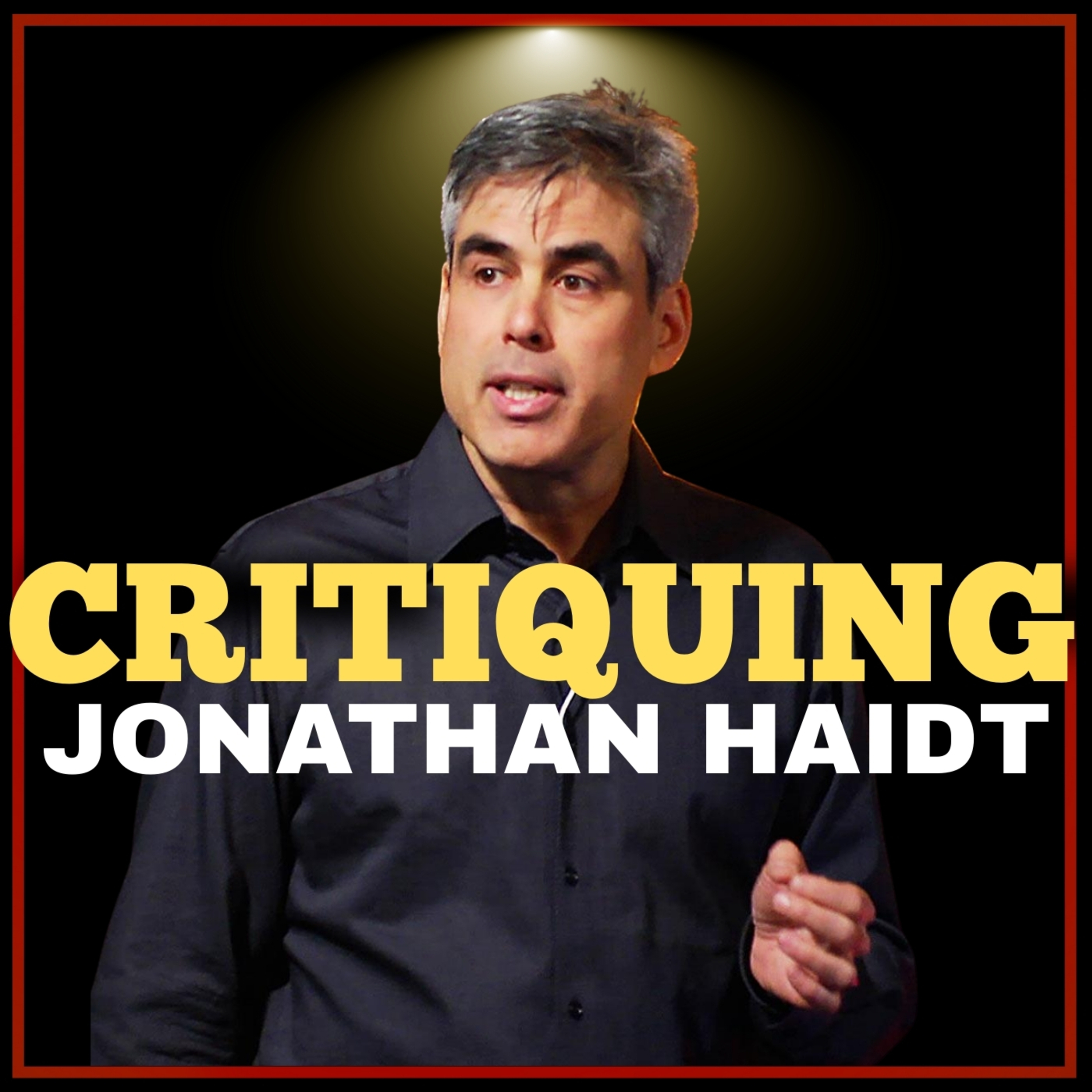 #82 - Are Screens Really That Bad? Critiquing Jon Haidt's "The Anxious Generation" | Anxiety, dispair, loneliness, depression -- all we need is a social media recession! A popular thesis is that All The Bad Things things are on the rise among adolescents because of social media, a view popularized in Jon Haidt's 2024 book The Anxious Generation. Haidt is calling for an end of the "phone-based childhood" and hoping that schools banish all screens for the benefit of its students. But is it true than social media is causing this mental health crisis? Is it true that there even is a mental health crisis? We do a deep dive into Haidt's book to discuss the evidence. We discuss A weird citation trend in philosophy Whether there is a mental health crisis among teens Some inconsistencies in Haidt's data on mental health outcomes Correlation vs causation, and whether Haidt establishes causation Why on earth do the quality of these studies suck so much? Whether Haidt's conclusions are justified References The Anxious Generation Jon Haidt's After Babel Substack After Babel's main post attempting to establish causation, and the response to critics. Collaborative review doc on adolescent mood disorders Collaborative review doc on social media and mental health Matthew B Jane's criticism of Haidt's meta-analysis Aaron Brown's criticism Stuart Ritchie's criticism Peter Gray's criticism Datasets Unaggregated life satisfaction data for boys/girls ages 11/13/15 across 44 countries Australia hospital admissions due to self harm France hospital admissions due to self harm Canada Ontario # Socials Follow us on Twitter at @IncrementsPod, @BennyChugg, @VadenMasrani Come join our discord server! DM us on twitter or send us an email to get a supersecret link Become a patreon subscriber here. Or give us one-time cash donations to help cover our lack of cash donations here. Click dem like buttons on youtube No screen time for a month. If you send an email to [email protected], we're taking away your iPad. Image credit: Is social media causing psychological harm to youth and young adults?. Support Increments | — | ||||||











Showing 25 of 107
Pitch Fit is a Pro feature
See how bookable this show is for guests, which brands already advertise, the per-episode ad value, and the best-fit guest and sponsor profile. The numbers are blurred on the free plan.
How readily this show books outside guests like you.
How proven this show is for host-read sponsorships.
For Guests
ProFor Advertisers
ProUpgrade to Pro to unlock guest cadence, sponsor categories, fit scores, and per-episode ad value for this show.
Chart history for Increments
Peaked at #60 in Italy, currently #60 in Italy.
| Market | Genre | Peak | Current | Trend |
|---|---|---|---|---|
| Italy | — | #60 | #60 | — |
| Norway | — | #89 | #89 | — |
| ID | — | #120 | #120 | — |
| New Zealand | — | #123 | #123 | — |
| BE | — | #130 | #130 | — |
| PL | — | #131 | #131 | — |
| HU | — | #145 | #145 | — |
Chart Positions
7 placements across 7 markets.
Chart Positions
7 placements across 7 markets.