

Insights from recent episode analysis
Audience Interest
Podcast Focus
Publishing Consistency
Platform Reach
Insights are generated by CastFox AI using publicly available data, episode content, and proprietary models.
Total monthly reach
Estimated from 2 chart positions in 2 markets.
By chart position
- 🇨🇦CA · Government#5330K to 100K
- 🇨🇿CZ · Government#126500 to 3K
- Per-Episode Audience
Est. listeners per new episode within ~30 days
15K to 52K🎙 Weekly cadence·42 episodes·Last published yesterday - Monthly Reach
Unique listeners across all episodes (30 days)
31K to 103K🇨🇦97%🇨🇿3% - Active Followers
Loyal subscribers who consistently listen
9.2K to 31K
Market Insights
Platform Distribution
Reach across major podcast platforms, updated hourly
Total Followers
—
Total Plays
—
Total Reviews
—
* Data sourced directly from platform APIs and aggregated hourly across all major podcast directories.
On the show
Recent episodes
Protecting kids in digital spaces: a cognitive psychologist explains the hidden effects of persuasive design | Protéger les enfants dans les espaces numériques : une psychologue cognitiviste explique les effets cachés de la conception persuasive
Jun 24, 2026
Unknown duration
Using AI, data analytics and federated learning to improve patient care | Utiliser l'IA, l'analyse de données et l'apprentissage fédéré pour améliorer les soins aux patients
May 28, 2026
Unknown duration
Data regulation then and now: A conversation with Elizabeth Denham | La réglementation des données, d’hier à aujourd’hui : entretien avec Elizabeth Denham
Apr 23, 2026
Unknown duration
The Best of Season 4 | Moments marquants de notre quatrième saison
Feb 12, 2025
Unknown duration
Lessons in Health Privacy: Key Takeaways from 2024 | La protection de la vie privée dans le secteur de la santé : principaux enseignements de 2024
Dec 31, 2024
Unknown duration
Social Links & Contact
Official channels & resources
Official Website
Login
RSS Feed
Login
| Date | Episode | Description | Length | ||||||
|---|---|---|---|---|---|---|---|---|---|
| 6/24/26 | Protecting kids in digital spaces: a cognitive psychologist explains the hidden effects of persuasive design | Protéger les enfants dans les espaces numériques : une psychologue cognitiviste explique les effets cachés de la conception persuasive | Young people today are navigating a complex digital landscape, constantly being prodded to share more personal information. In this episode, Commissioner Kosseim speaks with Dr. Jacquelyn Burkell, a professor at Western University’s Faculty of Information & Media Studies, and the IPC’s new Scholar-in-Residence. They discuss how digital platforms use persuasive design to influence the privacy decisions and choices of young people. | — | ||||||
| 5/28/26 | Using AI, data analytics and federated learning to improve patient care | Utiliser l'IA, l'analyse de données et l'apprentissage fédéré pour améliorer les soins aux patients | How can artificial intelligence and data analytics improve patient care while maintaining public trust? In this episode, Dr. Amol Verma explores how health providers can learn from each other to improve clinical decision-making and system efficiency by sharing data across different institutions and using digital tools in a way that’s transparent and privacy protective. -- Comment l'intelligence artificielle et l'analyse de données peuvent-elles améliorer les soins aux patients tout en préservant la confiance du public? Dans cet épisode, le Dr Amol Verma examine comment les fournisseurs de soins de santé peuvent apprendre les uns des autres afin d'améliorer la prise de décision clinique et l'efficacité du système, en partageant des données entre différentes institutions et en utilisant des outils numériques de manière transparente et respectueuse de la vie privée. | — | ||||||
| 4/23/26 | Data regulation then and now: A conversation with Elizabeth Denham | La réglementation des données, d’hier à aujourd’hui : entretien avec Elizabeth Denham | In the season 5 premiere of Info Matters, Commissioner Kosseim speaks with former UK Information Commissioner Elizabeth Denham about how privacy and access regulation has evolved over the past 25 years. They discuss international privacy standards, challenges and opportunities for modern regulators, and the future of data governance in an increasingly complex geopolitical landscape. -- Dans le premier épisode de la cinquième saison de L’info, ça compte, la commissaire Kosseim s’entretient avec Elizabeth Denham, ancienne commissaire à l’information du Royaume-Uni, de l’évolution de la réglementation en matière de protection de la vie privée et d’accès à l’information au cours des 25 dernières années. Elles discutent des normes internationales de protection de la vie privée, des défis et possibilités qui se présentent aux autorités de réglementation modernes ainsi que de l’avenir de la gouvernance des données dans une conjoncture géopolitique de plus en plus complexe. | — | ||||||
| 2/12/25 | The Best of Season 4 | Moments marquants de notre quatrième saison | In this special retrospective episode of Info Matters, Commissioner, Patricia Kosseim revisits season four’s standout conversations. Highlights include junior high students' views on privacy, Cynthia Khoo on facial recognition, and Robert Fabes on how people experiencing homelessness perceive privacy. Dr. Devin Singh explores AI in health care, while Priya Shastri from WomanAct discusses information sharing in safety planning for survivors of intimate partner violence. The episode also covers the use of digital educational tools in the classroom, mediation in access appeals at the IPC, a conversations about the IPC’s Transparency Showcase, and IPC health privacy cases involving cyber attacks and abandoned records. -- Dans cet épisode spécial de L’info, ça compte, la commissaire Patricia Kosseim présente une rétrospective de ses entretiens marquants de la quatrième saison. De jeunes élèves du secondaire font part de leur opinion sur la protection de la vie privée, Cynthia Khoo parle de reconnaissance faciale et Robert Fabes nous dit ce que les personnes en situation d’itinérance pensent de la vie privée. Le Dr Devin Singh discute de l’IA dans les soins de santé, et Priya Shastri de WomanAct traite de la communication de renseignements afin de planifier la sécurité des survivantes de violence conjugale. Cet épisode aborde également le recours aux outils éducatifs numériques en classe, la médiation dans les appels de décisions relatives à l’accès à l’information au CIPVP, la Vitrine de la transparence du CIPVP et des affaires dont le CIPVP a été saisi concernant des cyberattaques et des dossiers abandonnés dans le secteur de la santé. | — | ||||||
| 12/31/24 | Lessons in Health Privacy: Key Takeaways from 2024 | La protection de la vie privée dans le secteur de la santé : principaux enseignements de 2024 | In this episode, Commissioner Patricia Kosseim delves into significant health privacy cases of 2024 with her colleagues from the IPC. The conversation highlights challenges, practical takeaways, and lessons learned from recent cases and investigations under Ontario's Personal Health Information Protection Act. Whether you're a health care provider, privacy professional, or legal expert, this episode is packed with actionable insights you won’t want to miss. | — | ||||||
| 12/4/24 |  Technology in the classroom: Digital education, privacy, and student well-being | La technologie à l’école : éducation numérique, vie privée et bien-être des élèves | Digital technologies, including artificial intelligence, are transforming education at a rapid pace, raising critical questions about students’ learning experiences, privacy, and well-being. Anthony Carabache, a staff officer in the Professional Development Department at the Ontario English Catholic Teachers’ Association, sheds light on the opportunities and challenges for educators adopting technology in the classroom. ---- Les technologies numériques, dont l’intelligence artificielle, transforment rapidement le monde de l’éducation et soulèvent des questions épineuses sur l’expérience d’apprentissage, la vie privée et le bien-être des élèves. Anthony Carabache, du service de perfectionnement professionnel de l’Ontario English Catholic Teachers’ Association, jette un éclairage sur les avantages et les écueils des technologies pour les pédagogues qui les utilisent en classe. | — | ||||||
| 10/30/24 | 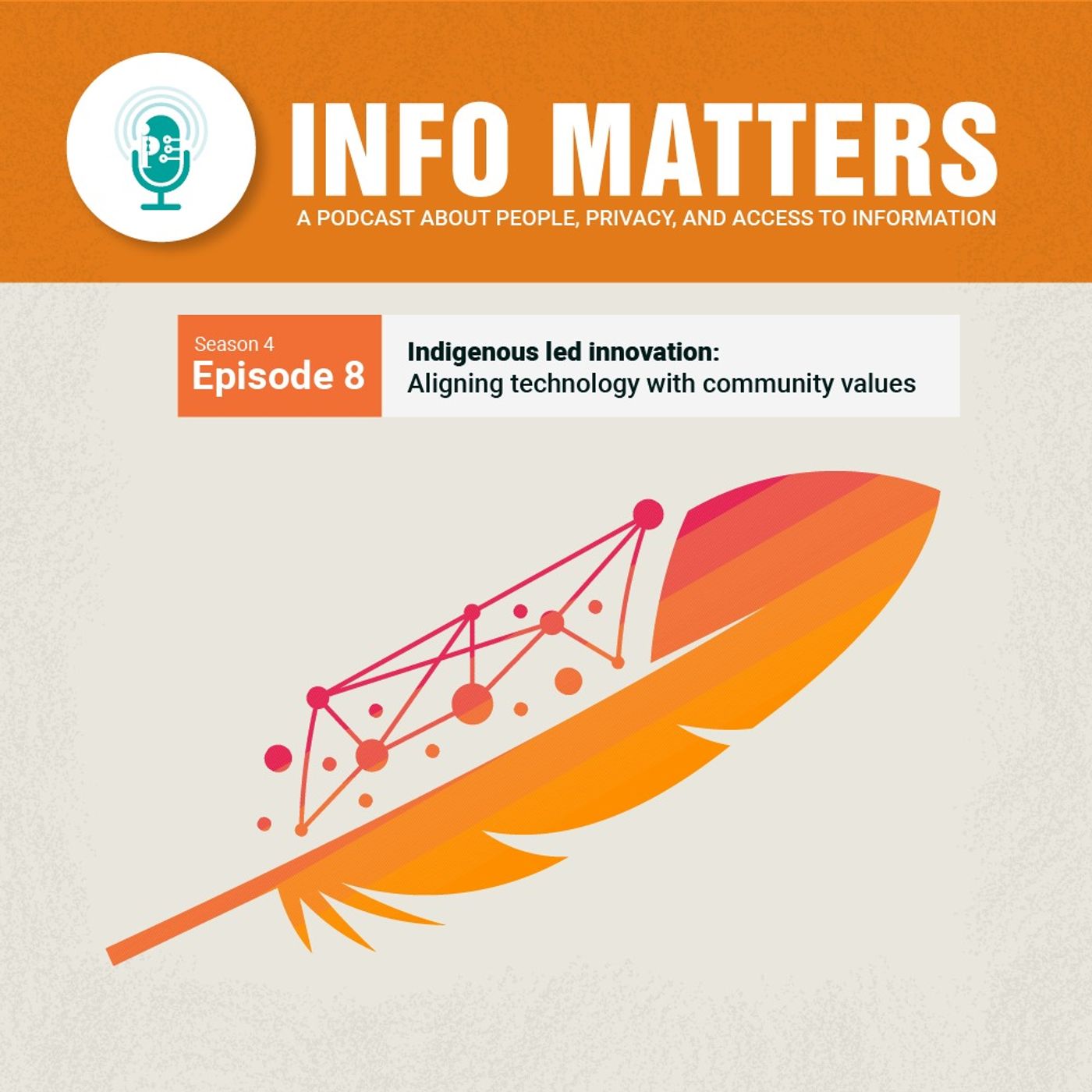 Indigenous led innovation: Aligning technology with community values | L'innovation dirigée par les Autochtones : harmoniser la technologie avec les valeurs de la communauté | Technology can expand opportunities for Indigenous communities, but it can also raise ethical concerns about data sovereignty and community interests in privacy. Jeff Ward, CEO of Animikii, discusses the longstanding connection between technology and culture, and how incorporating Indigenous values and principles into the development of new technologies can empower communities. | — | ||||||
| 9/26/24 |  The beauty and benefits of transparency: Ontario's public institutions rise to the challenge with innovative projects | In this special episode, we shine a light on the innovative projects submitted by Ontario’s public institutions as part of the IPC’s Transparency Challenge 2.0. Commissioner Kosseim is joined by three inspiring teams who share real-world examples of open government and transparency in action. Steve Orsini and Josh Lovell from the Council of Ontario Universities discuss their open data platform. Mike Melinyshyn and Damien Mainprize from the Town of Innisfil reveal how their technology in public spaces project fosters community engagement through icons and QR codes. Andrea Roberts from the Ontario Ministry of the Environment, Conservation, and Parks explains how the ministry is using creative solutions to accelerate the FOI process and make it easier for the public to access environmental property records. -- Dans cet épisode spécial, nous jetons un éclairage sur les projets novateurs qu’ont présentés des institutions publiques ontariennes dans le cadre du Défi de la transparence 2.0 du CIPVP. La commissaire Kosseim reçoit trois équipes inspirantes qui font part d’exemples concrets du gouvernement ouvert et de la transparence à l’œuvre. Steve Orsini et Josh Lovell du Conseil des universités de l’Ontario parlent de leur plateforme de données ouvertes. Mike Melinyshyn et Damien Mainprize de la ville d’Innisfil décrivent comment leur projet sur la technologie dans les lieux publics favorise l’engagement communautaire au moyen d’icônes et de codes QR. Andrea Roberts du ministère de l’Environnement, de la Protection de la nature et des Parcs de l’Ontario explique comment le ministère mise sur des solutions créatives pour accélérer le processus d’accès à l’information et faciliter l’accès du public aux dossiers environnementaux concernant les biens immobiliers. | — | ||||||
| 8/30/24 | 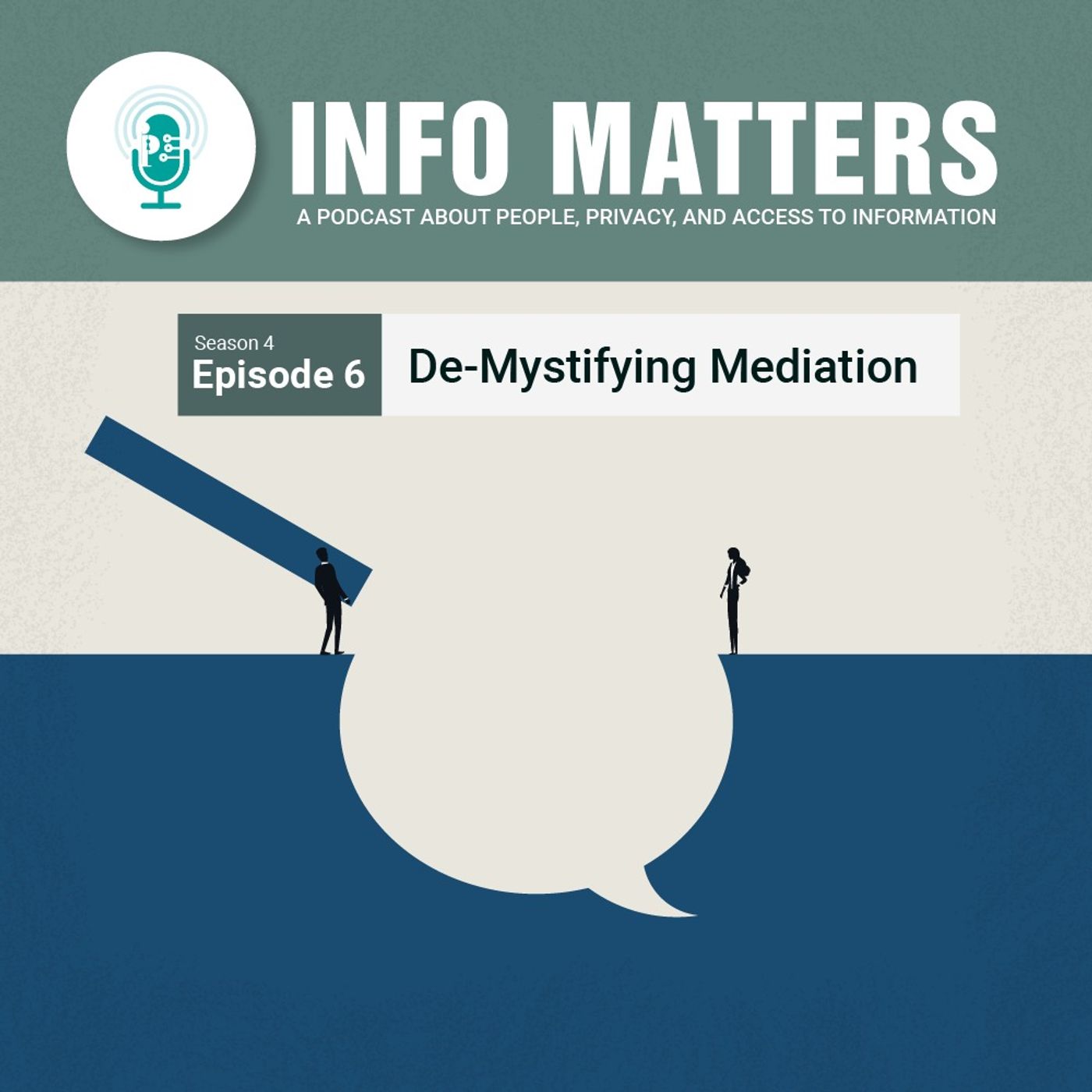 Why mediation matters: Improving outcomes in FOI appeals | L'importance de la médiation : Améliorer les résultats des appels en matière d'accès à l'information | Mediation is a powerful and efficient way to resolve freedom of information appeals. This episode explores the value-add of mediation and how building trust, active listening, and education can lead to win-win settlements for both parties. Commissioner Kosseim speaks with Shaun Sanderson, a mediator at the IPC, about how mediation works, what parties should do to prepare, and what they can expect to get out of the process. -- La médiation est un moyen puissant et efficace de résoudre les appels en matière d'accès à l'information. Cet épisode explore la valeur ajoutée de la médiation et la manière dont la confiance, l'écoute active et l'éducation peuvent conduire à des accords gagnants pour les deux parties. La commissaire Kosseim s'entretient avec Shaun Sanderson, médiatrice au CIPVP, sur le fonctionnement de la médiation, sur ce que les parties doivent faire pour se préparer et sur ce qu'elles peuvent attendre du processus. The information, opinions, and recommendations presented in this podcast are for general information only. It should not be relied upon as a substitute for legal advice. Unless specifically stated otherwise, the IPC does not endorse, approve, recommend, or certify any information, product, process, service, or organization presented or mentioned in this podcast, and information from this podcast should not be used or reproduced in any way to imply such approval or endorsement. None of the information, opinions and recommendations presented in this podcast bind the IPC’s Tribunal that may be called upon to independently investigate and decide upon an individual complaint or appeal based on the specific facts and unique circumstances of a given case. | — | ||||||
| 7/31/24 | 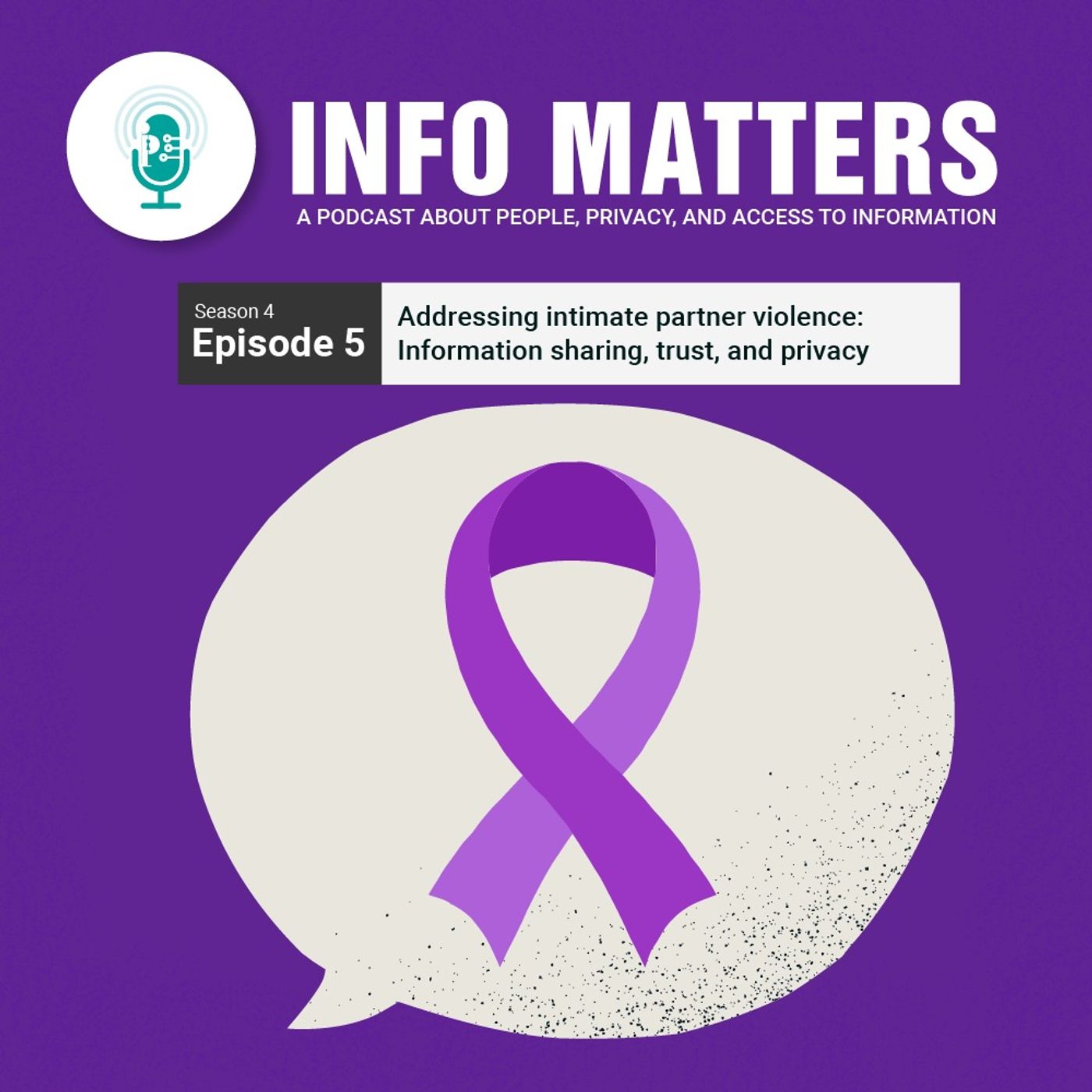 Addressing intimate partner violence: Information sharing, trust, and privacy | Lutter contre la violence conjugale : Échange de renseignements, confiance et confidentialité | Timely information sharing is crucial to prevent harm resulting from intimate partner violence (IPV). Sometimes, however, professionals may hesitate to share information due to misunderstandings about privacy laws. Priya Shastri, Director of Programs at WomanAct, provides insights from the front lines on information sharing, building trusting relationships with victims and survivors, and taking a collaborative, trauma informed approach to combatting IPV. The information, opinions, and recommendations presented in this podcast are for general information only. It should not be relied upon as a substitute for legal advice. Unless specifically stated otherwise, the IPC does not endorse, approve, recommend, or certify any information, product, process, service, or organization presented or mentioned in this podcast, and information from this podcast should not be used or reproduced in any way to imply such approval or endorsement. None of the information, opinions and recommendations presented in this podcast bind the IPC’s Tribunal that may be called upon to independently investigate and decide upon an individual complaint or appeal based on the specific facts and unique circumstances of a given case. | — | ||||||
Want analysis for the episodes below?Free for Pro Submit a request, we'll have your selected episodes analyzed within an hour. Free, at no cost to you, for Pro users. | |||||||||
| 6/20/24 | 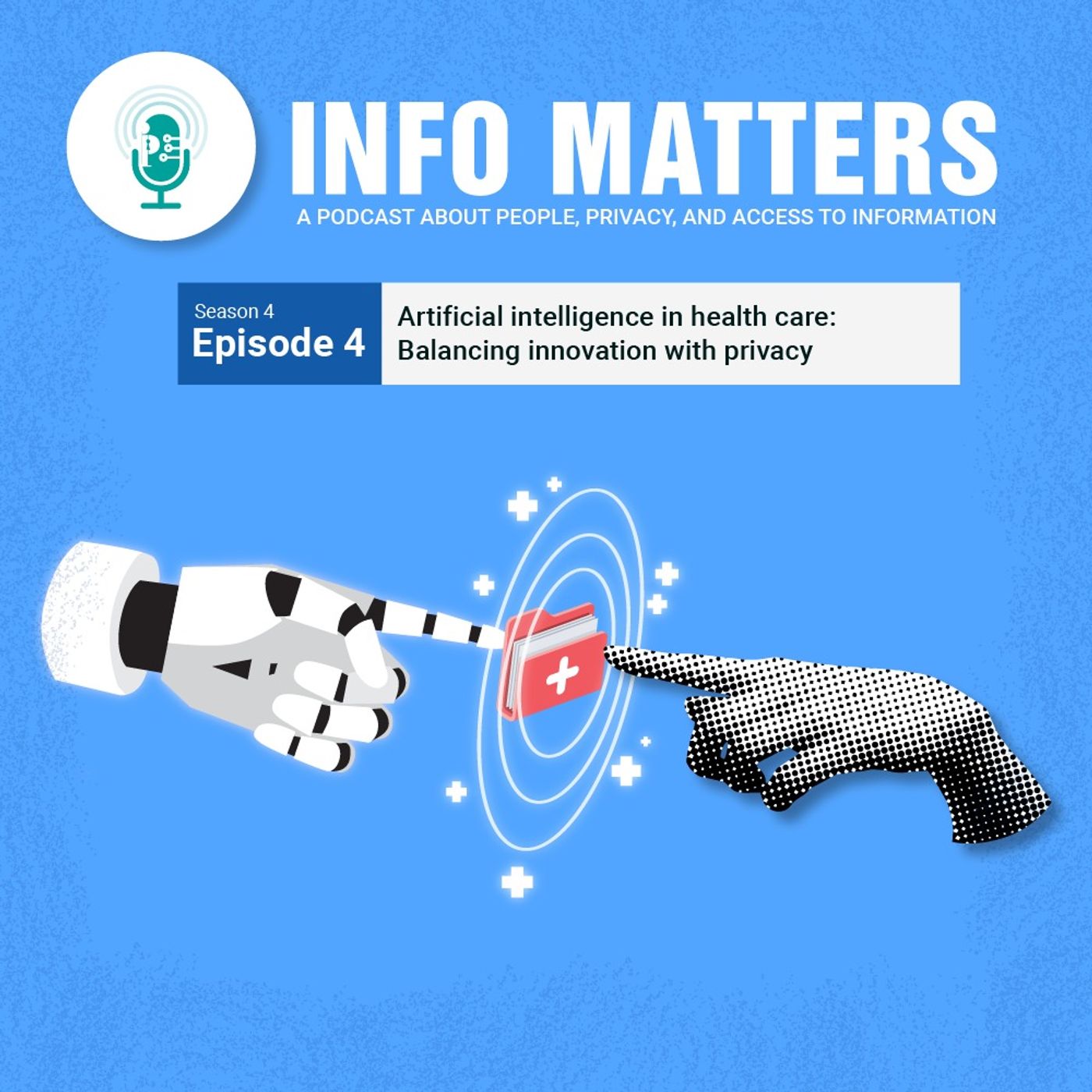 Artificial intelligence in health care: Balancing innovation with privacy | L’intelligence artificielle dans les soins de santé : mettre en balance l’innovation et la protection de la vie privée | Artificial intelligence (AI) has the potential to accelerate and improve many aspects of health care from diagnostics to treatment. However, the use of AI in health care also raises significant questions about privacy, patient safety, ethics, and transparency. Dr. Devin Singh of Toronto’s Hospital for Sick Children speaks about balancing the benefits and risks of this transformative technology. -- L'intelligence artificielle (IA) a le potentiel d'accélérer et d'améliorer de nombreux aspects des soins de santé, du diagnostic au traitement. Cependant, l'utilisation de l'IA dans les soins de santé soulève également des questions importantes concernant la vie privée, la sécurité des patients, l'éthique et la transparence. Le Dr Devin Singh, de l’Hospital for Sick Children de Toronto, parle de l'équilibre entre les avantages et les risques de cette technologie transformatrice. | — | ||||||
| 5/8/24 | 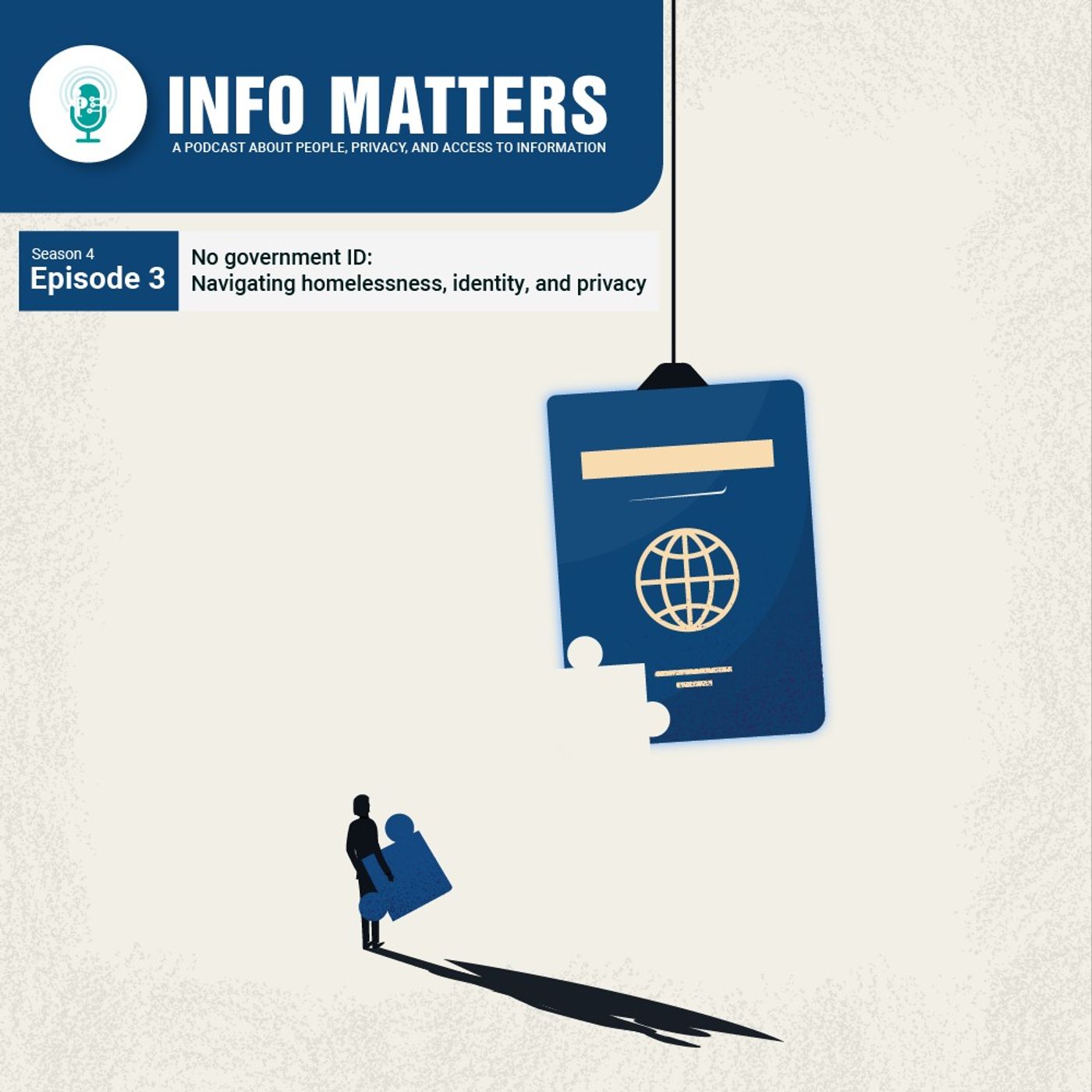 No government ID: Navigating homelessness, identity, and privacy | Pas de carte d'identité gouvernementale : Gérer son itinérance, son identité et sa vie privée | Most of us take our government issued ID for granted. If we lose it, it’s a minor inconvenience. But for people experiencing homelessness, not having valid ID or a fixed address to obtain these documents is a much more serious challenge. Robert Fabes of The Ottawa Mission shares insights on the barriers people experiencing homelessness face and how to provide access to essential services while respecting their privacy and dignity. | — | ||||||
| 4/4/24 |  At face value: Facial recognition technologies and privacy | La technologie de reconnaissance faciale et la protection de la vie privée | From unlocking smartphones to solving crimes, facial recognition technologies are re-shaping identification as we know it. In this episode, we peer into the privacy and human rights implications of facial recognition systems with technology and human rights lawyer Cynthia Khoo. | — | ||||||
| 2/22/24 | 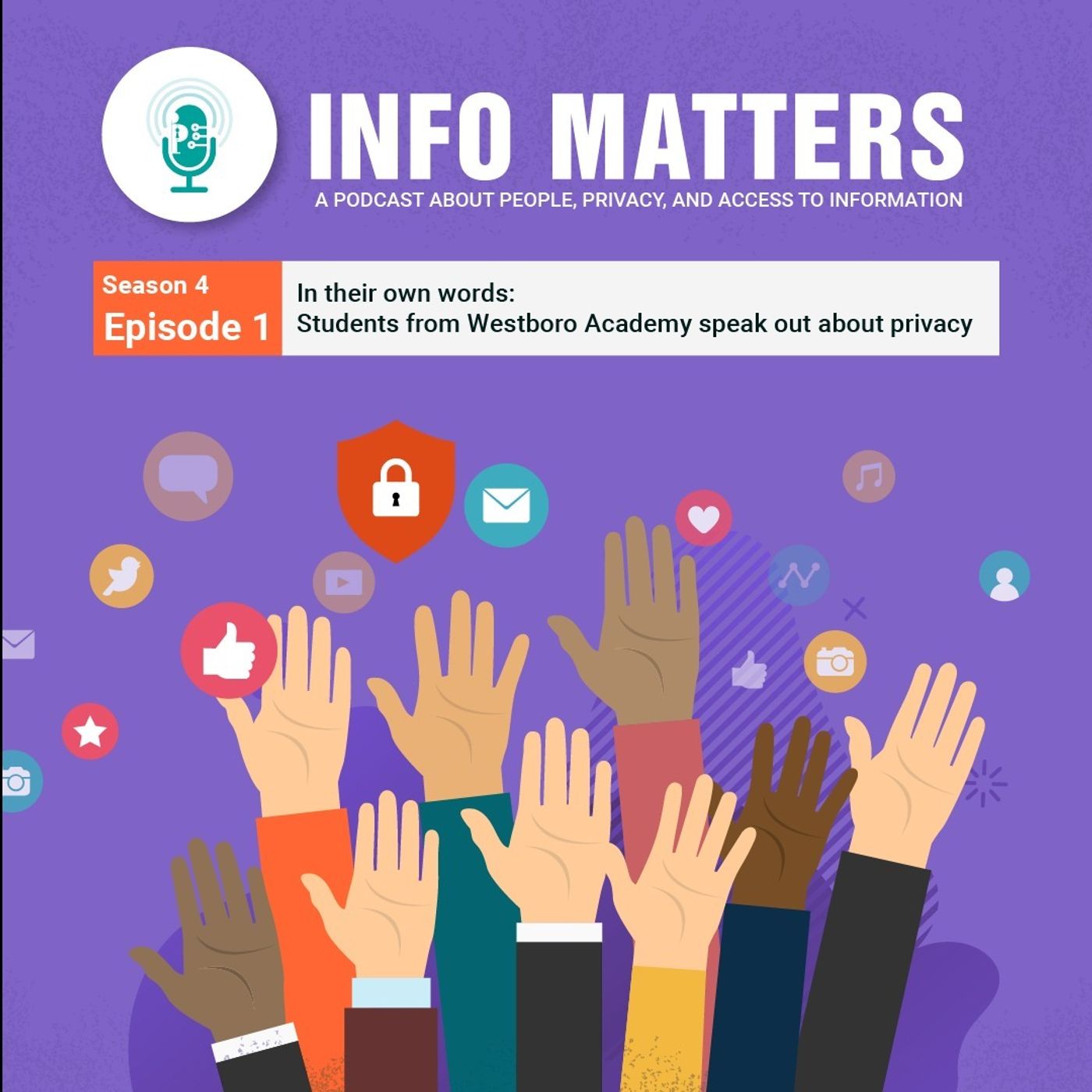 In their own words: Students from Westboro Academy speak out about privacy | Des élèves de l’Académie Westboro parlent de protection de la vie privée | Info Matters kicks off its fourth season with a unique twist, handing the microphone over to Grade 7 and 8 students from Westboro Academy in Ottawa. They share insights on what privacy means to them, how they navigate digital spaces, and what parents, educators, and regulators can do to support their digital literacy. And their school principal joins the conversation too! | — | ||||||
| 1/18/24 | Best of season three | Les meilleurs moments de la troisième saison | Tune in for riveting conversations about people, privacy, and access to information as Info Matters revisits its most thought-provoking moments from season three. This recap includes a variety of guests talking about cybersecurity, misinformation, genetic data, artificial intelligence, neurotechnology, women’s access rights and more … have a listen! | — | ||||||
| 12/14/23 | Empowering young women and girls in the digital world | Renforcer l’autonomie des jeunes femmes et des jeunes filles dans le monde numérique | Networked spaces provide countless opportunities for young people to connect and share ideas and information like never before. But for young women and girls, the online world can be an unfriendly place, fueling self consciousness, self doubt, and fear. University of Ottawa professors Jane Bailey and Valerie Steeves speak about the eQuality project. Its mission is to help young people create a networked environment where they can participate equally, free from surveillance, and identity-based harassment. | — | ||||||
| 12/6/23 | What’s on your mind? Neurotechnology and mental privacy | Qu'est-ce qui vous préoccupe ? Neurotechnologie et protection de la vie privée | “What’s on your mind?” It’s a common question that, with the help of new technologies, may soon yield more personal information than we’d like. Neurotechnology devices can interact directly with the brain to extract information about our thoughts and behaviours and help stimulate certain physical and mental responses. While neurotechnology offers certain health and safety benefits, it also raises significant legal and ethical concerns. In this episode, Jennifer Chandler, a professor at the University of Ottawa’s Centre for Health Law, Policy and Ethics, discusses neurotechnology and emerging cognitive rights such as mental privacy, personal identity, and freedom of thought. | — | ||||||
| 10/30/23 | Unmasking digital threats: How to guard against cyber crime | Démasquer les menaces numériques : Comment se prémunir contre la cybercriminalité | It takes years to build trust in an organization, yet only seconds to bring it all crashing down. Cyber criminals are constantly finding new ways to steal sensitive data and make money from it. Jason Besner, Director of Partnerships at the Canadian Centre for Cyber Security, sheds light on the fast-changing digital landscape and provides practical tips for organizations and individuals to protect themselves against cyberattacks. | — | ||||||
| 9/25/23 | A woman’s right to know: Closing the gender gap with access to information // Le droit de savoir d'une femme : Combler le fossé entre les hommes et les femmes grâce à l'accès à l'information | Access to government-held information has long been recognized as a fundamental right. Unfortunately, for many women today, getting the information they need to receive benefits or services, help support their families, and engage in civic life remains a struggle. Laura Neuman, a senior advisor with the Carter Center, speaks about closing the gender divide and how access to information for women has the power to transform lives. | — | ||||||
| 8/31/23 | Co-designing digital health systems with patients and families | Concevoir des systèmes de santé numériques en collaboration avec les patients et les familles | Engaging with patients, families, and caregivers can help build a better, more inclusive health system. Betty-Lou Kristy, Chair of the Minister’s Patient and Family Advisory Council, speaks about her mission to improve patient care in Ontario by putting patients and families at the center of policy-making. Through their lived experiences in the health system, they work to break down barriers and help build Ontarians’ trust that their data privacy and access rights will be respected. -- S'engager avec les patients, les familles et les soignants peut aider à construire un système de santé meilleur et plus inclusif. Betty-Lou Kristy, présidente du Conseil consultatif ministériel pour des patients et des familles, parle de sa mission qui consiste à améliorer les soins aux patients en Ontario en plaçant les patients et les familles au centre de l'élaboration des politiques. Grâce à leurs expériences vécues dans le système de santé, ils s'efforcent de démonter les barrières et d'aider les Ontariens à avoir confiance que leurs droits en matière de confidentialité des données et d'accès à celles-ci seront respectés. The information, opinions, and recommendations presented in this podcast are for general information only. It should not be relied upon as a substitute for legal advice. Unless specifically stated otherwise, the IPC does not endorse, approve, recommend, or certify any information, product, process, service, or organization presented or mentioned in this podcast, and information from this podcast should not be used or reproduced in any way to imply such approval or endorsement. None of the information, opinions and recommendations presented in this podcast bind the IPC’s Tribunal that may be called upon to independently investigate and decide upon an individual complaint or appeal based on the specific facts and unique circumstances of a given case. | — | ||||||
| 7/31/23 | Ethical Uses of Genetic Data: A Conversation with Dr. Bartha Knoppers | Les utilisations éthiques des données génétiques : entretien avec Bartha Knoppers, Ph. D. | Commissioner Kosseim sits down with Dr. Bartha Knoppers, Director of the Centre for Genomics and Policy at McGill University, to discuss the legal and ethical aspects of genetic research for the greater good. | — | ||||||
| 7/5/23 | A casual conversation between two Canadian privacy commissioners | Une conversation informelle entre deux commissaires canadiens à la protection de la vie privée | Listen to Commissioners Kosseim and Dufresne speak candidly about some of the challenges and opportunities they face and potential areas for collaboration between their offices. Bilingual episode in English and French. | — | ||||||
| 5/16/23 | Trust and truth: Navigating the age of misinformation | Confiance et vérité : S’y retrouver dans l’ère de la mésinformation | Misinformation has been called a defining issue of our time, eroding trust in academia, science, and other key pillars of our society. Commissioner Kosseim speaks with Dr. Alex Himelfarb of the Council of Canadian Academies about what we can do about it, and why access to trustworthy, evidence-based information matters more than ever. | — | ||||||
| 3/23/23 | Predicting crimes before they occur: not so sci-fi anymore | Prédire les crimes avant qu’ils ne soient commis : ce n’est plus de la science-fiction | While it may sound like science fiction, it’s actually happening today. Law enforcement organizations are using data to predict criminal activity before it occurs. Though predictive policing could make crime reduction more efficient, it also raises real risks to privacy and other human rights. Dr. Christopher Parsons, former associate at the University of Toronto’s Citizen Lab and now Senior Technology Advisor at the IPC, talks about some of those risks and how they can be mitigated. | — | ||||||
| 12/20/22 | Health equity: Using data to make a positive difference for communities | Équité en matière de santé : Utiliser les données pour faire une différence positive pour les communautés | Health influences happiness and overall well-being, but not everyone has fair access to resources that support good health. Health disparities persist, influenced by sociodemographic factors such as age, education, gender, income, and race. What can be done to address health inequity without sacrificing personal privacy? In this episode, Commissioner Kosseim speaks with Dr. Kwame McKenzie, CEO of the Wellesley Institute, about how anonymized data can be used to advance equity in health care and health outcomes. | — | ||||||
Showing 25 of 45
Pitch Fit is a Pro feature
See how bookable this show is for guests, which brands already advertise, the per-episode ad value, and the best-fit guest and sponsor profile. The numbers are blurred on the free plan.
How readily this show books outside guests like you.
How proven this show is for host-read sponsorships.
For Guests
ProFor Advertisers
ProUpgrade to Pro to unlock guest cadence, sponsor categories, fit scores, and per-episode ad value for this show.
Chart Positions
2 placements across 2 markets.
Chart Positions
2 placements across 2 markets.