

Insights from recent episode analysis
Audience Interest
Podcast Focus
Publishing Consistency
Platform Reach
Insights are generated by CastFox AI using publicly available data, episode content, and proprietary models.
Est. Listeners
Based on iTunes & Spotify (publisher stats).
- Per-Episode Audience
Est. listeners per new episode within ~30 days
1,001 - 10,000 - Monthly Reach
Unique listeners across all episodes (30 days)
5,001 - 25,000 - Active Followers
Loyal subscribers who consistently listen
501 - 5,000
Market Insights
Platform Distribution
Reach across major podcast platforms, updated hourly
Total Followers
—
Total Plays
—
Total Reviews
—
* Data sourced directly from platform APIs and aggregated hourly across all major podcast directories.
On the show
Recent episodes
Crisis and Change: Conversations With Leaders— Navigating the Pandemic
Mar 10, 2022
Unknown duration
Crisis and Change: Conversations With Leaders—Economic Opportunity in America
Mar 3, 2022
Unknown duration
Crisis and Change: Conversations With Leaders—Climate Solutions
Feb 11, 2022
Unknown duration
Uncharted Ground: Powering Needs, Empowering Lives
Jan 24, 2022
Unknown duration
Crisis and Change: Conversations With Leaders—Race and Diversity Today
Jan 18, 2022
Unknown duration
Social Links & Contact
Official channels & resources
Official Website
Login
RSS Feed
Login
| Date | Episode | Description | Length | ||||||
|---|---|---|---|---|---|---|---|---|---|
| 3/10/22 |  Crisis and Change: Conversations With Leaders— Navigating the Pandemic Crisis and Change: Conversations With Leaders— Navigating the Pandemic | "Crisis and Change: Conversations With Leaders" is produced in partnership by The Pew Charitable Trusts and Stanford Social Innovation Review. In this final episode of this special series, Dr. Rajiv J. Shah, president of the Rockefeller Foundation, and Mark Suzman, CEO of the Bill & Melinda Gates Foundation, share how they're redefining the role of philanthropy in addressing public health crises and preparing for future pandemics. A full transcript is available here. | — | ||||||
| 3/3/22 |  Crisis and Change: Conversations With Leaders—Economic Opportunity in America Crisis and Change: Conversations With Leaders—Economic Opportunity in America | "Crisis and Change: Conversations With Leaders" is produced in partnership by The Pew Charitable Trusts and Stanford Social Innovation Review. In this episode, Larry Kramer, president of the William and Flora Hewlett Foundation, and La June Montgomery Tabron, president and CEO of the W.K. Kellogg Foundation, discuss the origins of wealth inequality and its impact on American democracy. They also share how their institutions are creating new pathways for all communities to access secure and vibrant futures. A full transcript is available here. | — | ||||||
| 2/11/22 |  Crisis and Change: Conversations With Leaders—Climate Solutions Crisis and Change: Conversations With Leaders—Climate Solutions | "Crisis and Change: Conversations With Leaders" is produced in partnership by The Pew Charitable Trusts and Stanford Social Innovation Review. In this episode, Tonya Allen, president of the McKnight Foundation, and John Palfrey, president of the John D. and Catherine T. MacArthur Foundation, address the growing threat of a changing climate. They discuss how they're answering the global call for solutions that promote equity and protect vulnerable communities and encourage others in the philanthropic sector to act at this critical time. A full transcript is available here. | — | ||||||
| 1/24/22 | 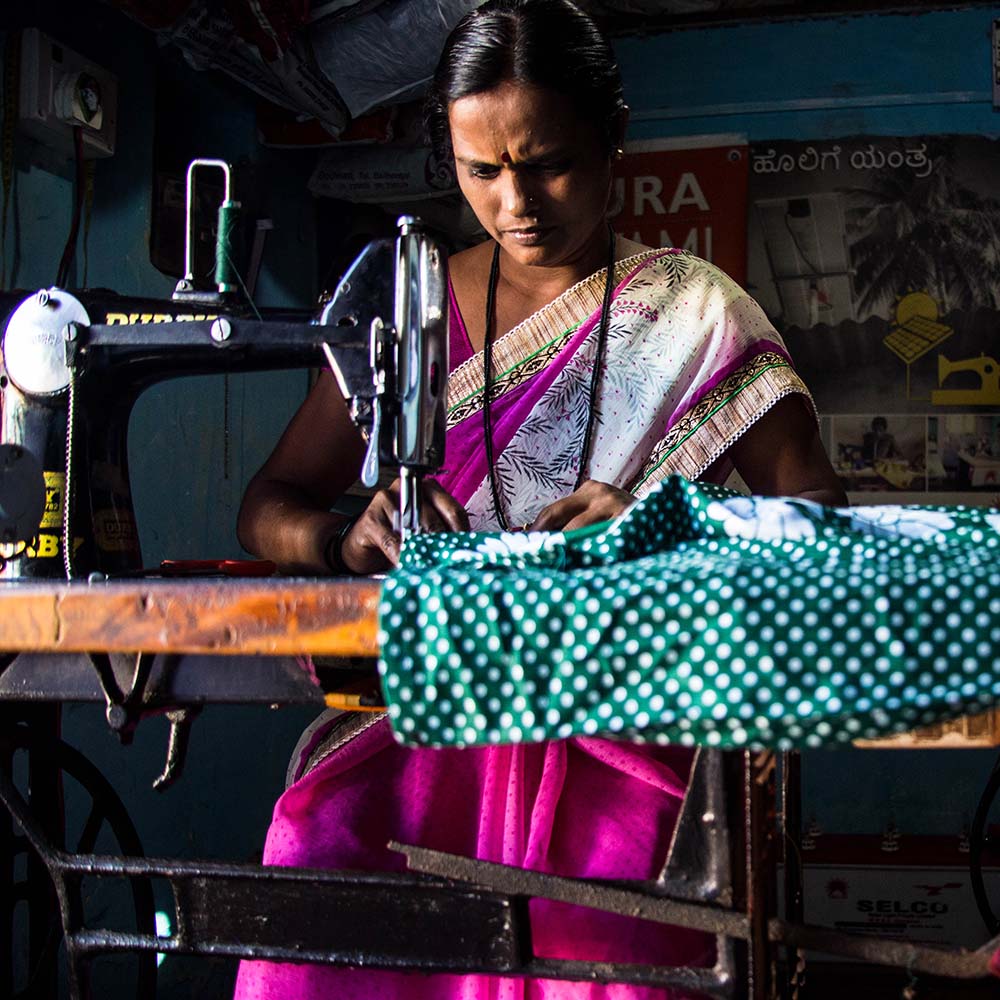 Uncharted Ground: Powering Needs, Empowering Lives Uncharted Ground: Powering Needs, Empowering Lives | Powering Needs, Empowering Lives from Uncharted Ground, a podcast series produced by SSIR and Jonathan Levine. Each episode of Uncharted Ground tells a documentary-style story about one nonprofit or social entrepreneur's journey to solve a daunting global problem. This episode travels to India where a social enterprise called SELCO has been transforming the lives of the rural poor with affordable solar power for 25 years. Now, SELCO is expanding its impact by helping other entrepreneurs replicate its model around the world. It's a story full of lessons about how to design products and services that dramatically improve lives and build sustainable businesses at the same time. Listen and subscribe to Uncharted Ground here, and leave us a review or a comment letting us know what you think. For show notes and a full transcript of this episode go to ssir.org/podcasts. | — | ||||||
| 1/18/22 |  Crisis and Change: Conversations With Leaders—Race and Diversity Today Crisis and Change: Conversations With Leaders—Race and Diversity Today | "Crisis and Change: Conversations With Leaders" is produced in partnership by The Pew Charitable Trusts and Stanford Social Innovation Review. In the series, leaders from across the social sector share insights about how they are innovating during challenging times and societal division. In this episode, Crystal Hayling, executive director of The Libra Foundation, and Sonal Shah, founding president of The Asian American Foundation, discuss how their organizations are transforming the way race is discussed in America and how to improve understanding about racial concerns that will lead to a more inclusive society. | — | ||||||
| 12/14/21 |  Crisis and Change: Conversations With Leaders—Political Polarization Crisis and Change: Conversations With Leaders—Political Polarization | "Crisis and Change: Conversations With Leaders" is produced in partnership by The Pew Charitable Trusts and Stanford Social Innovation Review. In the series, leaders from across the social sector share insights about how they contend with challenging times and societal division. In this episode, Susan Urahn, Pew's president and CEO, and Sarah Rosen Wartell, president of the Urban Institute, discuss the deepening political polarization, increasing misinformation, and growing mistrust that has affected public debate—and how they find common ground to forge meaningful change for the good. | — | ||||||
| 12/7/21 |  Coming Soon: Crisis and Change: Conversations With Leaders Coming Soon: Crisis and Change: Conversations With Leaders | Political polarization. Climate change. Racial reckoning. Income inequality. A global pandemic. Since 2020, all five of these immense challenges have emerged or deepened, commanding our attention and prompting major societal and cultural shifts. In this special series produced in partnership by The Pew Charitable Trusts and the Stanford Social Innovation Review, we talk with leaders from across the social sector. They take us behind the scenes, sharing approaches and case studies of innovation and resilience during these unprecedented times. | — | ||||||
| 1/28/20 |  Storytelling and Social Change Storytelling and Social Change | The entertainment industry has become an important partner to the nonprofit sector, inspiring people to become active around social issues such as climate, poverty, and human rights. What can campaigns for change learn from narrative storytelling experts? How can nonprofit leaders successfully partner with entertainment companies? In this recording from SSIR's 2019 NMI conference, the writer, director, and actor Jessica Blank moderates a discussion with Nicole Starr, vice president for social impact at Participant Media; Marya Bangee, executive director of Harness; and Courtney Cogburn, associate professor at Columbia University School of Social Work. "It's about how you create an ecosystem that can allow for authentic stories to be told," says Marya Bangee. "Culture change precedes policy change." | — | ||||||
| 1/14/20 |  The Risk and Rewards of Mergers as a Nonprofit Growth Strategy The Risk and Rewards of Mergers as a Nonprofit Growth Strategy | Even as nonprofits are put on the defensive by political polarization, inequality, climate change, and other threats, many of them still seek out opportunities to expand their impact. For those dissatisfied with small steps forward, mergers present the chance to leap ahead. But it won't be easy. "It takes a lot of time," says David La Piana, managing partner of La Piana Consulting. "There are opportunity costs, things you could be doing but you won't because you're dedicating energy to the merger. And it is risky." In this recording from SSIR's 2019 NMI conference, La Piana discusses common roadblocks to successful mergers and strategies for surmounting them. | — | ||||||
| 12/17/19 |  Scaling and Innovation Scaling and Innovation | Scholars have noted that most new ideas are poor ones that won't be adopted. So how can organizations integrate innovation productively and prevent it from having unintended consequences? In this recording from SSIR's 2019 NMI conference, Christian Seelos, coauthor of the best-selling book Innovation and Scaling for Impact and co-director of the Global Innovation for Impact Lab at Stanford PACS, explores the "innovation pathologies" that can derail the best intentions. He also discusses the ways organizations such as Aravind and BRAC have sidestepped these threats by blending innovation with scaling. Seelos argues that process is what's important: "If you operate innovation from an attitude of learning ... you cannot be frustrated and you will never fail. Innovation is just replacing uncertainty with knowledge." | — | ||||||
Want analysis for the episodes below?Free for Pro Submit a request, we'll have your selected episodes analyzed within an hour. Free, at no cost to you, for Pro users. | |||||||||
| 12/3/19 |  Nonprofit and Government Collaborations Move at the 'Speed of Trust' Nonprofit and Government Collaborations Move at the 'Speed of Trust' | What do mayors look for and ask from nonprofit managers? What do they wish leaders in the sector would ask of them, and how can public servants and nonprofit leaders learn to better communicate and collaborate? In this recording from SSIR's 2019 NMI conference, Mayors Libby Schaaf of Oakland and Michael Tubbs of Stockton spoke with Autumn McDonald, director of New America CA, about the best ways to build mutually beneficial partnerships between local government and nonprofits. "I've seen fear around collaboration—how is this going to take something away from me?" Mayor Schaaf says. "We have got to think big. We have got to be less afraid." | — | ||||||
| 7/15/19 |  Transforming Programs Through Predictive Analytics Transforming Programs Through Predictive Analytics | Predictive analytics can help organizations iterate rapidly, become more transparent and precise, and pinpoint opportunities to address inequities in their work. In this recording from our 2019 Data on Purpose conference, Parag Gupta, vice president of the Stupski Foundation, and Jeff Gold, assistant vice chancellor at California State University, share a case study of how public higher education institutions are successfully using predictive tools to increase graduation rates and close the achievement and opportunity gaps between low-income and underrepresented minority students and their peers. In 2018, after using these tools, Cal State graduation rates were the highest they've ever been while equity gaps also narrowed. https://ssir.org/podcasts/entry/transforming_programs_through_predictive_analytics | — | ||||||
| 7/1/19 |  Building a More Ethical Blockchain Building a More Ethical Blockchain | Blockchain can help with a variety of social and economic challenges—from securing identity for refugee or homeless populations to minimizing the presence of conflict diamonds in the industry's supply chain. But at the end of the day, technology is just a tool serving an end, and one that must be handled carefully to manage the values embedded within it. In this recording from our 2019 Data on Purpose conference, Cara LaPointe, senior fellow at the Beeck Center for Social Impact and Innovation at Georgetown University, shares questions and concepts from her Blockchain Ethical Design Framework to help practitioners interrogate whether a technology is created with ethics in mind. https://ssir.org/podcasts/entry/building_a_more_ethical_blockchain | — | ||||||
| 6/19/19 |  Strengthening Data Capacity in the Social Sector Strengthening Data Capacity in the Social Sector | What can help the social sector go big on data in the right ways? For one, organizations should stop underestimating their capabilities. And for another, they should build their data strategy around deeper strategic goals as opposed to funding opportunities. In this recording from our 2019 Data on Purpose conference, Kevin Miller, civic technology manager from the Microsoft Cities Team, Aman Ahuja, a data consultant, Kathryn Pettit, principal research associate at The Urban Institute, and Kauser Razvi, principal of Strategic Urban Solution, share their advice and concerns, emphasizing the importance of building a data culture over technical expertise. Scaling up the social sector's data capacity requires champions at every level, be that a school district, state government, or national network, Razvi says. "That person doesn't have to be a technologist" but they need to understand how data can help solve social problems. https://ssir.org/podcasts/entry/strengthening_data_capacity_in_the_social_sector | — | ||||||
| 5/29/19 |  A Hippocratic Oath for Our Digital Lives A Hippocratic Oath for Our Digital Lives | What responsibilities do we have as individuals, organizations, and a society for how we conduct ourselves online? In this recording from our 2019 Data on Purpose conference, Henry Timms, president and CEO of Lincoln Center for the Performing Arts and former president of 92Y, offers a pledge—a Hippocratic Oath of sorts—to help social sector leaders create digital communities that give people a meaningful role in our society. "We need to move past the 'move fast and break things' philosophy and shift to 'move thoughtfully and improve things,'" Timms says. "People want to be part of a larger mission and larger idea." https://ssir.org/podcasts/entry/a_hippocratic_oath_for_our_digital_lives | — | ||||||
| 5/7/19 |  Critical Skill for Nonprofits in the Digital Age: Technical Intuition Critical Skill for Nonprofits in the Digital Age: Technical Intuition | In a world where the pace of organizational learning is often slower than the pace of technological change, activists and nonprofit leaders must develop their "technical intuition." Not everyone needs to become a tech expert, explains Alix Dunn, of the consulting firm Computer Says Maybe, but this ongoing process of imagining, inquiring about, deciding on, and demanding technological change is critical. In this recording from our 2019 Data on Purpose conference, Dunn walks through her guidelines to help anyone to develop these skills. https://ssir.org/podcasts/entry/critical_skill_for_nonprofits_in_the_digital_age_technical_intuition | — | ||||||
| 4/23/19 |  MacArthur Foundation Program Leader Reflects on Lessons From 100&Change Grant Competition MacArthur Foundation Program Leader Reflects on Lessons From 100&Change Grant Competition | In 2016, The John D. and Catherine T. MacArthur Foundation, launched 100&Change—a new grant competition, that would award $100 million to an organization with the best proposal to help solve a critical social problem. The foundation awarded the grant to Sesame Workshop, the nonprofit that produces Sesame Street and other children's educational programs, in partnership with the International Rescue Committee. The grant supports programming to educate young children displaced by conflict and persecution in the Middle East. MacArthur is now accepting applications for a second $100 million grant. In this episode, Priss Benbow, a fellow at Stanford's Distinguished Careers Institute speaks with Cecilia Conrad, managing director at the MacArthur Foundation, who leads 100&Change. They cover the ins and outs of running a big bet competition, addressing the lack of diversity in philanthropic big bets, and a new spinoff organization working to match donors with promising proposals for social change. https://ssir.org/podcasts/entry/macarthur_foundation_program_leader_reflects_on_lessons_from_100change_grant_competition | — | ||||||
| 4/9/19 |  Sesame Workshop, Winner of 100&Change Grant Competition, Discusses What's Next Sesame Workshop, Winner of 100&Change Grant Competition, Discusses What's Next | In 2016, The John D. and Catherine T. MacArthur Foundation, launched 100&Change—a new grant competition, to award $100 million to an organization with the best proposal to help solve a critical social problem. In 2018, Sesame Workshop, the nonprofit that produces Sesame Street and other children's educational programs, was named the winner in partnership with the International Rescue Committee. The grant supports programming to educate young children displaced by conflict and persecution in the Middle East. In this episode, Priss Benbow, a fellow at Stanford's Distinguished Careers Institute, speaks with Sherrie Westin, president of Global Impact and Philanthropy at Sesame Workshop, about the process of applying to a "big bet" grant competition, developing new culturally appropriate Sesame Street characters, and how the two partner organizations will measure program impact. On our next episode, you'll hear from Cecilia Conrad, who leads 100&Change, to get the grantmaker's perspective. https://ssir.org/podcasts/entry/sesame_workshop_winner_of_100change_grant_competition_discusses_whats_next | — | ||||||
| 3/26/19 |  Building a Communication Strategy for Diversity and Inclusion Building a Communication Strategy for Diversity and Inclusion | Communication strategy can't be an afterthought for organizations that want to fully embrace diversity, equity, and inclusion. It requires a careful examination of words, images, ideas, and narrative framing. Where should you start? Using insight from systems thinking and social, behavioral, and cognitive science, Ann Christiano and Annie Neimand describe how to craft stories and multimedia experiences that disrupt bias and drive social change. They present four questions to help develop an effective communication strategy—a "back-of-the-envelope" framework they also outlined in an article for SSIR. Christiano holds the Frank Karel Chair in Public Interest Communications at University of Florida College of Journalism and Communications and is director of the school's Center for Public Interest Communication, where Neimand is research director. They offer tips such as trying to connect a nonprofit's messaging to conversations that are already happening in the broader culture and finding respectful ways to tap into the stories of those your organizations seeks to help. "The most affected are the most effective," Christiano says. https://ssir.org/podcasts/entry/building_a_communication_strategy_for_diversity_and_inclusion | — | ||||||
| 3/12/19 |  Getting Local: Collaborating With Communities of Color Getting Local: Collaborating With Communities of Color | "Community-centered" approaches to social change are nothing new. But the term has become a buzzword in the professionalized social impact world, and strategies intended to elevate the needs of grassroots movements often miss the mark. How can nonprofits do better at treating the people they're trying to support as partners instead of patients? How can organizations shift their approaches from advocating for a population to advocating with them? Darnell Moore, head of strategy and programs for the US office of the human rights organization Breakthrough discusses these issues with: Coya White Hat-Artichoker, founder of the First Nations Two Spirits Collective and the community health and health equity program manager at Blue Cross and Blue Shield of Minnesota; Mauricio Lim Miller, founder of Family Independence Initiative; and Fresco Steez, the minister of training and culture at Black Youth Project 100. "We have to be thinking about ways that our work moves us from the very cozy spaces that we tend to exist in, and out into the communities, into the streets, into the places with the people that we serve," says Moore. "That hasn't been the case for a lot of us, often because it's sort of not made a priority." https://ssir.org/podcasts/entry/getting_local_collaborating_with_communities_of_color | — | ||||||
| 2/26/19 |  Dismantling Invisible Barriers to Capital Dismantling Invisible Barriers to Capital | Research shows that when talented social innovators lack "invisible capital"—the so-called right pedigree, right passport, right skin color, right gender—they may fail to get the attention and investment they need to succeed. How can leaders in philanthropy improve access to capital? What tools can help nonprofit leaders overcome these barriers and get the support they need? Social entrepreneur, author, and Stanford University lecturer Kathleen Kelly Janus leads a discussion about these questions with Echoing Green President Cheryl Dorsey, Whitman Institute Co-executive Director Pia Infante, and California Endowment CEO Robert Ross. "Philanthropy is reinforcing many of the very forms of inequality that we are all working so hard to solve," Janus says. Dorsey identifies three main systemic barriers—a lack of access to capital and opportunities, psychological stress from social exclusion, and the unequal control of resources and political power in society—as some of the challenges to achieving more equitable investment. Funders have to take a structural response to addressing these barriers, says Ross. Solutions might include changing the makeup of board rooms, staffs, and leadership teams. Or it might mean looking out for emerging leaders who haven't already received major investment, and supporting them or having funders participate in implicit bias training. "You can't see what you can't see," Infante says. "It's important who's in those choosing seats." https://ssir.org/podcasts/entry/dismantling_invisible_barriers_to_capital | — | ||||||
| 2/11/19 |  Navigating Double Jeopardy in the Social Sector Navigating Double Jeopardy in the Social Sector | Black women face racial and gender stereotypes and biases that often keep success in the hands of the few—and their experiences working in the social sector are no exception. To understand the unique set of racial and gender barriers—coined "double jeopardy"— that stymie black women, listen to this discussion from Makiyah Moody, senior consultant at La Piana Consulting; Tyra Mariani, executive vice president of New America; Crystal German, principal of Prosperity Labs; and Ify Walker, founder and CEO of Offor. They provide insight into everything from survival strategies to creating more inclusive work environments. "In my daily life, being black and being female comes into play on a constant basis, and that takes a toll," German says. "It gives me a different level of appreciation. It gives me a different level of empathy." The conversation was based on Moody's interview series, "Black & Bold: Perspectives on Leadership," which she expanded upon in her 2018 SSIR piece about black women's use of kinship to overcome career barriers in the social sector. https://ssir.org/podcasts/entry/navigating_double_jeopardy_in_the_social_sector | — | ||||||
| 1/29/19 |  How Client Feedback Helped Transform a Houston Health Agency How Client Feedback Helped Transform a Houston Health Agency | Due to her father's work as an engineer, Paula John moved around a lot in her youth. She often felt seen but not heard in the relationship with her dad. With her own family, she tried hard to listen, and she expected the same consideration from her local Houston health agency, she told former NPR host Bill Littlefield. When she reached out to the agency for help with an illness, and it sent her home empty-handed after a four-hour wait, she gave it harsh feedback. "She was right," said Cathy Moore, executive director of Epiphany Community Health Outreach Services (ECHOS). "Some of the things she said were some of the things we focused on most." Through a Listen for Good grant, ECHOS began regularly surveying clients like John and responding to their feedback to transform the way ECHOS works. https://ssir.org/podcasts/entry/how_client_feedback_helped_transform_a_houston_health_agency | — | ||||||
| 12/20/18 |  Increasing Equity and Inclusion in the Arts Increasing Equity and Inclusion in the Arts | What practices make the arts more or less inclusive? At Stanford Social Innovation Review's 2018 Nonprofit Management Institute conference, leaders from three San Francisco Bay Area arts organizations discuss how they are shaping both their organizations and their performances to make them more diverse and welcoming to all. "That's the next big shift if we are to survive—to go into the community, knock down those norms, and be something that is accessible," said panelist Tim Seelig, artistic director of the San Francisco Gay Men's Chorus. Nayantara Sen, manager of cultural strategies with Race Forward moderates the conversation with Seelig, Judith Smith, founder and director of AXIS Dance Company, and Sherri Young, executive director and founder of the African-American Shakespeare Company. They discuss the meaning of equity within their respective communities, learning from failures, and building sustainable partnerships. https://ssir.org/podcasts/entry/increasing_equity_and_inclusion_in_the_arts | — | ||||||
| 11/27/18 |  Former Prisoner Pays Forward the Gift of Being Heard Former Prisoner Pays Forward the Gift of Being Heard | When Shannon Revels came home to Oakland after nearly 15 years in prison, he found his criminal record made it difficult to get a job. But through the Center for Employment Opportunities (CEO), he found a role first as a janitor then resident services counselor in transitional housing for the formerly homeless. In this interview with former NPR host Bill Littlefield, Revels discusses the importance of his being heard by a teacher he met in prison, giving feedback to CEO and seeing it acted upon, and how he created ways to listen to his residents and dignify their suggestions with action. https://ssir.org/podcasts/entry/former_prisoner_pays_forward_the_gift_of_being_heard | — | ||||||
Showing 25 of 554
Sponsor Intelligence
Sign in to see which brands sponsor this podcast, their ad offers, and promo codes.
Chart Positions
9 placements across 9 markets.
Chart Positions
9 placements across 9 markets.