

Insights from recent episode analysis
Audience Interest
Podcast Focus
Publishing Consistency
Platform Reach
Insights are generated by CastFox AI using publicly available data, episode content, and proprietary models.
Est. Listeners
Based on iTunes & Spotify (publisher stats).
- Per-Episode Audience
Est. listeners per new episode within ~30 days
25,001 - 50,000 - Monthly Reach
Unique listeners across all episodes (30 days)
75,001 - 150,000 - Active Followers
Loyal subscribers who consistently listen
15,001 - 40,000
Market Insights
Platform Distribution
Reach across major podcast platforms, updated hourly
Total Followers
—
Total Plays
—
Total Reviews
—
* Data sourced directly from platform APIs and aggregated hourly across all major podcast directories.
On the show
Recent episodes
The Portfolio Nobody Told You to Build | Tony Dong
May 5, 2026
Unknown duration
Paisley Nardini Most Investors Have No Idea Their Portfolio is Missing This
May 1, 2026
Unknown duration
Due Diligence Isn't Optional in Alternatives Investing—The Performance Gap Makes That Clear
Apr 30, 2026
Unknown duration
You can't eat total return—the income investing playbook is being rewritten | Jillian Delsignore
Apr 28, 2026
Unknown duration
Paul Kornfeld: Don't Fight the Market—Align With It
Apr 24, 2026
Unknown duration
Social Links & Contact
Official channels & resources
Official Website
Login
RSS Feed
Login
| Date | Episode | Description | Length | ||||||
|---|---|---|---|---|---|---|---|---|---|
| 5/5/26 | 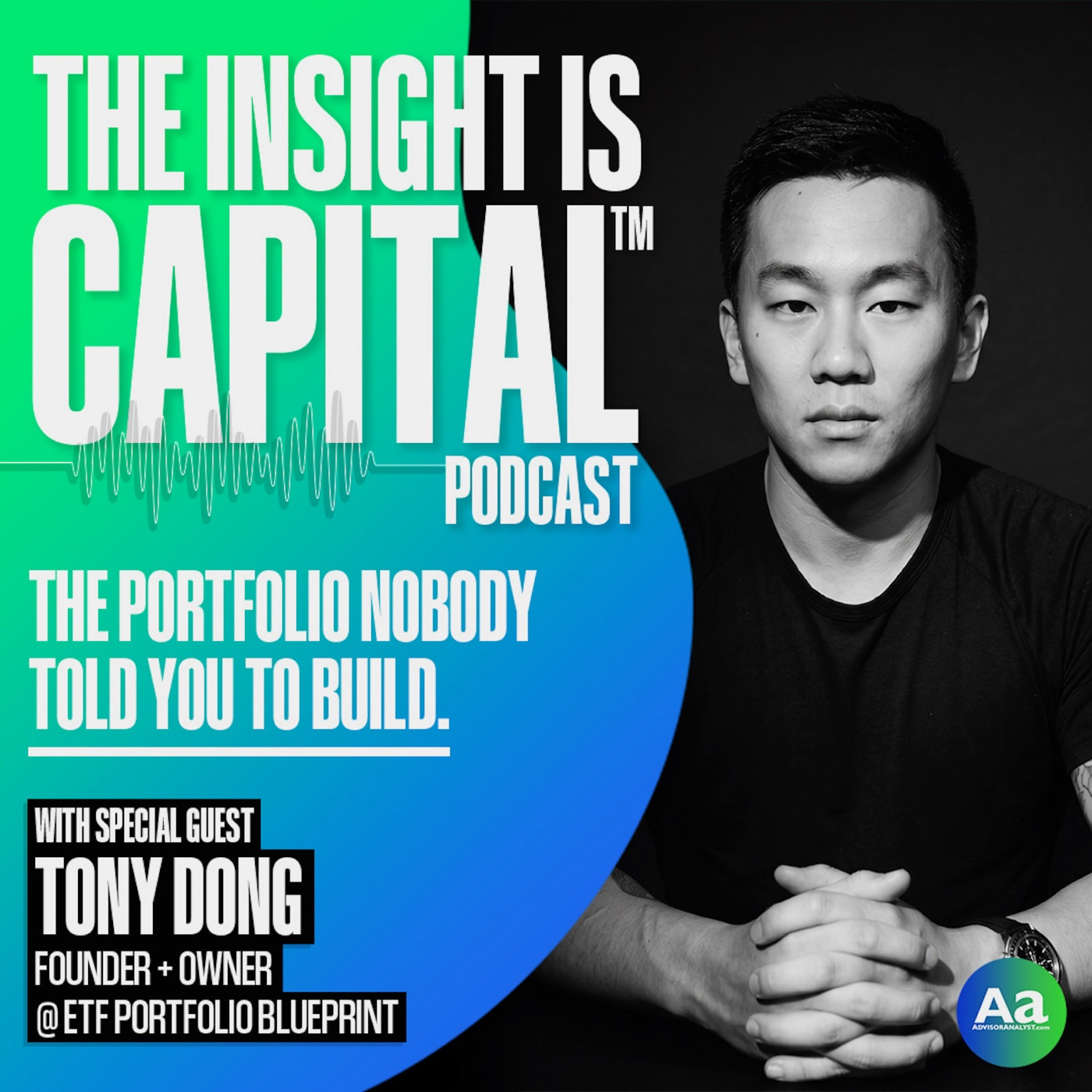 The Portfolio Nobody Told You to Build | Tony Dong The Portfolio Nobody Told You to Build | Tony Dong | What if the investing rules that protected you for 40 years just stopped working — and the world already moved on without telling you? Host Pierre Daillie sits down with Tony Dong — founder of ETFPortfolioBlueprint.com, lead ETF analyst at ETF Central, and Columbia-trained risk manager — for a no-holds-barred breakdown of defense ETFs, tail risk hedging, the structural collapse of the 60/40 portfolio, and what a genuinely resilient Canadian portfolio looks like in a world defined by geopolitical fracture, regime change, and compounding uncertainty. Recorded April 2026 amid new all-time equity highs and an active Middle East conflict, this episode is essential listening for any advisor or investor still building for a world that no longer exists. | — | ||||||
| 5/1/26 | 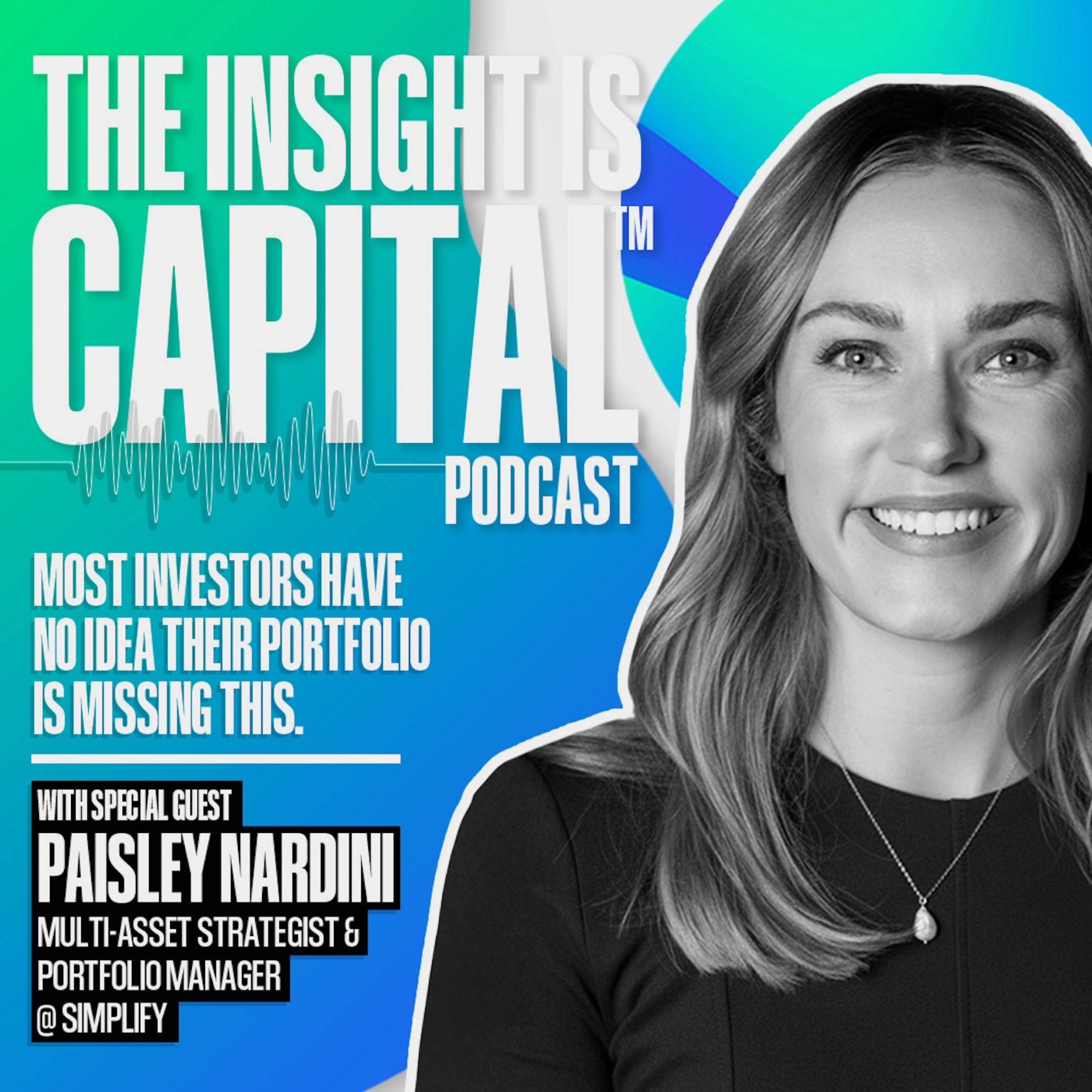 Paisley Nardini Most Investors Have No Idea Their Portfolio is Missing This Paisley Nardini Most Investors Have No Idea Their Portfolio is Missing This | Most advisors have zero alternatives in their portfolios — and their clients are already paying the price. In this episode of Insight Is Capital, host Pierre Daillie sits down with Paisley Nardini, Managing Director and Head of Multi-Asset Solutions at Simplify Asset Management, for a frank and data-driven conversation about why the traditional 60/40 portfolio is showing dangerous cracks — and what advisors can do about it right now. Paisley brings rare clarity to one of the most misunderstood corners of modern portfolio construction: liquid alternatives. Drawing on her career spanning PIMCO, Invesco, and Simplify, she walks through the persistent behavioral and educational barriers keeping advisors away from managed futures, the case for dynamic commodity exposure in an era of geopolitical volatility, and why the stock-bond correlation regime has fundamentally shifted. She shares a stat she rechecked ten times — managed futures at the benchmark index level has outperformed bonds across every trailing period from 5 to 25 years — and makes the case that this isn't a niche strategy for institutions anymore. It's a daily-liquid, low-fee, Morningstar five-star tool sitting right on the advisor's shelf. If your portfolio isn't built for this environment, Paisley has a pointed question: what is it actually built for? | — | ||||||
| 4/30/26 | 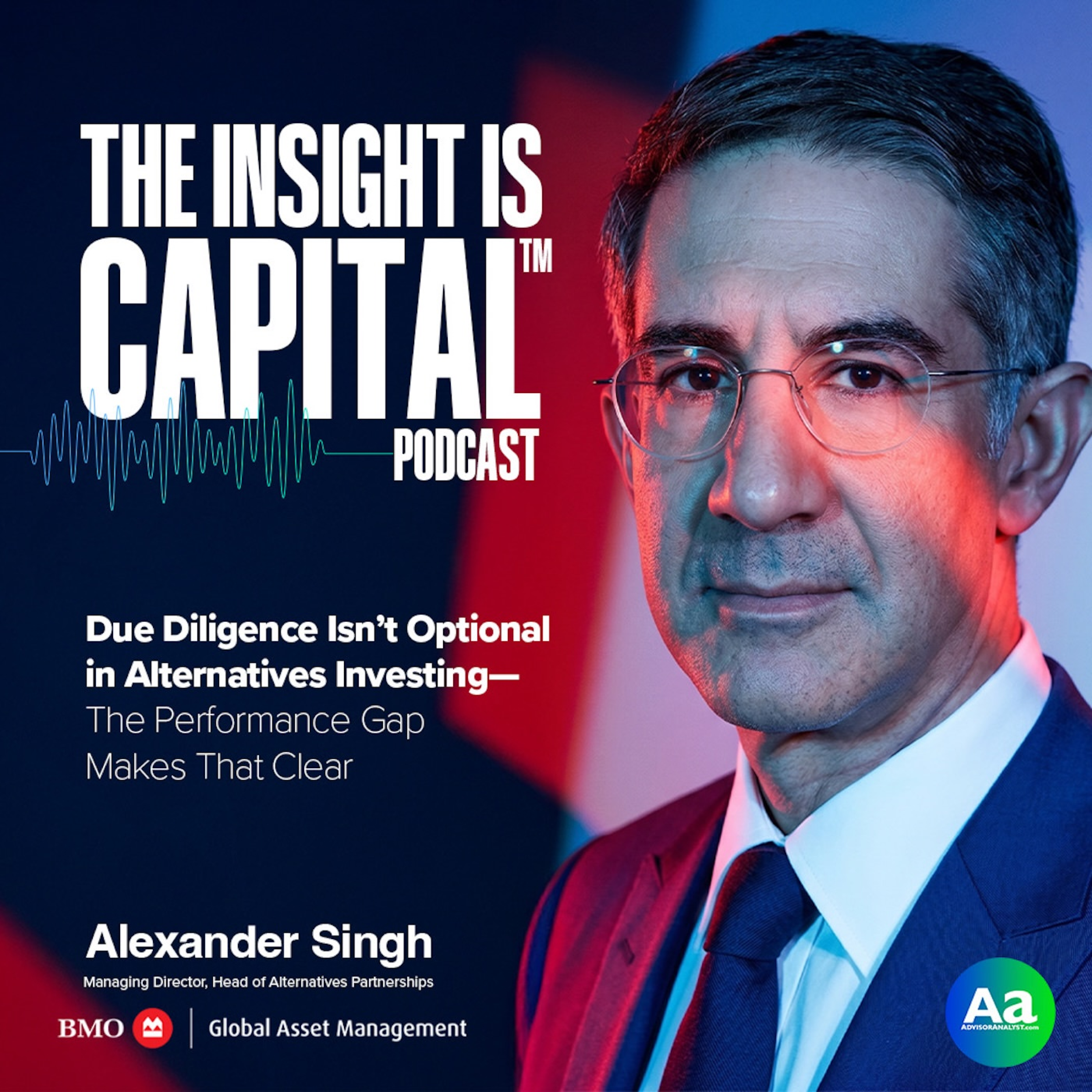 Due Diligence Isn't Optional in Alternatives Investing—The Performance Gap Makes That Clear Due Diligence Isn't Optional in Alternatives Investing—The Performance Gap Makes That Clear | Sponsored by BMO Global Asset Management Half of Canadian financial advisors now offer alternative investments to clients. But access and genuine diversification are not the same thing — and that distinction is the heart of this conversation. We sit down with Alexander Singh, Managing Director and Head of Alternatives Partnerships at BMO Global Asset Management, to unpack what it actually takes to build an institutional-quality alternatives platform for private wealth investors. Singh brings a rare vantage point: former lawyer, hedge fund general counsel, merchant banker, and now the architect of one of Canada's most deliberately designed alternatives platforms in wealth management. Our conversation covers the three defining risks in private markets — manager dispersion, vintage concentration, and illiquidity — and why the performance gap between top and bottom quartile managers can exceed 30 percentage points. Singh explains how BMO GAM's platform was built around four non-negotiables: scalability, fair fees, diversification, and reduced risk — and why perpetual, evergreen structures change the calculus for private wealth investors entirely. From the case for modern infrastructure (data centers, logistics, renewables) as the new portfolio ballast, to why multi-strategy funds are the most in-demand institutional asset class today—this episode is a masterclass in how to think about alternatives investing. | — | ||||||
| 4/28/26 | 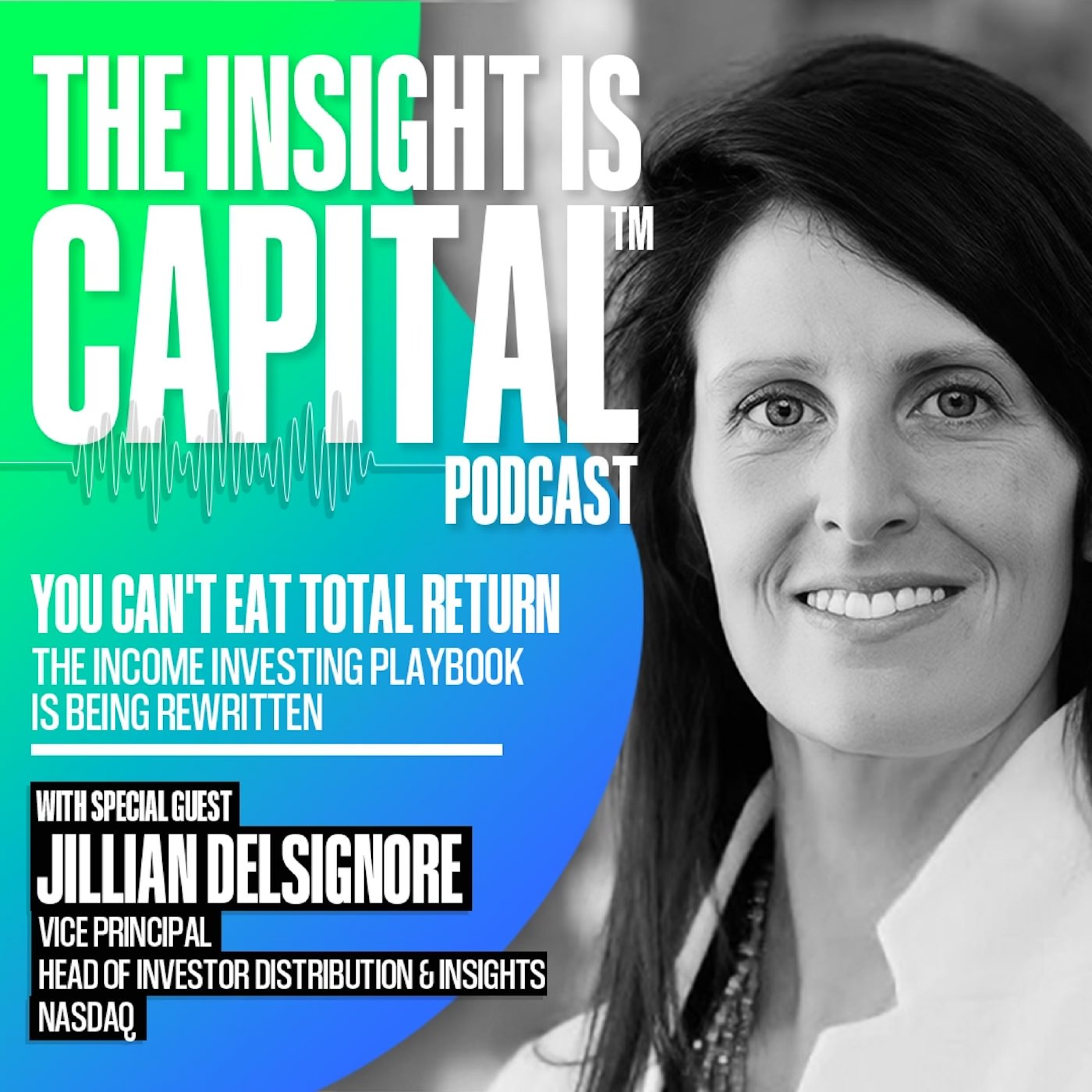 You can't eat total return—the income investing playbook is being rewritten | Jillian Delsignore You can't eat total return—the income investing playbook is being rewritten | Jillian Delsignore | Income investing has never offered more tools — covered call ETFs, buffer strategies, active fixed income, multi-asset funds — and yet most advisors are still building portfolios the way they did five years ago. So what's actually happening on the ground? In this episode of Insight Is Capital, host Pierre Daillie sits down with Jillian DelSignore, VP and Head of Investor Distribution & Insights at Nasdaq Indexes, who brings something rare to the table: real behavioral data. Her team surveys hundreds of financial advisors every year, runs Nasdaq's global Advisor Council, and sits at the intersection of index innovation, ETF distribution, and the voice of the investor. What the data is showing right now is striking — a fundamental shift from total return thinking toward paycheque replacement investing, accelerating ETF adoption, and a quiet revolution in how options-based income strategies are reshaping portfolio construction. Whether you're an advisor benchmarking your own approach or an investor curious about how your portfolio is being built, this conversation delivers a clear, data-driven picture of where income investing is heading. | — | ||||||
| 4/24/26 |  Paul Kornfeld: Don't Fight the Market—Align With It Paul Kornfeld: Don't Fight the Market—Align With It | When cash is outranking U.S. equities and gold sells off when it's supposed to rally, the advisors holding up aren't reacting faster — they're working from a better framework. In this episode of Raise Your Average, host Pierre Daillie sits down with Paul Kornfeld, Portfolio Manager and Director of Technology Services at SIA Wealth Management, for a wide-ranging conversation on what the firm's rules-based relative strength system is signalling right now — and why those signals have been readable for over a year. Paul walks through SIA's point-and-figure methodology, explaining how millions of pairwise asset comparisons cut through geopolitical noise and behavioural bias to reveal where money is actually flowing. From the Canada-vs.-U.S. rotation that started in April 2024, to the semiconductor-vs.-software divergence that flagged the SaaS repricing before most advisors saw it coming, to a candid story about a Calgary advisor group with zero energy exposure in an oil boom — this episode is a masterclass in process-driven investing. Paul and Pierre also look ahead to the durable themes likely to define the next 12–18 months: real assets over financial assets, international over U.S. broad indices, AI infrastructure over AI software, and the looming wildcard of North American trade renegotiation in Q3. | — | ||||||
| 4/17/26 | 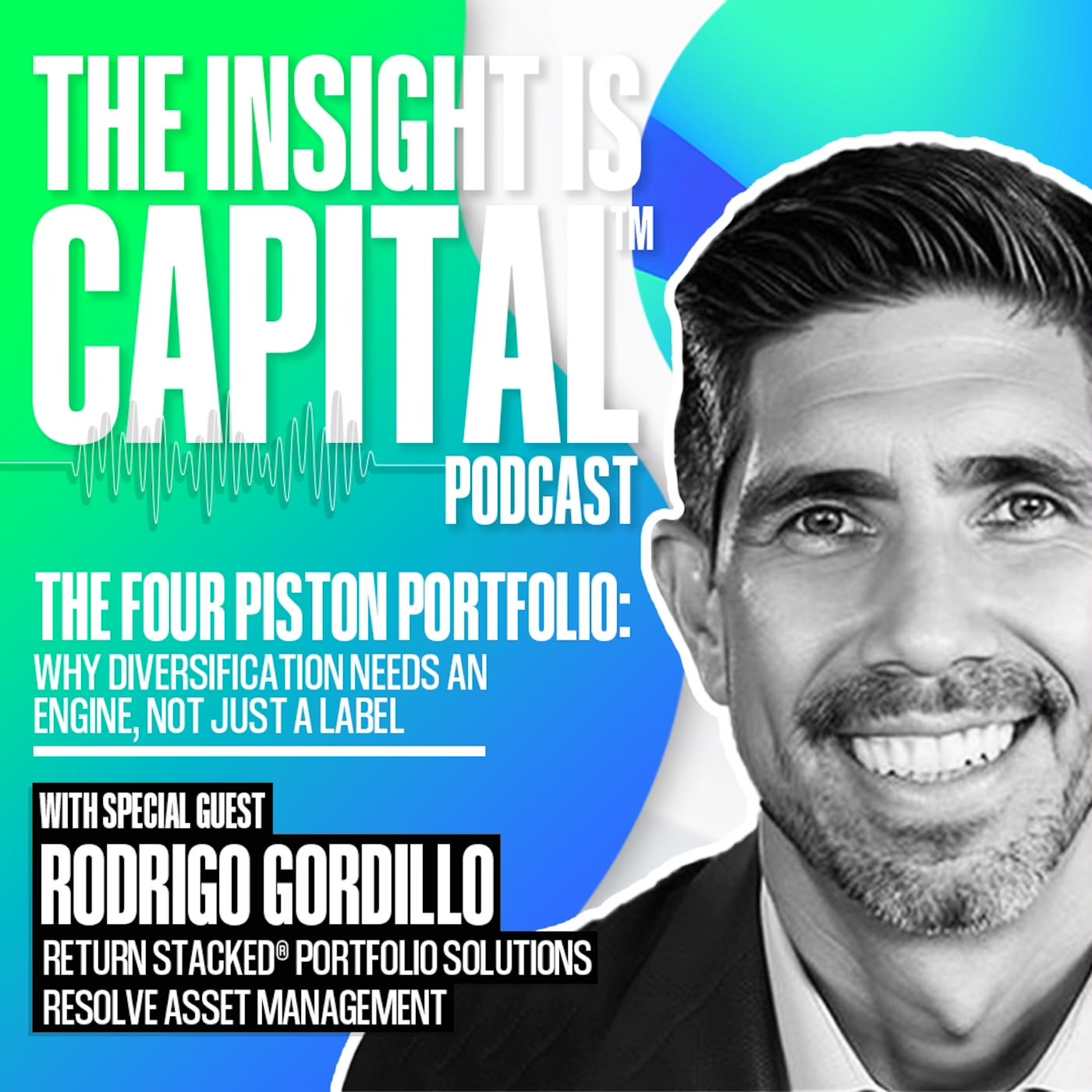 The Four Piston Portfolio: Why diversification needs an engine, not just a label The Four Piston Portfolio: Why diversification needs an engine, not just a label | What if the reason your portfolio sometimes fails you isn't the assets you picked — but the engine you never built? In this episode of Insight Is Capital, host Pierre Daillie sits down with Rodrigo Gordillo, President and Portfolio Manager at ReSolve Asset Management, for a masterclass in what truly diversified, all-weather portfolio construction actually looks like — and why it's fundamentally different from anything most advisors and investors have ever been offered. Rodrigo's story begins in Lima, Peru — where a government printing money into hyperinflation wiped out his family's savings overnight — and runs through the dot-com crash, the 2008 financial crisis, and the brutal 2022 simultaneous collapse of stocks and bonds. Those lived experiences didn't just shape his worldview; they became the architecture of a completely different way to build portfolios. What emerges from this conversation is a framework that challenges nearly every assumption embedded in the standard 60/40 model — and explains why most "diversified" portfolios are actually running 85–90% equity risk under the hood. Rodrigo and Pierre explore how thoughtful, purposeful leverage can transform a low-octane diversified portfolio into something that competes with equities — without simply concentrating more risk in equities. From regime-aware asset allocation across equities, bonds, gold, and systematic macro strategies, to the mechanics of return stacking and portable alpha, to the emerging institutional concept of "total portfolio" risk budgeting — this episode covers the intellectual terrain that separates sophisticated portfolio construction from the conventional wisdom most advisors were trained on. Whether you're a seasoned allocator or just beginning to question the limits of traditional asset allocation, this is a conversation about what it truly means to prepare for an unknowable future — not predict it. | — | ||||||
| 4/10/26 |  The Party Always Ends: How to Build a Portfolio for the Morning After | Meb Faber The Party Always Ends: How to Build a Portfolio for the Morning After | Meb Faber | The party always ends — and Meb Faber, one of the most data-driven voices in global investing, says the evidence is now undeniable that the decade-long US equity dominance is giving way to something very different. SUMMARY On this episode of Raise Your Average, hosts Pierre Daillie and Mike Philbrick sit down with Meb Faber — co-founder and CIO of Cambria Investment Management, prolific researcher, and host of The Meb Faber Show — for a wide-ranging conversation about what investors and financial advisors must rethink as the rules of the game quietly change beneath their feet. With US equity concentration at historic extremes, inflation proving stickier than expected, and geopolitical disorder accelerating structural shifts already underway, Meb makes the case that the era of a US-heavy 60/40 portfolio solving everything is in the rearview mirror. He challenges the deeply ingrained recency bias that has left most North American investors dangerously underweight in international equities and real assets — and explains what the data actually says about where opportunity is emerging. The conversation moves from big-picture regime change into highly practical territory: how to build a portfolio that survives behaviorally, not just mathematically; how to think about concentrated, low-basis positions and the tax traps hiding inside the gains of the last 15 years; and why "tax alpha" may be the most overlooked and underutilized edge in wealth management today. Meb also shares how he's deploying AI in his own practice — including a custom-trained GPT built on his entire body of work — and what advisors should be borrowing from that playbook right now. | — | ||||||
| 4/7/26 | 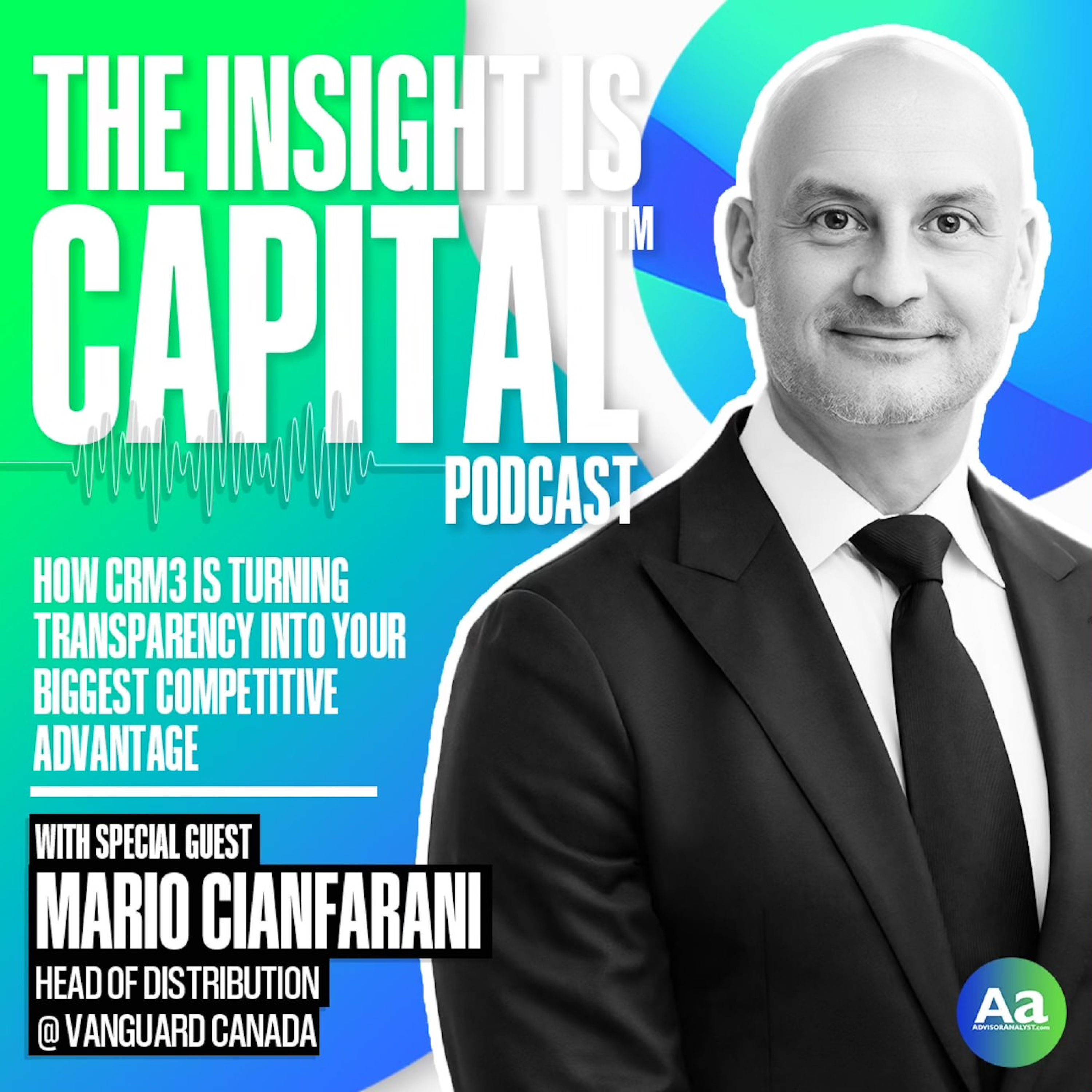 How CRM3 Turns Transparency into Your Biggest Competitive Advantage How CRM3 Turns Transparency into Your Biggest Competitive Advantage | What if CRM3 turns out to be the most powerful growth tool you've ever been handed? In this episode of Insight Is Capital, host Pierre Daillie sits down with Mario Cianfarani, Head of Distribution at Vanguard Canada, to explore the sweeping implications of CRM3 — Canada's incoming total cost reporting regulation — and why the advisors who embrace it now stand to gain the most. Mario unpacks how Vanguard's landmark Advisors Alpha framework, now celebrating its 25th anniversary, aligns with this new era of transparency, and why the real value of advice has never lived in product selection. Together, Pierre and Mario examine the critical mindset shifts advisors must make, the power of fee budgeting, and how top practices are already having the conversations that will define the next generation of client relationships — before they're required to. | — | ||||||
| 4/2/26 | 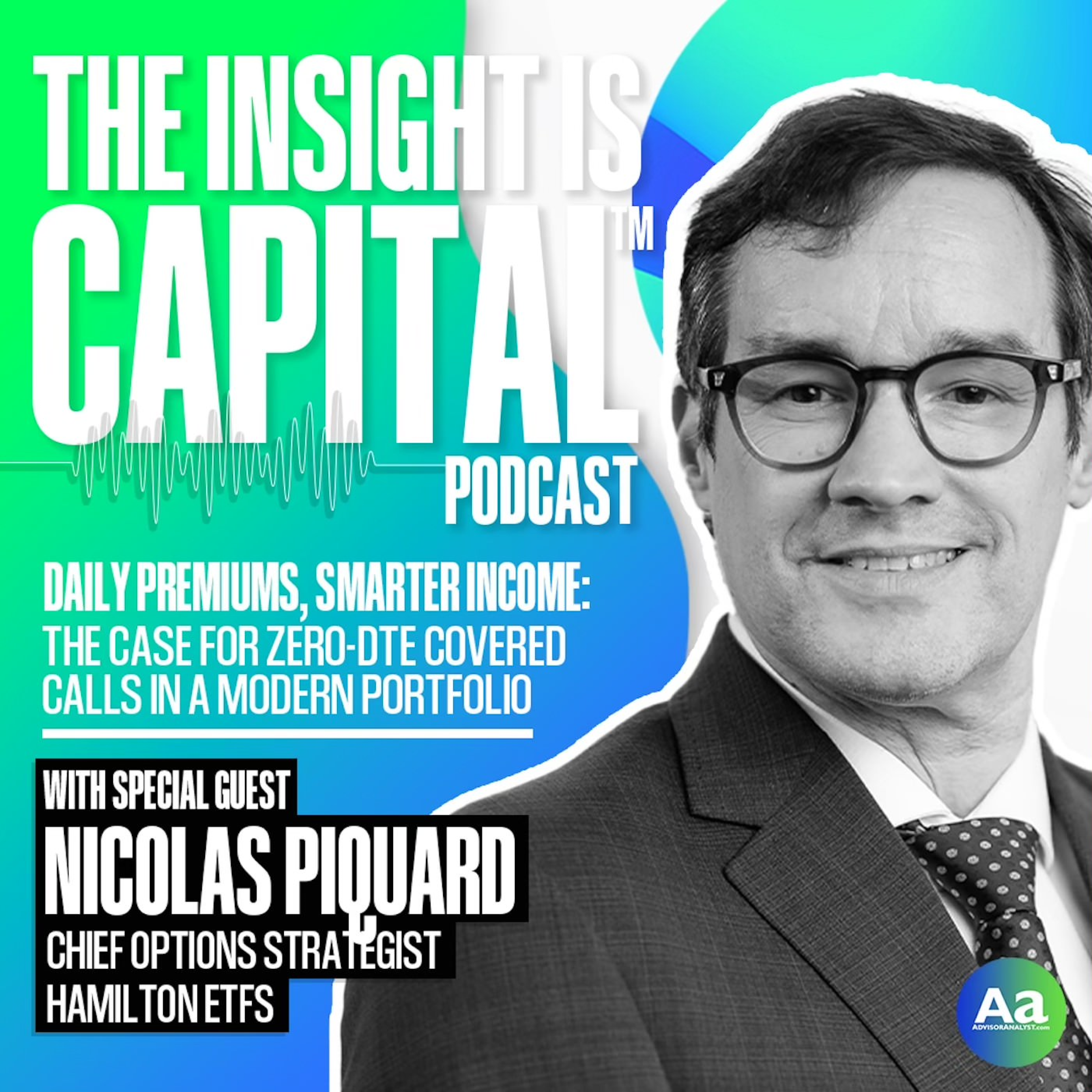 Daily Premiums, Smarter Income: The Case for ODTE Covered Calls in a Modern Portfolio with Nicolas Piquard Daily Premiums, Smarter Income: The Case for ODTE Covered Calls in a Modern Portfolio with Nicolas Piquard | What if you could collect covered call option premium hundreds of times a year instead of once a month — without giving up the upside on your core equity holdings? 📋 EPISODE SUMMARY In this enlightening episode of Insight Is Capital, host Pierre Daillie sits down with Nicolas Piquard, Chief Options Strategist at Hamilton ETFs — a 30-year derivatives veteran who has traded from both sides of the options desk, sell-side and buy-side. Together they unpack the seismic shift in options markets driven by zero days-to-expiry (0DTE) options, which now dominate daily S&P 500 options volume. Piquard demystifies why these instruments are not the speculative instruments many preconceive them to be, and explains how Hamilton's DayMAX™ suite of ETFs harnesses daily covered calls — written only against a modest, leveraged 25% VOO sleeve — to generate frequent, tax-efficient income while leaving the core equity holdings fully intact and participating in the upside. With nearly $750 million in DayMAX™ AUM and growing, the conversation explores how advisors can deploy these strategies as precision income tools in a traditional 60/40 portfolio without sacrificing long-term growth. | — | ||||||
| 3/31/26 | 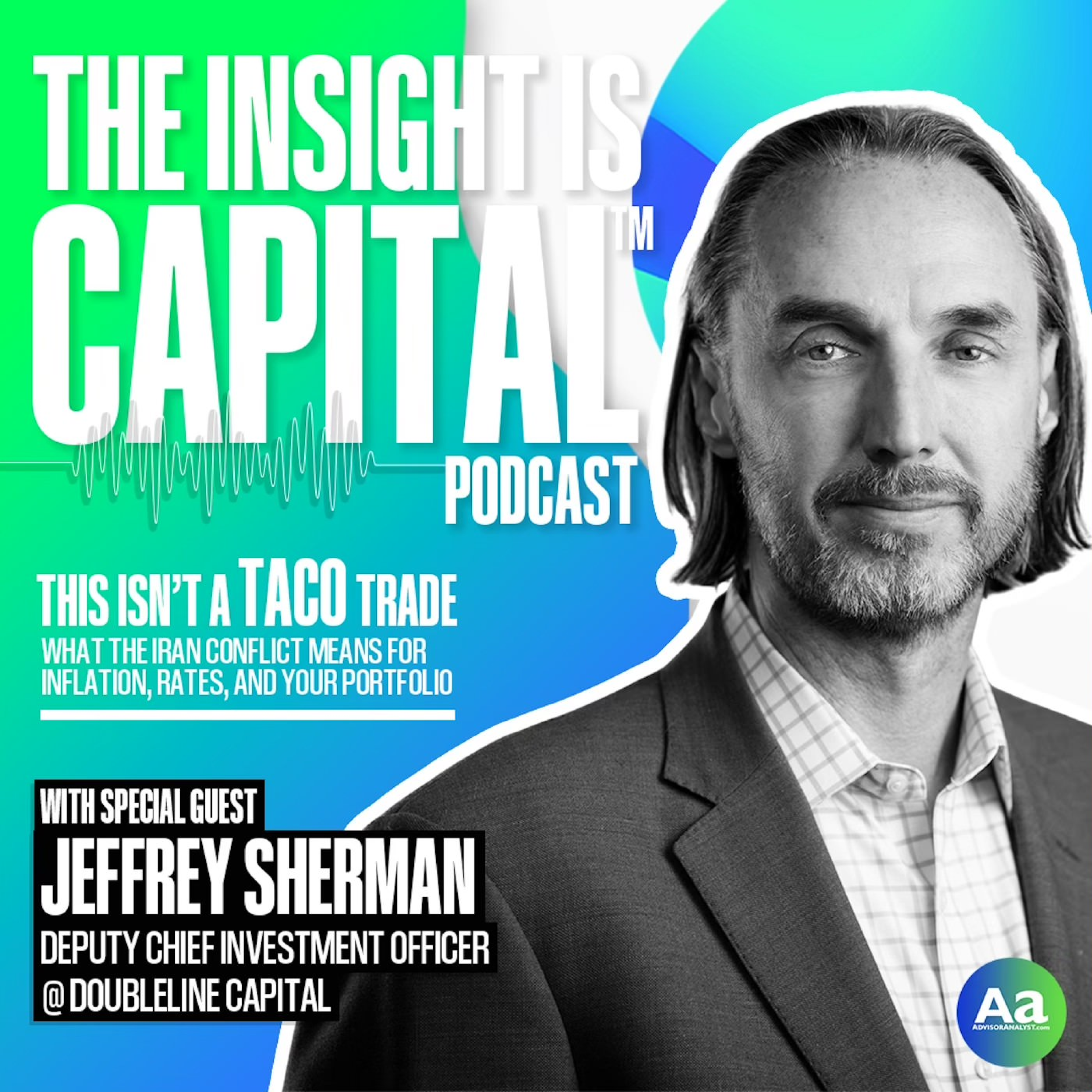 DoubleLine's Jeffrey Sherman: This Isn't a TACO Trade DoubleLine's Jeffrey Sherman: This Isn't a TACO Trade | As Iran targets oil infrastructure with missiles, Wall Street is still buying the dip — but DoubleLine's Jeffrey Sherman says this time, the trade that's worked every time may finally be broken. EPISODE SUMMARY With oil prices surging, rate-cut expectations evaporating, and a conflict now entering its fourth week, host Pierre Daillie sits down with Jeffrey Sherman, Deputy CIO of DoubleLine Capital, to interrogate the assumptions underlying today's risk portfolios. Sherman maps the transmission channels from Middle East conflict to Main Street purchasing power, dissects what the bond market is — and isn't — signalling about fiscal sustainability, and raises uncomfortable questions about the liquidity architecture of private credit vehicles that investors may not have asked themselves yet. The conversation spans the K-shaped labour market, the rotation into international and emerging market assets, and where Sherman sees the most defensible risk-adjusted opportunities in fixed income right now — without pretending the answers are simple. | — | ||||||
Want analysis for the episodes below?Free for Pro Submit a request, we'll have your selected episodes analyzed within an hour. Free, at no cost to you, for Pro users. | |||||||||
| 3/27/26 |  Alfonso Peccatiello: You're not diversified. You just think you are. Alfonso Peccatiello: You're not diversified. You just think you are. | The bond market — not equities — is the most fragile and most misunderstood foundation of your entire portfolio, and most investors have no idea what's coming. Episode Summary Pierre Daillie and Mike Philbrick sit down with Alfonso Peccatiello — former ING bond portfolio manager of $20 billion and founder of macro hedge fund Palinuro Capital — for a masterclass in navigating a world where the old rules no longer apply. With decades of disinflation now behind us, Alfonso makes the case that the classic 60/40 portfolio is structurally ill-equipped for today's macro regime. Drawing from his own eight-quadrant savings portfolio model, he walks through how investors should think about building resilient, all-weather portfolios using risk parity principles, leverage as a diversification tool, and a mix of equities, bonds, gold, CTAs, and the U.S. dollar. The conversation shifts to the current geopolitical shock — a potential disruption in global oil supply through the Strait of Hormuz — and why taking directional risk in a nonlinear, unpredictable event is closer to gambling than investing. Alfonso closes with a bold macro outlook: the most underappreciated story of the next year may not be the U.S. at all, but the rest of the world. | — | ||||||
| 3/26/26 | 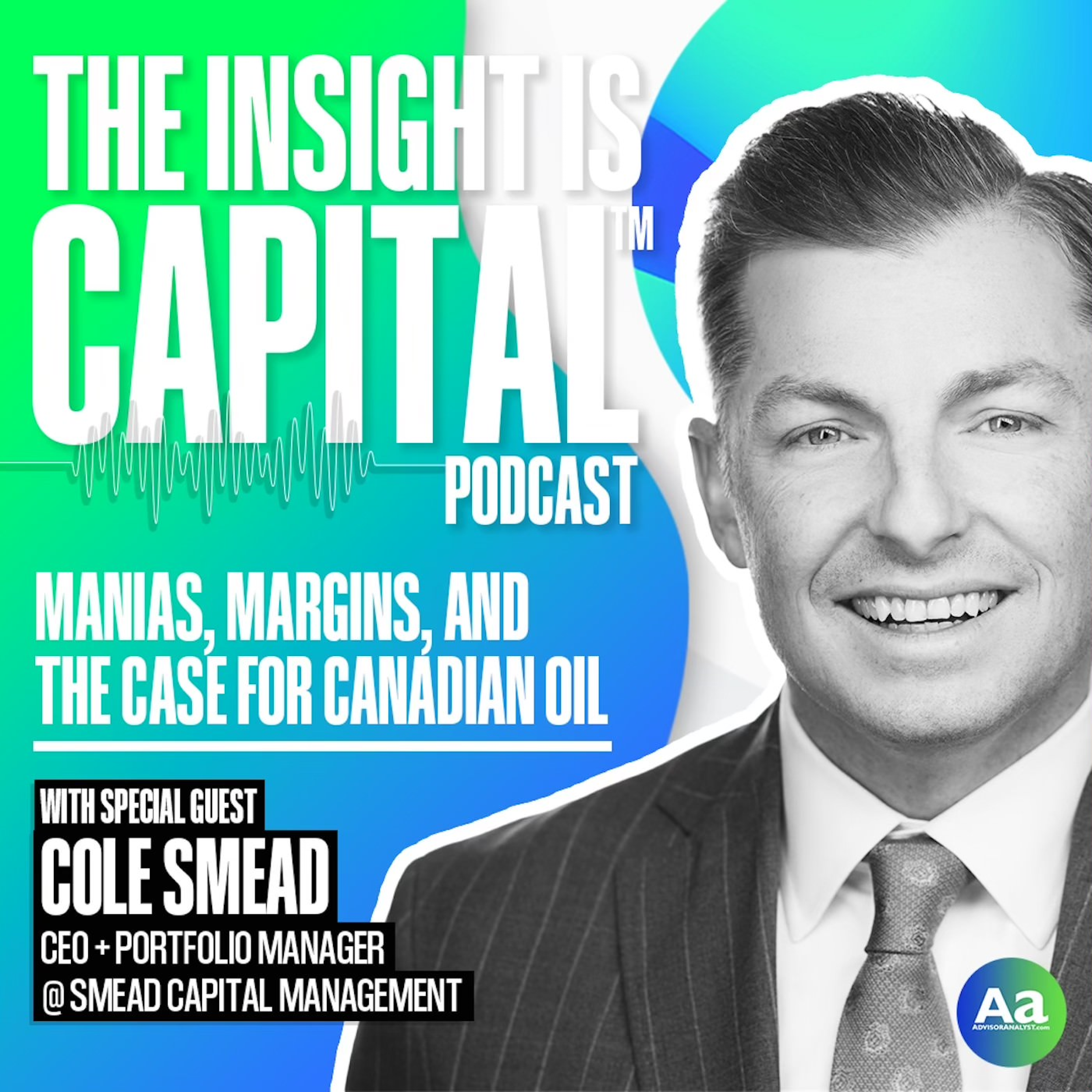 Cole Smead: Manias, Margins, and the Case for Canadian Oil Cole Smead: Manias, Margins, and the Case for Canadian Oil | Is U.S. market dominance about to break? In this episode of Insight is Capital, Pierre Daillie sits down with Cole Smead (CEO & Portfolio Manager, Smead Capital Management) to unpack why today’s market may be less about valuations—and more about a powerful capital cycle that could reshape global investing. From AI-driven CapEx booms to the hidden risks of passive investing, Smead draws on historical parallels—from railroads to telecom to fracking—to explain why investors often miss the biggest regime shifts… and why the next decade of returns may look very different from the last. This conversation explores the case for international equities, the structural setup for commodities, and why Canadian oil could play a critical role in portfolios as capital flows begin to rebalance globally. If you think diversification still means owning the S&P 500… this episode may change your perspective. | — | ||||||
| 3/20/26 |  Rotation, Int'l Stocks, Defense-Tech, Japan, USD and the Gold Gap with Jeremy Schwartz and Jeff Weniger Rotation, Int'l Stocks, Defense-Tech, Japan, USD and the Gold Gap with Jeremy Schwartz and Jeff Weniger | While everyone is arguing about AI disrupting software stocks, WisdomTree's Jeremy Schwartz and Jeff Weniger quietly explain why the most important market story of 2026 has nothing to do with the SaaS selloff — and everything to do with where capital is actually moving. WisdomTree Global CIO Jeremy Schwartz and Head of Equity Strategy Jeff Weniger join Pierre Daillie and Mike Philbrick on Raise Your Average to cut through the noise of the AI disruption panic and make the case for a broader, more structural story unfolding in global markets. From the defense tech supercycle reshaping international equity allocations, to the gold gap most North American portfolios haven't fixed, to a contrarian call on the US dollar at a moment of record-extreme bearish positioning — this conversation covers the ideas that matter most for advisors and investors navigating 2026. Japan, small caps, monetary policy lag, and the behavioral biases keeping investors anchored to a 15-year-old playbook all come into the discussion. If you manage money for clients — or your own — this episode is essential listening. | — | ||||||
| 3/13/26 | 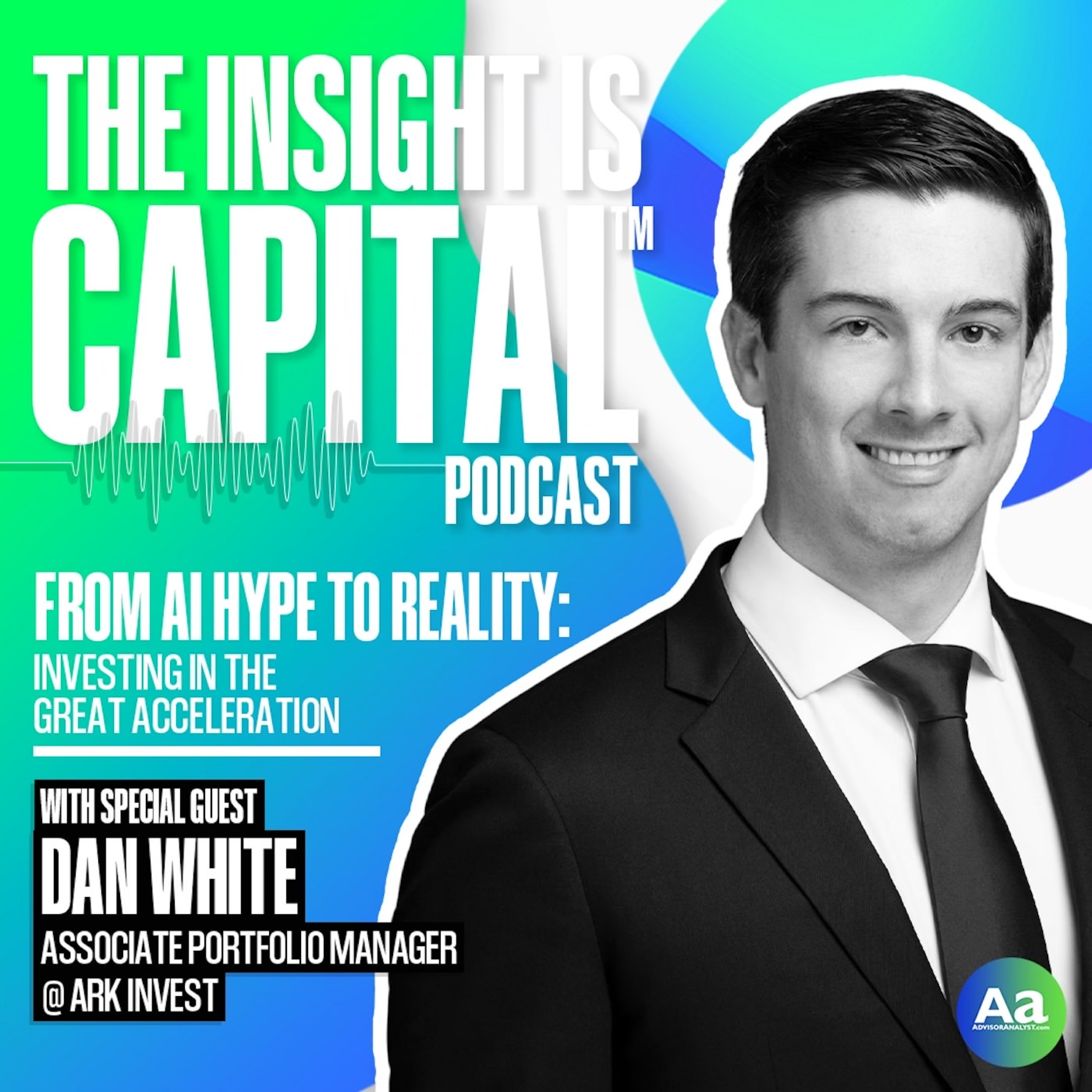 Dan White-From AI Hype to Reality—Investing in the Great Acceleration Dan White-From AI Hype to Reality—Investing in the Great Acceleration | Is the biggest risk in your portfolio the one you're not seeing? Most investors are laser-focused on whether AI is a bubble — but Dan White, Associate Portfolio Manager at ARK Invest, argues that the far more costly mistake may be playing defence during what ARK believes is the most significant productivity regime change in a generation. In this episode of Insight is Capital, Pierre Daillie and Dan White go deep on the ‘SaaSpocalypse’, the $600 billion CapEx question, and the thesis that could reframe everything you think you know about risk, valuation, and where the next decade of market value is actually going to be created. | — | ||||||
| 3/6/26 | 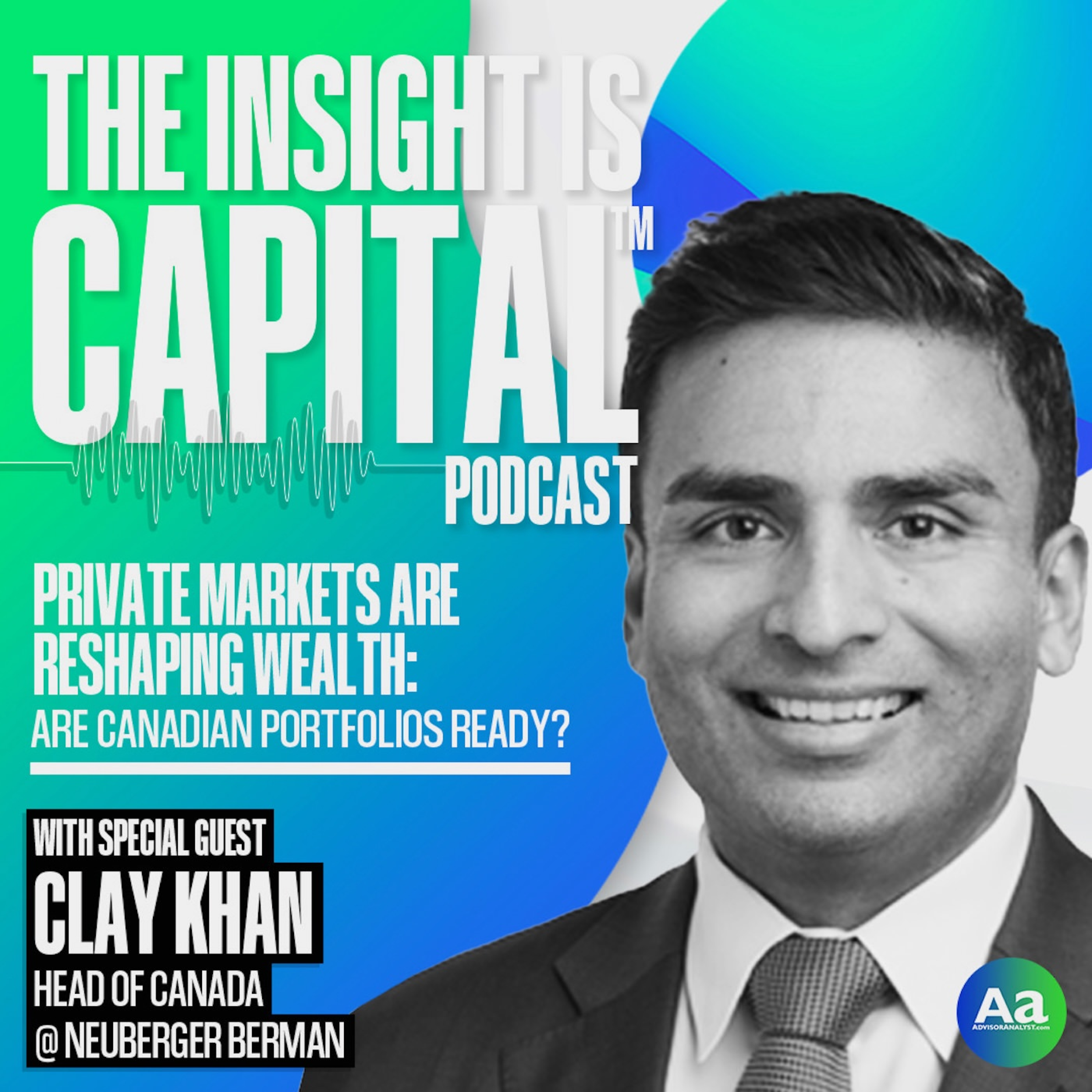 Private Markets Are Reshaping Wealth-Are Canadian Portfolios Ready with Clay Khan Private Markets Are Reshaping Wealth-Are Canadian Portfolios Ready with Clay Khan | If institutional investors have already shifted toward global diversification and private markets, why are most retail portfolios still stuck in the past? In this episode of Insight Is Capital, host Pierre Daillie sits down with Clay Khan, Head of Canada and Managing Director at Neuberger Berman, to explore one of the biggest structural changes in modern portfolio construction: the migration of capital from public markets toward private assets and globally diversified strategies. Drawing from Neuberger Berman’s “Solving for 2026” investment outlook, Khan explains how global macro forces—AI-driven productivity shifts, diverging fiscal and monetary policies, and evolving capital markets—are reshaping the investment landscape for both institutions and private investors. The conversation dives into the growing dominance of private equity and private credit, why institutional portfolios increasingly resemble pension-style allocations, and why Canadian investors may need to rethink traditional 60/40 portfolio structures. Khan also highlights emerging strategies gaining traction among sophisticated investors, including tax-loss harvesting, direct indexing, evergreen private market structures, and secondary markets in private equity. These innovations are gradually bringing institutional-grade investment strategies into the portfolios of high-net-worth investors and advisors. Ultimately, the discussion centers on a crucial shift: moving from wealth accumulation toward wealth preservation and tax-efficient diversification, particularly for families transitioning from concentrated entrepreneurial wealth into multi-generational portfolios. | — | ||||||
| 2/24/26 | 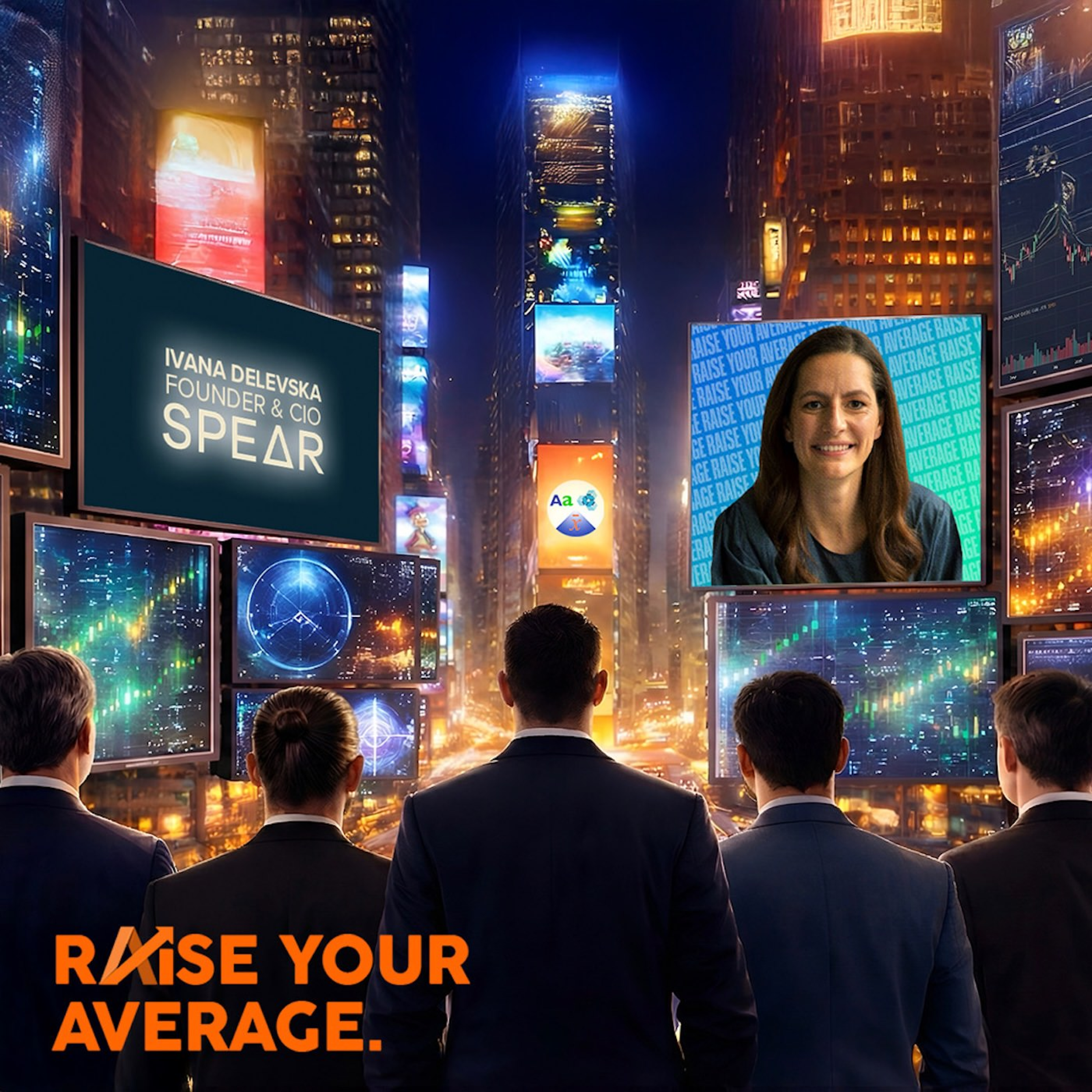 AI is Splitting the Market - The Hidden Winners Beyond NVIDIA with Ivana Delevska AI is Splitting the Market - The Hidden Winners Beyond NVIDIA with Ivana Delevska | AI isn’t just about Nvidia anymore — it’s quietly rewiring the entire industrial economy, and most investors don’t even realize where the real money will be made. In this episode of Raise Your Average, hosts Pierre Daillie and Mike Philbrick sit down with Ivana Delevska, Founder and CIO of Spear Advisors, to unpack how AI is splitting the market — creating massive dispersion between winners and losers — and why passive index exposure may no longer be enough. While most investors believe they’re diversified through Nasdaq or S&P 500 index funds, Delevska explains that passive exposure is heavily concentrated in mega-cap hyperscalers. The real opportunity, she argues, lies deeper in the AI value chain — in networking, optical components, semiconductor capital equipment, electrification, cybersecurity infrastructure, and even space. This conversation goes beyond the hype cycle. Delevska outlines why AI CapEx — projected to reach $600B this year — is fundamentally different from past tech cycles. The sheer dollar magnitude is forcing multi-year infrastructure buildouts, creating 10-year visibility rather than the traditional 3–5 year tech cycle. Yet while hardware beneficiaries remain durable, SaaS and application-layer companies face real disruption risk as AI-native competitors rapidly reshape the software landscape. For investors, this isn’t about abandoning mega-cap tech — it’s about understanding dispersion. In an AI-driven world, alpha will increasingly come from identifying where capital is flowing, how physical constraints shape adoption, and which companies sit at the most critical points in the industrial tech stack. | — | ||||||
| 2/18/26 |  Dennis Mitchell When Diversification Matters - The Case for Global Real Estate Dennis Mitchell When Diversification Matters - The Case for Global Real Estate | For years, global real estate has been overlooked while mega-cap tech and passive flows dominated investor attention. But with equity markets increasingly concentrated and trading at elevated multiples, Dennis Mitchell, CEO & Chief Investment Officer at Starlight Capital, argues the real risk may be not diversifying. In this episode, we unpack why supply-demand fundamentals, demographic tailwinds, and valuation gaps could make global real estate one of the most compelling opportunities hiding in plain sight. | — | ||||||
| 2/13/26 |  Energy Is Destiny: War, China, Gold, Canada & the 60/40 Era Energy Is Destiny: War, China, Gold, Canada & the 60/40 Era | If energy is destiny and stockpiles signal intent, then this episode may completely change how you see oil, gold, China, Canada—and your portfolio. In this high-conviction macro deep dive, hosts Pierre Daillie and Mike Philbrick sit down with returning guest Doomberg to dismantle the comfortable narratives investors use to understand energy, geopolitics, and portfolio construction. Doomberg reframes the global order through a resource-first lens: energy is destiny, stockpiles signal intent, and technology is rewriting the rules of commodities. From Venezuela and Guyana to China’s war rations, from shale’s molecular revolution to Saskatchewan’s overlooked strategic wealth, this episode challenges the assumptions underpinning the traditional 60/40 portfolio. If the last 50 years were defined by efficiency, globalization, and financialization, the next regime may be defined by resilience, reshoring, and resource leverage. | — | ||||||
| 2/4/26 |  AI, Defense, and a New Private Markets Playbook with Ash Lawrence AI, Defense, and a New Private Markets Playbook with Ash Lawrence | Private markets are quietly being rewritten in real time—and in this conversation, Ash Lawrence explains why AI, private credit, and defence could define who wins and who gets left behind in 2026. In this episode of Insight is Capital, host Pierre Daillie sits down with Ash Lawrence, Head of AGF Capital Partners, to unpack AGF Capital Partners’ 2026 - The Annual - Private Markets Outlook. Against a backdrop of geopolitical volatility, AI acceleration, shifting credit dynamics, and renewed defence spending, Lawrence lays out five structural themes reshaping private equity, private credit, and alternative investments. The conversation explores how allocators can separate signal from noise, manage emerging concentration risks, navigate liquidity mismatches in retail private markets, and position portfolios for a world where traditional assumptions no longer apply. From AI infrastructure and mid-market private credit to defence, security, and the evolving role of private capital in public objectives, this episode offers a clear-eyed, practitioner’s view of where private markets are headed—and what investors need to understand to participate intelligently. | — | ||||||
| 1/28/26 |  Energy Copper and Gold ETFs and a World Running Out of Slack with Tony Dong Energy Copper and Gold ETFs and a World Running Out of Slack with Tony Dong | When commodities stop behaving like trades and start behaving like truth detectors, portfolios—and advisors—need to rethink everything. 🎙️ Episode Summary In this wide-ranging deep-dive, host Pierre Daillie welcomes back Tony Dong, Founder of ETF Portfolio Blueprint, to pressure-test the most common misconceptions about commodities investing. Rather than treating commodities as volatile, short-term trading instruments, Tony reframes them as strategic portfolio diversifiers—assets whose value lies in low correlation, structural supply constraints, and long-term geopolitical realities. Together, Pierre and Tony walk through energy, copper, gold, and silver—unpacking how ETFs actually deliver exposure, where investors get tripped up by outdated narratives, and why narrow, intentional allocations make sense. The discussion ultimately widens into geopolitics, multipolar power dynamics, and why ignoring politics is no longer a luxury for investors. 🔑 3 Key Takeaways Volatility isn’t the enemy—correlation is the real story Commodities can be volatile on their own, but when they move differently from stocks and bonds, they can reduce portfolio risk and create a rebalancing premium when sized and managed properly. Not all commodities are created equal—structure matters Energy equities are increasingly driven by balance sheets and capital discipline, copper faces unavoidable supply bottlenecks tied to electrification, and gold remains uniquely supported by central-bank demand. Treating them as interchangeable “inflation hedges” misses the point. Narrow beats broad for most investors Tony argues that focused commodity exposure—gold, copper, or energy you actually understand—is easier to hold through volatility than broad commodity ETFs with mixed drivers, roll-yield drag, and tax complications. ⏱️ Timestamped Chapters 00:00 – Why commodities are misunderstood 02:20 – Volatility vs. correlation: the portfolio math advisors miss 03:45 – Futures, contango, and why old commodity ETFs disappointed 04:45 – Energy ETFs: geopolitics vs. fundamentals 08:30 – Capital discipline, buybacks, and M&A in Canadian energy 10:10 – Copper’s biggest misconception: demand vs. supply reality 13:00 – Copper exposure: physical metal vs. mining equities 16:00 – Is a copper supercycle real—or reflexive? 18:30 – Multipolar geopolitics and why resources matter more now 25:10 – Gold vs. silver: false equivalency explained 29:45 – Broad commodity ETFs vs. targeted allocations 31:00 – Final thoughts: why portfolios don’t exist in a vacuum #Commodities#CommodityETFs#PortfolioDiversification#GoldInvesting#CopperInvesting#EnergyETFs#RealAssets#ETFInvesting#WealthManagement#CanadianInvestors#MacroInvesting#GeopoliticsAndMarkets#AdvisorEducation | — | ||||||
| 1/9/26 |  Why Millions of Canadians Never Make it to Financial Advice Why Millions of Canadians Never Make it to Financial Advice | In this episode of Insight Is Capital, host Pierre Daillie sits down with Mélanie Valcin, President and CEO of United for Literacy, and Matthew Latimer, Executive Director of the Federation of Independent Dealers, for a powerful conversation at the intersection of literacy, financial advice, and economic inclusion. Together, they unpack a sobering reality: one in five working-age Canadians struggles with basic literacy, a barrier that quietly cascades into poor financial outcomes, limited access to advice, workforce stagnation, and rising social costs. Valcin shares on-the-ground stories from communities across Canada—food banks, mining towns, and correctional facilities—illustrating how targeted, trust-based literacy programs can rapidly transform lives. Latimer brings the financial lens, explaining how low financial literacy leaves Canadians vulnerable to costly mistakes, scams, and long-term retirement risk, while also constraining the reach and effectiveness of professional financial advice. The conversation makes a compelling case that literacy—reading, digital, and financial—is not a “soft” social issue, but core economic infrastructure, and argues for a coordinated national strategy that brings together government, educators, industry, and financial advisors themselves. | — | ||||||
| 12/29/25 | 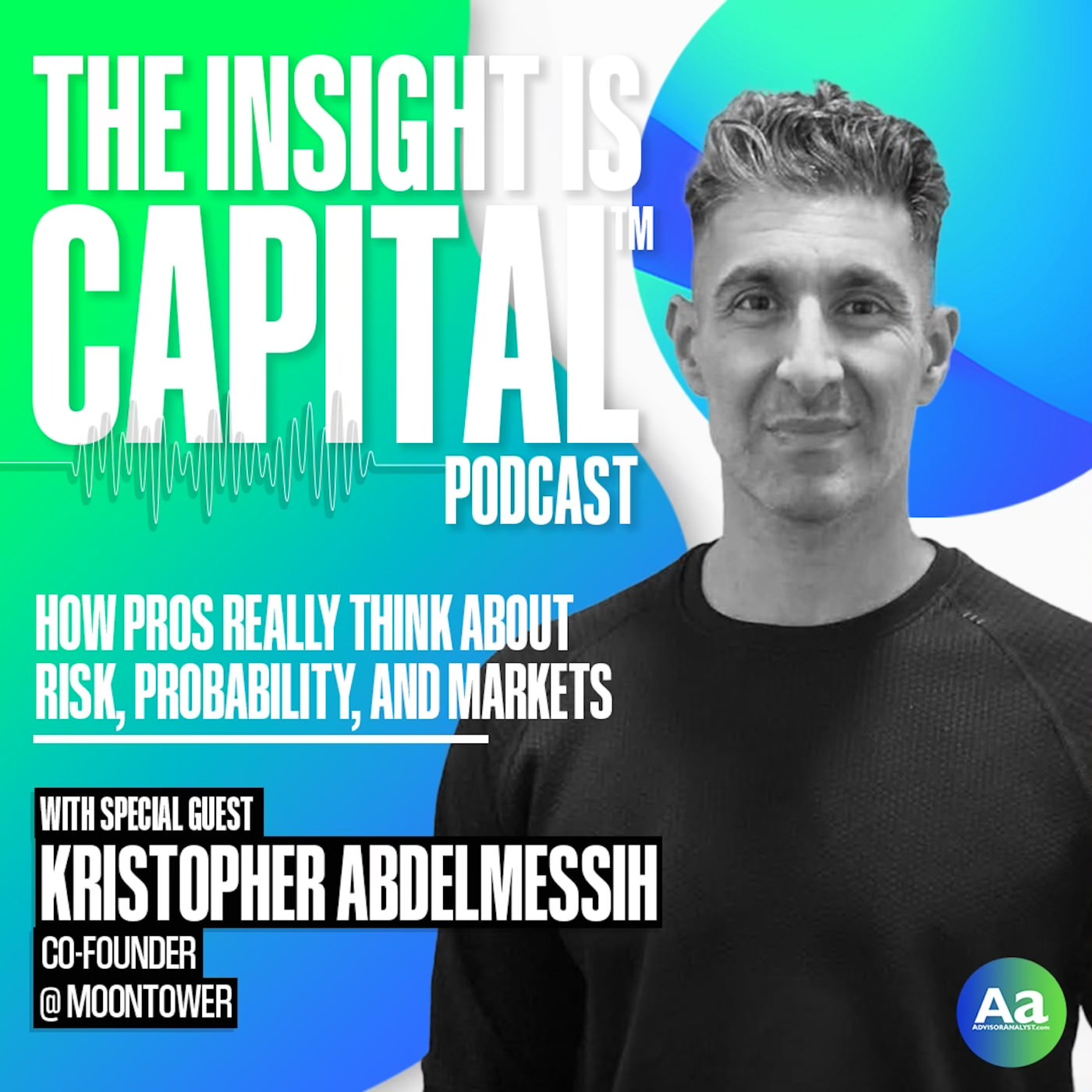 How Pros Really Think About Risk, Probability, and Markets with Kris Abdelmessih How Pros Really Think About Risk, Probability, and Markets with Kris Abdelmessih | In this wide-ranging and intellectually rich conversation, host Pierre Daillie sits down with veteran options trader, market maker, and probabilistic thinker Kris Abdelmessih for a deep exploration of how markets really work beneath the surface—and how investors can think more clearly in a world dominated by uncertainty, noise, and emotion. Drawing on more than two decades of experience spanning Susquehanna International Group, proprietary commodity trading, and portfolio management at Parallax, Abdelmessih explains why options markets reveal truths that stock prices alone cannot, how poker shaped his understanding of risk and decision-making, and why probabilistic thinking—not prediction—separates professionals from amateurs. The discussion moves seamlessly from trading pits and market structure to behavioral bias, prediction markets, volatility, and education, culminating in a thoughtful explanation of Moontower, Abdelmessih’s platform designed to help investors understand whether options are cheap, expensive, or inappropriate for a given thesis. This episode is less about “what to buy” and more about how to think—about risk, information, and the difference between being right and making money. | — | ||||||
| 12/22/25 | 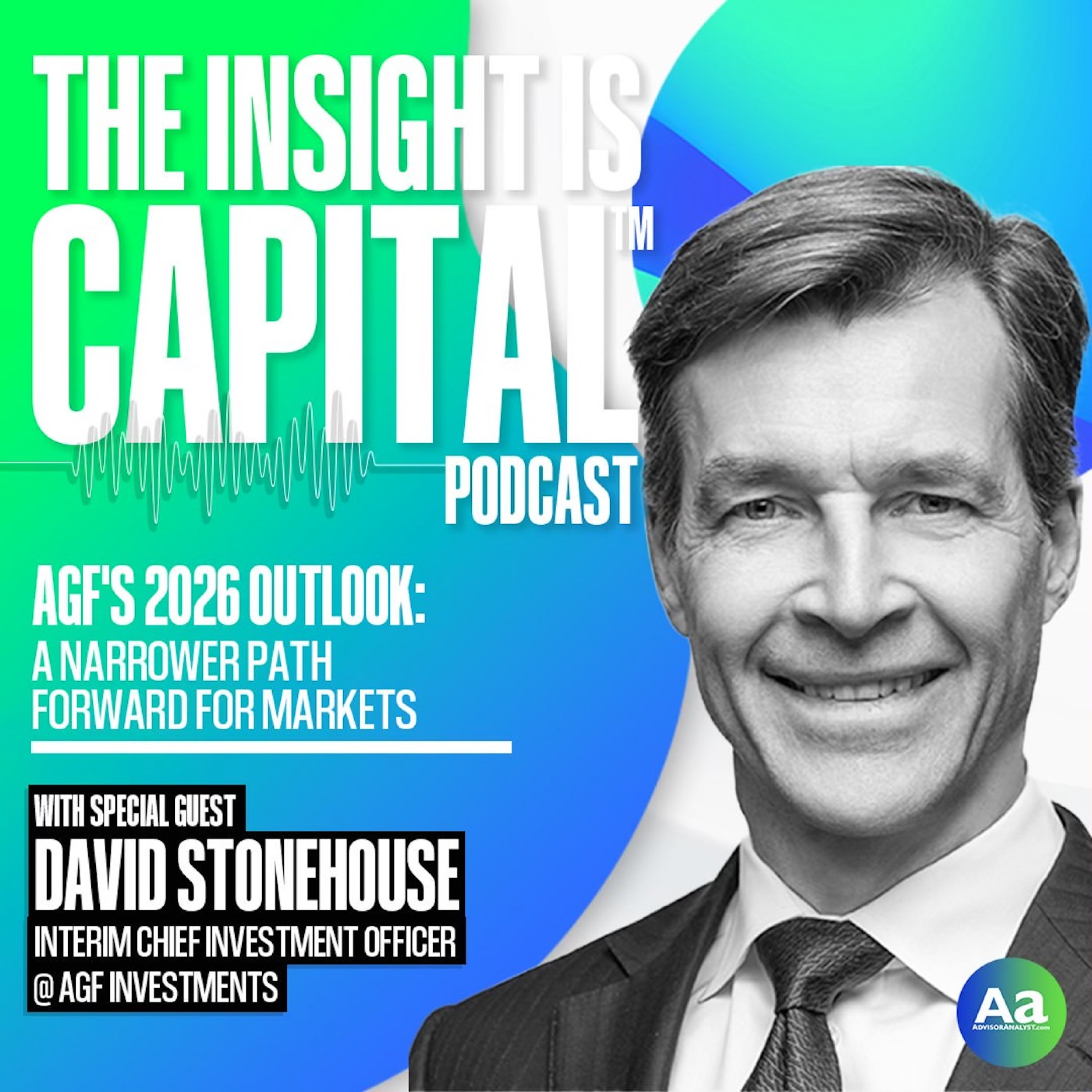 AGF's David Stonehouse: A Narrower Path Forward for Markets in 2026 AGF's David Stonehouse: A Narrower Path Forward for Markets in 2026 | In this episode of Insight Is Capital, host Pierre Daillie sits down with David Stonehouse, Interim CIO and Head of North American Specialty Investments at AGF Investments, for a wide-ranging but grounded discussion on what lies ahead for investors as the cycle matures. Stonehouse frames 2026 as a constructive but narrower environment—one supported by global monetary easing, rising fiscal stimulus, and resilient earnings growth, yet constrained by elevated valuations, softer labor markets, and geopolitical uncertainty. The conversation carefully unpacks how tariffs have shifted from an economic “earthquake” to a lingering aftershock, why inflation fears may be overstated near-term, and how investors can think about regional diversification beyond a heavily concentrated U.S. market. Rather than offering bold predictions, the discussion emphasizes flexibility, balance, and readiness—highlighting why equal-weight equity exposure, selective credit, emerging markets, and a strategic cash buffer may matter more than ever as uncertainty rises but opportunity persists. | — | ||||||
| 12/19/25 | 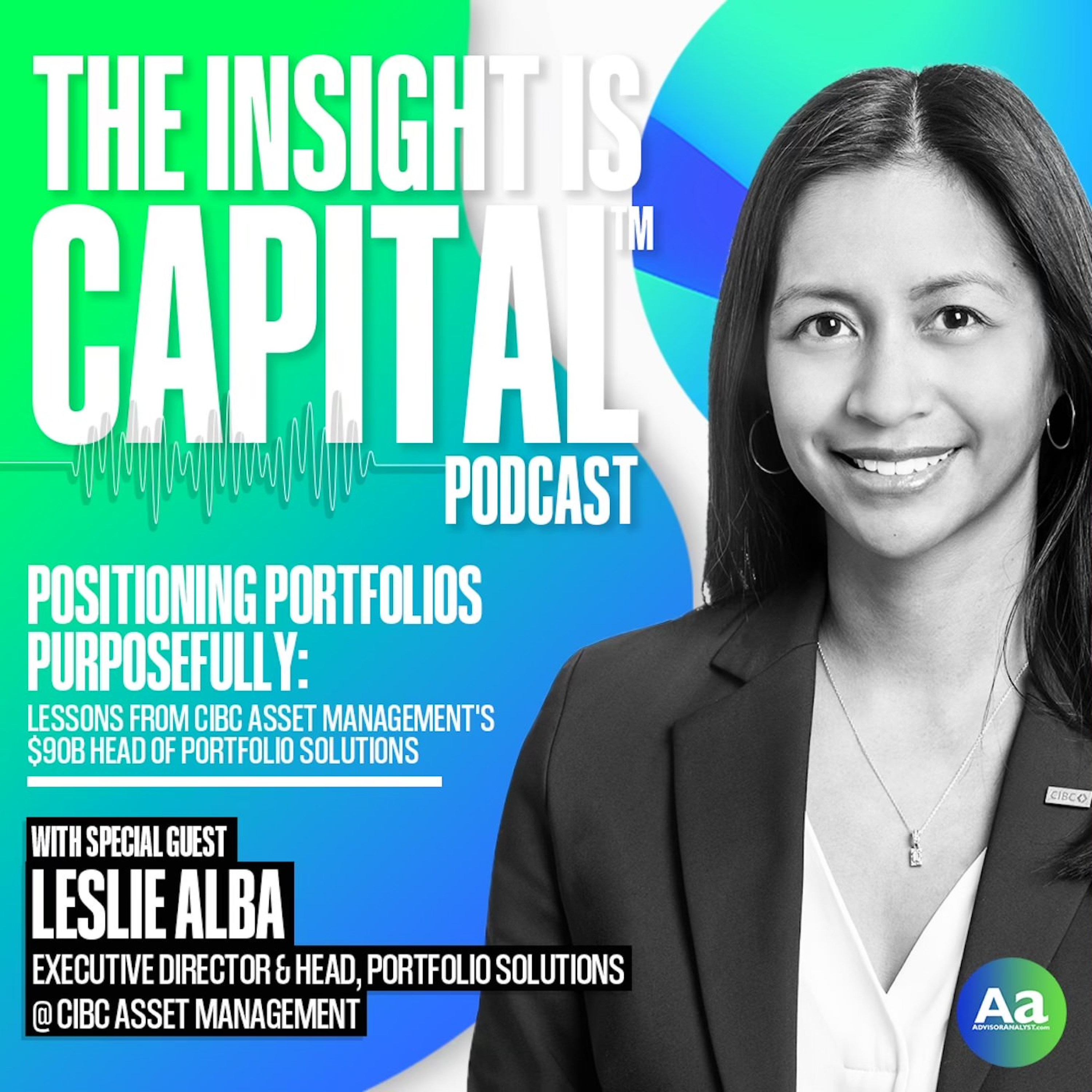 Leslie Alba: Positioning Portfolios Purposefully—Lessons from CIBC AM's $90B Head of Portfolio Solutions Leslie Alba: Positioning Portfolios Purposefully—Lessons from CIBC AM's $90B Head of Portfolio Solutions | Explore the evolving world of portfolio construction with Leslie Alba, CFA, CIBC Asset Management's $90-billion Head of Portfolio Solutions. Discover how to move beyond traditional diversification and embrace a total portfolio approach, balancing risk exposures for uncertain markets. Learn actionable insights for managing expectations and navigating market volatility. | — | ||||||
| 12/12/25 | 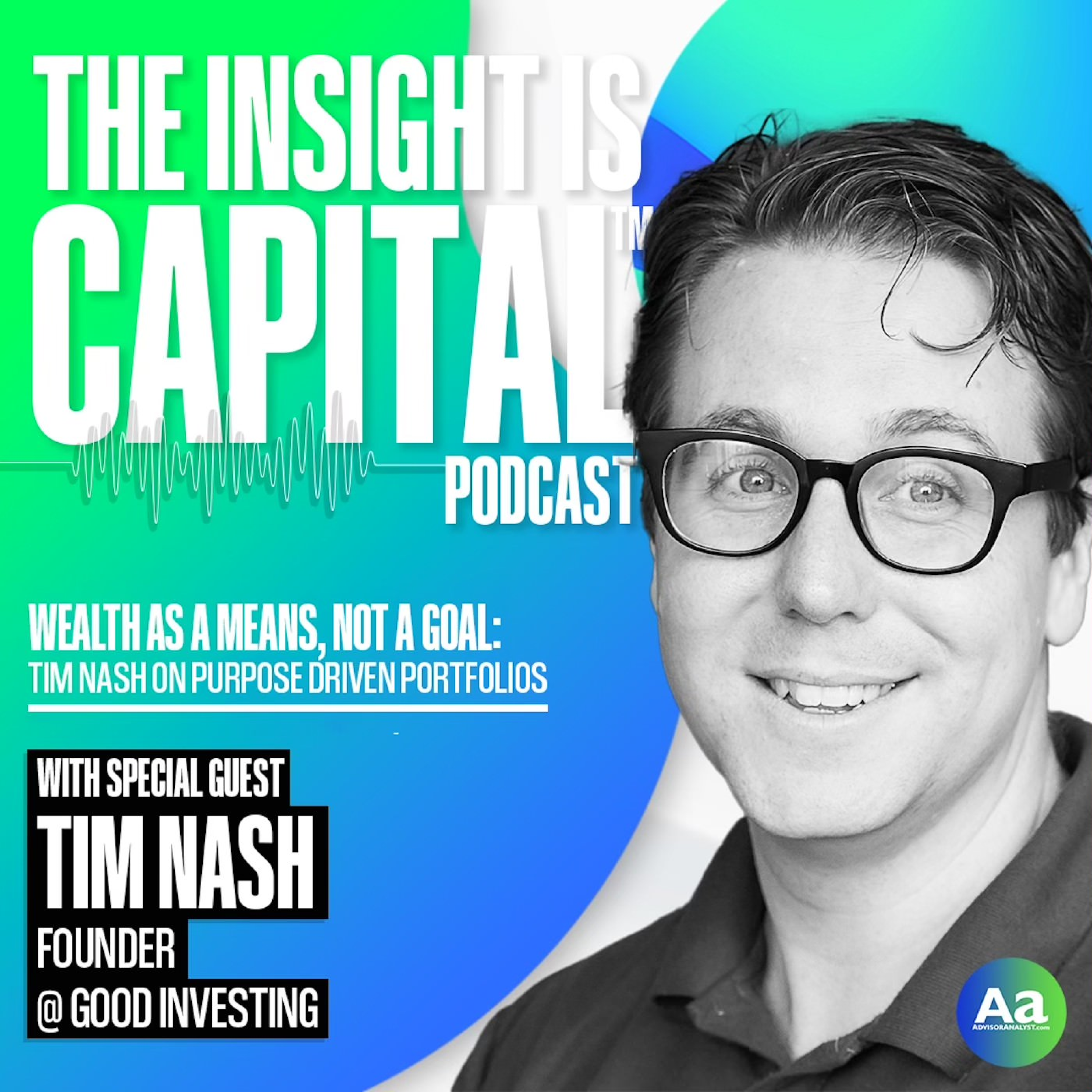 Wealth as a Means, Not a Goal: Investing With Intention in a Polarized World with Tim Nash Wealth as a Means, Not a Goal: Investing With Intention in a Polarized World with Tim Nash | In this wide-ranging and human conversation, host Pierre Daillie sits down with Tim Nash, Founder & CEO of Good Investing, to explore what it really means to invest with intention in an era of political polarization, ESG backlash, and growing client skepticism toward traditional finance. Drawing on more than 15 years of experience in sustainable investing, Tim reframes the debate around ESG, impact investing, and responsible capital allocation. Rather than positioning sustainability as a trade-off against returns, he argues that money is best understood as a means—a tool to support security, freedom, stability, and well-being—rather than an end in itself. The discussion moves well beyond product labels. Tim clearly maps the spectrum of sustainable investing approaches, from divestment and ESG integration to shareholder stewardship, thematic investing, and deep impact investments such as community bonds. Along the way, Pierre and Tim unpack why many advisors struggle with these conversations, how values alignment drives trust and client retention, and why listening—not judgment—is the most critical advisory skill in today’s environment. This episode is essential listening for advisors navigating generational wealth transfer, evolving client values, and the widening gap between what investors want and what the industry often delivers. | — | ||||||
Showing 25 of 254
Sponsor Intelligence
Sign in to see which brands sponsor this podcast, their ad offers, and promo codes.
Chart Positions
1 placement across 1 market.
Chart Positions
1 placement across 1 market.