Intelligent Design the Future
by Discovery Institute
Is this your podcast?On the show
From 35 epsHosts
Recent guests
Recent episodes
Servers & Souls: Cloud Computing and Personal Identity
Oct 16, 2026
1h 10m 03s
How an ID Framework Guides the Search for Habitable Worlds
Oct 14, 2026
24m 43s
I Helped Build NASA’s Latest Space Telescope. Here’s What It Will Do.
Oct 12, 2026
35m 07s
The Mystery of Life’s Origin, Then and Now
Oct 9, 2026
19m 38s
How Intelligent Engineering Can Solve the Electromagnetic Spectrum Crisis
Oct 7, 2026
44m 31s
Insights from recent episode analysis
Audience Interest
Podcast Focus
Publishing Consistency
Platform Reach
Insights are generated by CastFox AI using publicly available data, episode content, and proprietary models.
Most discussed topics
Brands & references
Total monthly reach
Based on 1 signal.
Built from
By chart position
- 🇺🇸United States · Life SciencesHOME#21203K to 1.1M
- 🇧🇷Brazil · Life Sciences#346.2K to 33K
- 🇨🇦Canada · Life Sciences#403.7K to 20K
- 🇦🇺Australia · Life Sciences#393.0K to 16K
- 🇵🇭PH · Life Sciences#133.0K to 16K
- Per-Episode Audience
Est. listeners per new episode within ~30 days
236K to 1.3M🎙 Daily cadence·200 episodes·Last published 2d ago - Monthly Reach
Unique listeners across all episodes (30 days)
788K to 4.2M🇺🇸86%🇧🇷3%🇨🇦2%+7 more - Active Followers
Loyal subscribers who consistently listen
433K to 2.3M
Market Insights
Platform Distribution
Reach across major podcast platforms, updated hourly
Total Followers
—
Total Plays
—
Total Reviews
—
* Data sourced directly from platform APIs and aggregated hourly across all major podcast directories.
Social Links & Contact
Official channels & resources
Official Website
Login
RSS Feed
Login
| Date | Episode | Topics | Guests | Brands | Places | Keywords | Sponsor | Length | |
|---|---|---|---|---|---|---|---|---|---|
| 10/16/26 |  Servers & Souls: Cloud Computing and Personal Identity | Like many, you may be storing important files and photos in the cloud. But just where is this magical cloud? How is it powered? Is it safe? To answer these questions and more, Mind Matters News host Robert J. Marks is joined by Walter Myers III, a principal engineering manager for Microsoft’s Azure Cloud and a Senior Fellow at Discovery Institute. Their conversation provides an overview of cloud computing infrastructure, including an explanation of where the cloud is physically located, the different service models (infrastructure, platform, and software as a service), and the technical details of how data is stored and protected in the cloud. Then, the conversation pivots to the philosophy of identity, exploring the philosophical concept known as the Ship of Theseus. This episode comes from our sister podcast Mind Matters News, a production of Discovery Institute's Bradley Center for Natural and Artificial Intelligence. Source | 1h 10m 03s | ||||||
| 10/14/26 | 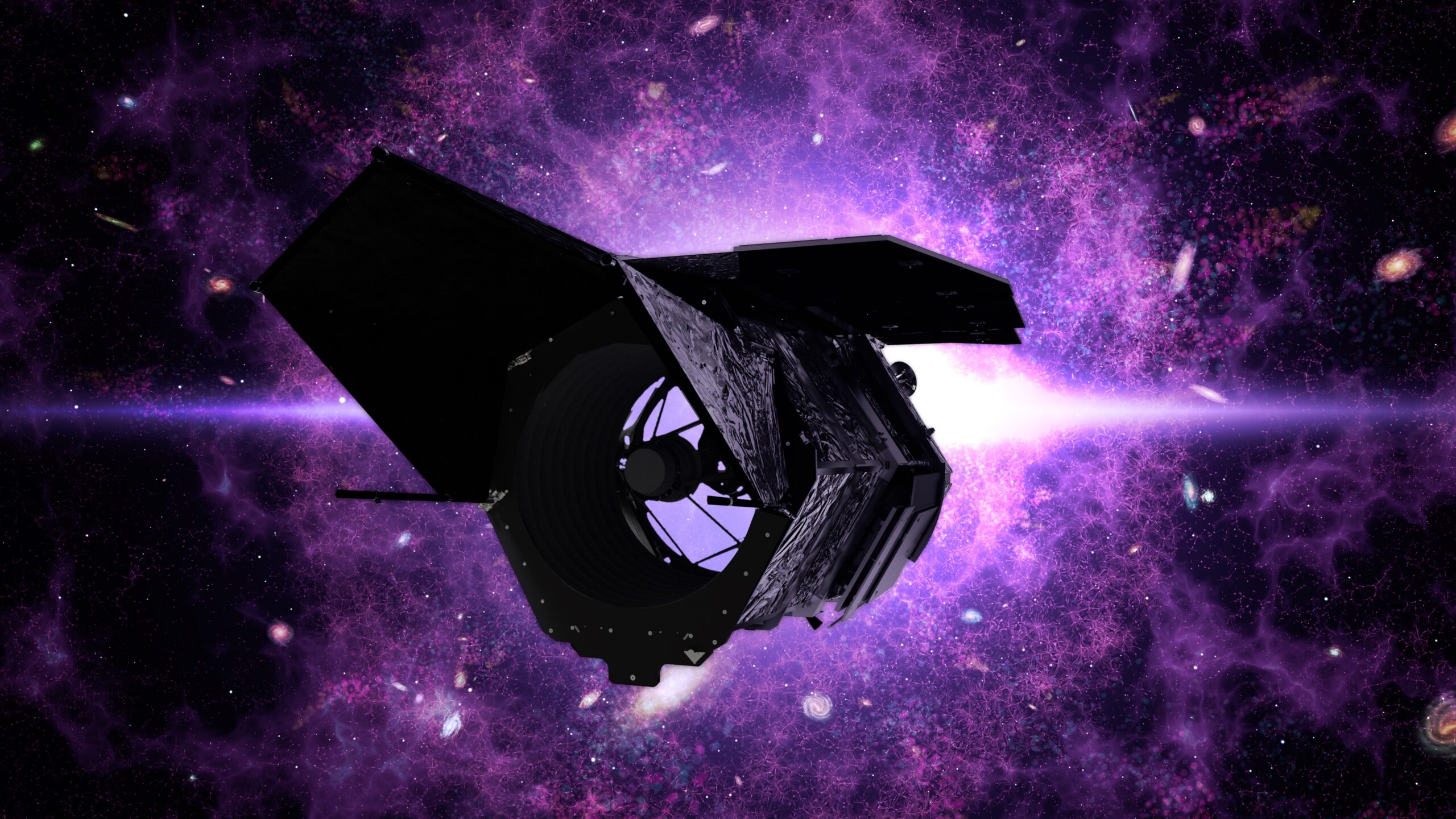 How an ID Framework Guides the Search for Habitable Worlds | How rare is Planet Earth in the vastness of the cosmos? Will we find other planets in space that could possibly harbor life? A new space telescope has just been launched that may help us with answers to those questions. On today's episode of ID The Future, host Andrew McDiarmid concludes a two-part conversation with physicist Dr. Bijan Nemati about his work on the Nancy Roman Space Telescope. In this segment, we dive deeper into what constitutes a habitable planet, how Roman will team up with the James Webb space telescope to discover hidden worlds, and how intelligent design can inform our expectations and interpretations of data sent back from Roman. Source | 24m 43s | ||||||
| 10/12/26 |  I Helped Build NASA’s Latest Space Telescope. Here’s What It Will Do. | A new space telescope was recently launched by NASA. What will it look for? Why do we need another telescope exploring the heavens? And how does an intelligent design perspective enrich both the expectations and interpretations of the telescope’s findings? Today on ID The Future, host Andrew McDiarmid is delighted to begin a two-part conversation with physicist Dr. Bijan Nemati about his work on the Nancy Roman Space Telescope. He’ll also help us understand the goals of the new observatory and how it will contribute to humanity’s understanding of the cosmos. This is Part 1 of a two-part conversation. Source | 35m 07s | ||||||
| 10/9/26 |  The Mystery of Life’s Origin, Then and Now | On this ID the Future our of the archive, guest host Robert J. Marks interviews chemist Charles Thaxton about a seminal 1984 book he co-authored, The Mystery of Life’s Origin, foundational to the intelligent design movement. The main body of Mystery was generally praised, Thaxton explains. It was the epilogue that proved controversial. There, the three authors reviewed five proposed explanations for life’s origins and suggested that the best explanation was that the first life originated through an act of creative intelligence. Thaxton also tells a little about the recently revised and expanded edition of the book, with new contributions from Stephen Meyer, Brian Miller, James Tour, and others. Source | 19m 38s | ||||||
| 10/7/26 |  How Intelligent Engineering Can Solve the Electromagnetic Spectrum Crisis | Today’s episode of ID The Future comes from our sister podcast Mind Matters News, a production of Discovery Institute’s Walter Bradley Center for Natural and Artificial Intelligence. Mind Matters regularly explores the nature of intelligence, the origin of information, and the things that make us uniquely human, all concepts that are central to the theory of intelligent design. Enjoy today’s offering of Mind Matters News! In this episode of Mind Matters News, host Robert J. Marks speaks with Baylor University spectrum experts Dr. Charles Baylis, Dr. Austin Egbert, and PhD candidate Jonathan Swindell about the nation’s pressing electromagnetic spectrum crisis. Have you ever thought about all of the electromagnetic waves in the room you’re in right now? You have invisible microwave cell phone signals in the air, plus all of the signals for broadcast television and AM and FM radio. Radiation from a GPS signal is there waiting for you to tap in. The range of frequencies in electromagnetic waves is known as the electromagnetic spectrum. And that spectrum is in great demand, with the rapid proliferation of personal wireless devices, radar network, and satellite weather sensors all competing for a spot. Managing the electromagnetic spectrum is our topic today. Source | 44m 31s | ||||||
| 10/5/26 |  Restoring the Natural Theology Tradition That Fueled Modern Science | What is the state of the debate over evolution and intelligent design in the UK? And how will Discovery Institute's new Cambridge initiative impact the debate going forward? On this ID The Future, host Andrew McDiarmid welcomes fellow Scotsman Dr. Alistair McKitterick, a Consulting Fellow at the Center for Science & Culture’s Whewell Center in Cambridge and a Program Director at London School of Theology. The pair will discuss how Alistair got interested in intelligent design, his work at the Whewell Center, and the state of the debate over evolution and intelligent design in the United Kingdom. Source | 34m 43s | ||||||
| 10/2/26 |  Sunlight And Water Are Uniquely Fit to Sustain Life | If the sun didn't power the photosynthesis of green plants, we wouldn't be breathing right now. And without the finely tuned properties of water, Earth would be a frozen, lifeless wasteland. Coincidence? Or is something else at work? On this classic episode of ID The Future out of the archive, host Andrew McDiarmid continues his ongoing series with Dr. Jonathan McLatchie unpacking the many features of our planet and the cosmos that allow for advanced life like ours to exist. Here, the discussion turns to the life-friendly properties of sunlight and water. Source | 22m 54s | ||||||
| 9/30/26 |  Science Suggests Matter and Meaning Are Both Real | What is the story of everything? Is there a scientific and philosophical basis for meaning? Today on ID The Future, host Andrew McDiarmid continues exploring those questions with physicist and author Dr. Eric Hedin. In Part 2, the conversation turns to the scientific and philosophical basis for meaning in the universe. Dr. Hedin argues that materialism "fails to describe the world we experience." He explores the problem with reducing life and the universe to their lowest terms. Sure, we boil down to matter in motion at the microscopic level, but we also live a life full of meaning at the macroscopic level. To acknowledge one and not the other, or to say that the one causes an illusion of the other, doesn't match up with what science is telling us, says Hedin. Source | 28m 23s | ||||||
| 9/28/26 |  A Designed Universe Makes Meaning Real, Not Illusory | Why are we here? Does life, or the universe, mean anything? And if it does, what? Today on ID The Future, host Andrew McDiarmid explores those questions and more with physicist and author Dr. Eric Hedin. Using the recent documentary film The Story of Everything as a springboard for discussion, Hedin shows that cumulative scientific evidence is pointing to a purposeful universe, not a cosmic accident. This is Part 1 of a two-part conversation. Look for Part 2 next! Source | 31m 59s | ||||||
| 9/25/26 |  Why Carbon is Finely Tuned for Life | In his book Darwin’s Black Box, biochemist Michael Behe writes that in order to understand the barriers to evolution, we have to “bite the bullet of complexity.” On this classic episode of ID The Future out of the vault, Dr. Jonathan McLatchie is back to help us do just that! In the latest installment of an ongoing series, Dr. McLatchie talks with host Andrew McDiarmid about the remarkable properties of carbon and other non-metal atoms. Source | 21m 13s | ||||||
Want analysis for the episodes below?Free for Pro Submit a request, we'll have your selected episodes analyzed within an hour. Free, at no cost to you, for Pro users. | |||||||||
| 9/23/26 |  Scoring the Universe: A Rubric for Cosmological Design | By now, you’re likely familiar with the multiverse hypothesis, which is actually just one of dozens of cosmological models proposed to explain away the significance of a beginning to the universe and the evidence for fine-tuning. But you may not know there’s a rigorous method to evaluate these models, which can prove helpful in understanding the flaws of each. On today's ID The Future, host Andrew McDiarmid continues his conversation about evaluating cosmological models with philosopher of physics Bruce Gordon and physicist Brian Miller. This is Part 2 of a two-part conversation. Source | 37m 43s | ||||||
| 9/21/26 |  Inscrutable Dice and Bean Jars: Answering Objections to Fine-Tuning | You’re likely familiar with the evidence for the fine-tuning of the universe, and you may be aware that there are several cosmological models attempting to explain away that fine-tuning, including the popular multiverse hypothesis. But did you know an ID scientist has developed a scientifically rigorous method for scoring those models? On this ID The Future, host Andrew McDiarmid begins a two-part conversation with philosopher of physics Bruce Gordon and physicist Brian Miller about Gordon's scoring system and how it evaluates the many models on offer that might explain the origin and development of the universe. This is Part 1 of 2. Source | 36m 54s | ||||||
| 9/18/26 |  Tech Entrepreneur on People-First AI Innovation in Business | Today’s episode of ID The Future comes from our sister podcast Mind Matters News, a production of Discovery Institute’s Walter Bradley Center for Natural and Artificial Intelligence. Mind Matters regularly explores the nature of intelligence, the origin of information, and the things that make us uniquely human, all concepts that are central to the theory of intelligent design. Enjoy today’s offering of Mind Matters News! How can entrepreneurs incorporate the benefits of AI while maintaining their dedication to serving fellow human beings? On this episode of Mind Matters News, host Robert J. Marks welcomes David Copps, a renowned entrepreneur, technologist, and thought leader with over two decades of experience pioneering advancements in artificial intelligence and other emerging technologies. Source | 1h 29m 50s | ||||||
| 9/16/26 |  The Missing 20 Years: What Designer Science Left Out | Is the intelligent design movement a short-lived phenomenon that has come and gone? Or is its steady and consistent growth evidence of a flourishing scientific program? On this ID The Future, host Andrew McDiarmid concludes his conversation with Dr. Casey Luskin about his critique of a recent book called Designer Science that portrays the ID movement as a short-lived political, cultural, and religious phenomenon that has produced little new research in the last two decades. In Part 2, Luskin turns to another major problem: Designer Science almost entirely ignores the last twenty years of ID scientific research and novel arguments. As the book gets retracted by the publisher, Luskin corrects the record in this conversation. This is Part 2 of a two-part conversation. Source | 54m 30s | ||||||
| 9/14/26 |  Fact-Checking Designer Science: Casey Luskin on ID History Errors | Is intelligent design dying out or just warming up? On this ID The Future, host Andrew McDiarmid welcomes Dr. Casey Luskin to a new and improved podcast studio for a sit-down, in-person conversation! Today, Dr. Luskin discusses a recent book called Designer Science that portrays the ID movement as a short-lived political, cultural, and religious phenomenon. Luskin reveals some egregious errors in this purported comprehensive history of ID. First, a made-up quote from Michael Behe used to support one of the book's major premises. Second, some glaring omissions, including a number of scientific breakthroughs and developments from ID scientists in the last two decades. This is Part 1 of a two-part conversation. Look for Part 2 next! Also available in video format on our YouTube channel! Source | 49m 29s | ||||||
| 9/11/26 | 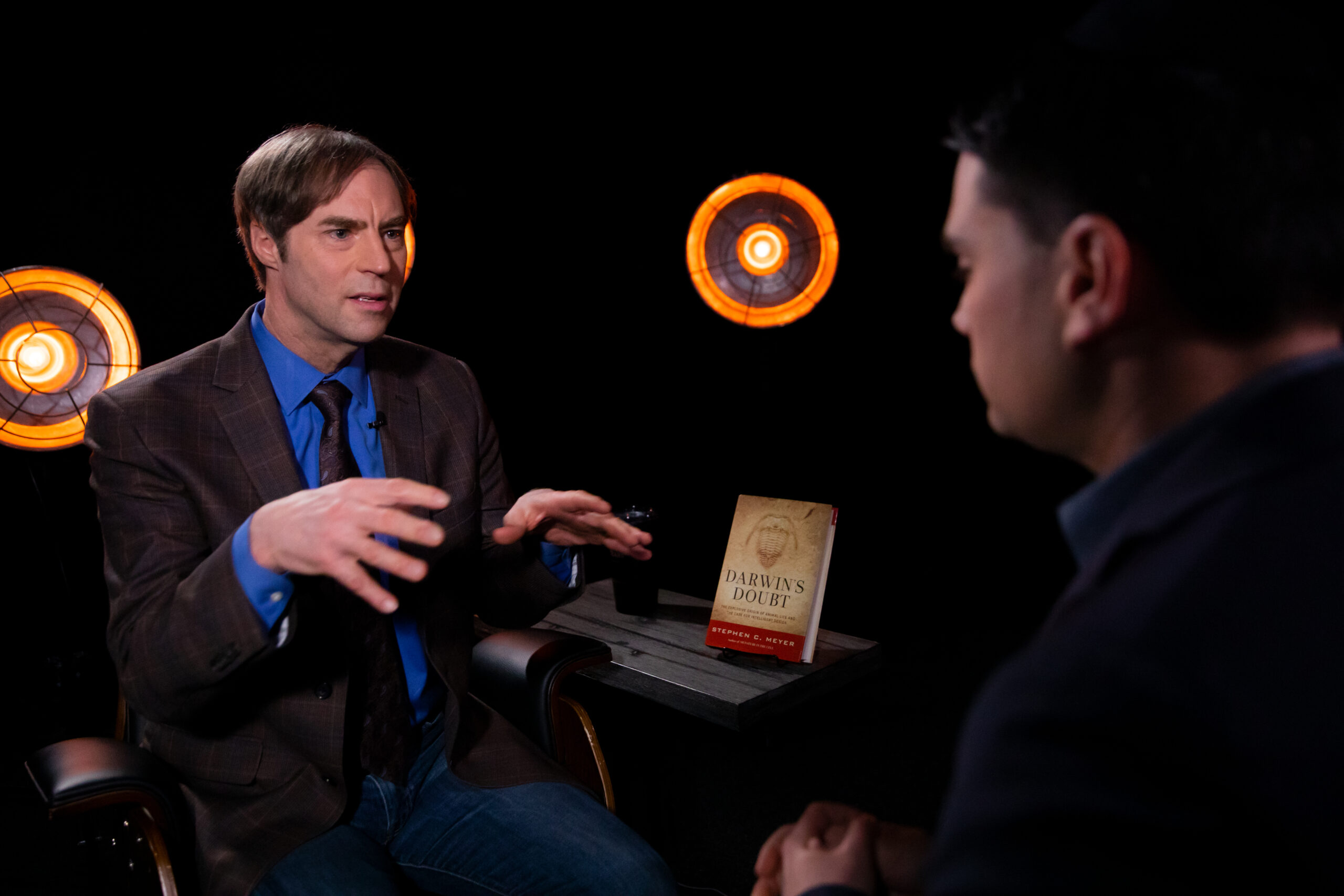 Stephen Meyer & Ben Shapiro Discuss the Origin of Information | On this episode of ID The Future from our archive, we’re bringing you the concluding half of a 2019 interview between Daily Wire host Ben Shapiro and philosopher of science Dr. Stephen C. Meyer. The conversation is now seven years old, so it's a good time to dust it off and share it with those who may have missed it or forgotten about it. Dr. Meyer considers this one of the best interviews he’s done on the subject of his second solo book Darwin’s Doubt. Shapiro was extremely well-prepared and asked great questions, resulting in a thought-provoking and thoroughly engaging hour-long conversation. In the second half, Dr. Meyer and Shapiro discuss the origin of life. Source | 32m 46s | ||||||
| 9/9/26 |  Priors & Proof: Brian Miller Unpacks the Meyer/Halper Debate | Are the Big Bang and the evidence for the fine-tuning of the universe evidence that supports theistic belief or undermines it? On this ID The Future, host Andrew McDiarmid welcomes Dr. Brian Miller to give us a breakdown of a recent debate between philosopher of science Dr. Stephen Meyer and science communicator Phil Halper about the Big Bang, the arguments for fine-tuning, and the compatibility of science and faith in general. Source | 31m 44s | ||||||
| 9/4/26 | 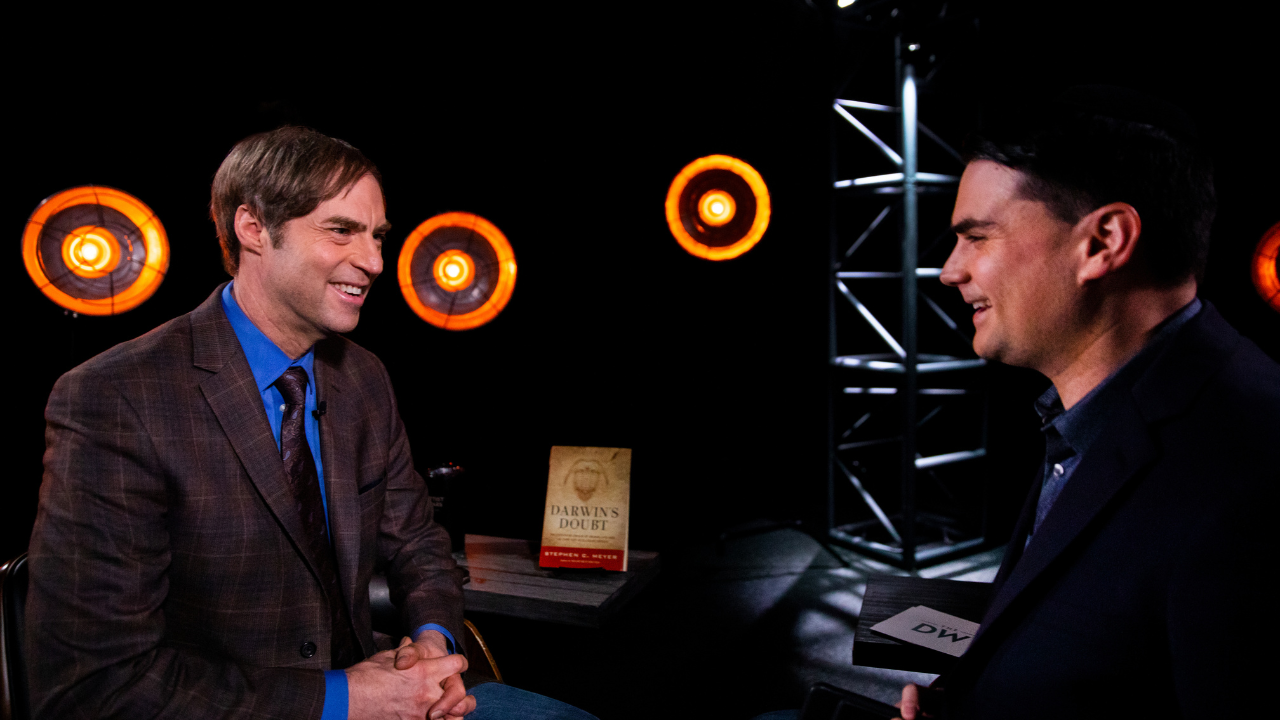 Stephen Meyer and Ben Shapiro Talk Intelligent Design | On this ID The Future selected out of the vault, we bring you the first half of Daily Wire host Ben Shapiro's 2019 interview with philosopher of science Dr. Stephen Meyer on The Ben Shapiro Sunday Special. This exchange happened seven years ago now, and we thought it was a good time to put it out there again for those who may not have heard it or don't remember it. Dr. Meyer considers this one of the best interviews he’s done on the subject of his second solo book Darwin’s Doubt. Shapiro was very well-prepared and asked great questions, resulting in a thought-provoking and thoroughly engaging hour-long conversation. We’ve got the first half of it for you today, followed by the concluding half in a subsequent episode. Source | 30m 47s | ||||||
| 9/2/26 |  Angus Menuge: A Defense of the Soul in the Age of AI | Today’s episode of ID The Future comes from our sister podcast Mind Matters News, a production of Discovery Institute’s Walter Bradley Center for Natural and Artificial Intelligence. In this episode of Mind Matters News, hosts Dr. Robert J. Marks and Pat Flynn welcome returning guest Dr. Angus Menuge, professor of philosophy at Concordia University Wisconsin, to discuss his paper “Powers of the Soul Beyond AI.” Dr. Menuge breaks down the philosophical and logical limits of artificial intelligence, targeting the concept of anthropic mechanism to explain why material machines cannot replicate the immaterial aspects of human agency. Through the lens of five distinct powers—including insight, meta-insight, and free will—Menuge explores why large language models and advanced computing systems fall short of genuine understanding and human consciousness. Source | 1h 13m 58s | ||||||
| 8/31/26 |  Physicist Robert Sheldon on Wonder, Discovery, and The Story of Everything | By now, you’ve likely heard of the new documentary film The Story of Everything. It’s a cinematic exploration of the evidence for intelligent design in the cosmos, from the fine-tuning of the universe to the stunning engineering in every living cell. Today on ID The Future, we continue our series of interviews with the scientists and scholars featured in The Story of Everything. Host Andrew McDiarmid welcomes plasma physicist Dr. Robert Sheldon to the podcast to discuss his participation in the movie and talk about his work in physics and cosmology. Source | 51m 13s | ||||||
| 8/28/26 |  Medicine’s Descent From Healing to Killing | If we believe there is no qualitative distinction between animals and humans, are we more likely to protect human life or devalue it? On this episode of ID The Future out of the vault, guest host Eric Anderson talks to historian Dr. Richard Weikart about his latest book, Unnatural Death: Medicine's Descent From Healing to Killing, now available from Discovery Institute Press. The book is a wide-ranging history of euthanasia and assisted suicide from Ancient Greece to today. How did we get to the point we are at today, and how do we turn the tide to promote the sanctity of human life? Tune in to find out. Source | 35m 09s | ||||||
| 8/26/26 |  The Real-Life Medicine and Science Behind Oppenheimer’s Demon | Most people know about the two atomic bombs dropped on Japan in 1945. But Robert Oppenheimer’s Manhattan Project had on hand another nuclear core. After claiming the lives of two scientists in separate accidents, it was dubbed the Demon Core and melted down. Some demons, however, are not so easily destroyed. Today, guest host Jonathan Witt concludes his conversation with medical doctor, disaster prep expert, and novelist Geoffrey Simmons about his new thriller novel Oppenheimer's Demon, now available from Discovery Institute Press. This is Part 2 of a two-part conversation. Source | 24m 40s | ||||||
| 8/24/26 |  Science & Suspense: Geoffrey Simmons Talks Oppenheimer’s Demon | Have you ever read a book wherein both the origin and end of man hang in the balance? That's a rare combination that comes together in a new disaster thriller novel now available from Discovery Institute Press. On this ID The Future, DI Press executive editor and CSC senior fellow Jonathan Witt takes a turn at the hosting mic as he welcomes medical doctor, disaster preparedness expert, and novelist Geoffrey Simmons to discuss his latest book Oppenheimer's Demon. This is Part 1 of a two-part conversation. Source | 22m 48s | ||||||
| 8/22/26 |  Why AI and Darwinian Theory Share the Same Computational Limits | Today’s episode of ID The Future comes from our sister podcast Mind Matters News, a production of Discovery Institute's Walter Bradley Center for Natural and Artificial Intelligence. On this episode of Mind Matters News, guest host Pat Flynn welcomes Dr. Winston Ewert to the show to discuss Ewert’s chapter in the volume Minding the Brain. In his contribution, titled “The Human Mind’s Sophisticated Algorithm and Its Implications,” Dr. Ewert argues that the human mind’s problem-solving cognition can be modeled as a sophisticated algorithm. Ewert explains that any cognitive task can be expressed as a version of the halting problem from computer science, where an algorithm either halts or continues infinitely. He suggests that humans are able to solve a large and sophisticated subset of these problems, but are limited in the same way that no algorithm can solve all halting problems. Ewert contends that this algorithmic view of human cognition has implications that challenge reductive materialist and neo-Darwinian views, despite resistance from some thinkers who believe human abilities transcend any algorithm. Source | 41m 19s | ||||||
| 8/19/26 | 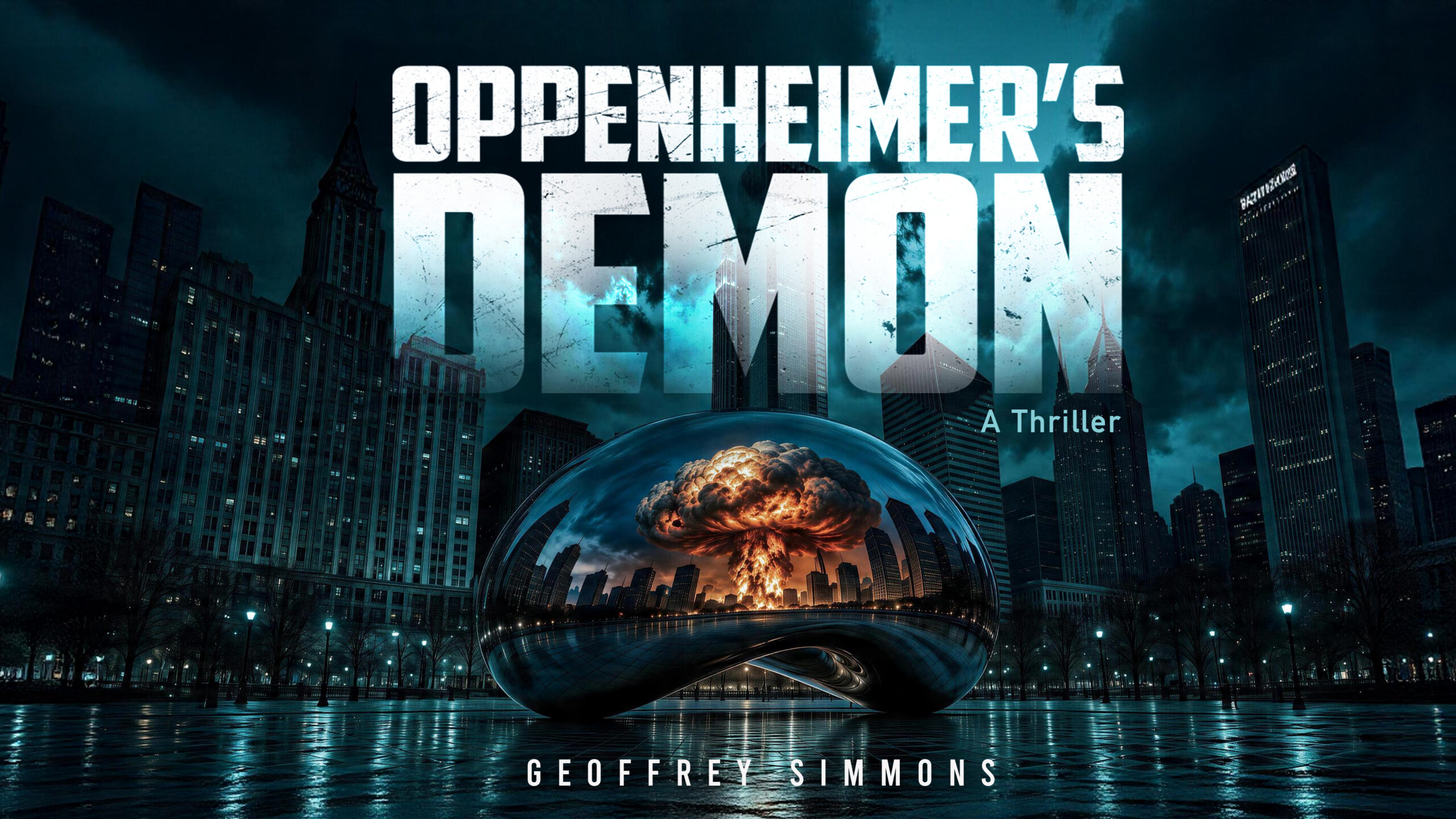 Race Against the Clock: Geoff Simmons Reads From Oppenheimer’s Demon | There are many books written by intelligent design scientists and scholars that explore the scientific evidence for intelligent design and the debate over evolution. But a new book published by Discovery Institute Press manages to be concerned with “both the origin and the end of man” in the same book! On this ID The Future, distinguished physician, successful novelist, and disaster preparedness expert Geoffrey Simmons is going to read to us a few scenes from his new thriller novel Oppenheimer’s Demon. Source | 30m 27s | ||||||
| 7/20/26 | designscience+4 | Stephen Meyer | Discovery InstitutePiers Morgan Uncensored+1 | — | scientific evidencepurposeful design+5 | — | 37m 10s | ||
| 7/17/26 | human cognitionartificial intelligence+3 | Dr. Joe McDonald | Mind Matters NewsDiscovery Institute | — | human cognitionartificial intelligence+3 | — | 47m 02s | ||
| 7/16/26 | evolutiontheistic evolution+4 | Father Michal ChaberekSteve Greene | Discovery InstituteCreation or Evolution? A Catholic Dilemma | — | evolutiontheistic evolution+4 | — | 54m 24s | ||
| 7/13/26 | theistic evolutionfaith and science+4 | Father Michal ChaberekSteve Greene | CatholicCreation or Evolution? A Catholic Dilemma | — | creationevolution+6 | — | 44m 12s | ||
| 7/10/26 | vitalismNeo-Darwinism+3 | Daniel Witt | Discovery Institute | — | vital forceDarwinian paradigm+3 | — | 33m 10s | ||
| 7/8/26 | reasonDarwinism+4 | Rebekah Valerius | Discovery InstituteMind Over Matter: Darwin, AI, and the Future of Reason | — | reasonDarwinism+5 | — | 31m 32s | ||
| 7/6/26 | reasonnaturalism+5 | Rebekah Valerius | The Anchor of ReasonDarwinism+2 | — | reasonnaturalism+5 | — | 34m 10s | ||
| 7/3/26 | exoplanetshabitable worlds+4 | Bijan Nemati | NASARoman Space Telescope+1 | — | habitable planetsexoplanet research+5 | — | 24m 56s | ||
| 7/1/26 | artificial intelligenceglobal missions+3 | Dr. Don Barger | International Mission BoardDiscovery Institute+2 | — | AIglobal missions+5 | — | 1h 11m 05s | ||
| 6/29/26 | cell biologyepigenetics+4 | Dr. Tom Woodward | Epigenetics and the ArchitectFantastic Voyage+2 | — | cellDNA+4 | — | 20m 34s | ||
| 6/11/26 | muscle functionmolecular machinery+3 | Dr. Robert Waltzer | Discovery Institute | — | muscle functionmolecular engineering+5 | — | 33m 05s | ||
| 6/8/26 | muscle biologyengineering solutions+3 | Dr. Robert Waltzer | Belhaven UniversityDiscovery Institute | — | muscleengineering+3 | — | 33m 05s | ||
| 6/6/26 | E. coliDarwinian evolution+3 | Dr. Scott Minnich | Discovery Institute | — | E. colievolution+7 | — | 21m 22s | ||
| 6/4/26 | artificial intelligenceengineering+3 | Dr. Donald C. Wunsch II | Mind Matters NewsDiscovery Institute+1 | — | AI hypeengineering realism+3 | — | 4h 08m 03s | ||
| 6/1/26 | aliensintelligent design+3 | Dr. Casey Luskin | Discovery Institute | — | aliensintelligent design+4 | — | 27m 37s | ||
| 5/30/26 | intelligent designmicrobiology+4 | Dr. Scott Minnich | Unlocking the Mystery of Life | — | intelligent designmicrobiology+7 | — | 29m 50s | ||
| 5/27/26 | worldviewintelligent design+4 | Nancy Pearcey | Discovery InstituteeX-skeptic Podcast | — | Nancy Pearceyworldview+5 | — | 1h 03m 19s | ||
| 5/25/26 | human engineeringintelligent design+3 | Stuart Burgess | Team Great BritainDiscovery Institute | — | human bodyengineering+5 | — | 32m 43s | ||
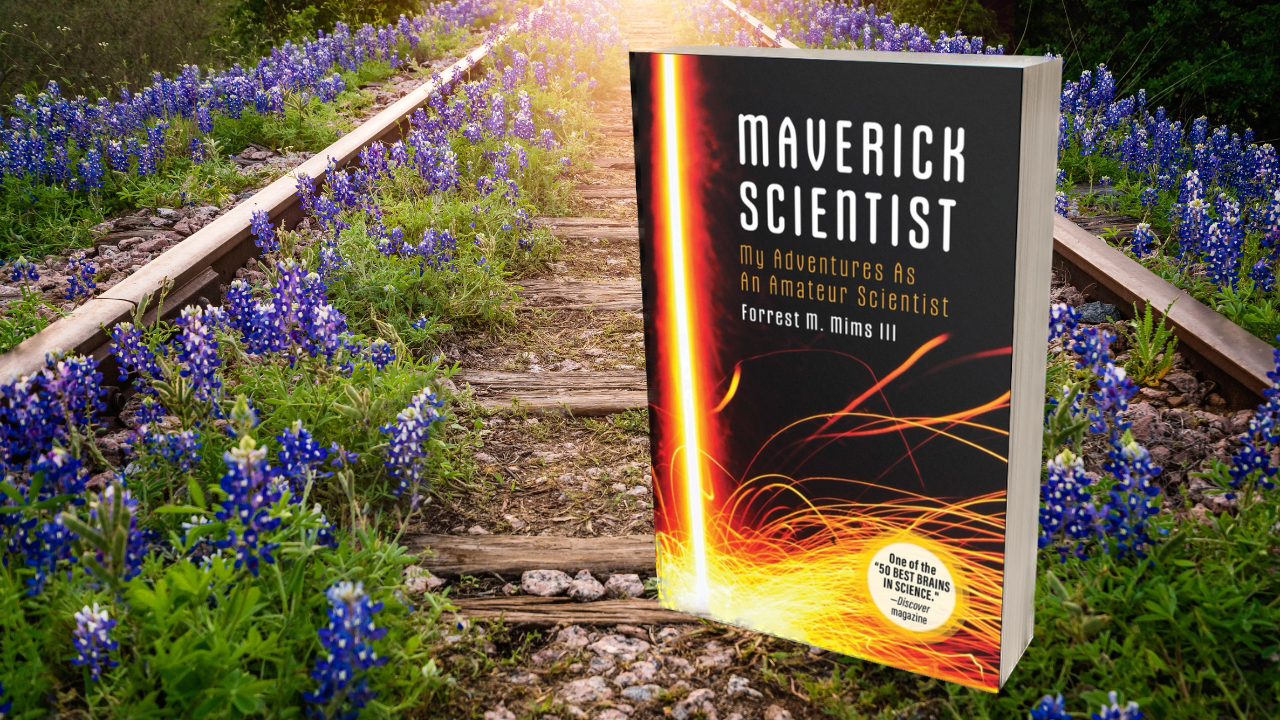
| 5/22/26 | self-taught scientistscience and technology+3 | — | Maverick Scientist: My Adventures as an Amateur Scientist | — | Forrest Mimsself-taught scientist+5 | — | 16m 34s | ||
| 5/20/26 | fine-tuningintelligent design+4 | Peter S. Williams | Discovery Institute | — | fine-tuningintelligent design+5 | — | 50m 29s | ||
| 5/9/26 | Big Bang theorycosmology+4 | Jean-Pierre Luminet | Discovery InstituteThe Big Bang Revolutionaries | — | Big Bang theoryGeorges Lemaitre+5 | — | 26m 12s | ||
| 5/7/26 | neuroscienceself-brain surgery+3 | Dr. Lee Warren | The Life-Changing Art of Self-Brain Surgery | — | brain structureself-brain surgery+3 | — | 52m 10s | ||
| 5/4/26 | film musiccosmos+3 | Hannah Parrott | The Story of Everything | — | musicdocumentary+5 | — | 23m 55s | ||
| 5/1/26 | Big Bang Theorycosmology+3 | Jean-Pierre Luminet | Discovery Institute PressThe Story of Everything+1 | — | Big Bangcosmology+3 | — | 31m 48s | ||
| 4/30/26 | intelligent designcosmic design+3 | Dr. Timothy McGrew | Discovery InstituteThe Story of Everything+1 | — | intelligent designcosmic design+3 | — | 43m 27s | ||
| 4/27/26 | astrophysicsintelligent design+3 | Dr. Sarah Salviander | The Story of Everything | — | astrophysicistintelligent design+5 | — | 45m 37s | ||
| 4/25/26 | intelligent designfine-tuning+4 | Michael Denton | Discovery InstituteEvolution: A Theory in Crisis+1 | — | intelligent designMichael Denton+4 | — | 25m 29s | ||
| 4/22/26 | neo-Darwinismdesign of life+3 | Dr. Douglas AxeDr. Michael Behe | The Story of Everything | — | neo-Darwinismdesign+4 | — | 34m 44s | ||
| 4/20/26 | cell biologymolecular biology+3 | Dr. Douglas AxeDr. Michael Behe | Discovery InstituteThe Story of Everything | — | cellDarwin+4 | — | 34m 34s | ||
| 4/18/26 | mirror neuronsconsciousness+3 | Dr. Mihretu Guta | Minding the BrainMirror Neurons, Consciousness, and the Bearer Question | — | mirror neuronsconsciousness+3 | — | 1h 31m 06s | ||
| 4/16/26 | intelligent designcosmos+4 | Brian Miller | Discovery InstituteCSC Education & Outreach+2 | — | intelligent designBrian Miller+4 | — | 21m 29s | ||
| 4/13/26 | extraterrestrial lifeUFO data+3 | Eric Esau | NASAU.S. government+4 | — | Artemis IImoon mission+3 | — | 40m 23s | ||
| 4/11/26 | panspermiaastrobiology+4 | Guillermo Gonzalez | Discovery InstituteThe Comprehensive Guide to Science and Faith | — | panspermiaastrobiology+5 | — | 17m 50s | ||
| 4/8/26 | DarwinismAmerican life+4 | Dr. John West | Discovery InstituteEndowed By Our Creator: The Bible, Science, and the Battle for America’s Soul | America | Darwinismunalienable rights+5 | — | 34m 01s | ||
| 4/7/26 | Declaration of Independencephilosophy+4 | Dr. John West | Endowed By Our Creator: The Bible, Science, and the Battle for America’s SoulDeclaration of Independence | — | Declaration of Independenceunalienable rights+5 | — | 42m 08s | ||


























Showing 60 of 200
Pitch Fit is a Pro feature
See how bookable this show is for guests, which brands already advertise, the per-episode ad value, and the best-fit guest and sponsor profile. The numbers are blurred on the free plan.
How readily this show books outside guests like you.
How proven this show is for host-read sponsorships.
For Guests
ProFor Advertisers
ProUpgrade to Pro to unlock guest cadence, sponsor categories, fit scores, and per-episode ad value for this show.
Similar Audience Demographics
Podcasts that attract a similar listener profile

Socrates in the City
Socrates in the City

Reasonable Faith Podcast
William Lane Craig

Stand to Reason Weekly Podcast
Greg Koukl

The Sean McDowell Show
The Sean McDowell Show

The Cold-Case Christianity Podcast
J. Warner Wallace

I Don't Have Enough FAITH to Be an ATHEIST
Dr. Frank Turek

Unbelievable?
Premier Unbelievable?
Chart history for Intelligent Design the Future
Peaked at #13 in PH, currently #13 in PH.
| Market | Genre | Peak | Current | Trend |
|---|---|---|---|---|
| PH | — | #13 | #13 | — |
| Finland | — | #15 | #15 | — |
| NG | — | #20 | #20 | — |
| United States | — | #21 | #21 | — |
| TH | — | #23 | #23 | — |
| South Africa | — | #27 | #27 | — |
| Brazil | — | #34 | #34 | — |
| New Zealand | — | #36 | #36 | — |
| Australia | — | #39 | #39 | — |
| Canada | — | #40 | #40 | — |
| Japan | — | #40 | #40 | — |
| Sweden | — | #41 | #41 | — |
| CZ | — | #44 | #44 | — |
| CH | — | #51 | #51 | — |
| KE | — | #51 | #51 | — |
| United Kingdom | — | #61 | #61 | — |
| TR | — | #63 | #63 | — |
| Mexico | — | #63 | #63 | — |
| Norway | — | #71 | #71 | — |
| Netherlands | — | #74 | #74 | — |
Chart Positions
34 placements across 31 markets.
Chart Positions
34 placements across 31 markets.