
Insights from recent episode analysis
Audience Interest
Podcast Focus
Publishing Consistency
Platform Reach
Insights are generated by CastFox AI using publicly available data, episode content, and proprietary models.
Most discussed topics
Brands & references
No brand mentions extracted.
Est. Listeners
Insufficient chart data. Estimates will improve as the show charts.
- Per-Episode Audience
Est. listeners per new episode within ~30 days
N/A🎙 Daily cadence·100 episodes·Last published 3w ago - Monthly Reach
Unique listeners across all episodes (30 days)
N/A - Active Followers
Loyal subscribers who consistently listen
N/A
Market Insights
Platform Distribution
Reach across major podcast platforms, updated hourly
Total Followers
—
Total Plays
—
Total Reviews
—
* Data sourced directly from platform APIs and aggregated hourly across all major podcast directories.
On the show
From 1 epsHost
Recent guests
No guests detected in recent episodes.
Recent episodes
A Beer with Jesus & Grits from Grandma: Inconvenient Ideas for a Busy World
Jun 3, 2026
Unknown duration
The Indianapolis 500: Speed, Danger, Memory, and American Mythology
May 26, 2026
Unknown duration
Random Thoughts. Real Time. Radical Truth. Why the Most Inconvenient Ideas Might Be the Ones That Change Your Life By Stan Hustad
Apr 21, 2026
17m 44s
You're Missing the Most Important Hire in Your Business… And It's Not Who You Think
Apr 15, 2026
Unknown duration
Big Sticks, Bigger Questions, and Your Superpower: An Inconvenient Return to Realit
Apr 14, 2026
Unknown duration
Social Links & Contact
Official channels & resources
Official Website
Login
RSS Feed
Login
| Date | Episode | Topics | Guests | Brands | Places | Keywords | Sponsor | Length | |
|---|---|---|---|---|---|---|---|---|---|
| 6/3/26 |  A Beer with Jesus & Grits from Grandma: Inconvenient Ideas for a Busy World | Busy, but Becoming: Finding Purpose in Everyday Moments and Unlikely Questions In this episode of Inconvenient Ideas Radio, veteran broadcaster Stan Hustad brings together a surprising mix of reflections—ranging from media wisdom to faith, from family stories to modern challenges—into a thoughtful and engaging conversation about what really matters. At the heart of the program is a question many quietly wrestle with: Is being busy the same as being effective? Hustad explores the tension between activity and impact, encouraging listeners to consider how their time, talents, and opportunities can best serve others. With characteristic warmth and storytelling, he moves effortlessly between topics. A simple errand—buying grits for a grandson in New York—becomes a reminder of connection, legacy, and the small acts that brighten lives. A passing song about "having a beer with Jesus" sparks a deeper reflection: how would timeless wisdom show up in today's world, especially in a media-driven age? Hustad also challenges listeners to embrace an unavoidable reality: communication has changed. Whether plumber, philosopher, or entrepreneur, everyone is now called to step "behind the golden microphone" and into the world of audio, video, and digital storytelling. In his view, learning to communicate authentically in modern media is no longer optional—it is essential. With references to faith, culture, and current events, including reflections on public figures and personal loss, the program invites listeners to slow down, think deeply, and engage courageously with both opportunity and uncertainty in today's rapidly evolving world. Ultimately, this episode is less about answers and more about perspective—an invitation to live thoughtfully, communicate effectively, and make a meaningful mark in a noisy, busy age. Key Takeaways - Being busy is not the same as being purposeful - Small, human moments (like "grits from grandma") carry deep meaning - Communication is the new currency—everyone must learn it - Faith and modern life are not separate—they intersect daily - Curiosity ("What would Jesus do today?") can open powerful insights - The world is changing quickly—especially with AI—and requires thoughtful navigation Things to Remember - You are already a communicator—refining that skill changes everything - Tradition (like tipping a hat) still teaches respect and awareness - Relationships often matter more than achievements - Your voice—literally and figuratively—has value Things to Learn - Basic video and audio communication skills - How to tell your story in a clear, helpful way - How to adapt timeless principles to modern tools (including AI) - How to balance productivity with purpose Things to Share - Encourage others to develop their voice and message - Pass along meaningful small acts—like the grits story - Start conversations about purpose, not just performance - Share insights about faith expressed in everyday life Possible Actions - Record a short video sharing something useful from your field - Reach out to someone across generations (family or community) - Evaluate your weekly schedule: What truly matters? - Begin learning one new communication tool (audio, video, or AI-assisted) Closing Challenge This week, ask yourself one honest question: Am I just busy… or am I becoming someone who makes a difference? Then take one small, visible step to align your actions with your answer. Reflection / Meditation Take a quiet moment and consider: - If wisdom walked into your world today, would you recognize it? - Would it speak through a microphone… or through a simple act of kindness? - Where is your "grits from grandma" moment waiting to happen? Pause. Listen. Then act. | — | ||||||
| 5/26/26 |  The Indianapolis 500: Speed, Danger, Memory, and American Mythology | A reflective essay on the danger, drama, and cultural memory surrounding the Indianapolis 500 A Childhood Memory That Was Real Your memory is not exaggerated at all. The Indianapolis 500 really was considered extraordinarily dangerous for much of its history, and part of the fascination — especially from the 1930s through the 1970s — was precisely that mixture of speed, courage, patriotism, spectacle, and risk. For many Americans, especially in Indiana and throughout the Midwest, "The 500" was almost a sacred ritual of late May and Memorial Day weekend. Families gathered around radios and later televisions. Drivers became folk heroes. Yet underneath the celebration was a very real awareness that somebody might not come home alive. The Danger Was Very Real In the early decades of the Indy 500, fatalities were tragically common. The cars were primitive compared to modern standards. Drivers sat in open cockpits with little protection. Fuel tanks could rupture. Fires were frequent. Helmets and safety systems were minimal. The speeds were astonishing for the technology of the time. Drivers were viewed almost like test pilots or gladiators. Newspapers often described them as fearless men willing to risk everything for glory and victory. Over the history of the race, dozens of drivers, mechanics, and others connected to the event lost their lives either during the race itself, in practice sessions, or during qualifying. The Indianapolis Motor Speedway earned a reputation as both legendary and unforgiving. The Famous Driver Many People Remember One of the most famous tragedies involved Bill Vukovich, one of the greatest drivers in Indianapolis history. Vukovich was killed during the 1955 Indianapolis 500 while leading the race. His death shocked the racing world because many believed he was virtually unbeatable at the Speedway. For fans of that generation, Vukovich's death became symbolic of the terrible cost of speed. Other legendary names connected with the dangerous years of Indy racing included Jimmy Bryan, Swede Savage, Tony Bettenhausen, Eddie Sachs, and Dave MacDonald. The 1964 crash involving Eddie Sachs and Dave MacDonald was especially horrifying and helped force major changes in racing safety. Part of the Appeal Was the Risk Modern audiences sometimes forget how much danger shaped the mythology of automobile racing. People did not generally watch hoping someone would die. But the awareness that disaster could happen at any moment created enormous drama. Drivers were admired because they knowingly faced danger. The tension between triumph and tragedy became part of the emotional power of the event. That same atmosphere surrounded early aviation, boxing, mountain climbing, and many frontier-style pursuits. America admired daring. Decoration Day and Memorial Day Your recollection of "Decoration Day" is historically important. Before Memorial Day became more commercialized, it carried a deeper spirit of remembrance, sacrifice, courage, and national identity. The Indianapolis 500 became closely linked with that atmosphere. In many ways, the drivers themselves symbolized a particular American ideal: boldness, innovation, toughness, and the willingness to risk everything. For boys growing up in Indiana, hearing the roar of the engines and the dramatic radio broadcasts made the race feel larger than life. Safety Changed the Sport Modern IndyCar racing is dramatically safer than it once was. Improvements include energy-absorbing walls, fire-resistant suits, advanced helmets, enclosed survival cells, safer fuel systems, and highly trained emergency medical teams. Fatalities are now far rarer than in earlier generations, although racing still involves real danger. Ironically, some longtime fans believe that as safety improved, part of the old mystique disappeared. The sport became more technical and less mythic. A Story Worth Sharing Your memory touches something bigger than racing itself. The Indianapolis 500 represented a period in American culture when courage and danger were publicly intertwined. Heroes were often people who accepted enormous personal risk in pursuit of excellence. The deaths were not celebrated, but the willingness to face danger was deeply respected. For many young people growing up in Indiana and across America, the Indianapolis 500 became part sport, part mythology, and part national memory — a dramatic yearly reminder of speed, ambition, courage, and the unpredictable nature of life itself. "Back home again in Indiana…" became more than a song. For generations, it was part of the emotional soundtrack of courage, memory, and American storytelling. | — | ||||||
| 4/21/26 |  Random Thoughts. Real Time. Radical Truth. Why the Most Inconvenient Ideas Might Be the Ones That Change Your Life By Stan Hustad✨ | real-time reflectioninconvenient ideas+4 | — | — | — | POM thinkingimmediacy+5 | — | 17m 44s | |
| 4/15/26 |  You're Missing the Most Important Hire in Your Business… And It's Not Who You Think | Why Every Company Now Needs a Chief Broadcasting Officer (CBO) By Stan "The Radio Man" Hustad The What It Takes Radio Company presents another adventure… another expedition… and this one might just disrupt the way you think about your entire business. Let me start with a simple—but slightly inconvenient—idea: You are probably missing a very important person in your business today. And no… it's not your CFO. Not your CMO. Not even your AI specialist. You need a CBO. A Chief Broadcasting Officer. AI is changing everything. But we're not just entering a digital economy—we're entering a performance economy. It's not enough to know something, build something, or market something. You must communicate it—clearly, powerfully, and consistently. That's broadcasting. There's a difference between someone who does a podcast and someone who is a broadcaster. Broadcasting is not just a skill. It's a state of mind. It's curiosity. Presence. Connection. The best broadcasters are the most curious people in the room. Every person has a story. The question is—are you curious enough to discover it? Every person you meet is wearing an invisible sign that says: "Please tell me I'm important." Read the sign. In today's world, your communication determines your success. Your Zoom calls matter. Your videos matter. Your voice matters. If you want to succeed today, you must learn how to perform across media. This is the new degree: Master of Self-Expression. THINGS TO REMEMBER We are living in a performance economy. Communication is core strategy. Curiosity drives connection. THINGS TO SHARE Every business needs a CBO. Curiosity is power. Broadcasting is identity. THINGS TO ACT UPON Improve your communication skills. Invest in your presence. Develop or hire a CBO. A PERSONAL CHALLENGE If you can't communicate it, you can't scale it. A CLOSING BENEDICTION May you find your voice in a noisy world. May your curiosity open doors. May your message reach those who need it most. You are not just building a business. You are broadcasting a story. Make it worth hearing. | — | ||||||
| 4/14/26 |  Big Sticks, Bigger Questions, and Your Superpower:
An Inconvenient Return to Realit | By Stan Hustad There are times in life when you step away for a bit—whether by design or by necessity—and when you return, you see things differently. That happened to me. After a stretch of what I'll call "downtime, overtime, and out-of-time," I'm back behind the microphone with a fresh installment of Inconvenient Ideas. And it felt only right to begin with a simple—but unsettling—question: What if everything we think we know… might be wrong? Now, that's not a comfortable thought. But then again, the best ideas rarely are. The Power—and Problem—of Inconvenient Ideas I've come to believe something that may surprise you: The most valuable ideas are often the most inconvenient. They interrupt our assumptions. They challenge our comfort zones. They force us to rethink what we thought was settled. And right now, we're living in one of those moments—where everything is shifting. AI: Not a Tool… a Tidal Wave Let me begin with a confession. When I first started talking about artificial intelligence, I said, "Not much will change… but some things will." Well… I was wrong. A lot is going to change. In fact, it already is. I recently faced a complex business problem with my team—one that might have taken us an entire day (or more) to solve. Instead, I turned to my AI assistant. Within minutes, we had: - Research - Contacts - A workable solution Problem solved in five minutes. That's not evolution. That's disruption. The Four A's of AI Here's how I now understand AI—through what I call the Four A's: Aggregation – It gathers knowledge from everywhere Amplification – It expands and clarifies ideas Acceleration – It moves faster than any human workflow Artistry – It creates visuals, language, and expression with remarkable skill That combination is powerful—and potentially dangerous if ignored. Those who learn to use AI will surge ahead. Those who don't… may fall behind quickly. The Rise of the Creator Capitalist You must learn to create value in a way that also creates income. Creativity is no longer optional. Expression is now economic. And everyone is in the marketplace. So Here's the Big Question: What's Your Superpower? What is your superpower? What do you do exceptionally well? What could you become known for? What category could you own? Noise vs. Signal: Why Expression Matters More Than Ever A lot of traditional communication is losing its power. Blogs without emotion are ignored. Words without energy are forgotten. Ideas without expression are invisible. You don't just need to say something. You need to move something. A World of Big Sticks and Bigger Decisions Power matters. Not just words. Not just intentions. But the ability to act—and create outcomes. A Personal Reflection: What Does It Mean to Be Useful? Be useful. Ask yourself—what can I do that is useful to others? That's where real value begins. The Cowboy Spirit and the Future of Storytelling We're building something new: A broadcasting collective A publishing platform A performing network All rooted in one idea: Help people live well… and flourish. If your business does not help people flourish—it's probably a wreck. Things to Remember - The most valuable ideas are often inconvenient - AI is transformational - Your superpower is your leverage - Expression matters - Power creates outcomes Things to Share - The Four A's of AI - Discovering your superpower - Thinking like an entrepreneur - Being useful Things to Take Note Of (and Act Upon) - Identify your superpower - Use AI daily - Upgrade communication - Be useful every day A Final Thought—and an Invitation Inconvenient times create uncommon people. Don't just survive—step into it. Be useful. Be powerful. Be world class. | — | ||||||
| 4/3/26 |  Black, Bread, and Breakthroughs A Maundy Thursday Reflection on Wisdom, Risk, and Living Well in a Changing World | On a quiet and reflective Maundy Thursday—coinciding with the sacred rhythms of Passover—veteran broadcaster and coach Stan Hustad took a moment not to preach, but to think out loud. What emerged was less a formal message and more a seasoned conversation—part reflection, part reminder, part rallying cry for living wisely in a world shaped by rapid change, artificial intelligence, and ongoing global tension. Drawing from a piece of his own work rediscovered from several years ago, Stan revisited a simple but powerful question: What are the real skills—the "pro skills"—that actually help us live well? A Moment Between Shadows and Hope Set against the solemn backdrop of Maundy Thursday—the day marking the Last Supper and the beginning of Christ's suffering—Stan framed the moment with honesty: The scene is dark. The world feels uncertain. But even in black, there's a thread of red—hope running through it. With a touch of humor (and his "granny greeting glasses"), he invited listeners into a rediscovery—not of something new, but of something true. The Real Skills That Still Matter 1. The Future Belongs to Storytellers In a world flooded with information, it is meaning that wins. And meaning travels best through story. If you can tell a story—clearly, compellingly, and authentically—you will always have a place in the performance economy. 2. Design Builds Trust Before Words Design is not decoration—it's experience. Before anyone hears what you say, they feel what you present. Good design quietly communicates credibility, care, and clarity. 3. Learn to Show Up and Communicate The modern world is a stage—whether you like it or not. From camera to microphone to conversation, the ability to communicate effectively is no longer optional—it's foundational. 4. Take Smart Risks With AI reshaping careers and industries, playing it safe is no longer safe. "Everybody needs water—and everybody needs a plumber." Practical value still matters—but beyond that, we must learn to create value, think entrepreneurially, and take thoughtful risks. 5. Sleep, Stillness, and Prayer Matter More Than Ever In a noisy, anxious world, the disciplines of rest, reflection, and connection to something greater are not luxuries—they are survival skills. 6. Learn to Say the Right Things "Thank you." "How can I help you?" "I don't know." 7. Everyone Is Wearing a Secret Sign "Please tell me I'm important." A Sacred Pause: Passover and Freedom Passover reminds us of liberation—of a people set free after centuries of bondage. Maundy Thursday reminds us of sacrifice and love in the face of betrayal. - Wisdom is not fast—but it is foundational. - Storytelling is the currency of meaning. - Risk must be learned wisely. - Gratitude and humility matter. Things to Share - A sincere "thank you" can change everything. - Encouragement matters. Things to Take Action On - Tell three people they matter. - Practice stillness. - Take one thoughtful risk. A Closing Blessing and Call to Action To our Jewish friends, may this Passover season be filled with renewal and freedom. To all reflecting on Maundy Thursday, may you find strength and hope. Live wisely. Speak kindly. Take a risk. Rest well. Reach out to Stan at witradio.net Blessings, courage, and peace. | — | ||||||
| 4/1/26 |  The Hidden Days of Holy Week what happened on Monday Tuesday and Wednesday and Why it Matters! | A deeper look at the overlooked days that reveal the heart of the story—and the choices we must make. Introduction We often move quickly from Palm Sunday to Maundy Thursday, Good Friday, and Easter Sunday. But in doing so, we can miss something profoundly important. Holy Week is not just about the final events—it is about the unfolding decisions that lead to them. Monday, Tuesday, and Wednesday are not empty days. They are the days where truth is declared, tension rises, and loyalties are revealed. Let's step into those days together—and discover what they mean for us today. Holy Monday — Confrontation and Cleansing On Monday, Jesus returns to Jerusalem and immediately confronts what is broken. He enters the Temple and drives out the money changers, declaring that God's house is meant to be a place of prayer, not profit. Then, in a symbolic act, He curses a fig tree—an image of outward life with no inward fruit. This is a day of spiritual clarity. It asks us a powerful question: What needs to be cleansed in our lives? Monday is about honesty, courage, and the willingness to deal with what is not right. Holy Tuesday — Teaching, Truth, and Urgency Tuesday is one of the most intense days of Jesus' public ministry. He teaches openly in the Temple, engages with religious leaders, and delivers some of His most important parables—calling people to readiness, responsibility, and faithfulness. He also speaks about the future, urging watchfulness and awareness. This is a day of truth. Tuesday asks: Are we listening? It reminds us that truth is not just to be heard—it is to be lived. Holy Wednesday — The Silent Day Wednesday is often quiet in the Gospel accounts—but beneath the surface, everything is shifting. Plans are being made. Betrayal is being arranged. Judas agrees to hand Jesus over. At the same time, a woman pours out expensive perfume in an act of devotion and love. This day holds a profound contrast: Devotion and betrayal. Love and calculation. Wednesday asks: Where do I stand? It is a day of decision—often made in silence. Putting It All Together The flow of these days tells a powerful story: Monday: Clean house Tuesday: Clarify truth Wednesday: Choose your allegiance By the time Thursday arrives, the direction has already been set. Holy Week is not just history—it is a mirror. Things to Remember • God is not interested in appearances—He desires authenticity. • Truth, once heard, carries responsibility. • Quiet decisions often shape our greatest outcomes. • The most important choices are often made before the spotlight appears. Things to Share • Share the idea that Holy Week includes meaningful "hidden days." • Encourage others to reflect on what Monday, Tuesday, and Wednesday represent. • Invite conversation about what needs to change, grow, or be decided. • Remind others that faith is lived in daily decisions—not just big moments. Things to Act On • Take time to "clean house" in one area of your life. • Revisit a truth you know—but may not be fully living. • Make one clear decision about who you are and what you stand for. • Choose devotion over distraction, clarity over compromise. Closing Call to Action This Holy Week, don't rush to the ending. Live the middle. Because Monday, Tuesday, and Wednesday are where the real work happens. If you're serious about building a life—and a business—that matters, start here. Clean house. Speak truth. Make your choice. And if you're looking for someone to walk alongside you in that journey, I would be honored to help. This is what we do at The Jesus Entrepreneur Experience and The Christian Entrepreneur Network. Let's build something that lasts. — Stan Hustad What It Takes Radio Company | — | ||||||
| 3/25/26 |  Yes Dad, Just what the world needs... Another damn book on ___________ ! | Greetings, ladies and gentlemen... friends... and yes, even the occasional foe or two. Let me begin with a confession—and a bit of an edge. Years ago, I floated an idea to my daughter. I said, "I think I might write another book... maybe a follow-up to my marketing book." She paused. That's always dangerous when an editor pauses. Then she said something I've never forgotten: "Dad... yes, you could write another book. It might even be better than most. But let me tell you something... Yes Dad .... Just what the world needs?... another damn book on marketing?! Don't do that. Write the book that only you can write." Ouch. And thank God for that moment. The Problem We Don't Talk About Let's be honest. We live in a world flooded with "another _________ _________." Another business. Another podcast. Another coaching program. Another course. Another "me too" idea dressed up in slightly better graphics. And here's the danger... Most people—good people, talented people, even faithful people—end up building something that looks like everyone else's version of success. They don't build their thing. They build a copy. And I've seen it over and over again in my coaching work. People come to me excited, motivated... and when we peel it back, what are they really trying to do? Create another _________ _________. The AD Principle I call it this: Another D__________ AD — Avoid Duplication. Or, in plain language: Let's not do another _________ _________. Instead... What would it look like for you to build the business that only you can build? Write the message that only you can deliver? Create the impact that only you can make? Jesus: The Ultimate Entrepreneur Now here's where it gets interesting—and maybe a little provocative. I often say: Jesus was one of the world's first entrepreneurs. Think about it. Before the ministry... before the miracles... before the movement... There were years—many years—of building, learning, working, creating, growing. He wasn't just preaching. He was preparing. And then, in a relatively short window of time, He launched something so original, so powerful, so transformational... ...it changed the world. Not another _________ _________. Something entirely new. The Real Question So here's the question I want to put in front of you: Are you building something... or are you copying something? Because there's a big difference. You can make money copying. You can survive copying. You might even succeed—for a while—copying. But you will never feel fully alive copying. Where Your Life Gets Interesting There's a phrase I love: "Where your deep gladness meets the world's deep need." That's the zone. That's where the magic happens. That's where your calling meets your craft. That's where your faith meets your work. And that's where you stop producing another _________ _________... ...and start doing the work that only you can do. A Word to the Young... and the Encore Crowd I started this program thinking especially about young men... Men who want to be strong. Men who want to build something real. Men who want to lead, love, and leave a legacy. But let me tell you something... This is just as true—maybe even more true—for those in the encore years. I had a man in his 70s ask me: "Stan... do you think it's too late for me to start something new?" I said: "Too late? No. It might be exactly the right time." Because now you have something you didn't have before: Perspective. Experience. Wisdom. And maybe... just maybe... the courage to stop doing another _________ _________. The Risk of the Unlived Life Let me give you one more thought. Why would there be tears in heaven to wipe away? I've heard it said... Maybe—just maybe—it's because we'll finally see all the things we could have done... ...but didn't. The risks we didn't take. The ideas we didn't pursue. The difference we didn't make. I don't want that. And I don't think you do either. So... What Should You Do? Simple. Not easy... but simple. Stop asking, "What's already working?" Start asking: - What am I uniquely wired to do? - What has God placed in me? - What problem breaks my heart enough to act? - What would I regret not trying? And then... Do that. A Short Word to Remember, Share, and Act On Remember: - The world doesn't need another _________ _________. - You were not created to copy—you were created to contribute. - Jesus didn't duplicate—He transformed. Share: - This idea with someone who's stuck in "me too" mode. - The encouragement that it's not too late—ever. - The possibility that their "only" work still matters. Take Note (and Take Action): - Identify one idea that is uniquely yours. - Take one step this week toward building it. - Refuse to settle for another _________ _________. Let's Do Something That Matters If this resonates with you—even a little—let's talk. Because this is what I do. I help people—entrepreneurs, leaders, dreamers, encore explorers— build something that actually matters. Not just another _________ _________... ...but something that reflects who they are, what they believe, and why they're here. Reach out to me: stan@witradio.net Or connect through The Jesus Entrepreneur Experience. Let's see if together... we might just build something that only you can do. And maybe... something that only we can do—together. Until next time... Best and blessings. | — | ||||||
| 3/24/26 |  How to Become More Interesting in a Performance Economy An Inconvenient Idea That Might Just Change Your Life | Ladies and gentlemen, let me begin with a confession. For the past week, I've been dealing with something I call broadcaster's block. Even those of us who talk for a living can sometimes struggle to find the words, the angle, the energy. And that got me thinking… What if the real issue isn't just what we say—but how interesting we are when we say it? Because here's the truth: We are now living in what I call a performance economy. And in this economy, it's not enough to be good. You have to be interesting. The Problem: You Might Be Offering… But Not Engaging A friend of mine recently said, "Stan, I keep offering my books online—and nobody's buying." I told him something that may sound a bit blunt: "You're not selling. You're offering. And your offer is boring." In today's world, if you want attention, impact, and income… you cannot afford to be boring. You must bring energy. You must bring edge. You must bring something that delights, disrupts, or provokes thought. The Breakthrough: 10 Types of Ideas That Make You Interesting 1. Intelligent Ideas – Thoughtful and insightful. 2. Smart Ideas – Practical and valuable. 3. Inquisitive Ideas – Spark curiosity. 4. Inspirational Ideas – Move people to act. 5. Instructional Ideas – Teach and equip. 6. Instigating Ideas – Stir things up. 7. Innovative Ideas – Fresh and new. 8. Idealistic Ideas – Vision-driven thinking. 9. Inconvenient Ideas – Challenge comfort. 10. Issachar Ideas – Help you understand the times and know what to do. The Big Shift: From Comfort Zone to Transformation Zone If you begin to think and communicate these kinds of ideas, you move out of your convenient zone and into the Transformation Zone. That's where real change happens. Things to Remember - We are in a performance economy - You must be engaging, not just good - Ideas are your greatest asset Things to Share - "You're not selling—you're offering." - "Attention goes to the interesting." Things to Take Notice Of - Evaluate your communication - Add energy and edge - Develop new ideas consistently A Final Word You already have ideas. You already have a voice. The question is whether you will step up and become the kind of person people want to listen to. Your Next Step Reach out: Stan@witradio.net Benediction May it go well with you in your life, your family, your business, and your work. | — | ||||||
| 3/16/26 |  Why don't you have a professional broadcaster in your business because that is vital to success in the marketplace today | Here we go, the What It Takes Radio Company presents Stan, that's me, and why don't you have a professional broadcaster in your business? Today, every business needs to consider that a professional broadcaster may be vital to your marketing and business success. May I tell you my story? Greetings once again ladies and gentlemen, this is Stan, Stan the Radioman. Now people say, but just radio? Let me tell you, radio means everything in terms of electronic communication. Radio, video, whatever you call it, it is all radio. It is electronic radiation that goes into the air or goes through the wire and makes things happen. And in particular, in our modern era, it makes communication happen. In fact, radio, video, radio and television, digital communication, all of that is radio and it is the way that most of us communicate today. Just think about that. Your iPhone, it's a radio. Your Apple Watch, it's a radio. They all are done as a result of something that a man named Tesla, heard about him? Did many years ago when he discovered ways to make electricity go from what was direct current, always go this way, to alternating current, which means it goes back and forth. Don't try to understand it, but just try to understand that what they discovered was when electricity went very, very, very fast back and forth. Electronic waves, invisible waves went through the air and could go all around the world. And then we figured out how to make sounds from them so we could send code. And then we figured out how to put voice on them. And there we are. We have radio. And then we figured out how to put pictures on them. And then we have television. And that's where we are today. It's all radio. Thank you, Mr. Tesla. Thank you, Mr. Marconi. Thank you, Mr. Faraday and a variety of others whose names you don't know who have given us something that within the last 100 years has truly changed human history and how we communicate. Well, I'm simply saying this. I've been involved in radio for most of my life, and I'm a professional. I've done it for a long time. I've gotten paid for it. I've done it around the world. I've produced thousands of radio programs, probably hundreds, maybe thousands of video programs. It's something I love to do. I do it fairly well. I've got great experience at it, and I've taught people around the world how to be really good at being on the radio so they could do the good work they want to do, hopefully do great work for humankind, and hopefully find ways to make it a better world to serve others. That's what I do. I think I do it fairly well, and I would like to audition with this particular little card that I have put together. You have an accountant in your business. You probably have a bookkeeper. You have a website designer. You may even have a social media person who comes in and does some work. You have people who do a variety of things that help make the business go. Well, in today's world, if you're not broadcasting in some way, you are going to be way behind, particularly with the AI phenomenon, and in particular because this truly is the performance economy and because changes are taking place faster than we can count, and you're going to have to be what I call point of the moment. You're going to have to be very good at responding to the world around and in sending messages of comfort, encouragement, challenge, wisdom, insight, and truth. So here's a bit of an audition. Ask, do you have a professional broadcaster in your business? You have all those other people in your business, and you may pay them well, and they may do a lot of worthwhile things, but you also will need somebody who knows how, not just a hobbyist, not just someone who knows a little bit about it, but you'll need somebody who's had a lot of experience in knowing, first of all, what doesn't work. Remember, I can never guarantee that something will work, but I can pretty well assure you that there will be things that won't work, and there are ways that what you can do, you can do much better and make more money. I just sighed because one of my good friends who's running a business where I've tried to help them, and they just sent out peace on the internet, and it's boring. It has no action, no energy, no personality. There is nothing about it except that there is a lot of writing and a few pictures that just sit there. We used to call this, and I still do, whenever people hold up a brochure, I say, that's a dead tree. All of the brochures you have, and all of the flyers you have, and all of that stuff that people pay good money to print out and put on glossy paper, and the news service, the UPS service, the postal service delivers it to my house, and it is what we call dead tree marketing. It's a dead tree. Paper is a dead tree, and it may be a glossy dead tree. It may be a well printed dead tree. It might even be an attractive dead tree, but it's a dead tree. No personality, no energy, no conversation. It's not nearly as effective as we would like it to be, and it is not nearly as effective as live with energy, personality, sound, moving pictures, stories that are told. We are now discovering that the best way to write a book is to do a radio program first, and one of the best ways to sell your book right now is to do a program about the book or something that leads people to your book, and that's why What It Takes Radio is a podcasting and publishing company, because if you want to write and sell a book, you're going to have to learn how to book it and broadcast it. Book it and broadcast it. I would like to demonstrate to you how you can make more money and have more fun and be more powerful and personable and maybe even professional in the marketplace that you seek to make your living and make your business successful in. Why don't you have a professional broadcaster in your business? I'm Stan. I'm the Radio Man, and I'd be more than happy to give you a little demonstration, maybe some instruction, but certainly to answer your questions about how and why you need a professional broadcaster somewhere in, with, connected to your business. I would welcome that opportunity. Thank you very much for your time. All the best and blessings on you and your business in these challenging, I mean very challenging times, both in life and business and in the world. It's, in many cases, needing someone like you with your wisdom, insight, and truth and the service that you can provide to make your mark in the marketplace. Until next time, and hopefully as we work together, I'm Stan. Bye for now. | — | ||||||
Want analysis for the episodes below?Free for Pro Submit a request, we'll have your selected episodes analyzed within an hour. Free, at no cost to you, for Pro users. | |||||||||
| 2/4/26 |  When the Lights Go Out in Tucson, What Do We See? | Some ideas don't announce themselves with flashing lights. In fact, this one is about what happens when the lights aren't there at all. This week on Inconvenient Ideas, I found myself talking about Tucson, Arizona — a place my wife Karen and I once called home for nearly sixteen years — and a current news story that stopped me cold. An elderly woman has gone missing in Tucson. She happens to be the mother of a very well-known broadcaster, which is why the story caught national attention. But what really caught my attention was something deeper, quieter, and frankly more unsettling. Light pollution. Or rather… the lack of it. If you've never lived in Tucson, you might not know this: much of the city — especially the desert communities — is intentionally dark. No streetlights. Limited exterior lighting. Strict rules designed to protect the night sky. Tucson is one of the great stargazing cities in the world, home to observatories, astronomers, and people who truly treasure the stars. When Karen and I moved there from Minnesota, one of the first things we noticed was how dark it was at night. At first, we thought something was broken. Nope. It was by design. And once we adjusted, we fell in love with it. Dark skies. Brilliant stars. Quiet nights. Space to breathe. But here's the inconvenient part. Darkness, while beautiful and good for the soul, can also hide things. It can obscure danger. And in scattered desert neighborhoods — where homes are tucked into the landscape and security lights are rare — it raises hard questions about safety, vulnerability, and unintended consequences. That tension is what this episode explores. I share stories from our years in the desert: walking at night with a flashlight because you had to, being stopped by security if you didn't have one, learning to live with coyotes, javelinas, bobcats, and yes, the occasional mountain lion triggering motion lights. I talk about the peace of sitting under the stars with no music, no noise, just silence — and how much I miss that. And then I zoom out. Because this isn't really just about Tucson. It's about the balance we all have to strike between clarity and safety, beauty and realism, solitude and responsibility. It's about knowing when darkness is restorative — and when it might be hiding something we need to pay attention to. Even Jesus, we're told, regularly withdrew from the noise, the crowds, and the chaos to find strength in quiet places. But the Gospels also remind us that darkness isn't neutral. Every place — even the most beautiful — carries the full range of human nature. This episode isn't alarmist. It's reflective. It's honest. And yes, a little inconvenient. I close the program with a reminder that ideas matter — because ideas start things. Movements. Conversations. Changes. And if you have an inconvenient, interesting, or maybe even inspiring idea, I'd love to hear it. We're always looking for thoughtful guests, bold voices, and people who want to make things move instead of just making noise. You can reach me anytime at stan@witradio.net. And if you're curious about learning how to use radio, podcasting, or video to tell your story — to build a business, a message, or a meaningful presence — that's part of what I do too. After more than four decades behind the microphone, I'm still convinced this is one of the most powerful tools for good if it's used well. So step into the conversation. Turn down the noise. And once in a while… don't be afraid of the dark — just be wise about it. Blessings to you, and thanks for listening. — Stan | — | ||||||
| 1/28/26 | 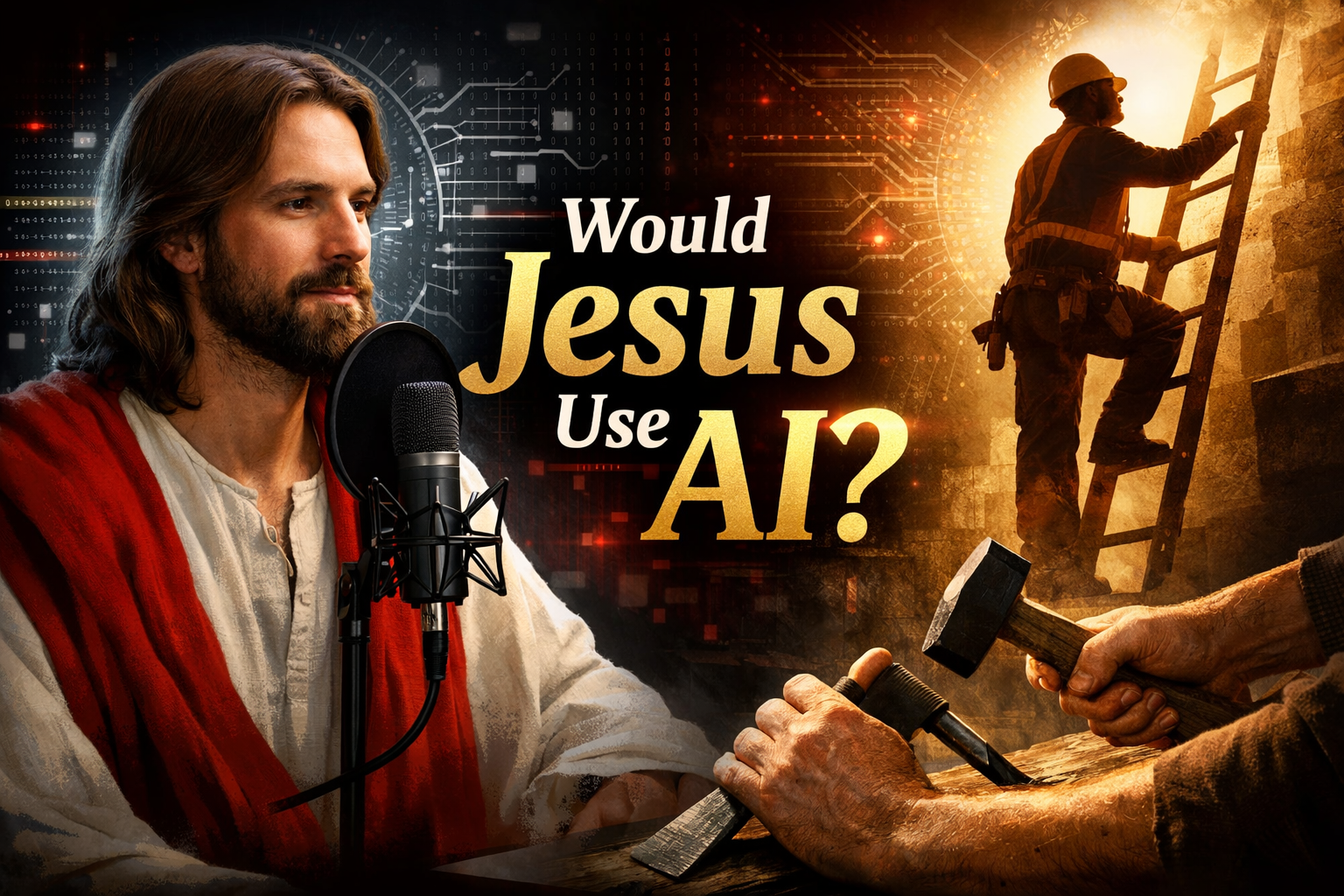 Would Jesus Use AI? Faith, Technology, and the Future of Meaningful Work | Just for fun this a 3rd person article but written by me In a world racing toward artificial intelligence, automation, and unprecedented technological power, a provocative question is quietly unsettling leaders, entrepreneurs, and everyday workers alike: If Jesus were here today, would He use AI in his work and business? That question sits at the heart of a recent episode of The Jesus Entrepreneur Experience, a weekly exploration that looks at the life and leadership of Jesus not only as a spiritual figure — but as a model for meaningful, mission-driven entrepreneurship. Hosted by veteran broadcaster and business performance coach Stan Hustad, the program challenges listeners to rethink success, work, and contribution in an age where technology increasingly shapes the marketplace. Rather than offering simplistic answers, the episode invites careful reflection. Jesus built his mission without exploiting supernatural shortcuts. He worked within human limits, relied on relationships, gathered people, developed leaders, and focused relentlessly on purpose. His approach resembles an entrepreneurial model grounded in wisdom, restraint, and human dignity. The episode acknowledges both the promise and peril of AI. Used wisely, it can enhance creativity and productivity. Used recklessly, it can erode meaning, displace workers, and magnify harm. If Jesus were here today, the program suggests, He would not reject AI out of fear nor embrace it uncritically. He would study it carefully, seek wise counsel, and ask whether it contributes to human flourishing. Above all, He would pray. The episode reminds listeners that meaningful work is deeply human — craftsmanship, service, risk, and responsibility. Entrepreneurs are challenged to examine whether their businesses truly help people flourish or merely function as rackets. In an era of rapid change, The Jesus Entrepreneur Experience offers realism, wisdom, and hope by reminding us that the most important questions are still worth asking. This is an AI based quick summary that the video program that I did that goes into far more details about Jesus and the AI and if you'd like to watch that program just click the link below. https://youtu.be/f-ghCLyteVU | — | ||||||
| 1/23/26 |  Seven Words to Think About During the Storm | The storm is coming. You can feel it—not just outside, but everywhere. Schools closing. Churches canceling. Flights disappearing from the board like magic tricks gone wrong. We're all being gently (or not so gently) told: stay home, stay put, stay warm. Which is exactly what I'm doing—sitting in my little radio studio, which also happens to be a television studio, a video studio, and a worldwide broadcasting station. No tower. No transmitter building. No million-dollar equipment. Just a good microphone, a decent camera, an internet connection, and a lifetime spent loving radio. I started in the kind of radio that had mystery and majesty—big towers, humming transmitters, and studios that felt like sacred ground. There was romance in it. There still is. Old radio guys even swap pictures of their favorite towers now, like proud grandparents showing photos of the grandkids. Guilty as charged. But radio has changed. And in some wonderful ways, it's come home. Now, during a snowstorm, you can sit in your own house and be on the radio. You can speak to the world from a spare bedroom, a basement, or a corner of the living room—just like I'm doing right now. And that matters, because a lot of people have something to say, something to sing, something to teach, or some wisdom worth sharing. They just needed permission and a microphone. Which brings me to the storm—and the pause it gives us. When weather forces us to slow down, it also gives us space to think. To read. To pray. To wonder a little about the life we're living… and the life we still want to live. I've made a commitment that 2026 is going to matter. I want it to be significant—for my family, my community, and the people kind enough to listen in on my life and work. And as I was sitting here waiting for the storm, seven simple words came to mind. Not fancy words. Not complicated words. Just honest ones. Here they are. Don't rush past them. Let each one ask you a question. Better. What, exactly, do you want to be better at this year? Beautiful. What do you want more of that brings beauty into your life—or that you bring into the world? Bright. Not smarter—brighter. More alive. More visible. More you. Bolder. Where have you been playing it safe when you know you're meant to step forward? Braver. What fear are you finally ready to face? Richer. Yes, maybe financially—but also richer in relationships, meaning, gratitude, and joy. Smarter… and Wiser. Not the same thing. Smarter fills your head. Wiser shapes your life. And then there's the one underneath them all: Matter. We all want to matter. We were made for meaning. We were designed to make a difference. That's not ego—that's wiring. So while the snow falls and the world quiets down a bit, maybe these seven words are worth sitting with. Let your mind talk to your heart. Let your heart speak to your future. As I often ask: Are you living the life you want—or just the life you've got? Storms have a way of clarifying things. Stay safe. Stay warm. Comfort one another. And maybe—even in the middle of the storm—find a little comfort and joy. All the best and blessings, Stan Things to Remember - Storms slow us down so reflection can catch up - You don't need a tower to have a voice - Meaning often shows up in simple words Things to Share - The seven words that resonated most with you - This question: Which one am I ignoring? - The idea that 2026 is still wide open Things to Take Note Of (and Act On) - Write the seven words down - Circle the one that scares you a little - Take one small step toward it—after the storm Snow days are good for productivity too. ❄️🎙️ | — | ||||||
| 1/21/26 | 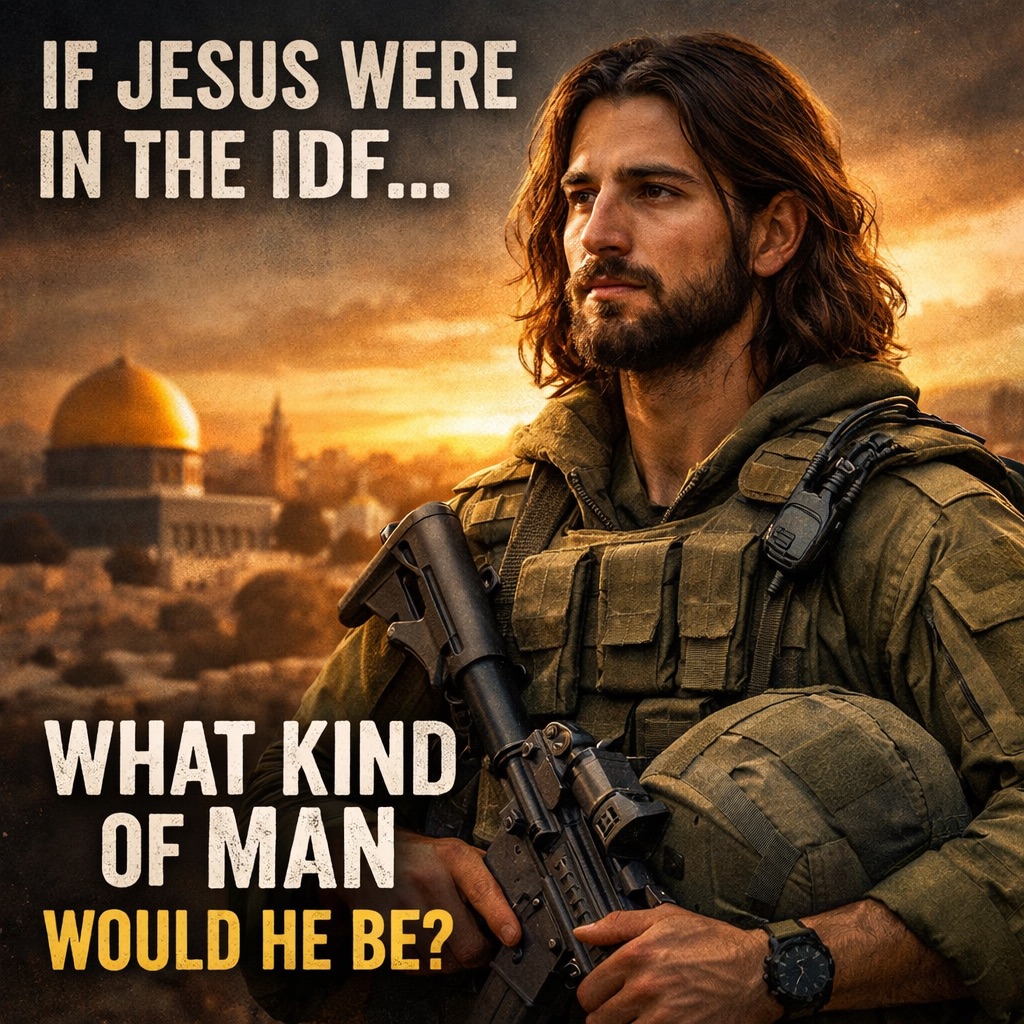 If Jesus were in the IDF today... What kind of soldier or man do you think he would be? | In a culture crowded with slogans, outrage, and instant opinions, a recent radio program in The Jesus Entrepreneur Experience does something surprisingly rare: it asks people to stop, imagine, and think. The program poses a single, provocative question—not to shock or inflame, but to awaken reflection: If Jesus were here today—now, in our time and place—and if He were a young man living in Israel, what kind of man would He be if required to serve in the Israeli Defense Forces? The result is a thoughtful, TED-Talk-length exploration that bridges history, faith, entrepreneurship, and the human condition—without preaching, ranting, or political positioning. Making Jesus Real—Not Distant At the heart of the program is a simple but profound concern: Jesus is real, but too often He feels unreal to modern people. For many, Jesus exists only in stained glass, ancient texts, or distant history—long ago, in a far-away land. The broadcast challenges that distance by re-anchoring Jesus in real life: born into political oppression, raised in an occupied land, a refugee as a child, a working tradesman and small-business owner, and a man without elite credentials, yet deeply competent and respected. Rather than asking the worn question "What would Jesus do?", the program reframes it in a more personal and practical way: What would Jesus do if He were you? The Thought Experiment: Jesus and the IDF In modern Israel, military service is not hypothetical. It is a reality of citizenship and survival. If Jesus were living there today as a young man, He would almost certainly be required to serve. The broadcast carefully avoids spectacle or sensationalism. There are no images of Jesus firing weapons or raging in battle. Instead, listeners are invited to imagine Him as calm, centered, and courageous—fully human, facing fear and duty. The question is not what position He would take, but what kind of man He would be. Character Over Certainty Rather than offering conclusions, the program offers mirrors. By refusing to answer the question for the audience, the program creates space for honest self-examination. The Entrepreneurial Connection Jesus spent nearly two decades as a working tradesman before beginning His public ministry. In modern terms, He lived most of His life as a small-business owner—serving clients, mastering skills, managing work, and earning trust. From this perspective, the term Jesus Entrepreneur is not irreverent—it is illuminating. Things to Remember - Jesus was fully real—historically, socially, economically. - Character is revealed under pressure. Things Worth Sharing - Thoughtful questions invite deeper conversations than fixed positions. - Understanding people is the foundation of influence. Things to Take Note Of and Act On - Examine what your assumptions say about you. - Practice leading with conscience, not just competence. Closing Challenge If Jesus were here today—walking our streets, facing our pressures—what kind of man would He be? And what kind of person are you becoming? For more information about The Jesus Entrepreneur Experience or working with Stan Hustad, reach out and continue the conversation. | — | ||||||
| 1/19/26 |  More Than a Name: The Title of the Man and the Faith Behind Dr. King's Legacy | In this special birthday-commemoration edition of Inconvenient Ideas, broadcaster Stan Hustad invites listeners to pause, reconsider, and remember something easily overlooked in the story of one of America's greatest heroes: the full and formative identity of the Reverend Dr. Martin Luther King Jr. The program opens with a light, affectionate nod to radio history and the marvel of modern podcasting—how a single voice can now circle the globe without towers, transmitters, or billion-dollar budgets. From there, the focus turns to the meaning of this national holiday and to the man it honors. The heart of the episode centers on a deceptively simple but surprisingly powerful idea: "Dr. Martin Luther King Jr." was not his complete title. His full and proper designation was the Reverend Dr. Martin Luther King Jr. That distinction matters. Listeners are reminded that King was not merely a civil-rights strategist, political activist, or moral philosopher—though he was all of those. First and always, he was a Christian minister. His authority flowed from the pulpit to the people and into the public square. His sermons, marches, and moral clarity were not parallel tracks; they were one unified calling rooted in faith. With warmth and candor, the program reflects on the shock of King's assassination, the brutality of the moment, and the lasting imprint it left on a generation. From there, the story widens to reveal an often-missed spiritual lineage behind King's philosophy of nonviolence. That path leads to missionary-evangelist E. Stanley Jones, whose writings on Mahatma Gandhi deeply influenced King's thinking. Through Jones's work, King encountered a practical theology of nonviolent resistance—one he embraced, embodied, and ultimately gave his life to defend. Along the way, the program maintains a gentle, conversational tone—personal anecdotes, naming stories, and moments of humor included—while never losing sight of the central message: to honor Dr. King fully, we must acknowledge the spiritual foundation that shaped his life and leadership. Things to Remember • Dr. King's full title—the Reverend Dr. Martin Luther King Jr.—tells a deeper story than "Dr." alone. • His faith was not an accessory to his work; it was its source. • King's commitment to nonviolence was shaped by Christian conviction and global spiritual influence. Things to Share • King's sermons and public actions were one integrated calling. • The civil-rights movement drew strength from theology, not just strategy. • Faith-driven leadership can reshape nations without resorting to violence. Things to Take Note Of (and Act Upon) • Language matters: how we name people reflects how we understand them. • Spiritual roots are often edited out of public memory—but they still matter. • Nonviolence is not weakness; it is disciplined moral courage. A Closing Challenge As you listen to this program, consider the ways we simplify history to make it more comfortable—or less demanding. The Reverend Dr. Martin Luther King Jr. challenges us not only to remember his dream, but to reckon with its source. What might change in our own lives, leadership, or communities if conviction once again shaped courage—and faith informed action? 26 Blessings on his memory, his family, and all who continue the work of justice, courage, and nonviolent love. | — | ||||||
| 1/16/26 |  Why are the Democrats and the ICEers trying to get Donald Trump and his team elected and have more power | Protest Backfires: The Inconvenient Politics of Noise, Power, and Human Nature In this episode of Inconvenient Ideas, veteran broadcaster Stan Hustad poses a question that at first sounds almost absurd—and then increasingly unavoidable: Why do the loudest opponents of Donald Trump and ICE often end up strengthening the very people they oppose? It's a question rooted not in partisan rhetoric, but in something deeper and far more uncomfortable: human behavior, perception, and unintended consequences. A Radio Man Sounds the Alarm Drawing on more than four decades in broadcasting, Hustad opens the program the old-fashioned way—with a "sounder," a classic radio cue meant to signal urgency. In the golden age of radio, it meant one thing: stop what you're doing—this matters. And what matters here is not simply immigration policy, protest movements, or the presidency of Donald Trump. What matters is how people think, how they react, and how often they misjudge the impact of their own actions. The Minority Illusion At the heart of the episode is a simple but inconvenient insight: people routinely overestimate how many others agree with them. Hustad illustrates this with stories from business, publishing, and event marketing—where passionate creators are shocked to discover that enthusiasm does not automatically translate into widespread support. Protest, Power, and Perception The episode examines protests against immigration enforcement actions carried out by U.S. Immigration and Customs Enforcement. Hustad does not argue policy details as much as outcomes. When protests disrupt daily life or escalate into chaos, many observers don't blame the administration—they recoil from the protesters. Instead of weakening Trump's political position, such actions may solidify support for him and those aligned with his agenda. Things to Remember • Passion does not equal majority support • Noise can repel as easily as it attracts • Methods often matter more than messages A Final Inconvenient Thought This episode isn't ultimately about immigration or Trump. It's about the human condition—our tendency to confuse conviction with consensus and noise with power. If you want to change minds, you must first understand how people actually think. | — | ||||||
| 1/14/26 |  Six Dollars for a Newspaper
(An Inconvenient Idea Worth Thinking About) | What kind of person pays six dollars for a newspaper in 2026? Apparently, I do. In this short episode of Inconvenient Ideas, I tell a simple story that turns out not to be simple at all—from being a 12-year-old paperboy delivering six days of news for 35 cents, to standing in a store today holding a weekend paper that costs more than I used to make in a week. Along the way, we talk about old-school radio, standing up to do a broadcast, dressing for the job even when no one can see you, and why some things that feel inconvenient—like slowing down, paying attention, or holding real paper in your hands—might actually be more valuable than ever. This isn't really about newspapers. It's about how we judge value, why inconvenient ideas often matter most, and why the things we're tempted to dismiss are sometimes the very things that help us think better, live better, and do better business. If you've ever wondered whether the "old ways" still have something to teach us—or whether inconvenient ideas are worth the trouble—this one's for you. Pull up a chair. Or better yet, stand up and listen. | — | ||||||
| 1/12/26 |  A lot of people are destroying their destiny these days. Please be different! | This is a radio program that also happens to have the studio camera on. But it's a radio show and it is about an inconvenient idea... And that's about my concern that a number of friends and others are not being careful about how they are living right now and they are in effect possibly destroying their destiny, perhaps not doing what they were truly made for and what would give them some deep gladness, ... Maybe more later. Most people don't wake up in the morning planning to ruin their future. And yet, according to this brief but pointed episode from the Inconvenient Ideas series, that may be exactly what's happening—slowly, subtly, and often unconsciously. In just a few minutes, this radio reflection confronts a troubling pattern of modern life: the quiet erosion of destiny through distraction, drift, fear, and unexamined habits. It's not a rant. It's not an alarm bell. It's more unsettling than that—it's a calm, clear mirror. The program poses a simple but unsettling thought: many people are not losing their way because of catastrophe, but because of neglect. Destiny isn't usually destroyed in a moment; it's surrendered over time. With a light but serious touch, the message invites listeners to pause, reflect, and choose a different path—one marked by intentionality, courage, and responsibility for the life they are shaping every day. This episode stands well on its own as a reflection, but its real power comes when you take a few uninterrupted minutes to listen all the way through. It doesn't overwhelm. It nudges. And sometimes, a nudge is exactly what's needed. Things to Remember - Destiny is rarely destroyed by one bad decision—it's more often worn down by many small ones. - Drift feels comfortable, but it always has a direction. - Being "busy" is not the same as being faithful to your calling. Things to Share - With a friend who feels stuck but can't quite explain why. - With someone at a transition point—career, retirement, recovery, or reinvention. - With anyone who values clarity over comfort. Things to Notice - Where you may be postponing decisions that deserve attention. - Habits that quietly shape outcomes more than intentions do. - The difference between reacting to life and actively choosing it. Things to Take Action On - Pause long enough to ask: Where is my life actually headed? - Identify one small course correction you can make this week. - Commit to being intentional where you've been casual. Final Thought The most inconvenient idea of all may be this: no one else is responsible for the destiny you are living into. The good news? That also means you can choose differently—starting now. Sometimes the shortest programs ask the biggest questions. This one is worth your time. | — | ||||||
| 1/12/26 | When "Minnesota Nice" Gives Way to "Minnesota Vice" and Hard Questions; | Reflections on Culture, Power, and the Cost of Ignoring Inconvenient Ideas In this edition of Inconvenient Ideas, veteran broadcaster and performance coach Stan Hustad draws on decades of lived experience in Minnesota to explore a troubling question: How did a state long known for "Minnesota Nice" find itself at the center of one of the largest fraud scandals in recent American history? This is not a political rant, nor is it a partisan argument. Instead, Hustad offers a reflective, sometimes uncomfortable examination of how cultural drift, failed assimilation, technological dominance, and institutional hesitation can combine to produce damaging outcomes—not just in Minnesota, but anywhere. A Personal Lens, Not a Political Agenda Hustad's perspective is shaped by time and proximity. He studied at the University of Minnesota, taught in its public schools, built a career there, and raised a family connected deeply to the state. His reflections come not from distance, but from familiarity. From the outset, he emphasizes that this conversation is about money, culture, and systems, not political parties or personalities. The fraud that eventually came to light was not an isolated event—it was the result of long-standing conditions that were ignored or mishandled for years. Technology, Media, and the Loss of Guardrails Drawing on the work of cultural critic Neil Postman, Hustad reminds listeners that societies can become so captivated by technology and efficiency that they surrender moral and cultural frameworks in the process. When technology becomes dominant, efficiency and power replace wisdom, responsibility, and character. Assimilation Deferred, Consequences Multiplied Minnesota's welcoming posture toward immigrants was morally commendable, Hustad argues, but assimilation challenges were often left unresolved. Cultural clarity and shared civic expectations were avoided in the name of being "nice," creating parallel systems rather than a unified public culture. Culture Always Wins One of Hustad's central lessons is familiar to organizational leaders: culture eats strategy. No amount of policy or funding can overcome a deteriorating culture. When culture turns unhealthy, surface-level fixes are not enough—deep structural renewal is required. The Cost of Avoiding Inconvenient Conversations Declining educational outcomes, civic disengagement, and population flight are not sudden developments, Hustad suggests. They are cumulative consequences of long-term avoidance of difficult truths. A Closing Reminder Cultures can be rebuilt, but only when leaders and citizens confront inconvenient ideas early. When culture is neglected, nice can turn into vice faster than anyone expects. Things to Remember Culture shapes outcomes more powerfully than policy.- Technology without moral guardrails reshapes societies.- Avoided conversations create compounded consequences. Things to Share Welcoming people and integrating shared values are not the same task.- Media and technology influence culture whether acknowledged or not.- Institutional failure is usually gradual, not sudden. Things to Take Note Of — and Act Upon Healthy cultures require clarity and accountability.- Leadership means addressing problems early.- Communities that preserve shared norms are better positioned to thrive. | — | ||||||
| 1/1/26 |  Here is the story and the question that can help you save a lot of time make you more efficient and effective and perhaps make you more money in 2026 | On the first day of 2026, The What It Takes Radio Company opens the year with a simple, thoughtful, and surprisingly powerful eight-minute radio and television program designed to help listeners pause, reflect, and begin the year with intention. Hosted by Stan Hustad, the program does not offer a list of resolutions or predictions. Instead, it centers on one clarifying question—drawn from history, philosophy, and practical coaching—that has the potential to save time, sharpen focus, strengthen relationships, and improve effectiveness in life and work throughout the year ahead. A Question Rooted in Wisdom The program begins with a story attributed to two influential American thinkers, Henry David Thoreau and Ralph Waldo Emerson, who were known to ask one another a profound question when they met: "Since we last met, what is clearer to you now?" This question, simple on the surface, becomes the centerpiece of the broadcast. Stan connects it to the modern pursuit of clarity over argument—echoing the teaching of Dennis Prager, who has long emphasized that clarity is often more important than agreement. Why Clarity Matters at the Start of the Year As the holiday season closes and normal routines resume, the program invites listeners to reflect honestly on the year just completed—and to look forward with purpose. Whether the past year felt like a season of thriving or merely surviving, the new year presents a moment to stop and ask: What is clear to me now about my life? What is clear about my relationships? What is clear about my work, finances, and direction? What needs to change, and what needs to continue? Rather than pushing for quick answers, the program encourages thoughtful listening—to oneself and to others—as a foundation for better decisions and healthier conversations in 2026. What to Remember Clarity is a powerful starting point for growth and change. Asking the right question can be more valuable than having the right answer. Reflection creates space for better decisions, not just more activity. What to Share Share the question "What is clear to you now?" with colleagues, clients, friends, and family. Use it as a conversation starter that invites understanding rather than conflict. Introduce it into meetings, coaching sessions, or personal check-ins throughout the year. What to Act On—Right Now Take a few quiet minutes today to answer the question for yourself. Write down what feels clear—and what still feels cloudy. Decide one small action that aligns with that clarity as you begin 2026. A New Year Benediction The program closes as it always does—with a benediction. A reminder that words matter, beginnings matter, and clarity matters. As this new year unfolds, may clarity guide your conversations, your decisions, and your direction. May it go well for you. All the best, and blessings for a meaningful and effective 2026. | — | ||||||
| 12/2/25 |  Too Real to Be Fake, Too Fake to Be Real: Stan Hustad's Inconvenient Ideas for a New Media World | On the first day of December, while many people are still digesting Thanksgiving leftovers and arguing about when it's "socially acceptable" to play Christmas music, broadcaster and performance coach Stan Hustad steps up to the microphone with something more than seasonal sentiment. In his new Monday series, Inconvenient Ideas with Stan Hustad, he invites listeners into a world where what we see, hear, and even believe may be—quite literally—too real to be fake and too fake to be real. Stan begins with a memory from his days hosting the early morning show "Morning Sound" on a large international station. Every December 1, he opened with a simple declaration—"It's the first of December, welcome to Morning Sound"—and then rolled straight into Joy to the World. It was his line in the sand: Thanksgiving had been honored, and now the Christmas season could begin. That little tradition becomes a metaphor for what he's asking us to do now—mark a moment, take stock, and decide how we're going to move forward in the days ahead. From there, Stan revisits one of his core themes: ideas matter. Interesting ideas, he reminds us, can lead to good ideas, which lead to greater insight. Insight opens the door to greater influence, influence leads to impact, and impact can lead to income. It's a kind of "good life formula" that reflects how we truly grow—personally, professionally, and even financially. But now, he's raising the stakes. It's not enough to chase interesting ideas. We have to face inconvenient ideas—those uncomfortable truths that challenge what we think we know, disturb our assumptions, and refuse to be neatly ignored. One of those inconvenient ideas came to him this weekend while watching a stunning Christmas video. The scenes were beautiful, the people were inspiring, the storytelling was moving. The whole thing, he knew, couldn't possibly be real—and yet, parts of it were so authentic and so well-crafted that it couldn't be entirely fake either. So he names the paradox: "It's too real to be a fake, and it's too fake to be real." In that sentence, Stan captures the strange territory we now live in—a world shaped by AI, deep media, and global storytelling machines. We are moved by images and messages that may be partly fabricated, partly factual, and fully influential. And that's not just an interesting observation; it's an inconvenient idea that demands a response. Stan then turns the spotlight from the screen back to the listener. In a world where so much can be generated, staged, or edited, he insists that you will need to learn new skills just to stay in the game. Like it or not, we are all now in the performance economy. You'll need to learn: - Performance marketing - Performance mentoring - Performance selling And yes, he says, you're going to have to learn how to be comfortable behind a microphone—even if it's not a golden one like the one on his desk. That might be a podcast mic, a Zoom microphone, a smartphone camera, or a stage. Either way, your voice, story, and presence will matter. This, he admits, is more than a little inconvenient—especially coming from a man who once tested as a strong introvert on the Myers-Briggs scale. Stan cheerfully confesses he's still "an off-the-wall introvert." But he also realized long ago that if he wanted to do radio, help people, and make an impact, he would have to learn to speak, perform, and be different. And that's the third inconvenient idea of the day: You will have to keep learning new ways of being different if you want to grow, contribute, and succeed. Stan then connects the dots. In this too-real-to-be-fake, too-fake-to-be-real world, it's no longer optional to think clearly and communicate well. You'll need to: - Think critically - Tell stories that are honest, human, and compelling - Stream those stories into the world - Sell your goods, services, and yourself ethically and confidently. All of that must be part of a purposeful strategy—one that you and your colleagues know, believe in, and practice together. Good is not enough. In many settings, you will need to be great. And that is another inconvenient idea. As the program closes, Stan pushes ahead to the coming year with his own playful motto: "In '26, pick up more sticks." More sticks of opportunity, creativity, service, income, and impact. More ways of making money, having fun, pleasing others—and maybe even pleasing God. And then, as he signs off for this first Monday of December, he leaves listeners with one last, profoundly inconvenient idea: Treat every person you meet as if they were the most important person in the world. Things to Remember - Ideas must move from insight to influence, impact, and implementation. - We live in a world where content can be both real and fake at the same time. - Performance economy skills are now essential. - Even introverts can learn to communicate powerfully. - In many areas today, you will need to be great. Things to Share - "Too real to be fake, too fake to be real." - The question: "What inconvenient ideas am I avoiding?" - The reminder that everyone is now a broadcaster. - The challenge to tell honest stories in an edited world. Things to Take Note Of - Audit your media diet. - Develop your performance skills. - Invest in storytelling. - Build a purposeful communication strategy. - Practice the final inconvenient idea. A Challenging, Hopeful Ending In a world where anything can be faked and everything can be streamed, Stan Hustad's Inconvenient Ideas invites you to do something radical: Think deeply. Speak honestly. Perform boldly. Love people as if they really matter. That might be inconvenient. It might also be the most important idea you'll act on this week. | — | ||||||
| 11/28/25 |  Leaving Money on the Table: Why It Still Happens—And How to Stop Doing It in 2026 | A TWiT Talk with Stan "The Radio Man" Hustad On this post-Thanksgiving "Black Friday," veteran broadcaster and performance economist Stan Hustad explores why so many people still "leave money on the table." With sharp insights and light humor, this 15-minute TWiT Talk explains the real origin of the phrase and how it applies to modern business, media, and the performance economy. Key Ideas: • The poker-table origin of "leaving money on the table" • How entrepreneurs underprice, under-offer, and underperform • The importance of full performance in the modern economy • Why follow-up is the difference between success and missed opportunity • Thanksgiving reflections on living fully alive Things to Remember: • Money is the measurement, not the meaning. • Performance beats presence. • People can't say yes if you never ask. Things to Share: • The true origin of the expression. • Insights about the performance economy. • The reminder to serve fully and offer boldly. Things to Take Note Of and Act On: • Charge appropriately. • Always offer a next step. • Invite, follow up, and perform with purpose. Final Encouragement: Step into 2026 fully alive—creating more value, more fun, and more abundance. | — | ||||||
| 11/26/25 |  "Give Thanks, Be Useful" — A Thanksgiving Eve Message from the Do It Right Collective | On Thanksgiving Eve—one of the most meaningful, reflective, and even quietly complicated days on the American calendar—veteran broadcaster and business-performance coach Stan Hustad steps into the "How to Be Useful" virtual studio with a simple story and a profound invitation: Let this Thanksgiving Eve be different. Let it be useful, grateful, and transformational. In a warm and deeply human 10-minute reflection, Stan guides listeners through a practice he began years ago—a practice he now teaches in his performance coaching and encourages leaders everywhere to adopt: Spend the Wednesday before Thanksgiving calling people who have been good to you. Not to pitch. Not to ask for anything. Simply to say, "I am thankful for you." A Gentle Story with Real-World Impact In this Thanksgiving message, Stan shares how he spent the morning calling doctors who saved his life, friends who walked with him through adversity, and people who have simply been part of his journey. Their responses ranged from warmth to surprise to heartfelt emotion. Some quietly admitted they hadn't heard anyone say "I'm thankful for you" in a long time. Stan also speaks with honesty about the bittersweet nature of Thanksgiving Eve. Law enforcement officers have shared with him that it can be one of the most dangerous nights of the year—especially for college students who return home and gather with friends. So he offers a compassionate reminder: Pray for young people tonight. Pray for good choices, safe travels, and a Thanksgiving Day unmarred by tragedy. From there, the message turns to gratitude, humility, and the importance of keeping Thanksgiving sacred—a holiday "they can't steal," as Stan says. While Black Friday may try its best to reshape the meaning of the week, Thanksgiving itself remains stubbornly simple, beautifully human, and deeply needed. A Coaching Moment for Leaders and Entrepreneurs Stan makes a compelling case that gratitude is a business strategy—perhaps one of the most undervalued, underused, and underappreciated tools available to leaders today. A grateful leader is rarely a fearful leader. A grateful organization is rarely a toxic one. A grateful business is more human, more productive, and more resilient. His invitation is as practical as it is personal: Make thankfulness part of the business plan. Let your people know they matter more than your metrics. Tell colleagues and customers "I appreciate you" without attaching a sale or an agenda. Make gratitude a cultural habit, not a seasonal gesture. Things to Remember • Gratitude is one of the most powerful performance tools in life and business. • A simple Thanksgiving Eve phone call can touch a life deeply. • College students and young adults need our prayers, protection, and encouragement tonight. • Being useful—truly useful—is at the heart of living well. • Leadership grounded in gratitude is leadership that endures. Things to Share • Share "I appreciate you" freely and sincerely. • Share kindness without an agenda. • Share the story of Thanksgiving Eve calls with your family, team, or organization. • Share gratitude as a cultural value, not a holiday accessory. Things to Take Note Of & Take Action On • Tonight: Consider calling two or three people who have blessed your life. • This weekend: Slow down and reflect on the year—not just the work, but the people. • This season: Make gratitude a strategic part of your leadership and business practice. • This coming year: As Stan says about 2026, "Pick up a few more sticks… make a little more money… have a little more fun… and do a little more blessing." A Final Word of Blessing From the "How to Be Useful" Studio at What It Takes Radio, Stan closes with a message of warmth, gratitude, and purpose: "Best and blessings… and give thanks. Right now and every day." May this Thanksgiving be a turning point toward deeper gratitude, stronger relationships, and a renewed commitment to being useful—in life, in business, and in the lives of others. If you need encouragement, guidance, or a companion for the journey, Stan welcomes you to reach out: Stan@witradio.net Happy Thanksgiving from the Do It Right Collective. Blessings on you and all those you love. | — | ||||||
| 11/25/25 |  "When I Think of You, I Give Thanks: The Hidden Power of Doing It Right" A Stan Hustad Thanksgiving Reflection from What It Takes Radio | As Thanksgiving week arrives, What It Takes Radio brings forward another thoughtful, 10-minute conversation from veteran broadcaster and business performance coach Stan Hustad—a message wrapped in gratitude, wisdom, a touch of humor, and a powerful challenge to do it right in life and business In this Thanksgiving meditation—part encouragement, part coaching moment—Stan reminds listeners that this season isn't just about turkey and tradition. It's about relationships, gratitude, and the courage to live and work with intentional excellence. A Summary That Stands on Its Own In "When I Think of You, I Give Thanks," Stan Hustad gently but firmly calls his listeners into a deeper way of living in the fast-paced performance economy. He speaks candidly as an entrepreneur, missionary, mentor, and world-traveled communicator who has helped build projects, organizations, and creative ventures around the world. But on this holiday week, he narrows the focus to something more intimate and far more important: Don't just do it. Do it right. Do the right thing. Do it in the right way. Do it for the right people. So the right outcomes have a chance to appear. Stan notes that we are now fully immersed in a microphone world—a performance economy where influence, leadership, persuasion, and storytelling travel first through the ear and the screen, long before paper. If you want your business, your cause, your ministry, your mission, or your message to succeed, you must learn to perform, present, and communicate with clarity and heart. But this isn't merely a business message. It's deeply human. Stan calls Thanksgiving his favorite holiday—not because of the food or football, but because a thankful heart is rarely a fearful heart. Gratitude, he says, is the foundation of flourishing. It is the antidote to anxiety, resentment, and weariness. He invites us to approach the close of the year—through Thanksgiving, Hanukkah, Christmas, and even the coming New Year—with a posture of renewal, fresh beginnings, and a commitment to "do it right" in every part of life. And then comes his signature coaching challenge: Clear your calendar the day before Thanksgiving. Pick up the phone. Call the people who matter. Say, "Tomorrow is Thanksgiving. I just wanted you to know I'm thankful for you." Simple. Rare. Beautiful. And guaranteed to make a difference. Things to Remember • A grateful heart is seldom a fearful heart. • Doing it right matters more than just doing it. • You live in a performance economy. If you want to succeed, you must learn to present, perform, and communicate. • New beginnings are always available. • Influence flows through the microphone. Your voice and message matter—use them well. Things to Share with Others • A simple phone call of gratitude can strengthen relationships for years. • Everyone—from business partners to family members—needs encouragement more than we realize. • Thanksgiving is not an event; it's a lifelong posture of appreciation. Things to Take Note Of • Are there places in your life where you've been "just doing it" rather than doing it right? • Which relationships have shaped, supported, or inspired you this year? • What message, story, or idea should you be sharing more boldly in your business or personal calling? Things to Act Upon 1. Make five Thanksgiving calls—clients, colleagues, family, friends. 2. Pick one area of your life or work where you will "do it right" starting this week. 3. Recommit to flourishing—not surviving but thriving in faith, hope, love, and purposeful communication. 4. Start your performance journey—podcasting, broadcasting, storytelling, or speaking—because your message matters. 5. Reach out to Stan for coaching, guidance, or media mentorship: stan@whitradio.net A Warm Thanksgiving Call to Action This Thanksgiving, Stan invites all of us to pause, breathe, and remember that gratitude is not seasonal—it's transformational. When we give thanks for the people who enrich our lives, we unlock joy, courage, creativity, and connection. So this year, don't just celebrate the holiday. Live the holiday. Give thanks boldly. Love generously. And as Stan says— Do it, but this time… do it right. Blessings, gratitude, and flourishing to you today and always. | — | ||||||
| 11/4/25 |  Gary is still in The Transplant Zone and Dick Cheney has left RIP... And they have very similar stories | Living on the Edge — Lessons from a Heart and a Life A Transplant Zone Reflection with Gary Register In this moving short feature from The Transplant Zone, host Stan Hustad sits down once again with Gary Register — a man living day by day in the tension between hope and uncertainty as he awaits a heart transplant. Today's conversation was framed by the news of the passing of former Vice President Richard "Dick" Cheney, who died at 84 after a long and complex journey with heart disease — a journey that, for many years, mirrored the one Gary now walks. A Shared Story of Fragile Courage Cheney's life was one of contrasts — power and vulnerability, public service and private struggle. Long before his decades in Washington, he was struck by a premature heart attack that changed the course of his life. For years he lived with assistive devices, artificial pumps, and eventually a heart transplant that extended his time, allowing him to see grandchildren grow and to continue the work he valued. For Gary, and for many in The Transplant Zone, Cheney's story is a reminder that life on the edge is still life — full of meaning, gratitude, and growth. Each day brings a mix of fear and faith, but also the awareness that every heartbeat — natural or borrowed — is a gift. What We Can Remember and Share This short program does not dwell on politics or legacy debates. Instead, it honors what we can all take away from a life sustained by courage and technology: • Resilience matters. Whether in public life or private waiting, endurance often defines true strength. • Gratitude transforms fear. Those who live on borrowed time understand that every sunrise carries grace. • Legacy isn't perfection — it's perseverance. The will to keep going, even when the heart falters, becomes its own quiet inspiration. Living in the Transplant Zone Gary Register continues to share his reflections from what he calls "the waiting room of grace." His stories bring insight and encouragement to others who face heart failure, chronic illness, or major life transitions. In The Transplant Zone, he reminds us that being "on the edge" is not the end — it's often the place where life becomes most real, most human, and most sacred. Things to Remember, Reflect On, and Share • Every heart — natural, artificial, or transplanted — beats with a purpose beyond survival. • Gratitude and generosity make life richer, even when days are uncertain. • Hope is not naïve; it's the art of living fully with whatever heart you have today. Call to Action To experience this short video and future reflections from Gary Register, visit The Transplant Zone — a place for stories of hope, healing, and the courage to keep living from the heart. Share this episode with someone facing their own waiting season — and remind them that they're not alone. | — | ||||||
Showing 25 of 100
Pitch Fit is a Pro feature
See how bookable this show is for guests, which brands already advertise, the per-episode ad value, and the best-fit guest and sponsor profile. The numbers are blurred on the free plan.
How readily this show books outside guests like you.
How proven this show is for host-read sponsorships.
For Guests
ProFor Advertisers
ProUpgrade to Pro to unlock guest cadence, sponsor categories, fit scores, and per-episode ad value for this show.