

Insights from recent episode analysis
Audience Interest
Podcast Focus
Publishing Consistency
Platform Reach
Insights are generated by CastFox AI using publicly available data, episode content, and proprietary models.
Most discussed topics
Brands & references
Total monthly reach
Estimated from 14 chart positions in 14 markets.
By chart position
- 🇬🇧GB · Government#42100K to 300K
- 🇦🇺AU · Government#1775K to 30K
- 🇮🇳IN · Government#3300K to 800K
- 🇸🇪SE · Government#6310K to 30K
- 🇯🇵JP · Government#9810K to 30K
- Per-Episode Audience
Est. listeners per new episode within ~30 days
259K to 753K🎙 ~2x weekly·143 episodes·Last published 5d ago - Monthly Reach
Unique listeners across all episodes (30 days)
518K to 1.5M🇮🇳53%🇬🇧20%🇹🇼7%+11 more - Active Followers
Loyal subscribers who consistently listen
207K to 602K
Market Insights
Platform Distribution
Reach across major podcast platforms, updated hourly
Total Followers
—
Total Plays
—
Total Reviews
—
* Data sourced directly from platform APIs and aggregated hourly across all major podcast directories.
On the show
From 15 epsHosts
Recent guests
Recent episodes
Did India's AI Summit Get Safety Right?
Jun 19, 2026
Unknown duration
Subsea Cables, Trusted Networks, and India's Strategic Opportunity
Jun 4, 2026
46m 06s
AI Literacy and the Future of Work in India
May 26, 2026
44m 33s
Can AI Resources Be Democratized? AI Summit Special
May 15, 2026
28m 26s
Space Security in the Age of AI
May 7, 2026
1h 07m 25s
Social Links & Contact
Official channels & resources
Official Website
Login
RSS Feed
Login
| Date | Episode | Topics | Guests | Brands | Places | Keywords | Sponsor | Length | |
|---|---|---|---|---|---|---|---|---|---|
| 6/19/26 | 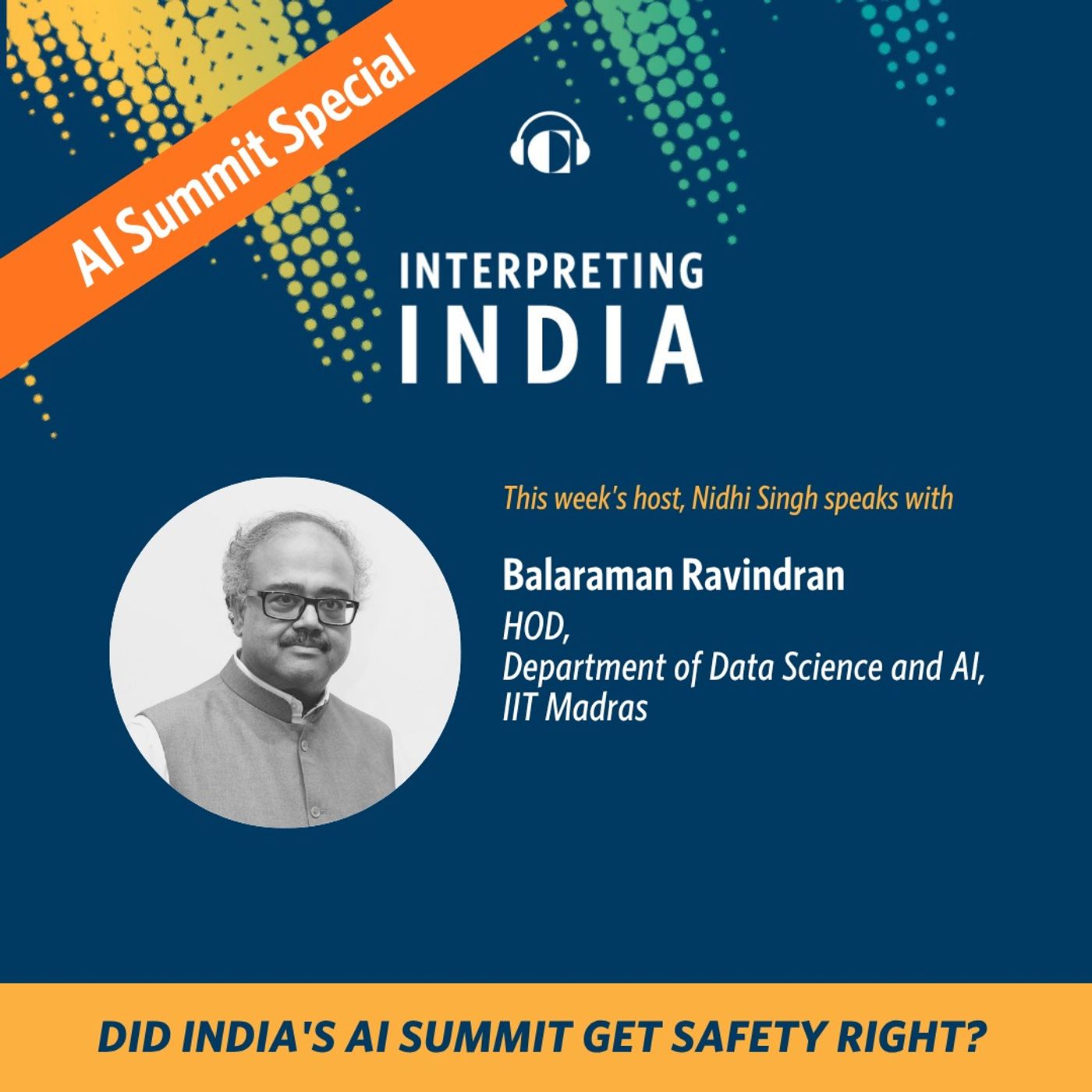 Did India's AI Summit Get Safety Right? | In this episode of Interpreting India, Nidhi Singh, Associate Fellow at Carnegie India, speaks with Professor Balaraman Ravindran, Head of the Department of Data Science and AI at IIT Madras, and Co-Chair of the Safe and Trusted AI Working Group at the India AI Impact Summit. Since the summit, Professor Ravindran has also been appointed to the UN's Independent International Scientific Panel on AI. There is a narrative that has taken hold since the summit, that India moved away from safety and left frontier risks behind. This conversation sets the record straight. This episode explores: What did the Safe and Trusted AI Working Group actually deliver, and what are the Trusted AI Commons? and the AI governance guidance note designed to do? Was the India AI Impact Summit really less focused on safety, or did the conversation simply evolve when it moved to the Global South? How quickly is the frontier risk landscape changing, and are the frameworks we are building keeping pace? What does the growing concentration of the most capable AI models in the hands of two countries mean for a country like India? | — | ||||||
| 6/4/26 | 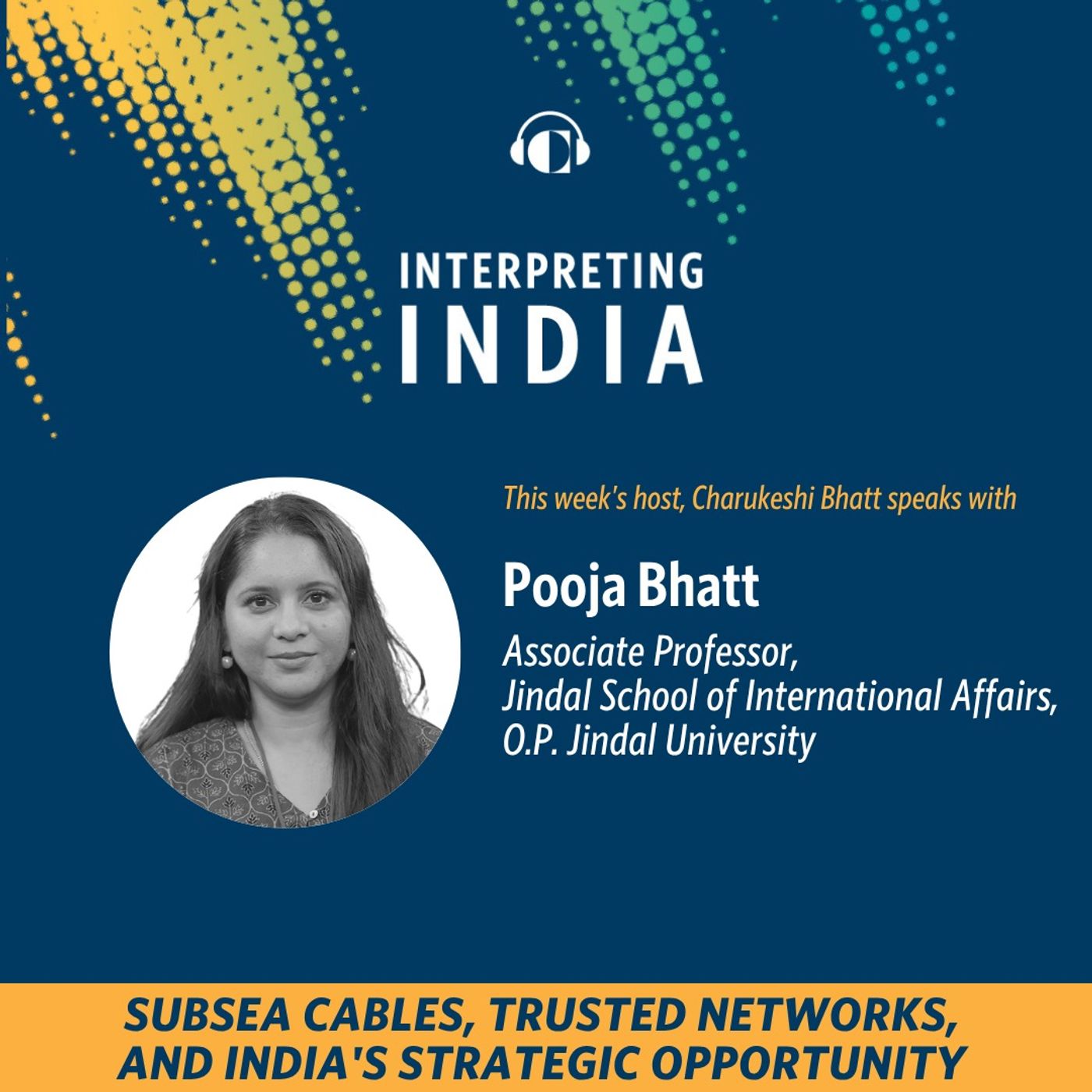 Subsea Cables, Trusted Networks, and India's Strategic Opportunity✨ | subsea cablesdata transfer+5 | Pooja Bhatt | Jindal School of International AffairsO.P. Jindal University | IndiaChina | subsea cablesdata traffic+6 | — | 46m 06s | |
| 5/26/26 | 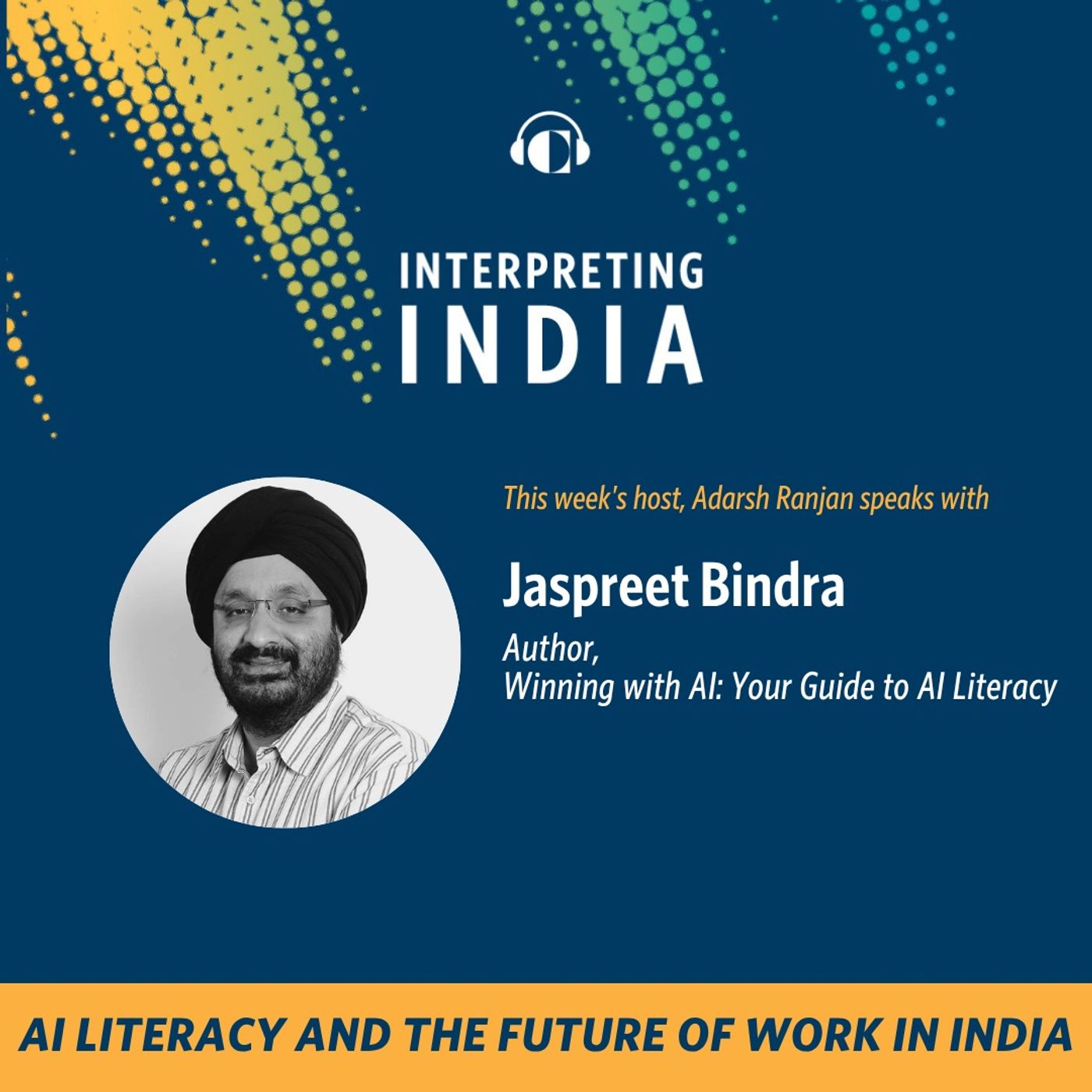 AI Literacy and the Future of Work in India✨ | AI literacyfuture of work+5 | Jaspreet Bindra | Carnegie IndiaAI&Beyond+2 | — | AIliteracy+7 | — | 44m 33s | |
| 5/15/26 | 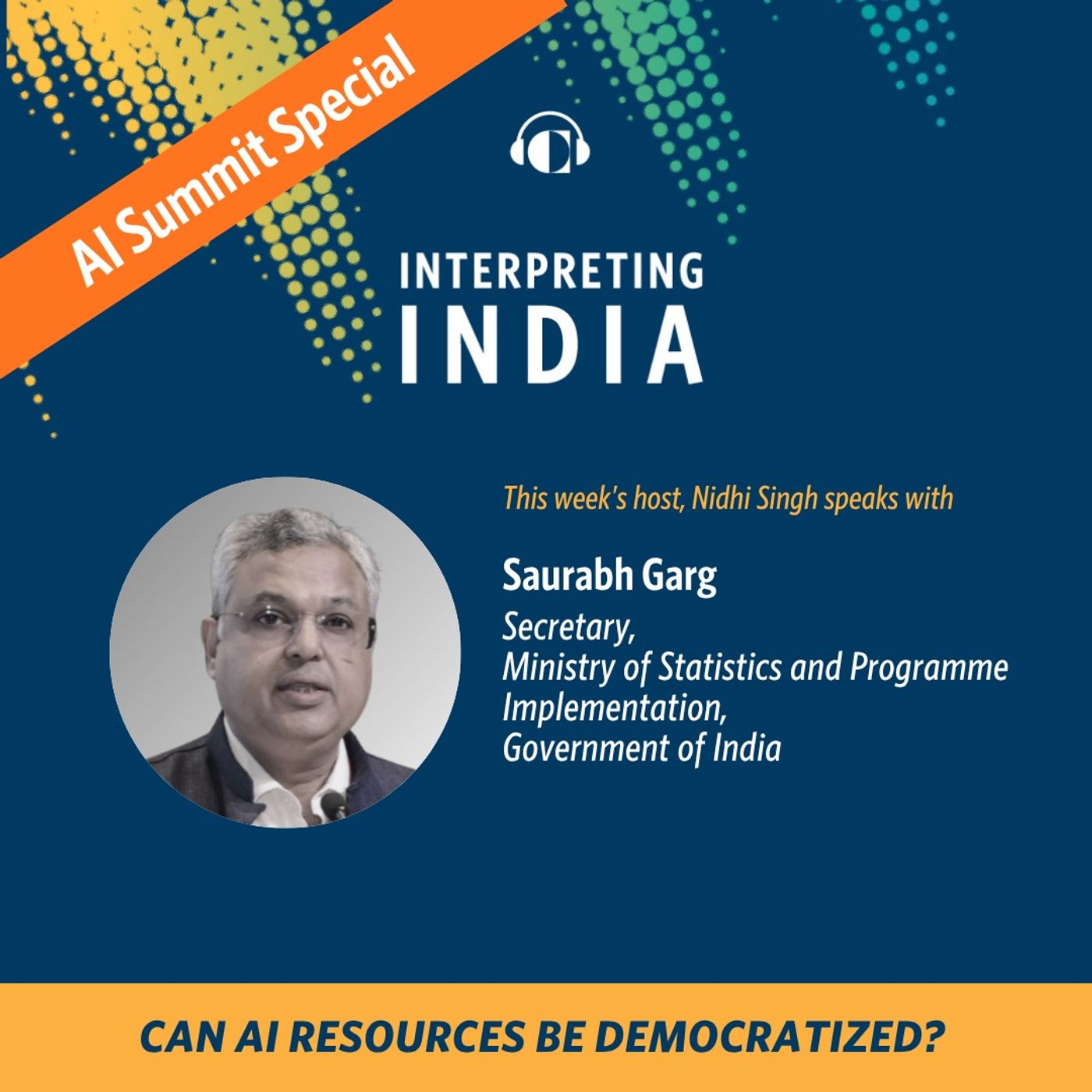 Can AI Resources Be Democratized? AI Summit Special✨ | AI democratizationinternational collaboration+3 | Saurabh Garg | Ministry of Statistics and Programme ImplementationCarnegie India+1 | India | AIdemocratization+5 | — | 28m 26s | |
| 5/7/26 | 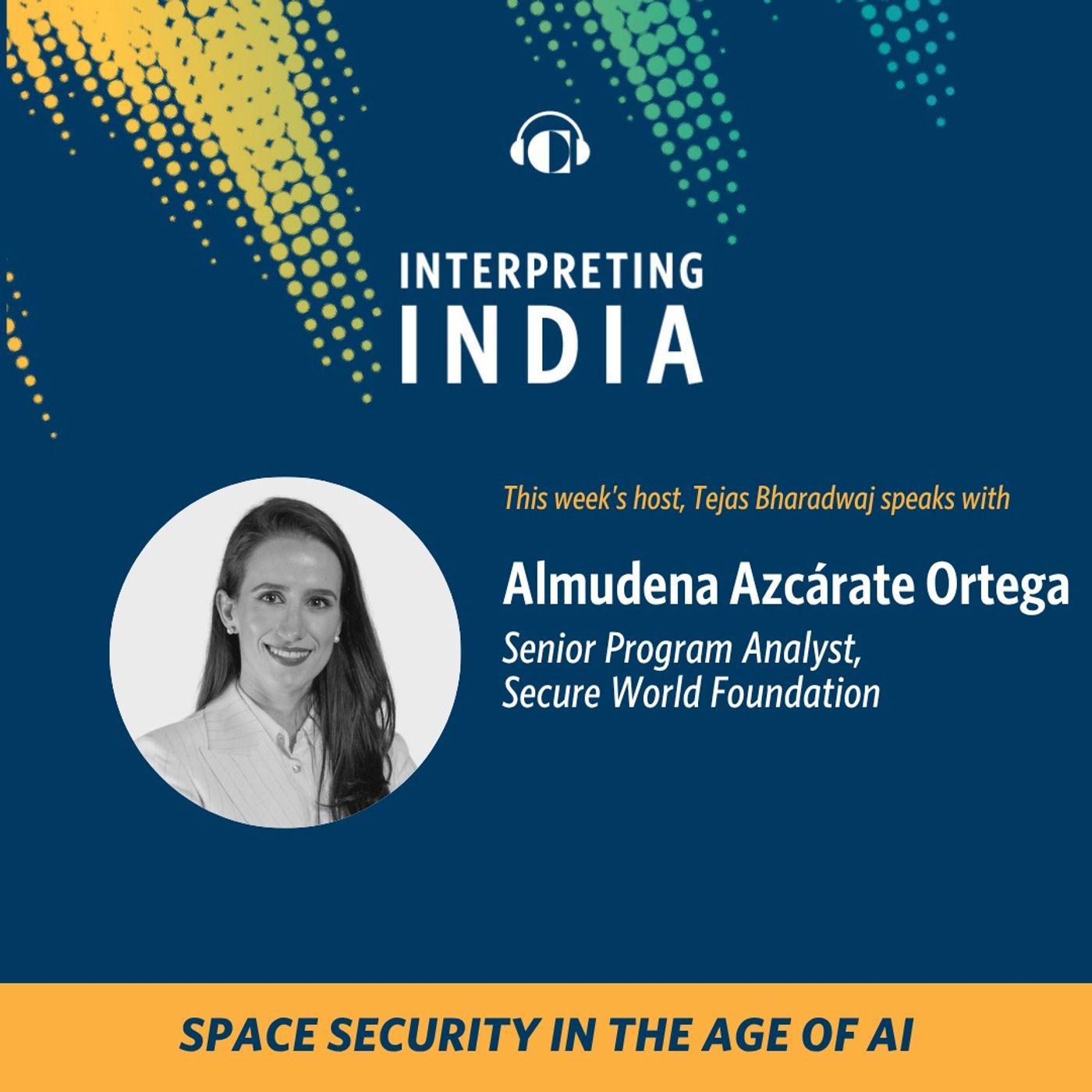 Space Security in the Age of AI✨ | space securityartificial intelligence+4 | Almudena Azcárate Ortega | UNIDIROuter Space Treaty | — | space securityAI+5 | — | 1h 07m 25s | |
| 4/30/26 | 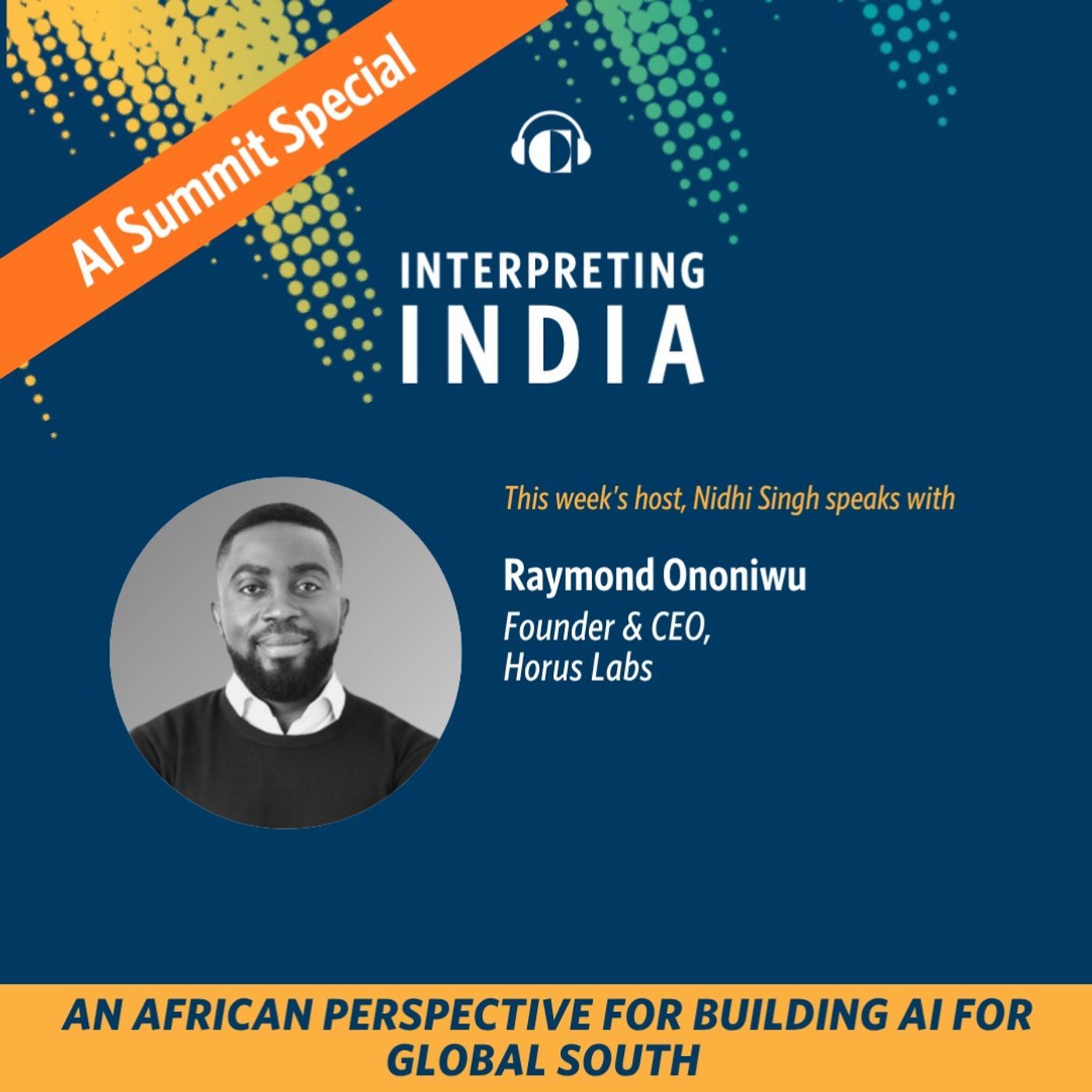 An African Perspective for Building AI for Global South | AI Summit Special✨ | AI infrastructureGlobal South+4 | Raymond Ononiwu | Horus Labs | Africasub-Saharan Africa+2 | AIinfrastructure+5 | — | 48m 07s | |
| 4/23/26 | 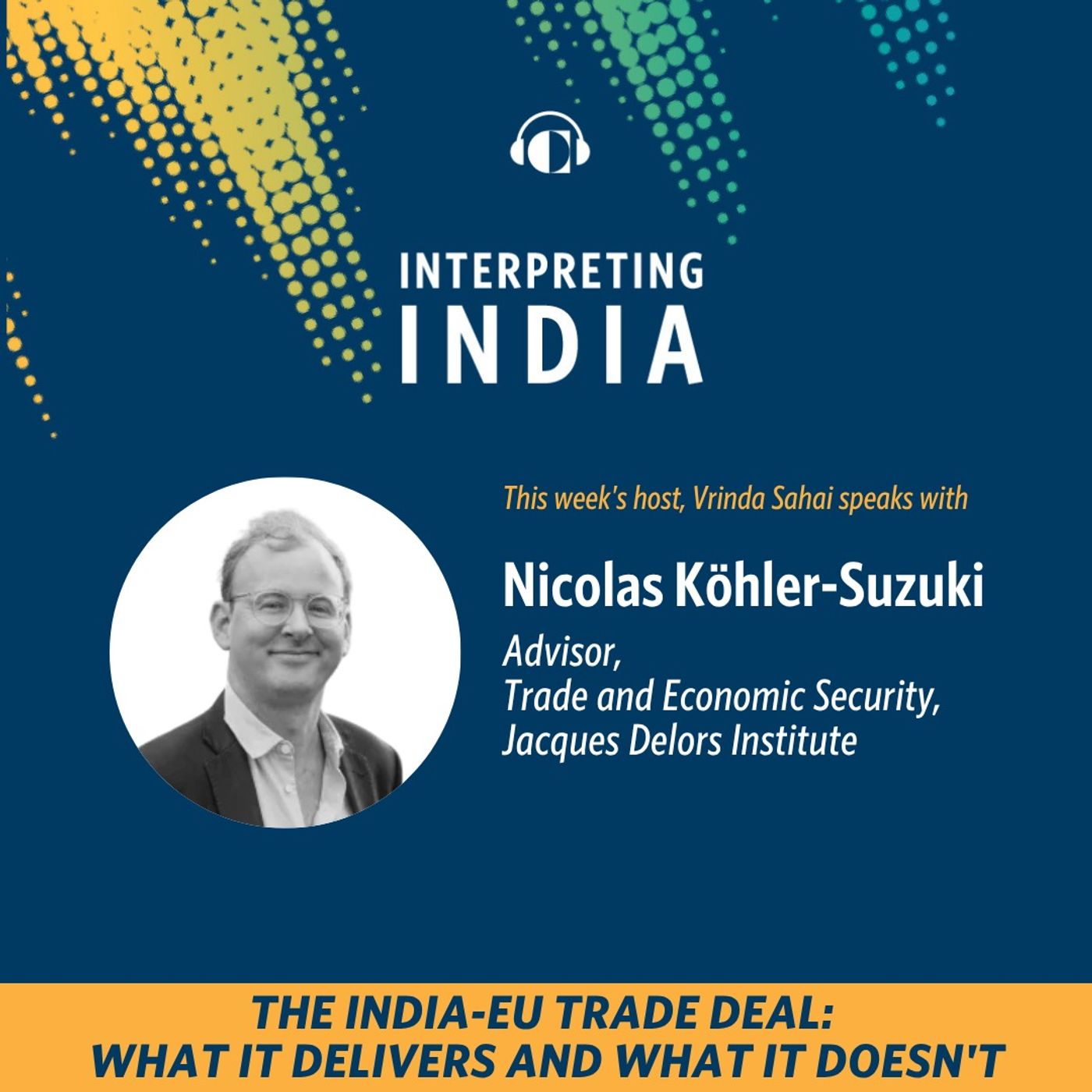 The India-EU Trade Deal: What It Delivers and What It Doesn't✨ | India-EU Trade AgreementFree Trade Agreement+2 | Nicolas Köhler-Suzuki | the Jacques Delors InstituteEU+1 | India | trade dealnon-tariff barriers+2 | — | 51m 27s | |
| 4/16/26 | 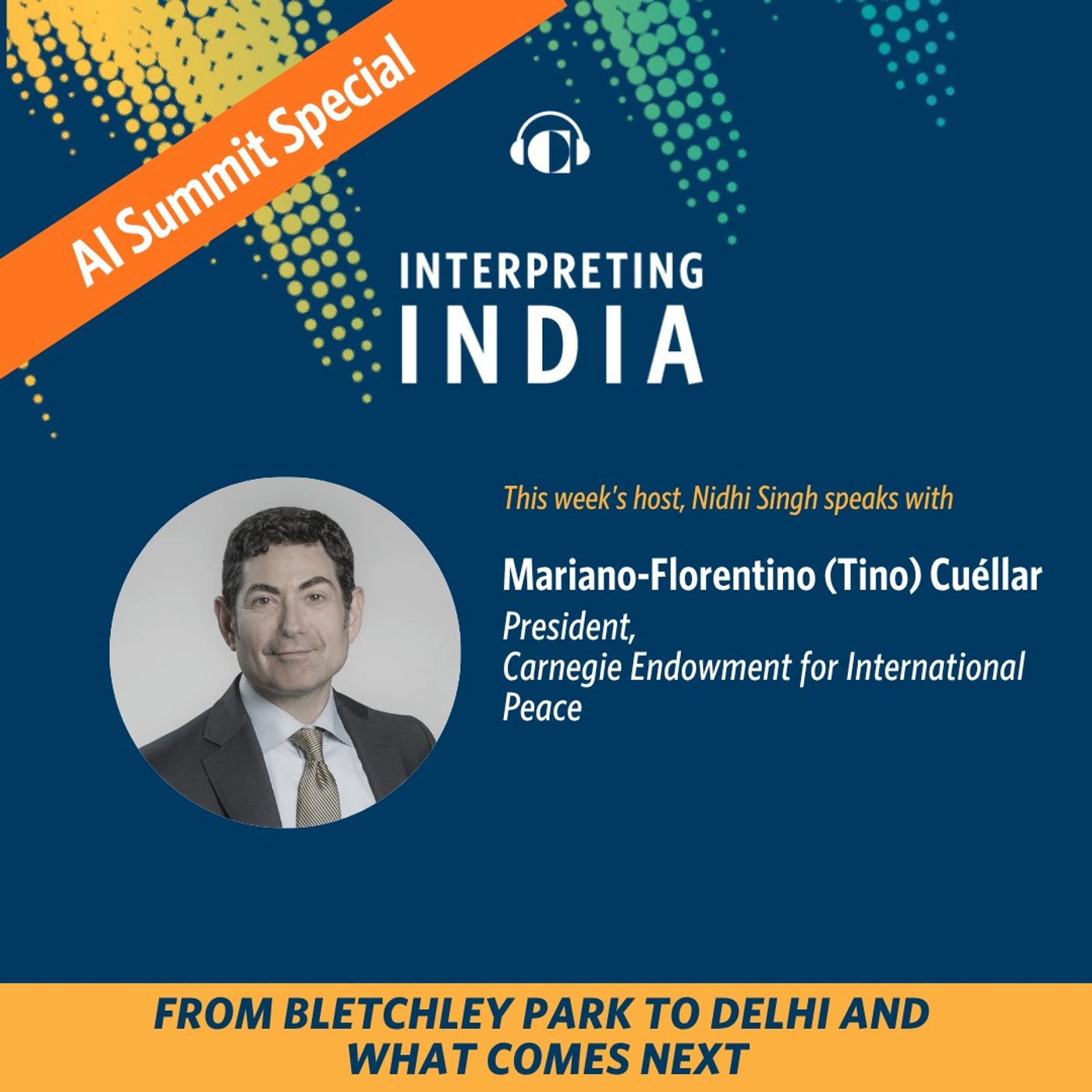 From Bletchley Park to Delhi and What Comes Next | AI Summit Special✨ | AI diplomacyAI governance+2 | Mariano-Florentino Cuéllar | the Carnegie Endowment for International PeaceInterpreting India | DelhiBletchley Park+6 | Bletchley ParkDelhi+2 | — | 54m 40s | |
| 3/31/26 |  Data, AI, and the Laws Trying to Keep Up✨ | data protectionAI governance+2 | Nikhil Narendran | Interpreting IndiaTrilegal | India | Cambridge Analyticaartificial intimacy+1 | — | 42m 40s | |
| 3/25/26 |  Inside the Iran Conflict: Power, Strategy, and India’s Balancing Act✨ | Iran conflictU.S.-Israel relations+3 | Gaddam Dharmendra | Carnegie IndiaInside the Iran Conflict: Power, Strategy, and India’s Balancing Act+1 | IndiaIran+3 | IranGulf countries+3 | — | 1h 08m 18s | |
Want analysis for the episodes below?Free for Pro Submit a request, we'll have your selected episodes analyzed within an hour. Free, at no cost to you, for Pro users. | |||||||||
| 2/26/26 |  Recalibrating BRICS: India’s Moment in a Fragmented World✨ | BRICSIndia+4 | Ana Garcia | PUC-Riothe BRICS Policy Center+3 | IndiaBrazil+2 | financial coordinationlocal currency trade+2 | — | 53m 46s | |
| 2/3/26 |  Deciphering the “Mother of All Trade Deals”: The India–EU FTA✨ | India-EU Free Trade Agreementtrade negotiations+3 | Mohan Kumar | EUInterpreting India | FranceIndia | trade dealcompetitiveness+2 | — | 36m 41s | |
| 1/30/26 |  AI Adoption Journey for Population Scale: The UCAF Framework✨ | AI adoptionUse Case Adoption Framework+3 | Shalini KapoorTanvi Lall | Use Case Adoption FrameworkInterpreting India+2 | India | AI initiativespilot purgatory+2 | — | 46m 39s | |
| 11/21/25 | 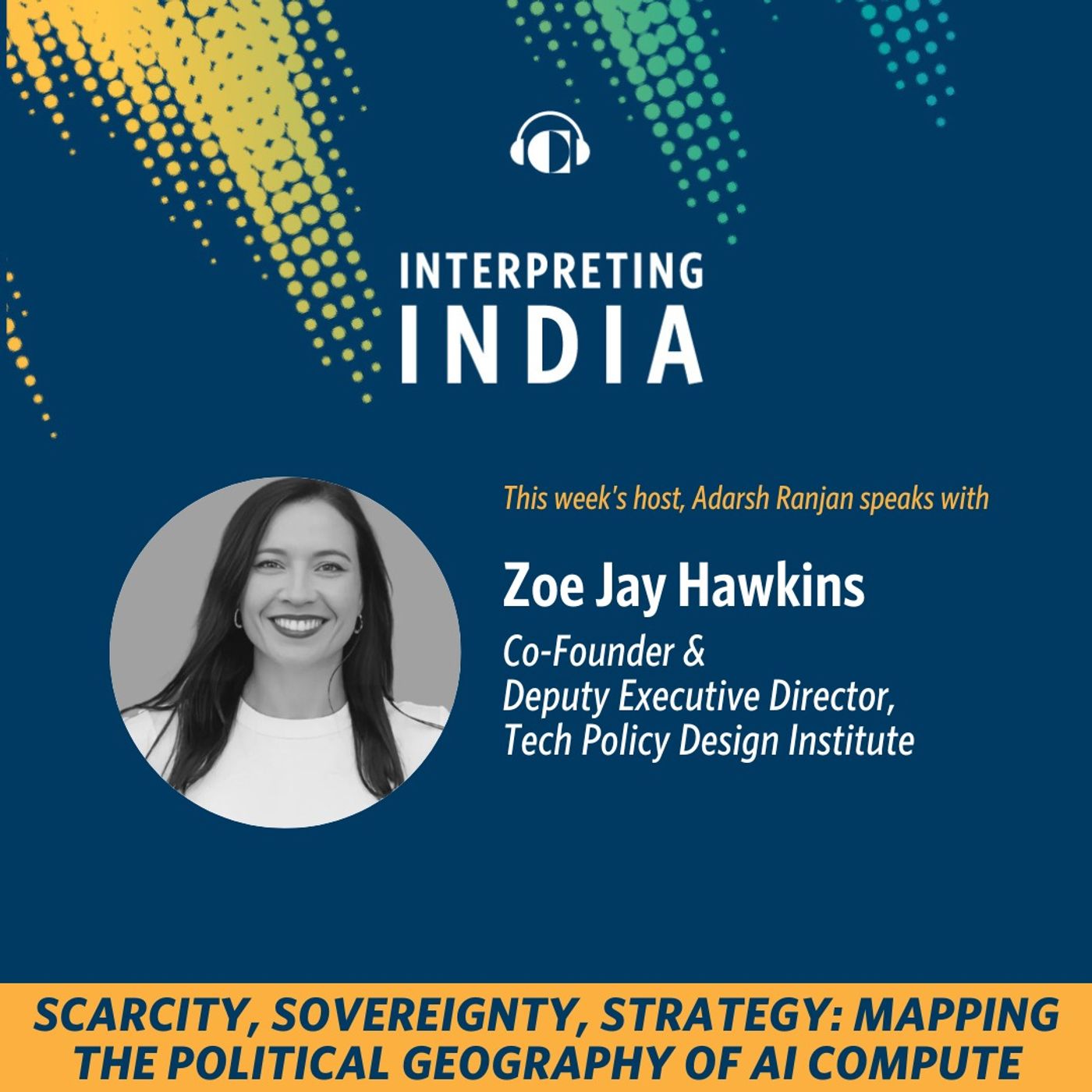 Scarcity, Sovereignty, Strategy: Mapping the Political Geography of AI Compute✨ | AI sovereigntygeopolitics of compute+4 | Zoe Jay Hawkins | AI chipsdata centers+3 | the Global South | AIcompute+3 | — | 45m 08s | |
| 10/31/25 | 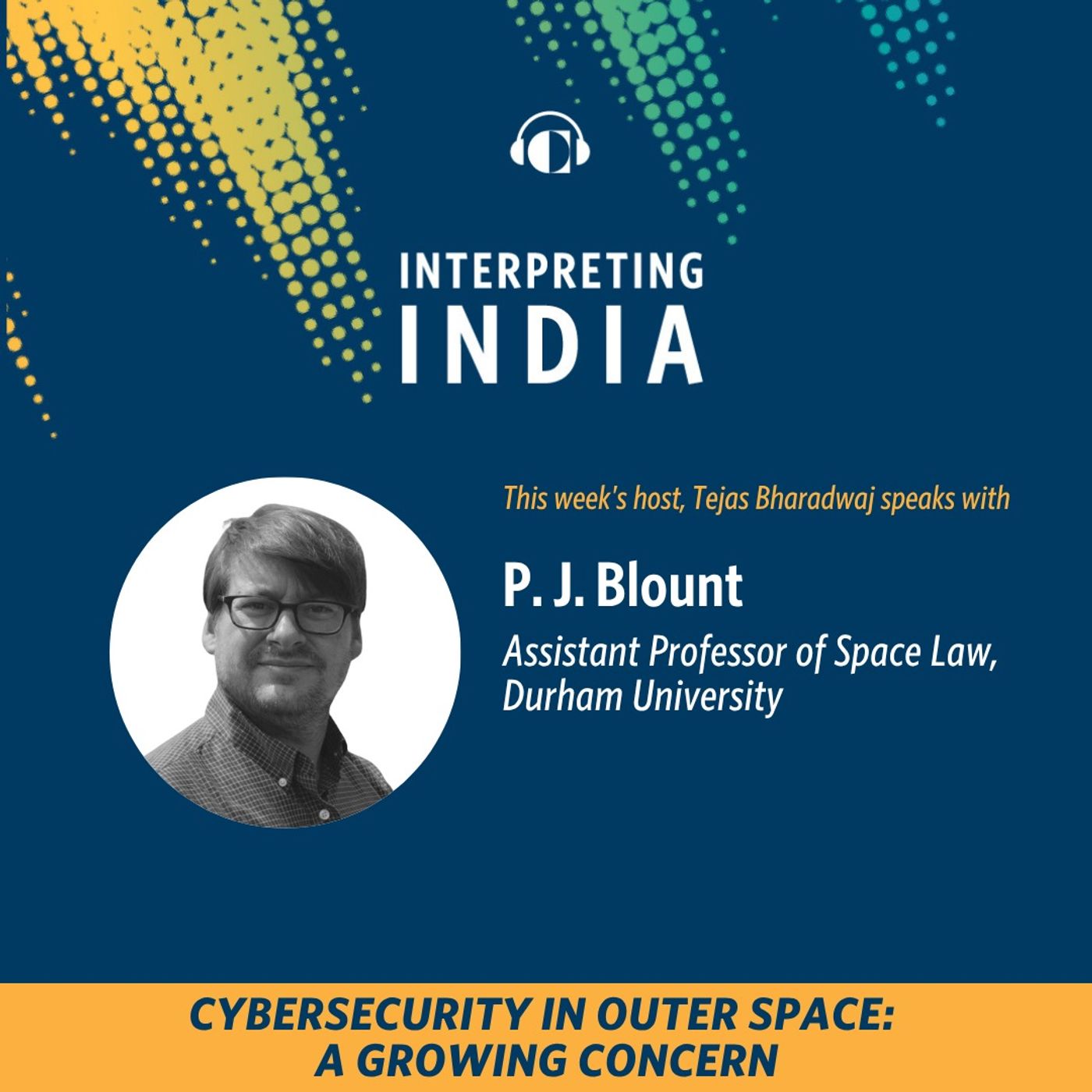 Cybersecurity in Outer Space: A Growing Concern✨ | cybersecurityouter space+3 | P. J. Blount | Interpreting IndiaDurham University | — | international space lawcyberspace governance+2 | — | 36m 52s | |
| 10/16/25 | 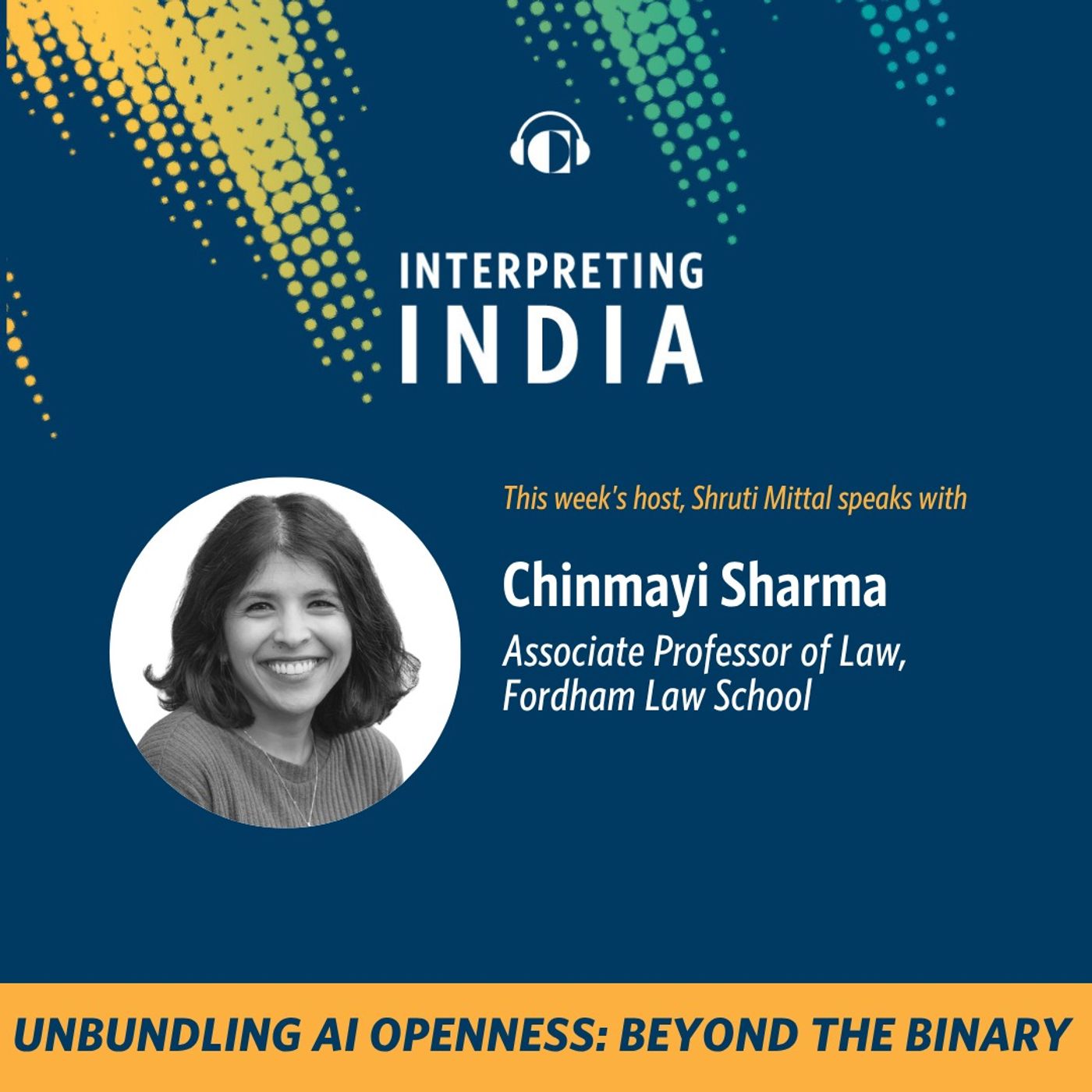 Unbundling AI Openness: Beyond the Binary✨ | artificial intelligenceopenness+2 | Chinmayi Sharma | the Technology and Society ProgramCarnegie India+8 | — | AIdemocratic accountability+3 | — | 48m 02s | |
| 9/18/25 | 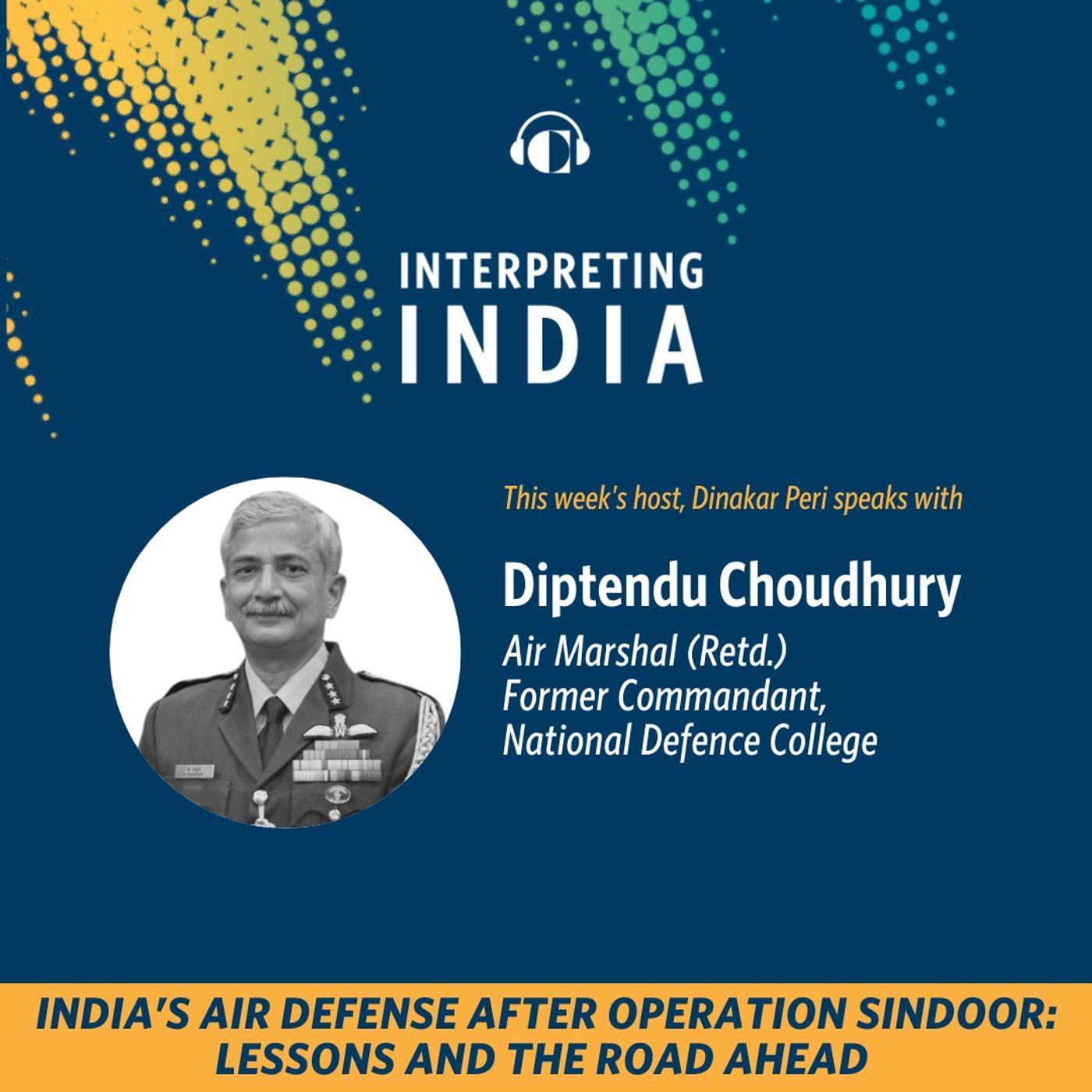 India’s Air Defense After Operation Sindoor: Lessons and the Road Ahead | In this episode of Interpreting India, host Dinakar Peri is joined by Air Marshal (Retd.) Diptendu Choudhury, former Commandant of the National Defence College. Together, they unpack the evolution of India’s multilayered air defense network, tracing their journey from limited radar coverage in the 1960s to today’s multilayered, integrated network capable of projecting power into adversarial airspace. The discussion highlights how offensive and defensive air power work in tandem, lessons from Operation Sindoor, the growing challenges posed by drones, missiles, and cost-effectiveness, and the future direction of India’s strategy in the face of China–Pakistan cooperation. | — | ||||||
| 8/28/25 |  Military AI and Autonomous Weapons: Gender, Ethics, and Governance | In this episode of Interpreting India, host Charukeshi Bhatt is joined by Shimona Mohan, associate researcher at the United Nations Institute for Disarmament Research (UNIDIR). Together, they unpack the rapidly evolving landscape of artificial intelligence in the military domain, with a special focus on lethal autonomous weapons systems (LAWS). The discussion traces how AI’s dual-use nature complicates governance, highlights the risks of bias and miscalculation, and explores why progress in international negotiations has been slow despite nearly a decade of debate. | — | ||||||
| 7/10/25 |  Beyond Superintelligence: A Realist's Guide to AI | In this episode of Interpreting India, host Nidhi Singh is joined by Sayash Kapoor, co-author of AI Snake Oil, to unpack the myths, misconceptions, and exaggerated expectations around artificial intelligence. Kapoor challenges the dominant narratives of both utopian and dystopian AI futures and advocates instead for a more grounded perspective, viewing AI as a “normal technology,” akin to electricity or the internet, whose impact will unfold gradually over decades. Through a wide-ranging conversation, the episode examines the limitations of benchmark-based evaluation, the dangers of speculative AI policy, and the need for domain experts in shaping meaningful governance frameworks. | — | ||||||
| 6/26/25 |  Navigating the Open v. Closed Source AI Debate with Kailash Nadh | In this episode of Interpreting India, host Shruti Mittal is joined by Kailash Nadh, chief technology officer of Zerodha and co-founder of FOSS United, to provide a technologist’s perspective on one of the most consequential debates shaping the future of artificial intelligence: the open versus closed source AI debate. Against the backdrop of a rapidly evolving AI landscape, this conversation examines risks, rewards, and the strategic implications of open-source AI for India. | — | ||||||
| 6/12/25 |  Interpreting China: From the LAC to Taiwan – Mapping China’s Assertiveness | In this episode of Interpreting India, host Saheb Singh Chadha is joined by Aadil Brar, reporter at TaiwanPlus News and contributor to "Views from Taipei", to examine China’s evolving strategy across its contested borders. What connects China’s actions across these frontiers? How is it creating a new military normal around Taiwan? And has its assertiveness resulted in negative consequences for itself? This is the third and final episode in our special Interpreting China series, based on Views from Taipei, a collection of essays by young Indian scholars on China. Aadil’s essay, "From Land Border to the High Seas: Beijing Signaling at India, Taiwan, and the Philippines," provides the foundation for this wide-ranging conversation. | — | ||||||
| 5/29/25 |  Interpreting China: The People’s Liberation Army—Reforms and Challenges | In this episode of Interpreting India, host Saheb Singh Chadha is joined by Suyash Desai, nonresident fellow at the Foreign Policy Research Institute, to explore the transformation and challenges facing China’s military, the People’s Liberation Army (PLA). Over the past decade, the PLA has seen rapid changes under Xi Jinping, from sweeping structural reforms to new mobilization and training strategies. But how ready is it really for a conflict over Taiwan? And what do these changes mean for India? This is the second episode in our special three-part Interpreting China series, based on Views From Taipei, a collection of essays by young Indian scholars on China. Suyash’s essay, The People’s Liberation Army in the 2020s: Buoyed by Reforms, Limited by Roadblocks, serves as the foundation for this wide-ranging conversation. | — | ||||||
| 5/15/25 |  Interpreting China: The Economy and its Impact on Foreign Policy | In this episode of Interpreting India, host Saheb Singh Chadha is joined by Amit Kumar, staff research analyst at the Takshashila Institution, to explore the structural imbalances in China’s economy and what they mean for the world. The conversation delves into three major dilemmas facing the Chinese economy—fiscal stimulus, property sector instability, and domestic consumption rebalancing. Together, they examine how these economic dynamics impact China’s foreign policy, foreign economic relations and China’s outreach to countries like India. India–China economic relations are also discussed. Amit Kumar is a contributor to the Views From Taipei compendium published by Carnegie India in May 2025. He is the author of the essay titled The Pulls and Pushes Within the Chinese Economy. | — | ||||||
| 4/30/25 |  Securing Space: Opportunities for U.S.-India Cooperation in a New Strategic Frontier | In this episode of Interpreting India, host Tejas Bharadwaj speaks with Victoria Samson, chief director for space security and stability at the Secure World Foundation, about emerging challenges and opportunities in space security. As countries ramp up efforts to protect space-based assets from cyber threats, anti-satellite weapons, and other risks, the episode explores the strategic, technological, and diplomatic dimensions of space cooperation. How do bilateral and multilateral initiatives advance shared security goals in an increasingly contested space environment? Beyond the progress of the last few years, what other opportunities exist for India and the U.S. to collaborate on space security? | — | ||||||
| 3/27/25 |  India's Defence Industry: The State of Play | In this episode of Interpreting India, Lt Gen P. R. Shankar (Retd.) joins host Saheb Singh Chadha to unpack the state of India’s defense industry. While India has made gains in modernizing its military and expanding domestic defense production, challenges persist, for example, in research and development, and procurement. Gen. Shankar also provided recommendations that would allow India to reduce its imports, diversify dependence, and export indigenous systems. | — | ||||||
Showing 25 of 150
Pitch Fit is a Pro feature
See how bookable this show is for guests, which brands already advertise, the per-episode ad value, and the best-fit guest and sponsor profile. The numbers are blurred on the free plan.
How readily this show books outside guests like you.
How proven this show is for host-read sponsorships.
For Guests
ProFor Advertisers
ProUpgrade to Pro to unlock guest cadence, sponsor categories, fit scores, and per-episode ad value for this show.
Chart Positions
14 placements across 14 markets.
Chart Positions
14 placements across 14 markets.