
Insights from recent episode analysis
Audience Interest
Podcast Focus
Publishing Consistency
Platform Reach
Insights are generated by CastFox AI using publicly available data, episode content, and proprietary models.
Total monthly reach
Estimated from 1 chart position in 1 market.
By chart position
- 🇨🇿CZ · Philosophy#3910K to 30K
- Per-Episode Audience
Est. listeners per new episode within ~30 days
7K to 21K🎙 Weekly cadence·61 episodes·Last published 1mo ago - Monthly Reach
Unique listeners across all episodes (30 days)
10K to 30K🇨🇿100% - Active Followers
Loyal subscribers who consistently listen
3K to 9K
Market Insights
Platform Distribution
Reach across major podcast platforms, updated hourly
Total Followers
—
Total Plays
—
Total Reviews
—
* Data sourced directly from platform APIs and aggregated hourly across all major podcast directories.
On the show
Recent episodes
Theories of Well-Being
Mar 28, 2026
32m 37s
1. Introduction to Utilitarianism
Jul 11, 2023
10m 40s
2. Elements and Types of Utilitarianism
Jul 11, 2023
30m 48s
3. Arguments for Utilitarianism
Jul 11, 2023
25m 32s
4. Theories of Well-Being
Jul 11, 2023
25m 56s
Social Links & Contact
Official channels & resources
Official Website
Login
RSS Feed
Login
| Date | Episode | Description | Length | ||||||
|---|---|---|---|---|---|---|---|---|---|
| 3/28/26 | Theories of Well-Being | “To what shall the character of utility be ascribed, if not to that which is a source of pleasure?” – Jeremy Bentham 1 1 Table of Contents Introduction Hedonism The “Evil Pleasures” Objection The Experience Machine Objection Desire Theories Bizarre Desires Changing Preferences Objective List Theories Is Objective Value “Spooky”? Alienation Practical Implications of Theories of Well-Being Conclusion Resources and Further Reading Introduction Welfarism Hedonism Desire Theories Objective List Theories Introduction A core element of utilitarianism is welfarism—the view that only the welfare (also called well-being) of individuals determines how good a particular state of the world is. While consequentialists claim that what is right is to promote the amount of good in the world, welfarists specifically equate the good to be promoted with well-being. Philosophers use the term “well-being” to refer to what's good for a person, as opposed to what's good per se, or “from the point of view of the Universe” to use Sidgwick's poetic phrase. Utilitarianism holds that well-being is always good from the point of view of the universe, and not just good for the individual. But other views may coherently deny this. For example, one might think that [...] ---Outline:(00:18) Introduction(02:29) Hedonism(05:32) The Evil Pleasures Objection(08:45) The Experience Machine Objection(12:34) Desire Theories(15:29) Bizarre Desires(16:19) Changing Preferences(18:10) Objective List Theories(20:17) Is Objective Value Spooky?(23:07) Alienation(24:33) Practical Implications of Theories of Well-Being(26:08) Conclusion(27:37) Introduction(28:42) Welfarism(29:10) Hedonism(30:25) Desire Theories(31:35) Objective List Theories The original text contained 40 footnotes which were omitted from this narration. --- First published: January 29th, 2023 Source: https://www.utilitarianism.net/theories-of-well-being --- Narrated by TYPE III AUDIO. ---Images from the article:Apple Podcasts and Spotify do not show images in the episode description. Try Pocket Casts, or another podcast app. | 32m 37s | ||||||
| 7/11/23 | 1. Introduction to Utilitarianism | This chapter introduces utilitarianism, and its major costs and benefits as a moral theory. The original text contained 12 footnotes which were omitted from this narration. --- First published: January 29th, 2023 Source: https://utilitarianism.net/introduction-to-utilitarianism --- Narrated by TYPE III AUDIO. | 10m 40s | ||||||
| 7/11/23 | 2. Elements and Types of Utilitarianism | After defining utilitarianism, this chapter offers a detailed analysis of its four key elements (consequentialism, welfarism, impartiality, and aggregationism). It explains the difference between maximizing, satisficing, and scalar utilitarianism, and other important distinctions between utilitarian theories. The original text contained 30 footnotes which were omitted from this narration. --- First published: January 29th, 2023 Source: https://utilitarianism.net/types-of-utilitarianism --- Narrated by TYPE III AUDIO. | 30m 48s | ||||||
| 7/11/23 | 3. Arguments for Utilitarianism | This chapter explains reflective equilibrium as a moral methodology, and presents several arguments for utilitarianism over non-consequentialist approaches to ethics. The original text contained 35 footnotes which were omitted from this narration. --- First published: January 29th, 2023 Source: https://utilitarianism.net/arguments-for-utilitarianism --- Narrated by TYPE III AUDIO. | 25m 32s | ||||||
| 7/11/23 | 4. Theories of Well-Being | Explores the three major theories of well-being, or what makes a life good for the individual living it: hedonism, desire theory, and objective list theory. The original text contained 38 footnotes which were omitted from this narration. --- First published: January 29th, 2023 Source: https://utilitarianism.net/theories-of-wellbeing --- Narrated by TYPE III AUDIO. | 25m 56s | ||||||
| 7/11/23 | 5. Population Ethics | Population ethics tackles questions like how we should weigh new lives against existing lives, and how we should balance quantity and quality of life (when comparing different-sized populations). This chapter critically surveys five major approaches to population ethics: the total view, the average view, variable value theories, critical level (and critical range) theories, and person-affecting views. The original text contained 63 footnotes which were omitted from this narration. --- First published: January 29th, 2023 Source: https://utilitarianism.net/population-ethics --- Narrated by TYPE III AUDIO. | 33m 53s | ||||||
| 7/11/23 | 6. Utilitarianism and Practical Ethics | Utilitarianism has important implications for how we should think about leading an ethical life. Despite giving no intrinsic weight to deontic constraints, it supports many commonsense prohibitions and virtues in practice. Its main practical difference instead lies in its emphasis on positively doing good, in more expansive and efficient ways than people typically prioritize. The original text contained 27 footnotes which were omitted from this narration. --- First published: January 29th, 2023 Source: https://utilitarianism.net/utilitarianism-and-practical-ethics --- Narrated by TYPE III AUDIO. | 23m 39s | ||||||
| 7/11/23 | 7. Near-Utilitarian Alternatives | There are several ways to reject aspects of utilitarianism while remaining on board with the general thrust of the theory (at least in practice). This chapter explores a range of such near-utilitarian views, to demonstrate the robustness of utilitarianism's practical recommendations. Even if you think the theory is technically false, you may nonetheless have good grounds to largely agree with its practical verdicts. The original text contained 25 footnotes which were omitted from this narration. --- First published: January 29th, 2023 Source: https://utilitarianism.net/near-utilitarian-alternatives --- Narrated by TYPE III AUDIO. | 22m 09s | ||||||
| 7/11/23 | 8. Objections to Utilitarianism and Responses | This chapter presents a toolkit of general strategies for responding to objections to utilitarianism, before introducing the most influential specific objections to the theory. The original text contained 7 footnotes which were omitted from this narration. --- First published: January 29th, 2023 Source: https://utilitarianism.net/objections-to-utilitarianism --- Narrated by TYPE III AUDIO. | 11m 58s | ||||||
| 7/11/23 | 8.1 The Rights Objection | Many find it objectionable that utilitarianism seemingly licenses outrageous rights violations in certain hypothetical scenarios, killing innocent people for the greater good. This article explores how utilitarians might best respond. The original text contained 4 footnotes which were omitted from this narration. --- First published: January 29th, 2023 Source: https://utilitarianism.net/objections-to-utilitarianism/rights --- Narrated by TYPE III AUDIO. | 10m 25s | ||||||
Want analysis for the episodes below?Free for Pro Submit a request, we'll have your selected episodes analyzed within an hour. Free, at no cost to you, for Pro users. | |||||||||
| 7/11/23 | 8.2 The Mere Means Objection | Critics often allege that utilitarianism objectionably instrumentalizes people—treating us as mere means to the greater good, rather than properly valuing individuals as ends in themselves. In this article, we assess whether this is a fair objection. The original text contained 8 footnotes which were omitted from this narration. --- First published: January 29th, 2023 Source: https://utilitarianism.net/objections-to-utilitarianism/mere-means --- Narrated by TYPE III AUDIO. | 11m 57s | ||||||
| 7/11/23 | 8.3 The Separateness of Persons Objection | The idea that utilitarianism neglects the 'separateness of persons' has proven to be a widely influential objection. But it is one that is difficult to pin down. This article explores three candidate interpretations of the objection, and how utilitarians can respond to each. The original text contained 21 footnotes which were omitted from this narration. --- First published: January 29th, 2023 Source: https://utilitarianism.net/objections-to-utilitarianism/separateness-of-persons --- Narrated by TYPE III AUDIO. | 16m 47s | ||||||
| 7/11/23 | 8.4 The Demandingness Objection | In directing us to choose the impartially best outcome, even at significant cost to ourselves, utilitarianism can seem an incredibly demanding theory. This page explores whether this feature of utilitarianism is objectionable, and if so, how defenders of the view might best respond. The original text contained 5 footnotes which were omitted from this narration. --- First published: January 29th, 2023 Source: https://utilitarianism.net/objections-to-utilitarianism/demandingness --- Narrated by TYPE III AUDIO. | 11m 08s | ||||||
| 7/11/23 | 8.5 The Alienation Objection | Abstract moral theories threaten to alienate us from much that we hold dear. This article explores two possible defenses of utilitarianism against this charge. One recommends adopting motivations other than explicitly utilitarian ones. The second argues that suitably concrete concerns can be subsumed within broader utilitarian motivations. The original text contained 11 footnotes which were omitted from this narration. --- First published: January 29th, 2023 Source: https://utilitarianism.net/objections-to-utilitarianism/alienation --- Narrated by TYPE III AUDIO. | 11m 05s | ||||||
| 7/11/23 | 8.6 The Special Obligations Objection | Relationships like parenthood or guardianship seemingly give rise to special obligations to protect those who fall under our care (where these obligations are more stringent than our general duties of beneficence towards strangers). This article explores the extent to which impartial utilitarianism can accommodate intuitions and normative practices of partiality. The original text contained 10 footnotes which were omitted from this narration. --- First published: January 29th, 2023 Source: https://utilitarianism.net/objections-to-utilitarianism/special-obligations --- Narrated by TYPE III AUDIO. | 11m 53s | ||||||
| 7/11/23 | 8.7 The Cluelessness Objection | Is utilitarianism undermined by our inability to predict the long-term consequences of our actions? This article explores whether utilitarians can still be guided by near-term expected value even when this is small in comparison to the potential value or disvalue of the unknown long-term consequences. The original text contained 18 footnotes which were omitted from this narration. --- First published: March 8th, 2023 Source: https://utilitarianism.net/objections-to-utilitarianism/cluelessness --- Narrated by TYPE III AUDIO. | 13m 52s | ||||||
| 7/11/23 | 8.8 The Equality Objection | Utilitarianism is concerned with the overall well-being of individuals in the population, but many object that justice requires an additional concern for how this well-being is distributed across individuals. This article examines this objection, and how utilitarians might best respond. The original text contained 6 footnotes which were omitted from this narration. --- First published: January 29th, 2023 Source: https://utilitarianism.net/objections-to-utilitarianism/equality --- Narrated by TYPE III AUDIO. | 8m 03s | ||||||
| 7/11/23 | 8.9 The Abusability Objection | Some argue that utilitarianism is self-effacing, or recommends against its own acceptance, due to the risk that mistaken appeals to the 'greater good' may actually result in horrifically harmful actions being done. This article explores how best to guard against such risks, and questions whether it is an objection to a theory if it turns out to be self-effacing in this way. The original text contained 15 footnotes which were omitted from this narration. --- First published: March 8th, 2023 Source: https://utilitarianism.net/objections-to-utilitarianism/abusability --- Narrated by TYPE III AUDIO. | 11m 00s | ||||||
| 7/11/23 | Acting on Utilitarianism | “Create all the happiness you are able to create; remove all the misery you are able to remove. Every day will allow you, will invite you to add something to the pleasure of others, or to diminish something of their pains.” —Jeremy Bentham So far we have looked at utilitarianism from a theoretical viewpoint. But what does utilitarianism actually mean in practice? What concrete actions does it say we should take? This article explains what it means to live an ethical life from the perspective of utilitarianism. The original text contained 40 footnotes which were omitted from this narration. --- First published: January 29th, 2023 Source: https://utilitarianism.net/acting-on-utilitarianism --- Narrated by TYPE III AUDIO. | 23m 10s | ||||||
| 7/11/23 | 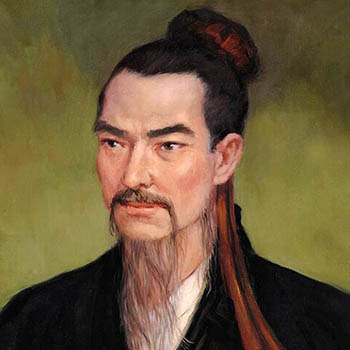 Utilitarian Thinkers: Mozi | Mò Dí (墨翟), better known as Mòzǐ or “Master Mò,” flourished c. 430 BCE in what is now Tengzhou, Shandong Province, China. Likely an artisan by craft, Mò Dí attracted many dedicated followers and founded the philosophical school of Mohism during China’s Warring States Period (475 - 221 BCE).Like other philosophers of his day, including the better-known Confucius, Mò Dí traveled from state to state to persuade rulers to adopt policies intended to end war, alleviate poverty, install meritocracy, and promote the welfare of all. The original text contained 10 footnotes which were omitted from this narration. --- First published: January 29th, 2023 Source: https://utilitarianism.net/utilitarian-thinker/mozi --- Narrated by TYPE III AUDIO. | 3m 02s | ||||||
| 7/11/23 |  Utilitarian Thinkers: Susanna Newcome | Susanna Newcome (1685-1763) was an eighteenth-century philosopher and theologian who lived and worked in England. Her most significant work, An Enquiry into the Evidence of the Christian Religion, contains an early formulation of utilitarian thought. In this short book, Newcome synthesizes contemporary developments in natural theology and moral psychology to offer a utilitarian account of the nature of ethics and our moral duties.Life and Works Newcome (née Squire) was born in 1685 in the small Wiltshire village of Durnford, where her father was a vicar. The original text contained 10 footnotes which were omitted from this narration. --- First published: January 29th, 2023 Source: https://utilitarianism.net/utilitarian-thinker/susanna-newcome --- Narrated by TYPE III AUDIO. | 21m 01s | ||||||
| 7/11/23 | 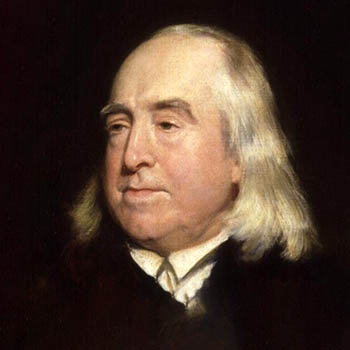 Utilitarian Thinkers: Jeremy Bentham | Jeremy Bentham was born in 1748 to a wealthy family. A child prodigy, his father sent him to study at Queen’s College, Oxford University, aged 12. Although he never practiced, Bentham trained as a lawyer and wrote extensively on law and legal reform. He died in 1832 at the age of 84 and requested his body and head to be preserved for scientific research. They are currently on display at University College London. The original text contained 9 footnotes which were omitted from this narration. --- First published: January 29th, 2023 Source: https://utilitarianism.net/utilitarian-thinker/jeremy-bentham --- Narrated by TYPE III AUDIO. | 3m 10s | ||||||
| 7/11/23 | 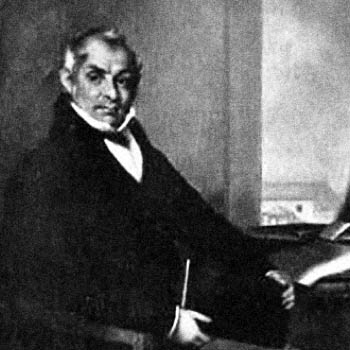 Utilitarian Thinkers: William Thompson | William Thompson (1775–1833) was a philosopher, political economist, and social reformer working during the early nineteenth century. He and his sometimes co-author Anna Doyle Wheeler made significant, though under-appreciated, contributions to the utilitarian, socialist, and feminist philosophical traditions.1 Life William Thompson was a landowner from Cork, Ireland with a reputation for eccentricity. He was often disparaged as “the Red Republican”—a reference to both the red flags of the Jacobins of the French Revolution and contemporaneous attempts at revolution against the British by the Irish Republicans. The original text contained 9 footnotes which were omitted from this narration. --- First published: January 29th, 2023 Source: https://utilitarianism.net/utilitarian-thinker/william-thompson --- Narrated by TYPE III AUDIO. | 15m 36s | ||||||
| 7/11/23 | 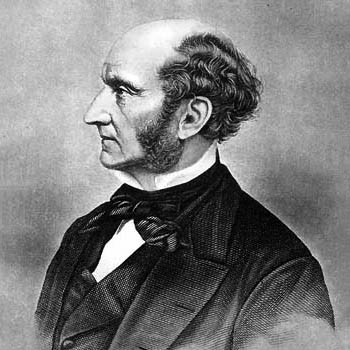 Utilitarian Thinkers: John Stuart Mill | John Stuart Mill was born in 1806, in London. He was the son of James Mill, a friend of Jeremy Bentham’s who shared many of his principles. James intended that his son carry on the radical utilitarian empiricist tradition, and this was reflected in his upbringing: John learned Greek and arithmetic at 3, and helped to edit his father’s book (the History of India) at 11. Mill was influenced by the thought of both Jeremy Bentham and political economist David Ricardo (another friend of his father’s), and himself committed to utilitarianism after reading Bentham’s Traités de Legislation. The original text contained 11 footnotes which were omitted from this narration. --- First published: January 29th, 2023 Source: https://utilitarianism.net/utilitarian-thinker/john-stuart-mill --- Narrated by TYPE III AUDIO. | 3m 56s | ||||||
| 7/11/23 | 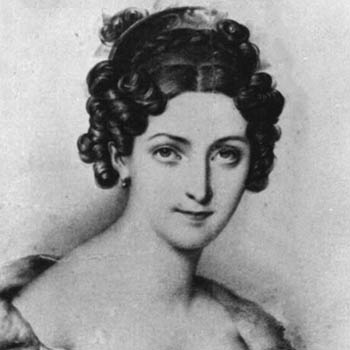 Utilitarian Thinkers: Harriet Taylor Mill | Harriet Taylor Mill (née Hardy) was born in 1807 in Walworth, South London, as the daughter of a midwife. She was educated at home and became interested in poetry and writing at a young age. She married John Taylor, a pharmacist, aged 18. Even before she met John Stuart Mill, she was writing extensively on topics such as women’s rights (particularly in marriage, domestic violence and education), politics, ethics and religious toleration. The original text contained 8 footnotes which were omitted from this narration. --- First published: January 29th, 2023 Source: https://utilitarianism.net/utilitarian-thinker/harriet-taylor-mill --- Narrated by TYPE III AUDIO. | 3m 12s | ||||||
Showing 25 of 69
Sponsor Intelligence
Sign in to see which brands sponsor this podcast, their ad offers, and promo codes.
Chart Positions
1 placement across 1 market.
Chart Positions
1 placement across 1 market.