
INVESTOLOGY
by Investment Management Intelligence
Is this your podcast?Insights from recent episode analysis
Audience Interest
Podcast Focus
Publishing Consistency
Platform Reach
Insights are generated by CastFox AI using publicly available data, episode content, and proprietary models.
Most discussed topics
Brands & references
Total monthly reach
Estimated from 1 chart position in 1 market.
By chart position
- 🇸🇬SG · Entrepreneurship#603K to 10K
- Per-Episode Audience
Est. listeners per new episode within ~30 days
1.5K to 5K🎙 ~2x weekly·126 episodes·Last published 3w ago - Monthly Reach
Unique listeners across all episodes (30 days)
3K to 10K🇸🇬100% - Active Followers
Loyal subscribers who consistently listen
900 to 3K
Market Insights
Platform Distribution
Reach across major podcast platforms, updated hourly
Total Followers
—
Total Plays
—
Total Reviews
—
* Data sourced directly from platform APIs and aggregated hourly across all major podcast directories.
On the show
From 11 epsHost
Recent guests
Recent episodes
[Best Of Investology] Equity performance triples when it goes private? Featuring Neuberger Berman | The Skeptic's Guide to Investment Management
Aug 12, 2026
9m 09s
A Tokenized Solution for the $5 Trillion Idle Corporate Cash Problem
Jul 22, 2026
32m 00s
The Backbone of Global Trade. A Deep Dive Into Shipping.
Jul 2, 2026
39m 36s
There's Alpha in Simplification (Managed Futures ETF strategies)
Jun 12, 2026
45m 18s
Your Macro newsfeed is ruining your Macro analysis [SGIM #5]
Jun 1, 2026
4m 58s
Social Links & Contact
Official channels & resources
Official Website
Login
RSS Feed
Login
| Date | Episode | Topics | Guests | Brands | Places | Keywords | Sponsor | Length | |
|---|---|---|---|---|---|---|---|---|---|
| 8/12/26 | ![[Best Of Investology] Equity performance triples when it goes private? Featuring Neuberger Berman | The Skeptic's Guide to Investment Management episode artwork](https://substackcdn.com/feed/podcast/348496/post/190716570/ed49b746caee3ab703a802122382a643.jpg) [Best Of Investology] Equity performance triples when it goes private? Featuring Neuberger Berman | The Skeptic's Guide to Investment Management | Welcome to the Skeptic’s Guide to Investment Management. In each episode, we examine one industry publication through a skeptical, logical, evidence-based lens, with the help of Tim McGlinn, ex-investment consultant, portfolio manager and professor of finance, and founder of the TheAltView .We discuss a Neuberger Berman 2025 report pitching alternative (private) investments in 401(k) plans. The “illustrative” report assumes private equity chosen by Neuberger Berman earns 15.30% per year after fees for 40 years, while US large caps return just 5.77% after fees—making a 10% private equity allocation look like an easy way to retire richer. The private equity boost relies on assuming investors can invest only via co-investments (lower fees), which Tim says isn’t realistic because you typically need to be an LP in funds to access them. They also note the equity forecast is dragged down by assuming active-manager fees and persistent underperformance for decades—odd for a firm selling active equity. Tim contrasts this with AQR assumptions showing private equity (5.1%) below US equities (6.5%).Key takeaway: any 15% long-term promises is an alarm bell.Link to Tim’s original articleNeuberger Berman & Alternative InvestmentsMore content like this on Substack and YouTube:YouTube: https://www.youtube.com/@investology_podcastInvestoramaTheAltViewFind us on LinkedInGeorge: https://www.linkedin.com/in/george-aliferis/Tim: https://www.linkedin.com/in/tim-mcglinnSGIM is an Investology podcast series, produced by Orama: https://orama.tv/MUSIC CREDITSBrandenburg Concerto No4-1 BWV1049 - Classical Whimsical by Kevin MacLeod is licensed under a Creative Commons Attribution 4.0 license. https://creativecommons.org/licenses/by/4.0/Source: http://incompetech.com/music/royalty-free/index.html?isrc=USUAN1100303Artist: http://incompetech.com/ This is a public episode. If you would like to discuss this with other subscribers or get access to bonus episodes, visit investorama.substack.com | 9m 09s | ||||||
| 7/22/26 | 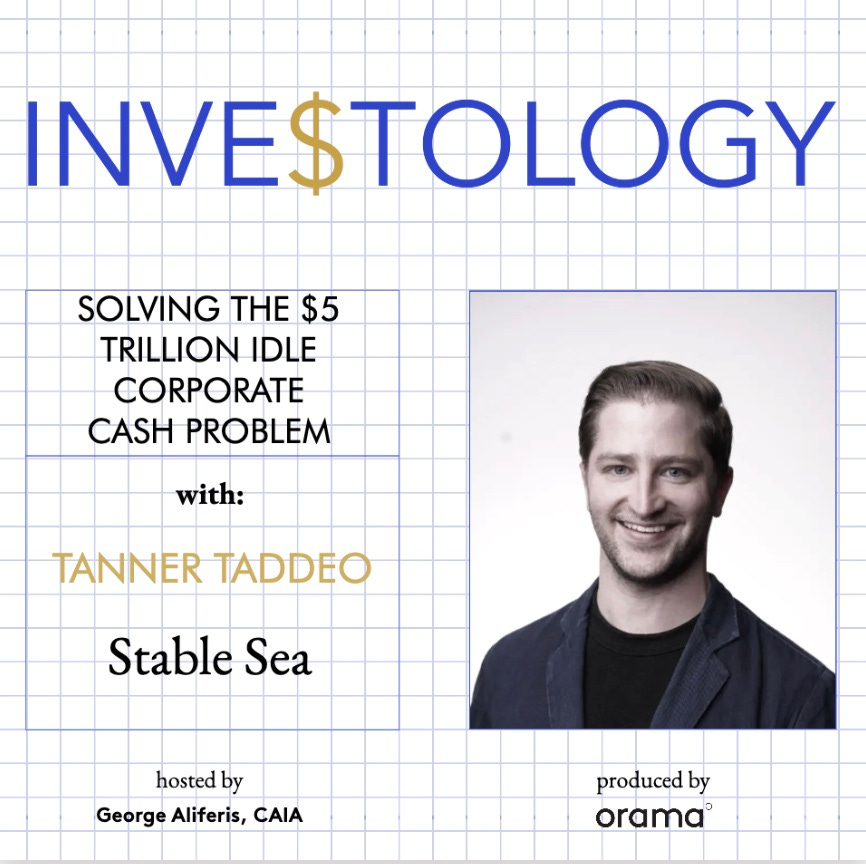 A Tokenized Solution for the $5 Trillion Idle Corporate Cash Problem | There’s no shortage of news about institutions launching tokenized money market funds (MMF): Blackrock, JPMorgan, State Street, BNY, the list goes on.We hear less about adoption. Assets have grown from near zero to $15B, which sounds impressive until you compare it to over $7T sitting in US MMFs today.The chart below shows the efficiency gains tokenization unlocks, but how many participants are feeling the pain of the current T+2, multi-step process acutely enough to move? That question points directly to where the tipping point for adoption will come from.Treasurers feel that pain. But not those at tech firms or Fortune 500 companies — they already have direct access to institutional cash management solutions through their mega-bank relationships. And not Bitcoin enthusiasts parking a volatile asset on their balance sheet.Based on my conversation with Tanner Taddeo, CEO and co-founder of Stable Sea, the real candidate is the most unlikely one. The middle-market treasurer: naturally conservative, not a tech cheerleader, and currently underserved by the infrastructure being built for everyone else.We covered:* The Mid-market treasury gap: Large companies get white-glove capital markets access from major banks, but mid-market/lower-mid-market companies are typically stuck with just a checking account and no access to yield-generating products.* The benefits of tokenization: access the same money market funds but with 24/7/365 trading and near-instant (~10 min) settlement vs. the traditional T+2.* Custody and trust mechanics: for Real World Assets.* Adoption outlook and barriers: what it takes for conservative treasurers to embrace a tokenized solution.And a lot more.Watch it on YouTube or listen on every podcast app.Selected QuotesThe problem Stable Sea Solves:“We help companies access capital markets products. We offer money markets, we offer fixed income products and we offer some additional securities through the platform.It’s different from some of the other products that exist on the market today because we give access to tokenized money market funds and tokenized fixed income products. And the value add there is that you can trade those funds twenty-four seven, three sixty-five, and then settlement is near instant.So you don’t have to wait two days, to get liquidity out of some sort of security. , you don’t also have any lockup periods associated with those investments, and there’s also no minimums.”I must say that we discussed tokenization in a couple of previous episodes (see below) of the podcast, and I was never convinced. You can tokenize gold bars and maybe it makes you feel like you own it and other benefits compared but a gold tracker ETP works really well. But here, instant liquidity instead of T+2 for treasuries - I get it.We don’t NEED to understand the technology (only trust it):“When the credit card came out, it was a new technological way to efficiently move money between consumers and merchants and then instill trust between the banks. So if I swipe my card at a Starbucks, Visa can help authenticate and move funds between my bank account and Starbucks' bank account. So there's complexity in virtue of how the technology works, but at the end of the day, it's just a more efficient way to help share value between two counterparties.”Tanner distances his application from the volatile (and often dodgy) world of cryptocurrencies. But Treasurers still need to understand the technology, but you need to present it the right way.Leading with the right narrative:“Treasurers, finance teams, CFOs rightly so, are some of the most conservative people out there. Because the number one golden rule in the corporate treasury handbook is do not lose the company's money. And a lot of the finance teams don't buy on innovation, they buy to de-risk something. So you have to really lead with a narrative of security, and trust and compliance and all those things.”The Theseus Ship of financial infrastructureThe global financial system is going to slowly, almost like Theseus’s ship, be replaced, by some of this blockchain and Stablecoin infrastructure. And so we like to lead with with content, but more importantly than content, it's actually sitting down with and convening with people, showing them how the product works, and then just having that conversation.As an avid reader of Greek mythology, I didn’t know the expression, but it’s a very powerful way of thinking of innovation and change management.About Tanner Taddeo:Tanner Taddeo is the CEO of Stable Sea, a company helping enterprises modernize global payments and treasury operations with stablecoins. Tanner started his career in humanitarian finance, worked in investment banking across emerging markets and later helped build real-time payment systems for central banks with a Gates Foundation backed company. He’s also held roles at Plaid and Block’s TBD, shaping the future of open and decentralized finance. At Stable Sea, Tanner brings that experience together to bridge traditional and digital finance while making stablecoins a cornerstone of faster, more inclusive global paymentshttps://www.linkedin.com/in/tanner-taddeo-9b64562a/https://www.stablesea.com/Related episodes:About the Investology podcast:Investology is the investment management intelligence show. Where innovators, investors, authors and experts discuss the future of investment management beyond the hype.Listen on every podcast platform, or watch on YouTube.An episode produced by Orama:https://orama.tv/Thought leadership videos & podcasts.About George Aliferis:Founder or Orama, ex-banker, ex-sales, working at the intersection of investment management, media & marketing.LinkedIn: https://www.linkedin.com/in/george-aliferis/Our Other Channels* Investorama - Bridging the Institutional Knowledge Gap (YouTube)* Orama’s newsletter & the Unsloppable podcast for marketers and revenue teams in complex industries, like investment management: This is a public episode. If you would like to discuss this with other subscribers or get access to bonus episodes, visit investorama.substack.com | 32m 00s | ||||||
| 7/2/26 | shipping industryglobal trade+4 | Pankaj Khanna | HeidmarNasdaq | JapanChina | shippingglobal economy+5 | — | 39m 36s | ||
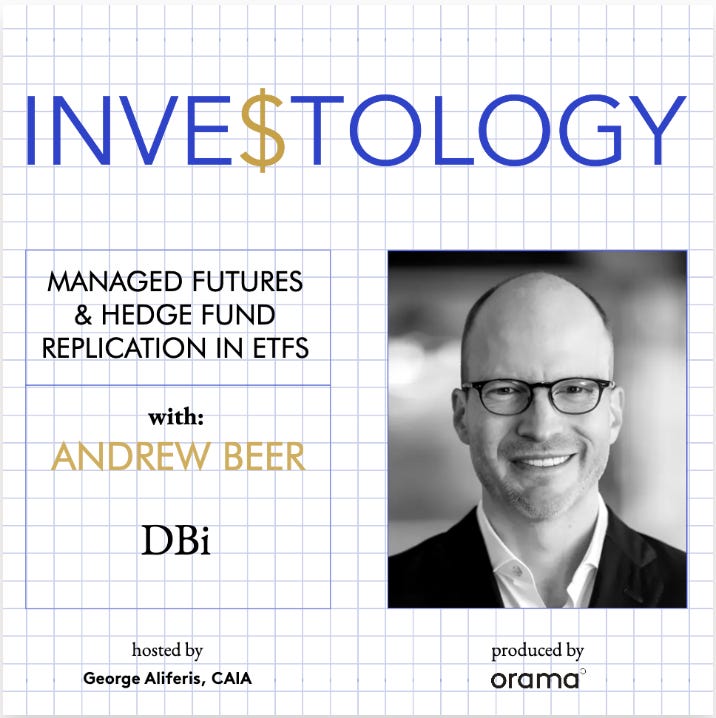
| 6/12/26 | managed futureshedge fund replication+4 | Andrew Beer | DBiS&P 500+3 | — | managed futureshedge funds+5 | — | 45m 18s | ||
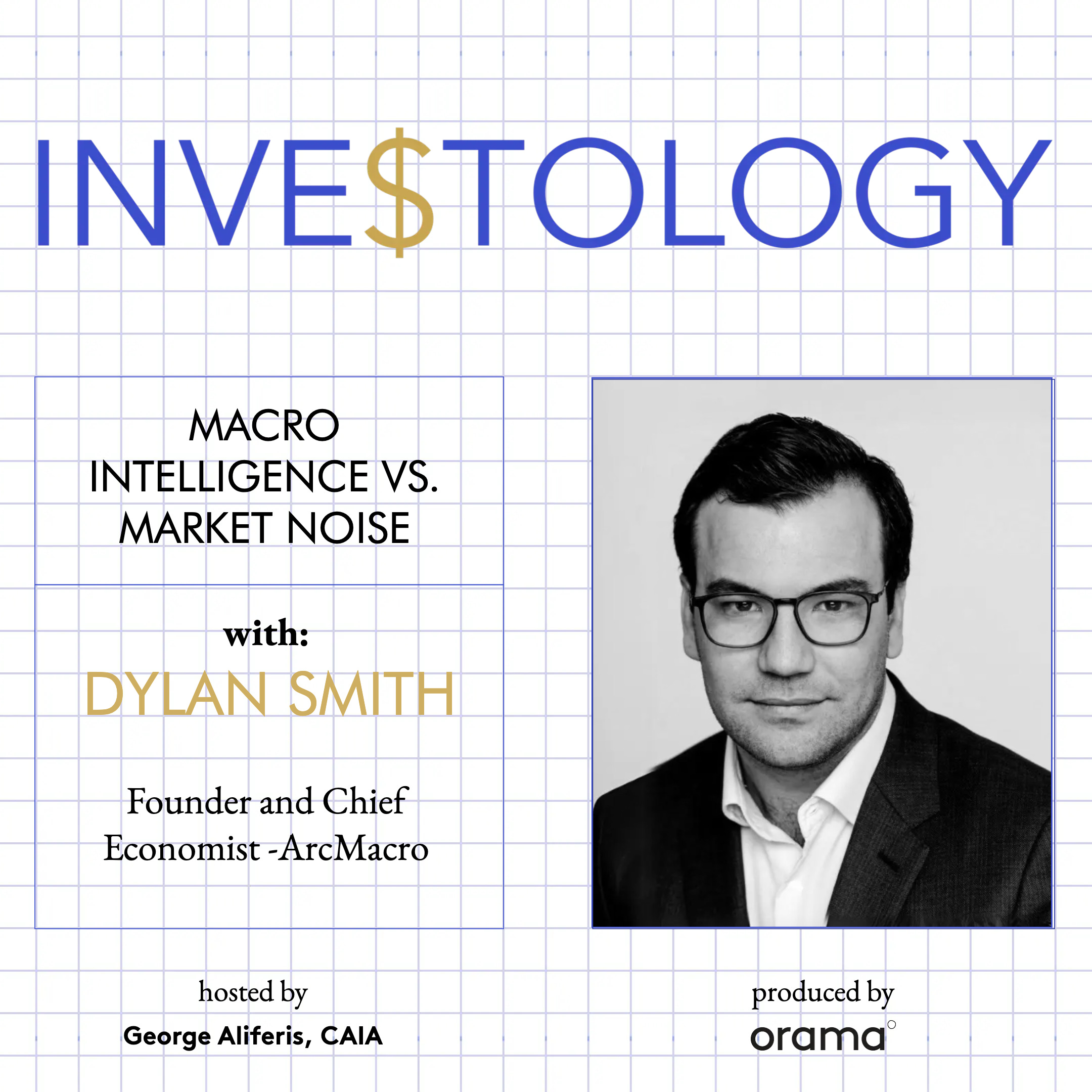
| 6/1/26 | macro analysisinvestment management+3 | Dylan Smith | ArcMacroInvestology+1 | — | macro newsinvestment management+3 | — | 4m 58s | ||
| 5/22/26 | macro frameworkhybrid portfolios+3 | Dylan Smith | ArcMacroTangents on Substack | — | macrohybrid portfolios+3 | — | 40m 58s | ||
| 4/7/26 | investment managementprivate investments+3 | Tim McGlinn | MercerTheAltView+2 | — | Mercer reportprivate equity+5 | — | 9m 08s | ||
| 3/24/26 | private equityinvestment management+3 | Tim McGlinn | Neuberger BermanTheAltView+2 | — | private equityNeuberger Berman+5 | — | 9m 09s | ||
| 3/10/26 | investment managementskepticism+3 | Tim McGlinn | Georgetown University Center for Retirement InitiativesWillis Towers Watson | — | investment managementretirement+3 | — | 7m 37s | ||
| 2/23/26 | fintechgovernance+4 | Alex Frankl | FintracFinovate+1 | — | fintechgovernance+5 | — | 4m 55s | ||
Want analysis for the episodes below?Free for Pro Submit a request, we'll have your selected episodes analyzed within an hour. Free, at no cost to you, for Pro users. | |||||||||
| 2/16/26 | fintechembedded finance+3 | Philipp Buschmann | AAZZURFinovate+2 | Europe | fintechembedded financial services+3 | — | 11m 01s | ||
| 2/12/26 | neurosciencefintech+4 | Alexandre Pasquiou | Neuralk AICentrale Paris+1 | — | neurosciencefintech+5 | — | 7m 59s | ||
| 1/21/26 | alternative investingstartups+3 | Stefan von Imhof | Alts.co | — | alternative investmentstequila barrels+4 | — | 45m 23s | ||
| 1/7/26 |  The Skeptic's Guide to Investment Management #1: GSAM's New Ray of Hope | Welcome to the Skeptic’s Guide to Investment Management. In each episode, we examine one industry publication through a skeptical, logical, evidence-based lens, with the help of Tim McGlinn, ex-investment consultant, portfolio manager and professor of finance, and founder of TheAltView .Link to the documenthttps://am.gs.com/cms-assets/gsam-app/documents/insights/en/2025/am-retirement-survey-102025.pdfTim’s Altview on Substackhttps://thealtview.substack.com/MUSICBrandenburg Concerto No4-1 BWV1049 - Classical Whimsical by Kevin MacLeod is licensed under a Creative Commons Attribution 4.0 license. https://creativecommons.org/licenses/by/4.0/Source: http://incompetech.com/music/royalty-free/index.html?isrc=USUAN1100303Artist:http://incompetech.com/A series from the Investology podcast produced by https://orama.tv/ This is a public episode. If you would like to discuss this with other subscribers or get access to bonus episodes, visit investorama.substack.com | 5m 42s | ||||||
| 12/22/25 |  Family Wealth. PE-Backed Wealth Management. | For decades, wealth management was defined by proximity.Advisors, Families, relationships built on continuity. The industry scaled slowly because wealth is personal, and stewardship doesn’t lend itself easily to industrial logic.That assumption is now breaking.Over the past five years, the Registered Investment Advisor (RIA) industry has entered what has been described as a golden era of deal-making—one driven not by product innovation, but by ownership change. Wealth management is being scaled, with Private Equity-backed equity “roll-ups”.In the latest Investology episode, we’re discussing the intricacies and implications of this industry trend with Andrew D. Mirolli, CEPA, the co-founder of BuyAUM.com - Growth Partner for RIA Buyers & Sellers.Enjoy the episode on every podcast platform or YouTube.About Andrew At buyAUM.com, I help Registered Investment Advisors (RIAs) scale their practices and safeguard their legacies.For growth-focused firms, I provide access to curated acquisition opportunities tailored to strategic goals. For advisors exploring succession, I offer guidance and connections to ensure their clients and life's work are placed in trusted hands.With nearly a decade of experience supporting advisors nationwide, I understand that every practice carries a legacy worth preserving. That’s why we take a personal, relationship-driven approach, helping both buyers and sellers find the right fit for their future.Link: https://www.linkedin.com/in/andrew-d-mirolli-cepa%C2%AE-7a304259/About the Investlogy podcast:Investology is a podcast dedicated to rethinking investment management and uncovering new ways to deliver better outcomes for investors.Listen on podcast platforms, or watch on YouTube.An episode produced by Orama (orama.tv):Accelerate sales to the financial industry with content that builds trust and drives pipeline with sales-driven video strategies.About the Host:George Aliferis, CAIA, is the founder of Orama. Before that, he spent over a decade structuring, marketing and selling complex financial products to institutional clients in Europe and Asia.LinkedIn: https://www.linkedin.com/in/george-aliferis-60078312/ This is a public episode. If you would like to discuss this with other subscribers or get access to bonus episodes, visit investorama.substack.com | 39m 43s | ||||||
| 12/16/25 | ![[Best of Investology] The Data Behind the $Multi-Trillion Rise of Asset-Based Finance episode artwork](https://substackcdn.com/feed/podcast/348496/post/181495888/9e4cefef59ed95e624a4aa2cc6754b07.jpg) [Best of Investology] The Data Behind the $Multi-Trillion Rise of Asset-Based Finance | I’m resharing the most popular episodes of the podcast during the Summer break. As banks retreated after the financial crisis of 2007-2008, Private Credit filled in the gap. What started as a niche within private equity now operates like a global lending system. And it extends beyond corporate balance sheets, asset-based finance, the ability to lend against real, cash-generating assets is growing fast and offers countless opportunities. The real unlock isn’t just capital — it’s the data and technology allowing to manage these assets at scale. Granular, asset-level data enables better underwriting, continuous monitoring, and access to previously illiquid markets. In my conversation with Cesar Estrada, we explored:* How private credit replaced traditional bank lending* Why asset-backed finance is now being unleashed* How to understand the fall of Tricolor and First Brands* And how data and technology could be defining the winners in this marketA few highlights from our conversationAsset-based finance - an ever-expanding universe Asset-based finance means that instead of lending against the future cash flows of a company, you’re lending against an asset and the contractual cash flows associated with that asset. That’s a very broad definition, and it can include anything within, the consumer, finance world, buy now, pay later, credit cards, auto loans, student loans, any personal term loans, residential mortgages, home, equity lines of credit, the list, keeps on going on as you move outside of a consumer world into, other types of things.Any type of account receivable, supply chain financing, litigation finance, and then more esoteric stuff like, synthetic risk transfers and other things. And it’s becoming very specialized by verticals: aviation finance, medical equipment finance…It has possibly a larger addressable market than direct lending. It offers a lot of runway for growth for private equity, private credit firms, hedge funds, and insurance companies participating directly in this space.The need for data feeds From a risk management perspective, given the rate of change of a consumer world, loans are being paid, new loans are being issued, loans are being not paid. You want to be monitoring this much much more real time than you do in a corporate book, where you’re getting monthly reporting from the borrower and you are comparing their latest actual financials against the original underwriting thesis against prior periods. And you do that activity once a month.This is not a once-a-month thing. This is a daily thing. You want to see how it’s changing because it’s changing very dynamically.I was surprised that this frequency of data was even a possibility, and Cesar also added that it goes beyond risk management; it also feeds into the creation of funds for private investors with daily NAV and daily liquidity. The frequency of reporting increases, the liquidity choices increase, and the volumes and rate of change in the investment strategies increase. That all compounds to necessitate a very robust, modern technology to process all of that data.The First Brands & Tricolor questionCesar mentioned he didn’t have any specifics on the situation, and when I asked about the data issue, his response from a data management provider was to be expected.It is certainly possible that better data with more accuracy and more frequency could have helped offer a view that those assets were being used as collateral with multiple lenders. […]But I wanted to dig a bit further, and at first, the response confirmed that when a crisis happens, all assets that are linked to it fall at the same time, even if in the long term, there’s dispersion (like banks during the Global Financial Crisis)In terms of how it happened so quickly, so abruptly. Again, pure speculation, I think that those things might have been bubbling without the public knowing for a while. But as soon as a big source of financing decides that you’re no longer creditworthy, all of the other sources of financing follow suit, and it’s very abrupt. You can face a liquidity challenge and go bankrupt.It reminded me that Apollo Global Management shorted First Brands’ credit risk before the company’s fall, showing the information asymmetry that still exists in private credit. This requires a few caveats: First Brands was more direct lending; Tricolor was more linked to asset-based finance; nothing says that Apollo had better data. Yet, until the data-based approach that Cesar described becomes table stakes, it could be an important differentiator.Related episode:About Cesar Estrada:Cesar oversees Arcesium’s investment operations, accounting, and data management solutions for private markets fund managers and institutional investors. Previously, he served as Senior Managing Director and Alternatives Segment Head for North America at State Street – a role in which he drove the growth agenda for a business with approximately $1 trillion in Assets Under Administration (AUA) by leading new product launches, expansion into new client segments, strategic partnerships, and acquisitions. Prior to that, as a Managing Director at J.P. Morgan, Cesar led the Private Equity & Real Estate Funds Services business from launch to $350Bn AUA. While at J.P. Morgan, he also held investment banking roles in New York, London, and Hong Kong.Link: https://www.arcesium.com/authors/cesar-estradaAbout the Investlogy podcast:Investology is a podcast dedicated to rethinking investment management and uncovering new ways to deliver better outcomes for investors.Listen on every podcast platform, or watch on YouTube.An episode produced by Orama:Accelerate sales to the financial industry with content that builds trust and drives pipeline with sales-driven video strategies.About the Host:George Aliferis, CAIA is the founder of Orama, where he has produced content for financial brands and multinationals, including Amazon, Expedia, Louis Vuitton, and Unilever. Before that, he spent over a decade structuring, marketing and selling complex financial products to institutional clients in Europe and Asia.LinkedIn: https://www.linkedin.com/in/george-aliferis-60078312/My Investing & Investment Management YouTube Channels* Investorama - Separating Investment Facts from Financial Fiction (YouTube)* Investology - Re-Think Investment Management (YouTube) This is a public episode. If you would like to discuss this with other subscribers or get access to bonus episodes, visit investorama.substack.com | 37m 22s | ||||||
| 12/9/25 |  The Alpha in Distressed & Special Situations | I’ve been hoping to discuss special situations and distressed debt, one of the least hyped but most interesting areas of finance and credit for a while.Distressed debt investing requires a triple threat skillset: understanding legal frameworks, financial health, and industry landscapes.It offers unique diversification benefits, standing apart from traditional equity and bond markets, and offers relatively defined investment horizons.For all these reasons, the potential for alpha generation is significant, but it demands patience and precision.So when I got the chance to interview Dan Bird’s team who’s been holding senior roles in that space for over two decades, I jumped on this rare opportunity. We explore the complexity of these markets and the skillsets needed to navigate them.HIGHLIGHTSVersatility You have to look at the company, and what it’s doing and determine a value. And sometimes that’s specific assets and sometimes that’s a stream of cash flows. Sometimes that’s intellectual property.And then you need to be a management consultant. Is this business capable of turning itself around? Are industry forces too far against this company that it’ll never recover? So you need a, you need a lot of different skill sets in order to be successful in this type of industry.Patience and Timing in InvestmentsWhen something in the industry changes. People are reluctant to acknowledge it. People don’t like change. Everyone thinks things revert to the mean. A lot of people involved in the situation tend to have bias just because they’ve been involved in the situation. They tend to overvalue the ability of companies to recover.At this stage, I was thinking: “yeah, that’s when you, distressed investor, must intervene.” But then Dan added:That’s the most dangerous time to invest when we don’t really know.Part of doing this job the right way is finding the right entry point, the right timing. It’s very infrequently early.Patience does matter in terms of getting into these things. A lot of time,s that doesn’t happen until very long after things start to change.On Private CreditWe also discussed the rapid rise of private credit:There’s worry about some of the assets that were originated in that period. We’ll have a little bit more stress. It’s possible. It’ll take a little while to figure that out. From my perspective, that just creates different opportunities.And I always find it insightful, or surprising, when I hear an insider’s perspective on private markets:Look, some investors like private assets because they don’t have to mark them to market.To a public market mindset, this is counterintuitive. It goes against the “illiquidity premium”. One famous critic, Cliff Assness, calls it “volatility laundering”. And I used to agree wholeheartedly, but my perspective has evolved. Of course, marking your own NAV creates Fundzi (fund + ponzi) opportunities. But on the other hand, I can see how you may not want to be subject to the erratic behaviour of Mr Market.About Dan Bird: As the founder of Thornwood Hill LLP, I specialize in credit and alternatives asset management. With over 25 years of experience in the financial industry, I have a proven track record of managing diverse portfolios across the credit spectrum, from direct lending, to special opportunities and distressed debt to liquid credit. My expertise lies in identifying and executing strategic investment opportunities, ensuring optimal risk management, and delivering strong returns for clients. I am passionate about creating value through innovative and tailored solutions that meet the unique needs of each investor.* LinkedIn: https://uk.linkedin.com/in/daniel-bird-18456a42About the Show: Investology is a podcast dedicated to rethinking investment management and uncovering new ways to deliver better outcomes for investors. Listen on every podcast platform, or on YouTube.An episode produced by Orama:Accelerate sales to the financial industry with content that builds trust and drives pipeline, with sales-driven video strategiesAbout the Host:George Aliferis, CAIA is the founder of Orama, where he has produced content for many financial brands and multinationals like Amazon, Expedia, Louis Vuitton, and Unilever. Before that, he spent over a decade structuring, marketing and selling complex financial products to institutional clients in Europe and Asia.Related episodes:Episode with Aarron Filbeck from the CAIA Association on Private DebtMy Investing & Investment Management YouTube Channels* Investorama - Separating Investment Facts from Financial Fiction (YouTube)* Investology - Re-Think Investment Management (YouTube) This is a public episode. If you would like to discuss this with other subscribers or get access to bonus episodes, visit investorama.substack.com | 37m 39s | ||||||
| 10/31/25 |  Unsafe as Houses: -100% returns with Yieldstreet (Willow Wealth) | George Aliferis explores the risks associated with high-yield investment platforms, focusing on YieldStreet, now rebranded as Willow Wealth. Through personal investigation and a detailed case study, he uncovers how Yieldstreet’s business model potentially leads to significant losses for investors, despite attractive marketing claims. Related episodesMy Investing & Investment Management channels* Investorama - Separating Investment Facts from Financial Fiction (YouTube)* Investology - Re-Think Investment Management (YouTube)* Investology in Audio versionFor B2B Brands, Marketers & Podcasters* Orama (my business): Accelerate sales to the financial industry with content that builds trust and drives pipeline.* Newsletter about Selling to Financial Services: on Substack This is a public episode. If you would like to discuss this with other subscribers or get access to bonus episodes, visit investorama.substack.com | 24m 54s | ||||||
| 10/23/25 | 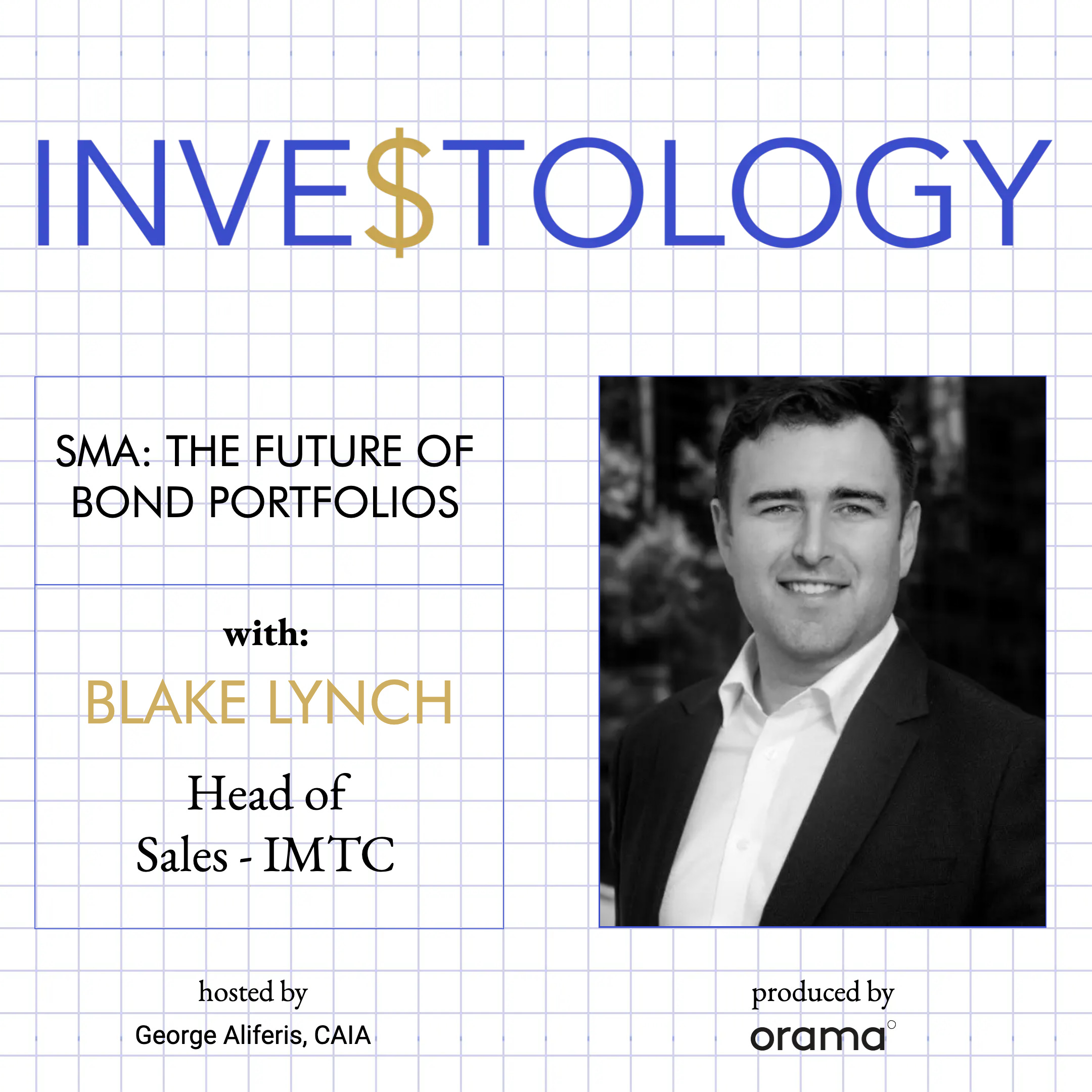 SMAs: The Future of Bond Portfolios | We discuss the transformative developments in the fixed income market with Blake Lynch from IMTC. Advancements in cloud computing and automation are streamlining the traditionally manual processes associated with fixed income investments, allowing for customized portfolios at scale. This has made SMA wrappers (Separately Managed Accounts) a lot more accessible, enabling greater transparency, direct ownership, and potential tax efficiency for the bond portfolios of an increasingly large number of investors.An “Aha moment” for George Aliferis (host):I’ve been involved in ETFs since the launch of Deutsche Bank’s X-Trackers in 2007, and I’ve always believed they were an ideal wrapper for equity markets. Today they dominate. While the earlier ETFs were equity, there have been considerable developments in fixed income ETFs as well (now totalling $2 trillion in assets), but it’s not straightforward. Indexing fixed income is problematic. And there’s the fact that you can own a fund of AAA bonds, but still lose your capital due to the mark-to-market. This conversation has made me realize the adequacy of the SMA wrapper for bonds and its huge potential.About Blake Lynch, CETF®:Head Of Sales at IMTCMy mission is to address the industry’s failure to innovate and enhance technology in the fixed income space, which has resulted in fixed income professionals being neglected and subjected to inadequate and inefficient tools. I am passionate about simplifying and optimizing bond portfolio management with innovative and user-friendly software that enables meaningful automation and optimization, or as we like to call it, decision support. This allows fixed income professionals to focus on key business activities and client goals, rather than wasting time on manual and error-prone tasks. I have a proven track record of expanding the market share and reach of IMTC’s SaaS technology, leveraging my skills in new business development, sales enablement, strategic beta, and over 10 years of experience in the financial services space.Connect with Blake Lynch, CETF®:* LinkedIn: https://www.linkedin.com/in/blakejlynch/* Website: https://imtc.com/About the Show:Investology is a podcast hosted by George Aliferis, CAIA, dedicated to rethinking investment management and uncovering new ways to deliver better outcomes for investors.Listen on every podcast platform, or on YouTube.Resources Mentioned:Episode with Russell Feldman (CEO of IMTC)Episode with MJ Lytle (then-CEO of Tabula)Timestamps & Topics:00:00 Introducing a pivotal moment in fixed income02:27 Understanding Separately Managed Accounts (SMAs)04:48 The technological revolution in bond portfolio management07:56 Benefits of SMAs10:07 How IMTC works28:33 The outlook for fixed income technologyMy Investing & Investment Management channels* Investorama - Separating Investment Facts from Financial Fiction (YouTube)* Investology - Re-Think Investment Management (YouTube)* Investology in Audio versionFor B2B Brands, Marketers & PodcastersOrama (my business): helps brands grow with podcasts & videos - DM if you need help with a brand podcast or videosNewsletter about B2B marketing and podcasting: on Substack This is a public episode. If you would like to discuss this with other subscribers or get access to bonus episodes, visit investorama.substack.com | 36m 04s | ||||||
| 7/30/25 | ![[Best Of Investology] The Hard Truth about Agentic AI in Investment Management episode artwork](https://substackcdn.com/feed/podcast/348496/post/169564106/fbf49801ce19669a58469ea648ae0a61.jpg) [Best Of Investology] The Hard Truth about Agentic AI in Investment Management | [Reposting our most popular episodes during the summer break. This was originally published in July 2025]Marco Aboav, CEO of Etna Research, delivers a contrarian take on the current state of AI and automation in financial services. The real challenge now is not technology, but change management, for operational efficiency. But not as a magic bullet for generating alpha. The real edge comes from domain expertise, data selection, and sophisticated modelling—areas where AI can assist but not replace human judgment. Key Takeaways:* The innovation cycle in AI for finance is already peaking: most essential tools and workflows are already available.* The next frontier is not more technology, but how organizations manage change, optimize teams, and handle data in a world of brutal efficiency.* Incumbents can still fight back against pricing pressure through operational efficiency and smart management decisions.* Big tech companies may struggle to succeed in verticals like finance, where high accuracy and deep integration are required.* The “frontier” is in highly specialized, vertical applications, not in generic AI solutions.About Marco Aboav:Marco Aboav is the CEO and Founder of Etna Research, specializing in the intersection of AI, data, and financial services. With deep expertise in operational efficiency and technology integration, Marco brings a unique perspective on the challenges and opportunities facing the industry today.”I fell in love with AI's potential to transform investing back in 2009 while wrestling with my engineering PhD. Since then, I’ve spent my career in financial services—across buy and sell-side roles in London—building businesses, managing money, and applying AI to capital markets.”Connect with Marco Aboav:* LinkedIn: https://www.linkedin.com/in/marco-jean-aboav/* Website: Etna Research About the Show:Investology is a podcast hosted by George Aliferis, CAIA, dedicated to rethinking investment management and uncovering new ways to deliver better outcomes for investors, part of the Investorama investment content platform.Listen on every podcast platform, or on YouTube.About George Aliferis:Founder or Orama, ex-banker, ex-sales, working at the intersection of investment management, media & marketing.LinkedIn: https://www.linkedin.com/in/george-aliferis/A show produced by Orama:Thought leadership videos and podcasts for knowledge-intensive and regulated industries.https://orama.tv/Resources Mentioned:* Previous episode with Marco: * Perplexity for Finance: https://www.perplexity.ai/finance* Anthropic’s MCP protocol: https://www.anthropic.com/news/model-context-protocol* Finbourne’s MCP announcement: https://www.finbourne.com/finbourne-unlocks-compliant-agentic-ai-for-the-investment-industry-powered-by-mcp/* Anthropic for Financial Services: https://www.anthropic.com/solutions/financial-servicesEtna’s recent publications* Diversification an Ephemeral Illusion: https://etnaresearch.notion.site/Diversification-An-Ephemeral-Illusion-231457fd575a800ead88c99086368e8a?pvs=74* Backtest Roulette: https://etnaresearch.notion.site/Backtest-Roulette-238457fd575a80dc8c27dc8e7574ed40Timestamps & Topics:00:00 – Introduction: Data Challenges04:00 – Introduction to Agent AI for Data Management06:39 – Simplifying Data Processes with AI08:47 – The Role of Data in Gaining Competitive Edge13:06 – Generative AI in Financial Services: Commodity or Edge?19:13 – Operational Efficiency and AI Adoption25:03 – Verticalization and High-Precision Problems40:30 – The Future of AI in Investment Management This is a public episode. If you would like to discuss this with other subscribers or get access to bonus episodes, visit investorama.substack.com | 50m 08s | ||||||
| 7/23/25 |  Diary of a Quant Hedge Fund - Dr Richard Saldanha | A deep dive into the inner workings of hedge funds and quantitative investing, with Dr. Richard Saldanha, a seasoned quant, former hedge fund manager, and now an academic and consultant.Richard shares stories from his career, including cautionary tales of fraud, and offers a contrarian take on the democratization of finance. Learn why adaptability, skepticism, and data quality are more important than ever in today’s markets.Watch it on Substack or listen on your preferred podcast app.Key Takeaways:* Data quality and access are critical—and often underestimated—challenges in finance.* Market inefficiencies persist, and quants thrive by exploiting them, but adaptability is key.* Many hedge fund strategies have become commoditized; true innovation is rare and valuable.* The democratization of investing is driven by ETFs, not hedge funds or private equity.* Due diligence is essential—fraud and misrepresentation still occur at the highest levels.Related episodes:* Previous episode with Dr. Richard Saldanha on AI * Marco Aboav: Quant Trading from Data to Alpha* Jim Simons, Renaissance Technologies & The Quant Revolution | Greg ZuckermanResources Mentioned:* Renaissance Technologies* AQR Capital ManagementConnect with Dr. Richard Saldanha:* On LinkedIn* Oxquant (Richard’s consultancy)Timestamps & Topics:[00:00] - Introduction to Dr. Richard Saldanha - an insider’s look at hedge funds.[00:36] - The Importance of Financial Data[01:55] - Quantitative Trading and Market Inefficiencies[03:34] - Challenges in Hedge Fund Strategies[05:20] - Renaissance Technologies: Ahead of the Game[07:55] - The Evolution and Challenges of Hedge Funds[09:41] - The Democratization of Investments[13:38] - Private Equity vs. Hedge Funds[18:18] - Cautionary Tales: Fraud in Hedge FundsAbout the Show:Investology is a podcast hosted by George Aliferis, CAIA, dedicated to rethinking investment management and uncovering new ways to deliver better outcomes for investors. Listen on every podcast platform, or watch on YouTube.Thanks for reading Investology: re-think investment management! Subscribe for free to receive new posts and support my work.My Investing & Investment Management channelsInvestorama - Separating Investment Facts from Financial Fiction (YouTube)Investology - Re-Think Investment Management (YouTube)Investology in Audio versionFor B2B Brands, Marketers & PodcastersOrama (my business): helps brands grow with podcasts & videos - DM if you need help with a brand podcast or YouTube channelNewsletter about B2B marketing and podcasting: on Substack This is a public episode. If you would like to discuss this with other subscribers or get access to bonus episodes, visit investorama.substack.com | 18m 15s | ||||||
| 7/15/25 |  Taking the Drama out of Estate Planning to Deliver More Holistic Wealth Advice - Gene Farrell, President & CEO, Vanilla | I love referring to the HBO show Succession, it’s one of the greatest dramas, I would go as far as to compare it with my all-time favourite, “The Sopranos”.And… it truly is a masterclass in how NOT to handle estate planning. Family feuds, intense legal battles, and being reckless with your assets are great for drama, but you don’t want any of that in real life.Estate planning is an(other) area where the advice model is broken; it’s a wealth management issue that lawyers typically handle. So, it doesn’t receive the holistic approach to wealth, tax, and family-specific considerations it deserves.I spoke with Gene Farrell, the CEO and President of Vanilla, a company that has raised $84 million to build the technology that changes that.This episode is from a new Wealthtech series.LINKSVanilla website: https://www.justvanilla.com/Related Wealthtech episode: Wealth Engineered - Quantifeed 📩 Get episodes by email and go even deeper with the Investology Newsletter: https://bit.ly/3AxnyTY🎧Investology on podcast platforms: https://pod.link/1511595070📹Investology on YouTube: https://www.youtube.com/@investology_podcastThis episode was produced by Orama - a video and podcast studio for B2B brands https://orama.tv/ABOUT VANILLAEstate planning is no longer just a luxury–it’s a necessity when delivering holistic financial advice. Vanilla’s next-generation software makes estate planning easy for every client.ABOUT THE INVESTOLOGY PODCASTA podcast that helps you think about critical topics and principles of investment management. Each episode explores the technology, mythology, psychology, and narratology of investment management through interviews with acclaimed authors, innovative startup founders, and industry pioneers.ABOUT GEORGE ALIFERIS: INVESTOLOGIST & HOSTWith a background in investment management and selling sophisticated products to large institutional investors across Europe and Asia, George is now on a mission to find new ways to deliver better outcomes for investors.Aside from the Investology podcast, George is a content creator for the finance industry and the founder of Orama a podcast and video agency.He’s a CAIA Charterholder (Chartered Alternative Investment Analyst Association); and holds a Master’s from HEC, ParisTIMESTAMPS00:00 Introduction to Estate Planning Drama01:23 The Importance of Having an Estate Plan02:06 Challenges in Estate Planning02:14 Vanilla's Role in Estate Planning03:45 Components of a Good Estate Plan05:09 Legacy and Tax Efficiency07:03 State and Federal Tax Implications09:11 Vanilla's Technology and Services10:22 Vanilla's Founding and Growth14:37 Advisor and Client Engagement33:13 Market Potential and Challenges36:42 CEO's Background and Journey40:51 Conclusion and Contact Information This is a public episode. If you would like to discuss this with other subscribers or get access to bonus episodes, visit investorama.substack.com | 42m 12s | ||||||
| 7/10/25 | 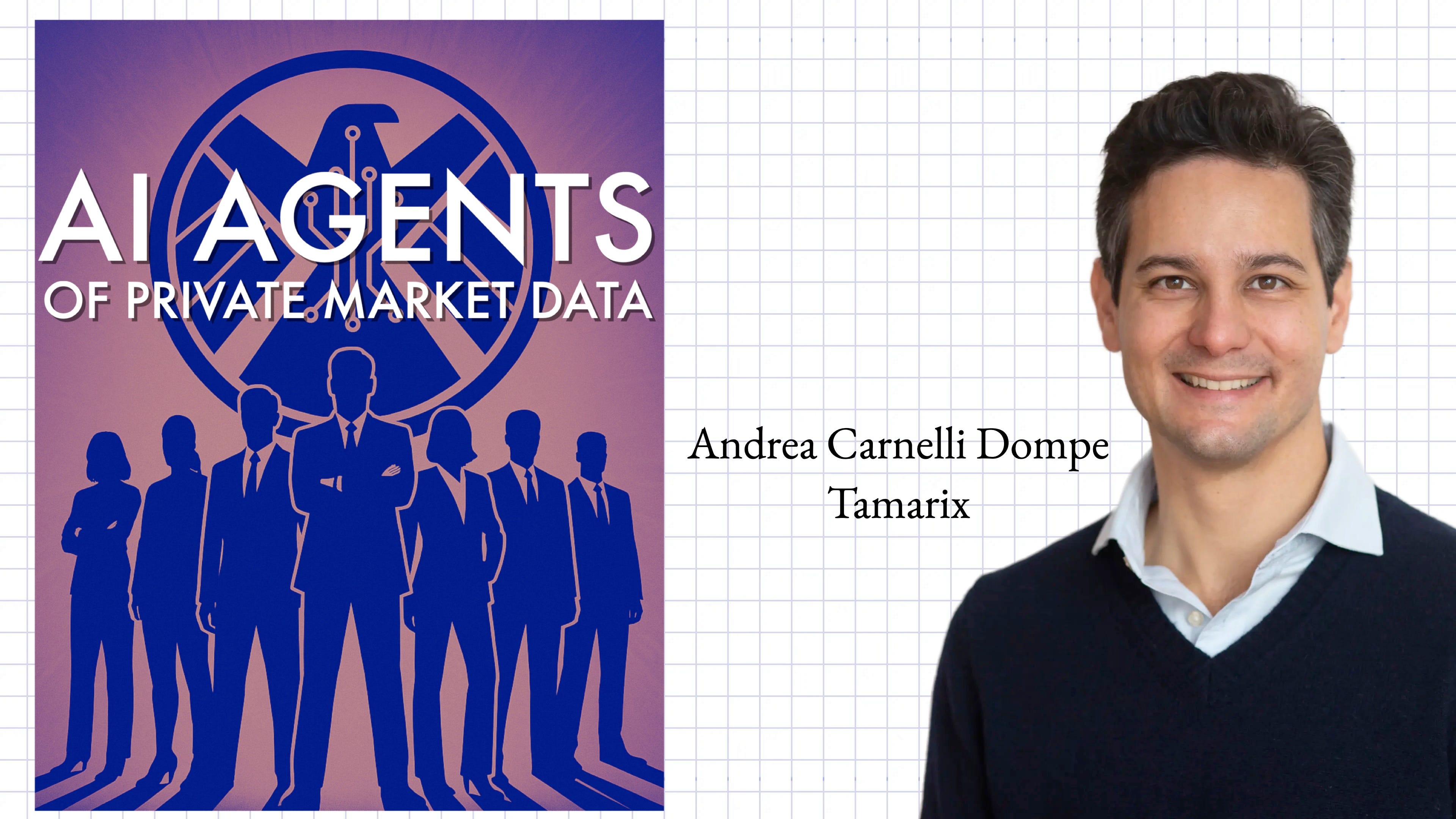 How Generic AI Fails on Private Markets Data | Andrea Carnelli Dompé - Tamarix Technologies | My chat with Andrea Carnelli Dompe, the founder and CEO of Tamarix Technologies, about the intersection of private market investing and AI technology. We discuss the usefulness of AI agents in helping institutional investors, family offices, and ultra-high-net-worth individuals escape the operational chaos of private markets investing. It’s also a masterclass in building a startup in the age of AI.USEFUL LINKS* Visit the Tamarix website * Andrea on LinkedIn* You can subscribe to the podcast on audio platforms and YouTubeThis episode was produced by Orama - a video and podcast studio for B2B fintech brands.ABOUT TAMARIXAutomated data management and portfolio monitoring for private markets investors (LPs).Tamarix helps leading LPs save costs and make better investment decisions by automating data entry, monitoring & reporting, and portfolio analysis.Capital allocators waste 1000s of hours each year extracting, cleaning, and analyzing data locked in PDF reports such as notices, capital accounts statements, and quarterly reports. Commonly cited challenges include data entry, reporting, and modelling cash flow and NAVs to manage liquidity and pace commitments.Thanks to our cutting-edge AI technology, we automatically turn messy data into a clean, real-time, actionable overview of your private capital portfolio - so you can save 1000s of hours of human labour, and focus on making better investment decisions.ABOUT THE INVESTOLOGY PODCASTA podcast that helps you think about critical topics and principles of investment management. Each episode explores the technology, mythology, psychology, and narratology of investment management through interviews with acclaimed authors, innovative startup founders, and industry pioneers.ABOUT GEORGE ALIFERIS: INVESTOLOGIST & HOSTWith a background in investment management, George is on a mission to find new ways to deliver better outcomes for investors.Founder of Orama a podcast and video agency working with the finance industry.CAIA Charterholder (Chartered Alternative Investment Analyst Association); Master’s from HEC, ParisTIMESTAMPS00:00 The mix of private markets, AI and data01:27 Andrea's Background and Journey02:19 Understanding Limited Partners (LPs)05:26 Operational Challenges for LPs06:07 Tamari's AI-Driven Solutions09:02 Traditional vs. AI-Driven Approaches10:29 Implementing Tamarix's Solutions12:49 Measuring Efficiency and Impact14:45 The Role of AI in Private Markets22:59 Future of Private Markets and Democratization26:16 Conclusion and Contact Information This is a public episode. If you would like to discuss this with other subscribers or get access to bonus episodes, visit investorama.substack.com | 26m 52s | ||||||
| 6/24/25 |  Democratizing Private Market Knowledge | Leyla Kunimoto - Accredited Investor Insights | I spoke with Leyla Kunimoto, the writer behind the Accredited Investor Insights Substack, and I finally got what it takes to “democratize private assets”.One approach is to incentivize financial advisors to distribute evergreen funds and enroll them in a 'university' established by one of the dominant firms in the market.Alternatively, you can empower individuals by offering case studies and tools to help them conduct due diligence and select deals to join as Limited Partners (LPs), and it takes a lot of commitment and effort on their side.We mainly used private real estate examples, but we covered a broad range:* The information imbalance in private assets* Who are the retail LPs?* How they can try to achieve some Alpha* The critical advice to get started* How the value of private investing goes beyond returns* Why AI is the biggest unlock for democratization* The power of memes!LINKSAccredited Investor Insights: https://www.accreditedinsight.com/Leyla on LinkedIn: https://www.linkedin.com/in/lkunimoto/📩 Get episodes by email and go even deeper with the Investology Newsletter: https://bit.ly/3AxnyTY🎧Investology on podcast platforms: https://pod.link/1511595070📹Investology on YouTube: https://www.youtube.com/@investology_podcastRelated tweet: https://x.com/NicoGladia/status/1934997429520150573This episode was produced by Orama - a video and podcast studio for B2B brands https://orama.tv/ABOUT ACCREDITED INVESTOR INSIGHTSAccredited Investor Insights is one-of-a-kind: the only voice offering a perspective from the LP seat. We cover both the good and the not so good—and often, useful resources (like articles and reports)—drawing on insights from hundreds of deals and numerous conversations with sponsors, LPs, and service providers.Whether you're new to investing or a seasoned pro, our goal is to provide you with the insights and information you need to succeed. Join us on this journey as we strive to elevate the standards of investment education and due diligence for Accredited Investors everywhere.ABOUT THE INVESTOLOGY PODCASTA podcast that helps you think about critical topics and principles of investment management. Each episode explores the technology, mythology, psychology, and narratology of investment management through interviews with acclaimed authors, innovative startup founders, and industry pioneers.ABOUT GEORGE ALIFERIS: INVESTOLOGIST & HOSTWith a background in investment management and selling sophisticated products to large institutional investors across Europe and Asia, George is now on a mission to find new ways to deliver better outcomes for investors.Aside from the Investology podcast, George is a content creator for the finance industry and the founder of Orama a podcast and video agency.He’s a CAIA Charterholder (Chartered Alternative Investment Analyst Association); and holds a Master’s from HEC, ParisTIMESTAMPS00:00 Introducing the “Private Assets Universities”01:03 The Birth of Accredited Investor Insights02:48 What does the Democratization of Alts really mean?03:58 Who are the retail LP investors?06:17 Paths to private market access10:09 Challenges, nuances and opportunities in Private Assets15:44 Advice for new investors29:57 The role of AI in investment analysis for private real estate32:23 The power of Social Media and content36:20 Final Thoughts This is a public episode. If you would like to discuss this with other subscribers or get access to bonus episodes, visit investorama.substack.com | 37m 41s | ||||||
| 6/16/25 | ![Is it possible that we're better off without ESG investing? [Remix & Reflect: Alex Edmans X James Lawrence] episode artwork](https://substackcdn.com/feed/podcast/348496/post/166062820/acd70d91d4cf821a0deac1f3c3c9186f.jpg) Is it possible that we're better off without ESG investing? [Remix & Reflect: Alex Edmans X James Lawrence] | Once a celebrated investment concept amassing over $50 trillion in assets, ESG is now facing criticism and skepticism. George Aliferis reflects on ESG, recalling previous podcast conversations with two experts: Alex Edmans, an academic and author, and James Lawrence, Head of Investment at Smart Pension. If it's end of ESG, is this the beginning of something better?Newsletter: https://investorama.substack.com/ Podcast with Alex Edmans:Podcast with James Lawrence:TIMESTAMPS 00:00 ESG: a $50 trillion investment management success 02:28 The rise of esg 04:33 The end of the rule of metrics (vs. judgement) 08:18 The end of short-term thinking (vs. long-term) 10:10 The end of black and white thinking (vs. nuance) 14:58 The end of ESG This is a public episode. If you would like to discuss this with other subscribers or get access to bonus episodes, visit investorama.substack.com | 16m 06s | ||||||
![Your Macro newsfeed is ruining your Macro analysis [SGIM #5] episode artwork](https://substackcdn.com/feed/podcast/348496/post/199328818/d32fe3f2595f34c49cd57695b99b52b0.jpg)
![Picking above-average managers delivers superior returns. Thank you Mercer! [The Skeptic's Guide to Investment Management #4] episode artwork](https://substackcdn.com/feed/podcast/348496/post/192078548/096e2dc67eb81e94bdebd097ffd34ee2.jpg)
![Georgetown University's Unacademic Assumptions [The Skeptic's Guide to Investment Management #2] episode artwork](https://substackcdn.com/feed/podcast/348496/post/190563829/4149c2879c96e539d30ad1e41f5a0149.jpg)

![The Geeks Who Wouldn't Build a Neobank (And Let Every Brand Become One Instead) [Source Code] episode artwork](https://substackcdn.com/feed/podcast/348496/post/188194210/50c10d4234aecad692716b76cbf3062e.jpg)
![From Studying Brains to Enabling Hedge Fund Innovation: How Neuroscience Built Neuralk AI [Source Code] episode artwork](https://substackcdn.com/feed/podcast/348496/post/187734630/1c2c0a40dc5cd5b0b9a940f1c2c5008c.jpg)

Showing 25 of 131
Pitch Fit is a Pro feature
See how bookable this show is for guests, which brands already advertise, the per-episode ad value, and the best-fit guest and sponsor profile. The numbers are blurred on the free plan.
How readily this show books outside guests like you.
How proven this show is for host-read sponsorships.
For Guests
ProFor Advertisers
ProUpgrade to Pro to unlock guest cadence, sponsor categories, fit scores, and per-episode ad value for this show.
Chart history for INVESTOLOGY
Peaked at #60 in SG, currently #60 in SG.
| Market | Genre | Peak | Current | Trend |
|---|---|---|---|---|
| SG | — | #60 | #60 | — |
Chart Positions
1 placement across 1 market.
Chart Positions
1 placement across 1 market.