

Jack Dappa Blues Heritage Preservation Radio
by Jack Dappa Blues Heritage Preservation Radio
Is this your podcast?Insights from recent episode analysis
Audience Interest
Podcast Focus
Publishing Consistency
Platform Reach
Insights are generated by CastFox AI using publicly available data, episode content, and proprietary models.
Most discussed topics
Brands & references
Est. Listeners
Insufficient chart data. Estimates will improve as the show charts.
- Per-Episode Audience
Est. listeners per new episode within ~30 days
N/A🎙 ~2x weekly·119 episodes·Last published 3mo ago - Monthly Reach
Unique listeners across all episodes (30 days)
N/A - Active Followers
Loyal subscribers who consistently listen
N/A
Market Insights
Platform Distribution
Reach across major podcast platforms, updated hourly
Total Followers
—
Total Plays
—
Total Reviews
—
* Data sourced directly from platform APIs and aggregated hourly across all major podcast directories.
On the show
From 1 epsHost
Recent guests
No guests detected in recent episodes.
Recent episodes
You Have a Home Here: A Blues People Homecoming
Mar 22, 2026
52m 24s
Black Folk Belief, Hoodoo & The Blues: The Hidden Spiritual World of Blues People
Mar 15, 2026
Unknown duration
MASTER CLASS REPLAY: Locating Tribal Ancestry!
Jul 4, 2025
Unknown duration
Blues Music is Black History: The Hard Conversation at Hopson Plantation
Jun 30, 2025
Unknown duration
Mojo Workin’: Dr. Katrina Hazzard-Donald on Hoodoo, Blues, and the Black Belt Tradition
Jun 18, 2025
Unknown duration
Social Links & Contact
Official channels & resources
Official Website
Login
RSS Feed
Login
| Date | Episode | Topics | Guests | Brands | Places | Keywords | Sponsor | Length | |
|---|---|---|---|---|---|---|---|---|---|
| 3/22/26 |  You Have a Home Here: A Blues People Homecoming✨ | community updateBlues People+3 | — | WPBRWe The Blues People Radio Network+1 | — | Blues Peoplecommunity+3 | — | 52m 24s | |
| 3/15/26 |  Black Folk Belief, Hoodoo & The Blues: The Hidden Spiritual World of Blues People | Tony Kail, Memphis Hoodoo, and the Spiritual Traditions of the Black SouthWhat is Black American Folk Belief? And what does it have to do with the Blues?In this episode, cultural anthropologist and author Tony Kail, whose work documenting Memphis Hoodoo and the Beale Street Hoodoo History and Folklife Museum helps preserve the stories of African American healers, rootworkers, and spiritual practitioners whose traditions supported Black communities for generations, joins the podcast to discuss:• Black American Folk Belief as cultural knowledge• The connection between Blues music and spiritual traditions• Memphis Hoodoo and the cultural world of Beale Street• How land, environment, and Southern space shaped Black tradition• The role of rootworkers and healers in Black community survival• Why folklore documentation matters todayThis episode is part of the Jack Dappa Blues mission to document the intellectual traditions, cultural memory, and lived experiences of Blues People.Jack Dappa Blues is not just about music.It’s about the people, the land, the memory, and the knowledge that made the Blues possible.Subscribe for more conversations on:Blues History • Black Folklore • Cultural Preservation • Ethnomusicology • African American Traditional MusicJoin our community:► Support Jack Dappa Blues on Patreon► Join The African American Folklorist community► Attend our workshops and courses► Sponsorship and underwriting opportunities availableJack Dappa Blues – Preserving the Blues People, one voice, one story, one tradition at a time. | — | ||||||
| 7/4/25 | 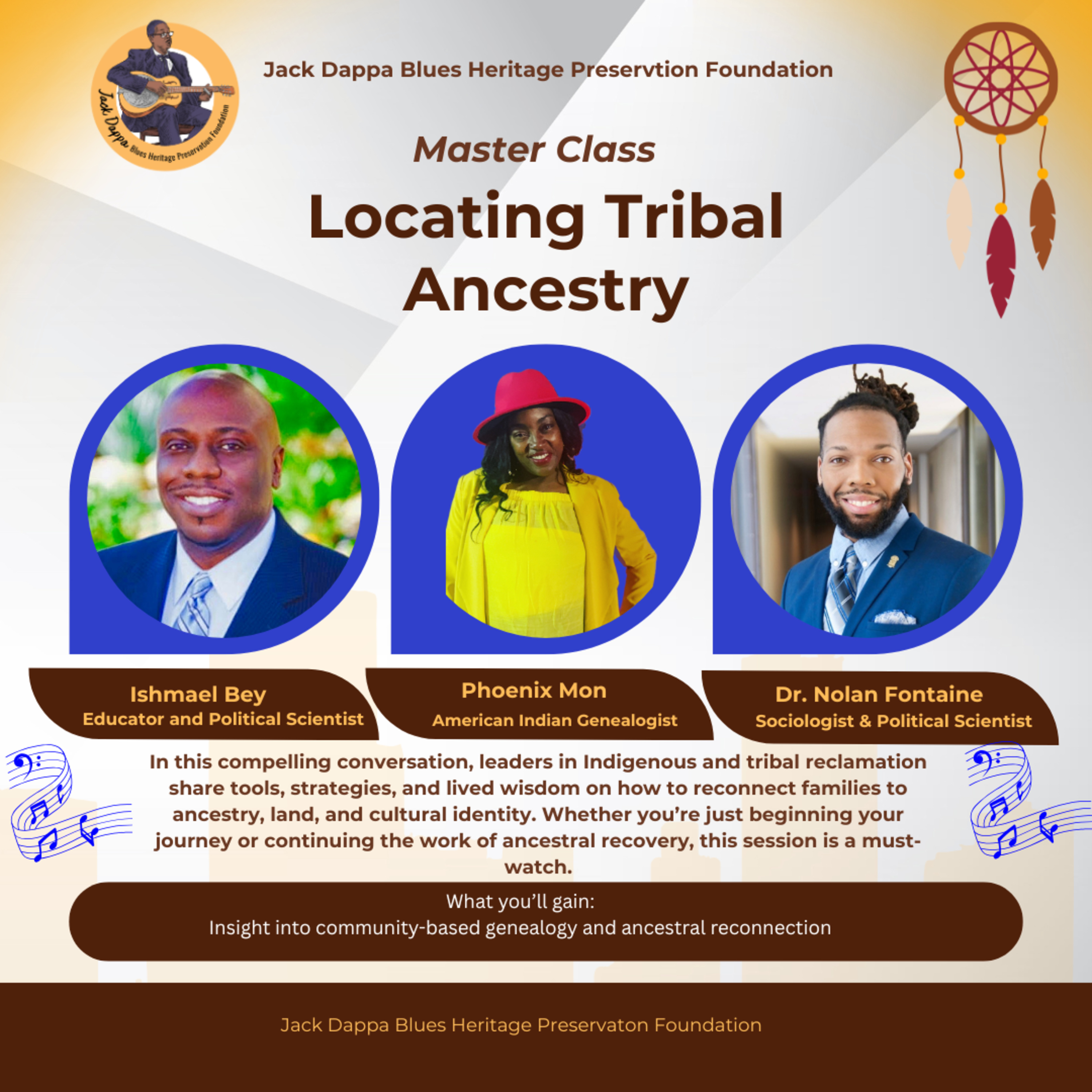 MASTER CLASS REPLAY: Locating Tribal Ancestry! | Presented by: Jack Dappa Blues Heritage Preservation FoundationIn partnership with The African American FolkloristThis in-depth session brings together leaders grounded in Indigenous identity, tribal sovereignty, and reclamation work to guide participants through the process of connecting and reconnecting families to tribal ancestry.💬 One powerful takeaway?Blood quantum doesn’t equal identity. In this conversation, we unpack how someone can be recorded as having no blood quantum in the Cherokee Nation — not because they aren’t Indigenous, but because they’re from a different tribal nation (like Muscogee Creek). It’s a detail that seems small but carries deep implications for how ancestry is recorded, denied, or erased.This master class covers:Navigating Freedmen and tribal recordsUnderstanding rejection letters as historical archivesMisclassification in blood quantum and tribal rollsUsing the Guion-Miller and Dawes Rolls to uncover family storiesHow Black and Indigenous communities intersect in these histories📺 Now streaming for paid members.Support the work. Reclaim the knowledge. Restore the lineage. | — | ||||||
| 6/30/25 |  Blues Music is Black History: The Hard Conversation at Hopson Plantation | What does it mean to speak the truth of the Blues on the very soil where our ancestors were enslaved?In this live broadcast, Lamont Jack Pearley—traditional Bluesman, folklorist, and founder of the Jack Dappa Blues Heritage Preservation Foundation—reflects on being invited to present his original scholarship on Blues Ecology at Hopson Plantation, once home to Blues legend Pinetop Perkins.As we close out Black Music History Month, this episode holds space for a necessary conversation about land, memory, and music. We'll explore how different landscapes—Mississippi’s cotton fields and Louisiana’s red-light districts—shaped different kinds of Blues, and why where we honor the Blues matters just as much as how we do it.Through personal reflection, fieldwork excerpts, and live performance, we ask:Can you celebrate the Blues without honoring the history that created it?Join us tonight for truth-telling, music, and memory from the Delta to the mic. | — | ||||||
| 6/18/25 | 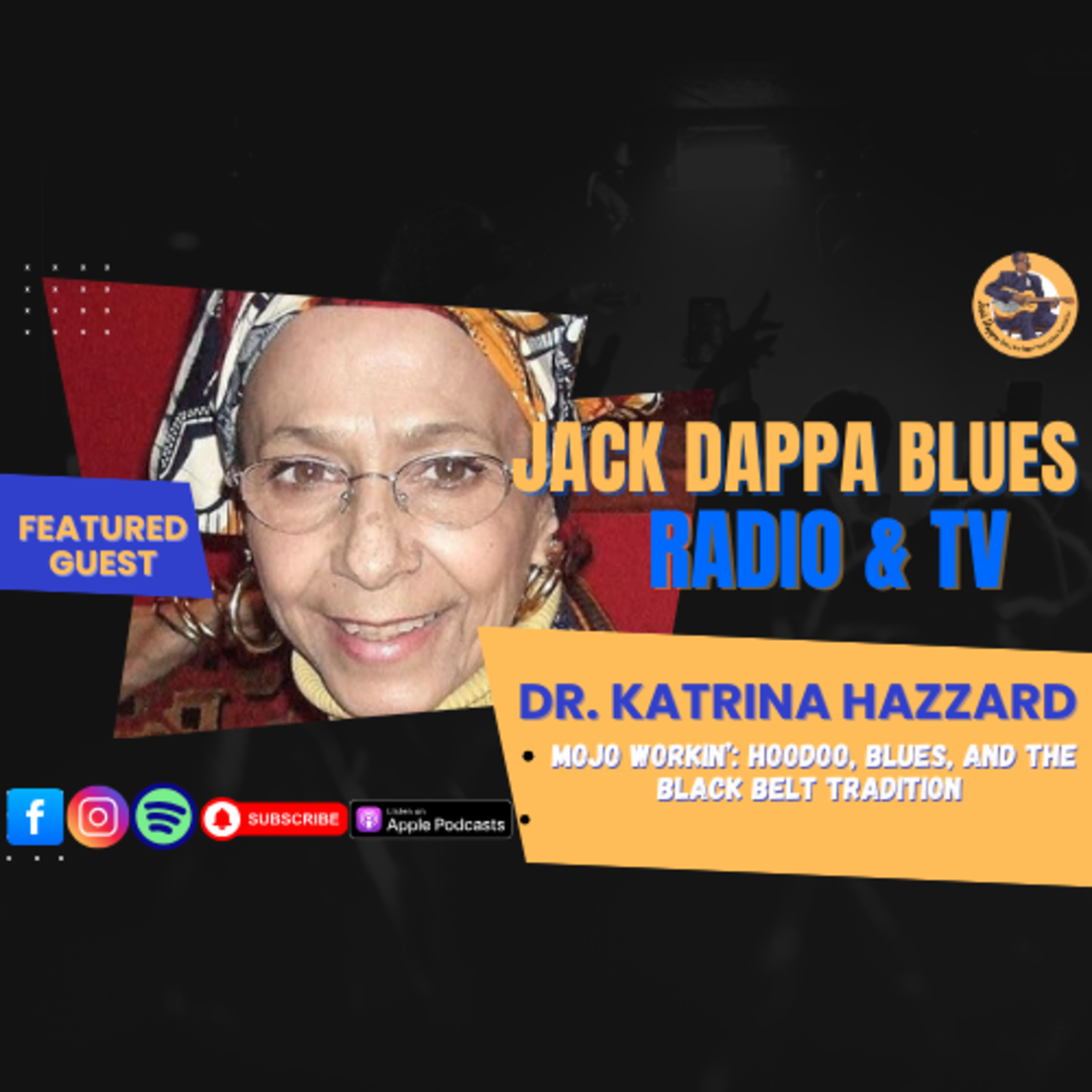 Mojo Workin’: Dr. Katrina Hazzard-Donald on Hoodoo, Blues, and the Black Belt Tradition | Jack Dappa Blues Heritage Radio presents:Mojo Workin’: Dr. Katrina Hazzard-Donald on Hoodoo, Blues, and the Black Belt TraditionIn this culturally rich and significant episode of Jack Dappa Blues Radio, we welcome renowned folklorist, sociologist, and dance scholar Dr. Katrina Hazzard-Donald for an in-depth discussion on Black Belt Hoodoo, Blues culture, and African American sacred traditions.In this episode, we explore:The African origins and survival of Hoodoo as a metaphysical systemThe jook joint as a sacred space of spirit, resistance, and joyHow Blues music operates as ritual, cosmology, and cultural memoryThe overlap between Dr. Hazzard-Donald’s work and the Blues Ecology frameworkDr. Hazzard-Donald is the author of Mojo Workin’: The Old African American Hoodoo System and Jookin’: The Rise of Social Dance Formations in African American Culture. She is a professor emerita at Rutgers University, a Yoruba/Lukumi initiate, and a lifelong cultural worker dedicated to preserving and interpreting Black Southern lifeways.🪕 Hosted by Lamont Jack Pearley, traditional Blues artist, applied folklorist, and founder of Jack Dappa Blues Heritage Preservation Foundation.Become a Patreon🔗 Visit us at: https://www.patreon.com/jackdappablues💬 Share your thoughts in the comments and help amplify Black traditional knowledge.🎧 Subscribe for more episodes that center Black folklore, cultural heritage, and Blues history. | — | ||||||
| 6/7/25 |  Creole Roots, Sinners, and Gravediggers: The Blues According to Chris Thomas King | Creole Roots, Sinners, and GravediggersBluesman, actor, and cultural preservationist Chris Thomas King joins Jack Dappa Blues Radio to uncover the real story of the Blues — from the juke joints of Louisiana to the haunting depths of Gravedigger Gonna Cut You Down.We talk Creole identity, his film Sinners, the founding of the Blues Origin Institute, and why the Blues didn’t start in the Delta — it started in Louisiana.This is the Blues you weren’t taught. The Blues that remembers.▶️ Available now on all streaming platforms.#ChrisThomasKing #CreoleBlues #JackDappaBlues #BluesPeople #BluesOriginInstitute #BlackMusicMonth | — | ||||||
| 6/5/25 | 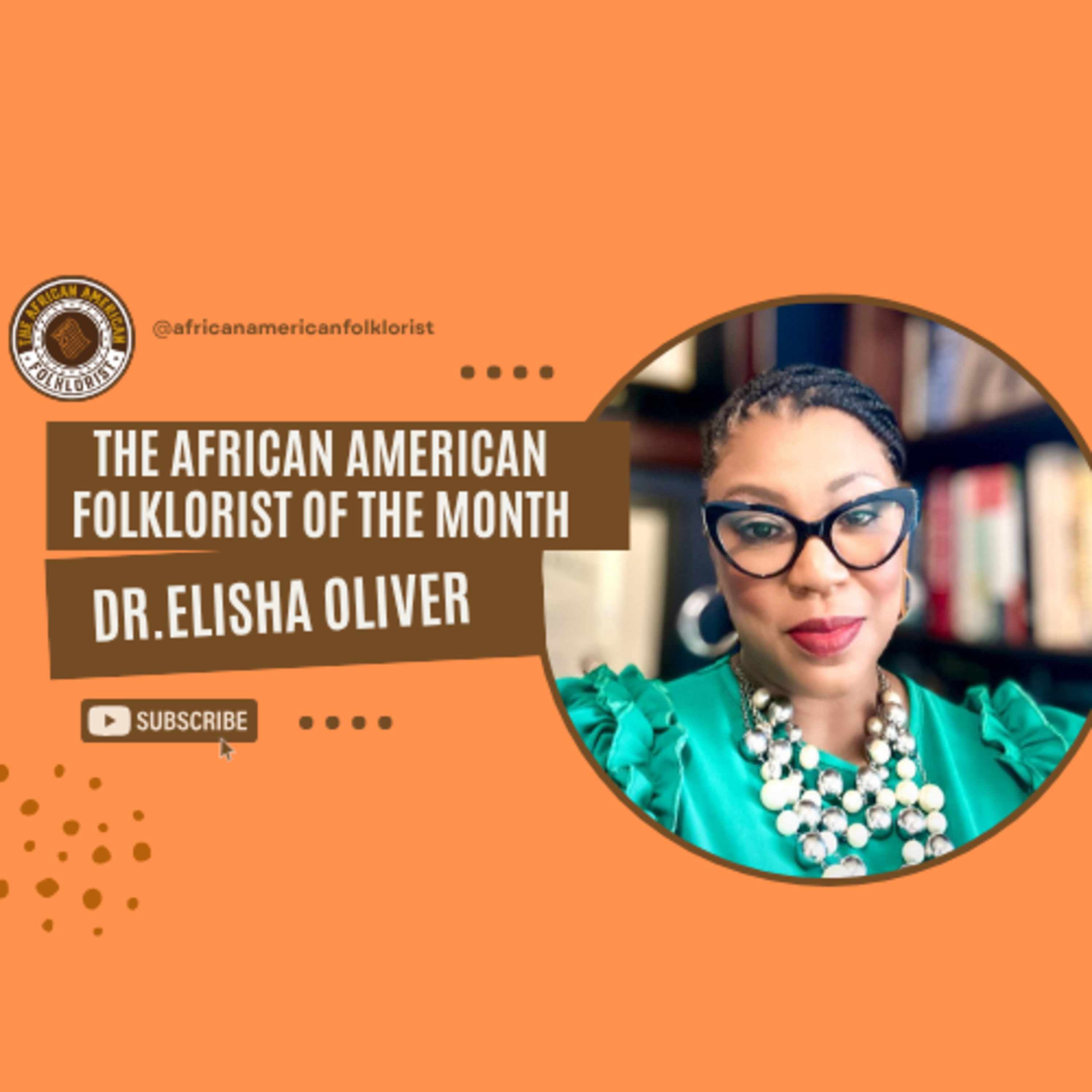 The African American Folklorist for the Month of June: Dr. Elisha Oliver | Each month, The African American Folklorist honors a Black scholar whose life’s work is immersed in the deep study and preservation of African American folkways, knowledge systems, and community truth-telling. For June, we recognize Dr. Elisha Oliver, a biocultural anthropologist, visual ethnographer, and Executive Director of Texas Folklife, as our African American Folklorist of the Month.Dr. Oliver’s scholarship is rooted in lived experience, land memory, and embodied care. Her work crosses the fields of anthropology, folklore, health equity, and the arts, tracing the relationships between space, place, food environments, and Black wellness traditions. Through rigorous fieldwork and visual storytelling, she brings to light the narratives often overlooked in mainstream academia and institutional folklore.In this episode, we’ll explore how Dr. Oliver uses film, photography, and the spoken word to document the intersections of storytelling, traditional healing, and environmental sustainability. We’ll discuss her contributions to the American Folklore Society, the Society for Ethnomusicology, and her role as a Zora Neale Hurston Award winner and Wenner-Gren Public Scholar Fellow. And we'll go deep, into land as medicine, Black maternal health, and the importance of centering community in every research question asked.https://texasfolklife.org/eoliver@texasfolklife.org | — | ||||||
| 6/2/25 |  The Blues as Black Sonic Folklore Pt. 2 – Hard Ground & High Water | The Blues as Black Sonic Folklore: Part 2:"Hard Ground and High Water: The Blues of Survival and Struggle"We continue our Black Music Month series by diving into the Blues as a witness to environmental crisis and class struggle.Featuring music by Bessie Smith, Charley Patton, Blind Lemon Jefferson, and Lead Belly, we explore how songs about flood, drought, and urban segregation serve as time capsules, preserving Black ecological, economic, and emotional history through sound. These are more than Blues, they are survival songs, testimonies of people shaped by both nature and the systems that fail them. | — | ||||||
| 5/31/25 | 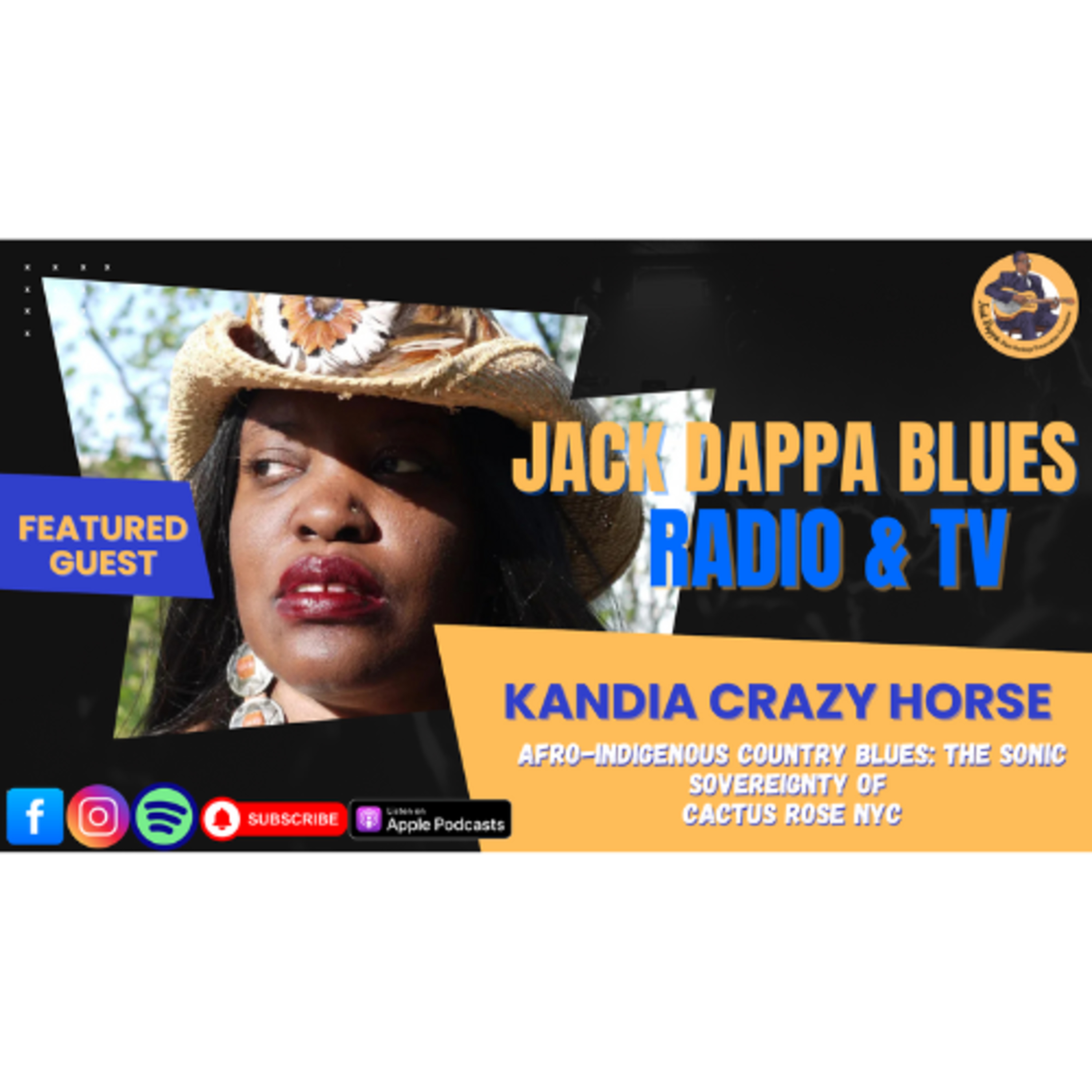 Afro Indigenous Country Blues: The Sonic Sovereignty of Cactus Rose NYC | In this episode of Jack Dappa Blues Radio, we welcome Kandia Crazy Horse, Afro-Indigenous musician, rock critic, author, and frontwoman of the genre-defying band Cactus Rose NYC. From the newsroom to the stage, Kandia has blazed a singular trail across rock, country, and Americana—reclaiming sound as a site of cultural sovereignty, survival, and storytelling.We dive into her legacy as editor of Rip It Up: The Black Experience in Rock ’n’ Roll, her academic work at Princeton University, and her bold mission to center Afro-Indigenous identity in American roots music. Her concept of “sonic sovereignty” challenges colonial gatekeeping in music, and her voice—both literal and literary—carries the spirit of revolution.🎶 Listen to Kandia Crazy Horse’s music:👉 Spotify – “Gravedigger Gonna Cut You Down” Spotify - "Cactus Rose NYC" 🔗 Featured Topics:Afro-Indigenous identity in musicReclaiming Americana and country bluesThe politics of sound and representationCactus Rose NYC and creative freedomRip It Up and the Black Rock archiveCultural revolt in music journalism and academia | — | ||||||
| 5/26/25 |  The Blues as Black Sonic Folklore: Part 1: The Folklore in the Blues | In this kickoff episode for Black Music Month, Jack Dappa Blues Radio explores the Blues as Black folklore, not just as music, but as cultural testimony, survival strategy, and sonic memory. Through the voices of Tommy Johnson, Mance Lipscomb, Rube Lacy, Charley Patton, and Blind Lemon Jefferson, we treat Blues lyrics as living archives, capturing addiction, emotional depth, environmental trauma, and coded cultural critique.We examine the Blues as testimony, as ecological witness, and as class commentary, diving into how metaphor, moan, and memory serve as vital tools for storytelling and resistance.This episode honors the spirit of Black Music Month by placing tradition bearers front and center, revealing how the Blues doesn't just recall history—it makes it.🎙️ New to streaming or looking to level up? Check out StreamYard and get $10 discount! 😍 https://streamyard.com/pal/d/6735755289559040 | — | ||||||
Want analysis for the episodes below?Free for Pro Submit a request, we'll have your selected episodes analyzed within an hour. Free, at no cost to you, for Pro users. | |||||||||
| 5/21/25 |  The Blues Narrative: The Children of the Great Migration | 🎙️ REPLAY: The Blues Narrative — The Next Chapter of the Slave NarrativesOriginally aired: Late March Broadcast | 9 PM CSTPresented by: Jack Dappa Blues Heritage Preservation FoundationIn partnership with The African American Folklorist and We The Blues PeopleWe are proud to share the full replay of our special broadcast that launched a new chapter in our cultural memory work — The Blues Narrative.This powerful episode explores the lived experiences of the Children of The Great Migration — the Blues People whose lives carry the rhythms of survival, resistance, and Black cultural power in the face of systemic oppression.In this broadcast, you’ll experience:🎤 First-hand accounts and oral histories from tradition-bearers🎶 Blues soundscapes that score our shared historical memory📚 Critical theory grounded in Black ecological, cultural, and musical traditions🗣️ Reflections on how the Blues functions as both archive and resistanceThis series is the continuation of the Slave Narratives — a living archive voiced by those who inherited the legacy and forged new paths through song, story, and sound.📡 Available now to members.Your support helps us preserve, publish, and share the Black oral tradition — rooted in the real lives of our elders, our communities, and our future.👉🏾 Join us, support the work, and be part of the Blues Narrative. | — | ||||||
| 5/21/25 | 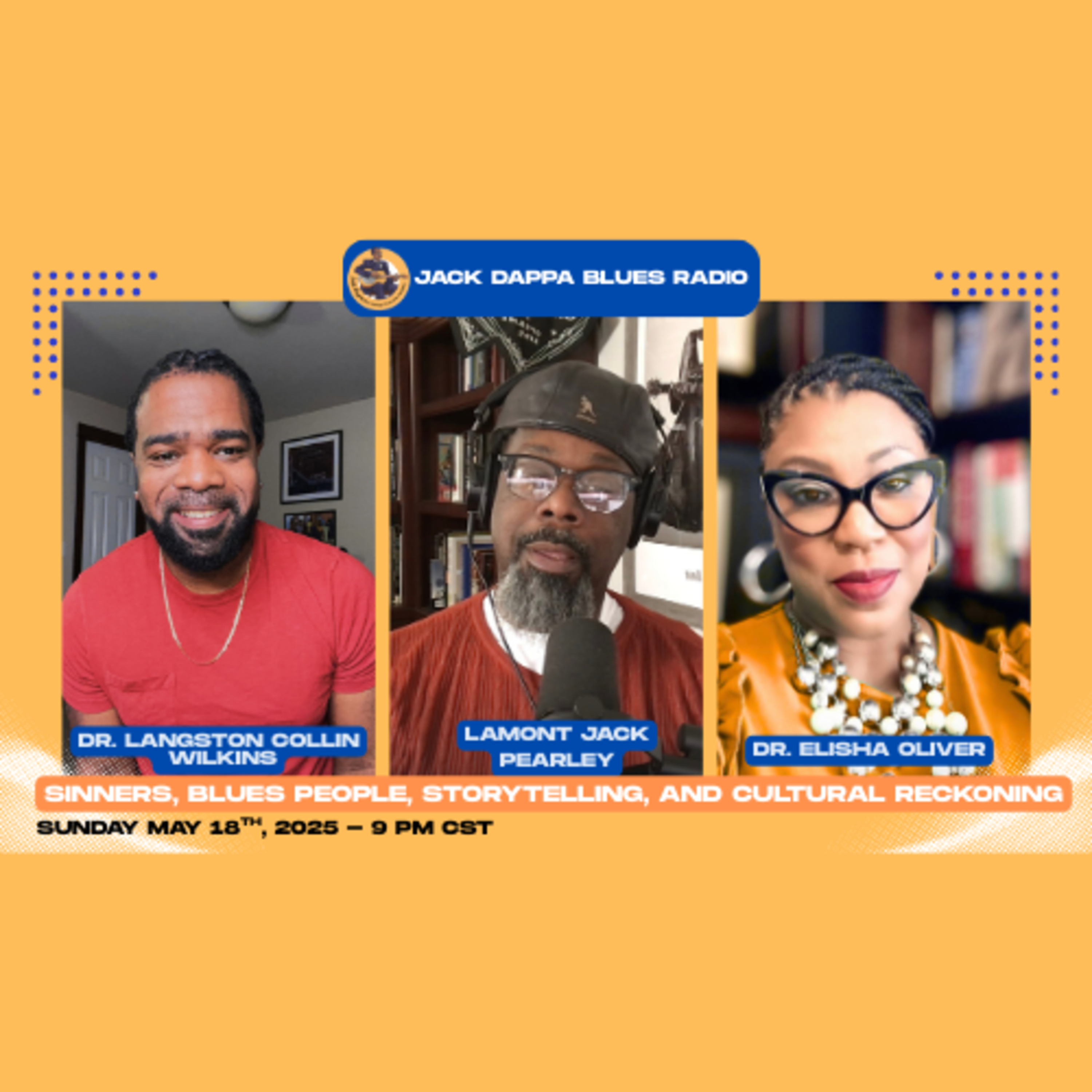 Sinners, Blues People, Storytelling, and Cultural Reckoning | In this episode, we dive back into the film Sinners, not just as a movie, but as a cultural reckoning. We’re breaking down how the film tells a deeper story about Black American folklife, Blues culture, and the enduring legacy of Blues People. This time, we’re not just exploring themes; we’re getting into the characters, the plot, and the ways they reveal the real-life struggle between tradition and transformation.Rather than just reviewing the film, we’re asking why Sinners matters. It’s not just entertainment, it’s a bold statement about what it means to be a Blues person in a world where survival, spirituality, and cultural memory are constantly tested. We’ll explore how the film reflects critical ideas like Blues Ecology, Clyde Woods’ Development Arrested, and the legacy of the Plantation Complex. We’ll also look at how the film’s portrayal of Black womanhood, feminism, and colorism challenges or reinforces cultural narratives.Big Bill Broonzy’s legacy will be front and center as we examine how his words and music resonate with the film’s themes. As Broonzy once said, “They don’t like the idea of hearing the old original way it went because it’s said to carry them back to the horse and buggy days, and slavery time, and they don’t want to think about that.” Just like his music, Sinners forces us to confront the past and ask hard questions about what’s been lost and what survives, and how Ryan Cooger brings to life this visual story of Blues People, Blues Folk Belief, and Blues Culture of the time!We’ll also dig into the cultural intersections of the Mississippi Delta, how Irish, Chinese, Black, and Afro-Indigenous communities shaped the Blues tradition. And we’ll make connections to other cultural works like August Wilson’s plays, Ma Rainey's Black Bottom, and Crossroads, exploring how each handles the intersection of performance, truth, and storytelling.To break it all down, I’m joined by Dr. Langston Collin Wilkins and Dr. Elisha Oliver, whose insights into Black folklore and cultural memory will help us unpack the film’s deeper layers.This episode isn’t just a conversation; it’s a call to think critically about how Black life and Blues culture are represented and remembered. Tune in for a cultural reckoning where the Blues itself gets to testify. | — | ||||||
| 5/2/25 |  The African American Folklorist of the Monthof May - Dr. Ebony Bailey | In this episode of The African American Folklorist, we honor Dr. Ebony Bailey as Folklorist of the month of May. Dr. Bailey is a dynamic scholar, writer, and cultural worker whose groundbreaking research intersects Black Literature and Folklore. Dr. Bailey explores how African Americans have historically been both represented as “the folk” and how they have powerfully redefined that term through literature, activism, and cultural intervention.We dive into her acclaimed article, (Re)Making the Folk: Black Representation and the Folk in Early American Folklore Studies (Journal of American Folklore, 2021), and discuss her public talk, Re(Making) the Folk: The Folk in Early African American Folklore Studies and Postbellum, Pre-Harlem Literature. Through this dialogue, Dr. Bailey highlights how early Black writers and intellectuals used folklore as a site of resistance, cultural affirmation, and narrative control.She also shares insights from her work as a museum researcher with Kera Collective and her leadership in equity-centered initiatives within the American Folklore Society. As a contributor to The African American Folklorist platform, Dr. Bailey helps shape the future of folklore by amplifying Black voices, reclaiming tradition, and challenging dominant narratives.Join us for a rich and necessary conversation on race, representation, and the reclaiming of folk knowledge. | — | ||||||
| 4/9/25 |  Spirit Work, Hoodoo & Black Southern Cosmologies: Conjure, Pentecost, and the Blues | Jack Dappa Blues Radio Live – Sunday Night EditionEpisode: Spirit Work, Hoodoo & Black Southern Cosmologies: Conjure, Pentecost, and the BluesIn this deeply spiritual and culturally rich episode, Jack Dappa Blues Radio Live explores the sacred intersections of Blues music, Hoodoo, Black Southern Pentecostalism, and Afro-Indigenous folk beliefs. Host and folklorist Lamont Jack Pearley guides listeners through a journey of ancestral memory, ritual practice, and the spiritual systems encoded in the Blues.We honor the life and work of the late Freeman Vines and his haunting “hanging tree guitars,” examine texts like Black Magic by Yvonne P. Chireau, Mojo Workin’ by Katrina Hazzard-Donald, and Stories of Rootworkers & Hoodoo in the Mid-South by Tony Kail, and spotlight the special Hoodoo Heritage digital issue of The African American Folklorist, curated by Hess Love.This episode isn’t just a conversation—it’s a revival of memory, a ritual of sound, and a space for cultural reclamation.🔗 Sign up for upcoming We The Blues People events and master classes:https://www.eventbrite.com/o/jack-dappa-blues-heritage-preservation-foundation-68723761273 | — | ||||||
| 4/2/25 |  The African American Folklorist of The Month - Dr. Constance Bailey | In this month’s episode of The African American Folklorist, we shine a spotlight on Dr. Constance Bailey—Assistant Professor of African American Literature and Folklore at Georgia State University, and an innovative scholar whose research explores Black women’s comedy, speculative fiction, and African American oral traditions.A native of Natchez, Mississippi, Dr. Bailey’s work is grounded in the richness of Southern Black culture, Black humor, and the possibilities of Afrofuturism. In this engaging conversation, we discuss her academic journey, her role as a digital media editor for the American Folklore Society, and her forthcoming book The Black Folktastic: Black Speculation and the Sankofa Aesthetic. We also explore how folklore, humor, and speculative storytelling are powerful tools of resistance, cultural memory, and imagination in Black communities.Join us as we celebrate Dr. Bailey’s contributions to the field and highlight the significance of preserving and teaching Black folklore in contemporary spaces.https://constancebailey.com/ | — | ||||||
| 3/22/25 | 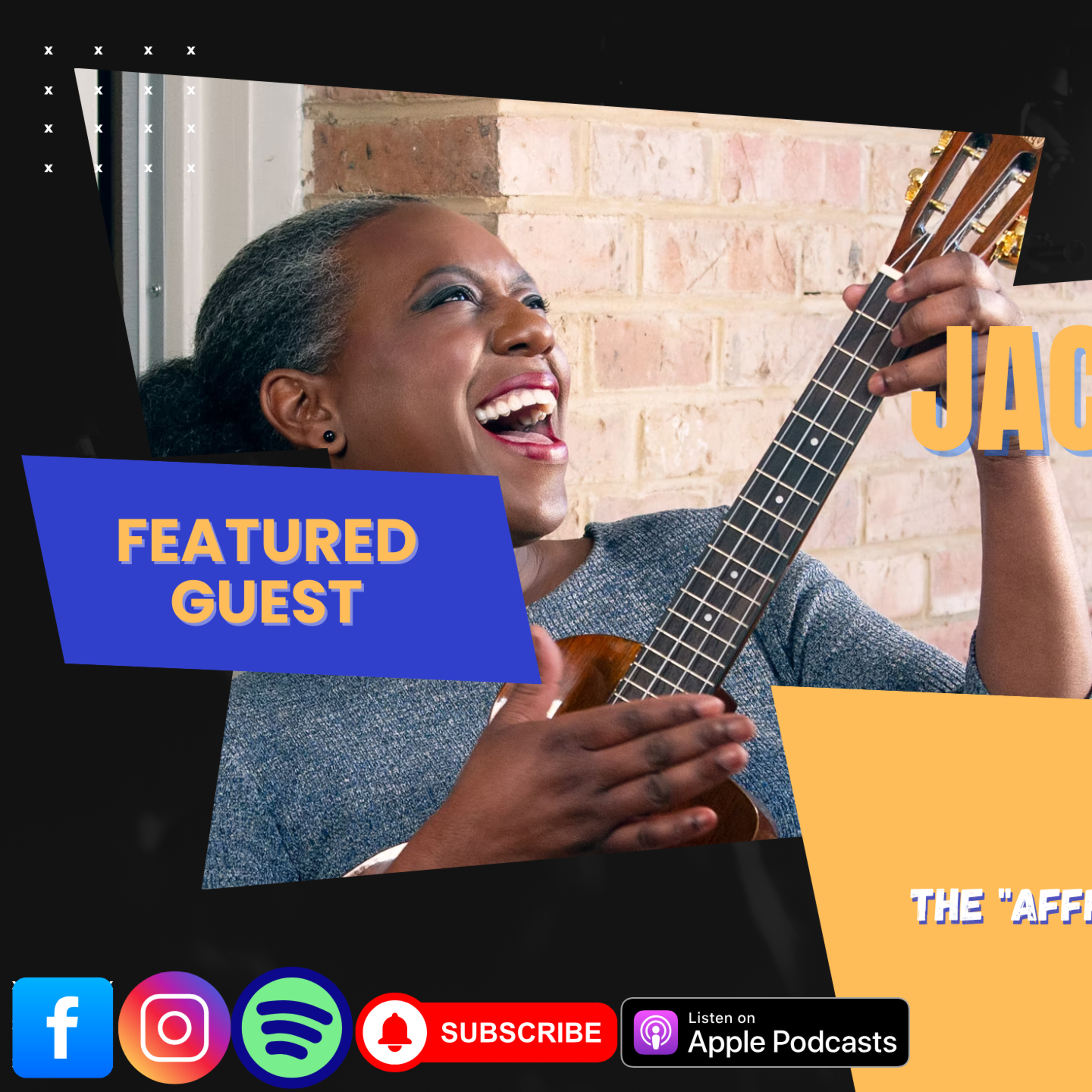 🎶 *Kelle Jolly – The "Affrilachian-Georgia-lina-Peach" & the Story of Lady Fay Ukulele 🎶 | In this special episode, we sit down with Kelle Jolly, the self-described "Affrilachian-Georgia-lina-Peach", whose music and storytelling embody the rich cultural tapestry of the Appalachian South. A celebrated folk artist, community builder, and ukulele virtuoso, Kelle shares the inspiration behind her latest book, Lady Fay Ukulele, and the deep significance of its story.We’ll explore how her roots, influences, and passion for tradition shape her work, weaving together themes of friendship, forgiveness, and the magic of music. Join us for an intimate and lively conversation filled with melody, heritage, and the enduring power of storytelling. 🎶📖✨Here are some links to the book sales online:Amazon.com: Lady Fay Ukulele: Jolly, KelleLady Fay Ukulele by Kelle Jolly, Paperback | Barnes & Noble®Lady Fay Ukulele, (Hardcover) - Walmart.com | — | ||||||
| 3/17/25 |  Writing the Blues: Black Stories in Literature and Film | The blues is more than just music—it’s history, it’s storytelling, and it’s the soul of Black American life. In this compelling live broadcast, we explore Writing the Blues—the ways Black authors, poets, and filmmakers have infused their works with the rhythm, pain, resilience, and triumph of the blues.From Langston Hughes’ poetic blues verses to Alice Walker’s deeply emotional narratives, from August Wilson’s stage masterpieces to period-piece films that use the blues as a backdrop, this discussion uncovers how Black storytelling in literature and cinema keeps the essence of the blues alive.Join us as we break down the themes of struggle, survival, love, and liberation found in both historical and contemporary works. We’ll examine films like The Color Purple, Ma Rainey’s Black Bottom, Ray, and Down in the Delta, alongside the written works of W.E.B. Du Bois, Zora Neale Hurston, and more.How does the blues shape Black narratives? How do these stories continue to evolve while honoring the legacy of the blues? Let’s dive into these questions together in an insightful, thought-provoking, and culturally rich discussion.🎙 Tune in live and join the conversation. Let’s keep writing the blues. | — | ||||||
| 3/11/25 |  The Blues—A Living Oral History | Join us for a real, Blues People conversation about the blues on Jack Dappa Blues Radio! In this live broadcast, I—Lamont Jack Pearley, a traditional blues artist and folklorist—will take you deep into the blues as an oral tradition in the American South.The blues ain’t just music; it’s a living, breathing record of our history. It carries the voices, struggles, and triumphs of Black American life, passed down through song, rhythm, and storytelling. The blues tells us where we’ve been, who we are, and how we make sense of the world around us.Throughout the show, we’ll dig into the roots of blues as oral history. We’ll break down songs like Son House’s Am I Right or Wrong and American Defense, Howlin’ Wolf’s Smokestack Lightnin’, Muddy Waters’ Louisiana Blues, and more, getting into the messages woven into their lyrics and performances. We’ll also talk about floating verses—how blues artists built on each other’s words and passed them along like folklore—and the dialect and storytelling style that make the blues one-of-a-kind.This live broadcast is more than just a lecture—it’s a conversation. We’ll be playing classic blues recordings, talking through their meaning, and opening up the lines for you to join in. Share your thoughts, ask questions, and become part of the ongoing tradition of keeping the blues alive.So tune in, turn it up, and let’s get into it—one story, one song, one truth at a time. | — | ||||||
| 3/6/25 | 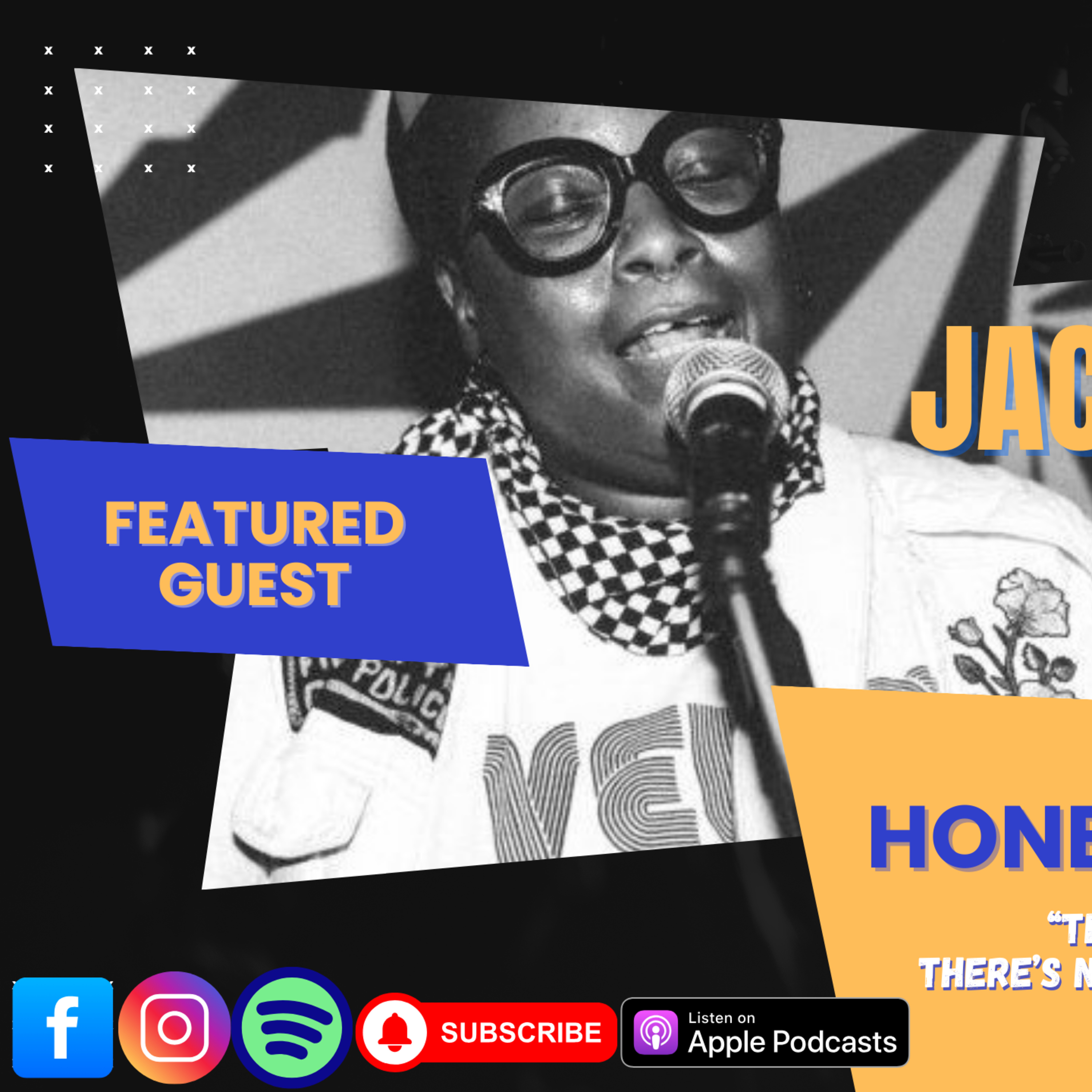 There's Not One Way to Be Black – A Conversation with Honeychild Coleman | In this electrifying episode of Jack Dappa Blues, we sit down with the powerhouse that is Honeychild Coleman—a pioneering force in the world of punk, blues, and avant-garde music. A Louisville native and Brooklyn-based artist, Honeychild’s journey has taken her from busking in the New York subway to collaborating with legends like The Slits, Mad Professor, and Greg Tate’s Burnt Sugar Arkestra.As the frontwoman of blues-punk outfit The 1865, Coleman fuses raw energy with historical narratives, crafting sonic landscapes that echo the struggles and triumphs of Black American culture. Her music has graced films, documentaries, and television screens, all while staying true to her ethos of artistic resistance and community empowerment.In this candid conversation, Honeychild delves into the intersection of punk, blues, and Black identity, sharing how her lived experiences and sociocultural activism inform her art. From her early days in the underground NYC music scene to shaping spaces like Sistagrrl Riots, she continues to be a trailblazer for alternative Black voices in music.Join us as we explore the roots of rebellion, the power of storytelling through sound, and the unapologetic spirit of punk blues. This is an episode you won’t want to miss!Honeychild Coleman (The 1865 / Bachslider / The Phensic) Brooklyn, NY Louisville, Kentucky native recording/visual artist, and Sistagrrl Riots founding member Honeychild Coleman has worked with The Slits, Mad Professor, afro-futurist shoegazers Apollo Heights (The Veldt), Badawi (Raz Mesinai), Death Comet Crew (with Rammellzee), and the late Greg Tate’s Burnt Sugar Arkestra. Honeychild started her musical career during the hot summer of 1993 in the real underground – the New York City Subway system. Busking there, and eventually performing freestyle and improv weekly sets with DJs Olive (we™ /Liminal), Sasha Crnobrnja (Organic Grooves), Lloop (we™), Delmar (Jungle Sky), Fred Ones (Mike Ladd/Sonic Sum) and Badawi (Raz Mesinai) contributed to the unique niche that Coleman created within the New York City electronic scene of the mid-90's.She is featured in documentaries “Afropunk,” (James Spooner, USA), “Tina Turner:My Life. My Songs“ (Dir. Schyda Vasseghi, GERMANY), the MAKERS storytelling platform for trailblazing women (USA), "Fireflies" and "Getting My Name Up There" (Katarina Cibulka, AUSTRIA), Rock Chicks:I Am Not Female To You (Marita Stocker, GERMANY), and upcoming “Rude Girls” (Brigid Maher, USA). Coleman also made a cameo in Brooklyn film “Crooked” (Wordsound, USA) and has composed music in the Sundance awarded film "Pariah" (Dee Rees, Focus Features, USA) and indie short “P.R.” (Maria Paraskevopoulou, U.K./Greece). Coleman fronts Blues-Punk outfit The 1865 (Mass Appeal Records) on lead vocals and baritone guitar. The 1865’s music is in the Hulu series “Woke!” (USA, 2021) and composed an original song for Showtime’s “Everything’s Gonna Be All White” (USA, 2022). Coleman’s writing appears in RAZORCAKE ‘zine issue 138 and BLACK PUNK NOW! (Softskull Press,2023). Affiliations: Black Rock Coalition,Sistagrrl Riots, Underground Producers Alliance, Out Loud Louisville, Willie Mae Rock Camp, Human Impacts Institutehttps://www.instagram.com/hccoleman/https://www.instagram.com/the1865band/www.honeychildcoleman.comhttps://honeychildcoleman.bandcamp.com/https://shutitdowncomp.bandcamp.com/releaseshttps://the1865.bandcamp.com/album/dont-tread-on-we | — | ||||||
| 3/2/25 | African American Folklorist of The Month - Dr. Raymond Summerville | Dr. Raymond Summerville joins me, as he is the African American Folklorist of February, to discuss the importance of having more Black Folklore scholars in the field to lead the discourse of our narrative, traditions, literature, and the dissemination of found research that represents the Black American experience. He also dives into his beginnings and what inspired him to write his book, In Proverb Masters: Shaping the Civil Rights Movement.Dr. Raymond Summerville is an alumnus of North Carolina Agricultural and Technical State University (BA, BS, and MA in English and African-American Literature) and the University of Missouri-Columbia (PhD in English with a concentration in Folklore, Oral Tradition, and Culture). His research interests include African American history, African American literature, postcolonial studies, paremiology, phraseology, hip-hop, blues, and other folklore genres. He currently teaches at Fayetteville State University in North Carolina. | — | ||||||
| 3/2/25 | The African American Folklorist of the Month - Dr. Anika Wilson | On this episode, speak with Dr. Anika Wilson, The African American Folklorist of the Month for March! Wilson discusses her book, methodology, scholarship, and positionality as a Black Academic in the field. Anika Wilson (she/her) is Associate Professor and former chair of the Department African and African Diaspora Studies at UW-Milwaukee. She earned her doctorate in Folklore and Folklife Studies at the University of Pennsylvania and specializes in informal narratives (gossip, rumor, etc.). Her book Folklore, Gender, and AIDS in Malawi: No Secret Under the Sun (2013) was awarded the Elli Kongas Maranda Award for feminist scholarship in folklore in 2014. She teaches course topics related to African and African diasporic societies, expressive cultures, spirituality, and gender relations. Her current research project focuses on spirituality, sacredness, and the environment in southern Africa. ( American Folklore Society ) | — | ||||||
| 2/17/25 |  🎙️ From Slave Seculars to The Blues Pt. 2 – The Legacy of Black Spirituals and Hymnals 🎶 | 🎙️ From Slave Seculars to The Blues: Preserving & Conserving Black American Folklore Pt. 2 – The Legacy of Black Spirituals and Hymnals 🎶Join us for Part 2 of our deep dive into the evolution of Black American music, as we explore how Black Spirituals, hymnals, and Slave Seculars informed the Blues. In this episode, we uncover the sacred and secular traditions that shaped the foundation of the blues, from the sorrowful expressions of spirituals to the raw storytelling of early blues songs.We’ll break down the two distinct styles of Black hymnals—one rooted in oral tradition and the other shaped by formal musical training—and discuss how class and education influenced Black religious music. We’ll also examine how field hollers, lined-out hymns, and call-and-response structures carried over into the blues, creating a continuous thread of Black cultural expression.Expect a mix of history, storytelling, and audience participation as we connect the past to the present.🔥 Tune in and join the conversation as we honor, preserve, and celebrate Black musical heritage! 🔥Songs Played Title• The Old Ship of ZionNames• Johnson, Warren G. (Performer)• Gregory, Richard (Performer)• Richardson, Zema (Performer)• Winrow, Anthony (Performer)• Work, John W. (John Wesley), 1901-1967 (Collector)• Holloway High School Quartet (Performer)Created / Published• Murfreesboro, Tennessee, 1941Headings• - African Americans--Southern States--MusicSource Collection• John Work Collection of Negro Folk Music from the Southeast (AFC 1941/035)Repository• American Folklife CenterTitle• John the RevelatorNames• Work, John W. (John Wesley), 1901-1967 (Collector)• Heavenly Gate Quartet (Performer)Created / Published• Nashville, Tennessee, 1941Headings• - African Americans--Southern States--Music• - The performers of this song are identified by Bruce Nemerov as the Heavenly Gate Quartet. "In the spring of 1941 John Work recorded the Heavenly Gate Quartet at his house...(AFS #5163-64)" -- article by Bruce Nemerov.• - Heavenly Gate Quartet, unaccompanied vocals.Medium• Sound disc : analog ; 12 in.Call Number/Physical Location• AFC 1941/035: AFS 05163a01Source Collection• John Work Collection of Negro Folk Music from the Southeast (AFC 1941/035)Title• Po' Boy Long Way From HomeNames• Work, John W. (John Wesley), 1901-1967 (Collector)• Chestain, Sonny (Performer)Created / Published• Georgia, 1941Headings• - African Americans--Southern States--MusicSource Collection• John Work Collection of Negro Folk Music from the Southeast (AFC 1941/035)Repository• American Folklife CenterTitle• Rock My Soul in the Bosom of AbrahamNames• Work, John W. (John Wesley), 1901-1967 (Collector)• Unidentified vocal quartet (Performer)Created / Published• Fort Valley, Georgia, 1941Headings• - African Americans--Southern States--MusicSource Collection• John Work Collection of Negro Folk Music from the Southeast (AFC 1941/035)Repository• American Folklife CenterDigital Id | — | ||||||
| 2/11/25 |  From Slave Seculars to The Blues: Preserving & Conserving Black American Folklore | In this episode, we explore the rich cultural legacy of Black American music, focusing on the evolution from slave seculars—non-religious songs of survival, work, and resistance—to the development of the blues. Through stories, historical insights, and music, we uncover how enslaved African Americans used music to communicate, preserve their identity, and confront hardship. They also used their traditional expression to resist and revolt against ideologies and beliefs not part of their traditions. We also highlight the contributions of early folklorists, musicians, and modern artists who continue to keep these traditions alive. Join us as we celebrate the resilience and creativity that shaped American music and culture. | — | ||||||
| 2/3/25 |  The 13th Amendment, Blues, Black Folklore, and Black Indigenous Roots | January 31 marks a pivotal moment in American history—the passing of the 13th Amendment in 1865, which abolished slavery. But freedom was more than a legal decree; it became a living story told through the rhythms of the blues, the wisdom of Black folklore, and the resilience of Afro-Indigenous traditions. On this episode, we explore how the fight for liberation shaped cultural expressions that endure today. Discover the powerful connections between Black American folklore, the birth of the blues, and the often-overlooked histories of Afro-Indigenous communities. From the trickster tales of Br’er Rabbit to the haunting melodies of the Delta blues, this is a story of survival, resistance, and the unbreakable spirit of a people who turned struggle into song. Join us as we honor the roots, the rhythms, and the resistance woven into the fabric of Black history. | — | ||||||
| 1/27/25 | 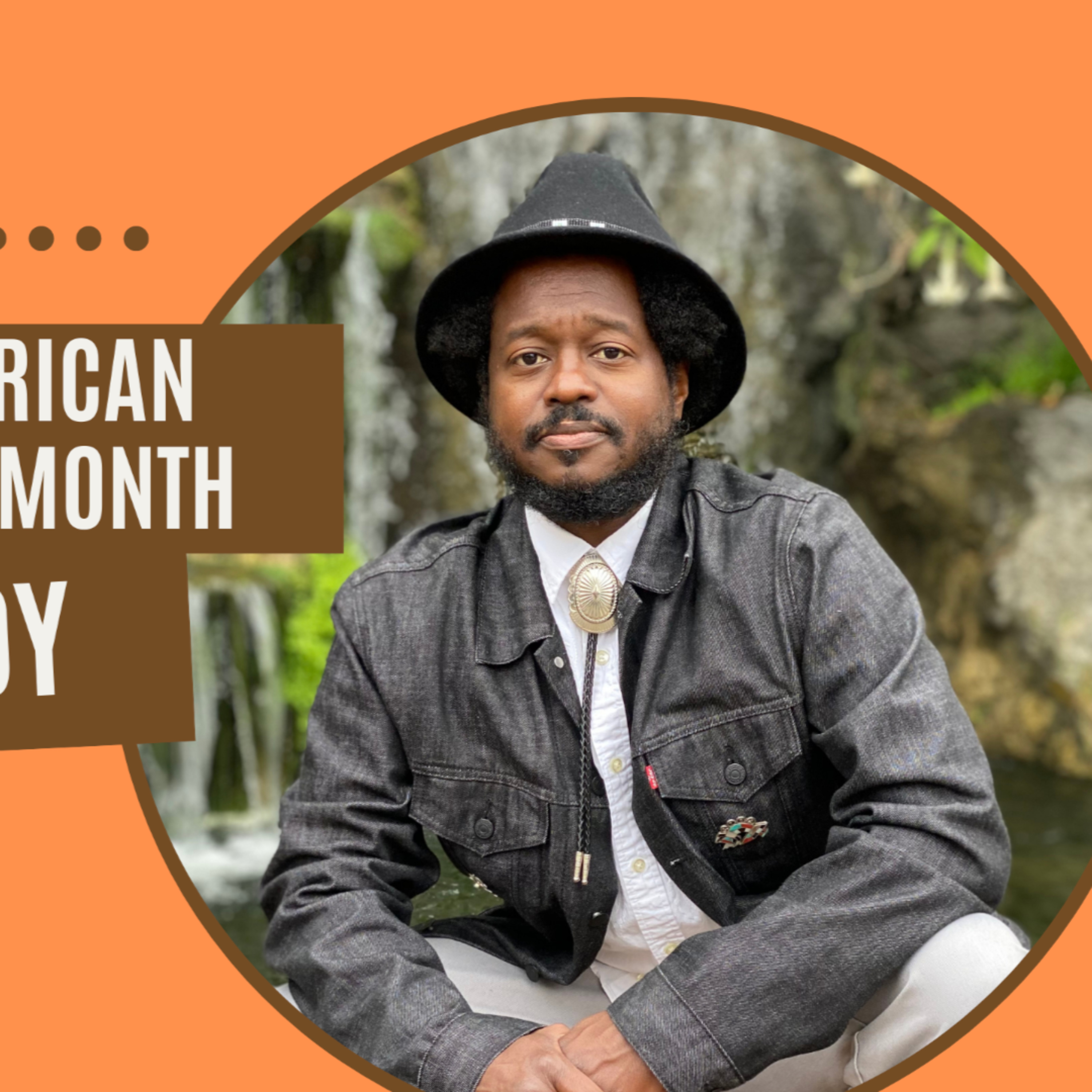 African American Folklorist of The Month - Larry Handy | African American Folklorist of the Month - Larry Handy Larry Handy discusses with me the concept of Ethnopoetic theory (a method for analyzing and recording oral poetry and performances to capture the poetic elements of the original performance) and his love for archiving and being a librarian. Handy is a “Folklife Poet” and shares with us the meaning; he also dives deep into activism and protests. Larry lives in California, and we recorded this interview at the height of the California wildfires when he was a few miles away. In sharing his Journey to Folklore, he discusses Folk Consciousness and his "Tour of Duty," an LA Protest Memoir. BIO: Larry Handy is a folklife poet who leads the award-winning poetry band Totem Maples. His fiction, nonfiction, and poetry appear in such journals as The Coachella Review, Cog, Mosaic: Art and Literary Journal, Proximity, Quiddity, Rivet, Roi Fainéant, Storylandia, Straight Forward Poetry, and elsewhere. He holds an MFA in creative writing and writing for the performing arts from the University of California, Riverside, and a master’s in library science from Emporia State University. TWB Press published his horror novelette Paper Cuts: 1000 Paper Cranes. His essay “What to Do When Grandma Has Dementia” was nominated for a Pushcart Prize and was listed in The Best American series under Notable Essays and Literary Nonfiction of 2016. He is either practicing Chinese martial arts or running 26.2-mile marathons when not writing. Southern California is his home. | — | ||||||
Showing 25 of 118
Pitch Fit is a Pro feature
See how bookable this show is for guests, which brands already advertise, the per-episode ad value, and the best-fit guest and sponsor profile. The numbers are blurred on the free plan.
How readily this show books outside guests like you.
How proven this show is for host-read sponsorships.
For Guests
ProFor Advertisers
ProUpgrade to Pro to unlock guest cadence, sponsor categories, fit scores, and per-episode ad value for this show.