
Insights from recent episode analysis
Audience Interest
Podcast Focus
Publishing Consistency
Platform Reach
Insights are generated by CastFox AI using publicly available data, episode content, and proprietary models.
Est. Listeners
Based on iTunes & Spotify (publisher stats).
- Per-Episode Audience
Est. listeners per new episode within ~30 days
1 - 1,000 - Monthly Reach
Unique listeners across all episodes (30 days)
1 - 5,000 - Active Followers
Loyal subscribers who consistently listen
1 - 500
Market Insights
Platform Distribution
Reach across major podcast platforms, updated hourly
Total Followers
—
Total Plays
—
Total Reviews
—
* Data sourced directly from platform APIs and aggregated hourly across all major podcast directories.
On the show
Recent episodes
Ep. 9: Ruins, Artifacts, and Adventures: Exploring Ancient History
Dec 9, 2024
Unknown duration
Ep. 8: Aarya's Dreams: Where Do They Go When You Wake Up?
Nov 19, 2024
Unknown duration
Ep. 7: The Skin You’re In: A Life-Long Superhero — Quincy's Q
Nov 15, 2024
Unknown duration
Ep. 6: Anik's guest question: "Déjà Vu": The Mystery of ‘Already Seen’
Nov 15, 2024
Unknown duration
(Ep. 5) The Senses Unveiled: Exploring Eyes, Ears, and the Science of Perception
Nov 11, 2024
Unknown duration
Social Links & Contact
Official channels & resources
Official Website
Login
RSS Feed
Login
| Date | Episode | Description | Length | |
|---|---|---|---|---|
| 12/9/24 | 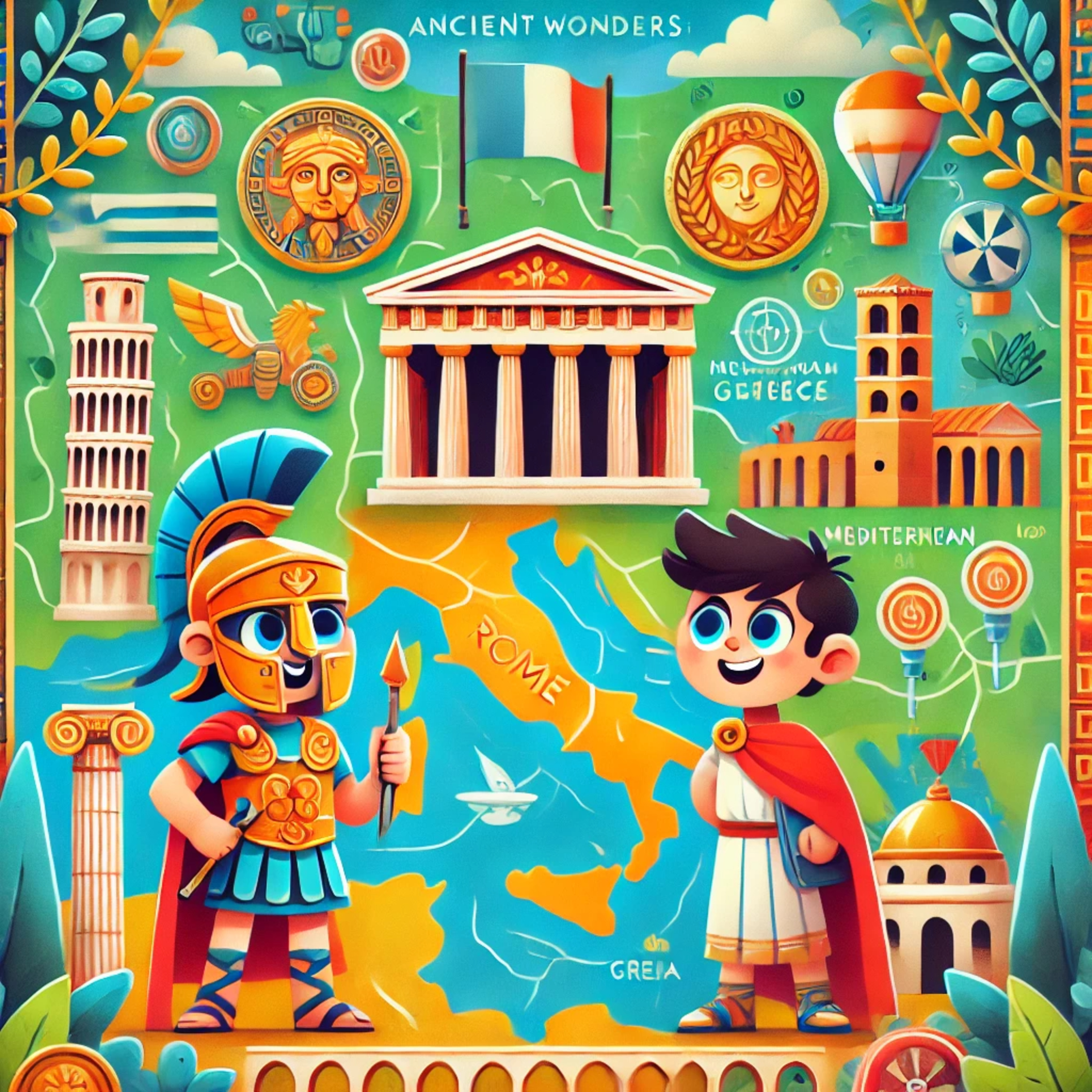 Ep. 9: Ruins, Artifacts, and Adventures: Exploring Ancient History Ep. 9: Ruins, Artifacts, and Adventures: Exploring Ancient History | Summary: In this episode we explore ancient civilizations, particularly those of Greece, Rome, and Egypt. It delves into their mythology, architecture, conquests, culture, and artifacts, providing insights into how these civilizations lived and their lasting impact on the world. The hosts engage in a lively discussion, making connections between different mythologies and explaining key terms like BCE, CE, civilization, and ruins. They describe impressive structures like the Parthenon, Colosseum, and the Great Pyramid of Giza, highlighting the architectural achievements of these civilizations. The episode also touches on the importance of artifacts in understanding ancient societies and how myths and legends were used to explain natural phenomena and serve as early forms of entertainment. Throughout the discussion, the hosts emphasize the interconnectedness of these ancient cultures, drawing parallels between their myths, gods, and belief systems. They encourage listeners to explore and appreciate the rich history and cultural legacies left behind by these civilizations, which continue to shape our modern world. Key Takeaways: 1. Ancient civilizations like Greece, Rome, and Egypt were highly advanced societies with impressive achievements in architecture, art, culture, and governance. 2. Mythology played a significant role in these civilizations, serving as a means to explain natural phenomena, convey moral lessons, and provide entertainment. 3. Artifacts and ruins provide valuable insights into the lives, beliefs, and practices of ancient peoples, acting as windows into the past. 4. There were interconnections and shared themes among the mythologies and belief systems of different ancient cultures, reflecting their geographical proximity and cultural exchanges. 5. Terms like BCE, CE, civilization, conqueror, and ruins are essential for understanding the historical context and development of ancient societies. 6. Exploring ancient civilizations encourages curiosity, appreciation for diverse cultures, and a deeper understanding of our shared human experience across time. 7. The legacies of ancient civilizations continue to shape and influence various aspects of modern societies, from architecture and law to literature and philosophy. 8. Studying ancient history involves piecing together clues from various sources, including artifacts, ruins, and written accounts, to reconstruct a comprehensive narrative. Topics: Ancient civilizations, Architecture, Mythology, cultural exchange, Exploration and discovery, Historical impact and legacy, Entertainment and storytelling Notable Mentions: Demeter, Amun Ra, Colosseum, Hathor, Zeus, Great Pyramid of Giza, Ceres, Jupiter, Venus, Dionysus, Parthenon, Aphrodite, Socrates, Alexander the Great, Plato, Julius Caesar | — | |
| 11/19/24 |  Ep. 8: Aarya's Dreams: Where Do They Go When You Wake Up? Ep. 8: Aarya's Dreams: Where Do They Go When You Wake Up? | Summary Thanks to our guest Aarya's question we're delving into dreams in this episode. Dreams are like secret movies your brain creates while you sleep, but have you ever wondered why they’re so hard to remember when you wake up? It turns out, the part of your brain that helps you store memories takes a break during dreaming, so those wild and colorful adventures often slip away. Even though we forget most dreams, they still play an important role—helping us process emotions, solve problems, and practice handling challenges. Dreams might be mysterious and fleeting, but they’re one of the ways your brain stays sharp, creative, and ready for the day ahead! "They are like a secret workshop in your brain area where all sorts of amazing things are happening." Key Takeaways 1. During REM sleep, the prefrontal cortex and levels of the brain chemical norepinephrine are reduced, making it harder for us to remember our dreams. 2. Dreams play a vital role in processing emotions, enhancing creativity, and practicing problem-solving skills. 3. Our brains prioritize new information over retaining dream memories, which contributes to our forgetfulness of dreams. 4. Dreams may serve as a "training ground" for our brains, allowing us to practice dealing with challenging situations in a safe environment. 5. Keeping a dream journal can help us better remember and understand our dreams, providing insights into our subconscious thoughts and emotions. 6. Our dreams are a powerful tool, and by understanding them, we can tap into their potential benefits for our mental and emotional well-being. 7. Dreams can foster creativity and make unexpected connections, sometimes inspiring artistic or scientific breakthroughs. 8. Our dreams are a reflection of our brain's activity and can provide clues about what we're thinking or working through in our waking life. Topics & Key Figures 1. Dreams and their connection to REM sleep 2. The role of the prefrontal cortex in memory formation 3. Why the brain reduces norepinephrine during sleep 4. The stages of sleep and where dreaming fits in 5. How sensory input overwrites dream memories upon waking 6. Emotional processing and its connection to dreaming 7. Theories about why humans dream 8. The creative potential of dreams 9. The “threat simulation theory” and survival practice 10. The role of memory consolidation during sleep 11. Recurring dreams and their subconscious significance 12. How individual differences affect dream recall 13. The importance of sleep for mental and physical health 14. The evolutionary purpose of dreaming 15. Ways to remember dreams, like keeping a journal Topics: Creativity, sleep, Dreams, problem solving, brain function, subconscious mind, Prefrontal cortex, REM sleep, Memory consolidation, individual differences, memory formation, Dream interpretation, Emotional Processing, Norepinephrine | — | |
| 11/15/24 | Ep. 7: The Skin You’re In: A Life-Long Superhero — Quincy's Q | Your skin is like a superhero suit that grows with you and protects you your whole life! It starts forming when you’re just a tiny baby inside your mom, and when you’re born, it’s soft and delicate. As you grow, your skin gets stronger, helps keep you warm or cool, and even heals itself if you get a scrape. It also helps your body make vitamin D when you’re out in the sun. When people get older, their skin changes again—it might get wrinkly or heal slower. Your skin is always working hard to keep you safe and healthy! TOPICS & TERMS DISCUSSED: Formation of Skin - How skin develops from the ectoderm and mesoderm during fetal growth. Skin Layers - The structure of the epidermis, dermis, and hypodermis, and their distinct functions. Vernix Caseosa - The protective waxy coating on a newborn’s skin. Barrier Function - How the skin acts as a shield against pathogens, toxins, and UV radiation. Sweat and Thermoregulation - The role of sweat glands in cooling the body and blood vessels in maintaining temperature. Nerve Endings and Sensory Function - Skin’s ability to detect touch, pressure, pain, and temperature. Immune System Interaction - Langerhans cells and the microbiome’s role in immune defense. Vitamin D Synthesis - How sunlight exposure triggers vitamin D production in the skin. Skin Elasticity and Collagen - The role of collagen and elastin in maintaining skin’s strength and flexibility. Healing and Regeneration - The process of wound healing, from clotting to tissue repair. Infant Skin Characteristics - The unique properties of a newborn’s thin, delicate, and permeable skin. Teenage Skin Changes - Hormonal effects during puberty, such as increased oil production and acne. Adult Skin Resilience - How adult skin balances protection, moisture, and repair mechanisms. Aging and Skin Thinning - The decline in collagen production, increased dryness, and slower healing in aging skin. Environmental and UV Damage - The cumulative effects of sunlight, pollution, and external stressors over time. | — | |
| 11/15/24 | Ep. 6: Anik's guest question: "Déjà Vu": The Mystery of ‘Already Seen’ | In this episode, JJ welcomes a guest question from Anik and so we dive into the phenomenon of déjà vu, exploring its scientific explanations and cultural interpretations. The discussion covers memory anomalies, neurological factors, and cognitive theories that attempt to explain why we experience déjà vu. Additionally, the episode examines various cultural beliefs and superstitions associated with déjà vu, providing listeners with a comprehensive understanding of this intriguing sensation. Key Topics: 1. Definition of Déjà Vu: Exploring the sensation of experiencing something as familiar despite it being new. 2. Prevalence: Discussing how common déjà vu experiences are among different age groups. 3. Memory Processes: Examining the role of memory in déjà vu, including the concepts of recollection and familiarity. 4. Neurological Basis: Investigating brain regions involved in déjà vu, particularly the temporal lobes and hippocampus. 5. Temporal Lobe Epilepsy: Analyzing the connection between déjà vu and temporal lobe epilepsy. 6. Cognitive Theories: Presenting theories such as dual processing and split perception to explain déjà vu. 7. Age-Related Differences: Exploring why younger individuals report more frequent déjà vu experiences than older adults. 8. Jamais Vu: Introducing the phenomenon of jamais vu, where familiar situations feel unfamiliar. 9. Healthy Memory Function: Discussing how déjà vu and jamais vu may indicate a healthy memory system. 10. Laboratory Studies: Describing methods used to study déjà vu and jamais vu in controlled settings. 11. Psychological Significance: Considering the implications of déjà vu for understanding human cognition and memory. 12. Cultural Interpretations: Exploring how different cultures perceive and interpret déjà vu experiences. 13. Clinical Cases: Reviewing instances where individuals experience chronic déjà vu and its impact on daily life. 14. Research Challenges: Addressing the difficulties researchers face in studying transient phenomena like déjà vu. 15. Future Directions: Discussing potential areas for future research to further understand déjà vu and related experiences. | — | |
| 11/11/24 | (Ep. 5) The Senses Unveiled: Exploring Eyes, Ears, and the Science of Perception | Summary: In this episode, we dig into the fascinating world of sensory perception, exploring the anatomy and function of the eye and ear—two of our most vital sensory organs. From the iris and pupil, which control light intake, to the retina’s role in visual processing, we uncover how our eyes create the images we see. We also journey through the ear, examining the eardrum, cochlea, and inner ear structures that enable us to hear sounds and maintain balance. By understanding the intricate systems behind sight and sound, we gain insight into common issues like cataracts and hearing loss, and the remarkable processes that shape our perception of the world. Topics covered: Iris – Role of the iris in controlling light entry and eye color variation. Lens – The eye’s focusing mechanism, accommodating near and far vision. Pupil – Function of the pupil in light regulation and its reaction to stimuli. Retina – Photoreceptor cells (rods and cones) and the retina’s role in image processing. Cornea – The eye’s outer layer that refracts light and provides protection. Cochlea – Spiral structure in the inner ear converting sound waves into neural signals. Eardrum (Tympanic Membrane) – Vibrates in response to sound, separating outer and middle ear. Inner Ear – The complex structure containing the cochlea and vestibular system for balance. Middle Ear – Ossicles (malleus, incus, stapes) that amplify sound from the eardrum. Outer Ear – The visible ear structure and ear canal guiding sound toward the eardrum. Hair Cells – Sensory cells in the cochlea critical for hearing, damaged by loud sounds. Pupillary Light Reflex – Reflex controlling pupil dilation and constriction based on light. Tonotopy – Spatial arrangement in the cochlea distinguishing sound frequencies. Balance and Equilibrium – The role of the vestibular system in body orientation and movement. Common Eye and Ear Disorders – Overview of cataracts, presbyopia, hearing loss, and vertigo. | — | |
| 11/9/24 | Volcanoes: Earth’s Fiery Giants and Their Hidden Worlds | Summary: This episode gives an educational overview of volcanoes for a 10-year-old audience. It covers their formation, types, parts, and the consequences of eruptions, using clear explanations and relatable comparisons to make the topic engaging and comprehensible. The information is presented in a structured manner, with examples of famous volcanic eruptions and the benefits volcanoes bring to our planet. Topics: 1. What volcanoes are 2. How volcanoes form 3. Types of volcanoes (Shield, Composite, Cinder Cone) 4. Parts of a volcano (Magma Chamber, Vent, Crater) 5. Magma vs. Lava 6. Tectonic plates and their role in volcano formation 7. Explosive vs. Gentle eruptions 8. Famous volcanoes (Mount Vesuvius, Mount St. Helens, Krakatoa) 9. Volcanic eruptions in history 10. Volcanoes creating new land 11. Effects of volcanic ash on soil fertility 12. Geothermal energy from volcanoes 13. Volcanic gases and their impact on the environment 14. The “Ring of Fire” and active volcanic zones 15. How volcanoes change landscapes and ecosystems | — |
Showing 6 of 6
Sponsor Intelligence
Sign in to see which brands sponsor this podcast, their ad offers, and promo codes.
Chart Positions
2 placements across 2 markets.
Chart Positions
2 placements across 2 markets.