Insights from recent episode analysis
Audience Interest
Podcast Focus
Publishing Consistency
Platform Reach
Insights are generated by CastFox AI using publicly available data, episode content, and proprietary models.
Most discussed topics
Brands & references
Est. Listeners
Insufficient chart data. Estimates will improve as the show charts.
- Per-Episode Audience
Est. listeners per new episode within ~30 days
N/A🎙 Daily cadence·272 episodes·Last published 3w ago - Monthly Reach
Unique listeners across all episodes (30 days)
N/A - Active Followers
Loyal subscribers who consistently listen
N/A
Market Insights
Platform Distribution
Reach across major podcast platforms, updated hourly
Total Followers
—
Total Plays
—
Total Reviews
—
* Data sourced directly from platform APIs and aggregated hourly across all major podcast directories.
On the show
From 10 epsHost
Recent guests
Recent episodes
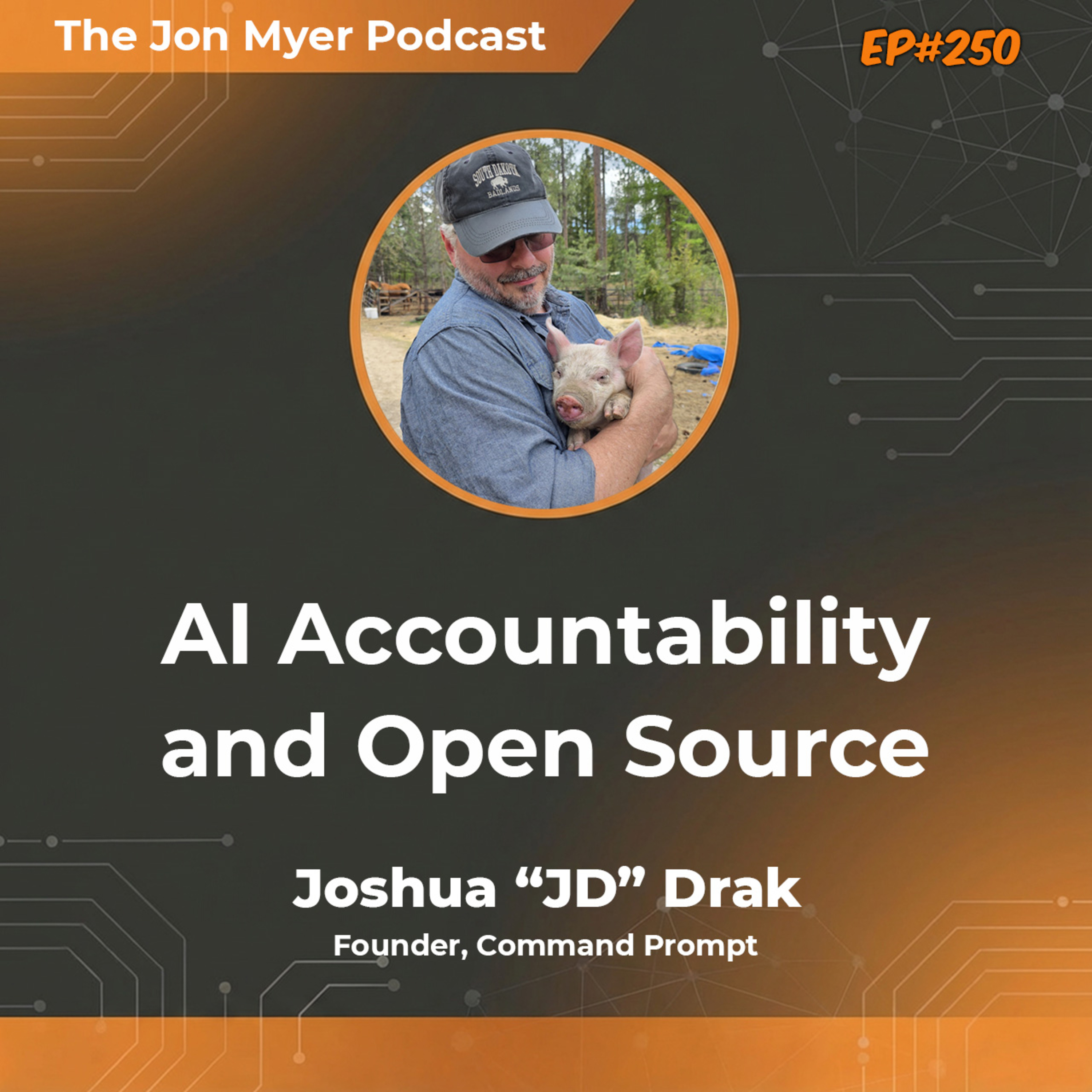
Ep#250 AI Accountability and Open Source with JD from Command Prompt
Jun 4, 2026
26m 53s
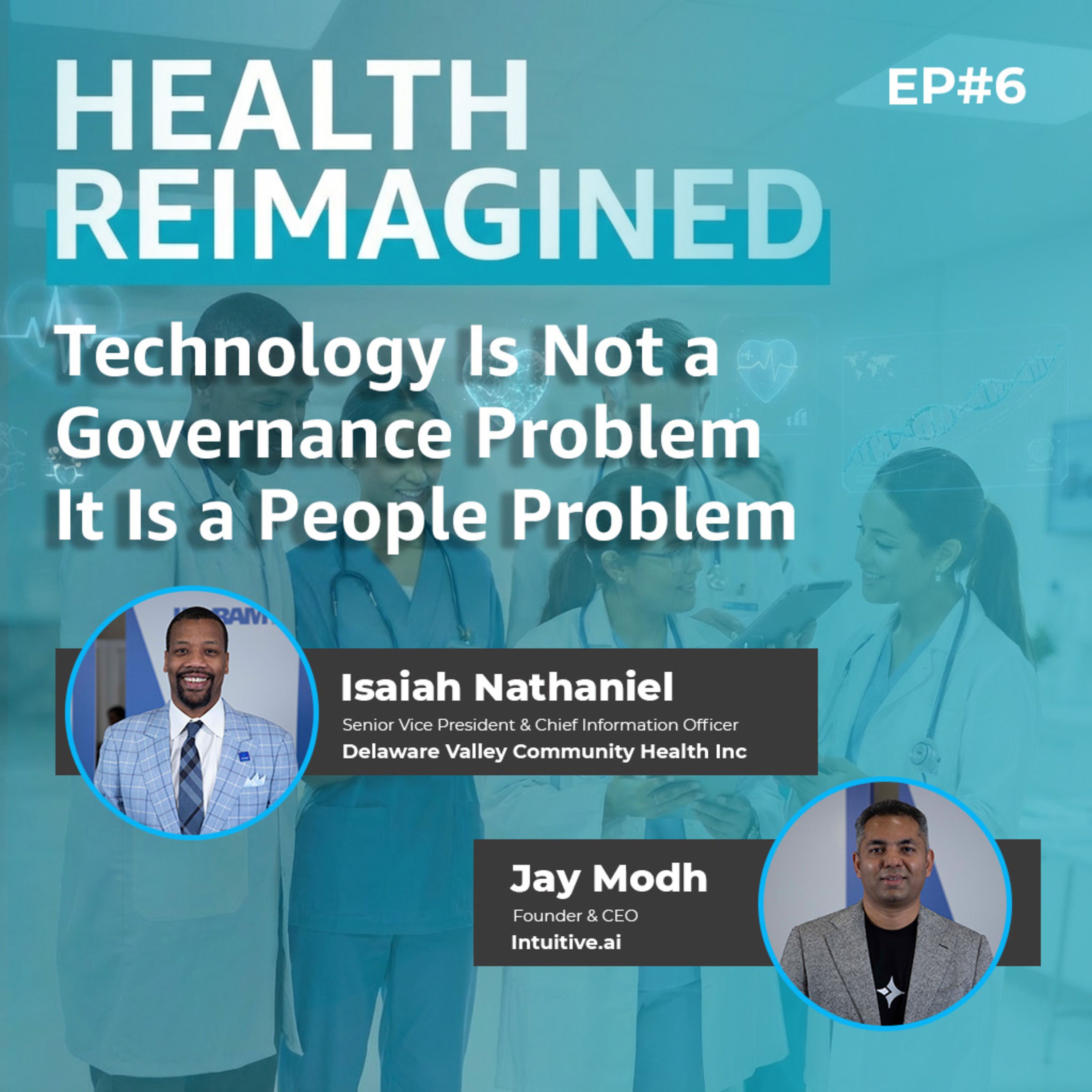
HIMSS26 Ep#6 Technology Is Not a Governance Problem It Is a People Problem
Apr 27, 2026
23m 33s
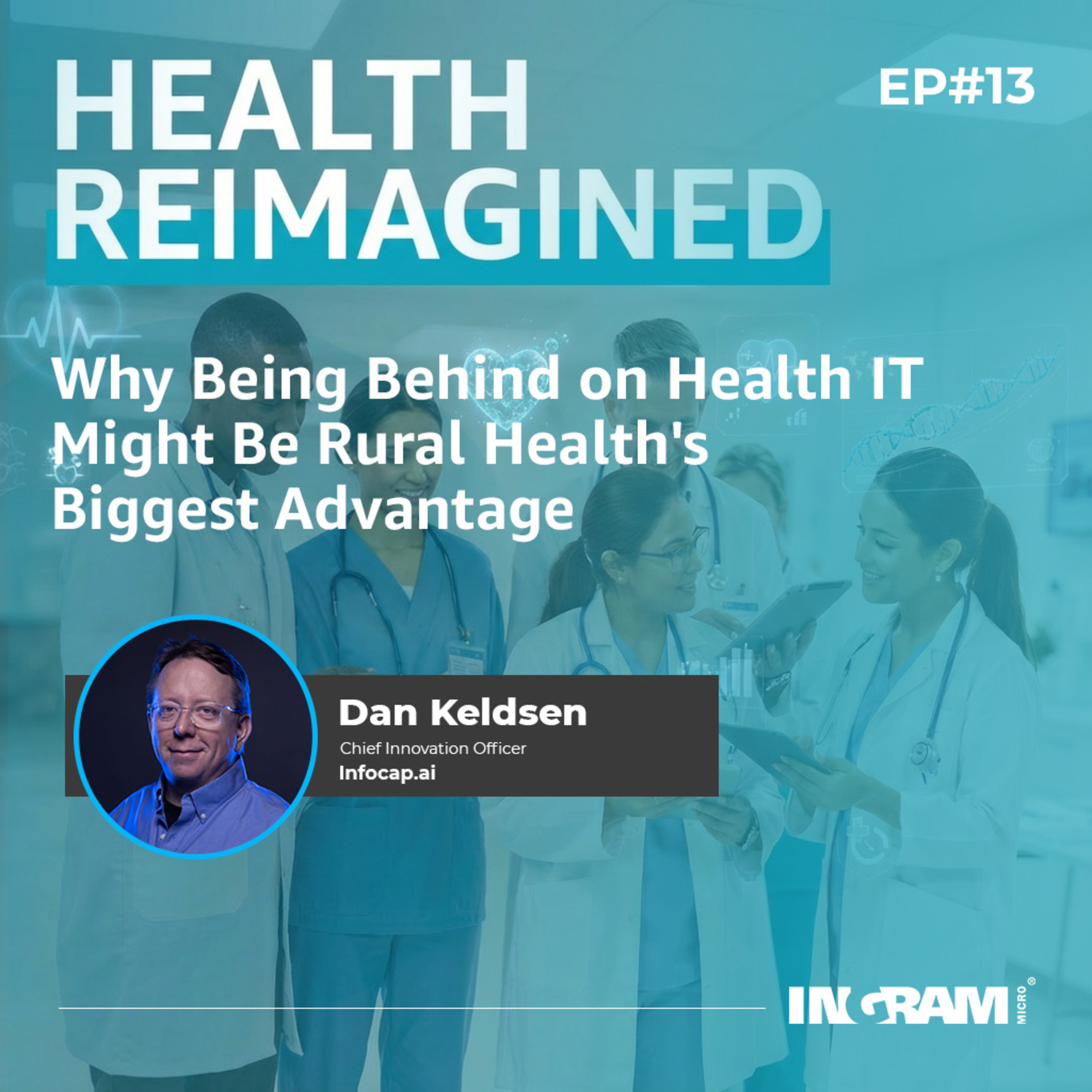
Ingram Micro Ep#13 Why Being Behind on Health IT Might Be Rural Health's Biggest Advantage
Apr 20, 2026
19m 30s
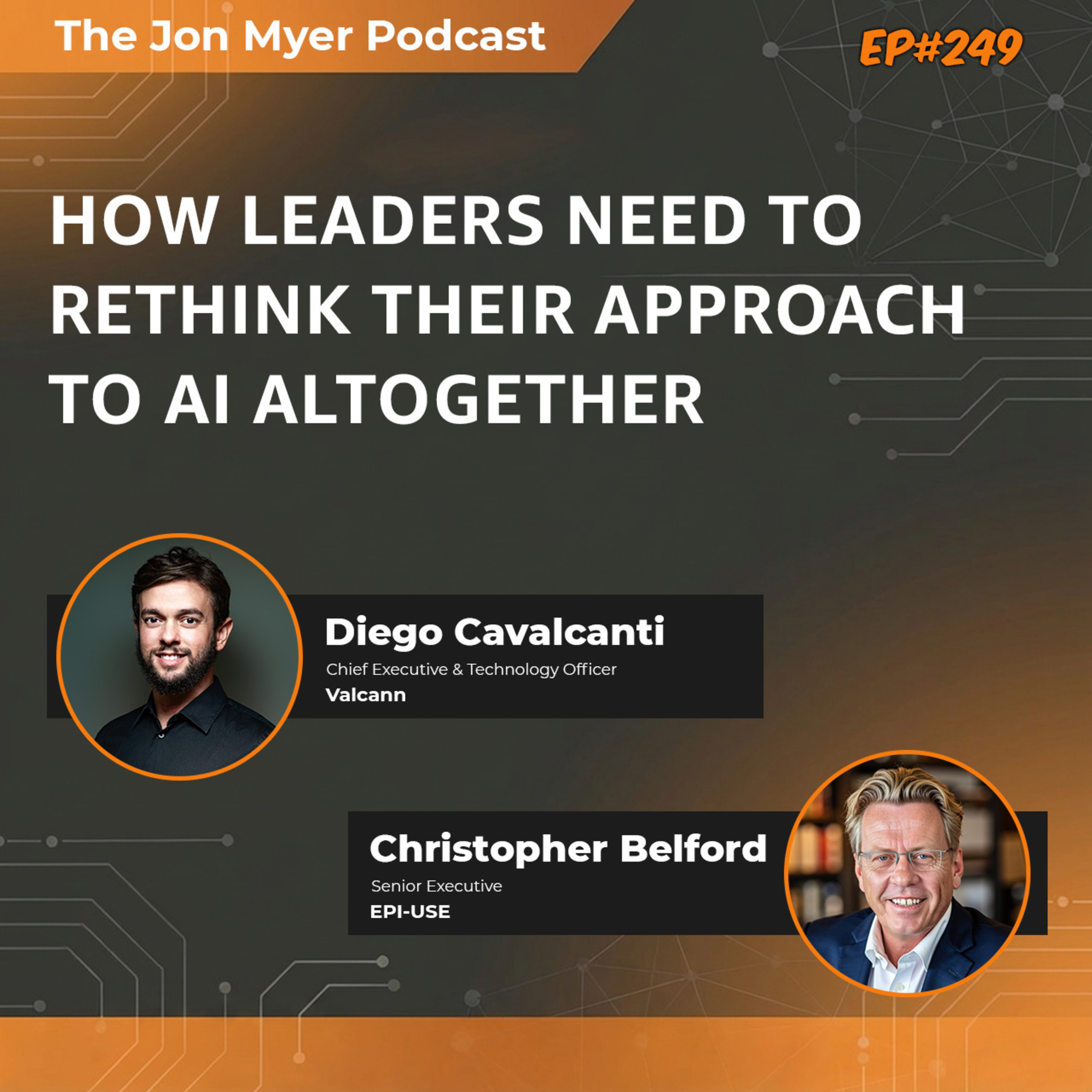
Ep#249 How leaders need to rethink their approach to AI altogether
Apr 13, 2026
34m 12s
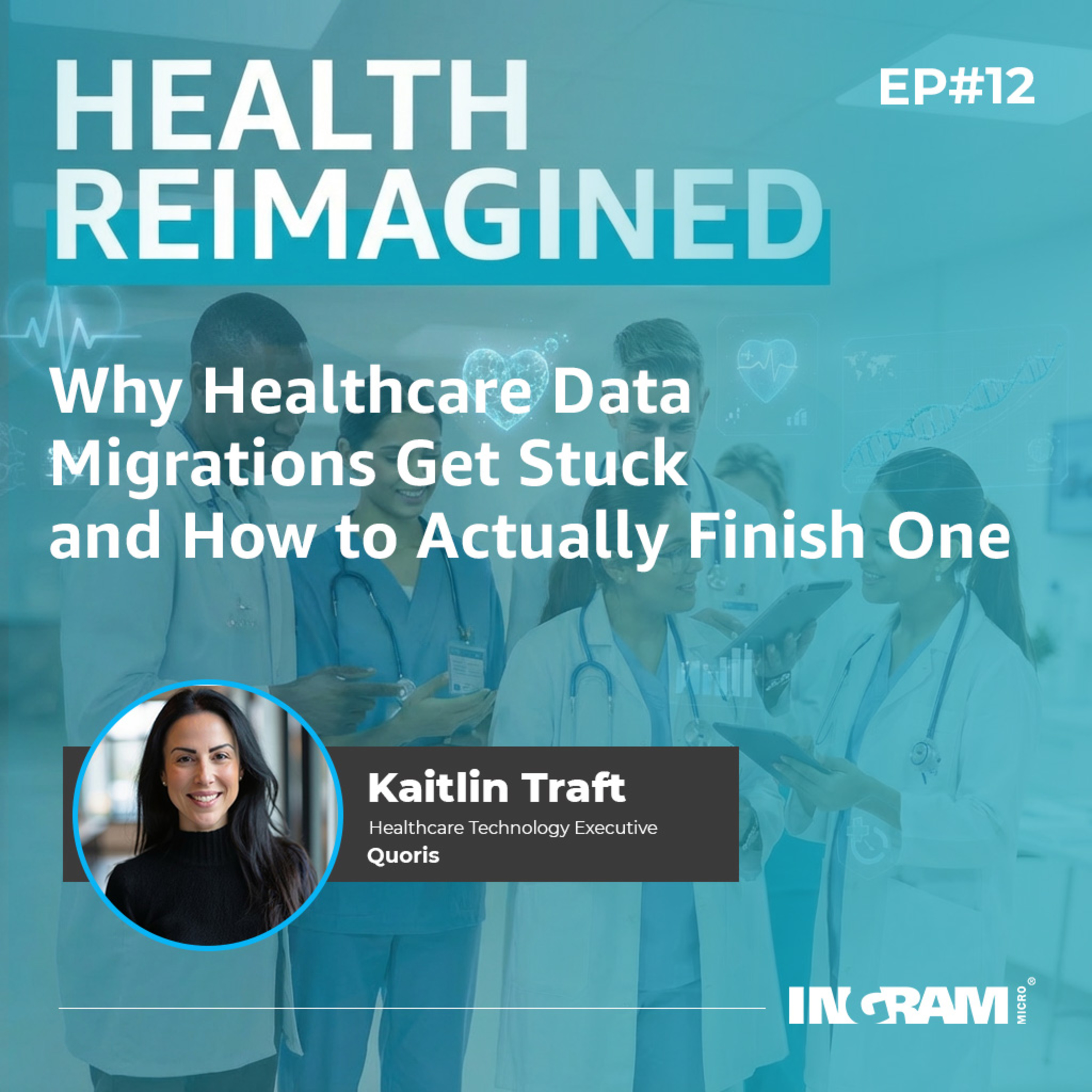
Ep#12 Why Healthcare Data Migrations Get Stuck and How to Actually Finish One
Apr 10, 2026
10m 31s
Social Links & Contact
Official channels & resources
Official Website
Login
RSS Feed
Login
| Date | Episode | Topics | Guests | Brands | Places | Keywords | Sponsor | Length | |
|---|---|---|---|---|---|---|---|---|---|
| 6/4/26 | ![]() Ep#250 AI Accountability and Open Source with JD from Command Prompt✨ | AI accountabilityopen source+4 | JD | Command Prompt | — | AIopen source+5 | — | 26m 53s | |
| 4/27/26 | ![]() HIMSS26 Ep#6 Technology Is Not a Governance Problem It Is a People Problem✨ | healthcare technologydata governance+3 | Jay ModhIsaiah Nathaniel | Delaware Valley Community Health SystemNational Association of Community Health Systems+1 | — | community health centersAI governance+3 | — | 23m 33s | |
| 4/20/26 | ![]() Ingram Micro Ep#13 Why Being Behind on Health IT Might Be Rural Health's Biggest Advantage✨ | rural healthhealth IT+5 | Dan | InfoCapIngram Micro | West Virginia | rural health systemshealth IT+8 | — | 19m 30s | |
| 4/13/26 | ![]() Ep#249 How leaders need to rethink their approach to AI altogether✨ | AI implementationagentic AI+5 | ChristopherDiego | Epi-use | — | AIagentic AI+6 | — | 34m 12s | |
| 4/10/26 | ![]() Ep#12 Why Healthcare Data Migrations Get Stuck and How to Actually Finish One✨ | healthcare data migrationEHR implementation+3 | Kaitlin | QuorisIngram Micro+1 | — | healthcare data migrationsEHR go-live+3 | — | 10m 31s | |
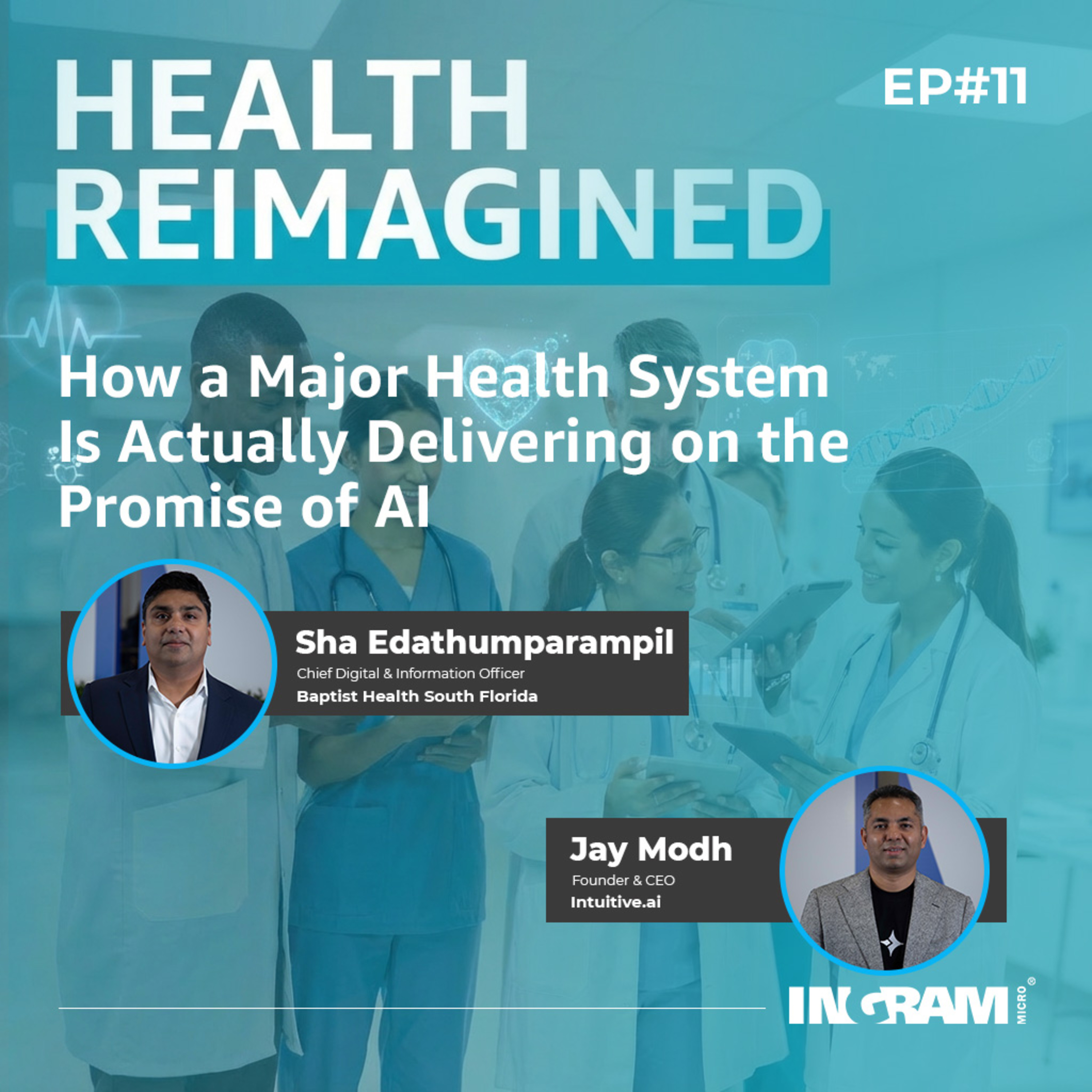
| 4/9/26 | ![]() Ingram Micro Ep#11 How a Major Health System Is Actually Delivering on the Promise of AI✨ | digital transformationAI in healthcare+3 | Sha | Baptist Health of South FloridaEpic | — | AI strategyhealthcare technology+3 | — | 24m 36s | |
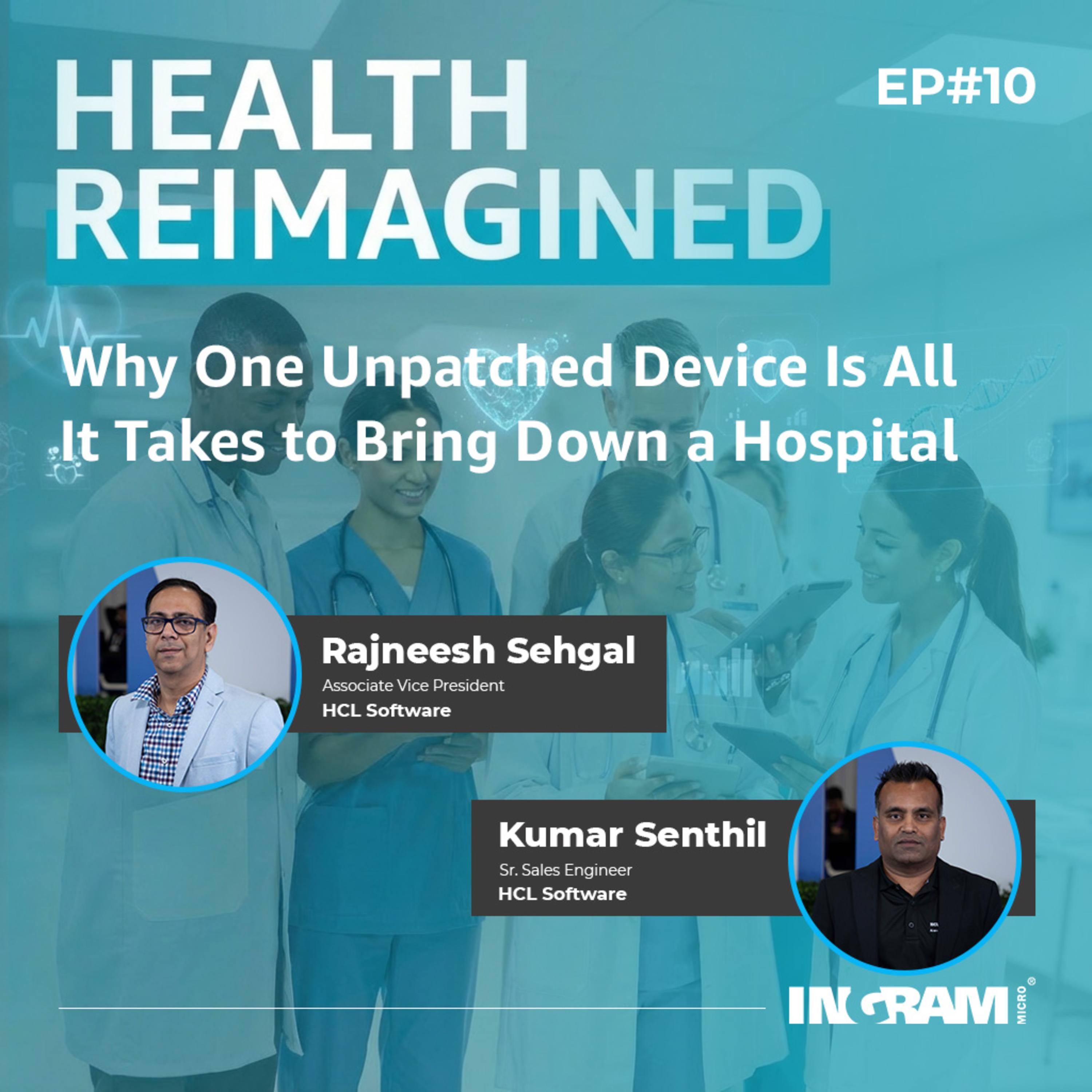
| 4/7/26 | ![]() Ingram Micro HIMSS Ep#10 Why One Unpatched Device Is All It Takes to Bring Down a Hospital✨ | healthcare IT securityendpoint management+4 | Rajneesha | HCL Software | — | healthcareIT security+7 | — | 11m 17s | |
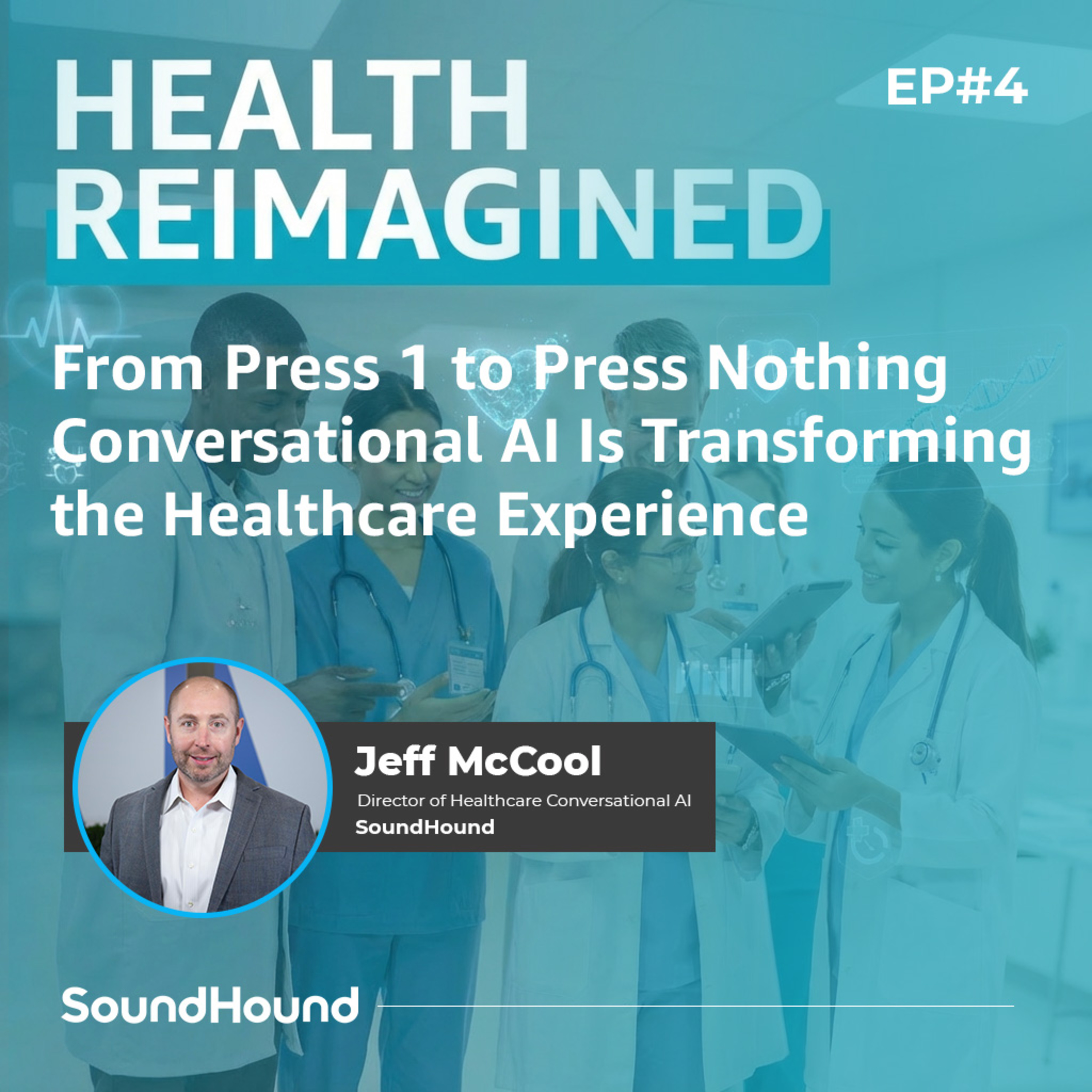
| 4/7/26 | ![]() HIMSS26 Ep#4 From Press 1 to Press Nothing - How Conversational AI Is Transforming the Healthcare✨ | conversational AIhealthcare call centers+5 | Jeff | SoundHound AI | — | healthcareAI+6 | — | 16m 12s | |
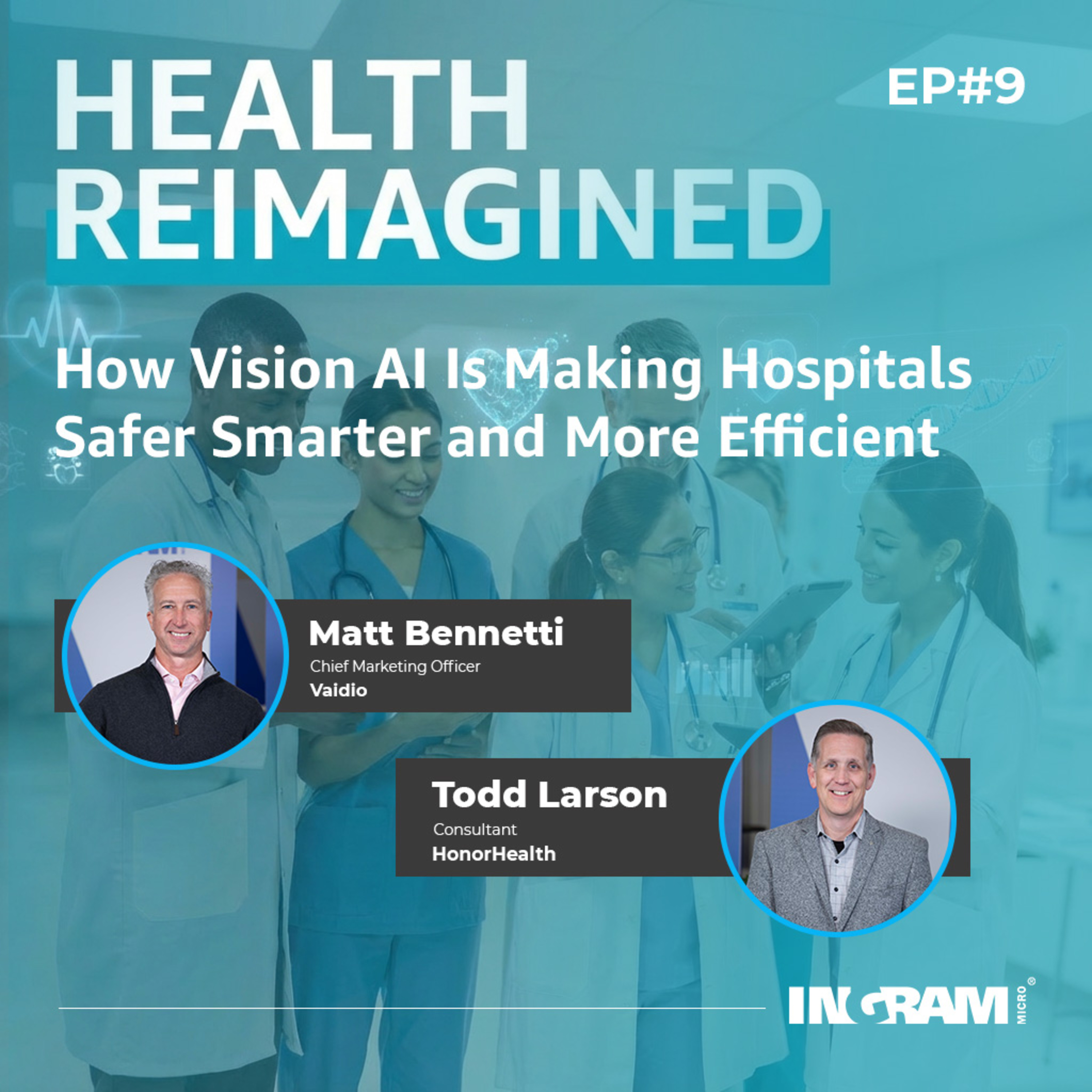
| 4/7/26 | ![]() Ingram Micro HIMSS Ep#9 How Vision AI Is Making Hospitals Safer Smarter and More Efficient✨ | Vision AIhospital safety+4 | Matt BenettiTodd Larson | VaidioHonor Health | Las Vegas | Vision AIhospital safety+5 | — | 41m 54s | |
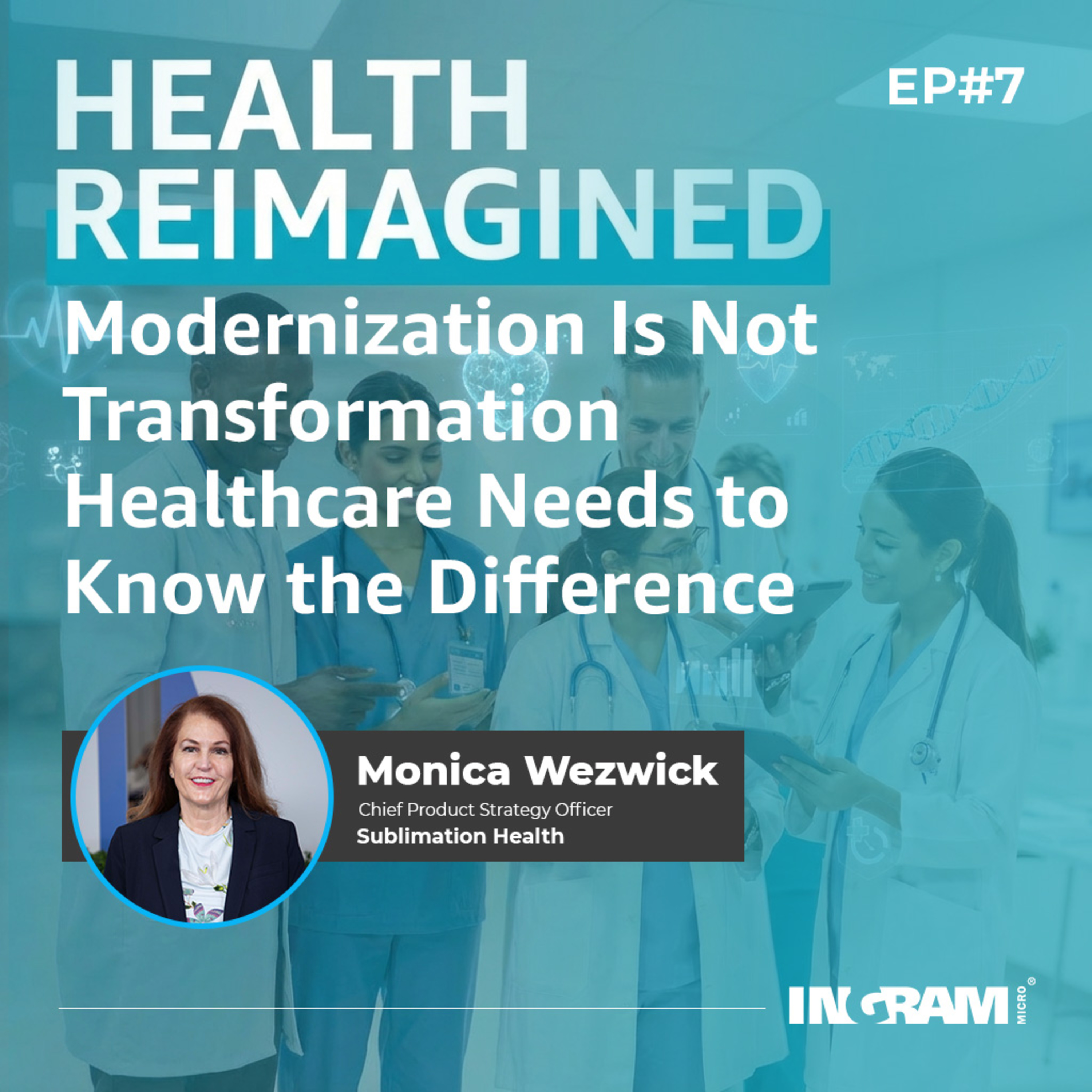
| 4/7/26 | ![]() Ingram Micro HIMSS Ep#7 Modernization Is Not Transformation: Healthcare Needs to Know the Difference✨ | healthcare technologydigital transformation+5 | Monica | Sublimation HealthIngram Micro+1 | — | healthcare ITdigital investment+5 | — | 18m 02s | |
Want analysis for the episodes below?Free for Pro Submit a request, we'll have your selected episodes analyzed within an hour. Free, at no cost to you, for Pro users. | |||||||||
| 4/7/26 | ![]() HIMSS26 Ep#5 The AI Tool That Lets Doctors Stop Typing and Start Listening | Doctors are spending hours after dinner finishing clinical notes — what the industry calls "pajama time." They're typing while patients talk, missing details, and burning out. And some are retiring early because of it.In this episode of Health Reimagined, host Jon Myer (Myer Media, powered by Myer Media) sits down with Laurent from Nabla to explore how AI-powered clinical documentation is transforming the patient-physician relationship — and why reliability, trust, and deep EHR integration are what separate real clinical AI from tools that are still finding their way.🔗 Learn more at nabla.comTopics covered:What Nabla does — listening to clinical encounters and generating structured notes automaticallyWhat makes Nabla different — privacy-first, deeply customizable, and EHR-integratedWhy reliability in clinical AI is fundamentally about trust and transparencyWhy clinicians cannot afford five minutes of downtime once they depend on the toolHow AI as a "side memory" changes how doctors show up for patientsThe pajama time problem — clinicians documenting for hours after their shift endsFour clinicians who delayed retirement because Nabla reduced their administrative burdenImplementation in as little as two weeks with Epic, Oracle Cerner, Athena, and othersPrivacy — Nabla transcribes in real time without recording or storing conversationsThe partnership with MAI Labs and what world models mean for clinical decision supportWhat's driving Nabla's growth and the move to support all specialties⏱️ YouTube Timeline0:00 — Introduction — What it takes to build AI that is dependable at clinical scale0:36 — What Nabla does — listening summarizing and automating clinical workflows0:57 — What makes Nabla different — privacy customization and deep EHR integration1:13 — How crowded the clinical AI space has gotten and what separates the ready from the rest1:26 — Three years 200 health systems and the messy reality of real-world encounters2:04 — What reliability actually means when AI is embedded in a clinical workflow2:12 — Trust transparency and keeping the clinician in control at all times3:09 — Why 99.9% uptime is non-negotiable when doctors depend on AI as their memory3:36 — What happens when AI goes down and clinicians revert to old habits3:56 — AI as a side memory — the phone battery analogy4:34 — Right data right patient right prescription — the accuracy case for clinical AI4:59 — The patient experience when the doctor stops typing and starts listening5:34 — A personal story — what it is like to watch your doctor type instead of listen5:59 — Pajama time — clinicians documenting for two hours after dinner6:30 — Four clinicians who delayed retirement because Nabla reduced their burden7:10 — How clinical leaders evaluate AI differently after past technology failures7:52 — Implementation in two weeks with Epic Oracle Cerner Athena and more8:30 — Privacy consent and why 99.9% of patients say yes9:46 — Better outcomes fewer missed orders prescriptions that actually get sent10:39 — LLMs vs world models — what the next generation of clinical AI looks like11:46 — The MAI Labs partnership and clinical decision support that reasons like a doctor12:42 — What is behind Nabla's growth and the move to support every specialty13:52 — Closing remarks and where to learn more🔔 Don't forget to Like, Subscribe, and hit the notification 🔔 ✔ Subscribe: https://www.youtube.com/jonmyer/?sub_confirmation=1📱 Social Media Twitter: https://twitter.com/_JonMyerWebsite: https://jonmyer.comLinkedIN: https://www.linkedin.com/in/jon-myer/Spotify: https://open.spotify.com/show/0wjJzdIwctq4o4pTXM2KSFLike my sounds? Here's my audio source: https://www.epidemicsound.com/referral/fj9o9k#aws #awscloud #podcast #podcasting #costoptimization #finops #cloudcost #cloudoptimization | — | ||||||
| 4/7/26 | ![]() Ingram Micro HIMSS Ep#8 The Data Problem Underneath Every Healthcare System Nobody Talks About | Behind every hospital's technology stack is a data infrastructure most people never think about — until something breaks, a merger happens, or an AI initiative stalls because the data underneath it is a mess.In this episode of Health Reimagined, host Jon Myer (Myer Media, powered by Ingram Micro) sits down with Jeff from Keystone Technologies, a boutique healthcare IT firm with 25 years of experience helping health systems manage, migrate, and unify their most critical data.From EMR conversions and merger integrations to the SaaS trap and cybersecurity fundamentals, Jeff gives a frank and practical look at what's really happening underneath the hood of healthcare IT — and why the organizations that start unifying their data sooner will get to value faster.Topics covered:Why healthcare data infrastructure is generally described as "a mess"The difference between transactional data and analytics-ready dataWhat EMR data conversions actually look like step by stepHow mergers and acquisitions create winners and losers in healthcare ITThe difference between data and information and why it matters for AIWhy SaaS can become a data silo problem for larger organizationsThe case for virtual private data centers over fragmented SaaS stacksKeystone's four pillar security approach and why it is baked into every engagementWhy the human element is the weakest link in healthcare cybersecurityWhat the first conversation with Keystone looks like for a health system in transitionYouTube Timeline0:00 — Introduction — Data is the foundation everything else depends on0:23 — Meet Jeff from Keystone Technologies and the problem they exist to solve0:47 — The state of healthcare data infrastructure today — generally a mess1:27 — Physical distribution vs. logical silos — where the real problem lives2:27 — What mergers and acquisitions do to the healthcare data landscape3:06 — What an EMR data conversion process actually looks like step by step4:18 — The pressure to modernize for AI and what is actually under the hood5:37 — Data unification as the new frontier in healthcare IT6:34 — Why going deep matters more than going wide after 25 years7:41 — The difference between data and information and why it changes everything8:19 — EMR migrations and why clinical staff must be involved throughout9:13 — The honest take on SaaS — where it helps and where it creates problems10:47 — Security is baked into everything Keystone does — the four pillar approach11:53 — Why security awareness training is the most important defense in healthcare13:58 — Where healthcare data migrations are headed and why activity is ramping up🔔 Don't forget to Like, Subscribe, and hit the notification 🔔 ✔ Subscribe: https://www.youtube.com/jonmyer/?sub_confirmation=1📱 Social Media Twitter: https://twitter.com/_JonMyerWebsite: https://jonmyer.comLinkedIN: https://www.linkedin.com/in/jon-myer/Spotify: https://open.spotify.com/show/0wjJzdIwctq4o4pTXM2KSFLike my sounds? Here's my audio source: https://www.epidemicsound.com/referral/fj9o9k#aws #awscloud #podcast #podcasting #costoptimization #finops #cloudcost #cloudoptimization | — | ||||||
| 4/6/26 | ![]() Ingram Micro HIMSS Ep#6 How Healthcare Organizations Should Actually Start with AI | 📄 YouTube DescriptionEveryone is talking about AI in healthcare — but most organizations are still stuck on where to start, which tools to trust, and how to move from a pilot to something that actually changes day-to-day operations.Recorded live on the floor at HIMSS, this conversation features Austin Montgomery, VP of Partnerships at Prominence Advisors, and Andrew Williams, Director of Data Science — the healthcare data and AI enablement company helping health systems build AI-fluent organizations.Andrew cuts through the hype to explain what AI in healthcare actually means beyond chatbots, why point solutions often fall short, and how the shift from "what you can specify" to "what you can verify" is changing how organizations build and scale AI solutions.🔗 Learn more at prominenceadvisors.com or follow Prominence Advisors on LinkedIn.⏱️ YouTube Timeline0:37 — Introduction — Meet Austin Montgomery and Andrew Williams from Prominence Advisors0:59 — AI is not just ChatGPT — the full spectrum of healthcare AI tools2:13 — Scaling KPI monitoring, anomaly detection, and expert bottleneck removal2:58 — Operating at the top of your license — the north star for healthcare AI3:25 — Myth vs. reality — what organizations get wrong about AI in healthcare3:52 — Point solutions vs. platform approaches — how to evaluate the difference4:56 — UC Davis's Tiger platform — GenAI enabling text exploration at scale6:03 — Building an AI-fluent organization without bottlenecking on data scientists6:28 — What roles and processes does an AI strategy actually need?7:00 — AI fluency as the new literacy — not a job title, a capability8:08 — How process governs the leap from fluency to a portfolio of AI value9:20 — Managing the explosion of AI output with old adoption methods10:18 — Andrej Karpathy's framework — from "what you can specify" to "what you can verify"11:31 — Using LLMs to handle boilerplate and free teams to focus on outcomes12:51 — How to frame getting started with AI for organizations asking "where do we begin?"13:39 — The fine line between a pilot and production — solving end-to-end in a narrow domain14:38 — What comes after the dashboard — anomaly detection, root cause analysis, and natural language query15:55 — From narrow use case to reusable building blocks and scalable frameworks16:25 — Building the muscle for taking AI assets into production for the first time17:09 — Closing remarks and how to connect with Prominence Advisors🔔 Don't forget to Like, Subscribe, and hit the notification 🔔 ✔ Subscribe: https://www.youtube.com/jonmyer/?sub_confirmation=1📱 Social Media Twitter: https://twitter.com/_JonMyerWebsite: https://jonmyer.comLinkedIN: https://www.linkedin.com/in/jon-myer/Spotify: https://open.spotify.com/show/0wjJzdIwctq4o4pTXM2KSFLike my sounds? Here's my audio source: https://www.epidemicsound.com/referral/fj9o9k#aws #awscloud #podcast #podcasting #costoptimization #finops #cloudcost #cloudoptimization | — | ||||||
| 4/3/26 | ![]() Ingram Micro HIMSS Ep#5 Why Manual Processes Are Healthcare's Biggest Liability | The Joint Commission has never focused on staffing mandates before — until now. In 2026, everything changed. And most hospitals are still relying on paper records stuffed in filing cabinets to prove they're compliant.In this episode, Process Street CRO Jerry Dimos sits down with Dr. Sarah Inman, SVP of Healthcare Strategy at Improv and a former clinical staffing manager overseeing 400 nurses and patient care technicians. Together they break down what the Joint Commission's new Accreditation 360 framework actually means on the ground, why manual compliance processes are unsustainable in the middle of a nursing crisis, and how automation and agentic AI may be the only realistic path forward.Topics covered:The Joint Commission's brand new staffing mandates for 2026Why Joint Commission visits cause panic even in well-run hospitalsThe root cause of compliance failures — manual processes and lack of forward planningAccreditation 360 — shifting accountability from frontline nurses to the C-suiteThe gap between written policy and what actually happens on the groundHow Process Street automates clinical competency workflows and compliance documentationThe nursing crisis and why adding documentation burden without automation is dangerousWho should own the automation decision — nurses, CTOs, or CNOs?Where agentic AI in healthcare is headed over the next three to five years⏱️ YouTube Timeline0:00 — Introduction — Meet Jerry Dimos and Dr. Sarah Inman0:43 — Dr. Inman's background — 20 years managing clinical staffing1:39 — The Joint Commission's new focus areas for 20261:43 — What makes 2026 different — brand new staffing mandates2:52 — Why Joint Commission visits cause stress and anxiety on the ground3:10 — The universal experience — that audible gasp when they walk in4:02 — Paper records, filing cabinets, and the human element of compliance4:54 — Root cause of compliance failures across hospitals of every size5:16 — Manual processes, lack of forward planning, and the day-to-day grind5:43 — Hospitals spend millions on tech but still run compliance manually6:03 — How Dr. Inman discovered Process Street and the time she would have saved6:57 — Where attention goes — patient care technology vs. compliance workflows7:51 — The palpable relief when leaders realize automation is possible8:02 — Accreditation 360 — from static compliance to dynamic, outcome-driven accountability8:20 — Shifting pressure from frontline nurses to CNO and C-suite leaders9:25 — Turning accountability into reliable, executable processes9:51 — The gap between written policy and what actually happens on the ground10:50 — Can't find the document when you need it most — the Joint Commission scramble11:53 — Patient safety risk when policies aren't clearly documented12:01 — Who owns the accreditation program under the new framework?12:39 — The nursing crisis and adding documentation burden without automation13:31 — Automation as one of the only realistic paths forward14:23 — Advice for nurses and executives — raise it up and look into what's out there14:46 — Should the CTO or nurses drive the automation decision?15:33 — Burnout prevention as a core pillar of Accreditation 36015:52 — A critical decision point — keep scrambling or fix it for good?16:00 — What Dr. Inman is seeing in the field — conversation vs. meaningful action17:13 — Final question — how will agentic AI help hospitals meet the bar?17:45 — Healthcare's shift toward evidence-based AI adoption18:29 — Prediction — healthcare will lead agentic AI adoption in the next 3–5 years19:09 — A future where every nurse has their own personal AI agent19:26 — Not all hospitals are ready — that's where Process Street and Improv come in19:39 — Closing takeaways and what's coming next🔔 Don't forget to Like, Subscribe, and hit the notification 🔔 ✔ Subscribe: https://www.youtube.com/jonmyer/?sub_confirmation=1 | — | ||||||
| 4/2/26 | ![]() HIMSS26 Ep#3 Hospitals Are Sending Patients Home Sooner and EzyBandz Is Keeping Them Safe | More than 60% of surgeries in the US are performed on aging patients — and hospitals are sending them home earlier than ever before. The risk profile hasn't changed. The oversight has.In this episode, EzyBandz COO Eric Grayson sits down with CEO and co-founder Tony Martelli to introduce the EzyBandz Guardian One — a next-generation medical alert platform built specifically for post-discharge and transitional care programs. Tony shares how a personal experience supporting a family member with a disability led him to reimagine what a modern medical alert solution should look like, and why the timing for this technology has never been better.🔗 Learn more at ezybandz.comTopics covered:The personal story behind the founding of EzyBandzWhy most medical alert systems were built decades ago and haven't evolvedThe aging population as the fastest growing segment in US healthcareThe structural gap between remote patient monitoring (RPM) and continuous safety monitoringHow the Guardian One works — always-on, cloud-connected, no base station requiredWhy the 30 to 90 days after hospital discharge is the highest risk windowHow EzyBandz complements rather than replaces existing RPM programsWhy technology, economics, and care models have all aligned right now to make this possibleThe future of EzyBandz and the complete remote care model⏱️ YouTube Timeline0:00 — Introduction — Meet Eric Grayson and Tony Martelli from EzyBandz0:28 — The personal story behind founding EzyBandz1:29 — Built for hospital discharge teams and care at home programs2:10 — The addressable market — aging population and chronic conditions3:30 — The structural gap in post-discharge care and why predictable risk must be managed3:37 — Remote patient monitoring vs remote activity monitoring — two different needs4:30 — How EzyBandz fills the gap during the highest risk 30 to 90 days post discharge4:43 — What makes Guardian One more compelling than existing solutions on the market5:33 — How EzyBandz sits alongside existing RPM programs as a continuous safety layer6:31 — Why this is happening now and not five years ago7:15 — Launching into the US focused on post-discharge and transitional care7:52 — The future of EzyBandz and the complete remote care model🔔 Don't forget to Like, Subscribe, and hit the notification 🔔 ✔ Subscribe: https://www.youtube.com/jonmyer/?sub_confirmation=1📱 Social Media Twitter: https://twitter.com/_JonMyerWebsite: https://jonmyer.comLinkedIN: https://www.linkedin.com/in/jon-myer/Spotify: https://open.spotify.com/show/0wjJzdIwctq4o4pTXM2KSFLike my sounds? Here's my audio source: https://www.epidemicsound.com/referral/fj9o9k#aws #awscloud #podcast #podcasting #costoptimization #finops #cloudcost #cloudoptimization | — | ||||||
| 4/1/26 | ![]() Ingram Micro HIMSS Ep#4 Why Cloud Security Needs to Be Built In from Day One | As healthcare organizations race to adopt cloud infrastructure, most are leaving a dangerous gap between innovation and security. Traditional compliance programs simply can't keep pace — and the consequences can end up as the next data breach headline.Recorded live at HIMSS 2026 in Las Vegas, this conversation features Charlie Clayton, Director of Sales, and Eric Evans, Founder and CTO of Hanabyte — a cloud security firm specializing in regulated industries including healthcare, financial services, and the defense industrial base.Eric breaks down what organizations get wrong when starting their cloud journey, what makes Hanabyte's white-glove approach different, and where cloud security is heading over the next few years.🔗 Learn more about Hanabyte and their secure landing zone solutions at hanabyte.comTopics covered:Why traditional compliance programs can't keep up with cloud innovationThe biggest security gap — lack of governance and visibility in cloud environmentsSecure landing zones as a foundation for compliant cloud workloadsHanabyte's people, processes, and technology assessment methodologyThe three superpowers that differentiate Hanabyte in the marketLeveraging AWS-native services like GuardDuty and Security HubAWS Advanced Tier partnership and available funding for migrations and AI workloadsThe emerging field of GRC engineering and compliance automationWhere AI governance frameworks are headed in the next few years⏱️ YouTube Timeline0:03 — Introduction — Live from HIMSS 2026, meet Charlie and Eric from Hanabyte0:16 — What Hanabyte does — building secure cloud environments for regulated industries0:48 — The biggest security and compliance challenges in cloud adoption today1:40 — Where healthcare organizations are in their cloud journey2:07 — Secure landing zones — starting your cloud journey on the right foot2:43 — The biggest security gap — governance, visibility, and cloud misconfiguration3:52 — How cloud misconfigurations go undetected and what assessments reveal4:14 — What makes Hanabyte's approach different from the competition4:30 — People, processes, and technology — Hanabyte's assessment methodology5:26 — Upskilling teams and taking a collaborative, not set-and-forget, approach5:40 — Hanabyte's three superpowers — what differentiates them in the market5:57 — Superpower 1 — white-glove service and meeting customers where they are6:47 — Superpower 2 — automation-first, transparent technical execution7:44 — Superpower 3 — deep expertise in regulated industries including healthcare7:55 — Working with Hanabyte's team directly as a bonus differentiator8:02 — How Hanabyte leverages the AWS partnership to accelerate customer adoption8:27 — AWS Advanced Tier partnership — native services and funding programs9:20 — AWS funding available for migrations, proof of concepts, and AI workloads9:35 — Real-world benefits of deploying secure cloud environments early9:51 — Why bolting security on at the end creates a costly moving target10:39 — Trusted advisor approach — cloud-native architecture vs. lift and shift11:17 — Giving free samples in pre-sales to show customers what's possible11:35 — Crystal ball — where is cloud security heading in the next few years?11:45 — The rise of AI governance frameworks and new compliance standards12:46 — GRC engineering — automated evidence collection and data flow visibility13:14 — Closing remarks and how to work with Hanabyte🔔 Don't forget to Like, Subscribe, and hit the notification 🔔 ✔ Subscribe: https://www.youtube.com/jonmyer/?sub_confirmation=1📱 Social Media Twitter: https://twitter.com/_JonMyerWebsite: https://jonmyer.comLinkedIN: https://www.linkedin.com/in/jon-myer/Spotify: https://open.spotify.com/show/0wjJzdIwctq4o4pTXM2KSFLike my sounds? Here's my audio source: https://www.epidemicsound.com/referral/fj9o9k#aws #awscloud #podcast #podcasting #costoptimization #finops #cloudcost #cloudoptimization | — | ||||||
| 4/1/26 | ![]() Ingram Micro HIMSS Ep#3 Bringing Healthcare Anywhere and How GlobalMed Is Reimagining Care Delivery | What if a fully equipped clinic could be set up anywhere in the world in under 10 minutes? From rural communities and disaster zones to schools and major events, GlobalMed is pushing the boundaries of where and how care gets delivered.Recorded live at HIMSS 2026 in Las Vegas, this conversation features Sam Price, EVP at GlobalMed, and Hector Rodriguez from AWS. Together they explore how GlobalMed's digital health platform — powered by AWS infrastructure and LEO satellite connectivity — is transforming access to care for underserved populations, disaster-affected communities, and beyond.Topics covered:GlobalMed's 24-year journey from digital cameras to full telehealth platformsMobile medical units that stand up a clinic in 10 minutes, anywhereThe US rural health transformation program and pop-up clinic opportunitiesHub-and-spoke care models connecting rural clinics to major hospital systemsAmazon LEO satellite network enabling connectivity where broadband can't reachDisaster recovery: maintaining care continuity through hurricanes, wildfires & outagesAI and machine learning to augment provider decision-making at the point of careGlobalMed's global footprint — from the Olympics to conflict zones⏱️ YouTube Timeline0:00 — Introduction — Live from HIMSS 2026 in Las Vegas0:33 — Who is GlobalMed? A 24-year digital health journey1:26 — From telepathology to real-time vitals, EKGs, and ultrasounds2:16 — "Boat with a goat" — delivering care from anywhere on earth2:31 — GlobalMed's role in the US rural health transformation program3:18 — Provider shortages, aging populations, and the case for mobile care4:02 — Mobile medical units: a full clinic set up in 10 minutes4:49 — Direct-to-patient model and expanding specialty care from rural clinics5:29 — Shifting from reactive to preventative care delivery5:35 — Meeting the triple aim: access, affordability, and outcomes6:08 — Amazon LEO satellite network and what it unlocks for rural health6:41 — Why satellite connectivity is a game-changer over broadband and cellular7:27 — Expanding care delivery into schools with telehealth augmentation8:10 — GlobalMed as a disaster recovery solution for rural communities8:47 — Hurricanes, wildfires, and bringing care to people who can't leave9:37 — Cloud data repository: maintaining patient records through outages9:55 — Bridging operational and clinical resilience during disasters10:39 — Small footprint, fast deployment: three clinics behind an F25011:13 — Edge computing and solving connectivity gaps in islands like Puerto Rico11:43 — Combining biomedical device data with AWS AI for smarter care12:35 — Faster provider throughput and medication adherence through AI13:05 — Pop-up clinics aren't just rural — cities and mass events too13:49 — Low cost, fast deployability vs. expensive brick-and-mortar builds14:35 — Super Bowl, Olympics, and temporary clinical surge capacity15:14 — GlobalMed's global footprint and the role of agentic AI15:47 — Training AI models to get ahead of patient needs16:21 — What's next for GlobalMed and AWS in 202616:53 — Closing remarks and partnership reflections🔔 Don't forget to Like, Subscribe, and hit the notification 🔔 ✔ Subscribe: https://www.youtube.com/jonmyer/?sub_confirmation=1📱 Social Media Twitter: https://twitter.com/_JonMyerWebsite: https://jonmyer.comLinkedIN: https://www.linkedin.com/in/jon-myer/Spotify: https://open.spotify.com/show/0wjJzdIwctq4o4pTXM2KSFLike my sounds? Here's my audio source: https://www.epidemicsound.com/referral/fj9o9k#aws #awscloud #podcast #podcasting #costoptimization #finops #cloudcost #cloudoptimization | — | ||||||
| 3/31/26 | ![]() HIMSS26 Ep#2 No More Power From the Grid and How Hospitals Are Doing More With Less | Healthcare facilities consume enormous amounts of energy — and the grid simply can't keep up. With 5% of global carbon emissions coming from healthcare and hospitals being told they can't get any more power from the grid, the pressure to do more with less has never been greater.In this episode of Health Reimagined, host Jon Myer Podcast (Powered by Myer Media) sits down with David from Schneider Electric to unpack the energy and infrastructure challenges reshaping how hospitals operate — from aging brownfield buildings and overspecified electrical systems to digital twins, nano grids, and AI-driven optimization.🔗 Learn more: se.comTopics covered:Why healthcare accounts for 5% of global carbon emissionsThe global push to decarbonize and electrify hospital estatesWhy grid operators are telling hospitals "you've got everything we can give"Brownfield vs. greenfield: the challenge of modernizing old healthcare infrastructureHow digital twins and AI are enabling up to 70% energy reductionNano grids, renewable generation, and smart energy managementWhy stable electricity is the cornerstone of every surgical procedureThe future of hospitals designed for repurposeYouTube Timeline0:00 — Introduction — Energy as healthcare's overlooked infrastructure challenge0:28 — Meet David from Schneider Electric0:30 — How the energy and infrastructure conversation has changed in healthcare0:41 — Healthcare's carbon footprint and the global push to decarbonize1:36 — The two drivers: cash and carbon2:26 — Why electricity can't be stored or hoarded like fuel3:06 — Grid capacity limits: hospitals told "you've got all we can give"3:52 — Do more with less — the universal mandate3:59 — Are facility managers being proactive or reactive about energy?4:05 — Greenfield vs. brownfield: modernizing old healthcare estates4:56 — The NHS example: 30% of buildings predate the organization itself5:44 — Why tearing down old buildings isn't the answer anymore6:34 — Embedded carbon in concrete and steel — the hidden cost of demolition7:20 — Designing new facilities for repurpose using digital technology7:28 — How facilities are managing the surge in energy load7:44 — Digital twins and the potential to cut energy consumption by 70%8:41 — Replacing aging transformers — the Prius vs. 1970s muscle car analogy9:38 — Solar, renewables, and going off-grid in California vs. Boston10:46 — Nano grids: a smarter, more realistic approach than large microgrids11:49 — Smart switching and load prioritization — protecting the OR first12:23 — Technology as both the cause of and solution to energy demand2:53 — The environmental cost of cloud storage and data duplication13:43 — AI breaking down data silos to unlock hidden energy optimizations14:39 — Collaborating with Microsoft and Nvidia to run energy simulations15:25 — Why energy efficiency sits at the center of reliable healthcare delivery15:05 — The "Operation" game analogy — electricity and surgical stability16:43 — The staff training story: what happens when the power isn't guaranteed18:05 — Getting grid power allocation can take longer than building permits18:37 — Closing remarks & where to learn more🔔 Don't forget to Like, Subscribe, and hit the notification 🔔 ✔ Subscribe: https://www.youtube.com/jonmyer/?sub_confirmation=1📱 Social Media Twitter: https://twitter.com/_JonMyerWebsite: https://jonmyer.comLinkedIN: https://www.linkedin.com/in/jon-myer/Spotify: https://open.spotify.com/show/0wjJzdIwctq4o4pTXM2KSFLike my sounds? Here's my audio source: https://www.epidemicsound.com/referral/fj9o9k#aws #awscloud #podcast #podcasting #costoptimization #finops #cloudcost #cloudoptimization | — | ||||||
| 3/30/26 | ![]() Ingram Micro HIMSS Ep#2 Why Cybersecurity in Healthcare Is Now a Patient Safety Issue | Cyberattacks on healthcare organizations aren't slowing down — and the question is no longer if you'll be attacked, but how fast you can stop it.In this episode of Health Reimagined, host Jon Myer (Myer Media, powered by Ingram Micro) sits down with Herb from Arctic Wolf to break down what the healthcare threat landscape really looks like today, why even small hospitals are targets, and how AI-powered security operations are changing the game.From managing sprawling, dynamic asset environments to leveraging agentic AI inside the SOC, Herb shares what it actually takes to harden a healthcare organization's security posture — and why just alerting customers to incidents is no longer enough.🔗 Learn more: arcticwolf.comTopics covered:The shift from "if" to "how fast can I stop it"Why hospital size no longer determines who gets attackedThe structural vulnerability problem in healthcare (IoT, legacy systems, connected devices)Dynamic asset management and Arctic Wolf's acquisition of SevcoHow AI is accelerating threat detection across 10+ trillion events per weekThe human-in-the-loop approach to AI-driven securityWhat healthcare leaders should demand from a cybersecurity partnerHealth Reimagined is hosted by Jon Myer of Myer Media, powered by Ingram Micro.YouTube Timeline0:00 — Introduction — Cybersecurity as a patient safety issue0:33 — Meet Herb from Arctic Wolf0:35 — What keeps healthcare security leaders up at night1:29 — It's not "if" — it's "when" and "how fast"2:05 — Why hospital size no longer protects you from attacks2:54 — Opportunistic attackers: "spray and pray" explained3:13 — Healthcare's structural vulnerability problem3:28 — IoT, AI, and the complexity of healthcare infrastructure4:19 — The challenge of prioritizing vulnerabilities at scale5:13 — Fear of the unknown: assets you don't know you have5:28 — Arctic Wolf's acquisition of Sevco — dynamic asset management6:23 — Why static CMDBs no longer work in a cloud-first world7:18 — How Arctic Wolf is helping solve these challenges7:23 — Sevco + service-driven security: beyond just a product8:25 — How AI is transforming threat detection and containment8:32 — Agentic AI inside Arctic Wolf's SOC9:32 — Ingesting 10 trillion events per week — the network effect10:29 — Do the benefits of AI outweigh the risks?11:01 — Why human-in-the-loop is essential for AI security12:02 — AI as a force multiplier for security analysts13:32 — Detecting attack patterns months before they strike14:07 — Realistic paths to simplifying security with constrained resources14:41 — Augmenting security teams: 24/7/365 coverage and proactive posture15:34 — What to demand from a cybersecurity partner beyond table stakes16:24 — Closing remarks & where to learn more🔔 Don't forget to Like, Subscribe, and hit the notification 🔔 ✔ Subscribe: https://www.youtube.com/jonmyer/?sub_confirmation=1📱 Social Media Twitter: https://twitter.com/_JonMyerWebsite: https://jonmyer.comLinkedIN: https://www.linkedin.com/in/jon-myer/Spotify: https://open.spotify.com/show/0wjJzdIwctq4o4pTXM2KSFLike my sounds? Here's my audio source: https://www.epidemicsound.com/referral/fj9o9k#aws #awscloud #podcast #podcasting #costoptimization #finops #cloudcost #cloudoptimization | — | ||||||
| 3/30/26 | ![]() Ingram Micro HIMSS Ep#1 How Wrapt Health and DocSpera Are Fixing the Last Mile of Infusion | Empty infusion chairs. Patients are waiting weeks for chemotherapy. A 15% national no-show rate that costs clinics thousands of dollars a day. In this episode of Health Reimagined, Jon Myer sits down with Elizabeth from Wrapt Health to talk about how a predictive algorithm, the right integration partner, and a smarter approach to scheduling are transforming infusion centers across the country.Elizabeth shares how Wrapt Health built a platform that predicts no-shows three days in advance with 95% accuracy, how their partnership with DocSpera helped them connect to over 30 EMRs without rebuilding from scratch, and what it means to move from a reactive alert device to a fully connected care infrastructure.If you work in infusion care, healthcare operations, or health IT, this one is worth your time.Learn more about Wrapt Health at wrapcare.comPowered by Ingram Micro | Presented by Myer Media at HIMSS26Key TakeawaysInfusion centers nationally see a 15% no-show rate, with some clinics as high as 30%, costing between $1,500 and $3,000 per day in lost chair timeWrapt Health's algorithm predicts no-shows three days in advance with 95% accuracy by pulling over 40 data points from EMR systemsPartnership with DocSpera provided instant connectivity to over 30 EMRs, dramatically cutting time to market and development costsOne Northern California clinic repurposed 30,000 appointments generating $15 million in value in a value-based care model60% of drugs in the FDA pipeline will be infusions, making chair and resource optimization more critical than everThe predictive algorithm is not limited to infusion — radiology, cardiology, and behavioral health are all on the roadmapYouTube Timeline00:00 — Introduction and welcome00:33 — How Wrapt Health started and the problem it was built to solve01:08 — How the no-show prediction algorithm works01:30 — The scheduling and interoperability challenge in infusion care02:25 — Why infusion scheduling is uniquely complex03:24 — How Wrapt Health built a 95% accurate algorithm using 40+ data points04:30 — How the DocSpera partnership changed the way Wrapt Health operates05:06 — Scaling to 500 infusion chairs in Northern California05:46 — What DocSpera integration means for infusion centers06:48 — Managing multiple stakeholders across operations, clinical, IT, and finance07:16 — The real cost of a missed infusion appointment08:23 — How three-day advance prediction allows smarter patient backfill09:02 — Why DocSpera's surgical scheduling experience translated to infusion09:36 — Real-world interoperability results and the $15 million impact10:49 — 60% of FDA pipeline drugs are infusions — why this matters now11:14 — Advice for early-stage healthcare companies navigating complex integrations12:02 — What's next for Wrapt Health and DocSpera🔔 Don't forget to Like, Subscribe, and hit the notification 🔔 ✔ Subscribe: https://www.youtube.com/jonmyer/?sub_confirmation=1📱 Social Media Twitter: https://twitter.com/_JonMyerWebsite: https://jonmyer.comLinkedIN: https://www.linkedin.com/in/jon-myer/Spotify: https://open.spotify.com/show/0wjJzdIwctq4o4pTXM2KSFLike my sounds? Here's my audio source: https://www.epidemicsound.com/referral/fj9o9k#aws #awscloud #podcast #podcasting #costoptimization #finops #cloudcost #cloudoptimization | — | ||||||
| 3/24/26 | ![]() HIMSS26 Ep#1 Building the Cloud Foundation for AI in Healthcare | Why Data Governance, Security, and Infrastructure Readiness Matter More Than Ever.Before any healthcare organization can run AI, they need the infrastructure to support it. In this episode of Health Reimagine, recorded live at HIMSS26, host Jon Myer sits down with Gerry from Cloudticity to unpack what it really takes to get cloud infrastructure ready for the future of healthcare. From technical debt and data governance to cybersecurity and the real reasons 95% of AI deployments are falling short, this is a candid conversation every healthcare IT leader needs to hear.Cloudticity has spent 15 years helping healthcare organizations leverage the cloud securely, managing over 100 million protected health records without a single breach. Their mission is simple: help every human on earth get healthier through the work they do.🏗️ Your cloud foundation determines your AI ceiling — old technical debt gets exponentially worse with AI workloads. 🔒 Data provenance and security are non-negotiable — healthcare is the #1 target for cyberattacks. 🎯 Small pilots beat big strategies — 95% of AI deployments fail because organizations move too fast, too broad. ⚡ AI is evolving faster than any tech in 40 years — agility and safe adoption matter more than speed.YouTube Timeline00:00 — Introduction — What does it take to get cloud infrastructure ready for AI in healthcare?00:31 — About Cloudticity — 15 years helping healthcare organizations leverage the cloud00:53 — The real state of AI adoption — personal, organizational, and clinical layers02:23 — Why disparate technologies aren't talking to each other — the CIO's daily challenge02:59 — How early cloud decisions are coming back to haunt healthcare organizations04:19 — Technical debt and AI — how poor cloud planning gets exponentially worse with AI workloads05:32 — The double-edged sword of cloud simplicity — easy procurement, easy overallocation07:04 — Infrastructure walls healthcare organizations are hitting as they race to adopt AI08:25 — The people problem — skills gaps, talent scarcity, and HR strain from AI adoption09:08 — Data provenance and attribution — why non-deterministic AI is risky in clinical settings10:38 — Patient safety and accountability — who is responsible when AI gets it wrong?11:12 — How Cloudticity approaches data governance from day one of cloud adoption12:13 — What customer success looks like — it always starts and ends with the patient13:20 — Cloudticity's security record — 100M+ protected health records, zero breaches14:53 — Why 86% of health organizations will be breached — the value of health data to bad actors16:14 — The #1 mistake organizations make with AI — trying to boil the ocean17:34 — Ambient rooms, AI scribes, and augmented reality — exciting but risky without a plan19:29 — Where is AI in healthcare headed?20:50 — Closing — Visit cloudicity.com to learn more🔔 Don't forget to Like, Subscribe, and hit the notification 🔔 ✔ Subscribe: https://www.youtube.com/jonmyer/?sub_confirmation=1📱 Social Media Twitter: https://twitter.com/_JonMyerWebsite: https://jonmyer.comLinkedIN: https://www.linkedin.com/in/jon-myer/Spotify: https://open.spotify.com/show/0wjJzdIwctq4o4pTXM2KSFLike my sounds? Here's my audio source: https://www.epidemicsound.com/referral/fj9o9k#aws #awscloud #podcast #podcasting #costoptimization #finops #cloudcost #cloudoptimization | — | ||||||
| 1/20/26 | ![]() Ep#248 Why Healthcare AI Agents Require Different Security Than Enterprise | Welcome to the Jon Myer Podcast, powered by Myer Media! Today we're diving into the transformative role of AI agents in healthcare and life sciences, exploring how intelligent automation is reshaping patient care, clinical workflows, and research operations in one of the most regulated and mission-critical industries.Joining us is Aaron Jeskey from PTP, a life sciences-focused AWS consulting organization with both Life Sciences and Generative AI competencies—a rare combination globally. We discuss real-world AI agent deployments happening today, from FDA submissions to novel protein generation for cancer research.Key Topics Discussed:✅ PTP's dual competencies: Life Sciences + Generative AI (top 5 globally)✅ Real use cases: IND submissions with CEO voice training✅ Novel protein generation: Training AI to discover new cancer treatments✅ Why healthcare AI requires different security than enterprise deployments✅ FDA and EMA regulations: Data protection and de-identification requirements✅ AWS Bedrock agents and healthcare-specific design patterns✅ The critical importance of generative AI policies before writing code✅ Research vs. clinical: Different risk profiles for billion-dollar ideas✅ Why over-trained LLMs hallucinate more than baseline models✅ Agentic AI validation: Continuous truth-checking against outputs✅ The jump from research to clinical: Security posture changesYouTube Timeline:0:00 - Welcome & Introduction0:42 - What is PTP and their dual competencies (Life Sciences + Gen AI)1:13 - Real-world AI agent problems being solved today2:13 - IND submissions: Training agents on CEO voice for FDA compliance3:03 - Novel protein generation: AI discovering new cancer treatments3:52 - What makes healthcare AI fundamentally different from enterprise4:46 - FDA/EMA regulations: Data protection vs. genetic data privacy5:26 - How AWS enables AI agent adoption in healthcare6:07 - First things to consider before writing code7:01 - The critical importance of organization-wide AI policies7:26 - Research vs. clinical: Different security requirements8:12 - Next evolution: Agentic AI validation and truth-checking9:36 - Why over-trained LLMs hallucinate more10:14 - Closing thoughts & thank you🔔 Don't forget to Like, Subscribe, and hit the notification 🔔 ✔ Subscribe: https://www.youtube.com/jonmyer/?sub_confirmation=1📱 Social Media Twitter: https://twitter.com/_JonMyerWebsite: https://jonmyer.comLinkedIN: https://www.linkedin.com/in/jon-myer/Spotify: https://open.spotify.com/show/0wjJzdIwctq4o4pTXM2KSFLike my sounds? Here's my audio source: https://www.epidemicsound.com/referral/fj9o9k#aws #awscloud #podcast #podcasting #costoptimization #finops #cloudcost #cloudoptimization | — | ||||||
| 1/16/26 | ![]() 🎙️ Episode #247: Why Cloud Migration Doesn't Automatically Mean Cost Savings | Today we tackle the biggest misconception in enterprise IT: that moving to cloud automatically saves money. Chris from EPI-USE explains why treating cloud like "just another data center" becomes expensive, and how strategic assessment before migration prevents costly surprises.Hosted by Jon Myer → The Jon Myer Podcast | Recorded at AWS re:Invent 2025Key Topics Discussed:✅ Why 20-30% waste is typical (sometimes 60-70% in extreme cases)✅ WHALE Assessment: 2-week timeline, minimal client effort, AWS-funded✅ Real savings: Hundreds of thousands annually (30-40% reductions)✅ On-prem pays for capacity; cloud pays for provisioning—critical shift✅ AMD Epic processors: 11-15% efficiency gains without re-architecting✅ T-shirt sizing mistakes: Developers over-provisioning based on on-prem thinking✅ Finding forgotten NT4 systems and reducing footprint pre-migration✅ Processor flexibility: Last year Intel, this year AMD—change annually✅ Cloud Center of Excellence: Essential for guiding decisions✅ Not "Can it move?" but "When can it move?"—5-10 year strategic roadmapYouTube Timeline:0:00 - Welcome & Introduction1:05 - Why cloud migration doesn't automatically mean savings2:11 - Lift-and-shift requires immediate post-migration plan3:05 - Not everything should migrate (legacy, proprietary systems)3:53 - How much waste exists in pre-migration environments?5:10 - T-shirt sizing mistakes and over-provisioning6:36 - Pre-migration assessment: Reducing footprint before moving7:21 - Finding forgotten NT4 systems (turn it off, see who screams)9:03 - What is the WHALE Assessment?9:49 - Why AWS funds assessments that reduce spend10:40 - Timeline: 2 weeks, minimal client effort11:40 - Real savings: Hundreds of thousands annually (30-40%)12:37 - Optimization without re-architecting applications13:28 - AMD Epic processors: 11% efficiency gains generation-to-generation15:18 - Real-world examples: Switching processor types17:14 - Education gap: People forget about EC2 optimization18:49 - Cloud flexibility: Change processor types monthly if needed19:30 - How to get started with EPI-USE20:27 - Closing thoughts & thank you🔔 Don't forget to Like, Subscribe, and hit the notification 🔔 ✔ Subscribe: https://www.youtube.com/jonmyer/?sub_confirmation=1📱 Social Media Twitter: https://twitter.com/_JonMyerWebsite: https://jonmyer.comLinkedIN: https://www.linkedin.com/in/jon-myer/Spotify: https://open.spotify.com/show/0wjJzdIwctq4o4pTXM2KSFLike my sounds? Here's my audio source: https://www.epidemicsound.com/referral/fj9o9k#aws #awscloud #podcast #podcasting #costoptimization #finops #cloudcost #cloudoptimization | — | ||||||
| 1/14/26 | ![]() Ep#246 Data Sovereignty & Zero Trust: Secure Collaboration for Mission-Critical Environments | Welcome to the Jon Myer Podcast, powered by Myer Media! Today we're diving into the critical world of secure communications, data sovereignty, and mission-critical collaboration systems with Bruno and Chris from Rocket.Chat.We discuss why open source is foundational for government agencies, how federation enables secure cross-workspace collaboration, and what it takes to build collaboration tools that can't fail—from defense operations to emergency response and healthcare.Key Topics Discussed:✅ What makes Rocket.Chat the world's most widely deployed open source collaboration platform✅ Data sovereignty: Self-hosted, AWS, or European Sovereign Cloud options✅ Why open source is a starting requirement for defense and intelligence agencies✅ GDPR, HIPAA, and compliance built into the platform✅ Matrix Protocol federation: Connecting independent secure workspaces✅ Zero trust architecture with continuous reauthorization✅ Iron Bank compliance and security at every dependency level✅ Apps Engine: Custom integrations without isolation✅ Embedding Rocket.Chat into existing systems (single pane of glass)✅ Healthcare use cases: Patient-physician communication in Spain✅ From air-gapped SCIFs to AWS ICMP and European Sovereign Cloud✅ AWS partnership milestones: Digital Workspace Competency and LATAM Rising StarYouTube Timeline:0:00 - Welcome & Introduction0:32 - What is Rocket.Chat and who do they serve?1:06 - Data sovereignty: Why it's pivotal for collaboration2:23 - How data sovereignty affects EU countries (GDPR compliance)4:02 - Why open source enables easy adoption in government5:02 - Self-hosted vs. cloud: Evaluating trade-offs7:03 - Building resilience: Out-of-band capabilities and blended deployments8:10 - How the open source community contributes to the product8:58 - Apps Engine: Custom integrations and extensions10:02 - Real-world example: EU-LISA's Jira integration for DevOps11:29 - Secure federation: US and NATO collaboration across workspaces13:33 - Mission-critical sectors: Command and control, emergency response14:53 - Iron Bank compliance and mobile applications for field personnel15:26 - Healthcare use case: Embedded messaging in Spain17:16 - Typical installation and time to value19:24 - AWS ecosystem achievements: Digital Workspace Competency20:53 - Congratulations: LATAM Rising Star Partner of the Year22:51 - How AWS partnership accelerates customer education24:54 - Closing thoughts & thank you🔔 Don't forget to Like, Subscribe, and hit the notification 🔔 ✔ Subscribe: https://www.youtube.com/jonmyer/?sub_confirmation=1📱 Social Media Twitter: https://twitter.com/_JonMyerWebsite: https://jonmyer.comLinkedIN: https://www.linkedin.com/in/jon-myer/Spotify: https://open.spotify.com/show/0wjJzdIwctq4o4pTXM2KSFLike my sounds? Here's my audio source: https://www.epidemicsound.com/referral/fj9o9k#aws #awscloud #podcast #podcasting #costoptimization #finops #cloudcost #cloudoptimization | — | ||||||
| 1/7/26 | ![]() Ep#245 Open Source Databases, Kubernetes & AI Workloads | Welcome to the Jon Myer Podcast, powered by Meyer Media! Today we're exploring the intersection of open source databases, Kubernetes orchestration, and the explosive growth of AI workloads with Peter from Percona.We discuss why traditional thinking about databases is shifting, how organizations are adapting their infrastructure for generative and agentic AI, and what opportunities exist in the open source ecosystem that too many companies are overlooking.Key Topics Discussed:✅ Why Kubernetes is finally ready for database workloads (and how it matured)✅ Percona's Kubernetes operators for MySQL, Postgres, MongoDB, and Valkey✅ Breaking misconceptions: Data safety and performance on Kubernetes✅ How open source databases like Postgres caught up to AI demand with PG Vector✅ Model Context Protocol (MCP) support coming to mainstream databases✅ The hidden costs of AI: Why observability and efficiency matter more than output✅ Avoiding vendor lock-in: Why open source guarantees freedom as costs scale✅ Data governance and training data quality for AI agents✅ Infrastructure as code: When Kubernetes makes the most sense✅ 2026 challenges: Data growth, cost management, and maintaining skillsPeter's Insights:💡 "Open source always catches up with demand. What fuels innovation is the demand itself"💡 "AI makes it easy to create code, but it won't be production-ready. That's when you need observability to spot inefficiencies"💡 "If you're planning high resource usage, you need the freedom to shop around—that's what open source guarantees"💡 "Database observability isn't sexy dinner conversation, but it's critical when your AI costs are sky-high"💡 "Easy is easy at first, but vendor lock-in becomes painful when you make it big"This conversation cuts through the AI hype to address the foundational infrastructure decisions that will make or break your scaling strategy—from training data quality to avoiding cloud platform lock-in.Guest: Peter, PerconaHost: Jon MyerResources: percona.com | GitHub | Engineering BlogSubscribe for more conversations about databases, cloud infrastructure, AI workloads, and open source strategy.#OpenSource #Kubernetes #DatabasesYouTube Timeline:0:00 - Welcome & Introduction0:54 - What Percona is doing with Kubernetes databases2:42 - Why wasn't Kubernetes traditionally used for databases?4:25 - The shift: Why organizations are adopting Kubernetes now5:15 - Which workloads and organizations benefit most from Kubernetes6:22 - Misconceptions about running databases on Kubernetes7:34 - Are open source databases ready for AI workloads?9:30 - Will AI drive new database features?10:23 - How databases evolved with social media (and will with AI)11:30 - Under-discussed opportunities: Training data and observability13:37 - Why backend efficiency isn't dinner table conversation14:32 - Spotting the right time to invest in emerging areas16:23 - Challenges for 2026: Data growth and efficiency17:55 - The vendor lock-in trap with proprietary databases19:39 - Is this a technology or organizational strategy problem?21:55 - The lost art of understanding infrastructure components24:06 - Emerging trends: Data governance, observability, cost management25:09 - Where to find more information about Percona26:02 - Closing thoughts & thank you🔔 Don't forget to Like, Subscribe, and hit the notification 🔔 ✔ Subscribe: https://www.youtube.com/jonmyer/?sub_confirmation=1📱 Social Media Twitter: https://twitter.com/_JonMyerWebsite: https://jonmyer.comLinkedIN: https://www.linkedin.com/in/jon-myer/Spotify: https://open.spotify.com/show/0wjJzdIwctq4o4pTXM2KSFLike my sounds? Here's my audio source: https://www.epidemicsound.com/referral/fj9o9k#aws #awscloud #podcast #podcasting #costoptimization #finops #cloudcost #cloudoptimization | — | ||||||
Showing 25 of 218
Pitch Fit is a Pro feature
See how bookable this show is for guests, which brands already advertise, the per-episode ad value, and the best-fit guest and sponsor profile. The numbers are blurred on the free plan.
How readily this show books outside guests like you.
How proven this show is for host-read sponsorships.
For Guests
ProFor Advertisers
ProUpgrade to Pro to unlock guest cadence, sponsor categories, fit scores, and per-episode ad value for this show.