

Korea JoongAng Daily - Daily News from Korea
by Newsroom of the Korea JoongAng Daily
Is this your podcast?Insights from recent episode analysis
Audience Interest
Podcast Focus
Publishing Consistency
Platform Reach
Insights are generated by CastFox AI using publicly available data, episode content, and proprietary models.
Most discussed topics
Brands & references
Total monthly reach
Estimated from 3 chart positions in 3 markets.
By chart position
- 🇰🇷KR · Daily News#1271K to 10K
- 🇮🇩ID · Daily News#153500 to 3K
- 🇻🇳VN · Daily News#194500 to 3K
- Per-Episode Audience
Est. listeners per new episode within ~30 days
600 to 4.8K🎙 Daily cadence·60 episodes·Last published 2w ago - Monthly Reach
Unique listeners across all episodes (30 days)
2K to 16K🇰🇷63%🇮🇩19%🇻🇳19% - Active Followers
Loyal subscribers who consistently listen
800 to 6.4K
Market Insights
Platform Distribution
Reach across major podcast platforms, updated hourly
Total Followers
—
Total Plays
—
Total Reviews
—
* Data sourced directly from platform APIs and aggregated hourly across all major podcast directories.
On the show
From 21 epsHosts
Recent guests
Recent episodes
With new EP 'TR.EE,' GOT7's Jay B finds growth in struggle with his own sound Related Article GOT7's Yugyeom selected as 'spring crush' by fans on K-pop voting platform GOT7's Jackson Wang to release 2nd solo album 'MagicMan 2' in July GOT7's Jay B opens his 'archive' with first full solo album
Jun 10, 2026
Unknown duration
Korea is aging alone. A Yakult delivery woman can be a lifeline for isolated older adults. Making the rounds When the door stays shut Bridging isolation with connection
Jun 9, 2026
Unknown duration
'Welcome to ma city': BTS puts Busan on K-pop's tour map 'Welcome to ma city' K-pop tours, not really K anymore Busan turns into BTS's city
Jun 8, 2026
Unknown duration
North Korea's rural factory push fades after ribbon-cuttings, satellite data shows Lights that follow Kim Ribbon-cutting, then darkness Lights move with the propaganda
Jun 8, 2026
Unknown duration
For the disabled, public art spaces remain largely out of reach amid accessibility limitations
Jun 8, 2026
Unknown duration
Social Links & Contact
Official channels & resources
Official Website
Login
RSS Feed
Login
| Date | Episode | Topics | Guests | Brands | Places | Keywords | Sponsor | Length | |
|---|---|---|---|---|---|---|---|---|---|
| 6/10/26 |  With new EP 'TR.EE,' GOT7's Jay B finds growth in struggle with his own sound
Related Article
GOT7's Yugyeom selected as 'spring crush' by fans on K-pop voting platform
GOT7's Jackson Wang to release 2nd solo album 'MagicMan 2' in July
GOT7's Jay B opens his 'archive' with first full solo album | The GOT7 singer-songwriter says his first release under 528Hz reflects personal growth, deeper comfort in his craft and a stronger solo R&B identity. Singer-songwriter Jay B wants listeners to recognize his voice as the unmistakable R&B vocalist of boy band GOT7 — while also hearing how far his solo music has come. Jay B's third and latest EP, "TR.EE," comes three years and eight months after his previous solo album and marks his first new release since he joined his new agency, 528Hz. He poured his soul into this album, the 32-year-old said, hoping his music truly resonates with listeners for years to come. "I always think a lot about how to make people recognize, 'This music is from Jay B from GOT7," he said during a listening session of his third EP, "TR.EE," held at SeongsuYul Music in eastern Seoul on Wednesday. "At the same time, I also put a lot of thoughts into letting people notice how Jay B's music is different from GOT7's." The singer debuted as a member of GOT7 with JYP Entertainment in 2014, and has been actively involved in shaping the group's discography. When the band members' contracts with JYP Entertainment came to an end in 2021, they decided to go their separate ways without officially disbanding the group, and Jay B joined 586Hz earlier this year. His latest album, "TR:EE," was inspired by a phrase he read from a book by author Yoo Young-man: "A tree grows because it shakes; […] the roots grow deeper when the tree has been shaken harder." "There is always this feeling of anxiety inside me, but the day I encountered that phrase, I think it felt a bit more intense than usual," Jay B shared. "I found comfort from it — that I was not merely struggling but actually growing." The album features six songs: the lead track "Layback" and B-sides "Hold onto My Back," "Overflow," "One Call Away," "Time" and "We." Jay B is credited for songwriting and lyrics for all six songs in the album. While GOT7's music has been leaning more into dance-heavy and trendy pop sound, Jay B wanted his solo music to stay rooted in his affinity for groovy R&B. "I hope people come back to the songs again and again for a long time, like rereading books they have already read before," he said, adding with a smile, "The plan is to live a long and healthy life, but even after I'm gone, I wish my songs can continue to be sung and have an impact." Jay B said he let go of the pressure to prove himself with this album, noting that he now feels more comfortable with where he stands. "I used to think about being the best," he said. "But now, I'm thinking more about doing my best instead. Being best is great — but now, I'm focusing on doing my best." BY SHIN HA-NEE [shin.hanee@joongang.co.kr] | — | ||||||
| 6/9/26 | 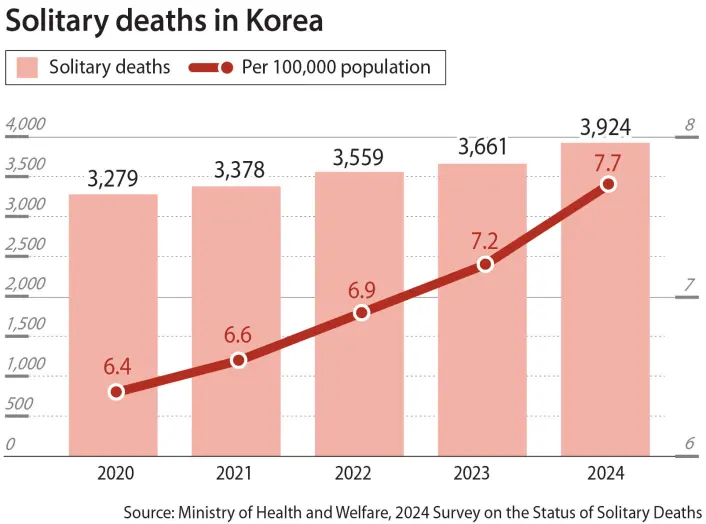 Korea is aging alone. A Yakult delivery woman can be a lifeline for isolated older adults.
Making the rounds
When the door stays shut
Bridging isolation with connection | On a summer morning in Seoul two years ago, Yoon Gap-yeon, an 81-year-old woman who lives by herself, collapsed just at the threshold her front door. After that, she remembers little. She lay alone on the floor of her basement home for roughly half an hour — long enough, in the heat, that the outcome could easily have been different. Fortunately, her Yakult delivery woman arrived — one of Korea's roughly 11,000 "fresh managers," women who deliver chilled probiotic drinks door to door on electric carts. "She said, 'What's wrong?' I could hear her, but I couldn't respond," Yoon told the Korea JoongAng Daily last week. The manager ran to find a pharmacy, returned with medicine, came back that evening with porridge, and later helped connect Yoon to her local community center for welfare support. "If she hadn't come when she did, I don't know what would have happened to me," Yoon said. Korea has one of the world's fastest-aging populations. Nearly two million Koreans aged 65 and older live alone, equal to one in five seniors. Last year, a record 3,924 died in isolation, alone, their deaths undiscovered for days or longer. A survey by the Seoul Institute found that 62.1 percent of people living alone report feeling lonely; 13.6 percent have no one to rely on at all. Yoon lives alone in Gwangjin District, eastern Seoul. Intestinal surgery years earlier had left her weighing 41 kilograms (90 lbs) and unable to eat most ordinary foods. Her son lives in Ulsan, a five-hour drive away, and visits when he can. The manager who found her that morning was Son Young-soon. The Korea JoongAng Daily joined Son on her morning rounds on May 26. Before becoming a Yakult delivery woman 26 years ago, Son worked as a nursing assistant — a background, she said, that made her attentive to the kinds of changes that can go unnoticed in someone living alone. Her route winds past Hyemin Hospital and through streets lined with low-rise residential buildings and public housing in Gwangjin District, an area with one of the higher concentrations of elderly and vulnerable residents in eastern Seoul. She manages around 70 customers, about 10 of them are older adults living alone. Yoon is one of them. The deliveries take only a minute at each door. Son rings the bell. If the customer is home, they come to the door; if not, she leaves the pouch on the handle. When the door opens, the conversation rarely stays on the drinks. "They have no one to talk to," Son said. "So when you see them, it all comes out — how they're feeling, where it hurts. Some of them give you fruit or snacks and say thank you." Son keeps notes on who has been quieter than usual, who mentioned a hospital appointment, who did not answer on a day they were expected to be home. "I just like people," she said. "Especially the elderly — they seem to like me. I have a friendly face." On the morning of May 26, as she worked her way down the block, a neighbor stopped mid-stride to place an order. A few minutes later, Yoon, returning from a hospital visit, spotted Son across the street, crossed over and took her hand. A man surnamed Kim, 82, is another of Son's customers, who has been receiving deliveries three times a week for three years through a government designation. Asked about his daily routine, he was brief. "Eating, sleeping," he said. "Taking medicine every day." Asked whether he has friends or neighbors his age nearby, he paused for only a moment. "They're all dead," he said. "I'm living on medicine." A care worker comes to clean his home and do his laundry. Son's visits offer something different, he said — "emotionally. In the heart." He called the people who come to see him "angels," and said he looks forward to the visits. Fresh managers like Son often end up doing more than delivering drinks, particularly as the country ages and the networks around older people grow sparser. Under a government-linked program launched in 1994, HY, the Korean food company that makes Yakult, coordinate... | — | ||||||
| 6/8/26 |  'Welcome to ma city': BTS puts Busan on K-pop's tour map
'Welcome to ma city'
K-pop tours, not really K anymore
Busan turns into BTS's city | With two sold-out stadium concerts in Busan, BTS is raising a question that extends beyond its own tour: Can a Korean city outside the capital region become a regular destination for large-scale K-pop concerts? For most K-pop artists, touring Korea still largely means performing in Seoul and its surrounding areas. The logic is hard to ignore. The capital region, including Seoul and the surrounding Gyeonggi, is home to more than half of the country's population, as well as the industry's biggest venues, agencies, media outlets and production networks. Outside that sprawling metropolitan area, the equation becomes far more complicated. But BTS is taking its world tour to Busan. And Korea's largest port city is pulsing with anticipation — not only for the two concerts themselves, but for what may come after them. With two sold-out stadium concerts in Busan, the septet is raising a question that extends beyond its own tour: Can a Korean city outside the capital region become a regular destination for large-scale K-pop concerts? "I've been so excited to invite you all to my hometown," Jimin said on Oct. 15, 2022, when BTS held its free "Yet To Come in Busan" concert at Busan Asiad Main Stadium as part of the city's bid to host the World Expo. "We couldn't possibly leave this song out when we are performing in Busan, right?" he added. "Welcome to ma city!" The group then launched into "Ma City," a 2015 track in which the seven members pay tribute to their hometowns — from Suga and V's Daegu and J-Hope's Gwangju to RM and Jin's Gyeonggi, and Jimin and Jungkook's Busan. Some of the members slipped into their regional dialects, a homecoming written into the group's own music. A little less than four years later, BTS is returning to the southeastern port city for another concert, this time as part of its ongoing "Arirang" world tour. BTS opened its "2.0" era after a nearly four-year pause in full-group activities with its fifth full-length album, "Arirang," released on March 20. The group kicked off its world tour with three shows at Goyang Main Stadium in Goyang, Gyeonggi, just west of Seoul, before heading to the United States, where the tour drew 840,000 fans. Now, BTS is coming home again — and doing so at a particularly symbolic moment. The Busan concerts coincide with the group's 13th anniversary of its debut on June 13, which BTS will mark with the 2026 BTS Festa, its annual celebration with fans. The "Arirang" world tour is scheduled to take place in Busan on June 12 and 13 at Asiad Main Stadium. The timing explains why the group had to return to Korea at this point in the tour, while Busan in particular carries sentimental weight as the hometown of Jimin and Jungkook. BigHit Music, BTS's agency, has billed the concerts as "a special homecoming." "BTS will return to Busan for the first time in about four years for a special 'homecoming,'" the agency said in a release in May. "The project is especially meaningful as it takes place around June 13, the anniversary of BTS's debut." The Busan stop, however, is unusual enough to draw attention. Major K-pop concerts in Korea remain heavily concentrated in Seoul and the wider capital region, while full-scale domestic tours across multiple Korean cities have become relatively uncommon for idol acts, especially established ones. As K-pop has grown into a global touring industry, many major groups now begin their live tours with Seoul-area shows followed by overseas legs, rather than multiple stops within Korea. "Artists do sometimes hold nationwide tours, but the facilities are not always ideal, and there are not many large-scale venues," said a source from a K-pop agency, who requested anonymity. "Busan Asiad Main Stadium is a good venue, but not every artist can fill a venue of that size. Smaller than that, the facilities there are unlikely to be ideal." Even when venue capacity is not the problem, infrastructure can be. "For us, domestic concerts are important, but because man... | — | ||||||
| 6/8/26 | 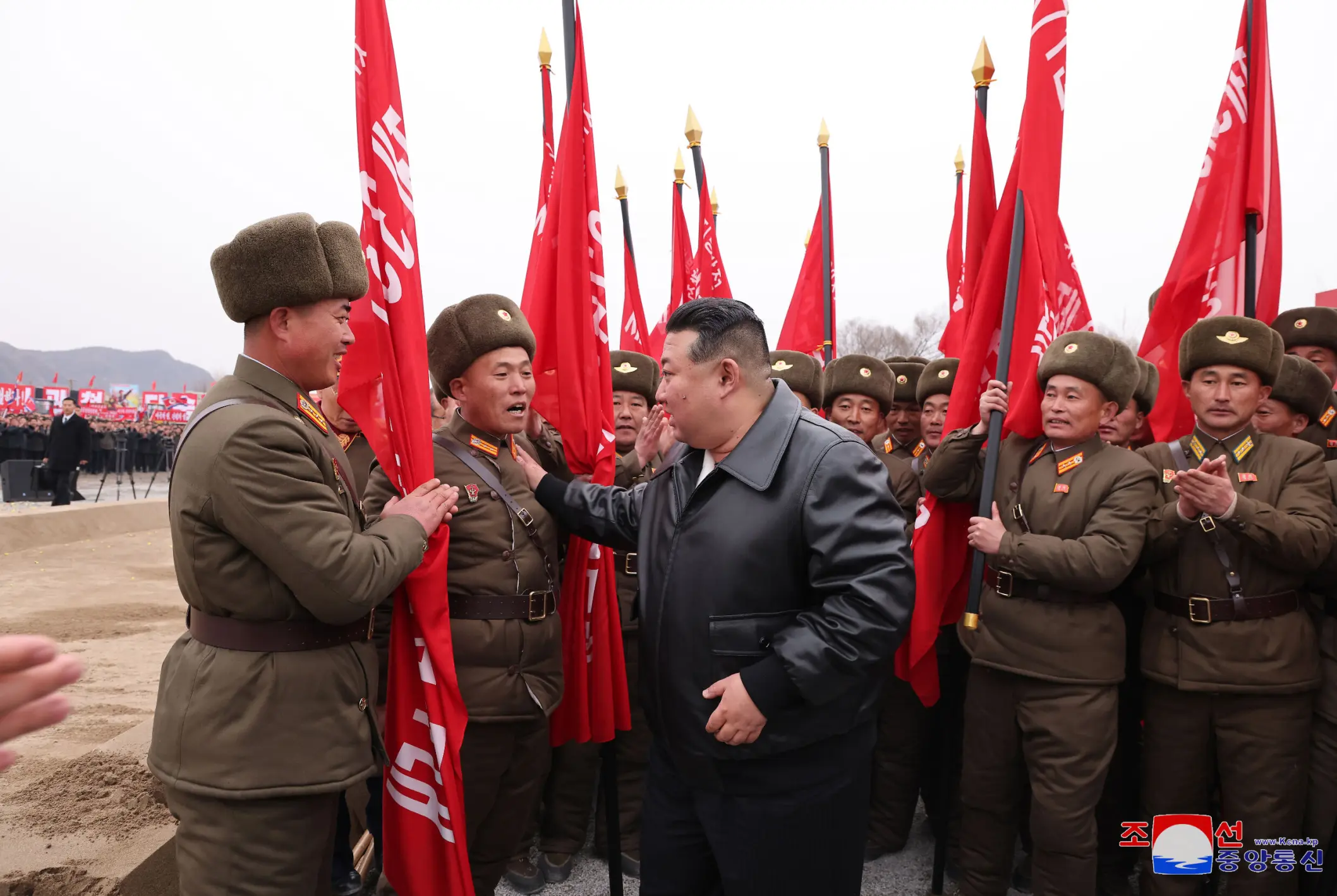 North Korea's rural factory push fades after ribbon-cuttings, satellite data shows
Lights that follow Kim
Ribbon-cutting, then darkness
Lights move with the propaganda | North Korean leader Kim Jong-un, chain-smoking and frowning from the dais of an expanded meeting of the ruling Workers' Party Central Committee secretariat on Jan. 27, 2025, lashed out at his own ranks. "This is a special-grade crime that our party cannot forgive even a little bit," Kim said. The target of his anger was a group of some 40 party officials in Onchon County, South Pyongan Province, who, North Korean media reported, had spent the year-end holidays drinking with female volunteers and engaging in promiscuous behavior at a hot springs resort. Onchon was no ordinary county. It was one of the 20 sites selected for the first year of Kim's signature Regional Development 20×10 Policy, an initiative to build modern light-industry factories in 20 rural areas every year for a decade. The misconduct occurred just before the county's Jan. 20, 2025, factory opening ceremony. Within a week of the ribbon-cutting, Kim ordered the officials to be sternly punished. Why did the leader react so sharply to the misbehavior of a handful of mid-level local officials? The answer lies in a speech he had given about a month earlier. On Dec. 20, 2024, at the completion ceremony for new provincial factories in Songchon County, South Pyongan Province — the showcase site for the policy and the first to break ground — Kim suddenly invoked the 1962 Changsong Joint Conference, the meeting at which his grandfather Kim Il Sung outlined his vision for raising rural living standards. That meeting has been treated for more than half a century as North Korean scripture on regional policy. "Why has the policy on local industry not been carried through even now, more than 60 years later? It is because there have been no clear standards or principles," Kim Jong-un said. He went on to mock past propaganda about Changsong — "all they did was make documentary films and write songs about how Changsong had been transformed" — and acknowledged that "from the 1990s, the factories essentially came to a complete halt," a rare public reference to the famine years of the Arduous March under his father, late leader Kim Jong-il. It was a striking move. As the first fruit of his regional development drive came online, Kim Jong-un publicly conceded the failures of the Paektu bloodline — North Korea's ruling Kim clan — and cast himself as the one who would finally do what founder Kim Il Sung had not. The Onchon misconduct, in that light, was not a small embarrassment. It was a challenge to a historic project that Kim Jong-un has called a "sacred and great undertaking." Kim, who, as a young leader, had cultivated a physical resemblance to his grandfather, down to his hair and speech, was now testing whether his 20×10 policy could surpass the achievements of the man he had spent his life imitating. Whether it has succeeded has been hard to determine from the ground, so the JoongAng Ilbo turned to the night sky. Nighttime light intensity levels — a widely used proxy for real economic activity in countries that, like North Korea, release little reliable economic data — show that power briefly flooded into all 20 first-year sites in 2024. But those sites did not remain lit. Where did the light come from, and where did it all go? A KAIST-Max Planck Institute for Security and Privacy joint research team led by professors Kim Ji-hee and Cha Mee-young used satellite imagery to track nighttime brightness across 178 of North Korea's cities and counties — with Pyongyang's 18 districts treated as one — from January 2022 to October 2025. Drawing on that data, the team compared the brightness in October 2023, before the first batch of counties was named, with the brightness in October 2025, after the new factories had opened. Analysis showed insufficient power to keep all 20 sites lit. Instead, the lights appeared to embrace a very Kim Jong-un approach: strategic selectivity. Of the 20 first-year counties, only five were brighter at night in 2025 than they were in 2023: Kusong, Son... | — | ||||||
| 6/8/26 | 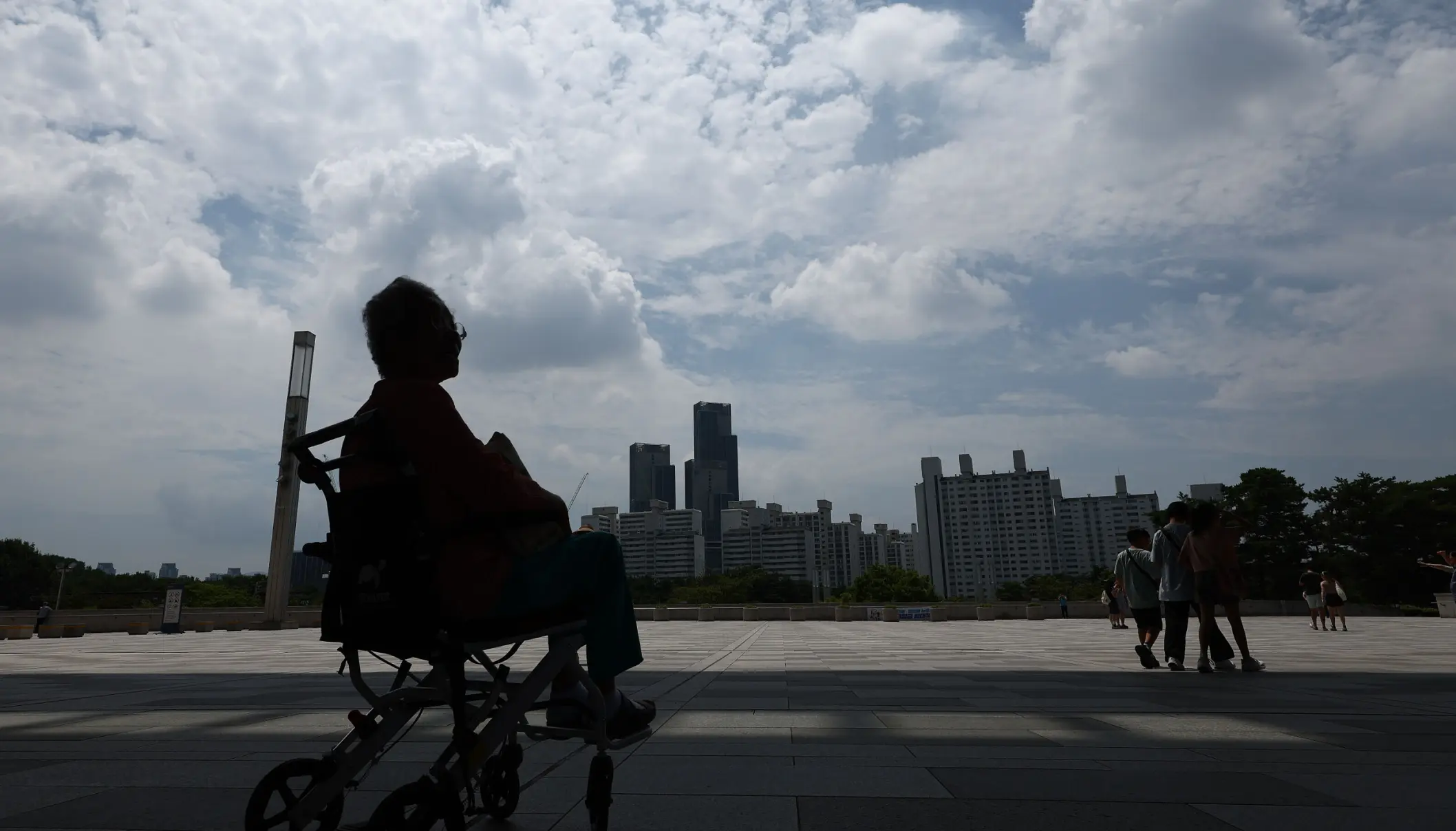 For the disabled, public art spaces remain largely out of reach amid accessibility limitations | Can Korea call itself a cultural powerhouse when some of its largest public art institutions have gone years without running a single program accessible to disabled visitors? Can the arts sector truly be considered democratic and inclusive when certain people are routinely left out? A few years ago, Chung Young-seok — a wheelchair user who lectures and researches arts management — went to Museum SAN in Wonju with a friend, the very place where another wheelchair user was denied entrance in April this year. They tried to enter the James Turrell hall, which houses one of only a handful of Turrell installations in the world. There was an elevator, but just as he was about to hop in, a staff member came over and told them they couldn't ride it, without explaining why. "I could understand if there were no facilities for the disabled at all," Chung said. "But to be told I couldn't use a facility that was already there — that felt like an entirely different problem. It made me realize this isn't about whether facilities exist. It's about how access is operated and how it's understood." Korean museums face a gap between access and inclusion Korean public art spaces often meet legal accessibility rules on paper, but many disabled visitors still cannot fully use them. A survey of major museums found that few offered sustained barrier-free programs, and many services were limited, temporary or hard to access. One key issue is staffing, not just facilities. Museums need dedicated workers and better understanding of different disabilities so access becomes part of daily operations, not a response to public criticism. This factbox was generated by Labrador AI and proof-read by a journalist. Museum SAN is, by Gangwon's official designation, a barrier-free tourist site — wheelchair rentals included. The episode, which Chung recounted after last month's incident that ignited a brief flurry of public attention, points to a broader conversation on accessibility that Korean arts institutions have not quite caught up to. The question is no longer whether ramps and elevators exist. They mostly do. The question is whether the access they imply actually works. Law is there, but programs, less so Korea has legally mandated accessibility at public buildings since 1998, when the Convenience Promotion Act was enacted, requiring public facilities to install ramps, accessible restrooms, tactile paving and similar fixtures. A barrier-free certification system, introduced in 2008, then layered a voluntary grading system on top of the act, evaluating buildings against more demanding criteria for everything from circulation paths to signage. The Korea Disability Arts & Culture Center (KDAC) also administers a grant program that funds accessibility content and operations at public exhibition and performance spaces, with awards ranging from 50 million ($34,500) to 80 million won per institution for up to three years. This grant program has also expanded in the number of recipients, with six institutions receiving 500 million won in 2024 and 22 institutions receiving a total of 1.6 billion won this year. The issue is that physical and programmatic accessibility move on separate tracks — one supported by the state, the other left to whatever budget an institution can find. To get a sense of how this plays out, the Korea JoongAng Daily asked the country's 20 largest art museums by visitor count to share their accessibility programming over the past five years, as well as their staffing levels. Of the 20 surveyed, 13 museums responded, and among them, only six could point to more than one exhibition over the past five years that was designated barrier-free from the start. The rest reported accessibility measures bolted onto otherwise standard programming — a sign-language caption here, a tactile catalog there, a braille leaflet at the gate. The National Museum of Korea, Busan Museum of Art and Daelim Museum were among those that did not give responses. The poi... | — | ||||||
| 6/8/26 | 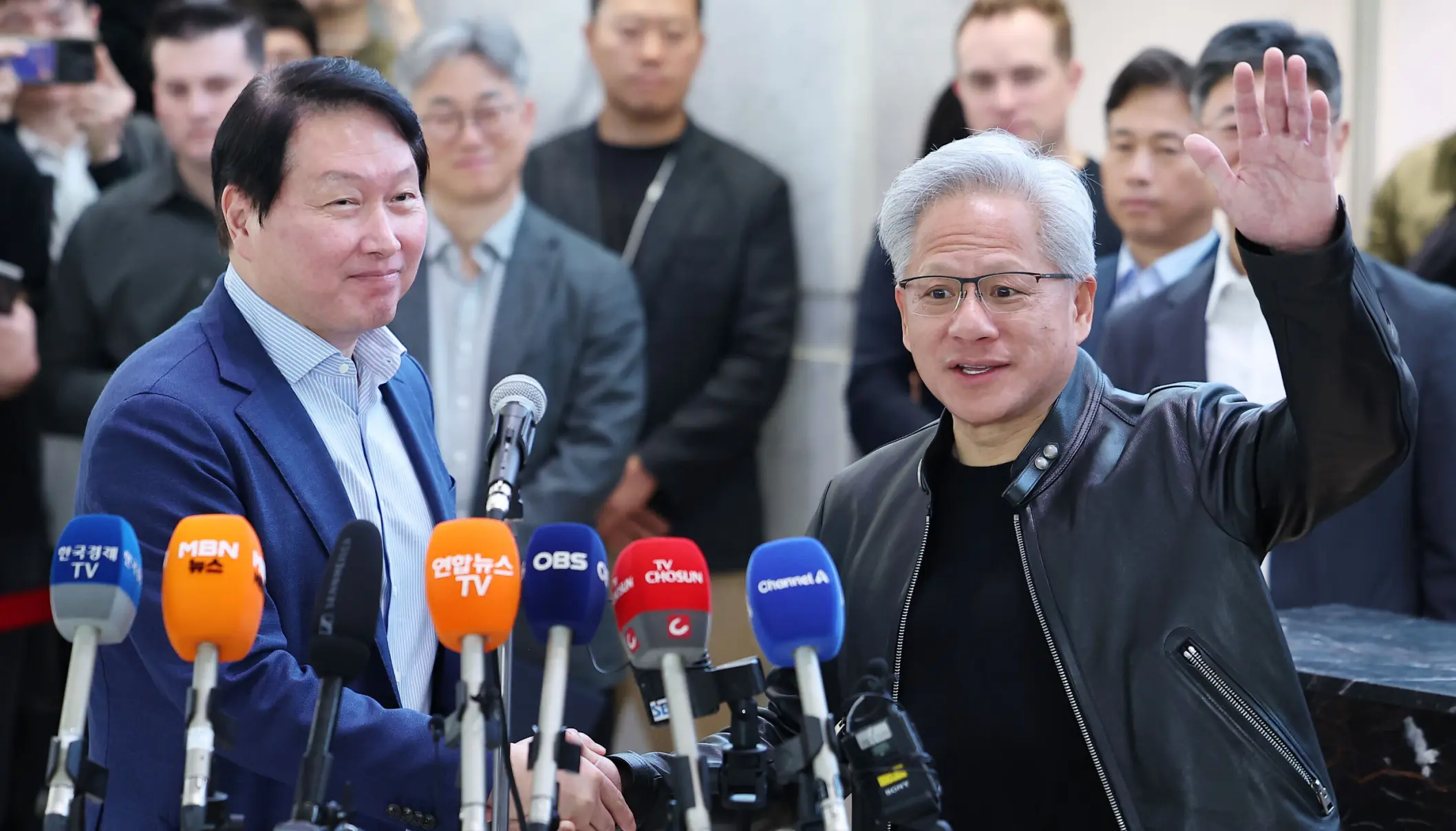 Nvidia to support gigawatt-scale computing infrastructure for SK, Naver | Nvidia partnered with Korean chipmaker SK hynix to develop next-generation memory chips that will power Nvidia's AI infrastructure. SK's telecommunication arm, SK Telecom, will begin operating its first AI factory in 2027 on Nvidia's platform. The two major deals were announced Monday following a morning meeting between Nvidia CEO Jensen Huang and SK Group Chairman Chey Tae-won. "SK is our largest memory partner," Huang told reporters after the meeting at SK's Seorin building in Jongno district, central Seoul. "We are expanding our partnership to include many new markets. [...] We announced a redesign, a reinvention of the world's personal computers we call RTX Spark, a partnership between us and Microsoft to reinvent the personal computer for the first time in 40 years, and that will have SK hynix inside. "The next wave called physical AI and robotics — we built a processor called Jetson Thor, and that will have SK hynix inside." The long-term partnership was struck to ensure a stable supply of advanced memory chips, which take years to design and bring to market, the companies said. The deal is part of Nvidia's broader strategy to lock in formal partnerships across its entire semiconductor supply chain — the foundries that manufacture its chips, the memory suppliers, and the software companies that help design them. Under the agreement, SK hynix and Nvidia will jointly develop memory for a wide range of Nvidia AI products, from data center supercomputers to consumer PCs and robotics systems — specifically the Vera Rubin AI supercomputer, Vera CPU, RTX Spark PC and Jetson Thor robotic computing platform. SK hynix will also use Nvidia's software tools to speed up its internal chip development processes — work that traditionally requires enormous computing resources and time. This includes using Nvidia's CUDA-X software toolkit, which lets applications run much faster on Nvidia's chips, and PhysicsNeMo, an Nvidia framework that uses AI to simulate physical processes in chip manufacturing, such as how light interacts with a chip's surface during production. The partnership will extend to electronic design automation — the software used to design chips — to form a three-way collaboration between chipmakers, Nvidia and the companies that make chip design software. The two companies are also working together on digital twin technology to enable real-time AI monitoring and smarter decision-making on the production floor. For SK Telecom, the focus is on building out AI factories: purpose-built facilities optimized for AI workloads, going beyond what conventional data centers can do. The first is expected to go online in Korea next year, built on Nvidia's DSX platform — a blueprint that covers everything from the chips inside to the software, power infrastructure, and operational systems. "AI factories are essential for Korea's universities, scientific labs, startups and industries," Huang said. "Just like electricity, water and the internet, Korea will be powered by AI in the future. It will be used in every country, every company and every industry — including, of course, the manufacturing of chips and telecommunications." SK Telecom will join Nvidia's Cloud Partner program, an ecosystem of companies that deliver AI computing services using Nvidia's infrastructure, with the goal of offering competitive pricing and energy efficiency. SK Group and Nvidia will also launch a joint research & development (R&D) effort on AI factory architecture, establishing a working body focused on improving how GPUs and memory chips are designed to work together from the ground up. "Through our close partnership with Nvidia, we have built full-stack AI infrastructure competitiveness spanning chips through data center operations," Chey said. "Beyond service delivery, we will jointly tackle challenges around GPUs, memory and energy — and emerge as a leading AI cloud provider driving AI ecosystem development across Asia." The U.S. chip giant also un... | — | ||||||
| 6/8/26 | 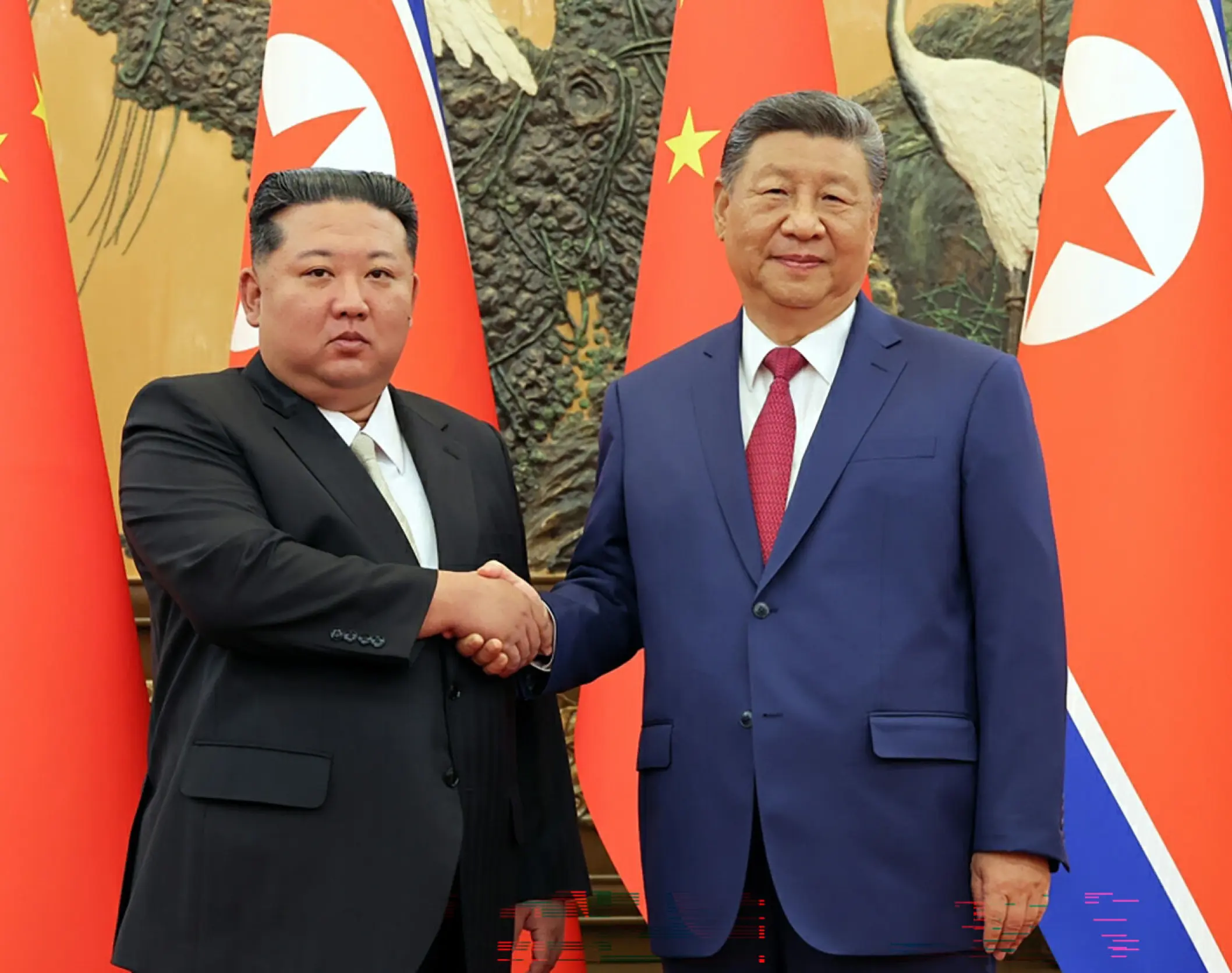 Xi's Pyongyang visit tests denuclearization hopes (KOR) | Chinese President Xi Jinping begins a two-day state visit to North Korea Monday, coinciding with the 65th anniversary of the Sino-North Korean friendship treaty. The summit is expected to focus on restoring bilateral ties and expanding economic and security cooperation. Ahead of the visit, North Korea has intensified its display of nuclear capabilities. After inspecting nuclear material production facilities, North Korean leader Kim Jong-un continued a series of public appearances highlighting the country's nuclear and missile programs. On Sunday, his sister, Kim Yo-jong, declared that North Korea's status as a nuclear weapons state was "an irreversible red line." She also rejected reports that Beijing and Washington had reaffirmed their support for the denuclearization of the Korean Peninsula during last month's U.S.-China summit, calling them "fabricated" and "groundless." The message appeared aimed not only at the United States but also at China, signaling that denuclearization is no longer open for discussion. The situation differs markedly from Xi's previous visit to Pyongyang in 2019. Even after the collapse of the Hanoi summit between North Korea and the United States, Pyongyang did not entirely reject the framework of denuclearization negotiations. Today, however, the North's position is that the issue should not even be raised. Since the outbreak of the war in Ukraine, North Korea has expanded its strategic room for maneuver through closer ties with Russia. Emboldened by that relationship, Pyongyang is pressing not only Washington but also Beijing to accept the reality of its nuclear arsenal. China, for its part, has strong incentives to keep North Korea within its sphere of influence. Xi's visit could accelerate discussions on economic cooperation, logistics projects and port development. The concern is that the longstanding principle of denuclearization may receive less attention while new security uncertainties emerge in Northeast Asia and the East Sea region. If China focuses primarily on managing relations with Pyongyang while effectively tolerating North Korea's nuclear development, prospects for resolving the nuclear issue will grow even dimmer. A shift from pursuing denuclearization to merely managing or freezing the North's nuclear program could amount to de facto recognition of its nuclear status. The Korean government should closely analyze the outcome of the summit and actively engage diplomatic channels with Beijing. At the same time, it must maintain the Korea-U. S. alliance and trilateral security cooperation among Korea, the United States and Japan. As North Korea continues to advance its nuclear and missile capabilities while cooperation among North Korea, China and Russia deepens, strong alliances and international coordination remain the most realistic foundation for safeguarding Korea's security. Xi's trip to Pyongyang must not become an occasion that legitimizes North Korea's pursuit of permanent nuclear weapons status. '핵 포기 불가' 선언한 북한, 북·중 회담이 더 우려된다 시진핑 중국 국가주석이 오늘부터 이틀간 북한을 국빈 방문한다. 북·중 우호조약 체결 65주년과 맞물린 이번 방북은 북·중 동맹 복원과 경제·안보 협력 확대 방안을 논의하는 자리가 될 것으로 보인다. 시 주석의 방북을 앞두고 북한은 노골적인 핵 능력 과시에 나섰다. 김정은 국무위원장은 핵물질 생산시설 시찰을 시작으로 핵·미사일 능력을 과시하는 행보에 나섰고 어제는 "핵보유국 지위는 절대 불퇴의 한계선"이라고 한 김여정 노동당 부부장의 담화를 공개했다. 지난달 미·중 정상회담에서 한반도 비핵화 목표에 동의했다는 보도는 "완전한 날조이고 허황된 거짓 정보"라고 주장했다. 비핵화는 더 이상 논의의 대상이 아니라고 은근히 시 주석을 압박한 셈이다. 이는 2019년 시 주석 방북 당시와는 분명히 다르다. 당시 북한은 하노이 북·미 정상회담 결렬 이후에도 비핵화 협상의 틀을 완전히 부정하지는 않았다. 하지만 지금은 비핵화는 말조차 꺼내지 말라는 입장이다. 우크라이나 전쟁 이후 러시아와의 협력을 통해 전략적 입지를 넓힌 북한은 미국뿐 아니라 중국에도 핵무장 현실을 인정하라고 압박하고 있다. 북한을 자국 영향권에 묶어두려는 중국은 이번 방북을 계기로 경제 협력과 물류·항만 개발에 속도를 낼 가능성이 있다. 문제는 이 과정에서 한반도 비핵화 원칙이 뒷전으로 밀리고 동해 안보 환경에도 새로운 변수가 생길 수 있다는 점이다. 북한의 핵 개발을 사실상 묵인한 채 관계 관리에만 집중한다면 북핵 문제는 더욱 해결의 실마리를 찾기 어렵다. 중국이 비핵화보다 '핵 동결' 수준의 관리에 무게를 둘 경우 핵보유국 지위를 사실상 인정하는 결과로 이어질 수 있다는 점에서 우려가 크다. 정부는 이번 북·중 정상회담 결과를 면밀히 분석하고 중국과의 외교 채널을 적극 가동해야 한다. 동시에 한·미 동맹과 한·미·일 안보 협력을 흔들림 없이 유지해야 한다. 북한의 핵·미사일 능력이 고도화되고 북·중·러 협력이 강화되는 상황에서 우리... | — | ||||||
| 6/7/26 |  BoyNextDoor opens the door to its 'Home' as it closes its first chapter | Boy band BoyNextDoor built its discography on being close enough to knock. Three years after debuting as K-pop's boys next door, the six-member group is ready to let listeners in with its first full-length album, "Home" — a milestone that looks back on the shelter it has built so far, but with an unmistakably candid ambition to go "Viral." "This album carries our own story of leaving our previous home and finding a new one," said member Woonhak during a roundtable interview with journalists in eastern Seoul on Friday. "We've built a home, a shelter for ourselves, so I hope the album can also become a place where both casual listeners and our fans can rest and feel comfortable," he added with a smile. BoyNextDoor debuted in May 2023 with the single "WHO!" under KOZ Entertainment, a HYBE-owned label founded by rapper-producer Zico, with members Myung Jae-hyun, Sungho, Riwoo, Taesan, Leehan and Woonhak. The group built its musical narrative and brand around the members' famously energetic, mischievous personalities, befitting its name BoyNextDoor. The sextet is best known for upbeat, easy-listening hits like "If I say I love you" (2025). But this time, the mood has shifted — into something more chic, serious and sometimes vulnerable. "Home," set to be released on Monday, features eight songs: the lead track, "Viral," a prerelease "ddok ddok ddok," and B-sides, "06070," "Adios!," "Upside Down," "Dive," "Forever You," and "I Wonder." The physical album will include an additional track, "I Wonder, Always," which samples "I Wonder." All six members are credited for songwriting and lyrics for the album. The genuine slice of BoyNextDoor's inner thoughts revealed in the lead track, "Viral," is simple and clear: the group wants its music to go viral, all around the world, until its melodies echo in everyone's head. "What we really wanted to say as a team was that we hope this song keeps lingering in the ears of people all around the world," said Myung. "So we decided to incorporate our desire to become famous into a more general narrative about love." The song "Viral" marks a clear departure from BoyNextDoor's previous singles, with a more toned-down, quieter yet intense mood and a longer running time than usual. "We've indeed wanted to do something different," said Woonhak. "And in a way, I also thought coming up with something different is in itself very BoyNextDoor-coded." Some songs still carry the group's signature youthful charm and cheek, he said, but the members wanted the lead single to align with the overall concept of the new album, which leans on serious sincerity — especially so because the album marks the completion of the group's first chapter, before it moves to the next chapter, according to the members. "One thing we talked about a lot among ourselves during the album-making process was that we wanted to make an album that we could listen to and remind ourselves of our original mindset if 20 or 30 years pass after our debut and we ever lose sight of where we started," said Myung. "So we focused on people who are most precious to us, and the things we consider most essential, which led us to consider this album as a closure of our first chapter." True to his words, the tracklist for "Home" leads listeners into some of the members' innermost thoughts and most cherished memories. The first track, "06070," takes its title from the old postal code of the training room where the members practiced as trainees, while "Forever You" is a tribute to their parents and the sincere love they have received from them. The album closes with "I Wonder," a fan song for the group's fandom, OneDoor, which, according to the members, represents the destination — the home — where the journey ends. Fresh off celebrating its third debut anniversary, the group still has much it wants to achieve, explore and say. "I've been told that babies begin to speak in earnest when they turn three," Myung said. "There are so many things I want to tel... | — | ||||||
| 6/7/26 | Xi's Pyongyang visit tests denuclearization hopes | Chinese President Xi Jinping begins a two-day state visit to North Korea Monday, coinciding with the 65th anniversary of the Sino-North Korean friendship treaty. The summit is expected to focus on restoring bilateral ties and expanding economic and security cooperation. Ahead of the visit, North Korea has intensified its display of nuclear capabilities. After inspecting nuclear material production facilities, North Korean leader Kim Jong-un continued a series of public appearances highlighting the country's nuclear and missile programs. On Sunday, his sister, Kim Yo-jong, declared that North Korea's status as a nuclear weapons state was "an irreversible red line." She also rejected reports that Beijing and Washington had reaffirmed their support for the denuclearization of the Korean Peninsula during last month's U.S.-China summit, calling them "fabricated" and "groundless." The message appeared aimed not only at the United States but also at China, signaling that denuclearization is no longer open for discussion. The situation differs markedly from Xi's previous visit to Pyongyang in 2019. Even after the collapse of the Hanoi summit between North Korea and the United States, Pyongyang did not entirely reject the framework of denuclearization negotiations. Today, however, the North's position is that the issue should not even be raised. Since the outbreak of the war in Ukraine, North Korea has expanded its strategic room for maneuver through closer ties with Russia. Emboldened by that relationship, Pyongyang is pressing not only Washington but also Beijing to accept the reality of its nuclear arsenal. China, for its part, has strong incentives to keep North Korea within its sphere of influence. Xi's visit could accelerate discussions on economic cooperation, logistics projects and port development. The concern is that the longstanding principle of denuclearization may receive less attention while new security uncertainties emerge in Northeast Asia and the East Sea region. If China focuses primarily on managing relations with Pyongyang while effectively tolerating North Korea's nuclear development, prospects for resolving the nuclear issue will grow even dimmer. A shift from pursuing denuclearization to merely managing or freezing the North's nuclear program could amount to de facto recognition of its nuclear status. The Korean government should closely analyze the outcome of the summit and actively engage diplomatic channels with Beijing. At the same time, it must maintain the Korea-U. S. alliance and trilateral security cooperation among Korea, the United States and Japan. As North Korea continues to advance its nuclear and missile capabilities while cooperation among North Korea, China and Russia deepens, strong alliances and international coordination remain the most realistic foundation for safeguarding Korea's security. Xi's trip to Pyongyang must not become an occasion that legitimizes North Korea's pursuit of permanent nuclear weapons status. This article was originally written in Korean and translated by a bilingual reporter with the help of generative AI tools. It was then edited by a native English-speaking editor. All AI-assisted translations are reviewed and refined by our newsroom. | — | ||||||
| 6/7/26 |  Can the 'BTS effect' and K-culture fandom do for Korea what anime and games did for Japan? | A teenager who discovers BTS today may grow up to book trips to Seoul, buy Korean products and carry a favorable image of Korea well into adulthood. That is the long-term bet behind a recent analyst report from NH Investment & Securities, which argued that young BTS fans could eventually translate their fandom into lasting economic gains for Korea, enough to buoy the country's GDP decades from now. There is a precedent nearby, which may at first sound ambitious. Japan spent decades turning anime, manga, games and characters into soft power, as generations raised on Nintendo, Pokémon and Studio Ghibli grew into adults who feel Japan is familiar and culturally close to them. Now, Korea is facing a similar moment, but one question remains: Can BTS — and K-pop, more broadly — build the kind of generational longevity that Japanese pop culture has enjoyed so far? 'K-imprinted' generation The NH Investment & Securities report, released May 24, projected that BTS's global fandom, collectively known as ARMY, could boost Korea's annual GDP by 0.1 to 0.35 percentage points through increased tourism by 2040. The estimate is based partly on the demographic composition of the fandom, as a 2022 fan-conducted census cited by the report found that 84 percent of global ARMY members were under 29, suggesting that many are still years away from their prime earning and spending years. The argument is primarily built on the premise of the cohort effect — the idea that cultural preferences formed in youth can shape spending behavior later in life. In fandom economies, the report argues, demand created by specific artists can extend well beyond albums and concerts, altering a fan's broader consumer path. It divided fandom consumption into four stages: imprinting, fandom activation, peak consumption and legacy consumption, with each stage roughly a decade apart. For BTS, the report argued, the imprinting stage took place through the early and mid-2020s, while the fandom activation stage is now beginning. If that trajectory holds, BTS-related consumption could peak in the 2030s, when these fans will have greater purchasing power. "Because the K-fandom age group is still concentrated among teens and people in their 20s, with relatively low income levels, the degree to which fandom consumption may affect GDP remains limited," noted Jung Yeo-kyung, a researcher at NH Investment & Securities and the report's primary author. "In the 2030s, when the K-imprinted generation gains purchasing power and returns to Korea, the impact of the K-fandom economy on GDP is expected to become more visible." 'Cool Japan' strategy One of the clearest examples of pop culture shaping a generation's perception of a country is Japan, whose global image has long been defined partly by its pop culture including anime, manga, games and character franchises. Japanese pop culture established its commercial presence overseas in the 1980s and 1990s through cult anime such as "Dragon Ball" (1986) and "Akira" (1988), as well as video games from Nintendo, including its first major home console game, "Super Mario Bros.," launched in 1984, and "The Legend of Zelda" in 1986. The momentum continued into the 2000s with enduring intellectual property (IP) including Pokémon. Japan later incorporated this cultural impact into its "Cool Japan" strategy in the 2000s, after decades of anime, manga and games made the country feel familiar to global audiences. That soft power pulled in economic value as well, as spending by foreign visitors quadrupled over the past decade through 2024 — also partly fueled by a weak yen — making tourism the country's second-largest export category after cars. "Countries with export-oriented industrial structures have been making efforts not only to build their national images but also to commercialize their nations alongside their products," wrote Kang Sung-woo, a research professor of foreign affairs at Chung-Ang University, in his 2016 paper "'Cool Japan' as Ja... | — | ||||||
Want analysis for the episodes below?Free for Pro Submit a request, we'll have your selected episodes analyzed within an hour. Free, at no cost to you, for Pro users. | |||||||||
| 6/7/26 |  Huang's Korea tour showcases Korea's rise from Nvidia supplier to physical AI partner | This article is by Park Eun-jee, Lee Jae-lim and read by an artificial voice. Huang's extended visit to Korea underscores the country's evolving status within Nvidia's ecosystem — no longer just a supplier of memory chips, but an increasingly important customer for Nvidia's advanced AI processors. His latest visit, running from Friday through Monday, centered on key demand centers ranging from gaming outlets and internet firm Naver to companies that have adopted a focus on robotics such as Hyundai Motor, Doosan and LG. An unexpected player on the roster was Doosan, an industrial conglomerate spanning machinery and construction, but the company has become not only a supplier of a key material used in AI accelerators but a client for Nvidia platforms for developing and training robots. In a celebratory gesture, Huang threw the ceremonial first pitch at a Doosan Bears home game at Jamsil Baseball Stadium in southern Seoul alongside Chairman Park Jeong-won. "Business is booming, and Korea is doing very well. My partners here in Korea are very important to me," Huang told reporters on the sidelines of a Friday dinner with SK Chairman Chey Tae-won, LG's Koo Kwang-mo and Naver's Lee Hae-jin. His final day itinerary on Monday is expected to include a meeting with Hyundai Motor Executive Chair Euisun Chung, followed by separate stops at the LG Electronics and Naver offices. Although no specific deal had been announced as of press time on Sunday, nearly every stop on Huang's itinerary involved companies viewed as key customers or partners for Nvidia's newest AI platforms. "Jetson Thor is widely expected to power Atlas, the humanoid robot developed by Hyundai Motor Group's affiliate Boston Dynamics," Kim Doo-un, an analyst at Hana Securities said. Jetson Thor is Nvidia's robot-focused AI processor designed to serve as the onboard computing platform for humanoids. "RTX Spark could find applications in high-performance PCs and on-device AI systems. The result is that Korean companies are becoming increasingly intertwined with Nvidia's next wave of growth businesses, from next-generation AI accelerators and physical AI to AI PCs," Kim said, speaking about Nvidia's Arm-based system on chip and computing platform. PC bangs on the rise PC bangs, Korea's signature gaming cafes, emerged as recurring venues as well, serving as the first stop for the CEOs meeting with esports legend Faker on Friday and later hosting a separate gathering with Krafton Chairman Chang Byung-gyu and NC CEO Kim Taek-jin Sunday. There, Huang pitched the upcoming RTX Spark chip that will be integrated directly into into laptops to deliver far more powerful on-device AI capabilities. Developed through partnership with Krafton, an upcoming "co-playable character" powered by Nvidia ACE technology and optimized for the new RTX Spark laptops was demoed by Huang. The voice-activated AI acts as an interactive, real-time squad mate that can chat and strategize directly inside PUBG: Battlegrounds. NC is also pushing its boundaries into physical AI through its subsidiary NC AI. The gaming company is developing AI systems capable of controlling robots and factory operations, while also working on models that enable robots to understand and interact with physical environments autonomously. Memory still counts As memory capacity remains vital to powering Nvidia's architecture, Huang pressed Korean suppliers to ramp up production of high bandwidth memory chips (HBM). When he sat down for the star-studded dinner at a samgyeopsal (pork belly) restaurant in Mapo District, western Seoul, he noted that Nvidia's new products — such as Vera Rubin, Vera and RTX Spark — will require more memory, including high bandwidth memory and low-power double data rate, or LPDDR, memory. Huang also acknowledged that three memory makers — Samsung, SK hynix and Micron — passed Nvidia's quality test for their HBM4, which will be fitted into the Vera Rubin platform. The Nvidia chief had another round o... | — | ||||||
| 6/7/26 | 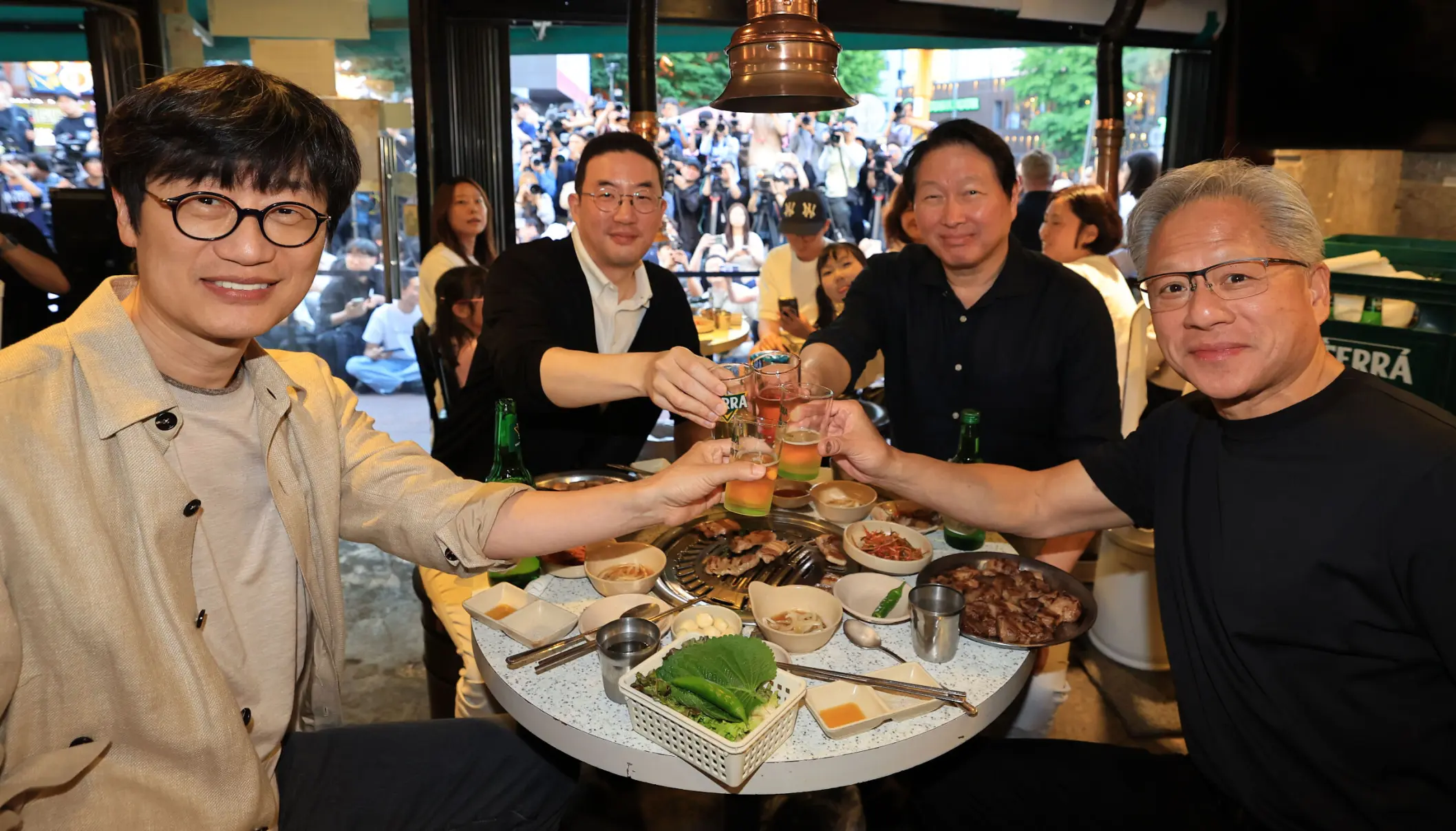 Jensen Huang meets Korean tech titans over grilled pork — in pictures | Dipping green chili peppers into ssamjang — a thick, spicy-sweet paste — and piling grilled pork, scallions and kimchi onto a perilla leaf before wrapping it into a hefty bite is a familiar ritual at boozy Korean dinners, especially among middle-aged men, or ajeossi. And Nvidia CEO Jensen Huang, alongside his companions SK Chairman Chey Tae-won, LG Chairman Koo Kwang-mo and Naver founder Lee Hae-jin, was at the heart of this particular, closely followed dinner in Seoul's youthful Hongik University neighborhood. The tech titans gathered at around 7 p.m. on Friday, following Huang's arrival in the country at 1:30 p.m. the same day. This time, the venue was the Korean barbecue restaurant Hyeongnim Jeoyo, which translates to "Brother, it's me," a name in line with last year's setting at a Kkanbu Chicken store. "Kkanbu" is Korean slang referring to a close friend or trusted companion All four executives are undoubtedly billionaires, but it was Naver's Lee who picked up the tab, paying with the internet firm's payment service, Naver Pay. After dinner, the four executives engaged with reporters and people who had gathered outside the restaurant for a glimpse of the high-profile meeting. They handed out desserts, including bottles of banana milk, a popular Korean dairy drink, and bungeoppang, a fish-shaped pastry traditionally filled with sweet red bean paste. BY PARK EUN-JEE [park.eunjee@joongang.co.kr] | — | ||||||
| 6/7/26 | 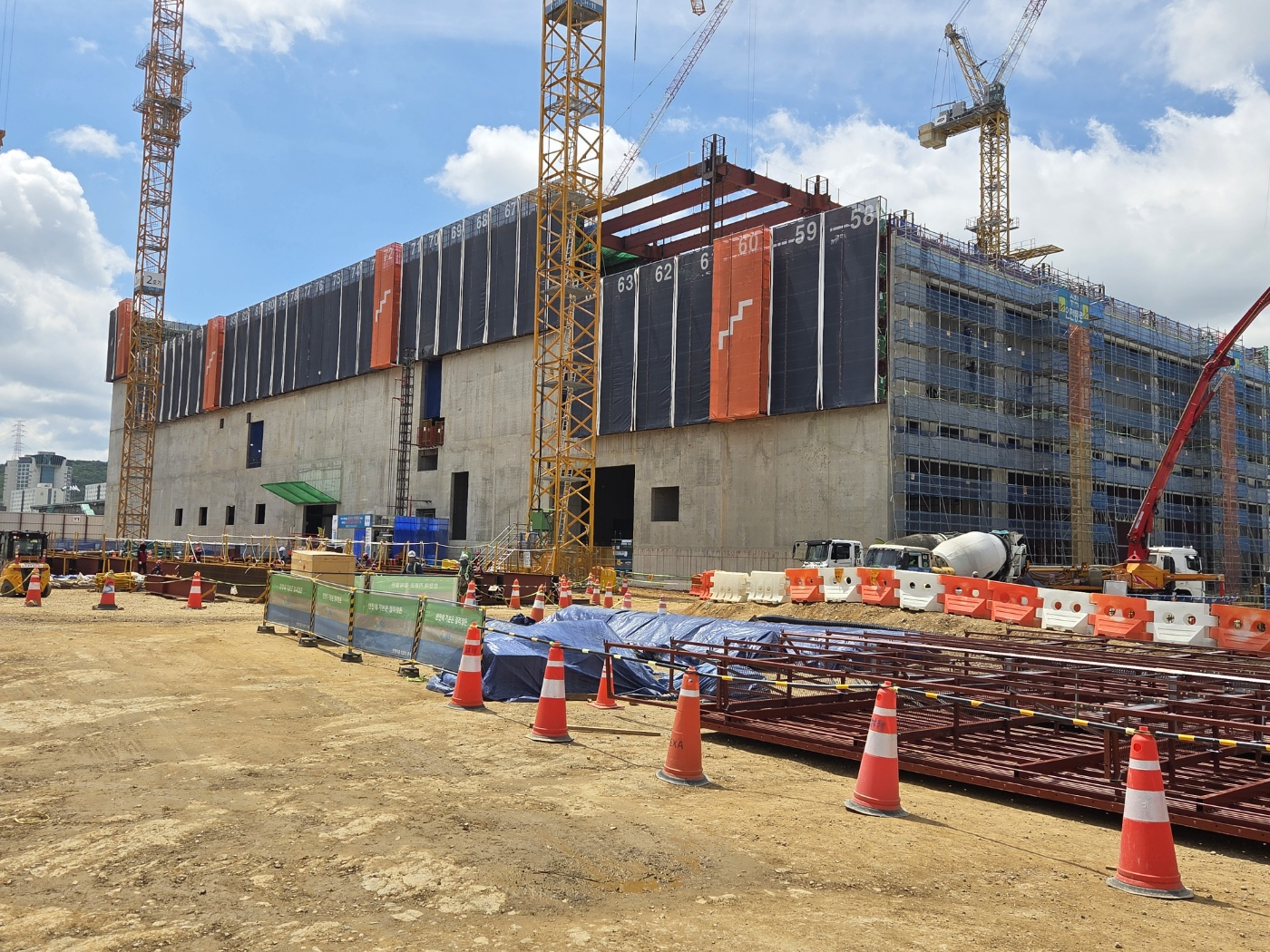 Paju AI data center at heart of LG U+'s $3.3 billion order push | This article is by Kim Min-young and read by an artificial voice. PAJU, Gyeonggi — The heat hit first, then the dust. Cranes swung overhead against a hazy sky as concrete pump trucks idled below, and inside the half-built shell of Building 1, the air was thick with the grit of a site that is only about 20 percent finished. Workers in hard hats threaded between bare concrete columns that climb five stories, past pipe racks already roughly 70 percent installed, while reporters in borrowed safety vests picked their way along a marked corridor. This raw, unfinished floor, a first-floor machine room still open to the elements, is where LG U+, the country's telco provider, on Friday chose to make its pitch. The Paju AI Data Center, rising upon a 22,000-pyeong (72,727 square-meters) lot in Wollong-myeon, Gyeonggi, is the centerpiece of a strategy the carrier unveiled on-site to win 5 trillion won ($3.3 billion) in cumulative AI data center orders by 2030 and remake itself into what it calls an "AI Factory Operator." With a confirmed 200-megawatt power supply, it will be the only hyperscale-class facility of its size in the greater Seoul area, capable of powering the entire capital region's generative AI services at once. The clearest sign of demand was delivered even before the cement had dried. Building 1, due for completion next June, is already sold out. The 50-megawatt structure, carrying about 30 megawatts of actual IT load, has been fully contracted to what the company would only describe as a large customer. LG U+ expects more than 1 trillion won in annual orders through 2030 and projects average annual revenue growth of 15 to 20 percent for the business. Standing on the concrete floor of the unfinished building, executives sketched out a site that will eventually hold five buildings across roughly 152,000 square meters (1.64 million square feet), more than 20 football pitches of floor space. "The competitiveness of an AI data center now depends not on the scale of the facility but on how stably you can operate the entire infrastructure," said Ahn Hyurng-gyoon, vice president of LG U+'s Enterprise AI Business Group, his keynote address competing with the ambient clatter of the site. Ahn pointed to a surge in demand as the industry shifts from training AI models to running them, noting that monthly token-processing volumes have climbed roughly 67-fold over the past year. Ahn organized the company's case around power, cooling, construction speed and operational stability. The power comes from a 345-kilovolt substation across the road, visible past the rebar and scaffolding, with a 154-kilovolt line as backup. Both run underground at a depth of about nine meters, which the company said eliminates the electromagnetic field concerns that often draw complaints near data centers. Officials said the supply was locked in after a formal power-impact assessment last August, and that opposition has been muted because the site sits inside a former LG Display industrial complex. Cooling is where the building's bones have been shaped most deliberately. Paju is being built as Korea's first hyperscale center to run both air and liquid cooling in a hybrid structure, with floor loads, waterproofing and piping engineered for liquid from the design stage. Pointing to the columns flanking the machine room, field-team official Kim Jong-jin explained that every pipe is laid so a tenant can switch to liquid the moment its servers demand it. The primary method, direct-to-chip cooling developed with LG Electronics, attaches a cold plate to the chip and circulates coolant to pull heat away at the source, improving energy efficiency by about 24 percent over air cooling in the company's tests. All three computing floors of Building 1, floors three through five, are designed for it. The company has spent the past year validating liquid cooling in a proof-of-concept room at its Pyeongchon center, including both direct-to-chip and immersion methods, an... | — | ||||||
| 6/5/26 |  Boy band TWS to release World Cup anthem to cheer on national football team | Boy band TWS will release "Dream With Us," an anthem for Korea's national football team, on Thursday, according to its agency Pledis Entertainment on Friday. The song was written to cheer on the national team as it prepares for the 2026 FIFA World Cup in North and Central America. Built around the message "if we believe in miracles together, then miracles begin," the track celebrates the passion of young people who rally behind a shared dream. "Dream With Us" had its world premiere at Korea's final pretournament friendly against El Salvador in Salt Lake City on Wednesday. A promotional video posted the same day on JTBC's official social media channels shows the members dressed in red shirts, waving Korean flags and chanting "Korea, fighting!" The clip also features a preview of the song. TWS was appointed as an ambassador for the Korea Football Association last October and has since served as a bridge between the national squad and its fans. "We are truly happy to be able to support the national football team through music," the band said in a statement. "We will cheer with all our hearts so that the players, who have worked so hard to prepare for this World Cup, can put on a wonderful performance." The sextet — Shinyu, Dohoon, Youngjae, Hanjin, Jihoon and Kyungmin — debuted in 2024 with the EP "Sparkling Blue" and has since released "Plot Twist" (2024), "If I'm S, Can You Be My N?" (2024) and "Countdown!" (2025). BY LEE JIAN [lee.jian@joongang.co.kr] | — | ||||||
| 6/5/26 | 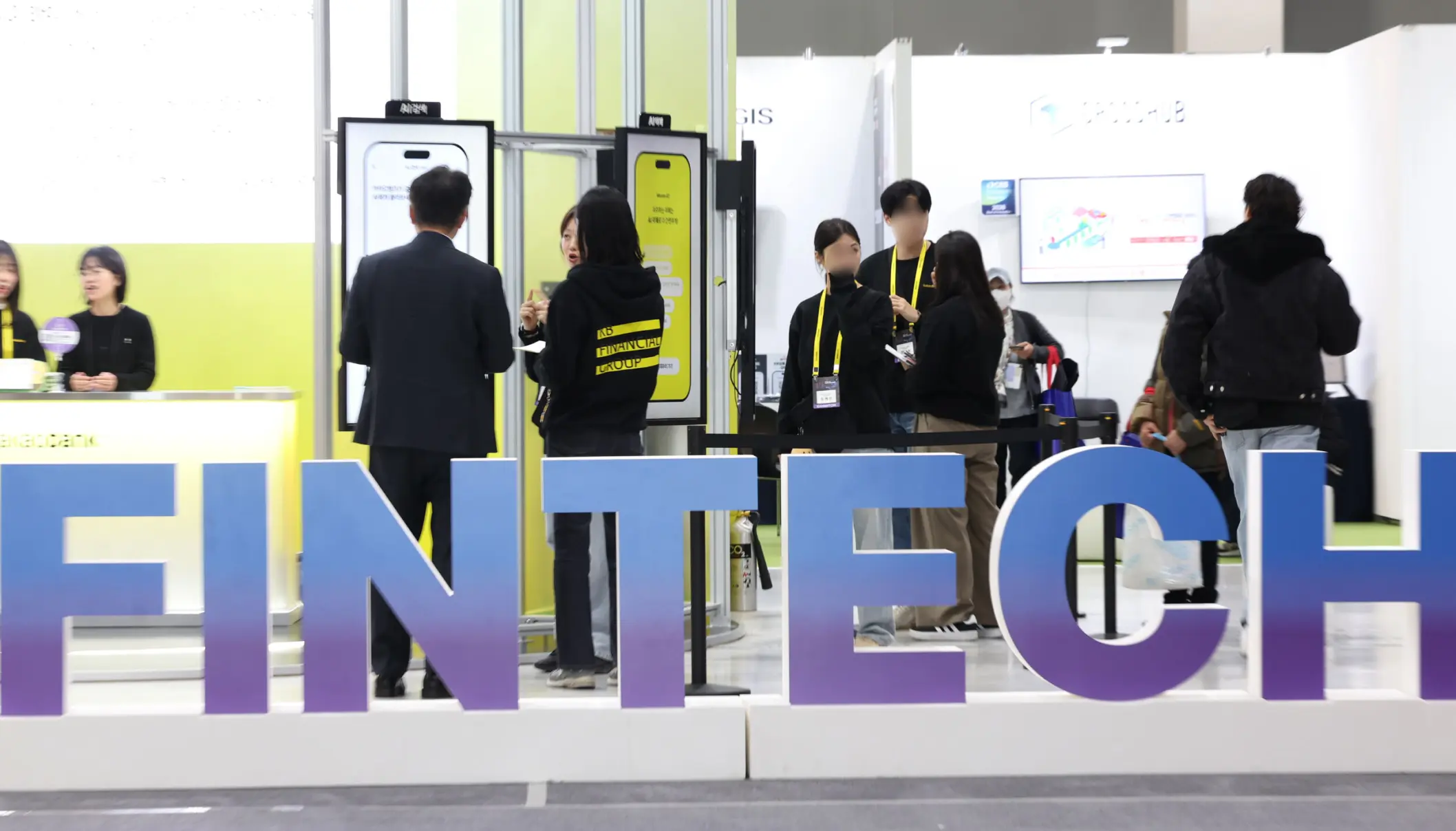 Credit scoring needs a data sovereignty revolution | If Korea hopes to build a more inclusive financial system, empowering individuals to control and utilize their own data must become a central policy priority. Kang Kyeong-hoon The author is a professor of Business Administration at Dongguk University. Kim Yong-beom, the presidential chief policy secretary, recently drew attention with a social media post highlighting problems in Korea's credit evaluation system. His remarks touched on a longstanding issue in finance: Traditional credit scoring often disadvantages low- and middle-credit borrowers and younger consumers. Most credit assessment systems rely heavily on past financial records. Critics argue that this approach structurally excludes many borrowers and weakens the market for mid-interest-rate loans, creating what some describe as a "donut economy" in which the middle tier is underserved. Alternative credit scoring has emerged as a promising solution. Governments can expand policy guarantees or policy-based lending, but such measures inevitably increase fiscal burdens. Alternative credit assessment, which focuses on current economic activity and cash flow rather than past delinquencies, can help restore financial mobility while minimizing public spending. The idea also aligns with the current administration's push to promote AI. Data is often described as the oil of the AI era. Yet data differs from oil in an important respect. Oil is depleted when consumed, while data can be used repeatedly by multiple parties at the same time. Its value often grows when combined with other datasets. This characteristic was highlighted in the 2020 paper "Nonrivalry and the Economics of Data" by Stanford University professors Charles Jones and Christopher Tonetti. The paper compares two ownership models. When companies own data, they tend to restrict access to protect competitive advantages and economic rents. The result is fragmentation, reduced data utilization and lower social welfare. When consumers own their data, however, they can share it with multiple institutions, including banks and fintech firms. Individuals benefit from broader financial opportunities while contributing to economic growth. At the same time, they can weigh privacy concerns against the benefits of sharing information and make their own decisions. Efforts to establish data sovereignty around the world reflect these findings. The principle is straightforward: Individuals should have meaningful control over their personal data. Examples already exist. In the United States, cash flow underwriting evaluates borrowers using real-time sales records and bank account activity rather than relying solely on credit scores or collateral. This allows small-business owners, young borrowers and financially vulnerable groups to demonstrate their creditworthiness through actual economic behavior. Britain introduced open banking even earlier. Under the system, banks must, with customer consent, provide financial data to authorized third parties such as fintech companies. Information that was once locked inside banks can be used to obtain better products and services. Open banking is a practical example of data sovereignty in action. Korea has moved quickly to adopt similar systems. The country launched open banking in 2019, introduced financial MyData services in 2022 and is now expanding MyData across industries. The government-led standardized application programming interface framework has produced high levels of security, stability and data quality. In theory, Korea has already built a strong foundation for alternative credit evaluation and inclusive finance. Yet despite this infrastructure, alternative credit scoring and cash flow underwriting remain underdeveloped. The reason is that Korea's open banking and MyData systems still focus largely on payment convenience and information retrieval rather than genuine data sovereignty. Open banking has improved user experience through services such as simple transfers and in... | — | ||||||
| 6/5/26 |  Korea and Canada announce broad range of energy, mineral and defense deals, with Hanwha at the center | This article is by Lee Jian and read by an artificial voice. Korea and Canada announced a broad economic partnership spanning energy, critical minerals, hydrogen and defense, with Korean defense conglomerate Hanwha at the center of numerous proposals that could reshape both countries' industrial landscapes. The announcement followed a meeting on Tuesday in Ottawa between Canada's Minister of Energy and Natural Resources Tim Hodgson and Korea's Chief of Staff to the President and Special Envoy for Strategic Economic Cooperation Kang Hoon-sik. The meeting coincided with the Korea-Canada Energy and Resource Supply Chain Cooperation Forum, which brought together senior government officials, industry leaders and investors from Canada's energy, mining, infrastructure and technology sectors. The partnership reflects the growing weight of bilateral trade. In 2025, energy products became Canada's largest export category to Korea, valued at approximately 2.2 billion Canadian dollars ($1.6 billion), and metal ores and nonmetallic minerals ranked second at approximately 1.5 billion Canadian dollars. Korea has already invested approximately 1.6 billion Canadian dollars in the LNG Canada project and is expected to double that to 3.2 billion Canadian dollars as future phases advance. Korea has also recently scrapped its 3 percent tariff on Canadian crude oil imports and is expected to import approximately 16 million barrels of Canadian crude this year, rising to 20 million barrels next year. Beyond energy, Kang outlined an ambitious industrial initiative dubbed "Project Beaver" in an interview with CTV News. The proposal is tied to Hanwha Ocean's bid to build submarines for the Canadian military — known as the Canadian Patrol Submarine Project, or CPSP — and would pair that defense contract with broader economic investment. Under the plan, Hanwha Ocean said it would invest more than 3.1 billion Canadian dollars and create approximately 9,000 jobs, with a focus on building out a hydrogen transportation ecosystem in Canada. That would include a hydrogen liquefaction facility in British Columbia, a network of hydrogen refueling stations across British Columbia and Alberta and a factory in Ontario to manufacture hydrogen-powered commercial vehicles. The company's CPSP proposal, submitted in late April, is the centerpiece of its Canadian ambitions. Independent analysis estimates the proposal could generate 96.3 billion Canadian dollars in GDP impact and support more than 433,000 Canadian jobs over the initial acquisition period from 2026 to 2044. Flavio Volpe, president of the Automotive Parts Manufacturers' Association (APMA), said after signing a memorandum of understanding with Algoma and Hanwha on June 1 that the partnership could create 30,000 direct and indirect jobs in Ontario alone. Hanwha Ocean said it has committed to delivering the first four submarines under the CPSP by 2035, with all 12 submarines deliverable by 2043 — offering Canada an accelerated path to recapitalizing its submarine fleet. | — | ||||||
| 6/5/26 | 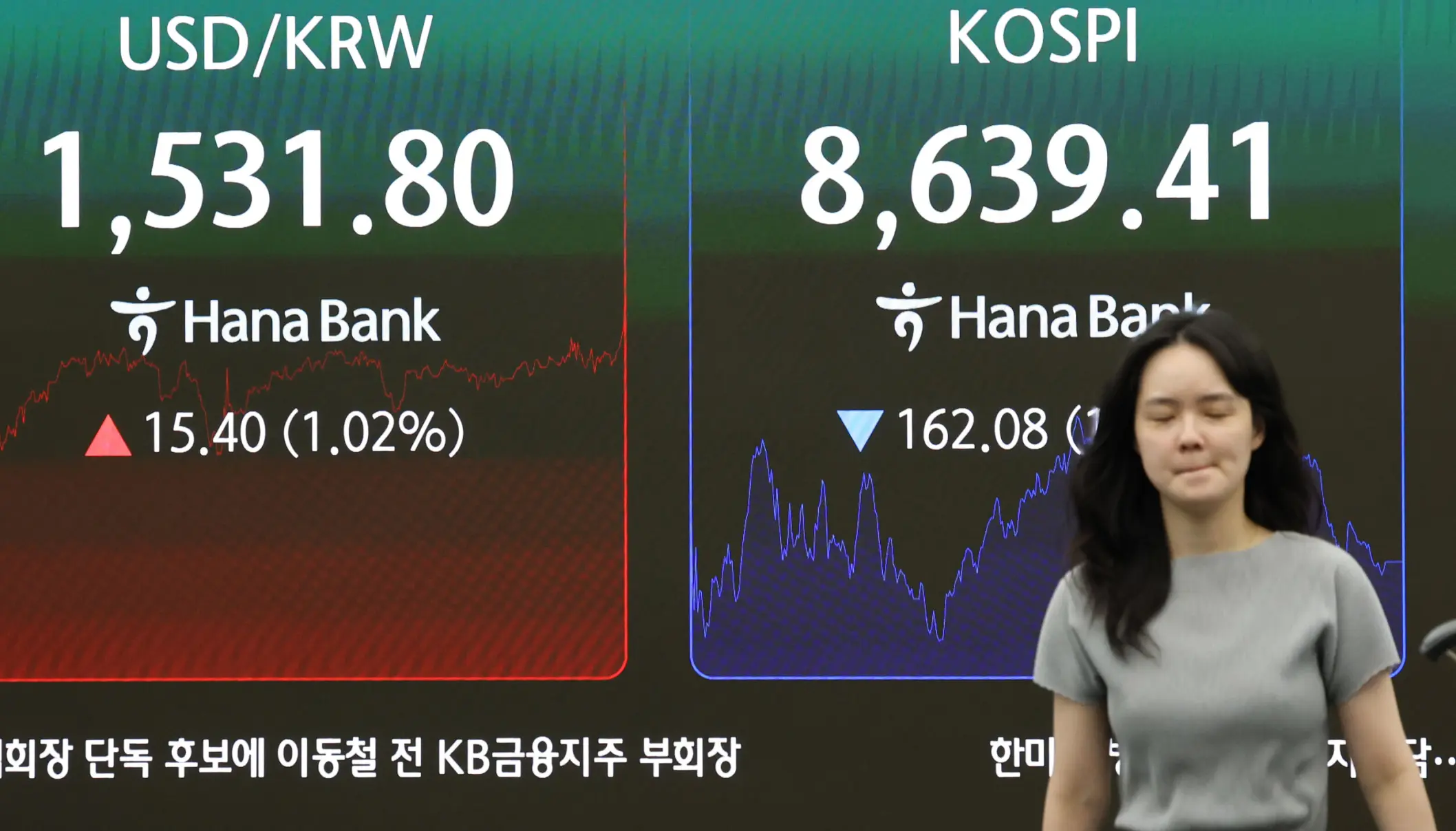 Who is fueling retail investors' greed? | The Kospi is now approaching 9,000. Yet only a minority seem truly content. Whether they have made money or not, many retail investors remain anxious. Park Su-ryon The author is the deputy editor of Content Division Three and the head of corporate research at the JoongAng Ilbo. News of Nvidia CEO Jensen Huang's visit to Korea sent the stock market swinging wildly over the past week. Shares of companies scheduled to meet Huang surged, with some reaching daily price limits or record highs, only to fall a day or two later as investors rushed to take profits. The most striking example came when rumors spread that Huang would throw out the ceremonial first pitch at a baseball game wearing a Doosan uniform. Shares of listed Doosan Group companies jumped across the board on the speculation. Ironically, some of those stocks fell on Thursday, when the pitching appearance was officially announced. Even shares of LG Electronics and Naver, which had shown little reaction to the AI boom, climbed sharply on reports that Huang would attend a dinner gathering with company executives. Retail investors embraced a simple narrative: A meeting with Jensen Huang meant a company would benefit from AI. Day traders seeking quick profits amplified the volatility. What dominated the market was less faith in artificial intelligence than the pursuit of money. Some may argue that such enthusiasm is inevitable in a country that is home to Samsung Electronics and SK hynix, two of the world's leading AI-related chipmakers. Others may note that similar speculative behavior exists in U.S. markets. Yet for many retail investors, especially those investing with borrowed money, the reality is far less appealing. What appears to some as a market full of opportunities can be a dangerous environment for individuals exposed to heavy losses. The government has also contributed to the fever. At the end of last month, Korea introduced its first exchange-traded funds (ETF) designed to deliver twice the daily return of a single stock, namely Samsung Electronics or SK hynix. The move was intended in part to prevent funds from flowing into similar products listed in Hong Kong. The result has been even greater concentration in semiconductor-related investments. These leveraged ETFs change hands frequently and have added to market volatility. It is fair to ask whether this truly creates better opportunities for ordinary investors. The enthusiasm of Korean retail investors cannot be explained by semiconductor optimism alone. Since the launch of the Lee Jae Myung administration, policymakers have pursued measures aimed at drawing money out of real estate and into equities. Two revisions to the Commercial Act and tighter real estate lending regulations have played a role. In addition, the National Pension Service decided to postpone portfolio rebalancing and increase its domestic investment allocation, reinforcing expectations of continued support for the market. The government also appears unwilling to reconsider taxation on stock trading gains. While labor income remains taxed, investment gains continue to enjoy favorable treatment. For an administration that presents itself as progressive, the contrast is difficult to ignore. Against this backdrop, the Kospi is now approaching 9,000. Yet only a minority seem truly content. Whether they have made money or not, many retail investors remain anxious. Warning signs are accumulating: Samsung Electronics and SK hynix account for roughly half of total market capitalization, margin trading has reached a record 38 trillion won ($26.2 billion) and short-selling balances have climbed to 22 trillion won. Recently, President Lee expressed displeasure with a news article citing a securities firm's report that argued the Kospi would stand at only 4,100 without semiconductor stocks. On his X account, Lee remarked that the figure should instead be viewed positively because the market would still be at 4,100 even without semiconductors. Yet... | — | ||||||
| 6/5/26 | 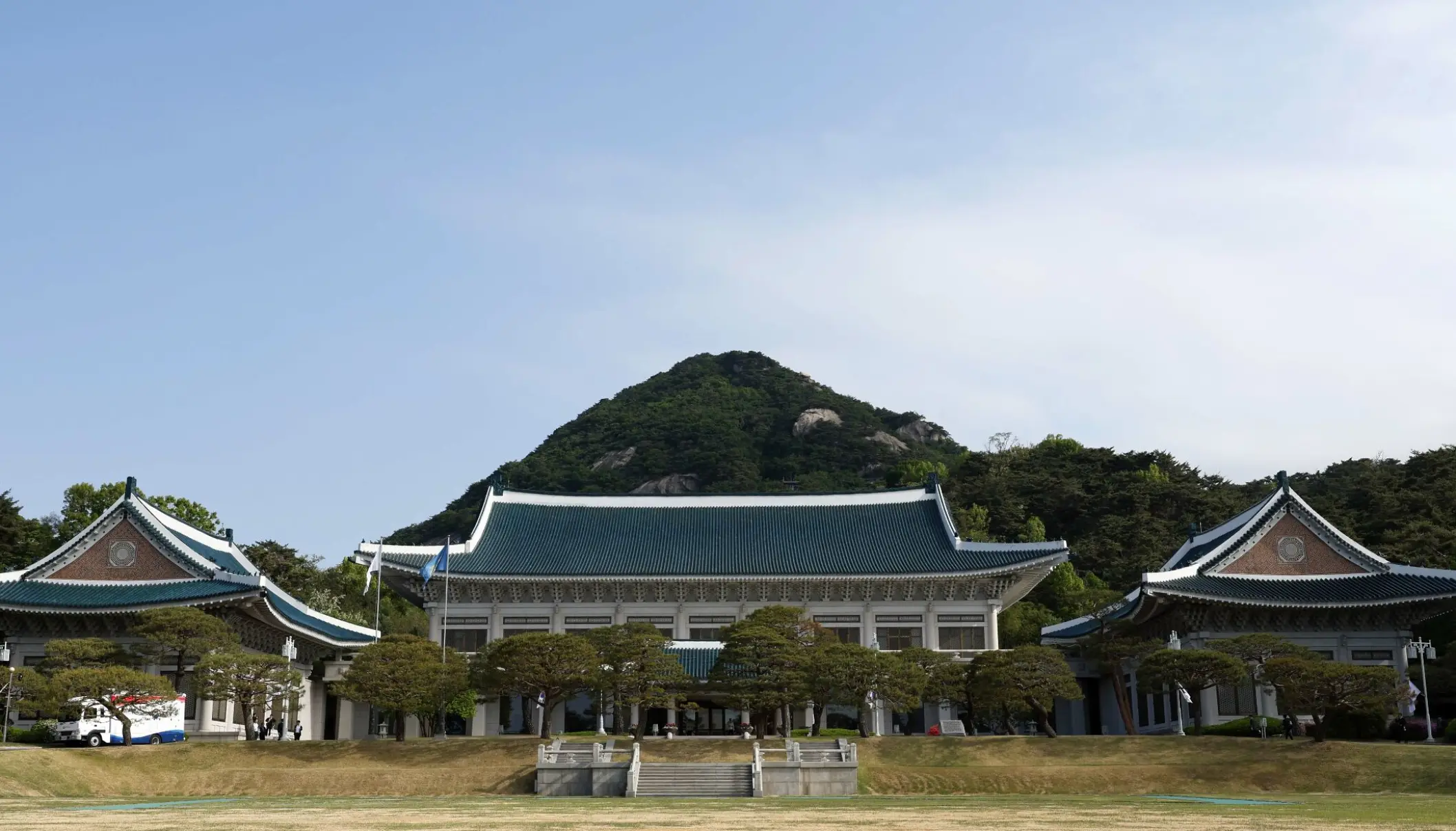 Time to design a Korean system of governance | The task of our time is not merely to redistribute power. It is to build a distinctly Korean system of governance — transparent, legitimate and dynamic — with institutions capable of meeting the demands of a new era. Cho Yoon-je The author is a special appointment professor at the Graduate School of Economics at Yonsei University. There is a saying that for every complex question, there is almost always a simple, neat and plausible answer that is wrong. The idea of Korea's "imperial presidency" often strikes me as one such answer. Whenever constitutional reform is discussed, the same diagnosis appears: The concentration of presidential power is blamed for the failures of Korean politics, and power-sharing is presented as the solution. The history of Korea's presidents is indeed extraordinary. In one of the most successful postwar development stories in the world, it is difficult to find a president of the country who has not faced exile, assassination, imprisonment, impeachment, suicide or criminal investigation. But is this simply the result of excessive presidential power? If Korean presidents truly possessed such authority, why were they unable to use it effectively and legitimately? Why did so many leave office under public criticism or legal punishment? Novelist John Updike, a two-time Pulitzer Prize winner, once wrote in "The New Yorker" that the American presidency is merely a stop on the way to the blessed condition of becoming a former president. Even during U.S. President Donald Trump's first term, former President Barack Obama and his wife earned substantial income through speeches, books and consulting work while continuing to enjoy broad public respect. Former President Bill Clinton followed a similar path. Earlier American presidents also moved on to productive postpresidential lives. George Washington established a whiskey distillery, William Howard Taft became chief justice of the United States and Herbert Hoover pursued his passion for fishing. During my years working in Britain and the United States, I observed that prime ministers and presidents there exercised authority comparable to, and sometimes greater than, that of Korean presidents. The Republic of Korea was founded by rapidly adopting institutions that had evolved over centuries in Western democracies. This created a significant gap between formal institutions and social realities. Korea's first Constitution, modeled largely on that of the Weimar Republic, was drafted and adopted within little more than a month. For thousands of years, the Korean Peninsula had never experienced a system based on the separation of powers. Nor had it undergone the intellectual movements that shaped modern democratic institutions in the West. As a result, a disconnect emerged between legal institutions and social behavior. Korea's rapid economic rise was not achieved solely through strict adherence to formal rules. Much of its success came from bridging the gap between institutions and reality through informal practices. Viewed favorably, this was flexibility. Viewed critically, it often involved corruption or legal shortcuts. This pattern extended beyond government. The history of Korea's economic development is also a history of arrests and presidential pardons involving business leaders. Family-controlled conglomerates dominate the economy, yet Korean commercial law contains no formal definition of a chaebol. As conglomerates expanded, practices such as accounting manipulation, preferential transactions among affiliates, cross-support and lobbying became common. In such a structure, controlling shareholders could easily become entangled in allegations of breach of trust, tax evasion or embezzlement. The same reality affected ordinary citizens. Powerful investigative agencies emerged in a society where few individuals or companies could claim perfect compliance with every rule. Korean politics, society and the economy operated under that shadow for decades, and t... | — | ||||||
| 6/5/26 | 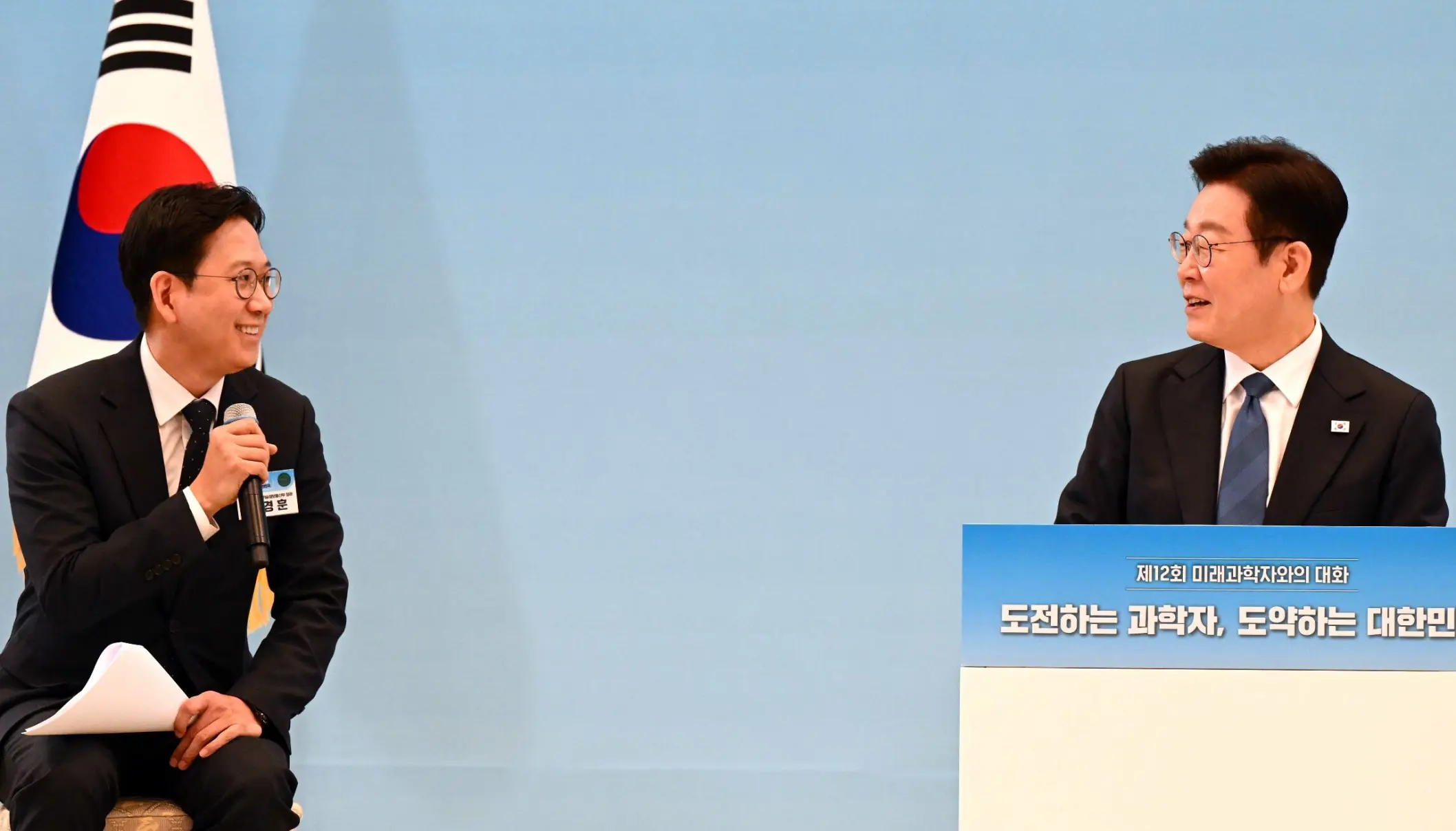 Can free AI for everyone be sustained? | A notable exchange during a Cabinet meeting last month highlighted a growing debate over the government's proposed "AI for Everyone" initiative. The project is part of President Lee Jae Myung's campaign pledge to build an "AI basic society," aimed at guaranteeing a minimum level of access to AI for all citizens. When Lee asked about the program's progress, Deputy Prime Minister and Science and ICT Minister Bae Kyung-hoon replied that preparations were underway, with a target launch in November or December. Bae explained that the service would be provided free of charge through 2028, after which private companies would lead its operation. Lee offered a different perspective. If users are required to pay after becoming accustomed to free access, many may stop using the program, he said. While acknowledging that not everyone needs the same level of service, Lee suggested guaranteeing a minimum level of AI access for all citizens while charging for upgraded features. He also reminded Bae, a former business executive, that efficiency and fairness must be balanced. The exchange revealed two distinct approaches. Bae's comments reflected an industrial policy view in which the government creates initial demand before allowing the private sector to lead. Lee emphasized access to AI as a basic social right. As the technology becomes increasingly important in daily life, concerns about access are understandable. But the government's plans may be moving too quickly. At a press briefing last month, Bae announced a goal of providing every citizen with an AI agent. Unlike chatbots, which simply answer questions, AI agents are designed to perform tasks on behalf of users. The government also plans to offer specialized services for older adults and socially vulnerable groups. The challenge is that expanding free access does not automatically create a sustainable service model. During the internet era, user data became the foundation of targeted advertising, and this allowed technology companies to generate substantial revenue. Generative AI operates differently. User interactions may help improve services, but they do not automatically create enough revenue to offset the significant costs of computation. AI agents are even more expensive because they must understand requests, gather information and repeatedly carry out multiple tasks. Questions of quality and accountability also deserve careful consideration. For AI for Everyone to become a nationwide program, it must first provide quality responses that users who are familiar with commercial AI services find acceptable. But the program's performance and operational stability have not been publicly verified. Promising advanced agent functions before these basics are proven may be premature. The risks increase if AI agents become linked to public services. Incorrect information or inaccurate guidance could cause administrative problems. The more strongly the government promotes the program as a free national service, the more likely citizens are to regard it as a public service. If errors occur, responsibility will inevitably fall on the government. Another unresolved issue is who determines the scope of free services. Private AI providers normally decide where to draw the line between free and paid features. Under the government's model, however, public funds would support free access for all citizens. If participating companies limit usage because of rising costs, public dissatisfaction is likely to be directed at the government. On the other hand, if the government demands broader functionality to satisfy users, it risks interfering with private-sector pricing and service design. A better approach would be to foster competition among multiple AI providers while limiting government intervention afterward. Extending de facto free-service requirements beyond 2028 could distort the market and weaken innovation. The program could become dependent on government subsidies rather than competitio... | — | ||||||
| 6/5/26 | 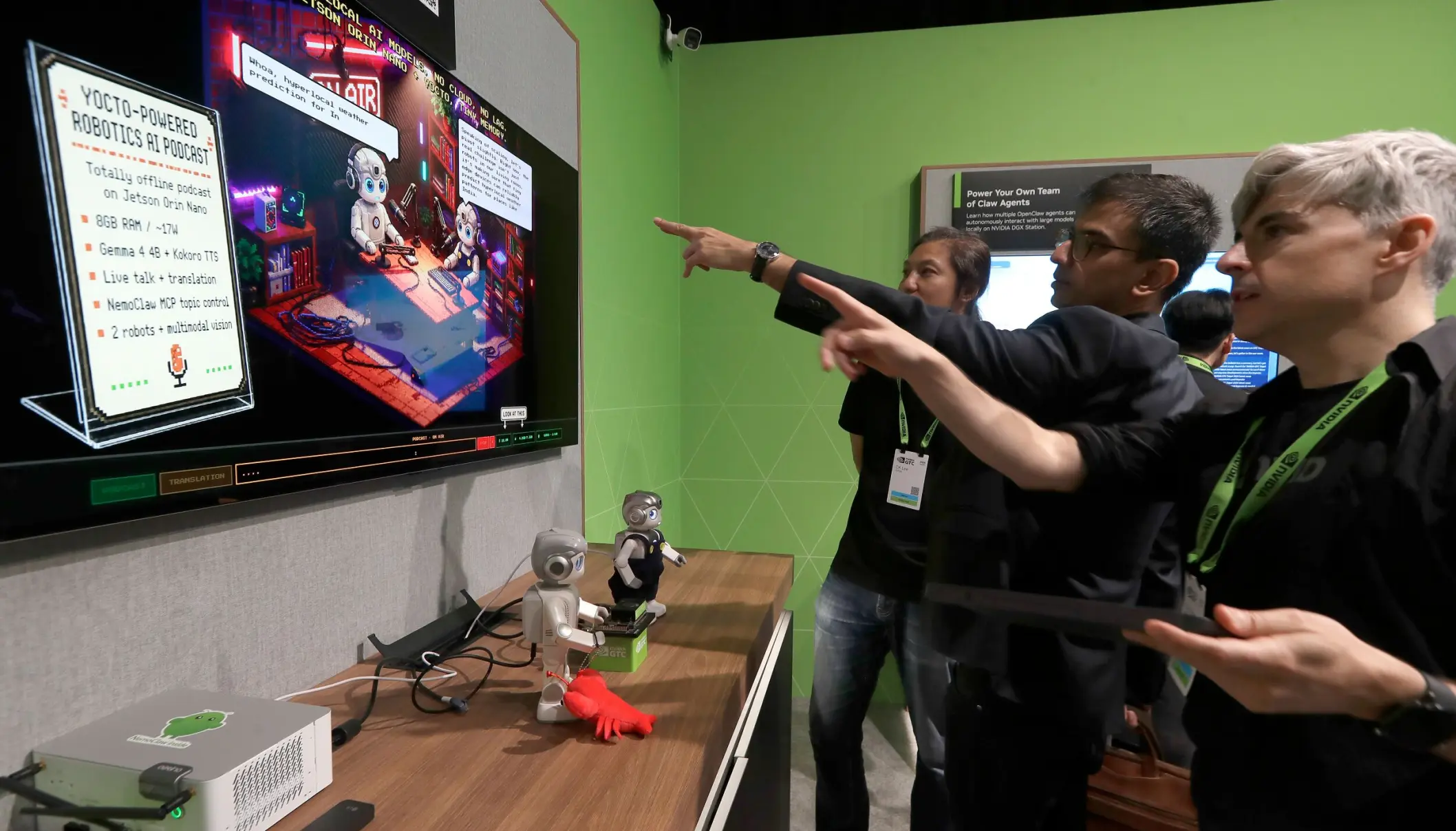 Token anxiety and the hidden cost of control in the AI era | Automation that lacks clear rules about when AI should stop and when human verification should begin creates a new form of waste. An uncontrolled loop is inefficiency disguised as efficiency. Park Chul-wan The author is a professor of Department of Smart Automotive Engineering and Future Mobility Master's Program at Seojeong University. The atmosphere at Silicon Valley house parties is changing. Developers no longer keep checking social media feeds or stock prices. Instead, many find themselves constantly monitoring the status of AI agents running in the background. Venture capitalist Nikunj Kothari has called this phenomenon "token anxiety." A token is the basic unit of computation used by artificial intelligence. As AI systems work around the clock, humans increasingly worry about what those systems are doing. Tokens also carry a financial cost. The more tokens an AI system consumes, the higher the bill. Yet the deeper issue is not computing expenses themselves but the cost of maintaining human control over increasingly autonomous systems. The trend is closely tied to the rise of "vibe coding." Rather than writing code line by line, developers describe a desired outcome in natural language and let large language models handle the implementation. Users see only the finished result, much like a completed dish placed on a dining table. Hidden from view are countless model calls, debugging cycles and iterations taking place behind the scenes. The less transparent the process becomes, the more invisible costs accumulate. During the prototype stage, this approach can appear revolutionary. Once a product enters real-world operation, however, the tradeoffs become clear. If developers do not fully understand AI-generated code, even minor bugs can be difficult to fix. Users become less like programmers and more like managers. They spend additional time providing context, validating outputs and monitoring errors. When the technical debt and maintenance burden left by AI-generated code are taken into account, the long-term cost of control can easily exceed visible server expenses. The same principle applies to physical AI systems operating in the real world. Because humans cannot continuously monitor and intervene in physical space in real time, systems such as autonomous vehicles must make reliable decisions within milliseconds. Competitive advantage does not come from processing ever-larger amounts of data. It comes from achieving a level of reliability that people can trust while using the minimum amount of computation necessary. For that reason, the next stage of AI competition will not be defined solely by model performance. Systems that achieve greater reliability with fewer tokens are likely to outperform larger systems that consume ever-increasing computational resources. The key measure is not volume of computation but the density of meaningful information. Ultimately, token anxiety reflects fear of losing control rather than concern about computing costs. Automation that lacks clear rules about when AI should stop and when human verification should begin creates a new form of waste. An uncontrolled loop is inefficiency disguised as efficiency. This article was originally written in Korean and translated by a bilingual reporter with the help of generative AI tools. It was then edited by a native English-speaking editor. All AI-assisted translations are reviewed and refined by our newsroom. | — | ||||||
| 6/5/26 |  Additional Korean tidal flats likely to join Unesco World Heritage list next month | This article is by Jin Eun-soo and read by an artificial voice. The International Union for Conservation of Nature (IUCN), the advisory body for natural heritage under World Heritage Committee, concluded that tidal flats in Yeosu, Goheung, Muan and Seosan collectively nominated as "Korea Getbol, Korean Tidal Flats Phase Ⅱ" meet the criteria for inscription for preserving biodiversity by serving as critical habitats for endangered species, according to Korea Heritage Service (KHS), in charge of Korea's Unesco world heritage sites nominations. If the second phase gets approved, the expanded serial World Heritage property will comprise six components, including the existing four getbol sites of Seocheon, Gochang, Shinan and Boseong-Suncheon, which were approved in 2021 at the 44th World Heritage Committee. The IUCN additionally recommended analysis of additional getbol regions in Korea with potential of outstanding universal value and continue engaging local community for support. Unesco World Heritage designations are oftentimes opposed by the local community because they often bring stricter environmental regulation and development restriction. The KHS said it will work closely with the Ministry of Oceans and Fisheries, local governments and communities to the fortify preservation and management of Korea's getbol as a world natural heritage. The agency also said it would faithfully implement the IUCN's recommendations to secure final approval for "Getbol, Korean Tidal Flats Phase II." | — | ||||||
| 6/5/26 |  Public verdict for the People Power Party: Reform conservatism and rebuild the right | The People Power Party (PPP) emerged from this local election with a far more consequential mandate than the number of governorships or National Assembly seats it managed to secure. Voters delivered a clear message: Reform the party into a credible leading opposition force representing conservative values and rebuild the conservative camp itself. Seoul Mayor Oh Se-hoon on Thursday described his victory as a "platform for the revival of conservatism." In other words, voters have granted conservatives one final opportunity — much like the "winter magpie's share" he invoked on the campaign trail, a metaphor for a last reserve left amid hardship. His assessment likely reflects what he sensed throughout the campaign: Supporters believe the reconstruction of conservatism is urgently needed if there is to be any meaningful check on the dominance of the Lee Jae Myung administration and the Democratic Party. Whether the PPP leadership, which entered this election without decisively severing ties with the legacies of martial law and the "Yoon Again" movement, truly grasps the depth of that sentiment remains doubtful. Just two months ago, the party leadership was so preoccupied with appeasing its hard-line support base that Oh refused even to apply for the party's nomination. It would be a serious mistake if that same leadership, buoyed by several dramatic come-from-behind victories, were to conclude that it has regained the confidence of the public. The PPP barely managed to hold on to four metropolitan and provincial leadership posts — Seoul mayor, Daegu mayor, and the governors of North Gyeongsang and South Gyeongsang provinces — while suffering crushing defeats elsewhere, losing in 12 regions to the Democratic Party. Even in Daegu, long regarded as the heartland of Korean conservatism, the party prevailed by only 8.87 percentage points. The margin shrank dramatically from last year's presidential election, when PPP candidate Kim Moon-soo gained 44 percentage points more than Lee Jae Myung there. Particularly painful was the loss of Busan and Ulsan, traditional conservative strongholds, after fiercely contested races. Across key battlegrounds, the election exposed the limitations of the party's current leadership. The victory of former party leader Han Dong-hoon in the Busan Buk-A constituency by-election — despite efforts by PPP Chairman Jang Dong-hyeok to force him out — should be understood as a reflection of growing public demand for new conservative leadership. Calls for fresh leadership are likely to intensify both inside and outside the party in the months ahead. The vigorous debate that follows this election will determine whether the nation's leading opposition party, which has often appeared fragmented and directionless, can reinvent itself or continue down a path of self-destruction. In a social media post on Thursday, Jang signaled his intention to confront growing demands for accountability head-on, writing that he would "not turn away from the heavy responsibility entrusted to me" and would "seek a new path." But if party leaders misread the message delivered at the ballot box and remain consumed by personal political ambitions, they risk plunging the party into an even deeper crisis. This is the moment for humility, resolve and genuine self-reflection before a public that has made clear its desire for the rebuilding of conservatism. This article was originally written in Korean and translated by a bilingual reporter with the help of generative AI tools. It was then edited by a native English-speaking editor. All AI-assisted translations are reviewed and refined by our newsroom. | — | ||||||
| 6/5/26 |  Popular character Hirono finds a permanent home with a themed store in Gwangjang Market | This article is by Woo Ji-won and read by an artificial voice. Pop Mart's popular character Hirono has found a permanent home among the mung bean pancake stalls and vintage textile shops in Seoul's Gwangjang Market. The global toy brand unveiled the standalone Hirono Gwangjang Market store during a media event on Thursday, ahead of its grand opening on Friday. Lang, the artist behind Hirono, and boy band ZeroBaseOne member Sung Han-bin attended the press event. The shop marks the fourth permanent Hirono-themed location in the world, following those in Shanghai, Bangkok and London. "We definitely feel very excited and grateful," said Lang in a written interview with the Korea JoongAng Daily ahead of the media event. "During the Seongsu pop-up took place in May, we received a lot of warmth from Korean fans. That gave us great confidence to bring Hirono back in a more permanent way." The Hirono pop-up store in Seongsu drew massive crowds. "We focused on blending [the store] into the existing street and market vibe," Lang said, adding that Hirono's "quiet emotional power" complements Gwangjang Market's character. "[The shop] does not need to be loud or stand in the center. [...] We did not want the store to feel like a brand being placed on top of the market. We wanted it to sit naturally within the market, next to local shops and everyday scenes." The design of the space follows a "Passing Station" concept, Pop Mart said, symbolizing Hirono's journey through other cities before arriving in Seoul and embodying Hirono's brand philosophy of "quietly existing along the [everyday] paths that people pass by to offer comfort without clamoring for attention." Unlike conventional Pop Mart stores, which primarily focus on figurines, the Hirono Gwangjang Market edition expands the character's lifestyle lineup. "Because Hirono is rooted in emotion and companionship, it feels natural for the IP [intellectual property] to move beyond figurines and become part of daily life," Lang said, adding, "We hope Hirono can accompany fans in a more immersive way — through what they wear, what they use and the spaces they spend time in." Lang attributed the milestone to Hirono's unique emphasis on emotion. "[Hirono] reflects many deep and unspoken feelings that people may find hard to express. "For us, creating a standalone themed store brings Hirono's emotion and journey into real life." During the media event, Sung browsed the merchandise. "I personally love the Hirono IP [intellectual property], and it was hard to take my eyes off the space because there are so many hip apparel lines and home decor products that are perfect for daily use, in addition to the figures," Sung was quoted as saying. "I hope that fans will also fully enjoy Hirono's unique sensibilities, along with the delicious food that Gwangjang Market has to offer." The brand plans to significantly expand the store's list of products. Located at 88 Changgyeonggung-ro in Jongno District, central Seoul, the store opens from 10 a.m. to 8 p.m. | — | ||||||
| 6/4/26 |  Election agency budgeted for 110 percent voter turnout, printed only half | This article is by Lee Ah-mi, Ryu Hyo-rim, Kim Gyu-tae and read by an artificial voice. Korea's election agency is facing a deepening credibility crisis after a ballot shortage on Election Day left voters at over a dozen polling stations unable to cast their votes, with new figures showing the agency had budgeted to print enough ballots for 110 percent of eligible voters but printed only half that number. The incident has left political parties on both sides calling for accountability from the National Election Commission (NEC), and experts say it has exposed deep structural problems in an agency that has operated for decades with little external oversight. Fourteen polling stations in Seoul ran out of ballot sheets on Wednesday, forcing voting to continue until 10 p.m. — four hours past the original closing time. Twelve of the affected stations were in Songpa District, southern Seoul, with one each in Gangnam District, southern Seoul, and Gwangjin District, eastern Seoul. The extended hours meant some voters were still casting ballots as live vote counts were being broadcast on television nationwide. Chaos continued as a crowd gathered outside one of the stations that had run out of ballots, in Jamsil 7-dong in Songpa District, physically blocking ballot boxes from being removed and demanding that counting be halted and the election rerun. "This was a serious situation in which voting was distorted, with some voters casting their ballots while watching exit poll results and vote-counting updates," Lee Hyun-chool, a professor of political science at Konkuk University, said. The political backlash from both left and right was swift. The main conservative opposition People Power Party (PPP) leader Jang Dong-hyeok visited the NEC in the early hours of Thursday morning and met with NEC chairperson Rho Tae-ak, demanding that counting be suspended and the election held again. After counting concluded, PPP's election campaign committee co-chairman Song Eon-seok said he had "proposed to the Democratic Party of Korea that an emergency parliamentary investigation into the NEC be conducted." Oh Se-hoon, who won reelection as Seoul mayor, said Thursday that "strict accountability must follow without fail." The ruling liberal Democratic Party (DP) pressed for the resignation of NEC Secretary General Heo Cheol-hoon. "We must consider whether the secretary-general, who bears responsibility for the NEC's administration, should step down," Cho Seung-rae, the party's secretary general, told reporters. The NEC issued a public apology on Wednesday evening. On Thursday, it announced it would establish a committee to investigate what happened. However, it drew a line at calls for a rerun, saying the incident "does not constitute grounds for postponing or rerunning an election under the Public Official Election Act." How did the shortage happen? The NEC said the number of printed ballot sheets in Songpa District was equivalent to 50 percent of its registered voters. Gwangjin District and Gangnam District, where polling was also suspended, printed ballots for 50 percent and 55 percent of their electorates, respectively. This was in line with NEC guidelines instructing regional commissions to secure "a minimum of 50 percent of registered voters" worth of ballots for Election Day. Printed ballots are distributed to polling stations, with reserves held at district election offices to be dispatched where and when needed. "The projection of voter turnout exceeding 70 percent was based on the combined early-voting rate and election-day turnout, but heavier-than-expected crowds at multiple polling stations led to confusion and disruptions," said an NEC official. But the controversy deepened when it emerged that the NEC had received budget from local governments on the basis that it planned to "print ballots equivalent to 1.1 times the total number of registered voters" — yet printed only half that number. "Since a supporter of a particular political p... | — | ||||||
| 6/1/26 |  How history literally lives on through Choi Chang-deok's mastery of dance✨ | traditional Korean dancecultural heritage+3 | — | Cheonbugyeong | — | Choi Chang-deoktraditional dance+5 | — | 7m 51s | |
Showing 25 of 60
Pitch Fit is a Pro feature
See how bookable this show is for guests, which brands already advertise, the per-episode ad value, and the best-fit guest and sponsor profile. The numbers are blurred on the free plan.
How readily this show books outside guests like you.
How proven this show is for host-read sponsorships.
For Guests
ProFor Advertisers
ProUpgrade to Pro to unlock guest cadence, sponsor categories, fit scores, and per-episode ad value for this show.
Chart Positions
3 placements across 3 markets.
Chart Positions
3 placements across 3 markets.