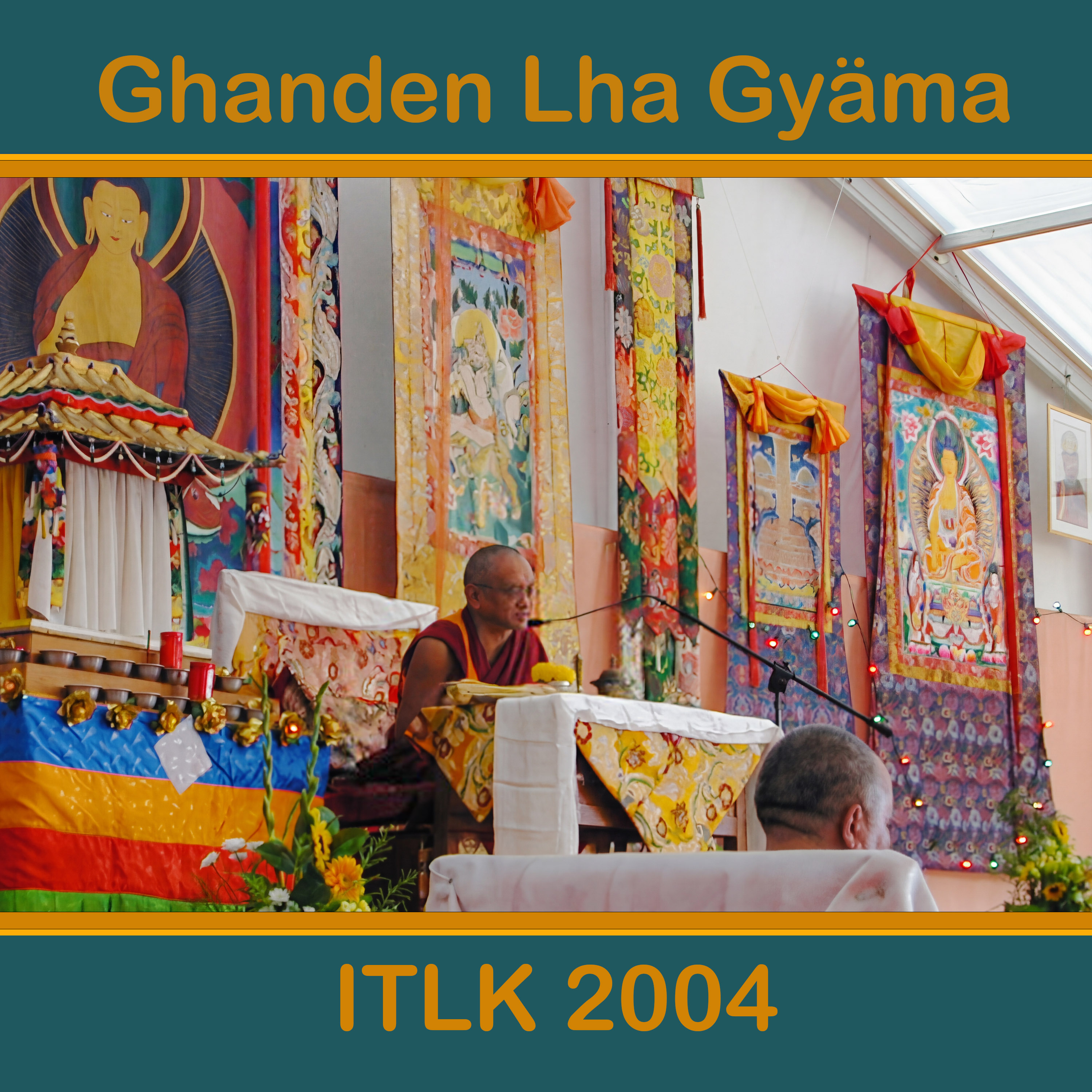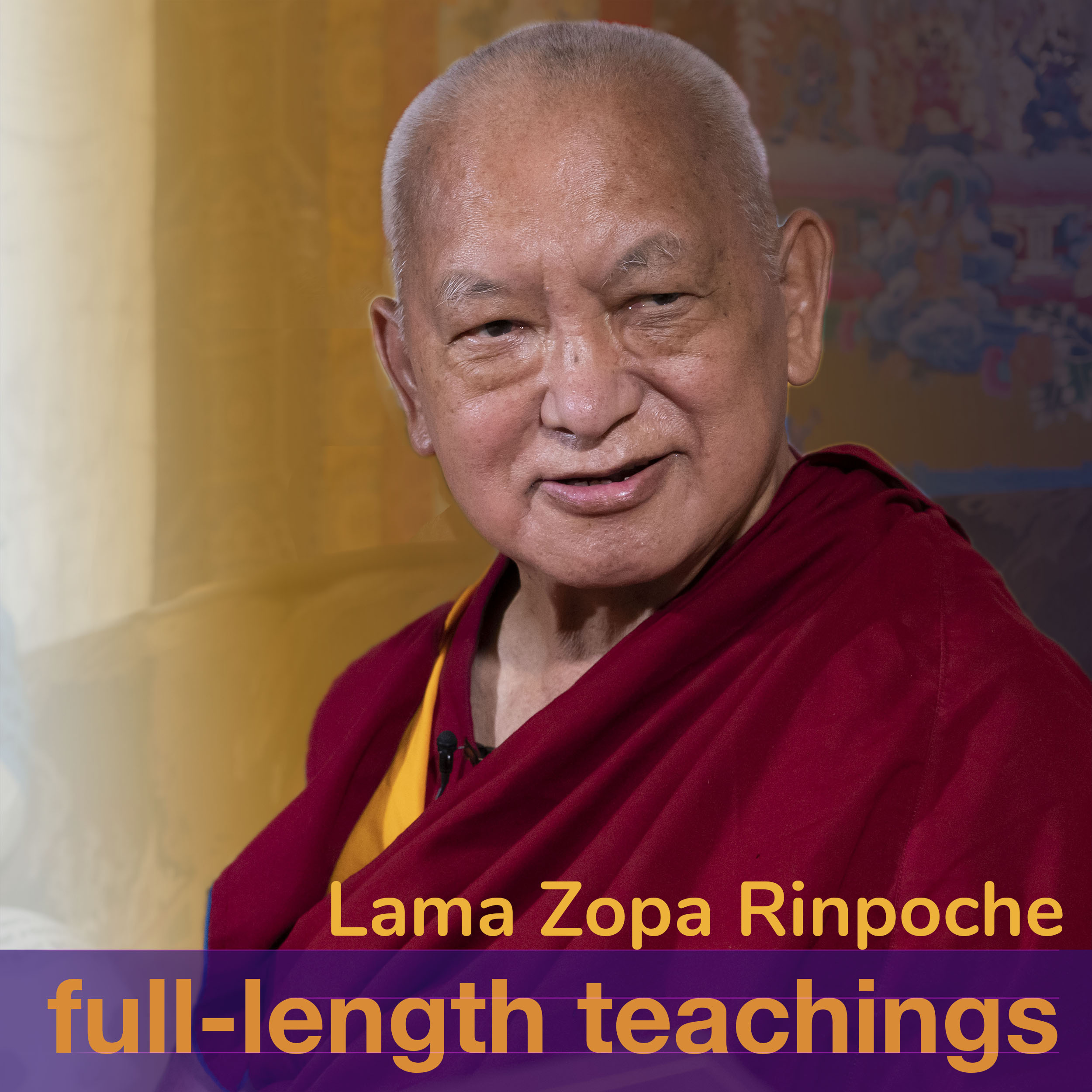
Lama Zopa Rinpoche full length teachings
by Lama Zopa Rinpoche
Insights from recent episode analysis
Audience Interest
Podcast Focus
Publishing Consistency
Platform Reach
Insights are generated by CastFox AI using publicly available data, episode content, and proprietary models.
Most discussed topics
Brands & references
Est. Listeners
Based on iTunes & Spotify (publisher stats).
- Per-Episode Audience
Est. listeners per new episode within ~30 days
10,001 - 25,000 - Monthly Reach
Unique listeners across all episodes (30 days)
25,001 - 75,000 - Active Followers
Loyal subscribers who consistently listen
15,001 - 40,000
Market Insights
Platform Distribution
Reach across major podcast platforms, updated hourly
Total Followers
—
Total Plays
—
Total Reviews
—
* Data sourced directly from platform APIs and aggregated hourly across all major podcast directories.
On the show
From 1 epsHost
Recent guests
No guests detected in recent episodes.
Recent episodes
10 No One Achieved Enlightenment Without Hardships and Blessing the Speech Practice 08-Sept-2004
May 1, 2026
3h 07m 12s
09 How to Practice of Lama Chopa 8-Sept-2004
Apr 24, 2026
Unknown duration
08 Purifying Negative Karma and Power of Regret 8-Sept-2004
Apr 17, 2026
Unknown duration
07 Motivation for and How to Begin the Retreat 7-Sept-2004
Apr 10, 2026
Unknown duration
06 How to Recognize Incredible Fortune and Devote to the Guru 7-Sept-2004
Apr 3, 2026
Unknown duration
Social Links & Contact
Official channels & resources
Official Website
Login
RSS Feed
Login
| Date | Episode | Topics | Guests | Brands | Places | Keywords | Sponsor | Length | |
|---|---|---|---|---|---|---|---|---|---|
| 5/1/26 | ![]() 10 No One Achieved Enlightenment Without Hardships and Blessing the Speech Practice 08-Sept-2004✨ | enlightenmenthardships+4 | — | Maitreya Buddha | Lama Tsonkhapa Institute | enlightenmenthardships+6 | — | 3h 07m 12s | |
| 4/24/26 | ![]() 09 How to Practice of Lama Chopa 8-Sept-2004 | This teaching was given by Lama Zopa Rinpoche at Lama Tsonkhapa Institute in Italy as part of the Ganden Lha Gyama retreat between September 3-30, 2004.00:00:01 Lama Zopa Rinpoche guides Lama Chopa practice.00:09:15 Rinpoche guides taking refuge in the Guru and three precious gems to be protected from the sufferings of samsara and the lower realms. One should generate bodhicitta to achieve enlightenment for the benefit of all sentient beings.00:13:02 Rinpoche leads the motivation for the practice of Lama Chopa.00:26:25 The prostration section of the seven limbs involves guru devotion meditation. The extensive and deep way to think of the guru’s kindness is to think of how the guru is guiding you, liberating you from all the sufferings of samsara, and bringing you to enlightenment.00:50:48 An important practice from the seven limbs is rejoicing, feeling great happiness in all the merits collected from beginningless rebirths by oneself, sentient beings, bodhisattvas, and buddhas. Rejoicing creates the cause to achieve those same qualities and realizations.01:08:16 Rinpoche guides the visualization of receiving the qualities and wisdoms of the Guru, such as profound wisdom, clear light wisdom, and debating skills. These enter oneself and all sentient beings, purifying obscurations and negative karma.01:13:27 The section on the Guru's qualities is very important. Rinpoche recites these qualities extensively in Tibetan. It is better to read this section in one's own language to understand the meaning.Find out more about Lama Zopa Rinpoche, his teachings and projects at https://fpmt.org/ | — | ||||||
| 4/17/26 | ![]() 08 Purifying Negative Karma and Power of Regret 8-Sept-2004 | This teaching was given by Lama Zopa Rinpoche at Lama Tsonkhapa Institute in Italy as part of the Ganden Lha Gyama retreat between September 3-30, 2004.00:00:01 Generate strong regretfulness to make negative karma thinner and limit its power. The more regretfulness generated, the more negative karma is purified.00:01:09 Phenomena affect each other through dependent arising. Reciting the names of the 35 Buddhas has the power to purify many eons of negative karma due to the Buddhas' compassion and prayers.00:04:12 The purpose of one's life is to free all sentient beings from suffering and its causes, and lead them to enlightenment. Therefore one must purify defilements and achieve enlightenment.00:06:02 Even one negative karma of killing can lead to endless suffering results unless it is purified. There is no way to relax without purifying negative karma.00:13:07 When blessing offerings, visualize that through the power of mantra, each Buddha receives limitless skies of offerings, making even one offering very powerful and meritorious.00:21:24 There are two ways to purify negative karma during the confession prayer - generating regret and looking at the emptiness of each negative action. Using emptiness makes the purification practice extremely powerful.00:56:54 At the end of any purification practice, meditate that in emptiness there is no creator, action or negative karma created. Then dedicate the merit while maintaining the awareness of emptiness.Find out more about Lama Zopa Rinpoche, his teachings and projects at https://fpmt.org/ | — | ||||||
| 4/10/26 | ![]() 07 Motivation for and How to Begin the Retreat 7-Sept-2004 | This teaching was given by Lama Zopa Rinpoche at Lama Tsonkhapa Institute in Italy as part of the Ganden Lha Gyama retreat between September 3-30, 2004.00:00:01 Before beginning a deity retreat, generate the proper motivation. Remember the impermanence of life by reflecting on how great beings of the past have passed away, leaving only their teachings and stories behind.00:16:57 No matter who we are, we will definitely die, perhaps even today. Use this awareness of impermanence and death to abandon negative karma and practice virtue.00:37:00 If we died last night without having purified our negative karma, we would be reborn in the lower realms. The wise thing to do is to practice Dharma - abandoning non-virtue and creating virtue to achieve happiness in future lives up to enlightenment.01:07:11 When generating the motivation for retreat, think that the purpose is to achieve enlightenment in order to liberate all sentient beings from suffering. Make the determination to practice with bodhicitta.01:45:48 The actual instructions for beginning the retreat: 1) Refuge and bodhicitta, 2) Guru yoga, 3) Mandala offering, 4) Vajrasattva purification, 5) Actual deity practice. Remember that yourself, the action of meditating, and the object of meditation are all empty of inherent existence.02:24:04 Within the refuge and bodhicitta prayer, one is practicing the three principal aspects of the path - renunciation, bodhicitta, and the right view of emptiness. This is the essence of how to practice during the retreat.Find out more about Lama Zopa Rinpoche, his teachings and projects at https://fpmt.org/ | — | ||||||
| 4/3/26 | ![]() 06 How to Recognize Incredible Fortune and Devote to the Guru 7-Sept-2004 | This teaching was given by Lama Zopa Rinpoche at Lama Tsonkhapa Institute in Italy as part of the Ganden Lha Gyama retreat between September 3-30, 2004.00:00:00 Preliminary prayers by students.00:15:25 As realizations of the three principal aspects of the path are dependent on the root, the realization of the guru devotion, the guru yoga, Rinpoche will teach on Calling the Guru from Afar before going over the commentary to the Lama Tsongkhapa Guru Yoga.00:28:48 Rinpoche mentions how important it is to correctly devote oneself to the guru and refers to the eight advantages of correctly devoting to the virtuous friend and eight shortcomings of having made mistakes in the relationship with the virtuous friend outlined in the Liberation in the Palm of Your Hand.00:34:40 Rinpoche teaches on the preciousness of perfect human rebirth. When people face unbearable problems, they may wish to be animals like dogs or butterflies, thinking those lives are free of suffering. But if their body actually started transforming into an animal, they would panic, unable to handle the loss of human abilities like communication and freedom.00:51:29 Rinpoche tells about his first teachers in Solu Khumbu.01:06:48 Rinpoche tells about his experiences in Buxa and how he met Lama Yeshe. The Lam Rim Chenmo says that the definition of a disciple is the one who is devoting to the guru and the definition of a guru is the object to whom one is devoting. Rinpoche adds that according to Choden Rinpoche, from the teacher’s side there also has to be the recognition that this is a disciple.01:08:20 Rinpoche tells about His Holiness Serkong Dorje Chang.01:16:26 Dedications prayers.Find out more about Lama Zopa Rinpoche, his teachings and projects at https://fpmt.org/ | — | ||||||
| 3/27/26 | ![]() 05 Lama Zopa Rinpoche on Benefiting Sentient Beings Through Various FPMT Projects 6-Sept-2004 | This teaching was given by Lama Zopa Rinpoche at Lama Tsonkhapa Institute in Italy as part of the Ganden Lha Gyama retreat between September 3-30, 2004.00:00:36 Rinpoche emphasizes the urgent need to receive funding to complete the Maitreya Project statue and benefit sentient beings.00:02:24 Rinpoche discusses the importance of supporting Sangha in various monasteries around the world by providing facilities, education, and food.00:03:19 Building holy objects in different parts of the world is as an easy way to help sentient beings purify negative karma, collect merit, and achieve realizations on the path to enlightenment.00:04:04 Rinpoche expresses the wish to establish more beneficial hospitals and social services for the elderly, similar to successful projects already underway in Australia.00:07:01 The importance of Universal Education is discussed, especially in countries with a lot of violence. Rinpoche praises an existing project in India that has been very beneficial in developing students' minds.00:10:38 Urgent social service needs in Mongolia are highlighted, such as providing food and shelter for the homeless. Establishing good monastic education with qualified teachers is also a priority to help revive Buddhism in Mongolia.00:15:37 In conclusion, Rinpoche emphasizes that the real aim is to bring temporary and ultimate happiness to all sentient beings. He encourages everyone to pray and dedicate their practice for the success of these vast projects to illuminate the minds of all beings.Find out more about Lama Zopa Rinpoche, his teachings and projects at https://fpmt.org/ | — | ||||||
| 3/20/26 | ![]() 04 The Importance of Guru Devotion for Realizations 6-Sept-2004 | This teaching was given by Lama Zopa Rinpoche at Lama Tsonkhapa Institute in Italy as part of the Ganden Lha Gyama retreat between September 3-30, 2004.00:00:54 Lama Zopa Rinpoche introduces Calling the Guru from Afar, a profound text by Phabongka Rinpoche that contains lamrim and tantric path.00:02:53 Without a guru, one cannot achieve realizations and enlightenment, even if one knows many texts by heart. Devotion to the guru is the cause of receiving blessings and attaining realizations.00:11:51 When devotion is lost, it becomes difficult to benefit the mind and have realizations, even from hearing Lamrim teachings. Devotion needs to be stable and established by reasoning.00:19:09 The objective of one's life is not just happiness for oneself, but to achieve enlightenment in order to enlighten all sentient beings. This is the greatest profit and success.00:27:46 Lama Zopa explains the yoga of eating - making offerings with each bite of food and meditating that oneself and the food are empty. This becomes a means of collecting extensive merit.00:40:57 In reality, despite the diversity of phenomena, everything is empty. Things function while being empty. Our basic meditation should be on emptiness.Find out more about Lama Zopa Rinpoche, his teachings and projects at https://fpmt.org/ | — | ||||||
| 3/13/26 | ![]() 03 Why Tantra is a Quick Path to Enlightenment 5-Sept-2004 | This teaching was given by Lama Zopa Rinpoche at Lama Tsonkhapa Institute in Italy as part of the Ganden Lha Gyama retreat between September 3-30, 2004.00:01:57 It is extremely important to practice Guru Yoga, which involves developing compassion, power, and wisdom. This enables one to do perfect work for all sentient beings.00:27:23 By doing Lama Tsongkhapa Guru Yoga practice, one establishes the root of all goodness and collections of merit in this and future lives up to enlightenment. It makes one's listening, reflecting and meditation practice very effective.00:48:45 The Lama Tsongkhapa Guru Yoga practice helps one retreat from negative actions of body, speech, and mind. Keeping the mind in renunciation, bodhicitta, and right view also helps retreat from negativities.01:05:05 In Tantra, one practices the path that harmonizes with the four purified results - purified place, body, enjoyments, and deeds. By visualizing these now, one collects unimaginable merit and quickly progresses on the path.01:28:28 In Tantra, one's mind simultaneously focuses on the deity's holy body (method) while understanding its emptiness (wisdom). This unified practice of method and wisdom is extremely powerful for quickly achieving enlightenment.01:42:33 The four classes of Tantra - Kriya, Charya, Yoga and Anuttarayoga, were taught by the Buddha to utilize attachment in the path to enlightenment according to the practitioner's capacity. The highest class, Anuttarayoga, enables achieving enlightenment most quickly.Find out more about Lama Zopa Rinpoche, his teachings and projects at https://fpmt.org/ | — | ||||||
| 3/6/26 | ![]() 02 How to Generate the Awakening Mind 3-Sept-2004 | This teaching was given by Lama Zopa Rinpoche at Lama Tsonkhapa Institute in Italy as part of the Ganden Lha Gyama retreat between September 3-30, 2004.00:00:00 Rinpoche leads the motivation and protector prayers.00:26:00 Rinpoche gives a commentary on a quote from Lama Tsongkhapa about giving up the essenceless activities, like casting the husk, and practicing Dharma.00:51:00 Rinpoche explains the meaning dag nyen - all sentient beings being one's kin.00:57:35 From beginningless rebirths, every sentient being has cherished us more than themselves, especially when being our mother, suffering numberless times for our well-being, happiness, and even our education, creating so much negative karma due to not having Dharma wisdom. Even those who abuse us in this life have done this numberless times, and they continuously suffer in the lower realms without even one second of freedom from samsaric suffering, so we must generate compassion and loving kindness towards them.01:36:15 All the Buddhas and bodhisattvas whom I pray to, follow, who inspire me, all the rest of the Mahayana path realizations come from suffering sentient beings.01:50:50 Rinpoche leads the analytical meditation on taking responsibility to free suffering sentient beings and generating bodhicitta.01:54:10 Rinpoche explains the importance of Highest Yoga Tantra in achieving enlightenment.02:19:50 According to Lama Tsongkhapa tradition, integrating Chakrasamvara, Guhyasamaja and Yamantaka makes it possible to achieve enlightenment quicker.Find out more about Lama Zopa Rinpoche, his teachings and projects at https://fpmt.org/ | — | ||||||
| 2/27/26 | ![]() 01 The Best Solution for World Peace is Practicing Dharma 3-Sept-2004 | This teaching was given by Lama Zopa Rinpoche at Lama Tsonkhapa Institute in Italy as part of the Ganden Lha Gyama retreat between September 3-30, 2004.00:04:23 Lama Zopa Rinpoche thanks the organization and Lama Tsongkhapa Institute for providing the facilities and course.00:08:46 To achieve enlightenment, we need to engage in both study and retreat. Dromtonpa explained, “While I am listening, I am reflecting. While I am reflecting, I meditate.” Listening, reflecting, and meditating should be practiced without separation.00:16:15 Without learning and explanation, there is nothing to meditate on, except delusions. The more we practice, the more powerful our actions become to benefit others.00:22:48 Even with intellectual understanding we can benefit so much, but especially if we have realizations, we are able to offer very deep benefit to others.00:24:54 The meaning of "transmigratory beings": all those sentient beings who are transmigrating to one of the six realms under the control of karma and delusion.00:42:43 If it was only up to the compassion and power of the Buddhas, there would not be a single suffering sentient being left. Sentient beings need to make effort from their side to change their karma.00:59:14 The best way to benefit sentient beings is by learning and practicing Dharma - stopping non-virtuous actions and engaging in virtuous ones. This enables us to give others the ultimate benefit.01:01:45 Even just by educating others in the Four Noble Truths, we can offer incredible benefit and lead them to ultimate happiness. This is the best solution and our contribution to world peace.Find out more about Lama Zopa Rinpoche, his teachings and projects at https://fpmt.org/ | — | ||||||
Want analysis for the episodes below?Free for Pro Submit a request, we'll have your selected episodes analyzed within an hour. Free, at no cost to you, for Pro users. | |||||||||
| 2/23/26 | ![]() Whatever Happens in Your Life, Be Happy - Teaching #132 | Lama Zopa Rinpoche continued his video teachings on thought transformation from Amitabha Buddhist Centre in Singapore in August. Here is a summary Thought Transformation video #132, offered on August 14, 2022: Make your suffering into the best happiness, Rinpoche urges us. All of the pain we face in life came from our mind—our self-cherishing thought with attachment, anger, and ignorance harmed others and now we experience the evolution of that. We can use our pain as a cause to achieve enlightenment, not only for ourselves like taking drugs for our benefit alone, but for all sentient beings. This is so important to write down and remember every day. When something undesirable happens, remember this. Whether physical or mental pain—we can make it into the best happiness by enjoying it. Every single suffering of all sentient beings we take onto the path of enlightenment. This makes life so happy.Whenever we see a suffering sentient being we can do this, we can practice tonglen, by sincerely taking on other sentient beings’ suffering and giving our happiness to them in return. Each time we do tonglen, we collect more merit than the sky and become closer and closer to enlightenment, and more and more distant from samsara. The goal is to experience the suffering of sentient beings so that they become enlightened, free from samsara. While there is pain, death, relationship problems, etc., we experience it for all sentient beings, for them to be free from suffering and achieve enlightenment. | — | ||||||
| 2/23/26 | ![]() 14 Transcending Materialism and Ego 01-May-2003 | The purpose of our life is not just to accumulate wealth or power. These pursuits alone cannot bring true satisfaction or happiness. In fact, the more we chase after material wealth without a good heart, the more we experience inner misery and dissatisfaction. Power, without the intention to benefit others, can be dangerous and lead to harm for oneself and others. Fame and reputation also do not fulfil the purpose of human life. Despite achieving fame, many individuals experience unhappiness and even resort to suicide. This shows that fame alone does not bring inner peace and happiness. The lack of spiritual practice and inner development can leave our hearts empty and unfulfilled, leading to a sad and empty life.Even if one possesses extensive knowledge of Buddhist scriptures and commentaries, it is meaningless without a genuine intention to benefit others. Education alone does not bring about inner transformation or positive change. Without practice and a compassionate heart, life remains empty, and the mind remains unchanged or even worse than before.On the other hand, someone with a good heart, even if they have limited intellectual understanding, can experience peace, happiness, and love for others. With a good heart, all external wealth, power, and education can be used to benefit sentient beings and bring them happiness. Fame and reputation can be used as a means to inspire and encourage others on the path of spiritual practice and benefit.Blocked by negative karma and defilements, one cannot experience the teachings as they are meant to be understood. Without continuous purification and a genuine connection between the teachings and one's heart, intellectual understanding alone does not lead to experiential transformation.Dedication is also essential as it safeguards the merits we have accumulated through our practice. It is important to meditate and deeply contemplate while reciting dedications, rather than merely reciting words. We should dedicate the merits to spreading the Dharma throughout the world and within our own hearts. If the mind is unhappy and depressed, it can lead to physical deterioration and a shorter life. By viewing one's own suffering as representative of the suffering of all sentient beings and voluntarily taking it upon oneself, one can cultivate the mindset of a bodhisattva. The main aim of life is to benefit sentient beings, rather than seeking personal comfort, health, praise, or reputation.This teaching was given at Institut Vajra Yogini, France as part of a Four Kadampa Deities Retreat from April 18-May 11, 2003. You can see all the teachings from this retreat here: https://fpmt.org/media/streaming/teachings-of-lama-zopa-rinpoche/4-kadam-deities-2003/ | — | ||||||
| 2/23/26 | ![]() 12 Embracing Guru Puja for Spiritual Progress 29-Apr-2003 | Guru Puja (Lama Chöpa) encompasses the essence of both sutra and tantra. This practice is the quickest way to achieve enlightenment. Lama Zopa Rinpoche recommends studying His Holiness the Dalai Lama's commentary on Guru Puja, which provides a clear and effective explanation of this essential practice.Taking vows, specifically the bodhisattva vow and tantric vows, helps eliminate obstacles and create conducive conditions for spiritual progress. While many people recite prayers and perform various practices, it is crucial to target the root of suffering, which is the delusions and, especially, the self-cherishing thought. All practices should aim to overcome these obstacles in the mind.We should engage in meditation during prayers to prevent them from becoming mere rituals. Such meditation transforms prayers into a meaningful and transformative practice, preparing the mind for enlightenment and benefiting all sentient beings.We should also generate gratitude and awe for our precious human life and the incredible opportunities it presents for Dharma practice. The chance to practice the Dharma, particularly the lam-rim teachings, is a great fortune, especially when compared to those who lack access to such teachings and live with ignorance. Even though we may have access to extensive teachings, understanding how to integrate them into a path to enlightenment can be challenging without lam-rim guidance.Rinpoche provides commentary on "Calling the Guru from Afar," a profound guru yoga text composed by Pabongka Dechen Nyingpo. The practice combines guru yoga, guru devotion, lam-rim, and highest tantra, making it an effective and profound meditation.Lama Zopa Rinpoche discusses the impermanence of life and the significance of remembering the guru at the time of death. No matter how much one wishes to stay with loved ones or cling to life, there is no choice but to face death. Fear and distress can accompany the moment of death, even for those who may not believe in reincarnation or karma. This fear arises from the intuitive understanding of something terrible happening after death. In order to break free from samsara, we must learn, meditate, and make progress on the path to liberation. We need to take advantage of this precious human life and the opportunities it offers for spiritual growth. Understanding the guru in our hearts will lead to the realization of the dharmakaya, one of the three kayas (bodies) in Mahayana Buddhism.This teaching was given at Institut Vajra Yogini, France as part of a Four Kadampa Deities Retreat from April 18 to May 11, 2003. You can see all the teachings from this retreat here: https://fpmt.org/media/streaming/teachings-of-lama-zopa-rinpoche/4-kadam-deities-2003/ | — | ||||||
| 2/23/26 | ![]() 11 Transformation Through Mantras, Holy Objects, and Moral Conduct 27-Apr-2003 | There is great positive transformation through the power of mantras, holy objects, and moral conduct. This power comes from the compassion of Buddha, who provided these methods for sentient beings to purify negative karma, accumulate merit, and progress on the path to enlightenment quickly. The more we understand the suffering of samsara, the more we can appreciate the kindness of Buddha in offering such methods for liberation.Lama Zopa Rinpoche explains the power and benefits of various mantras, their ability to purify negative karma and lead beings towards enlightenment and the power of holy objects like statues and stupas, even without mantras, in bringing positive results to those who interact with them. The merit accumulated through making offerings to arhats equaling the number of sand grains in the Atlantic Ocean for countless eons is immense. However, merely seeing a statue of Buddha or a picture of Buddha can result in even greater merit.Achieving a human rebirth is incredibly rare and requires the practice of pure morality. Confession and purification are crucial daily practices to protect ourselves from negative karma and maintain pure morality. The practice of confession should be done continuously to ensure a good rebirth and the basis for spiritual realizations.Rinpoche discusses negative karma's suffering results, including health problems and rebirth in unhappy realms and stresses the importance of accumulating positive karma through virtuous actions, mantras, and blessing the environment and all sentient beings in it, even if they are unaware of the benefits. This way, we can create a virtuous atmosphere and purify negative karma for ourselves and others.Negative karmas, like killing, can perpetuate endless suffering unless we engage in purification practices and alter our behaviour. Contemplating the frequency of our negative actions in this life and acknowledging their cumulative impact across countless past lives is essential. The transformative power of dedicated practice and adopting moral behavior to prevent further negative actions, not only brings inner peace and happiness but also benefits other sentient beings by averting harm.This teaching was given at Institut Vajra Yogini, France as part of a Four Kadampa Deities Retreat from April 18 to May 11, 2003. You can see all the teachings from this retreat here: https://fpmt.org/media/streaming/teachings-of-lama-zopa-rinpoche/4-kadam-deities-2003/ | — | ||||||
| 2/23/26 | ![]() 10 Khunu Lama Rinpoche and Taming the Mind 25-Apr-2003 | The great bodhisattva Khunu Lama Rinpoche, a profound scholar and yogi had extensive knowledge of Buddhist scriptures and teachings. His Holiness the Dalai Lama received extensive commentary on the Bodhicharyavatara from him. Lama Zopa Rinpoche attributes the origins of FPMT chanting practices to Khunu Lama Rinpoche.Khunu Lama Rinpoche's teachings became widely known, with people seeking blessings from him. His teachings for the monks at Kopan Monastery emphasized the need to tame their minds and the importance of lam-rim teachings in this process.All teachings in Buddhism are meant to help us actualize wisdom, and the main teaching for this purpose is the Perfection of Wisdom, which is the revelation of the truth. Buddha liberates sentient beings by revealing this truth. Bodhisattva Chenrezig requested teachings from Buddha Shakyamuni on the Perfection of Wisdom. Reciting the name of Chenrezig, his mantra, or extensively explaining, writing down, or making offerings related to Chenrezig leads sentient beings to attain enlightenment in the future.Lama Zopa Rinpoche explains how our feelings and mental states are intimately tied to how we label or interpret situations and objects as positive or negative. These labels are conceptual in nature and influence our emotional responses. Even seemingly external circumstances, such as other people's behaviour, are deeply intertwined with our own interpretations and labels.When we do not remember or apply the basic philosophy of Buddhism, we may carry resentment in our hearts for a long time, causing immense pain. Such prolonged suffering is a result of our own concepts and negative interpretations. These issues are often connected to societal beliefs, cultural norms, and concepts of what is considered "good" or "bad."It is important to accept situations and understand that they are a result of karma. By recognizing that we have harmed others in the past, we can come to terms with the harm we receive in the present and develop patience and understanding.Rinpoche provides commentary on the Four Immeasurables, to cultivate loving-kindness, compassion, joy, and equanimity towards all sentient beings. He also discusses meditating on emptiness to analyze the concept of "I" and to recognize that the self is merely a mental construct, not an inherently existing entity. The "I" we grasp onto is a hallucination, and by meditating on its non-existence, we can gain insight into the emptiness of all phenomena.This teaching was given at Institut Vajra Yogini, France as part of a Four Kadampa Deities Retreat from April 18-May 11, 2003. You can see all the teachings from this retreat here: https://fpmt.org/media/streaming/teachings-of-lama-zopa-rinpoche/4-kadam-deities-2003/ | — | ||||||
| 2/23/26 | ![]() 09 Chenrezig Sadhana Commentary 24-Apr-2003 | We can precede the Chenrezig visualization by calming techniques and breathing exercises, reciting prayers and reflecting on the kindness of Guru Shakyamuni Buddha. Buddha made immense sacrifices for the benefit of all sentient beings, practicing morality, charity, perseverance, concentration, and wisdom for three countless great eons. Integrating Lam Rim meditation with deity meditation and mantra recitation can make the practice more powerful. Chanting serves as a form of meditation, giving us time to reflect and meditate on the teachings and carries blessings from enlightened beings and supports the arising of devotion, renunciation, compassion, and bodhicitta.Lama Zopa Rinpoche explains the three causes of refuge (recognition of suffering and delusion, compassion for sentient beings, and devotion to the Three Jewels) and the distinction between causal and resultant refuge in the path towards enlightenment.Generating bodhicitta by reciting, "I must achieve enlightenment for the benefit of all sentient beings, therefore I'm going to generate bodhicitta" accumulates far greater merit than making offerings to the Buddhas for eons equal to the number of sand grains in the Pacific Ocean, or even the Atlantic Ocean. The act of generating bodhicitta is so powerful that it surpasses unimaginable offerings in terms of merit.When making offerings to Guru Chenrezig, visualize the essence of the offering as generating infinite bliss in his holy mind. Offerings we make during our practice are not just visualizations but are real offerings. Rinpoche guides us through a visualization of Chenrezig, focusing on the deity's form, attributes, and the symbolism of each aspect. Chenrezig's pure body contains countless pure realms of Buddhas within each pore, signifying the power and qualities of the Buddhas. The commentary continues with the recitation of Chenrezig's mantra and the development of great compassion, where we can engage in practices such as Tonglen (taking and giving) to alleviate the suffering of sentient beings and purify our own negativities.We can make requests to Chenrezig using a prayer that includes various requests and aspirations. These requests encompass a wide range of situations and challenges that we may encounter in our lives. We seek Chenrezig's guidance and blessings to overcome them.This teaching was given at Institut Vajra Yogini, France as part of a Four Kadampa Deities Retreat from April 18 to May 11, 2003. You can see all the teachings from this retreat here: https://fpmt.org/media/streaming/teachings-of-lama-zopa-rinpoche/4-kadam-deities-2003/ | — | ||||||
| 2/23/26 | ![]() 08 Breaking the Cycle of Samsara: Eight Mahayana Precepts and Chenrezig Sadhana 24-Apr-2003 | Our current bodies carry the seeds of disturbing thoughts and defilements, and they perpetuate samsara. The continuity of these aggregates, including consciousness, never breaks, constantly circling from one life to the next. The general suffering of samsara includes the impermanence of everything, the unsatisfactory nature of desires, and the inevitability of leaving our bodies behind.Sentient beings have never experienced even a moment of true happiness in samsara because even samsaric pleasures are suffering. The overwhelming suffering experienced in samsara is due to misconceptions about the self and the attachment to impermanent and contaminated phenomena. These misconceptions perpetuate suffering in the realms of samsara, stretching back into beginningless time.We urgently need to break free from these wrong concepts, as they lead to endless suffering. The opportunity to have a human body with the potential for spiritual practice arises from the kindness of sentient beings. Every single sentient being has contributed to this opportunity through their kindness. Achieving liberation, enlightenment, and all levels of happiness depends entirely on the kindness and existence of sentient beings. We need to cherish and work for sentient beings, pledging to free them from suffering and bring them to enlightenment. The root of happiness and spiritual growth lies in cherishing others, and this cherishing originates from great compassion, generated in response to the suffering of sentient beings.By taking the Eight Mahayana Precepts with bodhichitta motivation, the merit accumulated multiplies exponentially, potentially by millions of times. Living in accordance with each precept leads to the accumulation of limitless skies of merit. Each precept serves as an opportunity to collect merit for the benefit of all sentient beings.By abstaining from even one negative karma, such as killing, we can experience the happiness for hundreds or even thousands of lifetimes. Conversely, if we engage in negative actions without purifying them, the suffering that results from those actions can continue endlessly. By rejoicing in our virtuous actions and merit accumulation, we can enhance the power and effectiveness of our spiritual practice.Correctly meditating on method and wisdom is crucial and Lama Zopa Rinpoche provides a detailed commentary on the Chenrezig Sadhana, explaining visualization, mantra recitation, compassion, and purification. This teaching was given at Institut Vajra Yogini, France as part of a Four Kadampa Deities Retreat from April 18 to May 11, 2003. You can see all the teachings from this retreat here: https://fpmt.org/media/streaming/teachings-of-lama-zopa-rinpoche/4-kadam-deities-2003/ | — | ||||||
| 2/23/26 | ![]() 07 Integrating Wisdom and Compassion into Daily Experience 23-Apr-2003 | Everything we perceive, from objects to colours, is a result of the mind labelling and imputing meanings onto them. By recognizing the imputed nature of phenomena and the contradiction between appearance and reality, we can prevent the mind from solidifying mistaken beliefs and contributing to delusion, attachment, and other negative emotions. By focusing on wisdom and understanding the ultimate nature of things we can overcome the ignorance that perpetuates delusions and cultivate a more peaceful and compassionate mind. We should consistently cultivate the motivation to benefit others, similar to a loving mother caring for her child. This motivation should be maintained throughout daily activities, not just during formal Dharma practice. Continuously monitoring and adjusting our intention to align with benefiting others helps maintain a genuine altruistic mindset.By skillfully applying the principles of Dharma, daily actions can become a source of purification and a means to collect extensive merit. We should use the transformative power of intention and mindfulness, even in seemingly ordinary activities like sleeping to integrate Dharma practice into all aspects of our lives, utilizing every opportunity for spiritual growth and benefitting others. Engaging in circumambulation and walking meditation are practical ways to integrate these teachings into daily practice.Our own mind has the power to shape our experiences and emotions. Labelling and interpretation play a significant role in determining what we perceive as good or bad, friend or enemy. By understanding and controlling our labelling process, we can shift from suffering to happiness, and positively influence our own well-being as well as that of others. This emphasizes the importance of mindful awareness and the potential for personal transformation through mental training.Lama Zopa Rinpoche uses the twelve links of dependent origination to illustrate the evolution of samsara, the cycle of birth and death, and how our own mind is at the root of this cycle. Not only do the seven results of suffering come from the consciousness and karma, but all appearances in our world, whether positive or negative, stem from our mind's labelling and conceptualization.We should spend time deeply contemplating the connection between our mind and our experiences. This understanding empowers us to choose our responses and become creators of our own happiness and well-being. By recognizing the role of our consciousness, karma, and ignorance in shaping our experiences, we can take control of our reactions, create happiness, and break the cycle of suffering.This teaching was given at Institut Vajra Yogini, France as part of a Four Kadampa Deities Retreat from April 18 to May 11, 2003. You can see all the teachings from this retreat here: https://fpmt.org/media/streaming/teachings-of-lama-zopa-rinpoche/4-kadam-deities-2003/ | — | ||||||
| 2/23/26 | ![]() Tonglen Is the Main Practice - Teaching #137 | Lama Zopa Rinpoche continued his video teachings on thought transformation from Amitabha Buddhist Centre, Singapore in August and September, 2022. Here is a summary of the most recent teaching recorded on September 14, 2022:By not harming others, we are creating the cause for peace in the future, Rinpoche explains. If we fight those who harm us in this life, it creates the cause to fight them again in future lives. This can go on for eons with no peace. Those who win create the cause to lose in the future, and those who lose create the case to win in the future. This is repeated on and on endlessly, a cycle of negative karma and no harmony. If we follow the path of not harming, not fighting, this is the way to create peace in the future. Rinpoche leads a tonglen meditation starting at 2:35:27 in the teaching.Rinpoche also offered the Refuge ceremony and some advice regarding taking refuge, starting at 49:56 in the teaching. | — | ||||||
| 2/23/26 | ![]() The Benefits of Experiencing Suffering - Teaching #136 | Lama Zopa Rinpoche continued his video teachings on thought transformation from Amitabha Buddhist Centre in Singapore in August and September. Here is a summary of the teaching offered on September 10, 2022:During Rinpoche's September 3 teaching (#134: In Your Life as a Couple, Practice Good Heart), Rinpoche offered the oral transmission for Lama Tsongkhapa's Utilizing Suffering in the Path to Enlightenment. Rinpoche began giving commentary on this important thought transformation text in the September 7 teaching (#135: The Great Difference Between Taking and Not Taking Vows). In this latest teaching from September 10, Rinpoche continues the commentary on Utilizing Suffering in the Path to Enlightenment starting at 40:06.During this commentary, Rinpoche discusses the benefits of experiencing suffering, including:When You Experience Suffering, You Develop Renunciation of SamsaraWhen You Experience Suffering, You Develop Trust in the Objects of RefugeWhen You Experience Suffering, It Dispels ArroganceWhen You Experience Suffering, You Become Careful of Negative KarmaWhen You Experience Suffering, You Enjoy VirtueWhen You Experience Suffering, You Develop Compassion for Sentient Beings | — | ||||||
| 2/23/26 | ![]() The Great Difference Between Taking and Not Taking Vows - Teaching #135 | Lama Zopa Rinpoche continued his video teachings on thought transformation from Amitabha Buddhist Centre in Singapore in August and September. Here is a summary of the teaching offered on September 7, 2022:The most important Dharma, Rinpoche teaches us, is compassion. If you are becoming kinder and more compassionate, this means you are practicing Dharma.Rinpoche discusses the importance of taking vows. Our virtue is much more extensive after having taken vows than if we have not taken any. This is also true for the non-virtues: it is heavier negative karma for someone ordained to commit a trivial misdeed than for a lay person to indulge in the ten non-virtues. This is why it is so heavy when people who hold bodhisattva vows, and even more so, tantric vows, commit misdeeds. We should take and receive vows to receive a human rebirth again because there is no cause for a higher rebirth other than practicing ethics. We create great merit even by keeping even one precept. By taking vows, one's virtue increases continuously—even while sleeping, and by not having vows and committing non-virtue, one's negative karma increases continuously. Because of this, we need to purify our negative karma to stop it from increasing every day.Rinpoche offers the lung of the Vajrasattva long and short mantras (1:31:17), to help us with our practice or purification.During Rinpoche's September 3 teaching (#134 In Your Life as a Couple, Practice Good Heart), Rinpoche offered the lung for Lama Tsongkhapa's Utilizing Suffering in the Path to Enlightenment. In this teaching, Rinpoche began translating and offering commentary on this important thought transformation teaching by Lama Tsongkhapa at 1:40:14. | — | ||||||
| 2/23/26 | ![]() In Your Life as a Couple, Practice Good Heart - Teaching #134 | For those of us living as a couple in relationships, we need to practice having a good heart. With body, speech, and mind, we have incredible opportunities to collect good karma. If we dedicate our own lives to serving others, to create happiness and reduce suffering in others, then we influence our companions to gradually do the same. This is really offering so much help to them, helping them to be free from samsara and attain enlightenment more quickly. Even if not thinking about enlightenment, even if not Buddhist, it is still very logical to practice a good heart because it brings so much happiness to others. Rinpoche offers the oral transmission of Lama Tsongkhapa’s thought transformation teaching, Utilizing Suffering in the Path to Enlightenment at 1:13:44 in the video. At the end of this teaching, Rinpoche also shared some advice offered to a geshe in Singapore who contracted Covid-19. Rinpoche requested that copies of this advice be made available so that those who receive it will, “enjoy the most and be most happy.” This full advice is available to all here: https://fpmt.org/lama-zopa-rinpoche-news-and-advice/how-to-think-about-obstacles-and-look-at-everything-as-positive/ | — | ||||||
| 2/23/26 | ![]() How to Make Your Life Happy - Teaching #133 | Lama Zopa Rinpoche continued his video teachings on thought transformation from Amitabha Buddhist Centre in Singapore in August. Here is a summary of the teaching offered on August 16, 2022:Rinpoche offers some of the history of how he began teaching courses at Kopan Monastery in Nepal and how the FPMT organization began (starting at 28:12).Real happiness comes from a good heart, Rinpoche reminds us, not come from the outside. Using the example of Milarepa, who externally had nothing but had incredible realizations and inner peace and happiness, we can see that happiness comes from the mind, not from what we have. Believing that happiness comes from outside, including how much wealth we accumulate, causes great suffering and dissatisfaction, as well as so much worry and fear.For those of us living as lay couples, Rinpoche advises that we practice the ten virtues together and Rinpoche also suggests practicing the ten Dharma conducts. | — | ||||||
| 2/23/26 | ![]() The Purpose of Living Life as a Couple - Teaching #131 | Lama Zopa Rinpoche continued his video teachings on thought transformation from Amitabha Buddhist Centre in Singapore in August. Here is a summary of the teaching offered on August 13, 2022:To live life as a couple, you need wisdom and compassion, Rinpoche teaches us. If we don't have this, life together is so much suffering, so many problems. This is due to thinking in the wrong way—with the self-cherishing thought and ignorance, which are the opposite of compassion and wisdom. Depending on how much compassion and wisdom a couple has developed is the degree to which they will be happy or suffer. Each person has to have compassion for the other, and also they must each have the wisdom to see which actions in relation to the other are right or wrong. Otherwise, the relationship is total hallucination.The more you learn Buddhadharma, the more wisdom you develop. To try and help each other, encourage each other to abandon negative karma as much as possible and inspire each other to create good karma. To do this, you can engage in compassionate activities together, helping others.In these degenerative times, we desperately need lojong—thought transformation—where we transform suffering into happiness. | — | ||||||
| 2/23/26 | ![]() Anger Destroys Your Happiness - Teaching #130 | Lama Zopa Rinpoche continued his video teachings on thought transformation from Amitabha Buddhist Centre in Singapore in August. Here is a summary of the teaching offered on August 10, 2022:It is very important to understand how anger destroys your happiness. By getting angry at a bodhisattva, our merits are destroyed, we will be reborn in hell, and realizations will be delayed. And by getting angry at a buddha, even more merit is destroyed. Since we cannot tell who is a bodhisattva and who is a buddha, we have to be very, very careful of anger and put so much effort into practicing patience. We can train our mind to practice patience, it gets easier the more we practice. Since anger is the cause of hell suffering, we should stop it. Therefore, motivate every morning to practice patience. Otherwise, anger suddenly arises. You have to prepare yourself with determination to stop it. | — | ||||||
Showing 25 of 159
Sponsor Intelligence
Sign in to see which brands sponsor this podcast, their ad offers, and promo codes.
Chart Positions
10 placements across 10 markets.
Chart Positions
10 placements across 10 markets.