

Insights from recent episode analysis
Audience Interest
Podcast Focus
Publishing Consistency
Platform Reach
Insights are generated by CastFox AI using publicly available data, episode content, and proprietary models.
Total monthly reach
Estimated from 1 chart position in 1 market.
By chart position
- 🇨🇦CA · News Commentary#1225K to 30K
- Per-Episode Audience
Est. listeners per new episode within ~30 days
1.5K to 9K🎙 Daily cadence·49 episodes·Last published 6d ago - Monthly Reach
Unique listeners across all episodes (30 days)
5K to 30K🇨🇦100% - Active Followers
Loyal subscribers who consistently listen
2.8K to 17K
Market Insights
Platform Distribution
Reach across major podcast platforms, updated hourly
Total Followers
—
Total Plays
—
Total Reviews
—
* Data sourced directly from platform APIs and aggregated hourly across all major podcast directories.
On the show
Recent episodes
The history and mystery of Whidden Park Campground
May 9, 2026
32m 38s
Potholes, Pipes, and Plans: Mayor Sean Cameron on the Town Budget and What's Coming This Summer
May 2, 2026
1h 07m 58s
Wind Turbines, Water Pipes, and the Expanding Donut: Warden Nicholas MacInnis on the County's Biggest Challenges
Apr 25, 2026
57m 45s
The New RK MacDonald: What's Coming, What Happens to the Old Building, and Why This Place Is More Than a Nursing Home
Apr 18, 2026
40m 49s
Who Are The Sisters of St. Martha?
Apr 11, 2026
55m 50s
Social Links & Contact
Official channels & resources
Official Website
Login
RSS Feed
Login
| Date | Episode | Description | Length | ||||||
|---|---|---|---|---|---|---|---|---|---|
| 5/9/26 |  The history and mystery of Whidden Park Campground | If you’ve lived in Antigonish for any length of time, you’ve driven past the entrance to Whidden’s Park Campground at the corner of Main Street and Hawthorne — probably hundreds of times. You may have glanced down the lane and kept driving. Most people do. This episode is for everyone who never turned in and wondered what the heck goes on back there. Justin and Anuj sat down with Andrew Whidden — third-generation owner of what is likely the only downtown campground in all of Nova Scotia — for a genuinely delightful conversation about a place that has been operating in plain sight for 65 years, that hundreds of families return to every summer, and that most Antigonishers know almost nothing about. It is, as Anuj puts it, a village inside our village — and it has its own pools, its own playground, its own live music, its own social calendar, and its own tight-knit community of regulars who come back year after year not because of the amenities but because of each other.A Family Property With An Ancient LegacyThe Whidden family history in Antigonish is long enough to reframe how you think about the town itself. Loyalists of English origin, they arrived in Canada in the late 1700s, started in Isaac’s Harbour in Guysborough County, and eventually made their way to Antigonish where they bought a substantial tract of land for farming. The farmhouse at 1 Hawthorne — the one with the distinctive roofline right at the entrance to the property — dates to 1816 and carries a plaque identifying it as the oldest surviving house in Antigonish.The farm itself, in its heyday, was enormous. It extended from the current campground location all the way back through what is now Braymore Avenue and the surrounding subdivisions — which means the Whidden family, over multiple generations, essentially sold off the land that became a significant chunk of downtown Antigonish. There was a grocery business attached, C.B. Whidden and Son, with photographs of the era available in Peggy Thompson’s book Antigonish: A History in Pictures. From Hayfield to Campground: A Perfectly Organic Origin StoryThe transition from farm to campground happened, as Andrew Whidden tells it, almost by accident. In the 1950s and 60s, tourism along the Cabot Trail was starting to boom, and travelers — mostly Americans — were making their way through Antigonish. Some of them knocked on Whidden’s grandfather’s door and asked if they could pitch a tent or park a camper in the field. He said yes. Then he kept saying yes. Then he started charging for it. Then it became a business.This is, Whidden notes, pretty much how early campgrounds everywhere got started. The formalization came gradually — electricity, water hookups, sewer connections, proper facilities — and what began as tents on wheels has evolved into a 154-site campground with two swimming pools, a new playground, a mini home park, two apartment buildings, the original red barn (now used for storage and ice production), and a guest capacity that fills up almost immediately after reservations open in January. The campground once had up to 400 sites when the units were small tent trailers sharing power. Now, with 50-amp electrical service increasingly the standard for large RVs running multiple air conditioners, they run 154 dedicated full-hookup sites and do very well with them.The Culture: It’s About the People, Not the PlaceWhat makes Whidden’s Park work — and what keeps people coming back — isn’t the location, though the location is extraordinary. It’s the community. Regulars know each other. They gather around the same fire pits every summer. They play music, they talk, they watch each other’s kids grow up, and they age through the campground together — young families with toddlers at the playground, eventually teens who’d rather be anywhere else, and then eventually seniors who return once their own kids are grown, parking their campers for the summer and spending long evenings with the neighbours they’ve had for thirty years.One of the most striking illustrations of this community dynamic: a woman named Darcy lives in the mini home park at the front of the property year-round. Every summer, she moves her camper through the gate into the campground — a journey of perhaps fifty feet — specifically to be part of that social world. She also organizes the campground’s annual live music events, fundraises to cover the costs, negotiates with the artists herself, and is apparently quite good at it. Local bands including Hammer Down have played the campground stage. A Cape Breton act is booked for this summer, whose accommodations Darcy is arranging personally. None of this is open to the public. This entire social universe exists just off Main Street and most of Antigonish has no idea.The Urban Campground Paradox: Wilderness Feeling, Five Minutes from DinnerWhat’s genuinely unusual about Whidden’s Park — Whidden believes it may be the only campground of its kind in Nova Scotia, with perhaps a handful of equivalents across Ontario and Alberta — is the combination of genuine campground atmosphere with immediate downtown access. Once you pass through the gate, the old trees close in, the noise of Main Street recedes, and it feels, by all accounts, like you’ve left town entirely. And yet you can walk out of your campsite and be at a restaurant or festival in five minutes.This explains something that puzzles many Antigonishers: locals, including people who live nearby in the county, sometimes choose to spend their summer at Whidden’s rather than at home. Why? You get the campfire, the community, the pools, and the sense of a summer that’s marked off from the rest of the year.Running a Small Town Inside a Small TownThe logistical realities of operating Whidden’s Park turn out to mirror many of the same challenges the Town of Antigonish grapples with. Last summer’s water restrictions hit the campground directly — not just through usage limits but through the pools, which naturally lose water to splashing and evaporation and need topping up. Unable to use town water, Whidden’s team borrowed a 1,000-litre jug, drove it out to James River Falls, filled it up, and used that to maintain the pool levels. The fire ban — which, for the first time last year, applied to private campgrounds that were previously exempt — was a damper in the most literal sense. Sitting around a campfire is, as Whidden puts it plainly, a central part of why people come. Night security handles noise after 10pm. Visitor hours run until 9:30. The mini home park and campground are separated by a gate. Snow from the street gets hauled into the empty campground in winter as a dumping zone. It is, in every operational sense, its own small municipality.65 Years and No Plans to Reinvent the WheelWhidden is clear-eyed about the business: the model works, and he isn’t planning to disrupt it. The main ongoing investment is keeping pace with the electrical demands of larger and larger RVs — about a third of hookup sites are already at 50 amps, with more conversions planned as demand requires. The campground markets itself almost entirely through word of mouth and a listing in the town map, which Whidden supports partly to help the map itself, not because he particularly needs the advertising. Reservations open in January and fill quickly.Coming home to take over the business was, he says simply, the best decision he’s ever made. The campground runs on a combination of operational pragmatism and genuine hospitality — and after 65 years, that formula hasn’t needed much adjusting. Get full access to Let's Talk Antigonish at letstalkantigonish.substack.com/subscribe | 32m 38s | ||||||
| 5/2/26 | 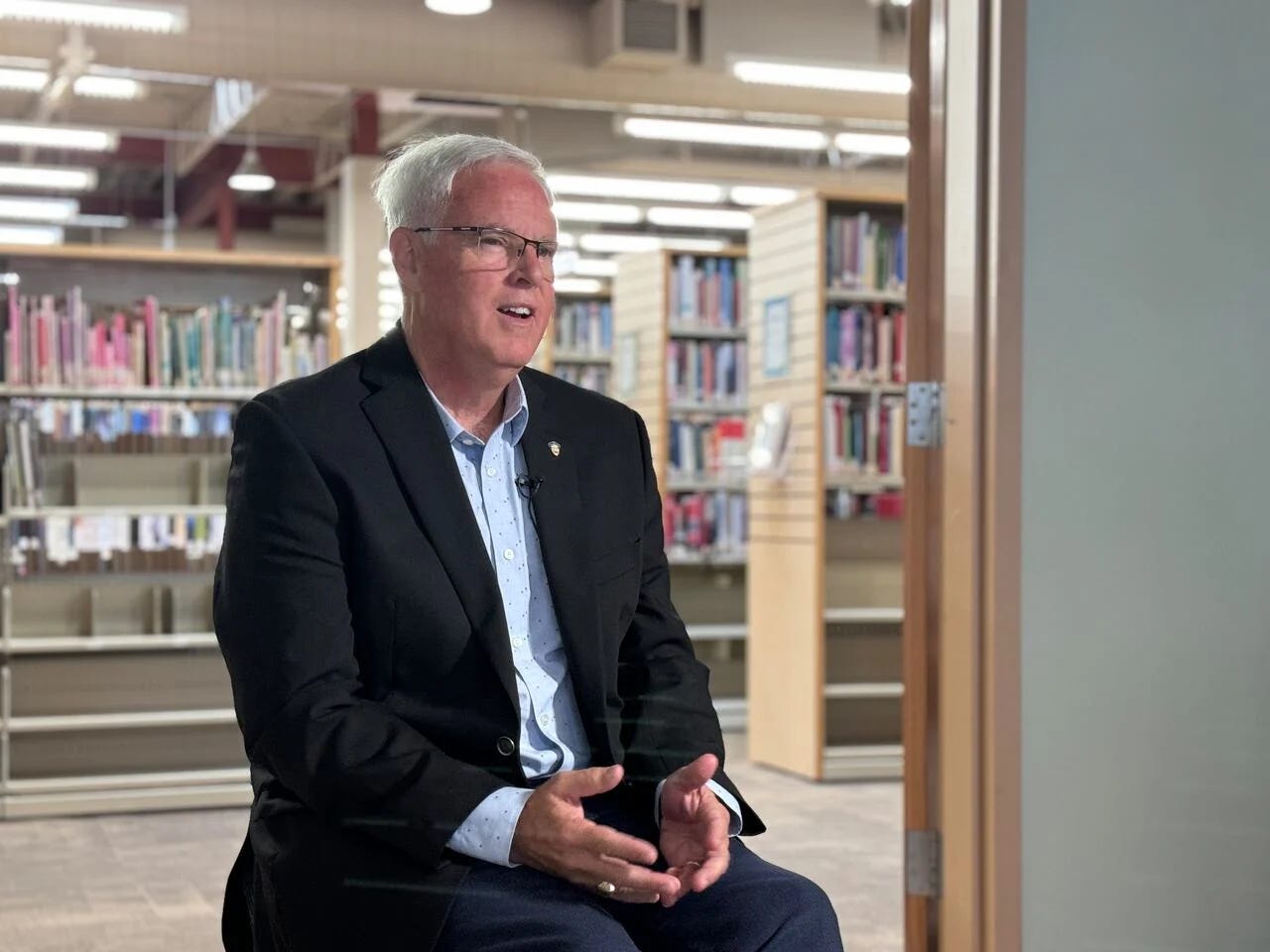 Potholes, Pipes, and Plans: Mayor Sean Cameron on the Town Budget and What's Coming This Summer | Sean Cameron is back. The Mayor of Antigonish returns for his second appearance on the podcast, this time fresh off the approval of the town’s 2026 budget to walk Justin and Anuj through what the town is spending, why, and what residents can expect this summer and beyond.The Town-County Relationship: Better Than You ThinkThe episode opens where the recent episode with The Warden left off: the ongoing renegotiation of the sewer agreement between the town and county. Cameron offers the town’s perspective with characteristic directness. The existing agreement — which capped the county’s share of sewer treatment costs at one-third — has been expired for over a decade, during which time the fringe has grown enormously. County residents, Cameron reveals, currently consume 21% more water than town residents in total volume (if you exclude the town's biggest customers: StfX and the hospital). The county, he makes clear, should be paying more. The new county council under Warden MacInnis agrees that the county should be paying more for sewer, not water. The water rate is set by utility review board.The tone here matters. Cameron is emphatic that the town-county relationship is not adversarial, despite what some residents might assume. “When people say town and county are fighting, I would kind of laugh in their face,” he says. The two municipal units now share a Housing Accelerator Fund coordinator, are investing jointly in infrastructure, and meet regularly at joint council. They may not always agree — like any partnership — but the default position is cooperation, not competition.The Old RK MacDonald Building: It’s Going Up for SaleThis episode contains a significant piece of news that Let’s Talk Antigonish listeners will want to note. The board of the RK MacDonald Nursing Home Corporation — which includes town and county representatives and the Sisters of St. Martha — has made a motion to sell the current Pleasant Street building once the new facility on Church Street Extension opens. The motion now goes back to the town and county as owners for formal approval in open council.Cameron clarifies a few important details. The proceeds from the sale would go back to the province, which is funding the $120+ million new build. The province holds first right of refusal on the old building. And Cameron is personally hoping the province will use the old facility to provide transitional care — housing patients being discharged from acute care who are waiting for permanent long-term care placement, a pressing issue as the baby boomer generation ages into the system. The building carries asbestos concerns typical of 1950s-60s construction, making conversion expensive, but the right buyer with the right purpose could make it work.A New Road for the Hospital: St. Martha’s Way?One of the more exciting — and expensive — items in the budget is $500,000 allocated to survey and plan a new permanent road connecting the hospital area via the Sisters’ property to Cloverville Road, with eventual access to Highway 337. The impetus is both practical and urgent: the current approach to St. Martha’s Regional Hospital is essentially a single-access choke point. During last summer’s construction, traffic was backed up past the Beech Hill turnoff. From an emergency management perspective, that’s a serious problem.The full cost of a properly built road — asphalt, curb, gutter, sidewalk — is estimated at over $15 million. A bare-bones version comes in around $3.5 million. The town is already applying to the federal Build Canada Fund for support and has enlisted the help of local MP Jaime Batiste, MP Sean Fraser, and every mayor and warden across the tri-counties — all of whom have written letters of support. The Sisters of St. Martha’s land is being navigated carefully and respectfully. And Cameron has a proposed name: St. Martha’s Way. The Budget: What’s In, What It MeansThe approved capital budget sits at $19.5 million. The major line items Cameron walks through include:$5.4 million toward the ongoing sewer treatment plant upgrade — the plant is currently operating at roughly 1.68 million gallons per day against a maximum capacity of 1.8 million, meaning rainy days push it over the edge. The upgrade, including new aeration and desludging that addresses the odour issues residents noticed, is being shared three ways between town, county, and the federal Housing Accelerator Fund.New source wells that can supply up to 50% of the town’s current water needs, dramatically reducing drought vulnerability. Last summer the reservoir dropped to half capacity; with the new groundwater source, Cameron is confident a repeat won’t happen — once the wells are connected to the treatment plant, which is still underway.A rain barrel subsidy program — $2,500 in the operating budget — offering residents a cash rebate on receipt for rain barrels purchased. Small but symbolic of a shift in how the town thinks about water.Street patching funding doubled from $250,000 to $500,000. Given that the town must pay for all its own roadwork (unlike the county which receives provincial funding) it’s cost prohibitive to repave all the town roads to an asphalt depth standard that would slow the formation of potholes - a feat that would cost hundreds of millions of dollars. So pothole filling remains the best (and only) solution. Given the backlog of unfilled potholes at the moment, this increase in funding should help. Planning funds for a full renewal of Hawthorne Street, where water pipes as old as the town itself were recently discovered — still working, but not for much longer. By doing the engineering study now, the town will be ready to move immediately when provincial or federal funding becomes available.This Summer’s Construction: What to ExpectCameron is clear that this summer will not be a repeat of last summer’s gridlock. The work currently underway on Main and West Street is expected to be complete by mid-June. After that, the remaining section of West Street from the traffic lights to the roundabout at Highway 7 will be finished — completing the entire corridor for what Cameron hopes will be twenty years. The Church Street roundabout, however, is a wildcard: the asphalt recently laid there by a provincial contractor did not pass inspection and may need to be redone, on a timeline outside the town’s control.James Street, which many were expecting to see dug up this summer, has been deliberately deferred. Council wants a comprehensive engineering plan done properly over the winter, with an RFP out in January so contractors can plan for it — and construction beginning as soon as conditions allow next spring. Cameron is explicit about the lesson: rushing James Street would likely mean doing it twice.One important operational change: the town will have a dedicated communications person for construction projects this summer to ensure businesses, residents, and people travelling from outside the area to use the hospital get adequate advance notice of disruptions. The lesson from last summer was heard loud and clear.Housing: Density Is ComingPrompted by the Housing Accelerator Fund, the town has already rezoned to allow significantly denser residential development — multi-unit buildings on lots previously zoned for single-family homes. The town itself has almost no vacant lots, meaning new housing supply can only come from increasing density on existing parcels. The three new four-unit buildings beside Curry’s Funeral Home are the kind of model Cameron points to as what that looks like in practice.Moving forward, slowly but surelyUpgrading the town’s roads, water, and sewer is a daunting task. The constraints are real; limited revenue, aging infrastructure, a provincial funding system that doesn't have a lot of extra cash for small municipalities, and a to-do list that has been building for decades. But the pieces are moving. The sewer plant is being fixed. New water wells are coming online. A new road to the hospital is being planned. Potholes are being filled. Town and county are, by all accounts, actually working together. None of it is fast, none of it is cheap, but all of it is necessary for Antigonish to grow and thrive. Get full access to Let's Talk Antigonish at letstalkantigonish.substack.com/subscribe | 1h 07m 58s | ||||||
| 4/25/26 |  Wind Turbines, Water Pipes, and the Expanding Donut: Warden Nicholas MacInnis on the County's Biggest Challenges | Nicholas MacInnis is back. The Warden of Antigonish County — and, he confirms, still happily in the role — returns for a wide-ranging second conversation with Justin and Anuj covering two of the biggest issues facing the county right now: the long-overdue renewal of the town-county sewer agreement, and the newly approved Eigg Mountain Wind Project, which is generating both excitement and controversy in roughly equal measure.The Donut Problem: Water, Sewer, and the FringeFor anyone who missed the first MacInnis episode, a quick orientation: the “fringe” — or the “donut,” as Anuj prefers — is the ring of residential and commercial development that exists in the county just outside the town limits. This area uses infrastructure largely owned or operated by the town — water sourced from a James River reservoir, treated at Briley Brook, and distributed through county-owned pipes to areas like Mount Cameron and Tamara Drive — while paying county taxes. The financial and governance relationship between the two municipal units underpins almost everything else in this conversation.The water side is functioning, with a rate structure regulated by the Utility and Review Board (UARB) and expanded piece by piece over the years — including a significant waterline extension out to Highway 337 a couple of years ago. The sewer side is more complicated. The original county-town sewer agreement dates back to the early 1990s, was updated once or twice, and then expired roughly twelve to fourteen years ago. Since then, the expired agreement has continued to serve as the guiding document — meaning the county has been paying approximately one-third of sewer treatment operating costs even as development in the fringe has grown substantially.Both new councils identified renewing this agreement as a priority from the start. The process requires installing flow meters at all eleven county connection points feeding into the town’s sewer treatment plant, collecting twelve months of data to determine what share of total flow the county is actually contributing, and then negotiating a new rate. MacInnis is candid that the agreement probably should have been renewed earlier, but the process is now six months underway.The sewer treatment plant itself is currently about two-thirds of the way through a planned upgrade program — including new aeration systems that improve the lagoon’s processing capacity and reduce odour — with costs split roughly equally between town, county, and the federal government through the Housing Accelerator Fund. Once those upgrades are complete, the remaining capacity is the equivalent of approximately 330 new dwellings. That’s not limitless, and it raises the question of long-term capacity.The county has already commissioned a scoping study through engineering firm CBCL on whether to build its own sewer treatment plant to serve a portion of the fringe — potentially taking ten to twenty-five percent of county flow off the town system and creating room for future growth. A preliminary cost estimate came in at $10 to $12 million. No decision has been made, but the thinking is underway.Planning the Fringe: Infrastructure vs. VisionOne of the more interesting threads in this conversation is the question of whether any body is actually looking at the fringe holistically — not just responding to infrastructure demands as they arise, but proactively shaping what kind of community gets built there. MacInnis is honest about the limits. The county’s role, he explains, is to create conditions for growth — put in the infrastructure with a cushion for future capacity, and let private development follow. Trying to micromanage where and what developers build is not realistic or normal practice for a municipal council.But Anuj pushes on a middle option: not micromanagement, but a shared collective vision — a statement of what the community wants to see, how it wants to urbanize, what kind of spaces and density it values. MacInnis acknowledges this is real and notes that a Housing Needs Assessment was done as part of the federal Housing Accelerator Fund process, projecting around 1,000 new homes needed in the Antigonish area by 2027 under high growth scenarios. That number has since looked ambitious: provincial population growth has dropped from around 5.5% to about 0.5%, partly due to the tightening of federal immigration policies. The county is watching that closely, because population growth isn’t just a nice-to-have — it’s the long-term engine of the property tax revenue that funds everything else.The Eigg Mountain Wind Project: 22 Turbines, 55,000 Homes, and a Moose ProblemThe second half of the episode shifts to the big new development: the recently approved Eigg Mountain Wind Project. The developer is RES — Renewable Energy Systems — an international company with Montreal headquarters, represented locally by community liaison Michael Murphy, a native of Antigonish. Their proposal: 22 wind turbines on Eigg Mountain (named after the Scottish island) producing enough electricity to power approximately 55,000 homes annually and reducing provincial greenhouse gas emissions by an estimated 271,000 tonnes.The project was selected as one of four sites under a provincial Green Choice Program, which identified high-altitude locations with favourable wind data and opened them to competitive bids. RES won the bid, spent the past eighteen months or so doing environmental assessments and negotiating with landowners — all turbines must be on private land, as the program excludes crown land — and recently received provincial environmental approval.That approval came with 58 conditions, including a requirement for a two-year study on the moose population in the project area. This is where it gets complicated.Mainland moose — distinct from the Cape Breton subspecies — are listed as an endangered species in Nova Scotia. The Eigg Mountain area is known moose habitat. Critics, led primarily by the Mainland Moose Conservation Association of Nova Scotia (MCANs), argue that the project will fragment the continuous forest and wetland habitat moose depend on, and that the environmental assessment didn’t adequately account for those impacts. They are pursuing a legal challenge to the provincial approval.MacInnis walks through the county’s role with characteristic clarity: it is limited strictly to ensuring the turbines meet legislated setbacks from roads, property lines, and dwellings. Environmental assessment is entirely the province’s domain. The county has no wildlife biologists, no mandate to evaluate species-at-risk impacts, and cannot legally reject a rezoning application on environmental grounds if all municipal criteria are met. The rezoning will go through the county’s planning advisory committee, then to a public hearing before full council — and the public will have the opportunity to speak for or against it. But if council were to vote it down despite the application meeting all municipal requirements, the developer could appeal to the UARB and almost certainly win.MacInnis is visibly conflicted about this. As warden, he has to stick to his lane. As a citizen, he understands the concern. His bottom line: the province has made its determination with 58 conditions attached — this was not a rubber stamp — and it’s now up to the courts and the legal challenge process to decide whether that determination stands.The Bigger Energy PictureThe conversation broadens into the energy transition more generally, and MacInnis is thoughtful here. Nova Scotia is committed to 80% renewable electricity by 2030 and is in the process of shutting down its coal-fired plants — which currently provide about 40% of the province’s electricity at the lowest cost per kilowatt hour of any source. Replacing that baseline capacity with renewables creates a reliability challenge, because wind and solar don’t produce on demand. The answer being pursued in the region is fast-acting natural gas peaker plants — two are proposed for Pictou County — that can ramp up in minutes to supplement the grid when renewable output dips. None of this is free of trade-offs.How the County Budget Actually WorksThe episode ends with a useful breakdown of county finances. The annual budget is approximately $20 million. Fifty percent of that — $10 million — goes straight off the top to RCMP policing and provincial education costs before the county has any discretion. Fire services take another slice. What’s left for capital investment in roads, sidewalks, water lines, and community grants is roughly $4 to $5 million per year. The county also spends just under $500,000 annually through its community partnerships grant program — 3.5% of annual revenue — allocated to community organizations.The Eigg Mountain project, if it proceeds, will generate approximately $1.3 million annually for the county in revenue — a roughly 6% increase on the total budget. That’s significant money for an organization operating with the margins the county has.MacInnis will surely be back soon to give us the low down on future projects and problems, and update us on the issues we spoke about in today’s episode. Get full access to Let's Talk Antigonish at letstalkantigonish.substack.com/subscribe | 57m 45s | ||||||
| 4/18/26 | 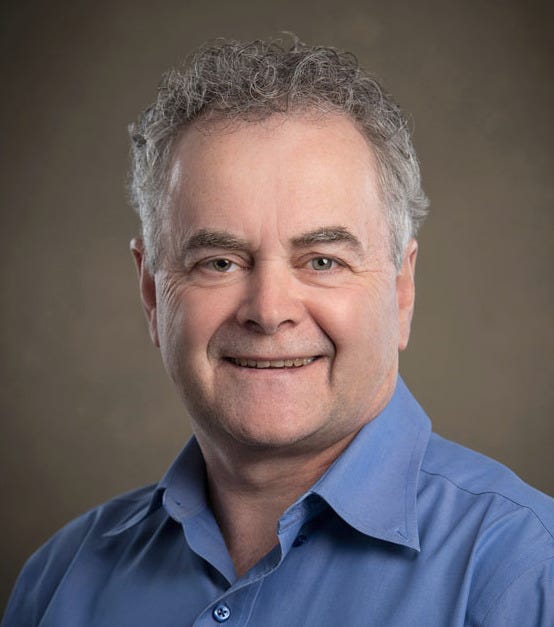 The New RK MacDonald: What's Coming, What Happens to the Old Building, and Why This Place Is More Than a Nursing Home | If you’ve driven past Church Street Extension lately, you’ve probably noticed the construction. That’s the new RK MacDonald Nursing Home going up — a 125,000 square foot facility that has been in the works since 2017 and is on track to open in 2028. It’s one of the biggest building projects in Antigonish right now.Justin and Anuj sat down with Terry MacIntyre — CEO and administrator of the RK MacDonald Nursing Home, 14 years in the role, for a comprehensive look at what’s coming and what it all means for Antigonish.Why a New Building?The journey to a new RK MacDonald started officially in May 2017, when the provincial government under Stephen McNeil’s Liberal cabinet invited facilities to identify buildings that might need replacement. The RK MacDonald put its hand up, and nearly a decade of planning, design, land searching, and construction has followed.The new building will be located at 61 Church Street Extension — a site chosen after the steering committee essentially drew concentric circles around the centre of Antigonish, trying to land the facility as close to downtown, the hospital, and StFX as possible. Many landowners were approached, some weren’t interested in subdividing, and eventually Church Street Extension turned out to be the right spot. The new building is enormous. That said, the bed count goes only from 136 to 144 — because 144 is the provincial maximum allowed for any new long-term care facility. What the extra space buys is dignity and room to breathe: all single-occupancy rooms, wider hallways, purpose-built storage so that mobility equipment doesn’t clutter the corridors, and the kind of design informed by decades of learning what residents actually need.What Happens to the Old Building?This is the question on everyone’s minds — and MacIntyre is refreshingly direct about the honest answer: it’s not decided yet, and the decision doesn’t belong solely to him. Under the provincial Replaced Facility Disposal Policy, the RK MacDonald Corporation has three options once it vacates 64 Pleasant Street: sell it, retain it, or demolish it and sell the land. The corporation owns the building and the land outright; the new build is fully funded by the Department of Health and Wellness, so there’s no financial pressure to sell the old property to finance the new one.What is decided is who’s in the conversation. Town and County council are at the table alongside the board, along with the Sisters of St. Martha, who — despite stepping back from day-to-day operations — still hold formal governance influence over bylaw changes and major decisions. The sisters’ values, MacIntyre says, are still very much embedded in how the RK MacDonald operates. Discussions are ongoing, with no indication yet as to what the future of the old building will be. The beloved garden at the current RK MacDonald, with its wheelchair-accessible raised beds and memory garden, is something MacIntyre is determined to carry forward into the new design. The main entrance of the new building is being designed as a community gathering space, and outdoor programming — from concerts by local musicians like Ty Wallace to vegetable harvests — will be a priority from day one.How Long-Term Care Actually WorksFor anyone who has never had to navigate the system, MacIntyre gives a clear and genuinely useful walkthrough. The RK MacDonald is a fully licensed long-term care facility — distinct from independent living (like the Maples) or the mixed model of Parkland, which offers independent living, assisted living, and full care across its floors. If you or a family member think long-term care might be needed, the first step is contacting Continuing Care, who will send a registered nurse for a home assessment. From there, if the person is deemed to need full care, they go on a waiting list managed entirely by the province — the RK MacDonald has no involvement in who’s on that list.When a space opens up at the RK MacDonald, they have 24 hours to notify Continuing Care, who then works through the list by priority level. The RK MacDonald reviews the incoming resident’s care profile to confirm they have the resources to meet the needs, and the whole process moves quickly — vacancies rarely last more than two days. Applicants choose three priority facilities, and if a spot at one of those comes up and is turned down — particularly if the person is in hospital waiting for transfer — they can potentially be placed at any facility anywhere in Nova Scotia. That’s a healthy pressure, MacIntyre says, that keeps things moving.The per diem charged to residents is determined by a government financial assessment. People with significant assets would typically not be in publicly funded long-term care; for those who are, the daily rate is settled between government and family.The Staffing Story: Training Their OwnLong-term care faces a province-wide staffing crunch, and the RK MacDonald has responded with a solution that MacIntyre is clearly proud of: training their own continuing care assistants (CCAs) on site. Staff go through a provincially registered training program while mentored by experienced colleagues. The new building includes a dedicated education room specifically to support this.The result? The RK MacDonald currently has no vacant CCA positions — a remarkable achievement in the current environment. About 37% of their staff have been there less than three years, and 118 new staff joined across all departments this past year. The onboarding challenge is real, but it’s being managed.A significant portion of that new staff has come through immigration. During COVID, the RK MacDonald connected with an Ontario agency and brought in about a dozen workers from Nigeria — the start of a broader effort that has since included a mix of government and private immigration channels. MacIntyre is candid about the red tape involved and full of genuine warmth for the people who came. The RK MacDonald picks up new staff from the airport, helps them find housing — they even purchased a house on the Church Street Extension property for transitional accommodation — and works to ensure newcomers feel genuinely welcomed. A culture committee now sits alongside the social committee to ensure the staff community reflects and celebrates the diversity it actually contains.A Place That Belongs to the CommunityPerhaps the most striking thing about this conversation is how clearly Terry MacIntyre understands the RK MacDonald as something bigger than a care facility. The Martha spirit — radical hospitality, person-centred care, the belief that every resident deserves to be heard and seen — is explicitly embedded in the organization’s values: compassion, accountability, respect, excellence, and safety. The RK MacDonald recently achieved accreditation with commendation, a voluntary process that costs money and isn’t required, but that the staff pursued because it reflects who they are.Volunteers from the Kinsmen Club raise funds for things like the art program. The Lions Club runs monthly bingos. The high school volleyball team played balloon volleyball with residents over Christmas. Musicians drop in regularly. St. John Ambulance therapy dogs make the rounds. The garden is full in the summer. This is, in the fullest sense, a community institution.The new building on Church Street Extension is on schedule and on budget. Summer 2028 is the target. And whatever happens to 64 Pleasant Street, the conversation about its future belongs to all of Antigonish. Get full access to Let's Talk Antigonish at letstalkantigonish.substack.com/subscribe | 40m 49s | ||||||
| 4/11/26 | 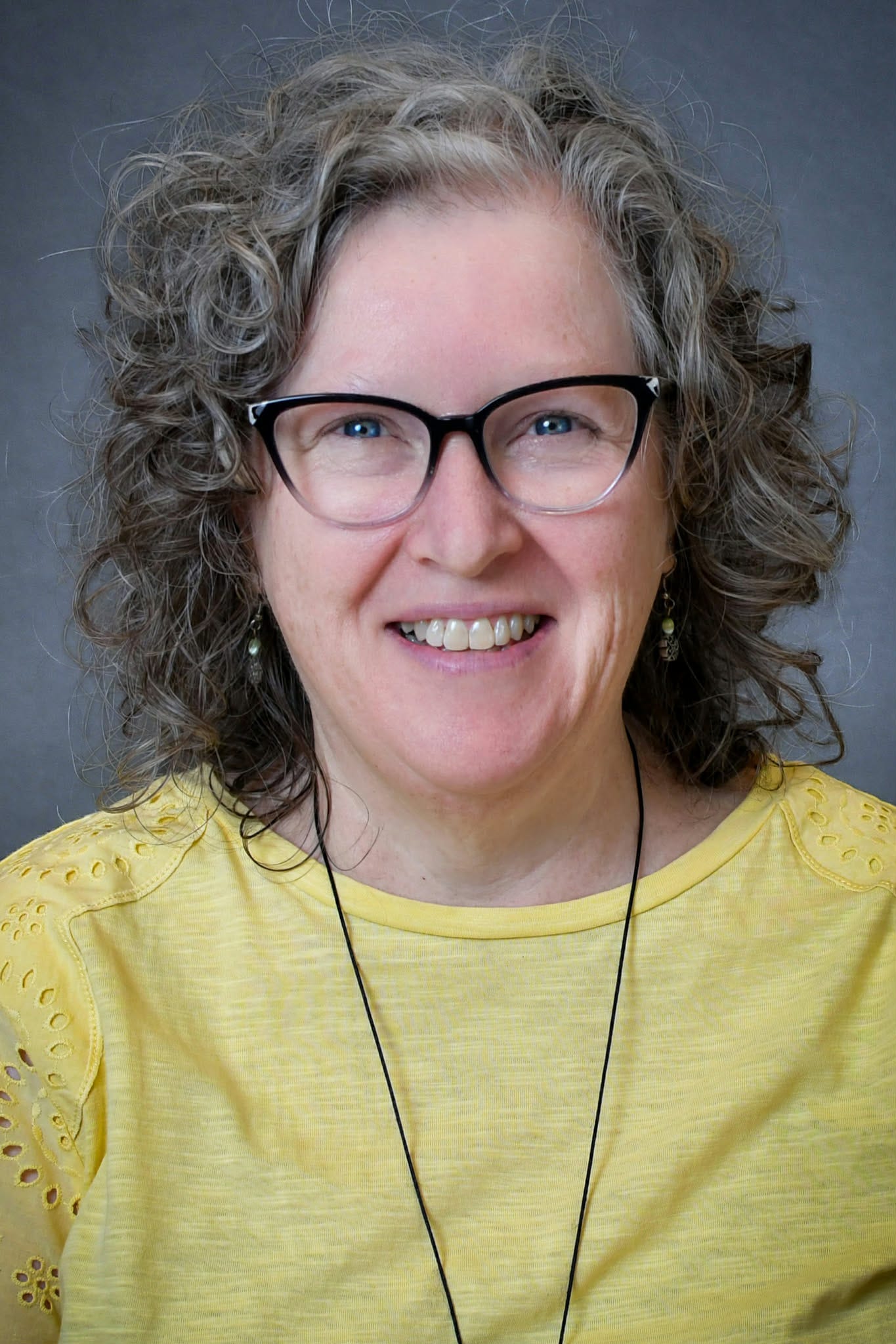 Who Are The Sisters of St. Martha? | There’s a good chance you’ve benefited from the work of the Sisters of St. Martha without ever knowing it. If you’ve been treated at St. Martha’s Regional Hospital, used community transit, found support through SAFE or the Friendship Corner, or simply walked through the Bethany Centennial Garden behind the hospital on a difficult day — the Marthas are somewhere in that story.This year marks 125 years since the congregation was founded, and Justin and Anuj sat down with Sister Joanne O’Regan, General Secretary of the congregation’s leadership team, and Marielle Assad, Coordinator of Charism Ministry and longtime Martha associate, for a wide-ranging conversation about where the Sisters came from, how they’ve shaped Antigonish, and what they’re planning for the future.What Is Gospel Hospitality — And What Is Charism?For the uninitiated, this episode starts with a little vocabulary. Charism, as Marielle Assad explains it, is the spiritual gift or inner spark you’re born with that gives you your purpose in the world — the thing that, once you tap into it, sets you on fire with meaning. Different religious communities have their own charism: healing, education, creativity. For the Sisters of St. Martha, that charism is gospel hospitality.Not hospitality in the hotel-concierge sense. Gospel hospitality is rooted in the example of Jesus of Nazareth, who ate with criminals, taught women, and healed people on the margins of society. It’s a radical, inclusive welcome that says no one is too broken, too poor, or too different to be worthy of care and dignity. That spirit has been at the core of everything the Marthas have done since 1900 — even before they had a name for it.An Origin Story Worth KnowingThe Sisters of St. Martha were founded in Antigonish in 1900 at the call of the local Bishop, who needed someone to take over the domestic and care operations of St. Francis Xavier University. What became the Coady Administrative Building was their original mother house; they lived on campus, cared for sick students, fed people, and kept the institution running — for two dollars a month.The founding group of 15 women is itself a remarkable story. They volunteered without knowing who else had volunteered — their habits gave them no peripheral vision, and they weren’t permitted to speak to one another beforehand. They simply stood up. That act of standing together as a collective became a symbolic touchstone for the congregation. To this day, when the Marthas make a major decision — like the gut-wrenching choice to deconstruct their Bethany mother house in 2019 — they mark it by standing together.Within a year of their founding, the sisters had already been called out to do healthcare work in Glace Bay, and they immediately began raising money — door to door — to build Antigonish its first hospital. They could only afford one good pair of shoes, so they shared them. St. Martha’s Hospital opened in 1906.125 Years of Impact — Much of It InvisibleOne of the recurring themes of this conversation is how little credit the Marthas have historically sought. Sister Joanne describes the discomfort of even sitting for this interview — talking about themselves doesn’t come naturally to a congregation whose mission statement centers on responding to the needs of others, not celebrating their own accomplishments.But the list of things they’ve been part of is extraordinary. Beyond founding and running the hospital for nearly a century, the Sisters were deeply involved in the social work and community development movements that grew out of the Antigonish Movement — the cooperative and adult education tradition associated with StFX that influenced community organizing around the world. The Coady Institute bears the name of a priest who worked alongside them. The library at the Coady bears the name of Sister Marie Michael, who ran it and helped connect the community to a global conversation about poverty, dignity, and development.More recently, in the early 2000s, a conversation between two Martha-connected people and community organizer Lucille Harper gave birth to the Antigonish Poverty Reduction Coalition — out of which came community transit and the Affordable Housing Society. The Marthas stood publicly with the Women’s Resource Centre during a women’s march. They’ve been consistent supporters of SAFE and the Friendship Corner program.Most of this happened quietly, without press releases or self-congratulation. That’s partly by design.The Hospital, the Habits, and the TransitionThe Sisters sold St. Martha’s Hospital to the government in the mid-1990s, when changes to the Canada Health Act made it the right move. They left StFX’s campus in 1994. They deconstructed Bethany — the grand mother house that had stood since 1921 — in 2019, having moved their elder sisters into Parkland Antigonish, a care facility built partly on land the congregation sold for that purpose. The sisters are still close to the property they’ve always called home; their cemetery is there, their offices are there, and the Bethany Centennial Garden — designed with community input, featuring a steeple, a reflecting pool, ruins of the original foundation, and storyboards about the congregation’s history — is there for anyone to walk through.The habits came off in 1967, after the Second Vatican Council opened the door to change across religious life. Sister Joanne is careful not to frame this as better or worse than congregations that kept their distinctive dress — just different. For the Marthas, moving through the community without a visible marker of religious identity felt more consistent with who they were trying to be.What Comes Next: Opening the Door, Not Closing ItThe Sisters of St. Martha are a smaller congregation than they once were. That’s not unique to them — it’s the reality for most women’s religious congregations in North America. But Sister Joanne pushes back gently on the narrative that declining numbers mean something went wrong. Vatican II asked the Church to “read the signs of the times,” and reading those signs honestly means recognizing that the state now provides many of the services the Marthas once filled the gap on. That’s not failure — that’s mission accomplished, in a way.What the congregation is actively discerning now is what their evolving role looks like. Pope Francis’s encyclical Laudato Si — which calls for an “integral ecology” that holds together the spiritual, social, economic, cultural, and environmental dimensions of life — has become the lens through which they’re making decisions. That means the Martha Justice Ministry is focused not just on human poverty but on the cry of the earth, listening to the land, and incorporating indigenous ways of knowing. Mi’kmaw Elder Albert Marshall visited to speak about Two-Eyed Seeing. Carrie Prosper and Clifford Paul came to help them listen to the land they steward.That land — a significant property that includes old-growth forest, farm space, contemplative hermitages, and the Centennial Garden — is not for sale and will not be subdivided. Plans are still being discerned, but the direction is clear: it will serve community, contemplation, and ecological care. Young farmers are already learning to grow food and market it on the property.This summer, as part of the 125th anniversary celebrations, playwright Laura Teasdale has written eight short plays about gospel hospitality to be performed in the Centennial Gardens in late July.A Gift to the TownSister Joanne’s closing words to the people of Antigonish are worth sitting with. She says the Martha spirit — the impulse toward radical hospitality, toward making room for others, toward ensuring no one is left behind — already lives in this community. The congregation’s greatest wish for their 125th year is not recognition but continuation. “Standing together in undaunted hope,” reads the inscription at the base of the steeple at the Centennial Garden — and Sister Joanne is clear: that’s not just the Marthas standing together. That’s all of us. Get full access to Let's Talk Antigonish at letstalkantigonish.substack.com/subscribe | 55m 50s | ||||||
| 4/4/26 |  The provincial budget with Professor Jim Bickerton | We sat down with Jim Bickerton, professor of political science at StFX since 1984, to talk about what the recently approved (and highly contentious) provincial budget means for Antigonish. Jim is a long-time voice in Atlantic Canadian media on matters of provincial politics, and a fellow Antigonisher.What follows is a calm, analytical, and occasionally blunt conversation, full of useful context for anyone trying to understand what just happened and why.Why Cuts Had to Happen at AllThe starting point is the deficit. Nova Scotia is facing a record shortfall of roughly $1.25 billion this year, with the province projecting continued annual deficits through to at least 2030, declining only gradually to around $810 million. For a small, relatively undiversified economy, that’s not a trivial position to be in.Bickerton explains the mechanics clearly. Credit rating agencies scrutinize every provincial budget and assess whether a government is serious about fiscal restraint. A downgrade could significantly increase the interest the province pays to borrow money — and Nova Scotia borrows a lot. So even if the cuts themselves don’t dramatically reduce the deficit, showing a willingness to cut matters symbolically to external lenders. Ontario ran a $14 billion deficit this year with no equivalent anxiety, but Ontario’s economy can absorb that in ways Nova Scotia’s cannot.The original $130 million in cuts was eventually walked back to around $76 million after about $50 million was reinstated — a partial retreat driven by the scale of public backlash. Bickerton is direct: that kind of reversal, under that kind of pressure, suggests the government miscalculated both the political and economic significance of what it had done.Why Arts and Culture?This is the question everyone has been asking, and Bickerton’s answer is characteristically honest: he doesn’t fully know, and he suspects nobody outside a very tight circle around the premier does either.What he does know is that the big-ticket budget lines — health care, education, infrastructure, long-term care — were never realistically on the chopping block. Health care alone is consuming enormous new investment: $250 million for a province-wide patient record system, $1.3 billion to renovate the VG hospital. These are the Houston government’s core commitments. Education spending is rising with enrollment. Long-term care needs new spaces. Those areas were always going to be protected.That left the government looking for cuts elsewhere, and arts and culture — representing less than 1% of an $18.9 billion total budget — apparently looked like an easy target. Bickerton’s pointed observation: the Minister of Finance was asked repeatedly by journalists whether any economic analysis had been done of the impact of these cuts. He kept ducking the question. That, Bickerton says, tells you all you need to know. No economic analysis was done. And apparently, no real political analysis either.Justin floats an intriguing theory; that cutting arts and culture might have been a deliberate signal to resource extraction industries like oil and gas that Nova Scotia was their kind of province. Bickerton gently dismisses it. He finds it hard to imagine that a company contemplating billions in investment would factor in a $130 million arts cut. What’s more plausible, he suggests, is simpler: the Houston government appears primarily oriented toward resource-based economic growth, and arts and culture just wasn’t on their radar as something worth protecting.A Political MiscalculationBickerton calls it clearly: the government took a significant political hit for a relatively small deficit reduction. The arts community, he notes, is articulate, vocal, and good at public speaking — and the general public rallied around them in ways the government didn’t anticipate. Even the opposition parties, he observes, were caught off guard by the scale of the response and had to scramble to catch up.The government’s attempt to frame the protests as NDP-organized events was, in Justin’s direct experience as someone who was there, simply wrong. And the failure to communicate proactively — to prepare the public for difficult choices while simultaneously highlighting significant new spending in health care, education, and long-term care — was a strategic blunder that Bickerton finds hard to explain.His conclusion: the government showed arrogance in the process, a lack of communication strategy, and insufficient empathy for the people who would be most directly harmed. And because power is so heavily centralized in the Premier’s office under the Westminster system, the accountability for that lands squarely on Tim Houston.What About Our MLA?Justin and Anuj circle the Michelle Thompson question carefully, and Bickerton is helpful here. As Minister of Health — whose portfolio was actually one of the beneficiaries of this budget — Thompson would likely not have been deeply involved in the decisions around arts and culture cuts. Perhaps, as Bickerton speculates was true for other MLAs, she was taken by surprise by the proposed cuts. But she is bound by cabinet solidarity. Under the Westminster system, ministers don’t publicly dissent, don’t break ranks, and don’t express frustration with decisions made by the Premier’s office. Even if there is vigorous debate within caucus behind the scenes (as Thompson noted on a previous episode is sometimes the case). That’s not unique to this government Bickerton noted; it’s how the system works. It perhaps explains why Thompson didn’t make media appearances during the budget debates and protests, even as her constituents in Antigonish were among the most vocally upset in the province. But this, everyone concedes, is pure speculation. We hope to get Michelle Thompson back on the podcast soon to help clarify! The Future: More Cuts Are ComingThe episode ends on a sobering note. The government has signaled its intention to reduce the size of the civil service — carefully distinguishing, Bickerton notes, between “cuts to the civil service” and “cuts to services,” the implication being that bureaucratic fat can be trimmed without hurting anyone. He’s skeptical. The projections point to continued restraint over several years, and those projections themselves could shift for the worse depending on global variables — energy crises, geopolitical instability, and the ongoing uncertainty of Canada-US trade relations.A brief and fascinating coda: Bickerton and colleague Doug Brown( previous podcast guest) are planning a public event at the Mulroney Institute this fall on Alberta separatism and the referendum scheduled there — a conversation that, he suggests, is going to be very interesting to watch for those interested in Canadian politics. Get full access to Let's Talk Antigonish at letstalkantigonish.substack.com/subscribe | 43m 36s | ||||||
| 3/28/26 |  The challenges and rewards of running a small business in Antigonish | We sat down with Paul Curry, President of the Antigonish Chamber of Commerce to talk honestly about what it takes to run a small business in Antigonish; the red tape, the razor-thin margins, the trouble finding workers, the fallout from the recent construction traffic that crippled a few Main Street businesses. But it was not a conversation filled with doom and gloom; quite the opposite in fact. Paul came with genuine enthusiasm for this town and what its business community is quietly pulling off. Curry runs the Claymore Inn, a hotel his father operated for 40 years before Paul took over in 2020, in the middle of a pandemic, and the Justamere Café & Bakery, an Antigonish institution popular for breakfast. He’s also the current president of the Antigonish Chamber of Commerce, which gives him a bird’s-eye view of what’s working and what isn’t across the local business landscape.The Immigration Problem Is Real — and It’s Getting WorseThe conversation started where Curry wanted it to start: the broken immigration process for foreign workers. He reached out to the podcast after a previous episode on immigration, wanting to speak from the employer’s side. What he described is a system that is slow, opaque, arbitrary, and increasingly punishing to both workers and the businesses that rely on them.His current example: he’s been trying to hire a chef who is already running a kitchen in Alberta. The candidate scores at the required level in four of the five categories of the Atlantic Immigration Pilot language test — and one point below in reading comprehension. The application is effectively stalled. Meanwhile, Curry has other current employees on temporary permits who have been waiting for movement on their permanent residency applications for so long that it feels, in his words, like they’re simply being slow-played until their permits expire and they’re asked to leave.“The real victims,” he’s clear to point out, “are the people whose lives are on hold.” They’re trying to decide whether to start families, settle down, build a life here, and nobody will give them a straight answer. From the business owner’s side, a lot of the administrative burden falls on employers, who are spending hours on paperwork and thousands of dollars on applications with no guarantee of an outcome and no feedback from the system.This is not, Curry emphasizes, about preferring foreign workers over Canadians. Employers are legally obligated to hire permanent residents and citizens first. The issue is simply that for certain skilled roles like cooks, chefs, and head bakers, local applicants often aren’t there. An LMIA application costs $1,000 and may not succeed. Nobody is doing this because it’s easy or cheap.How The Chamber of Commerce can helpThe Antigonish Chamber of Commerce offers a number of services to local business, including pointing budding business owners in the right direction when it comes time to seek startup advice, and advocating for existing businesses. The construction disruption on Main Street last year was a case study in how the Chamber can help. The Chamber mobilized members to show up at an emergency council meeting and successfully pushed to pause the work through Christmas. It was a tangible, practical example of what the Chamber is actually for: collective advocacy that an individual business owner couldn’t pull off alone.What Antigonish Has Going for ItCurry is not pessimistic about the town as a place to do business; he’s just clear-eyed. He points to a genuine culture of cooperation among local businesses that is unique to this town and that he doesn’t take for granted. Hotels share overflow guests through text groups. Restaurants lend each other ingredients when supply runs short. Nobody wants their neighbours to fail, because a healthy business community serves everyone.He’s also struck by the quality and creativity of what’s being built here. The Curious Cat bookstore, which many assumed couldn’t survive in a small town, is thriving. The Clayfire Cafe, which moved into the former Curious Cat space, is full and buzzing. Lochaber Lake Lodges is doing cool things out in the county. A world-famous chocolate business, a salt company, a seasoning shop on James Street. These are people betting on Antigonish and winning.Anuj noted that over 70% of businesses in Antigonish have women as owners or co-owners, which is remarkable. The Chamber board itself is currently about 80% women, and Curry expects the next president will be too.The Support Ecosystem — and Its GapsFor anyone thinking about starting a business, Curry points to a network of supports that exist but aren’t always easy to find. ACOA, the Atlantic Canada Opportunities Agency, funds regional development and can provide grants or low-interest loans for businesses looking to grow or export. CBDC — Community Business Development Corporation — offers small business loans and free training in areas like accounting software, management, and leadership. Nova Scotia Works and NOBL are also in the mix. The Chamber itself functions as a navigator: not the place to start a business, but the place to figure out where to go.The gap, as Curry sees it, is clarity. The ecosystem exists but isn’t visible enough, especially to first-time entrepreneurs. He’d like to see the Chamber play a stronger role in mapping those pathways. He’d also like to see the town and county develop something closer to a strategic vision for its business community; not telling entrepreneurs what to build, but creating conditions and direction. The Coady Institute’s asset-based community development model is one he finds instructive: start with what you have, and build from there.New efforts are emerging too. The Leap Innovation Hub, a peer-to-peer business coaching initiative that includes Curry’s wife Renee, is helping early-stage businesses get off the ground — they’ve worked closely with Elvira’s Table, among others. And IGNITE, out of New Glasgow, provides networking and coaching support across the region.The Bottom LineCurry’s closing message is characteristically direct: entrepreneurship is hard, it matters enormously to this community, and Antigonish needs more of it. If you have an idea, talk to the Chamber, talk to NOBL, talk to Nova Scotia Works. Don’t wait for a perfect moment — there isn’t one. And don’t let the challenges discourage you. The people who bet on this town and pour their passion into it, he says, have a habit of surprising everyone, including themselves.The Chamber has an office at the Antigonish Public Library, with a new executive director starting in the coming months. You can find membership information and more at antigonishchamber.ca.Nova Scotia Works: https://novascotiaworks.ca/nsdc/CBDC-NOBL: https://noblbusinessskills.ca/IGNITE: https://igniteatlantic.com/LEAP: https://www.facebook.com/theleaphub/ACOA: https://www.canada.ca/en/atlantic-canada-opportunities.html Get full access to Let's Talk Antigonish at letstalkantigonish.substack.com/subscribe | 36m 33s | ||||||
| 3/21/26 |  Why So Many StFX Students Are Struggling With Loneliness and Mental Health | Mack Murphy and Haley Qualizza are back. The two StFX Student Union Vice Presidents — Mack for Campus Affairs, Haley for External Affairs — were such compelling guests in their first appearance on the podcast that Justin and Anuj made them the show’s first-ever returning guests. Last time they covered student life in Antigonish broadly. This time there was unfinished business: at the end of that first episode, the topic of mental health came up just as time ran out. Mack mentioned it was basically her whole area. So they came back to do it justice.What follows is an honest, data-grounded, and personally revealing conversation about student mental health.The Unique Problem of Getting Help in AntigonishThe conversation opens with a structural issue that many residents may not be aware of: students at StFX who have learning disabilities or mental health conditions that require formal accommodations — like extra time on exams through the Tramble Centre — need a clinical diagnosis to access those supports. And you cannot always get that diagnosis in Antigonish.If you suspect you have ADHD, dysgraphia, autism, or any number of other conditions, you have to travel to Halifax or Sydney, pay out of pocket, potentially book a hotel for multi-day assessments, and navigate all of it alone — often in your first year of university, the first time you’ve ever managed your own healthcare without a parent. Mack knows this from personal experience: her own dysgraphia diagnosis cost roughly $1,700 out of pocket and required a four-hour assessment in Cape Breton. For students already under financial stress, this is simply out of reach. The result is that students who are struggling — who are doing the work but have nothing to show for it in a system that requires documentation — fall through the cracks entirely.The Numbers Are StarkA recent study found that only 36% of college students are thriving — reporting high levels of success in relationships, self-esteem, purpose, and optimism. That means roughly 64% are not. More striking still: 52% of students report experiencing loneliness. That’s one in two people on any given campus, at a rate significantly higher than the general population — one in six of whom experience this level of loneliness globally.And loneliness is not just uncomfortable. Chronic loneliness increases the risk of premature death by 25% — higher than smoking. This is not a wellness talking point. It is a public health issue.Why Is It Getting Worse?Both Mack and Haley point to the pandemic as a formative event that shaped the socialization habits of an entire generation. Students who were 14 or 15 years old when lockdowns hit learned to equate being social with being online — physically alone but digitally connected. That pattern never fully reversed. And social media has compounded it by creating a culture in which asking someone to hang out, showing up somewhere new, or doing anything visible feels like a potential source of public humiliation. The “fear of cringe” is real and it is paralyzing. It stops students from making the small, awkward moves that human connection actually requires.The shift away from group work in university classrooms — driven partly by concerns about AI-assisted writing — has quietly removed one of the most reliable engines of peer connection. Hayley notes that her first group project of second year didn’t happen until her second semester. The structured, low-stakes opportunity to be thrown together with strangers and figure things out has quietly disappeared from many students’ university experience.What Can Actually Be Done?The practical suggestions in this episode are worth writing down, whether you’re a professor, a community event organizer, or just someone who lives here.For professors, the advice is direct: force interaction. Assigned groups, seminar-style presentations, case studies discussed together — these aren’t just pedagogically sound, they’re a mental health intervention. Students will not, on their own, reach across the room to someone they don’t know. But if a professor puts them in a group and gives them a problem to solve, connections form. The initial cringe passes. People laugh together. It works.For community organizers, their message is equally clear: students want to be at your events. They are not unapproachable. When they show up in a huddle in the corner, it’s not because they’re too cool — it’s because they are just as unsure about approaching the adults in the room as those adults are about approaching them. The fix is simple: go talk to them. The language of your invitation matters too. “All are welcome” and “we want you there” are very different things, and students feel the difference.On reaching students in the first place: skip Facebook entirely. Use Instagram. Email works too — and if you contact Mack or the student union directly, they can help get the word out to society presidents and student groups with real reach on campus.The Bigger PictureThere’s a broader point threading through this episode, one that connects to themes the podcast has returned to again and again: Antigonish is a small town, and that smallness is both the problem and the solution. Students come here from all over the country and the world, often for the first time living away from their families, into a place without many of the urban supports — clinical, social, commercial — they may have taken for granted. The town cannot easily fix the diagnostic gap or the broader loneliness epidemic. But it can close the distance between the university and the community. It can make events that feel genuinely welcoming to students. It can have conversations like this one.Hayely’s final word to Antigonish residents: “Talk to students when you see them at events. We want to talk to you.” Mack’s: “Keep standing up for what you believe in, and you’ll find the people you need to be around.” Get full access to Let's Talk Antigonish at letstalkantigonish.substack.com/subscribe | 34m 04s | ||||||
| 3/14/26 |  Heather MacIsaac, JUNO-Nominated Musician and Antigonish's Best-Kept Musical Secret | Justin and Anuj sat down with Heather MacIsaac—a pharmacist by day, and as of this year, a JUNO-nominated composer—to talk about her debut album The Moon’s Daughter, her long and winding road through competitive piping, performance anxiety, and the kitchen ceilidh culture that makes Antigonish’s music scene unlike anywhere else.What Even Is Trad Music?If you’re not already in the scene, MacIsaac is a patient and generous guide. Traditional music, she explains, is simply the folk music of your people — and in Antigonish, that means a rich, layered mix of Scottish Highland, Irish, Acadian, and increasingly global influences that have been blending together for centuries.The instruments skew old-fashioned by design: fiddle, bagpipes, whistle, bodhran, accordion. Simple holes in a stick, as Justin puts it. The point was never complexity — it was the melody, the room, and the people around you.What’s striking is how porous the tradition actually is. The Cape Breton fiddle style that most people recognize didn’t come from one culture — it evolved from Acadian, Irish, Scottish, and Newfoundland influences all swirling together over generations. First Nations fiddler Morgan Toney has carved out his own genre he calls Mi’kmaltic. The bouzouki, now considered a staple of Irish trad, arrived from Greece in the 1960s. The tradition, MacIsaac argues, has always been about absorbing and adapting — not gatekeeping.From the Living Room to the JUNOsMacIsaac’s path to a JUNO nomination is not a straight line. She started with classical piano, fell hard for competitive piping as a teenager, and was soon travelling to Scotland and Ontario to compete at an elite level — playing alongside some of the best pipers in the world, including composers whose work she was performing every week. The experience was exhilarating and suffocating in equal measure. The little tunes she was quietly writing on the side never seemed worth sharing. Why would they, when she was surrounded by giants?Performance anxiety eventually made the whole enterprise feel more like dread than joy. She stepped back from the competitive world, but the music never really left her. It just went deeper underground.The turning point came through a low-key Irish session started by Susie Murphy — whose family runs Big Barn Little Farm — at a local pub. Murphy had encountered the Irish session culture firsthand while studying farming in Ireland, where anyone could walk into a pub, sit down, and play tunes that were common to the culture. No audition. No pressure. No perfection required. When her sister opened a pub in Antigonish, Susie brought the format with her.For MacIsaac, it was a slow but genuine transformation. She arrived at those early sessions deeply anxious. But the format — learning by ear, playing along even when you didn’t quite have it yet, valuing the melody over the technique — gradually helped her unlearn decades of classical perfectionism. Music stopped being something to be judged and started being something to share.The Album: A Legacy Project in the Best SenseThe album itself grew out of something even more personal than musical ambition. The loss of her mother prompted MacIsaac to reckon with everything her mom had invested in her musical education — every lesson, every competition, every long drive — and how little of it the world had ever seen. Around the same time, she was navigating a divorce and coming to terms with not having children. She found herself thinking about legacy. About what she would leave behind.“I don’t want this to just end up in the landfill someday,” she said of the decades of tunes she’d written and kept almost entirely to herself. Where fiddlers in this tradition have long had a culture of debut albums — Natalie MacMaster, Ashley MacIsaac, both did them young — pipers traditionally waited until they’d won every major competition going. MacIsaac decided that was a rule worth breaking.The Moon’s Daughter was recorded at Lakewind Sound in Cape Breton with engineer Mike Shepard, Cape Breton piano legend Mac Morin, and Antigonish’s own trad musical genius Mary Beth Carty, and every note of it MacIsaac’s own composition. Every tune, every song, written by a woman who spent years convinced her work wasn’t worth sharing. The JUNO nomination suggests otherwise. MacIsaac credits Carty in particular with helping her find her footing as a performer, gradually coaxing her onto stages by having her accompany Carty’s own shows on whistle and pipes until performing stopped feeling impossible.Antigonish’s dual JUNOs presenceIn a remarkable footnote, MacIsaac isn’t the only Antigonish-connected act nominated in the Traditional Roots Recording category this year. Cassie and Maggie — whose grandfather played fiddle at the same kitchen parties as MacIsaac’s grandparents — are also nominated. Their family roots run deep in the same local music tradition, even if they grew up in Halifax. For a town this size, that’s not a coincidence. It’s a testament to something real that has been quietly happening here for a very long time.The winner will be announced at the JUNO Gala on March 28th, broadcast on CBC Gem. MacIsaac is going — and she’s given her extra ticket to Shepard, whose studio also worked on Morgan Toney’s album, which is nominated in the same category. A Scene Worth Finding — and SupportingMacIsaac’s larger message is an invitation, and it comes with some urgency given the current climate of arts funding cuts across Nova Scotia. She’s measured but clear about the stakes: a place without culture is a place without a reason to visit. The music, the language, the traditions — these aren’t decoration on top of the tourism economy. They are the economy, and they’re also something much more than that.She’d love to see traditional music integrated into school curricula the way it has been in Ireland, where kids can learn pipes in school and pursue degrees in the music and history of their own people’s culture. That hasn’t happened here yet, but she thinks Antigonish — with StFX, the Coady Institute, and the depth of musical tradition already present — is better positioned than almost anywhere to try.In the meantime, the scene is alive and genuinely welcoming. The Maples hosts sessions. The local museum has shows. Rebecca Wilde teaches strings from classical through Celtic. And the sessions themselves — the informal, social, anyone-can-play gatherings that are the beating heart of trad culture — are open to all comers, whatever your instrument, whatever your background.“You don’t have to be from that background to enjoy it,” MacIsaac said simply. “It should be celebrated and enjoyed by everyone.”If you’ve been curious but felt like an outsider looking in, this episode is the best possible place to start.Listen to The Moon’s Daughter here: Get full access to Let's Talk Antigonish at letstalkantigonish.substack.com/subscribe | 44m 56s | ||||||
| 3/7/26 |  Immigration in Antigonish: What's Changing, Who's Affected, and What Comes Next | Immigration is a subject that almost every resident of Antigonish has bumped into in some way. Walk into a local Tim Hortons, visit Parkland or the RK, or stroll through the StFX campus, and the town’s growing diversity is immediately visible. But behind that visible change is a complex and increasingly uncertain legal and policy landscape that is affecting real people in our community right now.Justin and Anuj (freshly returned from travels in Kenya and India) sat down with Peter Goldie, a Regulated Canadian Immigration Consultant (RCIC) and Antigonish neighbour, to untangle what’s going on.What Changed and WhyTo understand the current situation, Goldie says, you have to go back to COVID. When the pandemic created widespread labor shortages, the federal government loosened immigration policies to bring more workers into the country. Pathways that allowed temporary residents to become permanent residents were expanded, and the result was a significant influx of people.Then came the backlash. With housing costs soaring and healthcare wait times growing across the country, the government began pointing to the elevated number of temporary residents — currently around 6.5% of the total population, against a stated target of 5% — as a contributing factor. The response has been a steady tightening of immigration programs over the past two years.“What we’re seeing is a restriction on immigration programs,” Goldie explained. “They’re reducing the number of foreign nationals that can access these programs... and restricting the options for them to renew their immigration status.” The implicit goal, he said, is that as temporary status expires and renewal becomes harder, people will return home.It’s a policy direction that Goldie — and many in his field — finds troubling.The Local Labor ParadoxFor a community like Antigonish, the consequences of tighter immigration policy are particularly pointed. The county has an aging population, which means a shrinking tax base alongside growing demand for services — elder care, continuing care attendants, healthcare workers. That workforce has to come from somewhere, and increasingly, it has been coming from abroad.“Even with younger Canadians stepping up to fill these roles, there still is a genuine shortage,” Goldie said.The frustrating irony is that the jobs most in need of workers in a service-oriented community like Antigonish — retail, hospitality, continuing care — are precisely the ones the government has deprioritized for immigration purposes. For nearly two years, workers in hospitality and accommodation have been unable to use those jobs as a pathway toward permanent residency through Nova Scotia’s provincial nominee program. The government’s focus, Goldie noted, has shifted toward resource extraction and industrial sectors — jobs that don’t yet exist here in meaningful numbers.“Right now, the people that are currently here and are currently working are filling labor needs, but they’re not being given access to permanent residency,” he said.Nova Scotia’s PR Programs: Fewer Options OvernightAdding to the uncertainty, changes to immigration programs can happen with little or no warning. As a stark example, Goldie noted that just recently, Nova Scotia condensed its ten provincial nominee program streams down to four — without publicly announcing the change in advance.“It can happen at any time and it can create a real problem for a lot of people,” he said.For the foreign nationals affected — international students on post-graduate work permits, Ukrainians who came here fleeing conflict, temporary workers who have built lives here — that uncertainty is deeply stressful. Many arrived with the reasonable expectation that a clear pathway to permanent residency existed. For a growing number, that path has narrowed or disappeared entirely.“I see a lot of stress,” Goldie said of his clients. “There was a lot of young people that have come to Canada from other countries. It’s been a long-term family decision oftentimes to come here, to expend a lot of resources.”The Credential Recognition ProblemOne issue that runs alongside the immigration question is the broader challenge of credential recognition. Goldie pointed out that many foreign nationals working in relatively low-wage positions here are significantly overqualified for those roles. Canada’s difficulty recognizing foreign education and professional credentials keeps highly trained people in roles well beneath their qualifications. The example discussed most personally in the conversation was dentistry: Goldie noted that his own fiancée, a trained dentist from abroad, is currently unable to practice in Canada, and that the pathway to doing so — or even to working in a supporting dental role in the interim — is filled with regulatory roadblocks.“There is a huge shortage of dental professionals,” he said. “Very hard if you’re a foreign-trained dentist to become licensed in Canada.”What Antigonish Can DoWhile federal and provincial immigration policy is largely out of local hands, the conversation surfaced several practical ways the community can respond constructively.For employers facing labor shortages — particularly in healthcare and social services — Goldie emphasized that many of the workers they need are already here, ready and willing. The barrier is often simply a lack of awareness about how immigration programs work and how employers can support their workers’ long-term residency goals. Businesses that actively help employees navigate these processes are far better positioned to retain good workers.More broadly, Goldie called for greater communication between the various groups navigating this moment — employers, newcomers, and long-established residents alike. He noted that Antigonish has a proud history of welcoming people from around the world, from its deep roots as a university town to the international work of the Coady Institute. That tradition of openness is a community asset worth building on.On the policy front, his recommendation was clear: rather than focusing on reducing the number of temporary residents by pushing people out, the government should be creating more pathways for people already here — who are already paying taxes, already embedded in communities — to stay permanently.“If people are here and they’re paying taxes, they should have a better chance,” he said.By June of this year, an estimated 1.5 million temporary residents in Canada may face an uncertain immigration status. As Anuj put it during the episode, “This is showing up in our town and county in real time.”Getting Help — and Staying InformedFor those with immigration questions, Goldie is also considering offering a free public information seminar in collaboration with the Antigonish library and ACALA — a space where community members could come to better understand how the system works without needing to retain a consultant.His parting advice for anyone navigating immigration questions on their own: go to the official IRCC (Immigration, Refugees and Citizenship Canada) website for accurate information, and be cautious about unverified sources.Peter Goldie has been a Regulated Canadian Immigration Consultant in good standing since 2021. His practice focuses on Economic Immigration pathways both temporary and permanent. Get full access to Let's Talk Antigonish at letstalkantigonish.substack.com/subscribe | 32m 02s | ||||||
Want analysis for the episodes below?Free for Pro Submit a request, we'll have your selected episodes analyzed within an hour. Free, at no cost to you, for Pro users. | |||||||||
| 2/28/26 |  Antigonish's Growing Tourism Ambitions | Lynne DeLorey, who recently became the first-ever Director of Tourism for the Antigonish Tourism Association (ATA), is on a mission to change the face of Antigonish tourism. Justin and Anuj sat down with DeLorey for a wide-ranging conversation about what the town has going for it, what it’s missing, and what the Antigonish Tourism Association is doing to put Antigonish firmly on the tourism map.Who Is Lynne DeLorey and What Is the Antigonish Tourism Association?DeLorey is not new to the hospitality world. She got her start at the front desk of the Claymore Inn while attending StFX in the late 1980s, later purchased and ran the Evergreen Inn — growing it into the number one rated place to stay in Nova Scotia on TripAdvisor through a focus on customer service and savvy marketing — and then spent six years working in the president’s office at StFX. When the newly formed ATA posted the director role, she jumped at it.The Antigonish Tourism Association itself is a young organization, formed in 2021. It is not a government body, but functions independently, with a mandate to increase overnight visitation, improve visitor services, and make Antigonish a genuine destination rather than a rest stop. “We’re not a drive-through,” DeLorey said plainly. “We have lots of assets here to be your destination.”What Does Antigonish Actually Have to Offer?Quite a lot, as it turns out. DeLorey ran through a long list of destinations and events, and it’s unlikely that even lifelong residents of Antigonish have done everything on it: StFX University itself — its heritage buildings, the Cathedral, and the chapel — draws visitors on its own. The town’s beaches are a significant summer draw, as is Chez Deslauriers. There are multiple breweries, beautiful coastal drives, and the Keppoch outdoor recreation area. The Highland Games remain one of the marquee annual events, alongside the Jazz Festival, Festival Antigonish, Riverside, The Exhibition, the list goes on!Beyond entertainment, the town’s institutional assets are also tourism draws in their own right. The Coady International Institute, the Brian Mulroney Institute of Government, and Peace by Chocolate — nationally known and a genuine point of pride — all bring people to town who want to see them in person. And StFX draws a steady stream of parents visiting students, conference attendees, and prospective students, all of whom need accommodation, food, and things to do.“We cross-promote,” DeLorey explained. “We work with St. FX and their tour office. We work with the hospital. We can supply their conferences with maps of Antigonish and help them engage with attendees.”Four Seasons, Not Just SummerOne of DeLorey’s central goals is to move Antigonish beyond its reliance on summer as the only peak season. The conversation was recorded mid-winter, with the town buried in snow — and even then, DeLorey pointed to real winter tourism offerings: groomed trails at the golf course and Keppoch for cross-country skiing, snowshoeing, and fat biking, plus Snow Dogs snowmobile trails that connect all the way to Amherst.“We want people from away coming here, booking their night stay, and hitting our groomed trails,” she said, noting that a social media campaign promoting exactly that was about to go live.Her vision for summer is even more ambitious. She’d love to see live music happening nearly every night during peak season, more outdoor restaurant patios, stores staying open later on the main street, and a more connected sense of a town that’s alive and happening. Mi’kmaq Heritage and Inclusive TourismOne area DeLorey is actively working to develop is showcasing the Mi’kmaq heritage of the region. Prompted by a mention of a previous podcast conversation with local advocate Trevor Gould, who had spoken about the desire for more visible recognition of Mi’kmaq history in town, DeLorey confirmed that Paqtnkek is already part of new tours the ATA is planning.On the accessibility front, the ATA is working to have an accessibility champion review their upcoming Antigonish guide and map before they go to print, with the goal of clearly marking accessible venues and attractions. And in collaboration with Coastal Nova Scotia, the ATA is also developing a Coastal Kids Guide — a new family-focused resource launching this year.The Budget Cuts QuestionThe conversation couldn’t avoid the elephant in the room: the Nova Scotia provincial budget, which has seen significant cuts to Community, Cultures, Tourism, and Heritage funding, including the closure of provincially funded Visitor Information Centres across the province.The good news for Antigonish is that the local Visitor Information Centre, run by the ATA, is locally operated and not directly affected by the provincial cuts. It receives some funding through Coastal Nova Scotia, a regional destination marketing organization covering Pictou County, Antigonish, and Guysborough County, and that funding stream currently remains intact. A meeting to assess the full impact on the region was planned for March 10th.The closure of the provincial VIC at Port Hastings — the welcome gateway at the Cape Breton causeway — is, however, a genuine loss. “We will miss that one,” DeLorey said. But she also sees an opportunity: with that gateway point gone, Antigonish can step up as the information hub for travelers heading to Cape Breton. The ATA has already reached out to Paqtnkek to explore expanding their tourism info already in place at the Bayside Travel Centre.Meanwhile, the Antigonish Visitor Information Centre recently received approval for a New Horizons grant to fund a 55-plus Ambassador Program, which will train volunteers to serve as informed, welcoming guides throughout the community — in restaurants, at gas stations, and anywhere visitors are likely to ask for help. If this sounds like something that might interest you, please contact Lynne at info@antigonishtourism.ca to discuss!Tourism Is for Locals TooPerhaps the most useful reminder DeLorey offered was this: the Antigonish Tourism Association and its Visitor Information Centre are not just for people from away. Locals regularly walk into the VIC asking what’s happening in town that week.“We are more than just for the visitor,” she said. “We are for locals as well.”The ATA website at antigonishtourism.ca features an events calendar that anyone can submit to. If you’re running an event and want it listed, you can add it yourself — or simply send it to the ATA and they’ll take care of it. In an era when people increasingly Google “what’s on in Antigonish” before making plans, having events listed in one central, easily searchable place matters more than ever.DeLorey’s main message was as much for longtime residents as for potential visitors: “We have it all here and we can make Antigonish a destination!”More info on the Antigonish Tourism Association: https://antigonishtourism.ca/And their local events page - please feel free to submit an event: https://antigonishtourism.ca/events/ Get full access to Let's Talk Antigonish at letstalkantigonish.substack.com/subscribe | 26m 40s | ||||||
| 2/21/26 |  Pharmacies in Antigonish now offer LOTS of new medical services | If you haven’t been to a pharmacy lately for anything beyond picking up a prescription, you might be missing out. As of February 1, 2026, the Nova Scotia government has rolled out province-wide funding for a broad range of minor ailment treatments at pharmacies across the province — and it’s a bigger deal than most people realize.On our latest episode, Justin sat down with Miranda Teasdale, owner and pharmacist at Teasdale Apothecary, and Marcel van den Berg, a relief pharmacist and newly appointed member of the Nova Scotia Pharmacy Regulator, to break down what’s changed and what it means for people living here in town.From Pilot to Province-WideThe new funding didn’t come out of nowhere. For nearly three years, a select group of pharmacies (including Teasdale Apothecary here in Antigonish) participated in a provincial pilot program called the Community Pharmacy Primary Care Pilot (CPPCC), which allowed pharmacists to assess and treat a range of minor ailments and be reimbursed for those services. The results were compelling enough that the province has now extended the program to every pharmacy in Nova Scotia.“It has shown based on the results of the pilot that we have kept a significant amount of people out of emergency rooms,” said Miranda Teasdale. Early data from the pilot suggested a reduction of more than 10% in emergency room visits — and van den Berg noted that figure came from only the first phase of the study, with roughly half of participating clinics reporting. The real impact, he suggested, is likely considerably higher.What Can a Pharmacist Actually Treat?The list of conditions pharmacists can now assess and prescribe for — fully covered by the province with a valid Nova Scotia health card — is longer than many people might expect. It includes a wide range of common ailments including allergies, pink eye, dry eyes, cold sores, canker sores, oral thrush, mild acne, mild to moderate eczema, skin rashes and dermatitis, impetigo, fungal skin infections, insect bites, hives, heartburn and reflux, nausea, diarrhea, hemorrhoids, threadworms and pinworms, urinary tract infections , yeast infections, shingles assessment and treatment, Lyme disease prevention and early treatment, COVID-19-related cough (for those 18+ with a positive test), emergency contraception, menstrual cramps, mild headaches, mild joint pain, muscle aches, and minor sleep disorders.Some additional conditions — such as calluses and corns, dandruff, nail fungal infections, and warts — are within a pharmacist’s scope of practice but are not yet government-funded and may be offered for a fee. It’s worth calling your pharmacy to ask about those.Going Beyond Minor AilmentsThe scope of what pharmacists can do in Nova Scotia has grown considerably beyond treating a seasonal rash or a bout of heartburn. Pharmacists can now also renew existing prescriptions; not just as a temporary loan until you see your doctor, but as a full prescription renewal following a proper assessment.“The way it works is we fully become the prescriber,” explained Teasdale. “So we would do an assessment... we’d check your blood pressure, we’d ask questions about side effects.” Depending on the situation, a pharmacist can renew a prescription for three months, six months, or even a year. And if you have a family doctor or nurse practitioner, your pharmacist will send them a record of everything done, keeping your care file complete.At clinics like Teasdale Apothecary, pharmacists with additional training can go further still — ordering blood work, assessing and helping manage chronic conditions like high blood pressure and diabetes, and treating ear infections and strep throat. Van den Berg emphasized that these expanded services are available to any pharmacist in Nova Scotia who has completed the required competency training, though not all pharmacists will have completed every course. That’s why calling ahead matters.No Conflict of InterestOne question that naturally comes up: if a pharmacist prescribes something, aren’t they drumming up business for their own store? The short answer is no. As Teasdale explained, when her clinic prescribes a medication, they ask the patient which pharmacy they want it sent to — and it can be any pharmacy in the province. “We do that all the time,” she said. The prescribing role is kept separate from the dispensary, functioning much the same way a family doctor’s office does.Travel Clinic Now OpenFor Antigonish residents planning international travel, Teasdale Apothecary has also launched a dedicated travel clinic. Miranda Teasdale recently completed a global travel health exam, becoming a certified travel health educator. The clinic offers comprehensive travel consultations covering vaccinations, malaria prevention, traveler’s diarrhea, food and waterborne illness risks, and country-specific healthcare information. It is also a certified yellow fever vaccine site. Notably, Teasdale’s is currently the only travel clinic in Antigonish, following the closure of a previous clinic more than a year ago. Appointments can be booked by calling the pharmacy or through their website.Injections Now Covered TooAs part of the expanded funding, certain injections administered at pharmacies are now also covered. This includes vitamin B12 injections and the Depo-Provera contraceptive injections.Filling the Pharmacist Gap Van den Berg, speaking from his perspective on the Nova Scotia Pharmacy Regulator, also highlighted efforts to address pharmacist shortages across the province. Nova Scotia is one of the few provinces in Canada that recognizes pharmacy licenses from countries including the United States, the United Kingdom, Ireland, Australia, and New Zealand, allowing pharmacists from those countries to transfer their credentials relatively quickly. More than 100 pharmacists have now registered through that pathway.A newer initiative involves a cohort of Jordanian pharmacists, many of them holders of a PharmD degree, who are coming to Nova Scotia through a partnership between the regulator and Dalhousie University. The first group of 17 has arrived and is completing an accelerated internship program before receiving their Nova Scotia licenses. “It not only helps to bring in more good qualified pharmacists, but also gives some people, some refugees, a better life here in Nova Scotia,” said van den Berg.How to Access These ServicesThe key takeaway from the conversation: call your pharmacy first. While pharmacies strive to offer same-day or next-day appointments for many conditions, they cannot always guarantee immediate walk-in service. If you’re unsure whether your pharmacy offers a specific service, or whether their pharmacists have the training for a particular condition, a quick phone call will save you a wasted trip.Alternatively, you can call 811, where health navigators can help triage your situation and even assist with booking a pharmacy appointment.More info on Community Pharmacy Primary Care Clinics (CPPCC): https://pans.ns.ca/cppcc/and here: https://novascotia.ca/dhw/pharmacare/healthcare-services.asp Get full access to Let's Talk Antigonish at letstalkantigonish.substack.com/subscribe | 29m 50s | ||||||
| 2/7/26 |  A Conversation with Principal Cory Austen | For most Antigonish families, Dr. John Hugh Gillis Regional High School is simply “the regional”—the place where virtually every teenager in the area spends their formative years. But for those without direct connections to the school, or newcomers to the community, what actually happens inside that large building on the edge of town can remain something of a mystery.Justin and Anuj invited Principal Cory Austen to pull back the curtain on the region’s largest school, exploring everything from the September 2024 cell phone ban to the robust trades programs, from International Baccalaureate offerings to the challenges of serving 800 students with vastly different needs.Austen brings an unusual perspective to the role. An Antigonish native who attended the regional himself, he spent 10 years working in private international schools in Mexico, South Korea, and Kuwait before returning home. That global experience gives him a unique lens on what makes public education in rural Nova Scotia special—and what challenges remain.The School by the NumbersDr. John Hugh Gillis Regional High School serves grades 9-12 and is the largest school in the Strait Regional Centre for Education, which covers territory from parts of Cape Breton to Pictou County. As of the interview date, enrollment sat at around 800 students with 59.5 teachers (the “.5” representing part-time positions) and a total staff of about 100 when including teaching assistants, Nova Scotia Health personnel, and custodians.The population is stable to slightly growing, reflecting broader demographic trends in Antigonish. The school operates with a budget and resources that Austen describes as privileged compared to more remote rural schools.The Cell Phone Ban That Isn’t Quite a BanWhen Nova Scotia implemented a province-wide “cell phone ban” in September 2024, Dr. John Hugh Gillis took a measured approach that Austen believes is working well.“I’d start with it’s overall very positive,” Austen said. “And I think maybe ‘cell phone ban’ is not the best way to put it.”The actual policy: no cell phones during instructional time, but students can use them during transitions, lunch, and recess. Individual teachers have discretion about whether phones must go in designated holders or simply stay out of sight in backpacks.“We’ve been battling, like since I’ve been in high school, battling that issue with the distraction of the cell phone,” Austen explained. “So we’re finding students more focused, more engaged with that little change.”The benefits extend beyond academic focus. Austen noted a significant reduction in “inappropriate communication” among students via social media apps during class time—the kind of messaging that can escalate into conflicts disrupting school operations. With phones away during instruction, these incidents have declined markedly.While Austen doesn’t have hard test score data yet, the qualitative improvements from teachers and the reduction in behavior incidents speak volumes. Some schools have implemented stricter policies (no phones at all), but the regional’s approach appears to strike a workable balance.A Reflection of Community DiversityOne of Austen’s recurring themes was that “most schools are like a reflection of the community they’re in”—and Antigonish’s diversity makes the regional particularly rich.The school serves children of healthcare workers at St. Martha’s Regional Hospital, professors and staff from St. FX and the Coady Institute, tradespeople, farmers, fishers—the full spectrum of the local economy. This diversity extends to cultural backgrounds, with Syrian and Ukrainian refugee students, international families, and long-established local families all sharing hallways.“We’re very privileged to have the high school that we have in Antigonish,” Austen emphasized. “We’re a mirror of our own community.”His international experience gives him perspective on how special this is. After working 10 years in private schools abroad, Austen moved home specifically wanting his own children to have a public school experience.“What I love about Canada is public school is as good as most of the private school that I have ever worked at,” he said. “I can tell you that what we have here is as good as any. And, you know, I say that with confidence and it’s true.”Key Insights from Principal Corey Austen:* Staffing Advantage: Unlike remote rural schools that struggle to fill substitute teacher positions, Antigonish has a healthy pool of available teachers. “Here in Antigonish, there seems to be more of a pool of teachers... We’ve been very lucky.”* Programming Diversity: The school offers International Baccalaureate (full diploma and certificate programs), skilled trades, Options & Opportunity (trades pathway with guaranteed NSCC seats), French immersion, Gaelic, robust arts and music, and comprehensive sports—something for virtually every interest and career path.* Skilled Trades Excellence: Students can progress from Skilled Trades 10 (experiencing electrical, plumbing, carpentry through projects like building complete hotel rooms with wiring, plumbing, drywall) to Construction Trades 11/12 to co-op placements with actual tradespeople. Classes are capped for safety. Transportation trades offers a full automotive shop.* IB Program Strong: About 30 students pursue full IB diplomas across grades 11-12, with another 30-35 taking the IB certificate programs. “Almost 100% university prep,” though some students choose different paths. The program is well-established and internationally recognized.* Arts and Music Punch Above Weight: The band program, led by the “Bannerman Empire” (as Justin described it) has produced numerous professional musicians. Students can enter grade 9 barely knowing an instrument and perform at StFX graduation by grade 12. Theater arts with Jenn Priddle prepares students to “leave our high school here and go directly into a theater program.”* COVID’s Lingering Shadow: Austen acknowledged COVID had “a drastic effect on some of our students” socially and academically, though he struggles to articulate exactly how. “It’s noticeable, but I don’t know how…it’s difficult to prove.” The good news: “We’re coming out of it.”* Food Access Priority: While not yet part of the provincial lunch program (expected next year), the school operates eight “grab and go” carts throughout the building with free food. “Don’t be a gatekeeper to food.” Students in the Success in the Community class help prep and distribute food. The cafeteria is run by Chartwells under provincial nutritional guidelines.* Success in the Community Program: This program (also called community living) serves students with various challenges or medical conditions, providing life skills and independence training. Many students transition to CACL (Canadian Association for Community Living). Austen sees this as a reflection of Antigonish’s leadership in disability services.* Updated Code of Conduct Working: The province-wide standardized code of conduct provides consistency in addressing behavioral issues and clear consequences. “Our incidences are down. Our parents and community, our guardians have been very supportive.”* No Rise in Violence Locally: Despite news reports of increasing violence in schools, Austen doesn’t see this trend at the regional. “I don’t get a sense that there is. I truly don’t.”* Poverty and Complex Needs: The school’s biggest challenge is meeting diverse needs under one roof. “Everything filters through our high school... trying to make sure that everyone’s getting what they need and getting ready for what’s next.” The region provides school materials for families in financial difficulty and ensures no student goes hungry.One particularly revealing exchange came when co-host Anuj—a newcomer to Canada—asked about perceived rigor, noting that families from the Global South sometimes worry Canadian schools lack sufficient challenge or content.Austen’s response was confident: “I am confident that that is being well addressed within our school... in our IB programs, but it’s in most of our courses.”He expanded the definition of rigor beyond academics, and include many of the student-led fundraising efforts: “The critical thinking skills and some of the things that’s not always taught right there in the classroom. Like when you put a kid in a situation, the efforts it takes to raise $10,000, there’s some skills that are being involved in that endeavor, especially when it’s led by students.”Fundraising, trades projects, arts performances—these build capacities that standardized testing might miss but that prepare students for real-world challenges.Austen Reflects On His Tenure As Principal“Never in my life did I dream like oh I want to be the principal of this school,” he admitted. “That was never a thought in my mind.”But he takes the responsibility seriously: “You’ve got 800 students, you’ve got staff and you got to make sure people are enjoying where they want to come... that’s part of my job in making a safe, welcoming work environment or school environment.”He closed by thanking staff, students, and community partners—particularly noting the substantial scholarship money provided by community members and organizations for graduates. “We feel well supported by the community.” Get full access to Let's Talk Antigonish at letstalkantigonish.substack.com/subscribe | 51m 01s | ||||||
| 1/31/26 | 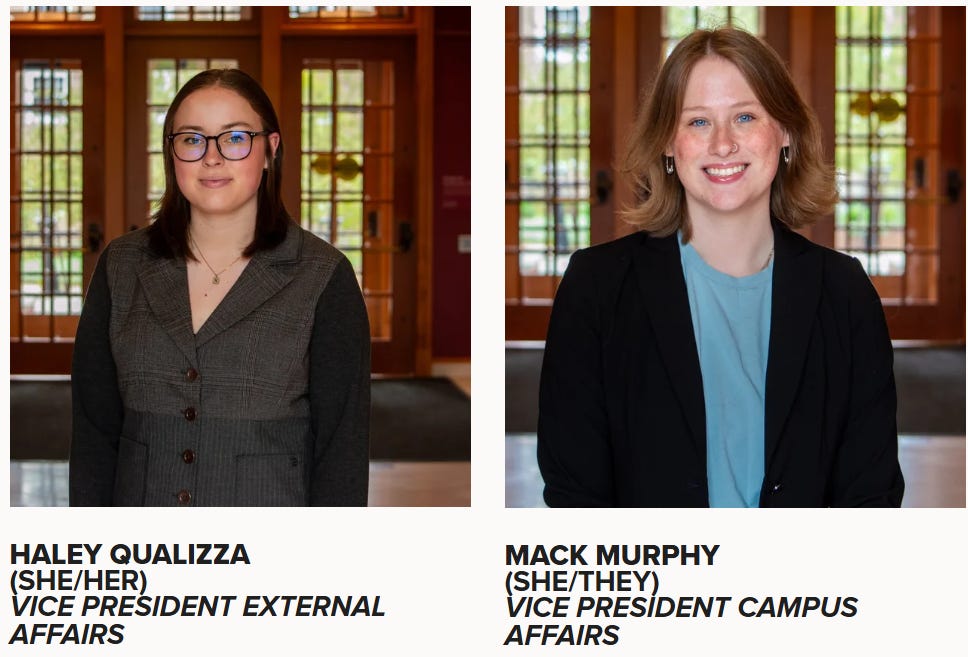 How do StFX students REALLY feel about Antigonish? | This week we sat down with Haley Qualizza and Mack Murphy, student leaders at St. FX Students’ Union, to discuss housing challenges, drinking culture shifts, the need for third spaces, and what it means to call Antigonish homeWhen you live in a university town but aren’t connected to the institution, it’s easy to develop incomplete—sometimes inaccurate—impressions of student life. Students become visible mainly during high-impact events like homecoming or St. Patrick’s Day, when downtown streets fill with revelers and tensions between “town and gown” surface in predictable patterns.But what’s student life actually like in Antigonish? What challenges do young people face here? How has campus culture changed? And do students actually feel like they belong to this community, or are they just passing through?To find out, we spoke with two St. FX Students’ Union executives to share the student perspective: Haley Qualizza, VP External Affairs (a second-year public policy and governance student from Fernie, BC), and Mack Murphy, VP Campus Affairs (a fourth-year honors public policy and governance student in her second year in the role).Their conversation revealed a complex picture—one where students deeply love Antigonish while struggling with housing affordability, transportation isolation, and a shortage of alcohol-free social spaces. It’s a story of a generation navigating cultural shifts around drinking, mental health, and inclusion, while simultaneously trying to bridge the persistent divide between university and town.The Biggest ChallengesWhen asked about the unique challenges facing St. FX students, Murphy didn’t hesitate: inclusion and safety, particularly for LGBTQ+ students. While she emphasized that Antigonish has “an amazing community” and noted significant progress through involvement with local Pride initiatives, the small-town dynamic still creates challenges. “Sometimes I really do struggle with that small-town feel of just some people cannot grasp the fact that the world is changing and that’s okay.”Qualizza identified a very different challenge: transportation and geographic isolation.“A lot of students that come to St. FX come from large city centers like Toronto and Calgary,” she explained. The adjustment from cities with public transportation and easy access to amenities to Antigonish—where you “really need a car if you want to leave”—proves difficult for many.“I knew five people who dropped out because they came from Calgary or Toronto. And they’re like, there’s nothing to do here,” Qualizza recalled. Coming from a small rural town herself, she understands “how to find the joys in sitting in a parking lot with your friends and going to Shoppers Drug Mart.”The lack of reliable public transportation means students can’t easily explore Nova Scotia. Qualizza didn’t go to the beach her entire first year because she had no car and didn’t know anyone with one. “So it’s hard to get out and see the province that you’re living in when you have no way of seeing it unless you have money and can buy a car.”This creates a visible tension: downtown Antigonish is increasingly filled with student cars, prompting complaints from residents who wonder why students can’t just walk to campus. But without cars, students struggle to access basic necessities like groceries—Qualizza lives a 20-minute walk from Sobeys and 40 minutes from Atlantic Superstore, distances that become prohibitive when carrying heavy bags.The Antigonish Community Transit System is currently running a referendum asking students to pay a small fee to support more buses and more reliable service. Whether students vote to support it will reveal how important they consider this issue.Key Insights from Haley Qualizza and Mack Murphy:* The Third Space Problem: Students lack non-alcoholic social spaces off-campus. While campus societies organize hikes and activities, “sometimes you want to get off campus. You want to feel like a human again.” The town has third spaces for families, but not specifically welcoming to students seeking alternatives to bars.* What Students Want: Board game cafes (like those in Halifax), movie theaters, video game arcades, pottery studios (they celebrated the recent opening), rec spaces—anywhere offering activities with friends that don’t center on drinking. “There is an expectation that you get a beer” even at music venues, creating social pressure.* Food Desert for Students: When Grape Leaves opened, Murphy “thanked God” for cuisine beyond “Maritime time food.” Students crave diverse, affordable options. “What I would do for like a really good curry.” But most restaurants in town are too expensive for regular student budgets.* Transportation Reduces Drinking: Both students believe reliable public transportation would significantly impact drinking culture. “I think it’s as simple as sometimes giving access. People’s first choice wouldn’t be to drink if they could just go to the beach or go do something.”* Housing Crisis Timeline: Every student lives on campus first year. Then there’s “this huge rush in October where every student is trying to find a place to live off campus. And I swear, if you miss the two-week window in October, you will not find housing for the entire year.”* Predatory Rental Market: First-year students with no rental experience sign agreements they don’t understand for places that “aren’t necessarily the best place to live. Because if I don’t take this place, will I have anywhere else to live?” Qualizza signed a lease with rent higher than average, no washer/dryer, for the first place she viewed—driven by fear of homelessness.* Campus Living Costs More: Residence requires purchasing meal plans (minimum $1,000 in “declining credit balance”), and it’s only an eight-month lease costing the same as a 12-month off-campus lease. Off-campus is cheaper if you can find it, but campus offers guaranteed repairs and avoids landlord issues.* Non-Market Housing Solution: Qualizza advocates for affordable, student-targeted non-market housing—nonprofit apartment buildings specifically for students, like those emerging in Halifax and Wolfville. “There should be safe, affordable housing for students who want to do that.”* Strong Sense of Belonging: Despite challenges, both rated their sense of community connection at 9-9.5 out of 10. Qualizza: “People in Nova Scotia are the epitome of the friendly Canadian person.” Murphy: “People are so kind.”* Town-Gown Collaboration Works: Students sit on committees with town and county councils, collaborating on issues from stop sign placement to high-impact day management. While perspectives differ (“the town is trying to protect the town and the students are trying to protect the students”), meaningful collaboration happens.* Students Can Vote Municipally: After living in Antigonish for about nine months, students can be sworn in to vote in local elections. Murphy voted and attended all debates, having learned that “what’s happening on the ground” matters as much as federal politics. Qualizza couldn’t vote her first year but would “love to vote here. I love voting.”* Drinking Culture Has Changed Dramatically: From “top party school” reputation to something very different. Murphy: “I love to see people having fun. But I think the drinking culture has changed. And I would argue it’s not because of anything the administration has done. I think it’s changed because students have taken it into their own hands.”* Gen Z and Social Media Shifts: Less peer pressure, more empowerment to advocate for yourself. “It’s more appropriate now to be like, hey, guys, I don’t feel like doing this. And everyone’s like, OK, whatever.” Students crave community more than alcohol—societies organize hikes, dog walks, creative events.* Students Are Respectful at Street Parties: Despite disruption, RCMP reports at town meetings consistently note that when asked to move, St. FX students comply respectfully. This isn’t a St. FX-specific problem—it happens at universities everywhere, including Toronto.* Craving Community, Not Chaos: “Students really crave community and big events like that are huge community building events. And it is very disruptive and a lot of parts of it are illegal, but it’s gotten a lot better. And there’s a lot of harm reduction practices going into these events.”* Multicultural Progress Through Student Action: Students are driving real inclusion initiatives. International students are joining the Students’ Union board; Shirley, the representative of students of African descent, is creating a black hair care business with “the most well flushed out thought through plan.”* Representation Over Consultation: Murphy: “There’s some stuff I just shouldn’t speak on. I hand the microphone over so they get to do it. That for me is what’s important.” Students of color face less racism than five years ago, partly because peers call out bad behavior more actively.* Record Society Involvement: Campus has a record number of student societies creating community through shared interests and activities—a healthier alternative to alcohol-centered socializing.The conversation tackled the perennial tension around student drinking and street parties. Qualizza’s response was both diplomatic and pointed: “I hope that the town folk think back to when they were 20 and when they were in university and what it felt like to be in university.”She emphasized that students “really crave community and big events like that are huge community building events.” While acknowledging disruption and illegality, she noted substantial improvement and increasing harm reduction practices.“Try not to characterize all students by three really bad students that are a misrepresentation of the entire student body,” she urged—a point both hosts readily endorsed.Murphy added that even with abundant third spaces, “you’re going to have homecoming. That’s just humans being humans. The students crave the streets.”The deeper question centered on whether students feel they truly belong to Antigonish or see themselves as temporary visitors. Co-host Anuj, who arrived in Antigonish 16 years ago, noted a persistent “artificial divide” in his mind: “There’s a town, there’s a county, and then there’s university... and somehow that boundary refuses to go away.”Do students feel that boundary?“Yes, you can feel it,” Qualizza acknowledged. But she described it as different demographics within a larger community circle. “They can peacefully and thrive really together and coexist in a really beautiful way, but also be very separate entities.”The key difference: “Not every undergraduate student loves their undergraduate institution the way that students love St. FX and love Antigonish.”Both students call Antigonish “home” when talking to their parents—”much to their dismay,” Murphy laughed.“This is students’ home, and we love it here,” Qualizza emphasized.This love manifests in alumni who return every homecoming, who wear their X-rings with pride decades later, who speak of Antigonish with genuine affection. The town may feel separate from the university in some ways, but the connection runs deep.When given the final word to share something important with Antigonish residents, Murphy was direct: “Students are people too. Yes, we’re disruptive sometimes. And yes, your economy kind of relies on us, so it can get stressful. I would be stressed out too if my economy relied on some random 22-year-old named Brad.”Her core message: “Students really care. They really, really care. And I know there’s always a couple crazies, and don’t let them wreck it for everyone else because everyone’s really excited to be here.”The conversation revealed areas the hosts wanted to explore but ran out of time for: student access to healthcare, mental health support, and drug-related issues. Both Qualizza and Murphy eagerly agreed to return, noting these topics fall squarely in their wheelhouse—they’ve recently worked on harm reduction initiatives and have written extensive policy on these subjects.What emerged most clearly from this conversation was a generation navigating significant transitions—in how they socialize, how they advocate for themselves and others, how they build community, and how they relate to place. They face real challenges around housing affordability, transportation access, and creating substance-free social opportunities. But they’re also actively working to solve these problems, pushing institutions toward genuine inclusion, and building the kind of community they want to live in.And perhaps most importantly for Antigonish residents to understand: despite being transient by definition, despite the persistent town-gown divide, students consider Antigonish home. They love this place. They want to be part of it. They’re not just passing through; they’re building connections that will last a lifetime.As the X-rings worn by so many Antigonish residents attest, St. FX students don’t just attend university here. They become part of the fabric of this community, carrying Antigonish with them wherever they go.Note: Haley and Mack will return to the podcast to discuss student access to healthcare, mental health support, and drug-related issues facing the St. FX community.Haley Qualizza - VP External Affairs, St. FX Students’ UnionMack Murphy - VP Campus Affairs, St. FX Students’ Union Get full access to Let's Talk Antigonish at letstalkantigonish.substack.com/subscribe | 41m 43s | ||||||
| 1/24/26 |  A Conversation with Nova Scotia's Health Minister, Michelle Thompson | We sat down with the Honourable Michelle Thompson, Nova Scotia’s Minister of Health and Wellness and Antigonish MLA, to discuss healthcare transformation, her role as a local representative, and what’s actually happening to improve access to care.When someone gets elected to represent their community, they don’t necessarily expect to oversee one of the most complex portfolios in government. But for Michelle Thompson, the journey from registered nurse at St. Martha’s Regional Hospital to Minister of Health and Wellness has been a natural—if challenging—progression.Thompson was first elected as MLA for Antigonish in 2021 with 49% of the vote, then re-elected in 2024 with 65%. In between, she’s been navigating the massive undertaking of transforming Nova Scotia’s healthcare system while still driving local roads to inspect potholes reported by constituents.Justin and Anuj sat down with Thompson for an extensive conversation that ranged from the technical details of new payment models for physicians to the very personal reality of being the public face when healthcare tragedies occur. A graduate of StFX’s school of nursing, Thompson worked as a nurse and part time instructor at StFX before she became CEO of RK MacDonald for about five years prior to entering politics. “It’s a privilege, first of all, to be elected to represent Antigonish,” Thompson reflected. “You go on this journey as a politician. You don’t really know if you’re going to resonate with people or if the party or if the platform is going to resonate. So just to be elected was amazing.”But being an MLA involves far more than policy-making in Halifax. Thompson and her constituency assistant Wendy Chisholm (with help from Vangie Babin a few days a week) operate an office at 325 Main Street—the old post office building on the second floor—where they handle a steady stream of constituent concerns.And what tops the list of those concerns? Roads.“Sometimes I would say the biggest thing we hear about are the roads,” Thompson admitted. “Potholes, grading, dust control are really big issues.”This might seem trivial for a Health Minister, but Thompson takes it seriously, meeting with local officials roughly every second month to review road complaints, discuss the five-year road plan, and prioritize repairs. When someone complains about a road, she often gets in the car and drive it herself to better understand the nature of the problem.“It’s one thing for someone to explain it to me, but I think it’s important that I go,” she explained. Poorly maintained roads are more than just an inconvenience, they can lead to car damage that is a non-trivial problem for most people. “Cars are expensive and they’re a big investment for people and families.”Key Insights from the interview with Minister Michelle Thompson:* The MLA Role Takes Priority: Thompson emphasized that her constituency office serves Antigonish residents specifically. Provincial concerns get forwarded to the appropriate departments. “There’s no votes for me in Halifax. You don’t get to be the Minister of Health if you’re not reelected.”* Nose In, Hands Out: As minister, Thompson has oversight and funding authority but doesn’t operate the system. “The folks that I work with in Halifax would say that I can have my nose in but my hands out.” She can’t tell a doctor to accept a patient, but she can ensure systems are in place to help people navigate care.* The Collaborative Care Revolution: A new clinic will open in Antigonish in late winter/early spring 2026 with 25-30 healthcare professionals. Led by Dr. Brittany Barron and Dr. Jane Howard, it will serve roughly 10,000 people with evening and weekend hours and same-day/next-day access.* Health Homes Replace Individual Doctors: The new model focuses on attaching patients to clinics with teams of professionals (physicians, nurse practitioners, family practice nurses, dietitians, social workers) rather than individual doctors. This provides continuity when practitioners retire or leave and appeals to newer healthcare professionals who prefer team-based environments.* Longitudinal Family Medicine (LFM) Payment Model: Instead of fee-for-service, physicians receive base salaries adjusted for patient complexity. A doctor might have 1,000 complex patients versus 1,400 healthier ones. Additional payment comes for extended hours, nursing home coverage, or taking on more patients. Quarterly report cards track performance.* Learning from Other Systems: Thompson’s team has traveled to Denmark and London to study their healthcare systems. “Rather than trying to figure it all out on our own, we take the best ideas and we bring them home and it allows us to implement things more quickly.”* 94% Attachment Rate: About 94% of Nova Scotians now have a primary care provider. The registry (formerly “the list”) shows roughly 66,000 people still in need of a family doctor, representing about 6.4% of the population. The goal is to reach 5%.* Virtual Care Expansion: Through the YourHealthNS app, Nova Scotians can access virtual care appointments. If in-person care is needed, they can be booked into primary care clinics within 48 hours. The app also helps locate pharmacies offering minor ailment services and other care options based on location.* Emergency Wait Times Improving: Average emergency department wait times have decreased by about six hours across the province through various initiatives: virtual urgent care terminals at hospitals, rapid assessment zones for specific conditions, and most importantly, addressing “bed blockers”—seniors awaiting long-term care placement.* The Care Coordination Centre (C3): Nova Scotia is the only province with this system—a centralized operation tracking every hospital bed across the province, helping manage patient flow, ensuring timely discharges, and coordinating care transitions.* New EHS Base: Antigonish now has a large new ambulance base capable of housing nine ambulances (up from three at the old location). Paramedic workforce has stabilized with new classifications and a separate transport system for non-urgent transfers.* Physician Recruitment Success: Numbers are “very good” through multiple streams: increased medical school seats, a new medical school at Cape Breton University focused on rural family medicine, the PACE program for mid-career internationally educated physicians (12-week assessment leading to conditional license), Patient Access to Care Act (allowing physicians licensed in any Canadian province to practice in Nova Scotia), and Atlantic licensure agreements.The conversation revealed fascinating dynamics about how government actually functions. Thompson described caucus meetings every second week where Premier Houston sits with roughly 42 PC MLAs for at least three hours, debating policies and priorities. While whipping exists in the Nova Scotia legislature (unlike the Senate), Thompson emphasized that “in caucus, we can have some pretty heated debates.”“We’re a big caucus now,” she noted. “We kind of work through that. And you know, we have those kind of—we air those concerns, and sometimes things change a little bit as a result of those conversations.”On being the public face when healthcare tragedies occur—required to apologize on television for system failures—Thompson drew on her nursing background: “I’ve experienced that over the course of my career... You have to show up humbly. And the hard part is you can’t often change what’s happened. But your commitment always has to be to make things better and to be sorry that people have experienced something really difficult.”She’s received extensive media training but noted: “To date, the media has been very respectful. They have a job to do, and I appreciate that job, and I have a job to do. And I try to give them as much information as I can when I’m able to do it.”The interview tackled several hot-button issues beyond healthcare basics. On addiction treatment, Thompson acknowledged there are currently no publicly funded residential addiction treatment centers—only day programs—but indicated this is “something that we are thinking about” pending budgets. The 211 helpline provides immediate support outside regular hours.On immigration’s role in healthcare, Thompson was unequivocal: internationally educated clinicians are essential to the recruitment strategy and often come mid-career with valuable experience that helps mentor Nova Scotia’s large cohort of new graduates. “The diversity is really an important part of who we are as a country,” Thompson emphasized. “Often the folks who come from an internationally educated background... actually come with a number of years of experience and actually become some of the mentors in our system.”She pushed back firmly against rhetoric connecting immigration to healthcare strain: “Our workforce should reflect our communities. And so it’s really important that we see people with different ethnic backgrounds, different skin tones... it’s so comforting and so reassuring to us when we go to the healthcare system.”On library funding—raised because the interview took place in the People’s Place Library—Thompson acknowledged the loud calls for support but couldn’t make promises: “This will be our toughest budget that we’re about to deliver as government. Things have changed.” The interview only briefly listed other non-health-focused issues like fracking, universal basic income, and housing—all issues worthy of in-depth discussion even though they’re not directly in thompson’s portfolio. Hopefully, there will be a follow-up interview touching on these and other issues. The conversation concluded with Thompson’s simple message to constituents: “I want people to know that I’m here to the best of my ability to help. And I can’t fix everything. And sometimes ‘no’ is an answer, even though we don’t like the answer. But my commitment is that we’ll work hard.”“It is a privilege for me to be able to represent Antigonish, to sit in the legislature. And I don’t take it lightly. It will be the pinnacle of my career and lifetime to be able to have this job. And I’m very grateful for it.”For a minister managing a healthcare budget that represents over 30% of provincial spending and oversees the province’s largest employment sector, Thompson’s approach remains remarkably grounded. She still drives pothole-ridden roads with constituents’ complaints in mind, meets regularly with municipal leaders and her federal MP counterpart (first Sean Fraser, now Jaime Battiste), and maintains an open-door policy at her Main Street office.As Nova Scotia works through what Thompson described as its “toughest budget” ahead, with reduced federal immigration targets and economic pressures mounting, her message carries particular weight: healthcare transformation is happening, attachment rates are improving, wait times are dropping, and innovation continues—but it’s a complex, ongoing process that requires both patience and persistent advocacy from citizens.And if you have a pothole complaint? She’ll probably come drive it herself.Contact Michelle Thompson’s Constituency Office:325 Main St.Suite 222Antigonish, NSB2G 2C3Phone: 902-863-4266E-mail: michellethompsonmla@gmail.com Get full access to Let's Talk Antigonish at letstalkantigonish.substack.com/subscribe | 1h 14m 00s | ||||||
| 1/17/26 |  Can you make a living as an artist in Antigonish? | We sat down with artist Anna Syperek and Andrea Terry, director and curator of the StFX Art Gallery, to find out if it’s possible to making a living as an artist in Antigonish. It’s a question that haunts creative people everywhere: can I actually support myself doing what I love? For visual artists in particular, the path from passion to sustainable income often feels impossibly precarious. But in Antigonish, some artists have found ways not just to survive, but to thrive—though not always in the ways you might expect.A bit about Anna from her website: “Anna Syperek is a Nova Scotia artist working in watercolours, oils and etchings, living in the Antigonish area on the shores of St. Georges Bay with her husband, a filmmaker, where together they raised three daughters. Born in England of Polish and English parents and raised in Oshawa, Ontario, Anna moved to Antigonish in 1971 when she was 20. In 1980 she graduated with a BFA in painting and printmaking from the Nova Scotia College of Art and Design. She then returned to Antigonish to set up her own etching/printmaking studio at her home overlooking St. George’s Bay. Well known for her etchings, watercolours and recent oils, Anna has also taught art part time at St. Francis Xavier University where she also set up a community printmaking workshop.”When Anna first arrived in Antigonish decades ago, not quite finished with art school, her first instinct was clear: “You can’t sell work unless you have an art gallery.” So she and her husband started one—the Main Street Gallery—which ran for a couple of summers.The fact that her initial thought as a young artist was to start a commercial gallery is vital to understanding the life of a visual artist: you need galleries to sell your work if you want to make a living. Antigonish has numerous current and former galleries, including names residents would recognize like Down To Earth Art Gallery, the Lyghtesome Gallery, Red Sky Gallery, and Old Barn Galleries & Gardens. These institutions don’t simply sell art—they create community, provide legitimacy, and offer crucial infrastructure for artists to connect with collectors and audiences.The financial reality of being a self-employed artist involves significant uncertainty. “There’s a lot of ebbs and flows,” Syperek acknowledged. “You never know when the next cheque’s going to come in.” She and her husband maintain a garden, have borrowed money at times, and once faced a tricky situation when a gallery didn’t pay while they were in Europe. But they’ve thrived as independent artists despite the financial uncertainty. Anna’s works are known the world over, and “found in galleries in the Maritimes, Ontario, Quebec, and British Columbia, in the Canada Council Art Bank, the Nova Scotia Art Bank, Petro Canada, Via Rail, Canadian Airlines, and other corporate collections, and in numerous private collections across Canada, Europe and the United States.”Andrea Terry, who directs the StFX Art Gallery, offered a complementary perspective on the life of an artist from the institutional side. With a PhD in art history from Queen’s University, Terry spent about 10 years teaching at various universities across Canada before transitioning to gallery work—first at Thunder Bay Art Gallery, then at StFX when a position opened in 2019.The StFX Art Gallery operates fundamentally differently from commercial galleries. As a public gallery, it doesn’t sell artworks. Instead, it pays artists standardized fees set by Canadian Artists Representation (a union for artists) to exhibit their work. If someone expresses interest in purchasing, the gallery connects them directly with the artist, staying completely out of the transaction.“We pay artists who show in our gallery,” Terry emphasized. This model addresses a critical question co-host Anuj raised: what if art doesn’t sell? Shouldn’t artists be compensated just for being presented? Public galleries answer that question with a resounding yes.The gallery’s approach reflects a broader philosophy. “I look at the StFX Art Gallery as a space to promote the appreciation of local, regional, even provincial and national art,” Terry explained. “So it’s a space of learning and appreciation.” With free admission and Saturday hours to avoid parking fees, the gallery aims to make art “as accessible, as democratic, and as inviting and engaging as possible.”Key Insights from Anna Syperek and Andrea Terry:* Galleries Are Essential Infrastructure: Artists depend on a healthy ecosystem of both commercial galleries (which sell work and split proceeds) and public galleries (which pay exhibition fees and focus on education). Without these institutions, connecting with audiences and generating income becomes exponentially harder.* Geography Matters for Sustainability: Living in a small town significantly reduces costs compared to cities, making an artist’s life more financially viable. However, artists still need connections beyond their immediate community to generate sufficient income.* Multiple Income Streams Are Essential: Syperek supplements gallery sales with part-time teaching at St. FX (a practice the university has maintained for decades, hiring practicing artists to teach students). This provides “a small but steady income” while enriching students’ education.* The StFX Ecosystem: Since the late 1980s, StFX’s art department has hired part-time practicing artists, creating a mutually beneficial relationship. Students work with active artists, while artists gain steady supplemental income. * Teaching Is Learning to See: Syperek discovered that teaching drawing fundamentally involves “learning how to see, not how to draw.” * Public vs. Private Galleries Serve Different Functions: Commercial galleries sell work and split proceeds with artists. Public galleries pay exhibition fees but don’t sell, instead focusing on education, appreciation, and giving artists exposure without sales pressure.* Cultural Richness in Small Places: Despite limited population, Antigonish offers sufficient social and cultural richness to sustain artists. The combination of university, galleries, community events, and engaged residents creates a viable ecosystem.* The Return Beyond Money: When asked about gratification beyond income, Syperek noted she’s “never worked apart from painting and drawing” (except three weeks in a restaurant and four weeks in a daycare). The lifestyle itself—the independence, the creative practice, the community engagement—constitutes the real compensation.* Showing Up Matters: Both guests emphasized that successful artists actively participate in community events, openings, and conversations. Syperek attends Antigonight, does live painting demonstrations, and maintains warm relationships with collectors and admirers.The conversation revealed an unexpected divide in how people from different backgrounds approach art. Co-host Anuj, whose son is a professional tuba player in Chicago, shared his struggle in understanding the artist lifestyle: “He tells me every time I have some doubts, I am an artist because I want to be an artist. Economy comes later.”The economics question highlights why public galleries matter. They provide free access to art for those who can’t afford to purchase it, democratizing cultural participation while also paying artists for their work.Antigonish’s art infrastructure includes several key venues beyond St. FX and commercial galleries. The People’s Place Library has exhibition space with a sign-up sheet for displays. The Tall and Small shows artwork. The Arts House offers exhibition opportunities and coordinates various markets—weekly summer art fairs, plus seasonal markets for Valentine’s Day and Christmas.For emerging artists, the advice was consistent: put yourself out there. Attend craft fairs and art fairs to get work into galleries. Bring portfolios to gallery directors. Submit work for group shows. Show up at openings and engage warmly with visitors. Build relationships. Create opportunities rather than waiting for them.The StFX Art Gallery is currently displaying “Our World in Photos – Connections,” a photo voice project by young Bardi Jawi artists aged 8-15 from a remote area of Western Australia. The connection came through StFX professor Ann Fox, who encountered the work during her 2024 sabbatical and arranged for it to travel internationally, giving young photographers global exposure.Looking ahead to summer 2026, the gallery celebrates its 50th anniversary with an ambitious juried exhibition. In 2020, the gallery relocated to a professional space in Mulroney Hall with specialized lighting, reinforced walls, protective window filters, and a glass door.For the anniversary, the gallery has issued a call for submissions from artists living in Pictou, Antigonish, and Guysborough counties. A jury will select 50 works by 50 different artists for the exhibition. The catch: artworks must never have been seen publicly before, ensuring fresh discoveries for visitors.The submission deadline is mid-May 2026.As the conversation concluded, Anuj offered practical wisdom: “One of the best gifts you can give to anyone is a piece of art. Because that creates a relationship that lasts over life, even beyond. And we have tried to do that and has been so appreciated by people who receive the gift.”This sentiment captures something essential about the artist’s life in a small town. It’s not just about making a living—though that’s certainly challenging and requires creativity, multiple income streams, and regional rather than purely local connections. It’s about creating lasting relationships through beauty, transforming how people see the world, and building a community that values cultural richness alongside economic sustainability.Can you make a living as an artist in Antigonish? The answer appears to be: maybe, if you’re resourceful, willing to supplement gallery income with teaching or other work, build relationships across the region, and define “making a living” to include the non-monetary rewards of independence, creative fulfillment, and community engagement.As Syperek’s decades-long career demonstrates, it’s possible—not easy, never entirely secure, but possible. And for those who feel, as she does, that they simply couldn’t work at anything else, that possibility makes all the difference.See Anna’s artwork on her website: http://annasyperek.ca/Anna on Instagram: https://www.instagram.com/annasyperekStFX Art Gallery: https://www.stfx.ca/art-gallery Get full access to Let's Talk Antigonish at letstalkantigonish.substack.com/subscribe | 30m 33s | ||||||
| 1/10/26 |  Everything you wanted to know about Paqtnkek but were afraid to ask | We sat down with Mi’kmaw community historian Trevor Gould to pepper him with questions about Paqtnkek, the history of the Mi’kmaq in this area, and the origins of the name “Antigonish”Every time someone says “Antigonish,” they’re speaking a Mi’kmaw word—though most don’t realize it. The town’s name comes from Nalikitquniejk, meaning “the place where the branches are broken off,” a descriptor of this land that predates European settlement by thousands of years. And as Trevor Gould, Mi’kmaw community historian and former Paqtnkek band council member, explained to “Let’s Talk Antigonish” hosts Justin and Anuj, understanding this history isn’t just an academic exercise—it’s essential to understanding how we, as a community, share this place.Gould, 42, was born and raised in Paqtnkek. He studied history at Dalhousie University and worked at the Mi’kmawey Debert Cultural Centre for about 12 years, where he developed a deep expertise in Mi’kmaw oral histories, place names, and cultural preservation. He’s also known across Canada as an emcee/singer/dancer at powwows, a filmmaker, and someone who’s worked tirelessly to make Mi’kmaw history visible in a region where it’s too often overlooked.To understand Antigonish’s Mi’kmaw history, Gould began with geography. The region sits within Eskikewa’kik, one of seven districts that comprise Mi’kma’ki (the Mi’kmaw homeland). The name means “skin dresser’s territory,” reflecting the area’s (former) abundance of caribou, black bear, and porcupines, and the skill of local Mi’kmaw people in creating quilled clothing.“This was like the Paris of Mi’kma’ki,” Gould joked. “You want to go get good clothes, man? You go down to Eskikewa’kik.”Antigonish sits at the head of a crucial river system that sustained Mi’kmaw communities for millennia. When Loyalist Captain Timothy Hierlihy arrived in the 1760s seeking soldiers who had deserted, he found hundreds of Mi’kmaw people living on both sides of the harbor—at Town Point and Williams Point. The harbor was particularly valuable for its eel population, a resource that remains significant today.What followed was a pattern repeated across North America: conflict, displacement, and forced relocation. Initially, the Loyalists wanted to call their settlement Dorchester. There were no roads connecting it to other settlements, which were all on Nova Scotia’s South Shore. Over time, the Mi’kmaw population was pushed out—into the mountains, down the river, away from their traditional territories.The journey from Nalikitquniejk to present-day Paqtnkek involved multiple displacements over centuries. In the late 1700s, Mi’kmaw families moved to Pomquet (itself derived from the Mi’kmaw word Poqmkek, meaning something like “fishing hole” or “hole in the ice”). There they lived for over a century, eventually forming three distinct communities along the river.“When we moved to Pomquet, we were already a combination of many different communities,” Gould explained. These included Niktuek (meaning “the forked area”) upriver near Heatherton, Paqtnkek proper at the harbor front, and Welnek where the mission church was built in the late 1800s.Throughout the 1800s, these communities occupied their traditional territories even as European settlement expanded. But in 1911, the railroad came through, literally cutting through Mi’kmaw reserve land and beginning a new displacement. Between 1911 and 1917, families were forced to relocate to Afton, where a new reserve had been established on rocky uphill land nowhere near the harbor or river.“They needed us out of there,” Gould said of the railroad’s impact. “So they started moving us from there to Afton.”The Afton location became the consolidated home for families from all three previous communities. When the community officially changed its name around 2001, they chose Paqtnkek—the traditional name most associated with their identity, even though they now lived far from the harbor that name describes.“It’s nowhere by the bay.” Gould explained. “But that’s why we have that name, because this is where we originated.”The conversation touched on the complexities of identity for both Indigenous peoples and newcomers. Co-host Anuj, who immigrated to Canada 15 years ago, asked how he should understand his place as a new Canadian on Mi’kmaw land. Gould’s response emphasized that Mi’kmaw people have been “the doorway to Canada” since time immemorial, constantly adapting and accepting different cultures.“If you come with an open mind and understand that this is a Mi’kmaw place that you’re living in, of course you’re going to be accepted,” Gould said. Gould acknowledged experiencing his strongest encounters with racism in Antigonish, despite traveling to the American South. Growing up, he felt a visible separation between Paqtnkek and the town—a separation that was both historical and present. For years, he didn’t feel connected to Antigonish despite it bearing a Mi’kmaw name and sitting on Mi’kmaw territory.The powwow discussion revealed opportunities for bridge-building. Paqtnkek initially brought their powwow to St. FX to create a large contest powwow with better facilities and to introduce the town to Mi’kmaw culture in a “safe place.” After two successful years building that relationship, they moved the powwow back to the community—but many town residents didn’t follow.“Everyone that’s listening to this, you are welcome to Paqtnkek Powwow whenever we have it,” Gould emphasized, addressing the awkwardness many non-Indigenous people feel about attending events in the community itself.Gould sees the town changing substantially, particularly in the past 15 years with increased immigration and diversity. He credits St. FX and the Coady Institute for both an increase in diversity and increased tolerance. This diversification seems to have created more space for Indigenous visibility and acceptance.One tangible symbol of recognition came just a year or two ago: the installation of the “Antigonish Nalikitquniejk” sign. “That alone is the one Mi’kmaw presence and the one Mi’kmaw thing that you can see when you’re walking in Antigonish,” Gould noted. Beyond that sign, Mi’kmaw presence remains largely invisible in the town’s public spaces and narratives.Future developments at Paqtnkek include a birthing center being built on their former powwow grounds—the reason last year’s powwow served as a “last hurrah” before the arbor is removed. The community is also home to Bayside, a health center, and numerous other initiatives Gould hopes to discuss in future conversations.The interview concluded with Gould’s powerful message directly to listeners: “For thousands of years, my ancestors have been part of this land, buried or been put back and given back. When you think of when you put your ancestors in the ground, they become the ground. They become the soil. The trees and the grass and everything that grows from that soil contain a part of them.”This isn’t merely spiritual, Gould clarified—it’s chemical, atomic, literal. His ancestors’ physical matter has become part of every tree, every blade of grass in Nalikitquniejk. The concept of land ownership becomes impossible when you understand this deep, millennia-long integration with place.Anuj and Justin just barely scratched the surface of topics they wanted to explore: two-eyed seeing, the history of fishing (especially eels and salmon), and countless other threads of Mi’kmaw history in this region. Gould enthusiastically agreed to return for regular conversations, joking that since he’s not currently on band council, “I got no job, so you guys can hire me.”Key Insights from Trevor Gould:* Oral History as Valid Historical Record: Mi’kmaw oral traditions preserved knowledge of treaties and territorial rights for centuries when written records denied their existence. This transmission method deserves equal weight with European-style documentation.* Antigonish Is a Mi’kmaw Word: Every time someone says “Antigonish,” they’re speaking Mi’kmaw, whether they know it or not. The name comes from Nalikitquniejk, meaning “the place where the branches are broken off.”* Eskikewa’kik—The Skin Dressers’ Territory: Antigonish and Guysborough County comprise one of seven Mi’kmaw districts, known for exceptional hunting and clothing craftsmanship. Paqtnkek is currently the only Mi’kmaw community within this district.* Multiple Forced Displacements: From the 1760s through the early 1900s, Mi’kmaw communities were repeatedly pushed from their territories—first from the Antigonish harbor area to Pomquet/Heatherton, then to Afton when the railroad came through in 1911.* The Eel Connection: Leaving the Antigonish harbor meant abandoning one of the region’s greatest eel resources. During the 1940s centralization policies that tried to relocate Mi’kmaw people entirely, those who stayed did so largely because of eels and salmon.* Names Carry History: Pomquet, Tracadie—these aren’t French names but Mi’kmaw words adapted by Acadian settlers who lived cooperatively with Mi’kmaw communities. The Acadians “appreciated our way of life so much that they kept Pomquet, which was Poqmkek, which is really just a French way of saying it.”* Ancestors in the Land: For thousands of years, Mi’kmaw people have been buried in this soil, becoming part of the trees, grass, and earth. “My ancestors are part of that. Every grass, every tree, everything that you see in this area. My ancestors are part of that.”* Welcoming Newcomers—With Conditions: Mi’kmaw people have always been open to sharing the land with others. “As long as you understand that where you’re at is a Mi’kmaw place and that these resources were here to be shared in a very respectable way... then of course you’re going to be accepted.”* Visibility Matters: Gould noted feeling increasingly comfortable in Antigonish in recent years, being invited to speak at the museum, St. FX, and other venues. “I feel visible, man. When I come to this place now, I feel that there is more acceptance.” Get full access to Let's Talk Antigonish at letstalkantigonish.substack.com/subscribe | 41m 37s | ||||||
| 1/3/26 |  What does a Canadian Senator do exactly? | For most Canadians, the Senate of Canada remains something of a mystery—an appointed body they vaguely remember from high school civics class. But as Senator Mary Coyle explained in this week’s episode of Let’s Talk Antigonish, the reality of Senate work is far more dynamic, consequential, and increasingly independent than most citizens realize.Senator Coyle, who has represented Nova Scotia in the upper chamber for eight years and calls Antigonish home, used the conversation to pull back the curtain on what she describes as a job that keeps her “brain on fire all day, every day”—investigating everything from Arctic sovereignty to medical assistance in dying, from climate solutions to the rights of Indigenous peoples.The Senate’s primary function, Coyle explained, is straightforward but crucial: every law in Canada must pass through three readings in both the House of Commons and the Senate before receiving royal assent. But the Senate’s role goes far beyond rubber-stamping legislation from the elected lower house.“We primarily are legislators,” Coyle noted, “but in addition to that, senators represent regions. I represent the province of Nova Scotia along with nine colleagues. And then the final thing we do is investigate—we look around at what are the issues of burning concern to Canada and to our world.”This investigative function plays out through Senate committees, where Coyle has served on Foreign Affairs, Human Rights, Indigenous Peoples, Fisheries and Oceans, and a Special Committee on the Arctic. These committees do two things: scrutinize bills with rigorous detail before they become law, and study major issues facing the country—from Coast Guard search and rescue capabilities in a changing climate to the implementation of the United Nations Declaration on the Rights of Indigenous Peoples.The committee work involves calling witnesses, receiving submissions from Canadians, consulting Library of Parliament analysts who provide specialized research, and often traveling to communities to hear directly from those affected by proposed legislation. Increasingly, witnesses appear online rather than in person—a shift accelerated by COVID-19 that has made the process more accessible.A crucial distinction separates today’s Senate from its historical predecessor: the independent appointment process introduced in 2016 under Justin Trudeau’s government. Coyle had to apply for her position through what she described as “quite a rigorous application process” that took months.“I would have never been a senator under the partisan system,” Coyle acknowledged. “I’m not a fierce partisan, and I would have been very unlikely to be appointed. The independence attracted me.”Today, out of 105 Senate seats, only 12 to 13 are held by partisan Conservatives in an official caucus. Five senators represent the government but are described as “unaffiliated,” while Coyle belongs to the largest group, the Independent Senators Group. Critically, there’s no whipping of votes—no party leadership demanding senators vote a particular way.“One piece of advice I was given when I was a new senator was don’t vote with your buddies,” Coyle recalled. “Stay independent, talk to your colleagues, but make sure the decision the way you vote is true to your own sense of what the right thing is to do.”This independence creates fascinating dynamics. Coyle described one instance where Conservative senators, though opposed to a government bill, voted in favor of it when they realized it might otherwise fail—prioritizing respect for the elected government’s agenda over their own partisan position.However, the transformation isn’t complete. “The chamber and all the rules are still set up to a large extent to be a bipartisan chamber,” Coyle explained. “So a lot of our job, in addition to legislate, represent, investigate, is to renovate.”The future of Senate independence now hangs in the balance with Prime Minister Mark Carney’s new government. Several Senate seats are vacant, and everyone is watching to see whether Carney will continue using the independent appointment process or revert to partisan appointments.“We don’t have any indication that he will scrap it,” Coyle noted, “but we also haven’t seen any evidence that he’s going to use the new system.”Key Insights from Senator Mary Coyle:* Regional Representation by Design: Nova Scotia insisted on disproportionate Senate representation as a condition of joining Confederation. With 10 senators compared to Ontario and Quebec’s 24 each, smaller provinces have far more influence than their population would suggest—and that was the whole point.* Three Core Functions: Senators legislate (all laws must pass both houses), represent (their provinces and underrepresented voices), and investigate (studying critical issues facing Canada through committees).* The Power of Amendment: The Senate focuses primarily on improving bills rather than rejecting them outright. Through rigorous committee study, senators identify ways to strengthen legislation while respecting the primacy of the elected House.* Balancing Impossible Choices: On issues like medical assistance in dying, senators must weigh deeply conflicting perspectives—disability advocates concerned about devaluing disabled lives versus individuals suffering unbearably who want autonomy. Coyle sought input from L’Arche Antigonish and disability communities locally before voting.* Independence Attracts Different Leaders: The new appointment process has brought in senators who would never have sought partisan appointments, changing the chamber’s character and potentially its effectiveness.* Climate as a Unifying Issue: As co-chair and co-founder of Senators for Climate Solutions, Coyle works to create a “big tent” approach that avoids polarization. The group is “solutions agnostic,” exposing senators to all potential climate solutions—including controversial ones like nuclear energy or carbon capture—while maintaining focus on meeting net-zero targets.* Constant Learning Required: Senators must develop expertise across wildly diverse subjects. Coyle has sponsored bills on offshore tax havens, border information, chemical weapons, and citizenship for “lost Canadians.” Each requires deep study and consultation.* Active Community Engagement: Unlike elected officials focused on their districts, senators actively seek out information from multiple levels of government and civil society. Coyle regularly meets with municipal leaders, provincial representatives, Indigenous chiefs and councils, and advocacy groups.* The Antigonish Advantage: Having a senator from a small town means the community gets national attention. All 20 of Coyle’s King Charles III coronation medals went to Antigonish residents, shining a spotlight on local contributions that might otherwise go unrecognized nationally.* Senators Can Introduce Legislation: While most government bills originate in the House of Commons, some start in the Senate to manage legislative timelines. Additionally, any senator can introduce “Senate public bills” (similar to private members’ bills)—current examples include guaranteed livable basic income and restricting sports betting advertising to youth.Coyle’s personal connection to Antigonish runs deep. She came to run the Coady International Institute 29 years ago, intending to stay five years. She became a VP at St. Francis Xavier University, ran the McKenna Center, and now has five grandchildren and two of her three daughters living in the community.This local rootedness informs her Senate work in tangible ways. When she learned from maritime environmental groups that the recent federal budget contained nothing on nature conservation, she confronted then-Minister Stephen Guilbeault at COP30 in Brazil with their concerns. (He promised action “by early December,” though it hadn’t materialized by the interview date and he’s since left cabinet.)She’s working with the Mulroney Institute at StFX on initiatives including an upcoming Canadian Youth Climate Assembly, bringing together her climate work with local educational institutions. She hosted Antigonish’s mayor and councillors when they visited Ottawa, bringing them into the Senate chamber and facilitating their meetings with other municipal leaders.During COVID and the crisis around Indigenous fishing rights, Coyle met with then-Senator Dan Christmas and P.J. Prosper (who was regional chief at the time, now also a senator) to address the conflict—an example of issue-specific collaboration across government levels.Public perception of the Senate remains mixed, Coyle acknowledged. Canadians recall scandals from roughly 20 years ago and often know little about what the institution actually does. However, polling conducted by a former pollster who’s now a senator shows attitudes are slowly improving, particularly around the move toward independence.“Canadians like that,” Coyle said of the independent appointment process. “It does sound on the surface like the way it should be.”The conversation revealed a portrait of modern Senate work still adhering to the main goal of being the “chamber of sober second thought” Senators engage in active investigation, community consultation, and what Coyle described as “renovation”—transforming an institution designed for partisan operation into something more independent and potentially more effective.When asked if she’d serve until the mandatory retirement age of 75, the 71-year-old senator didn’t hesitate: “That’s, of course, my current plan.”For a small town like Antigonish, having one of its own in the Senate means more than symbolic representation. It means local concerns reach national decision-makers, local expertise informs national legislation, and local contributions receive national recognition. As Coyle put it: “If the Senate had never heard of Antigonish, they certainly know about it now.” Get full access to Let's Talk Antigonish at letstalkantigonish.substack.com/subscribe | 34m 23s | ||||||
| 12/24/25 |  The Antigonish Community Fridge and Pantry | Catherine MacPherson, the local food security coordinator with the Antigonish Community Fridge and Pantry, sat down with Let’s Talk Antigonish hosts Justin and Anuj on Christmas Eve to discuss the stark reality of hunger in our community and how residents are responding with compassion and creativity. The Community Fridge, operating since August 2022, is addressing the growing food insecurity problem in our town through accessible, dignified community support—no questions asked, no judgment given.The statistics are sobering: Nova Scotia leads all Canadian provinces in food insecurity, with 28.9% of residents unable to reliably access adequate food. Perhaps most surprisingly, a quarter of those accessing emergency food services are employed.“I really think it’s just the cost of living has risen so much and wages haven’t met it,” MacPherson explained. “Disability payments, social assistance—those payments haven’t matched the price of inflation. They’ve been stagnant for years.”The Community Fridge model offers a simple but revolutionary approach: two accessible locations where anyone can drop off or pick up food, 24 hours a day at the Farmers Market location, with no registration, no monitoring, and no policing. The motto is straightforward: “Take what you need and give what you can.”Unlike the traditional food bank, which requires registration and limits access to once every three weeks, the Community Fridges provide immediate food access. One fridge operates outside the Antigonish Farmers Market in a red shed 24/7, while another sits inside the People’s Place Library and is accessible during operating hours. Both are stocked with basics like milk, cheese, bread, and vegetables, as well as canned goods and frozen soups and meals.MacPherson painted a vivid picture of who relies on these services: “I met one person who is unhoused, living somewhere in the town under a structure. I met a single mom on disability with a lot of kids. I meet seniors on fixed incomes. One man going through chemo who can’t afford the meal replacement drinks he needs. Single men who’ve been laid off. A construction worker in work boots, working 12-hour days, caught between paychecks with nothing in his fridge.”The operation runs on $500 weekly in purchased groceries, split between both locations by volunteer shoppers who hit the stores three times per week. But community donations far exceed that amount, with residents regularly dropping off items from their own cupboards.A partnership with Sodexo at St. Francis Xavier University has proven particularly impactful. The campus food service now packages unused cafeteria food—everything from biryani to mashed potatoes—into one-pound containers that are frozen and distributed through the fridge program. Weekly pickups yield 200 to 350 portions of perfectly good food that would otherwise be thrown away.“When we fill up the fridge and freezer on a Saturday, if I go back the next day to check, most of that stuff is already gone,” MacPherson noted.Key Insights from the discussion:* Food Insecurity Affects Everyone: Among those using the fridge are employed people, nurses, single parents, seniors, people on disability, and individuals experiencing homelessness. Food insecurity doesn’t discriminate, and employment doesn’t guarantee food security.* Dignity Through Design: The 24/7 access with no registration or monitoring removes stigma. People can access food privately, at any time, without explaining their circumstances to anyone. This design intentionally centers human dignity.* The Distribution Problem: “There is so much food out there. It’s really a distribution system. It’s also a government policy decision that is keeping people food insecure.” The problem isn’t scarcity—it’s access and affordability.* Community Generosity Multiplies Impact: While the program budgets $500 weekly for groceries, community donations significantly expand what’s available. The fridges rely on grassroots support to function.* The Greedy User Myth: Initial concerns about people “abusing” free food proved unfounded. What appears as one person taking “too much” is often someone distributing to their community. “If you’re there taking it, it’s because you need it for some reason.”* Beyond Emergency Food: The initiative has expanded to include a community soup gathering every two weeks at the Farmers Market, where volunteers prepare hot meals and freeze portions for the fridges. The goal: ensure something is always available.* Food as a Human Right: MacPherson repeatedly emphasized this principle, using #FoodIsAHumanRight on social media. This framing shifts the conversation from charity to rights and dignity.* The Ripple Effect: Volunteer Judy from St. Vincent de Paul Society goes beyond, delivering meals to seniors’ complexes and households on fixed incomes. * Growing Need, Limited Capacity: The greatest challenge is space and resources. MacPherson believes Antigonish needs a daily hot meal service, but the current program relies on volunteers with limited storage and kitchen access.* The Bigger Picture: This isn’t just an Antigonish problem. One Toronto food bank went from serving 135,000 people weekly to 1 million in a single year, highlighting a national crisis.The program started when the Antigonish Coalition to End Poverty secured a grant from Nova Scotia’s Department of Communities, Culture, Tourism and Heritage. DeCoste Interiors donated the first fridge, and the Farmers Market provides free space and electricity. A separate grant enabled the library location in early 2023.MacPherson’s own journey began with a surprisingly common “first world problem”—too much food in her household. A friend’s offhand suggestion to start a food pantry led her to that fateful September 2022 meeting, where she’s been involved ever since.The program welcomes donations of any kind: food dropped at either location, e-transfers to AntigonishCommunityFridge@gmail.com, or volunteer time coordinated through their Facebook page, “Volunteers for the Antigonish Community Fridge.” They cannot accept meat due to safety concerns, but milk, cheese, bread, yogurt, canned goods, and packaged foods are always needed.As the holiday season approached and usage spiked in December, MacPherson’s message remained simple: “Just keep on donating. See the people in your community and realize that it doesn’t matter who they are. They could have a struggle no matter what their income. And when it comes to food, food is a human right.” Get full access to Let's Talk Antigonish at letstalkantigonish.substack.com/subscribe | 31m 43s | ||||||
| 12/14/25 |  An analysis of the construction traffic fiasco with Professor Doug Brown | Justin and Anuj sat down with Professor Doug Brown, a retired associate professor of political science at St. Francis Xavier University and expert on municipal governance, to understand how things went so wrong and what can be learned from this experience.The construction projects, particularly work on Bay Street near the regional hospital, blocked key arteries into town, creating catastrophic ripple effects for emergency services, local businesses, doctor’s appointments, and daily commutes.Professor Brown explained that the crisis exposed fundamental tensions in how municipal government is structured. The council—elected officials including the mayor and councillors—approved the projects back in September but handed implementation to staff led by the Chief Administrative Officer (CAO). As problems mounted, residents struggled to get the local government to respond.Mayor Cameron’s comments at the emergency meeting held on December 11 highlighted this structural challenge: “We follow the government CAO system, and as such, council has one employee, the CAO. We cannot direct staff. We as individuals or collectively cannot direct our engineer to do things.” The council hadn’t reviewed the construction contracts in detail, which Brown suggested is normal for elected officials who shouldn’t be managing technical specifications.However, when the crisis reached a tipping point, the council stepped in decisively, moving to an in-camera session and emerging with the order for overnight-only construction—demonstrating that elected officials can and should intervene when public safety and welfare are at stake.Key Insights from Professor Doug Brown:* The System Works—Until It Doesn’t: The separation between elected officials (council and mayor) and professional staff (CAO and employees) is fundamental to Canadian governance at all levels. Staff should be independent, nonpartisan, and professional, but continuous communication between both sides is essential.* Small Town Reality: With Antigonish operating on roughly a $20 million annual budget, everyone knows everyone. This makes the theoretical separation between policy and administration harder to maintain but doesn’t change the underlying governance structure.* Geography Should Have Been a Red Flag: Antigonish’s topography creates natural bottlenecks with only three or four entry points into town. The risks of closing multiple access points simultaneously should have been apparent even without formal studies.* Timing Pressures Create Impossible Choices: Federal funding deadlines (money must be spent by March 31st) created pressure to proceed despite the timing. While extensions are possible, they require sign-offs and can delay projects by six months or more due to seasonal construction limitations.* The Tipping Point Problem: Governments must recognize when complaints shift from “a few cranks” to genuine crisis. Leadership is tested by the ability to identify that moment and change course quickly.* The Mayor’s Role in Crisis: In emergency situations, the mayor should be the public face and primary communicator, though always in close consultation with staff. This is standard practice.* Provincial Resources Exist: The Department of Municipal Affairs and the Union of Nova Scotia Municipalities offer consulting and training services that could help prevent such crises, though small municipalities may lack dedicated staff to access these resources.* Future Challenges Loom: With aging infrastructure across Canada and more complex public-private partnerships on the horizon, municipalities need to build capacity for early public consultation and expect more such challenges ahead.Professor Brown was careful to note that officials likely acted in good faith, making decisions under pressure about projects they deemed important. The lesson isn’t about assigning blame but about recognizing systemic weaknesses in communication and consultation that allowed a manageable situation to become a crisis.The episode concluded on a hopeful note: councillors acknowledged the communication breakdown and committed to doing better. As Brown observed, even governments can learn from these types of crises—the key is maintaining open channels with both the public and staff, and recognizing when it’s time to change course. Get full access to Let's Talk Antigonish at letstalkantigonish.substack.com/subscribe | 35m 43s | ||||||
| 12/6/25 | 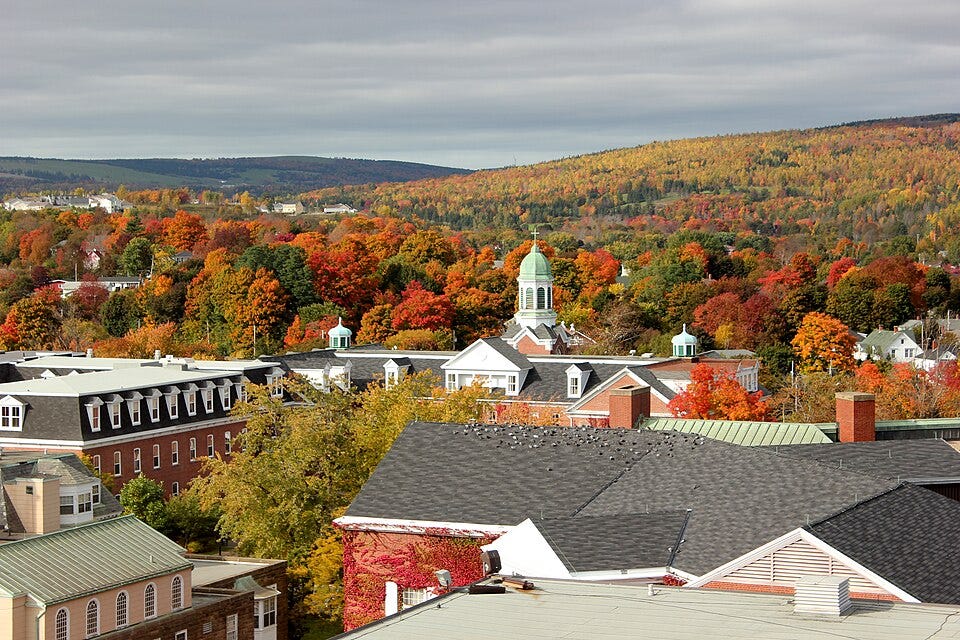 Recap of important issues we covered and plans for the future | Join Justin and Anuj as they reunite in the studio to reflect on nine whirlwind months of “Let’s Talk Antigonish.” From discovering how global politics affects the price of beer in Antigonish to the People’s Place Library ‘s impressive laundry list of services they offer on a shoestring budget, these two neighbours-turned-podcasters have been on quite a journey. In this candid conversation, they break down their episodes into three categories—community matters, social matters, and government matters—while celebrating the incredible organizations working behind the scenes in Antigonish. Learn about topics they’ve tackled like Jazz Fest, the fair, biking culture, refugees, loneliness, palliative care, intimate partner violence, the museum’s evolving role, and why affordable housing remains a pressing issue. Hear about their ambitious plans for 2026, including hiring a journalist to dig deeper into local stories, and discover what’s coming up next (including a chat with Minister of Health and Wellness Michelle Thompson). Whether you’re a long-time listener or brand new to the podcast, this behind-the-scenes peek reveals why local news matters for small-town democracy and how two guys with day jobs are helping keep local news alive—one conversation at a time. Get full access to Let's Talk Antigonish at letstalkantigonish.substack.com/subscribe | 35m 58s | ||||||
| 11/22/25 |  Music of the Night | We sat down with Jenn Priddle, director of Music of the Night, to uncover the magic behind one of Antigonish’s beloved community theater companies. From its humble beginnings in 1997 (including a dinner theater performance in a barn in November!) to selling out eight-show runs at the Eleanor Mutimer Theatre, Music of the Night has been bringing Broadway-caliber productions to Antigonish for nearly three decades. Discover how 100 volunteers—from high school band students to retired symphony players, from theater newbies to performers who could totally be on Broadway—come together every year to create something extraordinary. Jenn shares the heartwarming story of mentorship flowing through generations, the intimidating complexity of mounting this year’s show Into the Woods, and why this production features Monty Python coconuts. Learn about the beautiful legacy of community theater and why sometimes the best performances aren’t found in the big cities. Grab your tickets before the show sells out! More info about Music of the Night and ticket links here: https://www.facebook.com/MOTNAntigonish/ Get full access to Let's Talk Antigonish at letstalkantigonish.substack.com/subscribe | 34m 17s | ||||||
| 11/15/25 |  Palliative care in Antigonish - what is it exactly? | This week Justin and Anuj sat down with palliative care physician Dr. Emily Rice and nurse consultant Jamie Campbell to clear up what might be the most misunderstood area of healthcare. Spoiler alert: if you think palliative care is just end-of-life care in a hospital, you’re wrong—and you’re not alone. From the surprising truth that patients with palliative care actually live longer than those without it, to discovering that your family doctor is likely already providing palliative care without calling it that, Emily and Jamie dismantle misconceptions while explaining what this “contractor for your health” approach really means. Covering a massive geographic area from Antigonish to Canso with just two physician positions, the team—which includes social workers and even a music therapist—helps patients navigate everything from symptom management at home to difficult conversations about goals and quality of life. Along the way, Justin and Anuj learn how we’ve medicalized death and why that is not always in a patient’s best interest, how the Antigonish Palliative Care Society (yes, the poultry box people!) provides crucial support, and why having these conversations with your family now matters more than you think. Tune in for an honest, surprisingly uplifting look at care that meets people exactly where they are.Important links provided by Dr. Rice: Antigonish Palliative Care Society: https://www.antigonishpalliativecaresociety.com/Nova Scotia Hospice Palliative Care Association: https://nshpca.ca/Canadian Virtual Hospice: https://www.virtualhospice.ca/en_US/Main+Site+Navigation/Home.aspxCanadian Hospice Palliative Care Society: https://www.chpca.ca/BC Centre for Palliative Care: https://www.bc-cpc.ca/Palliative Care Physician and Author Dr. Kathryn Mannix: Dying for Beginners Video Palliative Care Public Service Announcement Videos by Dr. Jared Rubinstein: https://www.youtube.com/playlist?list=PL1dPS3PDtoPgPqR3Z-lazrkAceGwmg1_rThe Waiting Room Revolution: https://www.waitingroomrevolution.com/ and wherever you get your podcasts, start with season 1Advanced Care PlanningLove is Not Enough: https://www.youtube.com/playlist?list=PL-9dMSJLk6gpTw5WlzbL4INuzqjGJBfh_NS Hospice Palliative Care: https://nshpca.ca/advance-care-planning/GriefNS Health Life Changes resources: https://www.nshealth.ca/lifechanges#bereavementwww.mygrief.cawww.kidsgrief.cawww.youthgrief.ca Get full access to Let's Talk Antigonish at letstalkantigonish.substack.com/subscribe | 33m 04s | ||||||
| 11/8/25 |  The Naomi Society has some exciting new building plans | This week Justin and Anuj sat down with Pat McKenna from the Naomi Society to discuss their plans for a new 10-unit building at Sugarloaf. Behind the construction plans lies a sobering reality: Nova Scotia declared intimate partner violence an epidemic in 2024 after eight femicides in a single year, and all 483 shelter beds in the province are currently full. The Naomi Society is building affordable second-stage housing for women and children fleeing violence, providing a safe place to land after shelter stays when returning to the community. From coordinating escapes to shelters to accompanying women through court proceedings, the organization supported 225 individual clients in Antigonish and Guysborough counties in just six months. If you or someone you know needs help, call the Naomi Society at 902-863-3807. Tune in to understand the hidden scale of this crisis in our community and what’s being done to address it.More info for the Naomi Society website: https://naomisociety.ca/ Get full access to Let's Talk Antigonish at letstalkantigonish.substack.com/subscribe | 27m 37s | ||||||
| 11/1/25 | 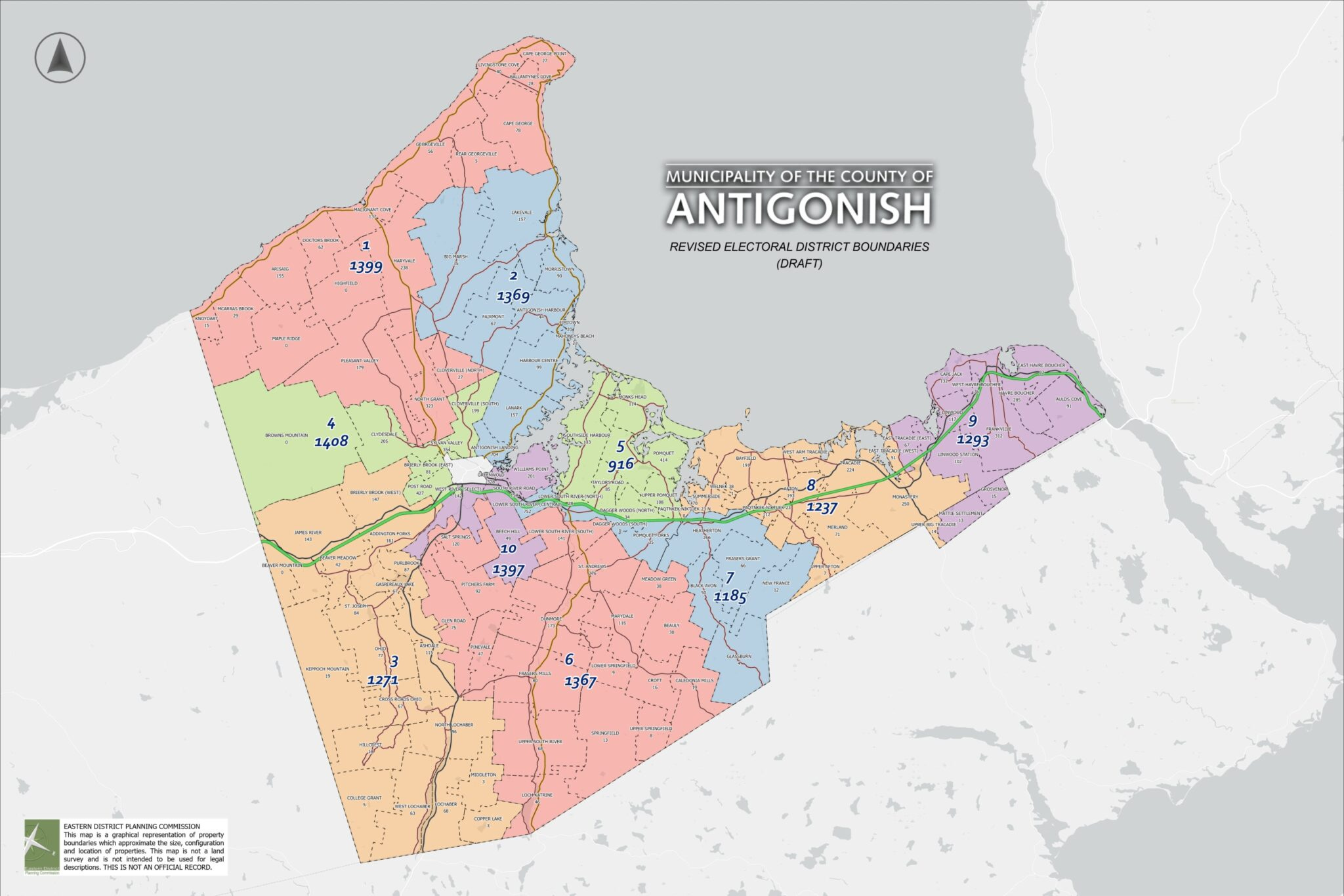 What's with the boundary review for Antigonish county? | This week Justin and Anuj sat down with Warden Nicholas MacInnis to unpack the 2025 Electoral Boundary Review. What sounds like dry bureaucratic shuffling turns out to be anything but. From balancing the districts to create electoral fairness to navigating tricky questions of community identity, Nicholas walks us through why redrawing these lines is far trickier than you’d think. Along the way, Justin and Anuj discover that the fringe area around town is growing faster than anyone realized (the county now accounts for up to 40% of the town’s sewer usage), learn about ambitious plans to drill new wells to supplement water supply after this summer’s once-in-50-years drought, and find out why the county actually operates more of its own water and sewer systems than most people know. With public hearings underway and a New Year’s deadline looming, this is your chance to understand what’s at stake and how you can weigh in. Tune in to learn why these boundaries are about so much more than lines on a map—and why the county and town’s improving relationship might be the best news of all.Important info on the boundary review from the county: https://antigonishcounty.ca/boundary-review-2025/ Get full access to Let's Talk Antigonish at letstalkantigonish.substack.com/subscribe | 30m 49s | ||||||
Showing 25 of 52
Sponsor Intelligence
Sign in to see which brands sponsor this podcast, their ad offers, and promo codes.
Chart Positions
1 placement across 1 market.
Chart Positions
1 placement across 1 market.