

Insights from recent episode analysis
Audience Interest
Podcast Focus
Publishing Consistency
Platform Reach
Insights are generated by CastFox AI using publicly available data, episode content, and proprietary models.
Most discussed topics
Brands & references
Total monthly reach
Estimated from 25 chart positions in 25 markets.
By chart position
- 🇺🇸US · Life Sciences#8230K to 100K
- 🇩🇪DE · Life Sciences#1595K to 30K
- 🇦🇺AU · Life Sciences#1645K to 30K
- 🇨🇦CA · Life Sciences#1755K to 30K
- 🇮🇳IN · Life Sciences#1181K to 10K
- Per-Episode Audience
Est. listeners per new episode within ~30 days
36K to 142K🎙 Daily cadence·237 episodes·Last published 6d ago - Monthly Reach
Unique listeners across all episodes (30 days)
121K to 472K🇺🇸21%🇩🇪6%🇦🇺6%+22 more - Active Followers
Loyal subscribers who consistently listen
48K to 189K
Market Insights
Platform Distribution
Reach across major podcast platforms, updated hourly
Total Followers
—
Total Plays
—
Total Reviews
—
* Data sourced directly from platform APIs and aggregated hourly across all major podcast directories.
On the show
From 10 epsHost
Recent guests
Recent episodes
238: From the Bench to CPEP: An MLS Journey
Jun 18, 2026
Unknown duration
237: Micro Minutes: A Case of Mistaken Identity
Jun 11, 2026
Unknown duration
236: Let's Talk Andes Virus
Jun 4, 2026
Unknown duration
235: Let's Talk Hantavirus
May 28, 2026
Unknown duration
234: High School, the Laboratory, and Workforce Development
May 21, 2026
Unknown duration
Social Links & Contact
Official channels & resources
Official Website
Login
RSS Feed
Login
| Date | Episode | Topics | Guests | Brands | Places | Keywords | Sponsor | Length | |
|---|---|---|---|---|---|---|---|---|---|
| 6/18/26 |  238: From the Bench to CPEP: An MLS Journey | What does it take to go from working at the bench to becoming a future clinical microbiology laboratory director? In this episode, Luis is joined by Dr. Mackenzie Collins, a CPEP fellow at UCLA, to discuss her journey from Medical Laboratory Scientist (MLS) to PhD scientist and CPEP fellow. Mackenzie shares how she discovered laboratory medicine, her experience working as an MLS in molecular microbiology, and the mentors and opportunities that helped shape her career path. The conversation explores the CPEP fellowship, the role of laboratory directors, and how MLS professionals can strengthen their applications through projects, research, presentations, and professional involvement. Mackenzie also discusses her PhD work involving HIV reservoirs and long-read sequencing, and why genomics and molecular diagnostics will continue to play an increasingly important role in clinical microbiology. Whether you're considering graduate school, interested in the CPEP fellowship, or exploring career paths in laboratory medicine, this episode offers a firsthand look at one MLS's journey from the bench to clinical microbiology leadership. Topics discussed: The MLS-to-CPEP pathway and transitioning from the bench to graduate school Mentorship, professional development, and building a competitive application The role of clinical microbiology laboratory directors and career opportunities beyond the bench Sequencing, genomics, and the future of clinical microbiology Additional Resources CPEP Fellowship Overview with Dr. Sam Goodfellow Interested in learning more about the CPEP Fellowship? In this episode, Dr. Sam Goodfellow discusses the structure of the program, the application process, and what to expect from CPEP training. https://directory.libsyn.com/episode/index/id/36395120 Understanding the ABMM Certification Examination Learn more about the American Board of Medical Microbiology (ABMM) certification, its importance for future laboratory directors, and what candidates can expect from the examination process. https://directory.libsyn.com/episode/index/id/35868345 Stay connected with Let's Talk Micro: Website: letstalkmicro.com Questions or feedback? Email me at letstalkmicro@outlook.com Interested in being a guest on Let's Talk Micro? Fill out the form here: https://forms.gle/V2fT3asjfyusmqyi8 Support the podcast: Venmo Buy me a Ko-fi | — | ||||||
| 6/11/26 |  237: Micro Minutes: A Case of Mistaken Identity | Have you ever received an identification result that just didn't make sense? In this episode, Luis shares three cases of mistaken identity from the microbiology laboratory: a Gram-positive rod identified as Kocuria, another reported as Sphingomonas, and a yeast that somehow became Brucella. While automated identification systems are powerful tools, they can only work with the information we provide. These examples highlight an important lesson for every microbiologist: always correlate the identification with the Gram stain, colony morphology, and other bench observations. When the result doesn't fit, take a step back and ask a simple question: Does it make sense? Join us for a quick Micro Minutes on critical thinking, correlation, and why the Gram stain remains one of the most valuable tools in the microbiology laboratory. Stay connected with Let's Talk Micro: Website: letstalkmicro.com Questions or feedback? Email me at letstalkmicro@outlook.com Interested in being a guest on Let's Talk Micro? Fill out the form here: https://forms.gle/V2fT3asjfyusmqyi8 Support the podcast: Venmo Buy me a Ko-fi | — | ||||||
| 6/4/26 |  236: Let's Talk Andes Virus | In Part 2 of this hantavirus series, Luis continues the conversation with Dr. Ryan Relich and Dr. Stephanie Seifert by focusing on the recent Andes virus cruise ship outbreak and what makes this hantavirus different from others. The discussion explores the outbreak investigation, the evidence for person-to-person transmission, and why the Andes virus has received so much attention from the public health community. Ryan and Stephanie also discuss diagnostic testing, including PCR and serology, the role of public health laboratories, current treatment options, prevention strategies, and how concerned the public should be about future outbreaks. Tune in for a closer look at Andes virus and its role in the recent cruise ship outbreak. Stay updated: https://www.cdc.gov/hantavirus/situation-summary/index.html Stay connected with Let's Talk Micro: Website: letstalkmicro.com Questions or feedback? Email me at letstalkmicro@outlook.com Interested in being a guest on Let's Talk Micro? Fill out the form here: https://forms.gle/V2fT3asjfyusmqyi8 Support the podcast: Venmo Buy me a Ko-fi | — | ||||||
| 5/28/26 |  235: Let's Talk Hantavirus | Hantaviruses have recently been in the headlines, but what exactly are they and how do they spread? In Part 1 of this hantavirus series, Luis is joined by Dr. Ryan Relich and Dr. Stephanie Seifert for a deep dive into the world of hantaviruses. The conversation explores the basics of hantaviruses, including their ecology, rodent reservoirs, transmission, and the diseases they cause in humans. The guests also discuss Old World vs New World hantaviruses, hantavirus pulmonary syndrome (HPS), environmental risk factors, climate influences, and why these infections may be underdiagnosed. From deer mice and spillover events to aerosol transmission and public health concerns, this episode breaks down the science behind these important zoonotic viruses in a practical and approachable way. Stay tuned next week for an episode where our guests talk about the Andes virus. Stay updated: https://www.cdc.gov/hantavirus/situation-summary/index.html Stay connected with Let's Talk Micro: Website: letstalkmicro.com Questions or feedback? Email me at letstalkmicro@outlook.com Interested in being a guest on Let's Talk Micro? Fill out the form here: https://forms.gle/V2fT3asjfyusmqyi8 Support the podcast: Venmo Buy me a Ko-fi | — | ||||||
| 5/21/26 |  234: High School, the Laboratory, and Workforce Development | Workforce shortages continue to impact clinical laboratories across the country, especially in rural healthcare settings. In this episode of Let's Talk Micro, Luis is joined by Kenzi Haigler to discuss an innovative high school laboratory program designed to introduce students to laboratory medicine early and help strengthen the future workforce pipeline. Kenzi shares her journey into the laboratory profession, her experiences working in rural healthcare, and the unique challenges small hospitals face when it comes to staffing, training, and retaining laboratory professionals. She also explains how her community came together to create a hands-on clinical laboratory assistant program that gives students exposure to phlebotomy, microscopy, waived testing, and laboratory workflows before graduation. This conversation highlights the importance of mentorship, early exposure to laboratory medicine, and creative approaches to workforce development in clinical laboratory science. Follow Kenzi on TikTok: @lablifewithmrsh Stay connected with Let's Talk Micro: Website: letstalkmicro.com Questions or feedback? Email me at letstalkmicro@outlook.com Interested in being a guest on Let's Talk Micro? Fill out the form here: https://forms.gle/V2fT3asjfyusmqyi8 Support the podcast: Venmo Buy me a Ko-fi | — | ||||||
| 5/14/26 |  233: The Background Singers of Gram-Negative Cocci | In this episode of Let's Talk Micro, we close out our gram-negative cocci series by talking about the "background singers" of the group—the organisms that quietly show up on respiratory cultures and oral flora plates every day. We explore the world of non-pathogenic Neisseria species, along with rod-shaped and coccobacillary Neisseria and Moraxella that break the classic gram-negative diplococci rule. From commensals and opportunistic pathogens to their role in respiratory cultures and bench identification, this episode focuses on how to think through these isolates in the clinical microbiology laboratory. As always, we tie it back to the bench—because sometimes the organisms sitting quietly in the background still matter. Stay connected with Let's Talk Micro: Website: letstalkmicro.com Questions or feedback? Email me at letstalkmicro@outlook.com Interested in being a guest on Let's Talk Micro? Fill out the form here: https://forms.gle/V2fT3asjfyusmqyi8 Support the podcast: Venmo Buy me a Ko-fi | — | ||||||
| 5/7/26 |  232: What's New at ASM Microbe 2026? | This week, Let's Talk Micro is pausing the Gram-negative cocci series to talk about one of the biggest microbiology meetings of the year: ASM Microbe 2026. Luis is joined by Dr. Bobbi Pritt and Dr. Robert Tibbetts to discuss what attendees can expect from this year's meeting in Washington, DC. The conversation covers the new meeting structure, important trends in clinical microbiology, sessions and workshops geared toward medical laboratory scientists, networking opportunities, and tips for getting the most out of the conference experience. They also discuss hot topics such as AI-driven diagnostics, whole genome sequencing, metagenomics, phage therapy, antimicrobial resistance, and the future direction of clinical microbiology. Whether you are attending ASM Microbe for the first time or returning as a seasoned attendee, this episode offers a practical preview of what's ahead and highlights opportunities especially relevant to the clinical microbiology laboratory community. Topics discussed: Changes to ASM Microbe 2026 Sessions and workshops for MLS professionals AI and digital diagnostics Whole genome sequencing and metagenomics Antimicrobial resistance and AST Phage therapy and microbiome-focused sessions Networking and professional development Tips for first-time attendees ASM Resources ASM Microbe 2026 information and registration: https://registration.experientevent.com/ShowASM261 Volunteer opportunities with ASM: https://asm.org/about-asm/volunteer-with-asm/volunteer-with-asm MLS/MLT workshop information and registration: https://www.pathlms.com/asm/courses/185029 Stay connected with Let's Talk Micro: Website: letstalkmicro.com Questions or feedback? Email me at letstalkmicro@outlook.com Interested in being a guest on Let's Talk Micro? Fill out the form here: https://forms.gle/V2fT3asjfyusmqyi8 Support the podcast: Venmo Buy me a Ko-fi | — | ||||||
| 4/30/26 |  231: The Hockey Puck Bug: Moraxella catarrhalis | In this episode of Let's Talk Micro, we continue our gram-negative cocci series with a closer look at Moraxella catarrhalis—better known at the bench as the hockey puck bug. We break down what makes this organism unique, from its classic sliding colony morphology to how it behaves in different patient populations. Is it a colonizer or a pathogen? The answer depends on the clinical context. We walk through its role in pediatric infections like otitis media and sinusitis, its significance in adults—especially in COPD—and how to interpret its presence in respiratory cultures. As always, we tie it back to the bench, discussing identification clues, culture considerations, and what it means when you see this organism on your plate. Stay connected with Let's Talk Micro: Website: letstalkmicro.com Questions or feedback? Email me at letstalkmicro@outlook.com Interested in being a guest on Let's Talk Micro? Fill out the form here: https://forms.gle/V2fT3asjfyusmqyi8 Support the podcast: Venmo Buy me a Ko-fi | — | ||||||
| 4/23/26 |  230: Same Gram Stain, Different Story: Neisseria meningitidis vs gonorrhoeae✨ | gram-negative cocciNeisseria meningitidis+4 | — | WileyASM Press+1 | — | gram staincolonization+5 | Wiley's ClinMicroNow | 25m 22s | |
| 4/16/26 |  229: Gram-Negative Cocci: Beyond the Plate✨ | gram-negative cocciidentification methods+4 | — | VITEKRapID NH+3 | Neisseria meningitidisNeisseria gonorrhoeae | gram-negative cocciVITEK+6 | — | 25m 31s | |
Want analysis for the episodes below?Free for Pro Submit a request, we'll have your selected episodes analyzed within an hour. Free, at no cost to you, for Pro users. | |||||||||
| 4/9/26 |  228: Gram-Negative Cocci: What to Do After the Gram Stain✨ | gram-negative cocciGram stain+4 | — | Neisseria gonorrhoeaeNeisseria lactamica+3 | — | gram-negative cocciblood agar+6 | — | 27m 36s | |
| 4/2/26 |  227: When Gram-Negative Cocci Show Up: How to Think at the Bench✨ | gram-negative cocciGram stain+3 | — | NeisseriaMoraxella+1 | — | gram-negative cocciGram stain+5 | — | 19m 51s | |
| 3/26/26 |  226: CLSI M100 2026 Updates✨ | microbiology lab updatesCLSI M100 changes+3 | Dr. April Bobenchik | aztreonam–avibactamtrimethoprim-sulfamethoxazole+2 | Acinetobacter | CLSI M100microbiology+7 | — | 39m 04s | |
| 3/10/26 | Quick Update from Let's Talk Micro✨ | podcast updateclinical microbiology+3 | — | Ko-fiLet's Talk Micro+4 | — | podcastmicrobiology+4 | — | 1m 09s | |
| 3/6/26 |  225: Too Many Bugs, One Culture: A CMPH Guide to Wound Cultures✨ | wound culturesclinical microbiology+3 | Dr. Christopher DoernDr. Alexandra Bryson | Clinical Microbiology Procedures Handbook | — | wound culturesmicrobiology+5 | — | 57m 27s | |
| 2/27/26 |  224: Micro Minutes: Sometimes Gram Stains Lie✨ | Gram stain interpretationclinical microbiology+4 | — | Let's Talk MicroAcinetobacter+2 | — | Gram stainclinical microbiology+7 | — | 13m 57s | |
| 2/20/26 |  223: SuperStat to Storytime: Building the Future of Laboratory Medicine✨ | laboratory medicineadvocacy+4 | Stephanie WhiteheadAaron Odegard | SuperStat PodcastLet's Talk Micro+1 | — | laboratory medicineadvocacy+4 | — | 51m 42s | |
| 2/13/26 |  222: Parasites, Pediatrics, and the Lab: A Study from Guinea, West Africa✨ | intestinal parasitespediatrics+3 | Dr. Joel Mortensen | Sacre Coeur Hospital | GuineaWest Africa | intestinal parasitespediatrics+6 | — | 48m 45s | |
| 2/6/26 | 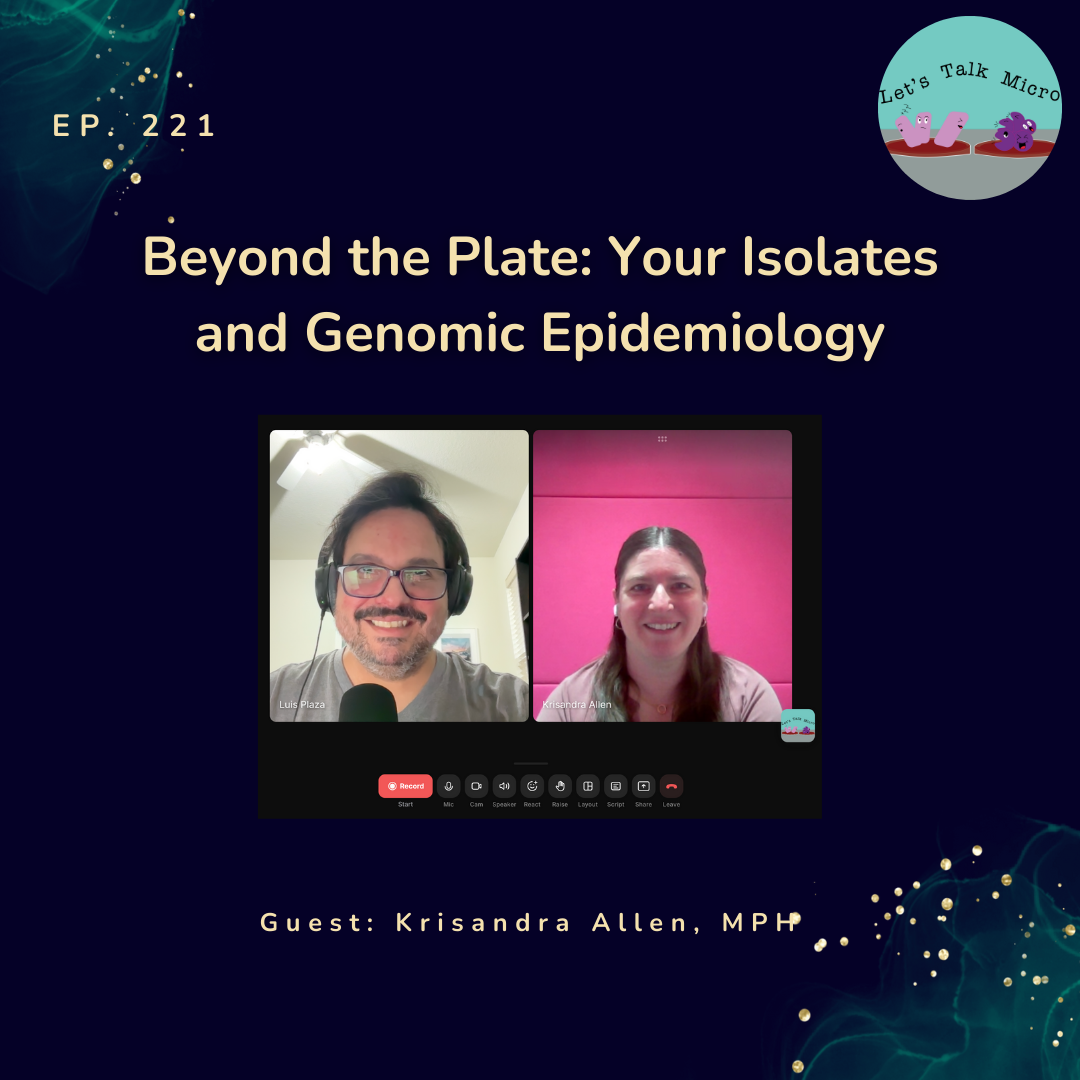 221: Beyond the Plate: Your Isolates and Genomic Epidemiology | Genomic epidemiology is reshaping how we detect, investigate, and control infectious disease outbreaks—but what does that actually look like from the bench to public health? In this episode of Let's Talk Micro, Luis is joined by genomic epidemiologist Krisandra Allen for a practical, case-based conversation on how pathogen sequencing data is generated, analyzed, and paired with epidemiologic information to answer questions traditional methods can't. They discuss foodborne and hepatitis A outbreaks, geographically dispersed clusters, and how sequencing is being integrated into routine public health workflows, while highlighting the essential role of clinical microbiology labs in specimen submission and data quality. A timely episode for microbiologists, public health professionals, and trainees curious about how their lab work feeds into real-world surveillance and outbreak response. Stay connected with Let's Talk Micro: Website: letstalkmicro.com Questions or feedback? Email me at letstalkmicro@outlook.com Interested in being a guest on Let's Talk Micro? Fill out the form here: https://forms.gle/V2fT3asjfyusmqyi8 Support the podcast: Venmo Buy me a Ko-fi | — | ||||||
| 1/30/26 | 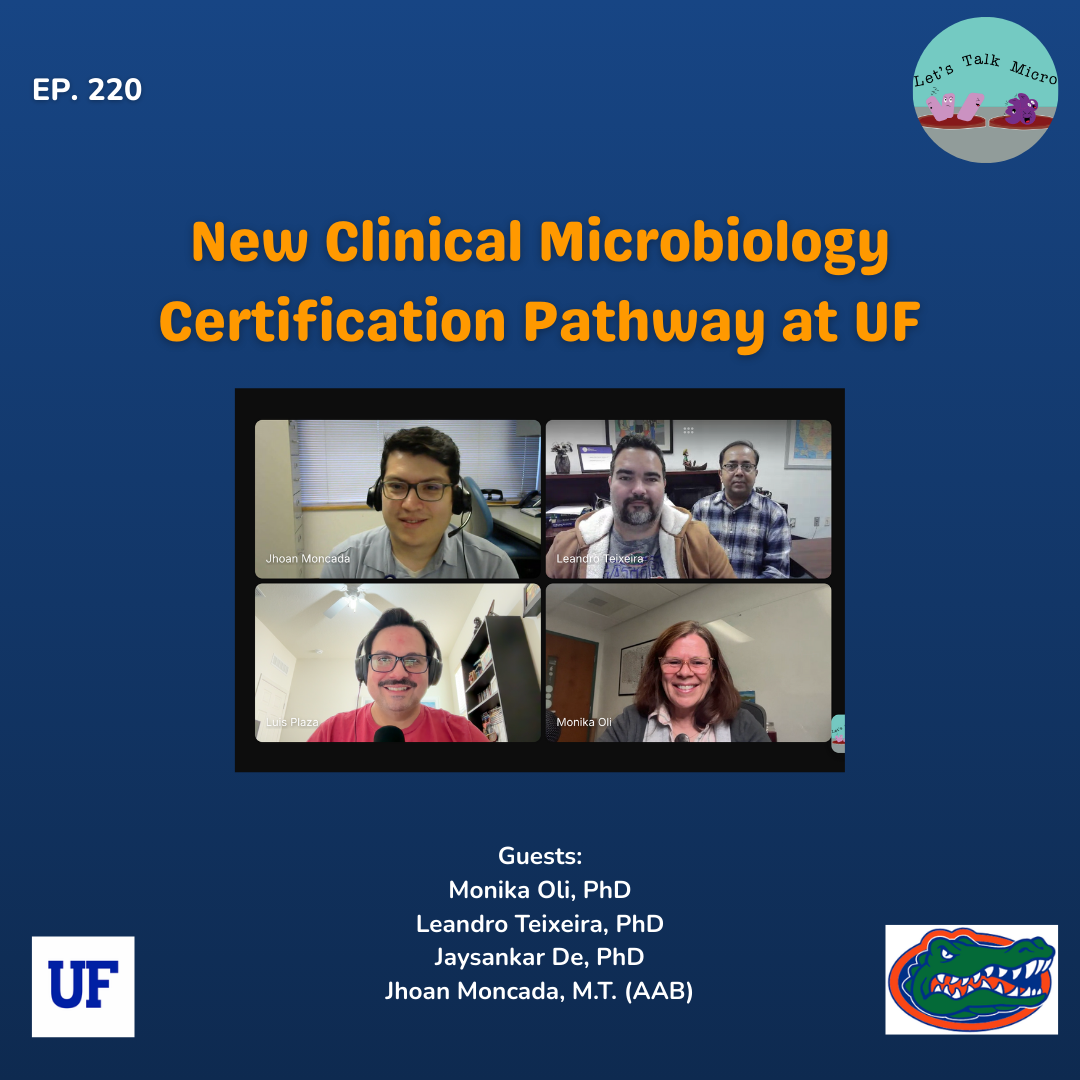 220: New Clinical Microbiology Certification Pathway at UF | In this episode of Let's Talk Micro, Luis is joined by faculty and collaborators from the University of Florida to discuss their new Clinical Laboratory Microbiologist (CLM) program — the first NAACLS-approved, microbiology-only certification pathway in the United States. They share how the program was created to address the growing shortage of clinical microbiologists and provide a direct pathway for microbiology graduates and working professionals to enter the clinical laboratory. The conversation covers: Gaps in the current workforce and training pipeline The hybrid model combining online coursework, hands-on bootcamp labs, and local clinical internships Real-world training with clinical lab technology such as MALDI-TOF, PCR, and blood culture systems Preparation for the ASCP categorical microbiology certification exam The strong nationwide interest in the program The episode closes with a fun discussion on everyone's favorite microbes. Whether you're a student, lab professional, or educator, this episode offers insight into the future of clinical microbiology training. Additional resources: ASCP Categorical Certification (Microbiology) https://www.ascp.org/boc/explore-credentials/view-all-credentials/M University of Florida Clinical Laboratory Microbiologist (CLM) Program https://microbiologyonline.ifas.ufl.edu/programs/clinical-laboratory-microbiologist/ GIDEON (Global Infectious Diseases and Epidemiology Network) https://www.gideononline.com/ Stay connected with Let's Talk Micro: Website: letstalkmicro.com Questions or feedback? Email me at letstalkmicro@outlook.com Interested in being a guest on Let's Talk Micro? Fill out the form here: https://forms.gle/V2fT3asjfyusmqyi8 Support the podcast: Venmo Buy me a Ko-fi | — | ||||||
| 1/23/26 | 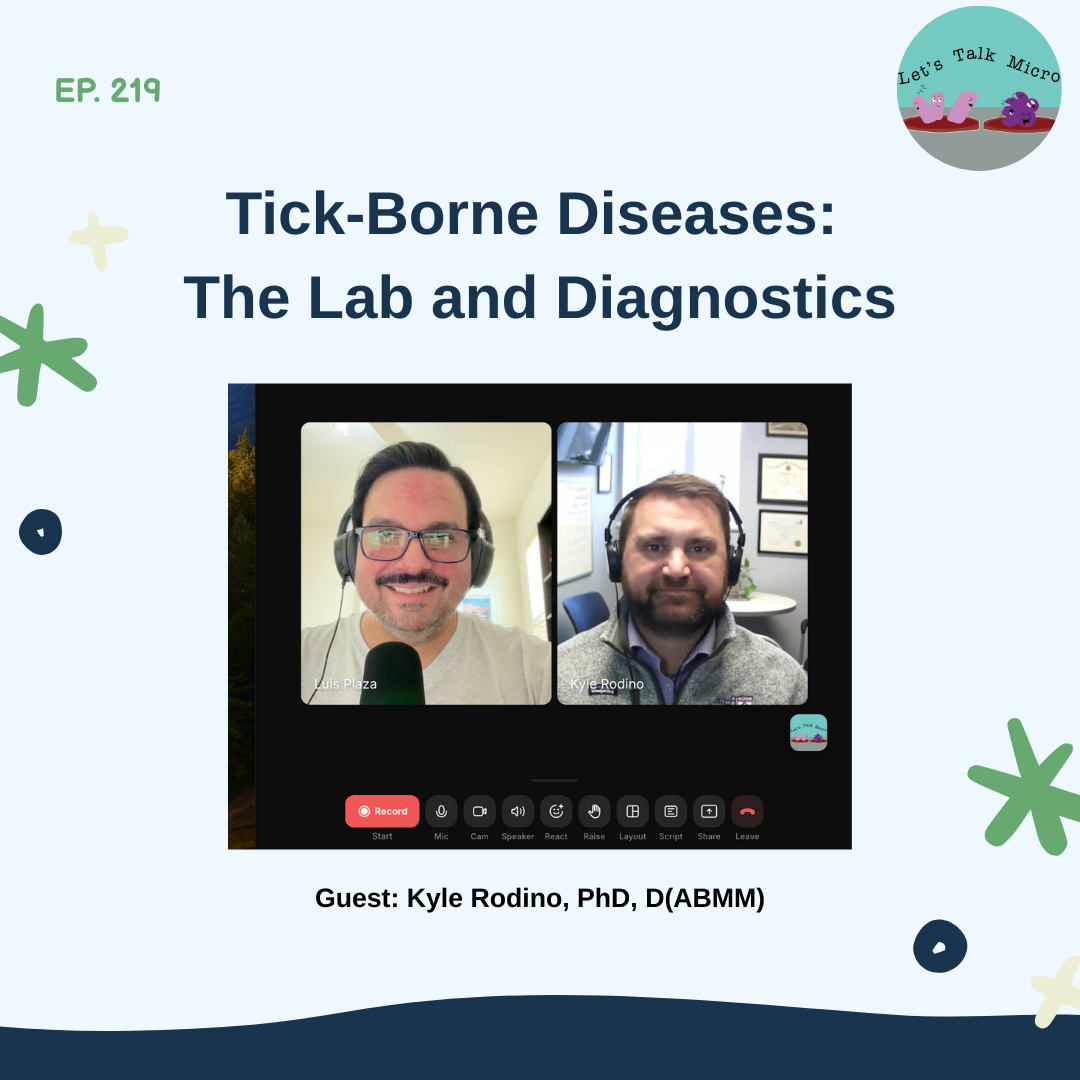 219: Tick-Borne Diseases: The Lab and Diagnostics | Tick-borne diseases continue to expand across North America, but diagnosing them in the clinical laboratory remains complex—especially when timing between symptom onset and testing isn't considered. In this episode of Let's Talk Micro, Luis is joined by Kyle Rodino, Assistant Professor of Pathology and Laboratory Medicine at the University of Pennsylvania and Assistant Director of Microbiology, for a lab-focused discussion on tick-borne disease diagnostics. They cover major bacterial, parasitic, and viral causes of tick-borne disease, and walk through how molecular testing, serology, and microscopy are used at different stages of illness. The conversation highlights why test selection and timing matter, common diagnostic challenges—particularly with Babesia and Lyme disease testing—and how laboratories can support better diagnostic decision-making. A practical episode for microbiologists, laboratorians, and clinicians navigating real-world testing challenges in the lab. Additional resources: Update on North American tick-borne diseases and how to diagnose them https://doi.org/10.1128/jcm.00807-23 Stay connected with Let's Talk Micro: Website: letstalkmicro.com Questions or feedback? Email me at letstalkmicro@outlook.com Interested in being a guest on Let's Talk Micro? Fill out the form here: https://forms.gle/V2fT3asjfyusmqyi8 Support the podcast: Venmo Buy me a Ko-fi | — | ||||||
| 1/16/26 |  218: Metagenomics in Clinical Microbiology | In this episode of Let's Talk Micro, we break down metagenomic next-generation sequencing (mNGS) and how it's changing the way we diagnose complex infectious diseases. I'm joined by Steve Miller, MD, PhD—Chief Medical Officer at Delve Bio—to discuss how unbiased metagenomics moved from research labs into real-world clinical practice. We cover what metagenomics is, how it differs from targeted PCR and sequencing, and where it adds the most value—especially in meningitis and encephalitis, immunocompromised patients, and cases where routine testing comes back negative. Dr. Miller shares insights from years of clinical experience, including how mNGS can improve diagnostic yield, shorten time to diagnosis, guide targeted therapy, and reduce unnecessary testing and hospital stays. We also touch on challenges like cost, result interpretation, diagnostic stewardship, and where metagenomics is headed next—including its role in public health and emerging infections. Links & Resources Clinical metagenomics for meningitis and encephalitis (Nature Medicine) https://www.nature.com/articles/s41591-024-03275-1 Stay connected with Let's Talk Micro: Website: letstalkmicro.com Questions or feedback? Email me at letstalkmicro@outlook.com Interested in being a guest on Let's Talk Micro? Fill out the form here: https://forms.gle/V2fT3asjfyusmqyi8 Support the podcast: Venmo Buy me a Ko-fi | — | ||||||
| 12/19/25 | 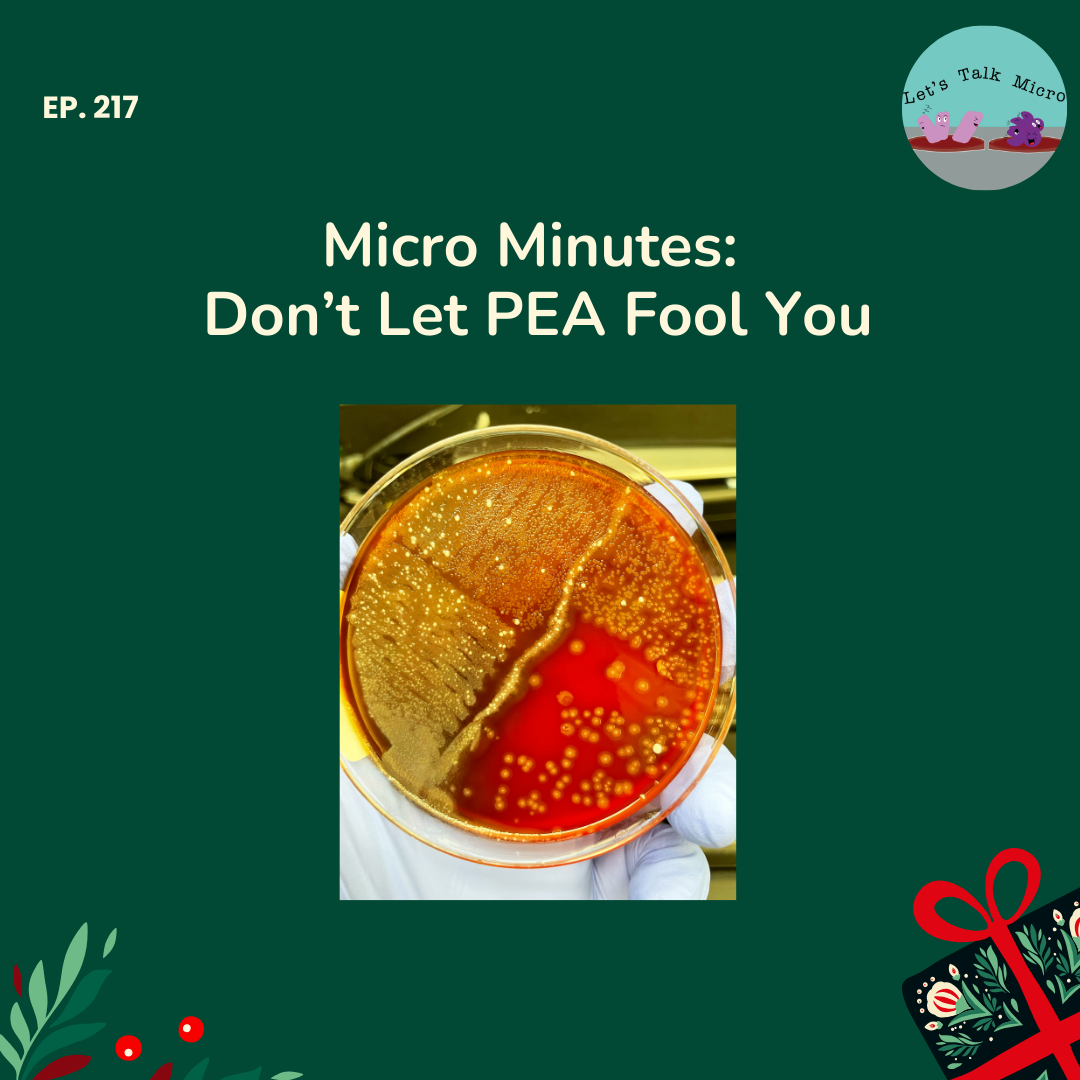 217: Micro Minutes: Don't Let PEA Fool You | PEA agar is often treated as "the gram-positive plate," but that shortcut can lead to real bench-level mistakes. In this MicroMinutes episode, we break down what phenylethyl alcohol agar actually does, why growth on PEA does not automatically mean an organism is gram-positive, and how selective media can change colony appearance and behavior. You'll hear about: What PEA inhibits — and what it doesn't Why Pseudomonas aeruginosa can grow quite well on PEA How colony morphology and hemolysis may differ from blood agar Why Lancefield grouping should never be performed directly from PEA PEA is a powerful recovery tool — but only when you understand its limitations. Short, focused, and straight from the bench, this is your Micro minutes. Stay connected with Let's Talk Micro: Website: letstalkmicro.com Questions or feedback? Email me at letstalkmicro@outlook.com Interested in being a guest on Let's Talk Micro? Fill out the form here: https://forms.gle/V2fT3asjfyusmqyi8 Support the podcast: Venmo Buy me a Ko-fi | — | ||||||
| 12/12/25 | 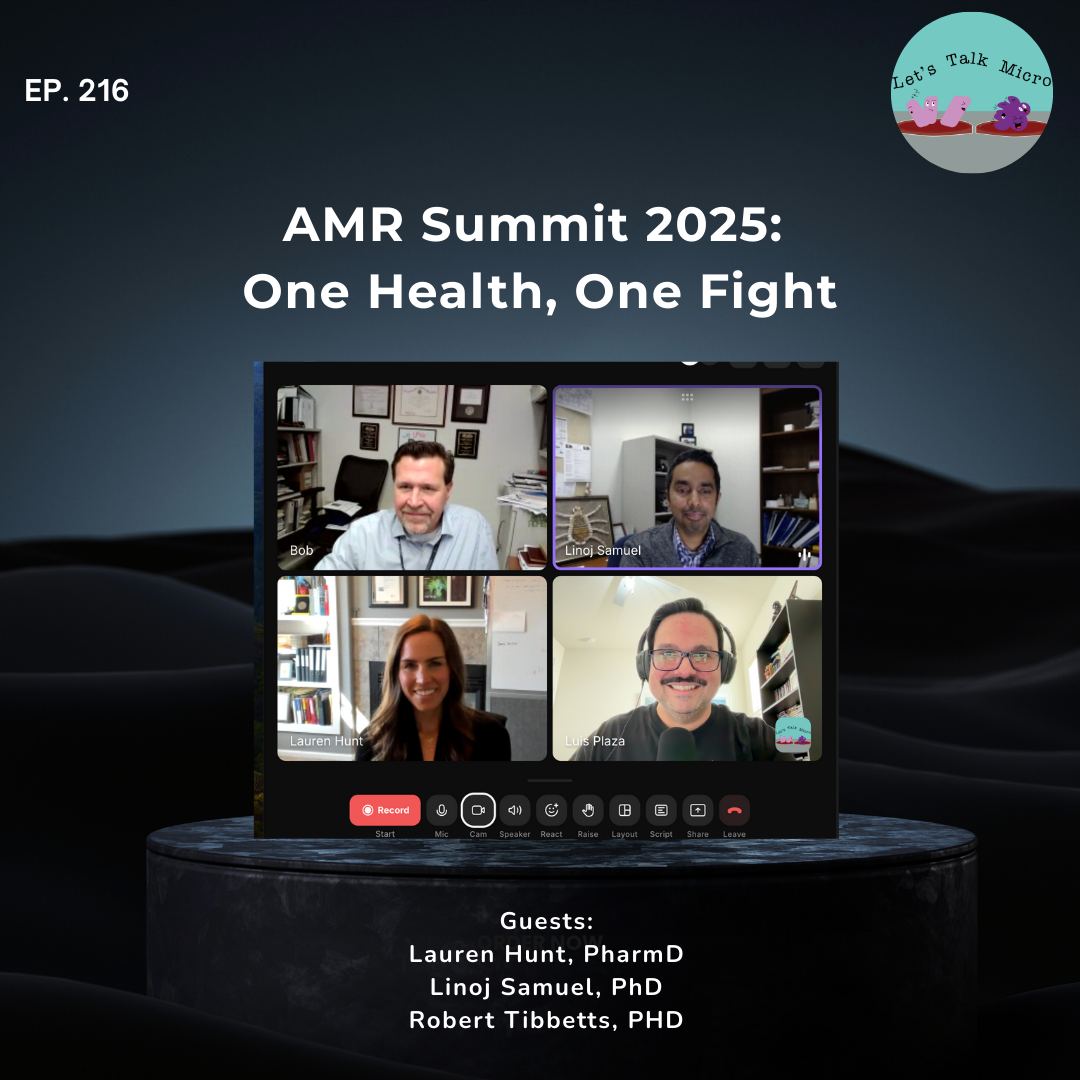 216: AMR Summit 2025: One Health, One Fight | In this special episode, I'm joined by three leaders who helped shape the conversation at the 2025 Antimicrobial Resistance (AMR) Summit in Detroit: Dr. Lauren Hunt, Dr. Linoj Samuel, and Dr. Robert Tibbetts. Together, we explore how this intimate, multidisciplinary summit brought together clinical microbiology, infectious diseases, stewardship, public health, policy, and veterinary medicine to tackle the growing challenges of antimicrobial resistance. We break down the key themes that emerged throughout the meeting—shared accountability, One Health collaboration, diagnostic innovation, payer perspectives, and the urgent need for equitable access to testing. You'll hear about surprising insights, personal stories that brought AMR's impact into sharp focus, and the collaborative projects already taking root as a result of this year's summit. Whether you're on the bench, managing stewardship programs, shaping policy, or simply passionate about the future of diagnostics, this episode offers a behind-the-scenes look at the conversations and partnerships driving AMR action forward. Thank you to Lauren, Linoj, and Robert for joining me—and to everyone committed to advancing the fight against AMR. One Health, one fight. Additional Resources from the 2024 AMR Summit If you'd like to explore more background from last year's summit, here are two excellent resources: 2024 AMR Summit Article Antimicrobial Stewardship & Healthcare Epidemiology (ASHE) DOI:10.1017/ash.2025.10039 ASHE Podcast Episode Recapping the 2024 Summit 🎧 https://open.spotify.com/episode/0YBcDwgfYIy75pTVjCZZ5Y?si=jb8N_3AIQdOmcC2YaOvOag Want to Contribute or Get Involved? If you're interested in contributing ideas, collaborating on AMR initiatives, or learning more about future AMR Summits, you can reach out directly to: Dr. Lauren Hunt 📧 lauren.hunt@biomerieux.com Stay connected with Let's Talk Micro: Website: letstalkmicro.com Questions or feedback? Email me at letstalkmicro@outlook.com Interested in being a guest on Let's Talk Micro? Fill out the form here: https://forms.gle/V2fT3asjfyusmqyi Support the podcast: Venmo Buy me a Ko-fi | — | ||||||
| 12/5/25 |  215: One Health, Many Species: AMR Through a Veterinary Lens | What does antimicrobial resistance look like when your patients range from dogs and cats to cattle, wildlife, and everything in between? And how do we make sense of AST, breakpoints, contamination, and genotypic tools across such a diverse microbiological world? In this episode, Luis is joined by Dr. Kelli Maddock, DrPH (North Dakota State University Veterinary Diagnostic Laboratory) and Dr. Stephen Cole (University of Pennsylvania), two leaders shaping the future of veterinary microbiology, antimicrobial stewardship, and CLSI veterinary standards. Together, they explore AMR and AST through a true One Health lens, showing how animal, human, and environmental health are interconnected in everyday diagnostic work. Drawing from their recent American Journal of Veterinary Research article on AMR challenges in veterinary medicine, the discussion highlights: The biggest challenges in veterinary AST, from species diversity to contamination Phenotypic vs genotypic testing and concerns around WGS-based "treatment predictions" How selective reporting ("nudging") strengthens antimicrobial stewardship Why every animal result matters in a One Health framework Whether you come from human or veterinary microbiology, this episode reveals the shared challenges across sectors — and the diagnostic, collaborative, and educational steps needed to strengthen AMR response in a One Health world. Link to article: https://doi.org/10.2460/javma.23.12.0687 Missed the past episodes on veterinary microbiology? Here they are: TBT: Veterinary Microbiology https://directory.libsyn.com/episode/index/id/35868175 Episode 166: Pasteurella multocida — capsular groups and more https://directory.libsyn.com/episode/index/id/35868155 Stay connected with Let's Talk Micro: Website: letstalkmicro.com Questions or feedback? Email me at letstalkmicro@outlook.com Interested in being a guest on Let's Talk Micro? Fill out the form here: https://forms.gle/V2fT3asjfyusmqyi8 Support the podcast: Venmo Buy me a Ko-fi | — | ||||||
Showing 25 of 246
Pitch Fit is a Pro feature
See how bookable this show is for guests, which brands already advertise, the per-episode ad value, and the best-fit guest and sponsor profile. The numbers are blurred on the free plan.
How readily this show books outside guests like you.
How proven this show is for host-read sponsorships.
For Guests
ProFor Advertisers
ProUpgrade to Pro to unlock guest cadence, sponsor categories, fit scores, and per-episode ad value for this show.
Chart Positions
25 placements across 25 markets.
Chart Positions
25 placements across 25 markets.