
Let's talk Transformation : The business leaders podcast
by Suzie Lewis
Is this your podcast?Insights from recent episode analysis
Audience Interest
Podcast Focus
Publishing Consistency
Platform Reach
Insights are generated by CastFox AI using publicly available data, episode content, and proprietary models.
Most discussed topics
Brands & references
Est. Listeners
Insufficient chart data. Estimates will improve as the show charts.
- Per-Episode Audience
Est. listeners per new episode within ~30 days
N/A🎙 Daily cadence·167 episodes·Last published 3d ago - Monthly Reach
Unique listeners across all episodes (30 days)
N/A - Active Followers
Loyal subscribers who consistently listen
N/A
Market Insights
Platform Distribution
Reach across major podcast platforms, updated hourly
Total Followers
—
Total Plays
—
Total Reviews
—
* Data sourced directly from platform APIs and aggregated hourly across all major podcast directories.
On the show
From 16 epsHost
Recent guests
Recent episodes
#186 How to Influence People: Move Minds Without Force with JonRobert Tartaglione
Aug 31, 2026
Unknown duration
#185 The Basics for Successful AI Adoption with Ryan Drumheller
Aug 24, 2026
Unknown duration
#184 Leaderwired : transforming leadership in the AI era with Anna Barnhill
Aug 17, 2026
Unknown duration
#183 Navigating Corporate Sociopaths: A Guide for Leaders with Jonathon Grantham
Aug 10, 2026
Unknown duration
#182 A Blueprint for building healthier systems with Dr Larry Moss
Aug 3, 2026
Unknown duration
Social Links & Contact
Official channels & resources
Official Website
Login
RSS Feed
Login
| Date | Episode | Topics | Guests | Brands | Places | Keywords | Sponsor | Length | |
|---|---|---|---|---|---|---|---|---|---|
| 8/31/26 |  #186 How to Influence People: Move Minds Without Force with JonRobert Tartaglione | "Minds do not open from the outside through force.."In fact, we are the only people who can change our own minds - we explore this and more in this episode as we delve into the neuroscience of influence - how the brain works as a social survival machine and not a computer, and what this means for persuading and influencing people in the workplace.AI is creating a crisis of humility. We are increasingly using technology to handle the “heavy lifting” of critical thinking. The risk? We believe we understand complex problems better than we actually do.We discuss what JonRobert calls the “illusion of explanatory depth.” where we confuse familiarity with mastery.One simple solution: ask “how” questions. When you force yourself—or your team—to explain the mechanism of a decision, you quickly identify the gaps in your logic.AI can propose strategies, but it cannot manage the social dynamics of execution. Humans still need to build the trust, align the incentives, and navigate the identity-based resistance to change. Yet the harder you push, the harder people resist. It is a fundamental law of human behavior called psychological reactance.We have all been there. You present a perfect, logical case for change. You expect buy-in. Instead, you get defensive silence or active pushback.But we also know that human minds do not open through force from the outside. They open from the inside. People are 90% more likely to adopt a change when they generate the reasons for it themselves.If you want to move people, stop talking and start architecting the right conditions. The future of leadership is not about managing output; it is about managing human experience. As you move forward, remember that your brain and the brains of your team members are social survival machines. They crave belonging, they defend their autonomy, and they look to others to define acceptable behavior.If you are a leader, your goal is to design a culture that satisfies the need for belonging while protecting individual agency. This means choosing your words with intent. There is no shortcut for doing the hard, messy work of understanding human dynamics. You cannot automate empathy, and you cannot outsource the development of trust. If you want to transform your organization, start by changing how you show up.Don’t let the ease of AI replace the hard work of deep human thinking.The main insights you'll get from this episode are :The human brain is a social survival machine, not a computer – we are rationalising creatures and seek out the data and evidence we want.Belonging is a survival instinct and while society has evolved, our patterns haven’t and our social nature matters.The paradox of persuasion comes into play in sustainable change, which is often compliance disguised as change.Our psychological reaction to persuasion is to defend our autonomy; changing minds requires opening them from the inside.The solution is self-generated persuasion, whereby we are more convinced by reasons we have come across ourselves = agency.Change requires a culture where people don’t have to try and fit in but aims instead for holistic belonging.Belongingness impacts people’s decisions and behaviour, e.g. social norm adherence, but norms can be misperceived.Engagement surveys in organisations do not ask the right questions to identify misperceived norms – making misperception public is impactful.AI brings many wonderful things to organisations and is paradigm-shifting for efficiency and scale, but it also entails the thesis-antithesis-synthesis dynamic.The challenge of AI is to accept that it can’t do everything better than we can; it is creating a crisis of humility and exacerbating the illusion of explanatory depth.Hasty decisions involving AI will come home to roost and leave ultimate responsibility to humans, who need to question (their) assumptions.AI can propose strategies, but people still need to buy into them – this involves social dynamics managed by human leaders to bridge the critical gap.Today’s leaders need to focus on three main things:help people understand that the human brain is not a logic machinetake a persuasive/subtle approach to people (and change)understand that data does not exist in a vacuum and pay attention to messagingAI can be used to deliberately create the space and opportunities for people to hone their uniquely human skills and to encourage behaviour change.Find out more about JonRobert and his work here :https://influence51.com/https://www.linkedin.com/in/jonrobert-tartaglione-ph-d-21b26770/For more information on this episode please visit www.transformforvalue.com/podcastTo carry on developing your leadership and building a relevant & high performing team, connect with me here : https://calendly.com/transformforvalue/connect | — | ||||||
| 8/24/26 |  #185 The Basics for Successful AI Adoption with Ryan Drumheller | "Imagine you are holding a glass of mud. Adding more water doesn’t make it drinkable; it just creates a bigger mess".The narrative that AI will replace thousands of jobs is often a convenient excuse for poor management. Ryan and I challenge the narrative of mass AI-driven layoffs. He observes that in mid-sized and smaller businesses, the focus is increasingly on repurposing talent. If you have an employee doing a repetitive, low-value task, don’t fire them—give them the tools to do something that actually drives revenue or improves customer retention.Many organizations are falling into the same traps they faced during the digital transformation era a decade ago, and fixing the tools and processes, but not looking at what it means for humans and human systems. When we treat humans as a cost to be eliminated rather than an asset to be upskilled, we lose the institutional knowledge that keeps a business alive. True ROI comes from augmenting human capabilities, not erasing them.Successful AI implementation depends on returning to basic project management and strategic planning. Businesses often struggle because they treat AI as a “shiny object” rather than a tool that requires specific goals. Ryan highlights that the most effective approach begins with identifying quick wins and long-term objectives before selecting any technology. Proper governance, including data auditing and clear project requirements, must precede deployment to ensure the system delivers a positive return on investment.Does your organization have a plan to reskill team members, or are you just looking at the headcount & productivity figures?The main insights you'll get from this episode are :Clients can’t make decisions quickly enough during AI rollouts to keep up with AI and often don’t have a plan due to shiny object syndrome.AI adoption requires a plan first, tools later - human-driven problems hold things up; strategy and context must precede upskilling and training.HITL should be everywhere or wherever needed to avoid AI drift - process(es) need(s) an owner, accountability and a feedback loop.An AI governance team must determine the requirements for a project and work backwards to make sure the criteria are in place.New jobs are cropping up, e.g. AI Officer, and rollout involves some trial and error to find bespoke solutions and bring value to a company.Collective budgeting/accountability models do not yet represent real collaboration; structure and authority must be in place.Adoption in large organisations is more difficult (logistics) and depends on the industry; small companies can factor in the human element more easily.The quiet cost of AI is leadership identity; AI leadership is not competent at present, so good employees need to be involved rather than the leaders.A company needs a reason to have AI, with measurables and goals – preparation is key, i.e. seeking help (early on) and conducting research.The biggest blind spot at C-Suite level is relying on headlines and listening to hearsay instead of thinking things through, resulting in rushed/failed projects.Despite a dearth of data, immediate future will likely see job losses, but new roles – and opportunities – will be created that bring more satisfaction.We must go back to basics and logic, using the smartest individuals who know what is going on inside the company to involve employees at an early stage.Constant experimentation will increase ROI and generate positive experiences.Find out more about Ryan and his work here :https://www.linkedin.com/in/ryan-drumheller/https://www.stellarhorn.com/https://www.youtube.com/@DeclineinvitePodcastFor more information on this episode please visit www.transformforvalue.com/podcastTo carry on developing your leadership and building a relevant & high performing team, connect with me here : https://calendly.com/transformforvalue/connect | — | ||||||
| 8/17/26 |  #184 Leaderwired : transforming leadership in the AI era with Anna Barnhill | "Most of us haven't touched our leadership system since we built it."Anna and I discuss the concept of internal operating systems in leadership, how AI impacts leadership development, and practical strategies for transformation. We explore how beliefs, emotions, and behaviours shape leadership effectiveness and how to upgrade these systems for the AI era.The biggest gap in leadership isn’t a lack of knowledge. It is the inability to execute what you know under pressure. We discuss this common trap: we assume that if a leader is intelligent, they will naturally adapt. The reality? Intelligence often reinforces rigidity. The very traits that drove a leader’s early success—like being detail-oriented or needing control—become the “shadow side” that creates a ceiling for their team.One of the most significant insights from Anna's work is the gap between what leaders know and what they can execute under pressure. Many leaders possess the knowledge required to lead effectively, yet when faced with stress, they often revert to outdated behaviours rooted in their old operating systems. This disconnect can lead to frustration, burnout, and ultimately, transformation failures.Simply acquiring knowledge is not enough. Leaders need to cultivate self-awareness and understand their internal operating systems to bridge this gap. This involves recognizing patterns of behavior that arise in high-pressure situations and consciously working to shift those patterns toward more effective responses. The onset of AI makes this even more visible.Real growth requires more than a new training manual. It requires a hard look at the beliefs driving your decisions. If your default mode is control, AI becomes a tool to suffocate your team’s autonomy. If your default mode is “I must have all the answers,” AI becomes an echo chamber for confirmation bias. Stop using technology as a project to be managed, start treating it as a partner to be coached and focus on “psychological readiness” before deploying new tools.Before you invest in the next piece of tech, have you upgraded the human system meant to oversee it?The main insights you'll get from this episode are : Failed transformations are due to people not processes, i.e. change management must address the human side.The architecture of internal operating systems is the fundamental problem and calls for rewiring of the leadership system.Seven components of a human operating system: beliefs, mindsets, emotions, thoughts, behaviours, values, and communication.Leaders rarely look at their inner system or change their ‘screen saver’ and find it difficult to execute under pressure to the level of what they know.An outdated operating system has control as its default and is not compatible with people leadership or fast-moving AI.Intelligent leaders have more expertise but are more resistant to letting go (of what they are most proud of/their strength).AI amplifies everything, whether positive or negative, such as a leader’s rigidity/ patterns.Shifts are required to lead in the AI era: slowing down, awareness, observing mindsets, being curious.AI is full of confirmation bias and humans are responsible for using it based on explicit instructions and high-quality input.‘Upgraded’ leaders must embrace strategic discomfort as their starting point to build a ‘house of empathy’.This house of empathy is based on curiosity, care and courage to create individual leadership and a strong culture.Every leadership skillset involves an interplay of internal architecture; emotional literacy is required to scale it up in the team.Leaders’ blind spots tend to be overfocusing on technology, leaving people behind, and lacking psychological readiness for change (with AI).Leadership is a journey not a destination - we always have a choice and must ground ourselves through our values.Find out more about Anna and her work here :https://leaderwired.com/https://www.linkedin.com/in/annabarnhillmcc/[https://www.annabarnhill.com/]For more information on this episode please visit www.transformforvalue.com/podcastTo carry on developing your leadership and building a relevant & high performing team, connect with me here : https://calendly.com/transformforvalue/connect | — | ||||||
| 8/10/26 |  #183 Navigating Corporate Sociopaths: A Guide for Leaders with Jonathon Grantham | Workplace culture is often portrayed as a harmonious collection of professionals working toward a shared goal with shared values. Yet, anyone who has spent significant time in corporate environments knows the reality is far more complex. Beneath the surface of official mission statements and team-building exercises, office dynamics are often defined by power plays, hidden agendas, and distinct personality types that can significantly impact a project’s trajectory.Jonathon and I explore the prevalence of the “dark five” personality types within corporate structures, noting that certain traits are often rewarded by organisational systems. We look at how to identify and work with difficult personality types in the workplace, as well as practical strategies for leading through office politics and dynamics.While sociopathy, defined by an absence of empathy, is often stigmatised, it functions as a necessary mechanism for high-stakes leadership, such as managing layoffs or major structural transitions. By distinguishing between sociopathic behavior and the more destructive, less useful traits of sadism and spitefulness, leaders can better navigate interpersonal challenges. These behaviors have deep evolutionary roots, making them persistent aspects of human social interaction that cannot be ignored or simply trained away through culture building.Technology, specifically artificial intelligence, is rapidly altering the landscape of corporate influence. Tools that once required massive data science operations—like those used by Cambridge Analytica to manipulate political outcomes—are now accessible to individuals. This democratization of data manipulation is a significant concern for organizational security. The primary danger of AI in the workplace is not its intelligence, but its ability to be used for unethical ends by those who understand the system. Leaders need to ensure that every interaction with powerful AI agents is logged, tracked, and attributable to a specific user. Understanding the “dark five” personality traits and their influence on corporate strategy is not just for HR or executive management; it is a vital skill for anyone leading change. When the political currents of an organization become too strong to ignore, the ability to identify the players and their underlying motives allows a leader to maintain their integrity while continuing to deliver results.The modern leader must be an astute observer of human behavior, a pragmatic technologist, and a firm guardian of ethical processes. Ultimately, the goal for the integrity-minded leader is not to eliminate sociopathic traits—which is likely impossible—but to manage them effectively. The best defense is a combination of radical transparency and a clear understanding of human drivers. Leaders who spend their time fighting against the nature of their peers often lose; leaders who understand the nature of the game and adapt their strategy usually win.What is the biggest “unspoken” personality challenge you have navigated in your career?The main insights you get from this episode are :The many unethical stories from the corporate world are very relatable but never spoken about.The ‘dark five’ highly correlated personality types: sociopaths, Machiavellians, sadists, spitefuls, narcissists.Socipathy is helpful at C-suite level, whereas sadists and spitefuls are destructive in leadership and not useful in a business.Sociopaths are easier to manage than mixed-trait middle managers who are more diverse yet ambitious.The higher up the ladder, the more sociopathy and less of everything else there is; but sociopaths are unpredictable and good at hiding their traits.Evolutionary psychology overrides everything, pre-dates humans, and is a fundamental driver that should not be ignored.Dominance and submission are also relevant; there must be less dominance 30% of the time to prevent disengagement.There are multiple versions of manipulation and power games as well as (unspoken) differences in how they present in males and females.DEI can be difficult as the more diverse the workforce, the less likely they are to support each other (lack of affinity).Hero ideology cultivation or hero brand concept: narcissists do it because they have to and sociopaths do it because they will benefit.Monthly group meetings for praising and criticising is very constructive and motivational but requires trust and the right context.Notional team building will fail as teams are about personal connection and mentorship – and leadership with integrity.High-functioning sociopaths develop their own ethical and moral code to talk about things they don’t understand; they intellectualise.The biggest challenge for AI currently is knowing what the user wants and whether the response is ethical or not, despite its validity.AI guardrails for senior leaders are impossible as it is so fast-moving and rules slow things down.Basic principles of big system architecture also for AI: logging, monitoring, and recording; logs must also be reviewed by a human.Review requires an understanding of the basic human drivers and the ability to recognise cognitive dissonance.Learn to work with the traits in the team – acceptance of neurodiversity does not (yet) apply to the dark five personalities, yet they are valuable and must be understood.Find out more about Jonathon and his work here :https://www.nexoid.com/https://www.corporatesociopathhandbook.com/[https://www.linkedin.com/in/jonathongrantham/]For more information on this episode please visit www.transformforvalue.com/podcastTo carry on developing your leadership and building a relevant & high performing team, connect with me here : https://calendly.com/transformforvalue/connect | — | ||||||
| 8/3/26 |  #182 A Blueprint for building healthier systems with Dr Larry Moss | "It isn’t complexity or technical challenge or some mysterious forces that are keeping us from fixing American healthcare… It’s fear"The most talented individuals in high-stakes fields often reach a tipping point. They spend years honing technical skills, yet eventually realize that their expertise alone cannot solve systemic failures.Dr. Larry Moss spent 25 years in operating rooms, holding children’s lives in his hands, before realising that the American healthcare system itself was failing the patients it aimed to serve. We discuss his journey from surgical precision to executive strategy and his mission to create healthier futures for the next generation.Leadership is about moving away from the “heroic” surgeon model where one person controls every decision. In a large health system like the one Larry leads, success depends on leveraging the ideas and insights of thousands of employees. This is a difficult shift for someone wired for speed and precision. He admits that he is naturally impatient, yet he has learned that complex organizational change often moves at a pace that feels uncomfortable for those used to the immediate feedback of surgery.Systems thinking requires a different definition of success. If a leader owns all the decisions, the system becomes a bottleneck. This distinction between having a profound impact for very few people and having a significant impact for a huge number of people = complexity vs. volume, and is key in leveraging the momentum for transformation.Resilience is a concept often applied to individuals, but systems also possess a form of resilience. In the context of healthcare, this resilience can be a double-edged sword. When a system is doing the right thing, its persistence is an asset. When it is failing, that same persistence makes it incredibly resistant to reform. Breaking down these negative feedback loops requires leaders who are willing to act as change agents from within. They need to identify the leverage points in their own systems and use their agency to act on them.When you want to change a system, look at the incentives. If your team is struggling to innovate, ask yourself: Are you rewarding them for the outcomes you actually want, or for the volume of activity you’ve always tracked?The main insights you'll get from this episode are :Ensuring children’s health is safeguarding the health of the entire country, economy and future.The transition from surgeon to CEO involves opposing core traits; decisiveness, individual mastery and control vs. the collective in leadership.Surgical procedures require a good decision at the time instead of a better decision over a longer time.Leaders must leverage collective intelligence with patience and fortitude to see it through.Distinction between having a profound impact for very few people and having a significant impact for a huge number of people = complexity vs. volume.It is only possible to make a difference inside a system; childhood is the best lever to bring about change in health (which is not medical care) and society.Trust, close collaboration and partnerships are essential to bring all factors together to create health and have an enormous impact on a life trajectory.The massive changes desired by society start in childhood (birth to age 5) and small interventions early on have an almost immeasurable impact 50 years later.Complicated and untenable problems in complicated and untenable systems require (economic) incentives to solve them, and a different model to do so.Solutions are obvious if everyone has the same goal, but they generally fall foul of a lack of will and courage to do the right thing.The privilege of a key leadership role provides a platform to show what it possible and issue a challenge to others.Unifying values and basic principles must remain the same against the backdrop of a collective vision (why) with different ways to get there (what and how).Systems are inherently very resilient and tend to continue in their modus operandi; fine line between changing them and having a positive infrastructure.Children’s healthcare requires a core mindset shift to being stewards of child health and taking accountability for it.Scaling holistic change would improve things for millions of people in radical service of humanity.Human happiness is being an agent to make somebody/something better; senior leaders should not be afraid of complexity, technical challenges or doing things differently.Find out more about Larry and his work here :larrymossmd.comhttps://www.linkedin.com/in/r-lawrence-moss/https://www.nemours.org/For more information on this episode please visit www.transformforvalue.com/podcastTo carry on developing your leadership and building a relevant & high performing team, connect with me here : https://calendly.com/transformforvalue/connect | — | ||||||
| 7/27/26 |  #181 Leadership Identity and Emotional Regulation in an AI World with Lena Thomson | Modern leadership often feels like a race against an invisible clock. As organizations struggle with the rapid integration of AI and shifting market expectations, many executives find themselves physically present but existentially hollow. The traditional advice of taking breaks or setting boundaries is no longer sufficient. Leaders need a new approach to energy management that prioritizes their core identity over the constant pressure to perform - leaders are making more decisions than ever with less certainty and diminishing time. This exhaustion is not just a symptom of overwork; it is a signal of a deeper disconnect. Lena and I discuss how to use emotional regulation and human design to help leaders overcome exhaustion and reclaim their authentic power in the era of AI. The “strong leader” myth is a primary driver of modern burnout. AI will soon perform 95% of our cognitive data processing. Senior leaders often deny - or are disconnected from - their emotions, outwardly exuding strength for the benefit of others.If your leadership identity is built on being the “smartest person in the room” or the one who sees patterns first, you are at risk of an existential crisis. The new competitive advantage for leaders isn’t IQ. It’s consciousness and emotional regulation.We are taught to suppress emotions, wear a brave face, and act with unyielding certainty. But this self-preservation mask is exactly what leads to exhaustion.Lena Thompson highlights a critical reality: burnout isn’t just about what you do. It is about what you refuse to feel. When you stay in a job or relationship you have outgrown, that internal pressure compounds.The fix isn’t another week off or a better calendar app. The fix is cultivating a relationship with your emotions. When you pause and label your frustration or impatience, you create space, space where you can move speeds and where better decision live. Neuroscience suggests that our logical mind operates at just 5% of our potential. The remaining 95% is driven by subconscious patterns. If you only make decisions based on past data, you are destined to repeat the same predictable results. Human design can help executives understand their unique wiring. It’s not about labels or frameworks, but it’s about energy management.Some leaders are built to work in bursts. Others are built to create consistent output. When you try to force a different energy model onto your team, you foster burnout and stagnation.Try this strategy for this week:Spend five minutes every morning without a screen. Connect with what you actually want to experience that day.Stop checking your phone and start setting your intent.What is one “old behavior” you are trying to break this month?The main insights you'll get from this episode are :It is often possible to build mental and physical resilience without having any control of emotions.Senior leaders often deny - or are disconnected from - their emotions, outwardly exuding strength for the benefit of others.Burnout develops over time as internal pressure builds into illness, depression, collapse.In the absence of open discussion of burnout in organisations, human design helps people connect to their emotions and understand themselves, impacting relationships, optimising energy and aiding decision-making.Energy management and consciousness in the corporate world help provide a better ‘view’, enabling life to respond to energy as opposed to struggles.Energy also affects decision-making and is far more effective than basing decisions on (binary) logic that offers repeat solutions based on past data.We are driven by subconscious patterns and developing our intuition teaches us how to trust our impulses.Amidst the constant cognitive pressure to deliver, the power of pause is undeniable, particularly in the age of AI when everything is immediate.Sometimes it is better to make no decision; and making decisions with awareness creates space to make a different choice.Stopping and recognising/feeling emotions builds the capacity to hold more pressure and gives us power over our emotions.Scaling human design in the corporate world requires more conscious leaders, or a realisation that things have to change and current tools don’t work.There is no limit to what human design can do in the corporate world: elevating consciousness, bringing our best selves to work, allowing us to be authentic and free.Taking time in the morning to connect to how we want our day to be programmes our minds to focus on what we want and redirects our brains.Reflecting in the evening will offer insight into how our responses differ and require less energy.Find out more about Lena and her work here :https://www.linkedin.com/in/lena-thompson1/For more information on this episode please visit www.transformforvalue.com/podcastTo carry on developing your leadership and building a relevant & high performing team, connect with me here : https://calendly.com/transformforvalue/connect | — | ||||||
| 7/20/26 | human flourishingbusiness ethics+4 | Eric Ries | Public Benefit Corporation | — | trustpurpose+4 | — | 41m 04s | ||
| 7/13/26 | meetingscommunication+3 | Rebecca Hinds | — | — | meetingscommunication system+3 | — | 37m 23s | ||
| 7/6/26 | leadershipsubtraction+4 | Nell | — | — | leadership breakthroughsubtract to succeed+4 | — | 51m 26s | ||
| 6/29/26 | leadershiporganizational transformation+4 | Chris Majer | — | — | leadershiporganizational performance+5 | — | 47m 30s | ||
Want analysis for the episodes below?Free for Pro Submit a request, we'll have your selected episodes analyzed within an hour. Free, at no cost to you, for Pro users. | |||||||||
| 6/22/26 | AIinclusion+5 | Stephanie Sylvestre | Avatar buddy | — | AIinclusion+6 | — | 52m 03s | ||
| 6/15/26 | leadershipworkplace grief+4 | Dr Angela Fusaro | — | — | workplace griefleadership transformation+5 | — | 39m 57s | ||
| 6/8/26 | conscious leadershiptime management+5 | Joanna Zhang | — | — | leadershipoverwhelm+5 | — | 43m 01s | ||
| 6/1/26 | leadershipteam empowerment+4 | Andrew Brummer | — | — | leadershipteam dynamics+4 | — | 40m 35s | ||
| 5/25/26 | whole human leadershipresilience+4 | Victoria Pelletier | — | — | resilienceleadership+4 | — | 28m 13s | ||
| 5/18/26 | AIhuman-centered design+4 | Bala Muthiah | — | — | AIhuman-centered growth+5 | — | 40m 08s | ||
| 5/11/26 | creativityflow states+4 | Steven Puri | IBMFox+2 | — | flow statesproductivity+5 | — | 50m 14s | ||
| 5/4/26 | AIleadership+4 | Matt Evans | — | — | transformative AIleadership+5 | — | 34m 54s | ||
| 4/27/26 | finance transformationvalue-driven decision making+4 | Jasmine Ahmed | — | — | finance leadersEQ+6 | — | 36m 46s | ||
| 4/20/26 | innovationagility+5 | JL Heather | — | — | AIagile+5 | — | 41m 26s | ||
| 4/13/26 | leadership identityburnout+4 | Dr Melanie Gray | — | — | burnoutleadership+7 | — | 34m 03s | ||
| 4/6/26 | innovationleadership+4 | Bruno Pesec | — | — | innovationAI+5 | — | 50m 31s | ||
| 3/30/26 |  #164 Trauma-Informed Leadership: Building Regenerative organisations with Jessi Beyer | A crisis is not a dramatic event, but is any situation where circumstances exceed a person’s ability to cope..What does this mean for leadership behaviour and psychological safety in teams ?Jessi and I discuss what trauma actually is and why it is present in organisations. We explore burnout, disengagement, and toxic culture, emphasizing the importance of intentionally designing leadership to counter these issues. Our discussion goes beyond typical well-being perks to explore the invisible dynamics of trauma at work and how leaders can unknowingly amplify it.Jessi Beyer, a crisis mental health clinician and SWAT negotiator, defines a crisis not as a dramatic event, but as any situation where circumstances exceed a person’s ability to cope. This means that seemingly minor deviations in workplace behaviour—like chronic tardiness, increased irritability, or uncharacteristic outbursts—can signal an employee is in crisis. Recognizing these subtle shifts is crucial for early intervention, preventing situations from escalating to more severe emergencies.However, leaving these signs unheard is toxic. Many leaders feel discomfort when addressing an employee’s struggles, often citing lack of time or fear of saying the wrong thing. However, even a brief, genuine moment of connection can make an employee feel seen and less alone, planting a seed for future support and for their nervous system to calm down somewhat. The analogy between an organization and a human nervous system, is so important when we see that a leader’s tone, pacing, and language directly regulate the team’s emotional state. The “vibe” created by leaders profoundly impacts how employees feel, behave, and perform.Leaders who show up with empathy and a willingness to sit with discomfort create an environment where employees feel safe to bring their best selves to work. Listen for further insights and practices to help you anticipate and intentionally regulate your team's nervous systemThe main insights you'll get from this episode are :Prevention starts long before a crisis, responding to people’s worst moments; trauma can show up in everyday situations, hence trauma-informed leadership for situations in which circumstances exceed a person’s ability to cope. In the workplace, deviations from standard behaviour are warning signs for intervention; crisis requires safe regulation and emotional precision must overcome discomfort by creating a moment of connection.It is important to regulate the human nervous system, and organisations are systems that have an impact on their team’s state – an organisational culture must indicate safety, and leaders’ energy has a downstream effect.Culture is what you tolerate, based on lived experience, and leaders can interrupt harm in the moment by questioning to de-escalate the situation; addressing people directly is a way to anticipate the situation.Creating a culture in which other people see the harm demonstrates solidarity and ideally permeates all functions; it must be more than just a box-ticking exercise to dispel hyper-vigilance. A flat hierarchy allows a leader to be approached by taking a curious (and empathetic) view - leaders have experiences that make them toxic, often subconsciously, and psychoeducation can be helpful here. Daily practice to build a positive culture involves applauding the behaviour that you want; engaging in small, interpersonal exchanges makes a big difference, leading to incremental change over time. Awareness when it comes to change starts with recognition before action: the best leaders are often not those with the supervisory title, but those who inspire trust and support, with boundaries, and change lives.Healing from trauma requires learning that you have agency – work can be a place of healing with trauma-informed leadership: recognition, empathy, and a willingness to be uncomfortable and exposed to the full human experience. Compliance in the short term does not ensure professional growth, and leadership requires real listening without fixing, judging or shaming – essentially emotional regulation, restoring capacity, and fuelling performance.Find out more about Jessi and her work here : https://www.linkedin.com/in/jessierinbeyer/https://jessibeyerinternational.com/ | — | ||||||
| 3/23/26 |  #163 Mastering AI & Human collaboration for better decisions with Russell Evans | Implementing technically perfect solutions often meets unexpected resistance.Even with vast amounts of data and advanced AI, organizations struggle with decision-making.Russell and I explore why this is so. Because the problem isn’t always technical; it’s systemic. We discuss case studies where this happens and we see this pervasive structural issue. Dropping an amazing gadget into an ecosystem without addressing “structural changes” like incentives, rewards, and identity within the organization can lead to rejection. It’s not just about changing tech; it’s about changing the “collective habit of the system.” This idea of small impactful experiments and measurable success is key to creating momentum for adoption and scaling the understanding of the value of AI-human collaboration to drive organizational change.Leaders must address these systemic barriers in order for the organisations to intentionally redesign workflows, processes, relationships and results.What structural changes does your organization need to make to truly embrace AI-driven insights and transform decision-making?The main insights you'll get from this episode are :Decision-making is still a big failure point in transformation; even if data is perfect, humans still don’t make the right decisions due to excessive information and emotional aspects that cloud our judgement.The (dysfunctional) product innovation process clearly displays the consequences of a poor decision over the course of idea to product – despite huge input, many products don’t succeed.The competitive process of gaining customer insight is exacerbated by huge amounts of data and embodies a pervasive incentive system that is punitive if things go wrong or fail.AI makes things worse with a glut of data - we need a balance between humans enabled by AI (to provide sanity checks + intangibles) and the use of AI to synthesise and curate huge volumes of data. To keep humans in the loop, we must intentionally slow down in the rush to automate as AI + human outperforms either on their own; we can partner with AI to make sense of unstructured data as part of a stage gate model.Structural and systemic issues remain obstructive - leaders must disrupt the system to facilitate sustainable transformation, but legacy human systems are not as quick to update/upgrade as legacy tech systems.Leaders need compassion for this evolution and should aim to reshape rather than reduce their organisation; a pragmatic approach to understanding the tech and a vision for the organisation’s purpose and mission are vital.The potential of AI in future could see it empower us to make better decisions; it is time now for action to experiment and succeed on a small scale as a decisive factor for transformation. Find out more about Russell & his work here :https://www.zs.com/https://www.linkedin.com/in/russellsevans/ | — | ||||||
| 3/19/26 | 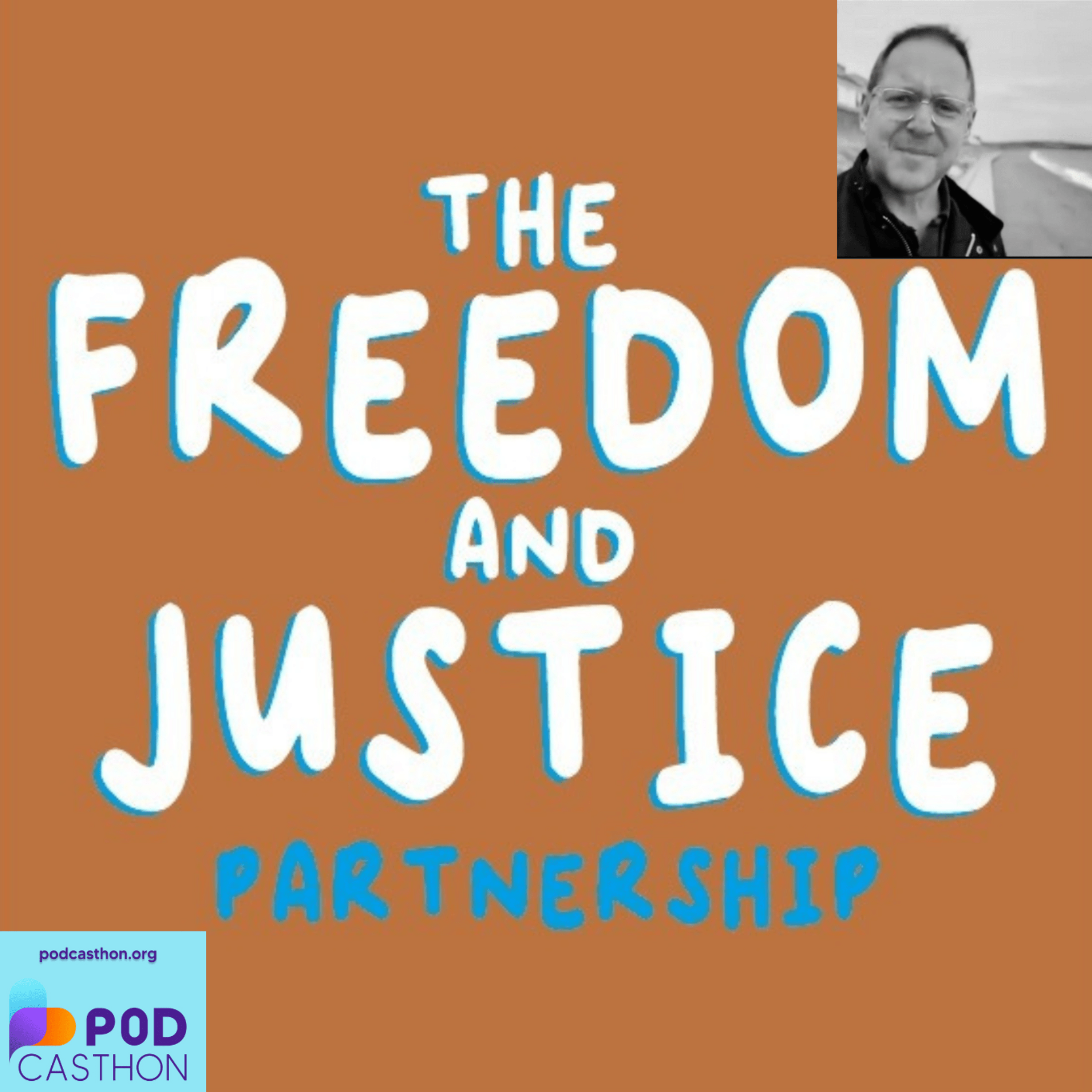 #162 Building Impact for justice with Mark Preston | A special edition episode as part of Podcasthon, the world’s largest charity podcast event. This is dedicated to the Freedom and Justice partnership charity, which aims to bring education and inclusion to child miners in the Democratic Republic of Congo (DRC).Mark Preston’s journey began in January 2023 after reading “Cobalt Red,” a book that exposed the horrific conditions of artisanal cobalt mining in the DRC. Cobalt, a critical mineral used in modern technology, primarily comes from the DRC, with a significant portion sourced from artisanal mines where an estimated 200,000 children work in dangerous conditions. This realization, coupled with a quote from C.S. Lewis about the tendency to feel without acting, motivated Mark Preston to take action. We walk through their journey from awareness to action : the horror of artisanal mining, their vision for impact and scale and ultimately justice for children through rectifying broken systems.The Freedom and Justice Partnership employs a two-pronged strategy: “ground war” and “air war.” The “ground war” focuses on immediate relief by funding education for former child miners. The “air war” involves advocacy and policy work, with Mark Preston and Carl engaging with Parliament and various committees to influence policy changes. They are particularly focused on the European Union’s Corporate Sustainability Due Diligence Directive, which will hold large companies accountable for their supply chain integrity, creating a cascading compliance effect for smaller businesses.The overarching goal is to rectify broken incentive structures that harm both the environment and people, while simultaneously providing relief to those suffering. We discuss the importance of agency, emphasizing that charity should empower rather than create dependency.Mark Preston encourages listeners to visit freedomandjusticepartnership.org, read “Hell on Rare Earth” to understand the issue, and consider donating to support their cause.Find out more about mark and the partnership here :https://www.linkedin.com/in/mark-preston-contact/https://www.freedomandjusticepartnership.orghttps://www.facebook.com/p/The-Freedom-and-Justice-Partnership-61558804512321/Donate here : https://www.freedomandjusticepartnership.org/donate | — | ||||||
















Showing 25 of 187
Pitch Fit is a Pro feature
See how bookable this show is for guests, which brands already advertise, the per-episode ad value, and the best-fit guest and sponsor profile. The numbers are blurred on the free plan.
How readily this show books outside guests like you.
How proven this show is for host-read sponsorships.
For Guests
ProFor Advertisers
ProUpgrade to Pro to unlock guest cadence, sponsor categories, fit scores, and per-episode ad value for this show.