
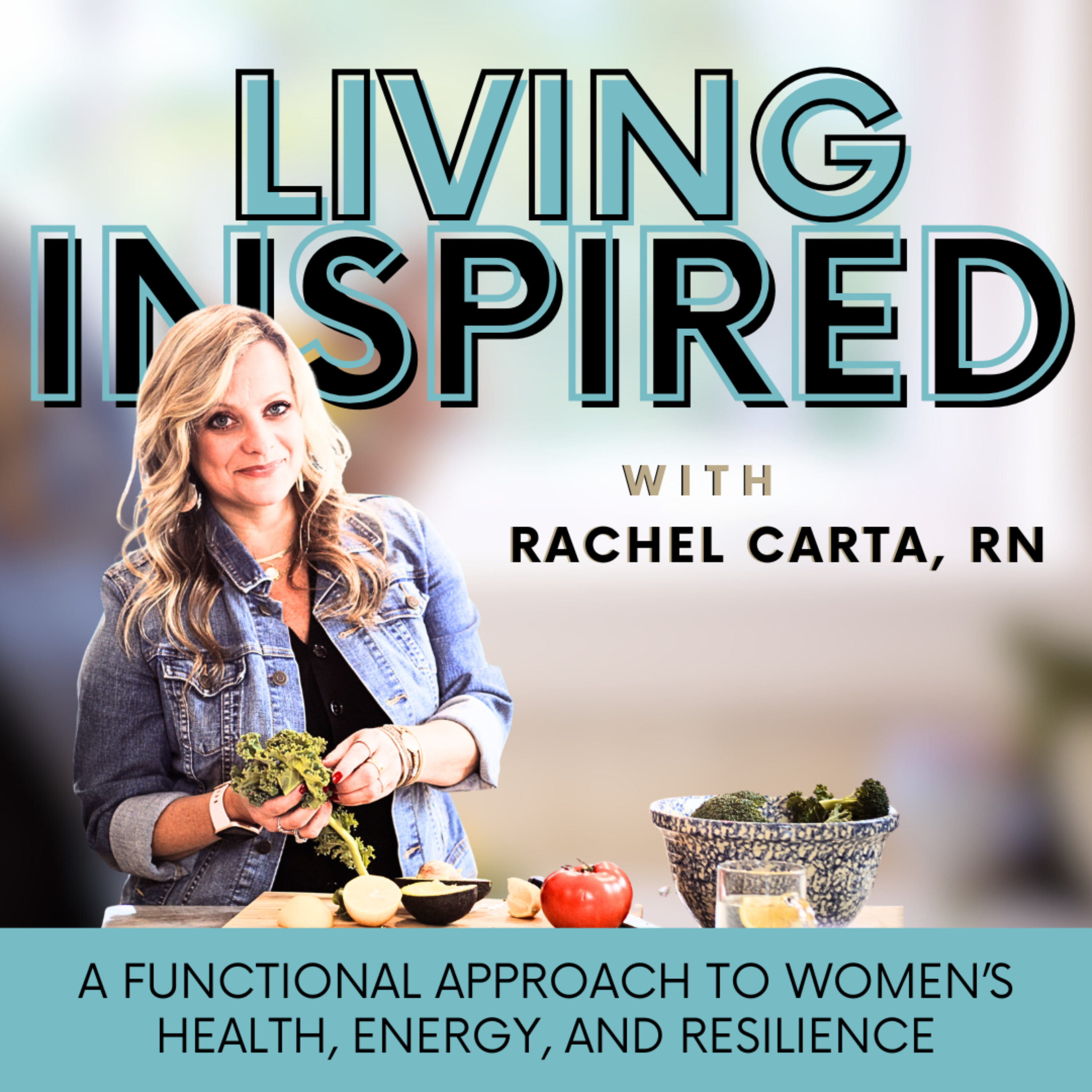
Living Inspired - A Functional Approach to Women’s Health, Energy, and Resilience
by Rachel Carta, RN
Insights from recent episode analysis
Audience Interest
Podcast Focus
Publishing Consistency
Platform Reach
Insights are generated by CastFox AI using publicly available data, episode content, and proprietary models.
Est. Listeners
Based on iTunes & Spotify (publisher stats).
- Per-Episode Audience
Est. listeners per new episode within ~30 days
10,001 - 25,000 - Monthly Reach
Unique listeners across all episodes (30 days)
25,001 - 75,000 - Active Followers
Loyal subscribers who consistently listen
15,001 - 40,000
Market Insights
Platform Distribution
Reach across major podcast platforms, updated hourly
Total Followers
—
Total Plays
—
Total Reviews
—
* Data sourced directly from platform APIs and aggregated hourly across all major podcast directories.
On the show
Recent episodes
95. You’re Not Crazy. Your Body Is Trying to Tell You Something
May 2, 2026
Unknown duration
94. Lifestyle Medicine: How Daily Habits Shape Your Health and Long-Term Disease Risk
Apr 27, 2026
Unknown duration
93. Don’t Wait Until It’s Too Late to Live Your Life
Apr 17, 2026
Unknown duration
92. GLP-1 Weight Loss: Risks, Muscle Loss, and What Matters
Apr 10, 2026
Unknown duration
91. Stop Ending Your Day Feeling Behind
Apr 6, 2026
Unknown duration
Social Links & Contact
Official channels & resources
Official Website
Login
RSS Feed
Login
| Date | Episode | Description | Length | ||||||
|---|---|---|---|---|---|---|---|---|---|
| 5/2/26 | 95. You’re Not Crazy. Your Body Is Trying to Tell You Something | If you’ve been feeling more anxious, more reactive, or just not like yourself lately… this episode is for you.You’re trying to do the right things. You’re taking care of yourself, paying attention to your health, maybe even running labs… and still, something feels off.In this episode, Rachel sits down with a client, Amanda, who shares what it felt like to be in that exact place. After having her baby, Amanda experienced anxiety, exhaustion, mood swings, and a sense that she had lost herself. Even though she knew something wasn’t right, she wasn’t getting the answers she needed.What you’ll hear in this conversation is what changed when she stopped trying to fix the symptoms and started addressing what was actually driving them.Rachel breaks down:why mood swings, anxiety, and irritability are signals, not personality changeswhy hormones are part of the story, but not the whole storyhow stress, blood sugar, inflammation, and the nervous system all play a rolewhat it actually looks like to make small shifts that create meaningful changeAmanda shares how, within a matter of weeks, she went from feeling like a shell of herself to feeling safe in her body again and genuinely happy, without overhauling her life.If you’ve been feeling off and can’t quite explain why, this episode will help you start to see what your body might be trying to tell you.If you’re ready to go deeper, here are a few ways to get support:Book a call with Rachel: https://rachelcarterrn.com/schedule A simple conversation to talk through what’s going on and what your next step could look like.Mood Swings SOS (free 5-minute reset): https://rachelcarterrn.com/SOS A quick, practical tool to help you calm your system in the moment when everything feels heightened.Free Guide: The Real Reason You Still Feel Off https://rachelcarterrn.com/LastingHealth A deeper look at what’s actually driving your symptoms and how to start addressing them at the root.Partner Communication Guide https://rachelcarterrn.com/communication Because this season of life affects your relationships too. This will help you communicate what’s going on in a way that brings more understanding and support. | — | ||||||
| 4/27/26 | 94. Lifestyle Medicine: How Daily Habits Shape Your Health and Long-Term Disease Risk | In this conversation with Dr. Ann Hester, we talk about what’s missing in traditional healthcare, and why lifestyle is not just a side note, but a major driver of how you feel day to day. This isn’t about doing everything perfectly or overhauling your life overnight. It’s about understanding how your daily habits are shaping your energy, your hormones, your inflammation, and your long-term health in ways most people have never been taught to look at.We also talk about why change feels hard, even when you know what to do, and how small, consistent shifts can create meaningful results without overwhelm.What We CoverThe gap in medical training around nutrition and lifestyleHow daily habits impact hormones, energy, and inflammationThe role of lifestyle medicine in long-term healthWhy change feels hard (and what actually works instead)How to start making small, sustainable shiftsYour body is responding to what you do every single day. When you understand that, you stop chasing fixes and start seeing patterns.Resources MentionedDr. Ann Hester’s website: https://ptrreset.comTake the Survey: Click Here. If this episode resonated with you, I’d love to hear what stood out.You can send me a message on Instagram:👉 https://instagram.com/peaceinperimenopauseOr explore more resources here:👉 https://rachelcartaRN.com | — | ||||||
| 4/17/26 | 93. Don’t Wait Until It’s Too Late to Live Your Life | This is not our usual conversation. We’re not talking about hormones, gut health, or trying to figure out what’s causing your symptoms.This is a pause.A moment to step out of the constant doing… and come back to what it actually means to be living.In this episode, I sit down with Billy Duke, a 55-year-old living with ALS, a progressive neurological disease that slowly takes away the body’s ability to move, while the mind remains fully aware.What he shares is simple, but powerful. A reminder that most of us are moving through life too quickly… waiting for the right time… putting things off… assuming we have more time than we do.This conversation isn’t about fear. It’s about clarity. About what actually matters when everything else is stripped away.As you listen, notice what comes up for you.What have you been putting off?Where have you been moving too fast?What matters most right now?This episode is an invitation to slow down, look up, and come back to your life.What we talk about:What ALS is and how it impacts the body over timeWhy we spend so much of our lives working and rushingThe quiet regrets that come from waiting too longThe importance of people, connection, and shared timeHow to slow down and actually experience your lifeSimple reminders to stop, notice, and be present🎧 Listen to more episodes like this: 100 Years of Wisdom🤍 Connect with me on Instagram@peaceinperimenopauseI’d love to hear from you.What stood out to you the most? What are you changing in your life? Email: rachel@rachelcartarn.comSend me a message and share this episode with someone you love. These are the conversations that stay with us… and sometimes, they’re the ones that gently change how we live. | — | ||||||
| 4/10/26 | 92. GLP-1 Weight Loss: Risks, Muscle Loss, and What Matters | GLP-1 medications like Ozempic and Wegovy are everywhere right now, but most people aren’t being told what actually matters if they choose to take them.In this episode, I sit down with pharmacist and health coach Mike Thomas to break down how GLP-1s really work, why they’re so effective for weight loss, and the part that often gets missed. We talk about muscle loss, metabolism, food noise, and what can happen when the medication is stopped.If you’ve been considering a GLP-1, are currently taking one, or just want to understand your options, this conversation will help you make a more informed decision about your health.We also talk about how to support your body alongside these medications so you’re not just losing weight, but actually building long-term health.What we cover in this episode:What GLP-1 medications are and how they work in the bodyWhy “food noise” decreases and what that actually meansThe biggest mistake people make when taking GLP-1sMuscle loss during weight loss and why it matters for metabolismWhat happens when you stop the medicationWhy strength training and protein are essentialThe emotional side of weight loss that no one talks aboutHow to support your body whether you take a GLP-1 or notConnect with Mike Thomas:https://glp1coachmike.comFollow Rachel:Instagram: https://www.instagram.com/peaceinperimenopauseFree resource:The Real Reason You Still Feel Offhttps://rachelcarterrn.com/lastinghealthNeed a mood swings rescue: https://rachelcartarn.com/sos | — | ||||||
| 4/6/26 | 91. Stop Ending Your Day Feeling Behind | If you’ve ever gotten to the end of the day and thought… I did so much, so why does it feel like nothing actually moved forward? this episode is for you.In this conversation, we’re unpacking why you can feel busy all day and still feel behind. Not because you’re doing something wrong, but because the way you’ve been taught to work doesn’t always support how your brain and energy actually function, especially in this season of life.I’m joined by Steven Puri, founder of The Sukha Company and studio executive at 20th Century Fox and DreamWorks Pictures. After years working in high-performance environments, he now teaches how to access deeper focus, reduce distraction, and create meaningful progress without constantly pushing harder.We talk about what’s really keeping you stuck in that cycle of doing more but feeling behind, how distractions are draining your energy, and the one simple shift that can change how your entire day feels.This is not about doing more. It’s about doing what actually matters.Why you can feel busy all day but still feel behindWhat’s actually happening when your focus feels scatteredHow constant interruptions impact your energy and progressWhat “flow state” really means (in a practical, real-life way)The simple shift that helps you move your day forwardHow to start working with your energy instead of against itLearn more about Steven and his work: https://www.thesukha.co/Rachel's Free Resources:Mood Swings? Get the 5 minute audio to calm them now. https://rachelcartarn.com/sosDo you want to understand more of what's changing in your body in midlife and get a few simple tools to feel better now? Get the free guide: The Real Reason You Still Feel Off. | — | ||||||
| 3/28/26 | 90. Why You Feel Stuck Even When You're Trying | Why You Feel Stuck (Even When You’re Doing Everything Right)If you’ve been wondering why you feel stuck even when you’re doing everything right, this episode will help you see things differently.In this short, personal episode, I walk you through a simple but powerful shift that can change how you experience your health, your emotions, and your life. Because often, it’s not just what’s happening that keeps us stuck. It’s what we’re thinking about what’s happening.We talk about how your thoughts shape your feelings, your actions, and ultimately your results, and how small shifts in awareness can open the door to real change.This is not about forcing positivity or pretending everything is fine. It’s about creating space so you can move forward in a way that feels calm, grounded, and sustainable.In this episode, we cover:Why you feel stuck even when you’re trying and doing everything “right”How your thoughts influence your health, mood, and daily actionsThe common thought patterns that keep you in the same placeA simple way to shift your thinking without forcing itWhy noticing small wins can change your nervous system and momentumIf you’ve been feeling frustrated, overwhelmed, or like nothing is really working, this episode will meet you right where you are.Free Resources to Support YouIf you’re ready to go deeper, here are a few simple starting points:The Real Reason You Still Feel OffIf your labs say you’re fine but you don’t feel fine, this will help you start connecting the dots.👉 https://rachelcarterrn.com/lastinghealthMood Swings SOS (5-minute audio)A quick, grounding reset to help shift your mood in the moment.👉 https://rachelcarterrn.com/sosPartner Communication GuideLearn how to talk about what you’re experiencing in a way that builds understanding and support.👉 https://rachelcarterrn.com/communication | — | ||||||
| 3/21/26 | 89. Why So Many Relationships Struggle in Midlife (And What To Do About It) | If your relationship has been feeling harder lately… this episode is for you. There are real changes happening in your body, your stress levels, your capacity… and most people have never been taught how much this can affect connection, communication, and intimacy.In this conversation, I’m joined by Jesse Robertson, the voice behind Husbands4Menopause, who is helping men better understand what women are going through in this season.We talk about:• Why relationships can start to feel tense, distant, or disconnected• What’s actually happening underneath mood swings, overwhelm, and irritability• Why intimacy often changes (and what most couples misunderstand about it)• How men can better support their partners without feeling confused or shut out• Simple shifts that can completely change the tone of your relationshipThis isn’t about blame. It’s about understanding what’s really going on… so you can feel more connected, supported, and on the same team again.If you’ve been thinking, “Why does everything feel harder right now?” — you’re not alone. And there’s a reason for it.🎧 Share this episode with your partner or listen together. It can open up a completely different kind of conversation.Find Jesse on all your social media platforms: @husbands4menopause📄 Download my Partner Communication Guide: rachelcartarn.com/communication | — | ||||||
| 3/16/26 | 88. When Midlife Symptoms Get Dismissed: What Women Need to Know About Hormones, Perimenopause, and Finding Real Help | Many women enter their 40s and 50s feeling like something in their body has shifted. Mood swings, anxiety, sleep changes, and low energy start showing up, yet many are told their labs are normal or that this is simply part of aging.In this episode, I sit down with Dana Culp, a nurse practitioner and menopause expert who has spent more than 25 years working with women in midlife. Dana also shares her own experience navigating perimenopause and the challenges she faced getting the support she needed.In this episode we discuss:• Why so many women struggle to get help during perimenopause• What hormone therapy actually is (and what it isn’t)• The difference between bioidentical and synthetic hormones• Why menopause education is still lacking in medicine• How to advocate for yourself in doctor’s appointmentsIf you’ve been trying to understand what’s happening in your body lately, this conversation will help bring clarity.Links & ResourcesMood Shift Method Live WorkshopConnect with Rachel: Website: RachelCartaRN.comInstagram: https://www.instagram.com/peaceinperimenopause/Website: https://www.thrivemidlifemed.com/Instagram: https://www.instagram.com/thrivemidlifemed/Facebook: https://www.facebook.com/thrivemidlifemedLinkedIn: https://www.linkedin.com/company/thrive-midlife-medicine/Free consultation and free class: https://thrivemidlifemedicine.cal.com/thrivemidlifemedicinehttps://www.thrivemidlifemed.com/event | — | ||||||
| 3/7/26 | 87. Your Labs Are “Normal” So Why Do You Still Feel So Off? | Have you ever been told your labs are “normal,” but you still feel exhausted, foggy, bloated, anxious, or just not like yourself?In this episode, Rachel explains why normal lab work does not always mean your body is functioning optimally and why labs should never be interpreted without the full story of your health.Through a functional nutrition lens, labs are not the final answer. They are clues. Rachel shares how she looks at patterns, symptoms, lifestyle, digestion, stress, and health history alongside lab work to better understand what may be contributing to fatigue, mood changes, and other chronic symptoms.If you’ve ever felt confused by lab results that say everything is fine while your body tells you otherwise, this conversation will bring clarity.Why “normal” lab results do not always mean optimal healthThe difference between functional and pathological lab rangesWhy labs are a snapshot in time, not the full storyThe problem with a lab-first, supplement-first approachThe three principles Rachel uses when looking at labsCommon patterns Rachel sees in women’s lab workWhy thyroid testing often needs a broader lens than TSH aloneHow improving the body’s “terrain” can help symptoms begin to shiftMood Shift Method LiveA live workshop where Rachel walks you through the deeper root causes behind mood swings, anxiety, fatigue, and feeling unlike yourself in midlife.Learn more and register here:https://rachelcartarn.com/moodshiftWebsite:https://rachelcartarn.com | — | ||||||
| 2/27/26 | 86. The Real Reason You’re More Irritable Lately | Have you ever reacted to something and thought, Where did that come from?If you’ve been feeling more irritable, more anxious, more overwhelmed, or just not quite like yourself lately, this episode is for you.In this conversation, I’m walking you through something I see in so many women navigating midlife: emotional shifts that feel confusing, intense, and sometimes even alarming.Midlife is not just a hormonal transition. It’s also a nervous system shift, a metabolic shift, and a resilience shift. When estrogen and progesterone begin fluctuating, your internal buffering system changes. The same life you were managing before can suddenly feel like too much.In this episode, I talk about:Why your “window of tolerance” may feel smaller than it used toThe stress bucket analogy and why everything feels heavierHow blood sugar instability impacts irritability and anxietyWhy nervous system load matters more than you thinkThe overlooked role of margin and space in emotional regulationHow to begin seeing mood swings as information, not failureIf you’ve ever wondered why small things feel bigger lately…If you’ve questioned whether you’re “losing it”…If you’ve felt dismissed or confused about what’s happening in your body…This episode will help you connect the dots in a way that feels grounding instead of overwhelming.Ready to Go Deeper?If this resonated with you, I’d love to invite you to my Mood Shift Method Live Workshop.This is where we take everything we discussed and apply it directly to your own patterns, rhythms, and stress load so you can understand what your body has actually been trying to say.You can learn more and reserve your spot here:rachelcartarn.com/moodshiftYou deserve to feel calm, confident, and like yourself again. And it starts with understanding.If this episode helped you, share it with someone who needs to hear it. And as always, thank you for being here. | — | ||||||
Want analysis for the episodes below?Free for Pro Submit a request, we'll have your selected episodes analyzed within an hour. Free, at no cost to you, for Pro users. | |||||||||
| 2/21/26 | 85. Why Your Body Won’t Relax And What It Means | Have you ever tried to relax, only to notice your mind speeding up or your body staying tense? In this episode, Rachel shares what these experiences may actually mean and why they often point to your nervous system rather than a personal shortcoming.Through a powerful client story and practical insights, she explains how mood, digestion, energy, and stress responses are deeply connected, and why real healing often begins with helping your body feel safe instead of pushing harder or adding more protocols. You’ll also learn gentle signs your system may be stuck in survival mode and one simple practice you can use to begin shifting toward calm.In This Episode:why your body may feel restless even when life looks calmhow nervous system state affects mood, digestion, and energysigns your system may still be in stress modewhy foundations matter more than quick fixesa simple way to signal safety to your bodyIf this episode speaks to you and you want deeper support, Rachel’s live Mood Shift Method workshop will walk you through how to understand your body and create lasting change. Join here: RachelCartaRN.com/moodshift | — | ||||||
| 2/13/26 | 84. Why Your Patterns Keep Repeating And What Your Subconscious Is Trying To Protect | In this episode, I’m joined by Sheila Wenger, founder of Shift Hypnosis and certified hypnotherapist, for a powerful conversation about subconscious patterns, emotional healing, and why change can feel hard even when you truly want it.We talk about how the subconscious mind works, why certain fears and reactions stay with us for years, and how many of the patterns women struggle with are actually protective responses that once served a purpose. Sheila explains how root beliefs form, how they influence behavior and relationships, and why real healing often begins when truth is acknowledged.If you’ve ever wondered why you keep repeating certain cycles, feel stuck despite doing all the “right” things, or want to better understand your emotional patterns, this conversation will give you a new lens to look through.Connect With SheilaWebsite: https://www.shifthypnosis.orgPodcast: Shift Is HappeningEmail: Sheila@shifthypnosis.orgConnect With RachelWebsite + resources: https://www.rachelcartarn.comFree Guide - The Real Reason You Still Feel Off: https://rachelcartarn.com/lastinghealthInstagram: https://www.instagram.com/peaceinperimenopause | — | ||||||
| 2/6/26 | 83. Grief, Self-Compassion, and the Nervous System: What Healing Really Requires | What if healing isn’t about fixing what feels wrong, but learning how to feel what’s been held for too long?In this episode of Living Inspired, I’m joined by somatic and transformational coach Soulla Demetriou for a grounded conversation about grief, self-compassion, and the nervous system, and why these are often the missing pieces in healing.We explore how grief shows up not only after loss, but in quieter, less visible ways when life doesn’t unfold as we hoped. We talk about how avoiding grief can keep the nervous system stuck in survival mode, and how this can ripple into fatigue, digestive issues, sleep struggles, and emotional overwhelm.This episode is especially for women who feel unsettled in their bodies despite “doing all the right things.” We discuss how self-compassion creates safety in the nervous system, and how healing often happens in small, steady moments rather than big overhauls.Why grief is not something to fix, but something to allowHow unprocessed grief can show up as physical and emotional symptomsThe role of nervous system safety in healingWhy self-compassion is foundational, not optionalSimple ways to help the body exhale and softenFind Rachel here: RachelCartaRN.comFree Guide: The Reason You Still Feel OffFree Mood Swings AudioInstagram: https://www.instagram.com/peaceinperimenopauseFind Soulla Here: Website: https://www.withsoulla.comBook: https://www.withsoulla.com/always-enoughInstagram: https://www.instagram.com/withsoullaFree Self-Compassion Course: https://www.withsoulla.com/courses/7-steps-course-sign-up | — | ||||||
| 1/30/26 | 82. The Real Reason Everything Feels Like Too Much in Midlife | In this episode, I’m sharing a live talk I gave for the Brigham Education Institute, part of Brigham and Women’s Hospital. It’s the fourth time I’ve been invited to speak for their program, and this conversation felt too important not to share more widely.So many women reach midlife and feel blindsided by what’s happening in their bodies. Sounds feel louder. Emotions feel closer to the surface. Digestion changes. Sleep becomes elusive. And often, everything looks “normal” on paper, even though you know something feels off.In this episode, we take a step back and look at symptoms differently. Not as random or inevitable, but as meaningful signals from the body.You’ll hear about:Why midlife can suddenly feel harder, even if nothing dramatic has changedA simple bucket analogy that explains capacity, stress, and symptom spilloverThe four core systems that often drive mood changes, digestive issues, and overwhelm in midlifeHow hormonal shifts impact the nervous system, blood sugar, digestion, and recoveryWhy moving from fixing to listening creates real and lasting changeThis is not about another protocol or checklist. It’s about understanding what your body has been responding to, and how small, steady shifts can help you feel calmer, more confident, and more at home in yourself again.If you’ve been feeling off, overwhelmed, or confused by your symptoms, this episode is for you.Free Guide: The Real Reason You Still Feel OffAnd if you’d like deeper, personalized support, you can book a Clarity and Relief Session. | — | ||||||
| 1/25/26 | 81. Why Strength Training Matters More in Midlife Than Ever (According to Decades of Research) | Strength training is often framed around appearance or fitness goals. But its real impact goes far deeper than that.In this episode, I sit down with Dr. Wayne Westcott, a leading researcher in strength training and exercise science, to talk about why building and maintaining muscle matters so much in midlife and beyond. Wayne has spent decades studying how resistance training affects the body across the lifespan, including adults in their 90s, and his research offers a hopeful, practical perspective on aging.We talk about how muscle loss affects metabolism, bone density, mood, and independence, what strength training actually looks like in real life, and how little time it can take to see meaningful benefits. Wayne also shares powerful insights from nursing home studies that challenge the idea that it’s ever too late to get stronger.This is a grounded, encouraging conversation for anyone who feels overwhelmed by fitness advice, unsure where to begin, or curious about how to support their body in a way that feels realistic and sustainable.Why muscle matters for healthy aging and daily functionHow strength training supports metabolism, bones, and moodWhat research shows about building strength later in lifeWhat strength training really means (and what it doesn’t)How to get results without spending hours in the gymDr. Wayne Westcott is a retired professor of exercise science and one of the most respected researchers in strength training. He has authored over 100 peer-reviewed studies, written 30 books, and taught at institutions including Harvard and Yale.Get: Strength Training Past 50Contact Rachel: rachel@rachelcartarn.comRachelCartaRN.com Free eBook: The Real Reason You Still Feel Off | — | ||||||
| 1/17/26 | 80. Change Your Perspective, Change Your Life | In this episode, I share a powerful shift in perspective that changed how I move through life, especially during hard seasons.Through stories from my time as a nurse and hospice nurse, I talk about what happens when we stop waiting for life to get easier and instead build ourselves strong enough to meet it.We explore the idea:What if your life is happening for you, not to you?Not as a positivity slogan, but as a way to relate to challenges without staying stuck in them.In this episode, you’ll hear:A moment from nursing school that forever changed how I view hardshipWhy hard and beautiful things often exist at the same timeA sacred hospice experience that reshaped my understanding of presence and meaningWhat courage really looks like when life feels overwhelmingA simple journaling invitation to reflect on your own challenges with honesty and compassionThis episode is for anyone who feels like they’ve been waiting for life to get easier, or who knows there must be another way to move forward, even when things feel heavy.There's a meditation to practice at the 11 minute mark. You are here for a reason. And you are more capable than you realize.Connect with Rachel: rachel@rachelcartarn.comGet the Mood Swings SOS (when your mood feels overwhelming). Learn More: RachelCartaRN.com | — | ||||||
| 1/11/26 | 79. What I’m Really Focusing On In Midlife (Instead Of Chasing Every Biohack) | You are not imagining it. Midlife health has turned into one long to-do list.From supplements and biohacks to hormone protocols and trackers, it can feel like everyone has an opinion about what you “should” be doing to feel better. If you are in perimenopause or navigating chronic symptoms, that constant noise can be exhausting.In this episode, I am sharing what I am actually focusing on this year as a midlife woman with a full plate, and just as importantly, what I am intentionally letting go of.We talk about how to shift from chasing every new thing to being “boringly consistent” with the habits that truly move the needle for your energy, mood, and peace.You will hear:Why the endless list of midlife “must dos” feels so overwhelmingHow my chronic migraines and a moment with my son became a turning pointWhat I am focusing on in 2026How to rethink your resilience in midlife and honor your real capacityThe power of seeing your symptoms as signals instead of enemiesA beautiful client story about moving from hopeless and burned out to hopeful and resourcedWhat I am releasing this year, including productivity as proof of worthThis episode is an invitation to step away from the pressure, listen to your body, and choose a simpler, more peaceful way forward in midlife.How to connect with Rachel + Free Resources:Book a Clarity and Relief Session and learn more about working together: RachelCartaRN.comFollow me on Instagram: @peaceinperimenopauseFree resources to help you feel more clear and calm in your body:Mood Swings SOSThe Real Reason You Still Feel OffPartner Communication Guide for Perimenopause | — | ||||||
| 1/2/26 | 78. How to Bend Time and Feel Less Overwhelmed | What if time isn’t actually the problem?In this episode of Living Inspired, Rachel sits down with Michelle Niemeyer, a former attorney turned coach, to explore a powerful reframe she calls time bending. Instead of managing time more efficiently or cramming more into already-full days, this conversation looks at how our relationship with time changes when we reconnect with what energizes us.Michelle shares how chronic stress and burnout quietly shrink our world, draining joy, creativity, and focus, and how her own autoimmune diagnosis became a turning point that forced her to slow down and listen. From there, she explains how rediscovering what truly lights us up can expand our capacity, improve focus, and help us get more done without pushing harder.This episode is especially meaningful for women navigating midlife, chronic stress, or ongoing symptoms, where the nervous system has been “on” for far too long. Rachel and Michelle explore how joy, creativity, movement, and alignment are not luxuries, but essential ingredients for healing, clarity, and sustainable energy.Rather than offering another productivity system, this conversation invites you to pause, reflect, and take back agency over how you spend your time, energy, and attention.Why burnout isn’t just about working too much, but losing pieces of yourselfHow doing what energizes you can actually expand your experience of timeThe connection between nervous system regulation, joy, and productivityWhy energy, not hours, is the real currencySimple ways to regain clarity without quitting your job or overhauling your lifeHow small shifts in awareness can create big changes in how life feelsMichelle also shares a free resource for listeners, including a guided meditation and journaling prompts to help you identify what truly lights you up, along with a goal-setting framework designed to support intentional living. | — | ||||||
| 12/27/25 | 77. What If 2026 Was One Giant Tiny Experiment? | As we stand on the edge of a new year, it’s easy to feel the pressure to set big goals, fix what feels broken, or reinvent ourselves entirely.In this episode of Living Inspired, Rachel invites you into a very different way of approaching 2026. One that is gentler, more sustainable, and deeply rooted in who you are already becoming.Instead of resolutions, we explore the idea of tiny experiments. Small, low-pressure shifts that help you listen to your body, rebuild trust with yourself, and create real change without burning out your nervous system.This episode is especially for you if:You feel tired of starting over every JanuaryYou’ve tried diets, supplements, or protocols that didn’t stickYou’re navigating midlife changes, chronic symptoms, or emotional overwhelmYou want to feel calm, confident, and more like yourself againInside the episode, we talk about:Why resolutions often fail and what works betterHow identity, not willpower, drives lasting changeWhat “tiny experiments” are and why they’re so powerfulReflecting on who you became in 2025 (not just what you did)How curiosity can replace pressure and self-criticismWhy symptoms are signals, not failuresHow this approach supports healing, especially in midlifeRachel also shares how this framework has shaped her own life and work, and why rebuilding trust with your body is at the heart of true healing.Resources mentioned in the episode: Free Consultation: Find Clarity and Relief with Rachel. Mood Swings SOS (Free Audio Resource):A calming nervous system reset you can use in the momentInstagram: Follow Rachel at @PeaceInPerimenopause | — | ||||||
| 12/21/25 | 76. Should I Be Shrinking Too? GLP-1s, Food Noise, and Making Peace with Your Body | I’m joined by Nina Manolson, a body peace coach and therapist with over 30 years of experience helping women end the war with food and their bodies.Together, we explore the growing cultural pressure to shrink, especially in the era of GLP-1 medications, and the quieter question so many women are asking themselves: Should I be shrinking too?This episode is not about judging GLP-1s or telling anyone what they should or shouldn’t do. Instead, it’s about understanding the emotional and relational impact of living in constant body comparison and management. Nina introduces the idea of body autonomy, reminding us that while every woman gets to choose what she does with her body, we also deserve a compassionate, connected relationship with it.We talk about food noise and why simply shutting it off may mean losing important body communication. Nina reframes cravings and hunger as messages rather than problems, and shares what it actually looks like to build a respectful, sustainable relationship with food and body, especially if you were never taught how.One of the most powerful moments of the episode is when Nina reads her poem, I Don’t Want to Die Hating My Body, a moving reminder of what’s at stake when we spend our lives at war with ourselves.If you’ve ever felt pressure to shrink, struggled with food noise, or wondered if there’s a calmer, kinder way to live in your body, this conversation will meet you right where you are.You can learn more about Nina and access her free journals, masterclasses, and Body Peace Deck at ninamanelson.com or bodypeacewithnina.com.Contact Rachel: rachel@rachelcartarn.comLearn more about her work: RachelCartaRN.comFind relief from Mood Swings ASAP here: rachelcartarn.com/sos | — | ||||||
| 12/11/25 | Bonus Episode: Navigating Grief in the Holidays | In this bonus episode, we take a gentle pause from regular programming to honor something many people carry this time of year: grief. Whether your loss is recent or years in the past, the holidays often bring memories and emotions to the surface.Rachel opens the episode by sharing her own experience of losing her dad and a simple analogy that reframes how grief lives within us over time. She offers compassion, permission, and understanding for anyone moving through a tender season.This episode includes a special conversation from Rachel’s other podcast, Hospice Redefined, featuring three hospice professionals who have also experienced significant personal loss. Their stories offer comfort, validation, and practical tools for navigating the holidays with more ease.Why grief often intensifies during the holidaysA simple way to understand how grief changes over timeHow honoring a loved one can create connection and reliefReal stories of adapting traditions and creating new onesPractical strategies for lowering expectations and protecting your emotional energyGentle reminders that you don’t have to navigate this season aloneThis episode is for anyone grieving a loved one, anyone supporting someone in grief, and anyone who feels heaviness or emotional overwhelm during the holiday season.May this episode bring comfort, connection, and a little more breath to your season.Reach out to Rachel: rachel@rachelcartarn.com.Find out more about her work: RachelCartaRN.comLearn more about her passion project: HospiceRedefined.com | — | ||||||
| 12/5/25 | 75. How to Create Space When Your Nervous System Feels Overloaded (Especially During the Holidays) | If you have been feeling irritable, overstimulated, or like your nervous system is stuck on high this holiday season, this episode is for you.In this coaching call I am sharing with you, we talk about what actually makes this time of year feel so intense and how to gently bring your system back down without clearing your schedule or disappearing for a week. You will learn simple, realistic ways to create tiny pockets of space that calm your body, soften your mind, and help you feel more like yourself again.These strategies work during the holidays and in any busy or transitional season of life.Why the holidays and other busy seasons hit your nervous system harder in midlifeHow sensory overload, hormones, blood sugar, grief, and expectations all play a roleWhat “dysregulated” really looks like in everyday lifeSimple ways to create space without canceling everything on your calendar“Space snacks” you can use anywhere: mini regulation tools in between tasks or conversationsHow to use breath, silence, and small pauses as powerful nervous system medicineGentle questions to help you prioritize what actually matters and let go of what drains youPermission to choose presence over perfection and cut out things that steal your peaceMentioned in this episode:Free 5-minute Mood Swings SOS audioA short guided reset you can use when irritability, rage, or emotional overload hit.Connect on Instagram: @peaceinperimenopause | — | ||||||
| 11/28/25 | 74. You’re Allowed to Feel What You Feel: The Surprising Key to Getting Unstuck | In this episode, I am inviting you into something that feels very close to my heart.On Black Friday morning, instead of running a sale, I felt led to simply open my Zoom room for 30 minutes and offer a live breath and meditation practice. No slides. No pitch. Just community, connection, and a space to allow whatever was present.If you are in midlife, or in any season where your hormones, emotions, and energy feel like they are all over the place, you might recognize yourself in this conversation. Mood swings, irritability, oversensitivity, grief, and feeling “not like yourself” can bring so much shame. In this episode I walk you through a gentle body scan, a simple journaling practice, and a way of relating to your inner world that is rooted in curiosity instead of judgment.Allowing what you feel is not weakness. It is one of the most powerful ways to get unstuck.In this episode you’ll hear about:Why allowing your feelings can open the door to healingHow trauma and “shoulds” can create patterns that leave you feeling stuckWhat it looks like to create space in your day for your nervous system to softenA guided body scan you can do lying down, sitting, walking, or even driving (eyes open)Simple journaling prompts to help you hear from your inner wisdomWhy practices like this are no longer “nice to do,” but essential when you are in a season of fluxMentioned in this episode:The Mood Shift Method (one of my core frameworks for stabilizing mood swings)Mood Swings SOS free audio (short audio you can use in the moment when your mood spikes)Blog + podcast archive: rachelcartaRN.com (click “Blog / Podcast” in the menu)If this episode supports you, it would mean so much if you shared it with a friend or left a review. It helps these conversations reach more women who need to know they are not alone.Find and follow Rachel on instagram: @peaceinperimenopause | — | ||||||
| 11/21/25 | 73. How One Daily Practice Can Rewire Your Brain Towards Calm | I’m sharing Chapter 3 of my book, Secrets to Authentic Happiness, as today’s episode. This chapter is all about the power of gratitude, how it rewires your brain through neuroplasticity, and why a simple five-minute daily practice can begin to shift your entire inner world.You’ll hear stories from my clients, the science behind gratitude, and a guided invitation into a 90-day practice I call Living in Extreme Gratitude—a gentle, doable way to retrain your brain to look for small moments of joy, even on the hardest days.If you’ve ever rolled your eyes at “just be grateful” advice or felt like gratitude practices were too fluffy or forced, this chapter is for you.And if you love what you hear, you can grab the full audiobook here:👉 SecretsToAuthenticHappiness.com/audiobookShare your gratitude journey with me:Email: support@rachelcartarn.comInstagram: @peaceinperimenopause | — | ||||||
| 11/14/25 | 72. Marriage in Perimenopause: Why Everything Feels Different And How To Find Your Way Back To Each Other | What happens to marriage when hormones shift?For many women, midlife brings not only physical changes — but emotional distance, shorter tempers, and a quiet wondering: What happened to us?In this deeply personal episode, I sit down with Brooke Davis, creator of Marriage in Perimenopause, to talk honestly about what’s really happening inside relationships during this season of life — and how to find your way back to connection, compassion, and understanding.This conversation came straight from my own experience.When my perimenopause symptoms began, after working in a high-stress hospital environment, I didn’t recognize myself anymore. I felt irritable, foggy, exhausted, and disconnected. My husband once said, “I just wish you were like you used to be,” and it broke me. Because I wanted that too.Learning how much my hormones and nervous system were affecting my mood, my energy, and my relationships changed everything. And Brooke helped me see that clearly.Together, we talk about:✨ Why midlife can make relationships feel strained — and what biology has to do with it✨ The “Estrogen Veil” and why little things suddenly feel so big✨ How to communicate with your partner when brain fog and irritability take over✨ The real reason libido changes — and how to rebuild intimacy naturally✨ The emotional and practical tools that help couples reconnect✨ Why this season can actually become a turning point toward deeper love and understandingBrooke’s perspective combines relationship wisdom and hormone science in a way that brings instant relief — and hope. Whether you’re married, dating, or simply trying to understand yourself better, this episode will help you see that you’re not broken. You’re just changing. And there’s a way through.Connect with Brooke:Instagram: @marriageinperimenopauseCheck out her course The Hormone-Informed Midlife Marriage — a powerful resource for couples navigating this season together.Connect with Rachel: Website: RachelCartaRN.comInstagram: @peaceinperimenopauseGrab the Partner Communication Guide mentioned in this episode — it’s a free resource to help you start these conversations with more clarity and compassion.Get The Mood Shift Method to finally know what to do to navigate mood swings during perimenopause. More articles to check out regarding relationships and lower perimenopause symptoms: ➡️ Cacioppo & Cacioppo, Psychoneuroendocrinology, 2014➡️ Idiana HI et al., Menopause Research Journal, 2022;➡️ Tadayon et al., Journal of Midwifery & Reproductive Health, 2024 | — | ||||||
Showing 25 of 90
Sponsor Intelligence
Sign in to see which brands sponsor this podcast, their ad offers, and promo codes.
Chart Positions
2 placements across 1 market.
Chart Positions
2 placements across 1 market.