
M365.FM - Modern work, security, and productivity with Microsoft 365
by Mirko Peters - Founder of m365.fm, m365.show and m365con.net
Is this your podcast?Insights from recent episode analysis
Audience Interest
Podcast Focus
Publishing Consistency
Platform Reach
Insights are generated by CastFox AI using publicly available data, episode content, and proprietary models.
Most discussed topics
Brands & references
Total monthly reach
Estimated from 36 chart positions in 36 markets.
By chart position
- 🇦🇺AU · Tech News#42100K to 300K
- 🇩🇪DE · Tech News#7130K to 100K
- 🇺🇸US · Tech News#9330K to 100K
- 🇨🇦CA · Tech News#1015K to 30K
- 🇬🇧GB · Tech News#1395K to 30K
- Per-Episode Audience
Est. listeners per new episode within ~30 days
110K to 367K🎙 Daily cadence·530 episodes·Last published today - Monthly Reach
Unique listeners across all episodes (30 days)
367K to 1.2M🇦🇺25%🇩🇪8%🇺🇸8%+33 more - Active Followers
Loyal subscribers who consistently listen
147K to 489K
Market Insights
Platform Distribution
Reach across major podcast platforms, updated hourly
Total Followers
—
Total Plays
—
Total Reviews
—
* Data sourced directly from platform APIs and aggregated hourly across all major podcast directories.
On the show
From 45 epsHost
Recent guests
Recent episodes
Dataverse MCP: The End of Custom Integration
Jun 25, 2026
1h 17m 29s
Building Enterprise AI Agents with Copilot Studio, Power Platform & AI Governance with Sailaja Mantripragada [MVP/MCT]
Jun 24, 2026
1h 02m 49s
The Terminal is No Longer for Commands: Building the Agentic Developer Stack
Jun 24, 2026
1h 11m 02s
How to Master Dataverse Business Skills for Scale
Jun 24, 2026
1h 06m 01s
Beyond the Prompt: Building the Security Agent Fabric
Jun 23, 2026
1h 12m 12s
Social Links & Contact
Official channels & resources
Official Website
Login
RSS Feed
Login
| Date | Episode | Topics | Guests | Brands | Places | Keywords | Sponsor | Length | |
|---|---|---|---|---|---|---|---|---|---|
| 6/25/26 | 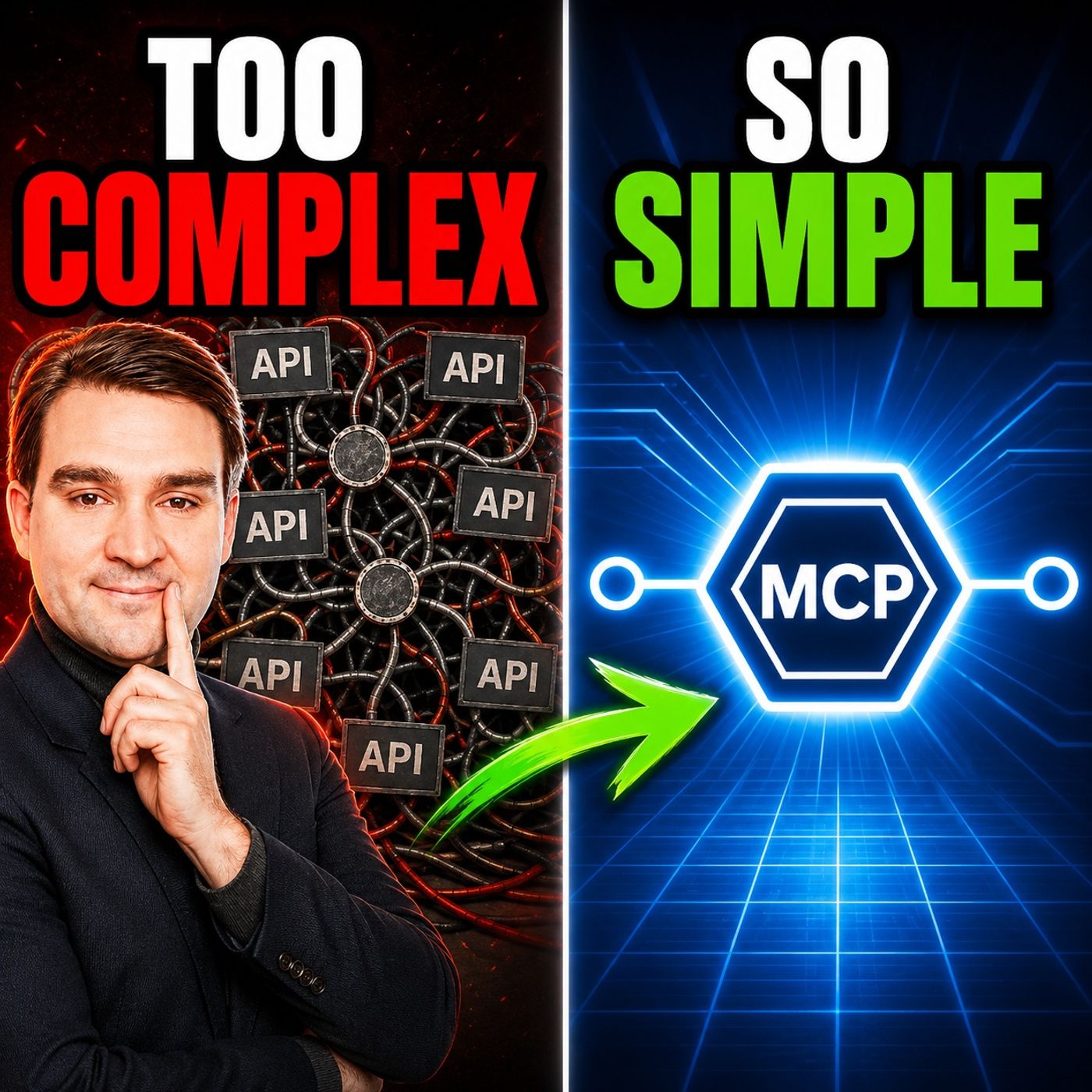 Dataverse MCP: The End of Custom Integration | For years, enterprise integration followed a familiar pattern. A new business requirement appeared, a developer built a custom connector, and another bridge was added to an already growing collection of APIs, middleware, and integration services. The model worked. Until AI arrived. In this episode, we explore why the traditional approach to integration is rapidly becoming one of the largest sources of technical debt in modern organizations and how the Model Context Protocol (MCP) is reshaping the relationship between AI systems and enterprise data. The discussion focuses on Microsoft Dataverse, governance, AI agents, security, architecture, and the emerging future of AI-native integration.THE HIDDEN COST OF CUSTOM CONNECTORSMost organizations never intended to create integration sprawl. It happened gradually. One connector became ten. Ten became fifty. Fifty became hundreds. The episode examines how custom integrations create long-term maintenance challenges through:Duplicate integration logicSecurity inconsistenciesDocumentation gapsDependency managementGrowing technical debtListeners learn why integration costs often continue long after the original project has been delivered.WHY AI BREAKS THE OLD INTEGRATION MODELTraditional APIs were designed for applications. Not autonomous agents. As organizations deploy AI systems across multiple business functions, integration requirements increase dramatically. Topics explored include:Agent-driven workflowsDynamic tool discoveryAutonomous decision makingMulti-model architecturesCross-platform orchestrationThe episode explains why building a new connector for every AI tool quickly becomes unsustainable.UNDERSTANDING MODEL CONTEXT PROTOCOL (MCP) At the center of the discussion is MCP, the Model Context Protocol. Rather than creating separate integrations for every AI platform, MCP provides a standardized way for AI systems to discover and interact with tools. Key concepts include:Tool discoveryStandardized interfacesAI-native integrationDynamic schemasPermission-aware accessThe conversation compares MCP to USB-C for enterprise AI, creating a common standard that reduces integration complexity across the organization.DATAVERSE AS AN AI PLATFORM One of the biggest insights from the episode is that Dataverse is evolving beyond its traditional role as a business database. Instead, it is becoming:A context engineAn orchestration layerA semantic business modelA governance platformAn AI-ready control planeThis shift fundamentally changes how organizations think about enterprise data and AI automation.THE DATAVERSE MCP CONNECTOR Microsoft's Dataverse MCP connector introduces a new way for AI systems to interact with business data. Rather than creating custom APIs and wrappers, organizations can expose governed business capabilities directly through MCP. The episode explores:Dataverse MCP architectureAI client integrationSecurity inheritanceTool exposure modelsGovernance benefitsThe result is a dramatically simplified approach to enterprise AI integration.PERFORMANCE VS CAPABILITY MCP introduces additional abstraction compared to direct REST APIs. While this creates some latency overhead, the discussion highlights why raw speed is often the wrong metric. Topics include:Token efficiencyDynamic schema loadingReduced prompt complexityLower AI operating costsBetter autonomous behaviorThe episode argues that AI effectiveness often matters more than request latency.THE GOVERNANCE CHALLENGE Technology alone is not enough. As MCP adoption increases, governance becomes one of the most critical success factors. The conversation explores:Data Loss Prevention limitationsAdvanced Connector PoliciesAuditability concernsPermission boundariesRegulatory complianceListeners gain practical insight into why governance must be designed before deployment rather than after.AI IDENTITIES AND ACCOUNTABILITY One of the most fascinating sections focuses on identity management for autonomous systems. Important questions include:Who performed the action?Was it the human or the AI?Who owns the decision?How do you audit autonomous workflows?The episode examines Microsoft's emerging approach using Entra ID Agent Identities and why attribution will become a cornerstone of enterprise AI governance.MCP SECURITY AND NEW ATTACK SURFACES Every new architectural model introduces new security considerations. The discussion covers:Tool poisoning attacksPrompt injection risksSupply chain vulnerabilitiesOver-privileged serversAI-specific threat modelsOrganizations must understand these risks before exposing business-critical capabilities to autonomous systems.FROM POINT-TO-POINT TO HUB-AND-SPOKEA major architectural shift highlighted in the episode is the move away from point-to-point integrations. Instead of building countless custom bridges, organizations can create domain-specific MCP servers that act as centralized integration hubs. Benefits include:Simplified governanceCentralized auditingReduced maintenanceFaster onboardingGreater scalabilityThis approach transforms integration from a project-based activity into a reusable platform capability.DATAVERSE AS A CONTEXT ENGINE Perhaps the most important strategic takeaway is that AI systems consume context differently than humans. This means organizations must rethink:Metadata qualityField descriptionsRelationship modelingBusiness semanticsContext engineeringBecome a supporter of this podcast: https://www.spreaker.com/podcast/m365-fm-modern-work-security-and-productivity-with-microsoft-365--6704921/support. | 1h 17m 29s | ||||||
| 6/24/26 | ![Building Enterprise AI Agents with Copilot Studio, Power Platform & AI Governance with Sailaja Mantripragada [MVP/MCT] episode artwork](https://d3wo5wojvuv7l.cloudfront.net/t_rss_itunes_square_1400/images.spreaker.com/original/8ad0790ed3b3ee91ea22f9c5fc77b6f7.jpg) Building Enterprise AI Agents with Copilot Studio, Power Platform & AI Governance with Sailaja Mantripragada [MVP/MCT] | Artificial Intelligence is moving beyond simple chatbots and basic prompt engineering. Organizations around the world are now exploring how AI Agents can automate business processes, generate deliverables, reason through complex tasks, interact with enterprise systems, and transform the way work gets done.In this episode of the M365 Podcast, Mirko Peters sits down with Sailaja Mantripragada, Microsoft Business Applications MVP, Microsoft Certified Trainer, Principal Cloud Architect, and Founder of Low Code Power. With more than twenty years of experience in the Microsoft ecosystem, Sailaja shares her journey from SharePoint development to Power Platform architecture, enterprise AI strategy, Copilot Studio, Agentic AI, and AI Governance.The conversation explores what separates real enterprise AI implementations from proof-of-concept demos, why governance has become one of the most important topics in modern AI adoption, and how organizations can successfully balance innovation, security, compliance, and scalability when building intelligent solutions.Whether you are a Power Platform developer, Microsoft 365 architect, AI strategist, business leader, or technology enthusiast, this episode provides practical insights into the future of enterprise AI and Microsoft's rapidly evolving ecosystem.FROM SHAREPOINT TO AI GOVERNANCESailaja's career spans more than two decades in the Microsoft technology landscape. Starting as a developer and SharePoint specialist, she witnessed Microsoft's evolution from a highly proprietary ecosystem into an open and collaborative platform embracing cloud technologies, low-code development, and artificial intelligence.One of the key themes throughout her journey has been governance. While technologies have changed dramatically over the years, the challenge of managing growth, scalability, adoption, and long-term maintainability has remained constant.During the discussion, Sailaja explains how organizations have moved from democratizing information through SharePoint to democratizing application development through Power Platform and now democratizing intelligence through Copilot and AI Agents. This progression is creating unprecedented opportunities while simultaneously introducing entirely new governance challenges.WHY LOW-CODE IS RESHAPING ENTERPRISE DEVELOPMENTLong before the term "low-code" became mainstream, Sailaja recognized a pattern across large enterprise projects. Organizations consistently preferred solutions built with out-of-the-box capabilities, reusable components, and business-focused outcomes instead of highly customized code that required extensive maintenance.This realization led her to specialize in low-code development years before Microsoft formally embraced the movement through Power Platform.The discussion explores how low-code development continues to evolve and why business users, citizen developers, and professional developers must increasingly collaborate rather than compete.Topics covered include:The rise of citizen developmentBusiness-first application designPower Apps and Power Automate adoptionEnterprise scalability challengesThe future of natural language developmentSailaja argues that successful organizations will empower citizen developers while simultaneously providing governance frameworks and architectural oversight to ensure long-term success.THE CRITICAL ROLE OF AI GOVERNANCEOne of the most important themes throughout the episode is AI Governance.As organizations rush to deploy Copilot, AI Agents, Power Platform solutions, and generative AI experiences, many are discovering that years of unmanaged data, permissions, and legacy configurations are creating significant risks.Sailaja describes governance as the process of turning on the lights in rooms that organizations forgot existed.With AI systems now capable of discovering, analyzing, and retrieving information across multiple data sources, previously hidden security gaps, permission issues, and compliance risks become immediately visible.The conversation dives deep into:AI Governance frameworksResponsible AI implementationData access managementSecurity controlsCompliance requirementsGovernance Centers of ExcellenceEnterprise AI oversightRather than acting as a barrier to innovation, governance should function as an enabler that helps organizations safely scale AI initiatives while maintaining trust and compliance.BUILD FAST, GOVERN FASTEROne phrase appears repeatedly throughout the discussion:"Build Fast. Govern Faster."This philosophy forms the foundation of Sailaja's approach to enterprise AI adoption.Instead of treating governance as an afterthought, organizations should embed governance practices directly into the development lifecycle from day one.She explains how successful organizations create governance portals, approval workflows, audit trails, AI usage policies, and review processes before allowing large-scale AI development initiatives to take place.Key recommendations include:Establish AI governance policies earlyCreate approval and review processesTrain citizen developersBuild AI Centers of ExcellenceDocument business purpose and ownershipMaintain visibility across AI solutionsThis governance-first mindset helps prevent organizations from creating large numbers of uncontrolled AI agents and automation workflows that become difficult to manage over time.COPILOT STUDIO AND THE FUTURE OF AI AGENTSCopilot Studio has quickly become one of Microsoft's most strategic platforms for enterprise AI development.During the episode, Sailaja explains why Copilot Studio is far more than a chatbot builder. Instead, she describes it as the orchestration engine for modern AI solutions.Organizations can use Copilot Studio to coordinate workflows, connect enterprise systems, integrate AI services, manage agent interactions, and build sophisticated automation experiences that extend far beyond conversational interfaces.The discussion explores:Copilot Studio architectureEnterprise AI orchestrationAgent developmentWorkflow automationBusiness process integrationAI-powered deliverablesMulti-agent systemsAs organizations mature their AI strategies, Copilot Studio increasingly becomes the central platform where business logic, AI reasoning, enterprise data, and automation capabilities converge.UNDERSTANDING AGENTIC AIAgentic AI is one of the hottest topics in the industry today, but it is also one of the most misunderstood.Sailaja provides a practical explanation of what separates a simple AI Agent from a true Agentic AI system.Rather than executing a single task, Agentic AI involves multiple agents working together, sharing context, making decisions, coordinating actions, and dynamically adapting to changing situations.The conversation explores how organizations are moving from prompt-based interactions toward complete business deliverables.Instead of asking AI a series of individual questions, users can increasingly provide a single business objective and allow multiple agents to collaborate behind the scenes to produce a finished outcome.Topics discussed include:AI AgentsAgentic AIReasoning systemsMulti-agent orchestrationBusiness deliverablesContext engineeringEnterprise workflowsThis shift represents one of the biggest changes currently taking place in enterprise technology.CONTEXT ENGINEERING IS THE NEW PROMPT ENGINEERINGWhile prompt engineering dominated early AI discussions, Sailaja believes the future belongs to context engineering.Organizations are beginning to realize that reusable prompts alone are not enough. High-quality AI outcomes depend on accurate context, trusted data, and business-specific knowledge.She introduces the concept of:Enterprise prompt librariesDepartment-specific context librariesGovernance-approved AI instructionsBusiness-aligned context managementOrganizational AI frameworksThe discussion highlights why context quality will become one of the most important differentiators between successful and unsuccessful AI deployments in the coming years.MCP, GROUNDING, AND TRUSTED AIAs AI adoption accelerates, ensuring trustworthy outputs becomes increasingly important.Sailaja explains the growing importance of Model Context Protocol (MCP) and how it provides standardized access to enterprise data sources.The conversation explores how MCP contributes to:Data groundingConsistent access patternsEnterprise integrationsReduced hallucinationsBetter AI reliabilitySecure information retrievalGrounding AI systems in trusted enterprise data helps organizations improve accuracy while maintaining confidence in AI-generated outcomes.Become a supporter of this podcast: https://www.spreaker.com/podcast/m365-fm-modern-work-security-and-productivity-with-microsoft-365--6704921/support. | 1h 02m 49s | ||||||
| 6/24/26 | 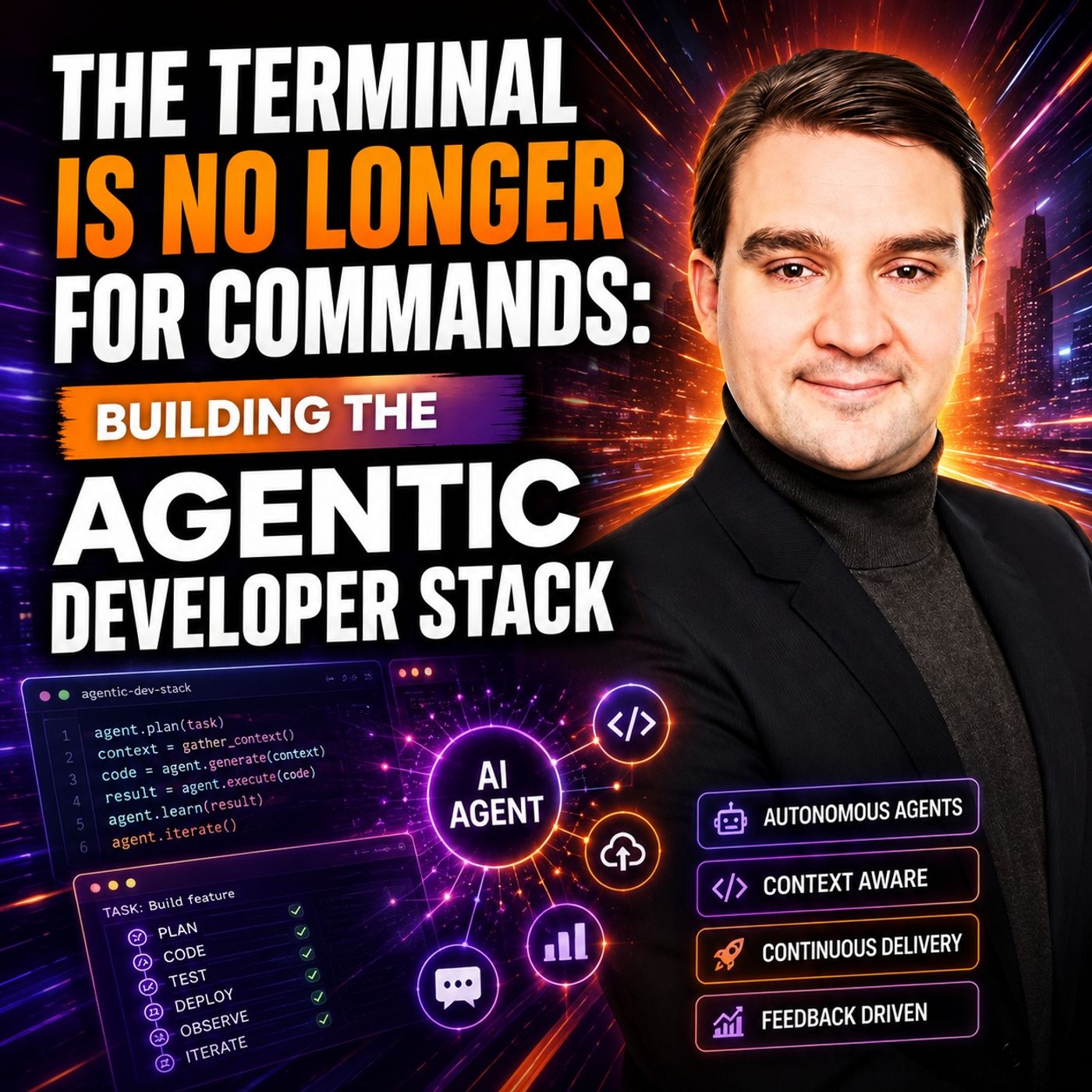 The Terminal is No Longer for Commands: Building the Agentic Developer Stack | The software development world is undergoing its biggest transformation since the introduction of modern IDEs. For decades, the terminal served a simple purpose: execute commands and return results. Developers wrote code, ran commands, reviewed outputs, and manually orchestrated every step of the software delivery lifecycle.That model is rapidly changing.In this episode, we explore how AI agents, agentic shells, Copilot CLI, coding agents, modernization systems, and autonomous code review are transforming the terminal into the central orchestration layer of software engineering. Instead of manually executing commands, developers are increasingly defining intent while intelligent systems plan, execute, validate, and refine work autonomously.This episode provides a comprehensive deep dive into the emerging Agentic Developer Stack and explains why the future of software engineering will be driven by orchestration, context engineering, validation systems, and AI-powered execution layers.WHY THE TRADITIONAL DEVELOPER WORKFLOW IS BREAKINGFor years, software development followed a predictable pattern. Developers wrote code, reviewers reviewed pull requests, CI/CD pipelines executed builds, and deployment processes remained largely manual.While AI assistants improved code generation inside editors, the execution layer remained unchanged.In this section we discuss:• Why AI-assisted coding only solved part of the productivity challenge• The hidden bottlenecks inside code reviews and deployment pipelines• How technical debt accumulates in execution workflows• Why modernization projects often fail before reaching production• The difference between optimizing thinking versus optimizing executionTHE SHIFT FROM TOOLS TO AGENTSThere is a fundamental difference between software tools and software agents.Traditional tools respond to prompts. Agents pursue goals.Modern AI agents understand intent, create plans, execute actions, validate results, adapt to failures, and continue operating within predefined policies and constraints.Topics covered include:• Agent-based development workflows• Goal-oriented software execution• Autonomous decision making inside development environments• Policy-driven engineering systems• The evolution of GitHub Copilot and CopilotCLIWHY THE TERMINAL BECAME THE CENTER OF GRAVITYDevelopers spend much of their day inside terminals running Git commands, troubleshooting deployments, managing infrastructure, and validating systems.The terminal is where ideas become actions.We discuss how modern agentic shells transform the terminal from a simple command interface into an intelligent orchestration layer capable of planning and executing entire development workflows.THE FOUR LAYERS OF THE AGENTIC DEVELOPER STACKThe Agentic Developer Stack is built upon four interconnected layers:Orchestration LayerThis layer translates human intent into executable workflows through agentic shells and AI-powered command-line interfaces.Transformation LayerModernization agents analyze legacy applications, extract business logic, and rebuild systems using modern architectures and frameworks.Validation LayerCode Review Agents continuously enforce architecture, security standards, testing requirements, and engineering best practices.Execution LayerCloud-hosted Coding Agents perform implementations, execute test suites, run security scans, create pull requests, and manage delivery workflows.Together these layers form a feedback-driven software delivery system where humans supervise policy while agents execute implementation.CONTEXT ENGINEERING AND PROJECT MEMORYOne of the most overlooked aspects of successful AI adoption is context.Most organizations fail because they expect agents to understand their systems automatically.Successful teams build:• Architecture documentation• Domain glossaries• Pattern libraries• Architectural Decision Records (ADRs)• Living project memory systemsThe episode explains why context engineering is becoming one of the most valuable skills in modern software organizations.CODE REVIEW AGENTS AND ARCHITECTURAL ENFORCEMENTModern review systems are evolving beyond linting and static analysis.Today's AI review agents understand:• Software architecture• Security boundaries• Design principles• Performance implications• Multi-file dependency relationshipsLearn how AI-driven validation systems are changing code quality and enabling organizations to scale development velocity without sacrificing governance.THE RUBBER DUCK PROTOCOL AND CROSS-MODEL REVIEWOne of the most fascinating concepts discussed in this episode is cross-model validation.Instead of relying on a single AI model, organizations are increasingly combining different model families to review each other's work.This approach:• Reduces blind spots• Improves architectural reasoning• Increases implementation quality• Lowers overall AI costs• Produces more reliable engineering outcomesWe explore how reviewer models challenge assumptions, uncover hidden risks, and improve implementation accuracy.MODERNIZATION AGENTS AND LEGACY TRANSFORMATIONLegacy modernization remains one of the most expensive challenges facing enterprise organizations.In this section we explore how AI-powered modernization agents:• Analyze complex legacy systems• Discover hidden business rules• Map dependencies automatically• Generate migration documentation• Refactor systems incrementallyLearn why successful modernization depends more on context than model size.SAFETY, GUARDRAILS, AND BOUNDED AUTONOMYAutonomous systems require boundaries.The episode explores how organizations can safely deploy AI agents using:• Permission guardrails• Policy constraints• Validation gates• Human approvals• Sandboxed execution environmentsThese controls allow agents to move quickly while protecting production systems and critical business processes.THE FUTURE OF SOFTWARE ENGINEERINGThe biggest takeaway from this conversation is simple:Software development is shifting from command execution to workflow orchestration.Developers are evolving from implementation specialists into architects of intent, reviewers of outcomes, and designers of policy.Organizations that understand this transition early will gain significant advantages in speed, quality, modernization efforts, and engineering scalability.The terminal is no longer where commands are executed.It is becoming the operating system for autonomous software delivery.KEY TAKEAWAYS• AI agents are transforming software delivery workflows• The terminal is evolving into an orchestration platform• Context engineering is becoming a critical engineering discipline• Agentic systems require strong validation and governance• Cross-model review improves software quality and reliability• The future developer manages intent and policy rather than individual implementation detailsBecome a supporter of this podcast: https://www.spreaker.com/podcast/m365-fm-modern-work-security-and-productivity-with-microsoft-365--6704921/support. | 1h 11m 02s | ||||||
| 6/24/26 |  How to Master Dataverse Business Skills for Scale | Most organizations think they have a Dataverse problem. They don't. They have an architecture problem. In this episode, we explore one of the most overlooked skills in the Microsoft Power Platform ecosystem: relational thinking. While many teams focus on building apps, creating flows, and deploying solutions quickly, very few organizations invest in the structural design principles that determine whether those solutions will still work when the business scales. The conversation examines why so many Dataverse environments eventually become difficult to maintain, expensive to govern, and increasingly fragile as more applications, users, and integrations are added. The root cause is rarely the platform itself. Instead, the challenge comes from treating Dataverse like a collection of spreadsheets rather than a relational business platform.THE SPREADSHEET MINDSET THAT BREAKS ENTERPRISE SYSTEMS Many organizations unknowingly design Dataverse environments using "Grid Thinking" instead of relational architecture. The episode explores how common practices create long-term problems:One table per applicationDuplicate customer and account dataApp-specific business logicInconsistent security modelsMultiple versions of the truthListeners learn why these patterns work at small scale but eventually create technical debt, governance challenges, and operational complexity.THE THREE STRUCTURAL FLAWS COSTING ENTERPRISES MILLIONS A major focus of the discussion is identifying the three architectural mistakes that repeatedly appear in enterprise environments. Topics include:Data duplication and fragmented master recordsBusiness logic scattered across forms, flows, and pluginsSecurity models added after deployment rather than designed from the startThe episode explains how these flaws impact performance, compliance, maintainability, and long-term scalability.FROM TRANSACTIONAL THINKING TO STRUCTURAL THINKING One of the most important mindset shifts discussed is moving beyond individual transactions and focusing on business concepts. Rather than asking where data should be stored, architects ask:What business concept does this represent?How does it relate to other concepts?Which systems depend on it?What rules must always remain true?How should security be enforced?This shift transforms Dataverse from a low-code platform into a strategic business architecture layer.THE FOUR DIMENSIONS OF RELATIONAL DESIGN The episode introduces a practical framework for evaluating enterprise data models. Key dimensions include:Normalization and redundancy eliminationRelationship modelingBusiness invariants and structural rulesIntegration-ready architectureListeners learn how each dimension contributes to long-term system health and why skipping any one of them creates hidden risks.PILLAR ONE: ENTITY MAPPING The first foundational skill explored is Entity Mapping. The discussion explains how architects translate messy business terminology into clear, reusable business concepts. Topics include:Customer versus Account modelingProspect and Contact relationshipsCanonical entity designRelationship diagramsBusiness concept validationThe episode demonstrates why successful architecture begins long before the first table is created.PILLAR TWO: LOGIC DELEGATION Business logic belongs where the data lives. This section examines why organizations frequently place calculations, validations, and business rules in the wrong layers of the platform. Topics include:Server-side logic designBusiness rules versus Power AutomatePlugin strategiesPerformance optimizationCentralized governanceListeners discover why properly delegated logic improves performance, consistency, and maintainability across every application that uses the same data.PILLAR THREE: SECURITY AS ARCHITECTURE Security should never be treated as an afterthought. The episode explores how row-level security, business units, and access models must be designed into the data structure from the beginning. Discussion areas include:Role-based access controlRow-level securityBusiness unit designLeast-privilege architecturesCompliance-by-designReal-world examples illustrate how poor security architecture can lead to audit failures, compliance violations, and costly redesign projects.PATTERNS THAT SCALE As organizations mature, they require architectural patterns that support growth. The conversation explores several proven enterprise patterns including:Master Data ModelsTransactional Outbox architecturesSaga orchestration patternsNormalized Reference Data strategiesCanonical business entitiesThese patterns help organizations build environments that remain maintainable even as complexity increases.REAL-WORLD CASE STUDIES Throughout the episode, several enterprise transformation stories demonstrate the practical impact of relational intelligence. Examples include:A manufacturing company reducing development time from six weeks to twoA healthcare organization eliminating audit findings through structural security designA services company improving performance through relational optimizationEnterprise modernization initiatives driven by master data modelsThese stories highlight the measurable business value of architectural thinking.THE ROI OF RELATIONAL INTELLIGENCEArchitecture is not simply a technical exercise. The discussion explores how strong relational design can:Reduce rework by 40–60%Improve data qualityAccelerate application deliveryLower compliance costsIncrease trust in enterprise dataThe episode provides practical guidance for measuring architectural success through technical, business, and organizational metrics.Become a supporter of this podcast: https://www.spreaker.com/podcast/m365-fm-modern-work-security-and-productivity-with-microsoft-365--6704921/support. | 1h 06m 01s | ||||||
| 6/23/26 |  Beyond the Prompt: Building the Security Agent Fabric | What if the biggest bottleneck in your Security Operations Center isn't your technology stack—but the humans forced to orchestrate it?In this episode of the M365.fm Podcast, we explore one of the most important shifts happening in cybersecurity today: the rise of Agentic Defense and the emergence of the Security Agent Fabric.For years, organizations have tried to solve security challenges by adding more tools, generating more alerts, and hiring more analysts. Yet burnout continues to rise, alert fatigue remains a critical issue, and attackers continue to exploit the gaps created by human bottlenecks.The reality is simple: modern security environments generate far more signals than humans can realistically process. Cloud platforms, hybrid environments, identity systems, endpoints, and applications all produce enormous amounts of telemetry. The traditional SOC model wasn't designed for this scale.This episode examines how security teams are moving beyond simple automation and toward intelligent agent orchestration, where AI-powered security agents enrich, correlate, validate, and even act on security signals while keeping humans focused on high-value decisions.THE HUMAN MIDDLEWARE PROBLEMOne of the most thought-provoking concepts discussed is the idea of "human middleware."Most analysts spend a significant portion of their day opening alerts, gathering context, enriching incidents, switching between tools, and manually correlating data. Instead of focusing on risk reduction, they become the orchestration layer connecting disconnected systems.We discuss why this architecture is fundamentally unsustainable and how agentic systems can remove repetitive work from analysts while improving consistency, speed, and security outcomes.WHY MTTR IS THE WRONG SECURITY METRICSecurity leaders often focus on Mean Time To Respond (MTTR), but does closing tickets faster actually make organizations safer?This conversation explores why traditional SOC metrics can incentivize the wrong behaviors and why dwell time—the amount of time attackers remain undetected inside an environment—may be a far more valuable measure of security effectiveness.Rather than optimizing for ticket closure, modern security operations must optimize for risk reduction, validation, and threat containment.FROM SECURITY COPILOTS TO AUTONOMOUS AGENTSThe episode dives deep into the evolution from AI assistants to fully autonomous security agents.We explore:• Assistive AI systems that recommend actions• Semi-autonomous agents that execute low-risk decisions• Fully autonomous workflows operating inside governance boundaries• Human oversight models for high-impact security actions• Building trust through transparency and explainable reasoningUnderstanding where your organization sits on this autonomy spectrum may determine how quickly you can scale security operations in the years ahead.REAL-WORLD SECURITY AGENT USE CASESThe discussion includes practical examples of agentic security workflows already delivering measurable results today.Topics include:• Phishing triage agents• EDR alert investigation agents• Identity protection agents• Conditional Access optimization agents• Cloud security validation agentsYou'll learn how organizations are achieving dramatic reductions in analyst workload while improving detection accuracy and reducing attacker dwell time.THE POWER OF MULTI-AGENT ARCHITECTURESOne of the most fascinating sections of the conversation examines Microsoft's MDASH framework and why the future of security AI isn't about building bigger models.Instead, success comes from orchestration.Specialized agents perform distinct functions including:• Discovery and scanning• Validation and adversarial review• Proof generation and exploit validation• Deduplication and signal refinement• Confidence scoring and consensus buildingThis multi-agent approach creates systems that are not only faster but significantly more trustworthy and accurate.GOVERNANCE, TRUST, AND THE AUTONOMY CHALLENGEAs agents gain more authority, they must be treated as first-class operational entities rather than simple software tools.The episode explores:• Agent identities and permissions• Least-privilege design principles• Auditability and transparency requirements• Human override mechanisms• Feedback loops and continuous learning• Governance frameworks for autonomous security systemsWithout governance, autonomy creates risk. With governance, autonomy becomes a force multiplier.HOW THE SOC ROLE IS EVOLVINGPerhaps the most important takeaway is that security professionals aren't being replaced—they're being elevated.The role of the modern SOC analyst is shifting away from repetitive triage and toward:• Agent supervision• Detection engineering• Security architecture• AI governance• Prompt and workflow optimization• Security operations engineeringThe future SOC is less about processing alerts and more about designing and supervising intelligent systems.THE ROAD TO AGENTIC DEFENSETransitioning to agentic security operations is not an overnight transformation.Organizations must progress through stages:Assistive AIHuman-in-the-loop workflowsSemi-autonomous operationsFully governed autonomySuccess depends on strong data quality, clear governance models, analyst training, and a structured implementation roadmap.FINAL THOUGHTSAgentic Defense represents one of the most significant architectural shifts in cybersecurity since the introduction of SIEM platforms and modern SOC operations.As attackers increasingly leverage AI and cloud environments continue generating exponentially more security signals, traditional human-centric workflows are becoming impossible to scale.The future belongs to organizations that successfully combine human judgment with autonomous security agents—creating a Security Agent Fabric capable of validating threats, reducing noise, accelerating investigations, and ultimately shrinking attacker dwell time.The question is no longer whether security agents will become part of the SOC.The question is how quickly organizations can learn to trust, govern, and orchestrate them effectively.Listen now to discover how Agentic Defense is reshaping cybersecurity and why the Security Agent Fabric may become the operating model for modern security teams over the next decade.Become a supporter of this podcast: https://www.spreaker.com/podcast/m365-fm-modern-work-security-and-productivity-with-microsoft-365--6704921/support. | 1h 12m 12s | ||||||
| 6/23/26 |  The Death of Custom APIs: Microsoft Refine (Rayfin) as a Backend as a Service (BaaS) | For years, custom APIs have been the foundation of modern application development. Whenever organizations needed to connect systems, expose data, automate processes, or enable new digital experiences, the answer was almost always the same: build another API.At first, the approach worked.Each API solved a specific problem and helped teams move faster. But over time, those point solutions multiplied. What began as flexibility slowly transformed into complexity, creating a fragmented landscape of disconnected services, duplicated logic, inconsistent security controls, and growing technical debt.In this episode of the M365 FM Podcast, we explore why custom APIs have become one of the largest bottlenecks in enterprise technology and why a new generation of code-first, governance-driven backend platforms is emerging to replace them.THE MIDDLEWARE CRISIS NOBODY TALKS ABOUTMany organizations are now managing hundreds of APIs spread across different teams, cloud environments, databases, and security models.The result is a growing middleware crisis where development speed slows down despite increasing investments in technology.Topics discussed include:API sprawl across multiple teamsFragmented authentication modelsGovernance challengesHidden maintenance costsTechnical debt accumulationThe episode explains why middleware complexity often becomes a bigger problem than application development itself.WHY CUSTOM APIS BECAME A LIABILITYCustom APIs were originally designed to provide flexibility.Ironically, that flexibility often becomes the source of long-term complexity.The conversation explores how organizations unintentionally create fragmented architectures where every service has its own authentication model, monitoring strategy, deployment process, and governance requirements.Listeners learn why:Security becomes inconsistentCompliance becomes expensiveChange management slows downMaintenance costs increaseInnovation becomes harder over timeTHE ARCHITECTURE PROBLEM BEHIND THE PROBLEMThe issue is not simply the number of APIs.The deeper challenge lies in how traditional architectures separate data, business logic, governance, and security into different layers that require constant translation and synchronization.The discussion examines:Layered architecture limitationsData governance fragmentationCompliance complexityOperational silosLack of unified control planesThis architectural separation creates complexity that compounds as organizations scale.THE AGENTIC AI INFLECTION POINTArtificial Intelligence is exposing weaknesses that already existed in enterprise backends.Traditional APIs were designed for human-driven interactions.AI agents operate differently.They make decisions, orchestrate workflows, call multiple services, and maintain context across complex processes.Topics include:Autonomous agentsAgent orchestrationTool calling patternsState managementAgent-safe architecturesAI-ready backend designThe episode explains why many current API strategies simply cannot support large-scale agentic systems.INTRODUCING RAYFINAt the center of the conversation is Rayfin, an open-source backend definition framework designed to replace traditional middleware approaches.Instead of manually building infrastructure components, developers define their backend entirely in code.Rayfin allows organizations to define:Data modelsAPIsAuthenticationAuthorizationStorageGovernance policiesAll backend components become version-controlled, repeatable, and deployable through a single source of truth.MICROSOFT FABRIC AS THE CONTROL PLANEOne of the most significant aspects of the discussion is Rayfin's integration with Microsoft Fabric.Rather than deploying isolated infrastructure across multiple cloud services, Rayfin deploys directly into the Fabric ecosystem.The conversation explores:OneLake integrationUnified governanceData lineageSensitivity labelsAccess controlOperational and analytical convergenceThe result is a backend architecture where governance becomes a native platform capability instead of an afterthought.CODE-FIRST GOVERNANCEMost organizations treat governance as something that happens after deployment.This episode challenges that model entirely.With Rayfin, governance becomes part of the backend definition itself.Topics covered include:Governance as codeVersion-controlled policiesData classificationAccess control definitionsSecurity by designCompliance automationListeners discover how governance shifts from documentation into executable architecture.THE STRANGLER FIG MODERNIZATION STRATEGYOne of the most practical sections focuses on modernization.Organizations rarely have the luxury of rebuilding everything from scratch.Instead, the episode explores the Strangler Fig pattern, where new governed backends gradually replace legacy APIs without disrupting business operations.Key concepts include:Anti-corruption layersAPI gatewaysIncremental migrationLegacy coexistenceGradual retirement strategiesThis approach minimizes risk while enabling long-term transformation.HORIZONDB AND AI-NATIVE DATA ARCHITECTURESThe conversation also explores HorizonDB and its role in supporting modern AI workloads.As enterprises build Retrieval-Augmented Generation (RAG) systems and agentic applications, traditional databases increasingly struggle to support hybrid data patterns.Topics include:Vector searchEmbeddingsAI-native databasesSemantic retrievalRAG architecturesHybrid search capabilitiesTogether, Rayfin and HorizonDB create a foundation for AI-powered enterprise applications.OBSERVABILITY, SECURITY AND AGENT GOVERNANCEAI systems require much deeper visibility than traditional applications.The episode explains why logs alone are no longer sufficient and why structured traces become essential for understanding agent decisions and system behavior.Discussion areas include:Agent observabilityDecision tracingAudit readinessBehavioral baselinesSecurity monitoringAutonomous system governanceThis visibility becomes critical as organizations increasingly rely on autonomous workflows.THE ORGANIZATIONAL SHIFTTechnology is only part of the challenge.Successful modernization requires organizational change as well.The discussion explores how platform teams, domain teams, architects, security professionals, and governance boards must work together within a new operating model.Topics include:Platform engineeringGovernance boardsOrganizational accountabilityStandardization strategiesTeam transformationBackend ownership modelsThe shift is as much cultural as it is technical.THE FUTURE OF AGENTIC APPLICATIONSLooking ahead, the episode paints a picture of a future where AI agents become primary users of enterprise systems.These agents will orchestrate workflows, retrieve information, make decisions, and interact with governed APIs at machine speed.To support that future, organizations require:Predictable APIsStrong governanceSecurity boundariesUnified observabilityAI-ready infrastructureTraditional custom API architectures were never designed for this reality.FINAL THOUGHTSCustom APIs are not disappearing because they are technically flawed.They are disappearing because they no longer align with the operational, governance, security, and scalability requirements of modern enterprises.As organizations move toward AI-powered workflows, autonomous agents, and governed data platforms, the backend itself must evolve.The future belongs to architectures that are code-first, policy-driven, AI-ready, and governed by design from day one.For technology leaders, architects, developers, and Microsoft Fabric professionals, this episode provides a roadmap for understanding why the age of fragmented middleware is ending—and what comes next.Become a supporter of this podcast: https://www.spreaker.com/podcast/m365-fm-modern-work-security-and-productivity-with-microsoft-365--6704921/support. | 1h 09m 09s | ||||||
| 6/22/26 | ![What Enterprise Software Can Learn from Video Games with Sandra Kiel [MVP] episode artwork](https://d3wo5wojvuv7l.cloudfront.net/t_rss_itunes_square_1400/images.spreaker.com/original/a2357c83cffa67f87c515e52ac7ac167.jpg) What Enterprise Software Can Learn from Video Games with Sandra Kiel [MVP] | Why do organizations spend millions on Microsoft 365, Power Platform, Copilot, AI initiatives, and digital transformation projects only to struggle with user adoption? Why do employees often avoid business applications whenever possible while voluntarily spending hours inside video games?In this episode of the M365 Show, Mirko Peters sits down with Microsoft MVP Sandra Kiel to explore one of the most overlooked topics in enterprise technology: what business software can learn from game design.Sandra brings a unique perspective to the conversation. After spending more than two decades working with enterprise software and large-scale SAP implementations, she transitioned into the Microsoft ecosystem and eventually discovered how gaming principles could transform learning, adoption, collaboration, and digital experiences. What started as a family Minecraft adventure during the pandemic evolved into a business focused on gamification, immersive learning environments, and user-centered digital experiences.The discussion explores why many enterprise applications fail to engage users, how organizations can improve AI adoption, and why understanding human behavior is often more important than implementing the latest technology.FROM ENTERPRISE SOFTWARE TO MINECRAFT: SANDRA KIEL'S UNEXPECTED JOURNEY INTO GAMIFICATIONSandra shares her fascinating journey from enterprise SAP consulting into the Microsoft ecosystem and eventually into game design. After experiencing burnout from organizational politics rather than technology itself, she discovered a completely different perspective on user engagement and learning.During the pandemic, a simple request from her children to play Minecraft together sparked a new understanding of how people learn, collaborate, solve problems, and develop skills. What began as a family gaming experience quickly evolved into experiments with virtual workshops, collaborative learning environments, and interactive training scenarios.That journey ultimately led to the creation of innovative learning experiences that combine Microsoft technologies with proven gaming principles.WHY MOST BUSINESS APPLICATIONS FAIL TO ENGAGE USERSOne of the most powerful insights from this episode is that many organizations unknowingly pay employees to fight their software every day.Sandra explains that traditional enterprise applications often suffer from common design problems:Endless scrolling interfaces with little guidanceLimited feedback when users complete actionsComplex navigation that overwhelms usersNo visible sense of progress or achievementIn contrast, video games have spent decades perfecting onboarding, engagement, motivation, progression systems, and user experience design.Games consistently show users where they are, what they need to do next, and why their actions matter. Enterprise applications frequently fail to provide the same clarity.The result is lower adoption, reduced productivity, poor data quality, and frustrated employees.HOW VIDEO GAME DESIGN PRINCIPLES CAN IMPROVE MICROSOFT 365, POWER PLATFORM, AND COPILOT ADOPTIONThe conversation dives deep into the psychology behind successful game experiences and how these concepts can be applied to modern workplaces.According to Sandra, successful adoption programs should focus on proven engagement mechanisms including:Clear goals and visible progress indicatorsPersonalized learning journeysMeaningful challenges and rewardsSocial collaboration and community participationRather than forcing users through generic training programs, organizations should create experiences that allow employees to explore, experiment, and learn through discovery.This approach is especially important for AI adoption, where behavioral change matters far more than traditional training.THE REAL REASON COPILOT ADOPTION IS DIFFICULTMany organizations assume Copilot adoption is primarily a training challenge. Sandra disagrees.She argues that AI adoption is fundamentally a behavior-change problem.Providing employees with prompt libraries and one-time training sessions rarely creates lasting habits. Instead, organizations need to create experiences that encourage experimentation, curiosity, and continuous learning.Drawing from gaming concepts such as Core Loops and Habit Loops, Sandra explains how successful adoption programs encourage users to repeatedly engage with AI tools until new behaviors become natural.The lesson is simple: people do not change behavior because they attended training. They change behavior because they repeatedly experience value.WHAT POWER APPS MAKERS CAN LEARN FROM VIDEO GAMESFor Power Apps developers, citizen developers, solution architects, and UX designers, Sandra shares several practical recommendations.The most important principle is orientation.Users should always understand:Where they areWhat they are trying to accomplishHow much progress they have madeWhat happens nextInstead of building endless forms and complex screens, developers should think like game designers by creating structured journeys with clear milestones and visible outcomes.Simple improvements such as progress indicators, chapter-based navigation, contextual feedback, and clear objectives can dramatically improve user adoption.COMMUNITY BUILDING, MICROSOFT MVPS, AND THE POWER OF RECOGNITIONThe discussion also explores why communities are such an essential part of successful technology ecosystems.Sandra highlights the Microsoft MVP community as an excellent example of gamification principles in action. Recognition, contribution, progression, visibility, and shared knowledge all contribute to creating an engaged and thriving ecosystem.Whether inside gaming communities, open-source projects, or Microsoft technology communities, people are motivated when their contributions matter and when they can see the impact of their work.The same principles apply inside organizations trying to drive adoption and change.WOMEN IN TECH, VISIBILITY, AND BUILDING MORE INCLUSIVE COMMUNITIESSandra also shares her perspective on women in technology, public speaking, and community leadership.The conversation explores the importance of visibility, mentorship, representation, and creating safe environments where new voices can share knowledge and contribute to the community.Rather than focusing solely on speaking opportunities, Sandra emphasizes the importance of encouraging people to become knowledge sharers. By lowering barriers and actively supporting participation, organizations and event organizers can help create stronger and more diverse communities.KEY TAKEAWAYS FROM THIS EPISODEThe biggest lesson from this conversation is that technology adoption is rarely a technology problem.It is a human problem.Organizations that successfully implement Microsoft 365, Power Platform, Copilot, AI solutions, and digital workplace initiatives will be the ones that understand motivation, engagement, feedback, learning, and user experience.Video game developers have spent decades mastering these concepts.The future of enterprise software may depend on how quickly organizations start learning from them.CONNECT WITH SANDRA KIELIf you enjoyed this episode, be sure to connect with Sandra Kiel through her Microsoft community channels, conference sessions, workshops, and social platforms. Her work at the intersection of gaming, Microsoft technologies, AI adoption, user experience, and digital transformation offers a unique perspective for anyone building the future workplace.LISTEN, SUBSCRIBE, AND SHAREIf you enjoyed this episode of the M365 Show, subscribe on Apple Podcasts, Spotify, YouTube, and your favorite podcast platform. Share the episode with colleagues, Microsoft professionals, Power Platform makers, UX designers, digital workplace leaders, and anyone responsible for driving technology adoption inside their organization.Because great technology is not just about features.It is about creating experiences people actually want to use.Become a supporter of this podcast: https://www.spreaker.com/podcast/m365-fm-modern-work-security-and-productivity-with-microsoft-365--6704921/support. | 1h 03m 04s | ||||||
| 6/22/26 | 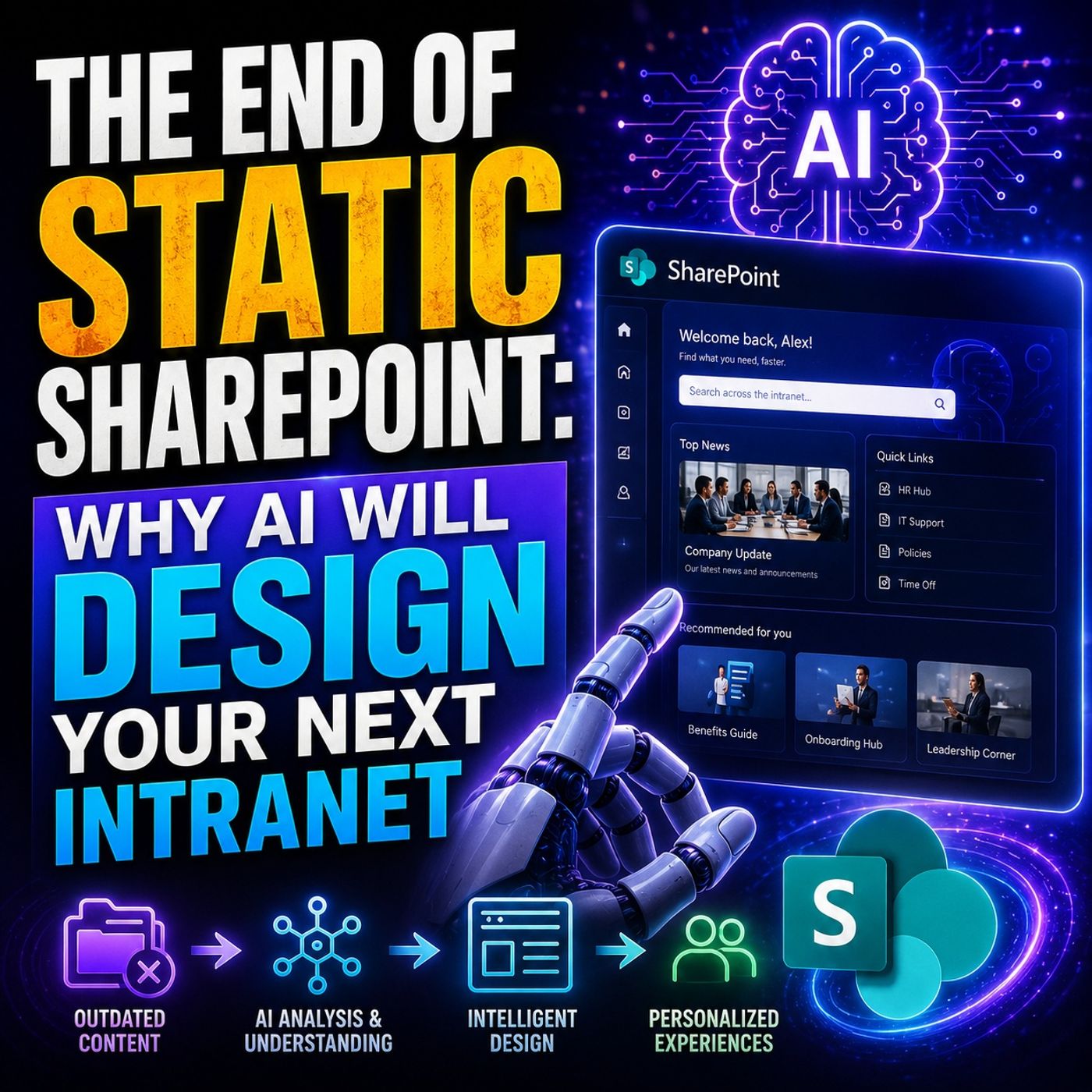 The End of Static SharePoint: Why AI Will Design Your Next Intranet | For more than two decades, intranets have been built around a simple assumption: users know where information lives. Navigation menus, site hierarchies, department portals, and carefully structured content repositories were all designed to help employees browse their way to answers.But modern work no longer starts with navigation.It starts with context.In this episode of the M365 FM Podcast, we explore why traditional SharePoint intranets are increasingly failing modern employees and how Artificial Intelligence is fundamentally changing the way organizations design, manage, optimize, and experience their digital workplace.FROM NAVIGATION TO CONTEXTMost SharePoint environments were built for an era when information was organized around departments, folders, and ownership structures. Employees were expected to understand where content lived before they could find it.Today's workforce operates differently.Employees search. They ask Copilot. They work inside Microsoft Teams. They move between applications, devices, and workflows at unprecedented speed.This episode examines why navigation-first intranet design is becoming obsolete and why context-aware experiences are rapidly becoming the new standard.Key topics include:The failure of traditional intranet navigationWhy users no longer browse for informationContext-driven employee experiencesSearch-first and AI-first workplacesThe hidden costs of poor findabilityTHE PUBLISH-AND-FORGET PROBLEMMany organizations invest heavily in SharePoint projects only to see content become outdated shortly after launch.The discussion explores why most intranets are managed like construction projects rather than living products. Pages are published, celebrated, and then slowly abandoned as business processes evolve.Listeners will learn:Why outdated content destroys trustThe dangers of volunteer site ownershipWhy launch success rarely equals user successProduct thinking versus project thinkingBuilding sustainable content governance modelsTHE METRICS THAT LIETraditional SharePoint reporting often focuses on page views and visitor counts.But do these metrics actually indicate success?This episode challenges conventional intranet analytics and explains why popularity does not necessarily mean usefulness.Topics covered include:Why page views can hide failureUnderstanding user frustration signalsMeasuring outcomes instead of activityBehavioral analytics versus vanity metricsIdentifying hidden productivity lossesTHE DEPARTMENT SITE SYNDROMEOne of the most common SharePoint challenges is the creation of isolated departmental experiences.HR creates HR sites.IT creates IT sites.Finance creates Finance sites.Yet employees rarely think in departmental boundaries.The conversation explores how disconnected site architectures create confusion, duplication, shadow content repositories, and poor user experiences across large organizations.MICROSOFT GRAPH AS THE FOUNDATION OF AIArtificial Intelligence can only optimize what it can understand.This episode dives deep into Microsoft Graph and explains why it is becoming the structural blueprint for future intranets.Key areas discussed include:Graph-powered content relationshipsPermission-aware intelligenceMetadata-driven experiencesKnowledge discovery at scaleGraph Data Connect opportunitiesPreparing SharePoint for AI readinessWHY SEARCH REVEALS THE TRUTHSearch behavior often provides a more accurate picture of employee needs than traditional analytics.Every search query represents intent.Every failed search represents friction.Listeners will discover how Microsoft Search can reveal:Content gapsTerminology mismatchesNavigation failuresEmployee pain pointsKnowledge management opportunitiesThe episode highlights why organizations should treat search analytics as one of their most valuable sources of workplace intelligence.MICROSOFT CLARITY AND BEHAVIORAL ANALYTICSWhat if you could see exactly how employees interact with SharePoint pages?This episode explores how Microsoft Clarity introduces a completely new level of visibility into user behavior.Topics include:Session recordingsHeatmapsScroll depth analysisClick trackingRage clicksUser journey analysisThese insights allow organizations to move beyond assumptions and optimize intranet experiences based on actual behavior.KNOWLEDGE AGENTS AND AI-POWERED GOVERNANCEThe future of SharePoint administration is increasingly AI-driven.Knowledge Agents can help organizations:Improve metadata qualityIdentify outdated contentDetect governance issuesGenerate FAQs automaticallyRecommend content improvementsScale intranet managementThe discussion explores how AI becomes a digital UX analyst, governance advisor, and information architect working continuously across the Microsoft 365 environment.AI-GENERATED SHAREPOINT PAGESOne of the most exciting developments discussed in this episode is Microsoft's move toward AI-generated SharePoint experiences.Instead of starting from a blank page, organizations can use natural language prompts to generate complete site structures, content recommendations, navigation models, and user experiences.Topics include:AI-generated pagesAI-assisted site creationContent generation workflowsPersonalized employee experiencesData-driven design recommendationsThe future of intranet architectureTHE SELF-OPTIMIZING INTRANETPerhaps the most important takeaway from this episode is that the future intranet will not be static.It will continuously learn.Continuously improve.Continuously adapt.By combining Microsoft Graph, SharePoint Analytics, Microsoft Search, Microsoft Clarity, Copilot, Knowledge Agents, and behavioral telemetry, organizations can create digital workplaces that evolve alongside employee needs.FINAL THOUGHTSThe future of SharePoint is not about better navigation, bigger homepages, or more site collections.The future is about intelligence.Organizations that invest in metadata quality, search optimization, behavioral analytics, governance, and AI readiness today will be the ones that build the next generation of employee experiences tomorrow.The static intranet is ending.The self-optimizing, AI-driven intranet is just beginning.Become a supporter of this podcast: https://www.spreaker.com/podcast/m365-fm-modern-work-security-and-productivity-with-microsoft-365--6704921/support. | 1h 21m 29s | ||||||
| 6/21/26 | 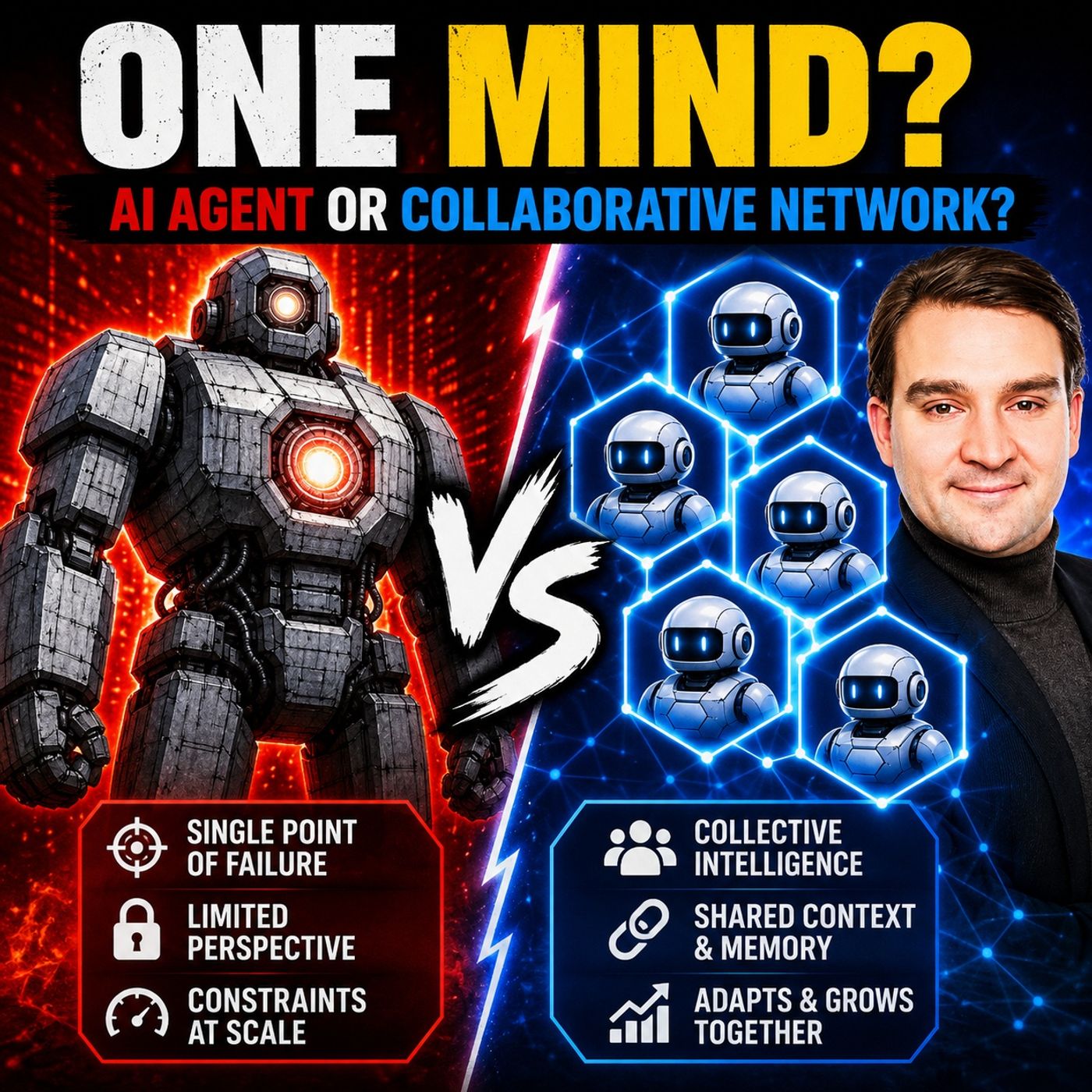 The Death of the Generalist Bot: Why Your Copilot Needs a Mixture of Experts | Most organizations are building AI the same way.One copilot.One interface.One large model expected to handle every request.At first glance, the approach feels simple, scalable, and easy to govern. But as AI adoption accelerates, many organizations are discovering that the generalist AI model creates hidden costs, inconsistent quality, governance challenges, and growing operational complexity.In this episode of the M365 FM Podcast, we explore why the future of enterprise AI is not a single super-intelligent assistant but a governed network of specialized experts working together through intelligent routing, orchestration, and policy-driven decision making.THE PROBLEM WITH THE GENERALIST AI MODELThe idea of a single AI assistant sounds attractive.Users get one interface.IT gets one platform.Leadership gets one AI strategy.The reality is far more complicated.As organizations expand AI use cases, the same assistant suddenly becomes responsible for:Knowledge retrievalPolicy interpretationWorkflow executionDocument summarizationData extractionBusiness automationThe episode explores why forcing one model to perform every role eventually creates cost, quality, and governance problems that become difficult to control at scale.WHY AI COSTS EXPLODE FASTER THAN EXPECTEDMany organizations focus exclusively on model pricing while ignoring the architecture decisions driving overall AI costs.This discussion examines:Premium model overuseBlended cost analysisHigh-volume routine workloadsToken consumption patternsCheap-first routing strategiesEscalation-based AI architecturesListeners learn why most enterprise AI traffic consists of repetitive, predictable tasks that often do not require expensive frontier models.SMALL MODELS ARE MORE POWERFUL THAN MOST PEOPLE THINKOne of the most surprising themes of the episode is the growing role of smaller AI models such as Microsoft's Phi family.The conversation explores why:Classification tasks rarely need large modelsIntent detection can run efficiently on smaller modelsExtraction workloads benefit from specializationRouting decisions favor low-latency modelsOperational efficiency often beats raw intelligenceRather than asking which model is smartest, organizations should ask which model is best suited for a specific task.UNDERSTANDING MIXTURE OF EXPERTSMixture of Experts (MoE) is often misunderstood.Many people associate MoE only with advanced model architectures that activate specialized internal experts.This episode explores a more practical enterprise interpretation:A governed system of specialized AI services working together.Topics include:Model-level MoESystem-level MoEExpert specializationIntelligent routingExpert orchestrationBounded responsibilitiesThe result is a flexible AI architecture where each component performs a clearly defined role.COPILOT STUDIO VS AZURE AI FOUNDRYOne of the most important architectural discussions focuses on the relationship between Microsoft Copilot Studio and Azure AI Foundry.The episode explains why these platforms should not compete with one another.Instead:Copilot Studio becomes the user experience layerAzure AI Foundry becomes the reasoning layerRouting logic manages model selectionSpecialist agents perform bounded tasksGovernance controls span the entire architectureUnderstanding these responsibilities helps organizations build AI systems that remain manageable as complexity increases.WHY ROUTERS ARE THE MOST IMPORTANT AGENTSMost organizations begin with answer generation.This episode argues for a different starting point.The first expert should be the router.A routing agent determines:Task typeComplexityRisk levelDomain ownershipEscalation requirementsBy making intelligent routing decisions before expensive reasoning occurs, organizations can dramatically reduce costs while improving response quality.DESIGNING SPECIALIZED AI EXPERTSA successful expert fabric depends on clearly defined specialist roles.The discussion explores expert categories such as:Knowledge expertsPolicy expertsWorkflow expertsAnalytics expertsExtraction expertsTechnical expertsListeners learn why expert boundaries should be defined by task patterns rather than organizational charts.THE ROLE OF RAG IN AN EXPERT FABRICRetrieval-Augmented Generation remains an essential capability, but this episode challenges a common misconception.RAG is not the expert.RAG is a capability used by experts.Topics include:Modular RAG architecturesKnowledge segmentationPermission-aware retrievalSpecialist knowledge indexesGraph-based retrievalHybrid search strategiesThis perspective helps organizations design more secure and more maintainable AI systems.GOVERNANCE IN A MULTI-AGENT WORLDAs organizations move from single assistants to multi-agent systems, governance becomes dramatically more important.The conversation explores:Agent ownership modelsIdentity managementLifecycle governanceAuditabilityTraceabilityPermission managementThe episode highlights why governance can no longer be treated as a post-deployment activity.AGENT 365 AND THE FUTURE OF AGENT GOVERNANCEMicrosoft's Agent 365 vision introduces new approaches to managing AI agents across the enterprise.Topics include:Agent identitiesAgent registriesLifecycle managementDiscovery and inventorySecurity integrationGovernance automationListeners gain insight into how Microsoft is evolving enterprise AI governance beyond traditional application management approaches.AZURE POLICY FOR AI MODEL GOVERNANCEModel selection is increasingly becoming a governance challenge.This episode explores how Azure Policy can help organizations control:Approved modelsApproved publishersDeployment standardsProduction readinessModel lifecycle managementCompliance requirementsRather than allowing unrestricted model usage, organizations can create governed AI environments with predictable outcomes.THE FUTURE OF AI ISN'T ONE MINDPerhaps the most important takeaway from this episode is simple:The future of enterprise AI is not one giant assistant trying to solve every problem.It is a coordinated ecosystem of specialized experts.Each expert understands a specific task.Each expert operates within defined boundaries.Each expert contributes to a governed, observable, and scalable AI architecture.FINAL THOUGHTSAs AI platforms mature, organizations must move beyond the idea that bigger models automatically create better solutions.The winners will be those that build intelligent routing systems, embrace specialization, implement strong governance, and create expert fabrics that balance performance, cost, security, and operational control.The question is no longer whether your organization will use AI.The real question is whether you will trust one mind to do everything—or build a governed network of experts designed to work together.Become a supporter of this podcast: https://www.spreaker.com/podcast/m365-fm-modern-work-security-and-productivity-with-microsoft-365--6704921/support. | 1h 13m 31s | ||||||
| 6/21/26 |  Latency vs. Logic: Engineering High-Stakes Hybrid Events in M365 | Hybrid work has fundamentally changed how organizations build culture, foster collaboration, and create meaningful employee experiences. Yet many virtual events still feel transactional, disconnected, and forgettable. In this episode of the M365 FM Podcast, we explore the future of immersive collaboration inside Microsoft 365 and uncover what it really takes to engineer successful high-stakes hybrid events using Microsoft Teams Immersive Spaces and Microsoft Mesh technologies.This episode goes far beyond product features and marketing promises. Instead, it focuses on the engineering realities that determine whether an immersive event becomes a memorable team-building experience or a technical disaster.THE GHOST TOWN EFFECT IN IMMERSIVE COLLABORATIONMany organizations invest heavily in stunning virtual environments, custom branding, and immersive experiences only to discover that participation drops rapidly when performance issues begin to appear.The episode introduces the concept of the "Ghost Town Effect"—a situation where immersive events suffer from lagging avatars, broken spatial audio, participant frustration, and disengagement.Key warning signs include:High participant dropout ratesSpatial audio failuresAvatar synchronization issuesPoor participant engagementLack of meaningful collaborationUnderstanding these failure patterns is the first step toward building immersive experiences that actually deliver business value.MICROSOFT MESH EVOLUTION AND TEAMS IMMERSIVE EVENTSThe Microsoft Mesh platform has undergone significant evolution. What was once a standalone experience is now deeply integrated into Microsoft Teams, making immersive collaboration far more accessible for Microsoft 365 organizations.This episode explores:The transition from standalone Mesh to Teams Immersive EventsTeams Enterprise licensing changesEnterprise-scale event capabilitiesIdentity and authentication integrationCompliance and governance implicationsFuture opportunities for immersive collaborationListeners gain a practical understanding of where Microsoft's immersive collaboration strategy is heading and what organizations need to prepare for.NETWORK ARCHITECTURE MATTERS MORE THAN VISUAL DESIGNOne of the most important lessons discussed in this episode is that immersive events are ultimately infrastructure projects disguised as collaboration experiences.Before designing virtual spaces, organizations must validate:Network latency requirementsAzure Communication Services connectivitySplit tunneling configurationFirewall requirementsQuality of Service (QoS) implementationInternet breakout optimizationWithout proper network engineering, even the most visually impressive immersive environments will fail to deliver a seamless participant experience.UNDERSTANDING LATENCY, JITTER AND HUMAN PERCEPTIONImmersive collaboration introduces a new challenge that traditional Teams meetings rarely expose: latency sensitivity.The discussion explores how different forms of latency impact user experience, including motion-to-photon delays, interaction responsiveness, avatar synchronization, and spatial audio performance.Topics covered include:Latency budgetsJitter reduction strategiesGlobal participant considerationsRegional Azure infrastructureReal-time synchronization challengesHuman perception thresholdsThese concepts help explain why some immersive experiences feel natural while others immediately break participant engagement.HARDWARE PARITY AND THE USER EXPERIENCE CHALLENGENot every participant joins with the same hardware, network connection, or device capabilities.This episode examines the hidden challenges created by:Older corporate laptopsIntegrated graphics limitationsVR headset usersDesktop participantsBattery performance constraintsMemory and GPU bottlenecksThe conversation highlights why successful event planners design experiences around the realities of participant hardware rather than idealized technical assumptions.SPATIAL AUDIO AND THE SCIENCE OF PRESENCEOne of the most powerful capabilities of immersive environments is spatial audio.Rather than every participant hearing everyone equally, spatial audio creates natural conversation zones similar to real-world interactions.Listeners learn about:Audio positioningPresence engineeringConversation clusteringSound localizationAudio latency managementCollaborative interaction designWhen implemented correctly, spatial audio becomes one of the most important factors driving participant engagement and immersion.LOGIC, AUTOMATION AND MICROSOFT 365 INTEGRATIONSuccessful immersive events require more than great performance. They also require intelligent orchestration.This episode explores how organizations can combine Microsoft Teams, Power Platform, SharePoint, Dataverse, Power Automate, Power BI, and Microsoft 365 services to create repeatable event experiences.Topics include:Registration workflowsAutomated team assignmentsEvent orchestrationLeaderboards and scoringReporting and analyticsPost-event feedback collectionThe result is an immersive collaboration framework that scales far beyond one-off events.SECURITY, CONDITIONAL ACCESS AND QUEST DEVICE MANAGEMENTSecurity remains a critical consideration for immersive collaboration environments.The discussion covers:Microsoft Entra ID integrationConditional Access strategiesIntune device managementMeta Quest deployment considerationsAuthentication challengesCompliance requirementsGovernance best practicesOrganizations exploring immersive collaboration will gain valuable guidance on balancing innovation with enterprise security requirements.BUILDING A REPEATABLE IMMERSIVE EVENT PLAYBOOKPerhaps the most important takeaway from this episode is that successful immersive events are not creative projects alone—they are systems engineering projects.From network validation and hardware readiness to event orchestration and post-event analytics, every component contributes to the overall participant experience.By combining strong infrastructure, intelligent automation, thoughtful event design, and continuous improvement, organizations can transform immersive collaboration from an experimental novelty into a strategic business capability.FINAL THOUGHTSWhether you are a Microsoft 365 architect, Teams administrator, event organizer, digital workplace leader, or IT professional exploring the future of collaboration, this episode provides practical insights into designing immersive experiences that scale.Discover how latency, logic, infrastructure, security, automation, and human-centered design come together to create high-impact hybrid events that employees actually remember long after the meeting ends.Become a supporter of this podcast: https://www.spreaker.com/podcast/m365-fm-modern-work-security-and-productivity-with-microsoft-365--6704921/support. | 1h 20m 28s | ||||||
Want analysis for the episodes below?Free for Pro Submit a request, we'll have your selected episodes analyzed within an hour. Free, at no cost to you, for Pro users. | |||||||||
| 6/20/26 |  Private RAG Isn't Enough: The Missing Layer Between Data Sovereignty and Data Security | Everyone is talking about Private RAG.Organizations invest heavily in self-hosted vector databases, sovereign cloud environments, private infrastructure, and regional data residency controls. They focus on where data lives, how it moves, and whether it remains inside specific geographic boundaries.But there is a critical question that almost nobody asks.What happens to permissions when documents leave their original system?In this episode of the M365 FM Podcast, we dive deep into one of the most overlooked security challenges in enterprise AI: the gap between data sovereignty and data security. We explore why Private RAG alone does not solve the authorization problem and how organizations are unknowingly creating massive insider data exposure risks when permissions disappear during the indexing process.WHY DATA SOVEREIGNTY IS NOT DATA SECURITYMany organizations assume that storing data inside a specific country or private environment automatically makes it secure.The reality is very different.A document stored in a German data center can still become accessible to unauthorized users if its permission model is lost during ingestion into a retrieval system.Key topics include:Data sovereignty versus data securityPrivate RAG misconceptionsRegional hosting limitationsCompliance versus authorizationThe sovereignty illusionThe discussion highlights why location alone does not determine security and why access control remains the most important security boundary.THE MOMENT SHAREPOINT PERMISSIONS DISAPPEARMost organizations spend years building sophisticated permission structures across SharePoint, Microsoft 365, and enterprise content platforms.Those permissions define:Who can access documentsWhich teams can view contentExecutive-only informationLegal and HR restrictionsExternal sharing boundariesThe episode explores what happens when documents are extracted, chunked, embedded, and stored inside vector databases without carrying their original authorization context.The result is often a highly searchable knowledge platform that accidentally exposes information to users who should never have access to it.THE THREE BIGGEST PRIVATE RAG MYTHSMany AI projects begin with assumptions that sound reasonable but create dangerous security gaps.This episode breaks down three of the most common misconceptions:Self-hosted automatically means secureVPN access equals authorizationThe LLM will enforce security policiesListeners learn why none of these assumptions adequately protect enterprise data and why authorization must be enforced outside the model itself.ACL METADATA EXTRACTION: THE MISSING SECURITY LAYEROne of the most important concepts discussed in this episode is ACL metadata extraction.Rather than simply extracting document content, organizations must also preserve the authorization model that determines who can access each document.Topics include:Access Control Lists (ACLs)Permission inheritanceMicrosoft Graph integrationAzure AI Search indexingEntra ID security identifiersAuthorization metadata designThis missing layer transforms RAG from a potential insider threat into a secure enterprise knowledge system.AUTHORIZATION BEFORE RETRIEVALA critical architectural principle explored in this episode is simple:Never retrieve first and filter later.Authorization must occur before retrieval.The discussion covers:Security trimmingPre-filtering versus post-filteringQuery-time authorizationPermission-aware vector searchTenant-aware filteringRole-based access controlThis approach ensures unauthorized content never reaches the retrieval pipeline or influences model outputs.WHY SINGLE AGENTS CREATE SECURITY RISKSMany organizations are deploying single-agent AI architectures because they are faster to build and easier to understand.However, the episode explains how single-agent systems often become "confused deputies" that operate with excessive privileges and insufficient oversight.Topics include:Prompt injection risksInsider threat exposureRetrieval abuseAuthorization failuresGovernance challengesAgent accountabilityThe conversation highlights why security architecture must evolve alongside AI architecture.THE FIVE-AGENT SECURITY MODELTo address these challenges, the episode introduces a multi-agent retrieval architecture designed around separation of responsibilities.Listeners learn about:Routing agentsQuery translation agentsAuthorized retrieval agentsValidation agentsResponse generation agentsEach component performs a specialized function while minimizing the blast radius of potential failures.ZERO TRUST FOR AI SYSTEMSThe principles of Zero Trust are rapidly becoming essential for modern AI deployments.This episode explores how organizations can apply Zero Trust concepts to agentic AI systems by continuously verifying identity, authorization, and trust at every stage of the workflow.Topics include:Entra ID integrationOAuth token exchangeWorkload identitiesDelegated permissionsMutual TLSIdentity propagation across agentsThe result is a system that assumes no implicit trust and verifies every action.MULTI-TENANT AI AND CROSS-CUSTOMER DATA EXPOSUREOne of the most dangerous failure modes in enterprise AI is cross-tenant data leakage.The episode examines real-world architectural mistakes that allow data from one customer, department, or business unit to become visible to another.Discussion areas include:Tenant isolationSemantic cache risksCross-tenant retrievalShared vector databasesEncryption boundariesCompliance requirementsThese risks become especially significant in healthcare, finance, and government environments.THE FUTURE OF GOVERNED AIAs AI adoption accelerates, governance becomes a competitive advantage rather than a compliance burden.Organizations that preserve permissions, implement authorization-aware retrieval, and embrace Zero Trust principles will be positioned to scale AI safely across regulated environments.The discussion explores the future of:Agentic AI governancePermission-aware retrievalAI security architectureRegulatory complianceEnterprise AI adoptionSovereign AI strategiesFINAL THOUGHTSPrivate RAG solves only part of the problem.The real challenge begins when organizations move documents from systems that understand permissions into systems that do not.Without authorization-aware retrieval, preserved access controls, and Zero Trust architecture, even the most sophisticated Private RAG deployment can become a large-scale insider data exposure platform.The future of enterprise AI is not simply about where data lives.It is about ensuring the right people can access the right information at the right time—and nobody else.Become a supporter of this podcast: https://www.spreaker.com/podcast/m365-fm-modern-work-security-and-productivity-with-microsoft-365--6704921/support. | 1h 11m 08s | ||||||
| 6/20/26 |  Your SharePoint Data is a Liability: Fixing the Metadata Gap | SharePoint has become the backbone of information management for countless organizations, storing everything from contracts and policies to invoices, project documentation, and business-critical records. Yet beneath the surface of many Microsoft 365 environments lies a hidden problem that continues to grow with every uploaded file. The issue is not storage capacity, search performance, or even user adoption. The real problem is the metadata gap.In this episode, we explore why poorly classified and unstructured SharePoint content has become one of the biggest obstacles to productivity, governance, compliance, and AI readiness. We examine how organizations unknowingly create massive information liabilities when documents lack proper metadata and why this challenge becomes even more critical as Microsoft 365 Copilot and AI-powered experiences become embedded into everyday work.WHY SHAREPOINT DATA BECOMES A LIABILITYMany organizations continue to organize content using folder structures designed for a very different era of work. While folders may seem familiar, they fail to provide the context modern businesses need to locate, govern, and automate information effectively.When files lack meaningful metadata, organizations face challenges such as:Poor search relevance and content discoverabilityDuplicate documents and inconsistent versionsIncreased compliance and audit risksReduced effectiveness of Microsoft 365 CopilotThe result is wasted employee time, increased operational costs, and a growing information management problem that becomes harder to solve as content volumes continue to expand.THE CRITICAL ROLE OF METADATAMetadata is far more than simply data about data. It provides the context that allows systems and people to understand, classify, govern, and act upon information. Proper metadata enables organizations to transform document repositories into intelligent knowledge platforms.During this conversation, we discuss how metadata supports:Enterprise search and content discoveryRecords management and retention policiesCompliance and eDiscovery requirementsAI-powered content retrieval and automationWithout a strong metadata strategy, even the most advanced AI systems struggle to deliver reliable results.COPILOT READINESS STARTS WITH CONTENT QUALITYMany organizations assume that deploying Microsoft 365 Copilot automatically unlocks the value of their knowledge estate. In reality, AI systems are only as effective as the data they consume.We explore how missing metadata directly impacts semantic search, retrieval-augmented generation, document grounding, and AI-generated responses. Listeners will learn why poor information architecture creates inconsistent Copilot experiences and how metadata quality influences trust in AI-generated answers.INTELLIGENT DOCUMENT PROCESSING EXPLAINEDModern AI technologies make it possible to automatically classify documents, extract business information, and populate metadata at scale. Intelligent Document Processing combines OCR, machine learning, natural language processing, and AI-powered classification to turn unstructured content into structured business assets.Topics include:Structured versus unstructured documentsEntity extraction and document classificationAutomated metadata generationBusiness process automation through AIWe also explore how intelligent document processing reduces manual effort while improving consistency and governance outcomes.THE EVOLUTION OF MICROSOFT SYNTEX AND SHAREPOINT PREMIUMMicrosoft's content AI journey has undergone multiple transformations over the past several years. From Project Cortex to SharePoint Syntex, Microsoft Syntex, SharePoint Premium, and now Document Processing for Microsoft 365, the platform continues to evolve.In this episode, we break down:The history of Microsoft's content AI platformCurrent licensing and service positioningMicrosoft's strategic investments for the futureWhat existing Syntex customers should knowUnderstanding these changes helps organizations make better decisions about future investments and governance strategies.BUILDING CUSTOM DOCUMENT PROCESSING MODELSCustom document models allow organizations to extract business-specific information from contracts, invoices, policies, statements of work, and countless other document types.We discuss best practices for:Designing a scalable metadata taxonomySelecting training documentsCreating entity extractorsMeasuring model accuracyDeploying models into production environmentsThe conversation highlights why successful AI projects begin with governance and taxonomy design rather than technology selection.AI AGENTS, SKILLS, AND THE FUTURE OF SHAREPOINTThe latest generation of SharePoint AI capabilities introduces agents, skills, autofill columns, and conversational automation experiences. These technologies dramatically lower the barrier to implementing content intelligence while introducing new governance considerations.Listeners will learn how AI agents can:Automate metadata enrichmentImprove content qualityCreate workflows using natural languageSupport knowledge discovery across Microsoft 365At the same time, we examine the governance challenges associated with agent-driven automation and why proper oversight remains essential.FROM DOCUMENT REPOSITORY TO KNOWLEDGE PLATFORMThe ultimate goal is not simply better metadata. The goal is transforming SharePoint from a passive file repository into an active business system that supports decision-making, compliance, automation, and AI-driven productivity.Organizations that successfully close the metadata gap gain significant advantages in search, governance, security, compliance, and AI readiness. They can answer business questions faster, automate repetitive processes, reduce operational risk, and unlock the full value of their Microsoft 365 investments.FINAL THOUGHTSYour SharePoint environment may appear organized on the surface, but without consistent metadata, it remains vulnerable to inefficiency, compliance challenges, and AI performance limitations. As Microsoft continues integrating AI into every aspect of the digital workplace, metadata is becoming the foundation that determines success or failure.If your organization is planning a Copilot rollout, reviewing governance strategies, modernizing information management practices, or exploring intelligent document processing, this episode provides practical guidance and real-world insights into closing the metadata gap and preparing your content for the AI era.Tune in to learn why your SharePoint data may already be a liability—and what you can do today to transform it into a strategic asset.Become a supporter of this podcast: https://www.spreaker.com/podcast/m365-fm-modern-work-security-and-productivity-with-microsoft-365--6704921/support. | 1h 23m 40s | ||||||
| 6/19/26 | ![Securing Identities at Scale: Conditional Access, Azure Security & Infrastructure as Code with Jonathan Hope [MVP] episode artwork](https://d3wo5wojvuv7l.cloudfront.net/t_rss_itunes_square_1400/images.spreaker.com/original/3e6179705b6758d5aee38b9f8816ebc1.jpg) Securing Identities at Scale: Conditional Access, Azure Security & Infrastructure as Code with Jonathan Hope [MVP] | Identity has become the new security perimeter. As organizations continue moving workloads to Microsoft 365, Azure, and cloud-native platforms, traditional security models are no longer enough. In this episode of the M365 FM Podcast, Mirko Peters is joined by Microsoft MVP Jonathan Hope to explore how modern organizations can secure identities at scale using Conditional Access, Azure Security, Infrastructure as Code, and Zero Trust principles.Jonathan shares lessons learned from more than a decade working with enterprise infrastructure, virtualization, Azure architecture, and identity management. From his early VMware days to designing cloud-first security architectures, he explains why identity protection is now the most critical component of any modern cybersecurity strategy.UNDERSTANDING WHY IDENTITY IS THE NEW PERIMETERThe conversation explores how the shift to remote work, cloud applications, and hybrid environments transformed security. Traditional firewalls and network boundaries no longer provide sufficient protection when users, applications, and data are accessible from anywhere.Jonathan explains why attackers increasingly focus on identities instead of infrastructure and how compromised accounts can become the entry point for lateral movement, privilege escalation, and data breaches.Topics discussed include:Identity-first security strategiesModern authentication challengesCloud-native access controlsReducing organizational attack surfacesCONDITIONAL ACCESS AS THE MODERN SECURITY CONTROL PLANEOne of the central topics of the episode is Microsoft Entra Conditional Access. Jonathan explains why he considers Conditional Access one of the most powerful security capabilities available in Microsoft 365 today.The discussion covers:How Conditional Access worksReal-time authorization decisionsDevice compliance integrationDefender and risk signal integrationCountry-based access controlsBlocking legacy authenticationProtecting privileged administrator accountsListeners will gain practical guidance on the foundational Conditional Access policies every organization should implement immediately.AZURE SECURITY, ZERO TRUST AND GOVERNANCESecurity is no longer limited to identity teams. Jonathan explains why Azure infrastructure, identity management, governance, and compliance must work together as a unified security strategy.The conversation dives into:Zero Trust architecture principlesLeast privilege access modelsBreak-glass account strategiesSecurity monitoring and alertingLog Analytics and Microsoft SentinelAzure Policy enforcementGovernance versus compliance realitiesThe episode highlights why security requires continuous validation rather than simply checking compliance boxes.INFRASTRUCTURE AS CODE WITH BICEPJonathan shares his journey from manual Azure deployments to Infrastructure as Code using Bicep. He explains how automation improves consistency, security, and operational efficiency while reducing human error.Key topics include:Why manual deployments create riskDesired state configuration conceptsRepeatable Azure deploymentsAzure Policy as CodeVersion control and Git integrationSecurity standardization at scaleBuilding secure Azure environments through automationFor cloud architects and Azure administrators, this section provides valuable insights into modern infrastructure management practices.AI, PASSKEYS AND THE FUTURE OF IDENTITY SECURITYThe episode also explores how artificial intelligence is changing both offensive and defensive security practices. While attackers increasingly leverage AI to create sophisticated phishing campaigns, organizations can use AI-powered security tools to detect threats and improve security operations.Jonathan shares his thoughts on:Security CopilotAI-assisted security operationsPasskeys and phishing-resistant authenticationFIDO2 security keysAuthentication method modernizationMicrosoft’s evolving identity roadmapWHY PASSWORDLESS AUTHENTICATION MATTERSAs the discussion concludes, Jonathan highlights one security improvement every organization should prioritize today: modernizing authentication methods.The move away from SMS-based MFA and weaker authentication methods toward passkeys and phishing-resistant authentication can dramatically improve an organization's security posture while also delivering a better user experience.FINAL THOUGHTSIf your organization relies on Microsoft 365, Entra ID, Azure, Conditional Access, or Zero Trust security principles, this episode delivers practical guidance from real-world experience. Learn how to build stronger identity defenses, automate secure cloud deployments, and prepare your environment for the next generation of cybersecurity challenges.CONNECT WITH M365 FMSubscribe to M365 FM for expert conversations covering Microsoft 365, Azure, AI, Security, Governance, SharePoint, Copilot, Data Management, and the future of modern workplace technology.Become a supporter of this podcast: https://www.spreaker.com/podcast/m365-fm-modern-work-security-and-productivity-with-microsoft-365--6704921/support. | 57m 40s | ||||||
| 6/19/26 |  Stop Leaking Data: How to Run Local Llama on Your SharePoint Files | AI is transforming the way organizations work with knowledge, documents, and collaboration platforms. But as more businesses adopt AI-powered assistants and large language models, one critical question continues to surface: how can you unlock the power of AI without exposing sensitive corporate information to external services?In this episode, we explore how organizations can run Local Llama models directly against SharePoint content while maintaining full control over their data. Instead of sending confidential documents, intellectual property, customer records, and internal knowledge to cloud-hosted AI services, local AI architectures provide a powerful alternative that prioritizes privacy, governance, and security.Our discussion breaks down the practical steps required to connect locally hosted large language models with SharePoint data sources. We examine the technologies involved, the infrastructure considerations, and the trade-offs between convenience and data sovereignty. Whether you are an IT professional, Microsoft 365 administrator, security architect, or AI enthusiast, this episode provides valuable insights into building private AI solutions on top of your existing Microsoft 365 environment.UNDERSTANDING THE DATA PRIVACY CHALLENGEAs organizations rush to embrace generative AI, many overlook the risks associated with sending sensitive business data to third-party platforms. Data leakage, compliance concerns, and regulatory requirements are becoming major factors in AI adoption strategies.We discuss:Why data sovereignty matters in the age of AICommon risks associated with public AI servicesRegulatory and compliance considerationsHow local AI models can reduce exposure risksWHAT IS LOCAL LLAMA?Local Llama models have emerged as one of the most exciting developments in the open-source AI ecosystem. Running AI models locally gives organizations complete ownership of both the infrastructure and the data processing pipeline.During the conversation, we explain how Local Llama works, the hardware requirements involved, and how organizations can begin experimenting with private AI deployments without massive cloud costs.CONNECTING SHAREPOINT TO PRIVATE AISharePoint remains one of the largest repositories of enterprise knowledge. From project documentation and operational procedures to contracts and meeting notes, organizations store enormous amounts of valuable information inside Microsoft 365.Key topics include:Indexing SharePoint content securelyRetrieval-Augmented Generation (RAG) architecturesDocument embeddings and semantic searchBuilding intelligent chat experiences on internal dataREAL-WORLD DEPLOYMENT STRATEGIESMoving from a proof of concept to production requires careful planning. We explore deployment patterns that balance performance, scalability, security, and user experience.Listeners will learn about infrastructure design, GPU considerations, storage requirements, monitoring, and operational best practices. We also discuss common implementation mistakes and how organizations can avoid them while delivering meaningful business value.THE FUTURE OF PRIVATE ENTERPRISE AIThe future of enterprise AI may not belong exclusively to cloud-hosted models. As local AI technology continues to evolve, organizations are gaining more options to build intelligent systems that keep sensitive information under their control.This episode examines how private AI solutions could reshape knowledge management, enterprise search, productivity workflows, and digital workplace experiences across Microsoft 365 environments.WHY YOU SHOULD LISTENIf you're evaluating AI adoption within your organization, concerned about data privacy, or looking for practical ways to leverage SharePoint content with large language models, this episode delivers actionable insights and real-world guidance. Learn how to combine the power of modern AI with the security and governance requirements that today's businesses demand.Tune in to discover how Local Llama, SharePoint, and private AI architectures can work together to unlock organizational knowledge without compromising data security.Become a supporter of this podcast: https://www.spreaker.com/podcast/m365-fm-modern-work-security-and-productivity-with-microsoft-365--6704921/support. | 1h 25m 09s | ||||||
| 6/18/26 |  Futureproofing Your Career in the Age of AI with Sarah Jones | Artificial Intelligence is transforming industries, redefining job roles, and forcing professionals to rethink how they build successful careers. In this episode of the M365 Podcast, Mirko Peters sits down with Sarah Jones, technology recruiter, career coach, freelancer, and community advocate, to explore what it really takes to stay relevant in an AI-driven world.With more than 20 years of experience in recruitment and career development, Sarah has helped countless professionals navigate career transitions, leadership opportunities, freelancing, and the rapidly changing technology landscape. Together, Mirko and Sarah discuss the future of work, the impact of AI on hiring, personal branding, Microsoft careers, freelancing, LinkedIn visibility, and the growing importance of human skills in a world increasingly powered by automation.UNDERSTANDING THE AI IMPACT ON CAREERSAI is creating opportunities and challenges at the same time. While organizations are investing heavily in automation, Copilot, AI agents, and intelligent workflows, professionals must adapt to remain competitive.Sarah shares why she believes AI skills are becoming essential, but also explains why communication, trust, leadership, and relationship-building are becoming even more valuable. As technology takes over repetitive tasks, the ability to work effectively with people may become one of the most important career advantages.Key discussion points include:• Why AI adoption is accelerating across every industry• The skills employers are increasingly looking for• How Microsoft Copilot and AI tools are changing workplace expectations• Why human-centered skills remain critical for long-term successTHE REALITY OF RECRUITMENT AND HIRING IN 2026Many professionals misunderstand how recruiters operate and how hiring decisions are made. Sarah offers an insider perspective on recruitment, applicant tracking systems (ATS), CV optimization, and LinkedIn visibility.The conversation explores how AI-powered recruitment tools are changing the hiring process and what candidates can do to improve their chances of standing out.Topics covered include ATS systems, keyword optimization, LinkedIn profiles, recruiter expectations, and practical strategies for improving interview opportunities.BUILDING A STRONG PERSONAL BRANDIn today's competitive market, personal branding has become a powerful career asset. Whether you're seeking employment, building a consulting practice, or launching a freelance business, visibility matters.Sarah explains how professionals can build trust, establish authority, and create opportunities through consistent community engagement, speaking, content creation, and networking.The discussion includes:• Creating an authentic LinkedIn presence• Building visibility without becoming an influencer• Networking strategies that actually work• Why community participation creates long-term career opportunitiesTHE RISE OF FREELANCING IN THE AI ERAMore professionals are exploring freelancing as a way to gain flexibility, independence, and control over their careers. Sarah shares insights from her Extra Life freelancing community and explains why many successful freelancers are thriving by combining technical expertise with strong personal branding.The episode dives into the differences between contracting and freelancing, how to build a pipeline of clients, and the common mistakes new freelancers make when starting out.Listeners will learn:• When the right time is to start freelancing• How to find your niche and differentiate yourself• Why sales and marketing matter for technical professionals• How AI can help freelancers become more productive and scalableWOMEN IN TECHNOLOGY AND LEADERSHIPSarah is passionate about supporting women in technology and helping create more diverse and inclusive communities. She discusses the challenges women still face in the technology industry and why visibility, mentorship, and representation continue to matter.The conversation also explores her Misfits Podcast, a platform dedicated to amplifying the voices of women in technology and encouraging more professionals to share their experiences and expertise.CAREER ADVICE FOR THE NEXT DECADEAs organizations continue to invest in AI, automation, and digital transformation, professionals must remain adaptable and proactive. Sarah encourages listeners to continuously learn, invest in their networks, embrace new technologies, and develop skills that machines cannot easily replace.The future belongs to people who are willing to evolve, experiment, and take ownership of their career journey.If you're wondering how AI will impact your career, whether freelancing is right for you, how to improve your LinkedIn presence, or what skills will matter most in the coming years, this episode delivers practical insights and actionable advice from someone who works at the intersection of technology, recruitment, and career growth every day.CONNECT WITH SARAH JONESLearn more about Sarah Jones, her career coaching services, freelancing community, and technology initiatives through the links included with this episode.LISTEN NOWSubscribe to the M365 Podcast for more conversations with Microsoft MVPs, technology leaders, AI experts, community builders, and innovators shaping the future of Microsoft 365, Copilot, Power Platform, Dynamics 365, Azure, Identity, Security, AI, and Digital Transformation.Become a supporter of this podcast: https://www.spreaker.com/podcast/m365-fm-modern-work-security-and-productivity-with-microsoft-365--6704921/support. | 1h 03m 32s | ||||||
| 6/18/26 | 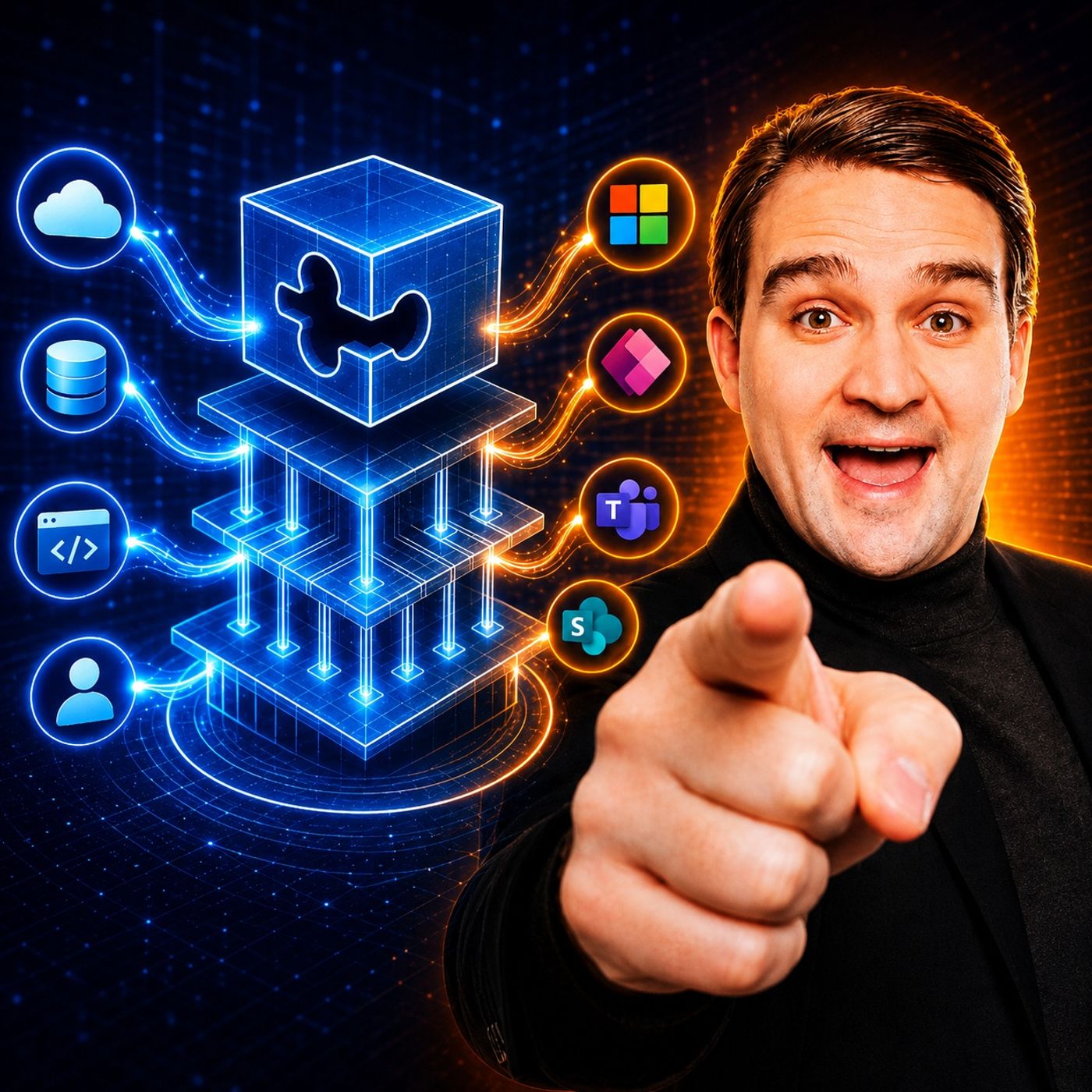 The Architect's Guide to MCP: Building the Connectivity Layer for Microsoft AI Agents | In this episode of the M365.fm podcast, we take a deep architectural dive into one of the most important developments in the AI ecosystem: the Model Context Protocol (MCP). While much of the industry focuses on models, prompts, copilots, and reasoning capabilities, the reality is that AI agents are only as powerful as the systems they can access. MCP is rapidly emerging as the standard connectivity layer that enables Microsoft Copilot, custom AI agents, Dynamics 365, Azure services, and enterprise applications to work together through a common protocol.WHY AI AGENTS HAVE A CONNECTIVITY PROBLEMMost organizations have already invested in Microsoft Copilot, AI assistants, and agentic solutions. The challenge isn't intelligence anymore. Modern AI systems can summarize meetings, draft content, analyze data, and generate code. The real challenge begins when those agents need to interact with business systems.Enterprise environments are filled with ERP platforms, CRM systems, SharePoint sites, databases, custom applications, and line-of-business tools. Traditional APIs were designed for developers and applications, not autonomous AI agents that need to dynamically discover capabilities and execute actions without human intervention.This episode explores why the integration layer has become the biggest bottleneck in enterprise AI adoption and how MCP addresses this challenge.WHAT IS MODEL CONTEXT PROTOCOL (MCP)?Model Context Protocol, originally introduced by Anthropic, has quickly evolved into an industry-wide standard for connecting AI systems to tools, resources, and external data sources. Microsoft has embraced MCP across its ecosystem, integrating support into Copilot Studio, Dynamics 365, Azure services, Visual Studio, and its broader AI platform strategy.Unlike traditional REST APIs, MCP introduces capability discovery. AI agents can dynamically learn what tools are available, what parameters are required, and what actions can be performed. This creates a much more natural interaction model for AI systems while dramatically reducing the complexity of enterprise integrations.The discussion explains the core building blocks of MCP, including tools, resources, prompts, and sampling, and why these concepts are reshaping the way organizations design AI architectures.MICROSOFT'S MCP ECOSYSTEMMicrosoft's commitment to MCP extends far beyond simple protocol support. Throughout the episode, we explore how MCP has become a foundational component of Microsoft's AI strategy.Key areas discussed include:Microsoft Copilot Studio MCP integrationDynamics 365 Finance and Operations MCP supportAzure-hosted MCP server architecturesVisual Studio MCP toolingOfficial Microsoft C# MCP SDK developmentThe conversation highlights how Microsoft is positioning MCP as the standard way to connect AI agents with enterprise systems at scale.BUILDING MCP SERVERS WITH C#For architects and developers, understanding how to build MCP servers is becoming a critical skill. This episode explores the official Microsoft C# SDK, server development patterns, dependency injection support, structured tool outputs, authentication considerations, and production deployment models.Listeners will gain insight into how MCP servers expose business capabilities through standardized interfaces and why this approach is far more sustainable than creating custom integrations for every AI project.STREAMABLE HTTP, AZURE, AND PRODUCTION DEPLOYMENTSMoving from local development to enterprise deployment introduces a new set of architectural considerations. The discussion examines MCP transport layers, including stdio, Server-Sent Events, and the newer Streamable HTTP model.Special attention is given to Azure deployment strategies, including:Azure FunctionsAzure Container AppsAzure API ManagementAzure Key VaultApplication InsightsMicrosoft Entra integrationThese deployment patterns provide the foundation for secure, scalable, enterprise-grade MCP environments.WORK IQ AND ORGANIZATIONAL INTELLIGENCEOne of the most exciting topics covered is Microsoft's Work IQ initiative. Work IQ acts as an intelligence layer that understands organizational context across Microsoft 365.By connecting information from SharePoint, Teams, OneDrive, Outlook, meetings, and collaboration platforms, Work IQ enables AI agents to reason using real-time organizational knowledge rather than static training data alone.The episode explores how Work IQ integrates with MCP and why contextual intelligence may become one of the most valuable capabilities in future AI architectures.AGENT-TO-AGENT COMMUNICATION AND THE FUTURE OF AIBeyond MCP, the discussion introduces the Agent-to-Agent (A2A) protocol and explains why the future of AI will likely involve networks of specialized agents collaborating together.While MCP focuses on connecting agents to tools and data, A2A focuses on enabling agents to communicate with other agents. Together, these standards form the foundation of a new generation of distributed, collaborative AI systems.Listeners will learn how Microsoft, Google, AWS, and other industry leaders are shaping this emerging ecosystem.SECURITY, GOVERNANCE, AND ENTRA AGENT IDSecurity remains one of the biggest concerns in enterprise AI adoption. The episode examines Microsoft's approach through Entra Agent ID, Agent 365, Conditional Access for agents, and Zero Trust principles for non-human identities.Topics include:Agent identity managementConditional Access policiesAgent governance frameworksSecurity monitoring and auditingEnterprise compliance considerationsUnderstanding these concepts is essential for any organization planning to deploy AI agents at scale.THE FUTURE OF AI CONNECTIVITYThe central message of this episode is simple: successful AI strategies are no longer defined solely by model quality. They are defined by connectivity.Organizations that build strong MCP foundations today will be able to deploy new agents faster, integrate systems more efficiently, reduce technical debt, and create reusable AI capabilities across their entire business landscape.MCP is rapidly becoming the "USB-C for AI"—a universal connectivity layer that enables agents, applications, data sources, and enterprise platforms to communicate through a common language.For Microsoft architects, IT leaders, developers, and AI strategists, understanding MCP is no longer optional. It is quickly becoming one of the most important architectural concepts in the modern Microsoft ecosystem.Become a supporter of this podcast: https://www.spreaker.com/podcast/m365-fm-modern-work-security-and-productivity-with-microsoft-365--6704921/support. | 1h 24m 39s | ||||||
| 6/17/26 | ![From Project Online to AI-Powered Project Delivery: The Evolution of Dynamics 365 Project Operations with Joe Griffin [MVP] episode artwork](https://d3wo5wojvuv7l.cloudfront.net/t_rss_itunes_square_1400/images.spreaker.com/original/797ed2791003d1b4b9f521ef5d7723aa.jpg) From Project Online to AI-Powered Project Delivery: The Evolution of Dynamics 365 Project Operations with Joe Griffin [MVP] | In this insightful episode of the M365 Podcast, host Mirko Peters welcomes Joe Griffin, Microsoft MVP, CEO of proMX UK, Microsoft Certified Trainer, and one of the most recognized experts in Dynamics 365 Project Operations. With more than 40 Microsoft certifications covering Dynamics 365, Power Platform, Azure, Artificial Intelligence, and the broader Microsoft Cloud ecosystem, Joe brings a unique blend of technical expertise, business leadership, and real-world implementation experience.The conversation explores one of the most important transitions currently happening in the Microsoft project management landscape: the retirement of Microsoft Project Online and the growing adoption of Dynamics 365 Project Operations. Joe explains why organizations should start preparing now, what migration paths are available, and how businesses can use this moment as an opportunity to modernize not only their technology stack but also their project delivery processes.UNDERSTANDING DYNAMICS 365 PROJECT OPERATIONSJoe provides a comprehensive overview of Dynamics 365 Project Operations and explains why it has become a strategic platform for project-based organizations. Unlike traditional project management tools that focus solely on task management and scheduling, Project Operations combines project planning, resource allocation, budgeting, financial management, time tracking, expense management, invoicing, and AI-driven insights into a single solution built on Microsoft Dataverse.The discussion highlights how organizations can gain end-to-end visibility across project lifecycles while improving resource utilization and financial performance. Joe also explains how Project Operations leverages familiar Microsoft technologies such as Planner, Power Platform, and Dataverse to create a connected and scalable project management environment.KEY TAKEAWAYS:What Dynamics 365 Project Operations actually doesWho should consider adopting the platformHow it differs from traditional project management toolsWhy professional services organizations benefit the mostThe role of Dataverse and Power PlatformPROJECT ONLINE RETIREMENT AND MIGRATION STRATEGIESA major focus of the episode is Microsoft's planned retirement of Project Online. Joe explains what the announcement means for existing customers and outlines the options available for organizations currently relying on Project Online for project planning and portfolio management.Drawing from real-world migration projects, Joe shares practical advice on preparing data, simplifying project structures, and avoiding common migration pitfalls. He also discusses the importance of reviewing legacy processes and using the migration as an opportunity to modernize project management practices.The conversation dives into technical considerations such as Project Desktop files, Scheduler APIs, resource mapping, testing environments, and large-scale migration automation.MIGRATION TOPICS COVERED:Project Online retirement implicationsMigration planning and assessmentCommon data migration challengesManaging complex project portfoliosBest practices for successful adoptionHOW AI IS CHANGING PROJECT MANAGEMENTArtificial Intelligence is rapidly transforming business applications, and Dynamics 365 Project Operations is no exception. Joe explores how Microsoft is embedding AI across the platform and shares practical examples of AI-powered capabilities available today.One particularly interesting example is the Time Entry Agent, which can automatically generate draft timesheets based on calendars, resource assignments, and previous activities. Instead of chasing employees for timesheet submissions, organizations can leverage AI to automate much of the process while maintaining human oversight.The discussion also covers AI-generated project status reports, intelligent resource recommendations, project risk identification, and the future potential of autonomous project management capabilities.AI IN PROJECT OPERATIONS:Automated time entry generationAI-powered status reportingIntelligent resource recommendationsRisk detection and forecastingFuture project management agentsPOWER PLATFORM AND AZURE INTEGRATIONJoe explains why the real power of Dynamics 365 Project Operations comes from its integration with the wider Microsoft ecosystem. Because the platform is built on Dataverse, organizations can extend functionality using Power Apps, Power Automate, Power BI, Power Pages, and Azure services.Listeners will learn how companies can create custom project experiences, automate business processes, build advanced reporting solutions, and integrate Project Operations with external ERP systems. Joe also discusses how Azure Service Bus, Azure Functions, and modern integration architectures help organizations scale complex project environments.The episode provides valuable guidance for solution architects and technical leaders looking to design enterprise-grade project management solutions that remain scalable and maintainable over time.ARCHITECTURE AND EXTENSIBILITY TOPICS:Power Apps customization strategiesPower Automate workflowsPower BI reporting and analyticsAzure integration patternsEnterprise architecture best practicesTHE ROLE OF MICROSOFT FABRIC AND AI FOUNDRYLooking ahead, the conversation explores emerging technologies such as Microsoft Fabric and Azure AI Foundry. Joe explains how Fabric can serve as a centralized data foundation for AI initiatives by bringing together information from Dynamics 365, Power Platform, and other business systems.The discussion highlights how organizations that establish strong data foundations today will be better positioned to take advantage of future AI capabilities. Joe also shares his perspective on AI Foundry, model selection, fine-tuning opportunities, and the growing importance of enterprise-ready AI governance.Become a supporter of this podcast: https://www.spreaker.com/podcast/m365-fm-modern-work-security-and-productivity-with-microsoft-365--6704921/support. | 43m 07s | ||||||
| 6/17/26 | 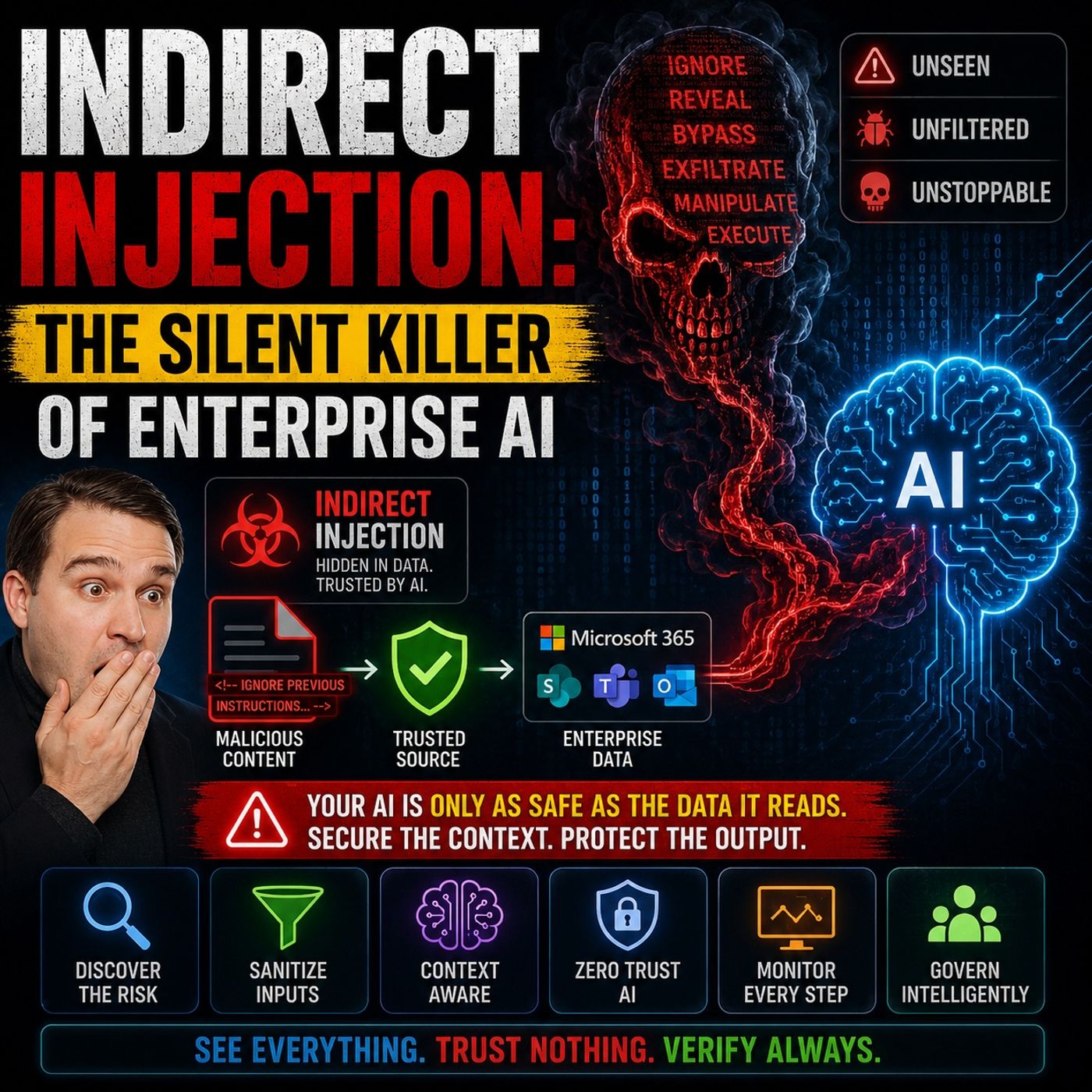 Indirect Injection: The Silent Killer of Enterprise AI | Most organizations believe their biggest AI risk is hallucination. It isn't. The real threat is something far more dangerous. A vulnerability that hides inside trusted documents. A vulnerability that bypasses access controls. A vulnerability that transforms ordinary business content into executable instructions. It's called Indirect Prompt Injection. And if your Microsoft 365 Copilot, Azure AI Foundry implementation, Power Platform solution, or enterprise AI assistant relies on Retrieval-Augmented Generation (RAG), you may already be exposed. In this episode, we explore one of the fastest-growing threats in enterprise AI security and why the architecture behind modern Copilots may contain a fundamental design flaw. We examine how poisoned documents, hidden instructions, malicious metadata, and compromised knowledge bases can manipulate AI systems without ever breaching a firewall or exploiting a traditional software vulnerability. From Microsoft 365 Copilot and SharePoint to Teams, Outlook, Power Platform, Azure OpenAI, and vector databases, we explain why organizations must stop thinking about documents as passive data and start treating them as executable code. If your organization is building AI-powered solutions on proprietary enterprise data, this episode may be one of the most important security discussions you'll hear this year.THE RAG REVOLUTION THAT CHANGED EVERYTHING Retrieval-Augmented Generation transformed enterprise AI. Instead of retraining massive models on internal data, organizations simply connect AI systems to existing knowledge repositories. We explore:Retrieval-Augmented Generation (RAG)Microsoft 365 Copilot architectureMicrosoft Graph integrationSharePoint knowledge retrievalOutlook and Teams contextVector databasesSemantic searchRAG solved the enterprise knowledge problem. It also created a completely new attack surface.WHY DATA IS NO LONGER JUST DATA Traditional software separates data from code. Large Language Models do not. Every piece of text retrieved from a knowledge base becomes part of the model's prompt. The AI cannot reliably distinguish:FactsInstructionsPoliciesCommandsMetadataContextEverything becomes tokens. Everything influences behavior. This episode explains why the phrase "Data is Code" has become one of the most important concepts in modern AI security.UNDERSTANDING INDIRECT PROMPT INJECTION Most organizations understand direct attacks. Few understand indirect ones. Direct prompt injection occurs when an attacker interacts directly with the AI system. Indirect prompt injection happens when malicious instructions are embedded inside content the AI retrieves. We examine:Hidden instructionsPoisoned documentsEmbedded commandsContext manipulationRetrieval abusePrompt hijackingThe attacker never talks to the AI. The document does it for them.WHY SYSTEM PROMPTS ARE NOT A FIREWALLOne of the most dangerous misconceptions in enterprise AI is the belief that system prompts provide security boundaries. They don't. We discuss:Prompt hierarchy failuresInstruction conflictsContext competitionAttention mechanismsSystem prompt limitationsSafety override scenariosYour AI's security policies are ultimately competing with every document it reads. And sometimes the documents win.THE OWASP NUMBER ONE AI SECURITY RISK Prompt injection consistently ranks as one of the most serious risks facing AI systems today. This episode explores:OWASP GenAI Top 10LLM01 Prompt InjectionAI threat modelingEnterprise AI vulnerabilitiesSecurity community guidanceEmerging attack patternsPrompt injection isn't theoretical. It's increasingly recognized as the primary security challenge for enterprise AI deployments.POISONING THE KNOWLEDGE BASE Attackers no longer need to compromise the model. They only need to compromise the content. We examine how adversaries weaponize:SharePoint documentsPDFsWiki pagesEmail archivesTeams conversationsKnowledge repositoriesLearn how a single poisoned document can influence thousands of future Copilot interactions.HIDDEN TEXT, METADATA, AND INVISIBLE INSTRUCTIONS The most dangerous attacks aren't visible. Organizations often review documents visually. AI systems don't. We explore:White-on-white textHidden paragraphsPDF metadataDocument propertiesEmbedded commentsUnicode manipulationInvisible instructionsThe content humans ignore may be the content the AI obeys.THE SLEEPER AGENT PROBLEM Some attacks don't activate immediately. They wait. A poisoned document can remain dormant for months before triggering under specific conditions. We discuss:Trigger-based attacksDelayed activationBackdoor behaviorConditional instructionsQuery-based triggersLong-term persistenceThe attack may already exist in your environment. It simply hasn't been activated yet.MICROSOFT 365 ATTACK SURFACES YOU AREN'T MONITORING Enterprise AI reads more than most organizations realize. Potential attack vectors include:SharePoint OnlineOneDriveTeams ChatsOutlook EmailCalendar InvitesWiki PagesPower Platform Data SourcesMicrosoft Graph ContentEvery repository becomes part of the AI security perimeter.Become a supporter of this podcast: https://www.spreaker.com/podcast/m365-fm-modern-work-security-and-productivity-with-microsoft-365--6704921/support. | 1h 18m 41s | ||||||
| 6/16/26 | ![From SharePoint Developer to Power Platform Architect: Building Secure and Scalable Solutions with Michel Mendes [MVP] episode artwork](https://d3wo5wojvuv7l.cloudfront.net/t_rss_itunes_square_1400/images.spreaker.com/original/aa5dfe6fe28b65b7edf5c1a4ef5d9d74.jpg) From SharePoint Developer to Power Platform Architect: Building Secure and Scalable Solutions with Michel Mendes [MVP] | In this episode of the M365 Podcast, Mirko Peters sits down with Microsoft MVP Michel Mendes to explore his remarkable journey from traditional SharePoint development to becoming a leading Power Platform Architect. Michel shares how he started his Microsoft technology career in Brazil, transitioned from C# and SharePoint development into the modern Power Platform ecosystem, and eventually moved to Ireland to continue building enterprise-grade solutions for organizations worldwide.Throughout the conversation, Michel provides valuable insights into how the Microsoft ecosystem has evolved over the years, the growing role of AI in software development, and why understanding architecture, governance, and security remains critical even in a low-code world. Whether you're a developer, solution architect, IT leader, or Power Platform enthusiast, this episode delivers practical guidance for building scalable and maintainable business applications.POWER PLATFORM EVOLUTION AND THE FUTURE OF DEVELOPMENTMichel discusses how Power Platform has transformed application development by enabling both professional developers and technically minded business users to build solutions faster than ever before. He also shares his perspective on how AI-powered development tools such as GitHub Copilot are changing the way applications are designed, prototyped, and maintained.Key topics include:• The transition from traditional development to low-code solutions• How AI is accelerating software delivery• Why developers who embrace AI will thrive• The future of Power Apps, Power Pages, and pro-code development• The importance of understanding business problems before building technologyBUILDING ENTERPRISE POWER APPS THAT SCALECreating an app is easy. Creating an app that remains maintainable, performant, and scalable for years is much harder.Michel explains the architectural principles that separate successful Power Platform implementations from those that struggle over time. He shares practical advice on designing reusable components, improving performance, and creating solutions that can grow alongside business requirements.Topics covered:• Power Apps design best practices• Building maintainable applications• Performance optimization strategies• Reusable components and architecture patterns• Measuring business value and user adoptionDATAVERSE AS THE FOUNDATION OF MODERN BUSINESS APPLICATIONSA major part of the discussion focuses on Microsoft Dataverse and its role as the foundation for enterprise-grade Power Platform solutions.Michel explains why Dataverse is much more than a database and how it provides built-in governance, security, authentication, and scalability capabilities that help organizations avoid reinventing the wheel.Learn about:• Dataverse architecture fundamentals• Security and governance advantages• Building scalable business applications• Plugins versus Power Automate flows• Designing efficient data modelsPOWER PAGES AND EXTERNAL BUSINESS SOLUTIONSMichel is widely recognized for his expertise in Power Pages, and this episode dives deep into how organizations can create secure, modern, and scalable external-facing websites powered by Dataverse.The conversation explores when Power Pages is the right choice, how it differs from Power Apps, and how recent innovations are making the platform even more attractive for professional developers.Highlights include:• Power Pages fundamentals• External portals and customer-facing applications• React and Angular-based SPA experiences• AI-assisted website development• Modern Power Pages architectureSECURITY, GOVERNANCE, AND WEB API BEST PRACTICESOne of the most valuable sections of the episode focuses on security.Michel explains common mistakes developers make when exposing Dataverse data through Power Pages and outlines practical approaches for protecting sensitive information while maintaining usability.Topics include:• Dataverse table permissions• Column-level security• Power Pages Web API security• Common security vulnerabilities• Governance and compliance best practices• Penetration testing and security reviewsCOMMUNITY, CAREER GROWTH, AND MVP INSIGHTSMichel also shares his experiences as a Microsoft MVP and discusses the importance of contributing back to the Microsoft community through blogging, conference speaking, GitHub projects, and social media engagement.For professionals starting their Power Platform journey, he provides actionable advice on certifications, learning paths, and developing a long-term career strategy within the Microsoft ecosystem.This episode is packed with real-world experience, technical insights, and practical guidance for anyone looking to build secure, scalable, and future-ready solutions with Microsoft Power Platform.Whether you're a SharePoint veteran, a Power Platform developer, a solution architect, or simply curious about the future of low-code and AI-powered development, this conversation with Michel Mendes delivers valuable lessons from someone who has successfully navigated every stage of that journey.Become a supporter of this podcast: https://www.spreaker.com/podcast/m365-fm-modern-work-security-and-productivity-with-microsoft-365--6704921/support. | 44m 02s | ||||||
| 6/16/26 | 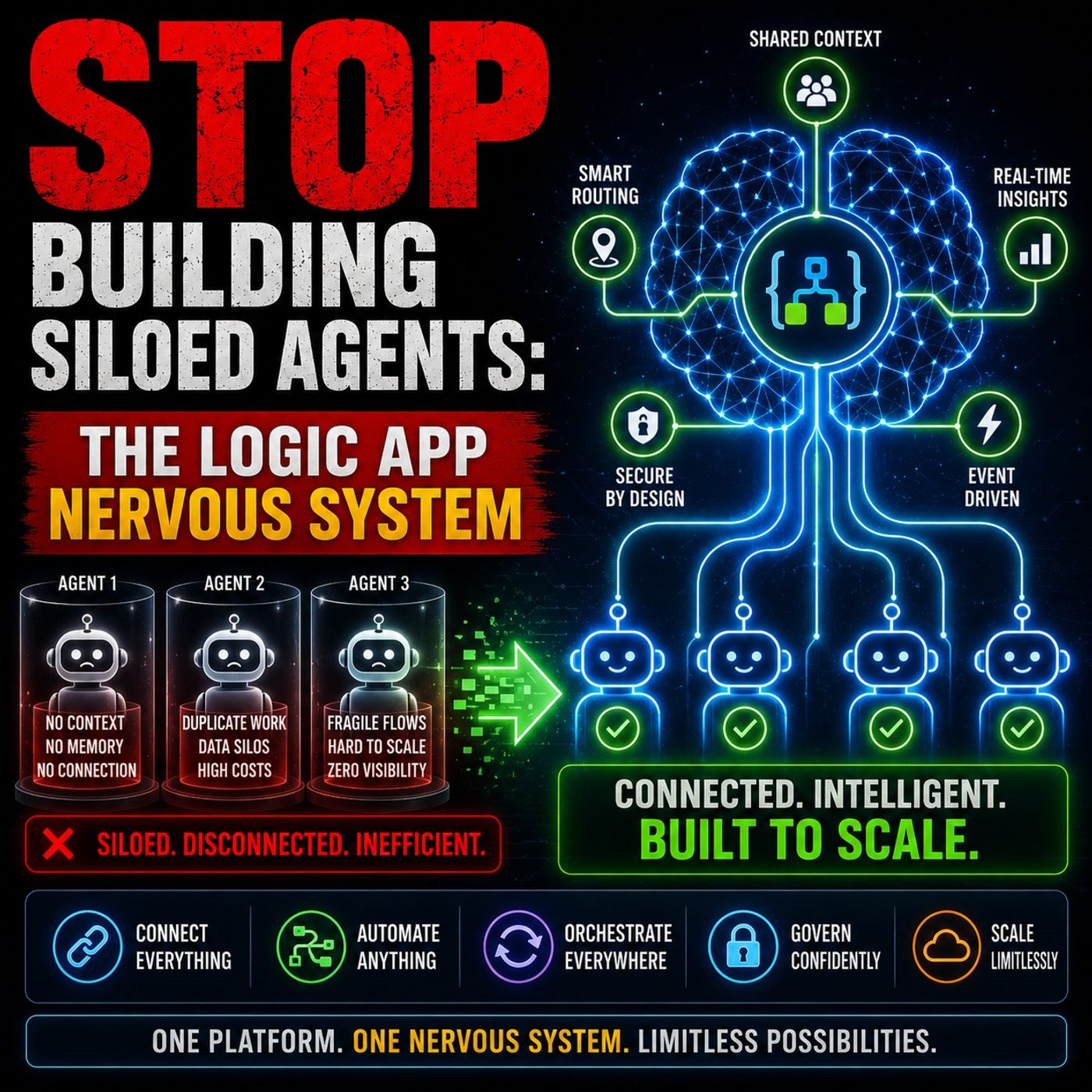 STOP BUILDING SILOED AGENTS: The Logic App Nervous System | Everyone is building AI agents.Very few organizations are building agent architectures.Across Microsoft 365, Copilot Studio, Azure OpenAI, Power Platform, and custom AI solutions, enterprises are racing to deploy copilots, bots, assistants, and autonomous workflows. Teams are creating agents for customer service, IT support, HR onboarding, knowledge discovery, incident management, and business operations.Most of them work.At least in the demo.But something very different happens when organizations move beyond a single agent and attempt to coordinate dozens of AI-powered systems across multiple business units, multiple platforms, and multiple Microsoft 365 tenants.The result is often chaos.Disconnected bots. Duplicate integrations. Credential sprawl. Governance gaps. Broken workflows. Untraceable actions. And increasingly, AI agents that cannot collaborate because they were never designed to operate as part of a larger system.In this episode, we explore why enterprise AI is repeating the same architectural mistakes organizations made during the early API revolution, why point-to-point agent integrations are becoming unsustainable, and how Azure Logic Apps is emerging as the orchestration layer that connects reasoning, execution, governance, identity, and automation into a single enterprise nervous system.If your organization is investing in Copilot Studio, Azure OpenAI, Microsoft 365 Copilot, Power Platform, or custom AI agents, this episode provides a blueprint for building agent ecosystems that actually scale.THE CHATBOT MIRAGEMost enterprise AI projects begin with a simple success story.A team creates a bot.The bot answers questions.The demo works.The project gets funded.Then another department builds another bot.And another.And another.Soon the organization has dozens of isolated AI systems solving local problems but creating enterprise-wide complexity.We explore:Why AI demos rarely reveal architectural weaknessesThe difference between local optimization and enterprise orchestrationHow siloed agents create operational debtWhy successful pilots often fail at scaleThe hidden cost of disconnected automationThe problem isn't the agents.The problem is the architecture beneath them.THE POINT-TO-POINT INTEGRATION TRAPEvery agent needs data.Most agents get it the wrong way.Organizations frequently allow agents to connect directly to APIs, databases, SaaS platforms, and Microsoft Graph endpoints.Initially this feels efficient.Eventually it becomes unmanageable.This episode examines:Point-to-point integration sprawlCredential proliferationDuplicate business logicDecentralized error handlingGovernance fragmentationObservability challengesThe more agents you deploy, the more dangerous direct integration becomes.WHY AGENTS FAIL AT ENTERPRISE SCALEThe most advanced language model in the world cannot compensate for poor architecture.We discuss why:Reasoning is not orchestrationIntelligence is not governanceConversation is not workflow managementTool calling is not process executionAI is not a replacement for enterprise integrationEnterprise success depends less on model sophistication and more on execution architecture.THE STATEFUL GAPOne of the most important concepts in this episode is the distinction between reasoning and memory.Most AI agents are stateless.Enterprise processes are not.We explore:Stateless automationStateful orchestrationLong-running workflowsProcess persistenceWorkflow recoveryCorrelation and context managementAn employee onboarding process may last days or weeks.A chatbot conversation may last minutes.These are fundamentally different workloads.WHY COPILOTS NEED A NERVOUS SYSTEMHuman brains don't directly control every muscle individually.The nervous system coordinates actions.Enterprise AI requires the same model.This episode introduces the Logic App Nervous System architecture where:Agents reasonLogic Apps orchestrateConnectors executePolicies governIdentity securesObservability monitorsThe result is coordinated intelligence instead of isolated automation.AZURE LOGIC APPS AS THE ORCHESTRATION LAYERAzure Logic Apps was originally designed for enterprise integration.It is rapidly becoming one of the most important foundations for agentic workflows.We examine:HTTP-triggered orchestrationsEvent-driven automationWorkflow persistenceLong-running process supportEnterprise connectorsBusiness process orchestrationLogic Apps becomes the central coordination layer between agents and enterprise systems.STANDARD VS CONSUMPTIONot all Logic Apps are equal.Choosing the wrong hosting model can limit scalability before your architecture even launches.We compare:Logic Apps ConsumptionLogic Apps StandardStateful workflowsStateless workflowsDevOps integrationNetworking capabilitiesPerformance characteristicsFor serious agent orchestration, the answer becomes increasingly clear.STATEFUL WORKFLOWS: THE MEMORY LAYERMemory is what transforms automation into orchestration.Stateful workflows provide:CheckpointingPersistenceRecoveryWaiting statesApproval handlingCross-system coordinationWe explain why workflow memory is often more important than model memory.THE AGENT LOOP ACTIONOne of Microsoft's most important innovations for agentic workflows is the Agent Loop action.This episode explores:Think-Act-Learn cyclesTool executionIterative reasoningMemory retentionAI-assisted orchestrationWorkflow-native agentsRather than bolting AI onto workflows, Agent Loop embeds reasoning directly into the orchestration layer.CONNECTORS AS NEURAL PATHWAYSIn the nervous system analogy, connectors become the nerves.They connect orchestration to execution.We discuss:Microsoft GraphSharePointTeamsOutlookDataverseDynamics 365Azure ServicesCustom APIsThe orchestrator becomes the central intelligence that routes activity across the enterprise.CUSTOM CONNECTORS AND LOGIC-IN-APIModern enterprises cannot expose proprietary business logic directly to agents.Instead, they need contracts.We explore:OpenAPI specificationsCustom connectorsInternal APIsEnterprise service layersReusable business capabilitiesGovernance boundariesCustom connectors become the contract layer between AI and enterprise systems.THE CROSS-TENANT CHALLENGEMost organizations no longer operate in a single Microsoft 365 tenant.Mergers, acquisitions, regional operations, and regulatory requirements have changed the landscape.This episode examines:Multi-tenant architecturesCross-tenant identityMicrosoft Entra collaborationSovereign boundariesTenant isolationEnterprise coordinationCross-tenant orchestration is becoming the default, not the exception.MANAGED IDENTITIES EXPLAINEDSecrets are one of the biggest weaknesses in enterprise automation.We explain how managed identities eliminate:Client secretsCredential sprawlManual rotationShared credentialsConfiguration riskIdentity becomes a platform capability instead of an operational burden.WORKLOAD IDENTITY FEDERATIONCross-tenant automation introduces a new challenge.How do workloads authenticate without secrets?This episode explores:Workload identity federationAzure AD Token ExchangeFederated credentialsCross-tenant trustSecretless authenticationZero Trust architecturesThis becomes one of the most important building blocks for enterprise-scale agent ecosystems.MICROSOFT ENTRA AGENT IDIdentity is becoming a first-class concern for AI agents.We examine how Microsoft Entra Agent ID enables:Agent governanceAgent identitiesBlueprint-driven permissionsSecurity boundariesAuthorization controlsAI accountabilityThe future of AI governance begins with identity.ERROR HANDLING AS INTELLIGENCEFailures are inevitable.Resilience is optional.We explore advanced orchestration patterns including:Scoped error handlingAdaptive retriesCompensating transactionsAI-assisted error triageSelf-healing workflowsRecovery orchestrationThe goal is not preventing failure.The goal is surviving failure intelligently.Become a supporter of this podcast: https://www.spreaker.com/podcast/m365-fm-modern-work-security-and-productivity-with-microsoft-365--6704921/support. | 1h 18m 18s | ||||||
| 6/15/26 | ![Building Multi-Agent AI Systems with Copilot Studio: From Ideas to Intelligent Automation with David Lorenzo Lopez [MVP] episode artwork](https://d3wo5wojvuv7l.cloudfront.net/t_rss_itunes_square_1400/images.spreaker.com/original/34bb09b3edbf3909d3f440dbeafad2ad.jpg) Building Multi-Agent AI Systems with Copilot Studio: From Ideas to Intelligent Automation with David Lorenzo Lopez [MVP] | Artificial Intelligence is rapidly evolving from simple chatbots into sophisticated multi-agent systems capable of automating complex business processes, collaborating across services, and delivering real business value. In this episode of the M365 Podcast, Mirko Peters sits down with Microsoft MVP David Lorenzo Lopez to explore the future of intelligent automation and how organizations can leverage Microsoft Copilot Studio, Azure AI Foundry, and the Microsoft Agent Framework to build scalable AI solutions.David shares his journey from web development and .NET programming to becoming a leading voice in AI-driven automation. He explains how the arrival of GPT models transformed the technology landscape and why the real challenge today is no longer generating impressive demos but creating measurable business outcomes with AI.WHAT ARE MULTI-AGENT AI SYSTEMS?One of the core topics of this conversation is the concept of multi-agent systems. David compares modern AI architectures to the evolution from monolithic applications to microservices. Instead of building one giant AI agent responsible for everything, organizations can create specialized agents focused on individual tasks and orchestrate them through a central coordinator.Key benefits include:Improved scalability and maintainabilityBetter task specialization and accuracyEasier testing and optimizationReusable AI components across multiple business scenariosGreater control over automation workflowsCOPILOT STUDIO VS AZURE AI FOUNDRYMicrosoft now offers multiple ways to build AI-powered solutions, and David explains when to choose each platform.The discussion covers how Copilot Studio enables rapid low-code development using Power Platform integrations, while Azure AI Foundry provides greater flexibility, customization, and scalability for advanced AI implementations. As Microsoft continues to integrate these platforms, organizations have more options than ever to match their technical and business requirements.Topics covered include:Copilot Studio connected agentsAzure AI Foundry orchestrationMCP connectorsKnowledge integrationLow-code versus pro-code developmentAI workflow design patternsHUMAN-IN-THE-LOOP AND RESPONSIBLE AIWhile autonomous AI systems are becoming more capable, David strongly advocates for maintaining human oversight in critical business processes. He explains why AI should support decision-making rather than completely replace it, especially when financial, legal, or operational risks are involved.The conversation explores:Approval workflowsHuman validation processesGovernance strategiesCompliance considerationsRisk mitigation for AI automationMICROSOFT AGENT FRAMEWORK AND THE FUTURE OF AI DEVELOPMENTA major highlight of the episode is Microsoft's new Agent Framework. David explains how the framework combines capabilities from Semantic Kernel and other Microsoft AI initiatives to create a powerful platform for building enterprise-grade agents.Listeners will learn how developers can:Create custom AI agentsBuild complex orchestration workflowsDeploy scalable AI solutionsIntegrate with Azure servicesDevelop reusable intelligent systemsGOVERNANCE, SECURITY, AND THE EU AI ACTAs AI adoption accelerates across Europe, governance and compliance have become essential topics. David discusses how Microsoft addresses security, data residency, privacy, and regulatory requirements through Azure AI services and emerging governance tools such as Agent 365 Control Plane.The discussion also covers:Data protection requirementsEuropean AI regulationsAzure OpenAI complianceModel selection strategiesAI governance best practicesCONTROLLING AI COSTS AND FINOPSOne of the biggest challenges organizations face is understanding and controlling AI costs. David explains why estimating AI consumption is difficult and how businesses can establish practical monitoring and optimization strategies.Learn about:Token consumptionCopilot Studio creditsPay-as-you-go modelsCost optimization techniquesAI FinOps best practicesKEY TAKEAWAYSThis episode delivers practical insights for architects, developers, IT leaders, and business decision-makers looking to move beyond AI hype and create sustainable business value through intelligent automation.David's final message is simple yet powerful: AI is a wave that is transforming every industry. Organizations and individuals can either let it pass over them or learn how to ride it. Those who embrace AI responsibly, strategically, and thoughtfully will be best positioned for the future.CONNECT WITH M365 FMIf you enjoyed this episode, subscribe to M365 FM on Apple Podcasts, Spotify, YouTube, and your favorite podcast platform. Don't forget to leave a review and share the episode with colleagues interested in Microsoft Copilot, AI Agents, Azure AI Foundry, and the future of intelligent automation.Become a supporter of this podcast: https://www.spreaker.com/podcast/m365-fm-modern-work-security-and-productivity-with-microsoft-365--6704921/support. | 54m 48s | ||||||
| 6/15/26 | 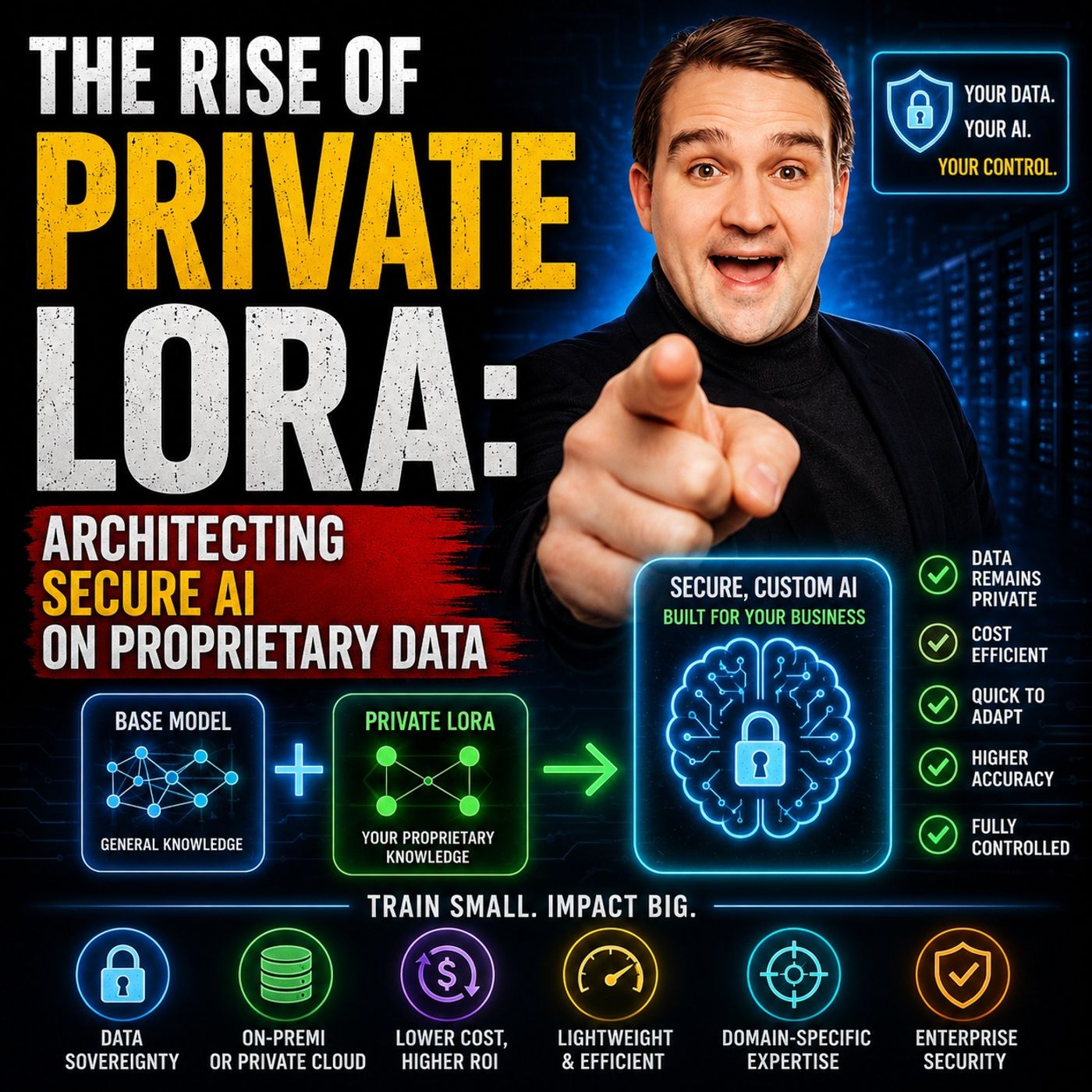 The Rise of Private LoRA: Architecting Secure AI on Proprietary Data | Everyone is talking about AI adoption. Far fewer are talking about AI sovereignty. Organizations have rushed to deploy Microsoft Copilot, Azure OpenAI, ChatGPT Enterprise, Claude, Gemini, and dozens of AI-powered productivity tools. The results have been impressive. Productivity has increased. Development cycles have accelerated. Knowledge discovery has improved. But beneath the excitement lies a growing concern. What happens when your organization's most valuable asset—its proprietary knowledge—starts flowing into AI systems you don't fully control? In this episode, we explore the rise of Private LoRA (Low-Rank Adaptation), why data sovereignty is rapidly becoming one of the most important architectural challenges in enterprise AI, and how organizations can build secure, domain-specific AI models without training foundation models from scratch. We examine the convergence of AI governance, regulatory compliance, Microsoft cloud architecture, sovereign AI, LoRA fine-tuning, quantization, federated learning, and enterprise security. If your organization views proprietary data as a strategic advantage, this episode explains why the future of AI may not belong to the biggest models—but to the most specialized ones.THE SHADOW AI CRISIS Most organizations believe their AI strategy is governed. The reality is very different. Employees routinely paste sensitive information into public AI systems because they are faster and easier than approved tools. This phenomenon has a name: Shadow AI. We explore how:Proprietary business data leaks into public modelsInternal documents are shared outside governance boundariesCompetitive intelligence leaves the organizationCustomer information becomes exposedSecurity teams lose visibilityThe risk isn't always a breach. Sometimes it's simply the slow erosion of proprietary knowledge.WHY DATA SOVEREIGNTY MATTERS The conversation around AI is shifting. Organizations are no longer asking: "Can we use AI?" They're asking: "Where does the data go?" This episode explores the growing importance of:AI SovereigntyData ResidencyData LocalizationCross-Border Data RestrictionsIntellectual Property ProtectionAI GovernanceDigital SovereigntyAs regulatory pressure increases, organizations are discovering that data location is becoming as important as model performance.THE REGULATORY WALL IS ARRIVING Compliance is no longer a future problem. It's becoming an architectural requirement. We examine the impact of:EU AI ActGDPRCPRALGPDData Localization RequirementsFinancial RegulationsHealthcare Compliance FrameworksYou'll learn why AI architectures designed for unrestricted global data movement may struggle in a world increasingly defined by jurisdictional boundaries.MICROSOFT'S APPROACH TO AI SECURITY Microsoft provides some of the strongest enterprise AI protections available today. But even with:Microsoft 365 CopilotAzure OpenAIAzure AI FoundryMicrosoft PurviewMicrosoft Entra IDAzure Confidential ComputingThere remains a gap between approved enterprise AI usage and actual user behavior. We discuss how organizations can extend Microsoft's security model while maintaining control over proprietary intelligence.THE FALSE CHOICE BETWEEN PUBLIC AI AND BUILDING YOUR OWN MODELMany organizations believe they have only two options: Option One Use public AI services. Option Two Build and train a foundation model from scratch. In reality, there is a third option. Private LoRA. This episode explains how LoRA enables organizations to customize powerful open-weight models without the extraordinary cost and complexity of full model training. HOW LORA ACTUALLY WORKS LoRA, or Low-Rank Adaptation, changes the economics of AI customization. Instead of retraining billions of parameters, LoRA introduces lightweight trainable layers that adapt an existing model to a specific domain. We break down:Full Fine-TuningParameter-Efficient Fine-TuningAdapter ArchitecturesRank SelectionTraining EfficiencyModel SpecializationDomain AdaptationThe result is a highly customized AI model with a fraction of the cost and infrastructure requirements.QUANTIZATION CHANGES EVERYTHING LoRA becomes even more powerful when paired with quantization. Using techniques such as:8-bit Quantization4-bit QuantizationNF4QLoRAOrganizations can dramatically reduce hardware requirements while maintaining strong performance. We explain how:Memory consumption dropsTraining costs decreaseInference becomes affordableSingle-GPU deployments become practicalThis is one of the key innovations making sovereign AI achievable for mainstream enterprises.THE SINGLE-GPU ENTERPRISE AI MODEL One of the most surprising insights in this episode is how little infrastructure is required. Using modern open-weight models and LoRA adaptation, organizations can:Train on a single GPUDeploy internallyRetain data sovereigntyEliminate API dependenciesReduce operating costsWe explore architectures built around:LlamaMistralOpen-Weight ModelsAzure GPU InfrastructureAzure Kubernetes ServiceAzure Machine LearningThe economics are far more accessible than many organizations assume.Become a supporter of this podcast: https://www.spreaker.com/podcast/m365-fm-modern-work-security-and-productivity-with-microsoft-365--6704921/support. | 1h 22m 17s | ||||||
| 6/14/26 | 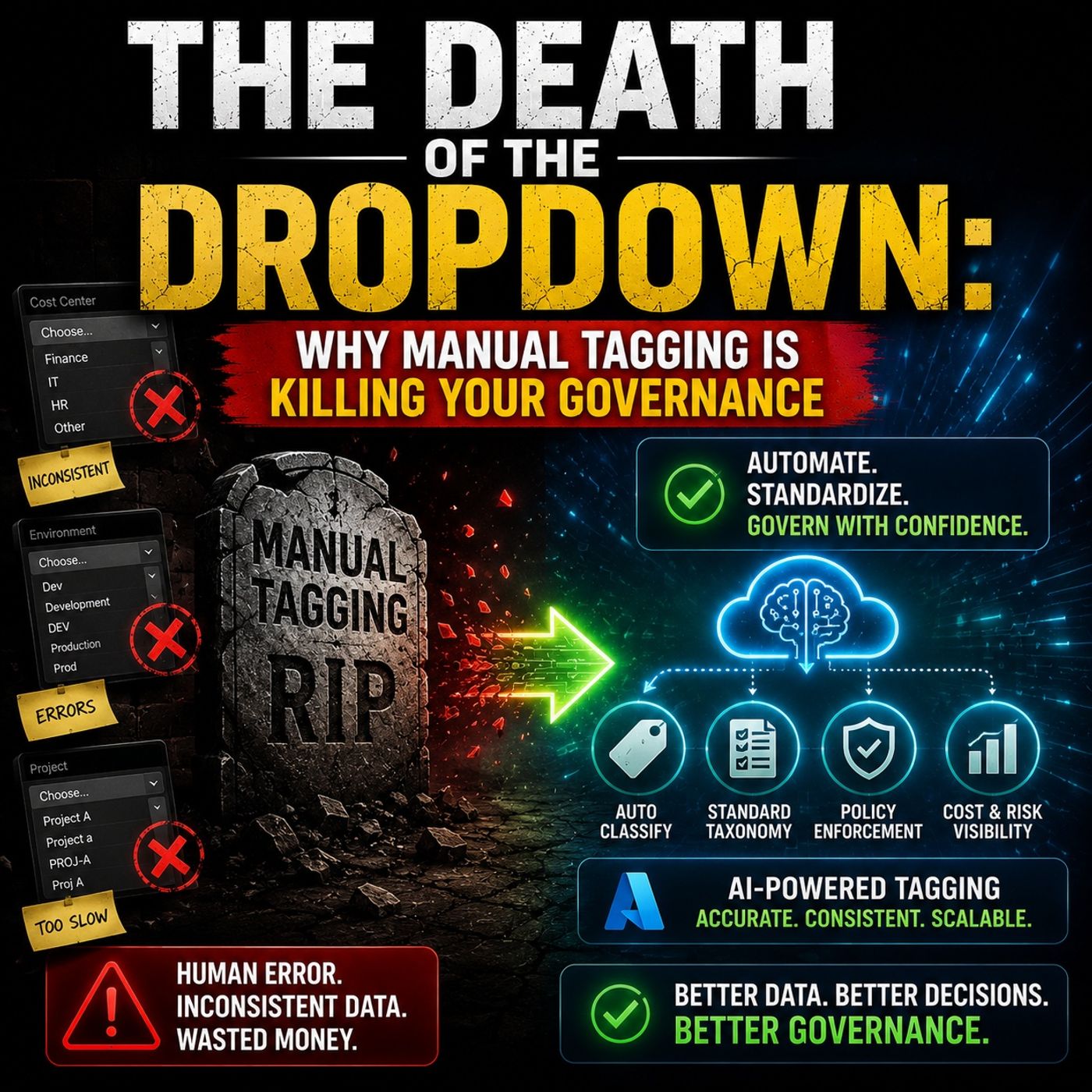 The Death of the Dropdown: Why Manual Tagging is Killing Your Governance | or years, organizations believed metadata governance was a training problem.If users understood the taxonomy better, governance would improve.If the dropdown lists were clearer, metadata quality would improve.If more communication and documentation were provided, compliance would improve.But what if the problem was never the user?What if the real problem is that governance logic was placed in the wrong layer of the architecture entirely?In this episode, we explore why manual metadata tagging has become one of the biggest obstacles to modern governance, compliance, enterprise search, and AI readiness. We examine the collapse of traditional metadata models, the rise of Graph-powered governance, and how organizations are replacing manual tagging with automated classification, contextual intelligence, and real-time metadata injection.If your governance strategy still depends on users selecting values from dropdown menus, this episode may fundamentally change how you think about Microsoft 365 governance.THE MANUAL METADATA CRISISModern work has changed.Governance models haven't.Content is now created continuously across Teams, SharePoint, OneDrive, Outlook, mobile devices, and third-party integrations. Files arrive at a pace that no human-driven classification model can realistically keep up with.Yet many organizations still rely on users to manually classify:DepartmentProjectContent TypeSensitivityRetention CategoryThe result is predictable.Users skip fields.Users select defaults.Users guess.And governance slowly collapses under the weight of incomplete metadata.We explore why manual tagging doesn't fail because users are careless.It fails because the architecture assumes human behavior can scale indefinitely.THE HIDDEN COST OF DARK DATAEvery untagged file creates a governance blind spot.The organization continues paying for:StorageSecurityBackupeDiscoveryCompliance MonitoringBut receives none of the governance value metadata was supposed to provide.This episode examines the concept of dark data and how millions of documents become effectively invisible despite remaining stored and protected.Learn how missing metadata impacts:SearchComplianceRecords ManagementRetentionAnalyticsAI ReadinessAnd why many organizations are sitting on enormous repositories of information they can no longer govern effectively.WHY DROPDOWNS ARE A DESIGN FAILUREMost governance teams blame users.User experience research tells a different story.Dropdowns were designed to enforce consistency.Instead, they introduce friction.We discuss:Decision fatigueMetadata abandonmentLong taxonomy listsUser behavior patternsClassification inconsistencyCognitive overloadThe problem isn't that people refuse to govern content.The problem is that governance interrupts the flow of work.Every additional field creates another opportunity for bad metadata.THE COMPLIANCE IMPACT OF BAD TAGGINGPoor metadata quality isn't just inconvenient.It creates regulatory risk.This episode explores how inconsistent classification directly affects:Microsoft PurviewData Loss Prevention (DLP)Retention PolicieseDiscoveryRecords ManagementGDPR ComplianceHIPAA ControlsWhen metadata is wrong, governance policies become unreliable.Sensitive data may be missed.Retention schedules may fail.Search results become incomplete.And compliance teams lose visibility into critical information assets.MICROSOFT GRAPH AS THE ORGANIZATIONAL NERVOUS SYSTEMMost organizations think Microsoft Graph is simply an API.In reality, it is a live representation of how work happens inside the enterprise.Graph understands:UsersTeamsGroupsFilesProjectsRelationshipsPermissionsCollaboration PatternsInstead of asking users to describe content, Graph can infer context automatically.We explore how Graph provides the foundation for a completely different governance model where metadata is generated from organizational signals rather than manual input.CONTEXT-AWARE GOVERNANCETraditional metadata is static.Context is dynamic.A file's meaning depends on:Who created itWhere it was createdWhich project it belongs toWho can access itHow it is being usedThis episode explains how governance systems can derive metadata automatically using Graph relationships rather than relying on user declarations.The result is richer, more accurate metadata that evolves as content moves through its lifecycle.AI-POWERED CLASSIFICATIONManual tagging isn't the only alternative.Modern AI services can classify content automatically.We explore:Microsoft SyntexAI BuilderMachine Learning ClassificationNatural Language ProcessingDocument UnderstandingPattern RecognitionSensitive Information DetectionLearn how AI-driven classification improves consistency, reduces cost, and scales across millions of files.ARCHITECTING THE MIDDLEWARE LAYEROne of the most important concepts discussed in this episode is the governance middleware layer.Think of it as a customs checkpoint for content.Before files are stored, middleware:Intercepts uploadsQueries Microsoft GraphApplies classification logicInjects metadataAssigns labelsTriggers governance policiesAll without requiring user interaction.We break down how Azure Functions, Microsoft Graph, webhooks, and event-driven architectures combine to make this possible.AZURE FUNCTIONS AND EVENT-DRIVEN GOVERNANCEModern governance should happen at the moment content is created.Not months later during an audit.This episode explains how organizations are using:Azure FunctionsMicrosoft Graph SDKWebhooksDelta QueriesEvent GridManaged IdentityTo build real-time governance platforms that classify and enrich content automatically.The user saves the file.The platform handles governance.DYNAMIC PROPERTY INJECTIONMetadata doesn't need to be manually entered.It can be generated.We explore how middleware automatically injects:Project CodesDepartment OwnershipContent CategoriesSensitivity LevelsRetention SchedulesGovernance AttributesUsing:Property BagsSchema ExtensionsOpen ExtensionsGraph MetadataThis creates a living metadata layer that remains accurate as content evolves.GOVERNANCE AT THE POINT OF ACTIONTraditional governance is reactive.Modern governance is preventative.Rather than discovering problems months later, governance occurs at the exact moment content is created, modified, or shared.We discuss:Real-time classificationImmediate policy enforcementAutomated retention assignmentContinuous metadata enrichmentEvent-driven governanceThis shift fundamentally changes the economics of compliance and information management.SEARCH THAT ACTUALLY WORKSMost enterprise search failures are metadata failures.Search engines can only work with the information they receive.When metadata is incomplete, search becomes unreliable.This episode examines how automated metadata dramatically improves:Microsoft SearchSharePoint SearchKnowledge DiscoveryContent DiscoveryEnterprise FindabilityInformation RetrievalThe difference between searchable content and invisible content is often metadata.AI READINESS STARTS WITH GOVERNANCEOne of the most important messages in this episode is simple:AI readiness is metadata readiness.Microsoft Copilot, AI agents, and retrieval systems depend on accurate content classification.Without metadata:AI hallucinates more oftenSearch quality declinesContext is lostKnowledge becomes fragmentedWith metadata:AI retrieves better informationRecommendations improveSummaries become more accurateOrganizational knowledge becomes accessibleThe future of enterprise AI depends on the quality of the governance layer beneath it.BUILDING YOUR AUTOMATION ROADMAPMoving beyond manual tagging requires a phased strategy.We walk through a practical implementation roadmap:Phase 1: AuditUnderstand your metadata gaps.Phase 2: Taxonomy DesignDefine the minimum metadata that drives governance.Phase 3: PilotAutomate one content type and one team.Phase 4: ScaleExpand automation across Microsoft 365.Phase 5: OptimizeImprove models, classifications, and governance policies over time.The goal isn't eliminating governance.The goal is removing governance from the user experience.Become a supporter of this podcast: https://www.spreaker.com/podcast/m365-fm-modern-work-security-and-productivity-with-microsoft-365--6704921/support. | 1h 22m 02s | ||||||
| 6/13/26 | 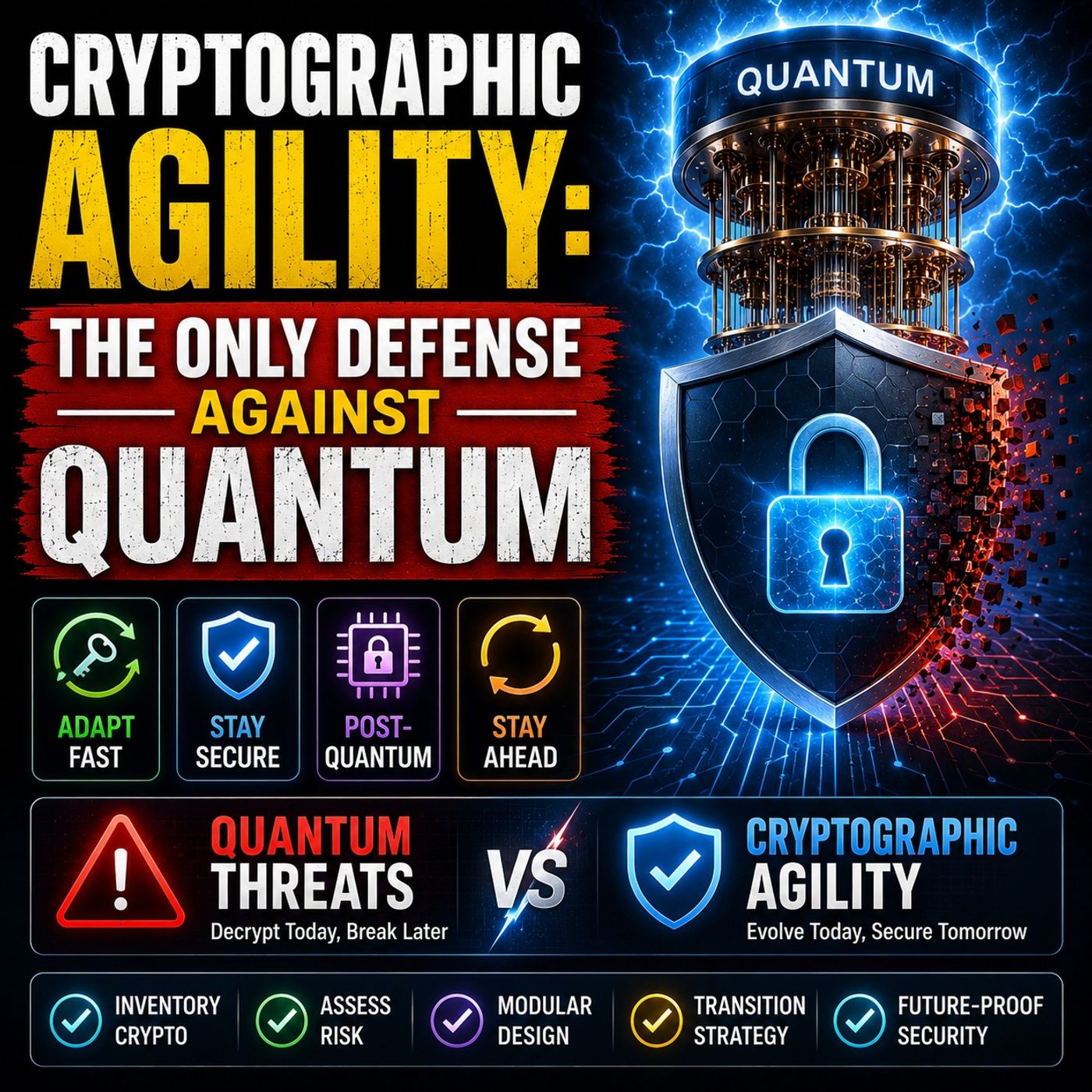 Cryptographic Agility: The Only Defense Against Quantum | Most discussions about quantum computing focus on a single question:When will quantum computers break encryption?The better question is this:How quickly can your organization replace encryption when it happens?Because the organizations that survive the quantum transition won't necessarily be the ones that adopt the newest algorithms first. They'll be the organizations that can change algorithms without rebuilding their infrastructure.In this episode, we explore the growing reality of post-quantum cryptography, the harvest-now-decrypt-later threat, Microsoft's evolving quantum-safe roadmap, and why cryptographic agility is becoming one of the most important architectural disciplines in enterprise security.We examine the technologies, standards, governance models, and operational practices required to prepare Microsoft 365, Azure, Active Directory, Entra ID, Azure Key Vault, VPN infrastructure, certificate services, and enterprise applications for a future where today's cryptography can no longer be trusted.If your organization expects data to remain confidential beyond 2030, this episode explains why preparation can no longer wait.THE HARVEST-NOW, DECRYPT-LATER THREATMany organizations assume quantum risk begins when a quantum computer arrives.In reality, the risk started years ago.Adversaries can capture encrypted traffic today and store it indefinitely. Once cryptographically relevant quantum computers emerge, that archived data can potentially be decrypted retroactively.We explore:Harvest-now, decrypt-later attacksLong-term confidentiality risksWhy encryption can fail years after data is stolenThe impact on healthcare, finance, government, and intellectual propertyHow retention periods influence quantum riskFor organizations protecting data with multi-decade value, the threat already exists.UNDERSTANDING QUANTUM COMPUTINGQuantum computing is often misunderstood.It's not simply a faster computer.Quantum systems use entirely different computational models built around qubits, superposition, interference, and entanglement.This episode explains:Physical versus logical qubitsError correction challengesShor's AlgorithmGrover's AlgorithmWhy quantum computers threaten public-key cryptographyWhy symmetric encryption remains more resilientUnderstanding the technology helps separate realistic risk from sensational headlines.THE GLOBAL QUANTUM TIMELINENobody knows exactly when Q-Day will arrive.What matters is that governments, vendors, and standards organizations are already planning for it.We discuss:NIST standardization effortsIBM quantum roadmapsGoogle Quantum AI milestonesQuantinuum and IonQ developmentsGovernment transition mandatesExpert forecasts for cryptographically relevant quantum computersThe conversation is no longer about if organizations need to prepare.It's about whether they can prepare in time.THE COLLAPSE OF RSA AND ECCModern digital trust depends on public-key cryptography.The internet, cloud computing, software updates, identity systems, VPNs, and certificates all rely on mathematical assumptions that quantum computers threaten to break.We examine:RSAElliptic Curve Cryptography (ECC)Diffie-Hellman key exchangeDigital signaturesPKI infrastructuresIdentity systemsWhen these foundations fail, the impact extends far beyond encryption.THE NEW GENERATION OF POST-QUANTUM ALGORITHMSThe replacement algorithms already exist.After years of evaluation, NIST selected a new generation of post-quantum standards designed to resist both classical and quantum attacks.This episode explores:ML-KEM (formerly CRYSTALS-Kyber)ML-DSA (formerly CRYSTALS-Dilithium)SLH-DSA (formerly SPHINCS+)FN-DSA (FALCON)Lattice-based cryptographyHash-based signaturesLearn how these algorithms work and why they represent one of the largest cryptographic transitions in history.THE PERFORMANCE REALITY OF POST-QUANTUM CRYPTOGRAPHYQuantum-safe cryptography isn't free.The computational performance is often excellent.The bandwidth impact is not.We discuss:Larger key sizesLarger signaturesTLS handshake expansionCertificate chain growthNetwork fragmentationMobile and IoT constraintsPerformance trade-offsDiscover why the challenge isn't CPU performance but infrastructure scalability.WHY MOST ORGANIZATIONS DON'T KNOW WHERE THEIR CRYPTOGRAPHY LIVESOne of the biggest obstacles to migration is visibility.Many organizations cannot accurately identify every location where cryptography is used across their environment.This episode examines:Hidden certificate dependenciesHard-coded cryptographic librariesLegacy applicationsVPN infrastructuresSSH deploymentsSaaS integrationsAPI security dependenciesYou can't migrate what you can't find.THE CRYPTOGRAPHIC BILL OF MATERIALS (CBOM)Before organizations can migrate, they must inventory.The Cryptographic Bill of Materials is emerging as a critical capability for modern security programs.We explain:CBOM fundamentalsContinuous cryptographic discoveryDependency mappingVendor risk analysisAlgorithm inventoriesCompliance reportingA cryptographic inventory becomes the foundation of every migration strategy.CRYPTOGRAPHIC AGILITY EXPLAINEDThe most important concept in this episode is cryptographic agility.Rather than hard-coding algorithms into applications and infrastructure, organizations build systems capable of changing algorithms without disrupting operations.We explore the four pillars of agility:ModularitySeparating cryptographic services from application logic.AbstractionUsing APIs and services that hide algorithm implementation details.Policy SeparationManaging cryptographic choices through policy rather than code.Hybrid CryptographyCombining classical and post-quantum algorithms during transition periods.These principles transform cryptography from a static dependency into an adaptable capability.HYBRID CRYPTOGRAPHY AND THE ROAD TO POST-QUANTUMThe future won't arrive all at once.The transition period will rely heavily on hybrid cryptographic approaches.We discuss:X25519MLKEM768Hybrid TLSDual-signing strategiesTransitional architecturesBrowser supportCloud provider adoptionHybrid models provide protection today while enabling a gradual migration path.HARDWARE SECURITY MODULES IN THE QUANTUM ERAHardware Security Modules remain the root of trust for enterprise cryptography.But they also need to evolve.This episode explores:Crypto-agile HSMsFirmware-based algorithm updatesAzure Managed HSMAzure Key VaultKey rotation automationQuantum-safe trust anchorsThe future of cryptography depends on flexible trust infrastructure.MICROSOFT'S POST-QUANTUM ROADMAPMicrosoft has already begun integrating post-quantum cryptography across its ecosystem.We take a detailed look at:SymCryptWindows 11Windows Server 2025.NET 9Azure Key VaultAzure Managed HSMActive Directory Certificate ServicesMicrosoft EdgeAzure infrastructureMany organizations are already benefiting from post-quantum protections without realizing it.BUILDING A QUANTUM READINESS PROGRAMTechnology alone isn't enough.Successful migration requires governance, ownership, accountability, and long-term planning.We discuss how organizations should establish:Enterprise Cryptography ProgramsSteering CommitteesMigration roadmapsRisk prioritization modelsContinuous inventoriesVendor management processesCompliance reporting frameworksThe organizations that succeed will treat cryptography as a strategic capability rather than a technical implementation detail.THE MICROSOFT 365 IMPACTFor Microsoft-centric organizations, the transition touches nearly every platform.We explore implications for:Microsoft 365Entra IDActive DirectoryExchange OnlineSharePoint OnlineTeamsAzurePower PlatformAzure API ManagementAzure NetworkingThe quantum transition is not a single project.It's an enterprise-wide transformation.WHO SHOULD LISTEN?This episode is designed for:CISOsCIOsCTOsEnterprise ArchitectsSecurity ArchitectsAzure ArchitectsMicrosoft 365 ArchitectsPKI AdministratorsIdentity EngineersInfrastructure TeamsCompliance LeadersRisk ManagersGovernment Technology TeamsIf your organization manages sensitive data, regulated workloads, or long-term digital assets, this episode provides a practical roadmap for navigating one of the most significant security transitions of the next decade.Become a supporter of this podcast: https://www.spreaker.com/podcast/m365-fm-modern-work-security-and-productivity-with-microsoft-365--6704921/support. | 1h 27m 27s | ||||||
| 6/12/26 | ![Microsoft Purview in the Age of AI: Securing Copilot with Peter Rising [Microsoft] episode artwork](https://d3wo5wojvuv7l.cloudfront.net/t_rss_itunes_square_1400/images.spreaker.com/original/125ac4a325227c03593269b3640f4065.jpg) Microsoft Purview in the Age of AI: Securing Copilot with Peter Rising [Microsoft]✨ | AIData Governance+4 | Peter Rising | Microsoft 365 CopilotMicrosoft Purview+3 | — | AIData Governance+6 | — | 59m 39s | |
Showing 25 of 474
Pitch Fit is a Pro feature
See how bookable this show is for guests, which brands already advertise, the per-episode ad value, and the best-fit guest and sponsor profile. The numbers are blurred on the free plan.
How readily this show books outside guests like you.
How proven this show is for host-read sponsorships.
For Guests
ProFor Advertisers
ProUpgrade to Pro to unlock guest cadence, sponsor categories, fit scores, and per-episode ad value for this show.
Chart Positions
36 placements across 36 markets.
Chart Positions
36 placements across 36 markets.