Insights from recent episode analysis
Audience Interest
Podcast Focus
Publishing Consistency
Platform Reach
Insights are generated by CastFox AI using publicly available data, episode content, and proprietary models.
Most discussed topics
Brands & references
Total monthly reach
Estimated from 3 chart positions in 3 markets.
By chart position
- 🇨🇦CA · Technology#8530K to 100K
- 🇫🇮FI · Technology#190500 to 3K
- 🇿🇦ZA · Technology#197500 to 3K
- Per-Episode Audience
Est. listeners per new episode within ~30 days
16K to 53K🎙 ~2x weekly·45 episodes·Last published yesterday - Monthly Reach
Unique listeners across all episodes (30 days)
31K to 106K🇨🇦94%🇫🇮3%🇿🇦3% - Active Followers
Loyal subscribers who consistently listen
12K to 42K
Market Insights
Platform Distribution
Reach across major podcast platforms, updated hourly
Total Followers
—
Total Plays
—
Total Reviews
—
* Data sourced directly from platform APIs and aggregated hourly across all major podcast directories.
On the show
From 12 epsHosts
Not detected.
Recent guests
Recent episodes
We Can Now Bet on Almost Anything. Should We?
Jun 23, 2026
Unknown duration
Social Media Bans Are Wildly Popular. They Might Also Be a Mistake.
Jun 9, 2026
58m 16s
Animals are Talking to Each Other. Can AI Help Us Understand Them?
May 5, 2026
42m 15s
Does 21st Century Politics Still Need Politicians?
Apr 21, 2026
44m 23s
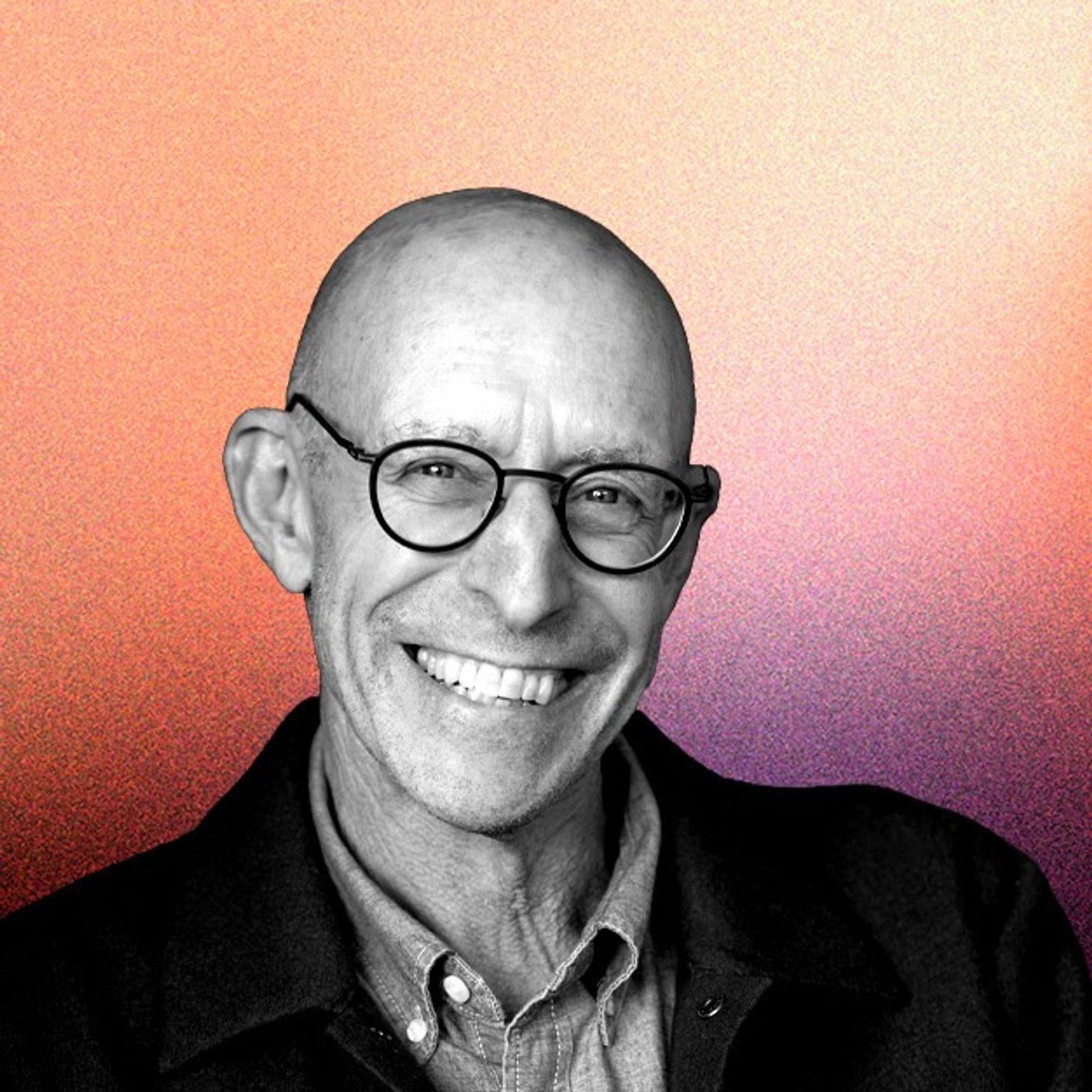
Michael Pollan Says AI Isn’t Conscious – But Plants Might Be
Apr 7, 2026
40m 09s
Social Links & Contact
Official channels & resources
Official Website
Login
RSS Feed
Login
| Date | Episode | Topics | Guests | Brands | Places | Keywords | Sponsor | Length | |
|---|---|---|---|---|---|---|---|---|---|
| 6/23/26 | ![]() We Can Now Bet on Almost Anything. Should We? | Human beings have always loved to gamble. Archaeological records suggest we’ve been doing it for the last 12,000 years, since the end of the last Ice Age. But for as long as we’ve been playing games of chance, we’ve worried about what they might be doing to us. For thousands of years, everyone from Aristotle to George Washington condemned gambling, an ancient anxiety that ran so deep it became something like a moral consensus. And then that consensus evaporated. In the span of a decade, both Canada and the US legalized sports betting. Now anyone with a smartphone and a credit card can wager on basketball, hockey, or American cornhole. But it turned out that was just the beginning. A few years later came “prediction markets” like Kalshi and Polymarket that let you bet on, well, just about anything: whether the US will invade Cuba, the odds of James Comey being sent to prison, and whether Jesus Christ will return before 2027. That last one, by the way, is currently sitting at 3% on Polymarket. If betting on missile strikes, military coups, and political prosecutions feels kind of gross, I’m with you. But James Surowiecki thinks we should give prediction markets a chance. Surowiecki is the author of The Wisdom of Crowds, a book he wrote more than 20 years ago, where he argued that large groups of ordinary people are actually better than experts at making predictions. It’s become something of a foundational text for these markets: the idea that they can crowdsource knowledge, aggregate what millions of people believe about the future, and use that signal to make better decisions. So I wanted to have James on to make the case for prediction markets, and to see if he could make me feel just a little less squeamish about a world where you can gamble on everything. | — | ||||||
| 6/9/26 | ![]() Social Media Bans Are Wildly Popular. They Might Also Be a Mistake.✨ | social media bansyouth mental health+4 | Candice Odgers | UC IrvineLiberal party | AustraliaDenmark+4 | social mediabans+6 | — | 58m 16s | |
| 5/5/26 | ![]() Animals are Talking to Each Other. Can AI Help Us Understand Them?✨ | animal communicationartificial intelligence+4 | Aza Raskin | Center for Humane TechnologyEarth Species Project | — | AIanimal communication+3 | — | 42m 15s | |
| 4/21/26 | ![]() Does 21st Century Politics Still Need Politicians?✨ | politicsartificial intelligence+2 | Hélène LandemorePeter MacLeod | YalePolitics Without Politicians+1 | Canada | Mark CarneyLiberal convention+2 | — | 44m 23s | |
| 4/7/26 | ![]() Michael Pollan Says AI Isn’t Conscious – But Plants Might Be✨ | AI consciousnesssentience+2 | Michael Pollan | A World Appears: A Journey Into ConsciousnessGoogle+1 | Silicon Valley | artificial intelligencesentience+3 | — | 40m 09s | |
| 3/24/26 | ![]() Why Did We Stop Talking About The AI Apocalypse?✨ | AI apocalypseexistential risk+3 | Nate Soares | If Anyone Builds It, Everyone DiesIf Anyone Builds It | — | existential risksuper intelligence+2 | — | 46m 54s | |
| 3/10/26 | ![]() In the Wake of Tumbler Ridge, Can We Trade Privacy for Safety?✨ | privacysafety+3 | Meredith Whittaker | SignalRing+3 | Tumbler RidgeB.C.+2 | Tumbler RidgeChatGPT+3 | — | 46m 18s | |
| 2/24/26 | ![]() When Did Common Sense AI Policy Become Radical?✨ | AI policyregulation+2 | Dr Alondra Nelson | the Science, Technology, and Social Values Labthe Institute for Advanced Study | New York | AI strategygovernment task force+2 | — | 37m 35s | |
| 2/12/26 | ![]() Bonus: Inside the New Social Media Platform for AI Agents✨ | social mediaAI agents+3 | — | Moltbook | — | MoltbookAI consciousness+2 | — | 25m 58s | |
| 2/10/26 | ![]() The Future According to Gen Z✨ | artificial intelligenceGen Z+3 | Ava SmithingSneha Revanur | AI companionthe Young People’s Alliance+3 | — | AI companionsyouth advocacy+2 | — | 51m 41s | |
Want analysis for the episodes below?Free for Pro Submit a request, we'll have your selected episodes analyzed within an hour. Free, at no cost to you, for Pro users. | |||||||||
| 1/27/26 | ![]() Is China Winning the Technological Arms Race?✨ | Chinaartificial intelligence+3 | Keyu Jin | The New China PlaybookHarvard | ChinaLondon+3 | AGIThe New China Playbook+2 | — | 55m 45s | |
| 1/13/26 | ![]() Four Predictions on How AI Will Transform Your World This Year✨ | AItechnology+2 | Mitchell Stuart | Anthropic | America | Elon MuskSam Altman+3 | — | 59m 54s | |
| 12/30/25 | ![]() The Man Behind the World’s Most Coveted Microchip✨ | AImicrochips+2 | Stephen Witt | The Thinking Machine: Jensen Huang, NVIDIA, and the World’s Most Coveted MicrochipNVIDIA | — | superintelligencetechnology+2 | — | 52m 35s | |
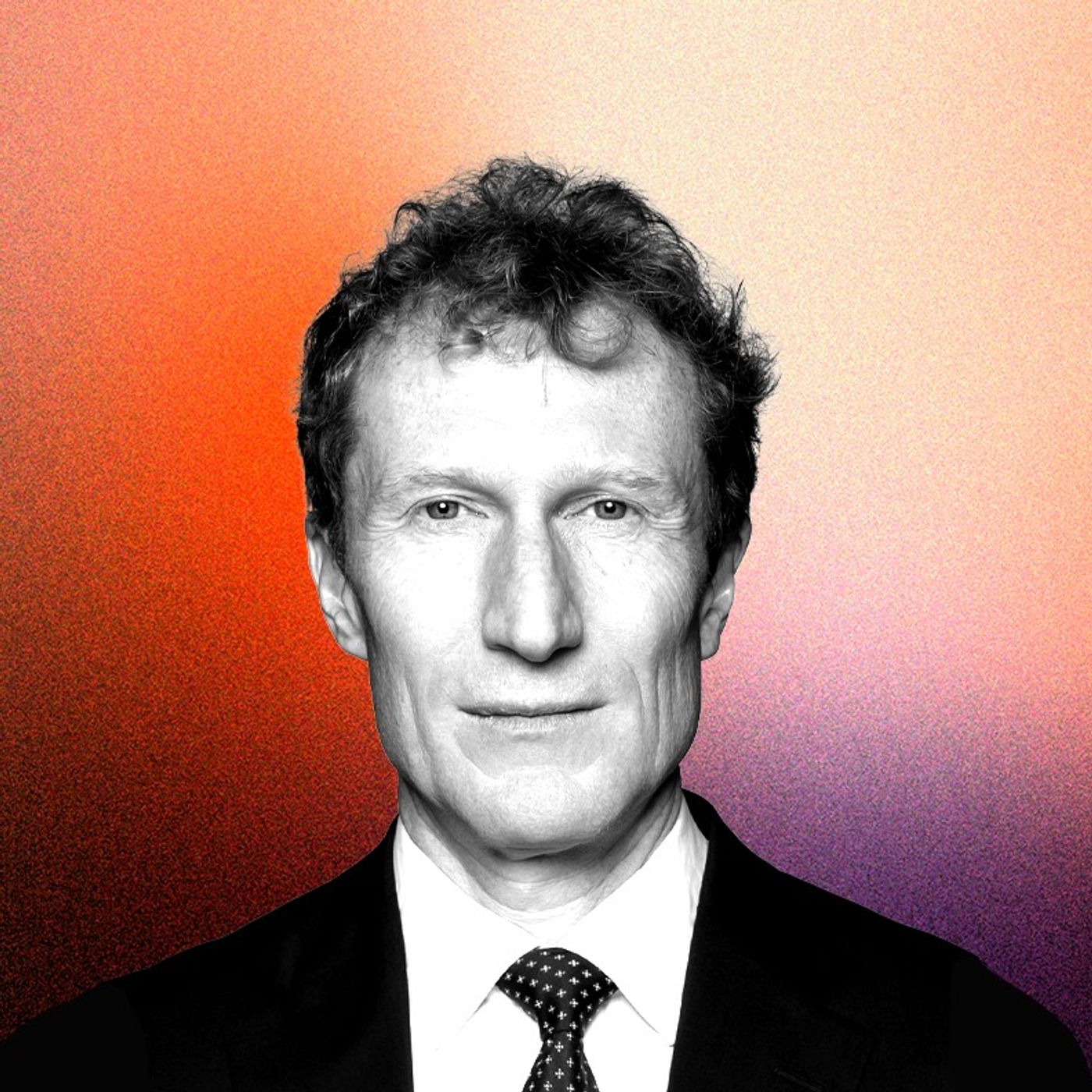
| 12/16/25 | ![]() Wikipedia Won Our Trust. Can We Use That Model Everywhere? | It was an idea that defied logic: an online encyclopedia that anyone could edit. You didn’t need to have a PhD or even use your real name – you just needed an internet connection. Against all odds, it worked. Today, billions of people use Wikipedia every month, and studies show it’s about as accurate as a traditional encyclopedia. But how? How did Wikipedia not just turn into yet another online cesspool, filled with falsehoods, partisanship and AI slop? Wikipedia founder Jimmy Wales just wrote a book called The Seven Rules of Trust, where he explains how he was able to build that rarest of things: a trustworthy source of information on the internet. In an era when trust in institutions is collapsing, Wales thinks he’s found a blueprint – not just for the web, but for everything else too. | — | ||||||
| 12/2/25 | ![]() Could an Alternative AI Save Us From a Bubble? | Over the last couple of years, massive AI investment has largely kept the stock market afloat. Case in point: the so-called Magnificent 7 – tech companies like NVIDIA, Meta, and Microsoft – now account for more than a third of the S&P 500’s value. (Which means they likely represent a significant share of your investment portfolio or pension fund, too.) There’s little doubt we’re living through an AI economy. But many economists worry there may be trouble ahead. They see companies like OpenAI – valued at half a trillion dollars while losing billions every month – and fear the AI sector looks a lot like a bubble. Because right now, venture capitalists aren’t investing in sound business plans. They’re betting that one day, one of these companies will build artificial general intelligence. Gary Marcus is skeptical. He’s a professor emeritus at NYU, a bestselling author, and the founder of two AI companies – one of which was acquired by Uber. For more than two decades, he’s been arguing that large language models (LLMs) – the technology underpinning ChatGPT, Claude, and Gemini – just aren’t that good. Marcus believes that if we’re going to build artificial general intelligence, we need to ditch LLMs and go back to the drawing board. (He thinks something called “neurosymbolic AI” could be the way forward.) But if Marcus is right – if AI is a bubble and it’s about to pop – what happens to the economy then? | — | ||||||
| 11/18/25 | ![]() Can AI Lead Us to the Good Life? | In Rutger Bregman’s first book, Utopia for Realists, the historian describes a rosy vision of the future – one with 15-hour work weeks, universal basic income and massive wealth redistribution. It’s a vision that, in the age of artificial intelligence, now seems increasingly possible. But utopia is far from guaranteed. Many experts predict that AI will also lead to mass job loss, the development of new bioweapons and, potentially, the extinction of our species. So if you’re building a technology that could either save the world or destroy it – is that a moral pursuit? These kinds of thorny questions are at the heart of Bregman’s latest book, Moral Ambition. In a sweeping conversation that takes us from the invention of the birth control pill to the British Abolitionist movement, Bregman and I discuss what a good life looks like (spoiler: he thinks the death of work might not be such a bad thing) – and whether AI can help get us there. | — | ||||||
| 11/4/25 | ![]() How to Survive the “Broligarchy” | At Donald Trump’s inauguration earlier this year, the returning president made a striking break from tradition. The seats closest to the president – typically reserved for family – went instead to the most powerful tech CEOs in the world: Elon Musk, Mark Zuckerberg, Jeff Bezos and Sundar Pichai. Between them, these men run some of the most profitable companies in history. And over the past two decades, they’ve used that wealth to reshape our public sphere. But this felt different. This wasn’t discreet backdoor lobbying or a furtive effort to curry favour with an incoming administration. These were some of the most influential men in the world quite literally aligning themselves with the world’s most powerful politician – and his increasingly illiberal ideology. Carole Cadwalladr has been tracking the collision of technology and politics for years. She’s the investigative journalist who broke the Cambridge Analytica story, exposing how Facebook data may have been used to manipulate elections. Now, she’s arguing that what we’re witnessing goes beyond monopoly power or even traditional oligarchy. She calls it techno-authoritarianism – a fusion of Trump’s authoritarian political project with the technological might of Silicon Valley. So I wanted to have her on to make the case for why she believes Big Tech isn’t just complicit in authoritarianism, but is actively enabling it. | — | ||||||
| 10/21/25 | ![]() AI Music is Everywhere. Is it Legal? | AI art is everywhere now. According to the music streaming platform Deezer, 18 per cent of the songs being uploaded to the site are AI-generated. Some of this stuff is genuinely cool and original – the kind of work that makes you rethink what art is, or what it could become. But there are also songs that sound like Drake, cartoons that look like The Simpsons, and stories that read like Game of Thrones. In other words, AI-generated work that’s clearly riffing on – or outright mimicking – other people’s art. Art that, in most of the world, is protected by copyright law. Which raises an obvious question: how is any of this legal? The AI companies claim they’re allowed to train their models on this work without paying for it, thanks to the “fair use” exception in American copyright law. But Ed Newton Rex has a different view: he says it’s theft. Newton Rex is a classical music composer who spent the better part of a decade building an AI music generator for a company called Stability AI. But when he realized the company – and most of the AI industry – didn’t intend to license the work they were training their models on, he quit. He has been on a mission to get the industry to fairly compensate creators ever since. I invited him on the show to explain why he believes this is theft at an industrial scale – and what it means for the human experience when most of our art isn’t made by humans anymore, but by machines. | — | ||||||
| 10/7/25 | ![]() Geoffrey Hinton vs. The End of the World | The story of how Geoffrey Hinton became “the godfather of AI” has reached mythic status in the tech world. While he was at the University of Toronto, Hinton pioneered the neural network research that would become the backbone of modern AI. (One of his students, Ilya Sutskever, went on to be one of OpenAI’s most influential scientific minds.) In 2013, Hinton left the academy and went to work for Google, eventually winning both a Turing Award and a Nobel Prize. I think it’s fair to say that artificial intelligence as we know it, may not exist without Geoffrey Hinton. But Hinton may be even more famous for what he did next. In 2023, he left Google and began a campaign to convince governments, corporations and citizens that his life’s work – this thing he helped build – might lead to our collective extinction. And that moment may be closer than we think, because Hinton believes AI may already be conscious. But even though his warnings are getting more dire by the day, the AI industry is only getting bigger, and most governments, including Canada’s, seem reluctant to get in the way. So I wanted to ask Hinton: If we keep going down this path, what will become of us? | — | ||||||
| 9/23/25 | ![]() AI is Upending Higher Education. Is That a Bad Thing? | Just two months after ChatGPT was launched in 2022, a survey found that 90 per cent of college students were already using it. I’d be shocked if that number wasn’t closer to 100 per cent by now. Students aren’t just using artificial intelligence to write their essays. They’re using it to generate ideas, conduct research, and summarize their readings. In other words: they’re using it to think for them. Or, as New York Magazine recently put it: “everyone is cheating their way through college.” University administrators seem paralyzed in the face of this. Some worry that if we ban tools like ChatGPT, we may leave students unprepared for a world where everyone is already using them. But others think that if we go all in on AI, we could end up with a generation capable of producing work – but not necessarily original thought. I’m honestly not sure which camp I fall into, so I wanted to talk to two people with very different perspectives on this. Conor Grennan is the Chief AI Architect at NYU’s Stern School of Business, where he’s helping students and educators embrace AI. And Niall Ferguson is a senior fellow at Stanford and Harvard, and the co-founder of the University of Austin. Lately, he’s been making the opposite argument: that if universities are to survive, they largely need to ban AI from the classroom. Whichever path we take, the consequences will be profound. Because this isn’t just about how we teach and how we learn – it’s about the future of how we think. | — | ||||||
| 4/22/25 | ![]() Jim Balsillie: ‘Canada’s Problem Isn’t Trump. Canada’s Problem Is Canada’ | In the chaotic early months of his second term, Donald Trump has attacked the Canadian economy and mused about turning Canada into the “51st state.” Now, after decades of close allyship with the U.S., our relationship with America has suddenly become fraught. Which means that Canadians are now starting to ask what a more sovereign Canada might look like – a question Jim Balsillie has been thinking about for 30 years. Balsillie is the former co-CEO of Research in Motion, the company that developed the Blackberry, and is one of the most successful business people in Canada. He’s also one of the patriotic, which makes his recent criticism of our country that much more meaningful. As Balsillie has pointed out, our GDP per capita is currently about 70% of what it is in the U.S., our productivity growth has been abysmal for years, and our high cost of living means that 1 in 4 Canadians are now food insecure. But, according to Balsillie, none of this can be blamed on Trump. He thinks that over the last thirty years we’ve clung to an outdated economic model and have allowed our politics to be captured by corporate interests. So, with less than a week to go before the federal election, I thought it was the perfect time to sit down with Jim and ask him how we might build a stronger, more sovereign Canada. | — | ||||||
| 4/8/25 | ![]() The Changing Face of Election Interference | We’re a few weeks into a federal election that is currently too close to call. And while most Canadians are wondering who our next Prime Minister will be, my guests today are preoccupied with a different question: will this election be free and fair? In her recent report on foreign interference, Justice Marie-Josée Hogue wrote that “information manipulation poses the single biggest risk to our democracy”. Meanwhile, senior Canadian intelligence officials are predicting that India, China, Pakistan and Russia will all attempt to influence the outcome of this election. To try and get a sense of what we’re up against, I wanted to get two different perspectives on this. My colleague Aengus Bridgman is the Director of the Media Ecosystem Observatory, a project that we run together at McGill University, and Nina Jankocwicz is the co-founder and CEO of the American Sunlight Project. Together, they are two of the leading authorities on the problem of information manipulation. | — | ||||||
| 3/25/25 | ![]() How Do You Report the News in a Post-Truth World? | If you’re having a conversation about the state of journalism, it’s bound to get a little depressing. Since 2008, more than 250 local news outlets have closed down in Canada. The U.S. has lost a third of the newspapers they had in 2005. But this is about more than a failing business model. Only 31 percent of Americans say they trust the media. In Canada, that number is a little bit better – but only a little. The problem is not just that people are losing their faith in journalism. It’s that they’re starting to place their trust in other, often more dubious sources of information: TikTok influencers, Elon Musk’s X feed, and The Joe Rogan Experience. The impact of this shift can be seen almost everywhere you look. 15 percent of Americans believe climate change is a hoax. 30 percent believe the 2020 election was stolen. 10 percent believe the earth is flat. A lot of this can be blamed on social media, which crippled journalism's business model and led to a flourishing of false information online. But not all of it. People like Jay Rosen have long argued that journalists themselves are at least partly responsible for the post-truth moment we now find ourselves in. Rosen is a professor of journalism at NYU who’s been studying, critiquing, and really shaping, the press for nearly 40 years. He joined me a couple of weeks ago at the Attention conference in Montreal to explain how we got to this place – and where we might go from here. A note: we recorded this interview before the Canadian election was called, so we don’t touch on it here. But over the course of the next month, the integrity of our information ecosystem will face an inordinate amount of stress, and conversations like this one will be more important than ever. | — | ||||||
| 3/11/25 | ![]() A Chinese Company Upended OpenAI. We May Be Looking at the Story All Wrong. | When the American company OpenAI released ChatGPT, it was the first time that a lot of people had ever interacted with Generative AI. ChatGPT has become so popular that, for many, it’s now synonymous with artificial intelligence. But that may be changing. Earlier this year a Chinese startup called DeepSeek launched its own AI chatbot, sending shockwaves across Silicon Valley. According to DeepSeek, their model – DeepSeek-R1 – is just as powerful as ChatGPT but was developed at a fraction of the cost. In other words, this isn’t just a new company, it could be an entirely different approach to building artificial intelligence. To try and understand what DeepSeek means for the future of AI, and for American innovation, I wanted to speak with Karen Hao. Hao was the first reporter to ever write a profile on OpenAI and has covered AI for The MIT Tech Review, The Atlantic and the Wall Street Journal. So she’s better positioned than almost anyone to try and make sense of this seemingly monumental shift in the landscape of artificial intelligence. | — | ||||||
| 2/25/25 | ![]() Big Tech Hijacked Our Attention. Chris Hayes Wants To Win It Back. | Do I have your attention right now? I’m guessing probably not. Or, at least, not all of it. In all likelihood, you’re listening to this on your morning commute, or while you wash the dishes or check your e-mail. We are living in a world of perpetual distraction. There are more things to read, watch and listen to than ever before – but our brains, it turns out, can only absorb so much. Politicians like Donald Trump have figured out how to exploit this dynamic. If you’re constantly saying outrageous things, it becomes almost impossible to focus on the things that really matter. Trump’s former strategist Steve Bannon called this strategy “flooding the zone.” As the host of the MSNBC show All In, Chris Hayes has had a front-row seat to the war for our attention – and, now, he’s decided to sound the alarm with a new book called The Sirens’ Call: How Attention Became the World’s Most Endangered Resource. Hayes joined me to explain how our attention became so scarce, and what happens to us when we lose the ability to focus on the things that matter most. | — | ||||||
Showing 25 of 49
Sponsor Intelligence
Sign in to see which brands sponsor this podcast, their ad offers, and promo codes.
Chart Positions
3 placements across 3 markets.
Chart Positions
3 placements across 3 markets.